Maintaining the motivation of elders and deacons
https://youtu.be/Oj29rx4ELFs
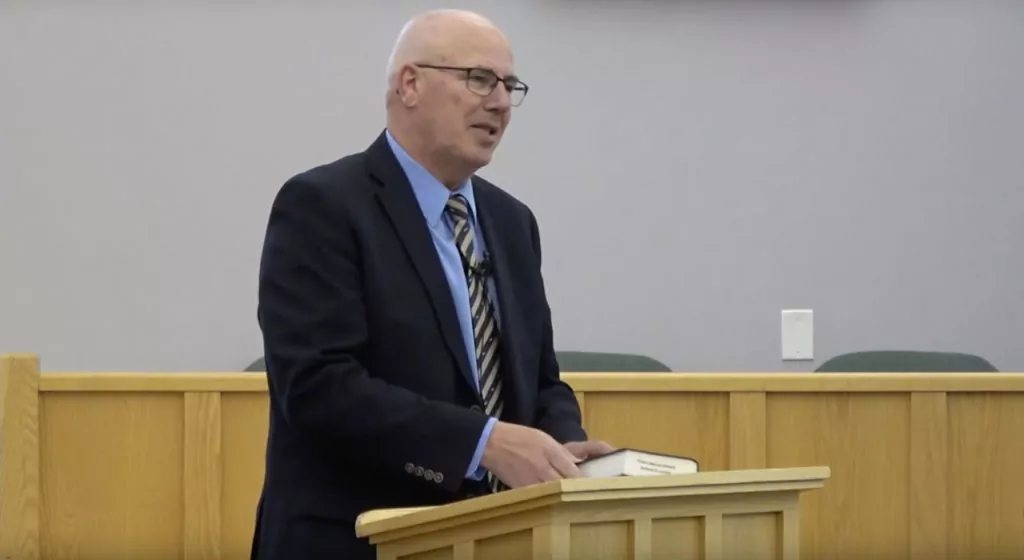
The following is a rough transcript of Rev. Moesker's 45-minute presentation above.
****
I've been asked to speak here and I was given some suggested topics including one about motivation.
According to the dictionary “to motivate” is to spur, or stimulate to action. Actually, there's a whole field of psychology connected with motivation. I confess I have a Costco card, and I have shopped at their stores on a number of occasions. They set up their store strategically to motivate people to buy the stuff that's in the store, and to motivate them to buy what they actually, probably don't need. Electronic stuff and jewelry are near the entrance – you’ll notice every store is the same that way. Clothing and dry goods are in the middle, with the food items toward the back. Most people go for the food items but they have to pass through all the other stuff to get there and their carts fill up with more stuff as they go on. It’s a motivation thing – it’s psychology.
There's a whole field of business management that has developed theories of motivation in the work goals context. They have a list of psychological factors that can stimulate people's behavior – desires for: money, success, recognition, job satisfaction, teamwork, etc. Companies will hire motivational speakers – makes me think of the motivational speakers who said, “Whatever you do, always give 100%...unless you're donating blood.”
There might be some psychology connected with the motivation of office bearers in Christ’s Church too. I wouldn’t count that out. But I’m no psychologist and I believe the topic has to be approached spiritually rather than psychologically. That doesn't make it less practical, not at all. Looking at things spiritually has always got to have practical implications. Serving the Lord concerns real life, also as office bearers.
It's strange – I have a number of books for, and about, office bearers. I checked them all out for some direction for this presentation but none of those books gave practical encouragement and direction on how to stay motivated as an office bearer. So I didn't have a lot to go by. But that's what I was asked to think about.
Now being an office bearer can be an emotional and spiritual rollercoaster ride. Hopefully, this presentation and discussion will be helpful for present and future office bearers as far as staying motivated in their work, and staying on task. So my approach is first, as mentioned:
Consider how office bearers can become demotivated pastorally and personally.
And then think about how to stay motivated, personally, and together as counsel. We’ll look at how we can help each other as office bearers too.
DEMOTIVATION
So we’ll look first of all at demotivation. In your pastoral work you can become demotivated. The Bible actually talks about demotivation, on the part of office bearers. The Apostle Paul talks about being anxious for the churches, and of frustration with church members, in his letters. But I think the most clear mention of office bearers becoming demotivated is in Hebrews 13 verse 17. And it was mentioned there:
Obey your leaders and submit to them, for they are keeping watch over your souls, as those who will have to give an account. Let them do this with joy and not with groaning, for that would be of no advantage to you.
Consider that last line “Let them do this with joy.” Now often that word this is connected to give an account– that they give account to the Lord, not with groaning but joy – but that’s not what the this here is referring to. While it is true that office bearers have to take to heart that they have to give an account for their work to the Lord, that's not what this refers to.
According to Johann Bengel – he wrote Exegetical Annotations on the New Testament– the word this dramatically refers to the leaders watching over the souls of the church members. So “let them do this with joy and not with groaning” – let them watch over the souls of the church members with joy and not with groaning.
It can be that office bearers watch over the souls of those under their care with joy. They do the work – they see growth, repentance, correction, change, submission. But it can also be that they are watching over these souls with a lot of groaning. And that groaning is because they do their work and they don't see any change. They don't see growth, repentance, correction, or submission. And they can end up groaning because their work as elders or deacons is not respected, not accepted. Their bringing in, and applying of, God’s Word doesn't bear positive fruit in church members. Maybe there is a hardening of the heart even, or a refusing to listen to the correction given by deacons. In any case, there's groaning, frustration, and sadness on the part of the office bearer.
That's also how John Calvin approaches this passage. He has a few interesting statements about the last part of the text where the Spirit adds for that would be of no advantage to you. Calvin says in connection with that, “nor is it a wonder how few at this time are found who strenuously watch over the Church of God.” He's referring to this text, and he says that it's no wonder that office bearers are demotivated too if they have to groan. He adds, “we suffer the punishment of our own perverseness when leaders grow cold in their duty or are less diligent then they ought to be.”
In other words, if church members cause their leaders to watch over their souls with groaning, they shouldn't be surprised that those leaders aren’t motivated to look after their souls. In fact, God gives them over to those kinds of leaders. Hebrews 13 shows us that office bearers can groan and be demotivated due to dealing with disobedient unsubmissive church members.
Now, it is possible for elders and deacons to do their work with joy but also groaning. In fact, Bengel says in his commentary that a truly good office bearer will actually, besides rejoicing, also groan in his work. He's going to find that he will have times he has to groan in his work – it is part of being an office bearer.
I'd like to look at some of the practical things that can cause an office bearer to groan in his work.
Situations we might not understand
While in church office, men will meet with people who are abused, addicted, suffer from mental illness, like depression, maybe sometimes even schizophrenia, and you want to understand them to help them. But you have a hard time with that.
Half the story
You want to love them as the Lord’s people but they often make it hard for you, to give them care, show them love. Sometimes even though you try to win their confidence, you only get half the story of what they're dealing with, probably because they're ashamed of the whole story. That makes it very difficult to understand or support them. I always say to people when you're trying to find out what they're dealing with, it's like playing cards. You want to play cards with me but you want to give me five and you have ten, and I can't play cards that way – you have to give me the whole story. So it makes it difficult to understand and support them if they don't tell me everything. Then you keep pushing for that and then eventually they'll just refuse to talk to you anymore. They want another elder or they want other deacon to come. Sometimes church members can almost seem unpastorable – you don't know how you can help them. They seem to block you every time you want to help them. They block that. Very frustrating.
Ongoing struggles
Every ward usually has at least one very difficult personal or family situation or deaconal circumstance to deal with, that can claim a lot of your precious time and attention. And sometimes those difficult situations have gone on for years. You’ve spent a lot of time and effort trying to guide, to support, but things don't just seem to go forward at all. You end up completing your term in office after the three years, and maybe after a couple years you end up back in office again and it's still there. And maybe even you get it in your ward again. That can be just very, very frustrating that way.
Conflict
Conflict situations among church members can be extremely difficult to deal with. It's often difficult to understand what in the world is going on here; what is the big point here. Sometimes it doesn't seem like there's a good reason for a conflict but what happens is all kinds of side issues enter into the picture over time. And it becomes hard to see the forest for all the trees. It can be very hard to understand either side of a conflict like that. You can't give direction either; you try to mediate and don't want to take sides. But both sides end up thinking then that you're supporting the other side. Then conflict situations can be very difficult for office bearers to deal with. Discouraging!
Denial of authority
Most office bearers have experienced how people sometimes don't recognize the responsibility and authority of office given by Christ. You try to follow up on something, and you end up being accused of harassment – “you're harassing me – what don’t you leave me alone.” Then you come to the door and it’s “oh you guys.” They talk about “you guys” and so on. We all know how problematic it can be to arrange a home visit with certain families. Sometimes it can be very difficult – no time, they just can't fit you in anywhere to meet with the office bearers. Sometimes you get no respect and that can be very discouraging to as an office bearer.
Fruitless meetings
You start off thinking, the Lord has given me this task, but it's not accepted by other people in the congregation who you are trying to help. Consistory and council meetings aren't necessarily a night out, right? As office bearers you are required to deal with all kinds of matters, some which are difficult to make decisions about. Maybe you propose something and fellow office bearers don't see your point. You think it really important and that can be frustrating too. Possibly every time I propose something they're not in favor of that. Or a matter gets put on the council table again which has been turned down many times over the years and it seems that somebody just can't let it go. There it is again – we've dealt with that in the past and it's been rejected then, so how come it comes up again? That's frustrating. Or consistory meetings and council meetings drag on and are disorganized. It's hard to steer a discussion – that's a hard task to steer a discussion in a good way. And when it becomes disorganized, things just don't seem to want to move forward, and it drags on. Meetings that go on until midnight are difficult for office bearers. Sometimes a meeting takes a long time to get over – you might have a hard time getting to sleep afterwards. You’re mulling things over in your mind yet, and you worry about situations going on in the congregation, or in classis or even in the Federation. You think where in the world are things going?
Doubt
All demotivators. So that's in your work. And that can have a personal effect – I’m talking about personal demotivation. Sometimes it seems as if your work has so little effect. Then you wonder about the power of the Holy Spirit. Does He really work and change lives? You have your doubts then. And then you have to deal with those personal doubts, and cynicism. You might be thinking, I don’t know about this whole setup. Especially when your work of trying to bring about a financial or spiritual correction brings angry response and maybe causes people to stop attending church or withdrawing from church. When that happens then you almost inevitably, at first, take that personally and then you feel it reflects negatively on your work as an office bearer. It's good to ask yourself did I do my work as best as I could but you can't take that personally all the time. That becomes a really big burden, and it weighs you down. You think maybe I'm no good for this task – I work for the Lord and I don't look forward to giving account to Him for my work, as it says in Hebrews 13, that we have to give account.
Guilt
As an office bearer you have to deal with a lot of personal guilt. As a brother said, you have to deal with that you're never finished with your work. It's a tough thing. I had to get used to that – I was an autobody spray painter and I finished my job, and then we go to the next one. But in the Church it's never done, finished. It seems to go on and on; one issue is settled down, and then there's another one. It just keeps going on, never finished, and it seems as if it's actually a full-time job, sometimes. There's always this to-do list hanging above the heads of office bearers - I should do that, could do that. It can happen, if you are enjoying an evening at home, or time off with your family, you feel guilty because actually I should be doing that, or should be visiting there, or should be reading up on this. It can be difficult to balance family, and your task as office bearer, and not just time-wise but also brain-space wise. It's hard to balance that. Your responsibilities as office bearers seem to want to use up a lot of space in your head.
ELIJAH AND MOTIVATION
Now you listen to all the discouraging and frustrating things about being an elder or deacon and I mention these things not to depress you if you’re a novice right now or to discourage others who might be future office bears.
No, this is just to show that the need to think about motivation because there is much that can drag down an office bearer in his work. Even though they know that they’ve been called to office by the Lord, office bearers can become demotivated and can groan a lot in the office. So they can be demotivated, and then they need to be motivated. There are examples in the Bible of church leaders who were demotivated and who were re-motivated so I'd like to use an Old Testament example this time, Elijah, after the confrontation with the prophets of Baal on Mount Carmel in 1 Kings 19.
Queen Jezebel heard what he had done and she swore that she would have killed, so obviously not a whole lot changed in Israel after what happened on Mount Carmel. It was a miraculous, wonderful thing, fire came down from heaven and consumed everything on that altar and the altar itself, even though everything had been made wet, and yet it didn't impress the people to any great extent, and especially not Jezebel.
So Elijah had to flee into the wilderness of Beersheba, and he sat down for under this broom tree here and he said, “It's enough Lord, it's enough. I'm done, take away my life because I'm no better than my father.” So he was feeling pretty down about his office as a prophet. Despite what happened on the mountain, there was no wave of repentance.
You might remember how the Lord twice sent an angel to Elijah there in the wilderness, and brought food and water.And on the strength of that food and water, he traveled for forty days without anything else. He ended up in a cave on Mount Horeb, and the Lord told him that He was going to appear to him there. There was a great windstorm, there was an earthquake, there was fire on the mountain but the Lord was not in those things. After the fire Elijah heard a little whisper and he realized that the Lord was there in that low whisper. So he stood at the entrance to the cave and he covered his face and the Lord asked him again “What are you doing here Elijah?”
And he said, “I've been very jealous for the Lord, the God of hosts, but the people of Israel have forsaken your covenant, throwing down your altars, killing your prophets with a sword, and I even I alone am left and they seek my life to take it away.” He was downright sick and tired of it. The Lord God tells me to go and anoint Hazeal king over Syria, and Jehu king over Israel and He assures him that the ungodliness of Israel would be punished in the future, and then He also adds, “Yet I would leave 7,000 in Israel, all whose knees have not bowed to Baal.”
God’s Church endures
So what does that tell us? That the Lord God makes sure that the Church continues.
Even if it seemed that Elijah's work as office bearer wasn’t bearing any fruit at all, apparently, on the outside, the Lord was still busy gathering and keeping His Church. Article 27 of the Belgic Confession takes that incident with Elijah as evidence that God preserves his Church, even though it may look small, in the eyes of the world, because Christ is our “eternal King who cannot be without subjects.” I love that little statement: “the eternal King who cannot be without subjects.” That's something to think about after Ascension Day. He reigns and therefore the Church will not die. It will not be wiped out. He will keep His Church. And the fact that the Lord wasn't in the storm, that powerful storm with a mighty earthquake, or the dangerous fire, but in that small whisper, says something about how the Lord works.
It is about the Holy Spirit, not you
So how does this passage help with motivation for office bearers in their task? When your work to a bring and apply the Word of God doesn't seem to show much effect, remember that it is the Lord who gathers, preserves, and defends His Church by His Spirit and Word. We confess that in Heidelberg Catechism Lord Day 21. The Lord does that.
Calvin, when he talks about the offices, emphasizes that too, and then he says, the Lord works via small, sinful men. He's just amazed that the Lord uses people who are no different than other people in their human nature, their sinful human nature, that He uses them for His purpose. In other words, you can't give people faith. You can't make people repent. As office bearers, you can't do that no matter how hard you try, no matter which techniques you might think of using. People come to faith and repentance only through the working of the Holy Spirit through the Word and your task and is to bring that Word, to apply it to the best of your ability.
You need to leave the outworking of what you bring to the Holy Spirit. You can't do the Spirit’s work for Him, no matter how much you'd love to do that. You'd love to change this person but the Spirit has to do that, and you know that He works quietly in His time via the Word. So that's what you need to focus on – bringing applied Scripture to the people in your care. I want to emphasize that: the Word is your tool. It is the only tool that you have to use, and to the best of your ability then. That passage in the Old Testament shows that office bearers have to accept too that this word is a two-edged sword. It cuts two ways. It has a two-fold effect when you bring it. It can bring to faith and repentance and growth, but that same Word can also bring to hardening of heart, to alienation, to hostility.
God has chosen to use sinful people to work His will
Sometimes that can bring elders and deacons to feelings of frustrations and inadequacy, as we mentioned. You lay it out for somebody as best you can – it's right here in the Bible, you know, and, logically, you show it to them. This is how that works out. And they just don't want to accept it; they just don't want to see it. And after the meeting with that person, you drive home and you think I should've said this or I could’ve said that and I could've done this different and whatever else. Just leave your imperfect work, leave it up to the Spirit. As long as you have opened the Bible and let the Spirit work, and you never know how that can happen. The Spirit knows God's elect from eternity already, and He uses the imperfect words of God's office bears to work out His purpose in His time to salvation or to condemnation.
Another thing that passage about Elijah in 1 Kings 19 shows beautifully is, it can be hard for an office bearer to see gross sins taking place in the Church, and ongoing resistance to the admonitions of the Bible. I think he can be greatly encouraged, if he figures, well, I've done my best and I have to leave that in the Lord's hands. The Lord came to Elijah in that little tiny whisper. It's not my might, but by his Spirit that He works.
God gave you a helpmeet
I also think – I haven't touched on that – but I think office bearers, when they go out, can be greatly encouraged if they know that when they are doing their best out there, that their wife is also at home and able to keep the home fires burning. Because that's a hard thing to figure out, how much can I be away from home? You're preoccupied with other things, and a supportive wife is a huge motivator for an office bearer too.
God uses Church discipline
Elders should be willing to admonish and apply biblical discipline where there's obvious and continuing disobedience or indifference to what the Lord says in His Word. Do your best to understand and empathize with the person you're dealing with. Certainly, sometimes people might be dealing with a mental disability, or mental illness – you have to give them more time and leeway. Every person is different, every person is unique, but if there outright continuous rejection of any part of the Word, then elders should not be afraid to apply discipline on the basis of that Word. Admonishing and applying church discipline is ultimately a redemptive act; it's calling them back to the Lord. And when these things drag on and on, it's demotivating for office bearers, for a consistory. Discipline applied is very motivating too, when it's applied properly. Then it's very motivating. Not that you like to apply it.
But applying it when there's continued walking in unrepentance can be a relief and encouragement for office bearers, and it's evidence that the consistory is really watching over the souls of the members of the congregation.
God gave you your office
Finally, office bearers are chosen by the congregation and they're appointed by the council and they're given their offices by God Himself. It says in the questions addressed to the elders and deacons at their ordination in the form for ordination: “First, do you feel in your hearts that God Himself through his congregation has called you to these offices?” God Himself, calls elders and deacons to their respective offices. Maybe a brother thinks, “that sounds kind of high-minded. You know, I've been asked to do this work and so I'm doing it but don't make more of it than it is.” Whereas modesty is good – I understand that – when a man says “I do” to the questions of the form then he has to accept that God has given them that responsibility to watch over the souls of the people under his care.
God will equip you
And nobody should live in continual disobedience to his Word. Nobody should live in continual need without having mercy shown, uncomforted, and uncared for in the congregation. And if God has called you, He promises that He will stand by you when you work. The more you do your best in office, the more you'll discover He does that too. I have to say that sometimes you have those times of cynicism, that you think is God really working there? But when you dive into things and you push through and you realize yeah He is at work. I can accept that. I see that. He works in tiny increments; He doesn't work necessarily very quickly, all at once, changed hearts – very, very small increments.
You mentioned, sometimes you feel inadequate about stepping into the office again, being ordained. I read somewhere about somebody being ordained to office. He said to the minister, “I feel like a soldier and I’ve been put on the front line but I don't have a gun.” And then the minister said, “The Lord will give you the gun you need.” Some points there to think about. That that's more about personal motivation – things to think about you are personally doing your work to keep you going.
NEHEMIAH AND MOTIVATION
Also, as to counsel motivation, I mentioned long and disorganized meetings as demotivators for elders and deacons. Poor cooperation, poor organization, in a consistory are a discouragement.
My wife and I are reading through the book of Nehemiah at this time. Nehemiah was really instrumental in rebuilding the walls of Jerusalem after the exile. The temple had already been built, partly. The walls were still in ruins. He was cupbearer of King Artaxerxes. After hearing about sad state of affairs in Judah, he got the king's permission to go back to Jerusalem and rebuild the city and its fortifications. A lot of resistance came from non-Jews like Sanballat the Horonite, and Tobias the Ammonite. But Nehemiah got the leaders of the Jews together on the same page so that despite the threats and resistance they got together and rebuilt the walls of Jerusalem in 52 days. That was a huge project in 52days – now the walls were only half the height they were before. But 52 days for those people.
He implemented quite a few reforms – if you go through the book of Nehemiah – including the provisions for the temple, and the priests, and the hallowing of the Sabbath Day, the feast days again. The thing is, Nehemiah had to get the leaders on board every time again. We know of one instance where he didn't get it them on board and they didn't join in rebuilding the wall. But for the rest he was able to get them organized – their names are all listed in the book of Nehemiah, at various times. Also, when they renewed the covenant with the Lord the leaders were there. And then, because of resistance from outside and even from within there had to be ongoing encouragement to keep the building and the reorganization going. It is wonderful to read how so many were able to keep working at the rebuilding of Jerusalem, and the reformation of worship. Imagine how those leaders had to keep encouraging and also admonishing each other, while Tobias the Ammonite and Sanballat the Horonite were resisting them. They had to work with weapons at the same time as they were building the walls.
Brotherly admonition
So yeah, that's an encouragement to each other. How do we encourage each other to keep building? Every consistory and council has a matter of censura on the agenda – censura morum or censura fraterna, which I think is the better term: brotherly admonition or brotherly censure. It's right near the end of the agenda usually. That's in line with article 73 of the church order, which says the following:
The ministers, elders, and deacons shall mutually exercise Christian censure and shall exhort and kindly admonish one another with regards to the execution of their office.
So every meeting of officer bearers needs to include the item of censura. Also the deacons’ meetings need to include that item on the agenda. I'm afraid that this is underutilized in our churches. I have to admit, myself too, that you get to the end of a meeting and you open your eyes and see the brothers there and you think, okay let's just get this over with. All the important stuff has been dealt with, and this is just an extra thing on the agenda.
But it isn't. At the end of a meeting, you might not want to get into exhorting and admonishing one another with regard to the execution of their offices anymore. But it's an important part of motivating one another to the work of the offices.
You get a good leadership and the work gets done as happened in Nehemiah’s day because Nehemiah had to go there to those leaders and he had to tell them every time “this is what we need to do” and some of them doubted him sometimes, but no, he would tell them “this is what we need to do.” It was a form of cenusura.
This article 73 ought to be used to encourage one another in the execution of office, especially when there are difficult matters to deal with, and a brother is having a hard time. Then is the time to speak up: “Are you having a difficult time with this brother?” Can we time to redistribute the tasks in in the consistory or among the deacons? Or it is a time to kindly admonish one another if it was apparent that a brother isn't fulfilling his task as he should. Sometimes that needs to be done. I know one council we had an office bearer who was just busy with something else – he was getting some instruction, going to classes, and he just wasn’t on task. We had to remind him, this is your first task, and you might have to put other things on hold for a while.
It can be difficult to talk about it, but it's a matter of watching over the souls and the well-being of the congregation members because that's what you're responsible for together… together as consistory and as council.
Brotherly encouragement
I believe censura fraterna could be made use of in every meeting as a means to motivate all the office bearers in the duties of your offices. And also to exhort. You can raise encouraging points: “Brothers I think we need to think about this” or “Let’s keep this up” “Let's do this” or “Let's look at that.” In fact, I would recommend that a council on the basis of this article of the church order could do what I noticed some of the Free Reformed churches of Australia do. Those churches set aside time at four meetings a year for an evaluation of the work of the minister, elders, and deacons. They have four sessions and they evaluate the work of the office bearers. They have a list of what they deal with in each of those four sessions and I believe that such an evaluation of the work being done by the office bearers would help the brothers stay on task, and encourage them to fulfill their task too, and motivate them.
I could send a copy of those evaluation questions to each council if you wish. I kind of separated them – they have a handbook I think a handbook is a beautiful thing for organized work at in a council – but they also have the list of those questions that they ask in each of these four sessions. Sermon evaluation is part of it – I think that could be separate – it also covers the work of the elders and the deacons and the minister too. So I could, if you wish, sent that to each council.
CONCLUSION
That's my presentation. I hope that I've been able to give present and future office bearers some things to think about in order to stay motivated. We can discuss that here yet. The ultimate motivation, though, is of course what the Apostle Paul says motivated him and his fellow workers in their task as bringers of the gospel. In 2 Cor. 5 he mentions that. He's always defending his office, by the way, to the Corinthians. He wrote three letters to the Corinthians: first Corinthians, and then he wrote a sorrowful letter which we don't have anymore, and then he wrote 2 Corinthians – what we have is 2 Corinthians, which is actually 3 Corinthians.
But he wrote those three letters and Corinthians is a difficult situation for him. There was a lot of things happening in Corinth. It was a tough, tough haul for the Apostle.
And he had to keep encouraging them, and also the brothers in discipline. Remember 1 Cor. 5, there was somebody living in sin in the church there, and living with his father's wife. We don’t know the exact situation but he said that person needs to be put out of the Church, and he has to tell the office bearers in Corinth, put them out, because this one sin is like yeast – it leavens the whole lump. Everybody's affected by that in the church. When you look at that church, it's like a basket of apples. One rotten apple in there will affect all the other apples too eventually.
So he tells them that they need to do that. So there were a lot of issues. There was a lot of strife in the church – groups against one another. So this is nothing new, all the things that you can deal, all that's has been going on. It's the fight against the devil who wants to destroy the Church all the time.
In 2 Cor. 5, the Apostle Paul says, I'm not commending myself and the other office bearers to the Corinthians – not boasting about themselves and saying you have to listen to us. No, Paul says in verses he says in verses 14 and 15, “for the love of Christ compels us.” That that's the biggest motivator of all. “The love of Christ compels us” because, he adds, we have concluded this “that one has died for all.”
See congregation, the Lord has died for these people. “So that those who live might no longer live for themselves, but for Him who for their sake died and was raised.” And that’s your task. That they live for Him. And that’s your calling as office bearers – that you exhort your people and admonish them to no longer live for themselves but for Him who for their sake died and was raised. So the love of Christ is the ultimate motivator that we need to keep in mind as office bearers. If we know his love for his people we will want to make sure that we watch over their souls.
Thank you.
Rev. Jack Moesker is Minister Emeritus to the Owen Sound Canadian Reformed Church....



















 I strongly recommend Dr. Van Dam’s book “The Deacon” available at Amazon and elsewhere.