Transparent heart icon with white outline and + sign.

Life's busy, read it when you're ready!

Create a free account to save articles for later, keep track of past articles you’ve read, and receive exclusive access to all RP resources.

White magnifying glass.

Search thousands of RP articles

Helping you think, speak, and act in Christ.

Open envelope icon with @ symbol

Get Articles Delivered!

Helping you think, speak, and act in Christ. delivered direct to your Inbox!


Red heart icon with + sign.
Adult non-fiction, Book Reviews

Undeniable: why doubting Darwin is a matter of common sense

There's no shortage of books poking holes in evolution, but Douglas Axe’s Undeniable is something special – he explains why evolution isn’t merely wrong, but is so completely inadequate an explanation for life’s origins that even children can see through it. ON INTUITION In Romans 1:20 God tells that through His creation He has made His presence known to all – none have an excuse. So it shouldn’t surprise us that from the earliest age children intuitively disbelieve Darwin’s theory. Axe quotes Berkley professor Alison Gopnik speaking on the challenge for teachers of evolution: By elementary-school age children start to invoke an ultimate God-like designer to explain the complexity of the world around them – even children brought up as atheists. And it isn't only children who see God behind creation. Trained, and evolution-professing, scientists also have problems denying what they intuitively know to be so. Deborah Kelemen, a psychology professor is quoted explaining: Even though advanced scientific training can reduce acceptance of scientifically inaccurate teleological explanations, it cannot erase a tenacious early-emerging human tendency to find purpose in nature. Or, in other words, even those who claim that everything came about without purpose or design have a hard time talking that way. They keep speaking about evolution as if it had intent. Why is that? It's because it's hard not to see how well crafted creation is. We’re confronted with the undeniable reality that the marvelous animals we see – from the salmon to the spider to the orca – are so amazing and polished and complete.  When an evolutionist looks at an orca whale breaking out of the ocean surface – "five tons of slick black and white launching out of the water with implausible ease" – he has to profess that this wonder is merely the current manifestation of a creature that was radically different in the past, and will be radically changed in the future. They have to insist there is nothing especially whole, or finished, about how it is now. But we all know better. As Axe puts it, "some things are so good that they cannot be other than what they are." An orca is not incomplete – it is a finished work of art. This intuition is available to all. As he's says elsewhere even a child can spots holes like this. For example, they know: The same instantaneous reasoning that tells us origami cranes can’t happen by accident tells us real cranes can’t either — not even in billions of years. ON WHY EVOLUTION IS A NON-STARTER There has always been a gaping hole in evolutionary theory. Back in 1904, in his book Species and Varieties: Their Origin by Mutation, a Dutchman, botanist Hugo De Vries, pointed out: Natural selection may explain the survival of the fittest, but it cannot explain the arrival of the fittest. It's no different today: own diagnosis...is admirably frank: “Evolution has this catch-22: Nothing evolves unless it already exists.” As Axe puts it, What's left of a theory of origins once it has been conceded that it doesn't explain how things originate?  WHAT EVOLUTION LACKS Axe is a microbiologist, and as such has done research on the limits of what natural selection can do with enzymes. Try as they might, biologists can't get innovation even on this tiny scale - enzymes will not, via random processes, come up with new abilities. And if evolution fails on this microscopic scale why would we think it can do bigger things? The claim that evolution did invent proteins, cell types, organs, and life forms is scientifically legitimate only if we know evolution can invent these things. Consequently our demonstration of evolutionary incompetence for an example of the least of these inventions – a new function for an existing enzyme – undercuts the whole project of inferring evolutionary histories. If nothing can evolve its way into existence, then nothing did. Evolution isn't living up to its big claims.  Axe gives an apt analogy: Imagine a group of people insisting that a certain man can jump to the moon. We, being skeptical, challenge this man to dunk a basketball, and we find that he comes well short of reaching the rim. When we publish our findings, we get lots of complaints, all of the kind “We never said he could dunk a basketball...or at least not that kind of basketball, on that rim.” Yes, we can see finches get big beaks, and then return to having small ones. We can see dogs diverge into any number of different sizes and types. Natural selection can improve an enzyme’s efficiency. But it can't make anything new. As Axe puts it, "As a finder of inventions, Darwin's evolutionary mechanism is a complete bust, but...it sometimes come in handy as a fiddler." So how did we get the amazing abilities we have? While evolution claims we came about by a unintelligent, purposeless process we all know that: Invention can't happen by accident. Invention requires know-how, and there is no substitute for know-how.... What the inventor can do – seeing possibilities that are otherwise not there and seizing opportunities that only exist because they are imagined – cannot be done by accident. THERE IS NO REASON TO THINK EVOLUTION CAN DO WONDERS 274 pages / 2016 / by Douglas Axe Perhaps the most remarkable claim the Theory of Evolution makes is that this unguided, unintelligent, uninspired process managed to do what even our most brilliant engineers, scientists and designers can't begin to do. At one point Axe compares one of the "more advanced products of human technology" with one of Creation's simplest creatures. Tavros 2 was designed to conduct month-long missions in the Gulf of Mexico, measuring and reporting water depth and temperature. What makes this vehicle particularly sophisticated is that it operates autonomously, under the complete control of its onboard computer. Tavros 2 is programmed to rise to the surface when it needs a solar recharge, after which it dives to its previous location and resumes data collection. This is a remarkable machine, designed and created by some of the world's most intelligent and clever people. But it pales in comparison to the common, tiny, cyanobacteria. Both are solar powered, but while the Tavros 2 "needs a solar collector the size of a coffee table," its living rival "does very well with a collector roughly one-trillionth that size." The contrast becomes even more extreme when we consider the manufacturing capabilities. Tavros 2 has none, whereas every cyanobacterium houses an entire manufacturing plant within its microscopic walls. Axe goes on for 9 pages giving an overview (only an overview) of how much more complex and incredible the lowly cyanobacteria is than the Tavros 2, one of man's more impressive accomplishments. So our best work, by our most brilliant designers, doesn't compare to the simple cyanobacteria that evolutionists say came about through mindless, purposeless, mutation and selection. Evolutionists point to time as their theory's savior - inventiveness on the scale of the cyanobacteria may seem impossible in the short term, but what if we add in countless trials and experiments conducted over millions of years? What’s behind this objection is only another example of why even a child can know better than to believe in evolution. After all, from the earliest age we all know that, "Tasks that we would need knowledge to accomplish can be accomplished only by someone who has that knowledge." Even if we grant time and countless trials we still know ingenuity – especially on the scale of living things! – can’t manifest itself. Creativity needs a creator. Inventions aren't created by accident. The action of bulldozers moving junk heaps at the dump...may well cause a ball bearing to find a makeshift socket or a lever to find a crude fulcrum or a cable to wrap around a cylinder, but none of these simple arrangements do anything significant enough to rise above the junk. Not even on a trillion, trillion planets covered with junk would an accidental robot ever rise up and flee from the bulldozers, much less scurry around looking for parts to build a copy of itself. CONCLUSION Axe set out to show that doubting Darwin is a matter of simple common sense, and he’s done a good job of it. This is going to be a pivotal book – the sort to get people riled up and talking for years to come. Axe is an Intelligent Design proponent, not a creationist, but this is a book that creationist can embrace. His argument is that biology blows up evolution – to that we can all agree. Unlike most in the ID community, he isn't hesitant about naming God as the Intelligent Designer – that comes out clearly in the last quarter of the book. This is an accessible book for anyone who has any appreciation for biology. He's written this for the non-scientist, and yes, there were a few spots where I found it tough slogging, but once I got through them the rest of the book was a breeze. I’d recommend this for anyone with an interest in biology and the evolution/creation debate – this is an exciting, and more than anything else, encouraging book. God has created all of life as a wonder beyond explanation! Axe wants us all to be confident that, no matter how much and how often mainstream science ridicules those who don't believe in evolution, it is the Darwin’s doubters who are on solid scientific ground....

Red heart icon with + sign.
Adult non-fiction

BOOK REVIEW: God has a wonderful plan for your life

by Ray Comfort 128 pages / 2010 Rating: Good/GREAT/Gift Why doesn't the modern evangelistic message "work"? In this book Comfort is confronting an enormous problem that he argues is related, at its root, to a lack of concern for the law – 90% of seeming converts in Christian crusades are gone from the church within a year, and many never set foot in a church at all. He argues the cause for this distressing statistic is the "modern message," which promises earthly happiness for those who turn to Him. Meanwhile the Bible and church history show persecution is a likely result of following Christ. Comfort tells us that the "lost key" to true evangelism is the use of the law. Only knowing our sin – our specific sins, not just our weakness or brokenness – begins "making grace amazing.” To illustrate this, Comfort makes a brilliant analogy about giving parachutes to two airplane passengers. The first man is  told that the chute will make his flight much more comfortable. When, instead, he finds that wearing it makes him feel silly in the eyes of the other passengers and makes it hard to sit in his seat, he gives it up in frustration. The second passenger is told that the chute will save his life when (not if) the plane crashes – a metaphor for our inevitable appearance before the judgment seat of God. You can imagine how much more grateful he is for his "gospel chute." Comfort next makes it clear that Jesus Himself used the law to convict sinners of their need for forgiveness through God's grace – the only chute that can save us from the crash of our condemnation – and concludes by stressing that churches filled with false converts are no testimony to the power of a false modern message. The appendix is a model of "gentleness and respect" as Comfort passes on a word "For My Campus Crusade Friends," demonstrating that some of the organization's own leaders have come to see the necessity for the law in the proclamation of the gospel. CAUTIONS This is not the first book by Ray Comfort that I have read. The previous one, Revival's Golden Key, was a good read, but this one is a really good read. The two books have similar messages, but God Has a Wonderful Plan for Your Life is a better read for two reasons: 1. It's almost 100 pages shorter. 2. Comfort's use of Scripture is simpler and more literal. In Revival's Golden Key, Comfort sometimes slips into an allegorical interpretation of particular passages to support his contention that it is the law of God that brings sinners to true Christian conversion. God Has a Wonderful Plan sticks to texts that clearly relate to preaching and evangelism to make the same point. CONCLUSIONS If you believe that Comfort can show a better way to obey the Great Commission as Reformed churches begin to make evangelism a greater priority, you can download a free pdf copy of the book here (just click on "Start Reading Now"). This review first appeared on ReallyGoodReads.com....

Red heart icon with + sign.
Adult non-fiction, Teen non-fiction

BOOK REVIEW: Can I smoke pot? Marijuana in light of Scripture

by Tom Breeden and Mark L. Ward Jr. 103 pages / 2016 Rating: Good/GREAT/Give This book is valuable in two very different ways. First, it's valuable for anyone considering the title question: Can I smoke pot? For some that might be a personal interest, while others simply want to know how to answer the question when it comes up. Second, about half of the book is spent making the argument that the Bible is our go-to whenever we have questions. We might not think that when it comes to marijuana, since the Bible never mentions it directly. But if we want to know God's thoughts on the subject, then it doesn't take much digging to find principles which are applicable. The Bible does offer us the guidance we're looking for. As Cornelius Van Til put it: “The Bible is authoritative on everything of which it speaks. Moreover, it speaks of everything.” That makes this a very useful book for anyone interested in learning how to use God's Word as a guide for all of life. Shorter answers are available to the title question. If you want the article-length response, I give one here. But the value in this book is that, even though it is short – at 100 pages it can be read in an evening or two – the authors have the room to delve deeper. So some of the topics they address include: the role of government and when we do and don't have to listen to it what the Old Testament and New say about the use of medicine what questions we need to ask when considering the wisdom of using marijuana for medical use how recreational marijuana use compares to recreational alcohol use is it possible to smoke marijuana recreationally in moderation? So what answer do the authors ultimately give to their title question? There is a sense in which they don't give a simple yes or no answer. But when it comes to recreational use, they want Christians to understand there are many reasons why we should just say no. So read the book, and then share it with your friends, your kids, and your church. Let's have a ready answer for this increasingly common question. This review first appeared on ReallyGoodReads.com...

Red heart icon with + sign.
Adult non-fiction, Theology

Heaven: what can we know?

A summary review of Randy Alcorn's Heaven **** Christians don't seem to speak about Heaven as much as in the past. There is more interest in establishing the Kingdom of God on earth than in preparing for the afterlife. SLOPPY THINKING When Christians do think about Heaven, they seem disconnected from the Scriptures. According to popular thought, where Christians go when they die is the same place they will spend eternity. Even contemporary believers base their thinking on Heaven more on sloppy, syrupy, sentimental television programs than on any clear teaching of Scripture. There is a hint in our attitude toward Heaven that it will be "angelic," that we will end up playing harps on a misty cloud in the "heavens." We will be wearing long white robes, and talking pious talk forever and ever. Some even picture Heaven as a boring place. But these conventional caricatures of Heaven do a terrible disservice to God and adversely affect our relationship with Him. Heaven is not a sing-along in the sky, one great hymn after another, forever and ever. Hell will be deadly boring. Heaven is exciting! Everything good, enjoyable, refreshing, fascinating, and interesting is derived from God. When we have an infinity of newness to explore, we can never be bored. THINKING ABOUT HEAVEN 560 pages / 2004 So why think about Heaven? Because the Scriptures remind us to think on things above. Doing so gives us insight into the brevity of our time on Earth and the value of life eternal. The doctrine of Heaven, then, should not be marginalized by the church. Rather, it should be preached, taught, studied, and loved. In calling us to this end, theologian/novelist Randy Alcorn, prolific author, founder and director of Eternal Perspective Ministries, has made a beautifully written contribution with his book Heaven. Is Heaven a real place? It's as real as a morning cup of coffee. Ah, but will we drink coffee in Heaven? Alcorn asks, "Can you think of any persuasive reason why coffee trees and coffee drinking wouldn't be part of the resurrected Earth?" His answer? "No." Despite biblical references that this Heaven and Earth will pass away, Alcorn strongly argues – from Scripture, word studies, and historical theology – that the "destruction" of the current Heaven and Earth will be temporary and partial. He firmly believes in the literal fulfillment of Isaiah's prophecies about the Messiah's second coming and the New Earth because Isaiah's detailed prophecies regarding the Messiah's first coming were literally fulfilled. The ultimate fulfillment of hosts of Old Testament prophecies will be on the New Earth, where the people of God will "possess the land forever" (Isaiah 60:21). Alcorn states, therefore, that God never gave up on his original plan for human beings to dwell on Earth. In fact, the climax of history will be the creation of a New Heaven and a New Earth, a resurrected universe inhabited by resurrected people living with the resurrected Jesus. THE RESURRECTION The key to understanding the New Earth is the physical resurrection of Jesus Christ. We are told that Jesus' resurrected body on Earth was physical, and that this same physical Jesus ascended to Heaven, from which he will one day return to Earth (Acts 1:11). Alcorn states that the physical resurrection of Jesus Christ is the cornerstone of redemption – both for mankind and for the earth. Indeed, without Christ's resurrection and what it means – an eternal future for fully restored human beings dwelling on a fully restored Earth – there is no Christianity. Because we know that Christ's resurrected body is physical and that our resurrected bodies will be like his, there isn't a compelling reason to assume that other physical depictions of the New Earth must be figurative. Consequently, the predominant belief that the ultimate Heaven that God prepares for us will be unearthly could not be more unbiblical. Earth was made for people to live on, and people were made to live on Earth. Alcorn also believes that Christ's redemptive work extends resurrection to the far reaches of the universe. "The power of Christ's resurrection is enough not only to remake us, but also to remake every inch of the universe – mountains, rivers, plants, animals, stars, nebulae, quasars, and galaxies." THE INTERMEDIATE STATE Christians often think about Heaven as their final destination. However, this belief is not based on Scripture. Alcorn explains the difference between the present (or intermediate) Heaven, where Christians go when they die, and the ultimate, eternal Heaven, where God will dwell with his people on the New Earth. When we die in Christ we will not go to Heaven where we'll live forever. Instead, we'll go to an intermediate Heaven. In the intermediate Heaven, we'll wait for the time of Christ's return to Earth, our bodily resurrection, the final judgment, and the creation of the New Heaven and New Earth. The intermediate Heaven, then, is a temporary dwelling place, a stop along the way to our final destination: the New Earth. In the intermediate Heaven, being with God and seeing His face is its central joy and the source of all other joys. We will be fully conscious, rational, and aware of each other. We will know what is happening on Earth. We will be distinct individuals, living in anticipation of the future fulfillment of God's promises. We will be reunited with believing friends and family. We will be one big family. We will be aware of the passing of time. But we will never be all that God has intended for us to be until body and spirit are again joined in the resurrection. CHRISTOPLATONISM Why do we find it so difficult to grasp that the intermediate Heaven is not our final destination? Alcorn rightly blames the influence of the ancient Greek philosopher Plato. Plato believed that material things, including the human body and the Earth, are evil, while immaterial things, such as the soul and Heaven, are good. He asserted that the spirit's highest destiny is to be forever free from the body. This view is called Platonism. The Christian church, highly influenced by Platonism, came to embrace the "spiritual" view that human spirits are better off without bodies and that Heaven is, therefore, a disembodied state. From a christoplatonic perspective, therefore, our souls merely occupy our bodies, like a hermit crab inhabits a seashell, and our souls could naturally – or even ideally – live in a disembodied state. Christoplatonism has had a devastating effect on our ability to understand what Scripture says about Heaven, particularly about the eternal Heaven, the New Earth. The Bible, however, contradicts Christoplatonism from the beginning of Genesis to the end of Revelation. It says that God is the Creator of body and spirit; both were marred by sin, and both were redeemed by Christ. THE NEW HEAVEN AND EARTH  The New Heaven and Earth is a real, tangible place. The New Earth has dirt, water, rocks, trees, flowers, animals, people, rain, snow, wind, and a variety of natural wonders. An Earth without these would not be Earth. Alcorn believes there will be animals from various nations. He believes these animals have souls, though not the same type as humans. Alcorn firmly believes that we will be eating and drinking in the New Earth. However, there won't be marriages. Alcorn notes that the institution of marriage will have fulfilled its purpose. The only marriage will be between Christ and His bride – and we'll be part of it. The city at the centre of the New Earth is called the New Jerusalem. The ground level of the city will be nearly two million miles. Alcorn suggests that we will walk on streets of real gold. The New Jerusalem will be a place of extravagant beauty and natural wonders. It will be a vast Eden, integrated with the best of human culture, under the reign of Christ. More wealth than has been accumulated in all human history will be spread freely across this immense city. We will also have our own homes. In this New Earth we will also enjoy periods of rest. Alcorn says that God prescribed rest for sinless Adam and Eve, and He prescribed it for those under the curse of sin. Hence, regular rest will be part of the life to come in the new universe. Alcorn argues that there will be a government on the New Earth. The need of government didn't come about as a result of sin. God governed the universe before Satan fell. Likewise, He created mankind as his image-bearers, with the capacity for ruling, and before Adam and Eve sinned, God specifically commanded them to rule the Earth. On the New Earth there will be no sin. Therefore, all ruling will be just and benevolent, devoid of abuse, corruption, or lust for power. As co-rulers with Christ, we'll share in the glory of the sovereign ruler himself. We will become the stewards, the managers of the world's wealth and accomplishments. Alcorn believes in the transformation of the entire universe. If the new creation is indeed a resurrected version of the old, then there will be a New Venus, after all. In the same way that the New Earth will be refashioned and still be a true Earth, with continuity to the old, the new cosmic heavens will likewise be the old renewed. It will provide unimaginable territories for us to explore and establish dominion over them to God's glory. And if Christ expands His rule by creating new worlds, whom will He send to govern them on his behalf? His redeemed people. Some may rule over towns, some cities, some planets, some solar systems or galaxies. Alcorn comments, "Sound far-fetched? Not if we understand Scripture and science." CULTURE Alcorn notes that Scripture is clear that in some form, at least, what's done on Earth to Christ's glory will survive. But he also argues that cultural products of once pagan nations will be brought in by its people "proclaiming the praise of the Lord" (Isaiah 60:6). Treasures that were once linked to idolatry and rebellion will be gathered into the city and put to God-glorifying use. Alcorn believes that Isaiah and Revelation indicate that these products of human culture will play an important role on the New Earth. But the idea of bringing into the New Heaven and Earth cultural products is also a much-disputed idea. Will we still want these treasures when our whole environment will be different? He says that there will be technology, machinery, business, and commerce. There will be music, dancing, storytelling, art, entertainment, drama, and books. We will design crafts, technology, and new modes of travel. We will not only work in the New Earth, we will keep on learning. Alcorn looks forward to reading nonfiction books that depict the character of God and the wonders of his universe. "I'm eager to read new biographies and fiction that tell powerful redemptive stories, moving our hearts to worship God." Interestingly, he also believes that the Bible will be in Heaven. "Presumably, we will read, study, contemplate, and discuss God's Word." But why would there be a Bible in Heaven? The Bible serves God's people in this world as a guide for their lives and to strengthen their faith. In Heaven there is no need for the Bible. We see then God face to face. We witness then the fulfillment of His promises. ETERNAL REWARDS  Alcorn argues that God will hand out different rewards and positions. He says that our works do not affect our salvation, but they do affect our rewards. The rewards hinge on specific acts of faithfulness on Earth that survive the believer's judgment and are brought into Heaven with us. Alcorn believes that the position of authority and the treasures we're granted in Heaven will perpetually remind us of our life on Earth, because what we do on Earth will earn us those rewards. IMAGINATION AND SPECULATION Alcorn asserts that God expects us to use our imagination in describing Heaven, even as we recognize its limitations and flaws. He states that because the Bible gives a clear picture of the resurrection and of earthly civilization in the eternal state, he is walking through a door of imagination that Scripture itself opens. He writes: "If God didn't want us to imagine what Heaven will be like, he wouldn't have told us as much about it as he has." But at times his imagination gets the best of him. He repeatedly uses the words "perhaps" and "speculation." For example, he claims that perhaps intermediate bodies in the intermediate Heaven – or at least a physical form of some sort – serve as bridges between our present bodies and our resurrected bodies. He suggests that our guardian angels or loved ones already in Heaven will be assigned to tutor us. We could also discuss ministry ideas with Luis Palau, Billy Graham, or Chuck Colson. He also argues that we will explore space. He suggests that to view the new heavens, we might travel to the far side of the moon and other places where stargazing is unhindered by light and atmospheric distortions. HEAVENLY MINDED. EARTHLY GOOD.  Thinking about Heaven should impact the way we live on Earth. Alcorn comments that understanding Heaven doesn't just tell us what to do, but why. It is an incentive for righteous living to the glory of God. Anticipating our homecoming will motivate us to live spotless lives here and now. In other words, what God tells us about our future lives enables us to interpret our past and serve Him in our present life. EVALUATION Alcorn quotes frequently from the writings of many Reformed authors, including Francis Schaeffer, Al Wolters, Anthony Hoekema, Herman Ridderbos, Jonathan Edwards, John Calvin, Cornelis Venema, Paul Marshall and Richard Mouw. He is also greatly indebted to the writings of C.S. Lewis and A.W. Tozer. His work clearly shows the impact these scholars made on him. But Alcorn also adds his own perspectives on the life to come. He writes: "I will try to make the case carefully and biblically. There is plenty in this book for everyone to disagree with." I have already stated a few of my disagreements, so let me now state a few more. Alcorn overly quotes from his own writings. His "works equal rewards" theology is questionable. I can't find any Biblical support for his suggestion that God might create new beings for us to rule over in the afterlife. The rich concept of Sabbath rest gets short thrift – rest is not something physical; it is spiritual. It is not negative, what we do or not do, but positive, something we have. This rest is a gift from God, something we enjoy in close association with Him. I suggest that Alcorn thinks about Heaven too much from an egocentric viewpoint – focusing in on what interests us the most. With all the discussions of what we may do in Heaven, we easily forget that Heaven is the place of habitation of the Triune God. I also have questions about the purpose of Alcorn's speculations. We must not say more than Scripture. God has not revealed to us what the new cosmos will be like. We don't know anything about extra-territorial space travel. We easily forget that the apostle Paul says: "No eye has seen no ear has heard, no mind has conceived what God has prepared for those who love him – but God has revealed it to us by his Spirit" (1 Cor. 2:9,10). But my critical observations don't take away the appreciation I have for Alcorn's work. He gives new insights, and makes you think about the best that is yet to come for God's people. Rev. Johan Tangelder (1936-2009) wrote for Reformed Perspective for 13 years. Many of his articles have been collected at Reformed Reflections. This article first appeared in the 2005 July/August issue....

Red heart icon with + sign.
Adult non-fiction

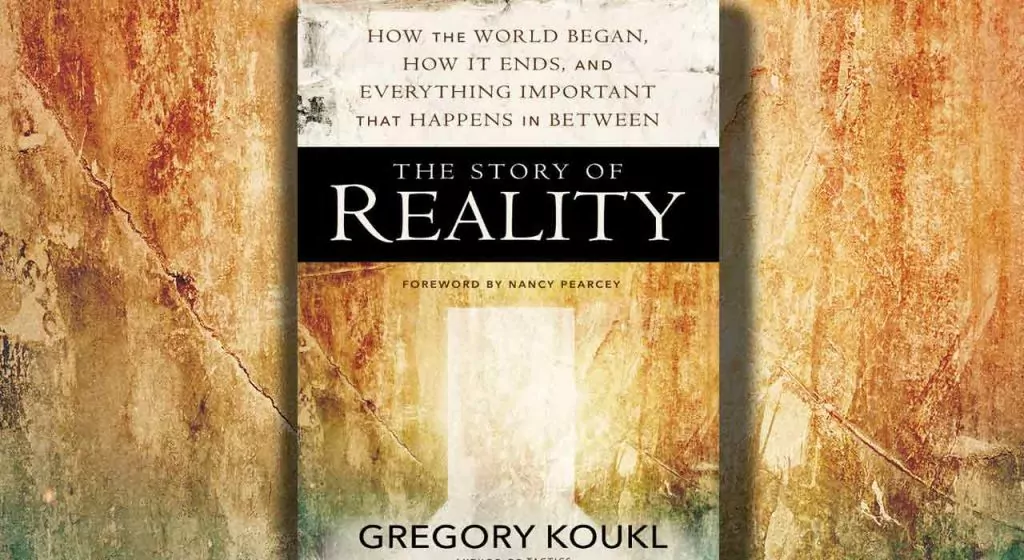
BOOK REVIEW: Greg Koukl's "The Story of Reality"

The Story of Reality: How the World Began, How It Ends, and Everything Important That Happens in Between by Gregory Koukl 2017 / 198 pages There are two types of apologetics books: there are the ones that tell you about defending the faith and then there are the ones that show you how to defend the faith. Greg Koukl’s new book falls into the latter category. It’s a book written with two main types of readers in mind. It’s for Christians who are struggling for answers to the big questions that come with the Christian faith. It’s also written for unbelievers who are open to considering the claims of the Christian faith. For both readers (and others), I think Koukl has something powerful to offer. The Story of Reality is a basic overview of most of the key elements of a Christian worldview. When I say it’s basic, I mean that it’s not written at a highly academic level. A high school or college student should be able to manage it. However, behind the basic level of communication, one familiar with the issues will recognize that Koukl is no slouch. The deeper stuff is in his grasp, but he has distilled it into something readily understood. A story but not fiction The concept of “worldview” is increasingly being criticized in Christian circles as something created by modern philosophy. Perhaps it’s for this reason that Koukl recasts the notion in terms of a story. In this story, there are characters and there is a plot. The main characters are God and man. The plot involves creation, fall, redemption, and restoration. But unlike other stories, the Christian story (laid out in the Bible) is objectively true — it is reality. Koukl addresses other competing “stories” such as: materialism mysticism/pantheism Islam He critiques these stories and shows how they’re inadequate for explaining the state of things as we see them. He then also provides ample argumentation to illustrate that it’s only the Christian story (or worldview) that can be true. Christianity is true because of the impossibility of the contrary. Readers familiar with Reformed presuppositional apologetics will recognize what Koukl is doing. His method is generally in that school. As I’ve noted before (in my review of his previous book Tactics), Koukl is a student of Francis Schaeffer, who in turn had been a student of Cornelius Van Til. Van Til was one of the pioneers of Reformed presuppositional apologetics. One of the key features of that school is a commitment to the place of Scripture in apologetics, not only as a foundation, but also as part of the actual method. Similarly, throughout The Story of Reality, Koukl is constantly either quoting or, more often, paraphrasing the Bible. This is highly commendable! Couple of cautions This is not to say that Koukl is always consistently in the Reformed school of apologetics. There are a couple of places where I put some question marks. In chapter 21, he discusses faith. He correctly notes that faith, in itself, does not save. Rather, faith is the instrument through which we are saved. Then he writes this: "This is why reason and evidence matter in the story. It is critical to get certain facts right. Put simply — reason assesses, faith trusts. That is the relationship of reason to faith. Reason helps us know what is actually true, leading to accurate belief. Faith is our step of trust to rely on what we have good reason to believe is so." There is some truth in this. You can say that faith needs and uses reason as a tool. However, there are also important limits to this. Above all, the unregenerate mind misuses and abuses reason because of sin. Unregenerate reasoning is not going to assess facts correctly. Deadened by sin, reason does not help you know what is actually true. Moreover, even when regeneration comes into the picture, human reason is going to run stuck with certain pieces of the Christian worldview (or story). Think of the Trinity. Reason assesses that doctrine and says, “Sorry, it doesn’t make sense.” Does faith then stop trusting? Faith has reasons for believing in the Trinity, but those reasons come down to the faithfulness and reliability of the One who revealed it to us, not the logical self-evidence of it. There were a few other questionable statements. In this blog post, I interacted with his suggestion on page 51 that the Big Bang is compatible with Genesis. In chapter 11, he opines that the Bible teaches that animals have souls. The biblical evidence offered for this is debatable. One addition would have been good I also want to draw attention to an omission. The subtitle tells us that the book will tell us “everything important that happens in between” the beginning and the end. But in Koukl’s story, an important part is missing. It’s the part where the lives of believers are transformed by the gospel. It’s the part where the Holy Spirit works to change us and make us into new people who take every thought captive for Christ in every area of life. I was hoping to read at least a paragraph, preferably a chapter, about that vital and wonderful part of the Story. It’s incomplete without it. A book worth buying for – and reading with – a friend Despite my criticisms, overall this is a well-written and well-argued book. Koukl deftly anticipates questions and objections. He uses helpful illustrations. The chapters are of such a length as not to be intimidating. If you know an unbeliever who is showing interest in the faith, I’d suggest buying two copies — one for yourself, and one for her or him. Offer to read it together and discuss it. You’d for sure find yourself enriched and, who knows, perhaps it would be God’s instrument to work faith in the heart of your friend too. For 5 great quotes from "The Story of Reality" click here. Dr. Bredenhof blogs at Creation Without Compromise and Yinkahdinay where this article first appeared. It is reprinted here with permission....

Red heart icon with + sign.
Children’s picture books

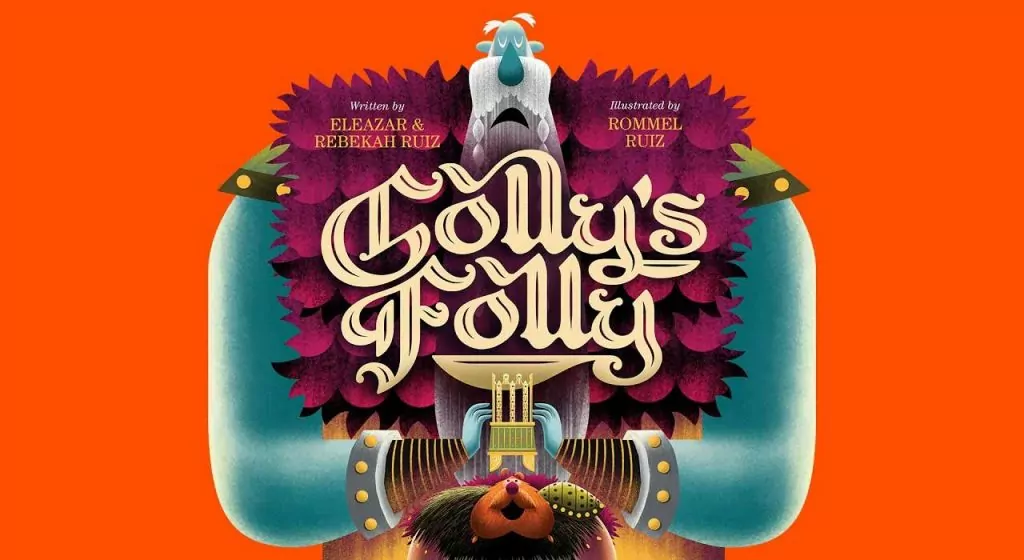
Golly's Folly: the prince who wanted it all

by Eleazar and Rebekah Ruiz illustrated by Rommel Ruiz 36 pages / 2016 Rating: Good/GREAT/Give Inspired by the Preacher's denouncement that "all is vanity," this is the story of Golly, a prince who wants more and more and more, but finds that nothing satisfies. It's all done in rhyme, which along with the bright pictures makes this one that kids 3 and up will adore! Our story begins with Prince Golly looking to power as the way to happiness. He convinces his father to give up his throne, so Golly can be king. And he is happy...for a time. Next he turns to things, telling his trusted advisor: "I want flocks of animals, and a farm on a hill. Get some of all kind – what a thrill! Build lots of houses, find rings for my hand. Oh – and I'd like my very own band." But the buzz from all this stuff only lasts for a while. And so Golly turns to food, partying, knowledge, but none of it brings him happiness and contentment. In his despair, he starts to cry. And then his father comes by. (It is hard to write a review of a rhyming book, and not start doing it yourself!) In Ecclesiastes the world turns out to be vanity, but life under God is not. In this story Golly also learns the world is vanity, and he looks to find contentment in submitting to his father. In doing so the story almost presents "family" as the ultimate good and the one true way to happiness and contentment. But, of course, his father, King Zhor, is meant to point us to our Father in heaven. That analogy shouldn't be pressed too hard, though, because while King Zhor gives up his crown, our Father doesn't. Maybe, in this act King Zhor is more comparable to Jesus humbling himself in becoming man. But it's not a direct parallel – like any analogy, the connections are partial, and incomplete. It's the gist that matters – the world is not enough! – not the details. I read this out loud to my kids once, without the pictures, and they already liked it. And the pictures are so vivd, that makes it all the more remarkable. I'd recommend it as a fun one to read in a family setting with kids of all ages because Golly's Folly could be a great conversation starter on the topic of seeking happiness from what the world offers. You can get the e-book for free if you subscribe to the publisher's newsletter here. https://www.youtube.com/watch?v=C_IWHm-a3VU...

Red heart icon with + sign.
Adult non-fiction, Book Reviews

Tactics: a game plan for discussing your Christian convictions

by Greg Koukl 2009 / 208 pages Rating: Good/GREAT/Gift What would you do? You’re in a public place and you encounter a woman with a pentagram hanging on a necklace. Maybe it’s a fellow student at university. Perhaps a neighbor. You see this pagan five-pointed star and what would you say? For most of us, we probably wouldn’t say anything at all. But that would be a missed opportunity, according to author and apologist Greg Koukl. When Koukl encountered a store clerk with a pentagram pendant, he used the moment to ask some key questions of the young woman. His well-placed questions challenged her to think about her way of looking at the world. Koukl’s book Tactics teaches how to use the same method in all kinds of circumstances. Koukl wants to help Christians learn to share their faith in a winsome and Christ-like manner. He wants us to be confident in promoting the Christian worldview and its values. An upgrade on what I had For some years I’ve been teaching my pre-confession students a short unit on apologetics, teaching them how to defend and promote the Christian faith. I don’t just want to them to know what they believe; I also want them to know why they believe it. They should be equipped to deal with people who don’t believe and who might challenge them on their faith. For this apologetics unit, I’ve been using Richard Pratt’s Every Thought Captive as a textbook. Pratt’s book is good in many ways, but I’ve been looking for something better. Koukl’s Tactics recently came across my desk and I thought I might explore that as an alternative. At first I was skeptical. I’ve explored other options over the years, some even from Reformed authors, and I’ve been disappointed. So far as I know, Gregory Koukl isn’t a confessionally Reformed fellow, so how could this possibly work out as my new apologetics textbook? After all, I believe it is crucially important for our apologetics to be grounded in our Reformed theological convictions. Reformed in approach… Well, what a surprise! If Koukl isn’t Reformed, his approach sure sounds Reformed in most places. As mentioned above, he teaches readers to ask carefully crafted questions. He calls this the “Columbo Tactic,” after the famous bumbling-but-very-effective TV detective. These Columbo questions are meant to dissect the unbeliever’s worldview and poke holes in it so that they see that their worldview is incoherent and inconsistent. He wants us to help the non-believer see that even if they have a very nice house, it has no solid foundation. Anyone familiar with Reformed presuppositional apologetics is going to recognize the language and approach. Besides asking well-crafted questions, Koukl also suggests a few other strategies. One of them he calls “Taking the Roof Off.” This involves getting into someone else’s worldview or argument and taking it for a “test drive” to see where it ends up. In the words of Proverbs 26:5, it is “answering a fool according to his folly.” In this excerpt, Koukl shows how that might work: The story is told of an atheist philosophy professor who performed a parlor trick each term to convince his students that there is no God. “Anyone who believes in God is a fool,” he said. “If God existed, he could stop this piece of chalk from hitting the ground and breaking. Such a simple task to prove he is God, and yet he can’t do it.” The professor then dropped the chalk and watched it shatter dramatically on the classroom floor. If you meet anyone who tries this silly trick, take the roof off. Apply the professor’s logic in a test of your own existence. Tell the onlookers you will prove you don’t exist. Have someone take a piece of chalk and hold it above your outstretched palm. Explain that if you really exist, you would be able to accomplish the simple task of catching the chalk. When he drops the chalk, let it fall to the ground and shatter. Then announce, “I guess this proves I do not exist. If you believe in me, you’re a fool.” Clearly this chalk trick tells you nothing about God. The only thing it is capable of showing is that if God does exist, he is not a circus animal who can be teased into jumping through hoops to appease the whim of foolish people. Later in the book, one learns why Koukl’s approach is reassuringly comfortable to a Reformed apologist: by and large he learned it from Francis Schaeffer, who in turn learned it from Cornelius VanTil (the father of modern Reformed apologetics). What I appreciate most about this book is that it isn’t top-heavy with theory. Koukl provides the basic approach and then spends the greater part of the book illustrating how to use it. And he illustrates well. His writing is clear, concise, and enjoyable to read. I think my pre-confession students are going to love it! One caution Were there any issues or concerns? Let me mention one. In chapter 2, Koukl discusses the use of our minds and logic. A lot of what he says there is good and true. However, on page 32, he makes what he recognizes will be a controversial statement to some: “Therefore the mind, not the Bible, is very first line of defense God has given us against error.” This is because, he says, the mind is first in terms of the order of knowing things. I know what he is trying to say, yet he seems to create a false dilemma between the Bible and the human mind when it comes to our knowing. For us to know rightly, we need to have our minds regenerated by the Holy Spirit and our thoughts guided by the Word of God. It’s not a case of either…or, but both…and. In the words of Psalm 36:9, it is in God’s light that we see light. Our thoughts are meant to follow after God’s thoughts. Conclusion Obviously I’m going to highly recommend this book to anyone else teaching apologetics, whether to young people or others. In school Bible classes or church catechism classes, this little book could add some extra punch to your instruction. Moreover, for anyone just interested in becoming better at sharing our Christian hope with others – which should be all of us – you need to read this book too....

Red heart icon with + sign.
Adult non-fiction

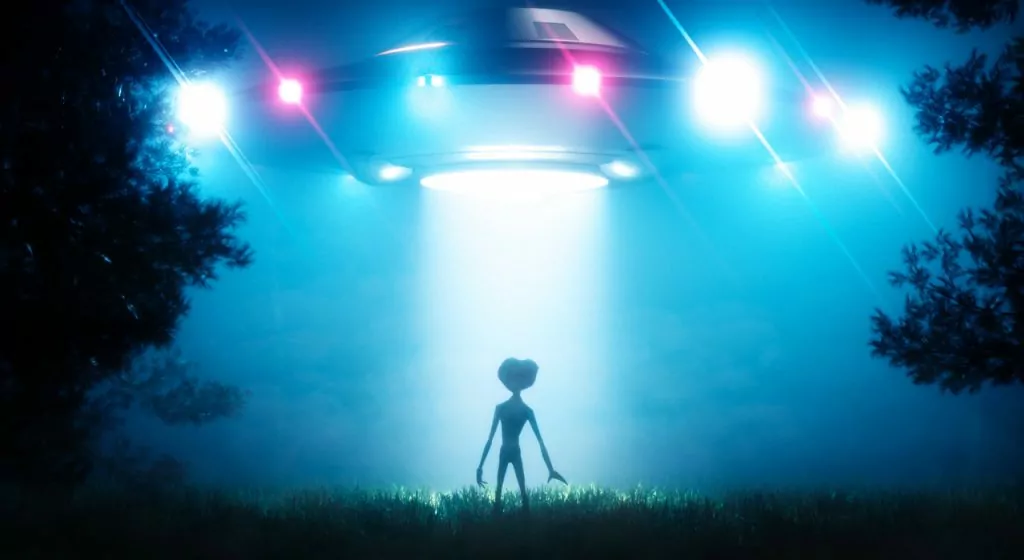
Alien Intrusion: UFOs and the Evolution Connection

by Gary Bates 2004 / 382 pages Rating: Good/GREAT/Gift Are people actually being abducted by aliens? That’s the question being asked by this book…and the recently released documentary based on it. The author is Christian, so you might expect he’d answer with an emphatic “no,” but Gary Bates's response could best be summarized as, “sort of.” The way the book is structured, Alien Intrusion could be given to anyone, Christian or not. The cover and first few chapters hardly give a hint that this is a Christian book since, initially, it seems to be making a case for UFOs and aliens. Bates notes that millions of people, including a past president of the United States, claim to have seen a UFO, and he discusses how many popular TV shows, like Star Trek and various science fiction movies like 2001: A Space Odyssey, assume that aliens are somewhere out there. But after delving into what people think about aliens and UFOs the author then begins, step by step, to explain why aliens could not possibly be visiting us from other planets. Most of the reasons are simply practical – the distances are too far and the energy needed simply too immense. Despite the fact that it is physically impossible for aliens to be visiting us, the author doesn’t believe that every story of alien abduction is simply a lie or a delusion. After debunking many famous “UFOlogists” Bates notes that there are still too many ordinary folks making abduction claims – people who have nothing to gain, and personal credibility to lose – to simply dismiss the phenomenon altogether. This is where the book starts to become clearly Christian. The author argues that it is only now that our world has embraced evolution (and dismissed God) that UFO sightings have become so prevalent. There is also a strong correlation between UFO belief and occult experimentation – many of the more famous “UFOlogists” have also dabbled in the “dark arts.” It is worth noting, too, that the messages “aliens” pass on are often direct attacks on the Bible, portraying Jesus not as the Son of God, but merely as some advanced alien. So are people being abducted by aliens? Bates argues that while some people may indeed be having these encounters it is not with aliens but rather with demons masquerading as extraterrestrials. Now, I’ve not yet seen the 2018 documentary of the same name, but the trailer (see below) looks promising. I suspect that it follows the same sort of format, first presenting the evidence for an alien intrusion, before then explaining why it just isn’t so. As for the book, it is fantastic, and a great gift for anyone interested in science fiction, Bates employing a solid Christian worldview to separate the fact from the fiction. https://youtu.be/0ZxYkM7PB7U...

Red heart icon with + sign.
Adult non-fiction

4 books on the irreconcilable divide between Creation and Evolution

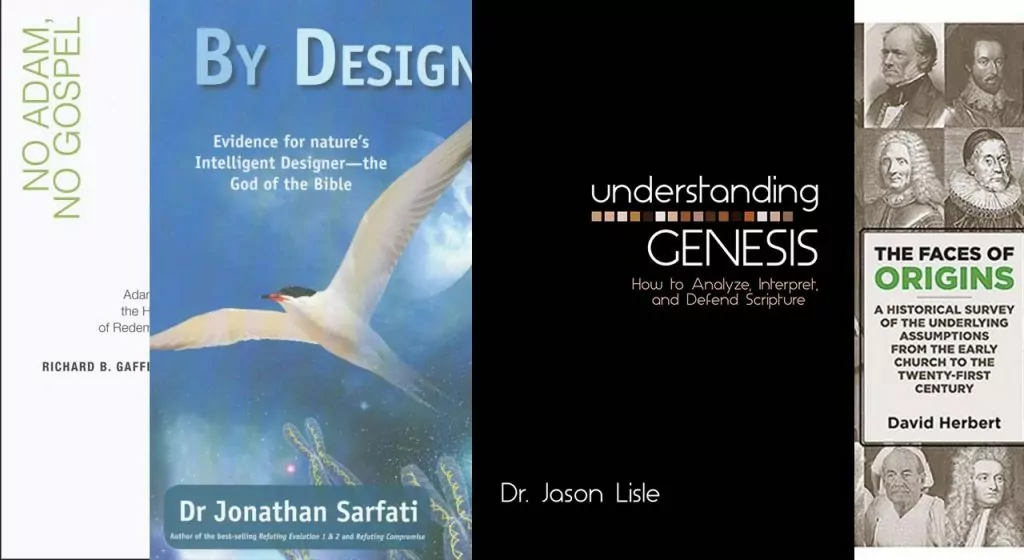
Four encouraging books to equip the Church in the current Evolution vs. Creation debates, listed by size, smallest to biggest. No Adam, No Gospel: Adam and the History of Redemption by Richard B. Gaffin Jr. 29 pages / 2015 More and more professing Christians are accepting scientific theory that suggests that man-like mammals (hominids) preceded the coming of Adam by millions of years. Biologos, a well-funded organization, is also pushing evolution using scholars who have a conservative reputation to convince people to accept evolution. But what does affirming evolutionary origins of the human race do to the gospel? Can you affirm that Adam was not historically the first human on earth without jeopardizing the Good News? Professor Gaffin clearly shows that “the truth of the gospel stands or falls with the historicity of Adam as the first human being from whom all other human beings descend.” After clearly explaining Romans 5:12-19 and 1 Corinthians 15:21-22, 45-49, Gaffin responds to The Evolution of Adam, a book written by a popular Old Testament scholar, Peter Enns. Gaffin shows how the views of Enns lead to a complete abandonment of the Reformed faith in its biblical understanding of sin, salvation, and death. Indeed, no Adam, no gospel! The results of accepting evolution theory are disastrous for the Christian faith. Although a small publication, this booklet is timely and packed with excellent biblical insights. I highly recommend it. The Faces of Origins by David Herbert 180 pages / 2012 It’s often said that new scientific knowledge has made it impossible to continue to accept the truth of the Genesis creation account, that this new knowledge meant scientists had no choice but to accept evolution. Herbert challenges this narrative. He says it wasn’t the new knowledge, but a new worldview that led to the rejection of the Genesis creation account. Western civilization left a worldview based on biblical revelation, where God was actively involved in history, and instead embraced a naturalistic worldview based only on reason. Naturalism believes that natural processes alone are sufficient to account for life and creation. Herbert shows that for eighteen centuries a biblical understanding of origins had the upper hand. Real change came during the seventeenth century. Indeed, BenoÎt de Maillet (1656-1738) was the first modern uniformitarian and evolutionist. Once scientific findings were interpreted without God, through the lens of naturalism, evolution became the most popular explanation of our origins. This in spite of the fact that the empirical evidence points to design and not evolution. The price of excluding God and denying Genesis is high. It has led to a resurgence of atheism. This book is a great and easy read. By Design: Evidence for nature's Intelligent Designer – the God of the Bible by Jonathan Sarfati 260 pages / 2008 The Bible tells us that God’s “invisible attributes, namely, his eternal power and divine nature, have been clearly perceived, ever since the creation of the world, in the things that have been made, so they are without excuse” (Rom 1:20). One implication of these words is that scientists who study creation must be able to see something of God’s awesome power and wisdom. Yet, most mainstream scientists steadfastly refuse to give glory to God and instead seek to honour the god of their making, the theory of evolution, to account for the wonders of creation. This delightful book illustrates magnificently how God’s glory can indeed be seen in his handiwork. God’s design is evident everywhere and it all argues against evolution. For example, God has put an incredible amount of information in creation to enable everything to work properly. “There is enough information capacity in a single human cell to store the Encyclopaedia Britannica, all 30 volumes of it, three or four times over.” This book is chock-full of all sorts of examples of God’s wonderful design, including the incredible designs allowing sight, smell, flight, orientation, and stickiness. Critics are answered and God’s wisdom is celebrated. Understanding Genesis: How to Analyze, Interpret, and Defend Scripture by Jason Lisle 496 pages / 2015 Building on his The Ultimate Proof of Creation (2009), Jason Lisle, who has a doctorate in astrophysics, goes into considerable detail in outlining the rules and principles for correctly interpreting God’s Word. He wants to logically refute faulty interpretations of Genesis and equip Christians to defend God’s Word against compromised positions, especially with respect to Genesis. These concerns take up the first half of the book. The second part of the book goes into considerable detail in applying sound principles of interpretation to the matter of geocentricity, the age of the earth, theistic evolution, and the extent of the Genesis flood. Two appendices on a defense of the Trinity and formal fallacies round off the book. Lisle’s approach is sound and he does an excellent job in fleshing out how to interpret Scripture. He resists the temptation which earlier creationists like Henry Morris fell into by claiming that the Bible is a scientific textbook and so this book appears to be a significant improvement in the manner in which the Bible Is used. Lisle rightly prioritizes Scripture over scientific theories and through careful exegesis wants to let the Word of God speak. This is a very helpful book. Dr. Van Dam is the Emeritus Professor of Old Testament at the Canadian Reformed Theological Seminary and the author of several books including "The Deacon: The biblical roots and the ministry of mercy today," and "The Elder: Today's ministry rooted in all of Scripture."...

Red heart icon with + sign.
Adult fiction, Teen fiction

Katharina, Katharina: the story of Katharina Schutz Zell

by Christine Farenhorst 328 pages / 2017 Rating: Good/GREAT/Give In the past year, inspired by the 500th anniversary of Martin Luther nailing up his 95 theses (or did he?) I've read about a dozen works on Luther. This is a favorite. One reason I love it so, is because it offers something very different from the others – this about is Luther and his time, but he isn't the main character. He isn't even a minor character, never making an in-story appearance. The events take place miles away from Luther's Wittenberg, in the French city of Strasbourg, on the border with Germany. The story centers around a middle daughter of the middle-class Schutz family. Like their neighbors, the Schutz's read and discuss Luther's pamphlets. By taking a step back from the man himself, author Christine Farenhorst (as regular RP readers will know, she is a long-time contributor to the magazine) give her readers the opportunity to encounter Luther's ideas in much the same way as the people of his time did. They didn't debate his ideas at the start, so much as wonder what to think of them. Some of his points they could readily agree with – many saw a need for at least some sort of reformation of the Church. But his thoughts on indulgences... might he be right? We follow the title character from childhood up until her mid-twenties. Though Katharina Schutz is a real person, this is historical fiction – all the big events are true, but the day-to-day details of Katharina's life have been made up. This is why, even as a background character, Luther still dominates the story. Katharina's life is fascinating reading but because much of it is speculative, it serves as the foundation while what we learn about Luther here is his real, actual history. One of the strangest bits of true history in the book is the dancing plague of 1518 that hit Strasbourg. Victims couldn't help but dance. It would have been funny except that this stilted, clumsy dancing never stopped - as many as 400 dancers kept going for days and days, beyond exhaustion, and even to the point of heart attacks and strokes. Target audience This is a teen to young adult book, but like any good children's book, adults interested in their church history will find it fascinating. However, as a third of all children at that time died before they hit age 5, there are some parts to Katharina's story that would be bawl-inducing to anyone under, say, 10. The somewhat slow beginning – it took until chapter 4 to really grab me – also makes it better suited for readers with a little maturity to them. That said, one of my daughters loved it as a 12-year-old, and had re-read it a couple of times since. Conclusion There is a real benefit to learning about Luther in this one-step-removed fashion. I was fascinated by what I learned about the people and culture of that time. It gave me a deeper understanding of the pressures that Luther faced, and insights into how God prepared the ground for the Reformation Luther sparked. It is a fascinating story that I look forward to reading with my daughters. This review first appeared on ReallyGoodReads.com....

Red heart icon with + sign.
Adult non-fiction, Science - Creation/Evolution

The Galileo myth: Stories that we all know, often ain't so

As we grow up, receiving instruction at home and at school, we hear many stories that are enduringly imprinted on our minds. Even years later, an adult is often able to recount in detail that vivid scene in the court of King Solomon when he had to rule in the case of the two prostitutes and the one baby, or is able to describe the story of our Lord and the little man Zacchaeus who waited for him in the sycamore-fig tree. But Scriptural stories are not the only ones imparted to us as we go through the years of our elementary and secondary education. We also hear other “timeless tales,” stories that everyone knows through one source or another. We all know, for example, the story of the flat earth; in the Middle Ages, people believed that the earth was flat and believed that those who went too close to the edge would fall off. It is usually said that this was the official teaching of the church, and was something that restricted any voyages of discovery. The church’s ignorance on this point is considered another aspect of the superstition and intellectual decline that typified the so-called Dark Ages. But though the “villains” of this story, the ignorant ecclesiastical leaders, tried to squelch any exploration, the “hero” Columbus bravely stood against the power of the church and its feared Inquisition, and ventured out onto the high seas – and lived to tell about it. Other familiar tales from the past could be added to this one, stories that have been told so often and so widely that they attain the status of “myth.” The purpose of a Myth When we say “myth,” some might automatically equate this with fiction or fable. But “myth” in a wider sense is a grand story, sometimes true, sometimes not, that explains who we are and how we fit into the universe. A tale told and re-told and perhaps re-enacted on television becomes part of the understanding of our past and of our position today. In the tale of the flat earth, we are confirmed in our view of the Middle Ages as a period of ignorance and superstition. The church was blindly opposed to scientific progress, while intelligent sailors courageously showed the conventional understanding to be wrong – a well-known story, but one that is not true. Contrary to the details of this tale, historians have long recognized that all educated people of the medieval period knew that the earth was round, and that the account of the church’s suppression of the intrepid Columbus is pure fiction. And yet this myth is still retold, for it nicely contrasts for our minds the rational modern world with the foolish bigotry that preceded it. It is the place of modern myths that Philip Sampson examines in his book, 6 Modern Myths About Christianity and Western Civilization. After providing the example of the flat earth in his introduction, he looks at other tales that are less innocuous, larger stories that influence the perception of a whole culture – myths that invariably assault Christianity and misrepresent the Scriptures, while lauding humanism and reason. Sampson has selected six grand stories, the most common value-conveying tales. “ are the modern mind’s way of communicating its beliefs about the fundamental problems of origins and meaning…A myth presents values and beliefs to us as though they were facts and history.” He observes that myths are not necessarily invented with the conspiratorial intention of obscuring the facts, but are told as reflections of the society that tells them. The pattern of a Myth Before beginning his work of showing how several “meaning-carrying” modern myths are truly fictional, Sampson summarizes their general characteristics. The vocabulary connotations in each diverse story are remarkably similar: religion is typically associated with belief, omens, ignorance, superstition, heresy, excommunication, torture, and blood; science is always associated with enlightenment, scholarship, intelligence, open-mindedness, and observation. Each story will also have a plot (usually the struggle of a free-thinking underdog against the ignorant church), a hero (an independent thinker), and a villain (the representative of the powerful church). These stereotyped characteristics already betray the selectivity and bias that underlie each myth. In the book, six modern myths are first retold, often in the very words of the philosophers and historians that perpetuated these falsehoods and their intended cultural meanings. Sampson then carefully debunks these ideas, telling the real, more complex stories. In addition to Galileo, he tells of: Darwin and how his ideas were received in "A Story of Origins" Christianity’s impact on the environment in "A Story of Mastery" how missionaries treated native peoples in "A Story of Oppression" Scripture’s view on the human body in "A Story of Repression" the Church’s treatment of witches in "A Story of Persecution" Let’s join Sampson as he deals with the first of the six myths, Galileo. Galileo: a story of a hero of science! The story of Galileo tells us how we fit into the modern world: “We occupy a small planet circling an average sun of one galaxy among many.” “The Received Version” is probably familiar to our readers: the setting is Renaissance Italy; the plot is the warfare between science and religion; the characters are the plucky Galileo, armed only with a telescope, and the cruel Inquisition and her thumbscrews; the story’s end is that Galileo was tortured, condemned as a heretic, and left to rot in a prison cell, while science floundered. A geo-centric or "Aristotelian" model of the universe from Oronce Fine's 1549 book "Le Sphere du Monde." The contrast is between the high ground of reason and observation and the cramped cell of religious dogma and truth. As many schoolchildren learn, “The Bible said that everything moves around the earth but Galileo’s observations showed that the earth moves around the sun.” It’s a familiar tale, but as Sampson observes wryly, “The main drawback…is that most of it is untrue.” So what is the truth? Sampson then does some “demythologizing.” The dominant model of the universe in western Europe up to the late Middle Ages was derived from Aristotle, who reasoned that the heavens, a perfect, unchanging realm, would also be unchangeable in their physical qualities and motion. The earth is at the centre (lowest point) of a universe of concentric spheres, but while the heavenly bodies are ever-perfect, the earth is made of imperfect, changeable matter. This Aristotelian cosmology was essentially the standard view, until the “revolution” of Copernicus (who died twenty years before Galileo was born), who revived the ancient Pythagorean hypothesis that the sun, not the earth, is at the centre of the universe. A common sub-plot in this “cosmic” myth had to do with how man’s importance was tied to where the earth was placed in the universe. It is usually asserted that the pre-Copernican men had an exaggerated and arrogant sense of human importance and that was why they placed earth as the center of the universe. Then, when it was discovered that we are only “the third rock from the sun,” man was humbled, and simultaneously Scripture was undermined: “If man’s abode was not at the centre of things, how could he be king ?” But, as we have seen, the pre-Copernican cosmology was no compliment to earth’s occupants, for in that model the earth is the least important and most transitory place in the universe. Indeed, it was the Copernican system that elevated humanity, lifting the earth to the ranks of perfect heavenly bodies and its inhabitants to heavenly creatures. Far from engendering humility, the end result of the Copernican view was a proud glorification of man and his ability. Mock the Pope at your peril The question must be asked, though: Why Galileo as the hero? Why not Copernicus, who had earlier made the key contribution to the “new” cosmology? Sampson notes that Copernicus is not an appropriate character, for he was a canon of the church, he enjoyed the support of the pope, and his book circulated without problem for many years. But Galileo – he was condemned by the church for teaching that the sun is the centre of the universe, and his book confiscated. The retold modern tale features the persecuted Galileo as scientist and hero. It is said that he invented the telescope, discovered how the earth moves around the sun, conducted his famous experiment on the Leaning Tower of Pisa, and asserted, even in the face of the powerful church, that it is the earth that moves. The truth is, he didn’t invent the telescope, likely didn’t drop cannon balls from the Tower, and didn’t discover the dynamics of the pendulum. He did make major contributions to astronomy, but could not prove that the earth moves around the sun. Indeed, there was insufficient evidence at Galileo’s time to prove the Copernican view. Copernicus had been hesitant at first to publish his opinions, not for fear of church punishment, as is said, but for fear of being ridiculed by fellow astronomers who still maintained the dominant Aristotelian cosmology. Galileo feared the same rejection, but persistently asserted that the earth literally moves around the sun, “and popularized his views in snappy Italian rather than the arcane Latin of the universities” His book on cosmology became a bestseller. Galileo’s relations with the (Roman) church at this time were cordial. Most of the church leaders favored his view over Aristotle’s, though they acknowledged that more evidence was needed to establish his case. They judged that Galileo’s view made excellent sense “as a hypothesis.” But Galileo then began to push the envelope; to prove that the earth revolves, he proposed an ingenious but erroneous theory of tides, he argued that comets were a form of optical illusion, and he reinterpreted certain Scripture passages in the light of Copernican reasoning. Then the last straw: he also wrote a “dialogue” in which his view and the Aristotelian view are represented by two characters. In the dialogue, he put a favorite cosmological argument of his friend Pope Urban VIII in the mouth of the conversation’s simpleton. As Sampson notes: “this was not a wise move, and the rest is history.” The major cause of Galileo’s troubles was then not his view of the earth’s motion as such, but that he had made fun of his Holiness. Sampson notes that today most historians accept that the events surrounding Galileo’s troubles with the church involved complex intrigues of politics and patronage rather than “dogmatic reservations” about Biblical teaching. The dialogue was confiscated and Galileo summoned to Rome in 1633. But the stories of dank prison cells and torture are modern embellishments; he was detained, and forced to abjure heliocentrism, but he was given his own room and servants, in keeping with his position of favor in the Roman church. In the end he did not die a lonely and broken man, as the Received Version runs, but returned to his home with a church pension to live out his years in peace. It is said that a larger result of the imagined escapade was that science long floundered under the church’s domination. But Sampson, having dispelled the modern myth of a brave Galileo resisting an ignorant church, now points out another historical fact: rather than warfare between science and religion in this period, there are direct positive connections between them. The Reformation churches, in particular, replaced Aristotelian reasoning (still persistent in the Roman church) with insights from the Bible, and so provided the soil that enabled science to grow. The relationship between Biblical Christianity and the rise of science is a complex one, but Sampson identifies four basic aspects of it in the Reformation. Firstly, there was a restoration of the perspective that nature is created and not divine, and is therefore open to free inquiry and investigation. Secondly, the principle of man’s God-given dominion over creation, not domination, was rediscovered. Thirdly, reason was properly demoted as dependent on God and not vaunted as a “key” to unlocking God’s secrets, thus encouraging again the study of creation. Fourthly, God’s sovereign care for creation was again recognized, with the corollary that certain God-ordained laws in the universe could be discovered through science. The theme of conflict between religion’s ignorance and science’s enlightenment is at the heart of the Galileo myth. A proper historical study demolishes the oft-repeated tale that lauds free science and mocks repressive religion, and affirms instead the positive framework that Biblical Christianity affords to free investigation. Postmodern stories Modernity asserts that reason, facts, and scientific achievements underpin its self-confidence, yet it is persistently told fables that in reality receive the central place in the communication of its worldview. Indeed, it is nothing new that stories are used to pass on modernity’s core beliefs – many societies have used narrative in this way. The question must be asked though, says Sampson: why do the modern myths have such a negative focus, concerned with the warfare between science and religion, reason and superstition? He suggests that this myopic view represses another story, “one less congenial to the modern mind,” namely that of the damage science has done (e.g., the Chernobyl disaster) and of the brutal reality that confronts the idea of human progress (e.g., two world wars). “Modern myths constantly reinvent a superstitious image of religion in order to brush it aside and with it modernity’s role in oppression.” A well-told story provides an opportunity to neglect the facts and distract attention from corporate shortcoming and guilt. Postmodernism has recognized the unrealities in modernism’s vision of the world, but the familiar stories have not disappeared. Rather, modern stories are still used, but now selectively, and with strange bedfellows. The modern myths’ presentation of enlightening science is combined with elements of “spirituality” (e.g., the tale of Galileo is accepted by the same person who puts credence in his daily horoscope). Today, tradition and religion are not rejected, but are incorporated with science, in accord with postmodernity’s spirit of eclecticism. And so the falsehood of retold myths will continue to confront us in this postmodern age. On the book At first blush one might think that Sampson’s book is only another example of “revisionist history,” where historical events or periods are radically reinterpreted, usually to conform to the historian’s implausibly slanted thesis. But a consideration of the great amount of research carried out by Sampson, also in primary sources, should dispel any fear of revisionism. Indeed, every historian will write from his own perspective and presuppositions, making “objective” historiography impossible. At the same time, we can be honest and careful with the historical evidence that we examine and interpret. Sampson’s honesty is observable throughout his book. Though depicting the modern myth as invariably characterized by stereotyped features, he resists the temptation to do the same in his retelling. For example, though refuting the image of an ignorant and repressive Christianity, he acknowledges where churches and popes were autocratic; though disputing the extent of the witch hunts (also in Salem, Mass.), he concedes that many women were wrongly killed by Christians for exaggerated charges or suspicions of witchcraft. 6 Modern Myths About Christianity and Western Civilization is relatively short, but bursting with the fruits of Sampson’s research. A slight criticism would be his use of endnotes, which necessitate the use of two bookmarks (which aren’t that scarce, I know) – the interested reader always has to flip to the back of the book to read his often fascinating footnotes, as Sampson digs up varied and obscure sources. The book is not a light read, but it is a stimulating and exciting one, as we accompany the author to the courts of Renaissance Italy, to the jungles of South America, and to the colonial towns of New England. He also provides an abundance of “signposts” for the reader to follow him to his startling conclusions. Sampson clearly works from a perspective that values the historicity and authority of the Bible. Though he has much to say that is negative about modernity’s credos and their narrative expression, he also makes positive statements about the value of a truly Christian worldview, one that touches all of life and offers a proper approach to all we encounter. This book would be eminently helpful for any thoughtful Christian reader. Its appeal is broad because the stories Sampson treats are well-known to many of us – familiar stories, but ones whose values and bases are not usually recognized for what they are. With the help of this book we may continue to assert in the world the relevance of the Scriptures for everyday life and may continue to witness to the true freedom that the gospel of grace affords. Rev. Reuben Bredenhof is pastor of the Mt. Nasura Free Reformed Church in Western Australia. You can find a Dutch translation of this article here. For more on the Galileo myth, see also this excellent article on First Things....

Red heart icon with + sign.
Adult non-fiction, Book Reviews

Sex Matters

128 pages / 2015 Sex Matters is a book intended for Christians – McKee provides answers from the Bible and explains the Bible’s message using research and real life examples. Jonathan McKee wants to make it easier for parents to talk to their kids about sex, and to that end he’s written a book for parents to give to their teens, which addresses the two common questions, “Why wait?” & “How far?” WHY WAIT? Why wait? McKee takes over 20 informative pages to explain the statement, “God has given the gift of sex to enjoy in marriage.” And in addition to making the biblical case, he shares how research shows that this command is in alignment with how human beings function. HOW FAR CAN I GO? How far can people go, and when should they stop? McKee’s answer rests on the rather obvious observation that once the process is started it is designed to be continued. That is why it is so difficult to stop, a fact that has been known for millennia. So his advice? Don’t start the process; don’t do anything you would not do in front of your grandmother. WHAT DOES FLEEING SIN LOOK LIKE? Sex outside marriage is a huge temptation, especially in our media-saturated culture, and it is the one temptation the Bible repeatedly tells us to flee. McKee explains clearly what fleeing temptation means for girls and how it is different for guys. Christians need to understand the truth, recognize natural consequences, and establish safeguards, and parents need to help their teens do these things as well as to encourage them to take responsibility themselves. McKee also covers the dangers of porn, questions about masturbation, and the effects of abuse. Over and over he turns to the gospel, reminding young people that Jesus offers a fresh start for everyone, whether you have sinned or been sinned against. He also encourages young people to remain pure by pointing out that a few years of self-discipline can be traded for a lifetime of awesome connecting without baggage after marriage. Who in their right mind would choose anything else? But the trouble is that we are sinners and that disobedience seems so attractive. Finally, McKee offers some practical suggestions: Marry earlier. Be careful what you listen to and watch, what you wear, who you are alone with, and where you go. Beware of the dangers of the Internet and install safety systems. CAUTION I will add one caution. Sex Matters is a book for teens exposed to our culture and, as such, it can be explicit. When parents wonder if the book itself could cause more problems than it solves, McKee’s response would be that our culture is explicit, and that equipping our teens requires us to be forthright. So do pre-read this before giving it to your teen to see if it meets your expectations. CONCLUSION McKee’s Sex Matters is a valuable book (especially in conjunction with More than Just the Talk, which he’s written for parents). It is unabashedly Biblical – so much so that our huge public library refused to buy it – but it deserves a place in home, church, and school libraries and would be a blessing to any community that has it in its public library. What’s more, it is short (only 122 pages), easy to read, and contains discussion questions at the end of each chapter. I highly recommend it. This is adapted from a review on Tea Time with Annie Kate and used with permission. The original can be found here....
Red heart icon with + sign.
Adult non-fiction, Book Reviews, Teen non-fiction

No Christian Silence on Science

SCIENCE FROM A CHRISTIAN PERSPECTIVE by Margaret Helder 2016 / 110 pages Rating: Good/GREAT/Gift From the title onward, No Christian Silence on Science is a clarion call to Bible-believing, six-day creation upholding Christians to stand up and be counted. It's much more than that too. The author, Margaret Helder, has written for Creation Science Dialogue and Reformed Perspective  for years, and if you've read her there, then you know Dr. Helder approaches God and His creation with awe, and teaches us how to tackle evolution without fear. This book is very much an outgrowth of that work. This, then, is intended to equip us, so we will be able to give a ready defense of our faith, and fortify us, so we will continue to trust in God, even when we face that attacks that will come in this predominantly Darwinist and secular field. That's a big task to tackle in a book that's just 110 pages. That's why, while this is a great book, it is no light read - there is a lot packed in here. In the five sections Dr. Helder addresses: Science from a Christian Perspective How Design in Nature reveals God's Character and Work Christian vs. Darwinian Ethics The Christian Student: Meeting the Challenge of Secular Institutions Impact of Evolution Thought on Church and Society My favorites were the last two. They are worth the price of the book all on their own, and if I was giving this to a university student I'd tell them to head to Chapter 4 first, to hear Dr. Helder's advice on how to interact with evolutionary-minded professors. At one points she gives an example of a find that seems to prove evolution, and she then shows how a Christian student could respond. She suggests students be ready to ask questions, and starting with the 5 Ws is always a good idea (in Science, and journalism too!). A question-asking student will often find that this new, exciting, revolutionary find, is being really over-hyped. That's not to say creationists have all the answers. As Dr. Helder notes, in the early and mid 1900s Christians holding to a six-day creation had little supporting scientific evidence available to them, so it was only because they were so confident in the trustworthiness of the Bible that they weren't swayed by evolution. Today many problems with evolution can be pointed to, but there will still be occasions where a challenge to the biblical explanation is presented that we cannot answer. And perhaps we won't be able to answer it for several decades. But we, too, should hold to the Bible, because it is trustworthy. Who should read No Christian Silence? This will be of interest to anyone, but for the young high school graduate heading into the Sciences this is a must. If they were to read it before heading to their first university science class, and really work through it slowly and thoughtfully, they would be well-prepared. There are other books they should read too, but this is a very good place to start because Dr. Helder covers all the key controversies, and gives good solid direction on how to meet and deal with the opposition. No Christian Silence on Science is us available through the Creation Science Association of Alberta website or can be had by sending a $20 check ($14 for the book and $6 for shipping) made out to the CSAA, at 5328 Calgary Trial, Suite 1136, Edmonton AB  T6H 4 ...

Red heart icon with + sign.
Book Reviews, Children’s fiction, Teen fiction

Wings of Dawn

by Sigmund Brouwer 1999 / 456 pages Rating: Good/GREAT/Give Why would anyone go through all the trouble of building an immensely strong castle in the middle of the North York moors in England? Why else but to hide a secret organization of intellectuals who are protecting the wisdom of past ages. The plot of this novel is based on the tension between two secret societies. The first group, the Druids, have their roots in early British history. Brouwer proposes that after the Druids were repressed by the Roman Empire they went underground and plotted to regain power. The second secret society grew from the first. According to Brouwer, Merlin was the best and brightest of the Druids and he was slated to bring the Druids back to power, but Brouwer’s legend has it that he was converted to Christianity by a simple priest. As a result of this conversion, he is said to have foiled the Druids' plan and established his own secret society, the Merlins, to counteract the efforts of the Druids by using and conserving the knowledge of the Ancient Civilizations. But now it is 1312 A.D. and after centuries of struggle, Magnus, the castle Merlin had built to carry on his struggle, has fallen under the control of the Druids. The only hope for the Merlins is a teenage boy who either carries the secrets needed to regain the ascendancy or has been turned to the Druid cause. This young man, Thomas, becomes the center of the conflict between the Merlins and the Druids. Always unsure of who he can trust Thomas conquers and loses Magnus. He is forced to flee from England to Palestine and is chased even there. He returns to England where the conflict even involves the king’s immediate family. Although this is an excellent novel, Brouwer falls short on a few points. First, although Thomas’ uncertainty about whom he can trust works well early in the novel it drags on much too much. The same questions are raised again and again about the same people even when they seem to have proven their loyalties earlier in the novel. Additionally, the characters that Brouwer develops lack depth. One finds the rough but noble knight, the fair lady, the wise old man, and the evil scheming villain. Even Thomas himself has that youth destined for glory feel, like some medieval Luke Skywalker. Still, despite these failings, this is an exciting piece of historical fiction. In a historical sense, the accuracy with which Brouwer recreates the time and setting of the novel is excellent. Naturally, certain events are changed to reflect the existence of the Druids and Merlins but the book feels right, historically. Brouwer also provides chapter-by-chapter historical notes that explain how the novel could fit into history. Even the questions about who Thomas can trust, although they are overused, provide an “I can’t put the book down” level of tension for much of the novel. However, the most gripping part of Wings of Dawn is the way that knowledge proves itself the true power. The secret Merlin and Druid societies take so many unexpected twists and turns in their pursuit of knowledge that all the reader can do is hang on and enjoy the ride. As a Christian novel, Wings of Dawn very successfully manages to be solidly Christian in nature without feeling the need to scatter the pages with incessant sins and weaknesses or seemingly superficial conversions. Thomas begins the novel as a somewhat materialistic agnostic and he, as well as the other characters, has his weaknesses but they aren’t frivolously exploited for sensational reasons. He is soon converted to Christianity but his conversion is simple and believable. Really, when the book deals with overtly Christian themes, they are themes that one can identify with. One sees faith carrying Thomas through extreme trials but he experiences realistic doubts and shows realistic weaknesses. In the final analysis Wings of Dawn is an excellent novel. Its sound historical background gives it an authentic feel. It provides an excellent level of tension and uncertainty and the twists and turns it takes keep the reader guessing throughout. I would strongly recommend Wings of Dawn to anyone interested in an entertaining Christian novel. This novel was originally published under the title Magnus. ...
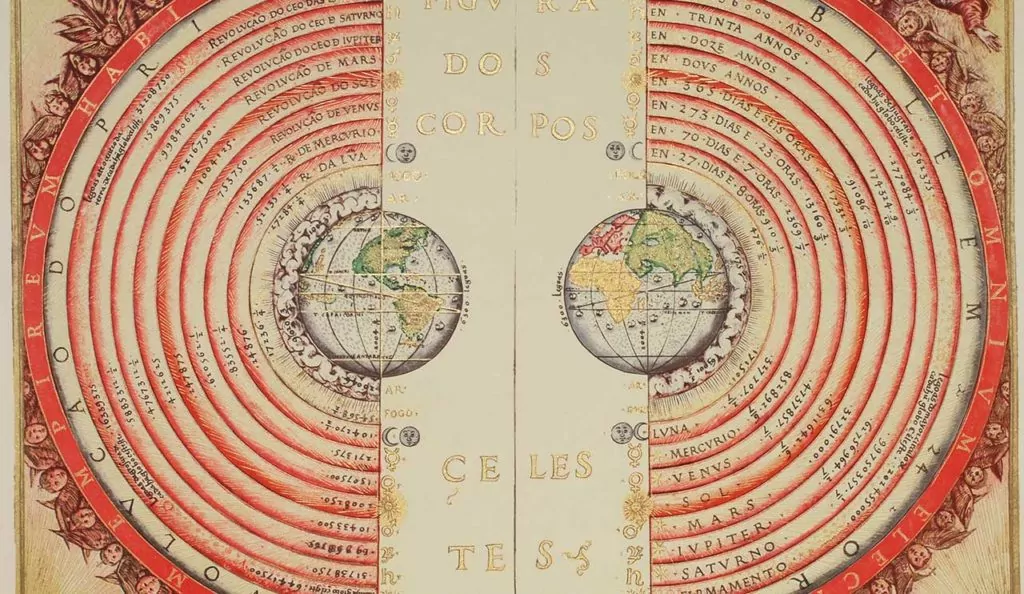
Red heart icon with + sign.
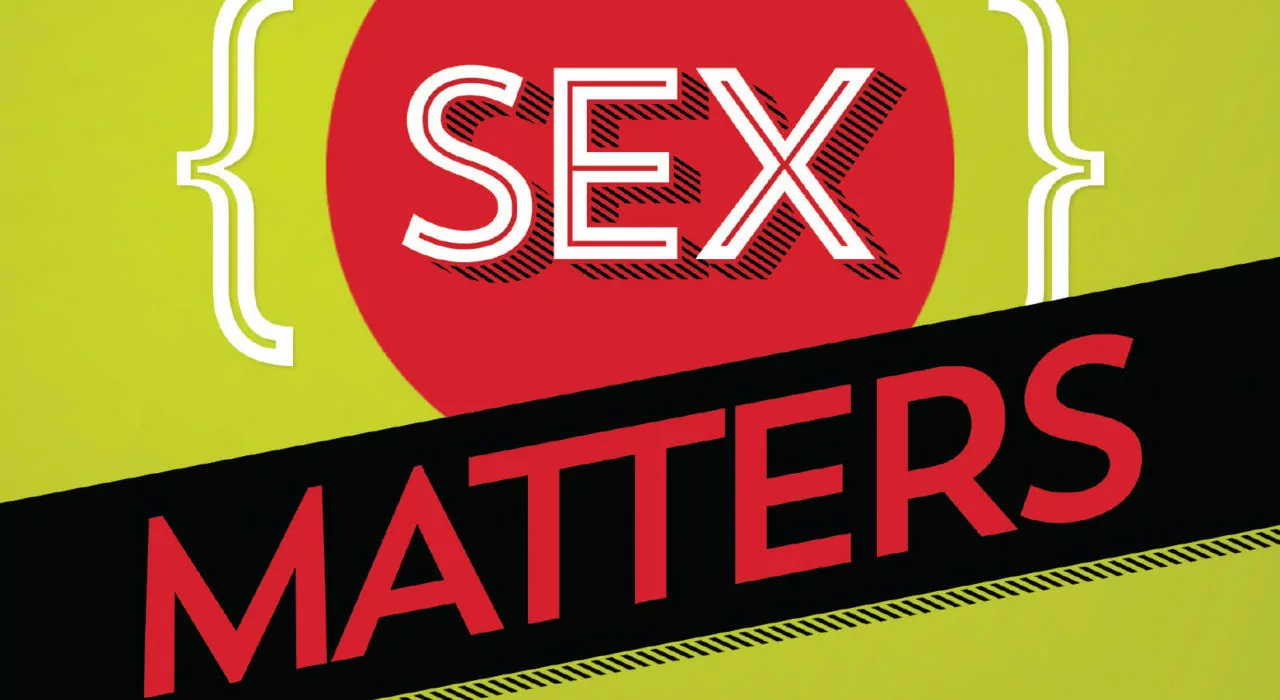
Adult non-fiction, Book Reviews

RESPECTABLE SINS: Confronting the Sins We Tolerate

by Jerry Bridges 2007 / 192 pages Rating: Good/GREAT/Gift We’re not into drugs, or pornography; we’re not committing adultery or stealing or beating our children. We go to church and read the Bible at mealtimes. So we can consider ourselves good people, right? Well, no. In Respectable Sins, author Jerry Bridges exposes all those subtle sins that we don’t always recognize as sins - sins that we find so acceptable, especially in ourselves, like selfishness, lack of self-control, irritability, anger or envy. Bridges explains that as Christians we are saints set apart by God for God, and that any conduct (even thoughts) that is unbecoming a saint is sin. It is so easy to look out at the “world” and see all the sins committed by the unsaved and forget that we are sinners too “but the fact still remains that the seemingly minor sins we tolerate in our lives do indeed deserve the curse of God.” He goes on to explain that these sins, if they are not recognized, repented of and fought against, will spread like a malignancy throughout our lives, especially in our families where the brunt of these sins is felt most, but also in our church and work relationships. The author completes the first part of the book by emphasizing our dependence on the gospel and the work of the Holy Spirit and gives instructions on how to deal with these subtle sins, which is an effective setup for what comes next. When he then begins to expose in detail all our “respectable sins” the reader will begin to squirm. Is there any part of our lives in which we have made God irrelevant? Have we been anxious or worried? Have we griped about the circumstances of our life? Have we bragged about anything lately? Felt smug? Put ourselves first? Lost our cool? Snapped at the kids or the spouse or anybody? Been sarcastic? Looked down our nose at somebody else? Coveted? Gossiped? Let worldly standards affect our decision making? By this time we’re ducking our heads and slinking pretty low in our chairs. We’re left with no doubt about who needs God’s grace and are thankful to receive it. Mr. Bridges finishes off with the encouraging reminder that our progressive sanctification rests on the righteousness of Christ and the power of the Holy Spirit. This book is a must read for Christians! This review appeared in the December 2011 issue....

Red heart icon with + sign.
Adult non-fiction, Book Reviews

Prodigal God

by Timothy Keller 2009 / 240 pages Rating: Good/GREAT/Gift My pastor recently concluded a series of sermons on a single 21-verse passage of Scripture. I was delighted to discover just how much God has to tell us in the Parable of the Prodigal Son. I felt that same delight while reading Tim Keller’s Prodigal God, which is also on Luke 15:11-32. Keller begins by explaining why he doesn’t call this passage the Parable of the Prodigal Son. He notes that the word “prodigal” means “recklessly spendthrift” and the term is “therefore as appropriate for describing the father in the story as his younger son” since the father “was literally reckless because he refused to ‘reckon’ or count his sin against him or demand repayment.” Thus Keller arrives at his book’s title, Prodigal God. But that is still not what he calls the parable. He calls it the parable of “The Two Lost Sons.” Two lost sons? Wasn’t there just one? After all, the older brother never left home! But as Keller explains, the older son was just as lost as the younger. The younger son’s rebellion was more obvious, but the older son shows that he isn’t interested in his father’s happiness either. If he had been, he would have rejoiced when his father rejoiced. Instead it becomes clear that he has only been obedient with the expectation of reward, so when that reward doesn’t come to him like he expected, he gets bitter. Keller argues there are a lot of older brothers in the Church. We all know we are sinners, but because we don’t fully understand how all we receive is a matter of grace, we still find ourselves looking down on “younger brothers” caught up in “big sins” like homosexuality or prostitution (we may be sinners, but at least we don’t sin like that!). This is rebellion of a more subtle kind – it is a form of works righteousness, because even as we acknowledge we aren’t sinless, our gracelessness to those caught in “big sins” shows we think ourselves in some way deserving of the goodness God has showered on us. Prodigal God is very engaging and quick read. I believe it is a very relevant and challenging book for our churches and would recommend it to anyone 16 and up. The only caution I would note is that Pastor Keller is a leading proponent of theistic evolution. That doesn't impact this book, but in his other writings Keller doesn't treat Genesis 1-2 with the same care, rigor and reverence with which he plumbs the depths of Luke 15 here. But a very enthusiastic two thumbs up for Prodigal God....

1 2 3 4 5 6