Transparent heart icon with white outline and + sign.

Life's busy, read it when you're ready!

Create a free account to save articles for later, keep track of past articles you’ve read, and receive exclusive access to all RP resources.

White magnifying glass.

Search thousands of RP articles

Helping you think, speak, and act in Christ.

Open envelope icon with @ symbol

Get Articles Delivered!

Helping you think, speak, and act in Christ. delivered direct to your Inbox!


Red heart icon with + sign.
Book Reviews, Graphic novels, Teen non-fiction

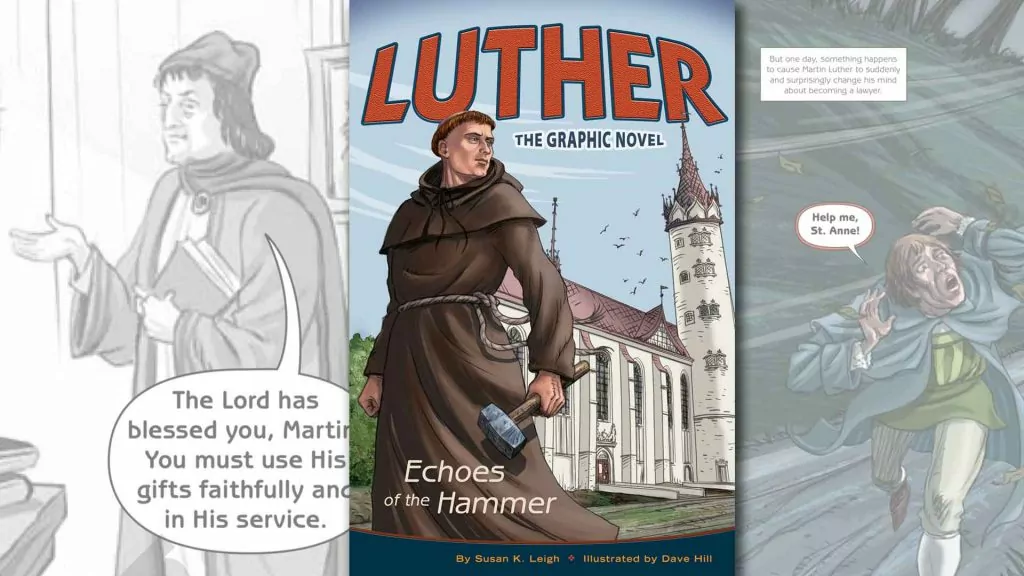
Luther: Echoes of the Hammer

by Susan K. Leigh illustrated by Dave Hill 2011 / 144 pages Rating: Good/GREAT/Give I think this is the perfect complement to Luther: the graphic novel, which might be the more exciting of these two Luther comics, but which also plays a little looser with the details. Meanwhile Luther: Echoes of the Hammer is a more reliable history lesson, even as it isn’t as dramatic. I tested this graphic novel on two of my nephews with mixed results. The older one, heading to grade 10, was happy to take a look, and thought it would be a great way to learn about Luther. The other, two years younger, seemed to think it was too much biography and not enough comic book for his tastes. As far as comics go, this one is quite an involved, even heavy, read. Interspersed throughout are explanations of key events, like the Diet of Worms, key terms, like “indulgences,” and key figures, like Charles of Spain, the Holy Roman Emperor. These one or two-page insertions really add to the narrative and make this a highly educational comic. However, a few of these insertions will also trouble informed Reformed readers. In one list of Luther’s adversaries, Calvin is numbered among them! While it is true Calvin and Luther had their differences, it is surprising to see Calvin listed as an opponent. Especially when, some pages later, we find Erasmus listed as one of Luther’s supporters! While Erasmus was, like Luther, critical of the Roman Church, he never left it, and this led to strong, vitriolic disagreements with Luther. In fact, Luther once called Erasmus, “the very mouth and organ of Satan.”  It is downright silly, then, for the authors to list Erasmus as a friend if they are going to list fellow Reformer John Calvin as an adversary. The only other quibble would be the overestimation the authors have of Philip Melanchthon, describing him as “a great Reformer, second only to Martin Luther.” Second? Really? How can they overlook Calvin like that? Those quibbles aside, this is an impressive book. The writing is crisp, succinct and engaging. The artwork is attractive and while only half the book is color (the other half being black and white) it worked. Many of these pictures are also instructive, worth the proverbial thousand words. For example, in the pages covering Luther’s visit to Worms, illustrator Dave Hill shows us the man’s quiet passion, his many supporters, and his opponents marshaled together. This gives us a good understanding of the setting, and thus a better understanding of the courage it took for Luther to stand up for what he knew to be true. Older teens will enjoy it, and many an adult too. (Also worth a mention is that the same team of authors and illustrators have created a sequel, focused on his wife – Katie Luther is a little shorter, and a little less involved, but also quite enjoyable.)...

Red heart icon with + sign.
Adult biographies, Book Reviews

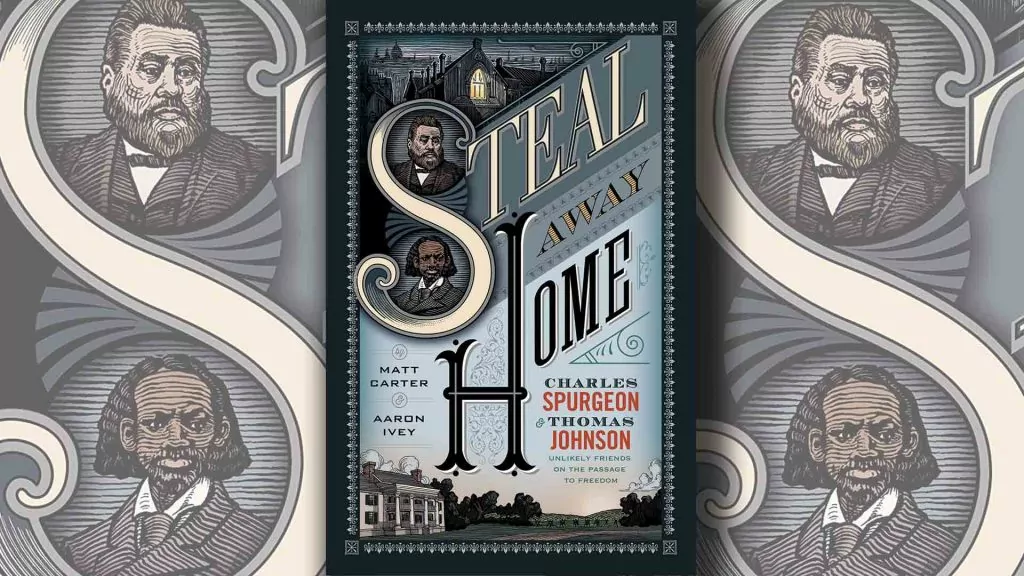
Steal Away Home: Charles Spurgeon and Thomas Johnson

by Matt Carter and Aaron Ivey 290 pages / 2017 Rating: Good/GREAT/Give This is two biographies in one, about the little know relationship between the “Prince of Preachers” Charles Haddon Spurgeon and a former slave, Thomas Johnson. The men couldn’t have grown up in more different circumstances. Spurgeon was in the United Kingdom, and establishing his reputation as “the Prince of Preacher” while Thomas Johnson was still a slave in the America. Johnson first heard Spurgeon’s name mentioned when the preacher’s sermons and books were being burnt by slavery-defenders in the South. They didn’t like the strong and clearly biblical way that Spurgeon had been denouncing slavery.  When emancipation came and Johnson was freed he also became a preacher. And with his heart inclined to the mission field in Africa, he eventually ends up at Spurgeon’s bible college where the two meet and become friends. Perhaps one reason they became friends was because Spurgeon struggled throughout this life with depression, and his young friend Johnson knew something of that too, borne out of his despair as a slave. As true Christians brothers, they are a help and a companion to one each other. While these two men are both real, I should note this is a fictionalized account. That means that while the broad details are all true, and much of the dialogue is taken from the men’s works, this work should only be enjoyed for the general impression, not the specific details, it provides of their friendship. I’ll give one example of how this mix of fact and fiction does, on the one hand, stay very true to reality, but on the other hand, can give a bit of an inaccurate impression. When we read of how Spurgeon proposes to his wife-to-be, he comes off as quite the Prince Charming with all the right words, the perfect thoughtful present, and just the right timing. However, the authors have compacted the evening’s events from events that took place over more than the one occasion. The facts are true, but this compaction of the timeline, to keep the story flowing, makes Spurgeon seem to be quite the suave fellow – super suave even. Steal Away Home is a wonderfully readable book, and attractively put together too. You aren’t supposed to judge a book by its cover but it’s wonderful when a good cover can give a reluctant reader just the encouragement they need to get started. I’d recommend this to anyone with an interest in Church history, or in knowing more about the American South during slavery and after, or anyone who enjoys historical fiction or biographies. Jon Dykstra and his siblings blog on books at www.ReallyGoodReads.com....

Red heart icon with + sign.
Book Reviews, Graphic novels

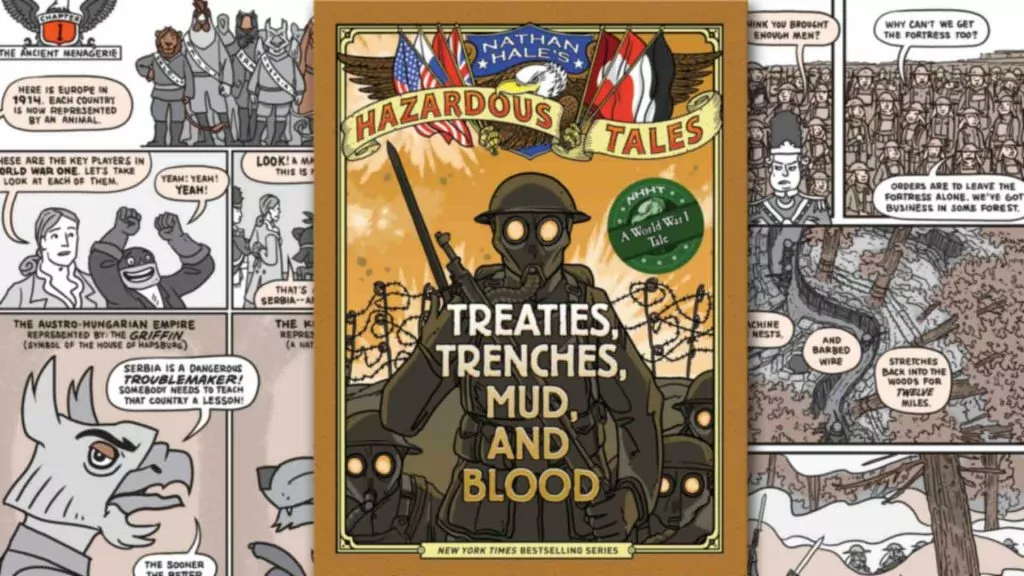
Treaties, Trenches, Mud, and Blood (3 books)

by Nathan Hale 128 pages, 2014 Rating: Good/GREAT/Gift A few decades ago a cartoonist decided to tell the story of the Jewish Holocaust in World War II via an animal metaphor. He made the Jews mice, and the Germans cats, the good folk dogs and the collaborators were pigs. It was a dark story, of course, but the use of the animals made it slightly less gritty, and thus more bearable. In Treaties, Trenches, Mud, and Blood, author Nathan Hale has done something similar for World War I. Each nation is assigned an animal: the Germans are eagles, the English are bulldogs, the Belgians are lions, the Ottomans are otters, the Russians bears and the Americans get stuck being bunnies, because eagle has already been taken. Hale does a good job of laying out the facts, and detailing the slaughter that amounted in the millions, but also lightening things up with doses of humor whenever he can. I knew the basic facts of World War I already, but learned a lot from this overview. Of course a comic, particularly one presented in metaphor form, shouldn't be regarded as an authoritative source, but it does provide a useful overview. Now if I want to find out more, I've now learned enough to know what I might want to read more about. This book is one of in a series of "Nathan Hale's Hazardous Tales" referencing both the author Nathan Hale, and the more famous American spy Nathan Hale who lived 250 years ago, and who appears in this series as the narrator. I hope to review the series at one point, as it has both high and low points. Hale used much more discretion in Treaties, Trenches, Mud, and Blood, though there are a couple cautions to share here too: this is a historic account that details the death of millions, so even though it is in animal/comic form parts of it would be too much for the very young. I'm not talking about gore - there isn't any - but rather the story itself. Also a language advisory: a couple of "good heavens"s pop up, a "holy moley" and in one instances a character says, "ye gods" (page 73). I'd recommend this for children 12 and up, though some kids might be able to handle it as young as 10. OTHERS RECOMMENDED Donner Dinner Party 128 pages, 2013 The general gist of this tale is well known: the Donner party was a caravan of settlers heading to California that took an ill-advised short-cut and to survive the winter had to eat their dead. So this might not seem the sort of story that is well suited for a graphic novel account: too dark and disturbing. There is certainly something to that, but author Nathan Hale does ensure this is, at most, a PG-rated account - there is no gore of any sort, save one panel in which a man is stabbed and that is as muted as a stabbing can be. I enjoyed learning the true (or mostly true - the author fills in the gaps with his imagination) story behind the popular folk tale. But, unlike the previous story on World War I, there is no pressing reason to read this graphic novel. There is no real lesson to be learned (other than, as one survivor put it, "Don't take no cut-offs, and get where you're going as fast as you can") and the story of the Donner party has had no real impact on our culture or our world. So if you don't know much about it, well, you can still get by. But readers will get an idea of just how brave (and perhaps crazy) these first settlers were, to travel for months on end through wilderness and Indian lands and without even really knowing what they were in for. So my overall recommendation would be to get Treaties, Trenches, Mud, and Blood before you get this one. But while there is no pressing reason to get this one, there are no real reasons not to, and it is an interesting slice of American history well and quite delicately told. You can get a copy from Amazon.com by clicking here. Big, bad, Ironclad 128 pages, 2012 About the American civil war, and how the two sides each had, for the first time, ironclad ships (that cannonballs would just bounce right off of) fighting each other. If you only have a passing familiarity with the US civil war you might not know that it wasn't just a land-based battle. One lesser-known aspect, investigated in this graphic novel, is the attempt by the North to use a naval blockade to stop the South from exporting their cotton. To break the blockade the South built a ship with an iron hull, a hull so strong that cannon balls would bounce off of it. When the Merrimack was put out to sea it was every bit as devastating as it's creators had hoped, and was hampered only by an underpowered engine. The North had heard rumors about the Merrimack long before she was completed and had gotten to work on their own ironclad ship. So not too long after the Merrimack set sail, the North's response, the Monitor was completed. This is a fascinating tale, with the whole civil war as a backdrop. While the information is well researched, the book itself is drawn in a very comical style, with one character, Gustavus Fox, actually presented as a uniform-wearing fox. So this is great for someone trying to get a good overview of events – at 128 pages it has the size to give us much more than a glimpse – but it wouldn't be the sort of book that would be cited in the bibliography of any paper. NOT RECOMMENDED One Dead Spy This is the first book in the series, and American spy Nathan Hale's first story is his own – when he first decided to become a soldier, his part in booting the British out of Boston, the story of the supply ship he seized - which coincides with the story of the early part of the American Revolution. That's the real thrust of the book, to give readers a look at how the war started. But at just 128 pages there simply isn't room for the whole story, so this tale ends with the end of Nathan Hale. Or rather, it ends with him on the gallows, telling stories to the Hangman and his British guard. It is the first story, but finds it's place here at the bottom because, unfortunately, the author includes an exact quote from a British General that begins with the general taking God's name in vain (page 57). That wasn't necessary. Alamo All-Stars 128 pages, 2016 "Remember that Alamo!" - many of us have heard this rallying cry, but don't know what it is we're supposed to remember. This is the story of the stand that a 200 (or so) Texans took against a Mexican army many times that size in 1836. The Texans took their stand in a makeshift fort at the Alamo mission, and after a 13 day siege the Mexicans wiped the smaller Texan force out, leaving only a few women and slaves alive to spread the story in the hopes it would break down resistance to Mexican rule. It did the opposite - among those killed were the infamous Jim Bowie and famous Davy Crockett, and their deaths helped spark a revolution which saw the Mexicans defeated and Texas declaring its independence (10 years later Texas joined the United States). Hale does another fine job here of teaching history while keeping things very interesting, but in two instances (page 99 and 103) he again depicts God's name being taken in vain, both involving historical quotes. The Underground Abductor 128 pages, 2015 This would best be described as a biography of Harriet Tubman, an American slave who helped dozens and eventually hundreds of other slaves flee to freedom. She worked with many others, who would shelter the slaves as they went from one stop to the next in their journey from the slave-holding southern states to the freedom found that was to be found in Canada. These escape routes that slaves would take, traveling from safe house to safe house, came to be known as the Underground Railroad...even though very few trains were involved in their transport, and none of it was really underground (though a few secret cellars were involved). This is a fascinating story, but there is some strange mysticism included: Harriet Tubman, after recovering from a severe head injury, would claim to get visions from God. But more troubling is that this book, like One Dead Spy takes the Lord's name in vain. In this book it happens at least a couple times, which is why it, also, is near the bottom of this list. Blades of Freedom 128 pages / 2020 This is a grim history of Haiti presents Christianity as just another religion, akin to Voodoo. It has blood aplenty, and a naked butt. And it also repeatedly takes God's name in vain....

Red heart icon with + sign.
Adult biographies, Book Reviews

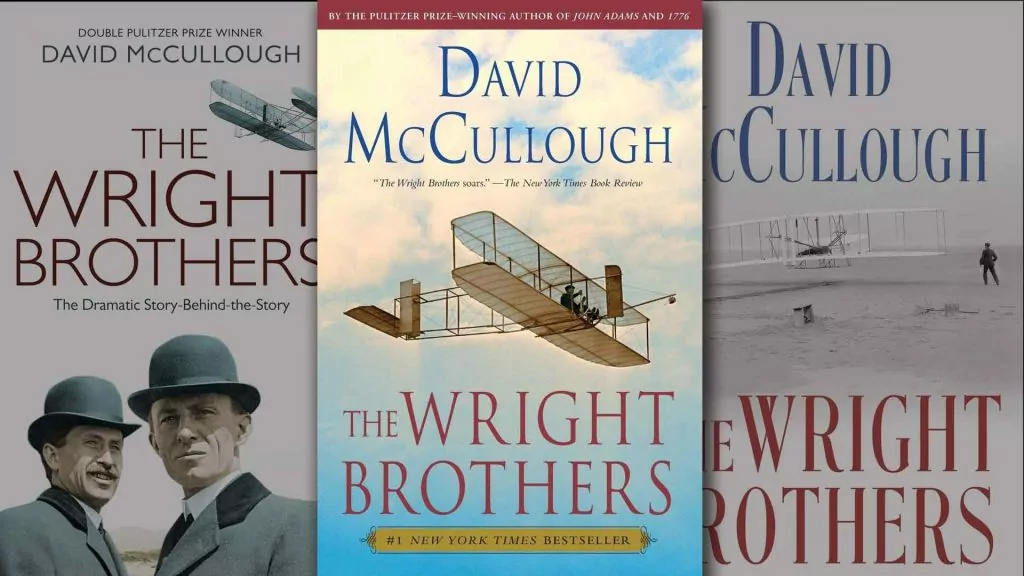
The Wright Brothers

by David McCullough 320 pages / 2015 Rating: Good/GREAT/Give Match an astonishing story with a superb storyteller and what more could we ask for? David McCullough clearly had fun delivering a story that, if it weren’t true, would never be believed – the Wright brothers seem simply too good to be true. These two former journalists, now bike builders, simply decide one day to get into the plane building business. They begin by firing off a letter to the Smithsonian Institution to ask for all the information that can be had about flight because they are determined to succeed where all others have failed. McCullough gives us the measure of these two men, by highlighting just how audacious their goal really was. At the time many thought human flight was an impossibility, and based this conclusion on the decades of failed experiments that preceded the Wrights’ interest. And while the two brothers are not poor, they don’t have the resources some other experimenters have been able to muster. So how could the Wrights manage what they did? McCullough credits it to determination, brilliance, patience, curiosity, and, did we mention determination? At 320 pages this might seems a bit on the big/intimidating side. But with 50+ pages devoted to the footnotes and index, it isn’t nearly as large as it seems. Who should read it? Anyone with an interest in aviation, or underdog stories, would love it. But I would most like to see this in the hands of young men and older teens. This would be a wonderful book to inspire them to investigate, experiment, study, dream, and work hard. That’s what the Wrights had going for themselves, and look at how far it took them! To be clear, this isn't a specifically Christian book. Their father was a church bishop, and a man of principle and dedication, but he didn't seem all that worried about his boys' irregular church attendance. While the two brothers were always very strict about taking the Sabbath rest, there isn't all that much in here about their relationship with God. So a fascinating biography but not a spiritual one....

Red heart icon with + sign.
Adult non-fiction, Book Reviews

Devoured by Cannabis

Weed, liberty, and legalization by Douglas Wilson 2020 / 99 pages Rating: Good/GREAT/Gift Why shouldn’t Christians smoke marijuana? The go-to answer to that question used to be: because it is illegal. But with its legalization in Canada and many US states, that argument is increasingly irrelevant. But are there any other reasons not to inhale? In this slim volume, Douglas Wilson says yes, arguing that it is a sin, and despite what’s happening in jurisdictions all over, it is the sort of sin that should also be a crime. Intoxication is out So why is it a sin? Wilson points to God’s prohibition against intoxication. While alcohol can also cause intoxication, he notes the Bible also spells out five legitimate uses including: sacramental medicinal aesthetic quenching thirst a celebratory, gladdening the heart, function. It is this last one that is sometimes pointed to as a legitimate usage for marijuana, but in answer to that argument, Wilson notes that God’s condemnation of drunkenness and His call for self-control puts constraints on what sort of celebrations we should have. “True celebration is discipline, accompanied by hard work, training, and fruition of joy” while the use of marijuana “is a celebratory slide downward…” His point is that alcohol goes well with a been-cooking-all-day-holiday-feast, with one wine pairing “well with the beef, and another chosen because it complements the pasta.” Meanwhile, “marijuana goes well with Oreos and mustard.” The one can be a part of a God-glorifying family gathering, the other simply a lead-in to letting loose. Thus “the only possible lawful use for marijuana is the medicinal, the use to which everyone puts marijuana is the one that is denied to alcohol,” i.e. intoxication. Should it be a crime? Wilson also makes the argument that marijuana usage is not simply a sin, but a crime, and notes that's a departure from the more hands-off stance he once leaned toward. Why the change? While acknowledging not all sins should be crimes – we wouldn’t want the government trying to police the 10th commandment – Wilson notes that in a finger-in-every-pot State such that we have, whatever isn’t criminalized is all too often then encouraged and tax-subsidized. And it isn’t hard to see how that would happen with marijuana usage. Our welfare state will have the government picking up the pieces, doling out tax dollars. That might be money for medical treatments dealing with increased cases of psychosis. Or it might be increased unemployment and welfare payouts that will be needed for the addicted. Another cost will come to employers. The way legalization has proceeded, it is as if it's been some sort of neutral act, granting the pot-user a freedom at no cost to anyone else. If that were so, Wilson notes, then: “…the liberty to smoke pot and the liberty to fire a pothead should be the same liberty. Otherwise, we are granting liberty to the privilege and no liberty at all to the responsibility.… the way the push for legal pot is happening now, the pressure is on us to increase the liberty of the irresponsible while simultaneously decreasing the liberty of the responsible ones.” Government will be stuck with the cost, as will employers, who will not be allowed to fire someone for using what will now be a perfectly legal substance. Wilson is not arguing so much that marijuana must always and in all circumstances be criminalized, but more that if presented with a choice of the State either criminalizing usage or encouraging it, then we should choose the former. But are those really the only realistic options? Can't the State take a neutral stance, neither against, but also not for? Well, the latest bit of evidence on that front is Washington State's "Joint for Jabs” where the government is using the promise of a free joint to promote Covid vaccination. And California has announced a $100 million bailout for their struggling marijuana shops. It really does seem that if they aren't against it, then they will be pushing it. So what then is to be done? Wilson is writing for the US, where some states have legalized it and others have not, and there he's hoping it might still be possible, if not to maintain an outright “red,” to at least run with a “yellow” rather than a “green.” Where it is completely legal, like Canada, the hope would be that at least the Church can recognize what should be – that it is a sin, even if it isn’t a crime. Unconfused on that point, God’s people can minimize our own addictions. And to help others, we can make a push for restrictions, particularly for teenage and young adult usage. Sinners need their Savior The book concludes with a Gospel appeal, in which Wilson reminds us that it is only when our country turns back to God that we will be able to turn away from such addictions. But he is quick to point out that while our addictions should have our country desperate for God, we don’t turn to Christ simply to right ourselves or our country. “If we treat Christ as the means to an end (freedom from drugs, say), then we are not coming to Him as Christ. He is a Savior, not a self-help specialist. We come to the Giver for who He is and not for the gifts that He might give. At the same time, He is the Giver of gifts (Eph. 4:8).” Our culture doesn’t just need to be freed from addiction – a sober pagan is still going to hell. What the Church can direct people to is not simply freedom from drugs, but freedom in Christ. In Him, we are free to enjoy our God and Maker, and we are free to live to His glory. That will also be a freedom from addiction, but that is the fruit that comes from turning to God. What Wilson is reminding us of here is the need to point others to the Tree of Life, and not simply its fruit. Conclusion The value of Wilson's book is, first and foremost, the section on whether marijuana usage should be a sin. The clarity on offer here could be a great help for our teens and young adults when (not if) they are pressured into trying it. For parents who think that won't happen, just remember back to the parties you either attended or heard about where all the attendees were church-goers, but where underage drinking was prevalent nonetheless. So let's not be naive about whether our children are going to be offered marijuana at their own parties today. Dad, mom, Wilson's book is a quick, insightful discussion that would make for a great read for you to tackle along with your teen – it's a tool here for you to use....

Red heart icon with + sign.
Adult non-fiction, Book Reviews

The Rise and Triumph of the Modern Self

Cultural Amnesia, Expressive Individualism, and the Road to Sexual Revolution by Carl R. Trueman 2020 / 425 pages Rating: Good/GREAT/Gift Carl Trueman has lost his sense of humor. I’ve read several of his books and they all had clever moments of wit. However, there’s nothing to laugh about in Trueman’s latest. There’s a definite risk in it being otherwise. Our day doesn’t tolerate any joking around when it comes to the sexual revolution, particularly from those who might be critical of it. Even when we come with gravitas, the revolutionaries will not be pleased. While progressives “Christian” or secular won’t bear any critiques of their revolution, Bible-believing Christians need such critiques more than ever. If we’re going to withstand the forces arrayed against us, we need deep-digging analysis. And Trueman delivers. For those unfamiliar with him, Carl Trueman is professor of biblical and religious studies at Grove City College in Pennsylvania. He was previously a professor of historical theology and church history at Westminster Seminary in Philadelphia. He’s an ordained minister in the Orthodox Presbyterian Church and the author of numerous books and articles. By training Trueman is a historian and this book is primarily a work of history. It explains how things came to be as they are. Trueman writes: My aim is to explain how and why a certain notion of the self has come to dominate the culture of the West, why this self finds its most obvious manifestation in the transformation of sexual mores, and what the wider implications of this transformation are and may well be in the future. The Rise and Triumph of the Modern Self is not, therefore, so much of a theological analysis of intellectual and cultural trends past and present. There is some such analysis, but The Rise and Triumph… is primarily historical -- albeit written from a Christian historian’s perspective. It essentially traces the historical development leading up to the sexual revolution of our present day. 4 parts In Part 1, “Architecture of the Revolution,” Trueman lays out some helpful conceptual categories and tools for understanding the history to be examined. In Part 2, “Foundations of the Revolution,” he explores how philosophers (Rousseau, Nietzche, and Marx), scientists (Darwin) and poets (Wordsworth, Shelley, and Blake) played key roles in the development of the psychologized self. Part 3, “Sexualization of the Revolution,” features psychoanalyst Sigmund Freud, whom Trueman asserts, “is actually the key figure in the narrative of this book.” More than anyone else, Freud is responsible for sexualizing psychology. As Trueman notes, “…before Freud, sex was an activity, for procreation or for recreation; after Freud, sex is definitive of who we are, as individuals, as societies, and as a species.” Marxist scholars Wilhelm Reich and Herbert Marcuse took the next step and politicized sex. Accordingly, “Sex is no longer a private activity because sexuality is a constitutive element of public, social identity.” In Part 4, “Triumphs of the Revolution,” Trueman demonstrates how the sexual revolution has carried the day in terms of: pornography how feelings govern ethics (the therapeutic mindset) and transgenderism The last of these is the most interesting, as Trueman describes how transgender individuals were not initially welcomed by the gay and especially the lesbian community. Even gays and lesbians weren’t always on the same side. So, how did the T come to stand with the L and the G? Trueman answers: “…it is a political coalition forged on the basis of a common enemy – a socially and politically enforced heterosexual normativity.” Two highlights There are many good insights in The Rise and Triumph of the Modern Self, but let me isolate two that especially grabbed my attention. For many years, I understood the sexual revolution as something that more or less developed out of the “hippie”/anti-war movement of the 1960s with the catalyst being America’s involvement in Vietnam. I thought of it as an anti-authoritarian and at times anarchic, at other times Marxist, social phenomenon. However, Trueman’s work shows that to understand the present day, we have to reach back at least two centuries. The other insight has to do with the way sexuality has become key to selfhood and identity. Trueman notes that, in today’s world, not recognizing someone’s identity leads to feelings of inferiority. This is akin to a personal attack. He goes on: This observation is important in enabling us to understand why, for example, in a society where sexuality is foundational to personal identity, mere tolerance of homosexuality is bound to become unacceptable. The issue is not one of simply decriminalizing behaviour; that would certainly mean that homosexual acts were tolerated by society, but the acts are only a part of the overall problem. The real issue is one of recognition, of recognizing the legitimacy of who the person thinks he actually is. That requires more than mere tolerance; it requires equality before the law and recognition by the law and society. And that means that those who refuse to grant such recognition will be the ones who find themselves on the wrong side of both the law and emerging social attitudes. The person who objects to homosexual practice is, in contemporary society, actually objecting to homosexual identity. And the refusal by any individual to recognize an identity that society at large recognizes as legitimate is a moral offense, not simply a matter of indifference. The question of identity in the modern world is a question of dignity. For this reason, the various court cases in America concerning the provision of cakes and flowers for gay weddings are not ultimately about the flowers or the cakes. They are about the recognition of gay identity and, according to members of the LGBTQ+ community, the recognition that they need in order to feel that they are equal members of society. Trueman nails it. The sexual revolution doesn’t want our indifference or our toleration. It wants our affirmation, recognition, and celebration. Anything short of that is considered phobic – defined as a form of irrational bigotry. Conclusion The book ends with a “Concluding Unscientific Prologue.” The last word there is Trueman’s hint he may have more to say on this subject. He does already here propose some constructive ways in which the church could be engaging with the world, besotted as it is with the sexual revolution. One of his points here did however raise my eyebrow: “Protestants need to recover both natural law and a high view of the physical body” (p.405). I have no problem with the latter. But “natural law” here would seem to demand a little more explanation than Trueman provides. He frames it in the context of teaching the church should provide to its members regarding moral principles. So, it would seem, he’s proposing the recovery of an understanding of the moral order God has revealed in nature. But since that moral order is more clearly revealed in the Word of God, and we’re talking about the church, why not focus our attention on Scripture? All Christian leaders need to read this book, whether they’re involved with leadership in education, business, government, or the church. The sexual revolution threatens Christian hearts and minds which are sometimes naïve to the consequences of accepting some or all of its key premises. Christian leaders need to be conversant with the history and philosophy behind the revolution, so they can speak the truth in love from God’s Word. The Rise and Triumph of the Modern Self meets that need. I believe it will be recognized as one of the landmark Christian books of our time....

Red heart icon with + sign.
Adult biographies, Book Reviews

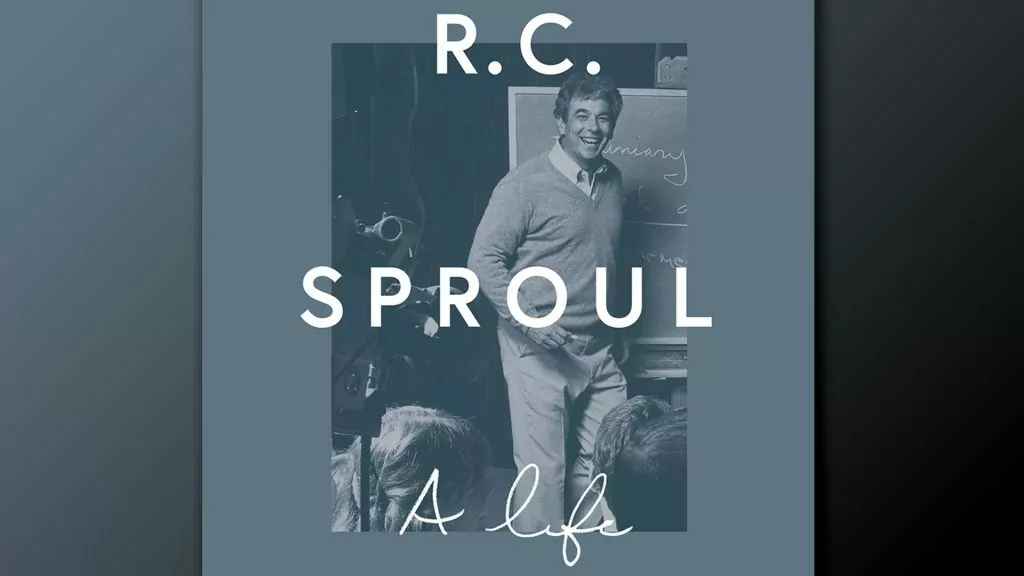
R.C. Sproul: A Life

by Stephen J. Nichols 2021 / 400 pages Rating: Good/GREAT/Give Stephen J. Nichols has produced the first biography of Sproul since his death in December of 2017. The author, teacher, and pastor truly appears here as a man after God’s own heart: a man in pursuit of his Maker’s holiness – eager to understand it, to mirror and communicate it as faithfully as he might. Following his conversion very early in his college years, Sproul’s zeal drive him and his wife, Vesta, to hunt after vital educational and ministry opportunities, both formal and informal. As a result, they relocated almost annually during the first decade of marriage. Very soon Sproul’s winning personality, warmth, seriousness, and authenticity as a “battlefield theologian” make him a magnet for those determined to grow in – and publicly defend – the faith. We see the launching of the Ligonier Study Center in 1971 in rural Western Pennsylvania, the writing of the Chicago Statement on Biblical Inerrancy, and Sproul’s costly stand against reductive ecumenicism. Nichols gives ample space, as well, to the substance and impact of Sproul’s many books and the Renewing Your Mind radio program. Finally come the stories of his Florida pastorate, the building of Saint Andrew’s Chapel, and the founding of Reformation Bible College (RBC). Nichols succeeded Sproul as president of RBC in 2014, and his writing is aided by close acquaintance with Sproul and his family, colleagues, and friends. One can hardly imagine major detractions to Sproul's legacy and certainly will find no ammunition for that here – though glancing notice is made to R.C. Junior's sudden resignation from the board of Ligonier and RBC in 2016. The Sproul we meet in these pages is the gentle lion so many of us felt we knew, at least distantly and casually, through the books and radio program. Nichols has chosen to write an everyman biography, an accessible book with a tone popular rather than scholarly. And here we rediscover several Sproul family anecdotes which many have encountered previously in his teaching. Sometimes the stories are expanded, sometimes the reader can anticipate and supply added detail. Yes, we meet again an old friend, and a true one. Without a doubt, Sproul loved the church, and he immersed himself in the vocation of shepherd. Nichols's book is both deeply encouraging and even convicting as we view the whole-life portrait of this dedicated, faithful teacher unfolded before us. The church in the 21st century, as much as any time before, greatly needs the stories of such brothers and fellow saints....

Red heart icon with + sign.
Book Reviews, Children’s non-fiction

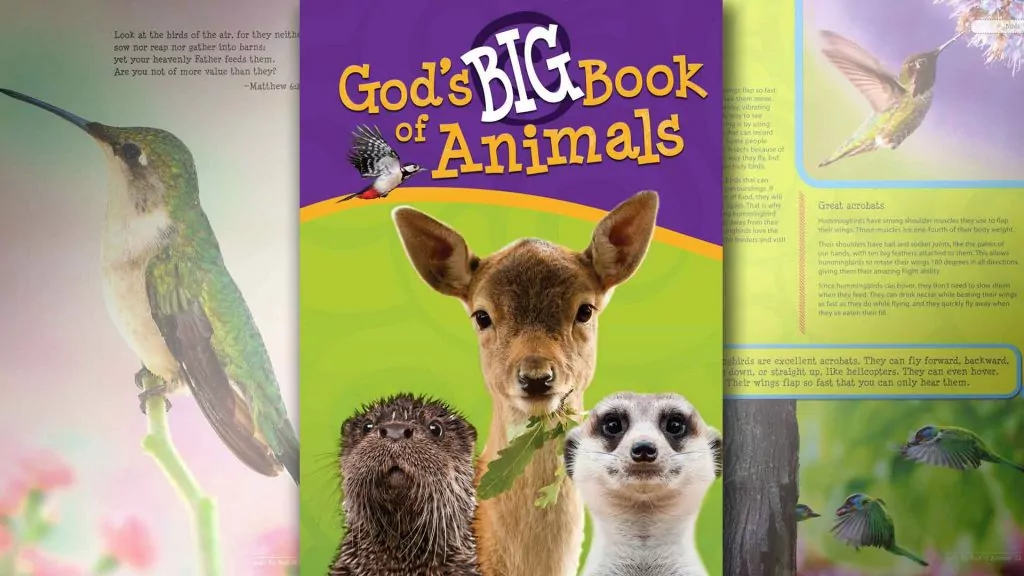
God’s Big Book of Animals

Edited by Shirley Rash 248 pages / 2019 Rating: Good/GREAT/Give Did you know that baby elephants drink three gallons of milk each day? Or that “woodcock” means “roosters of the forest” And did you know female great white sharks are actually larger than the males? God's Big Book of Animals is GIGANTIC - it's bigger than any other book I've read. It is filled with amazing information about intricate animals – like the great white shark! – all created by God. Each of the 60 animals are given 4, bright, beautiful pages full of descriptions, fun facts and pictures. Plus each animal has their own 14 x 10 inch full-page photo. More examples: “Turtles do not have teeth. They have strong, jagged jaws that help them take bites.” “Komodo dragons are also called monitor lizards.” “Elephants have long trunks, longer then any living animal. Their trunks are heavy, and can weigh over 300 pounds! They move their trunks from side to side, and when they want to rest, they lay it on their tusks. God gave elephants the ability to lift pieces of straw and push heavy pieces of wood.” “A group of butterflies is called a kaleidoscope of butterflies, a swarm of butterflies, or a rabble of butterflies.” “Baby octopuses can hatch in different colors. They can be orange, red, yellow, or different shades of blue.” I think kids 7 and up would love this! But even kids younger would like the many pictures inside....

Red heart icon with + sign.
Adult non-fiction, Book Reviews, Science - Creation/Evolution

Foresight: How the chemistry of life reveals planning and purpose

by Marcos Eberlin 2019 / 147 pages Rating: Good/GREAT/Gift Back in 1996 "Irreducible complexity" was Michael Behe's contribution to the origins debate: he argued that some biological structures couldn't possibly have evolved because there is no way they could have come about by evolution's stepwise-process – the complexity of micro-machines like a bacteria's flagellum motor was irreducible. Now Marcos Eberlin is making a similar point, but bringing a new piece of rhetorical ammunition to the fight with Foresight in which he argues the deeper we delve into the biological world the more we discover "artful solutions to major engineering challenges." These solutions, he explains, look to "require something that matter alone lacks.... – foresight." With this term "foresight," Eberlin is arguing some biological abilities couldn't have come about as a response, but had to be the result of anticipation. So, for example, cells, right from the beginning, had to anticipate the problems that would come with using oxygen: The oxygen (O2) molecule is essential to life, but only a life form that can efficiently wrap and transport the devil O2 exactly to a place where it can be used as an energy source would benefit from its angel side. Otherwise, O2 becomes life’s greatest enemy. Rupture the membrane of a living cell, exposing it to the air, and you will see the great damage O2 and a myriad of other chemical invaders can do to a perforated cell. Death would be swift and sure. From an engineering standpoint, then, it was essential that a way is found to protect the cell, life’s most basic unit. The solution was clever: The cell was surrounded by a strong chemical shield, from the very beginning. It is often said that a solution always brings with it two additional problems, and a cellular membrane shield is no exception. A simple shield could indeed protect the cell interior from deadly invaders, but such a barrier would also prevent cell nutrients from reaching the inside of the cell, and it would trap cellular waste within. Small neutral molecules could pass through the membrane, but not larger and normally electrically charged biomolecules. A simple shield would be a recipe for swift, sure death. For early cells to survive and reproduce, something more sophisticated was needed. Selective channels through these early cell membranes had to be in place right from the start. Cells today come with just such doorways... .....a gradual step-by-step evolutionary process over many generations seems to have no chance of building such wonders since there apparently can’t be many generations of a cell, or even one generation until these channels are up and running. No channels, no cellular life. So then, the key question is: How could the first cells acquire proper membranes and co-evolve the protein channels needed to overcome the permeability problem? Even some committed evolutionists have confessed the great difficulty here. As Sheref Mansy and his colleagues put it in the journal Nature, “The strong barrier function of membranes has made it difficult to understand the origin of cellular life.” So Eberlin concludes: "There would be no hope for a cell to become viable if it had to tinker around with mutations over thousands of generations in search of a functional membrane. It's anticipate or die." This is but his first example – Eberlin is arguing that wherever we look at life, "the evidence of foresight is abundant." That's true in the fine-tuning of the universe, where gravity had to be just so, Earth had to be just the right distance from the Sun, and had to have enough water, and water needed to have certain specific properties. Oh, and the planet needed to have just the right amount of lightning too. That foresight is also evident in the structure of our DNA - which has to be stable – and RNA - which has to be malleable. He goes on and on, diving into these examples, and showing how brilliantly problems have been anticipated and solved. But by who? Well, Eberlin doesn't really get into that until the final chapter, and it is in the book's very last line that he gives credit where it is due: "Great are the works of the Lord." I loved this whole book, but will confess to only understanding about two-thirds of it clearly. But even when it got more technical, the gist I did catch was still utterly fascinating. I'd recommend it to anyone with an interest and at least some high school science....

Red heart icon with + sign.
Adult non-fiction, Book Reviews

Echoes of Ararat: a collection of over 300 Flood legends from North and South America

by Nick Liguori 2021 / 300 pages Rating: Good/GREAT/Gift Why are there Flood myths all over the world? Christians can explain it by pointing back to Noah: these myths are so widespread because they find their origin in a real event, common to all mankind – every last tribe and nation can trace their origin back to the small family that lived through this cataclysmic worldwide deluge. But how can skeptics explain it? If it was just one or two stories, maybe they could attribute it to coincidence. But confronted with these 300-some accounts – and that's just from North and South America – the case for coincidence just isn't plausible. What Nick Liguori has done here is collect the oldest known written accounts of these indigenous tales, dating back a hundred to two hundred years or even more. While they were originally a part of native oral tradition, these accounts were written down after they were told to European explorers, missionaries, and settlers. So, for example, this is from the Caddo tribe, told to a group of explorers who were mapping the Arkansas/Texas Red River in 1806: They say that long since, a civil war broke out among them, which so displeased Enicco, the Supreme Being, that he caused a great flood, which destroyed all but one family; consisting of four persons, the father, mother, and children. This family was saved by flying to a knoll at the upper end of the prairie, which was the only spot uncovered by the water. In this knoll was a cave where the male and female of all the kinds of animals were preserved. After the flood has continued one moon, they set a bird, called the O-Wah, at liberty, which returned in a short time with a straw. The family then set out on a raft in search of the place from whence this straw was brought, and pursuing a west course for two leagues they came to land. Some of the elements from the Genesis account include: God is displeased with the world, a great flood, one family saved, a bird sent out and coming back with something, two of each kind of animals saved, and a boat of sorts. Other stories have only a glimmering of the original remaining. Moravian missionaries arrived on Greenland in 1733 and the following is an account David Cranzz (1723-1777) included in his History of Greenland: Almost all heathen nations know something of Noah's Flood, and the first missionaries found also some pretty plain traditions among the Greenlanders; namely that the world once overset, and all mankind, except one, were drowned; but some were turned into fiery spirits. The only man that escaped alive, afterward smote the ground with his stick, and out sprung a woman, and these two re-peopled the world. As a proof that the deluge once overflowed the whole earth, they say that many shells, and relics of fishes have been found far within the land where man could never have lived, yea that bones of whales have been found upon a high mountain. In story after story, we see echoes, not just of the Flood account, but also of the events of the Tower of Babel. This is a fascinating book! So, again, how do the skeptics explain it? The best secular explanation is that these myths and legends are of a recent origin, only coming to be after natives first heard the story of the Flood from missionaries spreading the Bible. But that supposes that native oral tradition could change that fast, and that easily. And why would they adapt their traditions to incorporate part of the Bible account while ignoring the rest of it? Doubters will doubt, but they really have to work at it to dismiss all the stories collected here. While the bulk of the book is stories, one of the appendices contrast and compares these American myths with both the biblical Flood account and the one found in the Epic of Gilgamesh. This epic is probably the second most famous flood account of all, and skeptics will say that the Bible's version was inspired by it. But as Liguori shows, that idea is preposterous (you can also learn why that's so here). If you enjoy Echoes of Ararat, you'll also appreciate Charles Martin's Flood Legends: Global Clues of a Common Event which is a much shorter (just 150 pages) overview of Flood legends, this time from around the whole world. Echoes of Ararat is far more weighty, but consequently is a book you're more likely to just dip into. Meanwhile, Flood Legends is something you'll read all the way through. Both would be fantastic resources for your church or school libraries, and also good gifts for Christian school history teachers. And if you want to learn a bit more about Noah's Ark, and Flood myths, be sure to check out the 10-minute video below. ...

Red heart icon with + sign.
Book Reviews, Children’s picture books

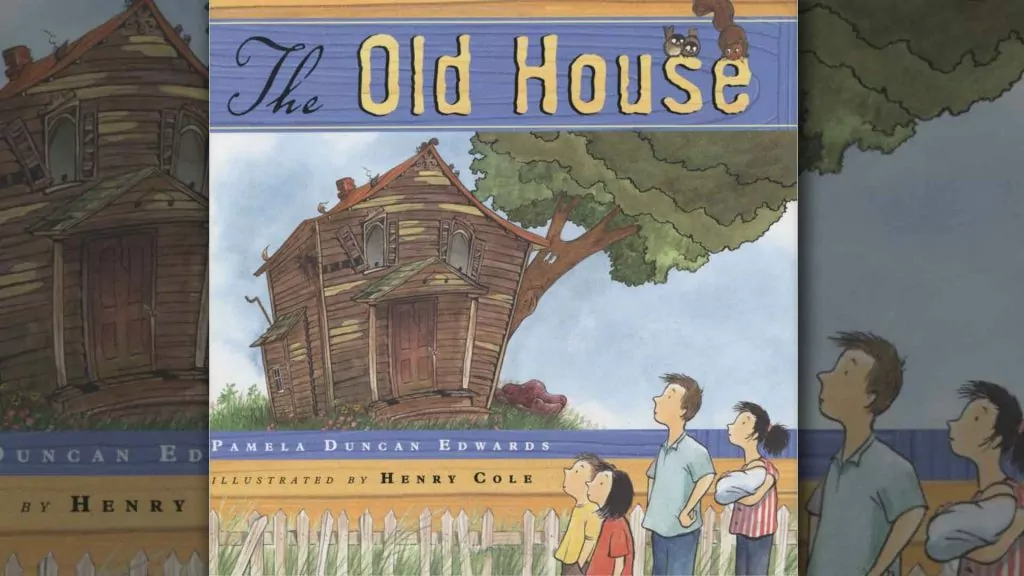
The old house

by Pamela Duncan Edwards 2009 / 32 pages Rating: Good/GREAT/Give This is a sweet picture book about a self-absorbed house who learns to think about others. Why is the house self-absorbed? Well, "no one had lived in it for a long, long time," so it was quite lonely. And when people passed by, they would often say, "Did you ever see such an unhappy old house?" The house does have friends - birds, a squirrel, wildflowers, and a large oak tree - who do their best to encourage it. But it feels so empty inside that when people do come by to see the house would quickly leave again. "The only thing to do with that dump is to knock it down," a man sneered. But then, one day, a family stopped by. They liked the house. They had never lived in a house before. But just as they were considering whether to buy the old house, it let out "one of its big, sorrowful sighs," and the family quickly left. "I think it might have rot," said the father. Poor house! When the family comes back for a second look, the house takes a long look at the family and saw wishful, uncertain, eager faces. "This family needs me," thought the old house... and it shook off its self-absorbed sorrow and stood tall. But the family left once again. I won't tell you how it ends, but I will note that the house's friends – the oak and the squirrel – were encouraged that finally, the house had stopped feeling sorry for itself. That makes this story with a moral that any kid can understand. Both my older daughters, 3 and 5, really enjoyed it....

Red heart icon with + sign.
Book Reviews, Children’s picture books

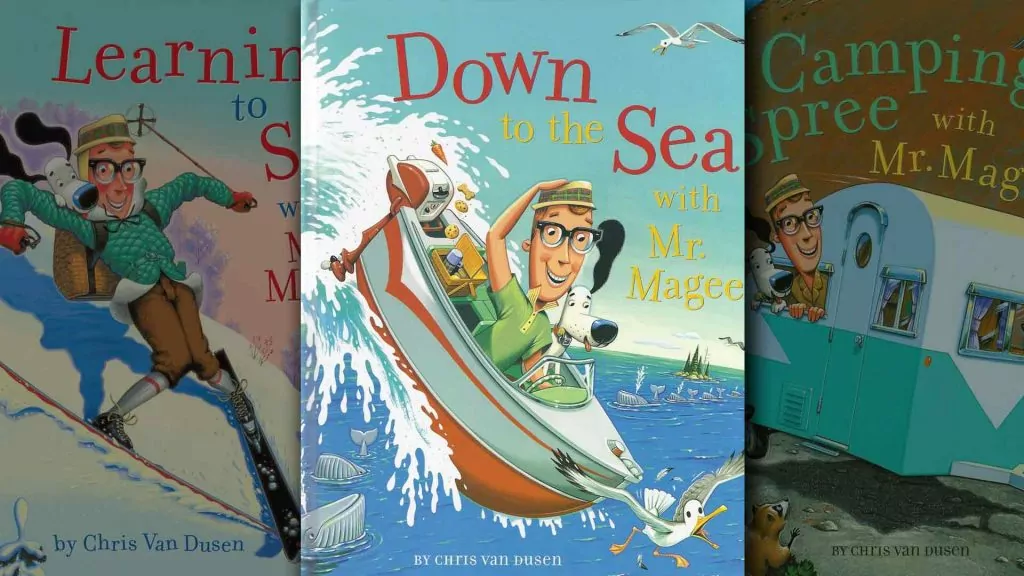
Down to the sea with Mr. Magee

by Chris Van Dusen 2006 / 36 PAGES Rating: Good/GREAT/Give Mr. Magee and his little dog Dee love camping, skiing, and sailing the sea They meet moose and birds and milkman and whales. These are certainly extraordinary tales! Preschool through Grade 1 will have such fun reading about the adventures of Mr. Magee and his little dog Dee. Down to the Sea, and the other two Mr. Magee adventures – A Camping Spree with Mr. Magee (2003) and Learning to Ski with Mr. Magee (2010) – are told entirely in rhyme, making these a fun early exposure to how poetry can sometimes be better than prose. I began this review with my best imitation of author Chris Van Dusen and now here a few "stanzas" from the man himself: MAGEE was downhearted. Just what could he do? They seemed hopelessly stuck, but little DEE knew. The secret to get the boat safely unpinned Was to rock back and forth and wait for the wind. So they rocked and they rocked for an hour or so. But the boat didn't budge 'cause the wind didn't blow. Just when they thought they'd be stuck there all night They spotted, far off, a spectacular sight. I won't let you know what the spectacular sight is - for that you'll have to check out the book youself. These are wonderful books. The one caution I'll offer is that years later, around 2024, the author decided to promote homosexuality, inserting a gay couple in a shot or two in his most recent works. But there's nothing like that here. If your kids are excited about Mr. Magee you can check out a lesson from the author, down below, about how to draw Mr. Magee's dog Dee. ...

Red heart icon with + sign.
Adult biographies, Book Reviews

The hardest peace

Expecting grace in the midst of life's hard by Kara Tippetts 2014 / 189 pages Rating: Good/GREAT/Give In this part biography, part devotional Kara wants us to understand it was not in spite of her long battle with cancer, but because of it and through it, that God showed his goodness to her. She writes of how her life hasn’t always been pretty – full of surgeries, and chemo, and hair loss, and scars, and medical tests, and radiation – but God has ensured it was beautiful. This is a must-read for everyone – I'd recommend it to young and old, married or not, men and women. Whether you are near death or far from it, there is but one end for us all – death is the final enemy, but before it comes there is the loss of strength and loss of ability, loss of friends, and loss of family. It is easy to trust God when the going is good, but what of when we have to ask, "Who is our only comfort in death?" At one point Kara shares how, as one of her daughters was being tucked into bed, the girl asked her father, "Is Mama going to die of cancer or old age?" Kara's husband couldn't find the strength to say the words and asked Kara for help. So Kara padded down the hall and slipped under the covers with her daughter. "She wasn't asking for false hope; she wanted me to love her with honesty. I told her I had heard her question, and I asked her my own question in response. I asked her if she believed God would meet her in both of those places. I looked at her face and wondered at her love, her beauty, her tenderness and I asked her a question many grown people cannot answer or embrace. In the most painful fear and hurts of our lives, will God be good? Not just the simple: God is good, indeed always good. Not the rote, recited, memorized answers we have been trained to give in the edges of life. But the asking: Is Jesus really good in the awful of cancer, fire, heartbreak, and devastation? In the face of all that is broken, is God good?" We all know the answer, but it is one thing to know the answer and another to believe it when the going is not good. This is why I loved this book: Kara praises God for his goodness, and all that He provided her, and she also acknowledges her own weakness and doubt. She asks, "How do you speak to your young child of grace you struggle to have the imagination to behold? You just do. It’s the raw places of faith without sight. It’s the painful moments of preaching a sermon to yourself you know you struggle to believe. It’s the quiet prayer from Mark: “I believe; help my unbelief!” (Mark 9:24). That is what we are all struggling with: we trust God in the good times; help us trust You in the bad! Kara is wonderfully encouraging in showing how she came to understand that God is faithful, even in the bad, and even in her doubts. He is good, and He can be trusted. Several months after finishing the book, on March 22, 2015, Kara Tippetts died and went to be with the Lord. If you loved the book, you'll also want to see the documentary, The Long Goodbye: The Kara Tippetts Story which we review here....

Red heart icon with + sign.
Adult biographies, Book Reviews

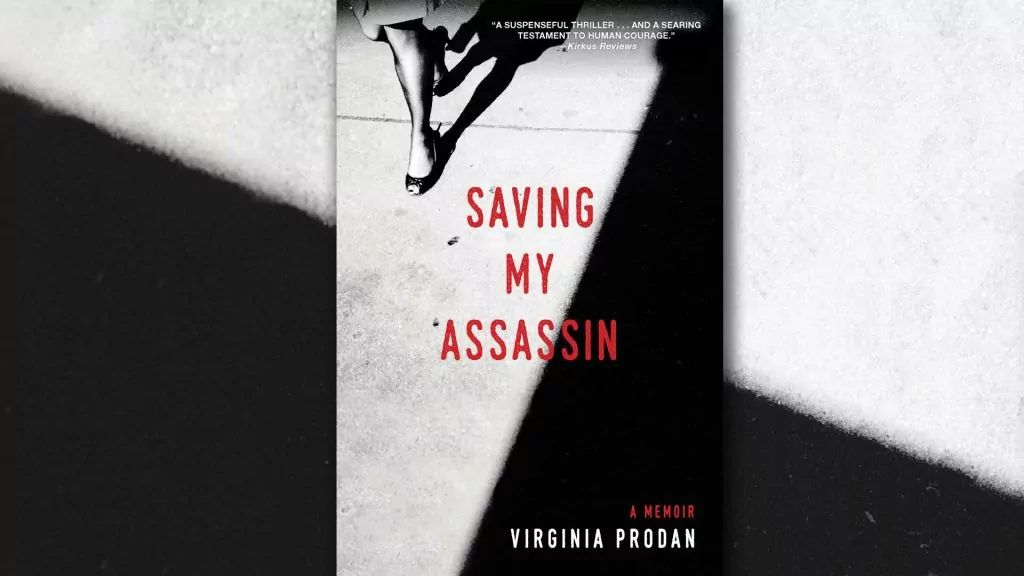
Saving my assassin

by Virginia Prodan 2016 pages / 336 pages Rating: Good/GREAT/Give How would you respond if you were staring down the barrel of a gun held by someone the government had paid to kill you? That’s how Virginia Prodan found herself. A citizen of communist Romania, her memoir begins when she was a young girl, in trouble already for her family’s attendance at the Catholic Church. Then, as a recently converted lawyer, she defends fellow Christians from the government’s persecution, and eventually she is exiled to the United States. It is an intense story, full both of bravery on Virginia's part, and reliance on God to make that bravery possible. It is also an important window into the persecution that many of our brothers and sisters face all over the world. Finally, it wraps up with some information on the assassin mentioned on the title, showing the ways God’s grace goes much further than was ever expected. Cautions There are elements of daily life in Romania, especially prior to Virginia’s conversion, that fall outside of how Christians ought to live. There is also a brief mention of the ending of a marriage that feels strangely cavalier, though it is likely just not highlighted further as it falls outside the main timeframe of the book. These cautions are minor, and should not deter mature teens or adults from reading the book. Conclusion This is a book that would be interesting as an action story or spy thriller. But it is more than that, a book that examines how God can provide great courage to his people, how He works in situations that are frightening, and how He uses means that no one involved would expect to bring his sheep home to the fold. It’s an exciting and moving story that is well worth the time....
Red heart icon with + sign.
Adult fiction, Book Reviews

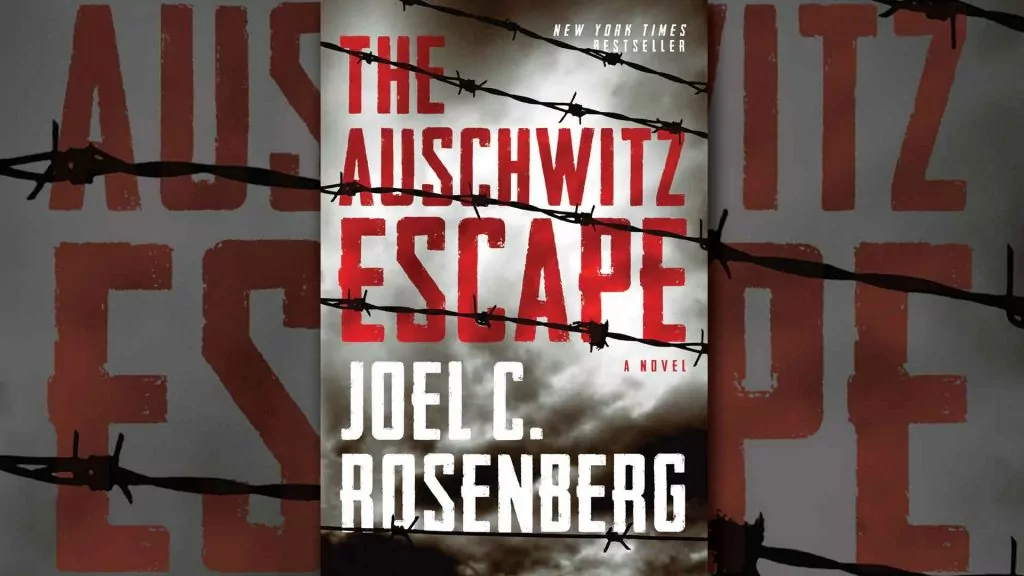
The Auschwitz Escape

by Joel C. Rosenberg 2014 / 461 pages Rating: Good/GREAT/Give Joel Rosenberg is a fantastic writer, a New York Times best-seller, but his political thrillers are based in large part on premillennial views that I don't share, and that does take away from some of the fun. But in The Auschwitz Escape he's having a go at historical fiction, so his end-times eschatology doesn't factor in, even as his mad story-telling skills still do. Jacob Weisz is a seventeen-year-old Jew in Germany in 1938. His parents are passive, hoping that if they just stay the course, eventually it will turn out alright. His uncle is a member of a Jewish resistance group that knows things will only get worse unless people start fighting to make it better. Jacob isn't as naive as his parents, but he does respect them. But when the Nazis come for his family, Jacob escapes and begins to fight alongside his uncle...for a time. As the title indicates, soon enough he gets caught and sent to Auschwitz. There he meets a Protestant pastor, imprisoned for helping Jews, and Jacob can't understand why the man was willing to risk his life when he could have stayed out of it and stayed safe. Jacob has a hard time trusting a man whose Christian motivations are so hard for him to understand. Rosenberg makes clear that while the two principal characters are fiction, their experiences were not – he researched the actual escapes, as well as the escapees' attempts to let the world know what was going on in these death camps. That research, along with his impressive writing chops, give the book its authentic feel. And speaking of authenticity, Rosenberg has inserted a gospel presentation in the book, but his is more subtle and more natural than what most other Christian writers manage. I really enjoyed it and am keeping it on my bookshelf because I can imagine reading it again in a few years. I'd recommend it for older teens and up....
Red heart icon with + sign.
Book Reviews, Children’s non-fiction

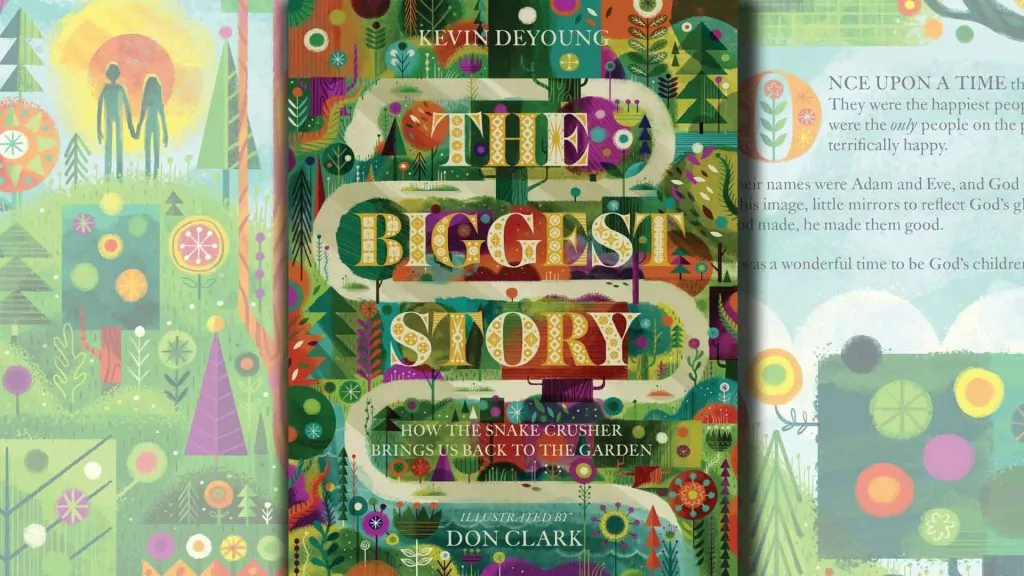
The Biggest Story

How the Snake Crusher brings us back to the garden by Kevin De Young 120 pages / 2015 Rating: Good/GREAT/Give I read this over three nights to my kids but if it had been up to them we would have finished the whole thing that first night! In the space of ten chapters Reformed pastor Kevin De Young summarizes the whole Bible. On every single page of the book illustrator Don Clark squeezes in more vibrancy and color than you'd ever thought possible. His highly stylized illustrations grab young eyes. Clark is very careful and reverent when it comes to illustrating Jesus. We see, for example, the silhouette of a man with a crown of thorns, but not his eyes, nose, mouth, etc. In other pictures we see only His hand or his foot. So, the pictures are very well done. The text is even better. Kids can easily mistake the Bible for a book of stories, some about judges, some about kings, some about Jesus. What Kevin De Young does in this overview is make it clear to even the youngest kids that the Bible is one story, all about Jesus and God's plan to bring "us back to the garden." This would make a fantastic supplement to daily Scripture reading with your kids - you can use it, maybe every year again as a reminder that the passage of the Bible being read that day is tied into a whole over-arching narrative - just one part in God's big story! You can watch the book trailer below to get a feel for the art, and to hear how it reads, you can listen to the first chapter, done as an animated movie here. ...
Red heart icon with + sign.
Adult fiction, Book Reviews

Ride Sally, Ride

by Douglas Wilson 294 pages / 2020 Rating: Good/GREAT/Give This might be the weirdest bit of fiction I've read, but the author's point is that this is no stranger than the bizarre non-fiction showing up in our news feed each day. One of the "characters" in the story is a life-sized sex doll, and that had some thinking that this was one of those books. It is not. It is, instead, a comic and admittedly PG-rated commentary on the gonzo culture that produces such things. The setting is the US of twenty years hence. A Supreme Court ruling overturning Roe vs. Wade has the interior states banning abortion once again and has Americans en masse  "reshuffling to states more conducive to their values." With Christians heading inland and liberals fleeing to the coasts, the country's outer edges have doubled down on sexual license and given the biggest of bear hugs to Big Brother, even as the heartlands are taking a sharp Godward turn and paring down the size of their governments. Our hero, Ace, lives in Colorado, one of the few inland woke states, where speech is monitored, and the orthodox Christian books are available only on the dark web. Christians are still allowed to circulate, but like the frog being brought to a slow boil, most are unaware of the decided change their innards are undergoing. The story begins with Ace's father Benson making the welcome wagon ready for a new neighbor who is just moving in. Cookies are baked, and Ace and Benson head on over to help bring in the heavy furniture, because that's what good Christians should do. But what should good Christians do when your new neighbor introduces you to his life-size robotic "wife"? Father Benson thinks he should invite "them" over for dinner because, after all, "they" need Jesus. Son Ace grants the point that someone sure needs Jesus, but wants to know why his dad keeps talking about them. One thing leads to another – we're still in the first chapter here – and Ace ends up trash compacting his neighbor's doll, and instead of getting charged with destruction of property, the woke prosecutor charges him with murder, because their neighbor had clearly identified the doll as his wife. It only gets crazier from there, and in a far too believable way. Cautions If it hasn't been made clear already, this is not your typical Christian novel. For instance, while many a Christian novel will take God's name in vain, this one doesn't. And while no Christian novel ever uses the word "pussy" this one does, twice, used by a non-Christian character who, in her defense, uses it as appropriately as it might ever be used. But that's about as problematic as it gets. While this certainly isn't a book for children, and despite its provocative premise, there's nothing titillating. This is a satiric commentary on our culture's dark turn, but that darkness is handled with delicacy. Conclusion Ride Sally, Ride is, at regular intervals, laugh out loud funny, and had me reading it to my wife to share the best bits. I'd recommend it for adults who appreciate satire, and while it isn't strictly dystopian (what with its happy ending) fans of that genre are sure to enjoy it too. The best test to see if you'll appreciate the book might be to see if you appreciate the trailer below. If it's too shocking, then Ride Sally, Ride won't be your cup of tea either. But if you laughed... ...

Red heart icon with + sign.
Adult non-fiction, Book Reviews, Sexuality

Song of Songs: The Greatest Love Song

by Matthew H. VanLuik 210 pages / 2015 Rating: Good/GREAT/Gift Way back in 1979, Victor Kiam coined a phrase in a Remington electric razor commercial: "I liked the shaver so much, I bought the company." This little quip came to mind when I decided to review Rev. VanLuik's commentary on the Song of Solomon. Here's my version: "I liked the book so much, I recommended it for my high school classroom." These will become textbooks in our Wisdom Literature course for either Grade 11 or 12, which means that every student in the high school would eventually use them… and, I am certain, benefit from them. What benefit will they receive? One of the greatest challenges today for both adolescents and adults in Christ’s kingdom is the world’s idolatrous focus on sex. As much as we need to tear down this idol, it’s just as important to work on the positive side of the issue – learning the responsibilities and rewards of Biblically guided intimacy. That is the goal of this book, a strongly Biblical, Christ-centered view of the Song of Songs that shows the ups and downs of love and marriage, both the day-to-day necessity to give of ourselves and the beauty of indeed being and becoming one flesh. The 16 chapters of this book take us from the couple’s initial attraction, through struggling with desire, through their wedding day and night, to marital conflict and reconciliation. At each stage, VanLuik also repeatedly demonstrates that one cannot have a truly fulfilling marriage without a living love for Christ, and stresses what is even more important, how the relationship portrayed in the Song parallels how the perfect love of Christ for His bride calls for His people’s passionate response (whether single or married). Of course, it is not only teens who could benefit from a clear Biblical view of sexuality courtship, love, and marriage. That means this is a great resource for parents, teachers, and preachers, and everyone who doesn't want to simply skip over the Song, but actually want to confront the foolishness of our sex-obsessed culture with the wisdom of God. Americans can find the print copy at Christianbooks.com and the Kindle version here. Canadians can find it on Amazon.ca here, or can order directly from the author via his email: [email protected]....

Red heart icon with + sign.
Book Reviews, Children’s picture books

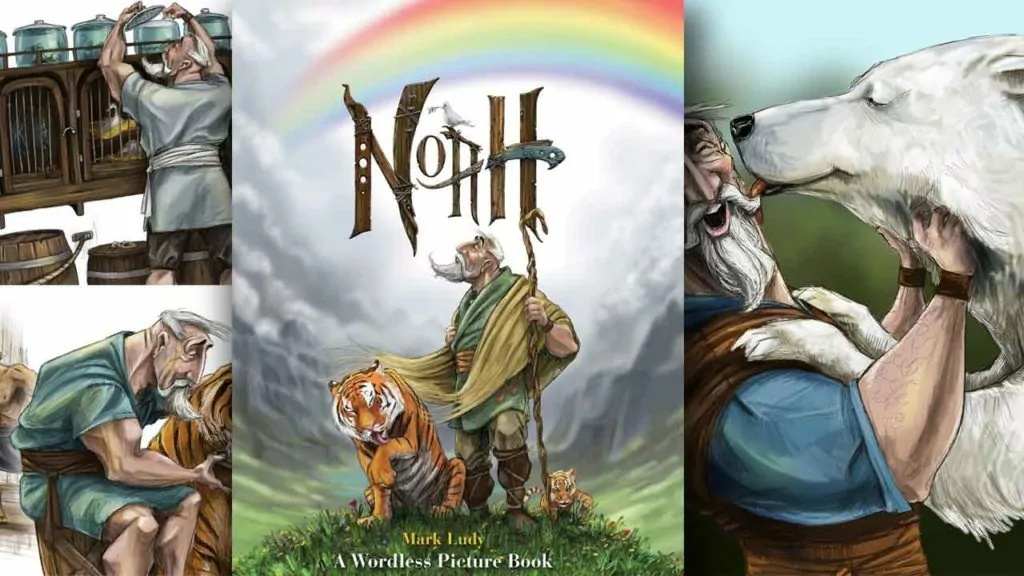
Noah: A wordless picture book

by Mark Ludy 60 pages / 2014 Rating: Good/GREAT/Give Mark Ludy's wordless account of Noah's life will fascinate young and old. There's so much to see on every page, and the wordless nature of it invites parent and child to discuss all that's going on. The danger with such an account is that for some it might come to replace the original biblical version. As children pore over this picture book's pages repeatedly, they could easily forget that even as it is reasonable to believe Noah might have made use of the strength of a dinosaur or two, the Bible doesn't actually say he did. But what such a book can also do is help us re-evaluate some other non-biblical assumptions we might have inadvertently adopted. Noah's wife is shown here as a lighter-colored black, while Noah himself is looking more Grecian, Roman, or perhaps Sicilian. What both most certainly are not – and what they most probably were not – is a British or Scandanavian sort of white. That might bring questions for many a child and adult who, having grown up with picture Bibles that have a white Adam and Eve, and a white Jesus too, have presumed Noah was white as well. But it is more likely that Adam, Eve, and maybe many of the generations that followed had some sort of middle brown skin, as that genetic coding can contain within it the possibility of both darker and lighter skin in the generations that follow. Another corrective: while evolutionary theory portrays Man as being much simpler back in history, the Bible details some big advances being made from one generation to the next (Genesis 4:20-22). They weren't primitive so it is helpful to see Noah shown as living in a fairly advanced level of industry and technology. They aren't in a rocket age, but they also aren't living in caves either. Finally, we also get a good idea of the sheer magnitude of the Ark, correcting the silly bathtub toy picture some might have stuck in their heads. We shouldn't let this book overshadow the biblical account, but when we put Ludy's Noah in its proper place – like that of a commentary that helps us reflect on what Genesis 6-9 is actually saying – then it can be a wonderful aid. I'll offer a couple of critiques: while there's a dinosaur and some mammoths to be seen working on the ark's construction, neither can be found in it. Also, while animals two by two can be seen making their way to the ark, there don't seem to be any groups of 7 (Genesis 7:2). Of course, we don't see every animal arrive, so maybe we just missed those, (and maybe they'll be found in any expanded future edition of the book!). So who is this for? We probably all think of picture books as being for children, but I really think everyone will love it, from ages 3 on up to 103! You can take an extended peek below. https://cdn.plough.com/-/media/files/plough/lookinside/n/noahenlookinside.pdf...

1 2 3 4 5 6