Transparent heart icon with white outline and + sign.

Life's busy, read it when you're ready!

Create a free account to save articles for later, keep track of past articles you’ve read, and receive exclusive access to all RP resources.

White magnifying glass.

Search thousands of RP articles

Helping you think, speak, and act in Christ.

Open envelope icon with @ symbol

Get Articles Delivered!

Helping you think, speak, and act in Christ. delivered direct to your Inbox!


Red heart icon with + sign.
Adult fiction, Book Reviews

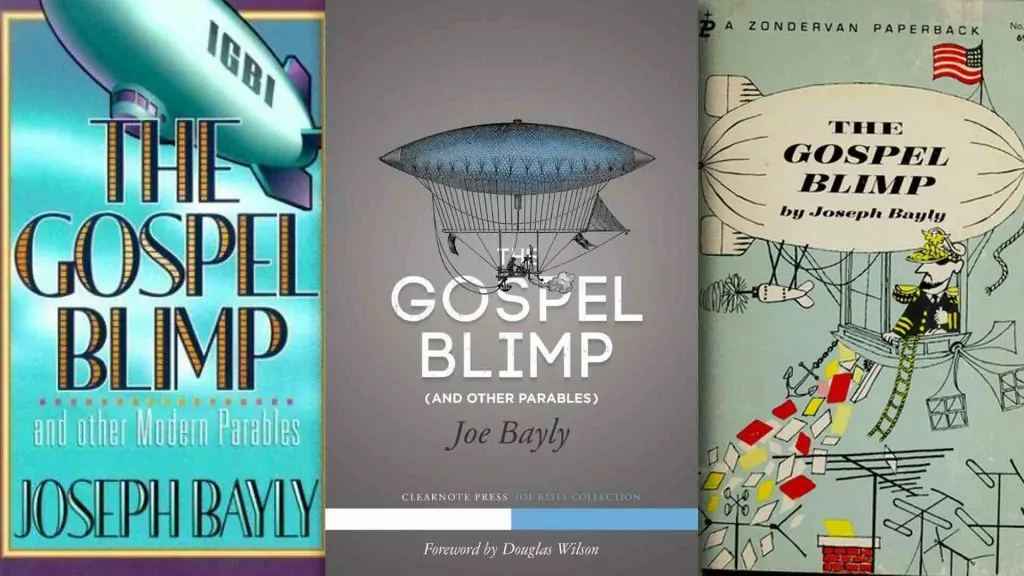
The Gospel Blimp (And Other Parables) 

by Joe Bayly 2013 / 155 pages Rating: Good/GREAT/Give We all have people in our lives that we should share the Gospel with but we might be unsure about how to approach them. Do we drop crumbs while talking at the water cooler? Do we invite them over for dinner and let our actions speak for themselves? In the title parable of this short story collection, “Herm” has a better idea. Rallying his church behind him, Herm encourages them to forget all that awkward personal interaction and instead purchase a blimp to fly over their town. They customize the blimp with all the Christian bells and whistles such as a Scripture-verse banner, gospel tracts by the bushels to drop from the sky, and a PA system to blast the town with Sunday’s sermon. It’s a brilliant satiric take on how far Christians can go to avoid taking the obvious, but scary step, of talking to our neighbors about our God. Included in this short book are many other funny, satirical, and surprisingly profound parables. One favorite was “Rehoboam’s Golden Shields” When Rehoboam left home for college he had golden shields, which made him stick out. He knew he should be proud of them but when the last one disappears he experienced a sense of relief. He was finally just like everyone else. The problem is he knows that when he goes home to visit his family, his missing golden shields would surely be noticed. Instead of finding his missing shields, Rehoboam simply replaced them with cheap look-a-likes. Another I really likes was ‘How Shall We Remember John?’ which follows a family who is grieving the loss of their son and brother. They began by remembering John every morning before breakfast but over time the decision was made to only remember him on Saturday. As time passed, no time was spent remembering John at all.  These two parables raise some important questions. Do you find relief when you fit in with the world? Do you hide your lack of faith from those closest to you? How often do you remember and spend time with Jesus? Is it every day? Once a week? Even less? I recommend any young adult or older read at least a few of these parables. One notable caution: a single use of the “N-word” in the short story “The Saving Message.”...

Red heart icon with + sign.
Book Reviews, Children’s non-fiction

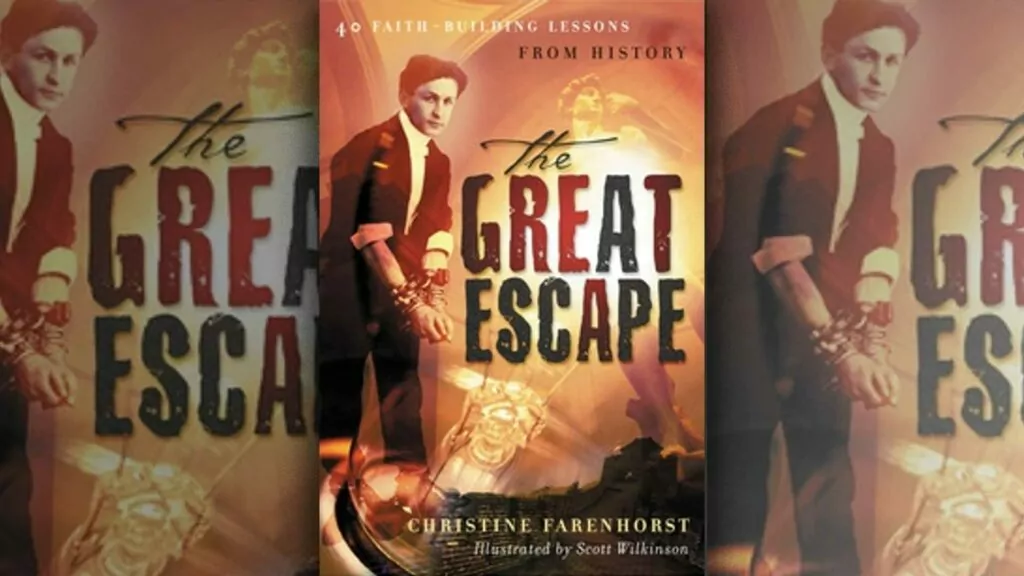
The Great Escape

by Christine Farenhorst 2002 / 182 pages Rating: Good/GREAT/Give Christine Farenhorst is a superb storyteller. The Great Escape is a collection of forty short stories about events in the lives of Christians and unbelievers: each story teaches, each tale tells about the role of God in the lives of his subjects. Every story is interesting and absorbing. In about three pages each tells about a person or an event in a manner that teaches solid lessons about victories or failures of people throughout the ages. We read about Houdini, the escape artist, who could not escape from death. We read about the fictitious Lester Green, who convinced many gullible people that a cold car engine could be started by putting two hens on the car hood. We read about the orphan John Sebastian Bach, who ended all his musical compositions with “Soli Deo Gloria” (To God alone the glory). We read about the many Roman emperors who persecuted the believers. We read about princes and paupers, believers and unbelievers, the famous and the infamous, people from our own times and people long dead, and we smile, and sometimes shed a tear. It’s a good book, a good read, a treasure worth acquiring, just based on the well-told stories. But there is more! “The media, with its grasping secularism, has become the main voice in many households as lax fathers and mothers relinquish their holds on the spiritual lives of their children…” As individual family members we “are to speak intimately to each other of the things pertaining to God’s kingdom and of what He has brought about in lives” So writes Christine in her introduction. And so it is that at the end of each story are two questions. Just two! But each is powerful food for thought. Christine prays that her stories and questions “will encourage parents to speak with their children, and children to discuss with their parents, what God’s love and bounty has done in their lives and in the lives of past saints.” “Soli Deo Gloria.” To God alone the glory. But with God’s help these “devotions” will trigger such discussions. The book is a rare treasure, a must for all parents! Caution My only caution is that some stories might be too intense, but only for very young children. Conclusion Without the questions, it’s a fantastic read, but when you add them in it becomes a wonderful tool for parents and children to talk together about what God has done in their lives, and in the lives of saints in the past....

Red heart icon with + sign.
Book Reviews, Graphic novels

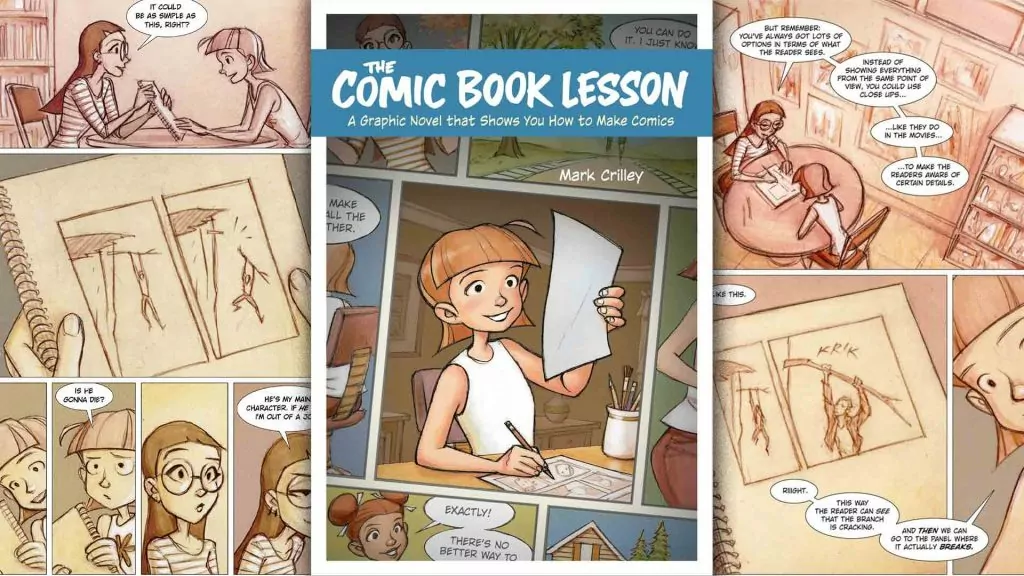
The Comic Book Lesson (2 books)

A graphic novel that shows you how to make comics by Mark Crilley 2022 / 156 pages Rating: Good/GREAT/Gift Emily is a young artist with plans for a comic book - she wants the hero to be a "pet finder" coming to the rescue of any and all who have lost their furry friends. But it's one thing to have a story and the skills to draw it and yet another to know how to transform it into comic book form. So how can she bridge that gap? She just needs the right sort of mentor. What author Mark Crilley has given us is a story showing aspiring cartoonists how they, too, can learn what Emily wants to know – we get to come along for her journey as she meets three talented ladies who are willing to teach. First up is an encounter at the comic store: Emily discovers that the store clerk, a high schooler named Trudy, is a fantastic artist working on a comic project of her own. Emily's enthusiasm and persistence ensure that one impromptu lesson becomes more. Trudy teaches Emily things like pacing – how including adding a couple more frames can make a scene more dramatic – and how a character's eyebrows communicate more about their emotions than a smile or frown. Trudy is so impressed with Emily's work that she introduces her to Madeline, a friend who's already a published cartoonist. The lessons Madeline teaches include: the importance of a "broad" establishing shot before going in for close-ups, and the need to script a comic before you begin drawing it. Madeline, in turn, introduces Emily to her own cartooning mentor, Sophie, who has yet more to teach Emily, like the proper order for word bubbles, and the need to eliminate any possibilities of confusion. While I don't like to include spoilers, for the sake of young readers, I'm going to include one. During her time with Sophie, we find out why Emily was so earnest about her hero being a pet finder: because Emily wasn't able to rescue her own dog. Her loss is poignantly told, which made my one daughter sad enough that she stopped reading. I suspect though, that she might pick it up again. If your child is a sensitive soul, it might help to give them a heads up beforehand. Cautions I'm going to list a few cautions that aren't all that relevant to the mid to older teens this is aimed at, and I only include them because some 10-year-olds and even younger could really enjoy this comic, but with some parental guidance. This is one of the tamest, safest "how-to-cartoon" books you can find (Maker Comics: Draw a Comic is another, though it covers different ground). But parents need to know that comics today contain loads of weirdness. Whether it's the way women are depicted as impossibly buxom and skinny, or the heroic witches, ghosts, and demons that feature in more and more stories, or the queer agenda that's inserted in comics for even the youngest ages, there is a lot of twisted stuff out there. The Comic Book Lesson isn't pushing any of that, but in a few instances this secular work does "bump" into this weirdness. So, for example, Trudy mentions the "Electric Angel Nurse Mizuki" comic she's authored, and we're shown the cover depicting a nurse with wings. Madeline mentions she is writing a comic book about assassins for hire. A customer asks for a copy of Raina Telgemeier's Smile, which is a fine book, but whose sequels take a queer turn. And the 12-or-so-year-old Emily is depicted at a comic store and convention without her parents, which are weirder places than we'd want our 12-year-old to go without us. That's about it. Nothing too bad, but some of it worth a discussion, especially for younger readers. Conclusion Comics can combine not simply exceptional writing but outstanding art, doubling the creative potential to explore. That's why Christians really should dive into this medium. The Comic Book Lesson is a solid piece of "edutainment" that'll give young aspiring artists an introduction to the general approach needed to be able to expand and refine their skills. This is not so much a "how-to-draw" book – there are loads of other books like that – as it is a "how-to-decide-what-to-draw" book. It's about learning how to plan out panels and pages like cartoonists do. For more, watch the video below where the author gives an in-depth (20 minutes long) introduction to his book. If your child loves The Comic Book Lesson, they may be interested in the author's The Drawing Lesson, (2016, 138 pages) which also uses the graphic novel medium to teach, this time about shading, negative space, how to hold a pencil, and seeing things as an artist does. It's a great book, suited for 12 and up with no cautions or concerns other than one use of the word "Jeez." ...

Red heart icon with + sign.
Book Reviews, Graphic novels

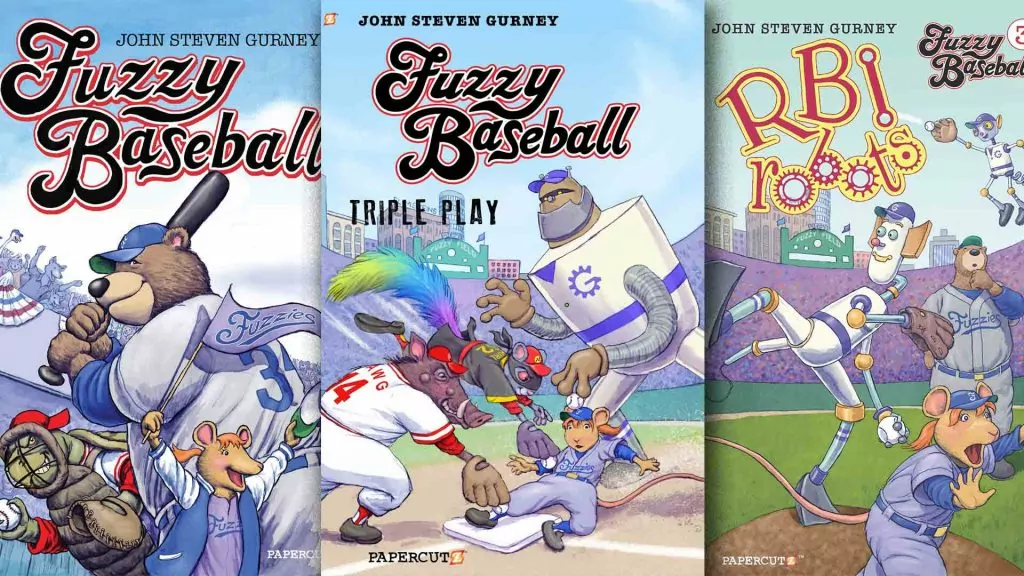
Fuzzy Baseball: Triple Play

by John Steven Gurney 2022 / 176 pages Rating: Good/GREAT/Gift This is, as the title references, three stories in one, each involving the Fernwood Valley Fuzzies baseball team taking on a different opponent. The Fuzzies are quite a cuddly team, even if their manager is a bear. Other players include a koala, a wombat, and a penguin. In the first story, we're introduced to their biggest fan, Blossom Possum. But when the Fuzzies keep losing to their rivals, the Rocky Ridge Red Claws, this fan decides she has to do more than cheer from the sidelines: Blossom tries out and makes the team! But can a little possum really get a hit playing against the fearsome critters of the Red Claws? What can she do versus a crocodile, warthog, bull, rhino, or wolf? As you might imagine, there is a happy ending. In the second story, the team travels to Japan to play the Sashimi City Ninjas, a polite, but very cocky lot that leaves some of the Fuzzies feeling intimidated. Things get crazy when the Ninjas are able to amplify their baseball skills with a "morfo-power blast" – this is riffing off of Asian cartoons where characters often have some kind of secret power boost they can employ when they most need it. But when the Fuzzies take advantage of this power blast too, it's homeruns all around, but, as Blossom notes, "This isn't baseball." A fun quirk to this story is two alternate endings, the first where it was all a dream, and the second where it wasn't. In the third story the Fuzzies discover that the team they are playing are actually robots. Can they beat mechanical wonders? The Fuzzies are up for finding out. Cautions This is a collection of what was first three separate books – Fuzzy Baseball, Ninja Baseball Blast, and RBI Robots – and while I have no concerns with any of them, I'll mention the fourth book, Di-no hitters. This time the Fuzzies are playing a team of dinosaurs, and as you might expect the book is filled with loads of evolution-presuming jokes. So, pick up Triple Play, but give book #4 a miss. Conclusion This is a kid's comic that sticks to that target audience: it's fun, creative, and while this isn't really trying to teach kids anything, whatever morals there are to the stories (maybe, "be a good teammate," or "work hard," etc.) are ones we can appreciate. This would make a fantastic Christmas present for any kid who likes baseball, fuzzy animals, comics, or even none of the above. ...

Red heart icon with + sign.
Adult non-fiction, Book Reviews

Strange New World

How thinkers and activists redefined identity and sparked the Sexual Revolution by Carl R. Trueman 2022 / 187 pages Rating: Good/GREAT/Gift Just how strange is this new world we live in? Well, we’ve seen: A father jailed because he used the “wrong” pronouns to refer to his gender-confused daughter Pastors arrested for holding worship services while thousands marched unmasked to protest alleged systemic racism Elementary school students sent to the principal’s office for “misgendering” their classmates Boys taught that their natural rambunctiousness is an example of toxic masculinity and must be despised and replaced with more feminine traits. The world is in the throes of madness, but to assume that there is no method to the madness would be naive. In Carl Trueman’s, Strange New World, (a concise version of his earlier The Rise and Triumph of the Modern Self), we take a swift trip from the Enlightenment to the 21st century to review the radical thinkers responsible for the madness of today’s identity politics. Under identity politics an individual is only as important and valued as the racial, social, or sexual group he is part of. A black transgender woman would be near the top of this hierarchy, deserving of society’s sympathy and support while a straight white male is at the bottom, deserving of ridicule because of the privilege he must have based on the color of his skin. People are no longer judged by their character but rather by their lived experience and the history of oppression or privilege their “group” has experienced. As Trueman details, the problems associated with identity politics can be traced back to our notion of the self. For all of history, we recognized that if our inner feelings differed with the physical reality around us it was important to realign our feelings to that reality. However, bringing the mind into line with the physical body has, in the space of only a few years, been rejected in favor of bringing the body into line with the mind. Toleration was once… well, tolerated. But no longer. Now full acceptance of the latest new view is expected, with severe repercussions to those who do not. How does our culture justify that severity? Well, if the mind is said to be the driving force behind reality, then words have much more significance – words themselves can now marginalize and cause damage to the person. The saying “sticks and stones may break my bones, but words will never hurt me” needs to be adjusted to something along the lines of “sticks and stone may break my bones, but your words are also violent.” Many institutions are quickly writing laws that carry punishments for inflicting emotional damages to those in marginalized groups. What Trueman makes plain is that although this shift towards identity politics has occurred recently, thinkers such as Rousseau, Marx, and Freud long ago laid the foundation on which identity politics now stand. Identity politics is not some passing trend but is rooted deeply in our culture’s psyche. Seeing it widely embraced could lead Christians to despair. However, as Trueman reminds the reader, Christ has promised His church that the gates of hell shall not prevail against it. God is sovereign and His will shall be done, on earth as it is in heaven. With this hope we can continue to eagerly await the coming marriage feast of the Lamb. This book is a must-read for older teenagers and adults alike (and ranks in my personal top 5). Understanding the history of the ideas that led to this moment gives us the power to resist our culture’s siren call into identity politics, and will better equip us to sympathize with those who haven’t resisted, and have been shipwrecked....

Red heart icon with + sign.
Book Reviews, Teen non-fiction

Do Hard Things: A teenage rebellion against low expectations

by Alex and Brett Harris 2008/ 241 pages Rating: Good/GREAT/Give Did you know that the term “teenager” has been around less than 100 years? It’s only a recent development that our culture has come to expect the teen years to be a mystical period of life completely disassociated from adulthood. We’ve come to expect so little of these years. Do you have this same view of the teenage years? Alex and Brett Harris – just teenagers when they authored Do Hard Things – want to change this perception. Instead of a time of relaxation, they present the teenage years as an opportunity for strict training in order to set the direction of young people's lives and build towards a rewarding future. The best way to train for adulthood, they maintain, is to do hard things during the teenage years. The brothers emphasize that in order to do truly hard things we must lean on God for strength and reject the Devil’s lie that God is not powerful enough to help us do what is outside our comfort zone.  I’d strongly encourage any teenager or young adult to give this book a shot. If it leaves you wanting more, take a look at Start Here, where Alex and Brett answer some frequently asked questions that can arise during the process of doing hard things. Read an excerpt of the first 25 pages here. You can also download a free 15-page study guide. And you can read the first two chapters of "Start Here."...

Red heart icon with + sign.
Book Reviews, Teen fiction

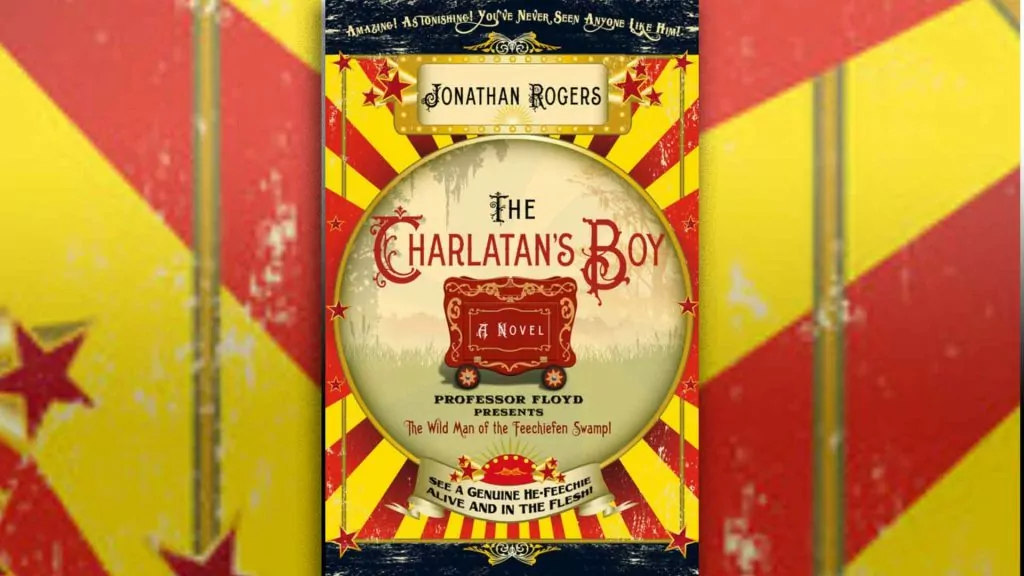
The Charlatan’s Boy

by Jonathan Rogers 2010/ 305 pages Rating: Good/GREAT/Give I love love loved Jonathan Rogers’ Wilderking Trilogy, a children’s fantasy series that echoes the story of David and Saul, though without ever mentioning it, and is set in a kingdom made up of sheep farmers, nobles, castles, and swamps populated by “feechie” creatures that might be men or might just be myth. It was great fun, and when I was done reading it to my daughters, we all wanted more so we were happy to learn that Rogers has also written this stand-alone set in this same universe called. But as much as I enjoyed the story, my girls did not. One reviewer described it as “C.S. Lewis and Mark Twain rolled into one” and while my girls love Lewis, they aren’t about Tom Sawyer-type tricks and hijinks. Twain is simply too nasty for their liking. So I stopped reading it to them, but kept on myself and enjoyed it more and more the further on I went. Floyd is the title charlatan, Grady his boy, and the two of them travel from village to village trying to trick folks into believing that a mudded-up Grady is one of the fearsome and fabled feechies. But when time passes and villagers stop believing in feechies – it’s been so long since anyone’s seen one out in the wild – they stop paying to see feechie acts. So it’s up to Floyd and Grady to make them believe once more. If this was just a tricky Twain story, I don’t know that I would have liked it either. Floyd is a shyster and little more, but Grady's biggest fault is merely the company he keeps. So we've got reason to root for Grady, and reason to hope too. This, then, isn’t a kid’s tale like Wilderking, but something intended for a slightly older crowd, maybe comparable to how Tolkien wrote The Hobbit for the young'uns and Lord of the Rings for the adults – same world, but two different target audiences. So for teens and up, so long as Lewis/Twain is an intriguing combo to you, you’ll really enjoy it....

Red heart icon with + sign.
Book Reviews, Teen non-fiction

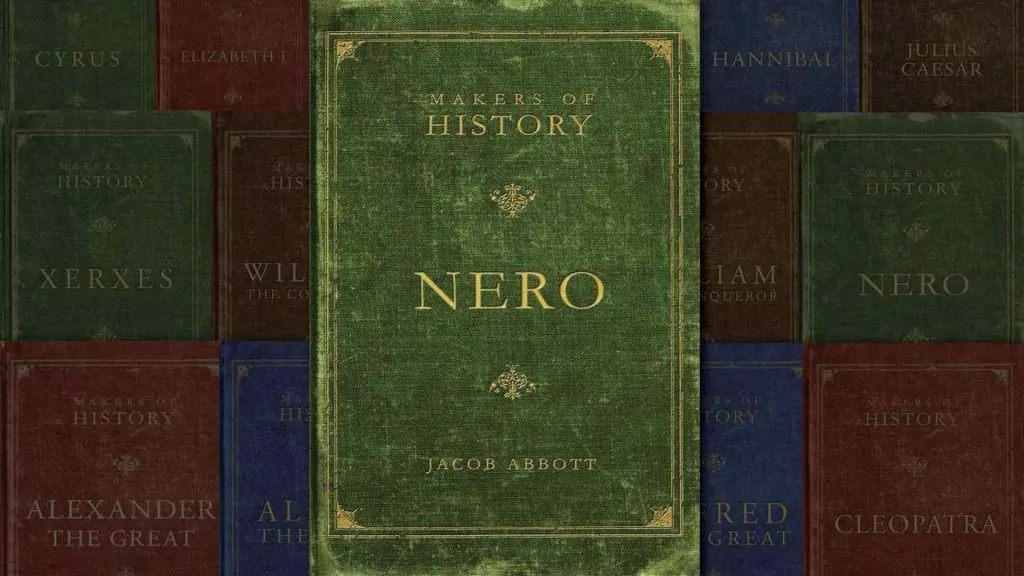
Nero

by Jacob Abbott 2009, 202 pages Rating: Good/GREAT/Give How do you make history come alive for teens? Sometimes it means turning to an author long dead. Jacob Abbott died 125 years ago, but a quick read through this volume explains why his books endure. The original 1853 edition of Nero is available for free in many places online, and is well worth downloading to your Kindle. But it does benefit from the updating that publisher Canon Press has done to their version. Some longer 70-word sentences have been broken up and editor Lucy Zoe Jones has also replaced a few obscure words like "declivities," "salubrity," and "preternatural." Little else was required. Now, Nero's life might not seem like appropriate material for a biography aimed at teens – this Roman emperor indulged in every sort of immorality. However Abbott is both a tactful and talented writer. He doesn't delve into the salacious details, so younger readers will only encounter a broad overview of Nero's wickedness. But Abbott does tuck in a bit more information in between the lines, there to be read and understood by older, less naive readers. It's an impressive feat. Like many good teen books, adults will enjoy this as well - it is a engaging introduction to a key figure in both Church and Western history. For Canadian readers, this edition is available at Christianbook.com. In the US you can find it at CanonPress.com. where you can also check out the first chapter. You'll also find there more great updated Jacob Abbot biographies like: Cyrus Xerxes Alexander the Great Hannibal Julius Caesar Cleopatra Alfred the Great William the Conqueror Elizabeth I ...

Red heart icon with + sign.
Adult fiction, Book Reviews, Teen fiction

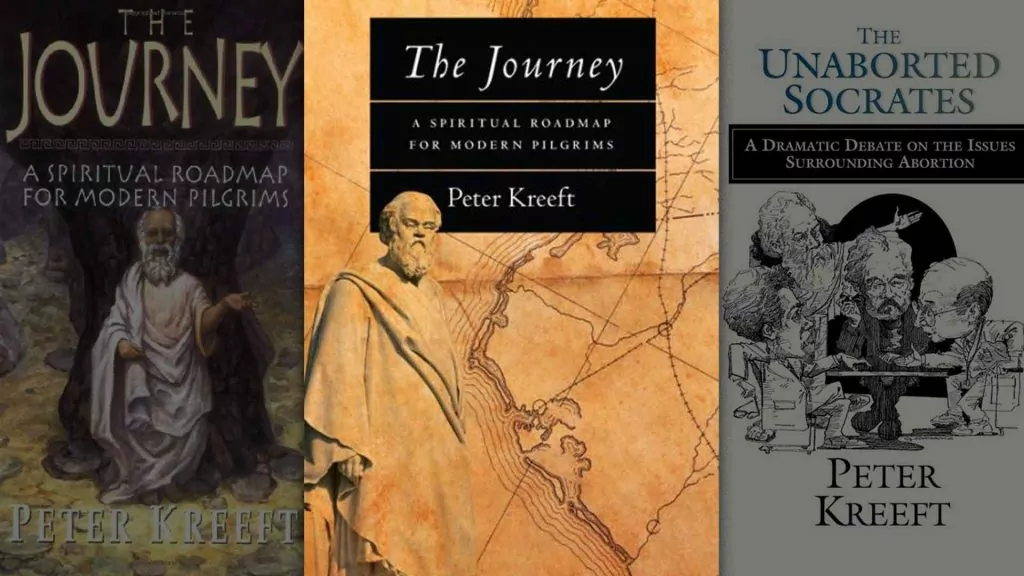
The Journey

A Spiritual Roadmap for Modern Pilgrims by Peter Kreeft 1996 / 128 pages Rating: Good/GREAT/Give This is an allegorical journey, reminiscent of John Bunyan's Pilgrim's Progress. But in this case, the pilgrim - the author Peter Kreeft - has Socrates as his guide. And instead of facing trials and temptations on the road, he runs into one Greek philosopher after another, every time there is a fork in the road. Each one of them offers up their own particular worldview for consideration and Kreeft then has the choice of either staying with them, and subscribing to their philosophy, or rejecting it, and continuing on his journey in search of Truth. Though these philosophies are ancient, they are also current. Take as example the first philosopher Kreeft and Socrates meet: Epicurus presents the "Eat, drink and be merry." He tells Kreeft that the Truth isn't even worth seeking after - not when there is so much partying to do! Today we might call this the Hugh Hefner philosophy - why think about things such as Truth and the purpose of life, when there is yet another woman to bed, more money to be made and spent, and more parties to attend. And indeed, when the pilgrim rejects this worldview, he notices that Epicurus bears a strong resemblance to Hefner. As he continues he meets more ancient Greeks, each with their own challenge to present, and each with their own modern-day counterpart. This is what makes the book a valuable tool. Just as Socrates is a guide to the pilgrim Kreeft as he is confronted with ten different errant worldviews, so too this book can serve as a guide to anyone bumping up against these worldviews today.  Some of the philosophers he meets include: The Skeptic The Cynic The Nihilist The Materialist The Relativist The Atheist The Pantheist and Deist It is a very well-written, fun read, but because the book is deliberately philosophical this slim volume could seem a bit intimidating to anyone not already familiar with ancient Greek philosophy. But you don't need to be able to tell Socrates from Plato to enjoy this book. All you need is an interest in learning to discern how these philosophies are still being practiced and promoted today. One note of caution: the author is Catholic, and in this book that comes out in an Armininan flavoring to some passages. But Kreeft is also a great thinker, and when he targets secular errors, as he does in this book, there are few writers his equal. He has a whole series of books that feature Socrates and his questioning method, including The Unaborted Socrates: A Dramatic Debate on the Issues Surrounding Abortion and the Best Things in Life, both of which I would also recommend. But Kreeft is also a dedicated apologist for the Roman Catholic church and has written innumerable books on that subject too, so I would not recommend all his books with equal enthusiasm and would warn off an undiscerning reader from most of them, these three excepted. That said, this particular title would be perfect for anyone in university, or heading there, as a great tool to help them see through and answer the secular worldviews they'll run into on campus....

Red heart icon with + sign.
Book Reviews, Children’s fiction

The New Has Come

by Christine Farenhorst 2022 / 262 pages Rating: Good/GREAT/Give I've seen another reviewer suggest that this might be Christine Farenhorst's best book yet, and I think I might agree. Linnet is a five-year-old Dutch girl who, we discover, knows absolutely nothing about God. Her ignorance is so profound that when the Nazis invade, and an occupying soldier tells little Linnet about the wonderful family that "God has given" him, she wonders, Who is this God he is talking about? and Is God German For our own children, who may take always knowing God for granted, it will be eye-opening to follow what it's like, and how wonderful it is, for someone to be introduced to God for the first time. Linnet has the same wonderings any kid might have, but her wartime experiences also have her asking deeper questions, including a child's version of "God are you really there?" I had to figure to what age category to share this review, and picked "Children's Fiction," but The New Has Come is that rare sort that has appeal for all ages. The World War II setting and charming protagonist will grab your children; moms and dads will appreciate Linnet's questions and the opportunities they present to talk about God with our kids, and grandparents will get more than a little misty-eyed at just how beautifully this tale is told. I could not recommend it more highly! Christine Farenhorst is a columnist for Reformed Perspective. so if you don't already know her writing you can get a good taste of her writings by looking at her many articles posted on the website. And for a taste of the book itself, you can find the first chapter at the Amazon.ca listing here. ...

Red heart icon with + sign.
Adult biographies, Book Reviews

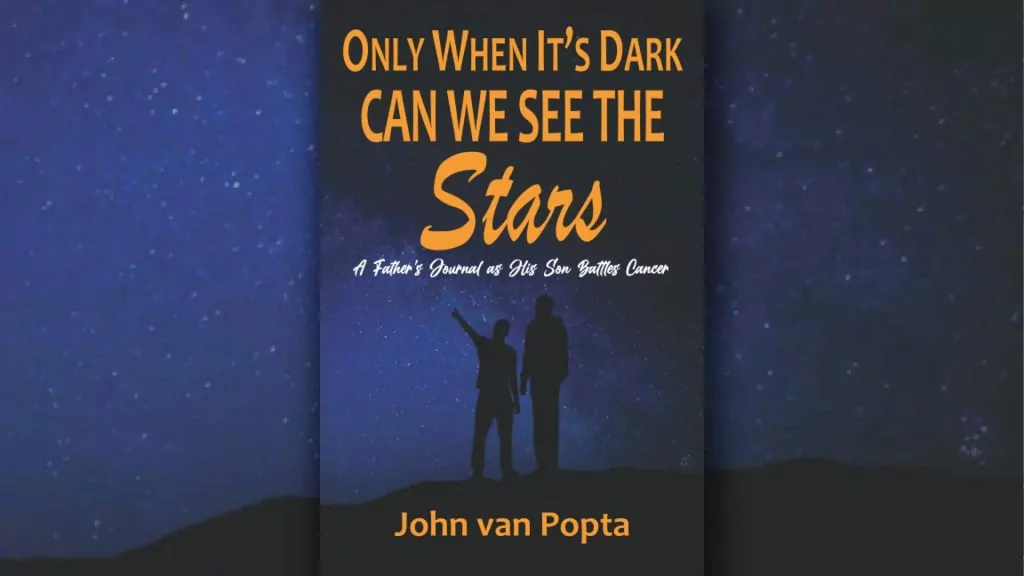
Only When It’s Dark Can We See the Stars: a father’s journal as his son battles cancer

by John van Popta 2022, 194 pages Rating: Good/GREAT/Give Why Lord? That’s the question 12-year-old Julian van Popta, his parents, and his siblings had to contend with when this young man was diagnosed with leukemia. Only When It’s Dark Can We See the Stars is an account of the four years that followed, as written by his father, Pastor John van Popta. The chapters are made up of the regular updates Rev. van Popta sent out to friends and family during the rounds of Julian’s treatment. What’s striking, and what makes this such a valuable read, is the trust the author demonstrates in God, even as the van Poptas struggled with why God would bring such sickness. As the author shares, it is one thing to face cancer as a pastor comforting parishioners, and another thing to do so as a parent seeing their child too weak even to eat. The question Why Lord? is made all the more urgent when, during Julian’s repeated hospital stays, they meet other children also battling cancer, and the van Poptas share in these families’ hopes and their losses – Julian does eventually recover, but many others do not. While this is a deeply personal account, the struggle to trust God in the face of death is one that we’ll all have to face, and this then is an example of how to struggle well. It is a father writing, but there’s no missing this is also a pastor who wants to feed the sheep with what he knows we need: to understand that my only comfort is that I am not my own but belong with body and soul, both in life and in death, to my faithful Saviour Jesus Christ. That truth, powerfully delivered, makes this not simply a good book, but an important one....

Red heart icon with + sign.
Book Reviews, Graphic novels

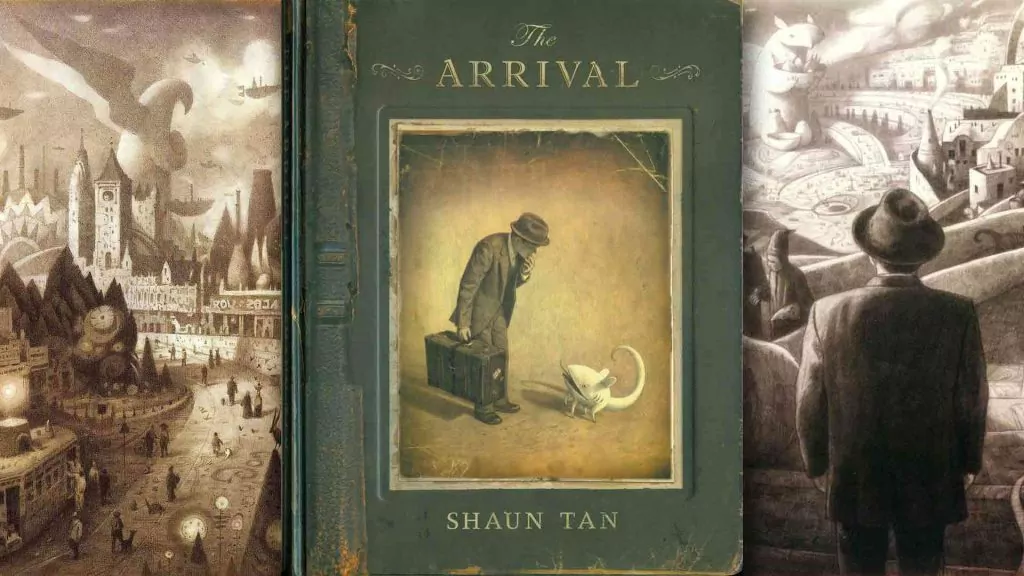
The Arrival

by Shaun Tan 2007 / 128 pages Rating: Good/GREAT/Gift I am an immigrant of sorts, having moved across the border to the US, and while it was easy enough to adapt it did give me a small bit of insight into what my parents and grandparents must have experienced when they moved from the Netherlands to Canada decades ago. While I didn’t have to learn a new language, my children are going to learn an entirely different history. They say “zee,” not “zed.” And almost everyone I know seems to have a gun in their home. Small differences. My parents had to deal with much bigger ones, and for their parents it was stranger still. It was hard to ask for help because they didn’t know the language. And they needed help because things were done so differently here. Fortunately, they weren’t the first – others from the “old country” had come before, so there was some help to be had. This may be an overly long introduction to a book that has no words. To cut to the chase, Shaun Tan’s graphic novel may be the very best possible way to share the immigrant experience with the second and third generations. It tells the story of a father who leaves his country, his wife, and his daughter, to head overseas to find a better place for them all. It is a very strange world that he finds. One of the first things we notice is that even the birds look different. In fact, the reader will notice that these birds don’t look like any birds anyone has ever seen. It only gets stranger in the pages that follow: the man encounters a mystifying immigration process, and documents that are written in a language that doesn’t look like any that the reader will know. The buildings, the food, the transportation – there is a uniqueness to it all. This new country looks like no real country on earth. So what is going on here? The first time I read this graphic novel I didn’t understand what was happening and stopped reading about halfway through. This time around a helpful niece alerted me to the fact that this was about the immigrant experience, so what the artist was doing, by making everything just slightly peculiar, was creating a world where the reader would feel the same sort of discomfort and confusion that a new immigrant would feel upon arrival. That little insight was a big help, and turned this from a mystifying, even frustrating story, to an absolutely brilliant one. I will admit to being a bit slow on the uptake here, as the title, The Arrival, should have provided me the only clue I’d have needed. But in my defense, Shaun Tan’s creation is utterly original so I have not ever read anything like it. We follow the father as he sets out to find a job, finds an apartment, tries to get the coffee machine (if that’s what it was) to work, and tries to figure out where to find food and what sort of food he likes. Along the way he meets several helpful people, including people who had immigrated years before, and were happy to help someone newly arrived. So the book is, on the one hand, about the immigrant experience, and on the other is a story about the impact we can have in helping strangers. The young father would have been lost but for the kindness of strangers. This is a large book, both in the number of pages, and in the size of the pages – 128 pages and about a foot tall – with scores of details to discover on every page. So even though it is wordless, this is a good long read. I would recommend this to immigrant grandparents as a gift they could give to the grandchildren, and one they might want to "read" with them. I would also recommend it to anyone who loves art - this is a beautiful book. Finally, I would also recommend it to students who are struggling readers. This is a book with dimension and depth, even though it doesn't have words. So it requires something of the reader - it can stretch them - even as it makes things a bit easier by doing away with dialogue....

Red heart icon with + sign.
Adult non-fiction

Top 3 marriage books

Over my years in the ministry, I’ve taught many marriage preparation classes.  From time to time, I’ve also counseled couples with marriage problems.  In my preaching, I’ve had many opportunities to speak about marriage.  Besides all that, I’ve been married myself for what’s going on to 23 years.  All these things give me a vested interest in good books about marriage.  I’ve read a few.  Almost all of them have something worthwhile, but there are some that really stand out.  Here are my top three, in order of importance, first to third: When Sinners Say “I Do”  Discovering the Power of the Gospel for Marriage  by Dave Harvey 190 pages / 2007 This one tops the list because of the author’s relentless focus on the gospel.  Written in a warm, personal style, Dave Harvey helps couples come to terms with the biggest problem that all marriages face and the solution to this problem.  Along with some of the other topics one would expect in a marriage book, he also discusses one you don’t often encounter:  death.  If you’re going to read just one book about marriage, make it this one. Strengthening Your Marriage by Wayne Mack 208 pages / 1999 Are you ready to get to work on your marriage?  Then this is the book you’re looking for.  It’s not just a review of biblical teaching about marriage, but a very practical workbook.  It contains a variety of exercises for husbands and wives to complete.  The idea is that they would be done with a pastor or counsellor, but certainly couples could benefit from doing them on their own too.  I use Wayne Mack’s book Preparing for Marriage God’s Way for my marriage preparation classes and I appreciate his biblical approach. Each for the Other Marriage As It’s Meant To Be by Bryan Chapell with Kathy Chapell 224 pages / 2006 I really like this one for three reasons.  One is that it includes the perspective of a woman.  Another is that it has great stories and illustrations to drive home the points of the authors.  Finally, I value the clear explanations and applications of biblical submission and headship.  This book also includes discussion questions to go with each chapter. Dr. Wes Bredenhof is the pastor of the Free Reformed Church at Launceston, Tasmania and blogs at Bredenhof.ca. ...

Red heart icon with + sign.
Book Reviews, Teen fiction

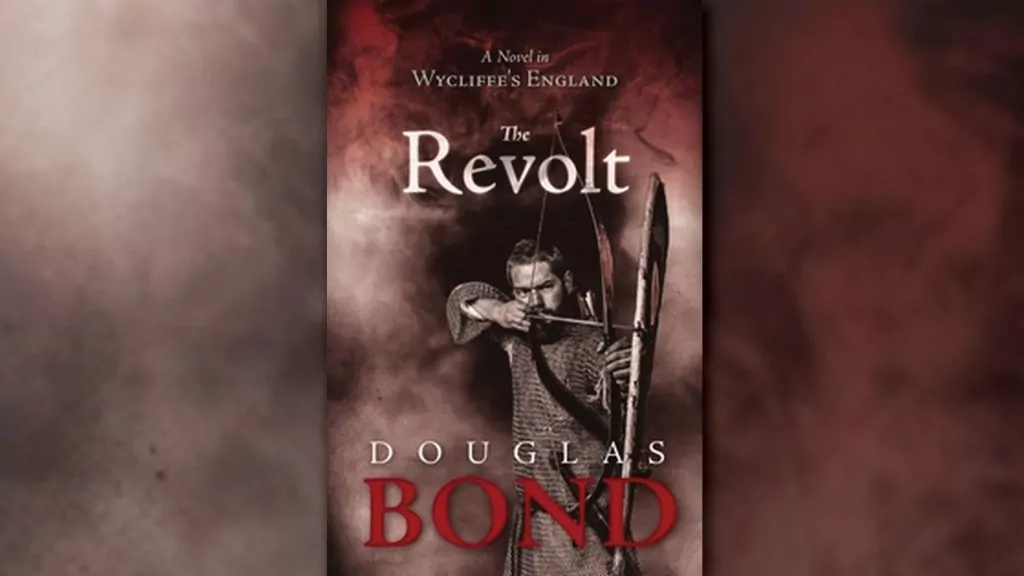
The Revolt: a novel in Wycliffe's England

by Douglas Bond 269 pages /  2016 Rating: Good/GREAT/Give I was never a fan of Church history in school, but I've come to realize that this was really the textbook's fault. It was a series of dry and weary titles, with lots of dates and facts, but no story to them. So I owe a debt of thanks to Douglas Bond for reviving my interest in what is really a most important topic, and he has done so by telling great stories. Sometimes, as he has in this novel, that story-telling involves weaving in fiction among the facts, so I can just imagine someone saying, "But then you're not really learning Church history, are you? Not if lots of it is made up!" Ah yes, but I know more Church history than I once did, and it was painless! And what's more, Bond's fictionalized biographies – he's tackled Calvin, Knox, C.S. Lewis, and now Wycliffe – left me wanting to know more about these men. So after read a Bond book I've followed it up with reading non-fiction books about, or by, all of them. My old Church history textbook never inspired me to do that! In The Revolt, Bond takes on an early Reformer, John Wycliffe, who lived and died more than 100 years before Martin Luther nailed up his 95 theses. Like Luther, Wycliffe was a man very much on his own – he had followers, but not really colleagues. He was the trailblazer who decided that, contrary to what the Pope and Church have pronounced, the common people needed to hear the Bible in their own tongue. One thing he had going for himself is that he lived in a time when there were two popes at the same time, which made it easier to question the need for submission to the pope. Wycliffe doesn't actually show up until page 62, so this is more a book about the England of his time than about him. The story begins with a young scholar on the battlefields of France, where the English army is surrounded by a much larger French force. The scholar has been assigned the task of recording the events, so while everyone else has a bow, or a battle axe, or something with some sort of sharp steel end, he is armed only with his quill. It's a great beginning, and from then on we follow along with this scholar who serves as the story's narrator. Through him we meet peasants, other scholars, and finally Wycliffe himself. The Revolt is a novel most any adult would find an easy and enjoyable read. I'm not sure, though, that this would be a good book for a teenager who is only a casual reader. It is a very good story, but it's not the non-stop "thrill ride" that so many Young Adult books try to be these days. To put it another way, this is far from a heavy read, but it's also not a light read either. However, for anyone with any interest in Church history, this is an ideal way to learn more. I sure hope Douglas Bond keeps on coming up with these great fictionalized "biographies"! ...

Red heart icon with + sign.
Book Reviews, Children’s picture books, Economics

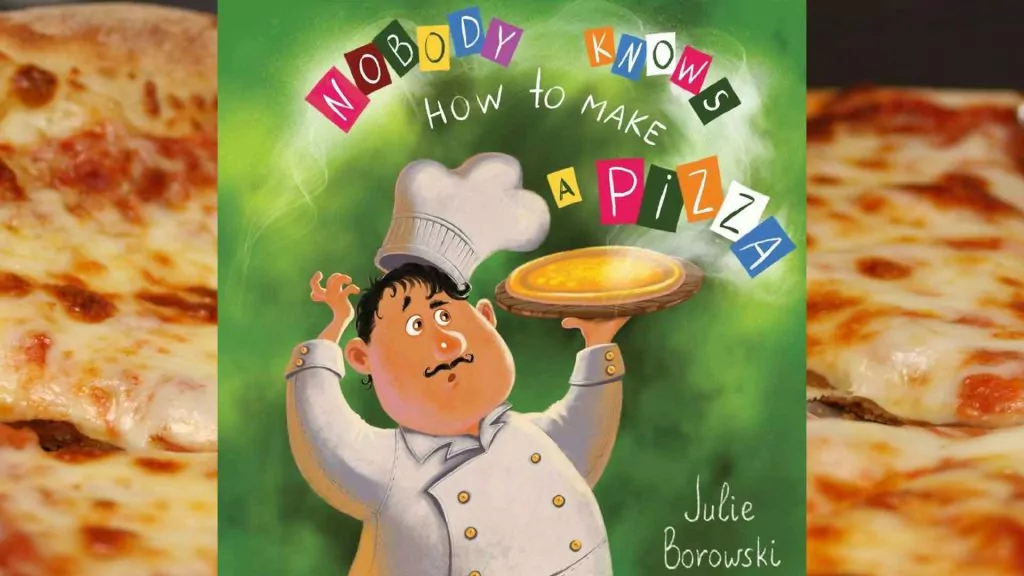
Nobody knows how to make a pizza

by Julie Borowski 2019 / 30 pages Rating: Good/GREAT/Give The picture book's title makes a claim that my daughter just couldn't believe: "Come on Dad, you know how to make a pizza!" But do I really? Sure, I know how to combine a pizza crust with cheese and tomato sauce. I'm even very good at it. But the point this slim volume is trying to make is that there is a lot more to it. That flour I use started as grain that somebody had to grow, and I certainly don't know how to do that. That farmer who does, brings in his crop using  a wheat harvester, which he isn't able to make himself. He'll ship off his grain, perhaps via a train, which neither of us could ever manufacture. We also don't know how to turn wheat into flour, and the folks that do, don't know how to make the semi-trucks that ship their flour to grocery stores around the country. Making even the simple pizza crust requires a lot of different people all working together, with not one of them knowing how to get all the needed steps done. That's why the pizza narrator's claim – that "there's not a single person on Earth who knows how to make me" – isn't as outrageous as it first seem, And that doesn't even get into the tomato sauce and cheese! You might be wondering, okay, but so what? The point of this little book (and the 1958 essay, I, Pencil, which inspired it) is to expose the arrogance of any big government's central planners. Whether it's full-blown communists who want to plan everything, or a democracy where the elected leadership "merely" direct large chunks of the economy (gov't spending in Canada accounts for 45% of GDP, and their impact is extended further still via regulations), we have governments of all sorts all around the world that think they know how best to run things from the top down. However, if planning the production of a single cheese pizza is beyond the capabilities of any one man, or even a team of the very smartest people on earth, then why would we think the government could ever know enough to competently make the innumerable management decisions they make, from what minimum wage everyone should be paid, to how children should be educated in K-12 (and what they should learn), which companies should be bailed out or subsidized, or even how much milk should be produced? Of course, if no one knows how to make a pizza, that prompts an obvious question: how is it that countless cheese pizzas are made every day? Instead of someone at the top planning it all out, this miracle occurs without much planning at all. The author of this picture book makes more of a libertarian presentation than a Christian one, so I'm using the term "miracle" here for a wonder she doesn't really attempt to explain. But Christians do have an explanation. Now, we might take for granted what the free market can produce – cheaper computers, innovations like the smartphone, innumerable kinds of bagel – to the point it seems too ordinary to call all of that a miracle. But the free market is a miracle nonetheless, completely beyond anybody's ability to plan and create, making it all the easier to see God's fingerprints. His commandment "Do not steal" creates property rights, which is the basis for one person trading what they own to another for something they want more. If you can't steal from others, then the only way to provide for yourself and your family is by producing something other people will value. You get money from them to meet your needs by making something that meets theirs. So God's law is the basis for free trade and it is unplanned, unorganized free trade that has miraculously proven to be the most effective way of raising people out of poverty. The government still has a role here - to prevent theft, enforce contract laws, and generally ensure that property rights are respected – but not in picking the winners and losers. While that's deeper than this picture book goes, what Julie Borowski does highlight is the result: all sorts of strangers cooperating with one another, each looking out for their own interests, but together creating something that none of them could make on their own – innumerable voluntary exchanges and, eventually, violà a pizza! As noted, this book has a libertarian flavoring to it, and because libertarians can often be libertines on moral issues, their values can be at odds with what God knows is best. However, in this case the libertarian impulse for small government syncs up well with the Christian emphasis on humility and Man's fallibility – we have a hard enough time trying to plan out our own lives, so it's arrogant indeed for bureaucrats and politicians to think they can plan out everyone else's lives for them. Better then, to limit (though certainly not eliminate) the government and what it does, so as to leave people the responsibility and allow them the freedom to manage their own lives. This would be read to best effect with a parent along for the ride. Otherwise I could see kids enjoying it, even as they entirely miss the overall small government argument being made. You can watch the author read her book below. ...

Red heart icon with + sign.
Book Reviews, Teen fiction

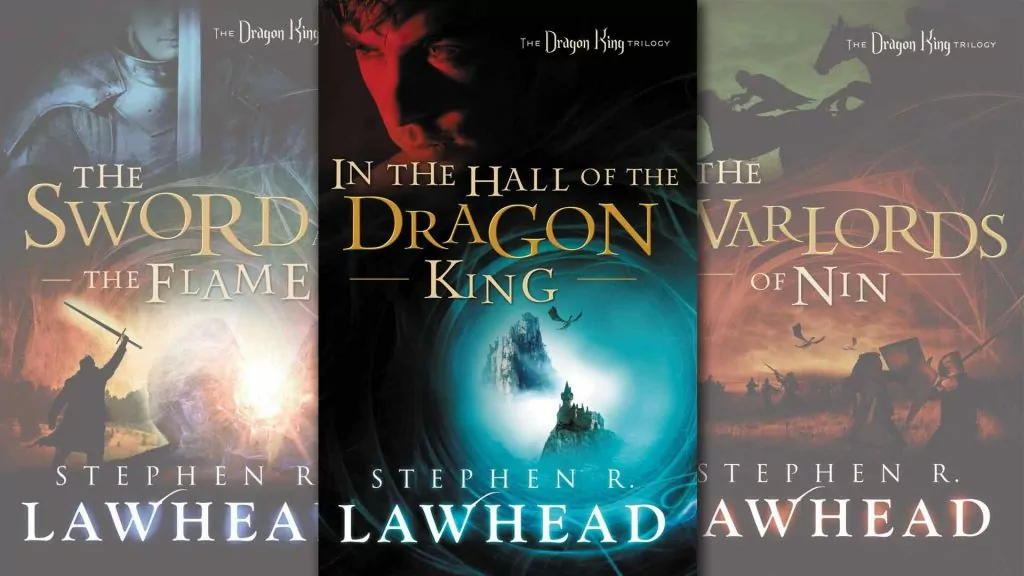
In the Hall of the Dragon King

by Stephen Lawhead 1982 / 370 pages Rating: Good/GREAT/Give This is an old-fashioned fantasy tale, with a loosely Christian underpinning. Quentin is a young man who has had a quest thrust upon him. He was going to spend his life behind the walls of a temple, so this turn of events isn’t unwelcome. But he has to figure out how he can see the queen. And someone needs to rescue the king. Oh, and there’s a dark wizard that needs to be dealt with. Is this really a job for a young former priest-to-be who doesn’t know one end of a sword from the other? The young Quentin, looking for help, meets a hermit of sorts, who serves not the gods, but the one God. That’s an ongoing theme throughout, as author Stephen Lawhead is trying to point readers to the true God. Cautions However, Lawhead sometimes gets it wrong. Quentin is told that God leads by “hunches and nudges” and “very rarely by direct command.” But our God does give us clear direct commands, in His Word, though some who profess to be Christians reject His Word in favor of hunches. Also, when a soldier is dying and asks how to go to heaven, the hermit tells him to just believe, but doesn’t mention anything about repentance. Conclusion While those are notable flaws, and worth bringing up with younger readers, they amount to only a few paragraphs in a rollicking adventure. There is a true and proper villain who had delved deep into the dark arts – he's a necromancer even! – which sharpens the contrast with the hermit, who has turned away from magic to serve his Lord. One feature I really appreciated is that, while this is the first book of a trilogy, it is a full and complete story – this is not the sort of trilogy that is actually one story split over three books. But readers can look forward to Quentin's further adventures in The Warlords of Nin and The Sword and the Flame. Like any great children's book, this will be a great read for adults too – I'd recommend it for 12 and up. I'll add that in his later books the author took, first a Roman Catholic turn in his "Celtic Crusade" series where he reveres relics, and then afterward a general turn to spirituality rather than Christianity (or, at least, any Christian underpinnings are far from clear). But in his earlier books like this series, there's lots to love. You can listen to the first chapter being read below. ...

a picture of a rotary phone, cell phone, smartphone, and Tony Rienke's book
Red heart icon with + sign.
Adult non-fiction, Assorted

Reflections on "12 ways your phone is changing you"

The phone has had a huge impact on our way of life. This was true already, back in the 1920s, when the coming of the telephone to rural New Zealand made a huge difference to isolated farmers’ wives, allowing them to communicate daily with friends. “Party lines” – which involved several homes sharing the same line – meant calls were not necessarily private…but if you needed to chat, then you could. By the time I was a child the family telephone was a fixture on the wall, either in the hallway or in the kitchen. That meant it was in a public place where anyone could answer it and know who was calling you – or at least hear your end of the conversation. Cutting the cord When I was in my early adulthood cordless phones arrived. You could now take the phone into the privacy of your bedroom, and carry on a conversation unheard by anyone else. This began to worry parents, who knew the phone was somewhere in the house – but where? And what was being said on it? Then came cell phones, when suddenly, calls could be made and received way outside the house, and when instant communication was, for the first time, privately accessible to all. You could speak to anyone – seemingly anywhere. I remember my astonishment at a call from Paul while he was on the top of a mountain in South Canterbury helping on an autumn muster. It was revolutionary to think of the possibilities of limitless accessibility. Now, since 2007, and Steve Jobs’ introduction of the first iPhones, smartphones are everywhere. More than simply telephones, they are portable, computer-like devices that enable us to be online, all the time, and wherever we go. We can browse, we can post, we can keep up with the news – in short, do most things possible previously only at home. What’s not to like? Cautions to consider Well, lots, actually. As DesiringGod.org’s Tony Reinke has argued, our phones are changing us more than we know. I’ve just finished reading his book 12 Ways Your Phone Is Changing You and found it just as full of insights as all the reviews had promised. Everyone who owns a smartphone would likely benefit from a long, slow consideration of Reinke’s conclusions. He has thought hard about the implications of many of our common phone habits. In general, Reinke finds that phones are causing us to disengage from the kinds of person-to-person interaction that love requires of us. We are becoming more detached, more isolated in our own little worlds, less caring, more frivolous. Despite the fact that technology is a gift from God – the product of our inventiveness as creatures made in God’s image – our use of this particular piece of technology is making us less like Christ. It’s time that we took a good look at ourselves and reclaimed the use of our phones for good purposes. 1. ALWAYS AVAILABLE DISTRACTION One of the most obvious problems with smartphones is their capacity to distract us. Beeps, buzzes, and tunes of all sorts destroy our concentration when we ought to be attending to work – or to someone in our proximity who deserves our attention. I’m sure you’ve noticed the way vast numbers of people walk down the street with their heads down, thumbs tapping at their phones. (You’ve probably almost collided with more than a few). Not so long ago I was in a café and noticed a sign on the counter: “Sorry, the wireless is down today. You’ll just have to talk to each other.” Shock, horror! The girl serving the coffee thought it was exciting – and I don’t blame her. Our phones are also distancing us from our flesh and blood – the people right in front of us, our families, our friends, and the people who need our help. Every time we flop on the couch for 15 minutes of mindless scrolling and skim-reading, we could be ignoring an opportunity to edify, encourage, correct, love – and even learn from – a human being for whom God has given us responsibility. Those 15 minutes will never be given back, either. While some still think that our smartphones can end loneliness by connecting us to others, Reinke believes (and I agree) that face-to-face interaction cannot be replaced by screen-to-screen communication. We were created to respond to facial expression, tone of voice, and physical touch. Neither texts nor Facebook messaging can match what can be expressed face-to-face. Of course we can communicate with many more people at far greater speed than is possible if we’re limited to where our bodies can be at any given time. But perhaps God has intended us for fewer, more meaningful friendships than Facebook could ever cater for. 2. EVER PRESENT PEER PRESSURE I have never been a consumer or user of social media, mainly because I feared the distraction and time-wasting, but Reinke suggests there are other reasons these media are harming us. He explains that we are becoming something like peacocks, preening and arranging our personas for the admiration of an online audience. Learning how others carefully shape their profiles to appear interesting, successful, witty, and up-to-date, we inevitably desire to be seen the same way. So Instagram, Facebook, Snapchat etc become platforms from which we can project the same attributes. I had not realized the full extent of this, but Reinke notes that many a person wakes in the morning to check how many comments or “likes” their posts from the night before have generated. It’s obvious that young people sensitive to peer pressure can fall for this, but many a lonely adult person who lacks security in Christ can be equally susceptible. It’s time to get off social media, on our bikes and start visiting lonely people face-to-face! 3. DISTANCE DIMINISHES CONSIDERATION Another effect of the distance our smartphones can put between us and others is the impunity with which we criticize and demean others, via our screens. Apparently, people feel less sense of remorse for what they say to others online than for what they might say in person. Clicking “send” has nowhere near the consequences (they think) that saying something in personal conversation does. We’ve all seen the horribly offensive things people say, apparently without compunction, on Twitter or in the comments section beneath news articles. It seems that if the recipient of your spite is not visible through your screen, then guilt about how we make them feel is lessened. I can’t quite understand that, since each of us is capable of imagining how it would feel to be on the receiving end of vindictive words on a screen. But certainly, increased use of screens for communication seems to be hardening us. We are getting accustomed to this unkind and demeaning discourse-at-a-distance, and it appears to be imitated by others. For instance, last month I read about our Minister of Foreign Affairs referring to our Leader of the Opposition as “simple Simon.” Does that kind of epithet sound vaguely familiar – on Twitter, perhaps? 4. PRIVACY BRINGS TEMPTATION Much has been written about the danger of what Reinke calls “secret online vices” like pornography. The scary thing is that this kind of vile material is available, on phones, any time and any place. Many people think they are able to view it without anyone else knowing; and therefore without consequence. Christians need to remember that God sees everything we do: nothing is hidden from him. God has made our eyes and our ears, but he expects them to be used with discretion. How can we use them to pollute ourselves? Reinke would not be the first to suggest that in the end, if your eye is causing you a problem, pluck it out. Smartphones are indeed disposable, and certainly able to have their contents blocked and curbed. The consequences of addicting yourself to such vices are too awful to contemplate. 5. ALGORITHMS FEED US JUST ONE SIDE (Prov. 18:17) There is one final way that our smartphones are changing us, and it concerns me more than the others because it affects our ability to distinguish truth from error. We are so overloaded with online input (resulting in what Solomon called a “weariness of the flesh”) that we are inclined to retreat to bubbles of like-minded communications, dismissing all the rest as biased, wrong, or simply doubtful or unverifiable “noise.” The result is that the world is becoming an increasingly partisan place consisting of groups of people who, day by day, shout at each other, distrust each other, even hate each other – intractably. Being constantly online and fed a continuous diet of news we agree with is light years away from an older world. Once upon a time (maybe 20 years ago) people read a range of news sources, mindful of the biases of each, in order to arrive at some semblance of the truth. In those days discerning readers knew that if one news source got things wrong, the others would pounce and correct it. The truth prevails in the end, as historians generally know. Nowadays there is little true dialogue, and a cynicism about anything other than the source I read. All else is “fake news,” we hear. This is really scary, since unless we are willing to expose even our most deeply-held views to scrutiny, we will lose the power of discernment. And that is what tyranny thrives on. Conclusion So I’d suggest, along with Tony Reinke, that it’s high time to take a close look at our uses of our smartphones. Are they changing us? Yes, and in ways that we might not realize. This is an edited version of an article first printed in the May 2018 issue of Faith in Focus www.rcnz.org.nz where it was published under the title “We and our phones.” It is reprinted with permission. Sally Davey is a member of the Reformed Church of Dovedale, Christchurch, New Zealand. You can download a 40-page preview of Tony Reinke's "12 ways your phone is changing you" here. ...

Red heart icon with + sign.
Book Reviews, Children’s fiction

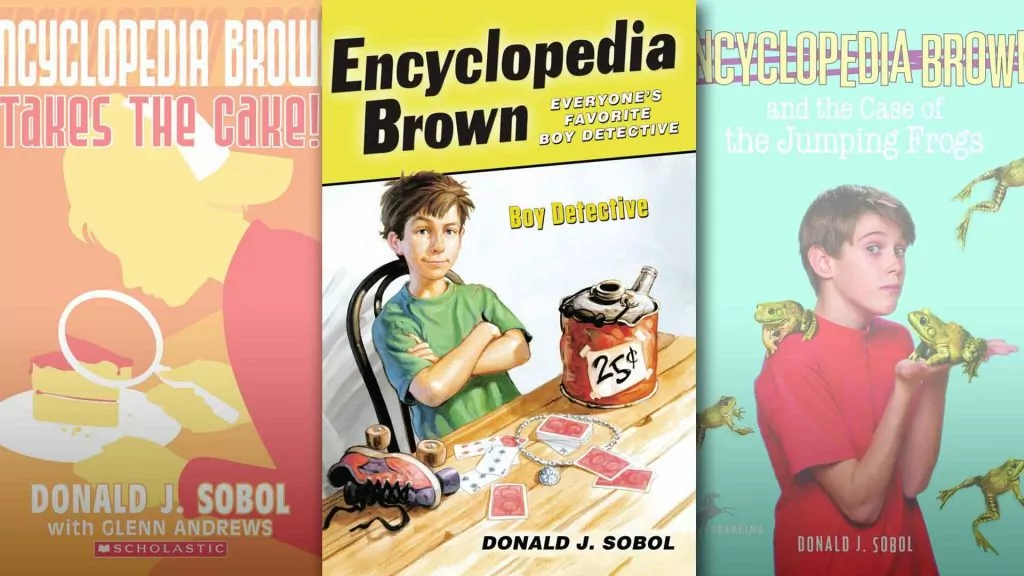
Encyclopedia Brown: Boy Detective

by Donald J. Sobol 1963 / 88 pages Rating: Good/GREAT/Give Idaville is a small town with an impressive record - no one, absolutely no one, gets away with breaking the law. Most of the credit goes to Police Chief Brown, but he doesn't really want to take it. If the townsfolk were able to believe it, he'd let them know that the town's most puzzling crimes are solved, not at the police station, but at the Brown's dinner table, by his humble, brilliant ten-year-old son Leroy! In addition to helping out his dad, Leroy, known as Encyclopedia by his friends, also runs his very own detective agency, charging 25 cents a case, plus expenses. The Encyclopedia Brown series are great books that each include ten short mysteries for readers to solve right alongside our pint-sized detective. In this, the very first one, all the information needed to solve the mystery is included in the story, and the solution is found in the back. And though the mysteries are simple enough that boys and girls in the 9-11 range will be able to solve many of them, they are still subtle enough to present a challenge to adults (I had to peek at the back to figure out a couple of them...and this was my second time through). As you might guess from Encyclopedia's pay rate, this is an old book. It was first published back in 1963, so even though many more books have followed, the whole series has an old-fashioned feel and appeal to it. For example, Encyclopedia often has run-ins with the Tiger gang, but this is very much a 1960s sort of boys' gang - they run minor scams, try to trick kids out of their allowance, and might even start a tussle or two, but the very worst that would result is a black eye or fat lip. Cautions In a nod to the sort of feminism that says women are only equal to men if they can do anything men can do (rather than because we are all made in God's Image - Genesis 1:27), the author gives Encyclopedia a girl bodyguard. Sobol makes Sally Kimball tougher than any boy, able to beat up even Bugs Meany, the leader of the Tigers. The problem here, I explained to my girls, is that boys need to have it drilled into them that they can never hit girls, even at 10, because whether or not they're already stronger than girls, they soon will be. Thus girls have to be taught never to take shots at boys because if those boys are raised right they won't hit back, and it is just cheap to hit someone who can't fight back. While Kimball's unrealistic pugilistic prowess makes for some comedic moments at bully Bugs Meany's expense, thankfully her bodyguard role is only a focus in a few of the mysteries. The other caution is that, even as this series is sold in some Christian bookstores, God is absent. That's a minor concern if our kids are reading other books too. But if our kids get a steady diet of stories where God is treated as irrelevant to our daily lives, then that's teaching our little ones quite the lie. Conclusion I read these as a kid and loved the mini-challenge of each mystery. I was happy to see the series was still in print and that author Donald Sobol (1924-2012) had come up with a dozen more since I'd last read them. But I did notice that in one of the later ones – Encyclopedia Brown and the Case of the Secret UFOs – two of the ten mysteries required the reader to know something that wasn't included in the story (for example, "The case of the giant shark tooth" could only be solved if a reader knew that sharks constantly replace their teeth). So the earlier titles are just a bit better than the most recent - no outside knowledge needed. There are 28 official books in all: Encyclopedia Brown, Boy Detective (1963) Encyclopedia Brown Strikes Again (1965) AKA Encyclopedia Brown and the Case of the Secret Pitch Encyclopedia Brown Finds the Clues (1966) Encyclopedia Brown Gets His Man (1967) Encyclopedia Brown Solves Them All (1968) Encyclopedia Brown Keeps the Peace (1969) Encyclopedia Brown Saves the Day (1970) Encyclopedia Brown Tracks Them Down (1971) Encyclopedia Brown Shows the Way (1972) Encyclopedia Brown Takes the Case (1973) Encyclopedia Brown Lends a Hand (1974) AKA Encyclopedia Brown and the Case of the Exploding Plumbing and Other Mysteries Encyclopedia Brown and the Case of the Dead Eagles (1975) Encyclopedia Brown and the Case of the Midnight Visitor (1977) Encyclopedia Brown Carries On (1980) Encyclopedia Brown Sets the Pace (1981) Encyclopedia Brown and the Case of the Mysterious Handprints (1985) Encyclopedia Brown and the Case of the Treasure Hunt (1988) Encyclopedia Brown and the Case of the Disgusting Sneakers (1990) Encyclopedia Brown and the Case of the Two Spies (1995) Encyclopedia Brown and the Case of Pablo's Nose (1996) Encyclopedia Brown and the Case of the Sleeping Dog (1998) Encyclopedia Brown and the Case of the Slippery Salamander (2000) Encyclopedia Brown and the Case of the Jumping Frogs (2003) Encyclopedia Brown Cracks the Case (2007) Encyclopedia Brown, Super Sleuth (2009) Encyclopedia Brown and the Case of the Secret UFOs (2010) Encyclopedia Brown and the Case of the Carnival Crime (2011) Encyclopedia Brown and the Case of the Soccer Scheme (2012) If that isn't enough for your child, there are a few others titles associated with the Encyclopedia Brown brand. One of the extra ones is a mystery/cookbook, with all the stories related to food, and each includes a recipe in the solution – it's called Encyclopedia Brown Takes the Cake (1982). Then there are a couple of true crime collections that I haven't been able to track down, but at least one of which my middle daughter has read and really liked: Encyclopedia Brown's Book Of Strange But True Crimes (1992), and Encyclopedia Brown's Book of Wacky Crimes (1984). All the main characters but one are boys, so these are clearly intended as boy books. That said, all my girls have enjoyed them as much as I did. They are great for anyone, boy or girl, who likes wrestling with problems, and while they are best suited for the preteen set, they'll offer a challenge to mom or dad too, which makes them good fun to read to your kids. And teens and parents who find these too easy can graduate on up to Donald Sobol's similar but more challenging Two Minute Mysteries series....

Red heart icon with + sign.
Adult fiction, Book Reviews

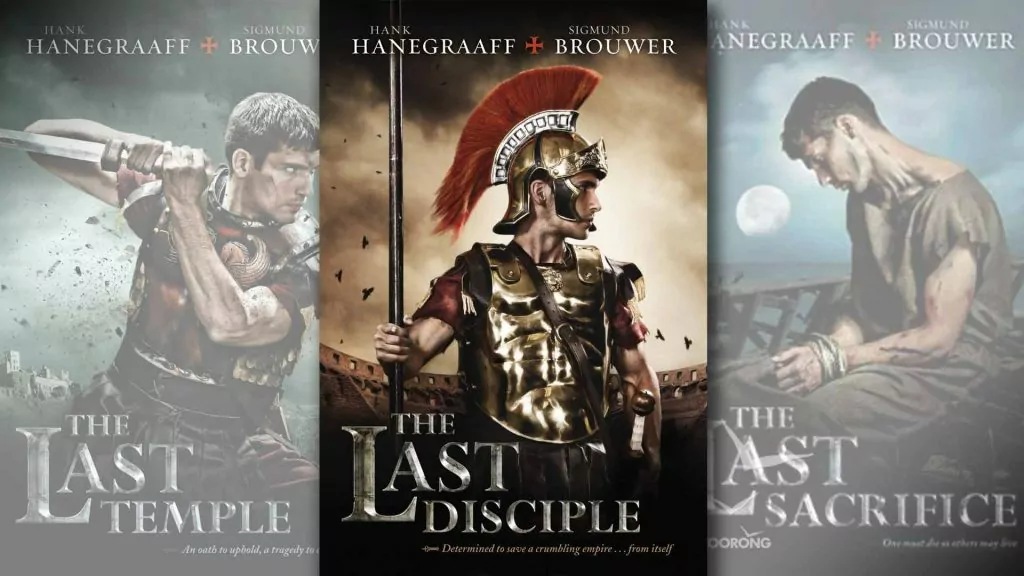
The Last Disciple

by Sigmund Brouwer and Hank Hanegraaff 2004 / 428 pages Rating: Good/GREAT/Give It’s the year 65 AD, and Gallus Sergius Vitas is one of the last principled men in Rome. He’s also a confidant of Emperor Nero which means his daily life is conducted on a knife’s edge: indulging the emperor’s perverse demands might keep Vitas safe but would compromise the man that he is; yet to openly oppose the emperor would lead to his immediate introduction to the Coliseum’s lions. Our story beings with Vitas attempting this balancing act once again. Nero has dressed as a beast, his outfit comprised of lion and bear skins, complete with collar and a chain held by a servant. His night’s entertainment is to terrorize a group of prisoners while playing the part of a beast. Enjoying their fear, the emperor quickly works himself into a killing frenzy. Vitas sees this all from the shadows and can’t let it happen, knowing, though, that to oppose the emperor is to die. So Vistas yells at the chain-holding servant instead: “If the emperor knows you are involved in illegal torture, he will have you destroyed!” It is, as Brouwer writes: “an all-or-nothing bluff, pretending that he did not know Nero was inside the costume. Trusting that Nero would be too ashamed to admit it. Now. Or later.” Vitas’ bluff works, but not just because of his daring. An earthquake sends Nero scurrying away, convinced that the shaking ground is a sign of divine judgment. It’s a great opening, highlighting the depth’s of the emperor’s perversity, the heights of Vitas’ courage, and the certain presence of God even in these pagans’ lives. In less talented hands, the earthquake’s unlikely timing could have come off as cheesy, since in real life God more often uses “ordinary means” (like doctors’ talents or wise friends’ advice) than miracles to accomplish His ends. But miracles do occur, and Brouwer makes it believable. It’s a good thing too, as this is but the first miracle in a story that’s all about how God used miraculous means – the prophetic words in the book of Revelation – to warn his Church to flee the fall of Jerusalem in 70 AD. What Brouwer and his writing partner, theologian Hank Hanegraaff, have done here is write an alternative to Tim LaHaye and Jerry Jenkins’ popular Left Behind series. Where Left Behind places the beast of Revelation 13 in our near future, Brouwer and Hanegraaff place him in the first century, in the near future of those who first received John’s letter. And they identify the beast as Nero and the bloody empire he led. This “partial preterist” (partial past) interpretation of Revelation holds that the book was written before the fall of Jerusalem in 70 AD, and the city’s fall is a partial fulfillment of much of the prophecy in Revelation. This, then, is fiction meant to teach as well and entertain, and it does both brilliantly. Brouwer has crafted a story that takes us all around the Mediterranean, with Jews, Romans, and even troubled Christians wrestling with the question of “Who is Jesus?” There’s also political plotting, assassination attempts, sieges, gladiators, and just a touch of romance. The slowest bits are when theologian Hanegraaff has characters take a page or two to teach Vitas and others what a particular passage in Revelation means. If you’re reading it only for the story, these sections might drag, but they are well spaced out. And if you’re interested in learning about the partial preterist interpretation of Revelation, these will be your favorite passages. Cautions One caution: Nero’s depravity, though described with restraint, still means this is not a book for younger teens. If The Last Disciple series has you eager to read more of Sigmund Brouwer’s work, be aware that he is a proponent of theistic evolution, and also an Arminian. That doesn’t come up in this series (or his best book, Innocent Heroes, a treat for kids, teens, and parents alike) but it does come up in some others. Finally, readers should be aware that partial preterism probably isn’t the majority view in Canadian Reformed churches (though I’m not sure what the majority view might be, as Revelation seems to be only rarely discussed). Some do hold it though, and it's also held by Reformed pastors outside our circles such as RC Sproul, Douglas Wilson, and Jay Adams. Conclusion The Last Disciple is a great book, kicking off a great series. The cast of characters is large, so if you’re like me, make sure you get the whole trilogy – The Last Disciple, The Last Sacrifice and The Last Temple – right away, because if you wait too long between books, you may start forgetting who is who. I’d recommend this to anyone who enjoys historical fiction – Sigmund Brouwer has got skills. And if you’d love to have partial preterism explained, well, this is the most entertaining way you could ever learn about it!...

Red heart icon with + sign.
Adult biographies, Book Reviews, History, Teen non-fiction

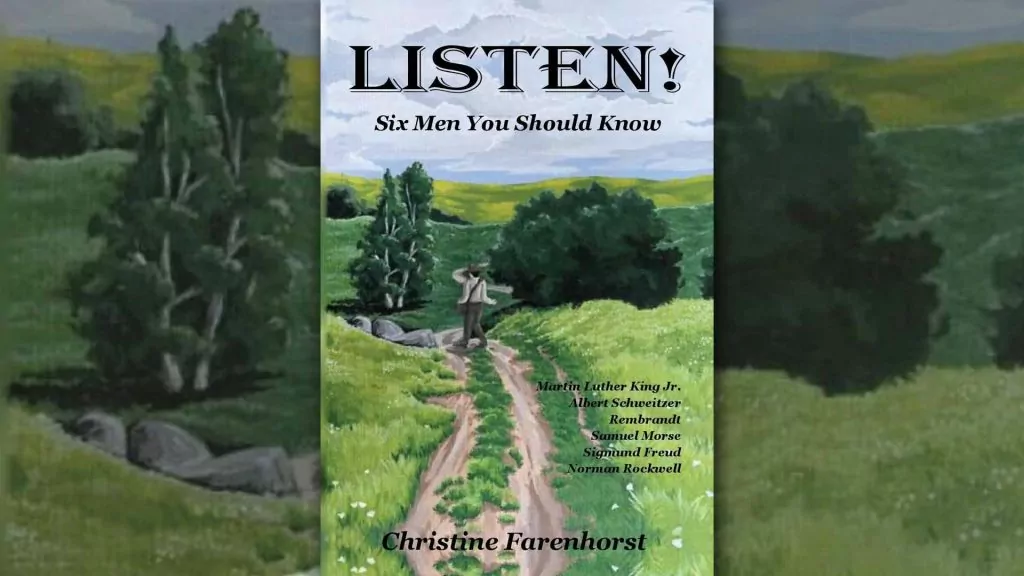
Listen! Six Men You Should Know

by Christine Farenhorst 161 pages / 2021 Rating: Good/GREAT/Give The six men we get introduced to here are given 25-30 pages each which is enough space to get a very good feel for them. It's also short enough that it avoids completely the indulgence evident in many a bigger biography of telling us what the subject ate for lunch on the third Tuesday of October, one hundreds years ago. The half dozen that author Christine Farenhorst introduces us to are: Martin Luther King Jr. Albert Schweitzer Rembrandt Dutch Samuel Morse Sigmund Freud Norman Rockwell I enjoyed the eclectic nature of the selections – these six holding little in common outside their fame and influence, but all are worth knowing better. I was more curious about some of them than others, particularly the very first, the American icon, Martin Luther King Jr. But after learning a little about his thoughts, and the political and cultural battles of his time, I skipped ahead to the profile of Austrian psychologist Sigmund Freud who spent most of this life in Europe, and died when King was just 10. I'd read biographies on both men previously, but Christine's solidly biblical perspective brought new light to both subjects. For the four others, I knew little more than their names – or their artwork, in the cases of Norman Rockwell and Rembrandt – and I enjoyed this opportunity to delve into their backgrounds, their age, and place. I enjoyed learning about Samuel Morse in particular, as he is the only one of these six who was clearly a Christian. Christine shows that some of the others, like Freud, clearly were not, while Rembrandt, had, at best, an odd relationship with his Maker. Overall, this is a very quick enjoyable read – I think I finished it in a day. It was sad reading about many of these men's outright rejection of God, so I might recommend reading the profiles out of order so that you can conclude with Samuel Morse, and end on a happy note! Children who enjoy history and reading would likely enjoy this as young as 12. The short, 30-page profiles, would also make this a great title for adults who want to know their history, but are put off by the tomes that some historians publish. Christine Farenhorst is a regular columnist for Reformed Perspective, so if you want to get a feel for her writing, that is as easily done as clicking here. You can order "Listen! Six men you should know" at many online retailers....
Red heart icon with + sign.
Adult non-fiction, Apologetics 101, Book Reviews

The Ultimate Proof of Creation: Resolving the Orgins Debate

by Jason Lisle 2009 / 254 pages Rating: Good/GREAT/Gift Herman Bavinck (1854-1921) is an important figure from our Reformed heritage. A careful theologian with a love for the Word of God, Bavinck is just beginning to be truly appreciated in North America through the translation of his four-volume Reformed Dogmatics. Even though he isn’t mentioned in it, The Ultimate Proof of Creation owes a debt of gratitude to this giant. From Bavinck to Van Til to Bahnsen to Lisle How so? Well, back in the 1920s, a young student at Calvin Seminary in Grand Rapids became enamoured with Bavinck. Reading him in the original Dutch, this student caught on quickly to Bavinck’s perspective.  In later years, this student would go on to apply Bavinck’s insights to the field of apologetics. Cornelius Van Til (1895-1987) never claimed to be original and never claimed to be doing anything other than standing on the shoulders of the giants who went before him. While at Westminster Theological Seminary, Van Til would teach several generations of Presbyterian and Reformed men how Reformed theology demands a Reformed apologetic and he would offer that apologetic mostly on the basis of what Bavinck had developed. One of Van Til’s disciples was Greg Bahnsen (1948-1995), a minister in the Orthodox Presbyterian Church. Bahnsen was a well-known populariser of the Reformed apologetics developed by Van Til.  He not only taught the theory, he also effectively put it into practice in numerous debates with atheists, the most notable of whom was Gordon Stein in 1985. Bahnsen is directly credited at the beginning of this book by Dr. Jason Lisle as the one whose writings and lectures provided its inspiration. However, as noted, the credit ultimately goes back to Herman Bavinck. A presuppositional approach In this book, Lisle (at the time a research scientist at Answers in Genesis and since then the founder of the Biblical Science Institute) applies Reformed presuppositional apologetics to the question of origins.  Too often, Christians try to “fight fire with fire” when it comes to the debate between creation and evolution. In other words, they use the same methods and approaches that the unbeliever or theistic evolutionist adopts.  This has been a notable problem in creationist literature. Lisle calls this (using the terminology of Bahnsen), the “pretended neutrality fallacy.” The debate is not over the evidence; rather it is a debate over worldviews. When it comes to method, we need to begin and end with what the Bible teaches. Lisle calls this a “Bible-first” approach, but we could also call it the presuppositional or Reformed approach. It takes the biblical doctrine of sola Scriptura seriously, as well as the related matters of the Bible’s verbal plenary inspiration and inerrancy. In other words, this is an effort to consistently apply what the church confesses in articles 5-7 of the Belgic Confession. Lisle concretely demonstrates how the biblical worldview (which includes creation as described in Genesis 1 & 2) should be defended. This involves exposing the weakness and irrationality of opposing worldviews (including those of theistic evolutionists) and then demonstrating how the biblical worldview is the only one which can make sense of the world in which we live. Evidence has a place in this apologetic as a tool to drive the discussion forward towards a recognition that worldview differences are key. However, evidence will not in and of itself resolve the issue. Dealing with logical fallacies One of the noteworthy features of this book is its attention to logical fallacies. Knowledge of these is important for exposing the weakness of worldviews that do not take what the Bible says in Genesis 1 and 2 at face value. Chapter 7 deals with informal logical fallacies. One of these is a fallacy of presumption known as “begging the question.” Lisle states, “Every old-earth argument I have ever seen commits the fallacy of begging the question.” He gives the example of radiometric dating: they say young-earth creationists are wrong because radiometric dating shows that rocks are billions of years old. This begs the question of whether radiometric dating is reliable – the opponent assumes that it is and that the young-earth creationist is wrong. Chapter 8 goes on to deal with formal logical fallacies. This is more complicated, but Lisle does a good job of making it as understandable as possible. Once again, he reveals the subtle fallacies that evolutionists (secular and theistic) commit in their reasoning. The book concludes with three appendices. In the first one, Lisle defends a natural, straightforward reading of the Bible. Here he especially has his eye on those who claim to believe the Bible but yet argue that the world is millions or billions of years old and that humans have primate ancestors. In the other two appendices, Lisle gives numerous practical examples of how to put the apologetics described in this book into practice. Conclusion I am stoked about this book. It’s been published at just the right time. As I write, there is an ongoing debate in the Canadian Reformed Churches about creation and evolution. This book argues that a consistent Reformed apologetic requires a belief in what the Bible literally says in Genesis 1 and 2. This is the consistent application of Reformed, biblical principles handed down to us from Bavinck and others. I highly recommend this book to one and all, and especially to my fellow pastors and elders in our churches, to our seminarians, to teachers in our schools and to post-secondary students. This is the best book on the creation/evolution issue that I’ve read. Dr. Wes Bredenhof blogs at Bredenhof.ca. This post first appeared in the January 2010 issue. ...

1 2 3 4 5 6