Transparent heart icon with white outline and + sign.

Life's busy, read it when you're ready!

Create a free account to save articles for later, keep track of past articles you’ve read, and receive exclusive access to all RP resources.

White magnifying glass.

Search thousands of RP articles

Helping you think, speak, and act in Christ.

Open envelope icon with @ symbol

Get Articles Delivered!

Helping you think, speak, and act in Christ. delivered direct to your Inbox!


Red heart icon with + sign.
Book Reviews, Graphic novels

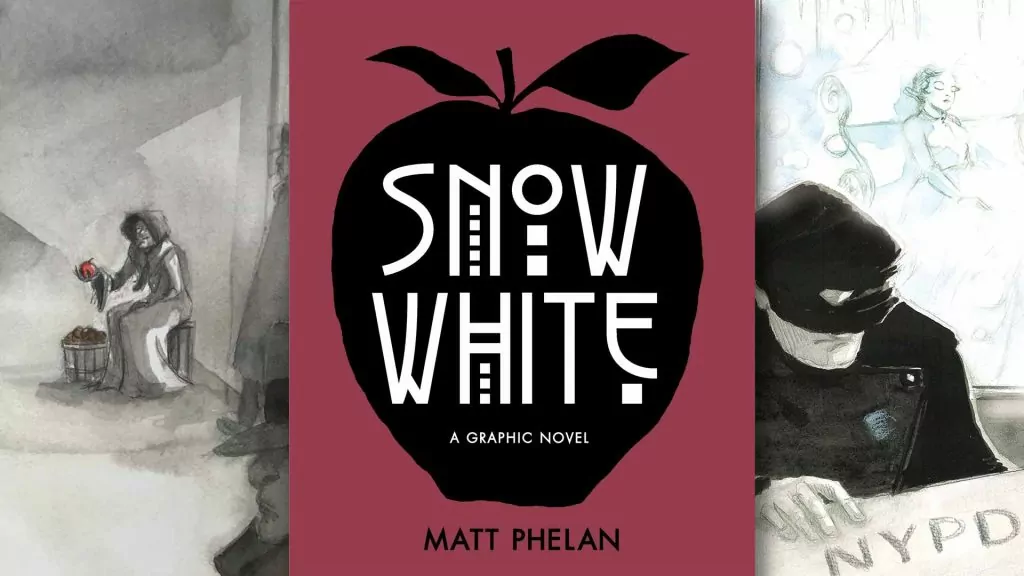
Snow White

by Matt Phelan 216 pages / 2016 Rating: GOOD/Great/Gift This is Snow White inventively reimagined as a 1920s Depression-era American tale. The "king" is a stock trader who has managed to survive the stock market crash. The stepmother is still a queen, but this time of the Ziegfield Follies, a popular Broadway show. The mirror is now a stock ticker, and the seven dwarves are seven street-smart kids. Prince Charming? Well, I shouldn't give too much away! Though over 200 pages, this is a very quick read, because it is much more pictures than text - several times there are stretches going on for pages, where there are no words at all. I first thought it would be hard to pick exactly who'd be the ideal audience. Fairytales are typically for children, but this seemed too somber to attract little ones – done in a black and white, it has a dark, noir style...all but for the last few pages with their happily-ever-after full-color conclusion. Some of the historical touches only adults would pick up on, but how many of them would pick it up? It's listed as for teens at my local library, but our Christian school library also got it, and there it seems more of a tween hit - my own tweens have taken it out a few times already. Cautions There are no real cautions to offer - if a child is old enough to read the original, then they will be old enough to read this one. There is a drop or two of blood here and there, but no gore. The worst is probably the pig or cow heart we see in full color at one point (in keeping with the original story). And there are no language concerns either. Conclusion This is an inventive, and very intriguing tale, done with style. Adults can't help but appreciate it, but it's really tweens who will most enjoy it....

Red heart icon with + sign.
Adult fiction, Book Reviews

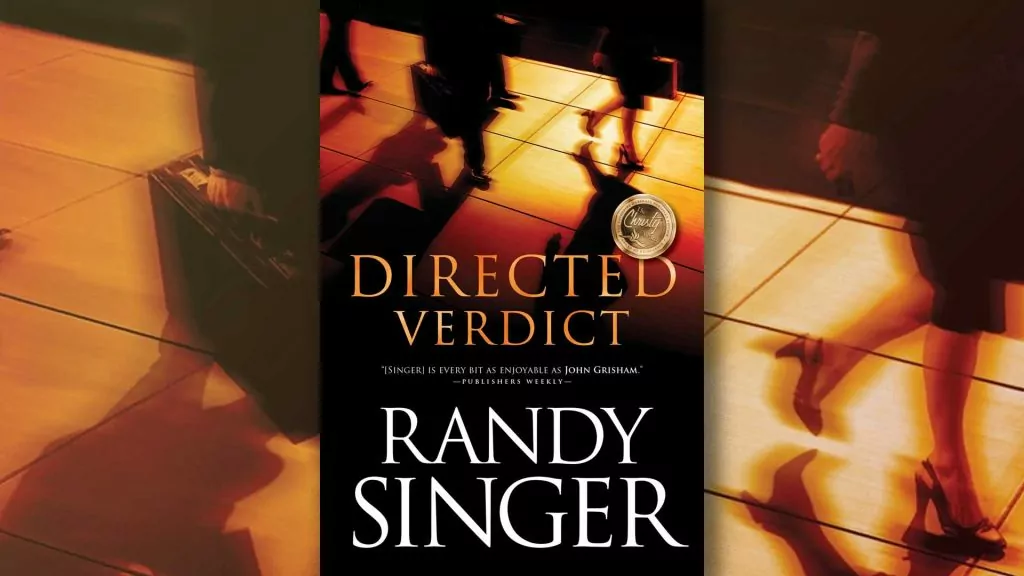
Directed Verdict

by Randy Singer 2002 / 486 pages Rating: GOOD/Great/Give There are lots of layers in this intense courtroom drama. When the Saudi religious police uncover a secret church, Charles Reed, the American pastor, is tortured and killed, and his wife Sarah is beaten and deported on trumped-up drug charges. From there the action takes place both in an American court where lawyer Brad Carson helps Sarah bring suit against her torturer, and in Saudi Arabia, where the small church struggles to continue, their members fearful and shaken. The large law firm defending the torturer is willing to cheat, so what might their murderous client be willing to do? Sarah Reed’s team is growing to admire her courage but none of them share her Christian scruples, so what might they be willing to do behind her back to help her get justice? I was struck by the missing obligatory conversion scene that is central to so much Christian fiction. Sarah's legal team of Brad Carson and Leslie Connors weren't Christian at the beginning of the book, and still weren't at the end. That might not seem a feature in a Christian book; fictional though they may be, we don't want our favorite characters heading towards hell. But because it happens so often, it's quite the twist when we witness someone planting and watering, but don't get to witness the harvest. This quick read got me picking up the sequel Self Incrimination where Leslie is handed a copy of C.S. Lewis's Mere Christianity. It turns out that Singer wants the best for his characters too, but he's more patient about it, waiting until book two for the reaping. I wasn't as fond of this sequel, not so much because it had the obligatory conversion scene, as that it had our two favorite lawyers defending a murder suspect who seemed guilty, guilty, guilty. And they are trying to get her off! Is that what the heroes of the story are supposed to do? I don't want to give too much away, so all I'll note both lawyers aren't Christian during most of the trial and trial preparation. So if they aren't acting entirely right, maybe it's because they don't know what the right thing to do might be. Still, author Randy Singer doesn't really help readers figure it out either, and ultimately the resolution is tainted by what seems sentimentality over justice. To sum it up, I absolutely loved the first book and wasn't as impressed with the sequel. If Directed Verdict has you looking for another great Singer courtroom drama I'd steer you to Rule of Law instead...

Red heart icon with + sign.
Book Reviews, Graphic novels, Teen non-fiction

The life of Frederick Douglass

A graphic narrative of a slave's journey from bondage to freedom by David F. Walker Illustrated by Damon Smyth 2018 / 173 pages Rating: GOOD/Great/Give Frederick Douglass lived his first 20 years as a slave, then spent the next 25 speaking against the evils of slavery. After the American Civil War and the emancipation of American slaves, he spent his last 30 years fighting the bigotry that still lingered. And in his final decade, defying all social expectations of the time, he married a white woman, Helen Pitts. While a graphic novel biography can't do this complicated figure full justice – the man himself wrote three separate autobiographies in the attempt – the size of this one, and the evident research backing it make for a very good introduction to its subject. As we follow his life, from plantation to town, to escape to the North, we get to meet along with him key figure in the American battle to end slavery. He knew Harriet Tubman, the lady who repeatedly ventured to the South to bring slaves to freedom in the North. John Brown hid at his house after the white abolitionist's unsuccessful attempt to start the Civil War some six years before it eventually began. Douglass was both an opponent and then an ally to Lincoln, due to largely Lincoln's vacillating opposition to slavery. Later he became a friend and then an enemy of women's rights advocate Susan B. Anthony, the change of relationship due this time to a compromise by Douglass when he decided to support black's voting rights even when they no longer came as a package deal with women's voting rights. This is quite the story, and it is well told. CAUTIONS Its important readers understand that some of what's depicted is deduction, and not clearly established fact. But a read of the introduction will help readers tell what's what. A word of warning is due for at least a couple uses of the "n-word" in the book, though with the topic matter, that is as you might expect. There is also some partial nudity. None of it sexual, and it could even be described as modestly done: one scene is a black woman being whipped, naked from the waist up, but her front is either away from view, or hid in the shadows. There are also three completely naked slaves shown, but all are hunched over, in a seated, almost fetal position with arms wrapped around their knees so no genitals are shown, though the top of one's buttocks is. The overarching concern would be the brutality. There is no gratuitous violence - but there is violence. Finally, while we get to hear Douglass debate with himself about how slavery should be fought, and whether violence was warranted or not, and whether it was right to compromise on the women's vote, we aren't offered any other perspective. So readers will have to apply their own biblical lens to this for themselves. Altogether that would make this a book for older teens maybe 14 and up. CONCLUSION The target audience for this book, teens, aren't always fans of history books, perhaps because they've been exposed to too many of the wrong sort, texts that make it all about dates and names. What a joy it is, then, to discover a page-turning biography like this. The Frederick Douglass we meet here, while not exhaustively explored, is fleshed out, and consequently memorable. We've now met him, and won't forget him....

Red heart icon with + sign.
Book Reviews, Graphic novels, Teen fiction

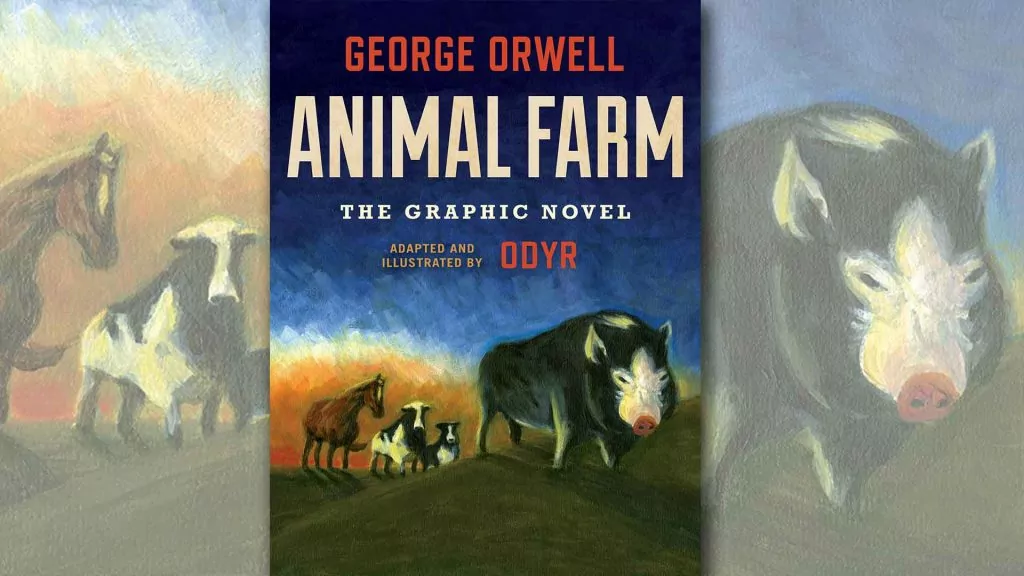
Animal Farm: The Graphic Novel

by George Orwell (& Odyr) 2019 / 172 pages Rating: GOOD/Great/Give For those that don’t know the original, Orwell wrote his allegory in World War II to highlight the dangers of creeping totalitarianism. Instead of a country, his setting is that of a farm, and instead of an oppressive government, things are run by Mr. Jones, who treats Manor Farm’s “citizens” – the pigs, horses, sheep, chickens, and more – like they were animals! One night, Old Major, a pig respected by all, tells the others of his vision of a better world in which Man is overthrown and all the animals are free to benefit from their own labor. Two legs are the enemy, and all on four legs, or with wings, are treated as equal. The animals embrace his vision, and when the old pig dies peacefully in his sleep, three younger pigs take it upon themselves to develop and expand on Old Major’s vision. They craft “Animalism” and appoint themselves as leaders of the movement. When the animals rebel against Farmer Jones, they successively drive him off and take over the farm. The story that follows has clear parallels to that of the 1917 Russian Revolution, that began with noble-sounding aims – freedom from oppression, equality of all – but which quickly evolved into simply another form of totalitarianism. The animals find that, though they are free of the farmer, they aren’t free of having to follow orders. The pigs have them working harder than before, and they are fed no better. Their swine leaders are soon living in the farmer’s house and eating well. But they deserve it, right? After all, they need to be properly provided for, so they can provide direction! It soon becomes evident that while “all animals are equal…some animals are more equal than others.” CAUTIONS Because this is a graphic novel, there are a few pages of violent content depicted. But Odyr’s is a thin-line, smudged-pastel style, leaving the gory details mostly a blur. So while these pictures might be a bit much for a child, they are nothing that would disturb a teen. The only other caution I’ll offer concerns the lesson being learned. Orwell was no Christian, so even as he makes a case against the godless tyranny of totalitarian rulers the world over, he isn’t able to offer a better alternative…so it is fortunate he doesn’t even propose one. However, that means Christian readers will have to do that work for themselves. We can agree with Orwell about the problem: that man has a bent for tyranny and that larger the government the more they can insert themselves into our lives (1 Samuel 8:10-22). But we also know there is a proper, though limited, role for government, specifically to punish evil (Romans 13:1-7). CONCLUSION This is a brilliant adaptation of Orwell’s classic work, with a mix of colorful and also stark images that will grab any reader’s attention. Odyr has made Animal Farm accessible to age groups and casual readers that might otherwise never read it. While I highly recommend this as a gift for teens, it would be a waste to hand it off to your son or daughter and then leave it at that. Unless an adult helps them understand that message behind the story, they aren’t likely to see the real-world application, and will completely miss Orwell’s warning about the dangers of big governments of all sorts. If you liked this, you may enjoy the 1954 animated film of the same name. It's better than the 1999 live action version in two ways: it doesn't take God's name in vain, and because it is animated and consequently less realistic, it comes off more clearly as the metaphor it is meant to be - there's no mistaking it for real life. Find my review here. ...

Red heart icon with + sign.
Adult non-fiction, Book Reviews

FREE BOOK: Coronavirus and Christ

by John Piper 2020 / 112 pages Rating: GOOD/Great/Gift  What Piper offers us in what he calls this “historic moment of bitter providence” is a lesson in how to be “sorrowful, yet always rejoicing” (2 Cor. 6:10). The secret of “sorrowful, yet always rejoicing” is this: knowing that the same sovereignty that could stop the coronavirus, yet doesn’t, is the very sovereignty that sustains the soul in it. Some Christians want to “rescue God from his sovereignty over suffering” – they want to say God is not responsible for the coronavirus. But, Piper notes, such a "rescue" can only be done if we also “sacrifice his sovereignty to turn all things for our good” – if God is not responsible for the coronavirus, then He is not really in control, and we can’t rely on Him to do as He has promised, turning all things to our good (Romans 8:28-30). However, God is in control. Therefore... The very sovereignty that rules in sickness is the sovereignty that sustains in loss. The very sovereignty that takes life is the sovereignty that conquered death and brings believers home to heaven and Christ. It is not sweet to think that Satan, sickness, sabotage, fate, or chance has the last say in my life. That is not good news. That God reigns is good news. Why? Because God is holy and righteous and good. And he is infinitely wise. We don’t know all the reasons God has brought the coronavirus. But we do know He values us, and loves us so much He gave His Son for us. We do know He is in control. So we do know He can and will do as He has promised, somehow, in some way, turning even this pandemic to the good of those who love Him. It is a short read, but an encouraging and also challenging one. It is also free, both as an e-book, and as a 2-hour audiobook. Both can found at DesiringGod.org/ books/coronavirus-and-christ. You can also find the audiobook on YouTube here. The book trailer is available below. ...

Red heart icon with + sign.
Book Reviews, Teen fiction

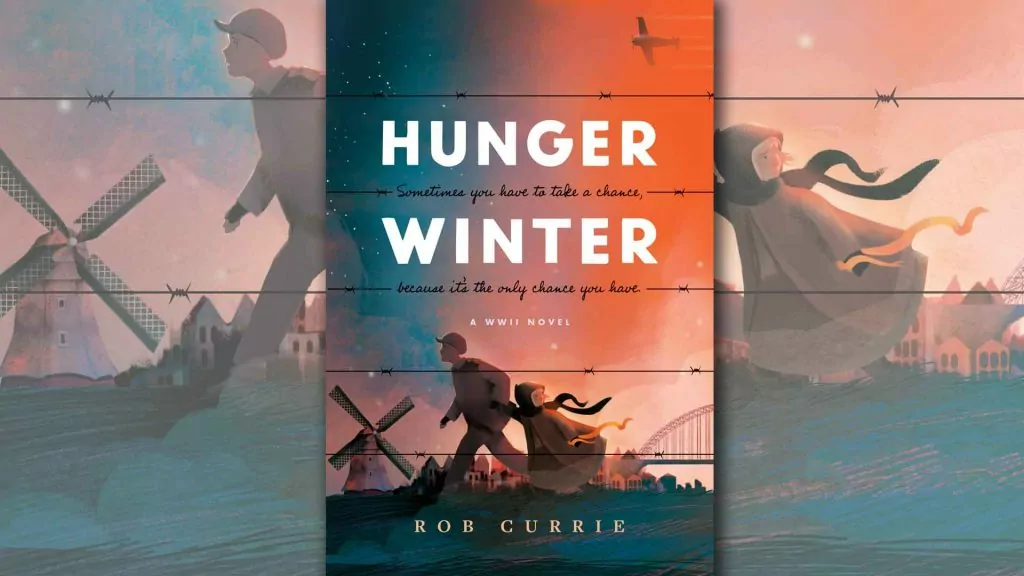
Hunger Winter

by Rob Currie 2020 / 236 pages Rating: GOOD/Great/Give Author Rob Currie drops his readers right into the action in the opening scene, with an anxious neighbor furiously banging on the front door to tell 13-year-old Dirk Ingelse that the Nazis have his older sister. And they'll be coming for him next! It's November 11, 1944, and while the Allies have started liberating the Netherlands, the Ingelse farmstead near Oosterbeek, is still under German control. What makes it even more difficult for Dirk is that he has no one to turn to. His mother had suddenly passed away not too long before, and his father is in hiding, working for the Resistance.  That's left just him and his older sister Els to take care of their six-year-old sister Anna. Now Els has been arrested, and Dirk has to run. But where to? That's when he remembers his Tante Cora less than a half day's walking away. The book is, in a sense, one big chase with Dirk doing his best to keep his sister safe, finding brief moments of calm, and then having to run again. Dirk shows himself to be a clever boy, and daring even despite his fears, as he finds hidings spots, and escape opportunities, and even figures out how best to fight the Nazis who are after them. As we follow along with Dirk and Anna, we also get occasional peaks into how Els is doing, facing her Gestapo interrogators. In another way, this is all about Dirk trying to live up to the example his father set for him. He has a good dad who invested in him by spending time with him, so even though Dirk doesn't have his dad around right when he most needs him, the teen is constantly hearing his dad's advice come back to him whenever he needs to make another decision. CAUTION There are no cautions to list, but maybe I'll note one disappointment: for a book by a Christian author, and put out by a Christian publisher, I would have expected God to be more than a minor character. Even as the importance of prayer is mentioned with some regularity, God Himself is not. Maybe the author is trying to portray a journey in Dirk's relationship with God, going from nominally Christian at the beginning – he doesn't pray, except at his little sister's insistence – to something at least a little deeper at the end. But God's near-absence is odd, especially considering this is a book about people in life and death circumstances. CONCLUSION That said, this is an intriguing, entertaining, and fast-paced story, with the whole book taking place over just three weeks. And while there are some tense moments, it all gets tied up nice and neatly, making this a great book for ages 10 to maybe 14. The Netherlands setting will appeal to the many RP readers who have a Dutch background, and the time period – the "Hunger Winter" of 1944-45, when Allies hadn't yet liberated all the Dutch, and the Germans weren't bothering to feed them – is one that teens may not have read too much about before. So there's a lot of reasons this is a very interesting read....

Red heart icon with + sign.
Book Reviews, Teen fiction

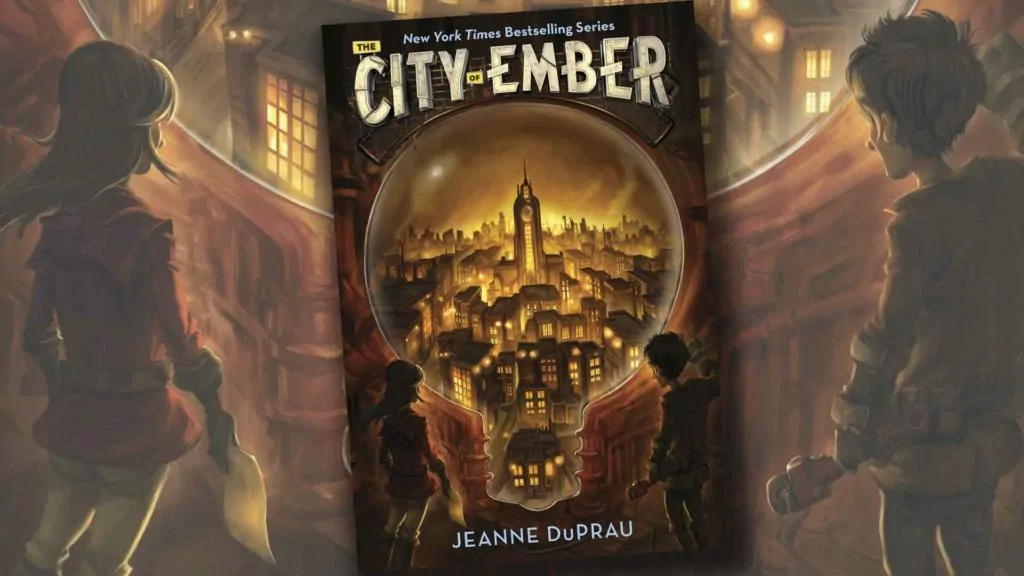
The City of Ember

by Jeanne DuPrau 2003 / 270 pages Rating: GOOD/Great/Give 12-year-old Doon wants to save his city but he’s got quite the problem because he has no idea how to do it. The even bigger problem? Unbeknownst to him, his city is under a mountain. More than 200 years ago, when humanity was facing some type of impending doom, a decision was made to hide away a remnant deep underground for 200 years in a specially prepared city, the City of Ember. But when 200 years have passed no one alive remembers there is another world out there – the only light that Doon and the other Emberites know is provided by light bulbs powered by their mighty generator. But there’s another problem: that generator is starting to break down. The biggest problem of all? No one will admit what’s happening. To the rescue comes Doon’s friend Lina, who uncovers some long-lost and only partially intact instructions from the city’s original Builders. The two friends need to pierce the instructions back together if they are going to save their families before all of Ember’s lights go dark. Caution The only caution concerns religion. The Builders – those who first created the city – are revered in a vaguely spiritual way by a small number of citizens, but they are only mentioned in passing. More noticeable is how God isn't ever mentioned, even as the Emberites worry about their world coming to an end. Conclusion A post-apocalyptic tale is not your typical pre-teen/teen fare, but this is more an intriguing-mystery than it is a tense-drama. I think anyone over 10 would enjoy it, and that includes their parents. I know I sure enjoyed it! There are two very good sequels (though the original is still the best) called, The People of Sparks, and, The Diamond of Darkhold. There is also a fourth book, a prequel set more than 200 years before Doon and Lina are born, and while I haven't yet read it, from most accounts, it is not very good....

Red heart icon with + sign.
Adult biographies

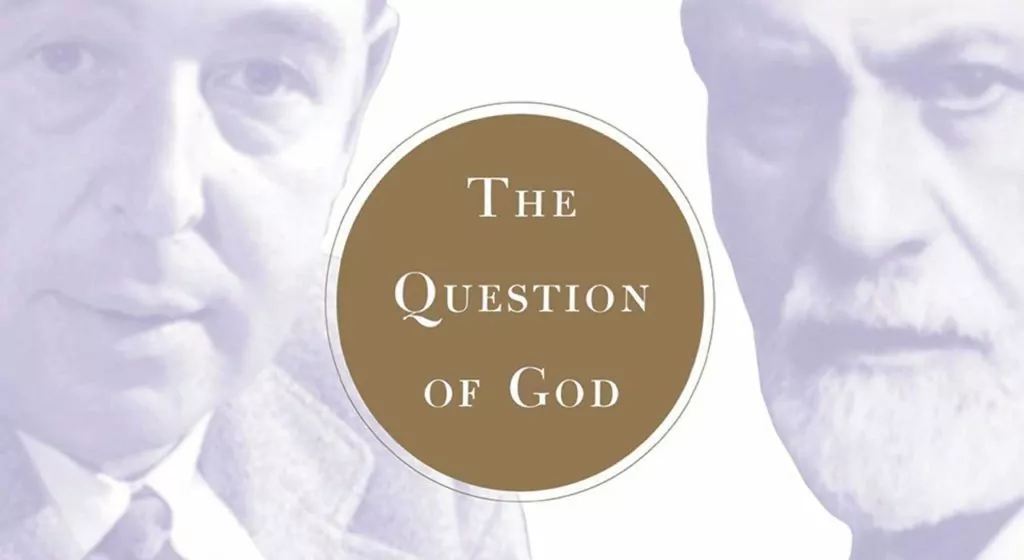
The question of God: C.S. Lewis and Sigmund Freud debate God, Love, Sex, and the Meaning of Life

by Armand M. Nicholi Jr. 2002 / 244 pages Rating: GOOD/Great/Give While C.S. Lewis was 40 years younger than Sigmund Freud, he was well acquainted with his ideas. Freud hated and feared God, and as a young man Lewis found Freud’s atheism attractive. But after his conversion, Lewis used his considerable skills to answer and rebut Freud’s arguments against God. What author Dr. Armand Nicholi has done is present a type of conversation between the two, with Freud usually presenting first, and Lewis them coming after to respond and correct. So what do these two “talk” about? As the subtitle shares, C.S. Lewis and Sigmund Freud debate God, Love, Sex, and the Meaning of Life. The two also discuss whether morality exists and why there is suffering. And they take a close look at death. It is a fascinating book, part conversation, but also part biography, giving us a good understanding of both men by sharing the similarities and differences in their histories. The only caution I would note is that when it comes to the problem of pain both Lewis’s and the author’s Arminian leanings come out. For an interesting Reformed perspective, see Joe Rigney’s “Confronting the Problem(s) of Evil.” But overall this is a very readable, very interesting account of two of the twentieth century’s pivotal figures and their ideas, which continue to impact us today. A 40-page preview can be viewed here. ...

Red heart icon with + sign.
Adult non-fiction, Book Reviews

Timothy, Titus & You: a Study Guide for Church Leaders

by George C. Scipione 55 pages / 2018 (originally 1975) Crown and Covenant Publications Rating: GOOD/Great/Gift Many Bible study books are full of questions. Questions can be good. Questions are the backbone of serious Bible study. But questions, once answered, often get forgotten. Having sat through a few Young Peoples’ bible study meetings in at least two different Canadian provinces I have seen this firsthand. The book is opened. The first question is asked. It is answered. The second question is asked. It is answered. And so on. I have even seen good discussion cut short because ‘we need to get through the questions.’ This Bible study book is also full of questions. However, its target audience is not Young Peoples’ Societies, but Church leaders. Specifically, the author envisions this study guide to be used by elders and potential elders both in their leadership role in the church and as they prepare for such a role. Designed to be used over a nine-month period, the guide has four major goals for the reader in each lesson: To gain knowledge of 1 and 2 Timothy and Titus – Questions get readers thinking about each assigned Biblical passage, and about its application to their lives. To examine himself– Learning about God moves us to learning about ourselves and learning about the role of church leader. To grow in self-discipline– Prompts and assignments encourage readers to transform their lives. To consider how to lead others– Self-discipline is the beginning, but leadership involves learning how to disciple others. Positives Given that this study guide is intended for those in or aspiring to leadership in the church, the questions are well focused and most likely to be taken seriously. Drawing their inspiration from the passage of Timothy or Titus, the questions seek to apply the lessons learned to the leadership and life of the reader. Some are deep, probing questions that get at motivations and attitudes. Some are questions that get at behaviors and actions. All the questions are clearly connected to the Biblical passage at hand. Taken seriously, and done thoroughly, this guide could be a good way for an elder or someone who aspires to be an elder to grow both in personal holiness and their role in the church. Negatives Having read through this guide, I don’t really know much more about Timothy and Titus than I did before. This is because the guide is heavy on personal and leadership application, but short on actual Biblical exposition. Even in the “Knowledge of the Word Study Questions” section in each chapter, the questions are exclusively “you” focused. The author leaps over original context, intended meaning of the author, and application to the first audience, and lands squarely on what the text means for me now. This is why I am a little hesitant about contemporary study guides. Too many of them are heavy on questions that are of more interest to the reader (or user) of the guide, and light on questions that get at the meaning and original application of the text itself. Issues of context, definitions, and even themes are absent in this study guide, issues which could have strengthened the application questions and made them more meaningful. Conclusion This, then, was a good leadership book, but not a great bible study book. The author truly wishes to encourage and assist his readers in their role as leaders in the church. The questions and exercises are serious, probing, and show faithfulness to Scripture and its authority. However, the fact that there is little exposition, and the questions focus too heavily on application to the reader is unfortunate. While useful as a means for elders and those aspiring to this office to grow and prepare, it is not quite a “study guide” in the traditional sense of reading and learning about the Biblical text itself. So use this study guide with a group of leadership-minded men to focus and assist discussion. But have a commentary on Timothy and Titus on hand as well to study the text itself....

Red heart icon with + sign.
Adult non-fiction, Book Reviews, Theology

On the proper role of Government (and the footnoted Belgic Confession article 36)

A review of P.J. Hoedemaker’s Article 36 of the Belgic Confession Vindicated Against Dr. Abraham Kuyper  ***** Anyone who has ever studied the Belgic Confession, even on a superficial level, is aware of an oddity in article 36. This is the only place in the Three Forms of Unity where we find a footnote in most versions of the Confession. Whether it is the United Reformed, Canadian Reformed, or Protestant Reformed Churches in North America, or the Free Reformed Churches of Australia, all have an additional footnote. Article 36 is titled “The Civil Government” or sometimes “Of Magistrates” and addresses what we confess about the role of the government. The relevant text in the body of the confession originally read: task of restraining and sustaining is not limited to the public order but includes the protection of the church and its ministry in order that all idolatry and false worship may be removed and prevented, the kingdom of antichrist may be destroyed, the kingdom of Christ may come, the Word of the gospel may be preached everywhere, and God may be honoured and served by everyone, as he requires in his Word. (Italics added) But the clauses that I've italicized above were moved from the body and relegated to footnote status a century ago, as is explained in the Canadian Reformed edition here: The following words were deleted here by the General Synod 1905 of the Reformed Churches in the Netherlands (Gereformeerde Kerken in Nederland): all idolatry and false worship may be removed and prevented, the kingdom of antichrist may be destroyed. I’ve been a pastor in both the Canadian Reformed Churches, and the Free Reformed Churches of Australia, and to my knowledge, neither federation has ever made an official decision about the status of this footnote. Do we confess this or not? It is an odd ambiguity in our Three Forms of Unity (the Belgic Confession, the Heidelberg Catechism and the Canons of Dort). FOOTNOTE'S BACKGROUND That’s why it was with great interest that I began reading a small book, recently translated, on this very topic. Article 36…vindicated against Dr. Abraham Kuyper comes from the controversy which led to the words being deleted in 1905. It provides some of the historical background, illustrating that the deletion was not without its opponents. This book also provides an occasion to reflect on whether it may be time to revisit the matter in an official, ecclesiastical way. The author, Philippus Jacobus Hoedemaker (1839-1910), was a curious figure. While he grew up in a family with roots in the 1834 Secession (in which a number of congregations split from the Dutch national church) he himself became a minister in the Dutch national church. However, unlike so many others in the State church, Hoedemaker was a conservative, and confessionally Reformed. This book is a response to a series of articles written by Dutch theologian and journalist (and future Dutch prime minister) Abraham Kuyper in his newspaper The Herald in 1899-1900. In these articles, Kuyper argued against the original wording of article 36 – he did not agree with the civil government being called on to address idolatry, false worship, and the kingdom of the antichrist. In 1896, Kuyper went a step further. Together with other notable theologians in his denomination (the Gereformeerde Kerkenor Reformed Churches), including Herman Bavinck, Kuyper put forward a gravamen against article 36. A “gravamen” is an official objection to a point of doctrine. These eight ministers alleged that article 36 did not conform to the Word of God and they asked the Synod of 1896 to make a judgment on the matter. The Synod decided to appoint a committee to study the matter, a committee which bizarrely included Bavinck and Kuyper (!). It was the work of this committee which would later result in Synod 1905 deleting the allegedly unbiblical words. GOING BACK TO THE ORIGINAL? Let me make a few comments about the translation. There are a few idiosyncrasies that readers should be aware of. When Hoedemaker refers to "Lord's Days" in the Heidelberg Catechism the translator literally renders them “Sundays” instead. And instead of the Secession of 1834 (Afscheiding), he uses the term “Separation.” Elsewhere he uses the term “Nonconformity,” and I believe he is translating the term "Doleantie." Aside from those sorts of minor things, the book reads quite well in English. In his book, Hoedemaker argues for the original form of article 36. Or, more accurately, he argues against Kuyper’s objections to the original form of article 36. He maintains that Kuyper was inconsistent. On the one hand, Kuyper wanted to honor King Jesus as the Lord of all of life. But on the other hand, Kuyper was arguing that King Jesus has no crown rights over the responsibility of the civil government with regard to idolatry, false worship, and the kingdom of antichrist. Hoedemaker alleged that this inconsistency was owing to political expediency. Abraham Kuyper was getting into politics and article 36 was an embarrassment in trying to build bridges with Roman Catholic politicians. Early on Hoedemaker makes a point I find especially compelling. He alleges that the discovery of “the fatal defect” in article 36 is “not the result of the ongoing investigation of the Scripture; but exclusively causes which lie in the times, and in apostasy from the living God.” He states repeatedly that Kuyper and others were not arguing from exegesis, but from pragmatic considerations and false inferences. The pragmatic considerations had to do with Dutch politics. The false inferences were along the lines of the Confession requiring the civil magistrate to persecute unbelievers and false believers. Hoedemaker is especially persuasive in addressing that notion. CONCLUSION I should note that this book is not exclusively about Belgic Confession article 36 – it also serves as something of a polemic against the 1886 Doleantie (another church split). Hoedemaker writes, “The first step on the road to Reformation is the recovery of the normal relations of church and state.” But in wanting to undo the 1886 Doleantie, he’s arguing that all Reformed believers should have gone back to the national church despite its waywardness! So who should read this book? I would especially commend it to those with an interest in politics. When we have so little in our Three Forms of Unity about politics, what little there is should get our attention. Is it time to revisit the formulation of article 36? This is where I believe office bearers and especially ministers would do well to give this book a read too. Perhaps we need a proposal to a synod to clarify the status of the footnote and perhaps even to restore it. Note well: we are not talking about changing the Confession or adding something to the Confession that was never there to begin with. This is something completely different. In a 1979 article for Clarion, the Canadian Reformed Churches’ Dr. J. Faber argued for completely rewriting that part of article 36. That is a possibility. But if the footnote can be re-examined from a biblical standpoint, perhaps it would be as simple as cutting and pasting the text back into place. Dr. Bredenhof blogs at yinkahdinay.wordpress.com where a slightly longer version of this review is available here. He is the pastor of the Free Reformed Church of Launceston, Tasmania....

Red heart icon with + sign.
Adult fiction, Book Reviews, Teen fiction

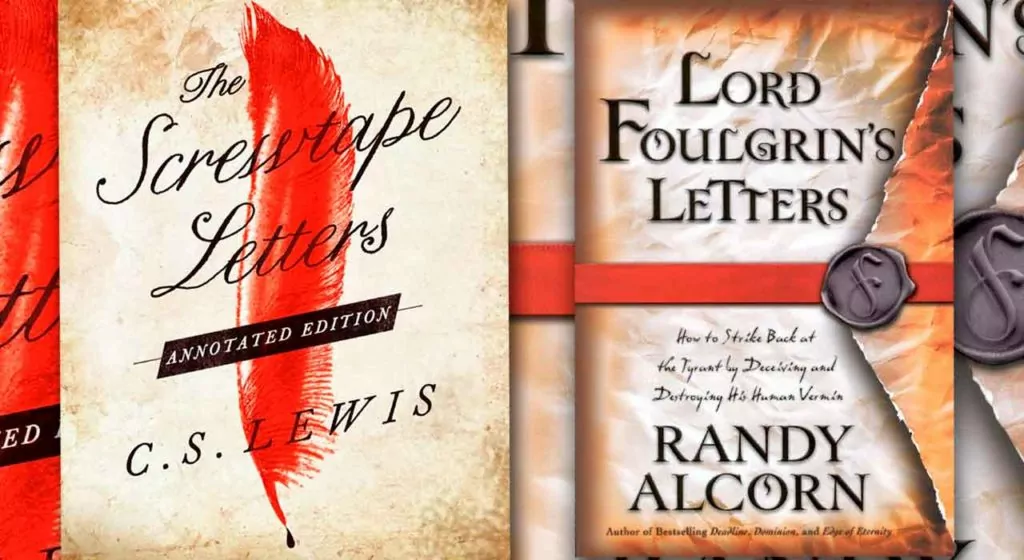
Lord Foulgrin’s and Screwtape’s letters: why you should read this devilish correspondence

The Screwtape Letters by C. S. Lewis 1942 / 200 pages Rating: Good/GREAT/Give Lord Foulgrin's Letters by Randy Alcorn 2001 / 208 pages Rating: GOOD/Great/Give Normally, we don’t appreciate people going through our personal correspondence. However, from the 1600s on, people have been fascinated by other people’s letters, whether real or fictional. In Screwtape Letters, C. S. Lewis used the device of the correspondence between two devils to make his own points about the kind of temptations faced by human beings, temptations that may well have been orchestrated by hell itself. (See the description of the tongue in James 3!) More recently, Randy Alcorn, who admits his debt to Lewis, has created his own more involved version of the same story, titled Lord Foulgrin’s Letters. Should we delve into this darkness? If you are considering reading either of these books, you may have two questions ringing alarm bells in your head. One is essentially negative: Does anyone have any business looking that deeply into the nature of evil, especially demonic evil? The other is skeptical, but basically positive: What can a look at the topsy-turvy perspective of the evil one tell us about the way life should be? So, first, is it dangerous to look at evil too closely? The apostle Paul certainly implies that we should not focus on evil, but on good, when he commands us to think about things that are “noble, ...right, ...pure, ...lovely, ...admirable, ...anything... excellent or praiseworthy” (Phili. 4:8, NIV). Paul also tells the Ephesians that “it is shameful even to mention what the disobedient do in secret” (Eph/ 5:12). So one might ask why C. S. Lewis and Randy Alcorn didn't choose to write about angels instead of focusing on demons. Lewis answered that question, explaining that he felt that it was impossible for him to write authentically about angels, since he, as a sinful man, could not well portray the absolute submission of angels to God’s will. However (sadly), we all know far too well what devilish thoughts and desires must be like, since by nature we are also in rebellion against God. Alcorn, on the other hand, does include a letter from one of God’s angels in his book, but you’ll have to read the book to find out whether or not this "works." Do not be naive...  Lewis’s words do give us an idea of why looking at devils might be useful for a Christian. To realize that temptation often has a demonic source may help us take our own sin and misery more seriously, something the Heidelberg Catechism points out is all-important knowledge (Lord’s Day 2). And while it may be shameful to self-righteously focus on others’ sins (see Matt. 7:1-5), we must be aware of our own sinful weaknesses, lest we fall prey to them. Lewis and Alcorn’s books echo the great truth of Eph. 6:12, that we are in the midst of a “struggle... against the spiritual forces of evil in the heavenly realms.” The Screwtape Letters and Lord Foulgrin’s Letters may even be seen as obeying the command of Philippians 4:8 when we realize that Lewis’s and Alcorn’s devils cannot help speaking about whatever is noble, right, pure, lovely, admirable, excellent and praiseworthy. Of course, they speak in enmity rather than awe, but as long as we accept whatever they reject, we can learn much from their malicious advice. Alcorn takes it one step further Alcorn’s book is particularly interesting, because it carries Lewis’s premise just a little further. Whereas Lewis sticks to letters written by a senior devil to his protege during World War II, Alcorn alternates letters with chapters of narrative about the family targeted by Foulgrin, and sets the story in our own time, with references to e-mail and teenage despair. Even more importantly, while Lewis’s account takes us up to the moment of conversion of a non-Christian, Alcorn deals with the demons’ reaction to the conversion of the central human character, especially their attempt to make him an ineffective Christian. What this means is that Alcorn deals with two issues that Reformed Christians also struggle with now: how to react to the world, and how to respond to God in our spiritual life. For instance, at the same time as Foulgrin extols the danger of pornography on the web, of broken families, of consumerism and materialism, he also rages against the “sludgebags” whom God gives physical bodies. Through Foulgrin’s words and the narrative chapters, we see both the temptations of worldly pleasures and the true beauty of the pleasures God gives us in this physical life: the taste of a fine meal, the touch of a loving husband in a foot massage for his pregnant wife, the sight of a sunset, and the smell of freshly baked chocolate chip cookies. Alcorn thus attacks both the attitude of Christians who mistrust enjoyment in life and the foolishness of those who think that we can experience the world on the world’s terms, and not be influenced by that world. Foulgrin gleefully mocks the stupidity of Christians who know that viewing someone else’s nudity and sexual intimacy is wrong, but do not flinch from seeing the same in a movie. He is, of course, immensely pleased also by parents who keep poisonous household products on the top shelf to protect their children, but who pay no attention to the toxic ideas their children ingest through the Internet and the music they listen to. Alcorn also uses Foulgrin’s warnings to his student Squaltaint to show what the demons shudder at in the Christian life. Foulgrin advises Squaltaint to keep his human charge Jordan Fletcher away from “the forbidden Book” (the Bible) and “the forbidden squadron” (the communion of saints in the local congregation). He warns Squaltaint not to let Fletcher draw close to God in prayer, not to let Fletcher read good Christian fiction, not to let Fletcher think of his life (his time, his thoughts and emotions, his money) as belonging to God rather than himself. Cautions and conclusion Are there still problems with reading about life from a demonic perspective? Any concerns with this way of writing about the spiritual and moral life of a Christian may be allayed by the fact that both Lewis and Alcorn show their demonic title characters losing in the ultimate sense. The only other problem that Reformed Christians might have with both these books is that they seem to imply that conversion is a matter of man’s free will – the error of Arminianism. Whether this Arminian tendency is simply the devils’ mistaken understanding is not clear, but Lewis at least seemed to be Arminian in his other writing (even while demonstrating that his own conversion was a result of God’s persistence rather than his search!). Despite this quibble, I would recommend both these books to any Christian who is open to considering just how effective and consistent his or her own Christian walk is, and in what areas he or she needs to plead for God’s Spirit to work “against the spiritual forces of evil in the heavenly realms.” Below is a 8 minute adaptation/preview of Lewis's "The Screwtape letters." ...

Red heart icon with + sign.
Book Reviews, Graphic novels, Teen fiction

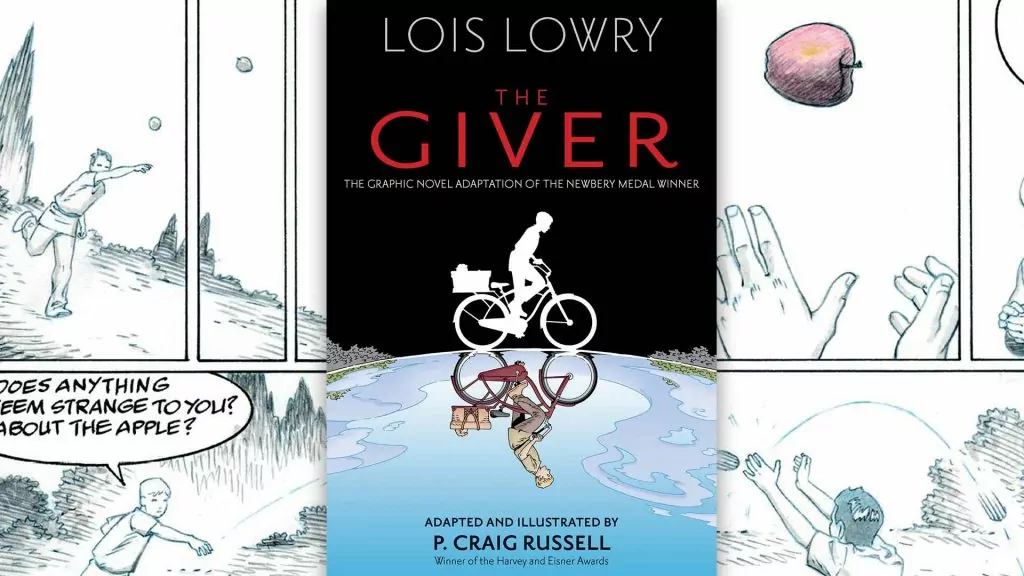
The Giver (the graphic novel adaptation)

by Lois Lowry adapted and illustrated by P. Craig Russell 2019 / 176 pages Rating: GOOD/Great/Give It's a hundred or so years in the future. War has been eliminated by muting mankind's emotions and by eliminating the conflict that comes when we have to make choices. Not only are everyone's jobs chosen for them, so is their spouse, and even the kids they will raise. 12-year-old Jonas has been given a unique role, being trained by The Giver to know and understand the past, so he can use that knowledge to advise the community in times of crisis. But as he becomes the best-informed citizen in his community he discovers things that horrify him – choices are also being made for the citizens as to who will live and who will die. My brother Jeff has done a great review of the book this is based on, so I'm going to focus on what makes this graphic novel different from the book. GRAPHIC NOVEL VERSION Most graphic novel adaptations are much shorter than the source material they are based on, in part because all the descriptive passages in the book can become pictures instead, and also because the plot is usually simplified. But this one is every bit as long as the original, with every scene in the book included. Jonas's discovery of color is a big theme in the novel. In the muted world in which they all live, citizens have lost the ability to see color, but as Jonas learns more about the past, he gains insight into the present and starts gaining the ability to see reds, and greens, and yellows. So first, adapter P. Craig Russell shares Jonas' muted world by depicting everything not simply in black and white – that would be a bit boring – but also with subtle splashes of blue. And as Jonas learns how to see more, we begin to see increasing flashes of vibrant color, to show his growing awareness of just how exciting and intriguing a place of discovery the world can be. It's fun to see in pictures this transition from dull to brilliant. In these sections, the comic might even be better than the book. But pictures also present challenges. It can be hard to visually depict what's going on in someone's head. To make up for that Russell carries over a lot of the text from the book. But he can't use all of it, which is why in the original the characters are all a little deeper, a little more realized. CAUTIONS And sometimes showing is more problematic than telling. In one scene in the book Jonas helps bathe the elderly. In the comic Russell has to use just the right angles to ensure all we see are the knees down or the shoulders and up. Nudity of a sort comes up in one other scene, which is the book's most troubling, even without the visual element. Jonas discovers that unwanted babies are killed via lethal injection, and even in muted pictures it's quite horrible. Russell is restrained, but the idea of murdering infants is so unpleasant that any pictures, even muted ones, just add to the horror. That said, the scene is not at all graphic. I'll also note that the baby is shown fully naked, with scant detail, but enough to tell that it is a boy. CONCLUSION This is every bit as good as the novel, though both have their different strengths. I'd recommend this to teachers as a slightly easier way for reluctant readers to access this book. But like the novel, and the film too, this comic needs to be discussed. Its teen audience needs to wrestle with the warnings given in this story – the danger of governmental control, the false compassion of euthanasia, the potential and peril of emotions – but they'll most likely need help. So this is a great conversation starter, but a guide will be needed. ...
Red heart icon with + sign.
Adult fiction, Book Reviews

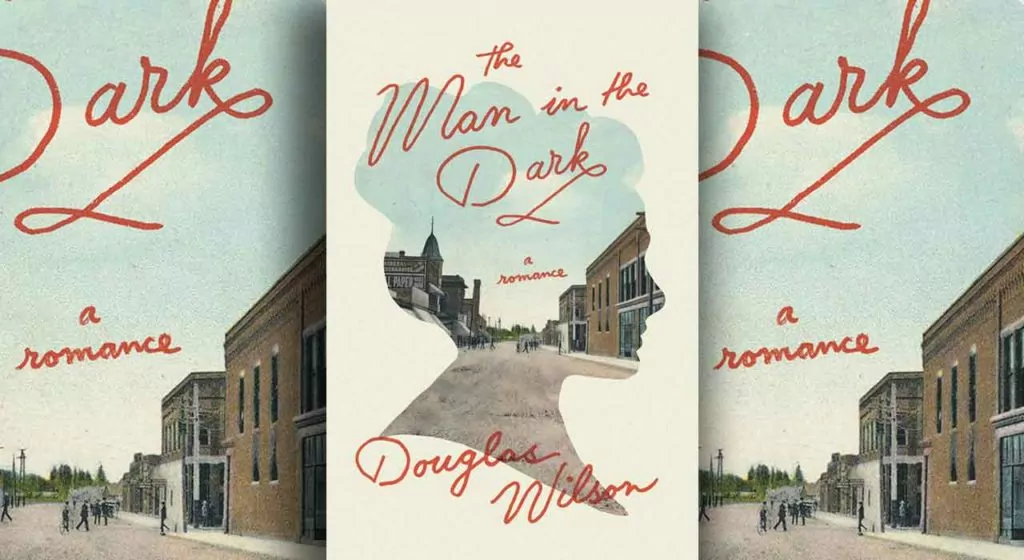
The Man in the Dark

by Douglas Wilson 258 pages / 2019 Rating: GOOD/Great/Give Some books only merit a quick read, others should be slowly savored, and a select few are so good you just have to read them out loud to your wife. This is that third sort! Savannah Westmoreland, a self-assured school teacher, finds herself in the middle of a love triangle. Except that it wouldn't be accurate to call what the town's biggest businessman feels for her love. Desire...hunger...lust. But not love. And while the church's newly arrived pastor is interested, and seems a worthy sort, he can't get past the walls Savannah has set up. But events – and friends – conspire against Savannah, putting her repeatedly in the pastor's company. And even as he uses these moments to make a good case for his marriable merits, Savannah is still actively discouraging him. Why? Something from her past still has a hold on her. The pastor is trying to get around this obstacle, but the businessman is trying to discover exactly what her secret is so he can use it to control her. This is Douglas Wilson's third novel, but first romance. It is the second of his books that I've read out loud to my wife, the other being Flags out Front. That's really the highest praise I can give a book. But lest you think Wilson is only a two-hit wonder, I'll share that his other novel, Evangellyfish, won Christianity Today's 2012 best fiction award. This man knows how to tell a story. As you might suspect of a book written by a Reformed pastor, there is a lot of theology, from the dinner table conversations to the metaphor underlying the whole story. But conversations about God are a great way to learn about God, and even though the book has a pastor right in the mix, this is not a sermon disguised as a story. This is, instead, great fiction telling something true. And if you think the ending a tad contrived, I might agree with you. But I'd also invite you to consider what the author is saying about this God of wonders that we serve. And speaking of truth-telling, I should own up that as much as I enjoyed reading this out loud to my wife, she didn't get to hear the whole story. That's because when she fell asleep I just had to keep reading. ...
Red heart icon with + sign.
Adult non-fiction

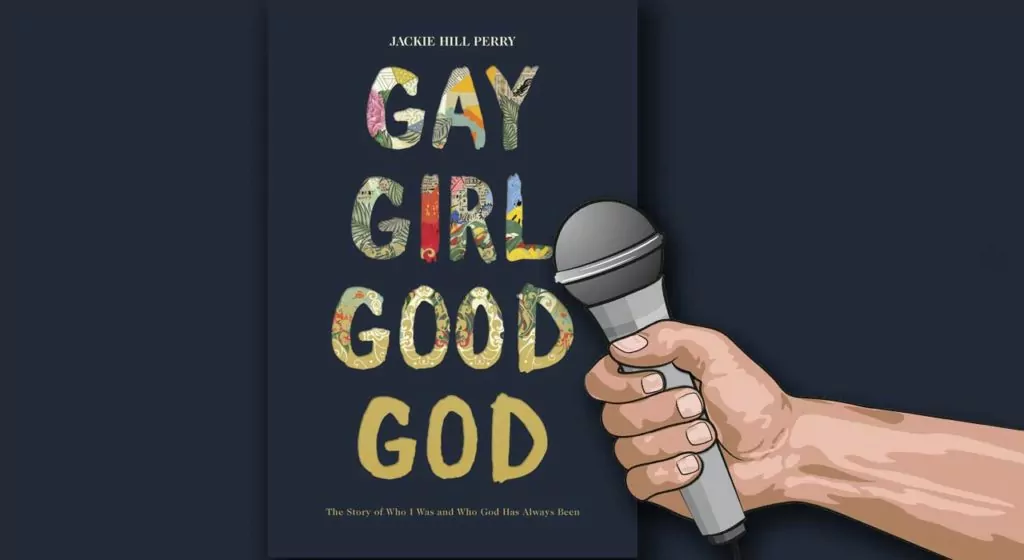
An interview (of sorts) with "Gay Girl, Good God" author Jackie Hill Perry

Jackie Hill Perry is an American poet and recording artist on the Humble Beast label. Married to Preston, she is the mother of two children. Last year, she published her first book Gay Girl, Good God: The Story of Who I Was and Who God Has Always Been. This is an “interview” of sorts, with her responses coming as excerpts from her book. ***** WES BREDENHOF:  At its heart, what is your book really about? JACKIE HILL PERRY:  Every sentence is the pursuit of showing off God….This is a book with a lot of me in it but with a whole lot more of God.  He is what the soul needs for rest and what the mind needs for peace.  He is the Creator God, the King of Glory, the one who, in love, sent the Christ to pay the penalty for and become the sin that we are all born with.  It is the words from and about this resurrected Lamb of God that I hope will lift off the page and into the heart.  This book is a lifted hand, a glad praise, a necessary hymn, a hallelujah overheard and not kept quiet.  This work is my worship unto God that, with prayer, I hope will leave you saying, “God is so good!” WB:  You say that it was the story of who you were. So who were you? What were you like? JHP:  To me, the devil made more sense than God sometimes.  Both he and God spoke.  God through His Scriptures; Satan, through doubt.  I’d learned of the Ten Commandments in Sunday school in between eating a handful of homemade popcorn and picking at my stockings.  The “Thou shall nots” didn’t complement the sweet buttered chew I found myself distracted by.  They were a noise I didn’t care to welcome.  “You can’t.  You shouldn’t.  Do not,” didn’t sound like a song worth listening to, only a terrible noise to drown out by resistance.  Satan, on the other hand, only told me to do what felt good or what made sense to me. WB:  When you finally came out as gay, what were you thinking about God? And what do you think He thought about you? JHP:  As much as I wanted to believe God grinned when He thought of my life, I knew He didn’t. My conscience spoke to me throughout the day.  In the morning, it reminded me of God.  A few minutes before the clock brought the noon in, it brought God to mind, again.  Night was when it was the loudest.  On the way to sleep, my head lay relaxed on my pillow surrounded by the natural darkness of night, I thought about God.  I was His enemy (James 4:4).  How could I, an enemy of God, have sweet dreams knowing that He sat awake throughout the night? WB:  So by God’s grace you became a Christian in 2008 – through his Spirit and Word you were miraculously brought to faith and repentance. What impact did your conversion have on your same-sex desires? JHP:  To my surprise, being a Christian delivered me from the power of sin but in no way did it remove the possibility of temptation.  A common lie thrown far and wide is that if salvation has truly come to someone who is same-sex attracted, then those attractions should immediately vanish.  To be cleansed by Jesus, they presume, is to be immune to the enticement of sin.  This we know not to be true because of Jesus. He being completely perfect and yet He still experienced temptation. WB:  What was that temptation like for you? JHP:  It was slapping me around like a weightless doll in the hands of an imaginative child. Being tossed between fun and funeral, who would I decide to trust more?  What the temptation wanted me to believe or what God had already revealed?  The struggle with homosexuality was a battle of faith.  To give into temptation would be to give into unbelief.  It was up to me to believe Him.  His Word was authoritative, active, sharp.  The simplicity of faith is this:  taking God’s Word for it.  And I might not have felt like it, but I had no choice but to believe Him. WB:  Why do we have a hard time believing that a gay girl can become a completely different creature? JHP:  Because we have a hard time believing God.  The Pharisees saw the man born blind, heard his testimony, heard about his past and how it was completely different from the present one, and refused to believe the miracle of Whothe miracle pointed to. The same power that made a man born blind able to see through the means of something as foolish as spit and mud is the same enormous power contained in a foolish gospel brought into the world by a risen Saviour.  It is through faith in Him, initiated by His pursuit of me, that I, a gay girl, now new creature, was made right with God.  Given sight, able to recognize my hands and how they’d been calloused by sin, and how Jesus had come to cleanse me of them all.  Now seeing, I worship.  One thing is sure, if ever I am asked, how am I able to see now, after being blind for so long, I will simply say, “I was blind, a good God came, and now, I see.” WB:  You have experienced the struggle with same-sex attraction.  Should those who are tempted with that identify themselves as “Gay Christians”? JHP:  I don’t believe it is wise or truthful to the power of the gospel to identify oneself by the sins of one’s past or the temptations of one’s present but rather to only be defined by the Christ who’s overcome both for those He calls His own. All men and women, including myself, that are well acquainted with sexual temptation are ultimately not what our temptation says of us.  We are what Christ had done for us; therefore, our ultimate identity is very simple:  We are Christians. WB:  In your book, you warn about the “heterosexual gospel.”  You write that “God isn’t calling gay people to be straight” and it’s actually dangerous to teach that he is.  Why do you say that? JHP:  Because it puts more emphasis on marriage as the goal of the Christian life than knowing Jesus.  Just as God’s aim in my salvation was not mainly the removal of my same-sex desires, in sanctification, it is not always His aim that marriage or experiencing an attraction for the opposite sex will be involved. Excerpts from Jackie Hill Perry’s “Gay Girl, Good God” have been used with the gracious permission of the author (and publisher). Dr. Bredenhof blogs at yinkahdinay.wordpress.com. A Dutch translation of this article can be found here. ...

Red heart icon with + sign.

Children’s picture books

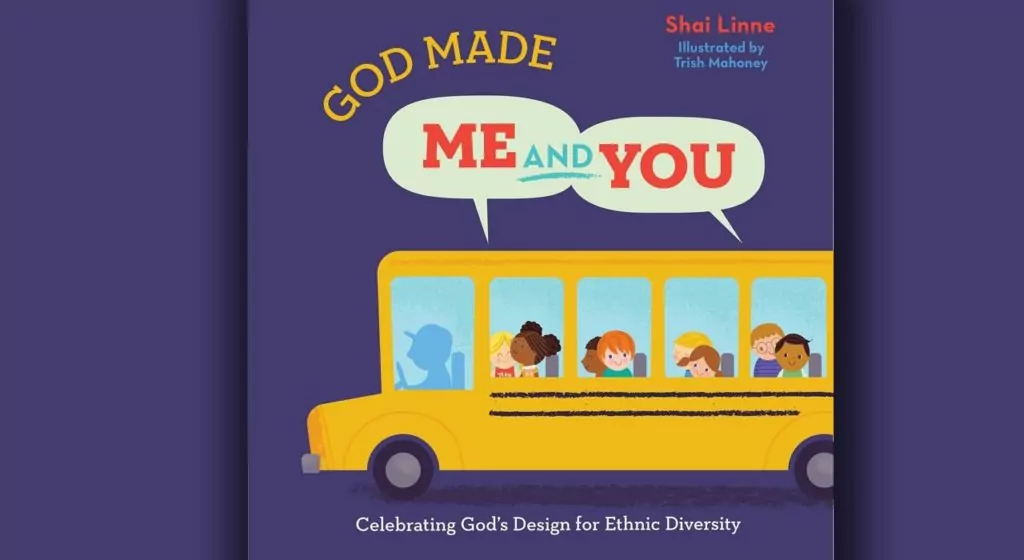
God made Me and You: Celebrating God's design for ethnic diversity

by Shai Line illustrated by Trish Mahoney 32 pages / 2018 Rating: GOOD/Great/Give Reformed rapper Shai Linne has written a children's book about racism and God's appreciation for diversity. And it's really good. As those already familiar with his albums know, Linne loves to delve deep into God's Word, and his insights are not only profound, but he knows how to present them powerfully. This picture book is no different. In response to racism Christians typically talk about how we all come from the same two parents so there is, in fact, just one race – the human race. Linne builds on this point, even as he makes another – yes we are all alike in one way, but in others, we are wonderfully different. And as you would expect a rapper to do, he makes this point in rhyme. The book begins with a teacher arriving late to her class just as a couple of boys are making fun of other kids for their hair, clothes, and skin color. After telling the boys to ask for forgiveness, she teaches the class a lesson about how diversity is a testimony to God's greatness. She says: In Genesis 1, what we see in each verse Is God made a world that is REALLY diverse. The sun and the moon, the planets and stars, Saturn and Jupiter, Venus and Mars... Each one is different... Class, why did God make this? He made it to show off His beauty and greatness. And just as the variety and diversity in the rest of creation speaks of God's greatness, so too the diversity in Mankind. He gave some curly hair while others have straight. It pleased God to fashion each wonderful trait. Brown eyes and green eyes, hazel and blue, Each in their own way works of art we can view. Some that are deaf and some that are blind All have great worth in God's sovereign design. This is a morality tale, and sometimes this type of Christian books can be quite forced – more sermon than story – but the rhythm and rhyme of God Made Me and You carries us along. There so much to love in this fantastic book, from the much-needed message, to the bright colorful pictures kids will love, to the fun bouncing rhymes that make it great fun for mom and dad to read out loud. So two very enthusiastic thumbs up! Linne has released a children's album, Jesus Kids, along with the book, and one track shares the same title as the book. You can hear some of the song in the book trailer below. You can also check out a 10-page excerpt from the book here. ...

Red heart icon with + sign.
Children’s picture books

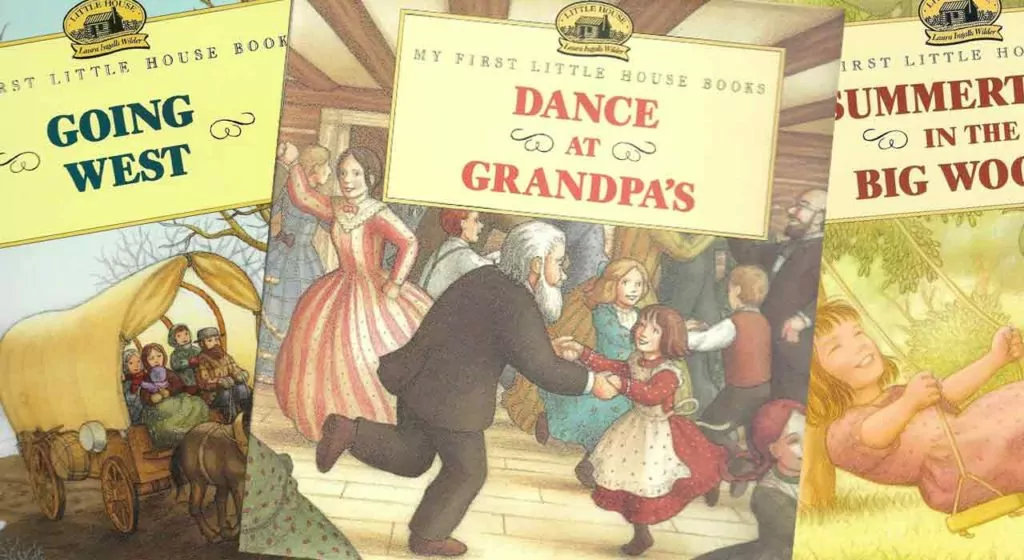
Dance at Grandpa’s

by Laura Ingalls Wilder illustrated by Renée Graef 33 pages / 1994 Rating: GOOD/Great/Give I'd expect most everyone has heard of Laura Ingalls Wilder's Little House on the Prairie series. Not only are the book loved by children and parents alike, they spawned a 1970-80s TV series that was wildly popular too. If by chance you aren't already familiar, the series is based on the author's own experiences in the late 1800's as a small child living the pioneering life. This picture book, Dance at Grandpa's, is an adaptation of Chapter 8 from the first novel, Little House in the Big Woods. While neighbors are far-flung, they do come together for special events, and this time everyone is invited to Grandma and Grandpa's big cabin. Laura, her Pa, Ma, big sister Mary, and baby sister Carrie, get bundled up in gloves, boots and coats, then covered up with blankets on the sleigh, as they head on their way to Grandpa's. Everyone brings their children so as the big cabin fills, Laura finds that there are "every so many babies lying in rows on Grandma's feather bed." Her pa then takes out his fiddle and the dozens of couples begin to dance and swirl. Laura discovers there's also food of all sorts, including wonderfully sour pickles! When the dancing finally stops Laura heads to bed, and come morning her family heads back home on their sleigh. As with any adaptation the obvious question is, why not just read the original? Our family has previously enjoyed the original novels as audiobooks – from youngest to oldest, everyone liked the novels, and probably more than these picture book versions. So, again, why read the picture book adaptations? There are a couple of reasons. First, my youngest can't read yet, but after going through the picture book once together, she could then "read" through it on her own, which she quite enjoyed. Second, our middle daughter is learning to read and needs books that are easy, but still have an interesting story. Many of the books at her level are so boring she finds they just aren't worth all the effort it takes to read them. But the books in this series are fun and familiar, and she has enjoyed working through a number of them. There are 14 picture book in all in this "My first Little House books" series, all of them based on the first three novels in the original series. The first two novels, Little House in the Big Woods andLittle House on the Prairie, are about Laura's childhood, and the third, Farmer Boy, is about her husband's childhood. One little annoyance we found was that the books were not published in chronological order and aren't numbered, so it was hard to figure out which to read first. For the most part it doesn't really matter, with the exception of the three based on chapters from Little House on the Prairie where one does lead into the next. So you can read most of them in whatever order you'd like, but, if you do want to tackle them in the proper chronological order, this is what it would be: Based on Little House in the Big Woods Winter Days in the Big Woods Christmas in the Big Woods A Little House Birthday Sugar Snow Dance at Grandpa's Going to Town Summertime in the Big Woods The Deer in the Wood Based on Little House on the Prairie Going West Prairie Day A Little Prairie House Based on Farmer Boy Winter on the Farm A Farmer Boy Birthday County Fair CAUTIONS The one caution I'll pass along concerns not Dance at Grandpa's, but another in the series. A Little House Birthday is based on Chapter 5 of Little House in the Big Woods and, just as in the original, the story here is all about how bored Laura is with Sunday. Her parents are very strict: "On Sundays they could not run or shout or be noisy. They must sit quietly and listen while Ma read stories to them They might look at pictures, and they might hold their rag dolls nicely and talk to them. But there was nothing else they could do. One Sunday Laura could not bear it any longer and she began to play with Jack and run and shout. Pa told her to sit in her chair and be quiet, and Laura began to cry. So Pa took her on his knee and cuddled her and told her a story." Eventually, she falls asleep and, waking up the next morning, she realizes with relief, "It was Monday, and Sunday would not come again for a whole week." So she's got quite the attitude about Sunday, and her parents really aren't helping things. Now, a story like this is no big deal when dad or mom are reading it – then we can explain that Sunday isn't a day of "don'ts" but a day of "get tos" – we get to have time off from our daily work and get to spend it together as God's people praising, and learning about, Him. Laura's parents made Sunday the worst day of the week and we can share with our kids that this is simply not the way the Lord's Day should be celebrated. CONCLUSION To this point we've read 11 of the 14 available and enjoyed them all (though we did have to have a talk about A Little House Birthday). I'd recommend them as fantastic books for Grades 1 and maybe 2. With girls as the primary characters, boys might not like most of them, but perhaps they'd be interested in the three based on Farmer Boy (I hope so, but I haven't tested these out on any boys). However, if your girls are anything like ours, they'll enjoy them all. Jon Dykstra and his siblings blog on books at ReallyGoodReads.com....

Red heart icon with + sign.
Adult non-fiction, Book Reviews, Media bias

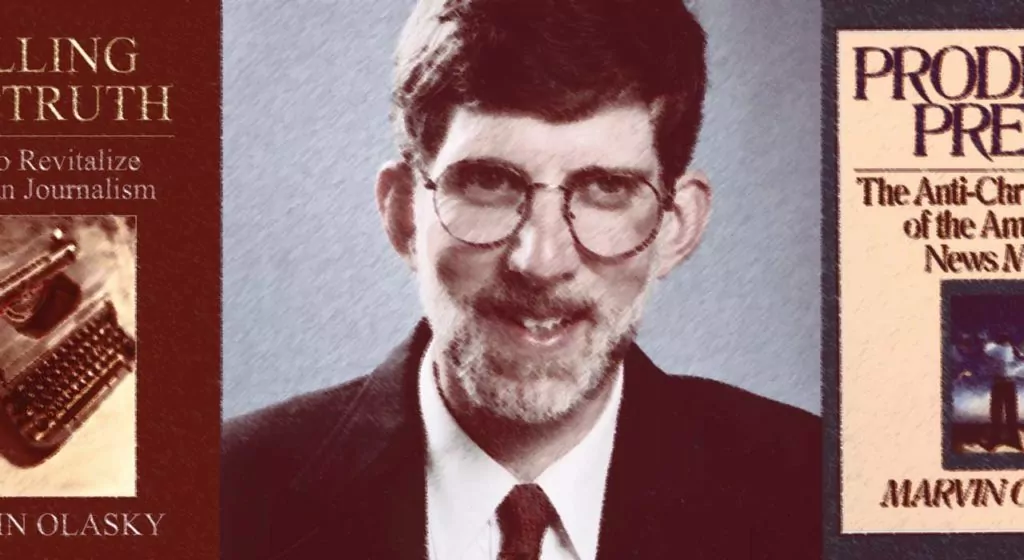
A call for Christian journalists: an interview (of sorts) with Marvin Olasky

Marvin Olasky has been many things – the Editor-in-Chief of World magazine, a journalism professor, the author of more than 20 books, and a baseball fanatic. Two of those books lay out his radical notions concerning journalism, on how it used to be a Christian enterprise, and how it can be again. This is an "interview" with those two books, and the text in bold are his words as they are found in Prodigal Press: The Anti-Christian Bias of American News Media and Telling the Truth: How to Revitalize Christian Journalism. **** JON DYKSTRA: Let’s start with the title of your first journalism book. What does Prodigal Press refer to? MARVIN OLASKY: The title refers to the relationship that today’s secular press has with the Christian journalism of yesteryear. Though few know it, American secular journalism is the wayward son of Christianity. JD: Do you mean newspapers used to be Christian? MO: Yes, indeed. For example, the New York Times was founded in 1851 by Henry Raymond, a Bible-believing Presbyterian. Throughout the City of New York there was at one time fifty-two magazines and newspapers that called themselves Christian. JD: A Christian New York Times? That is pretty hard to believe. MO: It was a great Christian paper! It became known for its accurate news coverage and for its exposure in 1871 of both political corruption (the “Tweed Ring”) and abortion practices. A reading of the New York Times in the mid-1870s shows that editors and reporters wanted to glorify God by making a difference in this world. JD: The 1800s seemed to be a good time for Christian journalism. Is that when it all started? MO: Oh, it started much earlier than that. You could even say that Luke was one of the first journalists. At that time published news was what authorities wanted people to know. The Acta Diurna, a handwritten news sheet posted in the Roman forum and copied by scribes for transmission throughout the empire, emphasized governmental decrees but also gained readership by posting gladiatorial results and news of other popular events. Julius Caesar used the Acta to attack some of his opponents in the Roman senate – but there could be no criticism of Caesar….The Bible, with its emphasis on truth-telling – Luke (1:3-4 NIV) wrote that he personally had “carefully investigated everything from the beginning” so that Theophilus would “know the certainty of the things you have been taught” – was unique in ancient times. New Testament writers comforted the afflicted and afflicted the comfortable. JD: But if journalism had a Christian origin, what happened to change things? Most journalism today could hardly be called Christian. MO: There were a number of reasons for the change. First newspapers started shying away from tough stories. Evil unfit for breakfast table discussion or considered unfit to print was ignored and thereby tolerated. Several generations later it was embraced. More importantly, just as Christianity was being attacked by ideas like evolution and materialism, Christianity in North America underwent a period of revivalism that emphasized individualism. Many were saved thankfully, but this emphasis on personal faith did not stress the importance of a Christian worldview. So instead of confronting all problems from a biblical perspective, newspapers pushed Christianity to the sidelines. Furthermore, many Christians began to believe that the general culture inevitably would become worse and worse. They thought that little could be done to stay the downward drift. Christian publications should cover church news, they thought, and ignore the rest of the world. JD: So instead of responding to these attacks, Christian journalists just retreated? MO: Exactly. JD: When did this shift take place? MO: It’s hard to put an exact date to it, but by the 1890s things were underway and by the 1900s journalism had turned rather vicious under the leadership of men like William Hearst and Joseph Pulitzer. JD: But weren’t Hearst and Pulitzer giants in the newspaper industry? MO: Yes they were, but you wouldn’t want to get on their bad sides. Hearst, for example, was the first journalistic leader to assault regularly those who stood in his path. When Hearst could not get the Democratic presidential nomination in 1904, he called Judge Alton Parker, the party’s nominee, a “living, breathing cockroach from under the sink.”  JD: Nice. Well, if we’ve lost our way, how can we make journalism Christian again? MO: For too long Christians have contented themselves with singing “A Mighty Fortress Is Our God,” all the while forgetting that a fortress was an offensive as well as defensive weapon: From it soldiers could make sorties. We have to go out boldly and engage culture, and contrast our Truth with their opinion. JD: But don’t we already have a number of Christian columnists who do just that? MO: We have columnists, but not many journalists.  We need to have people covering the day-to-day news from a biblical perspective. Too often Christian newspapers fill their pages with warmed over sermons rather than realistic stories of successful independent schools or corrupted churches and thereby miss an opportunity to teach boldness. We need to confront culture boldly! JD: Boldness is the key then? MO: Well…no. Boldness alone won’t do it. In fact, none of this will make much difference unless Christian communities view journalism as a vital calling and Christian journalists as ministers worthy of spiritual and economic support. The picture of Marvin Olasky has been modified from one found here, and is used under the Creative Commons Attribution-ShareAlike 3.0 License. A version of this article first appeared in the March 2008 issue....

1 2 3 4 5 6 7 8