Transparent heart icon with white outline and + sign.

Life's busy, read it when you're ready!

Create a free account to save articles for later, keep track of past articles you’ve read, and receive exclusive access to all RP resources.

White magnifying glass.

Search thousands of RP articles

Helping you think, speak, and act in Christ.

Open envelope icon with @ symbol

Get Articles Delivered!

Helping you think, speak, and act in Christ. delivered direct to your Inbox!


Red heart icon with + sign.
Book Reviews, Teen non-fiction

Daughters of God: Finding our identity in Him

by Christina Feenstra 2022 / 198 pages Rating: GOOD/Great/Give This workbook of six chapters is “a course to help young women find their value and self-worth in God and what He says, instead of in the world.” Christina Feenstra is a grade five teacher in southern Ontario and has developed this course for young teenage girls to find their way in the world. It is primarily meant as a group study but can be used singly. Feenstra uses many Scriptural passages and the Three Forms of Unity for the girls to look up, to study and apply to their own lives. As daughters of God, we are created in His image, living for His purposes to the glory of God's Name. We belong to the body of Christ and thus are members of a community of believers.  This book teaches young girls how to love God and to show thankfulness by loving their neighbor. Each chapter begins with a Bible reading and a prayer, followed by questions and a study, and ends with things to focus on during the week.  Feenstra makes good, practical suggestions such as keeping a journal to record devotions; to record five things daily for which we are grateful.  Because we are temples of the Holy Spirit, we need to take good care not only of our spiritual needs but also of our physical needs by eating well, exercising, and getting enough sleep. I highly recommend this book for the young sisters in our churches. I'd even recommend it for the older sisters, especially the chapter on forming good habits, to review their own lives in the light of God's Word....
Red heart icon with + sign.
Adult fiction, Book Reviews

The White Rose Resists: a novel of the German students who defied Hitler

by Amanda Barratt 2020 / 320 pages Rating: GOOD/Great/Give In Amanda Barratt’s novel The White Rose Resists, a candle is being lit in the midst of the Nazi darkness that has cast its shadow upon the world. The White Rose was a group of five college students and a professor operating in Munich, Germany. Their goal was to combat the Nazi propaganda that was blinding the German people. The White Rose accomplished this by printing and distributing leaflets, giving a voice to the truth. Their leaflets detailed and denounced the atrocities that were being committed against the Jews across Europe. The group called for the students of Germany to rise up against Hitler. I really enjoyed this novel. Barrett does a terrific job bringing this historic resistance group to life. She was able to blend fact with fiction to create a cohesive narrative of what this group may have experienced. This Christian author weaves in a message on God’s sovereignty. Members of the White Rose grapple with their faith and ultimately come to the knowledge that God’s will must be done. They place their trust and hope in Him to give them the strength they need to pass through their trials and tribulations. When darkness has seemed to triumph, God, in his sovereignty, begins lighting candles so that the darkness will not overcome the light. The White Rose was one of many candles that God used to bring down Hitler and his Nazi regime. This book is a great read for teenager and adult alike. The only criticism I have to offer is that the author blended several German words into the narrative. Initially, this was quite distracting but improved as the novel progressed....
Red heart icon with + sign.
Book Reviews, Graphic novels

The Murder of Abraham Lincoln

by Rick Geary 2005 / 80 pages Rating: GOOD/Great/Gift Author and illustrator Rick Geary has created a series of graphic novels about Victorian-era murders. While I don't think I'd be much interested in reading others in the series (I don't feel a need or a desire to learn about Lizzie Borden or Jack the Ripper) The Murder of Abraham Lincoln is a title I would recommend to anyone interested in American history. It starts with Lincoln presenting his second inaugural address. Geary gives a brief accounting of the end of the Civil War, and intersperses it with parts of Lincoln's speech - it is a great opening to a great book. We are then told a little of assassin John Wilkes Booth's background, and his motivations, and are introduced to the co-conspirators. The last third of the book takes place after Lincoln is killed, and shows us the man-hunt for Booth, as well as the country's reaction to the assassination. A graphic novel is a compelling way to tell this story, first because Geary uses this format to show us the layout of Ford's theatre (where the assassination took place), escape routes, and other maps, and second because pictures, properly used, can tell, if not a thousand words, at least a couple hundred or so. This volume is only 80 pages, but there is a lot of information packed into it - it gives readers a great feel for the time, and insight into the still brewing conflict that had almost split the country asunder. The only concern I have with this volume is that it casts some suspicion on Secretary of War Edward M. Stanton. The author doesn't directly accuse Stanton of having a hand in the assassination, but he does raise questions about him: "Was he guilty merely of overzealousness in the execution of this office - or do his actions indicate an intent more nefarious?" I'm only passingly familiar with other accounts of Lincoln's life and death, but have never heard these questions before, so I wonder how legitimate they might be. But Stanton is a relatively minor character in this story, so this is only a minor concern. I would recommend this book for anyone 12 and over (the illustrations have been done with restraint - there is no gore to speak of) and I'm sure adults will enjoy it, and find it educational as well....
Red heart icon with + sign.
Book Reviews, Graphic novels

Harriet Tubman: Fighter for Freedom! (2 books)

by James Buckley Jr. and Izeek Esidene 2020 / 94 pages Rating: GOOD/Great/Gift Harriet Tubman (1822-1913) was an American black woman born into slavery who escaped the South only to go back again and again to show other slaves the way to freedom. She also served in the American Civil War as both a guide for Northern forces, and as a nurse. Even during the war, she continued making trips to free slaves. Biographies can sometimes be dry and dusty, but one advantage of this comic-book format is that it allows for an era that survives only in black-and-white photos to be brought to life in full color. One wonderful surprise in this secular book, was how Harriet is shown repeatedly pleading to, praising, and thanking God. It was made obvious that what she was doing was based on a love for her Lord. She could be brave because she knew she was in God's hands. Like the other American-focused editions of this "Show Me History!" series, this comic is narrated by two kids, a boy and a girl, which makes it all the more accessible for early readers. Sam, is actually a young "Uncle Sam" and his friend Libby, clad all in green, is also known as "lady liberty" (aka the Statue of Liberty) and their back-and-forth banter really adds some fun, especially in Tubman's life, which is otherwise a pretty serious story. This has me excited to check out other titles in the series. Cautions In a book in which God is being praised dozens of times, I don't think it a stretch to presume that the one time someone "interjects" God's Name that it is been done as a short prayer of thanks. I include the instance here for you to decide. Harriet's niece Kizzy is escaping and desperately looking for her aunt. On spotting Harriet ahead, Kizzy says to her husband: "I see her, John, oh Lord... I see her!" Another caution concerns how the book presumes that the South's secession was a problem that needed to be solved by war. While estimates vary, at least 600,000 soldiers died in the war, or more than 2% of the population of the time. And that doesn't even include the uncounted number of civilian deaths. Southern slavery was wicked, but Great Britain ended slavery without a war, so it is worth considering if Abraham Lincoln did the right thing. The indivisibility of the country is also worth considering in our own time when up until just recently abortion was legalized nationwide for 50 years, leading to more than 60 million deaths. Might that number have been smaller had pro-life states had the ready option of leaving the union? I will add, though, that the fact this comic doesn't question the righteousness of the Civil War is hardly unusual, and in that sense, it is not all that notable. Conclusion At 94 pages, this has the room to go a lot deeper than most kids' biographies ever do. I think it'd be great for any kids 10-14 who wanted to learn about either US history, or about some of the Christians who helped fight slavery. So far, I've checked out two others in this "Show Me History!" series. Benjamin Franklin: Inventor of the Nation was also very good. The man himself is PG-rated – he had kids out of wedlock, and possibly two wives at the same time – so even though the comic only briefly touches on those details, that one might be better for teens than preteens. And, in sharp contrast with the Harriet Tubman title, there's really no Christian content. But his life as an inventor, printer, diplomat, and one of the American Founding Fathers is quite the read! Abraham Lincoln: Defender of the Union was also a quick and easy read, but it shares a caution with Harriet Tubman. The book presumes that the Union had to be preserved, even at the cost of 600,000 men's lives. That's an especially big part of this book, making it a bigger caution in this case, so I might go with a different comic Lincoln biography: Rick Geary's The Murder of Abraham Lincoln. ...

Red heart icon with + sign.
Book Reviews, Teen fiction

The Always War

by Margaret Peterson Haddix 2011 / 197 pages Rating: GOOD/Great/Give When my 13-year-old got a gift certificate to the local bookstore, it was an excuse for the two of us to spend some serious time perusing the shelves. But after an hour we’d discovered there wasn’t much there for her that she hadn’t already read. The teen books were either silly stories about teen crushes, or weird stuff about witches, demons, and vampires. We finally settled on something with a cover that looked almost like some 1950s nostalgia, only to later discover one of the key characters had two dads. Another trip to the same store ended up with a decent book, but on the final page the author noted he uses “they/them” pronouns. Third try was the charm... sort of. We found something by a preteen author I'd heard was quite popular, and whose books I'd seen in our Christian school library. But while the book we settled on – Margaret Peterson Haddix’s Found (2008, 314 pages) – wasn't bad, I appreciated it more for being harmless than stupendous. It’s a time travel adventure/mystery, with a bunch of adopted children trying to figure out where they came from. There’s the typical cautions – kids acting behind their parents’ backs, along with a couple passing mentions of evolution – but none of the newer cautions needed. Peterson isn’t advocating for amputative surgeries on youth or adults (as the fellow with the “they/them” pronouns implicitly is, by pretending that gender is changeable), or for alternative lifestyles. The biggest caution I’d have concerns the fact that this is just the first of Peterson’s eight-book The Missing series, and at roughly 300 pages each, even if they all turn out to be mostly harmless, that’s a lot of cotton candy for any kid to be ingesting. I’ll also add a concern about whether this would be good or bad for adoptive kids to read, as the topic of adoption, and kids searching for who they are, is a big part of the story. Finally, as just a general caution on the author, I do know another book  (Double Identity) by this author that features a female pastor as a major character. So it was more like one thumb up for this one. But while I'm not going to be continuing with that series, it was still good enough for me to check out more Haddix material. And now I've found one I think worth recommending. The Always War is a mystery of sorts, set in a world like our own, yet one that has been in a constant war for the last 75 years. We come along for the ride with Tessa, a girl who still reads old stories, even though no one else does anymore. She's at a celebration for a young war hero, a pilot named Gideon, that doesn't go as expected – instead of accepting his award for bravery, Gideon runs off. Why would a hero run away from his adoring and appreciative fellow citizens? Well, as Tessa slowly begins to discover, Gideon doesn't think he's a hero, because he did his arial combat, not from the sky, but from behind a computer – he was flying a drone. And he has discovered that instead of hitting a legitimate military target, he seems to have hit a civilian marketplace. Distraught, Gideon is determined to fly down to the marketplace to offer his repentance, for whatever that's worth. And Tessa comes along for the ride. But Gideon has to go behind the military's back, work with black market privateers, and sneak past his own border guards. Then, when they arrive, nothing is as he expected. There are no angry grieving crowds to meet him. In fact there's nothing at all! So what's going on? What's actually real? The mystery lasts most of the book, which means that this requires a reader with some patience. As for concerns, God is not a part of this world, and seeing as one of the themes of this story is about discerning reality from what authorities tell us is real, that the characters simply rely on their own wherewithal makes a bit too much of Man. But that's the biggest problem. A good read for 12 and up so long as they don't mind working through a mystery bit by bit – they will need to have some patience....

Red heart icon with + sign.
Adult non-fiction, Book Reviews

Anglo-Genevan Psalter in Four Part Harmony

compiled by Carl Oosterhoff 2022 / 241 pages Rating: GOOD/Great/Gift Singing songs in harmony is a tradition going back to before the time of the Reformation. The Reformation resulted in Lutheran hymns and Genevan psalms, also published in harmony at that time. However, the British Anglican church started the tradition of singing harmony within the church service. Subsequently, the Great Awakening preacher-musician teams brought this tradition to North America. The Anglo-Genevan Psalter in Four Part Harmony is a new publication containing 150 psalms and a few hymns in four-part harmony. This is the first edition published with the lyrics of the (Canadian Reformed) 2014 Book of Praise. The harmonizations have different styles from several periods and by various people. When using it, the letter-size spiral-bound book is helpful for singing and accompaniment. The font size is very readable, and the spaced-out notes make it easy to follow each voice. The layout is similar to a traditional American hymnal but on a larger piece of paper. People familiar with singing in harmony will not have much difficulty singing from this selection. I suspect that also home schools and Christian schools can teach children these harmonies. To that end, a suggestion: when you first begin practicing singing in harmony, perhaps start with just two voices rather than all four at once. And sing one stanza until the individual voices become familiar. There are a few points that I'd like to highlight. Psalm 119 includes an alternate harmony with the melody in the tenor, which is a delightful variation. Some of the tunes have a lower pitch than in the Book of Praise, which make them generally easier to sing. In the Book of Praise some Psalms have the same tunes (for example Ps. 24, 62, 95 and 111) but each here has been given a different harmony. Now, I would have kept the harmony the same for all of them, to benefit the singers, but it does mean there are more harmonies to choose from. The Anglo-Genevan Psalter in Four Part Harmony is an excellent addition to any home. And if the pianist or organist is playing the harmonizations, this book could be used in a church setting too. Why not try it in your home school, or suggest learning a few songs at your Bible study? And, of course, at choir – I would not be surprised if an average choir can almost sight-read this music. Copies can be ordered by emailing [email protected] or find it at ReformedChristianBooks.com, ReformedBookServices.com, and HeritageResources.ca....

Red heart icon with + sign.
Adult biographies, Book Reviews

The Vow

by Kim and Krickitt Carpenter 2012 / 183 pages Rating: GOOD/Great/Give This is Exhibit #1 in why you should never judge a book by its movie. If you've ever wondered what it meant when a Hollywood film said it was "based on a true story," if The Vow is any indication, it doesn't mean much at all. Both the book and film tell the story of a couple whose marital vows are put to the test after a horrific car accident leaves the wife with no memory of marrying, or even meeting, her husband. The real-life couple is Kim and Krickitt Carpenter, both Christian, which impacts every part of their story They met each other when Kim, a baseball coach, purchased some team uniforms from the company where Krickitt worked. Krickitt always loved her family, which is why Kim went to her father to ask for permission to marry his daughter. They saved sex until after they were married and had a big traditional church wedding with family and friends. They said their vows before God and his people. After the accident, Krickitt briefly stayed with her parents, but the couple never considered divorce, and three years later they had a second wedding ceremony and renewed their vows. In the film the couple have been renamed, with Leo owning a recording studio and Paige a vegetarian artist who hates her family and hasn't spoken to them in years. So, of course, Leo doesn't ask Paige's dad for permission to marry his daughter because Leo doesn't even meet his father-in-law-to-be until after the accident. The couple lives together before marriage and has sex long before marriage. Their marriage ceremony is an impromptu one that takes place in an art museum, it includes lots of giggling, warm and fuzzy promises, and is interrupted by museum security guards. After the accident the couple eventually divorces, only to later get married once again. So why such a departure from the real events? It turns out the film’s two primary scriptwriters, Abby Kohn and Marc Silverstein, never met the Carpenters, and never even read their book. Kohn noted: gave a couple of lines about the true story and allowed us to go invent a movie that we liked.... I think if they told us too much we’d feel responsible to those details. But we felt responsible to nothing. The irony is, while the scriptwriters decided to depart from the real story in order to make it more interesting, the end result was a movie that didn't feel authentic. The vows Leo and Paige made were frivolous, done seemingly as a lark, and the sort that couples facing far easier trials break every day. In this secular setting why would Paige feel any reason to keep promises to a man who, after that accident, she doesn't even know? The true story teaches the meaning of faithfulness, both in how Kim refuses to turn his back on Krickett no matter how much she has changed, and even more remarkably in how Krickett decided to keep promises she didn't remember making, to a husband she didn't know, because she knew she had also made those promises to God. Now that's a story. But it’s clearly one that Hollywood could never do justice to. At 183 pages the Carpenters’ book is a quick, fun read. It may not be great literature, but the story itself is extraordinary… and so much better than the “inspired by true events” Hollywood version. A version of this originally appeared in the July/August 2017 issue....

Red heart icon with + sign.
Book Reviews, Teen non-fiction

Risk is Right: Better to lose your life than to waste it

by John Piper 2013 / 51 pages Rating: GOOD/Great/Give How often do you take risks? If you’re anything like me, it’s not often. I like to maintain the status quo and to never feel that knot in the pit of my stomach when the outcome of a decision is in limbo. I like to feel safe. John Piper in his short book, Risk is Right, sets out to destroy this myth of safety. We live in a world full of uncertainty. No matter how hard we may try to eliminate risks from our lives, it is impossible. But as Christians, we need never be afraid of risk, for we have the ultimate security, salvation through Jesus Christ! This one thought should release the chains that hold us from risk: we have been freed to honor Christ in this life and in death.  That is not to say that safety is wrong. We don’t need to be adrenaline junkies, looking for the next adventure to get our blood pumping. Rather, it's the safety that comes from cowardice that is wrong. Queen Esther risked it all when she approached King Ahasuerus without being called. Esther did not know the outcome but trusted that God was powerful enough to save both her and her people. Shadrach, Meshach, and Abednego could have bowed down to Nebuchadnezzar's statue and guaranteed their safety. Instead, they refused, handing the outcome of their lives to God. It is right to risk for the cause of God, and refusing these risks because of cowardice is wrong.  I recommend this short book to everyone. We live in a culture that is so risk averse that “two weeks to stop the spread” became two years. We wanted safety so badly, that even as it became evident the government wasn’t able to provide it, we settled for having at least a false sense of security. This book knocks away such crutches so we can live a life worth living, by finding our security in Christ.  A bonus: you can download it for free here....

Red heart icon with + sign.
Adult non-fiction, Book Reviews, Economics

Economics in One Lesson

by Henry Hazlitt 1946 / 193 pages Rating: GOOD/Great/Gift Universal basic income, a four-day work week, and government-funded daycare are just a few big-ticket proposals that are gaining momentum nationally, and even within our own church circles. All these proposals boil down to getting more while doing less. Promises have been made that middle and lower class families will not have to pay a cent more in taxes but the wealthy 1% will do all the heavy lifting.  In Economics in One Lesson, Henry Hazlitt argues that all these policies can’t deliver what they promise. He argues that many of these proposals only focus on a special interest group in the present and fail to consider how the proposal will affect the general populace both now and in the future.  For example, when a government announces a multitude of public “make-work” projects, at first glance these projects seem like a good idea, or at least seem like they couldn’t do any harm. The citizens get: An employment opportunity  Tangible infrastructure But Hazlitt warns that although these benefits look attractive, there are many indirect consequences that are not considered.  First, someone must pay for these employment opportunities. For every dollar spent on a public work project, a dollar will be taken away from a taxpaying citizen. Not only are the citizens as a whole worse off, there is now less money for them to create new jobs. Second, now that the infrastructure exists it is easy to assume that without that piece of infrastructure the country would be worse off – having a bridge would seem obviously better than not having a bridge. But in reality, one thing has been created instead of others. Instead of the government-built bridge there could’ve been citizen-built houses, or cars, or dresses and coats. All of these items are unrealized because the bridge is now standing. Although Hazlitt wrote this over 70 years ago, many of the issues he deals with are just as relevant as ever. We should be wary of governmental promises to ease our daily tasks. Our sinful nature yearns for an easy life; that is why these promises are so alluring to us. However, as Christians we are not called to an easy life. That does not mean that we should always seek out the hard way, but we shouldn’t become entangled in false promises of an easy way. To get Economics in One Lesson as a free pdf book, click here....

Red heart icon with + sign.
Adult non-fiction, Book Reviews

The NIV Sola Scriptura Bible Project

2,032 pages (in 4 Volumes) / 2017 (3,500 BC - 90 AD) Rating: GOOD/Great/Gift I received a gift from a dear friend last Christmas and in April decided to start reading it. The Holy Bible: The NIV Sola Scriptura Bible Project is a publication of the Bible that forces the reader to focus exclusively on the text of Scripture itself, without any other distractions. The foundation of this project is the Protestant Reformation and the call to return to the roots of our faith by embracing Scripture alone (sola scriptura) as our highest authority. From the webpage: “In this set of reading Bibles, the Old Testament is ordered according to the traditional shaping of the Hebrew Scriptures: the Torah, the Former and Latter Prophets, and the Writings. The New Testament is reorganized by placing each of the four Gospels at the head of four groupings that together bear witness to the central story of Jesus... the NIV Sola Scriptura Bible Project also removes the chapter and verse numbers, red letters, and cross-references present in most modern Bibles.” In my personal devotions, I found that I’d read some of the historical accounts for long periods of time as one might read a historical novel. Likewise, it became natural for me to read minor prophets and New Testament epistles in their entirety in a single sitting, allowing unifying themes to jump out at me more obviously. The publishing project also clearly invested thought into ensuring the paper quality and the font type and size maximized the reading experience. I’d recommend this set (or the ESV's version, in six volumes) as a means of reading through Scripture in a year. While I plan to finish reading this set in the next couple months and will return to it in future years, I’ll switch between various devotional reading plans from year to year. ...

Red heart icon with + sign.
Adult fiction, Book Reviews

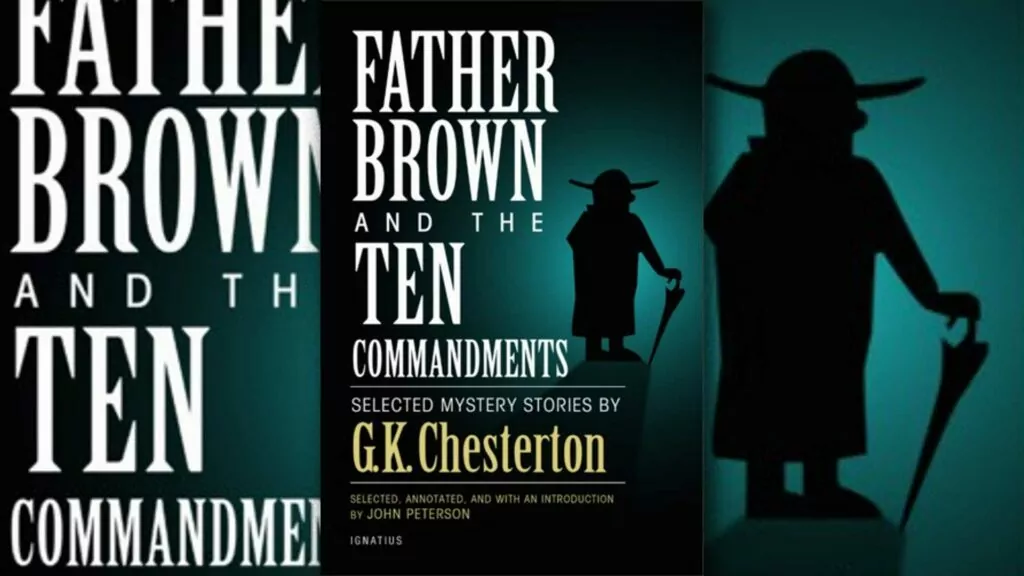
Father Brown and the Ten Commandments: Selected Mystery Stories

by G.K. Chesterton 2017 / 249 pages Rating: GOOD/Great/Give An heiress of a large fortune has fallen to her death, and suicide seems the obvious explanation. But then along comes a short man in clerical dress with an explanation that shocks everyone. This short man is Father Brown, Roman Catholic priest, who doubles as an amateur detective. Brown often finds success in his investigations because of his perceptive understanding of human nature. Brown also uses his unimposing character and position to gain valuable information from witnesses who see him as only a priest. This information, often overlooked by even the reader, helps Father Brown bring the criminal to justice. Brown was a creation of G.K. Chesterton, who was Catholic himself, but whose apologetic writings are much appreciated by Protestants too. His Father Brown character has been featured in over 50 short stories. This collection of mysteries is focused around the Ten Commandments, taking on the commandments one by one. I enjoyed all of them – each story is just 20-30 pages long, which is great if you don’t want to commit to reading a novel. And Chesterton still manages to build enough suspense to leave the reader shocked by the criminal and their motive. Two cautions: first, G.K. Chesterton wrote over one hundred years ago so his vocabulary may be less accessible to younger readers. Some of Chesterton’s characters use racial slurs (Agar Rock in The Scandal of Father Brown) and there are a couple uses of “salty” language. I have never been a huge fan of mystery novels but found myself thoroughly enjoying each story. I look forward to picking up another collection of Father Brown mysteries....

Red heart icon with + sign.
Adult non-fiction, Book Reviews

The Political Consequences of Unbelief: a review of Groen van Prinsterer's "Unbelief and Revolution"

Unbelief and Revolution by Guillaume Groen van Prinsterer  translated by Harry Van Dyke 1847/2018 / 280 pages Rating: GOOD/Great/Gift As explained in the Encyclopedia Britannica, “Revolution, in social and political science, a major, sudden, and hence typically violent alteration in government and in related associations and structures.” We use the term “revolution” for various political and social changes in history, the most recent being the Sexual Revolution of the 1960s. In Canada, and the West more generally, we’ve seen evidence of a social and cultural revolution as our society increasingly rejects the Christian values and principles on which our nation is founded. To respond appropriately to modern revolutions, we need to understand what forces are behind them. Guillaume Groen van Prinsterer addresses the idea of revolution in his book Unbelief and Revolution, which explains the thinking behind the French Revolution at the end of the 18th century. The French Revolution was a violent political and social revolution which resulted in tens of thousands of deaths. The events of the French Revolution may seem in the distant past, a one-time event, never to be repeated. Instead, “the central message of the book is that the French Revolution is not actually over but lives on in its ideas, and these ideas are dangerous for society.” These ideas were dangerous to van Prinsterer’s society in 19th century Netherlands and remain dangerous to 21st century Canadians. While certain components of Unbelief and Revolution are understandably contextual to van Prinsterer’s time, many of the ideas live on and provide a way for contemporary Christians to think about faith, freedom, and revolution. Three Problems  Unbelief The main idea of Unbelief and Revolution is that “the cause of the Revolution lies in unbelief.” This unbelief was evident theologically, as it sought to remove God’s Word as an authority and replace it with human reason. But it was also seen politically, as the French Revolution replaced the sovereignty of God with the sovereignty of man. The Revolution was an anti-Christian revolution; Instead of looking to the Bible for truth, men trusted in their own reason. With the removal of God came the removal of a foundation for morality. Lest we think this was just a one-time event, van Prinsterer seeks to demonstrate how these ideas became increasingly accepted throughout the course of the 18th century, culminating in the events of the French Revolution. The revolutionary ideas also lived on after the French Revolution. Decades after the French Revolution, he wrote, “For all its excellences, modern society, having fallen into bondage to the theory of unbelief, is increasingly being seduced into a systematic repudiation of the living God.” To van Prinsterer, it’s not just about the French Revolution. Rather, unbelief led to the French Revolution, and continued unbelief would lead to further atrocities as men continued to replace God with themselves. Liberty One of the main ideas behind this systematic unbelief was a false theory of liberty. It was believed that liberty could be achieved by giving power to citizens, who would then grant authority to whomever they chose. Instead of viewing the state as receiving its authority from a sovereign God, the state was viewed as a delegation which was given authority by the majority of citizens. Those who received authority from the people then had the power to protect and rescue the people from their political and social problems. However, when political authority is not viewed as coming from a sovereign God, it instead leads to tyranny. A government that sees its power as given by the people could result in one of two things: anarchy or tyranny. Either the rights of the citizens would be destroyed through tyranny, or the rights of the state would be destroyed through anarchy. The State In the French Revolution, the state indeed became absolute. Take for example the Reign of Terror in 1793 and 1794. The focus became the: “unconditional promotion of the common good or public safety … public safety – a fatal expression, which implies sacrificing morality to what they are agreed to call the interest of the state, that is to say, sacrificing morality to the passions of those who govern.” Everything became about the well-being of the state, and since the people had given authority to the state, everyone was expected to submit to the accepted majority opinion. And what was the majority opinion? Essentially, it was whatever the state determined it to be. That also meant exterminating any opposition and justifying anything that pursued the goal of the common good. In reaction to the Reign of Terror, people wanted an orderly society, so they simply gave up their liberty to maintain order. In one phase of the French Revolution, the people sought liberty without order, and in the next, they sought order without liberty. Although one of the principles of the Revolution was liberty, the result was the destruction of liberty. In the end, the French Revolution is but one example of what can happen when society rejects the authority of God and His Word. Contemporary Similarities Secularism But this isn’t simply a book about various interesting facts surrounding the French Revolution. Although it was written nearly 200 years ago, we can see the dangers of unbelief today as well. Modern-day Canada is a post-Christian and increasingly secular society. We too have largely removed God and His Word as a basis for morality and truth and have raised man to the place of God. Our laws are increasingly disconnected from objective truth and a moral foundation. We “want to retain the conclusions while abandoning the premises.” We want the good that our Christian foundation has given to society, while discarding the Christian foundation itself. This discarding of the Christian foundation might start in a way that seems harmless to much of society. It starts as an effort to be "neutral," to not enforce a particular morality or religion.  First, God is removed from lawmaking and governance. Next, any objective standard for the structure of the world and of government is discarded. At the same time, objective truth and ethical standards cease to apply. The result is that those in power can essentially choose what is right and wrong and apply it as they see fit. When we abandon the premises, the conclusions also fade away. Right and wrong become arbitrary. Liberty and Equality As in the time of the French Revolution, our society has a false idea of liberty and equality. While Christians might understand that the government receives its authority from God (Romans 13), we often talk in a way that indicates a belief that state authority comes from the people, through our democratic processes. We see a heightened emphasis on liberty, particularly sexual liberty to do as one pleases, as well as increased attention to social inequalities. And, in so many ways, our society relies on the government to protect that liberty and equality. Advocates of sexual liberty want the government to endorse their choices, and this is happening because we have removed any foundation for morality. In terms of equality, the government is seen as the saviour from racial or sexual discrimination, whether through laws or through the courts and human rights tribunals. As people suffer the consequences of their unbelief and their immoral actions, they call on the state to save them from their problems. The State and Neutrality When so many focus on the government as the source of their liberty, by permission of the people, the government also chooses what is acceptable and what is not. One area where we can see this clearly is in conversations about hate speech legislation. Ultimately, it will be the government deciding what is, and what is not, hate speech. Van Prinsterer writes about various freedoms that were developed in the century leading up to the Revolution. These included freedoms such as equality, liberty, property, freedom of the press, and freedom of religion. But each of these were also subject to limits. “That the rights are restricted does not offend me; this is inherent in every right,” writes van Prinsterer. “The cause of my complaint is that whereas rights used to be circumscribed and confirmed by the unchangeable laws and ordinances of God, they are now made to depend on the good pleasure of the State.” Our modern Canadian society emphasizes neutrality. The idea is that you cannot let your religion influence the law, because that would not maintain neutrality. Yet we cannot escape the fact that everyone is shaped by their beliefs, no matter what those may be. Unbelief in itself is a particular perspective of the world which shapes how people act. The idea of tolerance of differing ideas, or “just getting along” is challenged by the direct opposition of belief and unbelief. In our current context, revolutionary ideas of liberty and equality are increasingly common, and the majority has supposedly given the government power to determine what those look like regarding sexuality, speech, and human life and dignity. Three Key Takeaways The only solution is belief The problems of the French Revolution, and of the revolutionary ideas in general, happened because of unbelief. The solution to these problems, then, is belief; returning to the truth of God’s Word and His sovereignty. In contrast to the ideas of liberty in the Revolution, the Protestant Reformation properly understood liberty; “a liberty that is grounded in submission. Liberty is the consequence, the principle is submission.” We are able to submit to the truth of God’s Word and to legitimate authority, as well as maintain the freedom to fulfill our duties. Our liberties are based in God’s Word and His sovereignty. Additionally, since He has given authority to our government, that authority is limited by what He commands. As van Prinsterer writes: “then we see that apostasy from him who has said, ‘I am the way, the truth, and the life,’ was the cause of the whole Revolution. Then we see that the active confession of the only Saviour is the means of restoration and salvation.” Likewise, the solution to secularism today lies in a recognition of God’s sovereignty and in the infallibility of His Word. Ideas have consequences It is also important to remember that ideas have consequences. The people behind the events of the French Revolution, such as Robespierre during the Reign of Terror, truly believed in the ideas they were fighting for. They were convinced by ideas and philosophers that had come before them and carried out those ideas in practice. “Let us henceforward be mindful of the connection between thought and deed, and never again forget that theory leads to practice.” The same is true of believers who put their trust in Christ and rely on God’s Word as truth. When we understand the biblical perspective, this shows itself in how we act. We can take action As much as I find the French Revolution fascinating, it is discouraging to see the evil perpetrated, particularly along with van Prinsterer’s argument that this is a natural consequence of unbelief that lives on today. Van Prinsterer was concerned about the ideas of the Revolution, and that also led to a period of political action and political change. As he writes, “Even in unfavorable circumstances, however, one can witness to the truth; and this continuous witness itself is already a real application and a powerful practice.”We too can be anti-revolutionaries, in the sense that we oppose unbelief and proclaim the truth of God’s Word. “Let us be faithful, each in his station” (p. 246), and let us pray for revival in Canada so that faith will prevail over unbelief. “Let us always remember that the cry, ‘Help thou mine unbelief!’ is preceded by the shout of joy, ‘Lord, I believe!’.” And as we do so, let’s also remember the words of Christ telling us to “be of good cheer, I have overcome the world” (John 16:33b). Daniel Zekveld is a policy analyst with ARPA Canada....

Red heart icon with + sign.
Adult fiction, Book Reviews

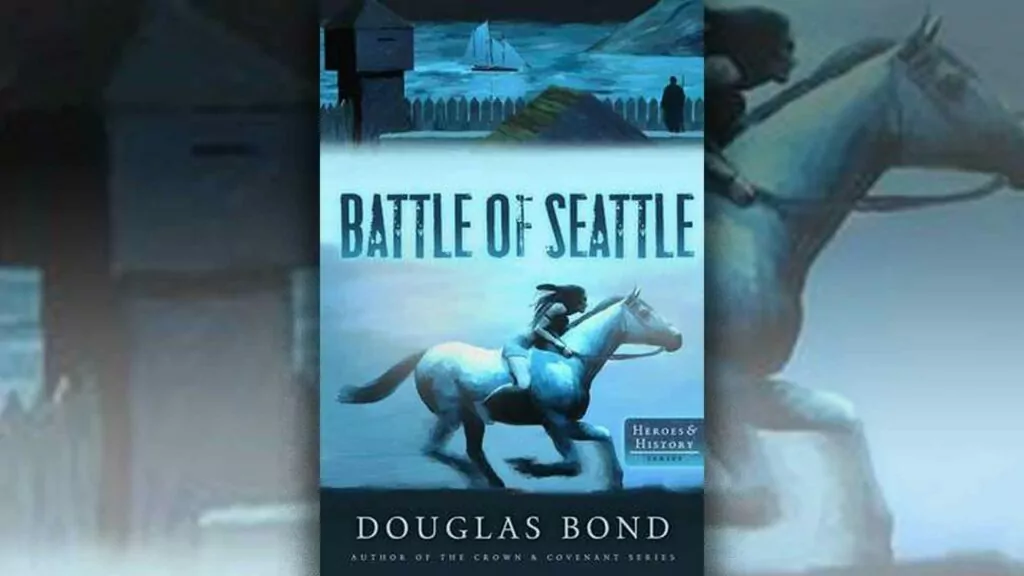
The Battle for Seattle

by Douglas Bond 2016 / 303 pages Rating: GOOD/Great/Give Even Canadians have probably heard of Paul Revere’s daring midnight ride to Lexington, Massachusetts…but have you heard of the “Paul Revere of the Puget Sound”? That’s who we meet in Douglas Bond’s book Battle for Seattle, where we experience the conflict between the American settlers and the Native American tribes of the Puget Sound, which is an inlet off the Pacific Ocean in northwest Washington State. This historical fiction follows the life of William “Bill” Tidd, one of the early settlers of area. Although some local Native tribes are friendly towards Tidd and the others settlers, not all are as amiable. Tidd begins hearing rumors of a coming war between settlers and Natives. In an attempt to stop this war before it can begin, Tidd joins up with a local group called the Eaton Rangers who are tasked with capturing the warring Native chief. After being betrayed by one of the Rangers and ambushed by Natives, Tidd must ride through danger to ask for backup, beginning his role as a dispatch rider in the Puget Sound Indian War. Although Tidd had his fair share of daring rides during the war, the title of the “Paul Revere of the Puget Sound” does not fall to him. I’m not going to give it away; you’ll have to read Bond’s book to find out who really holds the title.  The reader is able to follow Tidd in more than his adventures as a dispatch rider, but also in his internal struggle with faith. After the deaths of his parents, Tidd slammed the door on God, but due to the evangelism of some close friends, we see that door starting to creak open.  Although Bond does a terrific job weaving a cohesive narrative of William Tidd, it must be noted that this is a fictional novel and not a history. The major events are true but much of the narrative and some characters have been imagined to allow this story to be told....

Red heart icon with + sign.
Book Reviews, Teen fiction

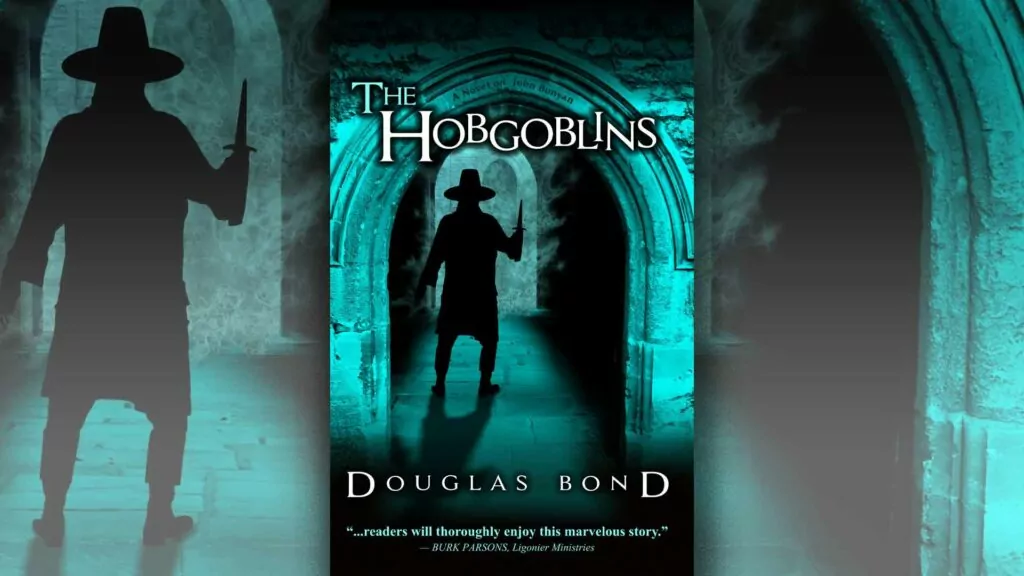
The Hobgoblins: a novel on John Bunyan

by Douglas Bond 2020 / 268 pages Rating: GOOD/Great/Give There are people who carry out such heinous acts and live such immoral lives that we’d think, surely they could never be saved. And in 17th-century England, many would have thought that about the young John Bunyan. Yes, this is the same Bunyan who penned the most famous Christian allegory in history, Pilgrim’s Progress. But the man he became is not how he began. In Bond’s remarkable Hobgoblins, we are transported back to Bunyan’s early years. His friend Harry Wylie is the narrator, and was one of Bunyan’s partners-in-crime, however unwilling. Wylie witnessed firsthand Bunyan’s immoral lifestyle: from stealing boats to blasphemous tirades, Wylie was there for it all.  It was no doubt a shock for Wylie to watch this same man move from an unsaved blasphemer to: a fledging Christian who was utterly convinced that his past sinful life disqualified him from God’s saving grace. a despairing Christian convinced that his wife’s death was a punishment from God. a comforted Christian realizing that Christ’s blood covers all. a bold preacher spreading the Good News  a pastor imprisoned for spreading the true Gospel  Bunyan had many opportunities to gain his freedom by promising the authorities he’d stop preaching, but each time Bunyan refused. This refusal resulted in over a decade in prison apart from his wife and four young children. Would we have the same convictions?  Although the author does a terrific job weaving a cohesive narrative of Bunyan’s life, readers should note this is a fictionalized history. The major events are true but much of the narrative has been imagined to allow this story to be told.  I really enjoyed this book. Bunyan’s life is a reminder to all Christians that however heinous or wicked someone may be, they are not beyond the saving power of Christ. Bunyan, however unworthy he may have thought himself to be, was one of Christ’s lost sheep that was found and returned to the fold....

Red heart icon with + sign.
Book Reviews, Graphic novels

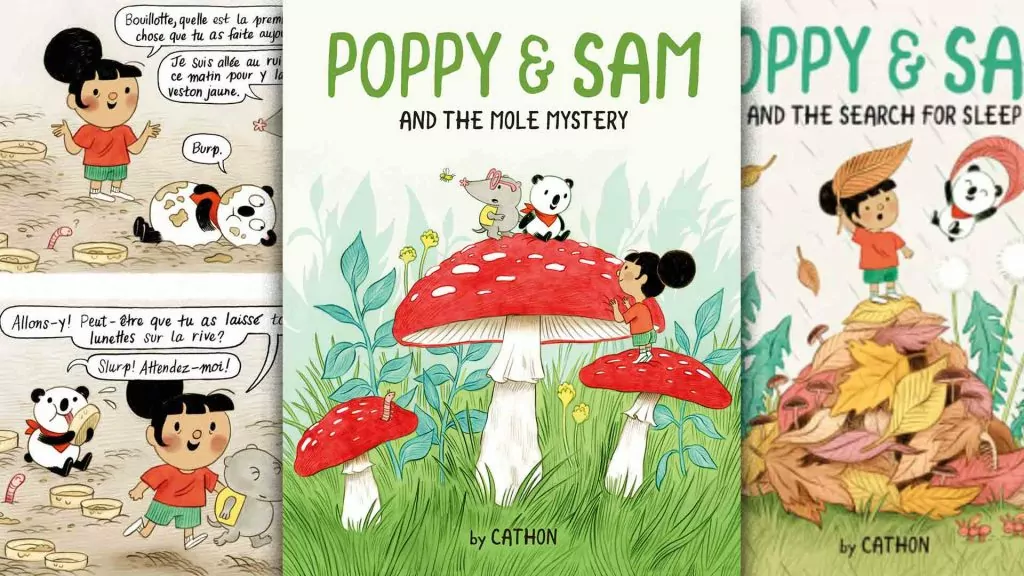
Poppy & Sam and the mole mystery (3 books)

by Cathon 2019 / 42 pages Rating: GOOD/Great/Gift A little girl Poppy and her talking panda friend Sam are either very tiny, or they live in a land of giant people-sized mushrooms and strawberries. Whatever the answer, this is a charming book, with the twosome setting out to find their friend mole’s lost glasses. Along the way they discover all sorts of other lost treasures, start a “lost and found” and provide a happy ending for mole and the many others who now have what they were missing. It is a kind, whimsical, story. There have been three sequels so far. In Poppy & Sam and the search for sleep (2020, 42 pages) little Poppy and her panda friend settle down to hibernate for the winter. But she can’t fall asleep, and so goes off to gather advice from the animals all around on how they get to sleep. It’d make for a fun bedtime read. Poppy & Sam and the hunt for jam (2023. 44 pages) sees Sam wake up early from hibernation with an urge for some rosehip jam. But the ingredients are still hiding under the snow, so this is going to be more difficult than he first thought. Still, with a little help from some friends, including a full size bear – why is the bear the right size, and panda Sam the size of a mouse? I don't get it, but it's fun – a yummy result is had. Only caution: Sam use one mildly problematic word, wondering  "where did that darn pot get to." Another sequel, Poppy & Sam and the leaf thief is a bit too peculiar for me – the twosome are trying to track down which animal is eating leaves from their friend, Basil, a basil plant. It didn't strike my wife as quite as odd, since Basil was actually happy to give away his leaves to any who asked, rather than just took. But I am still stuck thinking friends really shouldn’t eat friends....

Red heart icon with + sign.
Book Reviews, Children’s picture books

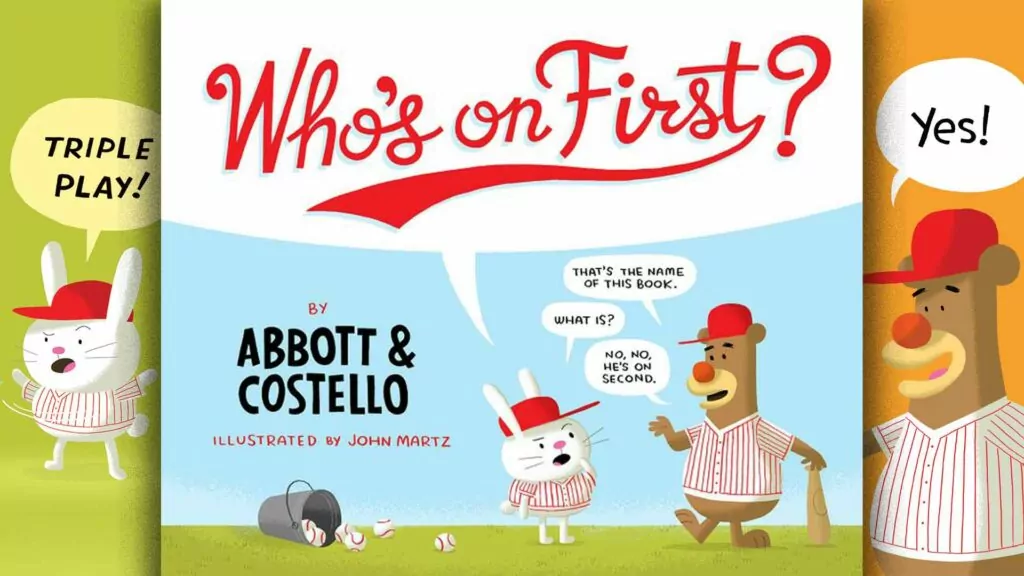
Who's on First?

by Bud Abbott and Lou Costello illustrated by John Martz 40 pages / 2013 Rating: GOOD/Great/Give If you've ever seen the ol' Abbott and Costello "Who's on First" routine, then to "sell" this book to you all I need to share is that this is a faithful rendition. The comedians have taken the role of a bear and a rabbit, the colors are all bright and bold and the script is straight from the 60+ year old original. If you've never heard the "Who's on First" routine, then a word of explanation might be due. In this comedic bit Costello asks Abbott about his baseball team. But poor Costello gets a mite confused because the baseball team has some unusual names. The first baseman, for example, has the name "Who." So when Costello wants to know "Who's on first?" the unsatisfactory answer he gets from Abbott is "Exactly." The gives you a taste of what this is all about. (I did my own homage to this routine when I had to create an illustration for an article about how only boys - not girls - have the Y chromosome). I read this to my five year old and she got parts of it, but I would say this is probably best suited for the 7+ crowd. I was trying to think of any cautions I could add and the only think I could come up with is that there is a bit of yelling in the book so this might not be one to read to a rambunctious lad. It is a great fun book that is sure to get some giggles out of your little ones. I'd recommend this as a great one to get from the library rather than own, since it is based on a joke, and jokes don't stand up to repeated reads quite like good stories do. But it is a very good joke and wonderfully executed. ...

Red heart icon with + sign.
Adult fiction, Book Reviews

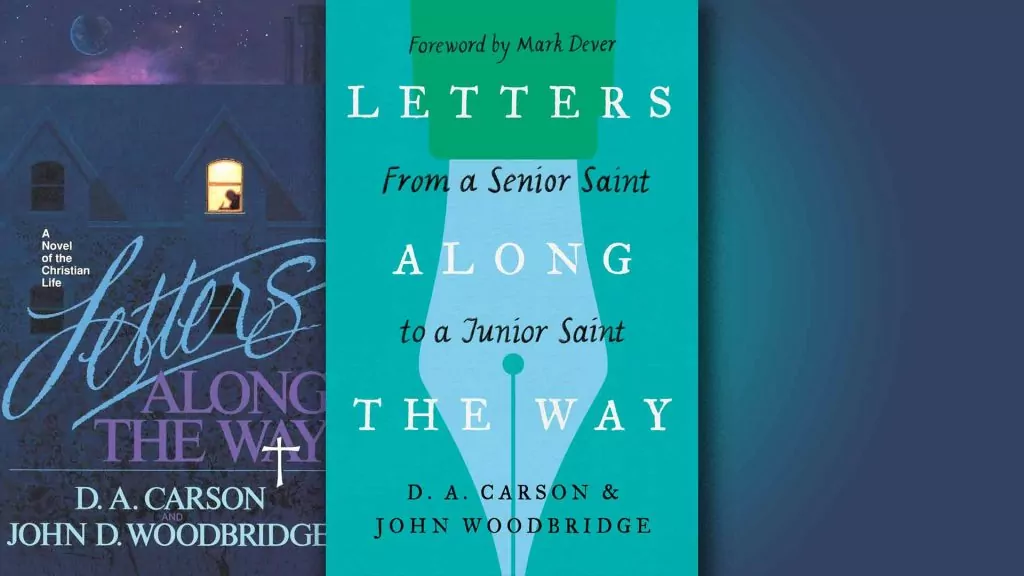
Letters Along The Way, from a Senior Saint to a Junior Saint

by D.A. Carson & John Woodbridge 2022 / 373 pages Rating: GOOD/Great/Give Christians have long had the chance, in C.S. Lewis’s The Screwtape Letters, to eavesdrop on the correspondence between two demons, one young, and the other a senior demon intent on passing along the knowledge necessary to lead Christians to damnation. Now, in Letters Along The Way, we have the opportunity to read the mail exchanged between two saints, both intent on spreading the gospel to the world. We can follow along, by way of their correspondence, as senior saint Paul Woodson mentors Tim Journeyman on the path from unbeliever to church pastor.  Like Lewis, Carson and Woodbridge cover a broad range of topics. Reading straight through will allow you to fully experience the transformation of Journeyman. However you could also just pick and choose different letters to get a wealth of knowledge on that particular subject, ranging from pastoral training to communism – a helpful index highlights which letters talk about what subjects. (The reader should be mindful of some theological differences resulting from the authors’ Baptist point-of-view.)  Reading this cover to cover may be a slog for some, and they may prefer reading just this letter or that. Others will enjoy following the whole journey God is taking this fledgling Christian on, molding him into His instrument to spread the gospel. Readers may see parts of Journeyman reflected in themselves and may well form deep bonds with their new friend and mentor, Paul Woodson. Find a link to a free pdf version of the 1993 edition here....

1 2 3 4 5 6 7 8