Transparent heart icon with white outline and + sign.

Life's busy, read it when you're ready!

Create a free account to save articles for later, keep track of past articles you’ve read, and receive exclusive access to all RP resources.

White magnifying glass.

Search thousands of RP articles

Helping you think, speak, and act in Christ.

Open envelope icon with @ symbol

Get Articles Delivered!

Helping you think, speak, and act in Christ. delivered direct to your Inbox!


Red heart icon with + sign.
Adult non-fiction

Top 3 marriage books

Over my years in the ministry, I’ve taught many marriage preparation classes.  From time to time, I’ve also counseled couples with marriage problems.  In my preaching, I’ve had many opportunities to speak about marriage.  Besides all that, I’ve been married myself for what’s going on to 23 years.  All these things give me a vested interest in good books about marriage.  I’ve read a few.  Almost all of them have something worthwhile, but there are some that really stand out.  Here are my top three, in order of importance, first to third: When Sinners Say “I Do”  Discovering the Power of the Gospel for Marriage  by Dave Harvey 190 pages / 2007 This one tops the list because of the author’s relentless focus on the gospel.  Written in a warm, personal style, Dave Harvey helps couples come to terms with the biggest problem that all marriages face and the solution to this problem.  Along with some of the other topics one would expect in a marriage book, he also discusses one you don’t often encounter:  death.  If you’re going to read just one book about marriage, make it this one. Strengthening Your Marriage by Wayne Mack 208 pages / 1999 Are you ready to get to work on your marriage?  Then this is the book you’re looking for.  It’s not just a review of biblical teaching about marriage, but a very practical workbook.  It contains a variety of exercises for husbands and wives to complete.  The idea is that they would be done with a pastor or counsellor, but certainly couples could benefit from doing them on their own too.  I use Wayne Mack’s book Preparing for Marriage God’s Way for my marriage preparation classes and I appreciate his biblical approach. Each for the Other Marriage As It’s Meant To Be by Bryan Chapell with Kathy Chapell 224 pages / 2006 I really like this one for three reasons.  One is that it includes the perspective of a woman.  Another is that it has great stories and illustrations to drive home the points of the authors.  Finally, I value the clear explanations and applications of biblical submission and headship.  This book also includes discussion questions to go with each chapter. Dr. Wes Bredenhof is the pastor of the Free Reformed Church at Launceston, Tasmania and blogs at Bredenhof.ca. ...

Red heart icon with + sign.
Adult biographies, Book Reviews

Prairie Lion: The Life & Times of Ted Byfield

by Jonathon Van Maren 2022 / 256 pages Rating: GOOD/Great/Give God works in history through people, some of whom have a particularly significant impact. In Canada, one such person was Ted Byfield. Although best known as the founder and editor of Alberta Report magazine, there is much more to his life and accomplishments than that. This book is an impressive biography of Byfield, written by Jonathon Van Maren who is no stranger to readers of Reformed Perspective. The foreword is by Preston Manning, founding leader of the Reform Party of Canada. The book does a wonderful job of outlining the major events of Byfield’s life and explaining the impact he had. Newsprint in his blood Ted Byfield was born and raised in Toronto. One of his uncles, Tommy Church, was mayor of Toronto and later a Conservative MP. His father was a respected newspaper reporter, but also an alcoholic. That vice led to his parents’ divorce, which had a profoundly negative impact on young Ted. Like his father, Ted became a reporter. He moved to Winnipeg in 1952 to work for the Winnipeg Free Press where he was incredibly successful, including winning the National Newspaper Award in 1957. One of his new Winnipeg friends was a devout Anglican who eagerly evangelized him. Through reading books by major Christian apologists, especially C.S. Lewis, Byfield and his wife became committed Christians. Subsequently, he co-founded the Company of the Cross, an Anglican lay organization that would operate three private Christian schools (the St. John’s Schools in Manitoba, Alberta, and Ontario). In 1965, Byfield became something of an apologist himself. That year, legendary Canadian writer Pierre Berton released a book entitled The Comfortable Pew: A Critical Look at Christianity and the Religious Establishment in the New Age criticizing Christianity from a secular, leftist perspective. In response, Byfield wrote a defense of historic Christianity called Just Think, Mr. Berton (A Little Harder), published by the Company of the Cross. Van Maren notes that it “easily constituted the most effective response to both liberalization within the Church and those urging liberalization from outside it.” Like Berton’s book, Byfield’s became a bestseller. The man behind that magazine In 1973, Byfield began using the St. John’s School of Alberta as a base for producing a weekly newsmagazine called the St. John’s Edmonton Report. In 1977, a Calgary edition was added and these two magazines combined to become Alberta Report in 1979. Other editions of the magazine (Western Report, BC Report) appeared later in the 1980s. It was through the magazines that Byfield had his greatest impact. The Report magazines were not overtly religious, but their fundamental purpose was to convey the news from an underlying Christian perspective. As Van Maren explains: “The Report magazines became known as championing two primary causes: Christian values and the Canadian West. The primary enemy of both could be found in the personage of Prime Minister Pierre Elliot Trudeau, the man responsible for decriminalizing abortion, ushering in the sexual revolution, and—at least as Ted and legions of likeminded Canadians saw it—declaring war on the West.” With the magazines as a platform, Byfield played a major role in the formation of the Reform Party of Canada in the late 1980s, which subsequently had a profound impact on Canadian politics. Looking forward to the coming Christian age Ted turned over the major duties of the magazine to his son Link, and spent the next twenty years or more creating two multi-volume history book projects. First was the 12-volume Alberta in the 20th Century series (completed in 2003), and secondly came the 12-volume The Christians: Their First Two Thousand Years (completed in 2013). Needless to say, the second set was history from an explicitly pro-Christian perspective. Of course, throughout Byfield’s lifetime, conservative Christianity was losing cultural and political influence in Canada. Nevertheless, he was optimistic about the future, and, as Van Maren explains, he “remained convinced that the post-Christian era was merely a pre-Christian era, and that a new dawn might be just around the corner.” Byfield was, of course, correct to see fighting the culture wars as worthwhile despite the losses, and as his son Link put it, “Think how much worse it would be if we had not fought the fights we fought.” This book is definitely worth getting. For those interested in political and cultural matters in Canada, it is essential. For others, it can be an encouragement to see how one person’s dedication to Christianity made a profound difference in the country. Prairie Lion: The Life & Times of Ted Byfield is published by SEARCH (Society to Explore and Record Christian History) and is available from the publisher’s website at TheChristians.com/product/PrairieLion....

Red heart icon with + sign.
Adult non-fiction, Book Reviews, Music, Teen non-fiction

Does God listen to Rap?

by Curtis Allen 2013 / 99 pages Rating: GOOD/Great/Give "Why wouldn't He?" That's the answer the author gives to his title question. Whether you agree or don't might depend on what you think of Rap's sinful origins. In chapters two and three, in the space of just 25 pages, author Curtis Allan gives an authoritative, detailed account of these beginnings. He explains it started back in the late '60s, and that even though some earlier innovators tried to use Rap to promote a social consciousness, it was the pimp/drug dealer-glorifying "Gangsta Rap" that ended up dominating the genre. The genetic fallacy Allen then investigates whether its sinful origins are reason enough to dismiss Rap. If they are, what then, he asks, are we to do with music itself, which seems to find its origins in the sinful line of Cain (Gen. 4:21). A good point, but I think a stronger argument should have been made with more examples, since this is a key point. It is a fallacy – the "genetic fallacy" – to condemn something simply for where it comes from. We don't do that with classical music composed by immoral composers, or foreign foods from pagan cultures, or anything else, so why would we do it with Rap? One very large issue that is left unexplored is whether the driving beat of Rap impacts its appropriateness for conveying Christian content. That is a significant omission, since this is the question for some Reformed Christians. Allen describes the lyrics as the content, and the music as the context. And to him it seems it is only the content that matters. The context - the music - seems to be almost a neutral aspect. Is music neutral? But this overlooks the way different sorts of music can impact us in distinct ways. For example, the thumping beat of Rap conjures up very different emotions than the rising swell of the string section in an orchestral piece. The beat might spawn feelings of aggression. This is the sort of music we would warm up to for a basketball game, or might want on our iPod when we go running - it drives us. Some orchestral music can tug at the tear ducts, bringing moisture to the eye of even the most stalwart of men. So music is far from a neutral, unimportant aspect of Rap – it brings the power to the words. I would suggest that there is a reason that Rock and Rap, with their thumping beat, are closely linked with sex, drugs and perversions of many sorts: the beat does get us aggressive, it does get us riled up, and if that energy isn't put to good use, it will be put to bad. God calls us to self-control That doesn't mean Rock and Rap are inherently bad – aggression is not an inherently bad emotion.  But Rock and Rap are known for encouraging people to "lose yourself in the music" while God says we must instead be controlled. So we need to be aware of the emotions Rock and Rap can stir up, and ensure that they are properly channeled and directed. We need to ensure these emotions are constrained and controlled. There is a reason that the Billboard Top 100 is filled with sexually perverse songs – this is the aggression unrestrained. However, this aggression need not be unrestrained. A songs lyrics can do a lot to properly direct and control the emotions the music stirs up. But if we are going to control these emotions, we have to understand that the music – the context – is far from neutral or insignificant. It is the music that brings the power to the words. So this is a topic that should have been explored. However, the book is just 99 pages, so, clearly, it couldn't cover everything and what it does cover is well worth reading. In fact, it is worth buying for the historical background alone. This review first appeared on ReallyGoodReads.com....

Red heart icon with + sign.
Adult fiction, Book Reviews

Evening Star

by Sigmund Brouwer 2000 / 317 pages Rating: GOOD/Great/Give Set on the 1870s American frontier, this might at first glance seem to be a Western. But there a good deal of mystery novel here too – from the moment Sam Keaton steps into the town of Laramie he’s confronted with one riddle after another. It all starts with an Indian that Keaton saves from a vicious beating. This good deed puts Keaton behind bars. Before he can engineer his escape, the town's Marshal, a mysterious sort himself, sends Keaton off to find out about some gold that may, or may not exist. While mysteries abound in this very fast-paced book, what sets it apart is the growth Keaton goes through. Early on, he's trapped in his tiny jail cell facing a very large, very angry man who has been sent to kill him. Staring down the wrong end of a shotgun barrel changes Keaton. Soon after, when a pretty, and very willing young woman throws herself at him, Keaton turns her down, but finds himself, "... wondering why I had not pursued the company she had been offering.... Because of that shotgun I could not deny the nagging feeling that I was missing something, that life had to be bigger than finding ways to satisfy the varied demands of my body. I could not escape the feeling that deep down, I'd always known life had to be bigger, but along the way I had always chosen whatever distractions it took to keep me from wondering about God. Except now, try as I might, I couldn't ignore what some certainty told me was beyond. If I turned my back on whatever instinct now pulled me to seek answers, if I chose distractions like this Suzanne, I would have to fool myself real good not to find those distractions sour and hollow." Keaton isn't done with his spiritual wrestling by the end of the book, but he has made a good start of it. But while there is a lot to love about this book, it is worth noting that there is some adult material here – there is some grit. One example: Keaton recalls a time when he was seduced by a "wild" woman. It never gets lascivious but Brouwer does describe sexual temptation in a pretty frank way. So this is a book I would recommend for adults and older teens only. While every author works hard polishing their writing, most stop once the book goes to the printer. That's not the case with Sigmund Brouwer who has revised several of his published works, creating, in one instance, three separate versions of the same story over the course of 20 years (Magnus 1995 ⇒ Wings of Dawn 1999 ⇒ Merlin's Immortals series 2012-2014). That can make for some confusion, and the possibility of mistakenly buying the same story twice. So for clarification, Evening Star had an earlier iteration, first appearing as Morning Star back in 1994. There are three other books in the series, including at least one other, Silver Moon, that was first published under another title: Moon basket. The earlier version was called the Ghost Rider series, while the revised and more recent is Sam Keaton: Legends of Laramie and in order the titles are: Evening Star Silver Moon Sun Dance Thunder Voice I've only read the first, but it has me looking forward to checking out the next three!...

Red heart icon with + sign.
Book Reviews, Children’s non-fiction

Contending for the Faith: the story of the Westminster Assembly

by William Boekestein and Joel R. Beeke 2022 / 40 pages Rating: GOOD/Great/Give I love the first question and answer of the Westminster Shorter Catechism ("What is the chief end of Man? ...to glorify God, and to enjoy Him forever") but didn't know anything about the assembly that crafted it, the Larger Catechism, and the Westminster Confession of Faith. I have a Dutch Reformed heritage, whereas these were birthed by the English Reformation. That's why I was happy to discover that United Reformed pastor William Boekestein had teamed up with Heritage Reformed professor Joel R. Beeke to give us this fantastic, accessible overview. While it's for kids, it's also a great presentation for adults who want to know a little, but might not have the time or interest to dive all that deep. This Assembly is worth at least a dip. This was a pivotal moment in Church history, and quite the encouragement to see some of what God wrought in the lives of kings and queens, and pastors and persecutors that resulted in these documents. Contending for the Faith is really well done, with wonderful pictures and clear text. That said, I don't know that this will be the sort of book kids are going to pick up on their own – they might need a bit of encouragement. That means this would work best as a homeschool or institutional Christian school resource. Boekestein has also done three books, all very good, on the confessions which make up the Three Forms of Unity: The Quest for Comfort: the story of the Heidelberg Cathechism (2011, 40 pages), The Glory of Grace: the story of the Canons of Dort (2012, 40 pages), and Faithfulness under Fire: the story of Guido de Bres (2010, 40 pages), who authored the Belgic Confession. All are recommended! ...

Red heart icon with + sign.
Adult fiction, Book Reviews, Teen fiction

Shane

by Jack Schaefer 1949 / 176 pages Rating: GOOD/Great/Give Sometimes I reread children’s literature because I enjoy being captured again by the quality of writing and the stir of imagination. I read Laura Ingalls Wilder alongside every Louis L’Amour western in my junior high library. Not one librarian said I couldn’t read them because I was a girl, and thankfully, those same librarians pointed me next to Zane Grey. At age 13 and 14, these westerns were deep to me, even if I did recognize the plot patterns. I loved them. Action, mystery, rescue, the setting sun, the lonely West, and often, a misunderstood man. In the same vein, Jack Schaefer’s very first novel creates a story that’s even more impactful. Shane(1949) began as a short story that was serialized in three parts in Argosy magazine in the late 40s. First titled “Rider from Nowhere,” it wasn’t intended for young children, though it’s certainly suitable. Through the eyes of a child narrator and from his opening description, Schaefer crafts a deeper cowboy character than most, perhaps because we witness Shane’s moral choices and his influence upon an entire family. Dressed with a “hint of men and manners,” Shane mysteriously arrives in the Wyoming valley alone on his horse. I know, I know. It begins like a cliche to our adult eyes. And yes, we soon find out that a few homesteaders are holding out against one greedy rancher. It may seem predictable to an experienced reader but that is not the case for young hearts able to view historical realism with wonder. The appeal is simple. Yet here is where the story veers because Schaefer shows us, rather than tells us, who Shane is as he meets and is hired by homesteader Joe Starrett. Shane carries a chill with him yet is careful of his dress. He’s not large yet he’s wiry and powerful. Within the first day of working for Joe, Shane’s presence alone dissuades the local peddler from cheating Joe. Young Bob shares, “You felt without knowing how that each teetering second could bring a burst of indescribable deadliness…a strange wildness.” Even with an aloof nature, Shane begins a friendship with Bob, sharing chores and sharing wisdom like “What a man knows isn’t important. It’s what he is that counts.” But there are moments when the mystery of who Shane is overshadows his behavior. When he shows Bob how to hold and aim a pistol, a fierce moment of memory hits and Shane freezes, his face described as a “gash.” Bob has to say his name several times to break the hold of the past. Many times, Schaefer describes how Bob recognizes there’s more to Shane, yet Bob, and yes the reader, never learn enough. The story unfolds, tensions rise, and the homesteaders must choose to fight the manipulative mob boss of a rancher. More than once, Bob must watch Shane fight to right a wrong. He sees, and we see, “the flowing brute beauty of line and power in action” as Shane overpowers the rancher’s men. By story’s end, we want more. Schaefer has furrowed our curiosity to a point where we love Shane as much as Bob and his family do, yet we all remain caught in the unknown of who he is and who he was. It remains a true mystery and begs us as readers to ponder, to resolve, to discuss not only who Shane was but also who we are. Christine Norvell blogs at ChristineNorvell.com where a version of this review first appeared....

Red heart icon with + sign.
Book Reviews, Graphic novels

We Hereby Refuse: Japanese American resistance to wartime incarceration

by Frank Abe and Tamiko Nimura 2021 / 160 pages Rating: GOOD/Great/Gift After the Japanese bombing of Pearl Harbor, tens of thousands of Americans of Japanese descent were rounded up and placed in detention camps around the US. They lost their jobs, their businesses, and even their homes, not because of any crimes committed, but simply for their ethnic roots. This same indignity wasn't forced on German or Italian Americans, even though Germany and Italy were at war with the US. Just Japanese Americans. And despite the obvious discrimination against them, the vast majority went without protest, believing that quiet acceptance was a way of showing their loyalty and patriotism. What the graphic novel We Hereby Refuse recounts are the stories of Japanese Americans who did protest, in very different ways. One protester was an otherwise quiet young lady. Mitsuye Endo was a 21-year-old typist who lost her job when she was ordered to report to the internment camp. A lawyer asked her to sue the government for causing her job loss. He recruited her because she seemed the ideal candidate at a time when everyone was scared of Japan: she did not speak Japanese and didn't follow a Japanese religion like Buddhism or Shinto. She even had a brother serving in the US army. And she had also done everything the government had ordered her to. She was quiet and still she stood up, her case eventually going all the way to the Supreme Court, where she won. Another story shared is that of Jim Akutso, who repeatedly tried to sign up for the Army but was refused because of flat feet. After he was imprisoned in a detention camp he was found out he'd been drafted, but now he refused. His reasoning was that if his country wasn't willing to let him live freely, then he wasn't going to fight to protest the freedoms he didn't even have. His refusal was condemned by many other Japanese Americans, who thought his actions cast them all in a bad light. He was convicted of draft-dodging, and moved from the camp to a regular prison, and given a sentence that extend past the end of the war. Cautions I'm not familiar with the history here, so I can't really assess how fair the presentation is. I suspect that certain historical figures, particularly the Japanese Americans who acted as go-betweens for the prisoners and the US government, might dispute the way they are portrayed. However, the broad overview seems to be reliably done. I don't generally recommend books that take God's name in vain, but I'm making an exception here because this is not simply entertainment but educational, sharing an event that needs to be more widely known. For Christian parents or librarians who might like to strike a line through it, the abuse occurs just once, on page 128. Another caution concerns age-appropriateness. Near the end of the book, an older woman kills herself in despair. She's shown beginning to wrap a lamp cord around her neck, and while it doesn't get more graphic than that, the act itself isn't something young children need to read about. I'll also note that I've seen the authors making appearances on podcasts sharing their personal pronouns, so I rather suspect their politics and worldview do not line up with my own. But that difference wasn't evident in the book itself. Conclusion This was compelling, but I didn't find it an easy read. Some of that was due to my unfamiliarity with Japanese names, which had me confusing different characters so that I'd have to flip back and forth to keep things straight. But I was happy to keep flipping because it's a story worth knowing. We Hereby Refuse is a reminder that the government is powerful, and with power comes the need to use that power with great restraint. What happens when it doesn't act with restraint? We get victims by the thousands and tens of thousands, as happened here. Another lesson? The need for brave individuals to challenge government abuses, in the hopes of reducing the number of victims. This would be a great purchase for Christian schools, and for parents to buy and read with their children. The serious subject matter means this is probably for 14 and up. The 4-minute video below, offering some local news coverage, gives a good overview of the book. ...

Red heart icon with + sign.
Book Reviews, Children’s picture books

Finding Winnie

by Lindsay Mattick 56 pages / 2015 Rating: Good/GREAT/Give It turns out that Winnie the Pooh, a teddy bear who had fantastic and entirely fanciful adventures, was named after a real bear whose adventures were quite something too, and of the genuine sort. Just as Winnie the Pooh starts with a father telling his son a story, so too Finding Winnie begins with a parent telling her child a bedtime tale. In this case, the storyteller is the great-granddaughter of the man who gave the first Winnie his name. Harry Colebourn was a vet living in Winnipeg. When the First World War began Harry had to go, so he boarded a train with other soldiers and headed east. At a stop on the way, he met a man with a baby bear, and ended up buying the little beast. To make a long story shorter, this bear - named Winnie after Harry's hometown – ended up in the London Zoo where a boy named Christopher Robin, and his father A.A Milne came across him and were utterly entranced. It is a wonderful story, but what makes it remarkable is the charming way it's told. This is brilliant, and a homage of sort to A.A. Milne's stories. It's true, so there is quite a difference between his Winnie tales and this author's, but the same gentle humor, the same whimsy, that same charm, is there throughout. This will be a treat for fans of Winnie the Pooh no matter what age. Both my daughters and I were entranced! Winnie by Sally M. Walker 40 pages / 2015 Rating: GOOD/Great/Give The same year a second picture book came out about the bear behind the bear that was also very good, very fun, and different enough that after reading Finding Winnie it is still an enjoyable read as well. Compared to most any other picture book Winnie is remarkable - really among the best of the best - but it does lack a little of the Milne-like charm of Finding Winnie, and so ranks second among these two books....

Red heart icon with + sign.
Book Reviews, Teen fiction

Echo Island: the silence holds a secret

by Jared C. Wilson 251 pages / 2020 Rating: GOOD/Great/Give After celebrating their high school graduation with one last group camping trip, four friends return home to find the streets empty. The same is true of the sidewalks, the stores, and all of their homes – everyone is gone, and there's no sign of where they went, or what made them go. Bradley, Jason, Archer, and Tim have the whole town to themselves and they can go wherever they want and take whatever they want. But what they want is to solve the mystery in front of them. Of course, this isn't something they can just Google...even if their phones did work. So how are they going to find answers? And maybe the more important question is, are they really alone? I didn't know what I was getting myself into when I started Echo Island. The publisher has this in "Survival stories" and  "Action & Adventure" categories, and that sure doesn't capture it.  "Mystery" or "Christian allegory" are getting closer, but this one is hard to nail down. Is "Twilight Zone" a fiction genre? Maybe it isn't that the book defies description, but more that any proper description would have to include spoilers. So I'm going to leave the description there and move on to who would like Echo Island. Author Jared Wilson said he was writing for teens who liked C.S. Lewis's Narnia series or his Space Trilogy. That's helpful, but I'll add that a 12-year-old who's only just figured out Aslan is a Christ-figure is going to find this frustratingly mysterious, whereas a 16-year old who has been chowing down on The Screwtape Letters, The Great Divorce, and The Hideous Strength will find it intriguingly so. So get it for your older avid-reading teen, and then be sure to borrow it yourself. ...

Red heart icon with + sign.
Book Reviews, Graphic novels

Manga Classics: Anne of Green Gables

by L.M. Montgomery adapted by Crystal S. Chan 308 pages / 2020 Rating: GOOD/Great/Gift Anne is an orphan girl living in the Prince Edward Island of the 1870s, sent by mistake to the home of an aged brother and sister who need help with the farm work. The mistake is, they asked for a boy. Instead, they got the imaginative, effusive, emotional, red-head Anne. And once they meet, they can't let her go. While Lucy Maud Montgomery was a Canadian author, and Anne of Green Gables (first published in 1908) a very Canadian story, it's always been incredibly popular in Japan too. So it makes sense that her story would be given a manga treatment. Thankfully, the adaptation is faithfully done, and at 300 pages, given the space it needs to tell the story well - only a very few scenes are given an abridged treatment. If you're unfamiliar with manga, the style does take some getting used to, in the first place because the Japanese read right to left. That means what would be the back of the book to us, is the front of the book to them. Even though this is in English, it's still formated in that "reverse" style. Another feature that will strike readers as unusual is the way manga will sometimes depart from a semi-realistic style of drawing to something much more cartoonish, and then go back to realistic all in the space of a few frames, or even in the same frame. So, for example, while Anne's strict and controlled adoptive "mother" Marilla is depicted with realistic eyes, the emotional Anne has eyes in all sorts of styles. Most often they are doe-sized, but when she is angry or perturbed, they become big black dots, and sometimes she is drawn with no eyes at all. If that strikes you as very strange, just consider how a Western reader will know that a lightbulb over a character's head means they have an idea. That's a bit of cartoon "emoticon shorthand" to let readers know something without spending a lot of words on it. Manga has its own, different cartoon emoticons, and they do need to be learned. But just like the lightbulb, they aren't hard to figure out. Cautions Cautions here are only the same ones that we'd have for the original source material. At one point Anne is being taught how to pray, and her first prayer, while not exactly disrespectful, certainly isn't what it should be. But the point is, she doesn't know how to talk to God, and still has to be taught, so I don't think this should be much of a concern. Then there's also Anne's stubbornness. When a classmate, Gilbert Blythe, calls her "Carrots," Anne breaks her chalk slate over his head. You'd think that would make them even (or put Anne in need of apologizing to him) but Anne resolves to never speak to Gilbert again. And she keeps to that pledge for years! The book shows this to be ridiculous, and I only mention it here because this comic format makes Anne accessible to a younger audience that may need a little parental guidance to recognize just how bad Anne's stubbornness really is. Finally, in an afterword to the story, the adapter Crystal Chan notes that she is a feminist who "loves the elements of feminism in Anne of Green Gables." "Feminist" is sometimes synonymous with supporting "a woman's right to choose" so that might have parents concerned about whether this ideology is hidden within. But there is no need for worry: whatever sort of feminist the adapter might be, she has stuck closely to the original 100-year-old material (unlike the recent Netflix adaptation). Conclusion This is a fantastic, faithful, adaptation of a great book. Teens should skip straight to the original, but for younger readers, or the reluctant sort, this will be a great way to introduce them to this dynamic lass. If you do intend to get a copy, be sure you get the "Manga Classic" version, as there is another comic, that one by C.W. Cooke and Tidalwave Productions, that only tells part of the story, ending abruptly and with no conclusion coming. I've included its cover image to the right here, to make it easier to identify what not to get. Don't accidentally get that one while you're searching for this manga adaptation....

Red heart icon with + sign.
Book Reviews, Children’s picture books

Nicky & Vera: a Quiet Hero of the Holocaust...

by Peter Sís 2021 / 64 pages Rating: GOOD/Great/Give Nicholas Winston never set out to be a hero but he also knew what needed to be done. When the Germans were taking over Czechoslovakia in chunks, before World War II has officially begun, Jews in the country were trying to get their children out. Winston knew how to get this done, pushing the paperwork, bribing the right people, and arranging for families in England where the children could stay. He ended up saving 669 children, most, or all of whom, were Jewish, and he didn't have to brave bullets to do it. That is the important lesson of this book: that there are quiet ways to do vital work. It was quiet work, but no less life-saving than what Allied soldiers did fighting to end the Nazi reign. And in its quiet manner, Winston's actions were more like the important work we are called to do today – our fights are not in the trenches, but writing our MPs, or making donations to the right organizations. We can, for example, save lives by donating to pregnancy crisis centers, and do so at no risk to ourselves. But we need to be persistent, seizing opportunities when they come, creating them when they don't, and working around obstacles as they appear. Winston was not Christian so far as I can tell (it doesn't come up in the book), but his example is still one we can benefit from. This would be a great picture book for a school library, to be pulled out and showcased around Remembrance Day each year....

Red heart icon with + sign.
Book Reviews, Teen fiction

Bell Mountain

by Lee Duigon 267 pages / 2010 Rating: GOOD/Great/Give Jack and Ellayne are two children on a mission from God: they are going to ring the bell that King Ozais built on the top of Bell Mountain. But there are a few things in the way: They’re just kids who don’t know anything about mountain climbing, traveling through the woods, or living off the land. They’re not sure there really is a bell on the top of Bell Mountain – no one alive has ever seen it. An assassin has been sent to stop them. They think the end of the world might happen when they ring it. It’s quite the mission, and quite the opening for this, the first book in author Lee Duigon 13-going-on-14 book series. The setting seems to be a medieval one: travel is conducted by horse and oxen, people live in walled cities and villages, and they fight with swords and spears. But when Jack and Ellayne meet a little squirrel-sized chirping man-creature named Wyyt it becomes clear this is not our world. Here Man once had the power to fly through the skies, but no longer – something happened long ago that left behind destroyed cities and set technology back a thousand years. In this post-apocalyptic world the national "church" (or Temple) has become so corrupt that no one reads the “Old Books” anymore but instead only the Temple’s interpretation of the Old Books is shared (if this makes you think of the pre-Reformation Roman Catholic Church, I’d agree that the author’s Reformed bona fides are showing). As the author puts it, people have forgotten how to listen to God. They don’t even know how to pray – that’s something the priests do for them. Now God is going to use two little children to rectify the situation. This is definitely a children’s story. The heroes are children, the tension level is appropriate for ten and up – lots of peril but nothing nightmare-inducing – and the plot, while nicely layered, is simple enough for children to follow. But there is a depth that will make them enjoyable for adults as well. Lee Duigon is simply good at what he does. I knew from the get-go this was a quest story, but I was always eager to find out what was going to happen next and so were my girls. I've read each of the 13 books in the series to them them, and they've always been eager for the next one to come out. The only way to purchase this series in Canada seems to be via the Chalcedon Foundation website store (chalcedon.edu/store). The Chalcedon Foundation is Reformed, as is our readership, but they are also Christian Reconstructionists, which most in our readership are not. It might be worth noting, then, that anyone who objects to Christian Reconstructionism would not find that a reason to object to anything in these books – it doesn’t come up. I'd recommend these for Grade 3 and up if they're reading them, but if dad is doing the reading, then they'd be good for kindergarten-aged children too....

Red heart icon with + sign.
Adult biographies, Book Reviews

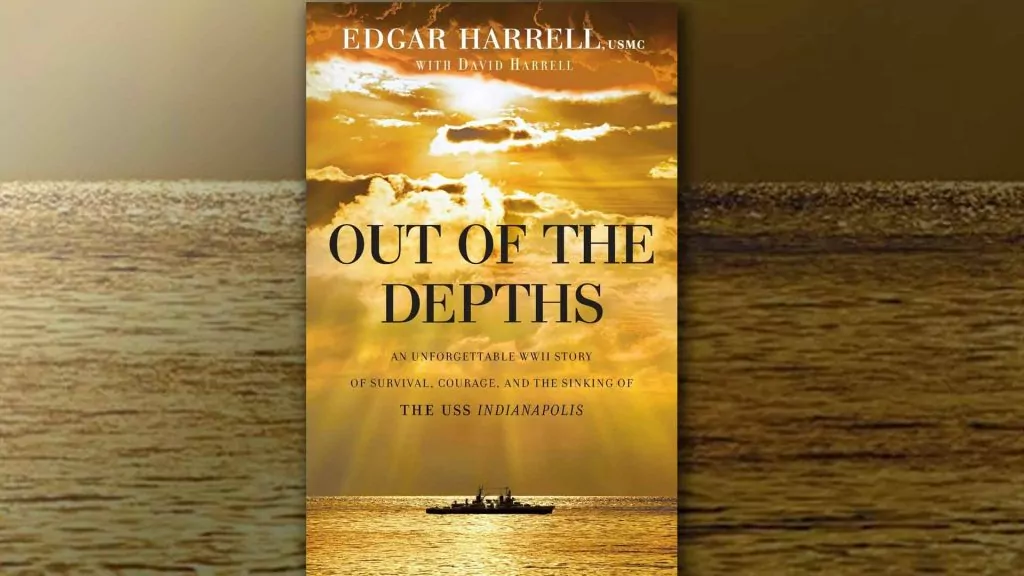
Out of the depths

An Unforgettable WWII Story of Survival, Courage, and the Sinking of the USS Indianapolis 208 pages / 2016 by Edgar Harrel, USMC Rating: GOOD/Great/Give In 1944 Edgar Harrell served on board the USS Indianapolis until the “Indy” was sunk by a Japanese torpedo on July 30, 1945. Her last voyage was to the island of Tinian carrying the component parts for the two atomic bombs dropped on Hiroshima and Nagasaki. Because of the secrecy of the mission, no one missed them when they were sunk, and so no one started looking for them. The survivors ended up in the saltwater where they spent five harrowing days plagued by shark attacks, dehydration and saltwater poisoning, paddling in kapok-filled life jackets trying to keep their heads above water. It was only because of a miraculous sighting by a surveillance airplane (whose crew was not even aware of the sinking of the Indy) that the 316 survivors, out of the original crew of 1,195, were finally plucked from the waters. The theme throughout the book is the great faith of Harrell, who was able to spiritually encourage them while in the water. The Holy Spirit brought Scripture passages to his mind. His group of 17 were brought to the bare bones of their faith, and to the acknowledgment that they were completely dependent on God. This is a short memoir with a powerful message of faith, trust and dependence on our Creator and could be included in the biographical section of any church library....

Red heart icon with + sign.
Adult fiction, Book Reviews

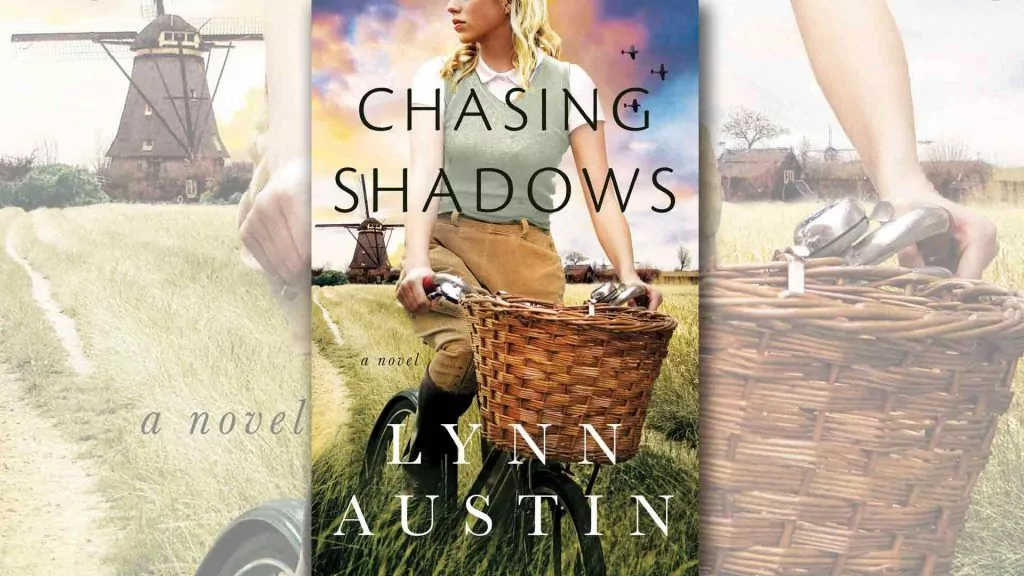
Chasing Shadows

432 pages / 2021 by Lynn Austin Rating: GOOD/Great/Give Chasing Shadows takes place in WWII Holland and is a novel about choices and consequences. Miriam, a Jewish girl and musician, and her professor father, flee Germany to the safety of Holland. Lena, a farmer’s wife, struggles with her faith when her husband Pieter and daughter Ans work for the Underground and when her son is forced into a work camp. She learns that the enemy of faith is not doubt, but fear. Interestingly, the book dwells at some length on the time leading up to the Nazi invasion of Holland and how the Dutch were convinced that, because they declared themselves to be a neutral nation, they would be safe. After the invasion, life went on as normal for the most part, until Hitler started persecuting the Jews. Initially, Ans is not very serious about her faith and falls in love with an unbelieving police officer who starts to work for the Nazis and ends up joining the NSB – the Dutch Nazis. In contrast, Ans becomes involved with the Resistance movement, helping to find places for the Jews to hide who became known as the “Shadow People.” Ans' faith grows as she works in the Resistance movement and this brings conflict between her and her collaborating husband. So many of the Dutch people who helped the Jews were Christians. Their faith was often sorely tested and questions such as, “Are we allowed to lie?” are discussed. Ans' Opa is a minister. When the Nazis come to the village on a Sunday morning to execute someone in retaliation for the destruction of a train nearby, they walk into the church, interrupt the preaching, and demand someone volunteer to die.  Opa steps off the pulpit, takes off his stole and hands it to Lena his daughter and walks out with the Nazis – a shepherd who lays down his life for his sheep. This is one of the better Christian novels that I've read and would be an excellent choice for any church or school library. You can watch Lynn Austin talk about Chasing Shadows below and you can read the first chapter here. ...

Red heart icon with + sign.
Adult biographies, Book Reviews

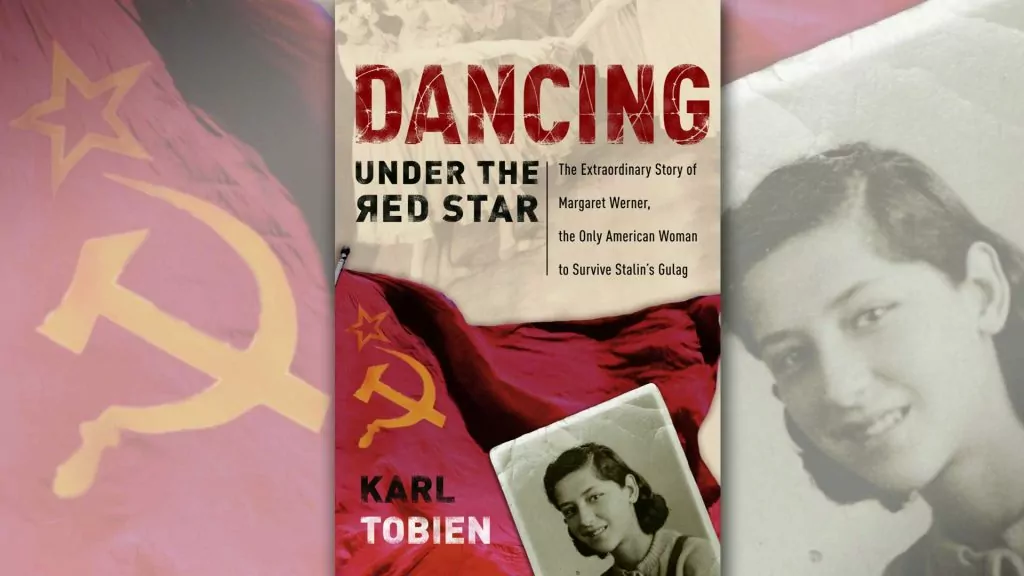
Dancing Under the Red Star

by Karl Tobien 368 pages / 2006 Rating: GOOD/Great/Give This is American Margaret Werner's perspective on the USSR's forced labor camps – the Gulag – that she was sentenced to for a ten-year term. While the subject matter is heavy, this is not a difficult read; it is encouraging to see how Margaret and her mother both trusted that God would see them through. Contents So how did an American woman end up in a Soviet prison camp? Margaret Werner's father Carl worked as a supervisor at the Ford Motor Company in Detroit. In the beginning of the 1930s, Ford built a modern manufacturing plant in Gorky in the Soviet Union and recruited 450 specialized employees to move to Gorky to operate it. Carl was one of them, an idealistic person who believed that he could make a difference in the Soviet Union by helping to build affordable cars. Carl, along with his reluctant wife Elizabeth, and their 11-year-old daughter Margaret left the United States in 1932. The family was shocked at the poverty they saw on their arrival in Moscow, but their first years in Gorky were bearable, and the family settled into the American Village there quite well. But in 1938 Carl Werner was arrested for a trumped up treason charges and sent to one of the labor camps. His wife and daughter never learned where. Elisabeth and Margaret struggled greatly through the war years and survive only to have Margaret arrested in 1945, also for treason and espionage.  She was sentenced to ten years of hard labor and sent to the brutal lumber camp, Burepolom. In spite of the inhumane conditions, she still had hope.  Her mother, left behind in Gorky, was a praying woman who believed that despite their wretched life, God had a plan for them. As the years went by in the labor camps, Margaret also started to see God’s hand in her life. A number of times she was saved from certain death in a mysterious way. Her English skills landed her a job in the office, which allowed her to escape the brutality of the labor brigades. She later said, “These new arrangements were like heaven to me, and silently I thanked God for his grace and the secret divine opening of little doors.” Margaret was often moved from camp to camp, eventually be shuffled off to a camp called Inta, in the extreme north of the Soviet Union.  She writes about the cold: …the temperature had dropped at least forty degrees, from the teeth-chattering-but-somehow-bearable cold to now, the unbearable, loss-of-all-sensation cold, covering ourselves with everything we owned or could find, trying to become as small as possible, then huddling together as tightly as we could.  But our train kept moving, going still further north, into more cold. At Inta, Margaret’s job was to sew clothing for the men who work in the mines nearby. Many artists were also in this camp, as well as a few ballerinas, some musicians, a seamstress and others. Many of this group had been famous, and even traveled the world. They formed the Cultural Brigade and put on ballets that were enjoyed by the Camp directors and the inmates – this is what the "dancing" in the title refers to. One of the saddest parts of the story, and one that might make this too much for young readers is what happened when one of the young dancers in the Cultural Brigade became pregnant. The girl chose to abort her baby by drinking a potion concocted by one of the other girls. Margaret and a few other girls were very upset and tried to convince the girl not to do it. But she went ahead anyways, giving birth to a live child of 5 months, which was quickly smothered by the other girl who helped her. This is recounted in a short, somewhat clinical manner but the results were such that the young mother became lifeless as if a part of her had died along with her baby.  Margret explains that, "Even at that time, before I had a developed consciousness of the divine sanctity of that baby's life... I had a strong sense that it wasn’t what God wanted.” When her ten years were up, Margaret was released. She married Gunther Tobien, also a political prisoner and also recently released. Margaret was already 35 years old when their son, Karl, was born. Unfortunately Margaret and Gunter’s marriage was never strong and after they received permission to leave Russia for Gunter’s home in Germany, and later escaped the Iron Curtain before the Wall was built, Gunter left his wife and child. In 1961, nearly thirty years after they left, Margaret and her mother Elizabeth, along with Margaret's son Karl, arrived back in the United States. Conclusion Even though this book is about political insanity, inhumanity in the labor camps, her struggle to survive in civilian life, Margaret and Elizabeth never lose hope and continue to trust that God. Reading this book a reader will become aware that God can work in different ways. Margaret did not have a Bible in the prison camp, but God makes himself known to her. This book is not difficult to read.  The reader agrees with one of Margaret’s observations: could not turn to religion for hope; atheism was the Soviet religion.  Hopelessness was deeply and permanently etched into their faces.…A country without God is a terrible place.  A horribly cold, harsh spirit hovered over the country, like a cloud that would not lift.  It thickened the air and filled your nostrils everywhere you went.  You could feel it crawl into your skin, into your pores.… One becomes thankful that we live in a country where we are allowed to worship in peace and freedom.  We must be thankful that we have a judiciary that will hear our side of the story and treat us fairly.   We need to pray for our country because this freedom that we take for granted can very quickly be taken away....

Red heart icon with + sign.
Book Reviews, Teen fiction

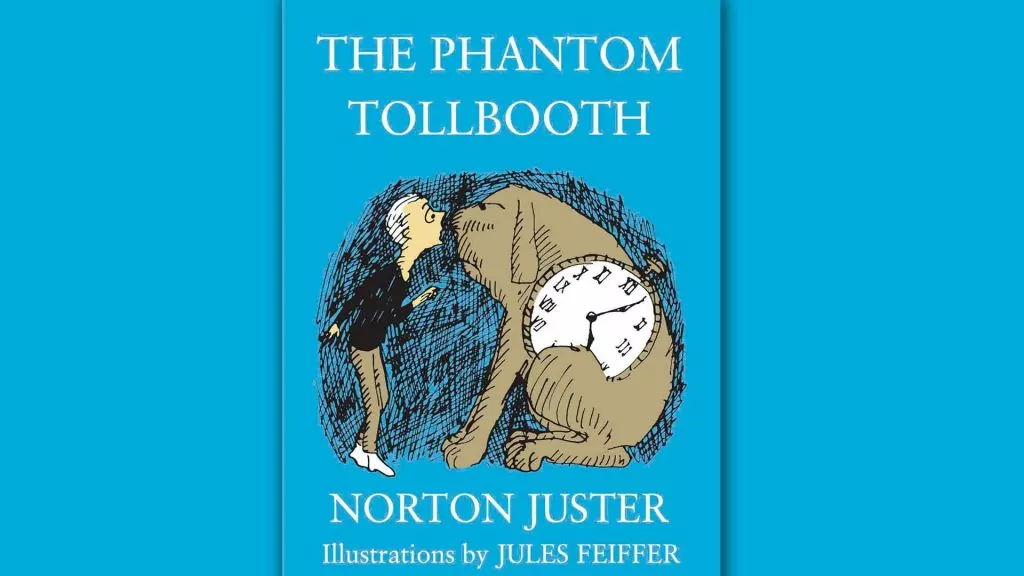
The Phantom Tollbooth

by Norton Juster 1961 / 255 pages Rating: GOOD/Great/Give What kind of book is suitable for study in the Fifth Grade, and in First-Year university English too? It's got to be some kind of weird and wacky wonder to pull that off! The Phantom Tollbooth is a classic, old enough to have been around when I was a kid. It's also famous, so I may have seen it displayed prominently in the kids' section at the local library, but back then I would have been put off by the title – I wasn't into ghost books. I've seen it many times since, but only got past the title when I noticed it among the offerings at the Westminster Theological Seminary bookstore. They're not really about fiction (or ghost stories) so I had to give this a closer look. It turned out the title tollbooth was a phantom only in the sense that it mysteriously appears in the boy Milo's bedroom. For those that might not have run across them – there don't seem to be many of them anymore – a tollbooth is a small building, usually large enough to fit just one person, where people pay to make use of a bridge or road. The author says of Milo "Nothing really interested him – least of all the things that should have” but even his curiosity is piqued to want to test this out. He drives up in his electric toy car, deposits some coins, and suddenly finds himself outside his room, driving rapidly down a road. Among the first people he meets is a watchdog that can talk. And, more importantly, he can tick – Tock is part dog and part pocketwatch! The dog demands to know what Milo is up to. "Just killing time," replied Milo apologetically. "You see–" "KILLING TIME!" roared the dog – so furiously that his alarm went off. "It's bad enough wasting time, without killing it." And he shuddered at the thought. Milo soon learns he is in the Kingdom of Wisdom, a land divided after the old King died. His two sons have set up two cities – Dictionopolis and Digitopolis – with one devoted to words, and the other to numbers. The only thing the two sons could agree on was to banish their two sisters, the princesses Rhyme and Reason, and as you might expect, where neither Rhyme nor Reason can be found, craziness abounds. I was almost a quarter of the way in before I started to get a feel for what sort of book this was. There's some Alice in Wonderland here, with Milo meeting odd sorts speaking confusing but clever things, in a country beyond normal maps. There might be a bit of Pilgrim's Progress too, with Milo learning his lessons by first treading down some wrong paths, and then meeting personifications of troubles he has to contend with. It's not a Christian book, but it is trying to teach a moral – Milo is here to learn that he has lots to learn, and that life is only boring to those too lazy to start exploring. Cautions While there aren't any ghosts, parental eyebrows will be raised when the demons make their appearance. But they aren't that sort of demon. They live in the Land of Ignorance, and have names like Gross Exaggeration, and Horrible Hopping Hindsight. Overbearing Know-it-all is: "a dismal demon who was mostly mouth...ready at a moment's notice to offer misinformation on any subject. And while he tumbled heavily, it was never he who was hurt, but rather, the unfortunate person on whom he fell." The only caution needed is to remind children that demons do exist, and the real ones aren't so funny. Conclusion While this is studied in Grade 5, and my youngest in Grade 2 is quite enjoying it, this is not a book I'd recommend for younger readers to tackle on their own. It is 60 years old, and some language – like "tollbooth" – is unusual today, in need of explanation to pre-teens. And there are puns galore, many of which only a kid who enjoys playing with language will spot on their own. But that shouldn't be a problem, because this is a book that mom or dad could enjoy too, as they read it aloud to all their young charges. So, two enthusiastic thumbs up for any and all who are twelve and up....

Red heart icon with + sign.
Adult non-fiction, Book Reviews, Science - Creation/Evolution

In the Beginning: Listening to Genesis 1 and 2 

by Cornelis Van Dam 2021 / 371 pages Rating: GOOD/Great/Gift Dr. C. Van Dam begins his latest book by explicitly laying out his presuppositions.  He’s upfront about his non-negotiable assumptions and biases.  As I review his book, it’s appropriate that I share mine too.  I share his presuppositions about Scripture as the trustworthy Word of God, but I also bring a personal bias to the table.  Back in the day, Van Dam was my Old Testament professor at the Canadian Reformed Theological Seminary.  I had an affectionate nickname for him in view of his ability to put the smack-down on unbelieving or shoddy scholarship:  “Wham-Bam-Van-Dam.”  This was always said with the greatest admiration for Dr. Van Dam.  As a seminary professor, he was nothing if not thorough and careful. Far more than a commentary This new book exhibits that same kind of comprehensive and precise approach to the two opening chapters of Scripture.  Van Dam leaves no stone unturned.  In the Beginning is an exhaustive treatment not only of the meaning of these two chapters, but also the various challenges that have been raised in Old Testament scholarship regarding them.  What you’re looking at here is not just a commentary on Genesis 1-2, but far more. Over the last decade or so John Walton has become well-known for his views on the early chapters of Genesis.  Walton argues that we often misunderstand Genesis 1-2 because we don’t take into account the ancient Near Eastern context of these chapters.  Once we do that, says Walton, then we can see that Genesis 1-2 was never meant to be taken literally as history.  The history can then be filled in with what science teaches us, including what science says about human origins.  In chapter 2 of In the Beginning, Van Dam discusses Walton’s views at length and explains how and where they fail to do justice to the character of Scripture as the Word of God.  In my view this is the most important chapter of the book. A sampling To whet your appetite further, let me share a selection of questions that Dr. Van Dam answers elsewhere in the book: Can new scientific data be regarded as general revelation given by God? What is the relationship of Scripture to science?  Is Scripture a scientific textbook? Can geology give us a history of creation? Was Herman Dooyeweerd faithful to Scripture in his view of origins? How are we to evaluate Meredith Kline’s Framework Hypothesis? Did the ancient Israelites believe that heaven was a solid vault above us? Why is there no mention of evening and morning with the seventh day in Genesis 1? What does Scripture mean when it says that God created through his Son? Can the breath of life in Genesis 2:7 be equated with the Holy Spirit? Was there animal death before the fall into sin? Why did God create everything with an appearance of age?  Was he being deceptive in so doing? Those are just a few of the questions answered.  There are far more.  What I appreciate about Van Dam’s answers is that he bases them on what Scripture says.  He doesn’t want to go beyond Scripture and so he’ll sometimes say, “Scripture doesn’t say more than this – this is as far as we can go.” A point of disagreement If I would venture some respectful disagreement, it would be in the final chapter where the author briefly discusses whether there’s a need for new confessional formulations to address the challenges of evolution.  In 2014-15, I was involved with an effort to add some clarification to article 14 of the Belgic Confession in the Canadian Reformed Church.  That effort was ultimately unsuccessful.  I don’t regret having made the effort, nor do I think it unnecessary to this day. Van Dam argues that Scripture is clear and our “confessions faithfully reflect that testimony.” However, that fails to account for those who have argued that the Three Forms of Unity provide the latitude needed to hold to forms of theistic macro-evolution.  Their arguments have persuaded some.  This wiggle-room ought to be addressed, especially if there is openness to theistic macro-evolution in your churches. Van Dam also posits that: “A difficulty with preparing a new formulation asserting the historicity of Genesis 1 and 2 is the temptation to go beyond what Scripture says, in other words, to provide specifics about that which Scripture gives no additional detail.” The proposal to add clarification to BC 14 was to state what Scripture states:  that Adam was created from dust (Gen. 2:7) and Eve from Adam’s side (Gen. 2:21-22).  As a consequence:  “They were created as the first two humans and the biological ancestors of all other humans.  There were no pre-Adamites, whether human or hominid.”  If one thinks that this infringes upon the freedom of exegesis, then one is willing to grant the latitude for theistic evolutionary accounts of human (and other) origins. Conclusion That criticism notwithstanding, In the Beginning was a delight to read – personally it brought me back to many of the OT lectures I enjoyed from Dr. Van Dam in my seminary years.  While enjoyable, it could be tough-going at times for some.  It’s not highly technical, but in places Van Dam does go academic.  It’s not a book you’d necessarily be giving out as gifts to those doing profession of faith.  It would, however, be a great gift for someone doing post-secondary studies, whether in the sciences or in the humanities.  And it’s definitely a recommended read for those who’ve completed such studies. Dr. Bredenhof first posted this review to CreationWithoutCompromise.com, a blog “promoting the biblical understanding of origins” and it is reprinted here with his permission. For an even more in-depth review, check out Martin Williams' "Genesis: No Room for Theistic Evolution" at Creation.com....
Red heart icon with + sign.
Apologetics 101, Book Reviews, Teen non-fiction

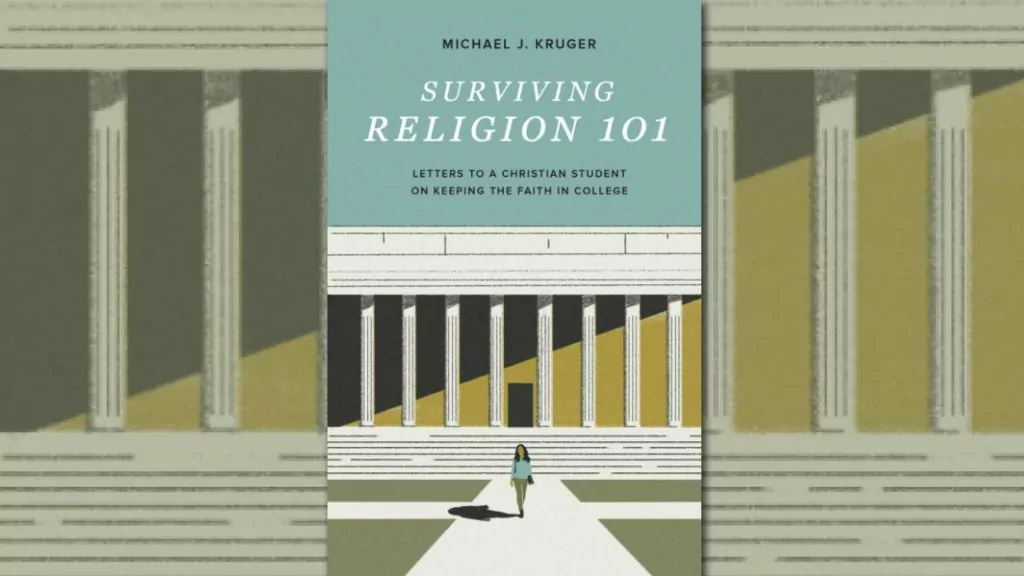
Surviving Religion 101: Letters to a Christian Student on Keeping the Faith in College

by Michael J. Kruger 2021 / 262 pages. Rating: GOOD/Great/Give From time to time I search online for “ex-Can RC.” I’m curious as to why people would leave the Canadian Reformed Churches. What makes people walk away from the church and sometimes the faith in which they were raised? What can I learn from that as a pastor? Several individuals mention how they were told not to study philosophical or scientific questions, not to think too deeply about things, nor to read widely for themselves outside of the “approved CanRC authors.” Church leaders allegedly told them to check their brains at the door. Well, we all know what some people do when they’re told not to do something. They started reading and studying for themselves and soon discovered that they’d been brainwashed and hoodwinked by their church leaders. The exit came into view. If we presume these stories are even a little accurate, what might lead pastors or elders to give those kinds of warnings to their flock? Perhaps it’s fear. Maybe they’re afraid that the arguments of unbelievers will persuade their members. Connected with that, possibly it is the worry that we don’t readily have solid counter-arguments so “You just have to believe.” Truth has nothing to be afraid of That kind of approach is counter-productive. We should actually encourage our members to think more deeply, to read more widely, to engage with the big questions posed by unbelieving philosophy and science. Why? Because we ought to have confidence that the truth of God is more powerful than every lie. However, at the same time, we need to equip our people with tools to be able to see how, where, and why this is so. That’s where Michael Kruger’s Surviving Religion 101 will be an invaluable resource. The author is not only a New Testament professor at Reformed Theological Seminary, but also a father to three children. While he’s written this for them, the book is particularly addressed to his oldest daughter Emma as she began studies at the University of North Carolina. It takes the form of 15 letters to her. Reformed answers to big questions Through these letters, Kruger addresses questions that Christian university students are likely to face in and out of the classroom. Some of those questions: My professors are really smart – isn’t it more likely that they’re right and I’m wrong? (chapter 2) I have gay friends who are kind, wonderful, and happy – are we sure that homosexuality is really wrong? (chapter 5) There is so much suffering in the world – how could a good God allow such evil? (chapter 7) My professor keeps pointing out contradictions in the gospels – can I still trust them? (chapter 11) Some parts of the Bible seem morally troubling – how can a book be from God if it advocates oppression or genocide? (chapter 14) Sometimes it feels like my faith is slipping away – how do I handle doubts about what I believe? (chapter 15) In answering all these questions, Kruger takes a Reformed approach. He presents the truth of what God’s Word says and then he also explains how the alternative position is untenable. A peak at what’s inside In chapter 3, Kruger deals with the question of whether it’s legitimate to claim that Christianity is the only right religion. One of the connected counter-claims is that all religions are actually the same. Here’s part of how Kruger answers that: “…there are features about Christianity that make it genuinely distinct from the rest of the world’s religions. And the fundamental difference is this: Christianity is not just another religion about being a good person. Needless to say, this flies in the face of what most people think about religion. Just consider the very popular television show The Good Place, starring Kristen Bell. As strange as it sounds, the show is a comedy about heaven (the good place) and hell (the bad place). On the show, the good place is where good people go, regardless of their religious beliefs. Whether you’re Hindu, Buddhist, or Muslim, you go to the good place as long as your good deeds outweigh your bad. “In contrast, Christianity says something stunning. Something counterintuitive. Something unique. It says that bad people go to the good place. Just let that sink in for a moment. Heaven is not for good people but for sinful people forgiven by grace…” As you’ll note, Kruger isn’t writing here for scholars. He’s done his homework and he’s got the endnotes to prove it, but the book is written at a popular level. Conclusion So, even though it’s written for Christian college/university students, Surviving Religion 101 ought to be read far beyond that audience. Many Christian young people, university-bound or not, will find it accessible. In fact, starting this year, I’m going to make this the book our young people traditionally get when they make public profession of faith. And if it’s going to be manageable for them, it should also be for many adults too. Scripture says in 2 Corinthians 10:4, “For the weapons of our warfare are not of the flesh but have divine power to destroy strongholds.” We can have that confidence in our Christian faith because the truth of it is established on God and therefore it’s objectively true. We have nothing to fear from the arguments of unbelievers. Books like Kruger’s Surviving Religion 101 help us see how Christianity isn’t only spiritually comforting, but also well-grounded and eminently reasonable. So, read widely. Read non-Christian authors. Read philosophy and science. But know that the tough questions they raise have been adequately answered by Christian scholars like Michael Kruger. The author offers a video series on the same topics as the book, which you can access by signing up with your name and email address as this link. You can see the first introductory episode of the series below. ...

Red heart icon with + sign.
Book Reviews, Children’s picture books

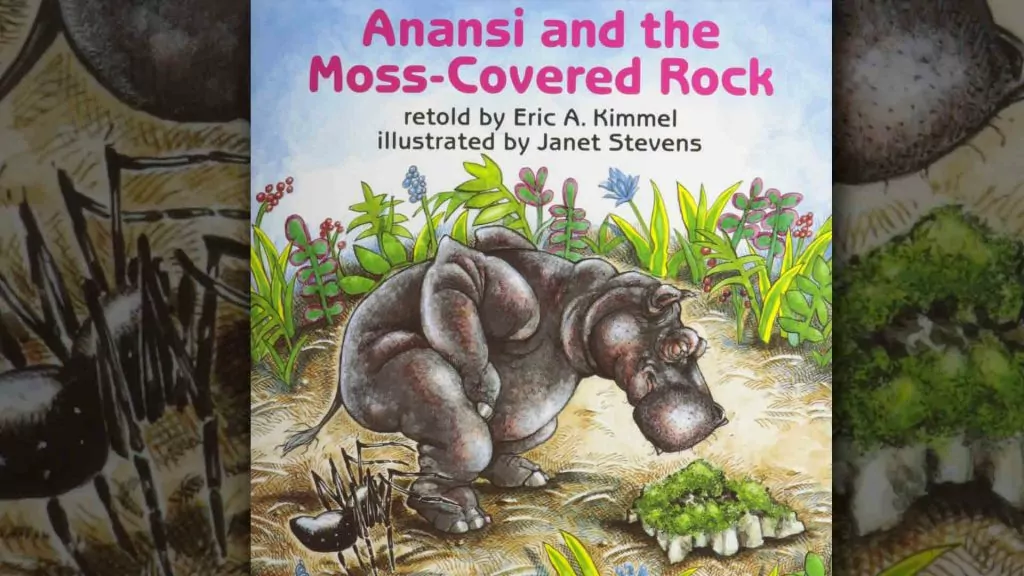
Anansi and the Moss-Covered Rock

by Eric A. Kimmel 32 pages / 1988 Rating: GOOD/Great/Give Things begin with Anansi (uh·naan·see) the spider making quite the discovery: a strange moss-covered rock that somehow knocks you out if you say "Isn't this a strange moss-covered rock!" It takes Anansi a couple of goes – along with a couple of hours of unconscious time, lying on his back – to figure this out, but once he does, he knows just how he's going to use this magical rock. He starts bringing his friends to come see it, and encourages them to comment on it. Once they do, and are lying on their back taking an unintended one-hour nap, Anansi goes to their house and takes their food. He begins with Lion, then Elephant, Rhinoceros, Hippopotamus, and goes on and on. The careful reader will notice that there is another animal watching all these goings-on. Somewhere behind the bushes, on most every page, is the little Bush Deer. He decides to make things right by pulling a trick on the trickster. When Anansi invites him to go look at the rock, Bush Deer goes but he doesn't comment on the rock. He even pretends he can't see it. In frustration, Anansi ends up spouting the troublesome phrase himself...and down he goes! That allows the Bush Deer a whole hour to clear out Anansi's house and return his ill-gotten gains Cautions There are no cautions for this book, but parents should be aware that Anansi the trickster is a folktale from Africa, who, in some versions, isn't simply a spider but is a god in the form of a spider. So the only caution would be not to presume, if you are buying another author's Anansi stories, that they will simply be morality tales with animals standing in for people, as is happening here. Conclusion This is a fun animals-as-people folktale that rewards the observant child (even the pre-reader) who spots the bush deer long before he makes his first "official" appearance. On the first go, a child might need some encouragement from mom or dad to look closely, but once they spot the deer once, they'll love finding him the next times. That's what makes this a book kids will look through repeatedly....
1 2 3 4 5 6 7 8