Transparent heart icon with white outline and + sign.

Life's busy, read it when you're ready!

Create a free account to save articles for later, keep track of past articles you’ve read, and receive exclusive access to all RP resources.

White magnifying glass.

Search thousands of RP articles

Helping you think, speak, and act in Christ.

Open envelope icon with @ symbol

Get Articles Delivered!

Helping you think, speak, and act in Christ. delivered direct to your Inbox!

In a Nutshell

Tidbits - June 2023

Those wild and crazy Vikings!

You may have learned in school that Vikings visited North America long before Christopher Columbus did, but I bet you never learned how they did it. Their marine tech wasn’t anything close to what Columbus had, but what they lacked in equipment, they made up for in chutzpah. To get to North America, the Vikings had to “surf” the north edge of nasty storms. As Glenn Sunshine explains in his book 32 Christians Who Changed Their World:

“We don’t often appreciate the difficulties the Vikings faced sailing west across the Atlantic. Their ships had square sales, which means they could not tack into the wind; the wind had to be blowing from behind them for the sails to propel the ship. Since prevailing winds in the north Atlantic blow from west to east, to sail west the Vikings had to rely on storms. Severe storms turn cyclonic, that is, the winds circulate counterclockwise around the eye. This means that by riding the north edge of the storms, the Vikings could take advantage of westward blowing winds to propel them across the ocean.”

Gary North on breaking your TV habit

Gary North (1942-2022) was a Christian economist and such a prolific writer he must have followed the advice he offers here and entirely kicked his TV habit.

“Put a piggy bank next to the couch where you watch TV. Every time you watch a one-hour show, put $2 into the piggy bank. If someone else watches, and you're a free rider, have that person put in $2. Then break the piggy bank – or at least empty it – in the last week of December. Put the money in your bank account. Then write a check for this amount. Send it to a charity. In short, put a price on your time. Pay the price. Economics teaches: ‘When the price rises, less is demanded.’ You will cut your TV habit by 50%. If not, make it $3.”

Source: Gary North’s Tip of the Week, January 3, 2015

Those guys are right too?

It’s been a crazy few years, what with too many of yesterday’s conspiracy theories turning into the next day’s headlines. So when I heard that there was now irrefutable proof the earth was flat I didn’t know if I could handle it. Could it be possible? Could those guys be right too?

Well, prepare for your mind to be blown! As you know, most of the world is water – 71% of the planet is covered with it. But what they never told you, what you probably never thought about before, is the fact that none of it is carbonated. Not even a single percent. Ergo, the world really is flat!

Source: inspired by a Douglas Wilson quip

Learn the right lesson

The trouble with learning from experience is the inbuilt tendency to overreact. If drunkenness has ruined someone close to us, we could conclude Christians should abstain. A child who tries out for a basketball team and gets cut might think they’ll never be good at any sports. A young man mocked by the first girl he asks out will wonder whether he should bother with a second. That many a Hollywood movie is vile, has some convinced all movies must be. That 95 songs on the year’s Top 100 list are vulgar, could lead parents to conclude that rock and rap is purely the Devil’s domain. And that dirty dancing is a thing, will have some thinking pure dancing is not.

But Mark Twain has a warning for us to consider:

“We should be careful to get out of an experience only the wisdom that is in it, lest we be like the cat that sits down on a hot stove-lid. She will not sit down on a hot stove-lid again – but also she will not sit down on a cold one either.”

Experience is quite the tutor, but we can learn too much from the lesson. That’s why we must test our experiences against the Bible. Then we can understand that despite the frequent abuse of wine, there remains a legitimate use (Isa. 25:6, 1 Tim. 5:23) and instead of banning it, we need to model right usage. Dancing might be dirty, but it can also be done to the Lord (2 Sam. 6:14). And the gun-shy young man can be assured that a good woman is worth risking rejection (Prov. 31:10-31).

4 thoughts on education

  • “I am much afraid that the schools will prove the very gates of hell, unless they diligently labor in explaining the Holy Scriptures, and engraving them in the hearts of youth. I advise no one to place his child where the Scriptures do not reign paramount. Every institution in which means are not unceasingly occupied with the Word of God must be corrupt.”
    – Martin Luther, in his Address to the Christian Nobility of the German Nation
  • “The surest way to keep a people down is to educate the men and neglect the women. If you educate a man you simply educate an individual, but if you educate a woman you educate a family.”
    – James Emman Kwegyir Aggrey (1875-1927)
  • "The family is the main engine of education. If we use schooling to break children away from parents... we're going to continue to have the horror show we have right now."
    – John Taylor Gatto (1935-2018), New York City’s 3-time “Teacher of the Year”
  • “Education is the process of selling someone on books.”
    – Douglas Wilson

That explains a lot

Who are smarter, men or women? A good test might be to ask this question in mixed company and see who’s dumb enough to answer. A case for men could be made by pointing to the greater number of males who win top prizes, like the Nobel Prize in Chemistry (183 to 8) or the Abel Prize for mathematics (25 to 1). But the case for women could be made by pointing out how men take many more unnecessary risks, like driving while drunk, which leads to 3 times more men than women dying, according to US stats.

So which is it? Well, according to the late Walter Williams, economist and educator extraordinaire, both cases are correct.

“Male geniuses outnumber female geniuses 7-to-1. Female intelligence is packed much closer to the middle of the bell curve, whereas men’s intelligence has far greater variability. That means that though there are many more male geniuses, there are also many more male idiots. The latter might partially explain why more men are in jail than women.”

Source: Walter Williams’ “Are We Equal?” posted to WalterWilliams.com May 27, 2013

If we really believed in recycling…

…why don’t we stop charging tax on recycled goods? They’ve already been taxed once, when they were new, so the government has gotten their pound of flesh. Should a good be taxed twice, just because it has been refurbished or in some other way made useful again? We live in a throwaway culture, and what an incentive it would be if used goods could be sold tax-free.

Giraffe necks are neat

Did you know a giraffe doesn't need its neck muscles to hold its neck up, but rather to bend it down? As a ruminant (an animal that chews its cud) the giraffe has to be able to bring food back up its neck to chew again. It also has to have an enormous heart to create enough pressure to get the blood up to its head. And then it has to have shut-off valves of a sort, to relieve the pressure when it bends its head down to drink, otherwise the blood pressure would cause it to blow out its own brain. The brilliance of their design comes out more and more, the closer you look.

Red heart icon with + sign.
News

Justice delayed is justice denied: Supreme Court Justice Russell Brown resigns

In the midst of a misconduct investigation, Supreme Court Justice Russell Brown has chosen to resign his post on Canada’s top court. The investigation was triggered by allegations of inappropriate conduct by Brown after an altercation in Arizona earlier this year. In a social setting, after a speaking engagement there, Brown was accused of making unwanted advances on a couple of women. In a public statement, Brown pointed to the slow misconduct investigation, the strain on him and his family, and the impact on the court’s proceedings, as leading to his decision that it was “for the common good” to resign. Accompanying the statement, Brown also released evidence to affirm his innocence in the matter. While we aren’t in a position to judge Justice Brown’s guilt or innocence, we can consider the process. Brown was put on leave Feb. 1 and resigned on June 12. In his public statement he noted: “At this point, it is impossible to know how much longer this delay would continue…. Given the progress so far, it is not unreasonable to think that this process may continue well into 2024.” In Ecclesiastes 8:11, the Preacher tells us that: “When the sentence for a crime is not quickly carried out, people’s hearts are filled with schemes to do wrong.” The National Post’s Jamie Sarkonak echoed the thought: “The Supreme Court and the Canadian Judicial Council have shown troublemakers exactly what needs to be done to de-bench a judge.” Canadian news website The Hub shared the reactions of other legal experts including Yuan Yi Zhu, an assistant professor of international relations and international law at Leiden University, who was very critical of the disciplinary process for Canadian judges. "From Chief Justice Wagner’s decision to place Brown on an immediate leave of absence without official explanation on the basis of a flimsy complaint filed by a man who had assaulted his colleague, to the Canadian Judicial Council’s unbearably sluggish preliminary investigation which took the better part of half a year, to the numerous leaks from well-informed insiders to favoured journalists, the whole process has been designed to be as exhausting and wounding to Justice Brown as possible. "There can be no better illustration of what American law professor Malcolm Feeley described as 'the process is the punishment.' Even if Justice Brown had been fully exonerated at the end of the open-ended process, his reputation would still have suffered, not to mention the fact that he would have been barred from exercising his chosen profession for the duration of the investigation, which could have run into years." The justice’s resignation has also shaken the Christian and conservative legal community. Andre Schutten, Director of Law and Policy for ARPA Canada, told Reformed Perspective that Justice Brown’s resignation “is a major setback for our nation’s legal culture.”  Schutten explained that Justice Brown was “faithful to the law, and respected and guarded the rule of law. He was a constitutionalist and believed ardently that the law must be something more than the ruler’s whims. Where a majority of the Supreme Court pursued their own policy preferences and bent the law to reflect that, Justice Brown was loyal to the constitution, even when such loyalty was not in vogue.” Schutten is concerned by what this means for the highest court moving forward, saying that it doesn’t bode well for religious freedom in Canada and is “another step toward judicial policy-making that is decidedly progressive.” Sean Speer, The Hub’s editor-at-large, shared that conservatives sometimes overstate their lack of influence in Canada. However, “the one area though where conservative despair has been justified is the judiciary. The ‘living tree’ view of the Constitution has been the dominant (even the sole) judicial philosophy at law schools and on the bench for more than a generation.” The “living tree doctrine” says that the Constitution’s meaning wasn’t determined by those who wrote it, but is created by the judges who read it, that like a tree it should change and grow with the times. Speer went on to explain that there has been a change in recent years, with “a new generation of law students and scholars… capable of challenging the prevailing legal monoculture.” And he pointed to Brown as a key figure in this movement. "His judicial dissents, including in high-profile cases like References re Greenhouse Gas Pollution Pricing Act and Trinity Western University v. Law Society of Upper Canada, gave this emerging cohort of conservative legal thinkers and practitioners a credible and different way to think about individual rights, the division of powers, and the role of the court… "His departure from the bench, therefore, represents a regrettable blow to these efforts. That future now feels farther away especially since he’ll predictably be replaced by another 'living tree' exponent. "It’s important however, particularly for the young people involved in the legal movement that Brown came to personify, that it must ultimately be bigger than one person. While his resignation creates a significant void, it cannot bring an end to these efforts. Quite the contrary. It reinforces the need for more Russell Browns." Schutten came to a similar conclusion, noting that Brown’s resignation underlines again the importance of Christian engagement in the law. “For too long, Christians abandoned the field to secularists and we shouldn’t be surprised that the result is so few principled judges. The Christian community must recommit to serving their nation also in the courts of law, inspiring, encouraging, and assisting the next generation of Christian leaders to pursue law as a calling while ensuring those Christian lawyers think christianly about the law.” The resignation paves the way for Trudeau to appoint a sixth judge to the nine-judge bench that already had the National Post’s Tristin Hopper deeming it “the most activist Supreme Court in the world.” While that’s not an encouraging thought, Christians can remember that one day we will see perfect justice exacted by the Chief Justice of the world’s Supreme Court, before whom every knee will bow....

Red heart icon with + sign.
Assorted

Puppy love: in praise of pets

The inimitable Cody I was lucky enough to share my growing-up years with a big red chow chow. After deferring my request to get a dog for some time, my parents finally gave me the go-ahead when I was twelve; by this time I was old enough to take responsibility for a dog, and my paper-route and babysitting money would be enough to cover dog food and vet check-ups. My dad built a sturdy doghouse, we visited a shelter or two, I scoured the pet section of the classified ads, and eventually Cody joined our family. It had pretty much been love at first sight, and Cody was my faithful companion for the next thirteen years. He knew the sound of the school bus stopping a street away, and was always eagerly waiting for me when I got home. Our nightly walks were a calming and peaceful part of my day. Cody and I even won a pet/owner look-alike contest once (after an unfortunate hair experiment . . . the kit was supposed to turn my hair more blonde . . .) Cody’s been gone for many years now, but I’ve been thinking about him lately, and about the unique place that dogs and other pets can have in our lives. As humans, we’ve been created with a deep need for things like companionship, connection, and physical touch. And although pets can’t (and shouldn’t) replace human relationships, there’s something beautiful and simple about the love they give us: it’s unconditional and uncomplicated by the things that can add stress to human interactions. Dogs don’t judge or hold a grudge or carry anxiety-inducing expectations. I asked a few friends and family members about what their dogs meant to them, and quickly discovered that people love to talk about their furry companions, share photos and stories, and reminisce about past loved pets; “I could talk about our dogs all day!” commented one of my friends. And I loved hearing their stories. Cocoa Cocoa: a beautiful rescue One of my sisters-in-law, for example, told me about an abandoned dog named Cocoa that stole her heart. My sister-in-law spent some time living up north in Fort Smith, NWT; a lifelong dog lover, she regularly volunteered at the local dog shelter there. One evening she noticed a new arrival, a beautiful black mixed breed with brown markings, but was saddened to see the sign outside his pen: “Be careful, aggressive dog; don’t allow out with other dogs.” This angry, wary dog was slated to be euthanized the next time the vet came around, as he was too difficult for the volunteers to handle, and unlikely to find a new home. When she gently approached the dog, she found him scared and timid, but not vicious. Over time they formed a bond. The other volunteers noticed a change in Cocoa, and the plans to euthanize him were put on hold. Unfortunately, my sister-in-law’s rental didn’t allow pets, but she ended up moving just so she could adopt him. “He brought me companionship and friendship while living in such a remote Northern little town,” she remembers. “He brought me joy knowing he was happy and loved and able to live out the rest of his short life . . . knowing what being loved felt like.” It’s that combination of giving and receiving love that seems to be at the heart of the bond we have with our pets; they give us boundless affection, but they need us too. Both aspects are good for us. Luisa Luisa: takes good care of her owners One of my brothers says that having his dog Luisa (a rescue dog that he and his wife adopted a few years ago) is like living with a toddler in many ways: “Her needs come first.” He feels that dog ownership can lead to a certain sense of purpose and a more selfless attitude to life. When I see devoted dog owners trudging through the rain with their dogs, or going through the undignified process of cleaning up after them, I’m inclined to agree. Do our pet interactions cultivate character traits in us that, ultimately, help us in other relationships and areas of life? I would suspect so. Studies on the emotional, psychological, and even physical benefits of owning a dog or other pet have noted decreased stress and depression, and even lower blood pressure and better cardiovascular health. A truly objective study is almost impossible to design – what is cause, and what is simply correlation? – but the immediate benefits of positive pet interactions have been more definitely demonstrated. Simply petting a dog can reduce the stress hormone cortisol, and time spent with a loved pet raises levels of oxytocin, a feel-good hormone associated with bonding. And when stress goes down, other health markers tend to improve – with the reverse also true. Cypress and Winston Cypress: a gentle and calming companion Another sister-in-law initially had mixed feelings about bringing a dog into their home, after several years without one. Her teenage kids are growing up and building lives of their own, and she felt like they were past the little-kids-and-a-puppy-in-the-backyard stage of family life. But Cypress, a gentle “Goldendoodle,” has been a blessing to all of them. When her seventeen-year-old son has something on his mind, he’ll find Cypress for some “dog love,” and my sister-in-law says she can just see her son’s tension drain away. She says when she’s feeling stressed, Cypress will seek her out. Getting outside for regular walks with Cypress has also been beneficial. And coming home to a house that was getting to be a little too empty, but isn’t anymore, lifts her spirits. Others I’ve talked to agree that dogs seem to have a “sixth sense” about their owners’ moods, and are quick to comfort and give affection. My brother says that Luisa can seem to tell when he’s had a more difficult day at work; when he walks in the door, he gets an extra dose of exuberant affection. One of my friends, reflecting on her “Westie,” Winston, puts it this way: “He is completely devoted to me, always attuned to my mood. He celebrates with me when I laugh and comforts me when I’m sad.” Not surprisingly, the benefits of dogs or other pets is most noticeable among those who may be lonelier or struggling in some way. Pets provide companionship and that vital physical touch we all need; pets can also give a sense of purpose and structure, remind us that we’re needed, and take our minds off ourselves. A dog can be the catalyst that prompts a lonely senior to get up, get outside, and engage with life – all of which are good things that often lead to more good things. Pets in their place The affectionate and exuberant Winston Of course, pets replacing human relationships is problematic; the “pets instead of kids” phenomenon is disturbing, as is the astronomical amount of money that North Americans spend on their pets (Americans spend upwards of $100 billion every year). But in their place, pets are a unique blessing. God as our loving Father knows what we need, and delights in giving us the good gifts of His creation. And surely the human-pet bond is one of those gifts. As for me, I haven’t had a dog since Cody died. Family life is already busy and full. Do we really want to take on the time commitment and expense of a dog? Do I really want to vacuum that much? On the other hand, how can we argue with all those endorphins? For now, we’ve gotten some guppies, and our nine-year-old daughter is campaigning for gerbils. A slippery slope? Time will tell whether there will be any four-legged friends in our future . . . but either way, I’ll always be grateful that there was one inimitable chow chow in my past....

Red heart icon with + sign.
Economics

Christians can’t “invest” in cryptocurrency

I hope this headline got your attention! I can hear some of the objections already: What do you mean, we can’t invest in cryptocurrency; don’t you know that it’s the wave of the future? My friend bought $2,000 worth of Bitcoin a few years ago, and now it’s worth $16,000! It is going to replace the dollar within a few years. And crypto is a means for us to resist the prying eyes of the government into our finances – we can shield our savings from the bureaucrats who may seek to punish us for our Christian beliefs by freezing our funds, or taking them from us! We’ll hope to respond to these thoughts below… so read on! What is crypto? First off, what is cryptocurrency? In brief, crypto is a digital currency, not backed by any government, bank, or physical standard, that is designed as a means to save, to buy, and to sell. There are different types of cryptos, some well-regarded like Bitcoin and Ethereum, and some that have failed spectacularly and are now worth little or nothing (such as OneCoin and SpaceBit). What they all have in common is that they are seeking to replace traditional currency like the Canadian or U.S. dollar with a modern way of doing business and commerce in the marketplace. In our last issue, RP reprinted a beautiful perspective on investing written by Randy Alcorn called “Investing in Eternity – thinking 30 million years ahead.” If you haven’t read it yet, please go back and peruse it! Alcorn has very thought-provoking and wise perspectives on what we do with the financial gifts the Lord has given us. He writes that “no matter how great an earthly treasure is, it is still worthless in the eyes of eternity.” And Alcorn encourages Christians to think about how we in this lifetime support godly ministries that will have an eternal impact on the lives of lost souls. Does this mean Christians shouldn’t “invest” at all, and should instead give everything away? Perhaps it depends on one’s definition of investing! What is investing? Let’s go back to the basics and consider what this means. Investing can be defined as the commitment of resources to achieve later benefits. Often, this is understood primarily to be about finances, but that is not always the case. Consider that a mom invests time and energy (the resource) into her children with the goal of raising productive, godly adults (the later benefit). A farmer invests money, labor, and seed (the resources) into a field to grow crops he can sell for others to eat (the later benefits being for both the farmer as he sells, and the buyer as he eats). Often, there is an element of time that is necessary for an investment to have its intended effect. Kids don’t become adults overnight; a builder might take a year or more to build a beautiful home. Obviously, in this broader sense of the word, Christians should not have any trouble investing, and we do so in our daily lives in myriads of ways. In the more common sense of the word, investing relates to where we put our finances (the resource) in order to grow them for future use (the later benefit). One might become a partner in a retail store by putting up a percentage of the capital required to get the operation going. Before writing a check, you would want to look at your partners’ business plan, and examine the location and the type of goods that will be sold; you might consider the experience that your partners have in the industry.  You would probably make a list of the pros and cons of the business, and take a responsible risk to invest in the partnership, with the hope that it will generate a profit down the road. In a similar way, one might buy publicly traded shares in a company that builds cars and trucks that perhaps is expanding into another part of the market. You would have access to a track record of financial performance. You might ask if the company has consistently paid out dividends. Has it managed its money well? Is the leadership of the company committed to its customers? Has the company made risky decisions that could endanger your investment? Are the cars and trucks that the company makes high quality and well received by consumers? These types of questions and this type of study helps an investor to take responsible risks in the hope of a return in the stock market. What does Scripture say about investing? The Lord Jesus taught two similar parables that are often quoted about investing. In Matthew 25 and in Luke 19, a wealthy man leaves town for a period of time, and entrusts some of his fortune to servants to manage. When he returns, the master praises those whose trading and commerce compounded the funds they were managing, and condemns the foolish servants who simply buried their coins in the ground. Jesus is teaching about far more than how to handle money in these parables, but it is striking that the master praises unreservedly those that managed well the resources entrusted to them. The book of Proverbs is full of practical and beautiful counsel for living a godly life, and has much to say about wise and foolish behavior about investing. Solomon teaches us not to spend all our money today, forgetting about the needs that both we and our community will face tomorrow. Proverbs 21:17 and 20 say: “Whoever loves pleasure will be a poor man; he who loves wine and oil will not be rich…” “Precious treasure and oil are in a wise man’s dwelling, but a foolish man devours it.” Notice that Solomon does not condemn “keeping” treasure or resources for a rainy day in one’s possession, but calls out as “foolish” the man who recklessly uses all his resources without a thought for the future. So, the Bible is certainly not anti-investing. Our savings are not just for ourselves But what sort of investing should it be? A Christian’s goal in saving is not just for our own needs tomorrow, but also for the community in which we live, and for future generations of our families. Proverbs 11:24 tells us: “One gives freely, yet grows all the richer; another withholds what he should give, and only suffers want.” Then in chapter 13, verse 22 we read: “A good man leaves an inheritance to his children’s children, but the sinner’s wealth is laid up for the righteous.” We should never withhold from giving generously to the Lord, in our tithes and offerings, and also in our willingness to help our neighbors. Solomon stated this in Proverbs 3:27-28: “Do not withhold good from those to whom it is due, when it is in your power to do it. Do not say to your neighbor, ‘Go and come again, tomorrow I will give it’ – when you have it with you.” Wealth gained hastily… Another theme that recurs frequently in Proverbs is the element of patience, or delayed gratification for the wise man. “Wealth gained hastily will dwindle, but whoever gathers little by little will increase it.” – Prov. 13:11 “Whoever works his land will have plenty of bread, but he who follows worthless pursuits lacks sense.” – Prov. 12:11 “Whoever is slothful will not roast his game, but the diligent man will get precious wealth.” – Prov. 12:27. The theme here and in many other passages is that “getting rich quickly” is often a dangerous pursuit – the person who only focuses on rapid accumulation of wealth may be on a foolish pathway that will not be blessed. One who is focused only on enormous potential returns from an investment may skip the important steps of finding out how a return is being earned, how $100 put into this company or stock will actually earn a profit for the investor. By racing to the potential conclusion (I’m going to make ten times what I put in!) without careful consideration of how one is “working the land,” a foolish investor may have only himself to blame when a scamster absconds with his treasure. Remember Solomon’s warning in Proverbs 14:23: “In all toil there is profit, but mere talk leads only to poverty.” How are these warnings connected to crypto? Now that we have considered whether a Christian may invest, we can now ask: Why not cryptocurrency? The answer is in the very term “currency” itself. Currency is a means of paying for a good or service – it does not on its own produce a good or service that can make or lose money for its owner. While Bitcoin may be a very secure, very stable platform that may become a common way for citizens to buy bread at the grocery store, and to receive our paychecks, it is not producing anything tangible from which to make a profit. I would argue that Christians could exchange some of their assets into Bitcoin, or into another cryptocurrency, as a way to transact business, or to diversify risk with the Canadian dollar as measured against the U.S. dollar. One who would like to support a currency independent of any one government’s control, might also consider putting some of their savings into a cryptocurrency. The risk, of course, would be that the value of all cryptocurrency is very unstable, and difficult to pin down, but that could be a responsible risk for a citizen. But doing so is definitively not an investment, because it is not of itself producing anything tangible. A number of years ago, there was a huge push for people to “invest” in the Iraqi dinar – the currency that is still in use in Iraq. Before the 1990 U.S. invasion of Kuwait, one dinar was worth three times more than a U.S. dollar (at least in theory). Over the next ten years, the currency collapsed, with a dinar becoming worth as little as 3 U.S. cents. Unscrupulous financial advisers urged people to exchange their savings for Iraqi dinars, to take advantage of the dinar’s “inevitable comeback.” The advisers made their money by collecting inflated purchase fees along the way, while the dinar has continued to be worth very little (today being valued at around 7 U.S. cents). Like Bitcoin, the dinar is a unit of exchange, a way of transacting business. It is certainly possible that both currencies will be worth more in the future. However, it is also very possible that both will be worth far less in the future. If one exchanges currencies that are relatively stable (like the U.S. or Canadian dollar) with volatile currencies, that is not investing, but simply speculating – more like gambling than responsible stewardship. Christian financial adviser David Bahnsen’ Bahnsen Group is a multi-billion-dollar investment firm. In a recent episode of his Dividend Cafe podcast he agreed that growth of cryptocurrency as a way of conducting business and making payments is likely to continue. But he warns: “I’d be speculating (if I predicted what) the price of a Bitcoin would be. It could be a hundred thousand, it could be ten thousand, and it could be both next month, and so that’s why it’s not investable for us.” Bahnsen compares the enthusiasm around cryptocurrencies to other popular investing waves of the recent past that came and went, with the common man inevitably hurt along the way: “The recent history of euphoric busts all share the same things in common: A casual willingness to ignore common sense in pursuit of a speculative return. From Chinese reverse merger UFOs in 2011 to solar SPACs in 2021 to crypto in 2022, they all possess the same four realities: A willingness to suspend logic, analysis, or traditional wisdom. A popularity that soothed the suspension and added emotional confidence to the speculation. A period of looking like a genius while other “fools” joined the party. A spectacular burst that left capital destruction in its wake.” Conclusion While I was hoping to get your attention with the headline of this article, I think it is true. I would argue that not just Christians, but no one can invest in cryptocurrencies, because one does not invest in a currency – it is not a business intended to make a profit. The broader point that I hope has come through is that speculation in hope of spectacular gain often comes to heartache, enriching unscrupulous characters along the way. Christians can certainly carefully invest their savings in many ways, but always carefully and with the ultimate goal of serving the Lord through the gifts He entrusts to us, for the good of His kingdom here on earth, and for eternity....

Red heart icon with + sign.
Evangelism

When it comes to evangelism, do we trust the Holy Spirit will show up?

This is an overview of a recent episode of Lucas Holtvlüwer and Tyler Vanderwoude’s Real Talk podcast. Real Talk is a bi-weekly podcast of Reformed Perspective featuring great conversations on everything from propaganda to pornography. If you haven’t checked it out, you really should. And you really can, at www.RealTalkPodcast.ca. ***** Lucas Holtvlüwer recently interviewed Dr. Eric Watkins to learn more about evangelism and church planting from one with a lot of experience and wisdom. Dr. Watkins is the pastor at the Harvest Orthodox Presbyterian Church (OPC) in San Marcos, California and is also the director of the Center of Missions and Evangelism at Mid-America Reformed Seminary. Dr. Watkins wasn’t raised in the church. Growing up in North Carolina, he was a troubled youth, particularly after his father left his mom when Eric was just twelve years old. After college, Watkins was drifting around the country, following the band “The Grateful Dead,” when his sister lent him her Bible: “you’re going to be stuck for a few days on a bus, so take this…” Eric recalls that through His Word, “God confronted me by His spirit, and convicted me that I was a sinner… and that Jesus was the Savior and had done for me what I could not do myself… I got on the bus a long-haired stinking deadhead, and I got off the bus a week later, longer-haired and stinkier, but converted!” Dr. Watkins then began a long journey of learning more about the Lord, going to seminary, becoming Reformed, and teaching Bible classes at the same church where he now ministers in California. Becoming a pastor, Watkins helped plant a “daughter” OPC congregation in Orlando; seven years later he and his family moved to St. Augustine, Florida to start a “parachute church” – meaning that there was not yet an established core group, and one needed to “start from scratch.” By God’s grace, these two churches are still thriving today. Capital “E” Evangelism and lowercase “e” evangelism Watkins defines evangelism as: “bringing the truth claims of the Gospel to bear upon the hearts of those that are outside the kingdom… where the objective content of the Gospel is made clear and people are called to faith and repentance in Christ.” He further differentiates the general call of Christians to evangelize, from the specific calling by a church body for one to do the work of an (uppercase) Evangelist. “Like Paul says to Timothy, ‘Fulfill your ministry – do the work of an Evangelist,’ or when Paul says in Corinthians ‘Woe is me if I don’t preach the Gospel.’” In Watkins’ opinion, church planters in particular bear that warning to fulfill their duty to evangelize. “Among the list of gifts that Christ gives to His Church in Ephesians 4 there’s a role for the gifting of the Spirit in the area of evangelism for people that are called to do particularly evangelistic ministry, and they literally live and sleep with that ‘woe is me if I don’t preach the Gospel.’ So that’s in a category of capital E Evangelism. “Lower case ‘e’ evangelism is what the whole Church does. So, like in Acts 8, when the church is scattered, it says not simply those who were ordained like the apostles but men and women who were dispersed went about proclaiming the Gospel. To me that’s lowercase ‘e’ evangelism…. Even lay people in the Church in some fashion or another are called to walk wisely before the watching world, and even to engage them at times and opportunities that God will provide with the claims of the Gospel…. “There’s something important to be recognized in ministering not simply the Gospel to people, but also ministering the Gospel through people, and to help our members understand that they too have a role to play in the great commission, and the promotion of the life and the work of the Church. It may not be street corner preaching, or handing out tracts… but it is befriending the people that we have the opportunity to get to know that are outside the Church, wherever we’re able to meet them.” Enough time for members old and new? Holtvlüwer asked Dr. Watkins if there can be tension in the church when there is so much focus on reaching those outside the body, since there are also many needs among the current members. Watkins agreed that this can be difficult, and he advised that there should be clarity on what is required of the pastor and elders, best captured in written descriptions of their roles. “For instance, it takes a certain number of hours a week to prepare a sermon; it takes a certain number of hours a week to visit the congregation, to do the bulletin, to meet with leaders, to disciple, and to do evangelism. So we have to decide what we think is important; we need to prioritize, and there needs to be not only transparency and accountability for the church planters, there also needs to be protectiveness for him and his family… It’s really important that you protect the time and space for the pastor to do evangelism… even after the church is up and running.” Watkins continued: “Visitation is very important in Reformed churches; I think regrettably evangelism isn’t, and we’ve created an unintentional… paradigm in which we have so busied our pastors that there’s no room for evangelism… There’s a lot of guilt on the shoulders of our pastors that that this work really is important, and should be done, but I’ve got a 60 plus hour work week, with two sermons, and a congregation, and Consistory and Council meetings.” Holtvlüwer suggested, “This might mean that you need to get a second pastor if your church is of a certain size.” Do we expect the Holy Spirit to show up? Talking about Reformed churches and evangelism, Watkins reminded listeners that John Calvin wrote his most famous books like The Institutes of the Christian Religion, as, “…discipleship tools for new converts to the Reformation, and as a pastor he modeled and did evangelism. He housed orphans in his home, and what we could call seminary students whom he trained and taught the work of the ministry including evangelism…. Calvin is nicknamed the Theologian of the Spirit, and if you read his writings as they relate to evangelism, he wholeheartedly believed in it…. “Our problem at times is that we have too small a view of the Holy Spirit… We don’t expect (Him) to show up much, and to do great things in and through our church. Do we really expect God to convert people through the preaching of His word? Do we expect God to convert people off the streets, out of depravity and drug abuse and all the different things that are out there, into the arms of the church? Do we expect to see baptisms not just of kids but adults in our church? I think our Trinitarian theology could be enhanced and brought into greater conformity with Calvin’s view… that invigorated his ministry.” Holtvlüwer wondered how or if Reformed churches had strayed from Calvin’s mission of being evangelistic in orientation. Watkins summarized that “Part of the Church’s temptation in history has always been to isolate itself from the world rather than to engage. And yet with the best of intentions: because we don’t want our covenant kids to get swallowed up by the world. So what do we do? build high walls around them and insulate them from the world. The other is to train and equip them to engage the world with the Gospel…. Do we simply teach kids to think about what’s wrong with the way the world thinks, or do we also teach them how to engage the world, not simply apologetically, but evangelistically.… Do we disciple with a view towards raising up people that will be able to contend for their faith in a 1 Peter 3 way or Colossians 4 way?” Watkins also identified the opportunity for the younger generation of Reformed Christians. “The world has come to the back door of the Church, and the front door, and is on either side of our house – it’s all around – the nations are all around us! What will we do with the… opportunities that God has placed before us in an increasingly diverse world. It’s an exciting time (for spreading the Gospel!)” Christian schools and our covenant youth Holtvlüwer mentioned that he is thankful for, and understanding of why our parents and grandparents spent so much energy and effort on establishing Christian schools, and that these institutions can still serve as a bulwark against the teachings of the world that are so prevalent all around us in social media and in the culture overall. But do we need to do more to prepare our kids to go out to the world with a strong apologetic viewpoint? Watkins expressed thankfulness for Christian schools (his own children attend a Christian school in Escondido): “I’m not trying to change that paradigm at all!” At the same time: “…social media has more access to our kids now than parents, pastors, and Sunday school teachers combined… the amount of time that kids are spending online in different media platforms (is huge)…” What is the answer to all these potentially harmful influences? Watkins reminds listeners of the well-known Biblical verse, “‘Train up a child in the way that he should go!’ That is, not simply protect and shelter him from all the things you never want him to hear or learn about… Parents and pastors must be the teachers, not the world… There’s a challenge to not simply reach the lost, there’s a challenge to keep our kids! There are a lot of kids that are drifting away from the church, for different reasons… and while there’s no silver bullet… I do believe in discipleship…” Wakins continued: “An uncomfortable question we could ask would be, ‘Could a covenant kid graduate high school without ever seeing a parent or church leader share the Gospel with a non-Christian?’ …if the answer is yes, then think about what life looks like for them when they… go off somewhere else perhaps for college or a job. So we have to train our kids with not simply what’s wrong with the way the world thinks, but (train them) to engage the world evangelistically, in the hope that in doing so (we might) actually insulate our covenant kids the right way.” Watkins wanted to emphasize that he appreciates the Reformed faith, and in no way wants to tear down the institutions that Reformed Christians have built. “The Reformed faith is grand, as J. Gresham Machen said, and we have some of the most wonderful tools at our disposal… we do a great job in many ways raising our covenant kids. By God’s grace we have a wonderful doctrine of the Church, and what the world needs most… is for the church to be the church! To continue to be committed to the ordinary means of grace… to be committed to family worship, and at the same time… to use the tools for evangelism that are part of the Reformed faith.” In the last part of their conversation, Holtvlüwer and Watkins discussed mentorship as a way for mature Christian men and women to provide leadership and guidance to younger people, both those new to the faith and those who have grown up in the church. Watkins ended his contributions with a call for “young men to consider a pastoral call in the ministry. We need pastors, we need church planters!” The complete discussion between Holtvlüwer and Pastor Watkins can be found on all major podcast platforms – just search for “Real Talk Reformed Perspective,” episode 63. And you can watch it on YouTube below. ...

Red heart icon with + sign.
News

BC paying a steep price for its healthcare policies

BC plans to send about 4,800 patients to private health clinics in Washington state over the next two years for cancer treatment, in response to growing wait times and a health system that is increasingly unable to cope. BC’s Health Minister Adrian Dix blamed the situation on a growing and aging population and staffing shortages. According to coverage from the Globe & Mail, only 77 percent of cancer patients who require radiation are receiving care within 28 days, far lower than the national average of 97 percent. Not only is this travel a great inconvenience for cancer patients, it also comes at three times the cost for the same treatment in Canada. The irony here is that the BC NDP government has been fighting hard to keep privately funded health care out of the province. In fact, a 14-year court effort to challenge this by Dr. Brian Day was recently dismissed by the Supreme Court. The NDP got their way and killed any hope of private care, only to now have to pay substantially more so that the public can get much-needed care from private clinics in another country. At the same time, the province continues to reject doctors and other health professionals here in the province who are eager to help but are being prevented by government vaccination requirements that still exist for employees in health care settings. This development also comes on the heels of the NDP’s budget, which devoted much fanfare to announcing $119M of funding to provide free “contraception” to all residents, including pills, implants, and the abortion-inducing “morning-after pill.” In addition to killing innocent life, this will only compound the problem of an aging population by diverting much-needed funds away from their urgent health care needs. Picture by LIVINUS / Istockphoto.com...

Red heart icon with + sign.
News

Saturday Selections – June 3, 2023

The UK, Canada, and the US meet in a grocery store One for all the social studies teachers out there. Your final exam can simply be whether your students laugh in all the right places. Is social media out-discipling the Church? Is social media the biggest challenge the Church faces when it comes to the next generation? Loving our neighbors means telling the truth about gender and identity The number of Americans who know someone struggling with gender dysphoria is now approaching 50%. And as John Stonestreet writes, Christians need to be prepared to speak to this confusion. "Rather than truly loving our neighbors, something admittedly difficult, we instead choose the easier path of not offending and only affirming. We then name that path 'love,' but it’s neither loving nor true." When self-care becomes self-absorption This is intended specifically for pastors, but the point is applicable to all: when one generation neglects caring for the body God has given them, that can lead to the next generation overreacting the other way, getting so concerned with self-care that they don't push themselves like they really could. The tragic real-life story behind "Jesus Revolution" The latest big Christian film is a well-produced true story that focuses on a tumultuous period of recent Church history. But as reviewer Mark Powell notes, it shows the triumphs while mostly sidestepping the failings of its main character. Dr. Bredenhof also had some thoughts. India has passed China This year India passed China as the world's most populous country, and now the two are heading on opposite trajectories. This 5-minute read hits some of the highlights about what that might mean going forward. 7 theses on the age of the earth (9 min) A great explanation of why this debate matters and a powerful defense of a young Earth. ...

Red heart icon with + sign.
Articles, Book Reviews

A plea to read

...or, the story of a boy, a repairman, and the Truth **** In the title I promised you a story. Actually that was mainly to draw you in. I figured stories sell more magazines. But it’s not entirely untrue. I want to start with a couple of stories. They happen to be autobiographical. The first story starts at about grade 3, around the age of 8. You may think that my qualification for making a “plea to read” is my current calling as pastor, or my (excessive) years of education before this. But that’s not really it. That’s not really why I agreed to share this article about reading. Instead, the story begins, once upon a time, when I was 8. That was the year I discovered reading, or at least my passion for reading. In the years that followed it became my number one activity. I was almost always reading, probably at an unhealthy level. You want to know why I say that? Well, my parents would often ignore my lengthy birthday or Sinter Klaas lists and buy me things I didn’t ask for and, truth be told, I didn’t necessarily want. I asked for the next book in a series; they bought me a hockey stick. I asked for the first book in a new series; they bought me a Lego set. Actually, we used to have a cartoon on our fridge. I think it was from Punch Comics. One of my siblings stumbled across it, cut it out, and posted it there. It’s a sketch of a family gathered around a television set in the living room. Two ladies on the couch are talking to each other and looking rather concerned about the boy in the foreground who’s curled up in a chair reading a book, oblivious to the rest of the family. The caption at the bottom reads, “We’re rather worried about William.” I kid you not. That was the name. Google it if you don’t believe me. It doesn’t quite work because we never had a TV in the house, but you get the picture, I think. So that’s where this story begins. My plea to read is in part a plea for you to join me in the best hobby there is. A dog-eared copy of Reformed Dogmatics But that’s not a terribly convincing appeal. That comes in the next story (I hope). We have to jump forward about twenty years to what was one of my more embarrassing moments in recent years, which for some reason I’m sharing publicly with you all. You have to try to imagine the scene with me. I was in first year at the seminary at the time. And you have to know that first year seminary is that stage where you feel like you know everything. You have an opinion on everything. And you want to fight about everything. Things change after four years. Thankfully… and by the grace of God. Well, we were back home in Richmond Hill for the weekend. We got invited to my wife Diane’s Opa and Oma Kampen’s for dinner (don’t tell them I told you this story) and we were sitting around waiting for dinner to be ready and chatting and what not. Now, before I continue, I have to give a quick character sketch. Opa Kampen is retired now, but he was an appliance repairman all of his years in Canada. I’m not sure when his education stopped, but he definitely didn’t have anything like the years of education that I had at that point. So, anyway, we’re talking together about one thing or another, and suddenly the conversation shifts. I don’t remember why anymore, but rather unexpectedly Opa asked me whether I favoured Infralapsarianism or Supralapsarianism. Remember, I was the first year seminary student and he was the appliance repairman. I don’t remember why it came up, but I definitely remember my reaction. Vividly. I started sweating. I had heard those words before, but I had almost no idea at that point what they meant, let alone which one I leaned towards. I thought, here we go, Opa’s about to expose me as a complete fraud. My education has meant nothing! I was tempted to slip out quickly to the bathroom so that I could Google it, but there was no time. I actually don’t even know what happened in the end, but that moment of panic has stuck with me. So why am I sharing this story? Well, to me it illustrates a change over the years in terms of our investment into reading and educating ourselves in Reformed doctrine. Gone are the days when your appliance repairman read through Bavinck’s Reformed Dogmatics, in Dutch or in English. Gone are the days when you can expect men nominated as elders or deacons to have invested significant time into studying Reformed doctrine over and above their catechism instruction as young people. Now, before you get up in arms, I’m not saying there are none of these. I’m just saying that with the younger generations this breed is not as common. And I’m indicting myself with this too. I was a deacon before coming to seminary. Well, if that’s the case with those being put up for church leadership, then how about the other people in the pew? Before I continue, I should add a disclaimer. My comments here are completely unscientific. My doctoral supervisor would never forgive me for my poor research. I haven’t crunched any numbers or done any surveys. I’m basing this on my experiences as an office-bearer, both before and after I went through seminary. If you have a more positive outlook, I’d love for you to convince me. But right now, this is my article, so you’ll have to bear with me. So why should we care? Why should I make this plea for us to read more widely and more deeply today, in the 21st century? Let me devote the next half of this article to exploring an answer to that question. Theologians should read (and we’re all theologians) Well, first of all, everyone is a theologian. (If you’re on Twitter, you might want to tweet that, although I certainly can’t take credit for coining the phrase, so don’t quote me). Everyone is a theologian. Even the atheist is a theologian. That’s because theology is, essentially, thoughts or words about God. And the atheist has thoughts about God. Now, his thought happens to be that God doesn’t exist – and he happens to be wrong – but that still makes him a theologian. So, if we’re all theologians then the important question is what kind of theologians are we going to be? You see, the problem with the atheist isn’t that he’s a theologian, it’s that his theology is coming from the wrong source. If we don’t study theology from the right sources – if we don’t allow our thoughts and words about God to be shaped by the right sources – then our theology is going to be shaped by the wrong sources. If we don’t consciously do theology – that is, if we don’t consciously train our minds in the knowledge of God – we’re going to end up basing our theology either on our own experiences and our own feelings or on whatever else we happen to be taking in. Because we are reading. Maybe some of us – and I’m talking especially about my generation and younger – are reading more than ever. I’m thinking of social media. Don’t tell me you’re not a reader if you’re on Facebook or Twitter. Maybe those who only use Instagram, which focuses on pictures, can have a legitimate claim not to be readers, but the other social media users can’t. But the problem with only reading online, and not engaging in books, is that by its very nature the online world tends towards the superficial. Let’s think specifically of theology – of the study of God. If your thoughts are shaped by your reading of little quotes that someone decided to share, taken out of context, written by who knows who, or if all you read are the musings of someone who is just “feeling philosophical” (as the Facebook status often says) then you can’t expect anything but superficial knowledge. That, I think, is the biggest danger with losing our interest in reading deeply and studying deeply the doctrines of God found in his Word. We end up with an overall superficiality in terms of our theology, what we know about God. Worse, we can rely more on our subjective experiences than the objective truth we find in God’s Word. Feelings aren’t reliable…but there is a book that can be trusted Let me explain that. What is subjective is based on our own experiences, our feelings, our emotions. We can’t really call it truth – although as postmoderns we might want to – because we aren’t reliable sources of truth. Our sinful, fallen nature means that we can’t be trusted to process things correctly, understand things properly. We can’t be trusted to theologize helpfully on our own. General revelation can only go so far (Rom. 1:19-23). We need objective truth. We need something to build our lives on that is absolutely rock solid, unshakeable. We find that foundation in the Word of God alone. Because it’s a revelation from outside of us, from outside of this fallen world. It’s special revelation from the unshakeable source of truth, God himself. That’s why we’re called to pore over Scripture, to internalize it, to let it light our path, to let it shape our thoughts, to let it cut deeply into our hearts. And we have to trust that the Spirit works transformation through the Word. We have to believe that. And then live like we believe it. But we also don’t read Scriptures alone. We read them with the church of all times and places. That’s why we guide and inform our reading with creeds and confessions. That’s also why we supplement our reading of Scripture with studying good theology, with reading solid literature. Because it all helps ground us further in the objective truth of God’s Word. When we’re deeply grounded in the truth of God’s Word, then we are better able to process our subjective feelings and emotions. The psalms in Scripture provide us with great examples of what that looks like. But let me explain what I mean by what I think is the most powerful and poignant illustration of this, where the believer directs his experience of reality by the truth that he knows from God’s revelation. It lies at the very center of the most tragic book in the Bible, Lamentations, traditionally understood to be written by Jeremiah. The prophet is lamenting over the destruction of the city of Jerusalem. His world, the world of God’s own people, has completely fallen apart. He finds himself sitting in the ashes and ruins of the holy city. Many of the people of God have died in the Babylonian invasion. Many others have been deported to far away Babylon. The whole poem is centred around the question: how could God allow this to happen to his chosen people? The prophet’s present experience is of pain, disillusionment, disappointment. Almost the entire book is a long cry of deepest despair. But then, at the very heart of the poem, in the middle of “the wormwood and the gall” (3:19), we get this incredible confession of faith, “The steadfast love of the LORD never ceases; his mercies never come to an end; they are new every morning. Great is your faithfulness” (3:22-23). One Bible teacher suggests that we imagine ourselves sitting in the ashes of the World Trade Center in New York City after 9/11 and speaking these words to ourselves. That’s what I mean by looking at our experiences and filtering our emotions through our objective knowledge of God… our theology. The prophet, sitting among the ashes, knows this truth because God has spoken it, and so he applies this truth to his troubled soul and to his experiences, which appear to contradict it. Like the prophet, it’s our knowledge of the objective truths of God’s Word that gives us the wherewithal to process our experiences and feelings. Not vice versa. Then our theology lets us speak truth to our souls when our experience doesn’t seem to line up with our knowledge. That’s part of why we read. That’s part of why we pursue a deeper and deeper knowledge of God, above all through his Word, but also through reading deeply and widely with the church. How can we encourage reading? I want to explore the answer to one last question before I let you go: what should we do? I don’t have space to pay much attention to this, but let me make a start by saying what we shouldn’t do: we shouldn’t do nothing. We shouldn’t finish reading this article, muse about it for a few moments, and then just move on, mildly annoyed at the fact that this wasn’t a story like it was advertised to be, but otherwise untouched. We shouldn’t do nothing. So what should we do? Well, let me issue a plea to all of you reading this to do something. What that something is will depend on who you are and what you do. Are you a parent or grandparent? Stimulate the love for reading good books in your kids and grandkids. Do that by modeling it for them and by giving them the right resources for it. And if you can’t stimulate a love for it, then at least impress on them their responsibility to keep educating themselves in the doctrines of the Word of God. Are you an elder or deacon or pastor? First of all, create a culture of “professional development” within your church council and consistory. Secondly, stimulate that same love and that same sense of responsibility for reading in the sheep under your care. Are you a member of the body of Christ? Develop your own desire to grow in the doctrines of the Word of God, in sinking the objective truths of Scripture into your hearts and minds. And then make it your mission to share that love with your fellow members. Start with the people closest to you, your friends within the church. Buy them books – good books, mind you – and then talk about them. Start with easier (but not easy) reads and then make your way into heavier ones. Stretch yourself and stretch them too. Plan book review nights where you get together with your friends and you all share thoughts and insights from the books you happen to be reading at present. It doesn’t have to be formal or complicated. Just talk. And when you’re done your book (and it’s a good one), pass it along to someone else. Don’t let it collect dust on your shelf. In all this, though, never forget that studying theology ought to be an act of worship. We can’t let our reading become an end in itself. We can’t become obsessed with theology for the sake of theology. We do theology because we exist to glorify God and because we were created to know Him. So as you read and discuss, do it with a conscious posture of worship. Let your increase of knowledge lead to an increase of worship. Soli Deo Gloria! Endnotes For this point, see Aimee Byrd’s No Little Women: Equipping All Women in the Household of God, page 202. Dr. William den Hollander is Professor of the New Testament at the Canadian Reformed Theological Seminary. This article was originally delivered as a speech at the December 8, 2017 Reformed Perspective fundraising dinner at the Aldergrove Canadian Reformed Church....

Red heart icon with + sign.
People we should know

Elon Musk’s highs and lows

Elon Musk might be best known for a brilliant bit of marketing he did back in 2018 for two of his companies: he launched his own Tesla electric roadster into space on one of his SpaceX rockets. Images of his red sportscar, blue Earth in the background, were carried by papers around the globe. More recently his SpaceX company made news for providing their Starlink satellite internet service to Ukraine when invading Russian forces destroyed much of the country’s online access. Richest Musk has also earned fame by, at times, being the richest man on the planet. Back in February, stock market gains gave him a net worth of $187 billion regaining him the title, at least briefly – he has some competition. He’d probably have had a firmer grip on the title if not for his 2022 Twitter purchase, which cost him $44 billion. Free speech defender Since that purchase Musk has been making headlines for the conservatives and/or Christians that he’s “unbanned” from the social media giant, including Jordan Peterson, Project Veritas, and the Christian satire site Babylon Bee. The Bee ran into trouble with Twitter in 2022 when they awarded US Assistant Health Secretary Rachel Levine their “Man of the Year Award.” Levine is transgender – a guy pretending to be a girl – and the pre-Musk Twitter would cancel your account if you didn’t play along with this sort of delusion. But within a month of Musk finalizing his purchase, the Babylon Bee, Peterson, and others, could tweet again. Unafraid of the social media mob Musk had gained admirers for being willing to tweet common sense takes that too many others are scared to say. An April 14 example: “Any parent or doctor who sterilizes a child before they are a consenting adult should go to prison for life.” Debunking overpopulation Musk’s 100+ million Twitter followers allow him to debunk lies like few others can, and he’s been using his influence to takedown the myth of overpopulation. He’s brought attention to the fact that the world’s population isn’t exploding but is, in fact, facing a coming collapse. At the government trough While Musk has shown entrepreneurial initiative a good chunk of his wealth has come via the public trough. He’s received billions in subsidies from various levels of government around the world to build factories. And he’s made billions through government programs that allow his electric car company Tesla, to make more from selling climate credits than from selling cars. The government awards Tesla these climate credits because their electric cars are said to be more friendly for the planet. Tesla can then sell these credits to other companies that aren’t meeting their climate targets. Is a moral liberal In addition to endorsing homosexuality, and euthanasia, Musk has had a less than exemplary family life, having his 9 children with 3 different women and via surrogacy. And while he is against “transitioning” children, his company Tesla has touted it has helped its adult employees “transition.” Apathetic about God Finally, Musk’s influence is troubling particularly when it comes to God. His obvious smarts make his agnosticism seem almost respectable, which is turn may give others the idea that doubt is not something to wrestle with, but is simply a place to land. Conclusion Much more could be shared; we haven’t even touched on Musk’s “Boring Company” tunnelling projects, or the 20,000 flamethrowers he’s sold, or his connection to PayPal. But even this short overview shows him to be a man of many interests, and consequently, a pretty intriguing fellow. But might his one million interests be a distraction for him from considering his Creator?...

Red heart icon with + sign.
Assorted

Too certain by half: standing firm doesn’t mean dismissing all debate

As a young man I spent years trying to decipher the stony response I got when people found out my church denomination. I finally discovered there was an impression circulating that painted us as Christians who are "too certain by half." Others could see shades of gray; we were said to see only in black and white. Some debated and dialogued; we were accused of making only pronouncements. I took some comfort in knowing these same accusations are thrown at other conservative churches too. The world doesn’t like that while they devolve into lawlessness, God's people will firmly oppose abortion, adultery, euthanasia, homosexuality, premarital sex, pornography, and more. So the accusation wasn't entirely fair... but it wasn't baseless either. While Christians should speak out clearly on whatever issues God's Word speaks on clearly, we sometimes express certainty about issues that aren't so certain. When I growing up, biking or playing basketball on Sunday was a definitive no. The Christian schooling vs. homeschooling debate has sometimes been treated as if there was an 11th commandment that settled the matter. More recently, many were sure they knew how our churches should respond to government lockdowns and mandates, even as many other Christians sharply disagreed. The point here is not to dispute that the Bible gives direction on these issues – it does. But when we act as if an issue is clear-cut when the biblical position is only discernible after extended study, then we will be seen as unreasonable and even arrogant. Our attitude will ensure that people who might learn from us, won’t want to talk to us. It’s important, then, to remember that while the Bible addresses many issues, it does not speak directly to all issues. Different degrees of clarity In his book Reformed Journalism, Marvin Olasky provides a helpful analogy, comparing the Bible’s various degrees of direction to the six classes of whitewater rapids. Class One rapids can be navigated by anyone, while Class Six rapids are all but impossible. CLASS ONE: Specific biblical embrace or condemnation Examples of Class One issues are homosexuality and euthanasia. While these are hot topics in today's Church, the Bible’s condemnation of homosexuality and murder are so clear that they can only be misconstrued by those trying to twist Scripture. To pretend that these issues are anything other than black and white issues is to act as if the Bible as a whole is either obscure or meaningless. CLASS TWO: Clear, though implicit, biblical position As Olasky notes, “even though there is no explicit command to place our children in Christian or home schools, the emphasis on providing a godly education under parental supervision is clear.” So while not explicit, there is a clear implicit biblical directive to follow – parents cannot hand off the responsibility for their children's education. CLASS THREE: Both sides quote Scripture, but careful study does allow biblical conclusions Some Christians, citing examples like the Good Samaritan, and quoting texts like “love your neighbor as yourself,” think that helping the poor means guaranteeing everyone a certain standard of living. But as Olasky notes, if in the Bible, “even widows are not automatically entitled to aid then broad entitlement programs are suspect…the poor should be given the opportunity to glean, but challenged to work.” With issues like these, looking deeper into Scripture allows us to find a more certain direction. CLASS FOUR: Biblical understanding backed by historical experience allow us to draw some conclusions Olasky gives as an example here the many large government initiatives. While a national daycare program, or socialized medicine, or public education may in many ways seem like wonderful ideas, we can look back through history and see what happens when governments exert more and more influence over daily life. There is no clear biblical directive for limited, smaller government, but Samuel’s warning in 1 Sam. 8 and Lord Acton’s historically verified adage, “Absolute power corrupts absolutely” show us we should be suspicious of any government that seeks to constantly expand its sphere of influence. CLASS FIVE: A biblical sense of human nature provides minimal, but real direction Class Five issues don't have clear biblical or historical direction, but "a biblical sense of human nature" can help us here. So, for example, many parents are wondering what age their children should be given smartphones. There is no historical precedent and no particular verse we can look to for guidance. But knowing what we do about our sinful nature, we can understand that giving teens – just as they are going through puberty – a portal through which they can access unlimited sexual imagery (whether on purpose or by accident) could be a less than wise decision. But, knowing human nature as we do, we also understand that it would be best if they learned how to properly use this tool while still under our guidance; we shouldn't just ban them from ever having a smartphone for as long as they live under our roof. Even if we don't know exactly what to do, we have at least some guidance. CLASS SIX: These issues are navigable only by experts, who themselves might be overturned Some issues have no clear biblical position. These issues can range from the local (Should we install a stoplight or a traffic circle at this intersection?) to the national (Should we jail people for marijuana possession or fine them?) to the international (How should we deal with a nuclear North Korea?). Conclusion To be a true light to the world Christians must speak out clearly where God’s intent is clear. No matter how intimidating, no matter how unpopular it might be, in these circumstances we need to speak God's Word with power and conviction. Here we need to embrace all that's right and good in that "fundamentalist" caricature – we need to be immovable, be firm, be stubborn even. We must not compromise on God's Truth. However, where God's direction is less clear, or even unclear, we act arrogantly if we present our opinion as unquestionable. When God's direction is less than clear, we need to be ready to listen and to debate with those who think differently – particularly when we are talking with other Christians who are just as eager to think God's thoughts after Him. Only when we own up to the shakiness of our position, do we have the opportunity for "iron to sharpen iron" (Proverbs 27:17); only then can others help test and refine our thinking. Now, few of us enjoy the refining process – it can be uncomfortable to have our ideas tested. But it's for us that God gives this warning: Whoever loves discipline loves knowledge, but he who hates reproof is stupid (Prov. 12:1). In other words, if you are beyond correction – if you don't welcome it and don't want it – God says you are stupid. That doesn't make you unusual. But it does mean you need to repent. Is that a sour note to end on? Only if you don't like correction :)...


Red heart icon with + sign.
Apologetics 101, Pro-life - Abortion

If the unborn are not our equals...

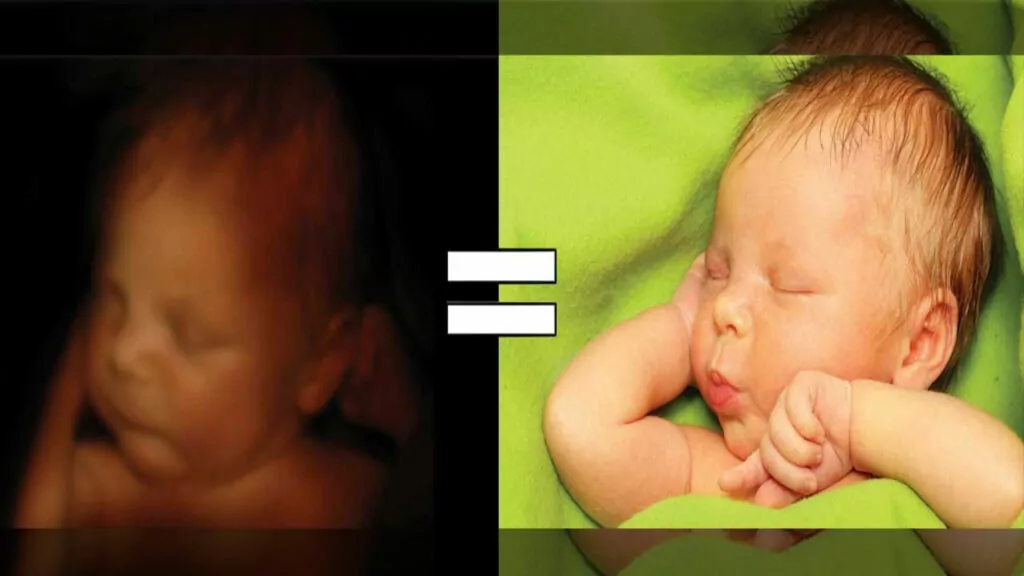
In the West we believe all people should be treated equally, no matter their age, race, religion, etc. But why is that? Why should we treat all people equally when, in any way you measure it, no two people are equal? We differ in size, intellect, strength, coordination, hearing, visual acuity, musical aptitude, and in the amount of hair we have left on our head. No two of us are the same so why should we get the same treatment? In any other situation we don’t treat unequal things equally. We hang a Rembrandt up on a museum wall, while our kids’ efforts only make an appearance on the fridge. Both are art, so why don’t we treat them equally? We recycle our newspapers but save our dollar bills securely in banks. Both are printed paper so why don’t we treat them equally? Because they aren’t equal.  So let’s ask the question again: if we don’t treat unequal things equally, and in any measurable way no two people are equal, why should we treat people equally? The Christian answer There is a Christian answer to that question. The Bible tells us we are all made in God’s image – all of us, without exception. The smallest, weakest child and the largest, strongest man may seem to have nothing in common but that they are both made imago Dei, in God’s image. What makes us equal is not based on our abilities, but is instead intrinsic, not measurable, but still evident to any who pay attention. Every human being is remarkable precisely because we are all, from conception onward made in God’s image. The world’s fail The world rejects God, yet they still talk about equality. Just not for the unborn. They won’t give the unborn equal rights – not even the right to life – because the child can’t yet breath on its own, or because it doesn’t have a heartbeat yet, or because it can’t feel pain yet. They won’t treat it equally because it can’t do this, or that, or the other thing. In arguing against fetal rights they ground equality on ability. Why are we worthy of respect and the unborn aren’t? Because we can do things that they can’t. However, if ability is the basis for equality, then we’re back to the same question: on what basis do we treat people of greatly varying abilities equally? If women can’t lift as much as men, then aren’t men better than women? Aren’t they superior? That’s not an attractive thought to anyone. But only Christians know why: “…in the image of God he created him; male and female he created them” (Genesis 1:27). Meanwhile the world has to pretend that a 150-pound woman really can lift the same amount at a 200-pound man – they have to pretend that in every respect women can do all that men can do because ability is their only basis for equality. The question As Christians our pro-life argument is that an unborn baby is equal to a newborn, is equal to a toddler, is equal to a teen, is equal to an adult. Different in every measurable ability, and yet equal because they all share the imago Dei. And the question we have for the world is this: “if you think the unborn aren’t our equals, then explain please, why you think anyone is equal?”...

Red heart icon with + sign.
News

Saturday Selections – May 20, 2023

Defending the unborn: when they bring up cases of rape When a young Canadian recently challenged the prime minister about abortion, Trudeau brought up the issue of rape. The young man had no answer... but Tim Barnett does! Darwin’s Arch collapses … and joins a growing collection Two years ago, a world-famous tourist attraction collapsed, and there was some irony to the fall of Darwin's Arch. The rate at which such arches disintegrate worldwide gives evidence that Darwin's old earth presumptions were wrong, as after millions of years such arches shouldn't still exist. The (fake) battle between parental and children's rights "Understood correctly, human rights are fundamentally the right to be fully human. This requires knowing, to some degree, how we were made and what we are for, especially if these things were, to any degree, built into reality." A parent's guide to money The folks at AXIS have created short guides - this one is 18 half pages - for parents as a sort of cheat sheet for discussions with their teens. They offer a conservative Christian perspective, and in this one cover topics like: should your child take out a college loan? Should they be interested in a side hustle? What should they think about debt and saving? and much more. Why I will work until the day I die Hugh Whelchel knows he likely doesn't have long to live. So why would he spend what might be his last days working? Some good news about a great revolt 85% of Anglican leaders have rejected the Archbishop of Canterbury's blessings for same-sex couplings. Archbishop Justin Welby is the leader of the denomination, which is the third largest in the world, so this is big news. An April gathering of Anglican leaders declared: “Since the Lord does not bless same-sex unions, it is pastorally deceptive and blasphemous to craft prayers that invoke blessing in the name of the Father, Son, and Holy Spirit.” This revolt is characterized as an "excommunication from below," with African churches leading the way in rejecting Welby as their head. Politics in 20 seconds Thomas Sowell said: "The first lesson of economics is scarcity: there is never enough of anything to satisfy all those who want it. The first lesson of politics is to disregard the first lesson of economics." This is what that looks like on the campaign trail. ...

Red heart icon with + sign.
Being the Church

Making hospitality easier: how onion dip changed the world

Everyone has likely tasted onion dip and millions of homemakers have made it. The recipe is incredibly simple: mix dried onion soup mix with 2 cups of sour cream – voilà you are done! Place it in a bowl and surround it with chips, crackers, celery and carrot sticks, and any other veggies you think your guests will enjoy. Be suave and call it crudités! I still remember the first time I tasted it, at a Tupperware party in the early 80s (though it has been around since 1954!). I tentatively took a tiny beige blob and placed it on my plate. After tasting it with a ruffled potato chip, I eagerly returned for more. I was fascinated to observe a display about homemaking through the decades in a museum that showed a 1950s-type kitchen and mentioned onion dip (also known as French onion dip, and originally known as California dip, where an unknown homemaker first created it). Their interpretation was that this “California dip” totally changed hospitality throughout America and Canada. Previously, if one was going to entertain, a full dinner would be expected, perhaps with intricate hors d’oeuvres beforehand. Remember, you couldn’t run into Costco or Walmart’s frozen section and grab mini quiche or ready-to-cook breaded shrimp back then. After the recipe was printed in a newspaper, the Lipton Company got hold of it and began advertising it on the popular Arthur Godfrey Show on television. The California dip usage spread like wildfire and Lipton’s onion soup mix flew off the shelves. Pictures were shown of a host and hostess cheerfully serving chips and dip and veggies to their guests. This was so easy to prepare that people began inviting friends over more often, because the workload had lessened significantly. Not only did it become incredibly popular in the 50s, it has remained so ever since. Don’t let pride get in the way Onion dip probably didn’t “change the world” in a big way, but by providing an easier way to entertain, it did promote friendship and fellowship. It was a step in the right direction. How often have you heard someone say that they don’t have the time, energy, money, or nice enough house to provide hospitality to others? With an attitude that “We cannot do it unless we reach a certain level of perfection,” we actually may fall into pride and ignore God’s Word that calls us to care for one another. Rosaria Butterfield in her book The Gospel Comes With a House Key says: “God calls Christians to practice hospitality in order to build loving Christian communities, to build nightly table fellowship with fellow image bearers, to ease the pain of orphanhood, widowhood, and prison, to be qualified as elders in the church, and to be good and faithful stewards of what God has given to us in the person, work, example, obedience, and suffering of the Lord Jesus Christ…. God calls us to practice hospitality as a daily way of life, not as an occasional activity when time and finance allow…. God promises to put the lonely in families (Ps 68:6) and he intends to use your house as living proof.” If we only think about our own family and relatives and do not reach out to others, we miss the opportunity to build up one another in our churches. Instead, by inviting others to our imperfect home for some basic food and company, we make time to listen to one another. We learn that Joe just lost his job and we might have a connection that could help him. We find out that Sally is an expert seamstress, and maybe she can help us understand how to make the shirt we were confused about. We learn that Janet has a book group that meets monthly at her home and Jed can no longer cut his lawn because of his back trouble. Myrtle just found out she has cancer and she is frightened, and Darius is worried sick about his teenaged son. We pray together. We sing hymns or psalms together. We show love, and we rack our brains to think of what else we can do to help. We follow Hebrews 10:24-25: “And let us consider how to stir up one another to love and good works, not neglecting to meet together, as is the habit of some, but encouraging one another, and all the more as you see the Day drawing near.” Or, alternatively, we say that we are tired or too poor, and we always stay home alone and watch television or plug ourselves into our phones or computers. Sports and movies and funny videos are way more interesting, and even easier than serving onion dip. Some people say that they need all day Sunday to spend time with their immediate family because they work and have other activities on the other six days. Consider the fact that showing hospitality is a family activity that your kids will learn from. And if you only use two to three hours, you will still have time left over to interact as family. The amount of hospitality shown will vary from family to family. But every adult should be exhibiting some, even if they just have a small apartment – they might invite two people over for coffee and discussion. It’s the time together that counts far more than the fare that is served or the furniture and house that it’s served in.  Simplify Fellowship doesn’t have to include a meal! Invite someone for chatting, singing, praying, and/or talking about what God taught you in the sermon, and serve nothing, or only coffee and store-bought cookies or coffee cake. There’s no need to one-up someone else. As mentioned, onion dip, chips, and veggies have been one way that people can easily show hospitality to others. You could meet in a park on a beautiful day, as well. Other easy ways might include: Serve hors d’oeuvres from the frozen section, heated in your oven for a short while. Have a meal of soup and buns, as has been the tradition for years. If you cannot manage homemade soup, canned soup as is or “doctored up” (such as adding leftover chicken and carbs to the basic soup) is fine. Homemade bread or biscuits are great, but store-bought Italian bread (available for a low cost at Walmart) can suffice as well. Pre-made frozen meatballs, heated with marinara or sweet and sour sauce are always good. Buy the sauce or make an easy one by mixing one jar of chili sauce (found in the same grocery aisle as the ketchup) and one jar of grape jam/jelly; heat, thicken if necessary, and pour over the meatballs. Cookies, cake, pudding, ice cream, or pie, whether homemade or store-bought are a good option. Fruit is a healthy choice. If you don’t have time to make a fruit salad, just serve sliced watermelon, bunches of grapes, orange slices, or strawberries. Make a practice of inviting people over regularly, perhaps once or twice a month to get started. Take an interest in them. And don’t just invite the same family and friends – work your way through your church directory and invite people that you barely know. The point is to get to know them better so you can build one another up in the Lord. Therefore encourage one another and build one another up, just as you are doing. – 1 Thessalonians 5:11...

1 2 3 4 5 6 7 8 9 10 11 12 13 14 15 16 17 18 19 20 21 22 23 24 25 26 27 28 29 30 31 32 33