











Transparent heart icon with white outline and + sign.

Life's busy, read it when you're ready!

Create a free account to save articles for later, keep track of past articles you’ve read, and receive exclusive access to all RP resources.

White magnifying glass.

Search thousands of RP articles

Helping you think, speak, and act in Christ.

Open envelope icon with @ symbol

Get Articles Delivered!

Helping you think, speak, and act in Christ. delivered direct to your Inbox!

Christian education, Indigenous peoples

No other gods

The Truth & Reconciliation Commission’s Call to Action #64 is a challenge to Christian churches and schools… and the First Commandment

****

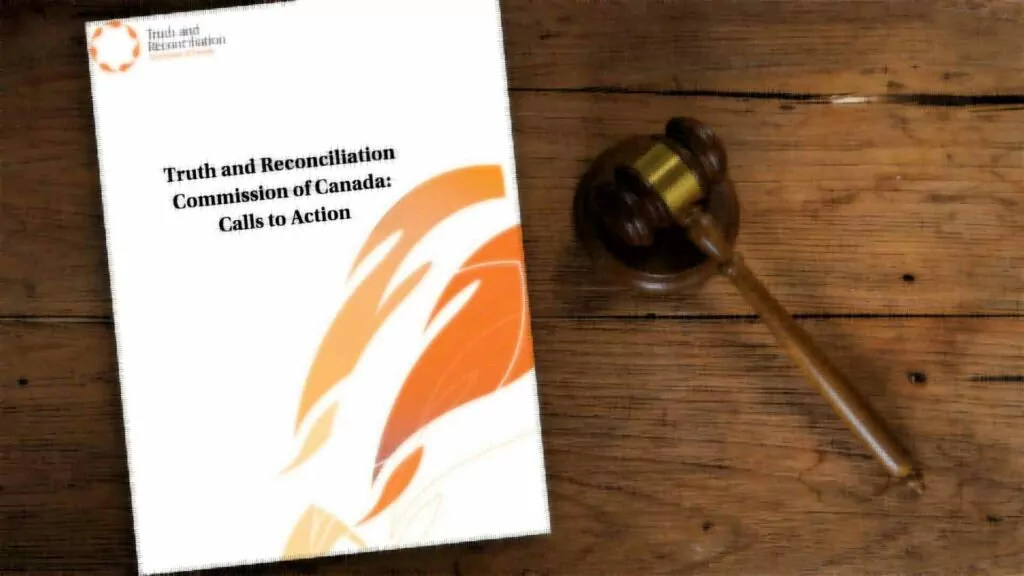
Last year Canada’s Truth and Reconciliation Commission (TRC) published its final report as well an accompanying document with 94 “calls to action.” The TRC report resulted from over seven years of hearing abuse allegations from aboriginal Canadians who had been students in the country’s Indian residential schools (which operated from the 1870s until the last school closed in 1996). The exact extent of the abuse that took place may never be known because the Commission heard complaints but had no power to compel testimony. That meant abuse claims could be heard, but not fully investigated – the accused individuals were never brought forward to either answer for or defend their actions.

When the TRC released their 94 calls to action the Liberal Party quickly promised to implement every one of them, and reaffirmed this promise after forming the government of Canada.

Promoting truth and reconciliation sounds noble, but the conclusions of this report are radical, promoting one culture and religion over all others. This article will limit its focus to a key recommendation that pertain directly to Christian churches and schools.

Requiring native spirituality at school

Because some of the abuse occurred at Christian residential schools, some of the report’s calls to action were directed towards Christian schools and the churches associated with them today. Call to action #64 states:

"We call upon all levels of government that provide public funds to denominational schools to require such schools to provide an education on comparative religious studies which must include a segment on Aboriginal spiritual beliefs and practices developed in collaboration with Aboriginal elders."

By “denominational” schools, the report is likely targeting all religious schools, regardless of their formal connection to specific church denominations.

Forcing religious schools to promote aboriginal spirituality, even if such spirituality violates the Christian faith, flows from a consistent message in the TRC report that requires churches and religious institutions to “affirm Indigenous spirituality in its own right.” These institutions are being called on to “formally recognize Indigenous spirituality as a valid form of worship that is equal to their own.”

Freedom of religion should mean being free from State coercion

If someone were to ask me, or the Christian school I’m a member of, to teach that aboriginal spiritual beliefs are equal to my own Reformed Christian faith, I would respectfully point out to them that they are wrong and there is no way I will comply. Doing so violates the first commandment – it is idolatry.

Pagan aboriginal spirituality has little in common with the gospel of Jesus Christ and I’m not going to confuse my children by claiming that the competing faith claims are the same. But Natives are free to try to convince me otherwise, just as I will encourage my neighbors to consider the good news of salvation through Jesus Christ.

But it is a different matter altogether when the TRC demand that the State compels its citizens to undermine their beliefs by forcing the indoctrination of pagan spirituality. And when the Liberal government promises to follow through, then our fundamental freedoms are at risk.

Section 2 of the Charter of Rights and Freedoms lists the fundamental freedoms that all Canadian possess and that must be protected from any actions by the State. They include freedom of conscience, religion, and association. All three are involved here - when Christians come together to form churches and schools, they do so protected by the freedom to associate, and the freedom to live according to their religion. When the State forces these churches and schools to promote a religion that undermines their own, these constitutional rights are violated.

Natives don’t want to be treated this way

Even aboriginal Canadians should speak up against this assault on freedom. In fact, the very same TRC calls to action includes the demand that all faith groups commit to:

"...respecting Indigenous people’s right to self-determination in spiritual matters, including the right to practice, develop, and teach their own spiritual traditions, customs, and ceremonies…"

So all faith groups may not interfere in indigenous spirituality, but the TRC report, supported by Canada’s government, demands that interference into the religious teachings of all other faith groups. It is a one-way street. This is the very reason why we have a Charter of Rights and Freedoms – to protect citizens from the State including when the State thinks it can tell people what to believe!

Conclusion

The politicization of the residential schools has made it difficult to get a firm handle of what really happened in these schools. It is indisputable and unjustifiable that abuse occurred. It is also completely inappropriate for the State to require the removal of children from their homes to be placed in institutional care, except in extreme circumstances. Where wrong was done, justice must be served, also when churches or governments are responsible. But we also know that the residential schools were well-intentioned and went a long way towards helping disadvantaged people with education, nutrition, skills, and medical care. When good was done, that too must be acknowledged.

Canada’s federal government is not helping anybody, especially Canada’s aboriginal peoples, by endorsing all of the demands from the TRC.

Red heart icon with + sign.
Homosexuality

One in ten? Alfred Kinsey’s most famous lie

Even if you haven’t heard of Alfred Kinsey you probably have heard about one of his key “findings” – that 10% of all people are homosexual. Dr. Judith Reisman (in her book Kinsey: Crimes & Consequences, 1998) asks, “who, indeed, today has not heard the mantra that homosexuals make up 10 percent of the US population?” She points out that the 10% figure is based “on Kinsey’s authority alone.” In fact, “Kinsey claimed to prove that homosexuals represented between 10% and 37% of all males.” How did Kinsey arrive at such a figure? It was simple. He deliberately set out to interview a large number of homosexuals to include in his database of human sexual behavior. During the 1940s, when he was conducting his research, this was no easy feat. Back in those days homosexuality was considered shameful, and many states in the USA had laws forbidding such conduct. Therefore Kinsey and his associates had to make a special effort to contact the homosexual enclaves that existed in large American cities in order to be able to solicit interviews with homosexuals. They were very successful, and hundreds of homosexual case histories were included in Kinsey’s data. In fact, the large number of homosexuals in Kinsey’s data meant that they were clearly over represented in relation to the normal population. Thus it was inescapable that the frequency of homosexuality would be exaggerated in Kinsey’s findings. And this is exactly what Kinsey intended. Reisman puts it succinctly: “Much of Kinsey’s work is designed to advance several revolutionary notions about homosexuality: that secret homosexuality was relatively commonplace; that most normal Americans hypocritically and secretly engaged in illicit sex of various kinds including homosexuality; that people were commonly bisexual meaning they were both homosexual and heterosexual; thus prejudice against homosexuality was hypocritical and based on ignorance of normal sexual behavior; and children and adults should experience and experiment with both their homosexual and heterosexual sides. Kinsey’s “research” was definitely agenda-driven and meant to normalize sexual perversion and overturn traditional morality. Among other things, he wanted to advance the cause of homosexuality. This purpose could be served by convincing people that homosexuality was relatively common. Thus he produced the figure that 10% of the population was homosexual, and it has been the generally accepted figure since then. But it is certainly not true. This was first published in the March 2015 issue....

Red heart icon with + sign.
Theology

How are we to read the Bible?

From January 16 to 18, in 2014, the Canadian Reformed Theological Seminary hosted a conference on the topic of hermeneutics. It's a big word, but they explained what they meant by it: how does one correctly handle the Word of truth in today’s postmodern world?  It comes down to: how are we to read the Bible? Half a dozen professors from the Theological University in Kampen – this institution trains ministers for the Reformed Churches in the Netherlands (RCN) – winged their way across the Atlantic to participate in this Conference.  Two professors from Mid-America Reformed Seminary in Dyer, Indiana (this institution contributes to the ministerial supply in the URC) braved wintry roads to add their contribution.  And, of course, the faculty of our own Canadian Reformed Theological Seminary in Hamilton did what they could to supply a clear answer to that vital question.  The Conference included two public evenings, and it was good to see that the host church in Ancaster was packed to the rafters on both evenings.  For my part, I took in the two daytime programs too.  By the time the Conference was over at 3:20 Saturday afternoon, I was more than happy to call it quits; one can absorb only so much…. Conference Background Many of the members of the Canadian Reformed Churches have a Dutch background.  Specifically, our (grand)parents were once members of the Reformed Churches of the Netherlands (RCN).  There is, then, a very strong historic and emotional bond between the Canadian Reformed Churches and the Reformed Churches of the Netherlands.  At my own church, the two previous ministers both came directly from these Dutch sister churches, and both had their training in the Theological University of Kampen. In the last dozen years or so, concern has slowly grown within our churches about developments we saw happening in the RCN in general and in the Theological University in particular.  In fact, our recent Synod of Carman wrote a pointed letter to the upcoming Dutch Synod explaining why developments in the Dutch churches worry us, and urging a change (see Acts 2013, Art 165).  The heart of the concern lies in how the professors of Kampen are reading the Bible.  Given that we remain sister churches with the RCN, it was considered right before God to do a Conference with these men in order to understand better what the Kampen men are thinking, and to remind each other of what the Lord Himself says on the subject. How does one read the Bible? It was accepted by all that the Bible comes from God Himself, so that what is written on its pages does not come from human imagination or study, but comes from the Mind of holy God Himself.  So the Bible contains no mistakes; whatever it says is the Truth.  Yet this Word of God is not given to us in some unclear divine language, but infinite God has been pleased to communicate in a fashion finite people can understand – somewhat like parents simplifying their language to get across to their toddler.  As we read the Bible, then, the rules common for reading a newspaper article, a book, or even this Bit to Read apply, ie, you get the sense of a particular word or sentence from the paragraph or page in which it’s written, and when some word or sentence is confusing you interpret the harder stuff in the light of easier words or sentences elsewhere in the article.  That’s the plain logic of reading we all use.  So far the professors of Kampen and Hamilton and MARS were all agreed. Genesis 1 Differences arose, however, when it came to what you do with what a given text says.  In the previous paragraph, I made reference to a ‘toddler’.  We all realize that the use of that word does not make this Bit to Read an article about how to raise toddlers.  Genesis 1 uses the word ‘create’.  Does that mean that that chapter of Scripture is about how the world got here?  We’ve learned to say that Yes, Genesis 1 certainly tells us about our origin.  (And we have good reason for saying that, because that’s the message you come away with after a plain reading of the chapter; besides, that’s the way the 4thcommandment reads Genesis 1, and it’s how Isaiah and Jeremiah and Jesus and Paul, etc, read Genesis 1.)  But the Kampen professors told us not to be so fast in jumping to that conclusion.  Genesis 1, they said, isn’t about how we got here, but it’s instruction to Israel at Mt Sinai about how mighty God is not the author of evil.  Just like you cannot go to the Bible to learn how to raise toddlers (because that’s not what the Bible is about; you need to study pedagogy for that – the example is mine), so you cannot go to the Bible to find out how the world got here – because that’s not what Genesis 1 is about, and so it’s not a fair question we should ask Genesis 1 to answer. 1 Timothy 2 A second example that illustrates how the Dutch professors were thinking comes from their treatment of 1 Timothy 2:12,13.  These verses record Paul’s instruction: “I do not permit a woman to teach or to exercise authority over a man; rather, she is to remain quiet.  For Adam was formed first, then Eve….”  This passage featured on the Conference program because a report has recently surfaced within the Dutch sister churches arguing that it’s Biblical to ordain sisters of the congregation to the offices of minister, elder and deacon.  1 Timothy 2 would seem to say the opposite.  So: how do you read 1 Timothy 2:12 to justify the conclusion that women may be ordained to the offices of the church? The Dutch brethren answered the question like this: when Paul wrote the prohibition of 1 Timothy 2, the culture Timothy lived in did not tolerate women in positions of leadership.  If Paul in that situation had permitted women to teach in church or to have authority over men, he would have placed an unnecessary obstacle on the path of unbelievers to come to faith.  Our western culture today, however, gives women a very inclusive role in public leadership.  If we today, then, ban them from the offices of the church, we would place an obstacle in the path of modern people on their journey to faith in Jesus Christ.  Had Paul written his letter to the church in Hamilton today, he would have written vs 12 to say that women would be permitted to teach and to have authority over men. That conviction, of course, raises the question of what you do with the “for” with which vs 13 begins.  Doesn’t the word ‘for’ mean that Paul is forming his instruction about the woman’s silence on how God created people in the beginning – Adam first, then Eve?  Well, we were told, with vs 13 Paul is indeed referring back to Genesis 1 & 2, but we need to be very careful in how we work with that because we’re reading our own understandings of Genesis 1 & 2 into Paul’s instruction in 1 Timothy 2, and we may be incorrect in how we understand those chapters from Genesis.  So vs 13 doesn’t help us understand vs 12. Confused… I struggled to get my head around how brothers who claim to love the Lord and His Word could say things as mentioned above. A speech on Saturday morning helped to clarify that question for me. The old way of reading the Bible might be called ‘foundationalism’, describing the notion that you read God’s commands and instructions (eg, any of the Ten Commandments), and transfer that instruction literally into today so that theft or adultery or dishonoring your parents is taboo. This manner of reading the Bible does not go down well with postmodern people, because it implies that there are absolutes that you have to obey. The alternative is to disregard the Bible altogether and adopt ‘relativism’, where there are no rules for right and wrong at all – and that’s obviously wrong. So, we were told, we need to find a third way between ‘foundationalism’ and ‘relativism’. This third way would have us be familiar with the Scriptures, but instead of transferring a command of long ago straight into today’s context, we need to meditate on old time revelation and trust that as we do so the Lord will make clear what His answers are for today’s questions. If the cultural circumstances surrounding a command given long ago turns out to be very similar to cultural circumstances of today, we may parachute the command directly into today and insist it be obeyed. But if the circumstances differ, we may not simply impose God’s dated commands on obedience or on theft or on homosexuality into today. Instead, with an attitude of humility and courage we need to listen to what God is today saying – and then listen not just to the Bible but also to culture, research, science, etc. After prayerfully meditating on the Scripture-in-light-of-lessons-from-culture-and-research, we may well end up concluding that we need to accept that two men love both each other and Jesus Christ. That conclusion may differ from what we’ve traditionally thought the Lord wanted of us, but a right attitude before the Lord will let us be OK with conclusions we’ve not seen in Scripture before. Analysis This speech about the ‘third way’ helped clarify for me why the Kampen professors could say what they did about Genesis 1 and 1 Timothy 2. They were seeking to listen to Scripture as well as to what our culture and science, etc, were saying, and then under the guidance of the Holy Spirit sought to come to the will of the Lord for today’s questions. To insist that Genesis 1 is God’s description about how we got here (creation by divine fiat) leads to conclusions that fly in the face of today’s science and/or evolutionary thinking – and so we must be asking the wrong questions about Genesis 1; it’s not about how we got here…. To insist that 1 Timothy 2 has something authoritative to say about the place of women is to place us on ground distinctly out of step with our society – and so we must be reading 1 Timothy 2 wrongly. As a result of deep meditation on Scripture plus input from culture etc, these men have concluded that God leads us to condoning women in office in our culture, accepting a very old age for the earth, and leaving room for homosexual relationships in obedient service to the Lord. This, it seems to me, is the enthronement of people’s collective preferences over the revealed Word of God. Our collective will, even when it is renewed and guided by the Holy Spirit, remains “inclined to all evil” (Lord’s Day 23.60; cf Romans 7:15,18). There certainly are questions arising from today’s culture that do not have answers written in obvious command form in Scripture, and so we undoubtedly need to do some humble and prayerful research and thinking on those questions. But the Bible is distinctly clear (not only in Genesis 1) about where we come from, and distinctly clear too (not only in 1 Timothy 2) about the place of women, and distinctly clear also on homosexuality. To plead that we need different answers today than in previous cultures lest the Bible’s teachings hinder unbelievers from embracing the gospel is to ignore that Jeremiah and Micah and Jesus and Paul and James and every other prophet and apostle had to insist on things that were “a stumbling block to Jews and folly to Gentiles” (1 Corinthians 1:23). One questioner from the audience hit the nail on the head: the Dutch brethren were adapting their method of reading the Bible to produce conclusions accommodated to our culture. Where does this leave us? There was a time when the Reformed Churches in the Netherlands and their Theological University in Kampen were a source of much wisdom and encouragement in searching the Scriptures. Given that all the men from Kampen spoke more or less the same language at the Hermeneutics Conference, it is clear to me that those days are past. We need not deny them the right hand of fellowship, but we do need to pray that the Lord have mercy on the Dutch sister churches – for this is how their (future) ministers are being taught to deal with Scripture. I was very grateful to note that the professors from the Canadian Reformed Theological Seminary (and MARS too, for that matter) all spoke uniformly in their rejection of Kampen’s way of reading the Bible. They insisted unequivocally that “the whole counsel of God, concerning all things necessary for his own glory, man’s salvation, faith, and life, is either expressly set down in scripture, or by good and necessary consequence may be deduced from Scripture: unto which nothing at any time is to be added, whether by new revelations of the Spirit, or traditions of men” (Westminster Confession, I.6). Postmodernism does not pass us by. May the Lord give us grace to keep believing that His Word is authoritative, clear and true....

Red heart icon with + sign.
Assorted

A game for every situation

Visitors to my house are often surprised at the number of board games I own. OK, I’ll be the first to admit that I probably have too many games. What’s nice about a game collection, though, is having games for different situations. Besides the obvious variation in the number of players and available playing time, different groups like different types of games. I’m not going to play the same game with my kids as I will with adults. Even adults vary in how much rules complexity and strategic depth they will tolerate in their games. Here are some suggestions for some games to fill those niches in a game collection. Most of these are pretty recent releases. 7 Wonders A quick game with strategic depth This game hit my gaming group’s table for the first time in 2011 and it was a huge hit with all of us. In this card game, each player takes on a particular civilization, with a wonder to build. The game progresses through three ages. In each age, each player has a hand of cards and in your turn you choose one card to play. You can either play that card face up, playing any resource cost to bring the card into play, turn the card face down to build a stage of your wonder, or discard the card for money. What makes the game interesting is that once you’ve done that, you pass your hand of cards to your neighbor and that player chooses a card from the hand you had. This creates some difficult decisions: do I build the card I want to build or do I discard a card to prevent it from going to my neighbor? At the end of the game, players score points for buildings they’ve built, how far they’ve progressed their wonder, the size of their military relative to your neighbors, coins they’ve earned and how far they have developed their science. There are multiple paths to victory and exploring these is part of the fun of the game. What makes 7 Wonders so great is that it’s easy to learn and quick to play. Once you’ve got the rules down, a game of 7 Wonders can be completed in about a half hour, making it a great way to start or close out an evening of game playing, although you’ll probably find that you want to play several games in a row. It also scales very well, accommodating anywhere from two to seven players. Because all of the action is simultaneous, adding more players doesn’t add to the down time. Forbidden Island A game when you’re in a cooperative mood Co-operative games are a nice change of pace in that players work together instead of against each other. Matt Leacock’s Forbidden Island takes the co-operative system he developed in Pandemic and distills it to its essence in a game that’s simpler and faster and more suitable for playing with kids. In Forbidden Island, players are stranded on an island made up of tiles. Slowly, tiles get flooded, making parts of the island inaccessible. Players are racing against time to acquire four treasures before the island disappears into the sea. Each player has a particular skill that allows him or her to break a particular game rule. Succeeding at the game requires players to work together and utilize their particular skills as effectively as possible. What’s terrific about Forbidden Island is the wonderful sense of urgency and tension created by the game. Success and failure are balanced on a knife’s edge. In games where we’ve successfully escaped with the treasures, we just made it; games we lost could have been won with a different card draw. Either way, it’s exhilarating and fun. The game is relatively inexpensive, accommodates up to four players and takes 30 minutes to play. Chicken Cha Cha Cha A game to play with the kids As you can probably tell, I’m a big fan of gaming with kids. But finding games to play with younger kids is difficult; those games either bore adults to tears or are too difficult for children. Chicken Cha Cha Cha is a game for children that hits all the right notes. It has sturdy, kid-friendly components, plays quickly, and relies on a skill that children can compete pretty equally with adults – short-term memory. Players move their chickens around the track by remembering where tiles are hidden. The more tiles you can remember correctly, the further you go. When you pass someone else’s chicken, you get to take their tail feathers. The first player who gathers all of the tail feathers wins the game. You’ll be surprised at how good kids are at this game. Telestrations A game for a party Pictionary is an old stand-by among people who like party games; Telestrations takes this to the next level by combining it with that old classic game of Telephone. In Telestrations, each player gets a card with a word or phrase on it and then has to draw that word. When time is up, every player passes their picture to their neighbor. That player then looks at the pictures and writes his or her best guess as to what that picture is. Players then pass those words or phrases to their neighbors, who draw a picture based on that word or phrase. This alteration of words and pictures happen until each player gets their original pad back. At that point, players go through and everyone gets a good laugh as to how the phrase or word evolved over time through misunderstandings. You could probably play this game with a Pictionary set and some paper, but Telestrations is fairly inexpensive, comes with neat pads and dry erase markers that make the process much easier. It’s a lot of fun and leads to a lot of laughter. I do have to say that the scoring rules provided in the game don’t work very well, but if you’re primarily concerned with games where winning or losing is the point, this probably isn’t for you. The game can handle up to eight players and, as with all party games, the more players you have, the more fun it is. Qwirkle A game for camping Camping is a great time for game playing. There’s no television or other distractions of modern life, so it’s a good time for boardgaming. An ideal camping game shouldn’t have lots of little bits or paper that can get dirty, wet, or lost. In this way, Qwirkle is perfect. It comes with a whole bag of big chunky wooden tiles with colored shapes on them. Qwirkle is an abstract game, played with wooden tiles that have colored shapes on them. There are six colors and six shapes. In a turn, players can play a set of tiles all in one color, as long as all the shapes are different) or a set of tiles of one shape, as long as they’re all different colors. This abstract strategy game feels a lot like Scrabble when you play it. If you don’t camp, it’s still an excellent and accessible game for all ages. In 2011, Qwirkle won the most prestigious game award in the world, Germany’s Spiele des Jahres. Jaipur A two-player game There are lots of times when there are only two of you and you want to play a game. In my house, Jaipur has become the go-to game in that situation. Jaipur is a game of trading and collecting sets of goods represented by cards. In a turn, a player can take one card from the market, trade multiple cards for multiple cards in the market, or sell goods. The clever thing in Jaipur is that the first good of a type sold is worth the most; as the market gets saturated with a particular good, its value decreases. Players can earn bonuses if they trade in larger sets of goods, but trying to build up a large set of goods in your hand might allow the other player to sell off a few goods first for higher prices. To succeed, you have to play close attention to what your opponent is doing. This one is probably the hardest to find of the games on this list; you may have to try an online game store if you want to locate a copy. Dixit A game when you’re feeling creative Most games are decidedly left brain activities, relying on logic and reasoning. Dixit is a right brain kind of game, rewarding creativity over strategic play. The game consists of a deck of beautifully illustrated cards, with no words on them. Every player has a hand of cards. In each turn, one player is the storyteller and chooses a card to play. That player comes up with a word, a phrase or a sentence to describe the card. The other players all chose a card from their hands that they think best exemplifies that phrase. All of the cards are then mixed and the players who are not the storyteller vote on the one they think is the storyteller’s card. What makes the game work is the scoring system. In the case that all players choose the storyteller’s card or none of the players choose it, the storyteller gets no points and every other player gets two points. In all other situations, the storyteller and any player who correctly identified the storyteller’s card gets three points. Furthermore, any of the other players who attract votes get a point. This system encourages the storyteller to choose a phrase that is neither too obvious nor too obscure, a tricky balance to maintain. Dixit is a simple game to play, but I find it taxes it my brain in a way no other game in my collection does. Oh, and in 2010 it also won the prestigious Spiele des Jahres (Game of the Year). Ascending Empires A game when you want to get physical In many ways, Ascending Empires is a pretty classic space empire game. Players start with one planet and expand to nearby planets, colonizing them, mining resources and establishing science stations. Planets come in different colors and in order to advance in technology, it’s necessary to establish a presence on several different color planets. This inevitably leads to conflict with other players and space battles. Here’s what’s different about Ascending Empires: in order to move the wooden disks representing your ships around, you have to flick them with your finger. This leads to a lot of laughter and fun as carefully planned flights go astray. The game manages to strike a near perfect balance between physical dexterity and strategy. Flicking your ships across the board is a blast, but clever strategic play is ultimately going to decide who wins, much to the relief of those of us who are not particularly coordinated. This is another one that may not be easy to find; on-line game stores are probably your best bet. Mouse Guard Role Playing Game A game to indulge your inner storyteller Role playing games are games where players collectively tell a story. One player runs the game; the others play characters in the story. When done well, it’s an incredibly fun and immersive experience. Most of these games, however, are set in fantasy settings with warriors, wizards and dragons. If the idea of role playing is appealing, but these typical games settings are not, Mouse Guard may be for you. Based on David Peterson’s graphic novels of the same name, players take on the role of mice dedicated to protecting their civilization from the perils of the outside world. When you think about how small mice are, there’s plenty of material for compelling adventures in seemingly mundane things. In one mission I played with my children, the mice had to save a mouse settlement from flooding after beavers built a dam near the town. Although an excellent game to play with younger players, it also works well with adults, with plenty of opportunity for interpersonal drama and darker conflict. All you need to play are some dice and the 320-page rulebook, which is readily available from online bookstores. Alternatively, you can opt for the beautiful boxed set, with additional missions and play aids. The game materials are well-written and gorgeous, with hundreds of Peterson’s illustrations. It takes a bit of reading to get a handle on the rules, but it is a more streamlined and easy-to-grasp system than most role-playing games. The book provides lots of guidance in how to structure and run missions, and rewards good role playing, not clever dice play....

Red heart icon with + sign.
Pro-life - Abortion

Abortionists as euphemists

The curious case of the shifting language **** Most abortionists are euphemists. By which I mean merely, to quote Chesterton, “that short words startle them, while long words soothe them. And they are utterly incapable of translating the one into the other, however obviously they mean the same thing.” If, for instance, you say to an abortionist, “The excessive burden upon the mother, particularly in light of the rights to autonomy, privacy and reproductive freedom, of an unplanned pregnancy precludes any ethical objections to surgically removing the products of pregnancy post-viability, but prior to completion of delivery,” a gentle, indeed a radiant smile will cross his face, and he will dose off as if to a lullaby. Say, on the other hand, in a forceful, straight-forward way, “Crush the skulls and suck out the brains of your children!” and he will leap from his seat, startled and full of objections. But the two sentences mean precisely the same thing. Or, if you were to say, “An analysis of the cost-benefit ratio of carrying to term a fetus found via amniocentesis to have non-disjunction of the 23rd chromosome invariably leads to the conclusion that medical resources would be better allocated by discontinuing the pregnancy,” your average abortion supporter will sway like a child borne carelessly upon the waves of a warm summer sea. But unapologetically bellow forth the declaration, “Save money! Kill all the disabled kids!” and you will get a very different reaction indeed. But, once again, cold logic says that the two propositions propose precisely the same thing. Hiding the baby Abortionist literature is chock full of a million similar instances. Pro-abortion writers keep a whole stash of such long words at their disposal, which are ushered forth to carefully hide the tracks of any stray meaning that might have crept into their sentences. I need only reach out my hand and grab the mostly excellent book What to Expect When You are Expecting, which my wife, who is pregnant with our first child, has been reading. On pages 42 and 43 we find information about prenatal diagnosis and we are told that in case of fetal abnormalities there are two options: to continue the pregnancy or to terminate the pregnancy. Already, I would argue, we have taken our first steps into the weird world of abortionist euphemisms with the ambiguous and oddly mechanical word “terminate.” But I won’t press the point. What especially interests me is not this, but that in the paragraph about continuing the pregnancy, we are told all about a “baby.” But in the next paragraph, which is all about “terminating” the pregnancy, there is no mention of a baby; the baby has been completely replaced with the “products of pregnancy.” What, then, has become of the baby? Nothing at all, of course. It’s still right where it was and no matter how much they wish to do so, our illustrious authors cannot actually make the baby go away merely by changing their language; but what they can do is the next best thing – they can hide the baby, shove it behind the sofa or under the rug, like an embarrassing mess they haven’t yet had the chance to clean up, and the guests are already arriving. In other words, they can come up with a long word. And so they come up with “products of pregnancy.” And when the “products of pregnancy” are safely and properly “terminated” we can all get on with our lives, displeased that the pregnancy did not "turn out favorable" (an actual quote from the book), but unbothered by either our consciences or any of those pesky handicapped children. Please ignore the obvious Of course, if we were to press the point and ask, “But what are the products of pregnancy?” the authors would have to respond, “A baby.” But they are hoping that no one will ask the question. And many (including, I suspect, themselves) don’t. Which is why up to 95% of babies diagnosed with Down syndrome are never born: because all we’re doing is “terminating” the “products of pregnancy,” and what could be wrong with that? The answer is nothing at all, unless you happen to prefer precision to muddleheadedness and replace the comfortably cumbrous word “terminate” with the uncomfortably curt “kill,” and the melodious “products of pregnancy” with the wholly unpoetic “baby.” That would leave us with “kill the baby,” or, to use another short and unpopular word, “murder.” I recall hearing a story somewhere, told by a fellow who attended an abortion debate, where the representative of the pro-life position repeatedly spoke of “killing the unborn baby.” After the debate this fellow happened to step into an elevator full of pro-aborts, and as the elevator slid down everything was silent, until somebody soberly observed, “‘Kill the baby’ You just can’t argue with that.” If the speaker had ever stopped and questioned why you can’t argue with that, he might now be pro-life. Words with no meaning I take another example at random. In a 2003 article published in The Nation, Katha Pollitt complained that “anti-choicers” had coined what she termed the “imprecise” phrase “partial-birth abortion.” This phrase, she says, “has no precise medical meaning and cannot be found in any medical text,” but has nevertheless been widely used by the mainstream media, possibly out of a “fear of seeming too liberal” (not a fear that I myself have ever detected in the media). Instead, Pollitt very helpfully suggest the terms "dilation and extraction" and "dilation and evacuation." These terms, she says, are much better than what she calls the “oxymoronic” phrase “partial-birth abortion,” which “with accompanying gory description - crushed skull, sucked-out brains, half-delivered fetus - was a stroke of public relations genius.” According to Pollitt dilation and extraction (D&E) and dilation and evacuation (D&E) are the proper terms because they describe “actual methods” used for abortions in the second or third trimester. But, of course, if there is one thing that these terms do not do, it is “describe.” She might as well say that the media should always speak of “mastication” instead of “chew” and “perambulate” instead of “walk” because “masticate” and “perambulate” describe actual methods of eating and moving. The thing is absurd. To most everybody the two D&Es convey not a thing, which is precisely how Pollitt wants it. Stop a man or a woman on the street and say to them, “Dilation and extraction. Define it!” and odds are (unless you’ve stopped a doctor or Katha Pollitt) they won’t have a clue what you’re talking about. Or if you were to say to an acquaintance, “I’m going in for a dilation and extraction today,” they might smile and say, “I pray that it goes well,” and walk away with the vague sense of sympathy that we reserve for people who are undergoing obscure and technical sounding medical treatments that we don’t understand. They very probably wouldn’t at all suspect that you were about to authorize a doctor to suck out the brains of your own child. If Pollitt really wants words that “describe” the “actual procedures” used in killing a fully formed baby moments before birth she has no option but to fall back on such things as, “punch a hole in the back of the baby’s head,” and “vacuum out the brains,” and, “crush the skull” and “corpse,” which, undoubtedly, are not nearly as long as “dilation and evacuation,” and not nearly as useful in conveying absolutely no meaning at all. Let clarity reign However much Pollitt may object, she will have to face the fact that if medical doctors applied the standards she is advocating to every other medical procedure, all the patients in our hospitals would be extremely confused. If Pollitt fell ill, for instance, and her physician would only tell her that she had Retroperitoneal Fibrosis (an actual name for a condition found in medical textbooks) and that they would have to remove the “products of the illness,” I’m sure Pollitt would be quite put out. She would certainly want to know what the “products of the illness” are and how they are to be removed. But in her world the doctor would merely cluck his tongue at her plebian ignorance and get on with the thing. So far I have only discussed euphemisms in the abortion debate. But you will find that whenever a “progressive” bioethicist or politician is doing something naughty and not at all popular, they will create a host of long words to ensure that they are misunderstood by everybody except their like-minded colleagues. At the beginning of this piece I quoted Chesterton on this issue. The thing is that Chesterton was not himself writing about abortion, but about eugenics - another horror which very erudite and progressive scientists and politicians were attempting for foist on the British at the time, always under the cover of long words and sentences. And so it is with most every other branch of the culture of death, whether it be abortion, eugenics, embryo research, and all the rest; the culture of death always makes its greatest strides under the disorienting and heady fog of ambiguity. Reprinted with permission from the January 9, 2009 LifeSiteNews.com. This appeared in the February 2009 issue of Reformed Perspective....

Red heart icon with + sign.
Science - General

Star gazing and star guessing

The night sky has always fascinated mankind. Ancient people were able to identify many constellations and follow their annual paths across the sky. In the oldest, perhaps, book in the Bible, God asks Job if the latter has any influence in the sky. "Can you bind the chains of Pleiades or loose the cords of Orion? Can you lead forth a constellation in its season and guide the Bear with her satellites?" (Job 38:31). Already in an earlier chapter we were informed that it is God who made all these objects. Even today the Pleiades and the Hyades (open star clusters in the constellation Taurus or the Bull) are interesting to astronomers. The Hyades are considered to constitute the nearest moderately rich star cluster. As a result, these stars have been assigned a central role in calibrating a measuring stick in space. The procedure has been to compare objects of unknown distance with an object of known distance. By means of mathematical equations the unknown distance can generally be calculated. For example, if star A is a known distance away, then it is easy to calculate how far it is to an equally energetic star that appears to be dimmer. The distance to the latter star is proportional to the reduced light that we perceive from that star. The problem is how ever that astronomers do not actually know how energetic (bright) a star is, if they do not know its distance. Bad Guesses It is evident that we must know the distance to a source of light before that we can estimate how energetically that body is emitting light or in other words how bright it actually is. For example, a flashlight, an airplane and a star may all look equally bright to an observer. If they were all located an equal distance away from the observer however, dramatic differences would be apparent. Indeed, as astronomer Michael Perryman remarks, "Almost everything in astronomy depends in some way on knowing star distances. This is particularly true of the cosmic distance scale extending out to the farthest galaxies and quasars. And the cosmic distance scale determines how well we know the true sizes, brightness, and energy outputs of nearly everything in the universe" (Sky and Telescope, June 1999 p. 42). In view of the importance of the initial measuring stick, one would hope that astronomers have based their calculations on very reliable numbers for the distance to the Hyades, their base point. This however has not been the case. As Dr. Perryman confides, "Many creative methods have been brought to bear on the Hyades distance problem over the last 100 years - with tantalizingly discordant results. This has been quite frustrating for a cluster so close" (p. 45). Yet William J. Kaufmann II wrote in the 1994 edition of his text: "Because the distance to the Hyades cluster is the most accurately determined of all stellar distances, it provides the basis upon which all other astronomical distances are determined" (Universe, Fourth Edition, p. 341). Dr. Kaufmann felt complacent enough, at the time, to assure us concerning the state of astronomy, that "In recent years, a remarkably complete picture has emerged, offering insight into our relationship with the universe as a whole and our place in the cosmic scope of space and time" (p. 337). Some observers might have suggested that Dr. Kaufmann couch his remarks in more cautious terms. Better Results The complacency of astronomers has however been somewhat shaken by data released in 1997. In 1989 the European Space Agency (ESA) had launched a satellite called Hipparcos (an acronym for High Precision Parallax Collecting Satellite). This device was designed to use trigonometry to directly measure distances to the closest stars. The data have proved very interesting and there have been plenty of surprises. The good news is that accurate distances (to within ten percent of the true value) have been achieved for more than 22,000 stars. Previously, such results were possible only for several hundred stars. These stars all lie within three hundred light years of Earth. Another 30,000 stars have been measured to within twenty percent of their true value. Such numbers represent a cornucopia of information. The measurements made by the Hipparcos satellite are based on trigonometry. Just as it is possible to measure distances on earth by means of imaginary triangles, astronomers achieve similar results in space. Their triangle needs a very long base so that the angles at the corners will be large enough to measure. The base of the triangle is taken to be the diameter of Earth's orbit at its maximum extent. Since the orbit is an ellipse, the diameter changes throughout the year. We use the maximum distance. The astronomer photographs a star on two occasions, six months apart. In this way, observations are made from opposite sides of Earth's orbit. The angles of the triangle are then calculated by comparing the star's shift in position compared to a backdrop of more distant stars. The length of one side of the triangle is the distance from Earth to the star. Prior to Hipparcos, astronomers were able to obtain good results only up to 65 light-years away. The closest one is Alpha Centauri, a mere 4.3 light-years from us. Now however with the European satellite, accurate measurements of much smaller angles are possible. This has astronomically expanded the number of accurately measured objects in the sky. The time had now come to compare previous estimates with the new numbers. Something Doesn't Fit Hipparcos was the first space mission specifically designed to measure star positions. Data were collected for four years. This was followed by a further three years in which the results were analyzed. Among unexpected findings, two hundred relatively close but dim stars were discovered. In addition, many well known stars turned out to be much farther away (and thus more energetic) than previously believed. As a result, fewer nearby stars could be identified as "main-sequence stars" and there was only half as many giants as previously estimated. "Main-sequence stars" are identified according to the Hertzsprung-Russell diagram that plots stars' rate of light production against their temperature. Temperature is estimated from color but estimates of light or energy production are highly dependent on distance. The significance of the Hertzsprung-Russell sequence is that it has traditionally been interpreted as reflecting the evolution of stars. In the light of Hipparcos data, however, astronomers have come to suspect that their previous conclusions were "too simplistic. Something else sees to be going on" (Perryman p. 47). Particularly surprising are the values obtained for the Pleiades cluster. At 375 light-years, this group of stars seems to be located 15% closer than previous estimates. The result, says Dr. Perryman, is that the stars in the Pleiades cluster can "no longer easily be accommodated into existing pictures of star formation or evolution" (p. 47). In other words these stars no longer qualify as main sequence stars. The Hyades, on the other hand, were located considerably further away than expected. People who enjoy the beauty of the night sky but who do not wish to be encumbered with jargon and trigonometry, may wonder why we should care about the Hipparcos data. The point is that these numbers are reliable because the calculations include only values that are established by direct observation. Beyond 200 or 300 light-years however, nearly all other measuring techniques are indirect. Consequently the calculated results are only as dependable as the assumptions upon which they are based. The general public seems not to be aware of that fact. Particularly in astronomy where small numbers are extrapolated into huge conclusions, you and I, as consumers of information, should be very wary. The whole issue reminds me of a little ditty from a Victorian era operetta. In Act II of Pirates of Penzance, Little Buttercup warns us not to be fooled by casual observation. Pay attention to the details. As she puts it: Things are seldom what they seem Skim milk masquerades as cream; Storks turn out to be but logs; Bulls are but inflated frogs. So they be. Frequentlee. This does not mean that we should ignore astronomy. It merely means that we should be aware of the uncertainties....

1 2 3 4 5 6 7 8 9 10 11 12 13 14 15 16 17 18 19 20 21 22 23 24 25 26 27 28 29 30 31 32