Transparent heart icon with white outline and + sign.

Life's busy, read it when you're ready!

Create a free account to save articles for later, keep track of past articles you’ve read, and receive exclusive access to all RP resources.

White magnifying glass.

Search thousands of RP articles

Helping you think, speak, and act in Christ.

Open envelope icon with @ symbol

Get Articles Delivered!

Helping you think, speak, and act in Christ. delivered direct to your Inbox!


Red heart icon with + sign.
Book Reviews, Children’s non-fiction

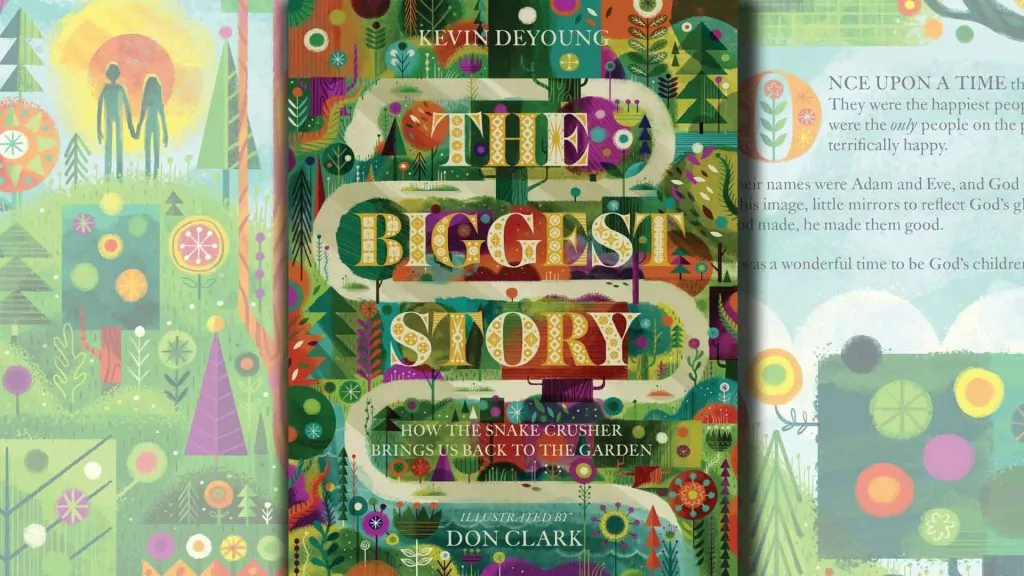
The Biggest Story

How the Snake Crusher brings us back to the garden by Kevin De Young 120 pages / 2015 Rating: Borrow/BUY/Give I read this over three nights to my kids but if it had been up to them we would have finished the whole thing that first night! In the space of ten chapters Reformed pastor Kevin De Young summarizes the whole Bible. On every single page of the book illustrator Don Clark squeezes in more vibrancy and color than you'd ever thought possible. His highly stylized illustrations grab young eyes. Clark is very careful and reverent when it comes to illustrating Jesus. We see, for example, the silhouette of a man with a crown of thorns, but not his eyes, nose, mouth, etc. In other pictures we see only His hand or his foot. So, the pictures are very well done. The text is even better. Kids can easily mistake the Bible for a book of stories, some about judges, some about kings, some about Jesus. What Kevin De Young does in this overview is make it clear to even the youngest kids that the Bible is one story, all about Jesus and God's plan to bring "us back to the garden." This would make a fantastic supplement to daily Scripture reading with your kids - you can use it, maybe every year again as a reminder that the passage of the Bible being read that day is tied into a whole over-arching narrative - just one part in God's big story! You can watch the book trailer below to get a feel for the art, and to hear how it reads, you can listen to the first chapter, done as an animated movie here. ...

Red heart icon with + sign.
Adult fiction, Book Reviews

Ride Sally, Ride

by Douglas Wilson 294 pages / 2020 Rating: Borrow/BUY/Give This might be the weirdest bit of fiction I've read, but the author's point is that this is no stranger than the bizarre non-fiction showing up in our news feed each day. One of the "characters" in the story is a life-sized sex doll, and that had some thinking that this was one of those books. It is not. It is, instead, a comic and admittedly PG-rated commentary on the gonzo culture that produces such things. The setting is the US of twenty years hence. A Supreme Court ruling overturning Roe vs. Wade has the interior states banning abortion once again and has Americans en masse  "reshuffling to states more conducive to their values." With Christians heading inland and liberals fleeing to the coasts, the country's outer edges have doubled down on sexual license and given the biggest of bear hugs to Big Brother, even as the heartlands are taking a sharp Godward turn and paring down the size of their governments. Our hero, Ace, lives in Colorado, one of the few inland woke states, where speech is monitored, and the orthodox Christian books are available only on the dark web. Christians are still allowed to circulate, but like the frog being brought to a slow boil, most are unaware of the decided change their innards are undergoing. The story begins with Ace's father Benson making the welcome wagon ready for a new neighbor who is just moving in. Cookies are baked, and Ace and Benson head on over to help bring in the heavy furniture, because that's what good Christians should do. But what should good Christians do when your new neighbor introduces you to his life-size robotic "wife"? Father Benson thinks he should invite "them" over for dinner because, after all, "they" need Jesus. Son Ace grants the point that someone sure needs Jesus, but wants to know why his dad keeps talking about them. One thing leads to another – we're still in the first chapter here – and Ace ends up trash compacting his neighbor's doll, and instead of getting charged with destruction of property, the woke prosecutor charges him with murder, because their neighbor had clearly identified the doll as his wife. It only gets crazier from there, and in a far too believable way. Cautions If it hasn't been made clear already, this is not your typical Christian novel. For instance, while many a Christian novel will take God's name in vain, this one doesn't. And while no Christian novel ever uses the word "pussy" this one does, twice, used by a non-Christian character who, in her defense, uses it as appropriately as it might ever be used. But that's about as problematic as it gets. While this certainly isn't a book for children, and despite its provocative premise, there's nothing titillating. This is a satiric commentary on our culture's dark turn, but that darkness is handled with delicacy. Conclusion Ride Sally, Ride is, at regular intervals, laugh out loud funny, and had me reading it to my wife to share the best bits. I'd recommend it for adults who appreciate satire, and while it isn't strictly dystopian (what with its happy ending) fans of that genre are sure to enjoy it too. The best test to see if you'll appreciate the book might be to see if you appreciate the trailer below. If it's too shocking, then Ride Sally, Ride won't be your cup of tea either. But if you laughed... ...

Red heart icon with + sign.
Book Reviews, Children’s picture books

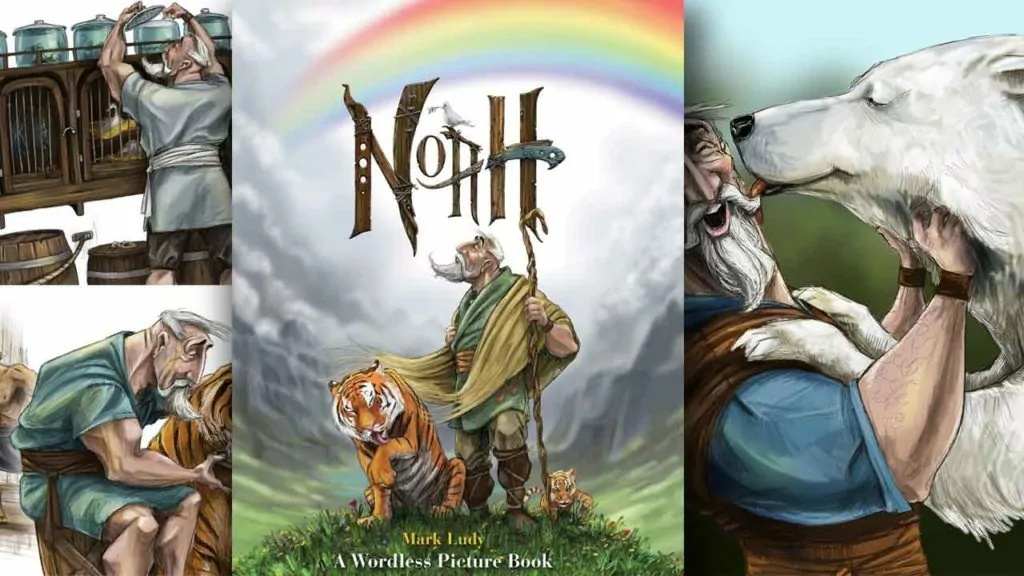
Noah: A wordless picture book

by Mark Ludy 60 pages / 2014 Rating: Borrow/BUY/Give Mark Ludy's wordless account of Noah's life will fascinate young and old. There's so much to see on every page, and the wordless nature of it invites parent and child to discuss all that's going on. The danger with such an account is that for some it might come to replace the original biblical version. As children pore over this picture book's pages repeatedly, they could easily forget that even as it is reasonable to believe Noah might have made use of the strength of a dinosaur or two, the Bible doesn't actually say he did. But what such a book can also do is help us re-evaluate some other non-biblical assumptions we might have inadvertently adopted. Noah's wife is shown here as a lighter-colored black, while Noah himself is looking more Grecian, Roman, or perhaps Sicilian. What both most certainly are not – and what they most probably were not – is a British or Scandanavian sort of white. That might bring questions for many a child and adult who, having grown up with picture Bibles that have a white Adam and Eve, and a white Jesus too, have presumed Noah was white as well. But it is more likely that Adam, Eve, and maybe many of the generations that followed had some sort of middle brown skin, as that genetic coding can contain within it the possibility of both darker and lighter skin in the generations that follow. Another corrective: while evolutionary theory portrays Man as being much simpler back in history, the Bible details some big advances being made from one generation to the next (Genesis 4:20-22). They weren't primitive so it is helpful to see Noah shown as living in a fairly advanced level of industry and technology. They aren't in a rocket age, but they also aren't living in caves either. Finally, we also get a good idea of the sheer magnitude of the Ark, correcting the silly bathtub toy picture some might have stuck in their heads. We shouldn't let this book overshadow the biblical account, but when we put Ludy's Noah in its proper place – like that of a commentary that helps us reflect on what Genesis 6-9 is actually saying – then it can be a wonderful aid. I'll offer a couple of critiques: while there's a dinosaur and some mammoths to be seen working on the ark's construction, neither can be found in it. Also, while animals two by two can be seen making their way to the ark, there don't seem to be any groups of 7 (Genesis 7:2). Of course, we don't see every animal arrive, so maybe we just missed those, (and maybe they'll be found in any expanded future edition of the book!). So who is this for? We probably all think of picture books as being for children, but I really think everyone will love it, from ages 3 on up to 103! You can take an extended peek below. https://cdn.plough.com/-/media/files/plough/lookinside/n/noahenlookinside.pdf...

Red heart icon with + sign.
Book Reviews, Children’s picture books

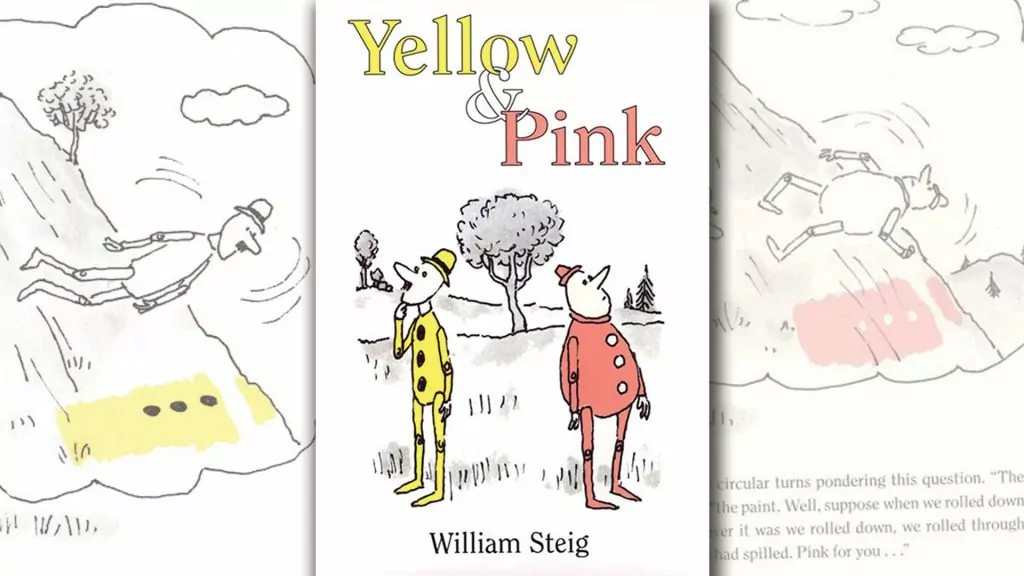
Yellow & Pink

by William Steig 1984 / 32 pages Rating: Borrow/BUY/Give Sometimes one encounters a work of art, a poem, piece of music, figurine or painting which is so simple yet so perfect. Simplicity, you see, takes more talent, not less, to bring about. Sometimes these works come from unlikely sources too. Yet the masterpiece can be appreciated for what it is, rather than for who the artist is. Most people would not consider children’s literature to represent works of art, but of course, there are exceptions, and one such exception is a story called Yellow & Pink by William Steig. This story is so simple, the illustrations so charming, the whole so pregnant with meaning, that it merits the attention not only of children but also of their discriminating elders. The story involves two recently assembled wooden puppets laid out in the yard to allow their paint to dry. Suddenly aware of themselves and of their surroundings, they begin to speculate on where they came from. Pink declares that somebody must have made them. Yellow rejects this idea although he notes that they are “so intricate, so perfect.” He proposes time and chance as the preferred explanation: “With enough time – a thousand, a million, maybe two and a half million years – lots of unusual things could happen. Why not us?” Pink, however, declares that idea to be “preposterous.” Thus the puppets engage in dialogue. Yellow proposes hypotheses involving “natural processes” while Pink expresses skepticism in the form of further probing questions. The discerning reader will notice that Yellow’s hypotheses deal only with shape (form). They never deal with function or even the intricacies of form such as joints. Yellow continues his appeal to time and chance with speculations which become more and more improbable. Finally, he bogs down and appeals to mystery. This puppet is content, in the end, to say we may never know the answer, but he refuses to consider Pink’s suggested alternative. In the end, a man (whose drawing bears a striking resemblance to the book’s author and illustrator) comes along, checks the puppets’ paint and carries them away. Neither puppet recognizes that this is their maker. This simple story, illustrated with elegant line drawings colored pink and yellow, is an obvious analogy to evolutionary speculations. The appeals to time and chance to explain highly improbable events (such as hailstones of the right size falling repeatedly only in the eye sockets) have an all too familiar ring. This is like using time and chance to explain how a particular orchid flower ever came to resemble a particular female bee in appearance, texture, and smell. The author of this little story was a most interesting man. An artist by training, he had provided cartoon-like illustrations for The New Yorker magazine for almost forty years, when at the age of sixty he undertook to write and illustrate children’s books. Thus in 1968, Mr. Steig began a new, highly successful career, that would span a further twenty years. He favored stories that encouraged children to think. One device was to sprinkle big words into the text and another was to espouse unusual ideas. For example, in Shrek, he encourages his readers to value strength of character rather than conventionally attractive personal appearance. Thus it is in Yellow and Pink that he turns his attention to Darwinian speculations. Perhaps he wanted to encourage critical thinking. Whatever the author’s reasons may have been for writing this book, it conveys an important idea by means of an elegant and non-confrontational device – a children’s story. Buy the book because it is a discussion starter, or as a collector’s item, or just because it is fun to read....

Red heart icon with + sign.
Book Reviews, Teen fiction

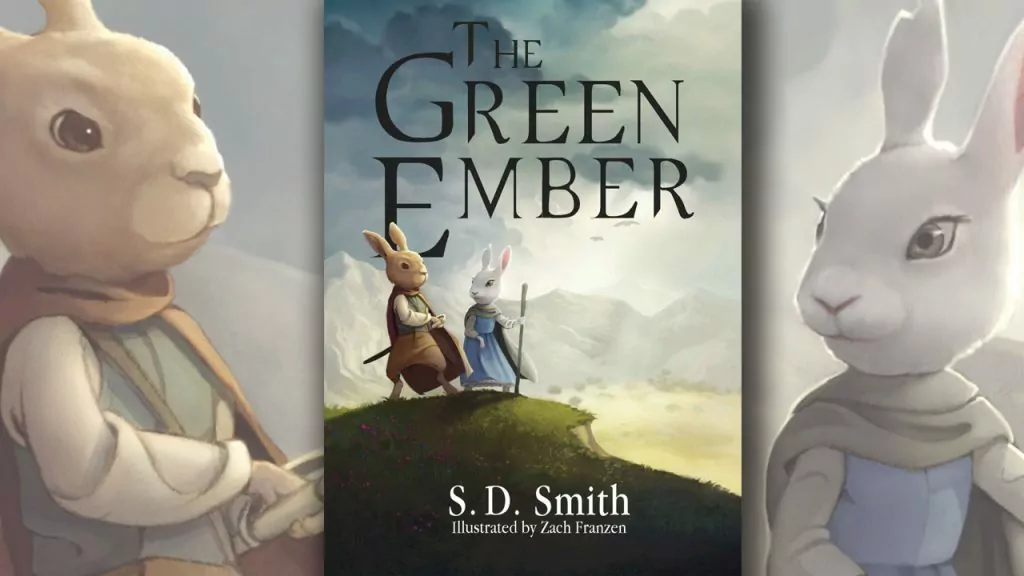
The Green Ember

by S.D. Smith 365 pages / 2015 Rating: Borrow/BUY/Give “Rabbits with swords” – it’s an irresistible combination, and all I had to say to get my two oldest daughters to beg me to start reading. As you might expect of a sword epic, this has a feudal feel, with rabbit lords and ladies, and noble rabbit knights and, of course, villainous wolves. This is children’s fiction, intended for preteens and early teens, so naturally, the heroes are children too. The story begins with siblings Pickett and Heather being torn from the only home they’ve known, pursued by wolves, and separated from their parents and baby brother. It’s this last detail that might warrant some caution as to how appropriate this would be for the very young. It isn’t clear if mom, dad and baby Jack are dead…but it seems like that might well be, and that could be a bit much for the very young (I’m planning on skipping over that bit when I get to it with my preschool daughters). They escape to a community that is hidden away from the ravaging wolves, and made up of exiled rabbits that once lived in the Great Wood. Their former and peaceful realm fell to the wolves after it was betrayed from within, so now these rabbits in exile look forward to a time when the Great Wood will be restored. Or as one of the wisest of these rabbits puts it, …we anticipate the Mended Wood, the Great Wood healed…. We sing about it. We paint it. We make crutches and soups and have gardens and weddings and babies. This is a place out of time. A window into the past and the future world. Though God is never mentioned, and the rabbits have no religious observance of any kind, author S.D. Smith’s Christian worldview comes through in passages like this, that parallel the way we can recall a perfect past, and look forward to a perfected future. It’s this depth that makes this more than just a rollicking tale of rabbits in peril. There are three full-size sequels – Ember Falls, Ember Rising, and Ember's End – as well as five small books that occur in the same rabbit world, but follow different characters. The Last Archer and its sequels, The First Fowler and The Archer's Cup, could serve as a good intro to the whole Green Ember series, because they stand on their own, and were a little simpler to follow for my own young listeners (ages 5-9). That's out of order, but all the kids would have to know is that the rabbits are preparing for an enemy, and most rabbits are suspicious of the Longtreader family, because one of them had been a traitor...though the rest never were. With that backstory, kids can start with this smaller, action-packed volume. The other two, The Wreck and Rise of Whitson Mariner, and The Black Star of Kingston, should be read after reading Green Ember. For those of us with voracious readers, it is quite the blessing to find a fantastic and enormous – more than 2,000 pages in all! – series like Green Ember. ...

Red heart icon with + sign.
Book Reviews, Children’s fiction

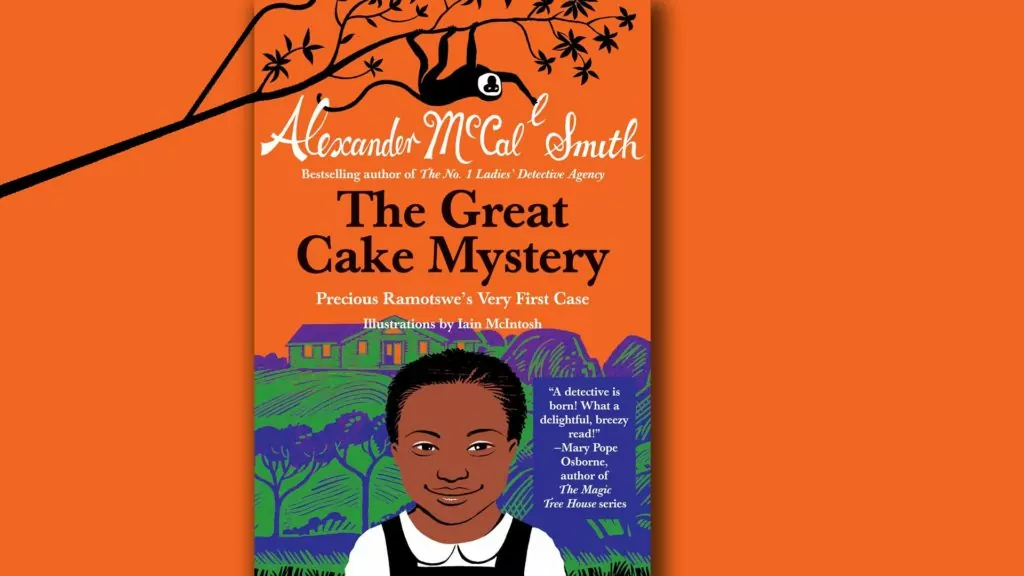
The Great Cake Mystery

by Alexander McCall Smith 73 pages / 2012 Rating: Borrow/BUY/Give Precious Ramotswe must rank up there with some of the best-loved fictional detectives of all time, rubbing elbows with Hercules Poirot, Cadfael, and Father Brown. But as beloved as she is among adults, did you know that the star of Alexander McCall Smith's The No. 1 Ladies Detective Agency is also popular among children? McCall Smith has written a series of mysteries for children, featuring Precious when she was just eight years old. For those who don't already know, Precious lives in Botswana. In The Great Cake Mystery, Precious doesn't think of herself as a detective yet, but her dad thinks she has it in her. So when a classmate is accused - without any proof – of eating someone else's sandwich, she is upset. Precious, you see, is a kind girl who wants to help others. In this case helping means setting a trap to catch the real snack stealer. SPOILER ALERT: Precious bakes a cake full of glue, covers the whole thing with icing, and places the cake outside the classroom "on the shelf where the children left their bags." And not too long afterward the whole class hears the howling cries of the little thieves - monkeys! Precious has saved her friend from the mean accusations of their classmates. And, this being an old-fashioned sort of book, those classmates are truly sorry for what they thought and said. This is a charming book, made all the more so by the folksy illustrations throughout, at least one on every two-page spread. McCall has written four other children's mysteries starring the young Precious, with The Great Cake Mystery billed as "Precious Ramotswe's very first case." (In a confusing twist, that same billing is shared with at least one edition of another book in the series, Precious and the Monkeys. Whether The Great Cake Mystery is the first or not, it serves as a wonderful introduction to the young detective-to-be.) CAUTION We've read two other "young Precious" mysteries so far, and our daughters have loved both The Mystery of Meerkat Hill and The Mystery of the Missing Lion. I had a slightly different take. While I loved the former, I thought the latter was marred by an insertion at the end where they treat a lion as if he were a person. Precious ends up giving a brief lecture about how all lions should live free, including the missing tame lion they'd just recovered, and all the adults side with the child. It is, on the one hand, no big deal - it is only a few pages in an otherwise enjoyable story. But it rankled me because this childish "feel-good-ism" is rampant in our culture, and I don't think we need to be feeding any of it to our undiscerning children. The fact is, a tame lion would most likely die in the wild and a well-treated tame lion is not an oppressed lion. So what Precious proposes is both completely unnecessary and quite likely very harmful to the very lion she wants to help. We're taught that good intentions are what really matters, but God says otherwise (Prov. 27:14) – if our well-meaning efforts cause damage, then we need to stop doing this well-meant damage! CONCLUSION My wife and I didn't know about this brief lecture until we came across it in the audiobook with the kids listening along. It wasn't objectionable enough to stop listening to the book we were already three-quarters of the way through, but if I was buying this series for a Christian school library I would get The Great Cake Mystery and The Mystery of Meerkat Hill, but give The Mystery of the Missing Lion a pass. There are two others in the series but we have yet to read (or listen to) them. I should note that the audiobook versions are truly remarkable, with the reader delivering all sorts of wonderful accented voices. Oh, and if your kids like this series, they might also enjoy a five-book series McCall Smith wrote about Akimbo, a boy who lives on a game reserve in Africa. I've reviewed those here. All, in all, these are books that children even as young as 5 may really enjoy listening to, and 9 year-olds and up could really enjoy reading. Our whole family was thoroughly charmed. This review first appeared on ReallyGoodReads.com....

Red heart icon with + sign.
Book Reviews, Children’s fiction, Teen fiction

Brave Ollie Possum

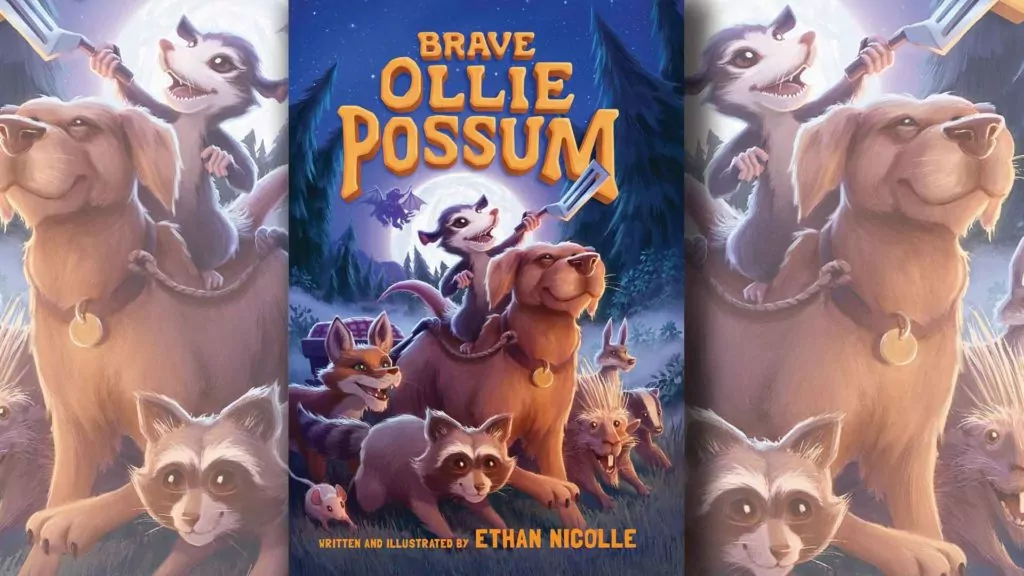
by Ethan Nicolle 373 pages / 2019 Rating: Borrow/BUY/Give If you were ever a scaredy-cat, or if you might have one in your family, this could be a fun story to read together... though you might have to do so during the daytime, with all the lights on. It's about nine-year-old Ollie Mackerelli, who is so afraid of things that go bump in the night that he's taken up permanent residence in his parents' bed. This is about how he learned to be brave. But his transformation doesn't happen quickly. Things start off with cowardly Ollie running to his parents' bedroom yet again to crawl under the sheets with them. That's a safe place to be, but it does come with a cost: three people in a double bed leave his dad with bags under his eyes and a scowl on his face. He wants to know when Ollie is going to grow up and stop being afraid of imaginary monsters. Then, mysteriously, Mizz Fuzzlebuzzle, a very strange, very large lady shows up at the Mackerellis' door. She offers to take their son to a "special go-away fun place where children like Ollie can be taken and all his fears will be gobbled up." Who is this lady? Her card says she specializes in "professional anti-scary therapy and comfortology." Desperate, the sleep-deprived parents hand off their son to the expert, hoping she'll be able to help. But here's the twist: Mizz Fuzzlebuzzle isn't actually an expert in anti-scary therapy. She's actually an ogre. And all those bumps in the night? It's her pet monster making them. Ollie was right all along! But being right won't get him out of the clutches of this ogre. And to make matters worse, she wants to eat him. It turns out scared children are an ogre delicacy. But despite being scared, Ollie gathers enough courage to spray the ogre with one of her own magic potions. Sadly, ogres aren't susceptible to magic potions. People are, though, so when the ogre spits the potion right back at him, Ollie is transformed into a creature that passes out in the face of danger: Ollie becomes a possum. The rest of this rollicking tale is about Ollie, with the help of some animal friends, learning what true courage is: that it's not about being unafraid, but about facing our fears and going on anyway. The author of Brave Ollie Possum is one of the folks behind the Christian satire site Babylonbee.com so the book is every bit as funny as you might expect. Another highlight is the artwork. This is a full-size novel, but it could almost be called a picture book, with fantastic, fun illustrations every three pages or so. CAUTION The only caution I'll note is that this book about being brave is, at times, scary. I think it might be the book I am most looking forward to reading to my children, but there is no way I could read this as their bed-time story, or even in the middle of the day. I'm going to have to wait a bit, probably until they are all at least nine. CONCLUSION But for kids ten and over, particularly boys, this will be so much fun. And for certain 9-year-old kids who are scared of what goes bump in the night, this could be a good day-time read with mom and dad to help a little one learn what being brave is all about. ...

Red heart icon with + sign.
Adult fiction, Book Reviews, Teen fiction

The Winter King

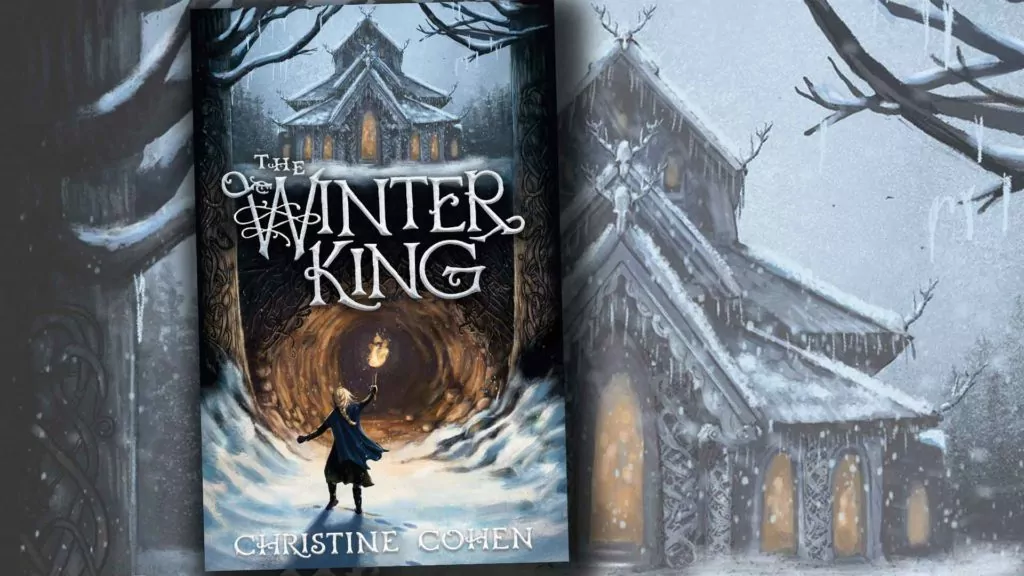
by Christine Cohen 351 pages / 2019 Rating: Borrow/BUY/Give 15-year-old Cora lives in a time of horses, and swords, and meat pies. It's also a time of poverty, and bitter winters, and threadbare clothing, and not enough food to make it through to Spring. To make things even worse, ever since Cora’s father was killed, the village has treated her and her family as if they are cursed, and as if that curse is contagious. But no matter, Cora is resourceful, and she’ll do just about anything to ensure her family lives through the winter. But how does a young girl stand up, by her lonesome, to the village god, the tyrannical Winter King, who is taking their food? I didn’t know quite what to think of this book in the early stages. While the other villagers were religious, Cora was not. And she was the hero. So how was this a Christian book, then, if the god in the story seemed to be the bad guy? Well, as one reviewer noted, this is a very Protestant book in that Cora rejects a false religion in favor of the true one. She rejects the false representation of the Winter King that the village’s religious authorities maintain. But then she uncovers a book that tells a very different story about this King, presenting instead, a God who loves. CAUTIONS Cora is bitter and sometimes manipulative, and so driven to keep her family fed that she does stuff that she should not. There's good reason for her desperation – death is reaching for her whole family – but that it is understandable makes it tricky ground for the younger reader to tread. This is not a heroine in a white hat, and for the pre-teen, or even younger teen reader, used to simpler morality tales, they might not have the discernment skills yet to be able to cheer on a hero whose actions are not always praiseworthy. I feel like I'm making Cora sound darker than she is. There is surely darkness in her – but there is also a darkness around her that she is fighting, futilely at first. And then hope comes. CONCLUSION From the cover to even the way the pages are laid out, this is a gorgeous book, with a deep and satisfying story. I'd recommend it for 15 and up, but I know adults will find this has real depth to it that they'll enjoy exploring. ...

Red heart icon with + sign.
Adult fiction, Book Reviews, Teen fiction

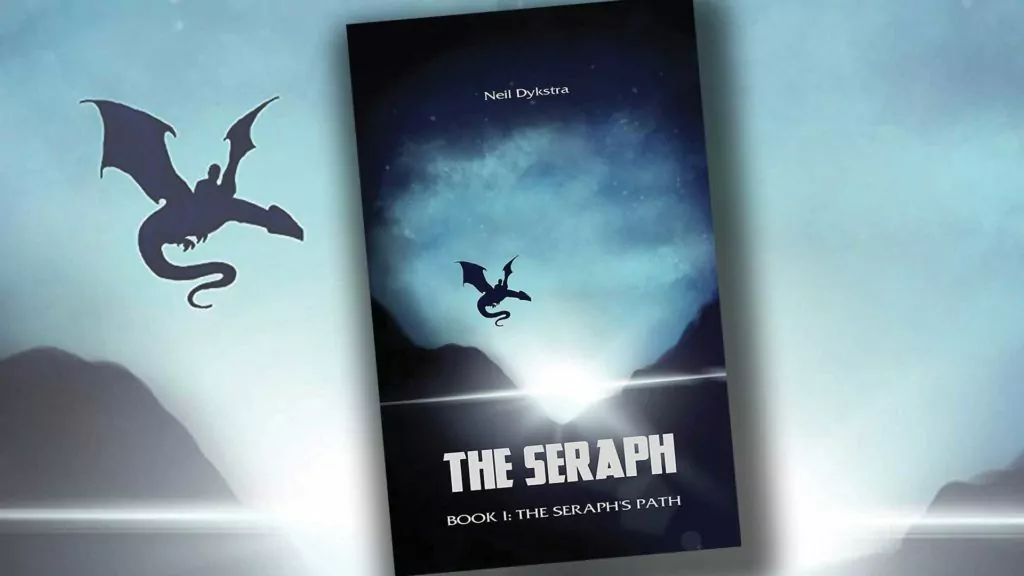
The Seraph’s Path

by Neil Dykstra 2019 / 475 pages Rating: Borrow/BUY/Give Maybe I should have gotten someone else to review this, what with me sharing the same last name as the author. But this is a fantasy title, so I had to take a peek. And once I got started I wasn’t going to hand it off. Besides, the two of us aren’t actually related. I know Neil, but only well enough to recall he is the superior volleyball player, and nowhere near well enough to have had an inkling he could serve up something like this. It’s remarkable! The Seraph’s Path has quite the cast of characters, but it is mostly the story of Dyrk, a young horse trainer who wants to make something of himself, in part, because his parents don’t seem to think about him much at all. Our story begins with Dyrk determined to enter a competition his father won’t even let him watch. Somehow he finagles his way in, and reaches the final round, a free-for-all among 16 mounted soldiers-in-training, with the last man standing guaranteed entry into the King’s own College. I won’t tell you what happens, but I will say that for every good thing that happens to Dyrk something bad soon follows…and vice versa. The wonder of fantasy fiction is that anything can happen. Young children can open a wardrobe and get transported to a world of talking beasts. Or little fellows with hairy feet can be trusted with a mission that the most powerful could never accomplish. Or a horse trainer can suddenly find himself delivering the mail mounted on a flying tarn. The problem with fantasy fiction is just the same: anything can happen. That means if the author doesn’t have a tight hold on the reins the story can run amuck, and quickly lose all connection with the real world. If you haven’t read much fantasy, you might think a world of dragons, gryphons, and flaming swords couldn’t possibly ring true. But the author has pulled it off. In The Seraph’s Path, Dyrk doesn’t understand the opposite sex, and he’s prone to dig himself deeper via ongoing procrastination, and then he can’t figure out how best to ask for forgiveness. There’s something very real about this made-up world. I was also impressed with how patient the author is and I’ll give one example. In this world, the god Arren is served by seven Seraphs. Dyrk sends his prayers via those angelic servants because he thinks Arren is too holy to approach directly. If that strikes you as Roman Catholic-esque, I’d agree. But isn’t Dyrk our hero? So how can he, via his repeated prayers, be teaching us something so very wrong? Well, a few hundred pages in Dyrk has his first encounter with people who talk to Arren directly. And he doesn’t know what to think about that.  By the end of this book, the issue is still unresolved, but our hero has been given something to think about. Caution I can only think of one caution worth noting. At one point a key character faces sexual temptation, and while the passage is not lurid – there’s nothing here that would make grandma blush – it is sad and realistic enough that pre-teen readers might find it distressing. Conclusion Dykstra has engaged in some downright Tolkien-esque world-building, with not only exotic creatures and nations to discover, but layer upon layer of legend and history shaping the events. If you never made it through The Hobbit, or you haven’t read a fantasy book with a glossary in the back to help you keep track of the characters, then this might be too intense a read for you. But if you want a whole new world to explore, and a story that’ll not only entertain but really get you thinking, you’re going to love The Seraph’s Path. I finished this nearly 500-page tome in 3 days, and the only downside to it was the cliff-hanger ending. So I was very happy to discover that the 700-page sequel, The Seraph’s Calling has just been released. I look forward to finding out what happens next! You can buy both books at Amazon.com and Amazon.ca....

Red heart icon with + sign.
Adult fiction, Book Reviews

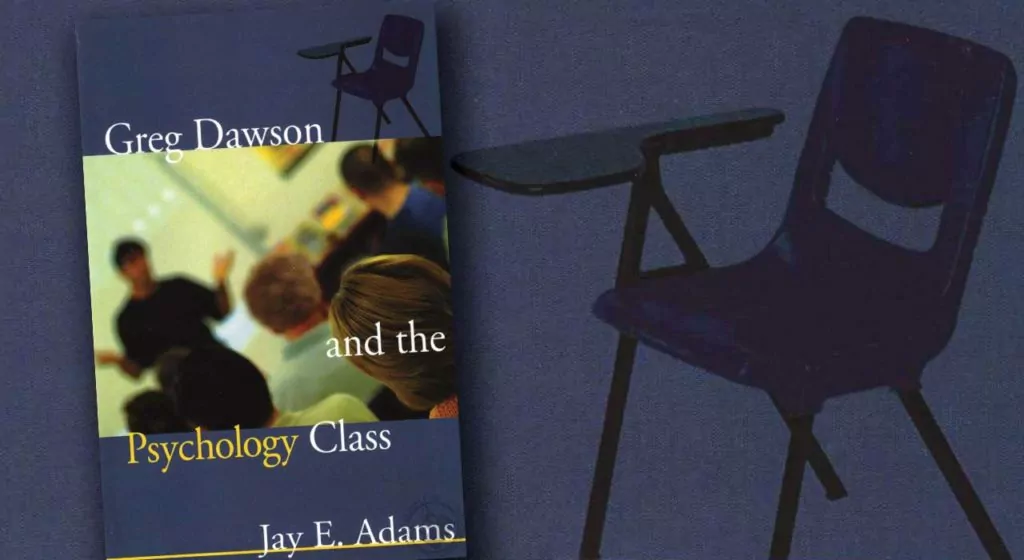
Greg Dawson and the psychology class

by Jay Adams 2008 / 149 pages Rating: Borrow/BUY/Give This is a novel, but it'd be more accurate to call it a textbook masquerading as a novel – the goal here is education, not entertainment. Jay Adams' fictional protagonist Greg Dawson is a preacher who lives near a Christian college. Some of the students want to know the difference between the psychological counseling theories they are being taught and the biblical counseling Greg Dawson uses. Via a series of informal conversations with Pastor Dawson, the students learn that the psychology they’re being taught at their Christian college is built on secular counseling theories. They are asked to consider just how many different secular counseling theories there are. These theories claim to be built on insights into what Man is really like, and yet the different theories disagree with one another, and sometimes wildly. So how are we to evaluate them? Dawson points students to the Bible, asking them to examine how many of the theories line up with a biblical understanding of our inner nature. So long as these secular theories understand Man outside of our relationship with God how can they understand what Mankind is really like? Dawson asks them to also consider that most of these theories don't acknowledge our sinful nature, or understand our purpose here on earth. As the back of the book details, some of the other issues explored include: the difference between apologizing and forgiveness the place of evangelism and faith in Biblical counseling Is all truth God's truth? some specific issues such as depression, mental illness, and marriage Adams is only one of many experts to consult when it comes to biblical counseling. Others include Ed Welch, Heath Lambert, Wayne Mack, Paul David Tripp and David Powilson. But this book is an ideal introduction to the subject – the novel format makes for an easy, yet highly educational, read. And if you like this one, you'll be interested to know Jay Adams has written two other "Greg Dawson" novels: The Case of the Hopeless Marriage and Together for Good: Counseling and the Providence of God....

Red heart icon with + sign.
Adult biographies, Book Reviews

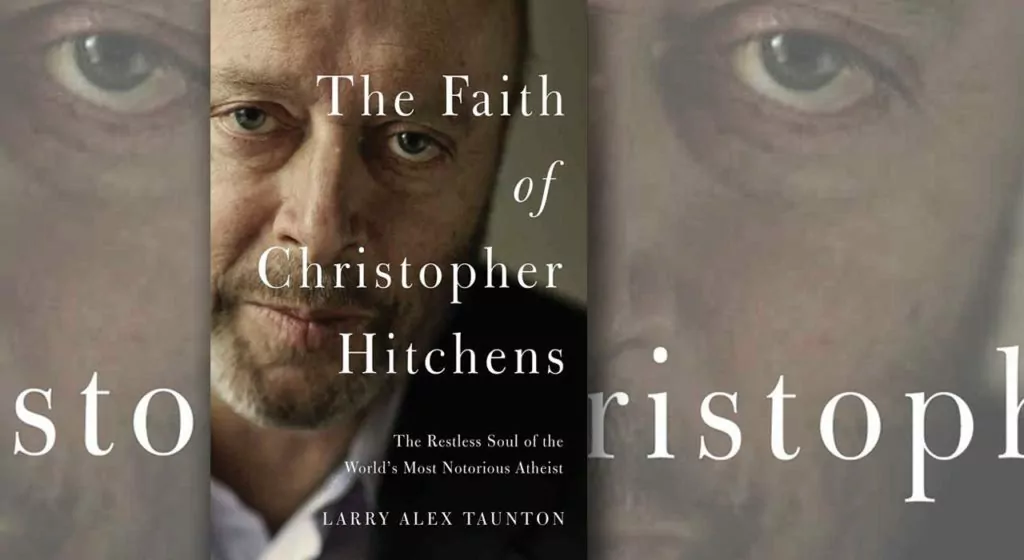
The Faith of Christopher Hitchens

by Larry Taunton Biography 181 pages / 2016 Rating: Borrow/BUY/Give The late Christopher Hitchens is best known for his book god is not Great: How Religion Poisons Everything. He was an aggressive atheist who made his living blaspheming God. So why would we want to know more about him? And why would Christian author Larry Taunton want to write a book about him? Because this book is much more about God’s graciousness than it is Hitchens’ rebellion. And because Hitchens wasn’t quite what he seemed. Taunton writes of Hitchens having “two sets of books” just as fraudulent accountants do, with the one set for the viewing public, and the second private set that gives the true tally. Hitchens’ public face was that of the confident anti-theist who thought it made good theater to claim God was both unforgivably evil and non-existent. Meanwhile, the private Hitchens was spending more and more time with God’s followers, calling some of them friends, and even studying the Bible with one or two. If he wasn’t deliberately seeking God, this other Hitchens’ interest in the truth was bringing him closer and closer to his Creator. The author, Taunton, got to know Hitchens after arranging public debates between Hitchens and prominent Christians. Often times after these debates the two public combatants, Taunton, and others, would head out to a late dinner where the debate would continue. This is how Taunton and Hitchens became friends. When Hitchens was diagnosed with terminal cancer the late-night debating seemed more important to them both. God not only brought Christians into Hitchens' life, He also gave this materialist a sure knowledge about the reality of evil. The atheistic/materialistic worldview has no room for right and wrong – things just are. We don’t speak of chemical reactions as having any sort of “moral quality,” and in the atheist worldview all we are is chemical reactions. So when atheists speak of evil they are speaking of something they have no explanation for. Hitchens seemed to understand this, but, particularly after the 9/11 terrorist attack, was also certain there was evil. Hitchens bravely denounced radical Islam, which lost him friends among the Left but more importantly exposed – seemingly to Hitchens himself – the big hole in his godless worldview. It was another nudge in a Godward direction. While Taunton doesn’t make any claims about a deathbed conversion for one of the world’s most notorious atheists, he shows us that God was ever so gracious to Hitchens, teaching and confronting him repeatedly. We don’t know if Christopher Hitchens ever repented, but we do know God gave him every opportunity. Caution The only caution I’d note is that some of the Christians noted in the book – some who debated Hitchens and gave him something to think about – have some notable flaws in their theology, the most common being some sort of bow to theistic evolution. This isn’t much of a concern in this book but I share this only as an alert to any readers who might be spurred to look up the works of some of these mentioned men. Conclusion This is a close-up look at a wavering atheist that concludes without a clear happy ending – that makes it strange, particularly for a Christian-authored book. But the glimpse at what God was doing in Hitchens’ life makes this a compelling book. God gave Hitchens time, allotting him 16 months after his initial terminal cancer diagnosis; He brought him into close company with men who were able to answer his objections, and He also made Hitchens aware of evil. Why read The Faith of Christopher Hitchens? Because one can’t help but be struck by God’s graciousness in the life of Hitchens....

Red heart icon with + sign.
Children’s fiction

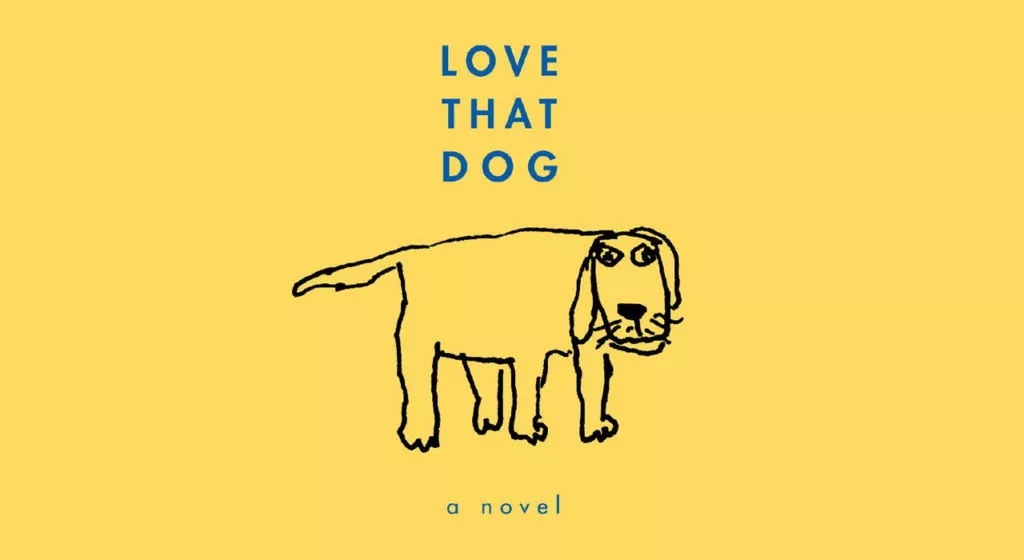
BOOK REVIEW: Love That Dog: a novel

by Sharon Creech 2001/ 86 pages Rating: Borrow/BUY/Give A review of a read-aloud book, to be read aloud. ***** As I started reading the very first page of this book, I thought it was dumb. I’ve never been a fan of poetry, particularly if it was the type of poetry that didn’t even rhyme. And that’s what was in this book. But I kept reading and found out, on that very first page, that the author agreed with me! The book is by Jack, a boy in elementary school, who doesn’t like poems either. Each day he writes a journal entry, for his teacher Miss Stretchberry, and there on the very first page, in his first entry, he tells her his thoughts on the poem they have just read in school. He writes: If that is a poem about the red wheelbarrow and the white chickens then any words can be a poem. You’ve just got to make short lines. It was a book of poetry, by a boy poet, who didn’t like poetry! So I kept reading, and I started learning. Jack’s teacher showed his class poems. Some did rhyme, some were by famous writers, and some weren’t very good at all. But I started learning, along with Jack, that poetry doesn’t always have to rhyme, or even have a set rhythm. Sometimes it can just be a different sort of way to express your thoughts, to lay them out, so people understand them better.  Poetry can be easier then teachers sometimes make it. And it can be powerful. And it can make you cry. I started reading this book, about a boy learning about poetry, and making poems, and expressing beautiful thoughts about his beautiful dog, and by the time I got to the end of it I realized it wasn’t dumb at all. Love that book....

Red heart icon with + sign.
Book Reviews, Children’s non-fiction

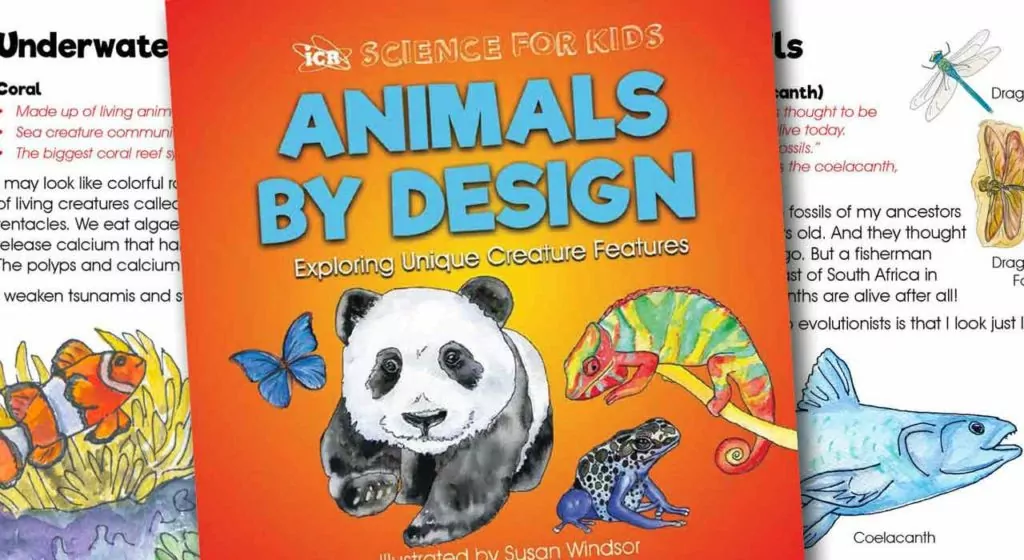
Animals by design: exploring unique creature features

by ICR illustrated by Susan Windsor 125 pages / 2018 Rating: Borrow/BUY/Give Mexican walking fish, lantern fish, immortal jellyfish, and zorses – those are just some of the crazy creatures featured in this fun little book. Every two-page spread showcases another animal, and even when it’s one you’ve heard of before, there’s sure to be cool details that’ll surprise you. Animals by Design is published by the Institute for Creation Research. That means that, in addition to all the fascinating facts, a clear Christian perspective is also included. The point of this book is to introduce our children to how awesome our God is: hey kids, just look at the amazing, bizarre, surprising, unique, and simply astonishing creatures He’s made! This has been sitting on our coffee table, off and on, for a few months now, and it turns out I was the only one in the family who hadn’t been regularly reading it. My wife and girls had all been taking turns flipping through it. It’s an easy book to dip in and out of – it doesn’t require a big time commitment – because each animal can be read on its own. So, maybe this time I’ll learn a little about zorses, and the next time I sit down at the couch, I can always find out then what makes an immortal jellyfish immortal. The colorful drawings will appeal to kids but it’s a kids book that mom and dad and anyone interested in animals or science will love too. In the US you can find it at ICR.org and in Canada you can order it through the Creation Science Association of Alberta.                  ...

Red heart icon with + sign.
Book Reviews, Teen fiction

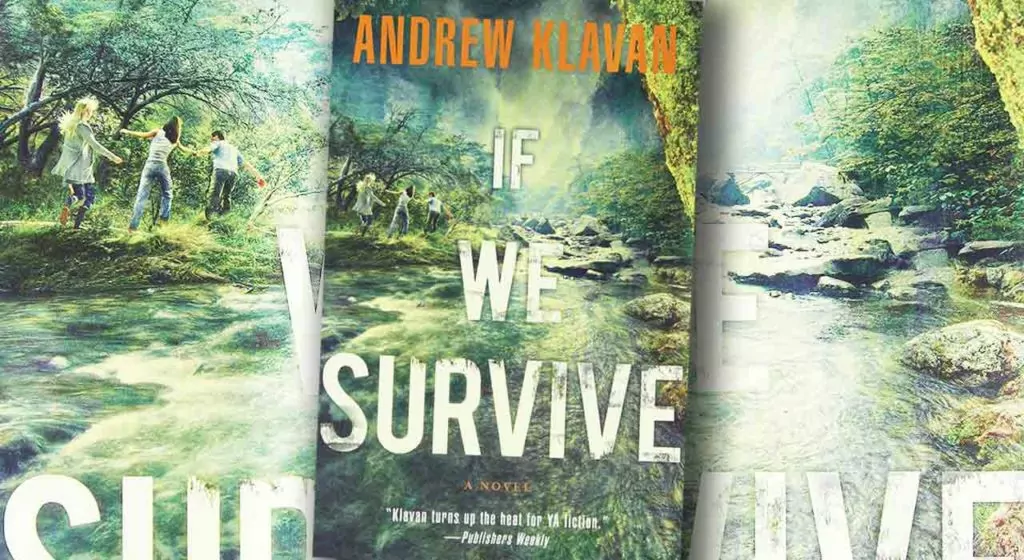
If we survive

by Andrew Klavan 352 pages / 2013 Rating: Borrow/BUY/Give "We came to Costa Verdes to build a wall. I just wish I could tell you that all of us made it out alive." Will Peterson is a 16-year-old visiting a small Central American village with his church's mission team, there to help rebuild the local cinder-block school. They've finished the work and are waiting in the cantina for the bus to take them back home when the room is suddenly filled with rebel soldiers and the pot-bellied, smiling waiter, who had been joking with them only moments before, is now on the floor, shot dead by the rebel leader. What happens next is a not-so unusual chase-type adventure. The rebels have taken over the government and are executing anyone for any reason, and they don't want to let any American witnesses get out of the country alive. So now these church kids, along with an unexpected helper, are on the run, barely staying ahead of these murderous bandits. What makes this something special is the characters in it. The most intriguing might be Jim Nolan, a 16-year-old intellectual who has read the biography and op-ed articles of the country's rebel leader...and who believes everything he's read. Even when the rebels start killing people, Jim is sure they're fighting for justice. Even when the guns are turned their direction, he's just as sure that it's all a horrible mistake, and if he can only talk to someone, things can be straightened out. Jim steadfastly holds onto his rebel sympathies despite all the bloodshed around him. Author Andrew Klavan makes clear why Jim remains so loyal: because a lot of what he's being reading, about how the government was oppressing the country's poorest, is entirely true. Klavan isn't taking a cheap shot at the naivety of liberals here – this is a more nuanced look that admits the problems the Left points out might well be problems, even as the solutions they suggest are no solutions at all. Or, in the context of this story, just because the government is bad doesn't make the rebels good. That’s an important lesson for Klaven’s target age group to learn, as teens (and many an adult too) will often stake their ground, not on God’s Truth, but simply as a knee-jerk reaction against lies they’ve been able to see through. Christians need to understand that the opposite of a lie is not necessarily the truth – as was once said, there are two ways to fall off a horse, and to react against one lie might well be to overcompensate and fall for the equally wrong but opposite error. Will is also a well-developed character. He came on the trip as a way of escaping his home life: mom and dad are always arguing and, he thinks, on the path to divorce. But now, unbelievably, things have gotten a whole lot worse, and as Will and the others bounce from one crisis to another, he has to battle a very understandable sense of panic. He does so by remembering two things: a Hemingway quote that cowardice is "a lack of ability to suspend the functioning of the imagination." advice from his youth pastor, who once told the group, "Don't worry about anything – pray about everything." CAUTIONS While praying is always good advice, the way Will's prayers are depicted in the story makes it seems like it is more the act of praying, and not the God he is speaking to, that really helps Will. Another caution worth noting is that while the church mission group is Protestant (and seemingly some sort of conservative Evangelical) there are positive, if brief, portrayals of other religions. This includes Roman Catholicism, in which a priest has a key role in saving them, and the villagers' ancient spirituality, when the missions group is invited to sit in on a pagan festival of lights. However, Will keeps to the facts, describing what they see, but not digging into what it all means. A discerning reader would have reason to presume Klavan believes Roman Catholicism isn't importantly different from Protestantism, but that isn't a message the author is trying to hammer home here. CONCLUSION This is a gripping read that any teenage boy would really enjoy, and dad won't mind either. And if dad does join in, this could be a leap off point for some really good conversations about: the American role as policeman of the world one-sided news coverage, both from the Left and Right, and how that compares to what God tells us about the importance of hearing both sides in Prov. 18:17 courage and what it really involves what prayer to God is actually why we find nice people following other gods, or worshipping God in wrong ways So, overall, I'd recommend this for teen guys with a little discernment, and a willingness to talk things through with their parents....

Red heart icon with + sign.
Adult non-fiction, Graphic novels, Teen non-fiction

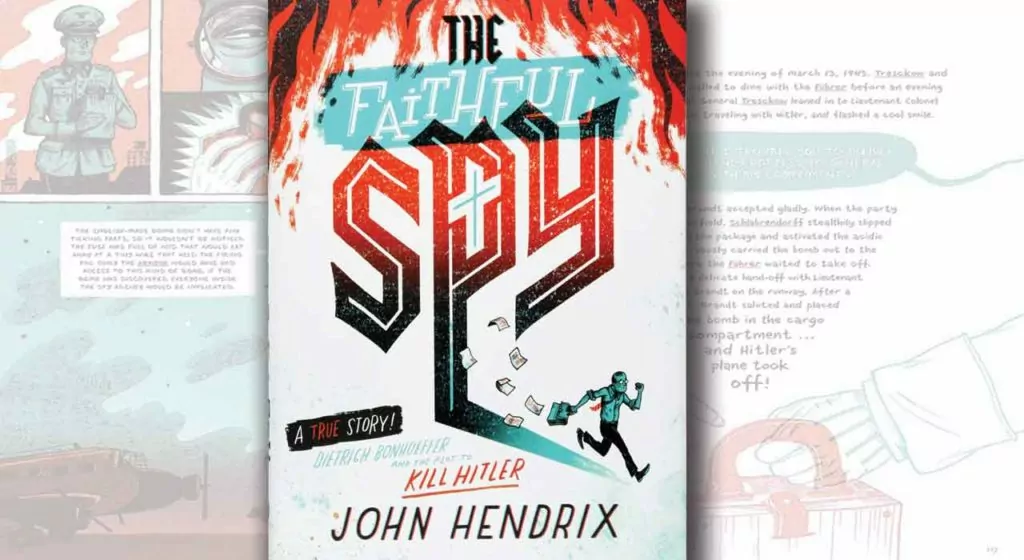
The Faithful Spy: Dietrich Bonhoeffer and the plot to kill Hitler

by John Hendrix 176 pages / 2018 Rating: Borrow/BUY/Give  The world “pastor” is not often paired with words like “plot” or “kill.” But when the Nazis took over Germany, and used nationalism and intimidation to silence its churches, and then set out to conquer the world, Pastor Dietrich Bonhoeffer had to do something. And he felt himself pulled to do what would once have been unthinkable to him: Bonhoeffer joined a conspiracy to kill his country’s leader, Adolf Hitler. At 176 pages, and text-dense, author John Hendrix has a lot of space to explore Bonhoeffer and his time.  He starts with his birth and family life, before showing how World War I impacted the Bonhoeffers – one of Dietrich’s older brothers was killed – and how the runaway inflation that came shortly afterwards destroyed everyone’s savings. In 1921 a German could exchange 75 marks for 1 US dollar, but by the end of 1923 to get that same US dollar he would have to bring a wheelbarrow, or maybe a dumptruck, to carry the 4 billion marks that’d now be needed. Money, jobs, and hope were scarce, and this set the scene for the rise of Hitler. Germans wanted a way out, and Hitler presented himself as a savior. Meanwhile, Bonhoeffer was learning, via travels in Europe and America, that a love for one’s country doesn’t mean you have to support everything your government does. So when the Nazis, only a few months after they came into power, fired Jews from any government positions, Bonhoeffer was one of the few church leaders to speak out. He published a public paper called “The Church and the Jewish Question” in which he laid out an explicitly Christian justification for resisting the government. He described three ways the Church can and should respond to an evil government. Question the State and its methods: a True church must reject government encroachment on its beliefs Aid the victims of State actions: the Church has an unconditional obligation to the victims... Strike back: it is not enough to just bandage the victims under the wheels, but to put a spoke in the wheel itself! As you can tell, this “comic book” gets into some big and heady topics. What’s more, “how to deal with a hostile State?” is a topic of growing relevance these days. That makes this an important book, but also one that should be discussed between parent and child. There is some serious theology here, and while the general thrust is right on – we owe our allegiance first and foremost to God, even if that means resisting the State – what exactly it looks to live that out, back then and today, is a topic too weighty for a teen to work out on their own. This is a graphic novel worthy of both a teen and adult audience. The thought and research that’s has gone into it is evident throughout. Even the coloration of the book is fascinating, with Bonhoeffer consistently shown either in teal or with a teal background, the Nazis always highlighted with the use of red, and when death makes an appearance there is a predominance of black. I’d recommend The Faithful Spy for any teen who has begun to think on big issues, and anyone anyone interested working through what it means to live to God’s glory in tumultuous times. ...

Red heart icon with + sign.
Adult fiction, Book Reviews, Teen fiction

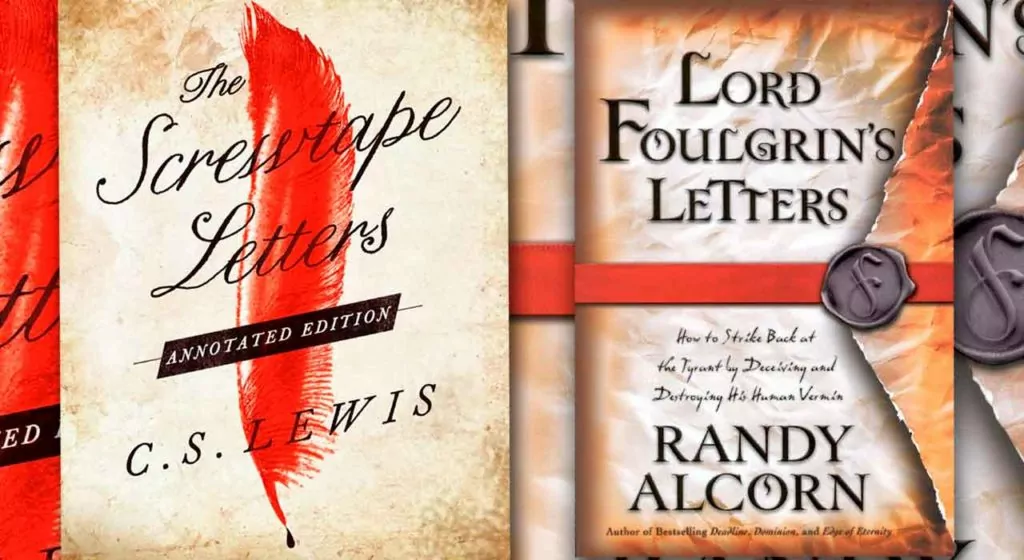
Lord Foulgrin’s and Screwtape’s letters: why you should read this devilish correspondence

The Screwtape Letters by C. S. Lewis 1942 / 200 pages Rating: Borrow/BUY/Give Lord Foulgrin's Letters by Randy Alcorn 2001 / 208 pages Rating: BORROW/Buy/Give Normally, we don’t appreciate people going through our personal correspondence. However, from the 1600s on, people have been fascinated by other people’s letters, whether real or fictional. In Screwtape Letters, C. S. Lewis used the device of the correspondence between two devils to make his own points about the kind of temptations faced by human beings, temptations that may well have been orchestrated by hell itself. (See the description of the tongue in James 3!) More recently, Randy Alcorn, who admits his debt to Lewis, has created his own more involved version of the same story, titled Lord Foulgrin’s Letters. Should we delve into this darkness? If you are considering reading either of these books, you may have two questions ringing alarm bells in your head. One is essentially negative: Does anyone have any business looking that deeply into the nature of evil, especially demonic evil? The other is skeptical, but basically positive: What can a look at the topsy-turvy perspective of the evil one tell us about the way life should be? So, first, is it dangerous to look at evil too closely? The apostle Paul certainly implies that we should not focus on evil, but on good, when he commands us to think about things that are “noble, ...right, ...pure, ...lovely, ...admirable, ...anything... excellent or praiseworthy” (Phili. 4:8, NIV). Paul also tells the Ephesians that “it is shameful even to mention what the disobedient do in secret” (Eph/ 5:12). So one might ask why C. S. Lewis and Randy Alcorn didn't choose to write about angels instead of focusing on demons. Lewis answered that question, explaining that he felt that it was impossible for him to write authentically about angels, since he, as a sinful man, could not well portray the absolute submission of angels to God’s will. However (sadly), we all know far too well what devilish thoughts and desires must be like, since by nature we are also in rebellion against God. Alcorn, on the other hand, does include a letter from one of God’s angels in his book, but you’ll have to read the book to find out whether or not this "works." Do not be naive...  Lewis’s words do give us an idea of why looking at devils might be useful for a Christian. To realize that temptation often has a demonic source may help us take our own sin and misery more seriously, something the Heidelberg Catechism points out is all-important knowledge (Lord’s Day 2). And while it may be shameful to self-righteously focus on others’ sins (see Matt. 7:1-5), we must be aware of our own sinful weaknesses, lest we fall prey to them. Lewis and Alcorn’s books echo the great truth of Eph. 6:12, that we are in the midst of a “struggle... against the spiritual forces of evil in the heavenly realms.” The Screwtape Letters and Lord Foulgrin’s Letters may even be seen as obeying the command of Philippians 4:8 when we realize that Lewis’s and Alcorn’s devils cannot help speaking about whatever is noble, right, pure, lovely, admirable, excellent and praiseworthy. Of course, they speak in enmity rather than awe, but as long as we accept whatever they reject, we can learn much from their malicious advice. Alcorn takes it one step further Alcorn’s book is particularly interesting, because it carries Lewis’s premise just a little further. Whereas Lewis sticks to letters written by a senior devil to his protege during World War II, Alcorn alternates letters with chapters of narrative about the family targeted by Foulgrin, and sets the story in our own time, with references to e-mail and teenage despair. Even more importantly, while Lewis’s account takes us up to the moment of conversion of a non-Christian, Alcorn deals with the demons’ reaction to the conversion of the central human character, especially their attempt to make him an ineffective Christian. What this means is that Alcorn deals with two issues that Reformed Christians also struggle with now: how to react to the world, and how to respond to God in our spiritual life. For instance, at the same time as Foulgrin extols the danger of pornography on the web, of broken families, of consumerism and materialism, he also rages against the “sludgebags” whom God gives physical bodies. Through Foulgrin’s words and the narrative chapters, we see both the temptations of worldly pleasures and the true beauty of the pleasures God gives us in this physical life: the taste of a fine meal, the touch of a loving husband in a foot massage for his pregnant wife, the sight of a sunset, and the smell of freshly baked chocolate chip cookies. Alcorn thus attacks both the attitude of Christians who mistrust enjoyment in life and the foolishness of those who think that we can experience the world on the world’s terms, and not be influenced by that world. Foulgrin gleefully mocks the stupidity of Christians who know that viewing someone else’s nudity and sexual intimacy is wrong, but do not flinch from seeing the same in a movie. He is, of course, immensely pleased also by parents who keep poisonous household products on the top shelf to protect their children, but who pay no attention to the toxic ideas their children ingest through the Internet and the music they listen to. Alcorn also uses Foulgrin’s warnings to his student Squaltaint to show what the demons shudder at in the Christian life. Foulgrin advises Squaltaint to keep his human charge Jordan Fletcher away from “the forbidden Book” (the Bible) and “the forbidden squadron” (the communion of saints in the local congregation). He warns Squaltaint not to let Fletcher draw close to God in prayer, not to let Fletcher read good Christian fiction, not to let Fletcher think of his life (his time, his thoughts and emotions, his money) as belonging to God rather than himself. Cautions and conclusion Are there still problems with reading about life from a demonic perspective? Any concerns with this way of writing about the spiritual and moral life of a Christian may be allayed by the fact that both Lewis and Alcorn show their demonic title characters losing in the ultimate sense. The only other problem that Reformed Christians might have with both these books is that they seem to imply that conversion is a matter of man’s free will – the error of Arminianism. Whether this Arminian tendency is simply the devils’ mistaken understanding is not clear, but Lewis at least seemed to be Arminian in his other writing (even while demonstrating that his own conversion was a result of God’s persistence rather than his search!). Despite this quibble, I would recommend both these books to any Christian who is open to considering just how effective and consistent his or her own Christian walk is, and in what areas he or she needs to plead for God’s Spirit to work “against the spiritual forces of evil in the heavenly realms.” Below is a 8 minute adaptation/preview of Lewis's "The Screwtape letters." ...

Red heart icon with + sign.
Children’s non-fiction, Children’s picture books

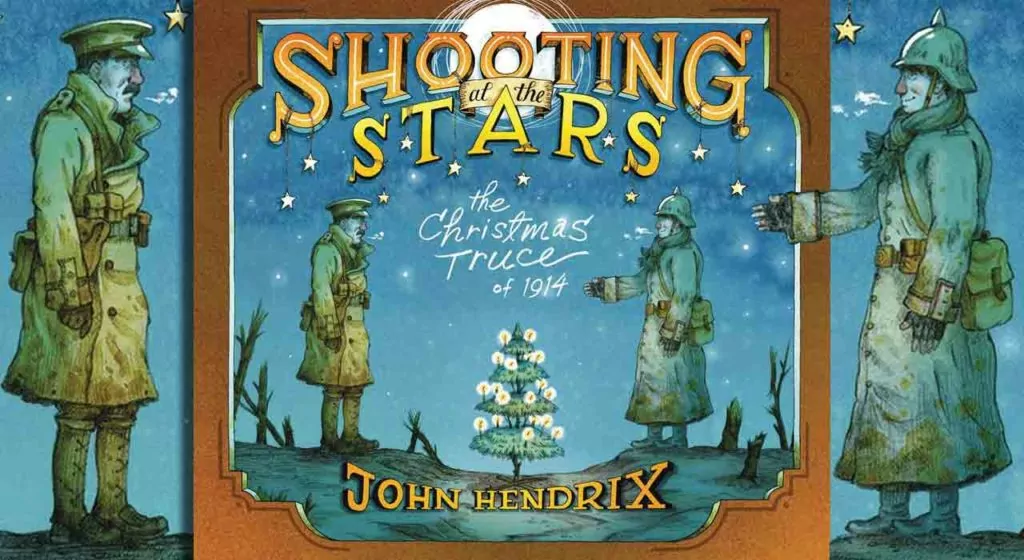
Shooting at the Stars: The Christmas Truce of 1914

by John Hendrix 40 pages / 2014 Rating: Borrow/BUY/Give I was raised with stories of the Dutch Resistance and the Canadian liberators fighting against the brutal Nazis – war, it seemed, had clear villains and obvious heroes. Later, though, I learned that right and wrong in war can be far more confusing: for example, in recent years we’ve seen US-backed groups fighting other US-backed groups in Syria. John Hendrix’s Shooting at the Stars: The Christmas Truce of 1914 presents parents with a tool to give our children a more nuanced understanding of war. In a style that is halfway between realistic and cartoon, the author tells us the events of Dec. 24 and 25, 1914. On the day of Christmas Eve, 1914, all along the frontlines, the shooting slowed, and that night the Germans could be heard singing Stille Nacht, Heilige Nacht – “Silent Night, Holy Night.” Then the next morning, on Christmas Day, in spots up and down the frontlines, German, British, and French troops spontaneously came out of their trenches and celebrated Christmas together. The next day they returned to killing one another. Does that make this book sound anti-war? I’d say it is more an underscoring of just how horrible war is. Fighting is sometimes necessary, which is why we are grateful for the courage of the Dutch Resistance and the Allied forces in World War II, who understood that stopping the Nazis was worth risking, and even giving, their lives. We need to remember their sacrifice because it was noble, and selfless, and good. But if war gives us examples to admire and imitate, there is also much that is foolish, and which we must learn to avoid. To give our children a more complete understanding of war, we need to show them that there are those who, under the guise of patriotism, rush to war even though war should always be a last resort. There are leaders who do not treat their young men’s lives as precious, and World War One is an example of that right up to the last day when 11,000 soldiers died in fighting that occurred after the peace treaty was signed. Commanders who sent their men out on offensives on that last day – some from our side – should be remembered as murderers. Shooting at the Stars is a gentle way of teaching the ethical complexities of war. It is gentle in that no blood or gore is seen (making this suitable for maybe Grade Three and up). The most war-like illustration occurs on a two-page spread where we see three corpses, as soldiers on both sides work together to bury their dead. What is striking is simply that there were men on both sides who could praise God together one day and fight to the death the next. That is a shocking bit of history. And it needs to be remembered. Jon Dykstra and his siblings blog on books at ReallyGoodReads.com....
Red heart icon with + sign.
Children’s picture books, Parenting

3 picture books that tackle anxiety, anger, and failure

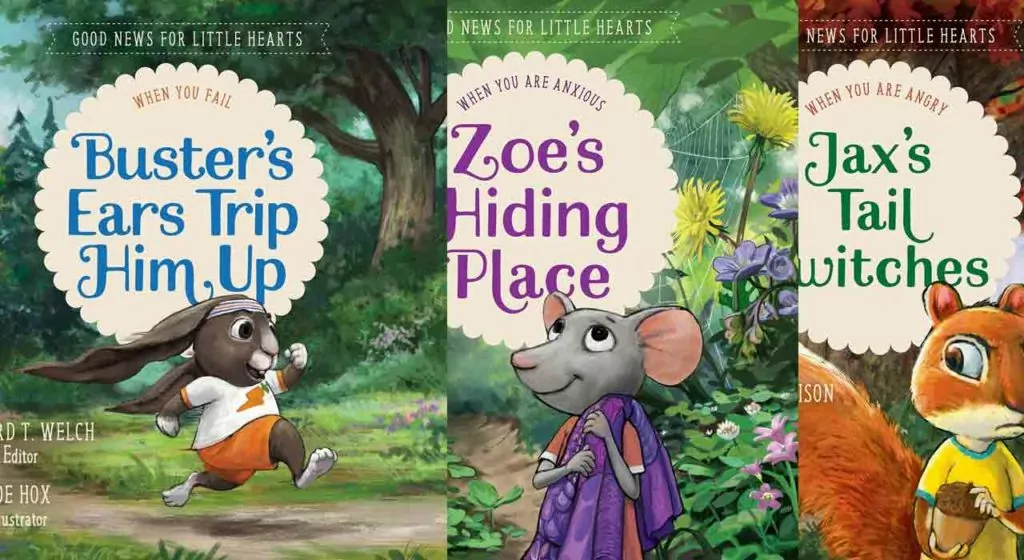
Children get anxious. And angry. And they can get frustrated when they fail. As adults, we often struggle with these same emotions, and sometimes we don't do all that well with handling them. Which makes it that much the harder for us to teach our children what to do. That's why this series of pictures books, from the Christian Counseling and Educational Fund (CCEF) are a welcome resource. Not only are they a tool for parents to help children, they can help us adults too. There is good advice in these pages, pointing us straight to the One who can really help. Zoe's Hiding Place: When you are anxious edited by David Powlison illustrated by Joe Hox 32 pages / 2018 Rating: Borrow/BUY/Give The story is about a little mouse named Zoe who's worried about a school trip to the art museum. The last time the class went, she became so fascinated by one painting that she lost track of where the rest of the group went. Then, when she looked up, no one was around, and "It felt like I was alone forever!" She's scared it will happen again. So now she's retreated to her hiding place – under the covers in her bed. How can Zoe deal with her fear and worry? Her mom begins by listening. That's a good start. Then she explains to Zoe that what she is feeling is understandable. But when worry makes us feel like we're all alone, that's not true – God is always with us, and will never forsake us. Mom tells Zoe she can "turn each fear into a prayer" because God will help her. Her mom also helps Zoe think through ways she can stay with the group and not get separated. In the back of the book, the moral of the story is developed further with a two-page message to parents on "helping your child with anxiety." There the editor of this book, David Powlison – a very well-respected biblical counselor – has included a list of 10 "things to remember that will bring comfort to you and your child." Thoughts include: Recognizing that in this world "We have good reason to be anxious and worried." The most frequent command in the Bible is 'Don't be afraid.' Reminding your child that the Lord has listening ears. This is a wonderful book, meant for kids, but helpful for adults too. And the absolutely stunning pictures make this a pretty special morality tale. Yes, this is more an educational tool than an entertaining read. But it is a pretty entertaining read too. And the pictures are so fun to look at, a couple of my daughters have been paging through it regularly. I'd recommend Zoe's Hiding Place to any parents trying to help a child through worry or fear. With its firm grounding in Scripture, this will be a real help to both the child and the parent. For a 10-page preview of the book, you can check out this link here. Two others There are two other books in the CCEF's "Good News for Little Hearts" series, on failure and anger. Buster's Ears Trip Him Up is about dealing with failure. Buster is a speedy rabbit who thinks that winning is everything, so when his long ears trip him up and he loses the big race, he doesn't know how to deal with it. Fortunately, he has a big sister, and a wise father, who both know how to help him deal with failure. They remind him that God loved us before we had ever done anything so it really isn't about our accomplishments, but rather what Jesus accomplished on the cross. You can read a 6-page sample here. Jax's Tail Twitches is about when we are angry. Jax is a squirrel whose big brother is pestering him and that makes him mad. What's worse, the neighbors next door are taking their nuts without asking, and that makes his dad mad. But even when there is good reason to be angry, our anger is, most often, the wrong response to this wrong situation. This is a lesson that mom and dad can certainly benefit from, even as we share it with our children. You can read an 8-page excerpt here. I'd recommend all three of these book as wonderful tools for parents to read with and discuss with their children. The stories are solid, the artwork incredible, and what it teaches is biblical, helpful, and accessible. Jon Dykstra and his siblings blog on books at ReallyGoodReads.com....
1 2 3 4