Transparent heart icon with white outline and + sign.

Life's busy, read it when you're ready!

Create a free account to save articles for later, keep track of past articles you’ve read, and receive exclusive access to all RP resources.

White magnifying glass.

Search thousands of RP articles

Helping you think, speak, and act in Christ.

Open envelope icon with @ symbol

Get Articles Delivered!

Helping you think, speak, and act in Christ. delivered direct to your Inbox!


Red heart icon with + sign.
Adult fiction, Teen fiction

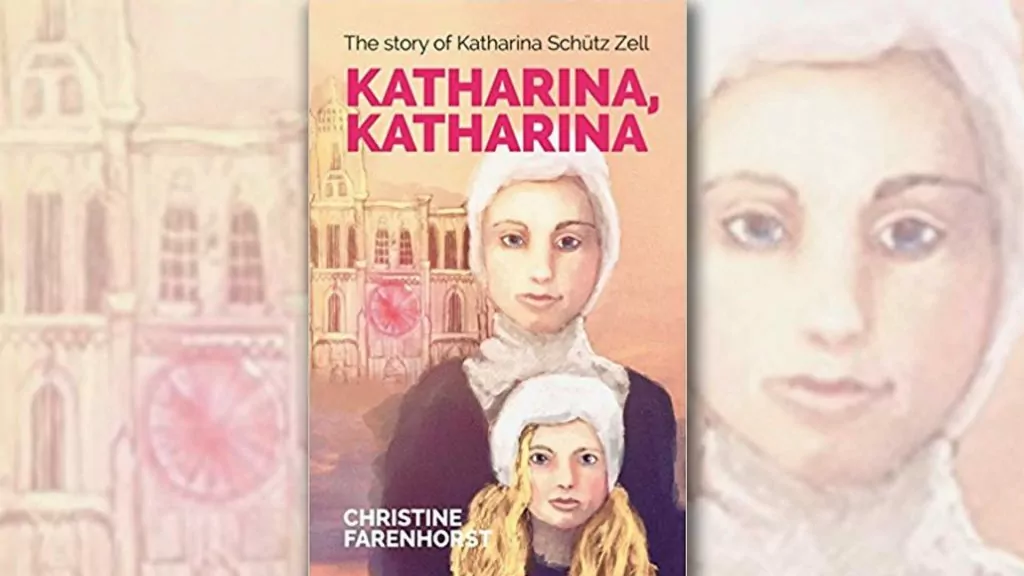
Katharina, Katharina: the story of Katharina Schutz Zell

by Christine Farenhorst 328 pages / 2017 Rating: Borrow/BUY/Give In the past year, inspired by the 500th anniversary of Martin Luther nailing up his 95 theses (or did he?) I've read about a dozen works on Luther. This is a favorite. One reason I love it so, is because it offers something very different from the others – this about is Luther and his time, but he isn't the main character. He isn't even a minor character, never making an in-story appearance. The events take place miles away from Luther's Wittenberg, in the French city of Strasbourg, on the border with Germany. The story centers around a middle daughter of the middle-class Schutz family. Like their neighbors, the Schutz's read and discuss Luther's pamphlets. By taking a step back from the man himself, author Christine Farenhorst (as regular RP readers will know, she is a long-time contributor to the magazine) give her readers the opportunity to encounter Luther's ideas in much the same way as the people of his time did. They didn't debate his ideas at the start, so much as wonder what to think of them. Some of his points they could readily agree with – many saw a need for at least some sort of reformation of the Church. But his thoughts on indulgences... might he be right? We follow the title character from childhood up until her mid-twenties. Though Katharina Schutz is a real person, this is historical fiction – all the big events are true, but the day-to-day details of Katharina's life have been made up. This is why, even as a background character, Luther still dominates the story. Katharina's life is fascinating reading but because much of it is speculative, it serves as the foundation while what we learn about Luther here is his real, actual history. One of the strangest bits of true history in the book is the dancing plague of 1518 that hit Strasbourg. Victims couldn't help but dance. It would have been funny except that this stilted, clumsy dancing never stopped - as many as 400 dancers kept going for days and days, beyond exhaustion, and even to the point of heart attacks and strokes. Target audience This is a teen to young adult book, but like any good children's book, adults interested in their church history will find it fascinating. However, as a third of all children at that time died before they hit age 5, there are some parts to Katharina's story that would be bawl-inducing to anyone under, say, 10. The somewhat slow beginning – it took until chapter 4 to really grab me – also makes it better suited for readers with a little maturity to them. That said, one of my daughters loved it as a 12-year-old, and had re-read it a couple of times since. Conclusion There is a real benefit to learning about Luther in this one-step-removed fashion. I was fascinated by what I learned about the people and culture of that time. It gave me a deeper understanding of the pressures that Luther faced, and insights into how God prepared the ground for the Reformation Luther sparked. It is a fascinating story that I look forward to reading with my daughters. This review first appeared on ReallyGoodReads.com. ...

Red heart icon with + sign.
Adult non-fiction, Book Reviews, Teen non-fiction

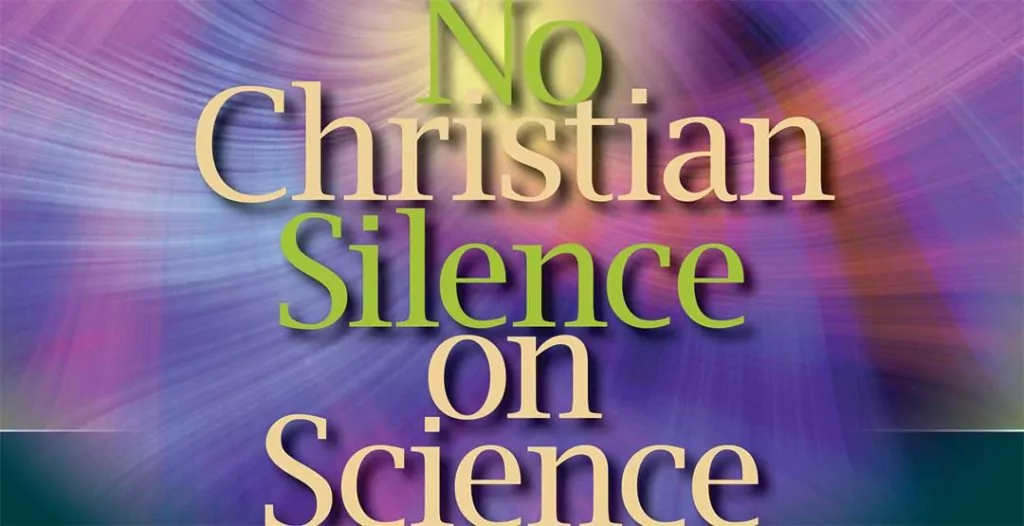
No Christian Silence on Science

SCIENCE FROM A CHRISTIAN PERSPECTIVE by Margaret Helder 2016 / 110 pages Rating: Borrow/BUY/Give From the title onward, No Christian Silence on Science is a clarion call to Bible-believing, six-day creation upholding Christians to stand up and be counted. It's much more than that too. The author, Margaret Helder, has written for Creation Science Dialogue and Reformed Perspective  for years, and if you've read her there, then you know Dr. Helder approaches God and His creation with awe, and teaches us how to tackle evolution without fear. This book is very much an outgrowth of that work. This, then, is intended to equip us, so we will be able to give a ready defense of our faith, and fortify us, so we will continue to trust in God, even when we face that attacks that will come in this predominantly Darwinist and secular field. That's a big task to tackle in a book that's just 110 pages. That's why, while this is a great book, it is no light read - there is a lot packed in here. In the five sections Dr. Helder addresses: Science from a Christian Perspective How Design in Nature reveals God's Character and Work Christian vs. Darwinian Ethics The Christian Student: Meeting the Challenge of Secular Institutions Impact of Evolution Thought on Church and Society My favorites were the last two. They are worth the price of the book all on their own, and if I was giving this to a university student I'd tell them to head to Chapter 4 first, to hear Dr. Helder's advice on how to interact with evolutionary-minded professors. At one points she gives an example of a find that seems to prove evolution, and she then shows how a Christian student could respond. She suggests students be ready to ask questions, and starting with the 5 Ws is always a good idea (in Science, and journalism too!). A question-asking student will often find that this new, exciting, revolutionary find, is being really over-hyped. That's not to say creationists have all the answers. As Dr. Helder notes, in the early and mid 1900s Christians holding to a six-day creation had little supporting scientific evidence available to them, so it was only because they were so confident in the trustworthiness of the Bible that they weren't swayed by evolution. Today many problems with evolution can be pointed to, but there will still be occasions where a challenge to the biblical explanation is presented that we cannot answer. And perhaps we won't be able to answer it for several decades. But we, too, should hold to the Bible, because it is trustworthy. Who should read No Christian Silence? This will be of interest to anyone, but for the young high school graduate heading into the Sciences this is a must. If they were to read it before heading to their first university science class, and really work through it slowly and thoughtfully, they would be well-prepared. There are other books they should read too, but this is a very good place to start because Dr. Helder covers all the key controversies, and gives good solid direction on how to meet and deal with the opposition. No Christian Silence on Science is us available through the Creation Science Association of Alberta website or can be had by sending a $20 check ($14 for the book and $6 for shipping) made out to the CSAA, at 5328 Calgary Trial, Suite 1136, Edmonton AB  T6H 4 ...

Red heart icon with + sign.
Book Reviews, Children’s fiction, Teen fiction

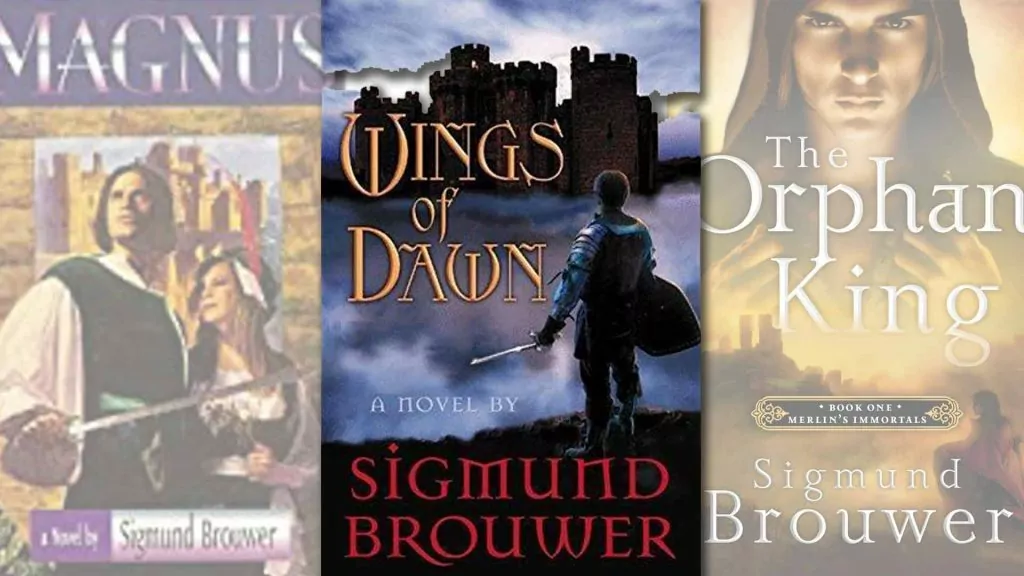
Wings of Dawn

by Sigmund Brouwer 1999 / 456 pages Rating: Borrow/BUY/Give Why would anyone go through all the trouble of building an immensely strong castle in the middle of the North York moors in England? Why else but to hide a secret organization of intellectuals who are protecting the wisdom of past ages. The plot of this novel is based on the tension between two secret societies. The first group, the Druids, have their roots in early British history. Brouwer proposes that after the Druids were repressed by the Roman Empire they went underground and plotted to regain power. The second secret society grew from the first. According to Brouwer, Merlin was the best and brightest of the Druids and he was slated to bring the Druids back to power, but Brouwer’s legend has it that he was converted to Christianity by a simple priest. As a result of this conversion, he is said to have foiled the Druids' plan and established his own secret society, the Merlins, to counteract the efforts of the Druids by using and conserving the knowledge of the Ancient Civilizations. But now it is 1312 A.D. and after centuries of struggle, Magnus, the castle Merlin had built to carry on his struggle, has fallen under the control of the Druids. The only hope for the Merlins is a teenage boy who either carries the secrets needed to regain the ascendancy or has been turned to the Druid cause. This young man, Thomas, becomes the center of the conflict between the Merlins and the Druids. Always unsure of who he can trust Thomas conquers and loses Magnus. He is forced to flee from England to Palestine and is chased even there. He returns to England where the conflict even involves the king’s immediate family. Although this is an excellent novel, Brouwer falls short on a few points. First, although Thomas’ uncertainty about whom he can trust works well early in the novel it drags on much too much. The same questions are raised again and again about the same people even when they seem to have proven their loyalties earlier in the novel. Additionally, the characters that Brouwer develops lack depth. One finds the rough but noble knight, the fair lady, the wise old man, and the evil scheming villain. Even Thomas himself has that youth destined for glory feel, like some medieval Luke Skywalker. Still, despite these failings, this is an exciting piece of historical fiction. In a historical sense, the accuracy with which Brouwer recreates the time and setting of the novel is excellent. Naturally, certain events are changed to reflect the existence of the Druids and Merlins but the book feels right, historically. Brouwer also provides chapter-by-chapter historical notes that explain how the novel could fit into history. Even the questions about who Thomas can trust, although they are overused, provide an “I can’t put the book down” level of tension for much of the novel. However, the most gripping part of Wings of Dawn is the way that knowledge proves itself the true power. The secret Merlin and Druid societies take so many unexpected twists and turns in their pursuit of knowledge that all the reader can do is hang on and enjoy the ride. As a Christian novel, Wings of Dawn very successfully manages to be solidly Christian in nature without feeling the need to scatter the pages with incessant sins and weaknesses or seemingly superficial conversions. Thomas begins the novel as a somewhat materialistic agnostic and he, as well as the other characters, has his weaknesses but they aren’t frivolously exploited for sensational reasons. He is soon converted to Christianity but his conversion is simple and believable. Really, when the book deals with overtly Christian themes, they are themes that one can identify with. One sees faith carrying Thomas through extreme trials but he experiences realistic doubts and shows realistic weaknesses. In the final analysis Wings of Dawn is an excellent novel. Its sound historical background gives it an authentic feel. It provides an excellent level of tension and uncertainty and the twists and turns it takes keep the reader guessing throughout. I would strongly recommend Wings of Dawn to anyone interested in an entertaining Christian novel. This novel was originally published under the title Magnus. ...

1 2 3 4