Transparent heart icon with white outline and + sign.

Life's busy, read it when you're ready!

Create a free account to save articles for later, keep track of past articles you’ve read, and receive exclusive access to all RP resources.

White magnifying glass.

Search thousands of RP articles

Helping you think, speak, and act in Christ.

Open envelope icon with @ symbol

Get Articles Delivered!

Helping you think, speak, and act in Christ. delivered direct to your Inbox!


Red heart icon with + sign.
Book Reviews, Teen fiction

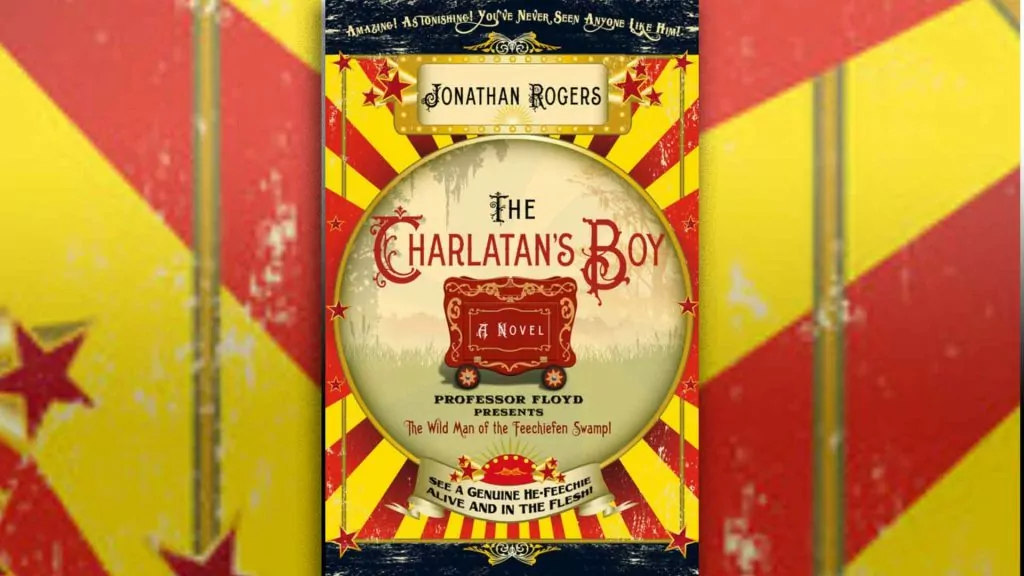
The Charlatan’s Boy

by Jonathan Rogers 2010/ 305 pages Rating: Borrow/BUY/Give I love love loved Jonathan Rogers’ Wilderking Trilogy, a children’s fantasy series that echoes the story of David and Saul, though without ever mentioning it, and is set in a kingdom made up of sheep farmers, nobles, castles, and swamps populated by “feechie” creatures that might be men or might just be myth. It was great fun, and when I was done reading it to my daughters, we all wanted more so we were happy to learn that Rogers has also written this stand-alone set in this same universe called. But as much as I enjoyed the story, my girls did not. One reviewer described it as “C.S. Lewis and Mark Twain rolled into one” and while my girls love Lewis, they aren’t about Tom Sawyer-type tricks and hijinks. Twain is simply too nasty for their liking. So I stopped reading it to them, but kept on myself and enjoyed it more and more the further on I went. Floyd is the title charlatan, Grady his boy, and the two of them travel from village to village trying to trick folks into believing that a mudded-up Grady is one of the fearsome and fabled feechies. But when time passes and villagers stop believing in feechies – it’s been so long since anyone’s seen one out in the wild – they stop paying to see feechie acts. So it’s up to Floyd and Grady to make them believe once more. If this was just a tricky Twain story, I don’t know that I would have liked it either. Floyd is a shyster and little more, but Grady's biggest fault is merely the company he keeps. So we've got reason to root for Grady, and reason to hope too. This, then, isn’t a kid’s tale like Wilderking, but something intended for a slightly older crowd, maybe comparable to how Tolkien wrote The Hobbit for the young'uns and Lord of the Rings for the adults – same world, but two different target audiences. So for teens and up, so long as Lewis/Twain is an intriguing combo to you, you’ll really enjoy it....

Red heart icon with + sign.
Book Reviews, Teen non-fiction

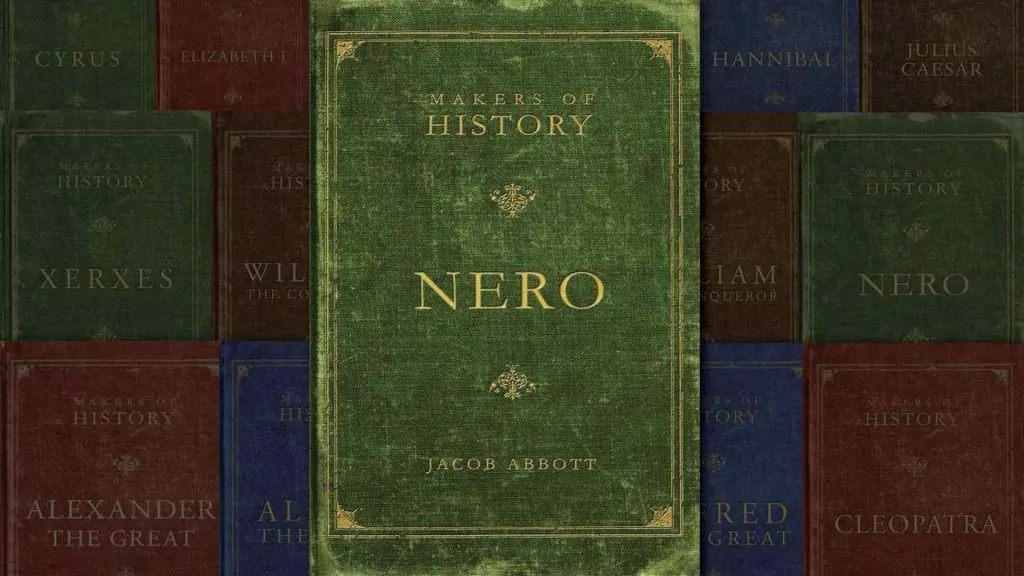
Nero

by Jacob Abbott 2009, 202 pages Rating: Borrow/BUY/Give How do you make history come alive for teens? Sometimes it means turning to an author long dead. Jacob Abbott died 125 years ago, but a quick read through this volume explains why his books endure. The original 1853 edition of Nero is available for free in many places online, and is well worth downloading to your Kindle. But it does benefit from the updating that publisher Canon Press has done to their version. Some longer 70-word sentences have been broken up and editor Lucy Zoe Jones has also replaced a few obscure words like "declivities," "salubrity," and "preternatural." Little else was required. Now, Nero's life might not seem like appropriate material for a biography aimed at teens – this Roman emperor indulged in every sort of immorality. However Abbott is both a tactful and talented writer. He doesn't delve into the salacious details, so younger readers will only encounter a broad overview of Nero's wickedness. But Abbott does tuck in a bit more information in between the lines, there to be read and understood by older, less naive readers. It's an impressive feat. Like many good teen books, adults will enjoy this as well - it is a engaging introduction to a key figure in both Church and Western history. For Canadian readers, this edition is available at Christianbook.com. In the US you can find it at CanonPress.com. where you can also check out the first chapter. You'll also find there more great updated Jacob Abbot biographies like: Cyrus Xerxes Alexander the Great Hannibal Julius Caesar Cleopatra Alfred the Great William the Conqueror Elizabeth I ...

Red heart icon with + sign.
Adult fiction, Book Reviews, Teen fiction

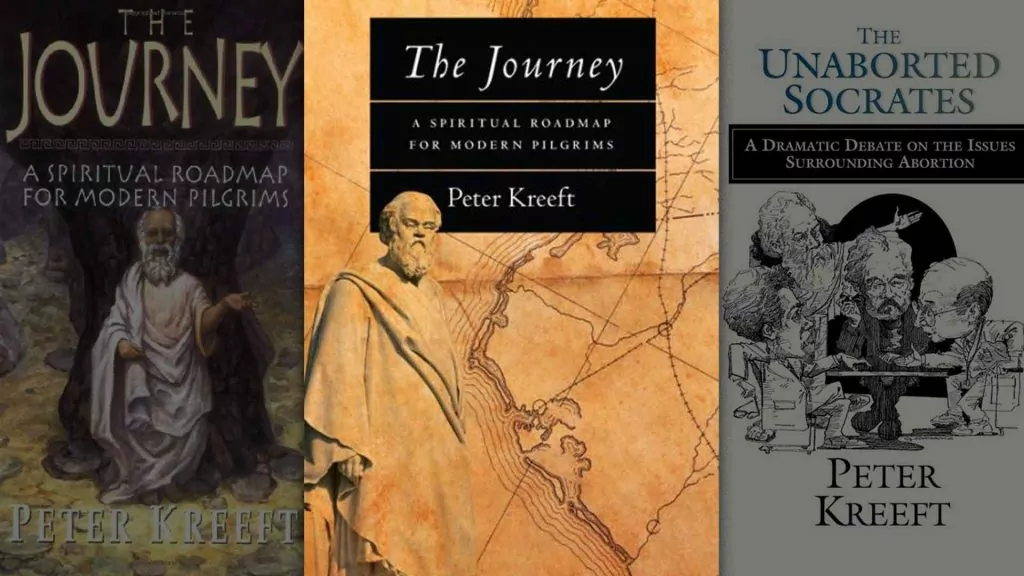
The Journey

A Spiritual Roadmap for Modern Pilgrims by Peter Kreeft 1996 / 128 pages Rating: Borrow/BUY/Give This is an allegorical journey, reminiscent of John Bunyan's Pilgrim's Progress. But in this case, the pilgrim - the author Peter Kreeft - has Socrates as his guide. And instead of facing trials and temptations on the road, he runs into one Greek philosopher after another, every time there is a fork in the road. Each one of them offers up their own particular worldview for consideration and Kreeft then has the choice of either staying with them, and subscribing to their philosophy, or rejecting it, and continuing on his journey in search of Truth. Though these philosophies are ancient, they are also current. Take as example the first philosopher Kreeft and Socrates meet: Epicurus presents the "Eat, drink and be merry." He tells Kreeft that the Truth isn't even worth seeking after - not when there is so much partying to do! Today we might call this the Hugh Hefner philosophy - why think about things such as Truth and the purpose of life, when there is yet another woman to bed, more money to be made and spent, and more parties to attend. And indeed, when the pilgrim rejects this worldview, he notices that Epicurus bears a strong resemblance to Hefner. As he continues he meets more ancient Greeks, each with their own challenge to present, and each with their own modern-day counterpart. This is what makes the book a valuable tool. Just as Socrates is a guide to the pilgrim Kreeft as he is confronted with ten different errant worldviews, so too this book can serve as a guide to anyone bumping up against these worldviews today.  Some of the philosophers he meets include: The Skeptic The Cynic The Nihilist The Materialist The Relativist The Atheist The Pantheist and Deist It is a very well-written, fun read, but because the book is deliberately philosophical this slim volume could seem a bit intimidating to anyone not already familiar with ancient Greek philosophy. But you don't need to be able to tell Socrates from Plato to enjoy this book. All you need is an interest in learning to discern how these philosophies are still being practiced and promoted today. One note of caution: the author is Catholic, and in this book that comes out in an Armininan flavoring to some passages. But Kreeft is also a great thinker, and when he targets secular errors, as he does in this book, there are few writers his equal. He has a whole series of books that feature Socrates and his questioning method, including The Unaborted Socrates: A Dramatic Debate on the Issues Surrounding Abortion and the Best Things in Life, both of which I would also recommend. But Kreeft is also a dedicated apologist for the Roman Catholic church and has written innumerable books on that subject too, so I would not recommend all his books with equal enthusiasm and would warn off an undiscerning reader from most of them, these three excepted. That said, this particular title would be perfect for anyone in university, or heading there, as a great tool to help them see through and answer the secular worldviews they'll run into on campus....

Red heart icon with + sign.
Book Reviews, Children’s fiction

The New Has Come

by Christine Farenhorst 2022 / 262 pages Rating: Borrow/BUY/Give I've seen another reviewer suggest that this might be Christine Farenhorst's best book yet, and I think I might agree. Linnet is a five-year-old Dutch girl who, we discover, knows absolutely nothing about God. Her ignorance is so profound that when the Nazis invade, and an occupying soldier tells little Linnet about the wonderful family that "God has given" him, she wonders, Who is this God he is talking about? and Is God German For our own children, who may take always knowing God for granted, it will be eye-opening to follow what it's like, and how wonderful it is, for someone to be introduced to God for the first time. Linnet has the same wonderings any kid might have, but her wartime experiences also have her asking deeper questions, including a child's version of "God are you really there?" I had to figure to what age category to share this review, and picked "Children's Fiction," but The New Has Come is that rare sort that has appeal for all ages. The World War II setting and charming protagonist will grab your children; moms and dads will appreciate Linnet's questions and the opportunities they present to talk about God with our kids, and grandparents will get more than a little misty-eyed at just how beautifully this tale is told. I could not recommend it more highly! Christine Farenhorst is a columnist for Reformed Perspective. so if you don't already know her writing you can get a good taste of her writings by looking at her many articles posted on the website. And for a taste of the book itself, you can find the first chapter at the Amazon.ca listing here. ...

Red heart icon with + sign.
Adult biographies, Book Reviews

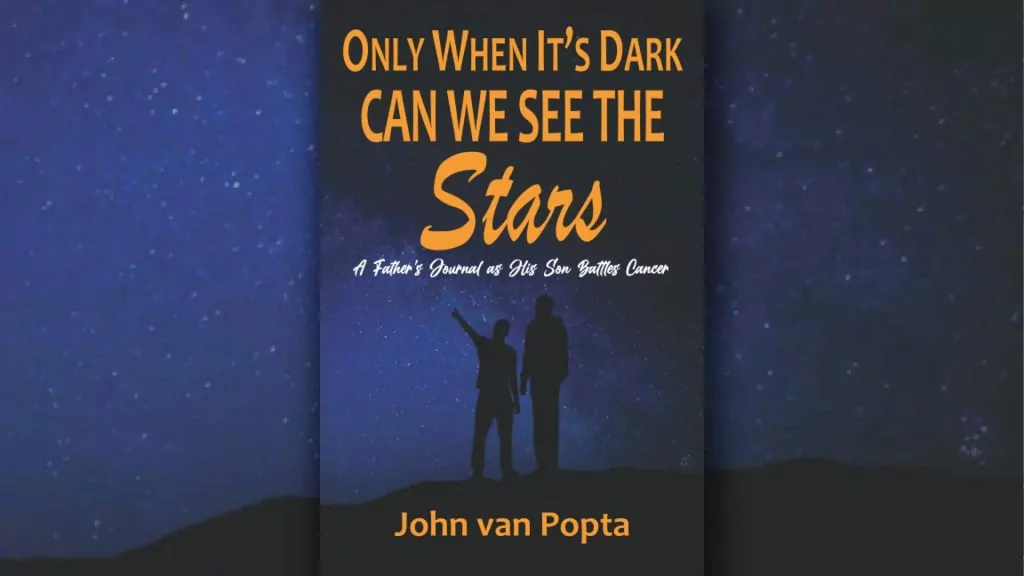
Only When It’s Dark Can We See the Stars: a father’s journal as his son battles cancer

by John van Popta 2022, 194 pages Rating: Borrow/BUY/Give Why Lord? That’s the question 12-year-old Julian van Popta, his parents, and his siblings had to contend with when this young man was diagnosed with leukemia. Only When It’s Dark Can We See the Stars is an account of the four years that followed, as written by his father, Pastor John van Popta. The chapters are made up of the regular updates Rev. van Popta sent out to friends and family during the rounds of Julian’s treatment. What’s striking, and what makes this such a valuable read, is the trust the author demonstrates in God, even as the van Poptas struggled with why God would bring such sickness. As the author shares, it is one thing to face cancer as a pastor comforting parishioners, and another thing to do so as a parent seeing their child too weak even to eat. The question Why Lord? is made all the more urgent when, during Julian’s repeated hospital stays, they meet other children also battling cancer, and the van Poptas share in these families’ hopes and their losses – Julian does eventually recover, but many others do not. While this is a deeply personal account, the struggle to trust God in the face of death is one that we’ll all have to face, and this then is an example of how to struggle well. It is a father writing, but there’s no missing this is also a pastor who wants to feed the sheep with what he knows we need: to understand that my only comfort is that I am not my own but belong with body and soul, both in life and in death, to my faithful Saviour Jesus Christ. That truth, powerfully delivered, makes this not simply a good book, but an important one....

Red heart icon with + sign.
Book Reviews, Teen fiction

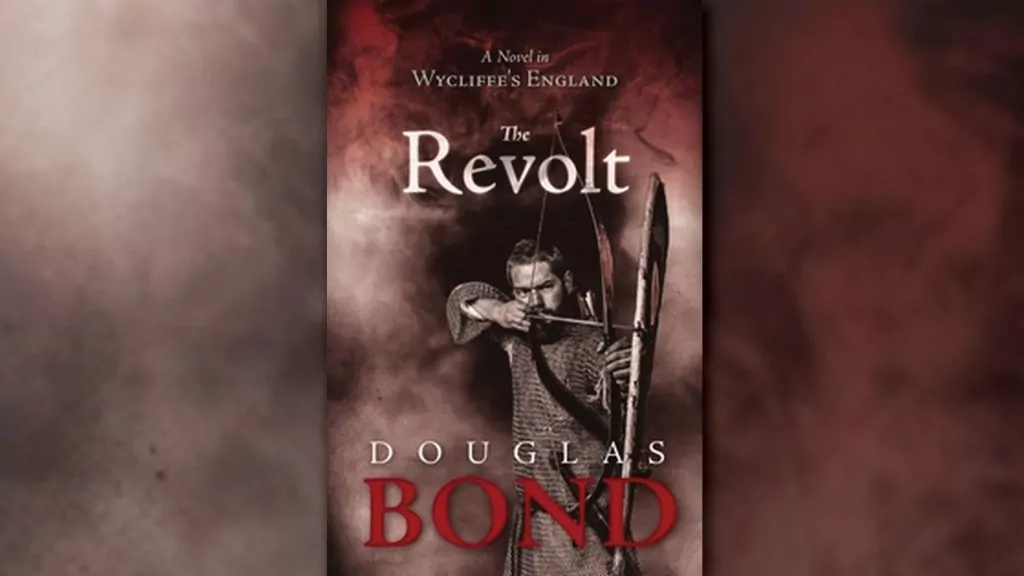
The Revolt: a novel in Wycliffe's England

by Douglas Bond 269 pages /  2016 Rating: Borrow/BUY/Give I was never a fan of Church history in school, but I've come to realize that this was really the textbook's fault. It was a series of dry and weary titles, with lots of dates and facts, but no story to them. So I owe a debt of thanks to Douglas Bond for reviving my interest in what is really a most important topic, and he has done so by telling great stories. Sometimes, as he has in this novel, that story-telling involves weaving in fiction among the facts, so I can just imagine someone saying, "But then you're not really learning Church history, are you? Not if lots of it is made up!" Ah yes, but I know more Church history than I once did, and it was painless! And what's more, Bond's fictionalized biographies – he's tackled Calvin, Knox, C.S. Lewis, and now Wycliffe – left me wanting to know more about these men. So after read a Bond book I've followed it up with reading non-fiction books about, or by, all of them. My old Church history textbook never inspired me to do that! In The Revolt, Bond takes on an early Reformer, John Wycliffe, who lived and died more than 100 years before Martin Luther nailed up his 95 theses. Like Luther, Wycliffe was a man very much on his own – he had followers, but not really colleagues. He was the trailblazer who decided that, contrary to what the Pope and Church have pronounced, the common people needed to hear the Bible in their own tongue. One thing he had going for himself is that he lived in a time when there were two popes at the same time, which made it easier to question the need for submission to the pope. Wycliffe doesn't actually show up until page 62, so this is more a book about the England of his time than about him. The story begins with a young scholar on the battlefields of France, where the English army is surrounded by a much larger French force. The scholar has been assigned the task of recording the events, so while everyone else has a bow, or a battle axe, or something with some sort of sharp steel end, he is armed only with his quill. It's a great beginning, and from then on we follow along with this scholar who serves as the story's narrator. Through him we meet peasants, other scholars, and finally Wycliffe himself. The Revolt is a novel most any adult would find an easy and enjoyable read. I'm not sure, though, that this would be a good book for a teenager who is only a casual reader. It is a very good story, but it's not the non-stop "thrill ride" that so many Young Adult books try to be these days. To put it another way, this is far from a heavy read, but it's also not a light read either. However, for anyone with any interest in Church history, this is an ideal way to learn more. I sure hope Douglas Bond keeps on coming up with these great fictionalized "biographies"! ...

Red heart icon with + sign.
Book Reviews, Children’s picture books, Economics

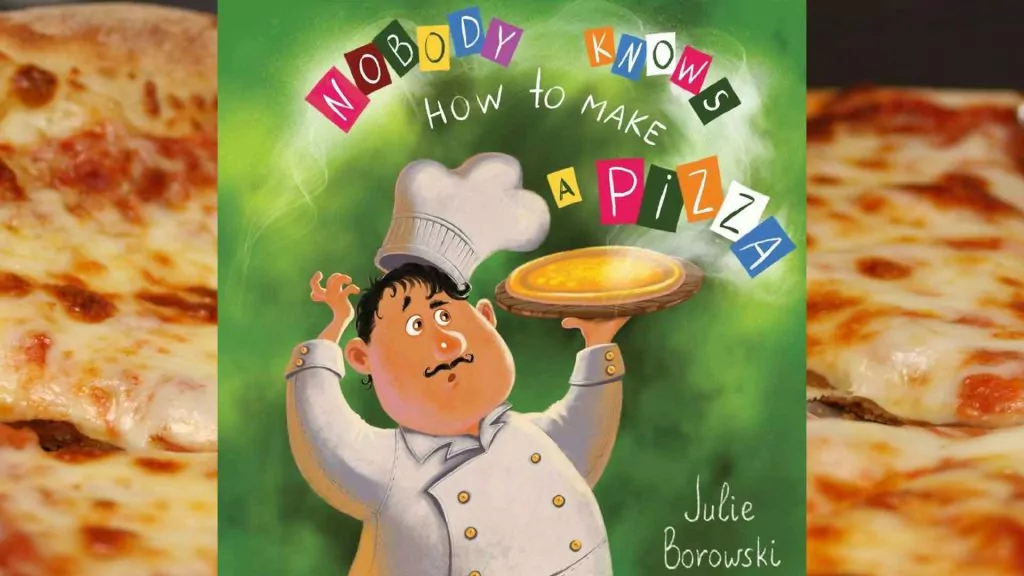
Nobody knows how to make a pizza

by Julie Borowski 2019 / 30 pages Rating: Borrow/BUY/Give The picture book's title makes a claim that my daughter just couldn't believe: "Come on Dad, you know how to make a pizza!" But do I really? Sure, I know how to combine a pizza crust with cheese and tomato sauce. I'm even very good at it. But the point this slim volume is trying to make is that there is a lot more to it. That flour I use started as grain that somebody had to grow, and I certainly don't know how to do that. That farmer who does, brings in his crop using  a wheat harvester, which he isn't able to make himself. He'll ship off his grain, perhaps via a train, which neither of us could ever manufacture. We also don't know how to turn wheat into flour, and the folks that do, don't know how to make the semi-trucks that ship their flour to grocery stores around the country. Making even the simple pizza crust requires a lot of different people all working together, with not one of them knowing how to get all the needed steps done. That's why the pizza narrator's claim – that "there's not a single person on Earth who knows how to make me" – isn't as outrageous as it first seem, And that doesn't even get into the tomato sauce and cheese! You might be wondering, okay, but so what? The point of this little book (and the 1958 essay, I, Pencil, which inspired it) is to expose the arrogance of any big government's central planners. Whether it's full-blown communists who want to plan everything, or a democracy where the elected leadership "merely" direct large chunks of the economy (gov't spending in Canada accounts for 45% of GDP, and their impact is extended further still via regulations), we have governments of all sorts all around the world that think they know how best to run things from the top down. However, if planning the production of a single cheese pizza is beyond the capabilities of any one man, or even a team of the very smartest people on earth, then why would we think the government could ever know enough to competently make the innumerable management decisions they make, from what minimum wage everyone should be paid, to how children should be educated in K-12 (and what they should learn), which companies should be bailed out or subsidized, or even how much milk should be produced? Of course, if no one knows how to make a pizza, that prompts an obvious question: how is it that countless cheese pizzas are made every day? Instead of someone at the top planning it all out, this miracle occurs without much planning at all. The author of this picture book makes more of a libertarian presentation than a Christian one, so I'm using the term "miracle" here for a wonder she doesn't really attempt to explain. But Christians do have an explanation. Now, we might take for granted what the free market can produce – cheaper computers, innovations like the smartphone, innumerable kinds of bagel – to the point it seems too ordinary to call all of that a miracle. But the free market is a miracle nonetheless, completely beyond anybody's ability to plan and create, making it all the easier to see God's fingerprints. His commandment "Do not steal" creates property rights, which is the basis for one person trading what they own to another for something they want more. If you can't steal from others, then the only way to provide for yourself and your family is by producing something other people will value. You get money from them to meet your needs by making something that meets theirs. So God's law is the basis for free trade and it is unplanned, unorganized free trade that has miraculously proven to be the most effective way of raising people out of poverty. The government still has a role here - to prevent theft, enforce contract laws, and generally ensure that property rights are respected – but not in picking the winners and losers. While that's deeper than this picture book goes, what Julie Borowski does highlight is the result: all sorts of strangers cooperating with one another, each looking out for their own interests, but together creating something that none of them could make on their own – innumerable voluntary exchanges and, eventually, violà a pizza! As noted, this book has a libertarian flavoring to it, and because libertarians can often be libertines on moral issues, their values can be at odds with what God knows is best. However, in this case the libertarian impulse for small government syncs up well with the Christian emphasis on humility and Man's fallibility – we have a hard enough time trying to plan out our own lives, so it's arrogant indeed for bureaucrats and politicians to think they can plan out everyone else's lives for them. Better then, to limit (though certainly not eliminate) the government and what it does, so as to leave people the responsibility and allow them the freedom to manage their own lives. This would be read to best effect with a parent along for the ride. Otherwise I could see kids enjoying it, even as they entirely miss the overall small government argument being made. You can watch the author read her book below. ...

Red heart icon with + sign.
Book Reviews, Teen fiction

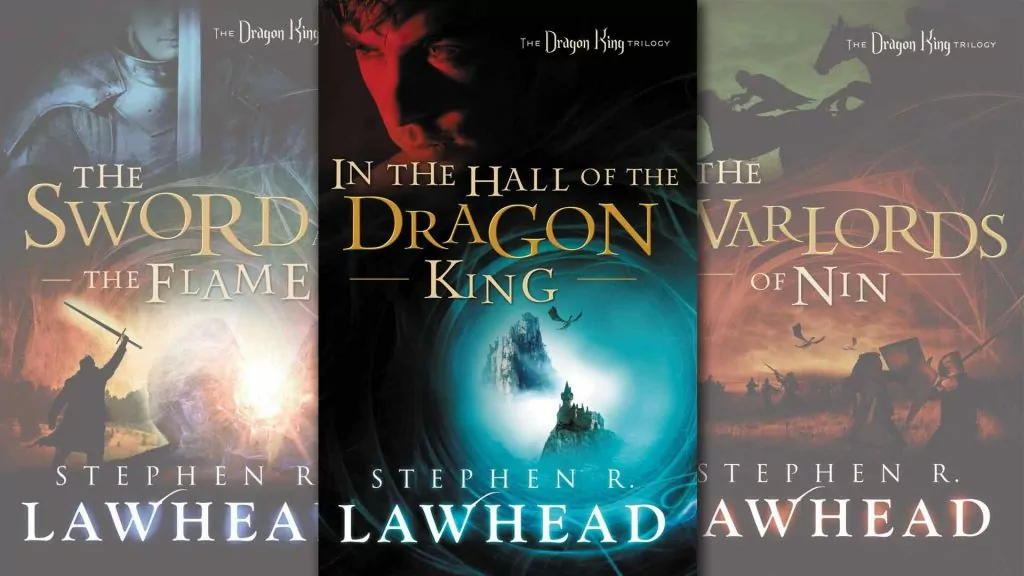
In the Hall of the Dragon King

by Stephen Lawhead 1982 / 370 pages Rating: Borrow/BUY/Give This is an old-fashioned fantasy tale, with a loosely Christian underpinning. Quentin is a young man who has had a quest thrust upon him. He was going to spend his life behind the walls of a temple, so this turn of events isn’t unwelcome. But he has to figure out how he can see the queen. And someone needs to rescue the king. Oh, and there’s a dark wizard that needs to be dealt with. Is this really a job for a young former priest-to-be who doesn’t know one end of a sword from the other? The young Quentin, looking for help, meets a hermit of sorts, who serves not the gods, but the one God. That’s an ongoing theme throughout, as author Stephen Lawhead is trying to point readers to the true God. Cautions However, Lawhead sometimes gets it wrong. Quentin is told that God leads by “hunches and nudges” and “very rarely by direct command.” But our God does give us clear direct commands, in His Word, though some who profess to be Christians reject His Word in favor of hunches. Also, when a soldier is dying and asks how to go to heaven, the hermit tells him to just believe, but doesn’t mention anything about repentance. Conclusion While those are notable flaws, and worth bringing up with younger readers, they amount to only a few paragraphs in a rollicking adventure. There is a true and proper villain who had delved deep into the dark arts – he's a necromancer even! – which sharpens the contrast with the hermit, who has turned away from magic to serve his Lord. One feature I really appreciated is that, while this is the first book of a trilogy, it is a full and complete story – this is not the sort of trilogy that is actually one story split over three books. But readers can look forward to Quentin's further adventures in The Warlords of Nin and The Sword and the Flame. Like any great children's book, this will be a great read for adults too – I'd recommend it for 12 and up. I'll add that in his later books the author took, first a Roman Catholic turn in his "Celtic Crusade" series where he reveres relics, and then afterward a general turn to spirituality rather than Christianity (or, at least, any Christian underpinnings are far from clear). But in his earlier books like this series, there's lots to love. You can listen to the first chapter being read below. ...

Red heart icon with + sign.
Book Reviews, Children’s fiction

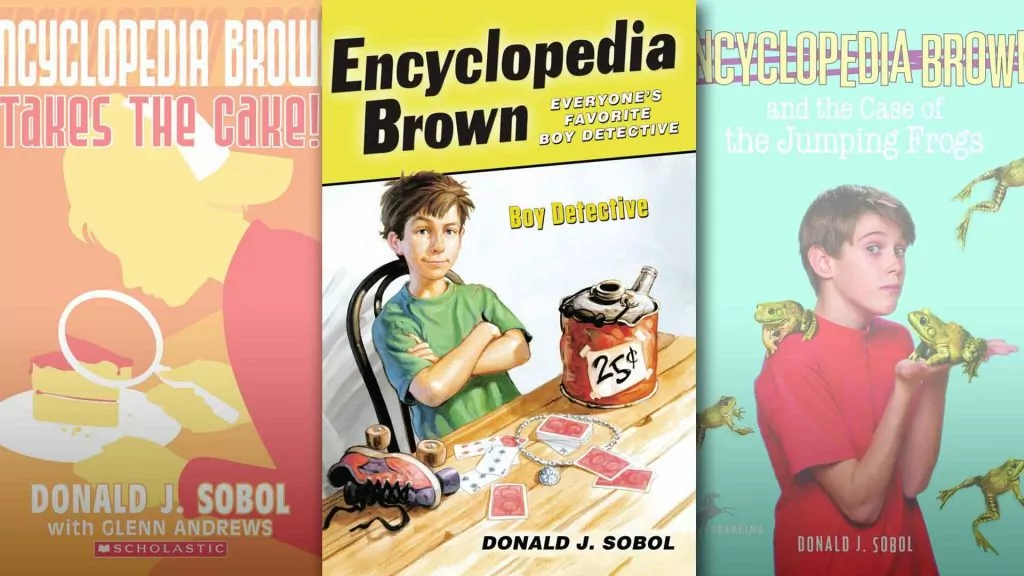
Encyclopedia Brown: Boy Detective

by Donald J. Sobol 1963 / 88 pages Rating: Borrow/BUY/Give Idaville is a small town with an impressive record - no one, absolutely no one, gets away with breaking the law. Most of the credit goes to Police Chief Brown, but he doesn't really want to take it. If the townsfolk were able to believe it, he'd let them know that the town's most puzzling crimes are solved, not at the police station, but at the Brown's dinner table, by his humble, brilliant ten-year-old son Leroy! In addition to helping out his dad, Leroy, known as Encyclopedia by his friends, also runs his very own detective agency, charging 25 cents a case, plus expenses. The Encyclopedia Brown series are great books that each include ten short mysteries for readers to solve right alongside our pint-sized detective. In this, the very first one, all the information needed to solve the mystery is included in the story, and the solution is found in the back. And though the mysteries are simple enough that boys and girls in the 9-11 range will be able to solve many of them, they are still subtle enough to present a challenge to adults (I had to peek at the back to figure out a couple of them...and this was my second time through). As you might guess from Encyclopedia's pay rate, this is an old book. It was first published back in 1963, so even though many more books have followed, the whole series has an old-fashioned feel and appeal to it. For example, Encyclopedia often has run-ins with the Tiger gang, but this is very much a 1960s sort of boys' gang - they run minor scams, try to trick kids out of their allowance, and might even start a tussle or two, but the very worst that would result is a black eye or fat lip. Cautions In a nod to the sort of feminism that says women are only equal to men if they can do anything men can do (rather than because we are all made in God's Image - Genesis 1:27), the author gives Encyclopedia a girl bodyguard. Sobol makes Sally Kimball tougher than any boy, able to beat up even Bugs Meany, the leader of the Tigers. The problem here, I explained to my girls, is that boys need to have it drilled into them that they can never hit girls, even at 10, because whether or not they're already stronger than girls, they soon will be. Thus girls have to be taught never to take shots at boys because if those boys are raised right they won't hit back, and it is just cheap to hit someone who can't fight back. While Kimball's unrealistic pugilistic prowess makes for some comedic moments at bully Bugs Meany's expense, thankfully her bodyguard role is only a focus in a few of the mysteries. The other caution is that, even as this series is sold in some Christian bookstores, God is absent. That's a minor concern if our kids are reading other books too. But if our kids get a steady diet of stories where God is treated as irrelevant to our daily lives, then that's teaching our little ones quite the lie. Conclusion I read these as a kid and loved the mini-challenge of each mystery. I was happy to see the series was still in print and that author Donald Sobol (1924-2012) had come up with a dozen more since I'd last read them. But I did notice that in one of the later ones – Encyclopedia Brown and the Case of the Secret UFOs – two of the ten mysteries required the reader to know something that wasn't included in the story (for example, "The case of the giant shark tooth" could only be solved if a reader knew that sharks constantly replace their teeth). So the earlier titles are just a bit better than the most recent - no outside knowledge needed. There are 28 official books in all: Encyclopedia Brown, Boy Detective (1963) Encyclopedia Brown Strikes Again (1965) AKA Encyclopedia Brown and the Case of the Secret Pitch Encyclopedia Brown Finds the Clues (1966) Encyclopedia Brown Gets His Man (1967) Encyclopedia Brown Solves Them All (1968) Encyclopedia Brown Keeps the Peace (1969) Encyclopedia Brown Saves the Day (1970) Encyclopedia Brown Tracks Them Down (1971) Encyclopedia Brown Shows the Way (1972) Encyclopedia Brown Takes the Case (1973) Encyclopedia Brown Lends a Hand (1974) AKA Encyclopedia Brown and the Case of the Exploding Plumbing and Other Mysteries Encyclopedia Brown and the Case of the Dead Eagles (1975) Encyclopedia Brown and the Case of the Midnight Visitor (1977) Encyclopedia Brown Carries On (1980) Encyclopedia Brown Sets the Pace (1981) Encyclopedia Brown and the Case of the Mysterious Handprints (1985) Encyclopedia Brown and the Case of the Treasure Hunt (1988) Encyclopedia Brown and the Case of the Disgusting Sneakers (1990) Encyclopedia Brown and the Case of the Two Spies (1995) Encyclopedia Brown and the Case of Pablo's Nose (1996) Encyclopedia Brown and the Case of the Sleeping Dog (1998) Encyclopedia Brown and the Case of the Slippery Salamander (2000) Encyclopedia Brown and the Case of the Jumping Frogs (2003) Encyclopedia Brown Cracks the Case (2007) Encyclopedia Brown, Super Sleuth (2009) Encyclopedia Brown and the Case of the Secret UFOs (2010) Encyclopedia Brown and the Case of the Carnival Crime (2011) Encyclopedia Brown and the Case of the Soccer Scheme (2012) If that isn't enough for your child, there are a few others titles associated with the Encyclopedia Brown brand. One of the extra ones is a mystery/cookbook, with all the stories related to food, and each includes a recipe in the solution – it's called Encyclopedia Brown Takes the Cake (1982). Then there are a couple of true crime collections that I haven't been able to track down, but at least one of which my middle daughter has read and really liked: Encyclopedia Brown's Book Of Strange But True Crimes (1992), and Encyclopedia Brown's Book of Wacky Crimes (1984). All the main characters but one are boys, so these are clearly intended as boy books. That said, all my girls have enjoyed them as much as I did. They are great for anyone, boy or girl, who likes wrestling with problems, and while they are best suited for the preteen set, they'll offer a challenge to mom or dad too, which makes them good fun to read to your kids. And teens and parents who find these too easy can graduate on up to Donald Sobol's similar but more challenging Two Minute Mysteries series....

Red heart icon with + sign.
Adult fiction, Book Reviews

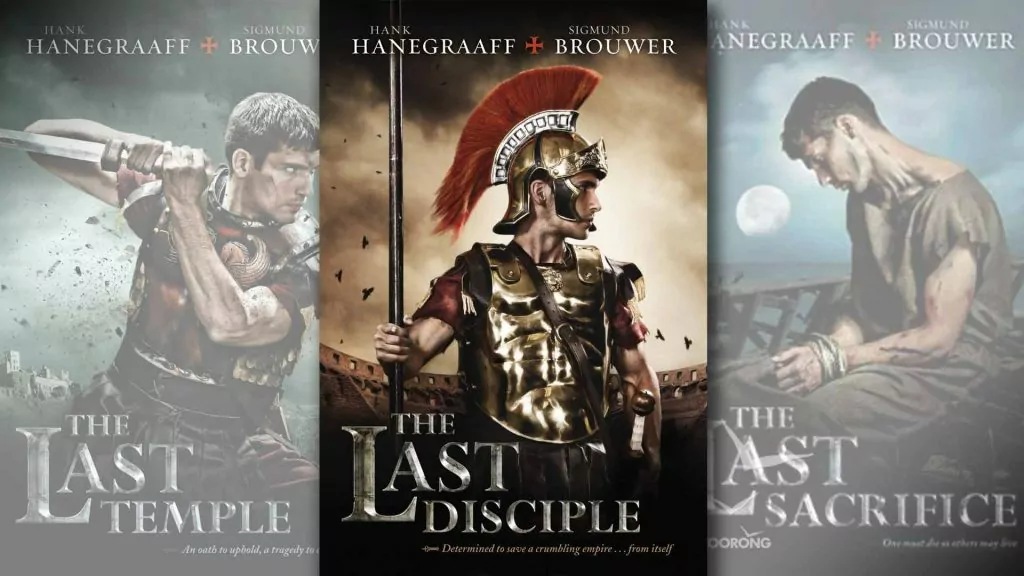
The Last Disciple

by Sigmund Brouwer and Hank Hanegraaff 2004 / 428 pages Rating: Borrow/BUY/Give It’s the year 65 AD, and Gallus Sergius Vitas is one of the last principled men in Rome. He’s also a confidant of Emperor Nero which means his daily life is conducted on a knife’s edge: indulging the emperor’s perverse demands might keep Vitas safe but would compromise the man that he is; yet to openly oppose the emperor would lead to his immediate introduction to the Coliseum’s lions. Our story beings with Vitas attempting this balancing act once again. Nero has dressed as a beast, his outfit comprised of lion and bear skins, complete with collar and a chain held by a servant. His night’s entertainment is to terrorize a group of prisoners while playing the part of a beast. Enjoying their fear, the emperor quickly works himself into a killing frenzy. Vitas sees this all from the shadows and can’t let it happen, knowing, though, that to oppose the emperor is to die. So Vistas yells at the chain-holding servant instead: “If the emperor knows you are involved in illegal torture, he will have you destroyed!” It is, as Brouwer writes: “an all-or-nothing bluff, pretending that he did not know Nero was inside the costume. Trusting that Nero would be too ashamed to admit it. Now. Or later.” Vitas’ bluff works, but not just because of his daring. An earthquake sends Nero scurrying away, convinced that the shaking ground is a sign of divine judgment. It’s a great opening, highlighting the depth’s of the emperor’s perversity, the heights of Vitas’ courage, and the certain presence of God even in these pagans’ lives. In less talented hands, the earthquake’s unlikely timing could have come off as cheesy, since in real life God more often uses “ordinary means” (like doctors’ talents or wise friends’ advice) than miracles to accomplish His ends. But miracles do occur, and Brouwer makes it believable. It’s a good thing too, as this is but the first miracle in a story that’s all about how God used miraculous means – the prophetic words in the book of Revelation – to warn his Church to flee the fall of Jerusalem in 70 AD. What Brouwer and his writing partner, theologian Hank Hanegraaff, have done here is write an alternative to Tim LaHaye and Jerry Jenkins’ popular Left Behind series. Where Left Behind places the beast of Revelation 13 in our near future, Brouwer and Hanegraaff place him in the first century, in the near future of those who first received John’s letter. And they identify the beast as Nero and the bloody empire he led. This “partial preterist” (partial past) interpretation of Revelation holds that the book was written before the fall of Jerusalem in 70 AD, and the city’s fall is a partial fulfillment of much of the prophecy in Revelation. This, then, is fiction meant to teach as well and entertain, and it does both brilliantly. Brouwer has crafted a story that takes us all around the Mediterranean, with Jews, Romans, and even troubled Christians wrestling with the question of “Who is Jesus?” There’s also political plotting, assassination attempts, sieges, gladiators, and just a touch of romance. The slowest bits are when theologian Hanegraaff has characters take a page or two to teach Vitas and others what a particular passage in Revelation means. If you’re reading it only for the story, these sections might drag, but they are well spaced out. And if you’re interested in learning about the partial preterist interpretation of Revelation, these will be your favorite passages. Cautions One caution: Nero’s depravity, though described with restraint, still means this is not a book for younger teens. If The Last Disciple series has you eager to read more of Sigmund Brouwer’s work, be aware that he is a proponent of theistic evolution, and also an Arminian. That doesn’t come up in this series (or his best book, Innocent Heroes, a treat for kids, teens, and parents alike) but it does come up in some others. Finally, readers should be aware that partial preterism probably isn’t the majority view in Canadian Reformed churches (though I’m not sure what the majority view might be, as Revelation seems to be only rarely discussed). Some do hold it though, and it's also held by Reformed pastors outside our circles such as RC Sproul, Douglas Wilson, and Jay Adams. Conclusion The Last Disciple is a great book, kicking off a great series. The cast of characters is large, so if you’re like me, make sure you get the whole trilogy – The Last Disciple, The Last Sacrifice and The Last Temple – right away, because if you wait too long between books, you may start forgetting who is who. I’d recommend this to anyone who enjoys historical fiction – Sigmund Brouwer has got skills. And if you’d love to have partial preterism explained, well, this is the most entertaining way you could ever learn about it!...

Red heart icon with + sign.
Adult biographies, Book Reviews, History, Teen non-fiction

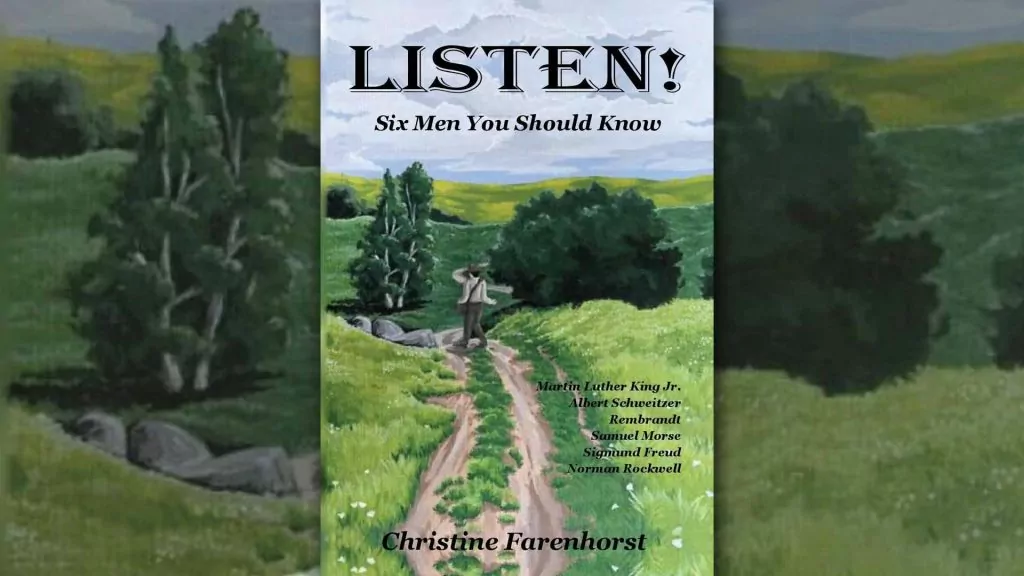
Listen! Six Men You Should Know

by Christine Farenhorst 161 pages / 2021 Rating: Borrow/BUY/Give The six men we get introduced to here are given 25-30 pages each which is enough space to get a very good feel for them. It's also short enough that it avoids completely the indulgence evident in many a bigger biography of telling us what the subject ate for lunch on the third Tuesday of October, one hundreds years ago. The half dozen that author Christine Farenhorst introduces us to are: Martin Luther King Jr. Albert Schweitzer Rembrandt Dutch Samuel Morse Sigmund Freud Norman Rockwell I enjoyed the eclectic nature of the selections – these six holding little in common outside their fame and influence, but all are worth knowing better. I was more curious about some of them than others, particularly the very first, the American icon, Martin Luther King Jr. But after learning a little about his thoughts, and the political and cultural battles of his time, I skipped ahead to the profile of Austrian psychologist Sigmund Freud who spent most of this life in Europe, and died when King was just 10. I'd read biographies on both men previously, but Christine's solidly biblical perspective brought new light to both subjects. For the four others, I knew little more than their names – or their artwork, in the cases of Norman Rockwell and Rembrandt – and I enjoyed this opportunity to delve into their backgrounds, their age, and place. I enjoyed learning about Samuel Morse in particular, as he is the only one of these six who was clearly a Christian. Christine shows that some of the others, like Freud, clearly were not, while Rembrandt, had, at best, an odd relationship with his Maker. Overall, this is a very quick enjoyable read – I think I finished it in a day. It was sad reading about many of these men's outright rejection of God, so I might recommend reading the profiles out of order so that you can conclude with Samuel Morse, and end on a happy note! Children who enjoy history and reading would likely enjoy this as young as 12. The short, 30-page profiles, would also make this a great title for adults who want to know their history, but are put off by the tomes that some historians publish. Christine Farenhorst is a regular columnist for Reformed Perspective, so if you want to get a feel for her writing, that is as easily done as clicking here. You can order "Listen! Six men you should know" at many online retailers....
Red heart icon with + sign.
Book Reviews, Children’s picture books, Graphic novels

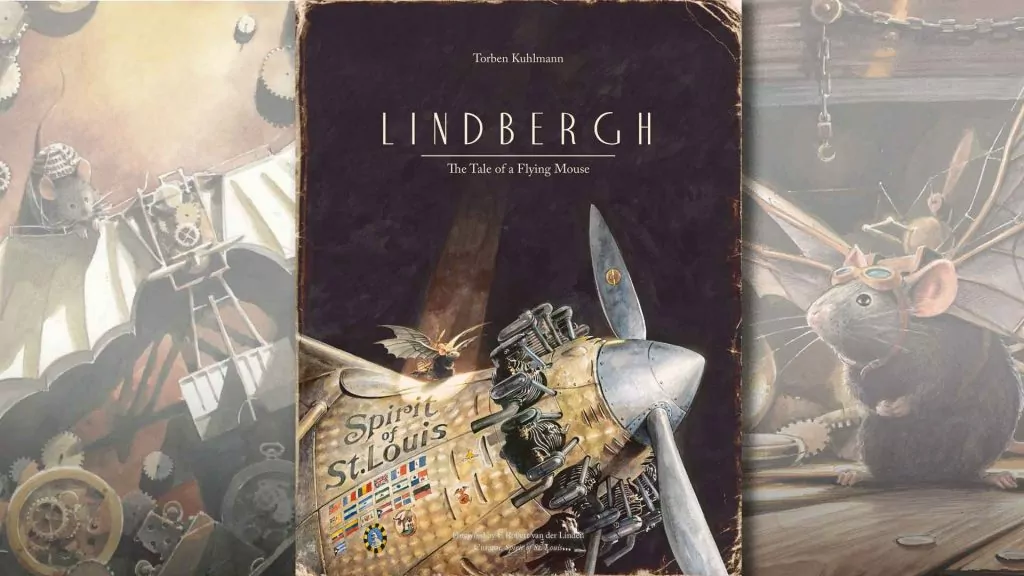
Lindbergh: The Tale of a Flying Mouse (2 books)

by Torben Kuhlmann 96 pages / 2014 Rating: Borrow/BUY/Give How did man first learn to fly? It seems we had a little help. This is the story of a little mouse who made the very first transatlantic flight, back when Charles Lindbergh was but a lad. As our story begins we learn what first motivated this mouse to seek the skies. In the late 1800s, another invention was becoming quite popular – the mousetrap! – which had this furry inventor seeking somewhere safer to live. Where could he go? Why not America, a place that welcomed immigrants of all sorts (whether man or mouse)? That was a good destination, but when he tried boarding a boat, he barely escaped the harbor cats. They were guarding the docks, and there was no getting past them. It was there, however, as the little mouse was hiding in the shadows, that he was "struck" by inspiration: "Suddenly wings flapped against his face! Ghostly creatures flew through the dark. They looked like mice, with tiny eyes and huge ears. But they flew with powerful black wings. The little mouse carefully studied the strange flying relatives, then scurried home..." Why not try flying to America using wings like bats! In the many pages that follow we see the mouse draft plans, secure supplies, evade owls, fail, try again, fail once more, and then finally make his way into the skies. What makes the book so special is the enormous, gorgeous, detailed pictures. I want to make the case that this should be shelved in the graphic novel section of the library, even though it isn't what most would think of as a graphic novel. There are no word bubbles, but there are whole sections where the story is told entirely by sequential pictures. It might be accurately called a picture book, but that makes it seem like it's for little children (what older kids read picture books?). This is not a children's story. That's in small part because it has a grim bit here and there – one mouse is depicted in a newspaper picture as clearly dead, caught in a mousetrap, which would be an unexpected jolt to readers in the lowest grades. It might also be too tense with the owls determined not simply to frustrate his flight, but to eat our little inventor. The bigger reason this is older fare is simply the length and depth of the story. The mouse draws schematics that deserve to be closely examined – there are echoes here of Leonardo da Vinci. And he is playing a cat and mouse game on a few levels, not simply with cats, but owls, and people too. So, yes, this visual feast belongs best in the graphic novel section where boys in Grades 4 and up will discover it and love it! Caution The only caution, other than age appropriateness due to the aforementioned grim bits, would concern not this book, but a sequel in the author's "Mouse Adventures" series. In the next book, Armstrong (2016), another mouse takes things even further, developing the first ever rocket to the moon so he can prove that it is not made of green cheese. It's another inventive story, and the only nit I have to pick comes afterward, in an appendix of sorts. There we're told that Galileo Galilei "contradicted the Church's view at the time and his work was banned while he found himself accused of heresy." This is true, but without context, it contributes to the popular idea of Science as the ultimate authority, especially over and above what the Church teaches from the Bible. What this overlooks is that the Church's problem here was its reliance on faulty science in the first place – Aristotilean science – rather than the Bible. Most kids aren't likely to even ingest this section of the book. But this particular lie is a pernicious one, used as a universal solvent to undermine clear biblical teachings on origins, sexuality and gender. While it's only a small mention of a potent lie, it is also delivered to a young audience, which is why I'd give this one a skip for a school library. I'd also skip on Einstein (2020), not because of specific problems, but because there were parts of this picture book/graphic novel that as an adult, I didn't even understand. I think this one was too ambitious, considering the target audience. Conclusion That said, this story is the very pinnacle of creative genius. It will teach children at least a little about what it took to first developed powered flight, providing as fun and wonderfully illustrated an introduction to the topic as you'll find. For more, take a look at the book's trailer below. And if your child enjoys this one, they'll likely also love the third book, Edison: the Mystery of the Missing Mouse Treasure (2018) in which a mouse invents underwater travel to recover the illuminating invention his ancestor created. ...
Red heart icon with + sign.
Book Reviews, Children’s picture books

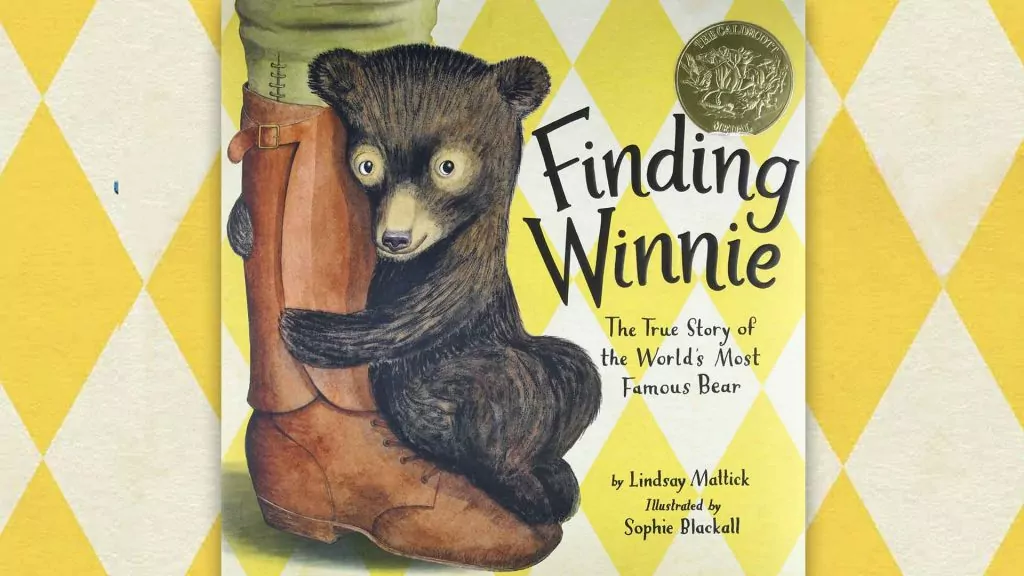
Finding Winnie

by Lindsay Mattick 56 pages / 2015 Rating: Borrow/BUY/Give It turns out that Winnie the Pooh, a teddy bear who had fantastic and entirely fanciful adventures, was named after a real bear whose adventures were quite something too, and of the genuine sort. Just as Winnie the Pooh starts with a father telling his son a story, so too Finding Winnie begins with a parent telling her child a bedtime tale. In this case, the storyteller is the great-granddaughter of the man who gave the first Winnie his name. Harry Colebourn was a vet living in Winnipeg. When the First World War began Harry had to go, so he boarded a train with other soldiers and headed east. At a stop on the way, he met a man with a baby bear, and ended up buying the little beast. To make a long story shorter, this bear - named Winnie after Harry's hometown – ended up in the London Zoo where a boy named Christopher Robin, and his father A.A Milne came across him and were utterly entranced. It is a wonderful story, but what makes it remarkable is the charming way it's told. This is brilliant, and a homage of sort to A.A. Milne's stories. It's true, so there is quite a difference between his Winnie tales and this author's, but the same gentle humor, the same whimsy, that same charm, is there throughout. This will be a treat for fans of Winnie the Pooh no matter what age. Both my daughters and I were entranced! Winnie by Sally M. Walker 40 pages / 2015 Rating: BORROW/Buy/Give The same year a second picture book came out about the bear behind the bear that was also very good, very fun, and different enough that after reading Finding Winnie it is still an enjoyable read as well. Compared to most any other picture book Winnie is remarkable - really among the best of the best - but it does lack a little of the Milne-like charm of Finding Winnie, and so ranks second among these two books....

Red heart icon with + sign.
Book Reviews, Graphic novels, Teen non-fiction

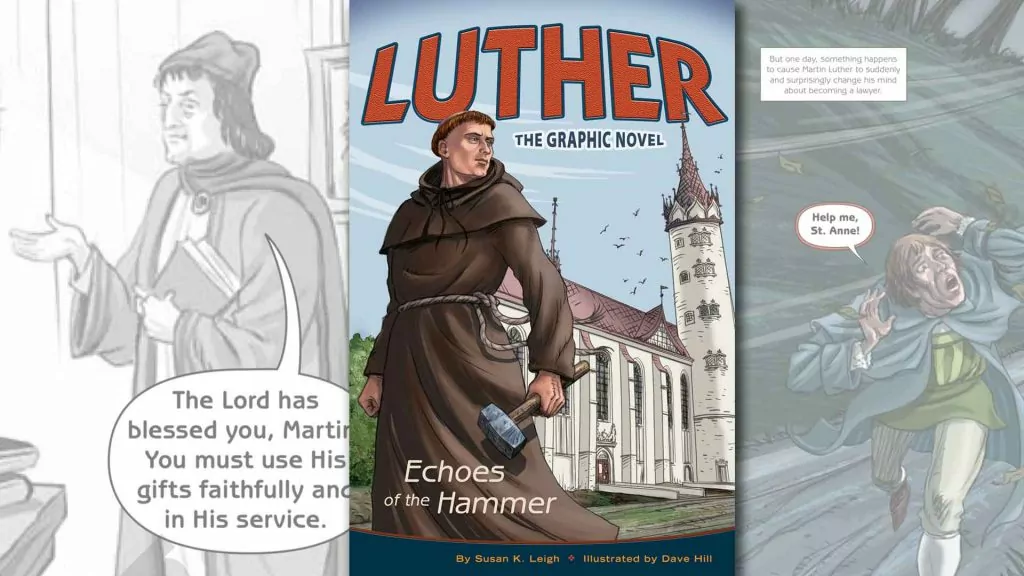
Luther: Echoes of the Hammer

by Susan K. Leigh illustrated by Dave Hill 2011 / 144 pages Rating: Borrow/BUY/Give I think this is the perfect complement to Luther: the graphic novel, which might be the more exciting of these two Luther comics, but which also plays a little looser with the details. Meanwhile Luther: Echoes of the Hammer is a more reliable history lesson, even as it isn’t as dramatic. I tested this graphic novel on two of my nephews with mixed results. The older one, heading to grade 10, was happy to take a look, and thought it would be a great way to learn about Luther. The other, two years younger, seemed to think it was too much biography and not enough comic book for his tastes. As far as comics go, this one is quite an involved, even heavy, read. Interspersed throughout are explanations of key events, like the Diet of Worms, key terms, like “indulgences,” and key figures, like Charles of Spain, the Holy Roman Emperor. These one or two-page insertions really add to the narrative and make this a highly educational comic. However, a few of these insertions will also trouble informed Reformed readers. In one list of Luther’s adversaries, Calvin is numbered among them! While it is true Calvin and Luther had their differences, it is surprising to see Calvin listed as an opponent. Especially when, some pages later, we find Erasmus listed as one of Luther’s supporters! While Erasmus was, like Luther, critical of the Roman Church, he never left it, and this led to strong, vitriolic disagreements with Luther. In fact, Luther once called Erasmus, “the very mouth and organ of Satan.”  It is downright silly, then, for the authors to list Erasmus as a friend if they are going to list fellow Reformer John Calvin as an adversary. The only other quibble would be the overestimation the authors have of Philip Melanchthon, describing him as “a great Reformer, second only to Martin Luther.” Second? Really? How can they overlook Calvin like that? Those quibbles aside, this is an impressive book. The writing is crisp, succinct and engaging. The artwork is attractive and while only half the book is color (the other half being black and white) it worked. Many of these pictures are also instructive, worth the proverbial thousand words. For example, in the pages covering Luther’s visit to Worms, illustrator Dave Hill shows us the man’s quiet passion, his many supporters, and his opponents marshaled together. This gives us a good understanding of the setting, and thus a better understanding of the courage it took for Luther to stand up for what he knew to be true. Older teens will enjoy it, and many an adult too. (Also worth a mention is that the same team of authors and illustrators have created a sequel, focused on his wife – Katie Luther is a little shorter, and a little less involved, but also quite enjoyable.)...

Red heart icon with + sign.
Adult biographies, Book Reviews

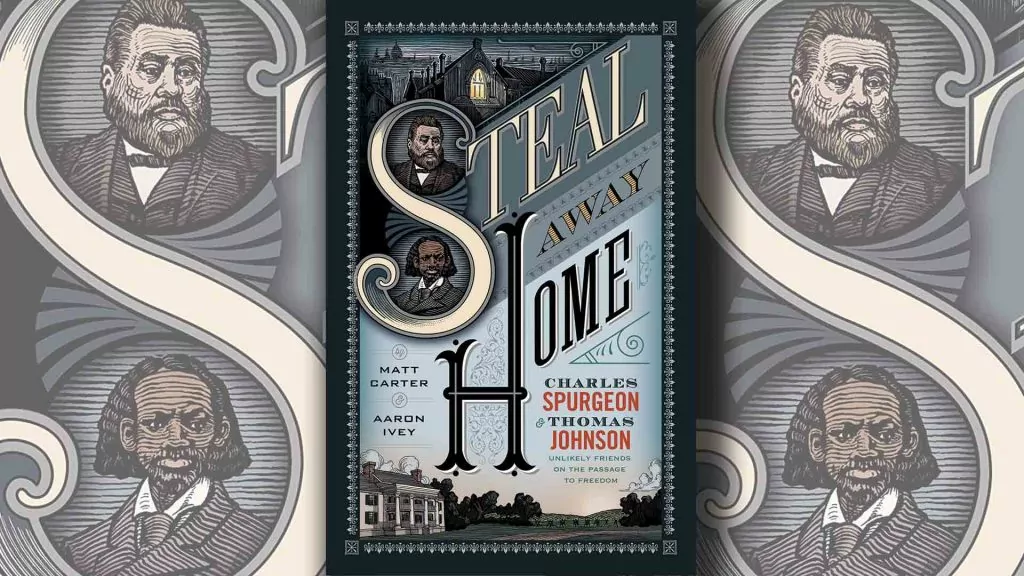
Steal Away Home: Charles Spurgeon and Thomas Johnson

by Matt Carter and Aaron Ivey 290 pages / 2017 Rating: Borrow/BUY/Give This is two biographies in one, about the little know relationship between the “Prince of Preachers” Charles Haddon Spurgeon and a former slave, Thomas Johnson. The men couldn’t have grown up in more different circumstances. Spurgeon was in the United Kingdom, and establishing his reputation as “the Prince of Preacher” while Thomas Johnson was still a slave in the America. Johnson first heard Spurgeon’s name mentioned when the preacher’s sermons and books were being burnt by slavery-defenders in the South. They didn’t like the strong and clearly biblical way that Spurgeon had been denouncing slavery.  When emancipation came and Johnson was freed he also became a preacher. And with his heart inclined to the mission field in Africa, he eventually ends up at Spurgeon’s bible college where the two meet and become friends. Perhaps one reason they became friends was because Spurgeon struggled throughout this life with depression, and his young friend Johnson knew something of that too, borne out of his despair as a slave. As true Christians brothers, they are a help and a companion to one each other. While these two men are both real, I should note this is a fictionalized account. That means that while the broad details are all true, and much of the dialogue is taken from the men’s works, this work should only be enjoyed for the general impression, not the specific details, it provides of their friendship. I’ll give one example of how this mix of fact and fiction does, on the one hand, stay very true to reality, but on the other hand, can give a bit of an inaccurate impression. When we read of how Spurgeon proposes to his wife-to-be, he comes off as quite the Prince Charming with all the right words, the perfect thoughtful present, and just the right timing. However, the authors have compacted the evening’s events from events that took place over more than the one occasion. The facts are true, but this compaction of the timeline, to keep the story flowing, makes Spurgeon seem to be quite the suave fellow – super suave even. Steal Away Home is a wonderfully readable book, and attractively put together too. You aren’t supposed to judge a book by its cover but it’s wonderful when a good cover can give a reluctant reader just the encouragement they need to get started. I’d recommend this to anyone with an interest in Church history, or in knowing more about the American South during slavery and after, or anyone who enjoys historical fiction or biographies. Jon Dykstra and his siblings blog on books at www.ReallyGoodReads.com....

Red heart icon with + sign.
Adult biographies, Book Reviews

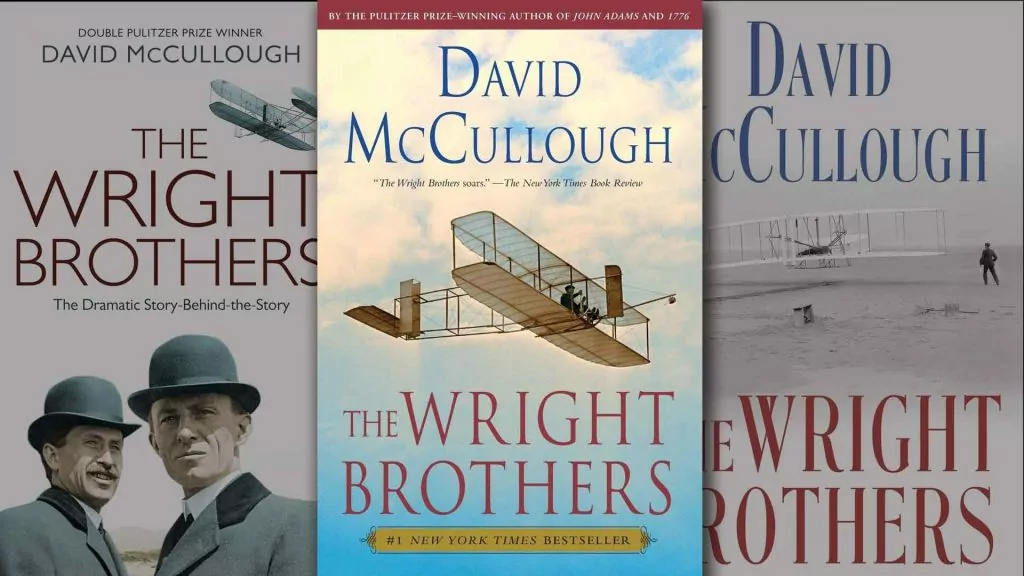
The Wright Brothers

by David McCullough 320 pages / 2015 Rating: Borrow/BUY/Give Match an astonishing story with a superb storyteller and what more could we ask for? David McCullough clearly had fun delivering a story that, if it weren’t true, would never be believed – the Wright brothers seem simply too good to be true. These two former journalists, now bike builders, simply decide one day to get into the plane building business. They begin by firing off a letter to the Smithsonian Institution to ask for all the information that can be had about flight because they are determined to succeed where all others have failed. McCullough gives us the measure of these two men, by highlighting just how audacious their goal really was. At the time many thought human flight was an impossibility, and based this conclusion on the decades of failed experiments that preceded the Wrights’ interest. And while the two brothers are not poor, they don’t have the resources some other experimenters have been able to muster. So how could the Wrights manage what they did? McCullough credits it to determination, brilliance, patience, curiosity, and, did we mention determination? At 320 pages this might seems a bit on the big/intimidating side. But with 50+ pages devoted to the footnotes and index, it isn’t nearly as large as it seems. Who should read it? Anyone with an interest in aviation, or underdog stories, would love it. But I would most like to see this in the hands of young men and older teens. This would be a wonderful book to inspire them to investigate, experiment, study, dream, and work hard. That’s what the Wrights had going for themselves, and look at how far it took them! To be clear, this isn't a specifically Christian book. Their father was a church bishop, and a man of principle and dedication, but he didn't seem all that worried about his boys' irregular church attendance. While the two brothers were always very strict about taking the Sabbath rest, there isn't all that much in here about their relationship with God. So a fascinating biography but not a spiritual one....

Red heart icon with + sign.
Adult biographies, Book Reviews

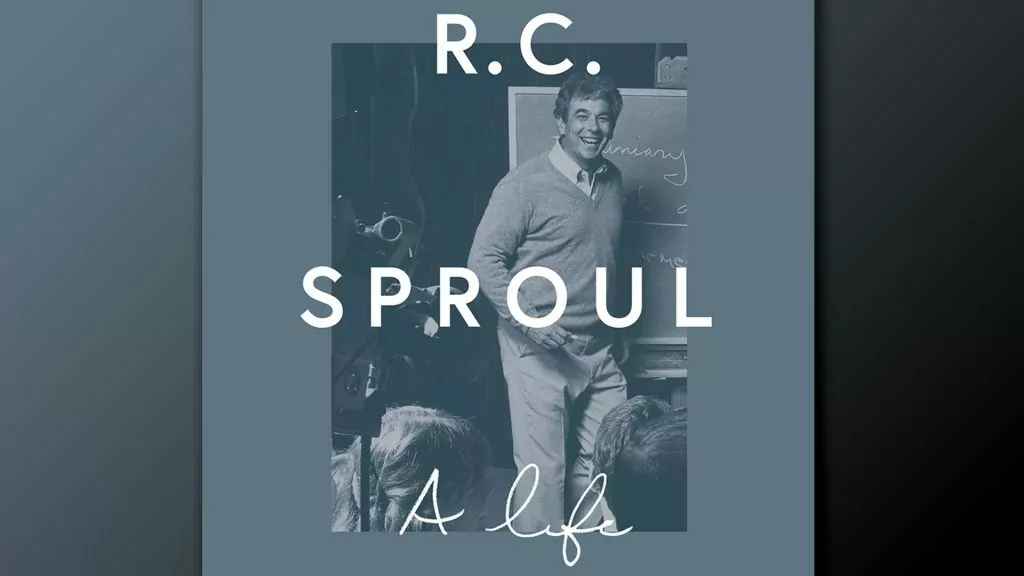
R.C. Sproul: A Life

by Stephen J. Nichols 2021 / 400 pages Rating: Borrow/BUY/Give Stephen J. Nichols has produced the first biography of Sproul since his death in December of 2017. The author, teacher, and pastor truly appears here as a man after God’s own heart: a man in pursuit of his Maker’s holiness – eager to understand it, to mirror and communicate it as faithfully as he might. Following his conversion very early in his college years, Sproul’s zeal drive him and his wife, Vesta, to hunt after vital educational and ministry opportunities, both formal and informal. As a result, they relocated almost annually during the first decade of marriage. Very soon Sproul’s winning personality, warmth, seriousness, and authenticity as a “battlefield theologian” make him a magnet for those determined to grow in – and publicly defend – the faith. We see the launching of the Ligonier Study Center in 1971 in rural Western Pennsylvania, the writing of the Chicago Statement on Biblical Inerrancy, and Sproul’s costly stand against reductive ecumenicism. Nichols gives ample space, as well, to the substance and impact of Sproul’s many books and the Renewing Your Mind radio program. Finally come the stories of his Florida pastorate, the building of Saint Andrew’s Chapel, and the founding of Reformation Bible College (RBC). Nichols succeeded Sproul as president of RBC in 2014, and his writing is aided by close acquaintance with Sproul and his family, colleagues, and friends. One can hardly imagine major detractions to Sproul's legacy and certainly will find no ammunition for that here – though glancing notice is made to R.C. Junior's sudden resignation from the board of Ligonier and RBC in 2016. The Sproul we meet in these pages is the gentle lion so many of us felt we knew, at least distantly and casually, through the books and radio program. Nichols has chosen to write an everyman biography, an accessible book with a tone popular rather than scholarly. And here we rediscover several Sproul family anecdotes which many have encountered previously in his teaching. Sometimes the stories are expanded, sometimes the reader can anticipate and supply added detail. Yes, we meet again an old friend, and a true one. Without a doubt, Sproul loved the church, and he immersed himself in the vocation of shepherd. Nichols's book is both deeply encouraging and even convicting as we view the whole-life portrait of this dedicated, faithful teacher unfolded before us. The church in the 21st century, as much as any time before, greatly needs the stories of such brothers and fellow saints....

Red heart icon with + sign.
Book Reviews, Children’s non-fiction

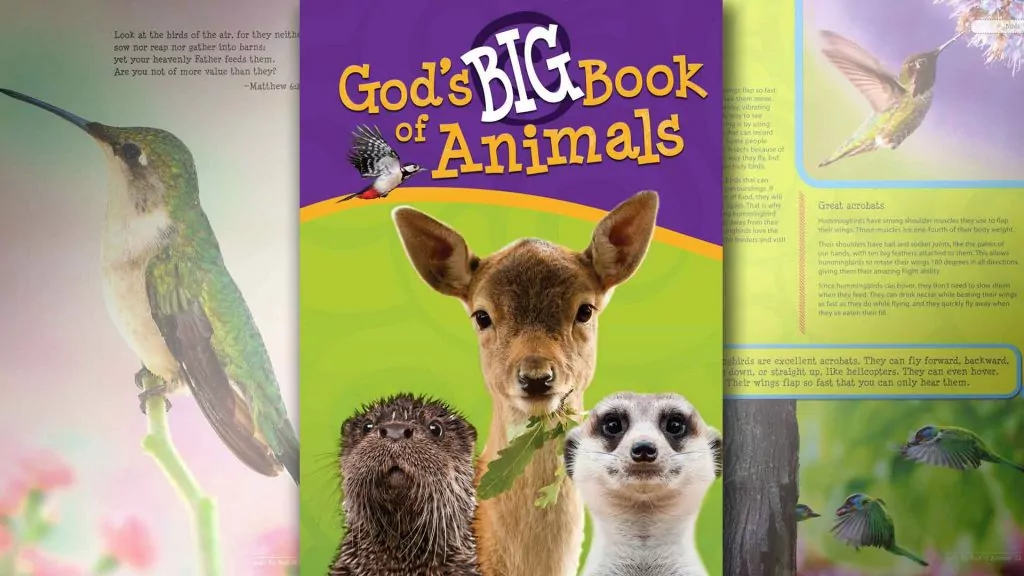
God’s Big Book of Animals

Edited by Shirley Rash 248 pages / 2019 Rating: Borrow/BUY/Give Did you know that baby elephants drink three gallons of milk each day? Or that “woodcock” means “roosters of the forest” And did you know female great white sharks are actually larger than the males? God's Big Book of Animals is GIGANTIC - it's bigger than any other book I've read. It is filled with amazing information about intricate animals – like the great white shark! – all created by God. Each of the 60 animals are given 4, bright, beautiful pages full of descriptions, fun facts and pictures. Plus each animal has their own 14 x 10 inch full-page photo. More examples: “Turtles do not have teeth. They have strong, jagged jaws that help them take bites.” “Komodo dragons are also called monitor lizards.” “Elephants have long trunks, longer then any living animal. Their trunks are heavy, and can weigh over 300 pounds! They move their trunks from side to side, and when they want to rest, they lay it on their tusks. God gave elephants the ability to lift pieces of straw and push heavy pieces of wood.” “A group of butterflies is called a kaleidoscope of butterflies, a swarm of butterflies, or a rabble of butterflies.” “Baby octopuses can hatch in different colors. They can be orange, red, yellow, or different shades of blue.” I think kids 7 and up would love this! But even kids younger would like the many pictures inside....

Red heart icon with + sign.
Book Reviews, Children’s picture books

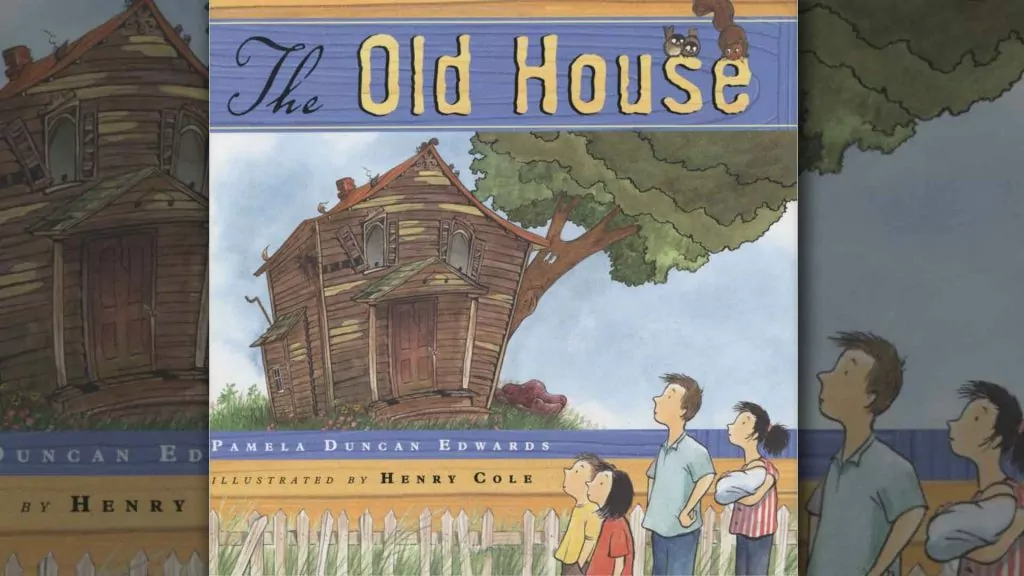
The old house

by Pamela Duncan Edwards 2009 / 32 pages Rating: Borrow/Buy/Give This is a sweet picture book about a self-absorbed house who learns to think about others. Why is the house self-absorbed? Well, "no one had lived in it for a long, long time," so it was quite lonely. And when people passed by, they would often say, "Did you ever see such an unhappy old house?" The house does have friends - birds, a squirrel, wildflowers, and a large oak tree - who do their best to encourage it. But it feels so empty inside that when people do come by to see the house would quickly leave again. "The only thing to do with that dump is to knock it down," a man sneered. But then, one day, a family stopped by. They liked the house. They had never lived in a house before. But just as they were considering whether to buy the old house, it let out "one of its big, sorrowful sighs," and the family quickly left. "I think it might have rot," said the father. Poor house! When the family comes back for a second look, the house takes a long look at the family and saw wishful, uncertain, eager faces. "This family needs me," thought the old house... and it shook off its self-absorbed sorrow and stood tall. But the family left once again. I won't tell you how it ends, but I will note that the house's friends – the oak and the squirrel – were encouraged that finally, the house had stopped feeling sorry for itself. That makes this story with a moral that any kid can understand. Both my older daughters, 3 and 5, really enjoyed it....

1 2 3 4