Transparent heart icon with white outline and + sign.

Life's busy, read it when you're ready!

Create a free account to save articles for later, keep track of past articles you’ve read, and receive exclusive access to all RP resources.

White magnifying glass.

Search thousands of RP articles

Helping you think, speak, and act in Christ.

Open envelope icon with @ symbol

Get Articles Delivered!

Helping you think, speak, and act in Christ. delivered direct to your Inbox!

Internet

One week in: Facebook isn't for everyone

It's been nearly a full week since I deleted my Facebook account. My thoughts so far? Why didn’t I do this before?!?

I made my decision to exit social media circles carefully. I first joined Facebook when I turned 15, and have slowly become more and more dependent on it and other social media outlets since then. Facebook, Instagram, and in a lesser way, Snapchat have caused too much damage in my mind and heart for me to justify continued use.

Not for me

Let me be clear: I do not believe they are evil creations! It is simply that I am not meant for social arenas.

The Apostle Paul tells us that all things may be lawful, but they may not be helpful; he urges us to do all things in moderation, and herein is where I think the evil in social media might be found: the temptation to addiction. I don’t presume to tell you that social media is good or bad for you. But I do want to challenge you to ask that question for yourself. Are you able to use it in moderation? It is certainly lawful, but is it helpful for you?

Like many others, I am a person with intense convictions, feelings, hopes, dreams, desires, sorrows, and fears. When I see beauty I experience joy, and when I see ugliness I feel sadness, anger, and if not treated carefully, that sadness and anger can begin to cross into the murky waters of depression and hatred. In the early Facebook days there was much more to enjoy on Facebook, and it was much more personal. These days most of my newsfeed isn’t even posts from my friends. Usually it’s posts from my friends of friends, from ads, and from viral strings (which are usually filled with hateful interactions between people who don’t even know each other!)

I have found that being addicted to scrolling social medias is not just a mindless thing. It’s very mindFUL. I see hateful social justice posts regarding racism, sexism, classism, religion, or politics, and my head seethes with frustration at the world I live in. From the ignorance and folly, to the intentional hatred and violence, I find that the personality and heart that God built into me can’t handle such a constant diet of that well. Some people can! And I am grateful for their ability to present goodness in that world. But it’s not me. I’m not called to that. A diet of such negativity has brought more and more worry to my heart, and less and less joy.

How did I get here to this choice? I did not want to make a rash decision to leave social media circles, just to re-enter them a week later, so I have spent months in prayer, bringing my symptoms of depression, frustration, and cynicism to Him and asking Him to show me the true source. I felt sure the root was in social media, but I didn’t want to rule out other possibilities, which is why I took my time.  I found my answer one morning when I felt the Spirit calling me to come be with Him. I opened my bible unintentionally to Psalm 37; as I read through it I found each next verse convicting me more deeply that I had to give up this addiction of social media completely in order to restore the joy in life and the control over my daily habits.

"Fret not yourself because of evildoers; be not envious of wrongdoers! For they will soon fade like the grass and wither like the green herb. Trust in Yahweh, and do good; dwell in the land and befriend faithfulness" (vs. 1-2).

There are a couple of things in this Psalm that addressed so poignantly the decision I was facing, and the effect that social media was having on my life.

First, I find that whether I’m dealing with stupid drivers on the road, or observing hatred via social media viral strings, I get angry. I see ignorance, stupidity, folly, and evil and I feel worried, anxious, joyless, and sometimes even hatred. The very first verse in Psalm 37 says: “Fret not yourself because of evildoers.”

And second, I find that the complicated busyness of life, feeling spread thin from being aware of hundreds of people’s lives via social media, and having an appalling amount of useless information running around in my head makes me feel worn out emotionally all the time. The second verse in Psalm 37 spoke to me of the beauty of a simple and quiet life, saying: “Trust in Yahweh, and do good; dwell in the land and befriend faithfulness.”

From negative to positive

After reading that Psalm I made the final decision to go cold turkey on the addiction that social media had become, and immediately felt such abounding peace in my heart. Peace and joy like I haven’t felt in a long time. I deleted (not just deactivated) my social media accounts, and discovered more wholesome and thoughtful ways of communicating with friends and family, by way of iCloud Photo Sharing, and Blogging.

So why do I ask "Why didn't I do this before?"

It's been a week filled with so much beauty, creativity, and positivity. Something I've learned to value highly through the ups and downs of life is to surround yourself with positivity. Or, as my favorite band Switchfoot puts it:

"Is this the world you want? Is this the world you want? You're making it, every day you're alive. You start to look like what you believe... What you say is your religion; How you say it's your religion; Who you love is your religion; How you love is your religion; All your science, your religion; All your hatred, your religion; All your wars are your religion; Every breath is your religion, yea! Is this the world you want? Is this the world you want? You're making it, every day you're alive."

For years I surrounded myself with the voices of negativity and with the feelings of failure and worthlessness that comes with addiction to screens and social media. It marred how I lived, how I loved, how I spoke, how I thought, even how I felt. When I removed myself from the chronic negativity spawned by so many of the voices on social media, I found that I no longer had a confusing veil of shadow keeping me from appreciating the good things in life. Exiting social media tore down that veil; it was as though I saw real sunshine for the first time in years.

Time to spare

Without having my time eaten up by the pointless pursuits of the internet, I've found that my days are far longer, with far more potential. Instead of putting off every errand, chore, or project till the last possible moment, it's been myriads of happy busyness. The week began with some thoughts in my mind of a project of redoing our guest room. Up until now it’s been a workout/study/guest room containing a loft bed for the occasional guest; underneath it, a desk and a dresser of drawers for workspace and storage; and a workout tower for my husband. My goal was to transform it into a real guest room, suitable for putting real guests up in, while keeping some room available for my husband's workspace. I did some cleaning, organizing, and preparatory errands during this week, utilizing all my coupons and rewards points to obtain what I needed to put together a good-looking, color coordinated guest room and bathroom. It was a week-long project with hard work, but the final result is just beautiful.

My husband saw a new side of me today. I was geeking out over the excitement of being able to decorate beautifully, and take a messy unkempt place where we didn't like to be, and turn it into a soothing, warm, and comfy room. What I love about the day we had today, was that instead of quite literally wasting a day of our lives by instead living the lives of the characters on TV, was that we created. We worked, we sweated, and we created. We lived today to the fullest, by being and doing exactly what God created us to do: to be like Him! Our work today was a story of His work - taking something unlovely and useless, and redeeming it through His own hard work into something beautiful and worthy! Joy comes in many ways, but in my life, joy comes most in the creation of something beautiful. A little excursion to Bibles for China Thrift Store with a ton of loft bed hardware bungee corded down and sticking halfway out of my trunk turned into a fun and sunny adventure with my husband, enjoying the open windows, the fresh cool air, and the blue skies. (And a new all time low, driving down the road to the dumpster holding an old ratty twin mattress to the top of my car with our arms extended up out of the windows... but we don't talk about that.)

So a week in and here's what I'm thankful for: I'm thankful for more time to do fulfilling work and errands; I'm thankful for more time to relate to friends on a deeper level than a "like" on a post; I'm thankful for time to read books, and do constructive crafts; I'm thankful for time to THINK: I've had a lot of thoughts and ideas and arguments brewing in my mind, and I've enjoyed the quiet luxury of focused thought. I'm thankful for beauty from ashes.

And now I'm excited to go to the house of the Lord in the morning and worship with the beautiful community that Jesus has been so kindly building around us.

Grace Pitman blogs at ThePitmanCorner.com where a version of this article first appeared.

Red heart icon with + sign.
Science - Creation/Evolution

Not all humility is humble

John Marks Templeton wanted Christians to be “humble” about the Bible and look to Science for direction. And his Foundation is handing out millions to groups trying to mesh Science with Religion. ***** Sir John Marks Templeton (1912-2008) is best known as the creator of the Templeton Growth Fund, an investment fund established in 1954, which made him a very wealthy man. Two years before his death in 2008, Templeton found himself in 129th place on the Sunday Times' "Rich List" of the wealthiest Brits. But Templeton was not only an investor and moneymaker; he was also well-known as a philanthropist, through the work of his charitable organization, the Templeton Foundation. Established in 1987, the $3 billion Templeton Foundation offers over $70 million worth of research grants each year. The Foundation is currently headed by Templeton's daughter, Heather Templeton Dill, and it is an important source of funding for organizations that include the BioLogos Foundation and the Canadian Scientific and Christian Affiliation. One of the Templeton Foundation's purposes is to advance what Templeton called "humility-in-theology." This was the subject of his book, published in 2000, Possibilities For Over One Hundredfold More Spiritual Information: The Humble Approach in Theology and Science. Templeton’s humility How would this 100-fold increase in spiritual knowledge happen? He thought we would get it: “…every two centuries…by encouraging people of all religions to become enthusiastic (rather than resistant) to new additional spiritual information, especially through science research, to supplement the wonderful ancient scriptures" (p. 180). "Humility" was an important word for Sir John Templeton, as can be seen from the title of this book, as well as throughout its pages. Templeton's philosophy of humility, and the way it shaped his thinking and his philanthropically efforts, is exemplified in the following extended quotations. In order to present these quotations in context, and in an effort to avoid misrepresentation of Templeton's message, I present this (rather lengthy) representative sample of his thoughts (I must note that throughout his writings, Templeton writes the word "god" without capitalizing the G, so this is not an error in transcription, and likely reflects Templeton's philosophy): 1. Man isn’t that special "Although we seem to be the most sophisticated species at present on our planet, perhaps we should not think of our place as the end of cosmogenesis. Should we resist the pride that might tempt us to think that we are the final goal of creation? Possibly, we can become servants of creation or even helpers in divine creativity. Possibly, we are a new beginning, the first creatures in the history of life on earth to participate consciously in the ongoing creative process"  (p. 41). 2. Creeds restrict progress "Do theologians need to be humble and open-minded? Leaders may be tempted to think that conformity and control are required for the orderliness of religion and for faithfulness. Most religions have developed creeds, doctrines, dogmas, liturgy and hierarchies of laypeople and clergy. Order and tradition of course do help groups to live as an organization of people whose ideals are compatible and link together the generations in mutual ideals. However, because of a lack of humility, have we observed throughout the history of most religions a tendency for dogma or hierarchy to stifle progress? If the members and clergy become more humble, could they re-form dogma in a more open-minded and inquiring way as a beginning point for continual improvements?" (p. 41). 3. We should humor theologians and rely on the sciences "Let none of us have any quarrel with any theologian. Let us happily admit that his or her concepts and doctrines may be right. But let us listen most carefully to any theologian who is humble enough to admit also that he may be wrong - or at least that the door to great insights by others is not closed. Let us seek to learn from each other. Let us try to use sciences to help verify or falsify new concepts. Let us always keep trying many methods to discover over 100 fold more about divinity" (p.50). 4. We can be wrong, so we should be humble about everything "Egotism has been a major cause of many mistaken notions in the past. Egotism caused men to think that the stars and the sun revolved around them... that mankind was as old as the universe. Egotism is still our worst enemy. In fact, things are still not what they seem. Only by becoming humble can we learn more... Are those who believe only what they see pitifully self-centred and lacking in humility?" (p. 59). Humble to the point of heresy So where did this understanding of "humility" lead Sir John Templeton? To ideas such as these: "Many religious concepts come directly or indirectly from ancient scriptures. An unavoidable limitation of utilizing such texts as a total basis for contemporary faith is that they were written within a context which may no longer be appropriate for ours today. Recent sciences reveal a universe billions of times larger and older and more complex than the one conceived by the ancients. The creative challenge is to enrich understanding and appreciation for the old with a welcoming of concepts and perspectives which may represent truly new insights and creative improvements, which can leverage the power of the past into a forward-looking adventure of learning more and more about the wonders of god and his purposes through ongoing creativity. Can it be an inspiring challenge to read the Bible in this way, which can help each generation of god’s people to search for far more of divine realities than can ever be contained in the language and thought patterns of any age? Should we not be able to give a fuller and wider interpretation of divine revelation today, now that the range of our understanding of the universe has been so vastly enlarged? Why should we often try to express spiritual truths using obsolete words, limited concepts and ancient thought patterns? If some scholars think that Jesus himself wrote nothing, could this suggest that what he had to teach should not be frozen into words, even in his own age? Thus, he did not limit for future generations their range of spiritual concepts and research" (p. 47-48). Ideas have consequences. While Templeton was an elder in a Presbyterian congregation (Presbyterian Church - USA), and even sat on the Board of Princeton Theological Seminary, he did not "limit" himself to the doctrines of orthodox Christianity. His "humble approach" led him to declare, "I have no quarrel with what I learned in the Presbyterian Church. I am still an enthusiastic Christian," and then to ask, "But why shouldn't I try to learn more? Why shouldn't I go to Hindu services? Why shouldn't I go to Muslim services? If you are not egotistical, you will welcome the opportunity to learn more." The sad fact is, however much one claims to be "an enthusiastic Christian," believing that the teachings of religions that deny Christ can be positively appropriated by a Christian makes one, for all intents and purposes, anything but. And this unfortunate truth is also clearly revealed in Templeton's book. While Templeton denied being a pantheist (one who believes that the universe is God, and God is the universe), his understanding of the nature of God can only be described as a form of panentheism, which declares that God and the universe are distinct, but that the world is "in" God. Or as Templeton wrote: "Traditional pantheism can serve a useful purpose in suggesting the co-terminacy of spirit and matter and a personal relationship between the creator and creation. But it may not be compatible with the Christian concept of a personal god vastly greater than material things and who loves all of us and numbers the hairs of our heads. Profound mutual indwelling between man and divinity may be better stated by the Unity School of Christianity, 'God is all of me: and I am a little part of him.' Such a notion implies an inseparable relationship between god and us. As even 'a little part of him,' we may realize the mutual unity of god and his creation. We may conceive that our own divinity may arise from something more profound that merely being 'god's children' or being 'made in his image'" (p. 86). True humility is submitting to God’s Word At this point, it must be said that, for all his self-proclaimed "humility," Templeton's foundational beliefs are, in Christian perspective, anything but humble. True humility is expressed in Psalm 8: "O LORD, our Lord, how majestic is your name in all the earth! You have set your glory above the heavens... When I look at your heavens, the work of your fingers, the moon and the stars, which you have set in place, what is man, that you are mindful of him, and the son of man that you care for him?" (Ps. 8:1,3, ESV). True humility is expressed in humble submission to the LORD, the Creator, who has revealed himself clearly and completely in his Word - those "ancient Scriptures" which we humans have not outgrown, or surpassed, with all of our scientific understanding. True humility is acknowledging our origins as the direct creation of God, acknowledging the reality of the Fall into sin, and its enduring impact on humanity and all of creation, God's provision of a Way of salvation, and the fact that we can do nothing in ourselves to merit that salvation. We are created in God's image. That image has been badly marred by sin. But in Christ, that image is being restored among God's people. True humility is submitting ourselves to Jesus Christ, who declared that he, and only he, is the Way, the Truth, and the Life. Templeton's "humility" is, at bottom, and however unwittingly, the height of human arrogance and pride in disguise. In refusing to submit to God's perfect Word, Templeton set a man on the throne in God's place. And now, through the work of his Foundation, Templeton's utopian vision for human society, based in anything but the Word of God, is continuing to be spread. Templeton’s vision looks to science to show the way Templeton foresaw a "glorious" future, and thanks to his great financial savvy, his legacy lives on. His Foundation has three billion dollars in its reserve fund, and that money is being spent to promote that legacy, with a very definite, and very long-term, goal in mind. Templeton's vision of the future is summed up in two citations in his book. He first cites Marceline Bradford: "...Millions of intellectuals the world over have become disenchanted with backward-looking religious institutions... In order to recapture the great thinking minds of the world, the clergy must turn their heads 180 degrees from past to future. With feet planted squarely in the present and eyes directed to the future, leaders can find factual bases in science for viable, solid, dynamic doctrines. For science and rationality are enemies not of religion - only of dogmatism" (p. 47). Next, he cites Ralph Wendell Burhoe, who was awarded the Templeton Prize in 1980: "It is still my bet that at several points in the next few years and decades the traditional theological and religious communities will find the scientific revelations a gold mine, and that by early in the third millennium A.D. a fantastic revitalization and universalization of religion will sweep the world. The ecumenical power will come from a universalized and credible theology and related religious practices, not from the politics of dying institutions seeking strength in pooling their weaknesses. I cannot imagine a more important bonanza for theologians and the future of religion than the information lode revealed by the scientific community... It provides us with a clear connection between human values, including our highest religious values, and the cosmic scheme of things. My prophecy, then, is that God talk, talk about the supreme determiner of human destiny, will in the next century increasingly be fostered by the scientific community" (p. 103). His favorite charities In the conclusion of his book, Templeton lists a number of the "founder's favorite charities," which also provides real insight into Templeton's agenda. Some we might find agreeable. He is interested in the promotion of entrepreneurship, and the enhancement of individual freedom and free markets. Others included supporting research and publications in genetics; supporting education and other help in voluntary family planning; supporting character development research, and also: "Supporting the publication and dissemination throughout the world of the religious teachings of the Unity School of Christianity of Unity Village, the Association of Unity Churches and of closely similar organizations, provided that major support for such organizations shall continue only so long as the Trustees of the Foundation... determine that such organizations adhere to the concepts of: usually pioneering in religion and theology with little restrictive creed, usually teaching that god may be all of reality and man only a tiny part of god and generally accentuating the positive ideas and attitudes and avoiding the negative" (p. 183). With friends like these Such were the goals of Sir John Marks Templeton, and such are the goals of his foundation. A serious examination of Templeton's guiding philosophy, and the philosophy of the Templeton Foundation, in the light of Scriptural principles, should lead us to a sense of genuine concern about any organization that the Foundation chooses to support financially. And it should lead us to question the ultimate motivation behind this support, and the fruits that this foundation is bearing in the numerous organizations that receive its funding. "The Humble Approach" of Sir John Marks Templeton has absolutely nothing in common with the genuinely humble approach of the Lord Jesus Christ. Templeton’s utopian vision has nothing in common with the eschatological vision of God's Word. Follow the money Now, those who receive large amounts of financial support from the Templeton Foundation may do so "with no strings attached," and perhaps some recipients may be unaware of the totality of the Foundation's founder's spiritual vision. But could it be that they are unwitting victims of a larger, and more nefarious, agenda, which has at its base a desire to proclaim a different gospel, by denying the explicit teachings of the Lord Jesus Christ and his exclusive claims? We are warned against keeping company with the wicked (1 Cor. 15:33, Psalm 1:1, Prov. 13:20) and it doesn’t seem that much of an extension to think how this applies to accepting funding from a group with a wicked agenda. Science, science, and more science A little research shows the incredible reach that the Foundation's money has. And an examination of the nature of the grants that the Foundation provides, as well as the purpose behind these grants, is telling indeed. One of the Foundation's main funding areas is "public engagement," and a representative sample of grants (ranging from tens of thousands to millions of dollars) clearly shows the Foundation's goals. Here is a small sample of grants that have been made over the past three years: Vatican Observatory Foundation - "Building a bridge between faith and astronomy" John Carroll University - "Integrating science into college and pre-theology programs in U.S. Roman Catholic seminaries" Union Theological Seminary - "Project to develop a spiritual worldview compatible with and informed by science" Cambridge Muslim College - "Developing religious leaders with scientific awareness" American Association for the Advancement of Science - "Engaging scientists in the science and religion dialogue" Luther Seminary - "Science for youth ministry: The plausibility of transcendence" Christianity Today - "Building an audience for science and faith" Other grants have been made to train Roman Catholic teachers and preachers to engage the dialogue between science and religion, to promote science engagement in rabbinic training, and to measure science engagement in Roman Catholic high schools and seminaries. Further investigation in the nature and purpose of these grants reveals a common thread. For example, La Jolla Presbyterian Church received a grant from the Templeton Foundation for a program that "seeks to engage young adults (college and post-graduate) in a discussion of science and faith with leading scientists who are Christians." The McGrath Institute for Church Life at Notre Dame University received a $1.675 million grant for their Science and Religion Initiative, which "seeks to frame science education within the broader context of Catholic theology." According to the Institute's director, "The perceived conflict between science and religion is one of the main reasons young people say they leave the Catholic church... this grant allows us to address this misperceptions and help high school teachers create pedagogues that show that science and religion - far from being incompatible - are partners in the search for truth." Multnomah Biblical Seminary has received a Templeton grant (as well as a grant from the American Association for the Advancement of Science, itself supported by the Templeton Foundation), to "equip pastoral studies majors to become more effective in engaging our scientific age." Among a number of other Christian theologians, Niels Henrik Gregersen, professor of Systematic Theology at the University of Copenhagen, received a Templeton research grant for his work on the constructive interface between science and religion. Another recent recipient of the Templeton Foundation's largesse is Regent College in Vancouver, which this year received a grant funding a program called "Re-faithing Science at Regent College." The program will seek, over the next two years, to address this question: "How can the relationship between Christian faith and scientific endeavour be conceptualized and communicated in a way that effectively engages diverse audiences?" The detailed description of this particular grant on the Templeton Foundation website is insightful: "Sir John Templeton recognized that science and spirituality should be neither sealed in separate boxes nor positioned at opposite ends of a battlefield, yet even a cursory glance at contemporary culture reveals that the supposed incompatibility and even hostility between faith and science is something of a truism in much of Western society. Regent College believes that this widespread perception is a significant threat to the development of theology and science alike, as well as to the spiritual and intellectual flourishing of countless individuals." So, utilizing Templeton's funds, Regent College's project team will "propose an alternative model for the relationship between faith and science: mutual coinherence, or existence within one another." Their goal is to communicate this proposal "in an accessible form" that will encourage and enable further exploration of science, theology, and their interaction, using academic publications, public lectures, graduate-level courses, and an online presence, to "target different audiences with the same basic narrative, a story of one world, created by one God, who can be known and worshipped through both theology and science - and who is best known and best worshipped when theology and science work together." Science in the driver’s seat What can we learn from all of this? If we were unaware of the foundational principles behind the Templeton Foundation, perhaps all of this would appear to be somewhat innocuous. After all, who could argue against Christians being involved in the sciences? Why oppose efforts aimed at developing "scientific awareness"? Certainly we shouldn't want to bury our heads in the sand, and ignore what the sciences have to offer, as if science were somehow "off-limits" to the faithful Christian, should we? But remember this important fact: the Templeton Foundation has a very clear agenda – a utopian, panentheistic philosophy that has an ecumenical goal of uniting the religions of the world around a synthesis of "science" and religion, with "science" seated firmly in the driver's seat in this relationship. This agenda is being promoted by the lavish dispersal of funds to Islamic, Roman Catholic, Jewish, and other religious organizations, including, sadly, many evangelical Christian groups, many of which are making their influence felt in Reformed churches as well. Standing in Templeton’s way Two popular sayings come to mind: "Follow the money," and "He who pays the piper calls the tune." The money trail leads us to Sir John Marks Templeton. And clearly, Templeton's agenda is making headway in many places, although it is also clear that this agenda faces many obstacles. 1. Reluctance among religious leaders First of all, there is reluctance to accept the premises of this movement among religious organizations, as can be seen from the numerous grants being made to support efforts to decrease the resistance of religious leaders and members of religious groups, including evangelical Christians, to this religious/scientific paradigm. But that reluctance is being overcome, as the Templeton agenda makes inroads through a judicious use of funding. Efforts to reach youth, and those who teach the young, are effective means of dissemination for any propaganda effort, whether political, cultural, or religious in nature. Young people are more easily influenced, and they are most definitely being targeted, in a well-funded, concerted effort. 2. Reluctance among unbelieving scientists But there is also resistance from the other side - from unbelieving scientists who reject all religion, any idea of transcendence, and the idea that anything exists beyond the physical. This group is also being addressed by the outreach efforts of the Templeton Foundation, as it works toward fulfilling its long-term goals. Conclusion A spiritual war is being waged against God's people, using that ancient question, "Has God really said?" This is not novel; every generation of Christians faces this reality, in different ways at different times in history. The battle is being played out in a world in which money talks, and a lot of money talks loudly. We cannot afford to be naive on this issue. That’s why we need to be on our guard against the influence of the Templeton Foundation's money, even if it's being spent by organizations that may have been respected among us. That money is being spent to promote an agenda that is radically different from the agenda of God's kingdom. Our allegiance to the One True God must lead us to reject alliances with organizations like the Templeton Foundation, whose agenda is completely incompatible with that of our great God and Savior, Jesus Christ. Rev. Jim Witteveen also blogs at CreationWithoutCompromise.com where this article first appeared in two parts....

Red heart icon with + sign.
Assorted

To appear before the Lord

A young lawyer had a dream. He found himself one morning before a judge at court in a T-shirt and crumpled shorts. The judge asked him how he came to be so inappropriately dressed. “But your worship”, the lawyer answered, “I go to church in this manner.” The judge replied, “Young man you might appear before the Judge of judges in this manner, but not in my court.” Does it really matter how we dress for church? After all, isn’t the important thing that we go to church? Well it is indeed true that the important thing is to go to church and that we appear before the Lord in worship. He calls us there. And therefore we ought to be there when He calls. There is no difficulty with that. I also think that most of us would agree that there can be circumstances where, what at other times may be considered inappropriate, can be accepted. I think here of someone who has been hurt and cannot wear "normal" clothes. I also think of people new to the gospel who may well wear clothes which at other times would be considered not right for church. We are not going to write about those things. Those are the exceptions. But what should be the rule? How should brothers and sisters in the faith appear before the Lord? How they used to dress In olden days – say, when your grandparents were young – it was considered normal for the women to wear dark clothes, a hat and, in some instances, gloves to church. Men wore a black suit, a hat or cap, which was removed before they entered the church building. Without a doubt this was a tradition, because nowhere in the Bible will you find exactly how we should dress for church. The question is, does such a tradition have any value? Does it make any difference to how we experience the church service? I could answer these questions with a simple, no. There is indeed little value in tradition for tradition’s sake. And it may well be that those people long ago did not really experience a church service much different to today. But is that really the questions we should ask? I don’t think so. Why did they dress this way? The question that is much more important is, why did our grandparents consider the way they dressed important? The answer to that question lies in how they regarded church and church going. When they went to church they recognized that they were going there to meet with the Lord. They recognized the importance of this event. They wanted to show in their outward appearance that their hearts were reaching out to the God of their salvation. Someone may, at this point, ask me the question, did they really think about these things? Or was this simply the way they dressed for any important occasion? Again I would have to agree. People in those days were much more inclined to dress up. That has indeed changed. During hot summer days there are not many who would go to a meeting wearing a coat and tie. If you need to sit in a stuffy room for some hours you want to be comfortable. We can also note that our grandparents lived – most of them – in a different climate. They lived in Europe, most probably in the Netherlands which has different climatic conditions from those experienced in Canada or Australia. So all these things need to be taken into account when considering how we should dress. I also recognize that many today would say that no one can tell someone else what is appropriate. We live in a time that is sometimes called the ME generation. You know, "if it feels good, do it!!" That is what we are told by the various influences which surround us. Also in the church we are being influenced by this attitude through the media, the press, TV and magazines. Whereas once one would only see Christian magazines in our homes, today that has changed somewhat. The world has come into our homes. We need to be aware of these bad influences. We are in the world but not of this world. All of us need to examine ourselves with regard to these matters. But is there a standard of dress that is acceptable in church? Can we lay down some rules to which everyone should adhere? Yes and no. Let us look at some very general rules. Climate I recently had an e-mail sent to me by someone who was responding to a comment I had made in an online Reformed forum about the weather in Australia. He wrote to tell me that where his brother lives, somewhere in central Canada, it is always 40 degrees, either plus or minus. I have for some time held the view that the way we dress in English-speaking countries has largely been determined by the way the people in the cold and clammy English isles dress. Hence we wear a suit for formal occasions and inevitably a tie around our neck. That may not be the best way to dress when it is extremely hot. I notice that in the state of Israel people attend cabinet meeting without a tie. Just an open necked shirt, either short or long sleeves. It is only sensible to dress for the climate – I do not think it essential to wear a suit with shirt and tie at all times. That does not eliminate my concern with some of the outfits seen at church. There is such a thing as too informal, or too casual. Therefore I do not consider it right to appear in church with t-shirts, or sports attire and similar clothing Another interesting observation. When sports stars receive their annual awards it is inevitably done at a formal occasion where dinner suits and bow ties are the order of the day. Modesty While this is an area which should really be addressed by a lady, I guess even men can be dressed in an immodest way. There is little doubt that our ladies need to consider modesty when dressing, and not only for church. It seems to me that some ladies have little idea how their form of dress affects the opposite sex. It is not for nothing that Paul writes in 1 Timothy 2:9 “I also want women to dress modestly, with decency and propriety, not with braided hair or gold or pearls or expensive clothes.” Why did Paul write this? Because he was an old stick in the mud? I don’t think so. Paul wrote this because he recognized the dangers in such immodesty. Let our ladies be aware of it and remember it when they clothe themselves. Conclusion I mentioned at the beginning of my article the dream of a young lawyer. Weekly we appear before the LORD of hosts, before Him who is far greater, and much more important than any judge or ruler on earth. He is obviously much more important than any sports star or star of the stage or the big screen. Each week we may appear before our LORD who owns us, body and soul, but who at the same time is our Father, who has bought us with the blood of His Son, our Lord and Savior. Shall we then, not consider these things when dressing for church on Sundays? Or for that matter, whenever we appear before Him in worship? I realise, of course, that we are never out of His sight. He sees us wherever we are, He sees us at work, at play, at home and away from home. And at all times He wants to be proud of us. After all we are His children. Maybe each of us should ask ourselves this question: will our Lord, our Savior, our Father in heaven be proud of us in the way we dress, in the way we act, in the way we talk? He is, when all is said and done, far more important and should be far more important to each of us, than any person or group of persons on earth! Let that be reflected in all we do and say. Having reached the end of our article let me ask one question again. Is there an appropriate way of dressing for church? Our way of dress should reflect the importance of the occasion. It should reflect that we come into God’s presence. Worship is a joyful, that indeed, but also a very solemn occasion. Joyful because we meet with our Savior, solemn because this Savior is also far greater than any person on earth. He is after all GOD. A version of this article first appeared in the March 2000 issue of Reformed Perspective. Rene Vermeulen was a regular columnist for the magazine from 1984 to 2010....

Red heart icon with + sign.
Media bias

Don’t watch the news, read it!

This first appeared in Reformed Perspective in 2000, and yet the thesis of this article is just as relevant for today's Internet Age, as entertainment is an even bigger part of the news now. ***** Entertainment is the news. When the hit television series Seinfeld went off the air in 1998, all the major networks ran lengthy stories. The Hollywood press conference that announces the nominees for the Academy Awards receives coverage comparable to the president’s “State of the Union” address. And the box office tallies of the sequels to Jurassic Park and Star Wars become major network news stories. In this day and age of giant conglomerates, a number of networks are now owned and operated by film studios, but there is no grand media conspiracy. There are plenty of independent news sources that provide competition. So who is responsible for the triumph of “infotainment” over information? It is us, the consumers of news. We allow television to be our main source of news, and this leads to three critical distortions in our lives. 1. Self-pity Television news encourages self-pity. TV spokesmen talk a lot about the importance of the “news business,” but what they really mean is the “bad news business.” Except in small doses, good news simply doesn’t make for good television. The tube inevitably emphasizes violence, mayhem, death, destruction – it doesn’t matter if we are talking about battles, riots, train wrecks, or hurricanes – as long as it is visual, dramatic, and compelling. That is why news producers love wars and natural disasters. Bad news is not only the lifeblood of the major networks but also the local news stations across the nation. A USA Today survey indicates that 73 per cent of the lead stories they air are devoted to coverage of some kind of natural disaster or violence. Bad news literally drives out good news. To understand why this happens, try putting yourself in the position of a television news director. How do you make your show gripping? Do you show a computerized graph on the declining national crime rate or live footage of an elementary school shooting? Do you interview a small business owner who has created 100 new jobs in the plumbing industry or an environmental activist who claims to have proof of a deadly new toxic threat? Do you run a lead story about a Detroit janitor who moonlights as a cabdriver so he can send his five children to a Christian school? Do you tell your cameramen to zoom in when he arrives home late at night, kisses his sons and daughters as they lie sleeping, and asks God’s blessing on them? It happens every night in Detroit, Cleveland, Saint Louis, Los Angeles, and New York. But is it news? Never! What if the same janitor arrives home and something snaps? He gets a pistol from the closet shoots his children, and then shoots himself. You don’t have to think about whether to run this story. Your decision is automatic: “If it bleeds, it leads.” 2. Shortened attention span Television news encourages a short attention span and a lack of perspective. Forget about nuclear wars and germ warfare. The most destructive invention of the 20th century is the remote control. Channels magazine notes that the average adult male (who wins the gender and age battle over possession of the remote in most American households) changes stations every 19 minutes. If this keeps up, “channel surfing” will soon be an Olympic sport. Imagine once again that you are a news director. You know that most guys are incapable of watching a half-hour program. How do you respond? By changing the entire nature of television in a desperate bid to keep viewers riveted. In the 1950s a typical camera shot lasted 35-50 seconds. In the 1990s it lasts 5 seconds. Commercials are even more frenetic, often switching images after only one second. Television sound bites have also been reduced to the point of absurdity. Forget about the interview subject who tells you what he thinks about the state of the economy of the defense budget in 25 words of less – you have to find someone who can do it in three words – and they better be pretty titillating, or they won’t make it onto the evening news. Titillation is the new and ultimate entitlement of television viewers. We want to be excited by what we watch. It doesn’t matter if topics are presented in a thoughtful and thorough manner, just as long as we aren’t bored. Who among us would tune into a broadcast of the Lincoln-Douglas debates today? We ought to remember what life was like before television. In 1858, 20,000 residents of Freeport, Illinois, heard presidential candidates Abraham Lincoln and Stephen A. Douglas speak for four hours without microphones, teleprompters or commercial breaks. In city after city, Lincoln and Douglas grappled with consequential issues, and they attracted huge audiences of ordinary citizens – farmers, laborers, shopkeepers, housewives, and even school children. Today, they would be hard-pressed to get an hour of airtime on PBS and even if they did their Nielsen ratings would be abysmal. 3. Superficiality and subjectivity Our love affair with television has led to an obsession with appearance. Look at the current crop of anchormen and anchorwomen. Do you think they were chosen to read the news because they were at the top of their class in journalism school? Everything on television, even the “truth,” is subordinate to appearance. Television is all about surface impressions and this means that intentions, feelings and desires take precedence over logic, substance and reality. Worse yet, television news infects viewers with what I call the “do-something disease.” It presents alarming stories about every imaginable tragedy – famine, cancer, illiteracy, pollution, you name it – and encourages viewers to feel that they should do something right away. It doesn’t matter if they can’t solve these problems. What does matter is they will feel a whole lot better. Stop watching and start reading Self-pity, lack of focus, superficiality, subjectivity – how do we deal with these? Do we try to improve the quality of television news, to make the medium work for us instead of against us? Certainly that is an important and worthwhile effort. It isn’t the ultimate solution, however, because the fundamental problem isn’t a lack of quality programming. We now sit in front of the “boob tube,” 28 hours a week. We spend more time watching television than we do pursuing our careers, since we don’t retire, or take vacations, sick days, or weekends off from our favorite programs. We also spend more time watching television than we do reading to ourselves or to our children. Best-selling novelist Larry Wolwode is right. Television is the “Cyclops who eats books.” When it comes to the news, this one-eyed monster also has an insatiable appetite for newspapers and magazines. But Cyclops in not all-powerful. We can defeat him Unlike the Greeks, we don’t need clever tricks or deception. Armed only with our remote controls, we can turn off this giant glowing eye. Nearly all Americans say they want to cut down on TV viewing. Where is the best place to begin? By eliminating the time you spend on television news. Most material on the tube doesn’t pretend to reflect reality, but news broadcasts do, so they are particularly, potently poisonous. The hour you spend each night watching local and network news could easily be redirected to reviewing not one but two newspapers in their entirety. Sure, print journalism has its own biases, but because of the way we read and comprehend it, we are more capable of compensating. Reinvesting your time in this way may not instantly change the world, but it can change your world and the way you respond to reality. And like and wisely planned reasoned investment it can pay long-term dividends. Reprinted by permission, from IMPRIMIS the monthly journal of Hillsdale College. Be sure to check out the "sequel" to this piece, Don't read the news, read a book....

Red heart icon with + sign.
People we should know

A couple friends you should meet: Jay Adams & D. A. Carson

It’s no secret that I love books. Here in my study I often feel like I’m surrounded by good friends. Some are old friends, centuries old, but the two I’d like to introduce you to in this article are still writing today. The aim of this brief introduction is to help you find good friends for yourself — in other words, to find edifying reading that will give you a better understanding of the Christian faith, a greater grasp of the gospel, and a deeper love for Christ. Jay Adams (1929-2020) What does Jay Adams have in common with the Puritans? I mean, besides many theological commonalities? Both are objects of intense prejudice. Everybody knows that Jay Adams and his counseling methodology is bad, but very few people have actually read anything by Jay Adams. In the Canadian Reformed community, the source of this deep antipathy for Adams can be traced back to a 1977 article in Clarion by Dutch theologian C. Trimp. The article (originally a lecture he delivered at our seminary here in Hamilton), while expressing some appreciation, generally took Adams apart. Trimp’s critique would be echoed by CanRC leaders for years to come. However, what Trimp wrote was based on just one early book of Adams (Competent to Counsel) and, in the meantime, Adams had written several more books. In some of those books, he explained himself further and negated many of the criticisms that Trimp offered. I began reading Adams in university and was immediately impressed by his deep commitment to Scripture and the Reformed faith. Jay Adams is the author of more than 100 books and remains an in-demand lecturer. He did his seminary training at Reformed Episcopal Seminary and completed a Ph.D. at the University of Missouri. From 1963-1983, he taught at Westminster Theological Seminary in Philadelphia. Prior to that, he pastored a number of Presbyterian churches, including an Orthodox Presbyterian congregation. The Associate Reformed Presbyterian Church currently holds his ministerial credentials. He was the founder of the Christian Counseling and Educational Foundation (CCEF.org) as well as the National Association of Nouthetic Counselors (now called the Association of Certified Biblical Counselors – see BiblicalCounseling.com). He’s currently involved with the Institute for Nouthetic Studies (Nouthetic.org). Why is Jay Adams important? Jay Adams is important for precisely the same reason I first appreciated Adams back in university: he takes the Bible seriously. He writes on a variety of subjects, from Christian living to counseling to preaching, but whatever the topic, sola Scriptura is his touchstone. You may not always agree with his conclusions, but you have to agree that this is the right approach. Basically, Adams takes the presuppositional approach of Cornelius Van Til and applies it to pastoral theology. I’ve read about a dozen of Adams’ books and have learned a lot from them. Where do I start? As mentioned, Competent to Counsel was one of Adam’s earliest books, published in 1970. It’s an important book, but it does leave a lot of questions hanging. If you’re interested in Adam’s counseling methodology, a better place to start would be A Theology of Christian Counseling: More Than Redemption. A good follow-up would be How to Help People Change: The Four-Step Biblical Process. A couple of other books that are more directed to the regular “person in the pew”: What To Do on Thursday: A Layman’s Guide to the Practical Use of the Scriptures and The Biblical View of Self-Esteem, Self-Love, Self-Image. Preachers and aspiring preachers need to read his Truth Applied: Application in Preaching. What to watch out for? Adams is a controversial figure. On a formal level, some people have a difficult time getting past Adams’ tone and style. For some, he’s too strident, too forceful, too critical, or too this or that. Theologically, questions have sometimes been raised about Adam’s concept of habituation. George M. Schwab wrote an article in the Winter 2003 Journal of Biblical Counseling (published by CCEF) alleging that Adams was more influenced by O. Hobart Mowrer and William Glasser than by Scripture on this point. When someone has written as much as Adams, you can expect that there will be disagreements and critiques. Meanwhile, another generation of counselors has arisen and some of these (esp. at CCEF) have modified Adams’ approach in what may be described as a kinder and gentler direction. And while this is not a serious theological faux pas, if I remember correctly, Adams is also postmillennial in his eschatology. Conclusion Writing about Jay Adams in a positive way is a risky endeavor. For every positive point that one might rise, there will be a host of people who raise the negatives. Adams is not infallible, but he does respect the infallible Bible and he is Reformed in his convictions. I know that my life and ministry have certainly been enriched by his writings. Perhaps he has something to offer you too. By the way Jay Adams blogs at nouthetic.org/blog. D. A. Carson (1946- ) Donald Carson has a Canadian connection, being born in Montreal in 1946. His father was a Baptist pastor and missionary, first among English-speaking Quebeckers, then among the French. For Don Carson, one of the results is bilingual fluency. He did his undergrad studies at McGill University in Montreal, and then obtained a Master of Divinity degree from Central Baptist Seminary in Toronto. Carson was ordained in 1972 at a Baptist church in Richmond, BC. He then went on to obtain a Ph.D. in New Testament studies at Cambridge. After some years as a professor at a Baptist seminary in Vancouver, he moved to Wheaton, Illinois, to take up a position teaching New Testament at Trinity Evangelical Divinity School. He’s still there today. He’s written numerous books and articles. He frequently speaks at conferences and is actively involved with The Gospel Coalition. Why is D. A. Carson important? Carson has three endearing qualities. First, he is a New Testament scholar with a high view of the Bible. He believes fervently in biblical inspiration and inerrancy. Unfortunately, there are not many high-level NT scholars with such views of their subject matter. Second, Don Carson loves the gospel. This is reflected in his work with the Gospel Coalition and Together for the Gospel. His passion for the good news also surfaces in just about everything he writes. Third, Carson, like Mike Horton, is able to produce both high-quality scholarly writing and popular works that will edify any Christian. Where do I start? If you’re looking for something to whet your appetite, the best place to start is Carson’s biography of his dad, Memoirs of an Ordinary Pastor (which can be downloaded for free at The Gospel Coalition). Then ease into Carson’s biblical scholarship with his helpful little volume, The Difficult Doctrine of the Love of God. If it’s devotional reading that you’re looking for, check out his Scandalous: The Cross and Resurrection of Jesus. If you’re a seminary student, or if you’re a pastor and haven’t read it yet, Exegetical Fallacies is a must-read. If you have an interest in postmodernism and hermeneutics, The Gagging of God is a thorough treatment. What to watch out for? Well, if you haven’t guessed it already, Carson is a Baptist. I don’t view the denial of infant baptism as a minor, insignificant matter. However, honestly I don’t recall reading anything from Carson that has ever leapt out at me as being distinctly Baptist. It’s not as if he makes a point of arguing for believers’ baptism in each of his books, or even laying the foundation for that position. I think his purposes are higher. Another point worth mentioning is that Carson is not a cessationist — he believes that charismatic gifts did not cease with the time of the apostles. But again, this is not a strong theme tainting his writings. With regards to the doctrine of salvation (soteriology), Carson is Calvinistic. He holds to the doctrines of grace. Moreover, he frequently refers to the importance of confessional Christianity. He doesn’t mean that as a reference necessarily to the Three Forms of Unity or Westminster Standards, but to the kind of Christianity that grounds itself in confessions generally oriented to the Protestant Reformation. Though I don’t care for the expression myself, some would call him a “Reformed Baptist.” Conclusion I heard Don Carson speak a few years ago at the Canadian Gospel Coalition Conference just a few streets over from us here in Hamilton. I was impressed. He writes well, but speaks even better. Pretty much anything that Carson writes, I’ll read. If he’s speaking nearby, I’ll be there. I guarantee that this friend will edify you as well. Dr. Bredenhof is the author of many books including God Did Say! which is available at here....

Red heart icon with + sign.

Homosexuality

One in ten? Alfred Kinsey’s most famous lie

Even if you haven’t heard of Alfred Kinsey you probably have heard about one of his key “findings” – that 10% of all people are homosexual. Dr. Judith Reisman (in her book Kinsey: Crimes & Consequences, 1998) asks, “who, indeed, today has not heard the mantra that homosexuals make up 10 percent of the US population?” She points out that the 10% figure is based “on Kinsey’s authority alone.” In fact, “Kinsey claimed to prove that homosexuals represented between 10% and 37% of all males.” How did Kinsey arrive at such a figure? It was simple. He deliberately set out to interview a large number of homosexuals to include in his database of human sexual behavior. During the 1940s, when he was conducting his research, this was no easy feat. Back in those days homosexuality was considered shameful, and many states in the USA had laws forbidding such conduct. Therefore Kinsey and his associates had to make a special effort to contact the homosexual enclaves that existed in large American cities in order to be able to solicit interviews with homosexuals. They were very successful, and hundreds of homosexual case histories were included in Kinsey’s data. In fact, the large number of homosexuals in Kinsey’s data meant that they were clearly over represented in relation to the normal population. Thus it was inescapable that the frequency of homosexuality would be exaggerated in Kinsey’s findings. And this is exactly what Kinsey intended. Reisman puts it succinctly: “Much of Kinsey’s work is designed to advance several revolutionary notions about homosexuality: that secret homosexuality was relatively commonplace; that most normal Americans hypocritically and secretly engaged in illicit sex of various kinds including homosexuality; that people were commonly bisexual meaning they were both homosexual and heterosexual; thus prejudice against homosexuality was hypocritical and based on ignorance of normal sexual behavior; and children and adults should experience and experiment with both their homosexual and heterosexual sides. Kinsey’s “research” was definitely agenda-driven and meant to normalize sexual perversion and overturn traditional morality. Among other things, he wanted to advance the cause of homosexuality. This purpose could be served by convincing people that homosexuality was relatively common. Thus he produced the figure that 10% of the population was homosexual, and it has been the generally accepted figure since then. But it is certainly not true. This was first published in the March 2015 issue....

Red heart icon with + sign.
Adult non-fiction, Book Reviews

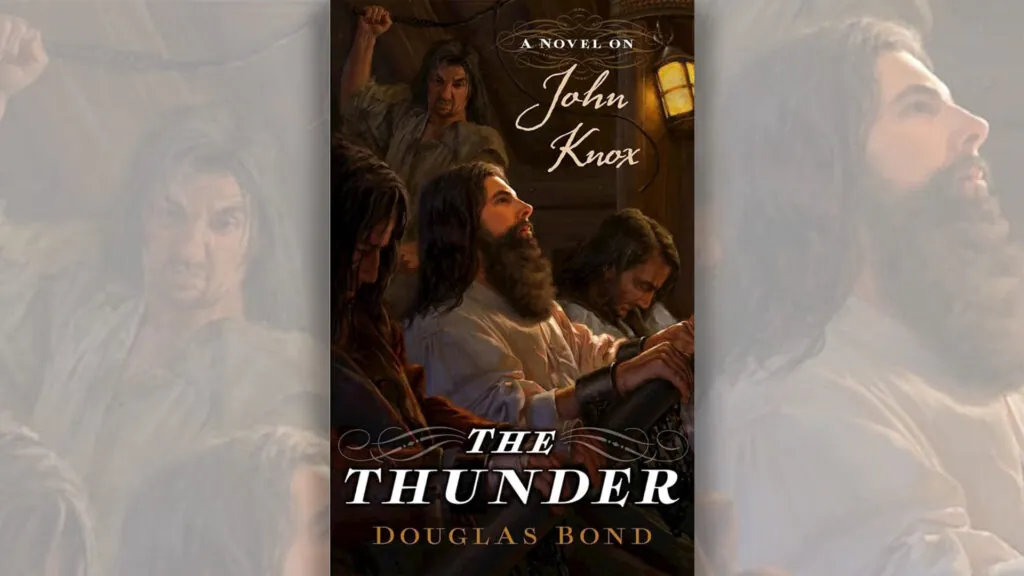
The Thunder: A novel on John Knox

by Douglas Bond 2012 / 400 pages Rating: Good/Great/GIFT John Knox turns five hundred this year and I can't think of a better way to mark the occasion than to read Douglas Bond's biographical novel of the man. All I knew of Knox before reading this was that he was supposed to be the Scottish John Calvin. But after The Thunder I think a better comparison might be some combination of action hero and Scottish Elijah. His first notable foray as a Reformer was as a bodyguard, wielding a two-handed sword in protection of a preacher. He was then ordained himself, and shortly thereafter imprisoned and sent to a French galley to row for almost two years. And when finally freed, though the trial left a permanent impact on his health, Knox then made a habit of speaking Truth to power, chastising the regent of England, encouraging the child King, Edward VI, and then admonishing Mary, Queen of Scots as well as her mother, the Dowager Queen Mary of Guise. This was a guy, weak though he was in body, who would not back down! So that's the man, but what about the novel? Douglas Bond does a smashing job, telling the tale from the perspective of one of Knox's students. This device allows Bond to tell one near unbelievable tale after another about his principle figure, but make it all believable by having the young student also marvel at the spiritual might of this Reformation giant. This is a great novel for anyone who likes history, older teens through adults, and simply an amazing tale told exceptionally well. It is available on Amazon.com....

Red heart icon with + sign.
Theology

How are we to read the Bible?

From January 16 to 18, in 2014, the Canadian Reformed Theological Seminary hosted a conference on the topic of hermeneutics. It's a big word, but they explained what they meant by it: how does one correctly handle the Word of truth in today’s postmodern world?  It comes down to: how are we to read the Bible? Half a dozen professors from the Theological University in Kampen – this institution trains ministers for the Reformed Churches in the Netherlands (RCN) – winged their way across the Atlantic to participate in this Conference.  Two professors from Mid-America Reformed Seminary in Dyer, Indiana (this institution contributes to the ministerial supply in the URC) braved wintry roads to add their contribution.  And, of course, the faculty of our own Canadian Reformed Theological Seminary in Hamilton did what they could to supply a clear answer to that vital question.  The Conference included two public evenings, and it was good to see that the host church in Ancaster was packed to the rafters on both evenings.  For my part, I took in the two daytime programs too.  By the time the Conference was over at 3:20 Saturday afternoon, I was more than happy to call it quits; one can absorb only so much…. Conference Background Many of the members of the Canadian Reformed Churches have a Dutch background.  Specifically, our (grand)parents were once members of the Reformed Churches of the Netherlands (RCN).  There is, then, a very strong historic and emotional bond between the Canadian Reformed Churches and the Reformed Churches of the Netherlands.  At my own church, the two previous ministers both came directly from these Dutch sister churches, and both had their training in the Theological University of Kampen. In the last dozen years or so, concern has slowly grown within our churches about developments we saw happening in the RCN in general and in the Theological University in particular.  In fact, our recent Synod of Carman wrote a pointed letter to the upcoming Dutch Synod explaining why developments in the Dutch churches worry us, and urging a change (see Acts 2013, Art 165).  The heart of the concern lies in how the professors of Kampen are reading the Bible.  Given that we remain sister churches with the RCN, it was considered right before God to do a Conference with these men in order to understand better what the Kampen men are thinking, and to remind each other of what the Lord Himself says on the subject. How does one read the Bible? It was accepted by all that the Bible comes from God Himself, so that what is written on its pages does not come from human imagination or study, but comes from the Mind of holy God Himself.  So the Bible contains no mistakes; whatever it says is the Truth.  Yet this Word of God is not given to us in some unclear divine language, but infinite God has been pleased to communicate in a fashion finite people can understand – somewhat like parents simplifying their language to get across to their toddler.  As we read the Bible, then, the rules common for reading a newspaper article, a book, or even this Bit to Read apply, ie, you get the sense of a particular word or sentence from the paragraph or page in which it’s written, and when some word or sentence is confusing you interpret the harder stuff in the light of easier words or sentences elsewhere in the article.  That’s the plain logic of reading we all use.  So far the professors of Kampen and Hamilton and MARS were all agreed. Genesis 1 Differences arose, however, when it came to what you do with what a given text says.  In the previous paragraph, I made reference to a ‘toddler’.  We all realize that the use of that word does not make this Bit to Read an article about how to raise toddlers.  Genesis 1 uses the word ‘create’.  Does that mean that that chapter of Scripture is about how the world got here?  We’ve learned to say that Yes, Genesis 1 certainly tells us about our origin.  (And we have good reason for saying that, because that’s the message you come away with after a plain reading of the chapter; besides, that’s the way the 4thcommandment reads Genesis 1, and it’s how Isaiah and Jeremiah and Jesus and Paul, etc, read Genesis 1.)  But the Kampen professors told us not to be so fast in jumping to that conclusion.  Genesis 1, they said, isn’t about how we got here, but it’s instruction to Israel at Mt Sinai about how mighty God is not the author of evil.  Just like you cannot go to the Bible to learn how to raise toddlers (because that’s not what the Bible is about; you need to study pedagogy for that – the example is mine), so you cannot go to the Bible to find out how the world got here – because that’s not what Genesis 1 is about, and so it’s not a fair question we should ask Genesis 1 to answer. 1 Timothy 2 A second example that illustrates how the Dutch professors were thinking comes from their treatment of 1 Timothy 2:12,13.  These verses record Paul’s instruction: “I do not permit a woman to teach or to exercise authority over a man; rather, she is to remain quiet.  For Adam was formed first, then Eve….”  This passage featured on the Conference program because a report has recently surfaced within the Dutch sister churches arguing that it’s Biblical to ordain sisters of the congregation to the offices of minister, elder and deacon.  1 Timothy 2 would seem to say the opposite.  So: how do you read 1 Timothy 2:12 to justify the conclusion that women may be ordained to the offices of the church? The Dutch brethren answered the question like this: when Paul wrote the prohibition of 1 Timothy 2, the culture Timothy lived in did not tolerate women in positions of leadership.  If Paul in that situation had permitted women to teach in church or to have authority over men, he would have placed an unnecessary obstacle on the path of unbelievers to come to faith.  Our western culture today, however, gives women a very inclusive role in public leadership.  If we today, then, ban them from the offices of the church, we would place an obstacle in the path of modern people on their journey to faith in Jesus Christ.  Had Paul written his letter to the church in Hamilton today, he would have written vs 12 to say that women would be permitted to teach and to have authority over men. That conviction, of course, raises the question of what you do with the “for” with which vs 13 begins.  Doesn’t the word ‘for’ mean that Paul is forming his instruction about the woman’s silence on how God created people in the beginning – Adam first, then Eve?  Well, we were told, with vs 13 Paul is indeed referring back to Genesis 1 & 2, but we need to be very careful in how we work with that because we’re reading our own understandings of Genesis 1 & 2 into Paul’s instruction in 1 Timothy 2, and we may be incorrect in how we understand those chapters from Genesis.  So vs 13 doesn’t help us understand vs 12. Confused… I struggled to get my head around how brothers who claim to love the Lord and His Word could say things as mentioned above. A speech on Saturday morning helped to clarify that question for me. The old way of reading the Bible might be called ‘foundationalism’, describing the notion that you read God’s commands and instructions (eg, any of the Ten Commandments), and transfer that instruction literally into today so that theft or adultery or dishonoring your parents is taboo. This manner of reading the Bible does not go down well with postmodern people, because it implies that there are absolutes that you have to obey. The alternative is to disregard the Bible altogether and adopt ‘relativism’, where there are no rules for right and wrong at all – and that’s obviously wrong. So, we were told, we need to find a third way between ‘foundationalism’ and ‘relativism’. This third way would have us be familiar with the Scriptures, but instead of transferring a command of long ago straight into today’s context, we need to meditate on old time revelation and trust that as we do so the Lord will make clear what His answers are for today’s questions. If the cultural circumstances surrounding a command given long ago turns out to be very similar to cultural circumstances of today, we may parachute the command directly into today and insist it be obeyed. But if the circumstances differ, we may not simply impose God’s dated commands on obedience or on theft or on homosexuality into today. Instead, with an attitude of humility and courage we need to listen to what God is today saying – and then listen not just to the Bible but also to culture, research, science, etc. After prayerfully meditating on the Scripture-in-light-of-lessons-from-culture-and-research, we may well end up concluding that we need to accept that two men love both each other and Jesus Christ. That conclusion may differ from what we’ve traditionally thought the Lord wanted of us, but a right attitude before the Lord will let us be OK with conclusions we’ve not seen in Scripture before. Analysis This speech about the ‘third way’ helped clarify for me why the Kampen professors could say what they did about Genesis 1 and 1 Timothy 2. They were seeking to listen to Scripture as well as to what our culture and science, etc, were saying, and then under the guidance of the Holy Spirit sought to come to the will of the Lord for today’s questions. To insist that Genesis 1 is God’s description about how we got here (creation by divine fiat) leads to conclusions that fly in the face of today’s science and/or evolutionary thinking – and so we must be asking the wrong questions about Genesis 1; it’s not about how we got here…. To insist that 1 Timothy 2 has something authoritative to say about the place of women is to place us on ground distinctly out of step with our society – and so we must be reading 1 Timothy 2 wrongly. As a result of deep meditation on Scripture plus input from culture etc, these men have concluded that God leads us to condoning women in office in our culture, accepting a very old age for the earth, and leaving room for homosexual relationships in obedient service to the Lord. This, it seems to me, is the enthronement of people’s collective preferences over the revealed Word of God. Our collective will, even when it is renewed and guided by the Holy Spirit, remains “inclined to all evil” (Lord’s Day 23.60; cf Romans 7:15,18). There certainly are questions arising from today’s culture that do not have answers written in obvious command form in Scripture, and so we undoubtedly need to do some humble and prayerful research and thinking on those questions. But the Bible is distinctly clear (not only in Genesis 1) about where we come from, and distinctly clear too (not only in 1 Timothy 2) about the place of women, and distinctly clear also on homosexuality. To plead that we need different answers today than in previous cultures lest the Bible’s teachings hinder unbelievers from embracing the gospel is to ignore that Jeremiah and Micah and Jesus and Paul and James and every other prophet and apostle had to insist on things that were “a stumbling block to Jews and folly to Gentiles” (1 Corinthians 1:23). One questioner from the audience hit the nail on the head: the Dutch brethren were adapting their method of reading the Bible to produce conclusions accommodated to our culture. Where does this leave us? There was a time when the Reformed Churches in the Netherlands and their Theological University in Kampen were a source of much wisdom and encouragement in searching the Scriptures. Given that all the men from Kampen spoke more or less the same language at the Hermeneutics Conference, it is clear to me that those days are past. We need not deny them the right hand of fellowship, but we do need to pray that the Lord have mercy on the Dutch sister churches – for this is how their (future) ministers are being taught to deal with Scripture. I was very grateful to note that the professors from the Canadian Reformed Theological Seminary (and MARS too, for that matter) all spoke uniformly in their rejection of Kampen’s way of reading the Bible. They insisted unequivocally that “the whole counsel of God, concerning all things necessary for his own glory, man’s salvation, faith, and life, is either expressly set down in scripture, or by good and necessary consequence may be deduced from Scripture: unto which nothing at any time is to be added, whether by new revelations of the Spirit, or traditions of men” (Westminster Confession, I.6). Postmodernism does not pass us by. May the Lord give us grace to keep believing that His Word is authoritative, clear and true....

Red heart icon with + sign.
Book Reviews, Teen non-fiction

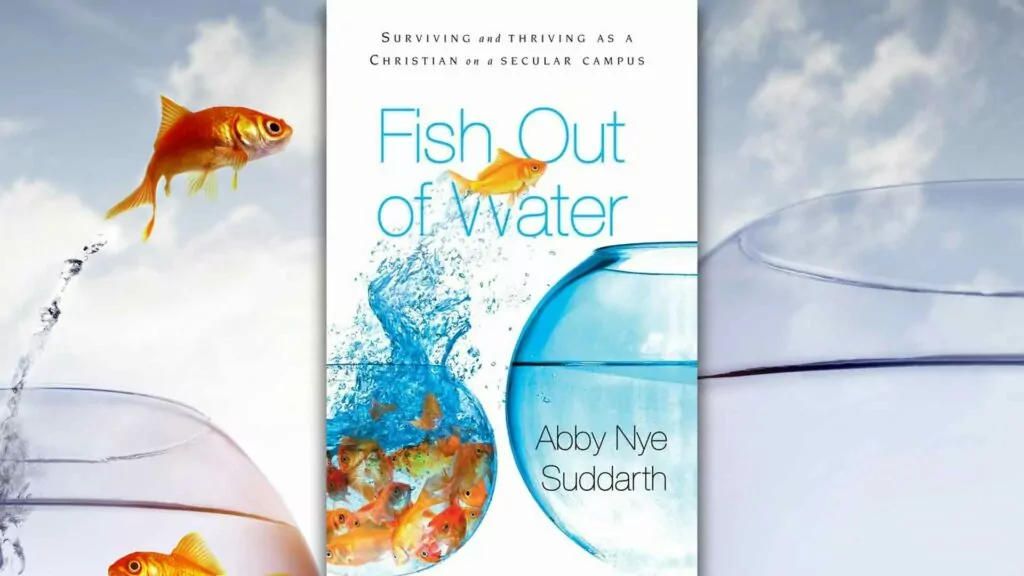
Fish out of Water: Get equipped for college

by Abby Nye 2005 / 229 pages Rating: GOOD/Great/Give Nye wrote Fish out of Water, while in the third year of university, at the suggestion of her journalist parents. She was shocked, and overwhelmed by her first year on campus, but stuck it out, and started taking notes on the strange and perverse goings on at today’s secular campus. It started with her Welcome Week orientation activities, which included a meet and greet where guys and girls who had just met were greeting each other with a French kiss. Throughout the year, the weirdness continued – some of the activities included “National Condom Day” followed shortly after by a “campus-sponsored activity called ‘Just How Kinky Are You?’” The campus “Counseling and Consultation Center” prepared for February by handing out a flyer title, “Road Trip?” which advised students to set up a “drinking plan” for Spring Break and gave tips on what to do if your drinking buddy was so drunk he stopped breathing. But it isn’t just the weirdness that Nye addresses. She also tackles some of the day-to-day challenges Christians will face. She notes the hypocrisy many colleges have towards everything and anything, except Christianity, in a chapter titled, “We will not tolerate intolerance.” Her most helpful and practical advise can be found in the chapter “Pick your battles” where Nye shows how to stand up in a godly, respectful and effective way, and also shares thoughts on when it is probably best to just walk away instead. While Nye probably isn’t Reformed, her advice is biblically sound. This is a great volume for parents and college-bound students to read. The entire contents of the book can be read for free at AnswersInGenesis.org/articles/foow but for this to be properly digested you should pick it in paperback....

1 2 3 4 5 6 7 8 9 10 11 12 13 14 15 16 17 18 19 20 21 22 23 24 25 26 27 28 29 30 31 32 33 34 35 36 37 38 39 40