Transparent heart icon with white outline and + sign.

Life's busy, read it when you're ready!

Create a free account to save articles for later, keep track of past articles you’ve read, and receive exclusive access to all RP resources.

White magnifying glass.

Search thousands of RP articles

Helping you think, speak, and act in Christ.

Open envelope icon with @ symbol

Get Articles Delivered!

Helping you think, speak, and act in Christ. delivered direct to your Inbox!


Most Recent


The Rest


Red heart icon with + sign.
Book Reviews, Teen fiction

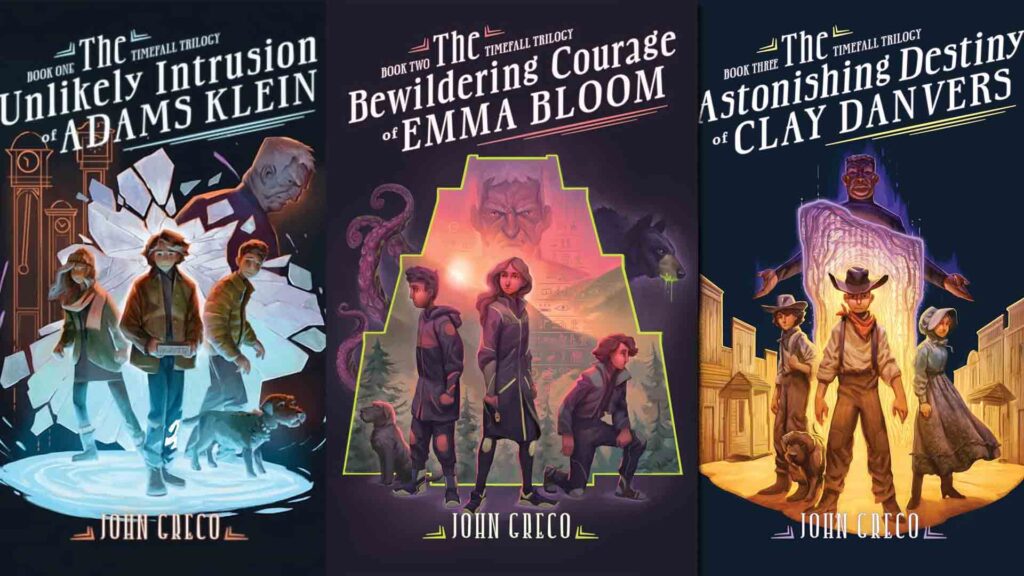
The Unlikely Intrusion of Adams Klein

by John Greco 2025 / 288 pages Rating: good/GREAT/gift Adams Klein is a pretty ordinary 14-year-old, except, maybe for that "s" at the end of his first name.... and that he's from the future. He's been sent back 200 years, to our modern day, for his protection. In the future the dictator wants to kill Adams, but now that he's back in the past, he's safe, right? Well, so long as he doesn't get noticed. If he pops up in a newspaper, then the future's dictator can figure out where he is, and when, and send his killer robots back in time to get him. So Adams keeps a low profile, hiding in the woods in the middle of the winter. But how long can a boy do that without the loneliness getting to him? Then, when he sees a girl, Emma Bloom, fall through the ice, he springs into action and saves her, and that gets him noticed! Are the killer drone robots on their way? You bet. But saving Emma also got Adams friends: Emma, and a boy named Clay Danvers. Together they'll take on the Marshall and change the future! Cautions There is some violence, but mostly talk of it, rather than anything detailed. But some talk of people getting killed is inevitable in a book about a future really evil tyrant. Maybe the freakiest bit is someone being threatened with having his vocal cords removed and implanted in a drone. I've read the sequel too, and while I don't want to give many spoilers, but I'll share one that's... symptomatic. At one point a robot basically becomes a moral creature – it's like it now has a soul. If this was a secular book I'd maybe have a problem with that, as the evolution-pushing materialist world says we are just meat computers/robots ourselves, so a sufficiently complex robot should be able to become a conscious moral creature with its own soul of sorts (though maybe materialists would say neither robots nor people have any sort of non-corporeal part of themselves like a soul). My point is, in secular hands a human-like robot would be an attack on the distinctiveness of human-kind (Gen. 1:26-27). But that's not what's going on here. It's just a fun quirky side-character, that's all. So there are some plot points that in a secular author's hands might be troublesome but just aren't here. I'll also note – this is a bit of spoiler, so don't tell your kids – that the evil future "Marshall" is playing with occultic things. He's trying to get help from "the Ones Out There." I was a bit worried where it was going at first, but I had no need – it speaks to the spiritual realm, but from a solidly Christian perspective. Conclusion Unlikely Intrusion is the first book in the TimeFall Trilogy, and the second, The Bewildering Courage of Emma Bloom, is every bit as good, which has me looking forward to book 3, The Astonishing Destiny of Clay Danvers. I think the series would be best for boys (and some girls too) 10 through 14 who like adventure stories. Lots of action here, and kids with courage. Very creative, and the Christian underpinnings are evident, even if they aren't explicit. You can hear the author read Chapter 1 below. ...

Red heart icon with + sign.
Adult fiction, Book Reviews

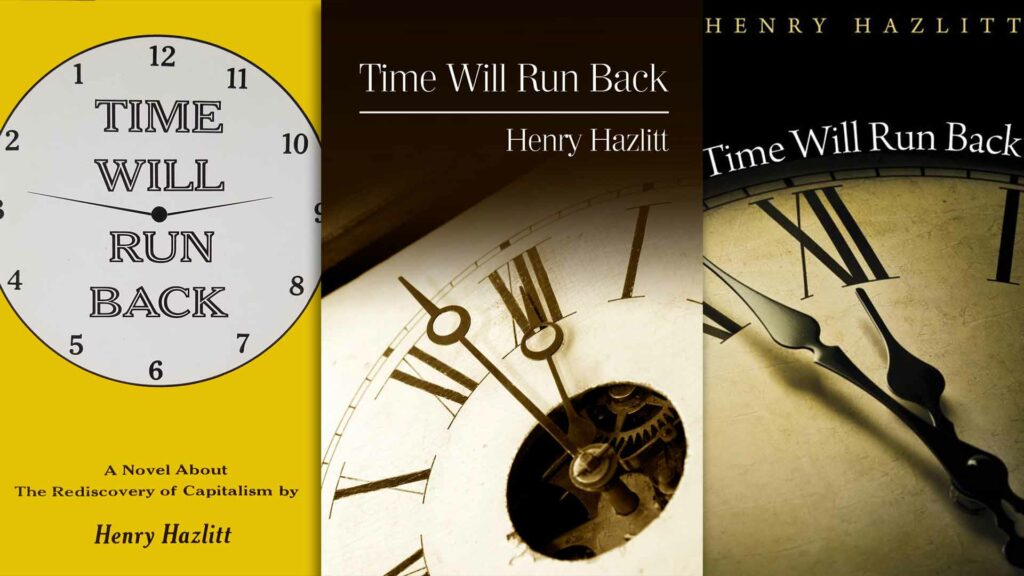
Time will run back

by Henry Hazlitt 368 pages / 1951 Rating: Good/GREAT/Gift As novels go, this is intriguing. As economics textbooks go it is downright amazing. Like 1984... In Time Will Run Back author Henry Hazlitt envisions a future in which the communists won and have been in power for more than 100 years. As Henry Hazlitt himself acknowledges, his novel bears some similarities to 1984 (published two years earlier) since both take place in a dystopian future in which the government manages every aspect of citizens' lives. But Hazlitt didn't read 1984 until after he had finished the first draft of his own book, so no plagiarism was involved. Instead, as Hazlitt puts it, authors like Orwell, Aldous Huxley (and his Brave New World) and himself were: plagiarizing from the actual nightmare created by Lenin, Hitler and Stalin....All the writers had done was to add a few logical extensions not yet generally foreseen. In Hazlitt's envisioned future the government has not only taken over the capitalist West, but they've wiped away any memory of capitalism, even editing Karl Marx's books so that no one could deduce from them what sort of economic system it was that Marx was writing against. Into this setting Hazlitt places the ultimate outsider. The world dictator's son, Peter Uldanov, has grown up far away from his father, isolated on a Bahama island. When his mother and father split, he agreed to let her take Peter, so long as she agreed not to teach Peter anything about history, politics or economics. So when the world dictator calls his now adult son to Moscow and informs Peter that he is to succeed his father as dictator, father first has to bring son up to speed in these three key areas. Peter's education takes up the first third of the book, though there is some palace-intrigue as well: the second-ranking member of the ruling Politburo is eager to see Peter dead, but doesn't want to be caught doing the deed. ...and Screwtape Letters This first third bears more than a passing resemblance to C.S. Lewis' The Screwtape Letters, with Peter's teacher filling the role of the elder Screwtape explaining to his younger devilish charge why they do things the way they do them. For example, at one point Politburo member Adams and Orlov, the editor of the world's state-approved and only remaining newspaper, explain to Peter how what is carried in the paper has nothing to do with the truth, but instead has to do with what is useful for the masses to hear. It turns out "what is useful" can be hard to determine. "It is for the Politburo to decide, for example, whether we shall say that the production record is very bad, in order to exhort and sting everyone to greater output; or whether we shall say that it is very good, in order to show how well the regime is doing and to emphasize the blessing of living under it." "These decisions are sometimes very difficult," Adams put in. "We often find that a zigzag course is best. For example, if goods are shoddy and fall apart, or if too many size nine shoes are made and not enough size eight, or if people cannot get enough to eat, there may be grumbling and complaints – or silent dissatisfaction. We must make sure that this unrest does not turn against the regime itself." "Therefore," said Orlov, "we must lead the complaints. We must ourselves pick scapegoats to denounce and punish." In the middle third of the novel Peter takes on the role of the ultimate benevolent dictator. He wants to help his citizens, so he tries desperately to figure out ways to make socialism work. He has the help of his country's greatest minds, and near absolute power, so he is in the best sort of situation to make it work. But try as he might, they can't make it work. The biggest trouble Peter keeps running into is trying to figure out the value of what they are making. They have no money (since no one buys anything, but is instead given what they need) so they can't use price to calculate how valuable one product might be compared to another. And if they can't calculate value, then they also can't determine if the country is producing more overall this year vs. the last. Sheer tonnage is one proposed measure – that could use that to compare how much grain they grew from one year to the next. But even this falls short, because grain can come in different qualities. How then should they evaluate things if one year more grain is produced but of a lower quality, and in another year there is less but of a higher quality? Which was the better year? After ruling out tonnage as a helpful means of measuring output, one alternative after another is proposed only to have the shortcomings of each then exposed. The alert reader will see where this is leading: what this socialistic  economy lacks are markets in which the value of a product is assessed by consumers as a whole. In the final third of the book Peter gets more desperate and more radical in his efforts to make real improvements and give citizens real freedom, and he ends up discovering some economic principles that really help: open competition, property ownership, and the rigorous prosecution of cheats and swindlers. To help his citizens he is forced to invent capitalism! Conclusion Though the book is most obviously about communism, the warning Hazlitt offers here - that freedom and prosperity cannot co-exist with an economic system that prioritizes equality of distribution – is directly applicable to communism's democratic twin, socialism. This book sat on my shelf unread for many years because I didn't believe a world-renown economist could also be a credible novelist. I was wrong. There is a conversation here and there that gets bogged down by the economic lesson Hazlitt is trying to teach, but overall this is not just readable, but engaging and entertaining, able to stand up to comparisons with 1984 and Brave New World, which themselves are not read for their wonderful prose, but rather for their insightful investigations of human nature in the face of tyranny. So this is a readable, intriguing and important novel with a few slow bits. And as an economics textbook, there is none better – Hazlitt makes a strong and compelling case for the free market. The e-book can be had for free here. Note to Teachers: How Time Will Run Back is better than 1984 and Brave New World Though 1984 and Brave New World are important books, they both have sexual content (Brave New World more so) that can make them problematic to discuss even in the high school setting. Sex is also discussed in Time Will Run Back but in a way that parents and teachers may find more palatable: brief mention is made of how the government manages even citizens' sex lives, mandating that no one can pair up for longer than a month, lest they form familial bonds that compete with the bonds they should have to the state. But this is sex at is most boring - nothing titilating here. I believe you'll find find Hazlitt's offering a worthy substitution for either of these other two - just as engaging, as insightful, as thought provoking, and without the sexual content....

Red heart icon with + sign.
Book Reviews, Children’s picture books

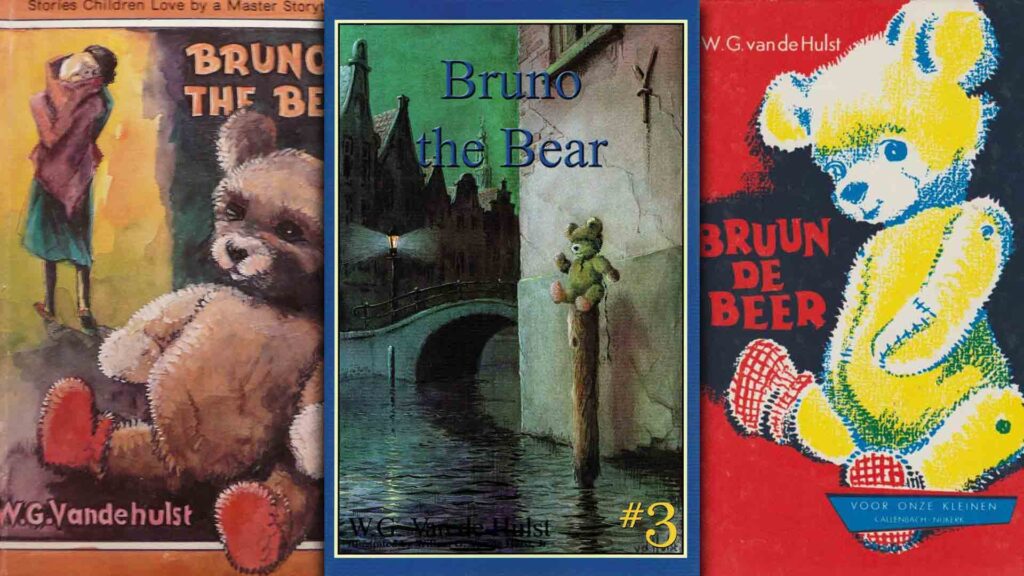
Bruno the Bear

by W.G. Van de Hulst 47 pages / 1978 & 2014 Rating: Good/GREAT/Give Little Rosie is sick so Mother takes her off to bed. But wait, what about her teddy bear Bruno? The little goof has slipped right out of her tired little hand onto the floor. There he lies, sitting up against the doorpost with his glass eye twinkling, almost winking, as if he had a secret joke. It’s no joke though, when Jimmy and Joe come home from school, and turn their sister’s favorite toy into a puppet on a string. They make Bruno dance and fly, and then - oh no! – they swing him about over the canal outside their window. When Bruno gets hooked on a pole sticking out of the water the string breaks, and then the two naughty boys don’t know what to do. Their sister is crying – she’s sick and wants her teddy. But they don’t dare tell Mother what they did! Bruno the Bear was originally published in Dutch, and the translators have done a wonderful job – it is a fun book to read out loud. It is also a beautiful book, with more than 25 pictures that are quite helpful in setting the scene. My three-year-old and five-year-old were both able to follow all the way through this pretty long story – I think it might have taken a half hour to finish. One thing I particularly appreciated was the author’s Christian take on the boys naughtiness. The two boys don’t want to tell Mother or Father, and they don’t. But that night, as they go to bed, we learn that Joe tried to pray, but didn’t dare. And Jimmy “had said it as fast as he could. And that was not really praying. No, Jimmy did not really dare to pray either.” When I asked my girls why the two boys didn’t dare pray, they understood exactly why, and we had a good conversation about what the boys needed to do – fess up! (Which they do indeed do a few pages later.) Bruno is one of 21 Van de Hulst children’s books the publisher sent me, and so far this is our favorite. In some of the other books I’ve had to “mute” some of the action – for example, in The Rockity Rowboat I skipped over a description of just how fierce a big black dog looked – but what might be need a bit of abridgment for a three year old will be great reading for a child in Grade 1 and 2. So, to sum up, Bruno is well translated, beautifully illustrated, thoroughly Christian, and engaging enough to keep a three-year-old’s attention for half an hour. You can order it, and the other Van de Hulst books, at Inheritance Publications....

Red heart icon with + sign.
Book Reviews, Children’s fiction

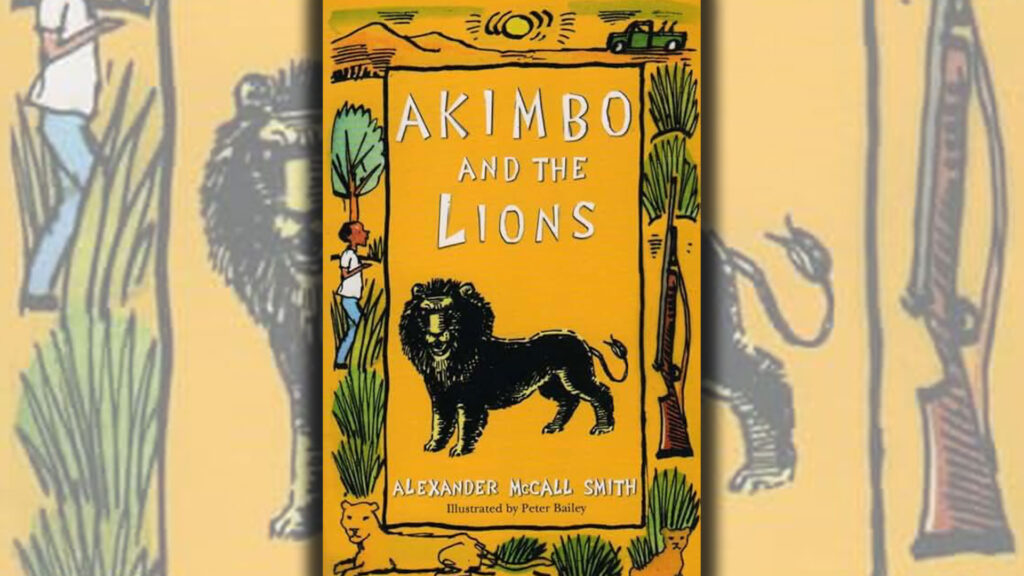
Akimbo and the Lions

by Alexander McCall Smith 1992 / 66 pages Rating: Good/GREAT/Give Alexander McCall Smith is best known as the author of the The No. 1 Ladies' Detective Agency but it turns out he's written a number of children's books as well. And they are good. Really good! Akimbo is a boy who has access to all the coolest animals in Africa – his dad is chief ranger in charge of a wild game reserve, which means that from one book to the next Akimbo is having adventures with snakes and baboons and elephants and crocodiles, oh my! In Akimbo and the Lions he accompanies his father to trap a lion harassing a small village. But things don't go as planned – instead they trap a cub and scare the momma away. That means someone needs to take care of this wee little lion, and Akimbo convinces his dad that he is just the boy for the job! McCall does a wonderful job of balancing the tension in the book. There were moments where my 5 and 7-year-old were covering their mouths (and sometimes their eyes) but these moments didn't last too long. This is just a good old fashioned adventure, perfect for their age group. It is short – a book that can be read in an hour – exciting, sometimes sweet, with gentle humor along the way too. And in this first story, there is absolutely nothing to object to – Akimbo doesn't talk back to his parents, or teacher. No sex, no language, no weird philosophies. The only downside would be God's absence. In an adventure where God's creation has such a big role, it would be only natural to give God his credit for these wonderful creatures. But it seems that Akimbo and his parents are not Christians. And if I was going to add one other nitpick I'll also say this is not the sort of children's book that works equally well as an adult book (this is no Narnia, for example). The story is too simple and predictable for older folk. I only mention that because, since this is by a well known, and well-loved adult-fiction author, that might raise some expectations. But while these are very good kid's books, they are kid's books. There are five in all, in this order: Akimbo and the Lions Akimbo and the Crocodile Man Akimbo and the Elephants Akimbo and the Snakes Akimbo and the Baboons The others In addition to Akimbo and the Lions we've now read the other four in the series. Akimbo and the Crocodile Man was a bit scarier as there is an actual crocodile attack. It all turns out fine in the end, but that extra bit of tension means I was glad we did read things in order, starting with Lions before Crocodile Man – that order meant even in Crocodile Man's scariest bit, my girls understood that this sort of book was going to have a happy ending. Akimbo and the Elephants had Akimbo going behind his dad's back to stop ivory (which comes from elephant tusks) poachers. He has good intentions, but lies a number of times, and even steals some ivory to serve as bait for the poachers. We had to explain to the girls that Akimbo was doing something downright dumb here - that he should be talking his plan over with his dad. So while we enjoyed reading it together, I would have some reservations about my children reading this by themselves. In Akimbo and the Snakes we come along as Akimbo visits his Uncle Pete's snake farm for a month and learns what it means to "milk" snakes. My nine-year-old enjoyed learning more about snakes but said this was definitely a day time and not bedtime book. The only objectionable bit would be in the notes after the story where it briefly mentions that snakes are thought to have evolved from lizards. In Akimbo and the Baboons a "baboon lady" comes for a visit. This is a visiting scientist who has come to study that baboons, and Akimbo and his cousin Kosi get jobs as her assistants. The author believes in evolution, and while that only comes out clearly in a section in the back – "Brilliant baboon facts" where McCall notes baboons are not in the same genetic family as human beings – the scientist, Jen, notes a few times in the story, how the baboons are "a lot like us" or "just like us." True, in some ways, but when we read between the lines here, we can see this is about being similar in an evolutionary sense. I'm making much of this and will note my nine and under kids didn't even notice the evolutinoary angle. So if I was getting these for a school library, I would get the first two – two very enthusiastic thumbs up! – but maybe give the third a miss, and the fourth and fifth with a note about evolution in the front. What's the ideal age range? I'd think kids in Grades One to Three are sure to enjoy them. Akimbo and the Lions is available at Amazon.com and Amazon.ca....

Red heart icon with + sign.
Book Reviews, Graphic novels

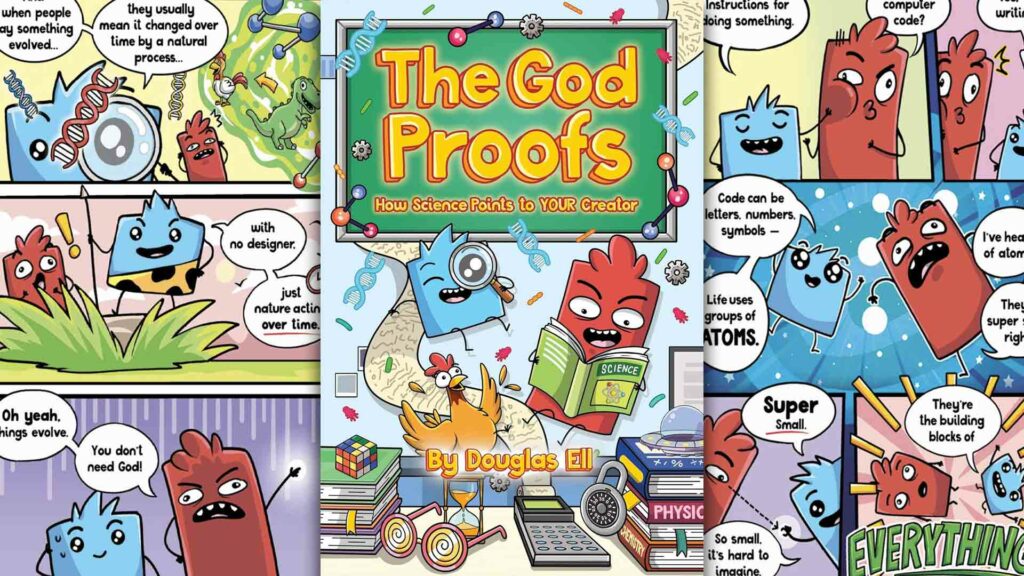
The God Proofs: How Science Points to YOUR Creator

by Douglas Ell 2024 / 207 pages Rating: Good/GREAT/Gift A blue square with legs, arms eyeballs and mouth, wants to prove to his red rectangle friend that God exists, and he offers up three separate "proofs." This is a fun educational comic, but problematic in that this initial set-up implies that the evidence for God is not patently obvious to all, which is contrary to what Romans 1:19-20 tells us is so. "...since what may be known about God is plain to them, because God has made it plain to them. For since the creation of the world God’s invisible qualities – his eternal power and divine nature – have been clearly seen, being understood from what has been made, so that people are without excuse." So trying to "prove" God's existence to an agnostic or atheist, is less about them having intellectual or logical objections, and more a matter of stubborn rebellion. God says someone who doesn't acknowledge His existence can only do so by suppressing the implications o everything he sees around him in God's brilliant creation. Apologetics – defending the faith – is less about debate, and more about declaring what's what. It's akin to the approach you'd take with a child who can't hardly speak because his mouth is too full, even as he protests he doesn't know anything about any missing piece of cake. We can't and shouldn't take his protest seriously. We need to understand that atheists and agnostics are liars more than doubters. But can we lie to ourselves, and so convincingly that we believe it? Yes indeed. We live in a time when folks are literally saying, with straight faces, that a 6'5" guy with a beard can be a girl, and this sort of self-deception isn't limited to folks with multiple degrees (though it does seem to find a particular harbor there). So there can be some benefit to, as Paul writes in 2 Cor. 10:5, demolishing "arguments and every pretension that sets itself up against the knowledge of God." We can help the sincerely confused by helping them work through their self-deceptions. The book also pitches "Science" as the final arbiter of truth. But this makes an idol of Science, placing it above God. The scientific method is a great tool, but like everything else in our fallen world, it can be twisted by bias and fallibility. Have we mentioned that we humans are really good at lying to ourselves? With that in mind, this comic could be a great tool for helping the confused, and for our own encouragement, since this highlights some astonishing fingerprints God has left on His creation. The blue square offers up three proofs, but I'll touch on just one: "the numbers proof." The numbers proof highlights that all of life is built on incredibly complex "code" that could never have come about by chance.  What's this code? DNA, and not only do we come with code, all of our cells come with miniaturized code - or DNA – printers. This numbers proof is built on the fact that you have "3.2 billion letters of DNA code in almost all of your thirty trillion cells." That's a lot of letters, and like the letters of the alphabet, they don't mean anything unless they are assembled in a precise order.   Blue square goes on to illustrate that the odds of getting a particular order of even something as small as the paragraph just above - the one in bold - just by chance is beyond infinitesimal. "Suppose that every atom in the universe is also a blind chicken pecking at a keyboard. ...And suppose each of these atoms/chickens is typing at lightning speed: one hundred million trillion, trillion, trillion letters per second. .... If you all type for a trillion, trillion years, and don't take any bathroom breaks, you still have an almost unimaginably small chance...any of your atom/chicken friends would ever type this short phrase." There's much more to this odds argument, spelling out how it is more impossible than even this makes it out to be. So how is this a "proof" of God? Well, if chance and time can't make us, then the alternative is that we are the intentional product of a Supernatural Mind. Cautions There is, on page 120, a brief appearance of God as a grey-bearded white robed painter, painting canvases of DNA and animals He's designed. It is just the one panel, but why? Conclusion The comic format makes some otherwise complicated scientific information pretty accessible. I think any high schooler would be able to work through this, and the engaging format means at least some of them will want to too. These are engaging evidences, but we need to remember how to use them. Don't attempt to prove God's existence: proclaim it, and then use this material to show how God's creation shouts His Name too. It might seem a subtle difference, but it is a significant one. It's the difference between elevating Man's intellect, or glorifying God instead. So... a good tool for Christians, but not a book you should just hand out to unbelievers....

Red heart icon with + sign.
Book Reviews, Children’s picture books

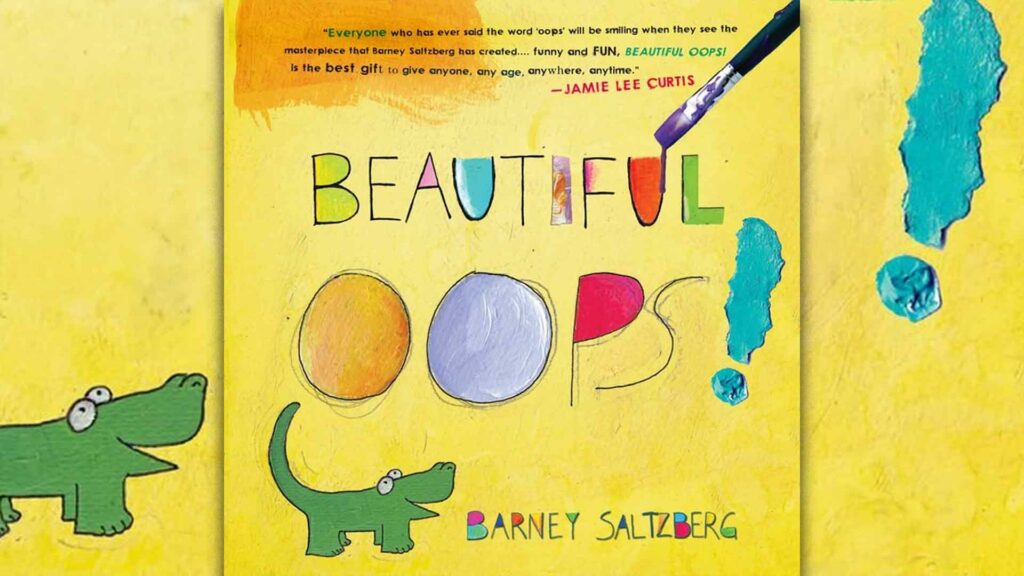
Beautiful oops!

by Barney Saltzberg 2010 / 28 pages Rating: Good/GREAT/Give I play a “scribble game” with my girls. One person makes a quick jot on a page, and the other person has to turn these random lines into some kind of person, animal, or face. It’s a cooperative game – the scribbler can’t be too messy or it’s impossible to play – so we added one more rule. If you can’t turn the scribble into something, then you can challenge the scribbler to show you how it could be done. In other words, you don’t want to make a scribble you wouldn’t want to deal with yourself (a little Matthew 7:12 here). In addition to being quite the portable travel game, it’s a fun way for kids to work through any perfectionist impulses. Can’t make a scribble perfect, can you? Beautiful Oops! is another great tool to help whatever young perfectionists you know. Saltzberg highlights the joy that can come from running with your artistic mistakes. Clever foldouts show first a mistake – a couple of splotches of ink – and then how those “oops” can be turned into a pair of wheels for a jeep. A tear in the page can become the open craggy mouth of an alligator. Smudges and smears and coffee cup stains can all be turned into something fun. The only caution with this book is practical. It’s built out of sturdy cardboard, but has elements of a pop-up book, so it might need some adult supervision if it's to last more than a little while. That said, it would be a great one for parents to read with their preschoolers. If you’re looking to make this same point – don’t let minor mistakes slow you down – to an older 7 to 11-year-old audience be sure to check out Corinna Luyken’s The Book of Mistakes. See the Beautiful Oops! book trailer below. ...

Red heart icon with + sign.
Book Reviews, Graphic novels

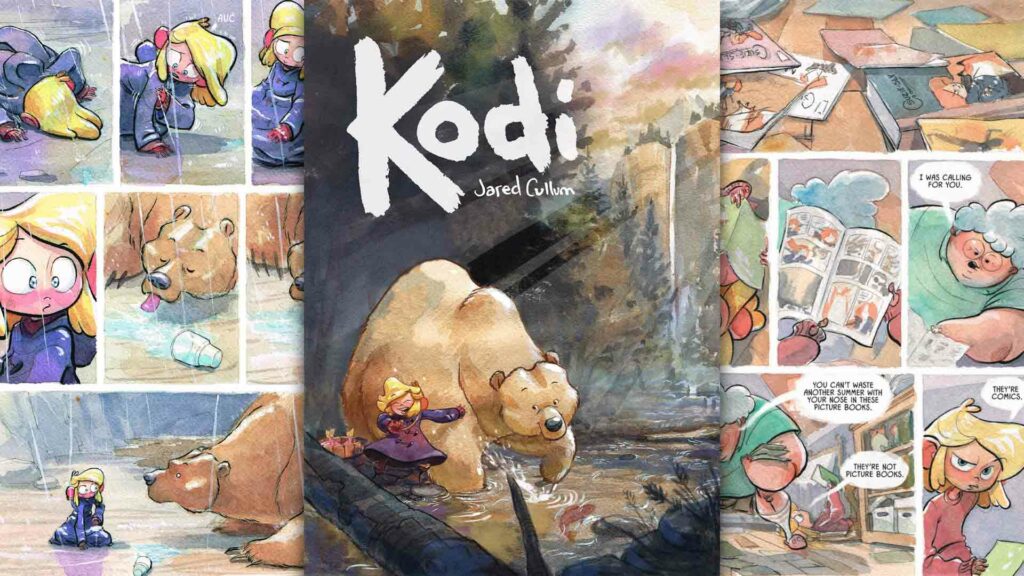
Kodi

by Jared Cullum 2020 / 176 pages Rating: Good/GREAT/Gift Katya is spending the summer in a cottage in the woods of Alaska with her "Meema" (or grandmother). And while she'd be content to spend her time just reading comics, Meema sends her to town to go buy a Slurpee, and maybe find a new friend too. On the way home through the forest, Katya takes a tumble into a ravine. The fall knocks the wind out of her, but there's someone else there in the ravine with her who is in a bit more trouble – an enormous bear has been pinned down by a tree. Katya does what every sensible kid should do when confronted with an injured bear – she sings to it, then rushes off to an adult to get help bringing it home. Up to this point the book had been fairly "realistic" – I'm not talking the drawing style, which, while gorgeous is definitely still cartoony. What I'm referring to is that nature was nature, and civilization was civilization, and so when Katya met the bear, we weren't expecting it to talk. It was an animal, and this didn't seem the sort of book where the critters were going to be anthropomorphized. But, the author goes halfsies here, with the bear, named Kodi by Katya, not exactly a 100% realistic wild animal, and not exactly a person either. Kodi turns out to be kind of half person/half pet. When Katya and her Meema have to fly back to Seattle to care for a sick relative, they have to leave Kodi behind. But Kodi isn't having that. He stows away on a cruise ship, gets off in Seattle, and starts searching the city streets for his friend Katya. There he meets a sailor who is willing to help, leading, eventually, to a reunion and a very happy ending. Cautions The one caution here concerns the sailor who has just one leg. In a flashback we see how he lost his leg – his boat landed on it, crushing it. That struck me as a bit out of keeping with this otherwise pretty lightweight fare. But it isn't shown in any detail, so, not much of a concern at all. I was wondering where Katya's mom and dad were – mom is mentioned only briefly and dad never is – but we can presume they are back in Seattle. It's never explained. Conclusion This is a beautifully painted comic. While it's intended for maybe 12 and under, older readers could enjoy it just for the artwork. Overall, this is just a wonderfully sweet and gentle story, a throwback to a simpler sort of comic that has no weird agendas to push. Highly recommended!  ...

Red heart icon with + sign.
Book Reviews, Children’s fiction

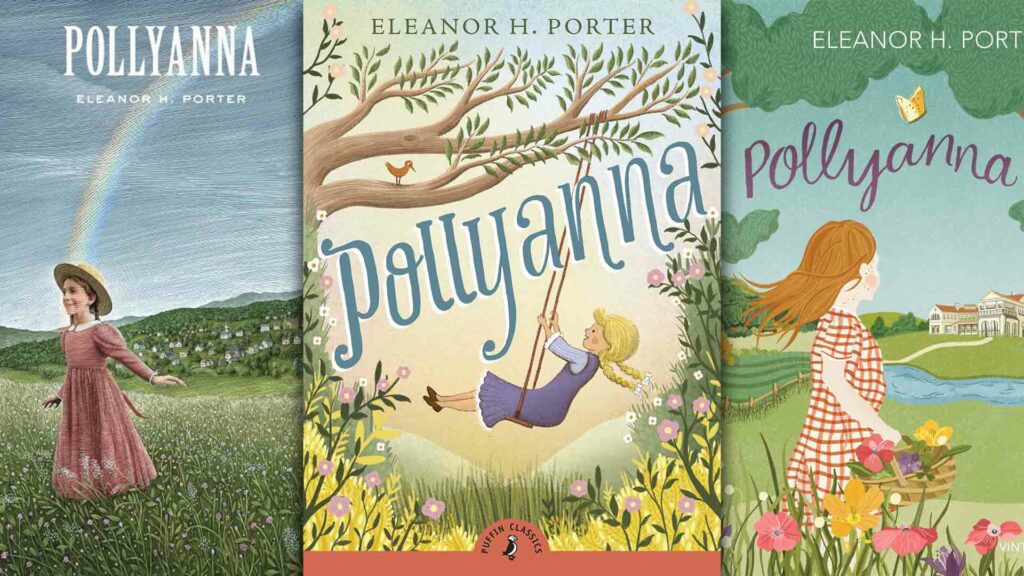
Pollyanna

by Eleanor H. Porter 1913 / 198 pages Rating: Good/GREAT/Give Pollyanna’s father and mother were poor missionaries, and when they died she was sent to her Aunt Polly who is not poor, and not very nice – she’s the sort who thinks children shouldn’t be seen or heard. So how is Pollyanna going to win over her crusty aunty? With her sunny disposition of course! Before he died, Pollyanna’s father taught her the “glad game” where the pair would search out the silver lining for their troubles. So when Pollyanna was hoping a doll might come with the latest mission barrel, and all it had was a pair of crutches, she was glad that at least she didn’t need them. When Pollyanna brings the glad game to her new town she manages to charm even the grumpiest of residents... including her aunt. While this is a 100-year-old story, it is still a readable treat. Do buy a copy with a modern cover, to help your daughter want to pick it up. Or read it to your children yourself – you’ll benefit as much as them, learning how to see things like Pollyanna does. There is one shocking/sad moment that could cause young listeners some distress – Pollyanna gets hurt quite badly. I peeked ahead and made sure that the chapter with the accident was the first one I read that night, and then I kept on reading the next couple chapters so we could finish on a happier note. That helped my audience work through this tense section. Recommended for readers in Grade Two and up....

Red heart icon with + sign.
Book Reviews, Graphic novels

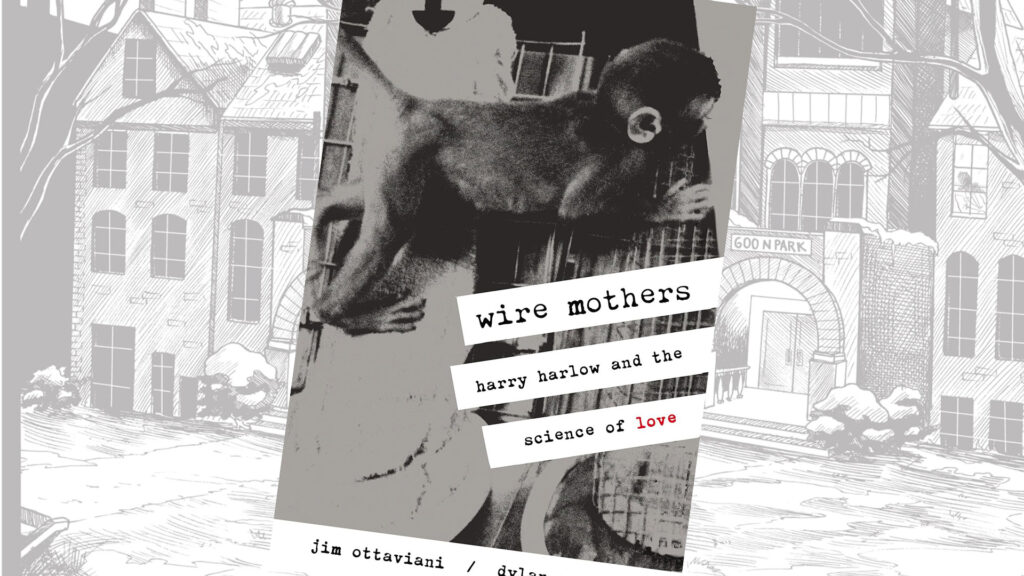
Wire Mothers: Harry Harlow and the Science of Love

by Jim Ottaviani and Dylan Meconis 2007 / 84 pages Rating: Good/GREAT/Gift Many horrors have been done in the name of science. Wire Mothers is the story of how Harry Harlow combatted one of them. In the first half of the 20th century, psychologists were warning parents not to show too much affection to their children. That might not seem so crazy; after all, we all know parents who spoil their kids. But what exactly is this "too much affection" they are talking about? Here is how one prominent psychologist put it: "Never hug and kiss them." What? Really? Yup. American Psychological Association President John B. Watson encouraged parents to shake hands with their children rather than hug. That really was being promoted! This is misinformation that Christians at that time should have been able to see through. since there is a lot of kissing and embracing going on in the Bible – just think of Jesus's story of the prodigal son being embraced by his father (Luke 15:11-31). Many in the world swallowed this pseudo-science whole, but scientist and psychologist Henry Harlow wasn't one of them. He doesn't seem to have been Christian (at least, not from what this book shares), but he did understand that parents hugging their children wasn't the problem it was being made out to be. In fact, he knew it was a good thing and set out to prove it, using monkeys. Harlow rigged up an experiment in which monkey babies were "raised" by two surrogate "mothers" – each surrogate was a simple wireframe monkey body, with no arms or legs, topped with a simple-looking head. On the first "mother," the researchers included a milk bottle inside the wireframe, with the bottle nipple situated so the baby monkey could cling to the wire and suckle at this "breast." The second mother had the same wireframe body and simple head, but didn't have a bottle. Instead, it had soft terry cloth wrapped around the wire body. So which "mother" did the baby have an emotional response to? The one that fed it, or the one with the terry cloth body? While the baby monkey would feed on the "bottle mother," it would spend less than an hour a day on it, quickly returning to the cloth mother afterwards, where it would spend as many as 17 hours per day cuddling. As pale an imitation as this was to a mother's cuddling – this cloth surrogate had no arms to hold the monkey baby – it was a great deal better than the bare wire body of the first surrogate mom. Harlow also discovered that when a frightening stimulus was brought into the setting – a noisy wooden creature – the monkey would go to the cloth mother. And, after seeking comfort, it would then feel secure enough to go investigate this clanking noisy creature. Harlow showed that if a monkey was to learn, it needed affection and comfort and cuddling, even if only from this surrogate mother. That Harlow presumed what was true for monkeys would be true for mankind shows an implicit evolutionary bias, but it is never made explicitly. And while Harry Harlow probably had evolutionary beliefs, his findings are just as useful to Christians. An evolutionist might assume that monkeys and men have this common need for touch because we are related, but as Christians, we know that this is a matter of us both having a common Designer. God is love, so is it any wonder that love is also apparent in some forms and fashions in the animal kingdom? No, not at all. Rather than bolstering evolution, this story highlights what happens when we have science untethered from God. Why did these scientists convince so many not to hug their children? Because the world listened more to these supposed experts than to what God says in His Word. And that's never a good idea. Cautions I'll note a couple of language cautions: "crap" and "stupid ass." In the interest of thoroughness, I'll also note that while this isn't remotely titillating, there is a depiction of what might be the side of a naked woman, though with all the key bits covered up. There is also an episode in which Harlow gets rescued by a group of drunk navy sailors who sing (in the background) "I love to go swimming with bow-legged women, and swim between their legs." Any kid old enough to want to read this will not be impacted by either of these two concerns. Conclusion This is a great one for adults and older teens. It's important that both we and our children remember the many times and many ways that all-knowing "Science" has messed up in the past. As Wire Mothers shows, there are many scientists who are making pronouncements that go far beyond their findings. So, this small comic is actually quite an important book....

Red heart icon with + sign.
Book Reviews, Children’s picture books

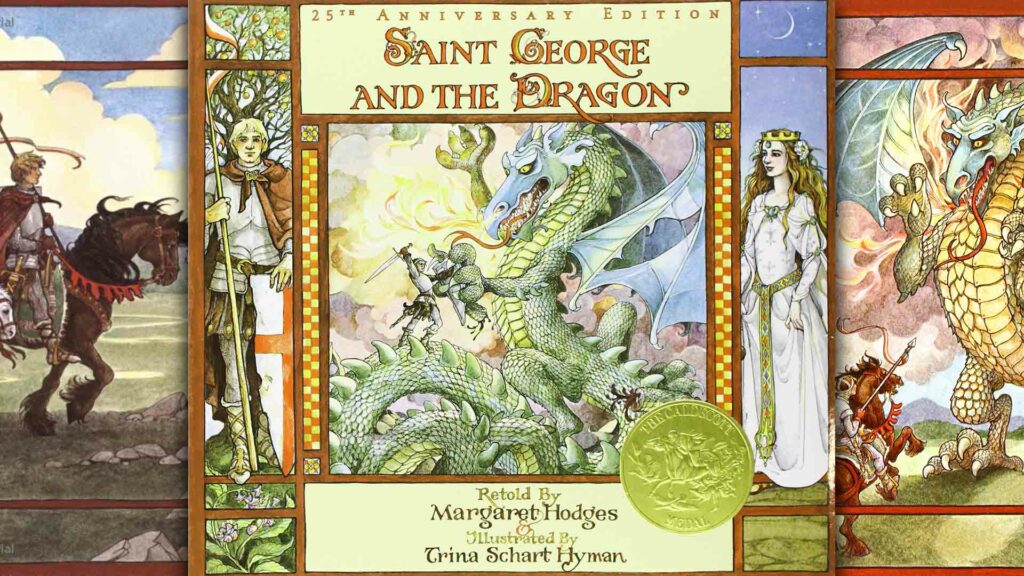
Saint George and the Dragon

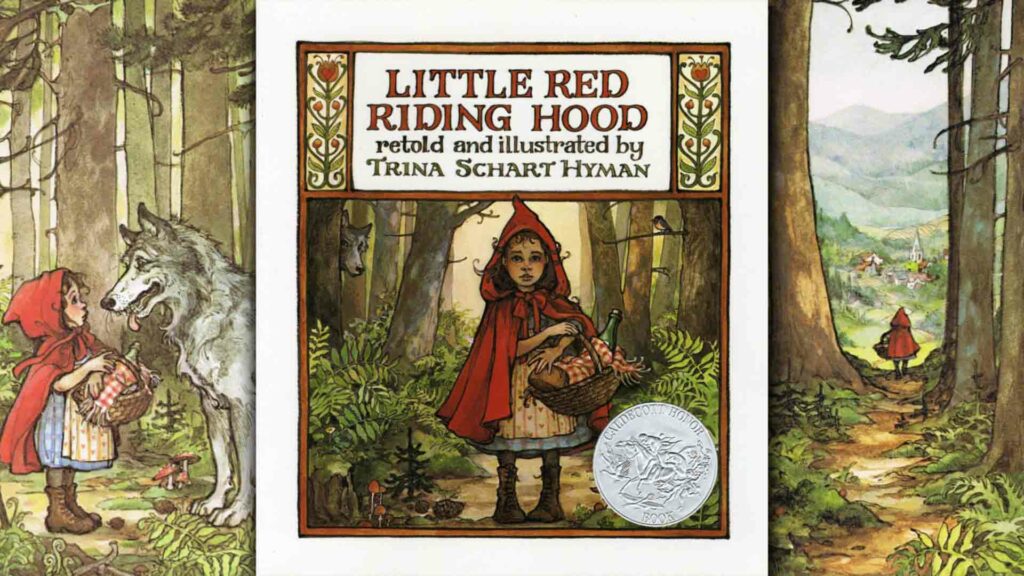
retold by Margaret Hodges illustrated by Trina Schart Hyman 1990 / 32 pages Rating: Good/GREAT/Give There are a lot of "powder-puff" stories for the pre-K set – stories where everyone is nice, they do nice things, and a nice time is had by all.I'm all for niceness, but there is a certain lack of drama to these stories. And after reading one after another of them to my three-year-old I noticed she was having a hard time dealing with stories that included disagreements, disappointment, or suspense. Anything that wasn't the nicest of nice was becoming scary to her. Steps needed to be taken to rectify this situation, and what better approach than to tell her stories of valor, self-sacrifice, and dragons! Admittedly, the first go-around wasn't a success. With no dragon books at hand I made up a story about daddy fighting a dragon in defense of my daughters, and then getting eaten by the fierce beast! Now, I knew this dramatic turn would push my little one's limits, but I was going to quickly follow it with my climactic reemergence, sword in hand, out of the belly of the now-dead dragon. A fantastic ending, if I do say so myself. But, alas, my daughter wasn't around to hear it...she had already fled the room. For my second go, I decided to turn to the experts and get an actual book, one of the very best dragon-fighting stories ever crafted: Saint George and the Dragon. In this account, taken from Edmund Spenser's classic Faerie Queene, the brave Red Knight is asked by Princess Una to come save her land from a dreadful dragon. And come he does, along with his dwarf companion. The battle that then commences is beyond epic. The fearsome dragon has "scales of brass fitted so closely that no sword or spear could pierce them," leaving the Red Knight no opportunity to slice into him. It is only "the strength of the blow" that gives the dragon pause. The first day's battle ends when the Red Knight's thrust glances off the dragon's neck, but pierces its left wing. In fury, the beast throws the knight and his horse to the ground and then bellows "...the like was never heard before - and from his body, like a wide devouring oven, sent a flame of fire that scorched the knight's face and heated his armor red-hot." The knight falls, and the dragon thinks he has won. But that was just Round 1! The spot where the knight fell, it so happens, was an ancient spring which cools his armor and restores his strength. So much so that the next morning he was ready to do battle again. Two more rounds follow, with the dragon losing a paw, and a length of tail before ultimately succumbing to the Red Knight in Round 3. My daughter loved it! She needed some reassurance midway through the battle that the knight was going to win, and I should also note I didn't give it as dramatic a reading as I could have - vocally I tamped down on the tension. But there was still plenty of suspense, loads of actions, and a full-on disagreement between knight and dragon. And my daughter handled it all. So why should little kids be exposed to drama? Because stories, in addition to being a source of entertainment, can also serve as a means of education. We don't live in a powderpuff world – there are dragons that need slaying. What's more, Christians need to teach their children that the fiercest dragons out there can be and must be slain. God calls us to battle, so while stories about tea parties and talking puppies have their place, at some point training must commence. We have to be properly prepared for disagreements, disappointments, drama and dragons. I learned something from my little girl when I saw how she could make it through the scary parts so long as she was assured it would all end well. Lots of scary stuff in life too, but what do we have to fear, knowing as we do that God has already won? So, to sum up, this is an epic tale, retold in the very best way imaginable – my English teaching brother assures me no one has done a better job than author Margaret Hodges. The illustrations are detailed, and while not gore-free (we do see blood spurting from the dragon's tail when it gets cut off) certainly not gory. Both children and adults will enjoy time just pondering the pictures - when people talk of visual feasts, this is what they mean. The only caution I can add is a bit comical - there is some small elfish immodesty in these pages, with the clearest example in the last picture here on the right. The elves are not part of the story (they are a part of the larger Edmund Spenser tale Faerie Queen, of which this is an extracted part)  but appear on the title page, and in small pictures that frame each page's big center image. The elves, in one or two instances, are entirely naked, but the pictures are so small as to be easy to miss, and the elves themselves so childlike as to be quite innocent-looking. Nothing lascivious here and I mention it only so that those who might find such pictures objectionable aren't surprised by them. Children from 3 or 4 to as old as 8 or 9 will love this story. And their dads will enjoy reading it to them. ...

Red heart icon with + sign.
Book Reviews, Teen non-fiction

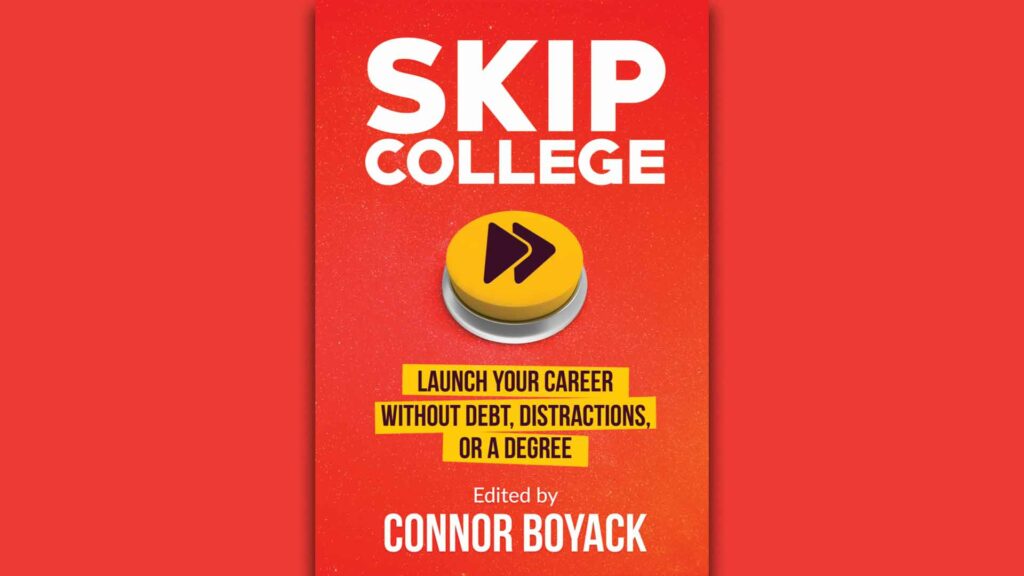
Skip College: Launch your career without debt, distractions, or a degree

edited by Connor Boyack 2019 / 250 pages Rating: Good/GREAT/Give This is the case against college, but not because any of the 9 contributors here think education is unimportant. They just want to share what they believe is a shorter, cheaper, more enjoyable, and more productive way to get the education you actually want.  Editor Connor Boyack shares in his introduction that a survey of 600 human resource leaders found “90 percent were open to hiring a candidate without a four-year degree.” If you’re going to be a nurse, doctor, or lawyer, you’ll need a degree, but in other fields, increasingly, it isn’t the requirement it once was. And with far more people getting degrees today than in our parents’ and grandparents’ time, a degree also isn’t the guarantee of high-paying employment it once was. Add to that the ever-increasing tuition costs, and what kind of return on investment are you going to get? Contributors Ian Morehouse and Brittany Hunter pile on by highlighting just how anti-intellectual many college campuses have become. Morehouse hits it from the student side: “Everybody cheers when class is canceled because they aren’t there for learning but for a piece of paper.” So, he asks, why not create your own piece of paper by building up a résumé of accomplishments? Since it is hard to get a job without experience and hard to get experience without a job, Morehouse pitches the idea of offering to do a project or two for free – maybe create a website for a company. Your low cost means they can take a chance on you and you can learn as you work. Getting paid nothing to work might sound like a sucker’s deal until you remember that in university your work actually costs you tens of thousands. Hunter’s chapter, “Indoctrination Factories,” focuses more on the professors and administration. She uses mostly US examples, but Canadian Jordan Peterson gets a mention for how his University of Toronto administration pressured him to use students’ “preferred” pronouns. He isn’t Christian, but wouldn’t submit to compelled speech. The fact that they came after him as a professor highlights just how hard it’d be for students to take the same stand. Next up is Kerry McDonald, on learning through living. She shares this quote: “…very little of what is taught in school is learned, very little of what is learned is remembered, and very little of what is remembered is used.” Sometimes that’s intentional: I took an education course that covered the evolutionary origins of play, and I crammed what I needed into my short-term memory so I could pass that test and the course, but I sure didn’t want to remember any of this nonsense afterward.  The material we actually retain is what we value and what we use. Remember all those young men who weren’t great students, but became great learners after they left school? That's because now they're studying something that has a clear application to what they're doing. In this chapter McDonald offers tips on how you can best plot out your own self-directed educational path. Mentors and digestible, do-able, micro-goals are important, but the key might simply be that there’s no better way to learn than doing. And if you start doing right out of high school, imagine how good you might become in four years time! Now compare that to where you’d be if you got a degree and only started doing after graduating. The editor of Skip College is Mormon, and I suspect the rest of the contributors run the gamut from godless to Christian. But what makes this book valuable to Christians is the one principle we’d agree with and which every contributor supports: young people need to consider how to best steward the skills, money, and time they’ve been given.  This would be a great one for any high school student to contend with, whether they are thinking of university, or planning for something else. And it’d be particularly needed if a student has no plans at all, as this gives them no excuse but to start building up their résumé, whether it’s academically or otherwise. This is certainly a book all my kids are going to read. While Skip College is a little difficult to find in Canada in paperback, the American publisher, LibertasPress.com, will ship north of the border. And it can be readily found as a Kindle e-book on Amazon.ca....

Red heart icon with + sign.
Book Reviews, Graphic novels

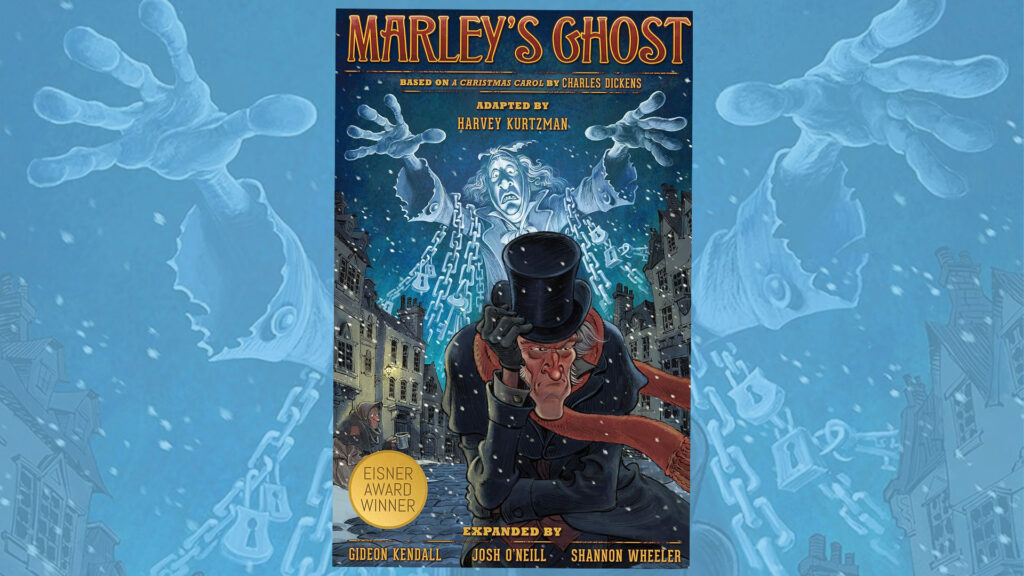
Marley's Ghost

by Charles Dickens adapted by Harvey Kurtzman, Josh O'Neill, and Shannon Wheeler illustrated by Gideon Kendall 2017 / 129 pages Rating: Good/GREAT/Gift This is a fantastic and faithful graphic novel adaptation of Charles Dickens' A Christmas Carol using much of the story's original dialogue, with only the lightest (and very helpful) bit of modernization. The revisions are limited, with the biggest probably being a change of the Ghost of Christmas Past from an old, child-like, man, to now being a waif-like girl. Not sure why the change was made, but it doesn't impact the story. Then there is also the general abridgment, with the comic coming in at probably half the text of the original story. The original has some problematic spiritual content – ghosts of various sorts, including those of Christmas Past, Present, and Future – and this adaptation shares the same. So if you disliked the original for that reason, you won't like this one either. But I'd argue that is a mistake, as this story isn't meant to teach anything about ghosts or the afterlife. Dickens lesson is entirely about the here and now – he wants us to understand that money brings cold comfort – Scrooge treats gold as his god, and this deity only brings him misery. What's actually problematic is the alternative "god" Dickens proposes. While the God of the Bible is made mention of (less in the comic than in the original) He is not the source of happiness in this story. The god here – in both original and adaptation – is generosity. If you are generous, then you will be happy and your life will have meaning. Oh, Dickens, so near and yet so far! Still, with that shortcoming understood, this classic can be appreciated – Christmas is made much of, and if we remember what this day commemorates, then we can see Scrooge's transformation as a small reflection of the generosity and humility Christ showed in coming down to earth. Cautions This book has a loose connection to Harvey Kurtzman, a cartoonist most famous for his work with Playboy and Mad magazines. However, the comic is not written or drawn by him but is only based in part on a treatment he produced, so this connection is really rather irrelevant. I only mention it to note that as good as this book is, his other work isn't. Other cautions would be limited to the unnecessary additions of two words – "bugger" and "bloody" – to Dickens' original text. Would that this bit of "modernization" had been forgone! Conclusion This is a loyal and inventive rendition that will be more enjoyable to read than the original for most of today’s readership. And they may get more out of it than they would, struggling through the original....

Red heart icon with + sign.
Book Reviews, Children’s fiction

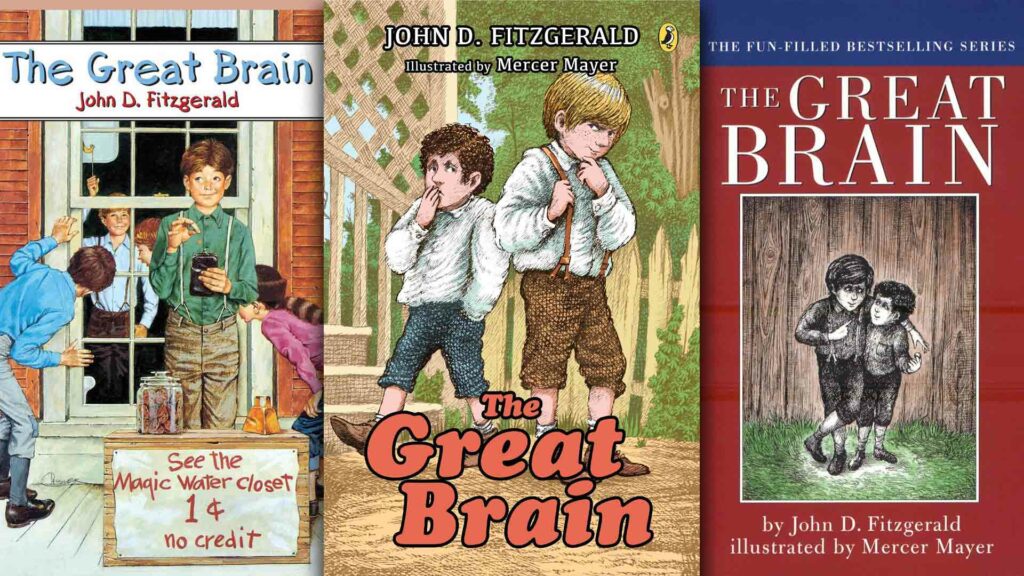
The Great Brain

by John D. Fitzgerald 1972 / 175 pages Rating: Good/GREAT/Give The Great Brain is the story of Tom Fitzgerald, a ten-year-old boy living in frontier Utah in a time so long ago that indoor toilets were considered a novelty. His hometown of Adenville is, like most Utah towns, populated mainly by Mormons who live beside a handful of Catholics and Protestants. For Tom that doesn’t matter since he can out think them all. The all consuming love of Tom’s life is money. If there’s a way to get it, Tom puts his great brain to work so that the money can be his. Not surprisingly, Tom’s great brain finds other things to work on, including finding kids lost in a cave, and getting even with his teacher. This book is fun to read as the schemes dreamed up by the “Great Brain” are often hilarious and crazy and almost always successful. Yet, though Tom’s fascinating schemes are not always something to admire, there’s a wonderful sense of morality that runs through the book. The whole tale is told by Tom’s younger brother, John. He is often taken in by Tom’s smooth justifications of his actions, but John always lets you know that he’s still left with nagging doubts. Part of John knows, however silky the Great Brain’s explanations might be, that his schemes still aren’t quite right. Tom also has great parents who are almost always on the ball. They catch onto his antics, punish him, and force him to make restitution to those he’s swindled. In the end, though, the Great Brain sees that there’s more than money. While there isn’t an overt religious message in the book, Tom actually saves a friend’s life and passes up a great money making opportunity that went with it. It makes him feel “extra good inside. Sort of clean and warm and Christmasy.” This is a fun book, good for anyone 9 and over. I absolutely loved it when I first read it as a kid. While it tells the story of an entertaining and sometimes shady child, it doesn’t glorify his antics. Ultimately Tom’s activities are clever, entertaining, confounding and successful, but you still are left with a clear sense that they’re wrong. It’s a fascinating tale with an “old fashioned” sense of morality; good must ultimately win out. The best part is that not only is this a great book, but if you love it as much as I did, there’s are sequels!...

Red heart icon with + sign.
Book Reviews, Children’s picture books

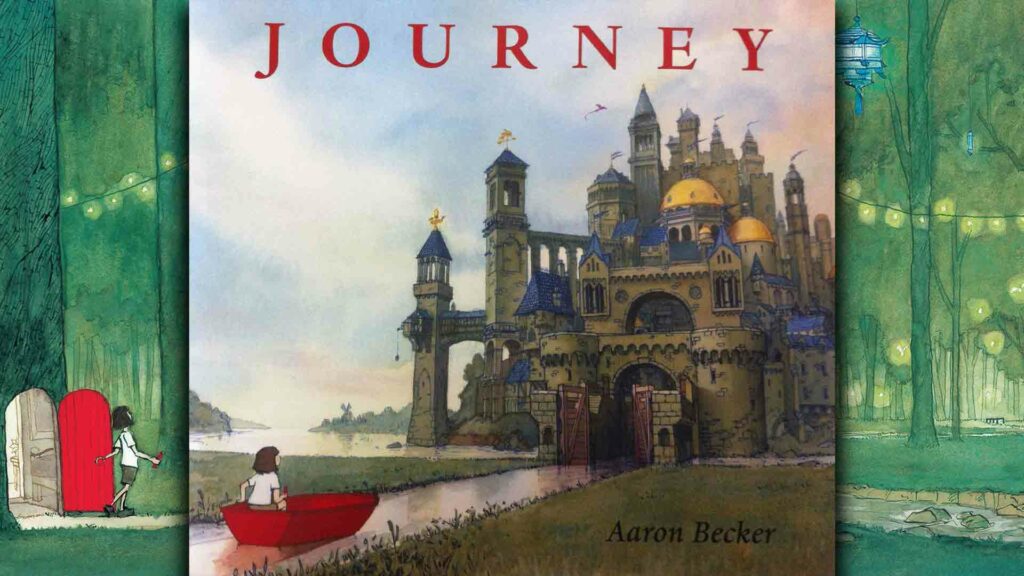
Journey

by Aaron Becker 2013 / 40 pages Rating: Good/GREAT/Give If your children loved Crockett Johnson’s Harold and the Purple Crayon you’ll want to check this one out. While Johnson wrote her own sequels, Aaron Becker’s Journey might be the most worthy successor. There are some notable differences: Harold’s world is a blank page, ready to be drawn on, while Journey has lavish full-color spreads; Harold is narrated, while Journey is a completely wordless book. But in both books, a child equipped with a large crayon and an even larger imagination sets out on an adventure of their own crafting. In Journey, a girl’s dad, mom, and sister are all too busy to play with her, but when she finds a large red crayon on her bedroom floor she discovers she can make her own fun. She uses the crayon to draw a door on her wall, which she can then open and walk through into a whole other world of wonder. A quickly drawn red boat allows her to float down a forest stream to a castle that has moats running all throughout it, and friendly guards who wave her through. Like Harold, she too, in a moment of quick thinking, conjures up a balloon to save herself from a big fall. The adventure continues into the clouds, where she comes upon a strange king, his stranger airship, and an imprisoned beautiful purple bird that looks almost as if someone – someone with a purple crayon – had drawn it! Of course, she has to free the bird, and of course it isn’t easy, leaving her requiring some rescuing herself. In the sequel, Quest (2014), red crayon girl, and the purple crayon boy she meets at the end of the previous book meet an orange crayon king right before he is dragged away by soldiers. They set out to rescue him, using their own crayons and the orange crayon the king left behind. But to do that, they need to find three more crayons and, as the title indicates, have to go on a quest, and they’ll have draw the tools and the animal friends they’ll need along the way. The conclusion to this wordless trilogy is Return (2016), in which the girl’s dad discovers the red door in his daughter’s bedroom and enters this other world in search of her. While the girl rescues them both with a quickly drawn submarine (these crayons work even underwater!), it’s dad who devises and draws (Wait, he has a crayon too? Has he been here before?) the trap that catches the evil king. These are all great fun, and deserve a slow “read” and then “reread” as children will be sure to notice all sorts of details on a second run-through. ...

Red heart icon with + sign.
Book Reviews, Teen fiction

Team Burger Shed

by Tavin Dillard 2024 / 188 pages Rating: Good/GREAT/Give Tavin Dillard is of an indeterminate age (he looks mid-30s, but gets around on a bike, which he also uses to pull the mower for his landscaping business so is he in his teens?), and lives in a small, indeterminate town, probably in Arkansas. What we do know for sure is that he likes softball. So when his buddy Myron Curtis invites him onto a team, Tavin is quick to say yup and hand over his twenty bucks for a team shirt. But then Myron got hisself all distracted after asking out Mary Beth, and never got around to ordering the uniforms. That means that for their first two games, everyone has to play "skins' versus their fully-decked out opponents who get to play "shirts." And that also means that when Tavin tries to steal a base, he slides in "chest naked." While I don't have a problem with it myself, that's a bit of descriptive folksy terminology that I could imagine some parents not liking, particularly with younger boys who you might not want going around describing themselves, every time their shirt is off, as "chest naked." I read it to my girls, so that is not a situation that will happen here. From then on, each chapter centers around a game and other softball-related developments, including how they got a sponsor (the Burger Shed), and how the softball field concession stand got burned down when Mary Beth got the idea to try selling s'mores. One whole chapter is about Tavin eating a "black nanner" (a blacker than black banana) because it would have been rude to decline. This is folksy, ridiculous, and charming – it's what'd you'd expect if you turned the Duck Dynasty TV show into a book about a rec league softball team. Cautions In addition to a few "chest naked" references, there's some mild pottyish humor, one instance related to a player who ate jalapeño nachos mid-game. And, with his "tender guts," this meal had the already slow Myron Curtis now moving at quarter speed. When its his turn at bat, his team is rooting for him to make it to first... "without ruining his breeches." Conclusion It's a season that starts slow, but has Team Burger Shed coming from way back to make it into the playoffs. Do they win it all? You'll have to read it to find out, but I think you and your teens will want to. This is not some great literary work, but it is a fun read aloud, written such that I was drawling with a southern accent the whole way through....

Red heart icon with + sign.
Book Reviews, Graphic novels

Let's Make Bread! (3 books)

by Ken Forkish and Sarah Becan 2024 / 158 pages Rating: Good/GREAT/Gift This is the comic I never knew I wanted: a how-to for baking all sorts of delicious breads. And while I'll admit to not trying out any of the recipes myself, this did get my oldest daughter experimenting. I liked the results of her labors, so this might have to move from just being a library lend to being something we really need to buy. The format is a friendly one: we get introduced to the two authors, and because this is a comic, there they are, speaking right to us with their word bubbles. The first thirty pages also introduces us to the basic tools and ingredients we'll need to get baking. Then we learn about everything from the first rise, to how best to spread our salt onto the dough. The pictures allow this how-to manual to show tips that would be really hard to just describe, like how the dough, at one stage, should have a gentle "webbing." What is bread webbing? I wouldn't have a clue if the picture hadn't shown me! Among the bread recipes, there is even a detailed procedure outlined for how you can get your own sourdough starter going. The various uses you can put it to include a really great pizza dough! There are no cautions to offer, other than that if you buy this for one of your children, you might have to also spring for some baking tools, if you don't already have them. This is a book that will inspire, so you best be ready for some flour on your counters then! Cookbooks aren't really supposed to be fun, but this one kind of pulls it off, so two thumbs up. Not a book for everyone, but certainly a great one for any young bakers in the house. The illustrator Sarah Becan teamed up with Hugh Amano for two prequels: Let's Make Ramen! (2019) and Let's Make Dumplings! (2021).  I could imagine making the dumplings, as long as I had a little help from someone more culinarily-inclined, but the ramen recipes weren't just beyond me, but astronomically so. That's why, while I'd recommend both Bread! and Dumplings for any kids who likes to bake or cook, I'd only suggest Ramen! to the expert cooks among us....

Red heart icon with + sign.
Book Reviews, Graphic novels

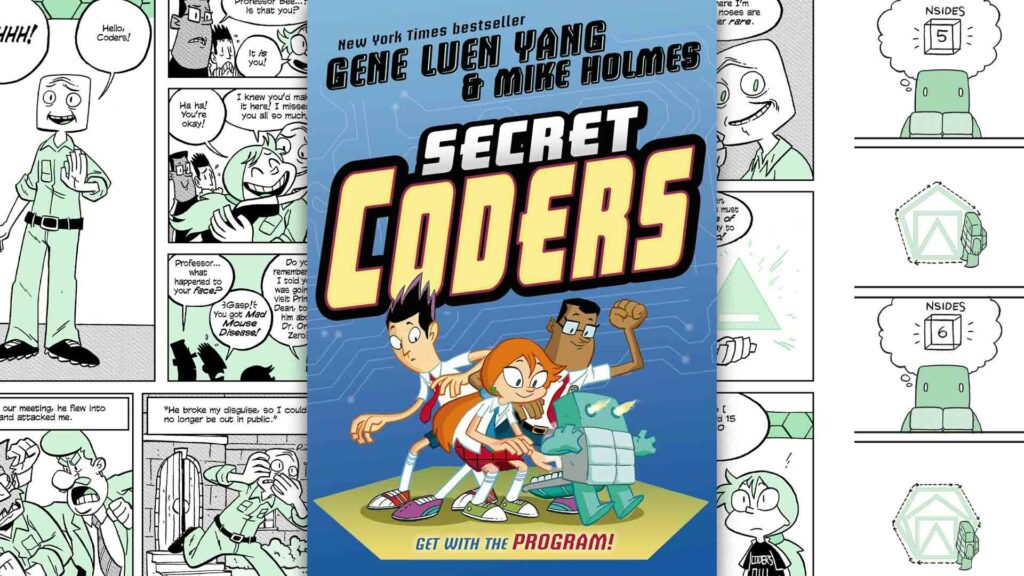
Secret Coders (6 books)

by Gene Luen Yang & Mike Holmes 2015-2018 / 92-110 pages each x 6 volumes Rating: Good/GREAT/Gift Hopper is at a new school and gets off to a rocky start: her classes are boring, the other students are ignoring her, and when she does get their attention, it almost results in a fight. During lunch period she ends up sitting alone... until a bird comes fluttering down to sit in front of her. A feathered friend is better than no friend at all, right? That's what Hopper figures, at least until it blinks one of its four eyes! Turns out the bird is robot, and it's blinking in binary. Another student, Eni, spots the odd bird and gives Hopper, and us, a lesson in how binary works. Then the two of them discover a turtle robot designed to aid the janitor, that seems programmable, if only you know how. The janitor turns out to be a super genius, and there is a whole secret subterranean system underneath the school, but accessible only to those who know how to program the turtle. That gets us to the goal of this book. This is a series that my kids read, just for fun, but it's actually educational fiction – the authors' goal is to teach kids some of the basic logic that's involved in computer programming. And as Hopper and Eni  get better at coding simple computer programs to make the turtle robot move and work, readers are learning too. Cautions In the first book we learn that the teacher that Hopper has the biggest difficulty with – and speaks disrespectfully to – is actually her mom. We also find out that Hopper's mom and dad had a big fight six months ago, her dad left, and they haven't seen him since. It seems like he walked out on his family, though we later learn that he was kidnapped and has been stuck in a two-dimensional system since then. Thankfully Hopper does realize she needs to apologize to her mom. But her initial rudeness, and a few conversations between Hopper and her mom about whose fault it is that dad is gone, mean this isn't one for under 12s. Language concerns would be limited to a few jerk-faces, a gosh and a geez. Conclusion There are points at which the story is sacrificed for the sake of the education – each time Eni and Hopper program a turtle we all have to think through it slowly and carefully. But a nefarious principal, his rugby team henchmen, a green-skinned villain and his army of toothy robot ducks, and a budding romance between Hopper and Eni, keep things interesting. The math and logic involved in programming mean this will be a bit much for kids under 12. They might still read it just for the story, but to read these for the fun and skip over the education is to miss the point of the series. Any teen with a bent towards math and logic will find these an entertaining introduction to some basic computer code thinking. ...

Red heart icon with + sign.
Book Reviews, Science - Creation/Evolution, Teen fiction

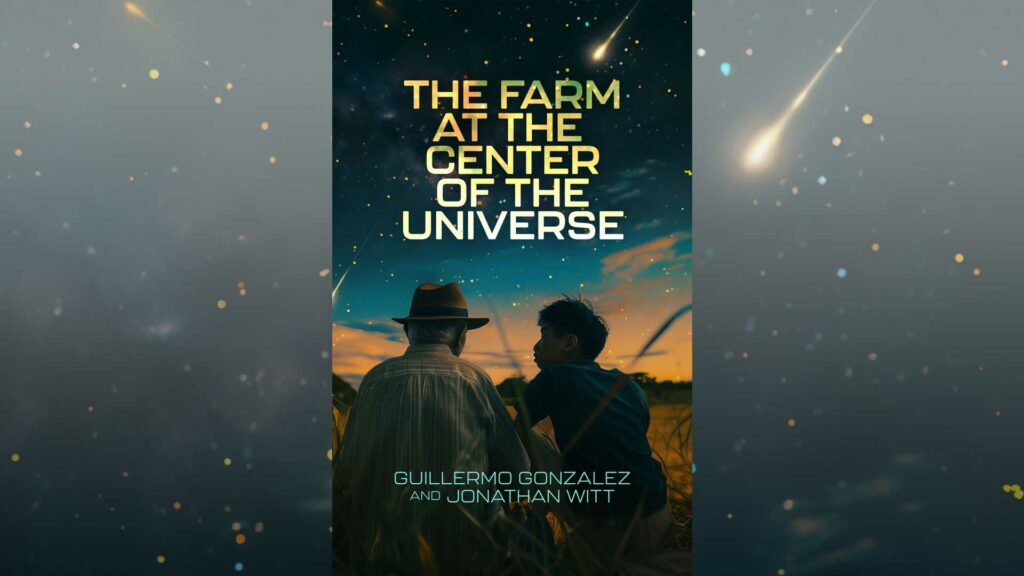
The Farm at the Center of the Universe

by Guillermo Gonzalez and Jonathan Witt 2024 / 167 pages Rating: Good/GREAT/Give An astrobiologist has written a young adult novel with an Intelligent Design agenda, so the obvious questions are: Can he tell a good story? Does he honor God? The answer to question #1 is yes, definitely, and to #2, no, or at least not nearly enough. While the story doesn't quite stand on its own, it'll grab anyone who has even the least bit of interest in learning about atheistic evolution's shortcomings. That's why every Christian teen should read this before they finish high school – undirected evolution is one of our culture's big lies (with fruit like euthanasia, abortion, homosexuality, etc.) so our students need to be ready to contend with it before they head to university or the workforce. And this novel format transforms what could have been a dry, dusty, academic debate into a much easier read. As the opening chapter begins, Isaac and his older cousin Charlie are driving to visit their grandparents' farm for a week. Isaac is a teen who wants to know why God let his dad die from cancer. Charlie is in his twenties, and is also Isaac's science teacher (that's what can happen in a small town) and he's a tough love type, heavy on the tough. As a Darwin devotee, he tells Isaac that his dad's death is proof there is no God, just an uncaring universe. But it turns out Grandpa is not only a more sympathetic listener, he's also a retired chemistry professor who has his own thoughts about how the universe came to be. He introduces Isaac to the "book of nature," which gives all sorts of hints as to what happened in the distant past. And he also highlights how brilliant design gives evidence of a Designer. This is both the book's strongest point and its weakest: it absolutely blows up evolution, but doesn't offer the true, biblical, six-day alternative. Still, it is a very helpful read, and fun too, especially when Grandpa debates Charlie. But Isaac isn't sure exactly who he is rooting for. "Part of him wanted Grandpa to be right about a Creator and Charlie to be wrong. Isaac didn't want his dad's death to just be random. If it were random, then there wouldn't even be a God for Isaac to be angry at for letting it happen. But another part of him saw the attraction of his cousin Charlie's view. The idea of a God so powerful He could create things like these microscopic machines that filled his body, but Who hadn't even intervened to help his dad, was oddly frightening. It was almost easier to just ignore a God like that – insist He isn't out there. The silent treatment. Punish Him for letting good people die. And, after all, maybe just maybe, there really wasn't a God and he could just forget about all the hard questions." That highlights some of the book's depth in raising the "problem of evil." Though it is a theological, rather than scientific objection, it is one evolutionists will frequently raise: if a good God exists, why does He let bad things happen? But this also highlights why this isn't a book teens should read alone, because the objection goes largely unanswered. Isaac rightly notes that his feelings have no impact on whether or not God exists. That'd be a scientific answer to this objection, and a good one to have in hand. But teens should know the biblical answer too, as God gave it to Job, or as Paul teaches in Romans 9:20-21: "Who are you, a human being, to talk back to God?" And this answer needs to be understood in the context of this same God sending His Son to humble Himself and die for us. He has shown He is loving, so while we don't understand all He does, we do know we can trust Him. That's an important point, but one parents will need to provide. (Greg Koukl approaches the problem of evil from another direction with his helpful "problem of good.") As Grandpa and Charlie continue with their back-and-forths, it gives them both a chance to pitch the arguments for and against Intelligent Design. I've followed this debate for decades, and I think this fiction format allows for one of the most concise, clear, and devastating evolutionary takedowns I've read. One of my favorite bits is when Isaac is worried his Grandpa might be exaggerating a bit, when he says the cell is like a miniature factory, because, after all, factories "were massive, complex buildings filled with machinery and workers who built things like cars and trucks and Grandpa's tractor." Grandpa's response? "...you're half right. Calling a cell a factory isn't quite accurate.... It's not quite a good comparison because I'm giving too much credit to man-made factories. A cell is more like, how can I put this? A factory that builds factories that builds factories. Or a robot that builds robots thats build robots. Do you know any man-made factories that do that?" Despite Charlie's best efforts, the legs are kicked out from under his Darwin idol. Caution But what's left standing in its place? Grandpa briefly gives a nod to the Bible, reading from the opening four verses of Psalm 19 about how "the heavens declare the glory of God." But he never addresses the opening chapters of Genesis. Grandpa doesn't believe in unguided evolution, but it becomes clear he also doesn't believe that God created in just six days. The problem here is akin to the situation we have with a Jordan Peterson or even a Pierre Poilievre. In our blind land, these one-eyed men see so much better than most. But they are still seeing only half as well as they could. The book of nature that Grandpa appeals to offers him only hints and clues as to the reality and nature of God, but God has revealed Himself much more clearly in another book, His Word. If only Grandpa was willing to rely on the clearest of the two books, instead of leaning on his own understanding (Prov. 3:5-6). Conclusion While every Christian teen should read this, none of them should read it alone. They should read The Farm at the Center of the Universe because of how it makes quick work of atheistic evolution. It'll prepare them for many of the attacks a university prof might muster. But while evolution-toppling accounts for about 99 percent of the novel's contents, there is also 1 percent that misdirects by leaving open the possibility that God could have created over billions of years. Are the authors proposing some sort of theistic evolution? That's never clearly stated, but it needs to have been ruled out. And since Farm is targeted to teens that 1 percent of misdirection shouldn't be overlooked. Teens should read it, but with a teacher or parent alongside....

1 2 3 4 5