Transparent heart icon with white outline and + sign.

Life's busy, read it when you're ready!

Create a free account to save articles for later, keep track of past articles you’ve read, and receive exclusive access to all RP resources.

White magnifying glass.

Search thousands of RP articles

Helping you think, speak, and act in Christ.

Open envelope icon with @ symbol

Get Articles Delivered!

Helping you think, speak, and act in Christ. delivered direct to your Inbox!


Most Recent


The Rest


Red heart icon with + sign.
Book excerpts, Book Reviews

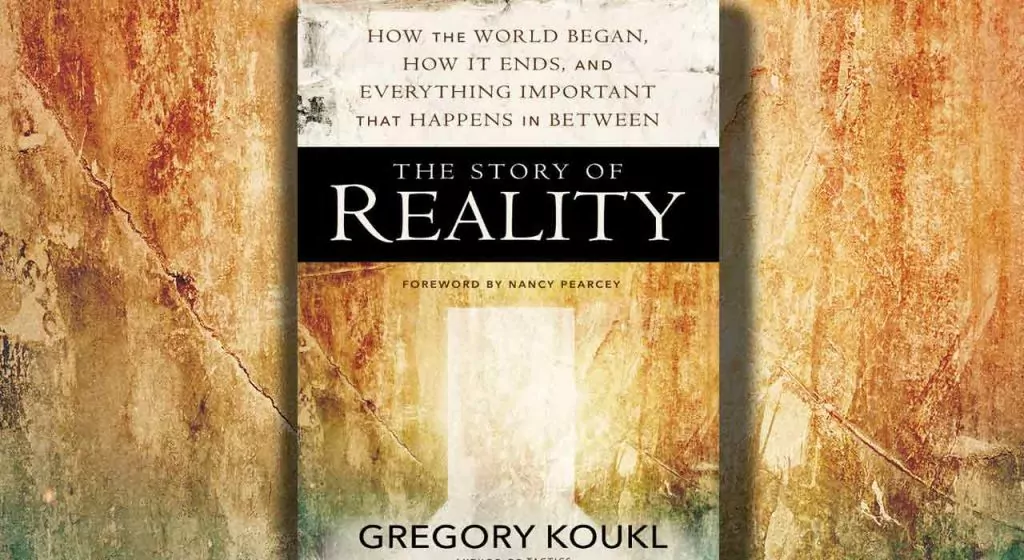
5 quotes from Greg Koukl's "The Story of Reality"

The following quotes are from Greg Koukl's new apologetic book "The Story of Reality: How the world began, how it ends, and everything important that happens in between." You can read Dr. Bredenhof's review of it here. GOD'S STORY IN ONE SENTENCE “It’s a story I can tell in a single sentence, though it’s a bit long. Here it is: God, the Creator of the universe, in order to rescue man from punishment for his rebellion, came to earth and took on the form of humanity in Jesus, the Savior, to die on a cross and rise from the dead, so that in the final resurrection those who receive his mercy will enjoy a wonderful friendship with their sovereign Lord in the kind of perfect world their hearts have always yearned for.” IT"S NOT ABOUT ME “The Story is not so much about God’s plan for your life as it is about your life for God’s plan. Let that sink in. God’s purposes are central, not yours. Once you are completely clear on this fact, many things are going to change for you.” WHAT EVERY WORLDVIEW SHARES “Every worldview has four elements. They help us understand how the parts of a person’s worldview story fit together. These four parts are called creation, fall, redemption and restoration. Creation tells us how things began, where everything came from (including us), the reasons for our origins, and what ultimate reality is like. Fall describes the problem (since we all know something has gone wrong with the world). Redemption gives us the solution, the way to fix what went wrong. Restoration describes what the world will look like once the repair takes place.”  THE PROBLEM OF EVIL FOR ATHEISTS “…given a Godless, physical universe, the idea that things are not as they should be makes little sense. How can something go wrong when there was no right way for it to be in the first place?” WE ARE THE PINNACLE OF GOD'S CREATION “If you have ever asked yourself the question ‘Who am I?’ you now have your answer. The Story says you are a creature, but you are not just a creature. You are not a little god, but you are not nothing. You are made like God in a magnificent way that can never be taken from you. No matter how young or old or small or disfigured or destitute or dependent, you are still a beautiful creature. You bear the mark of God. He has made you like himself, and that changes everything.”...

Red heart icon with + sign.
Assorted

"So what you're saying is..."

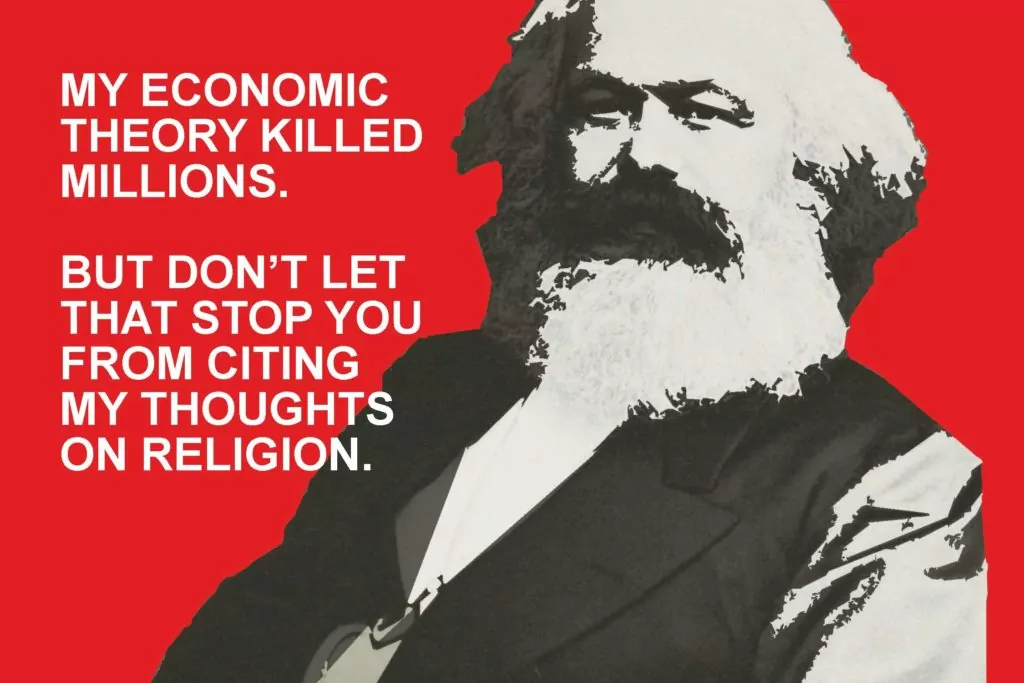
In January Jordan Peterson was interviewed by journalist Cathy Newman, on Britain’s Channel 4 News. The exchange quickly went viral, with more than 9 million watching the half-hour interview, and millions more watching clips from it. Why did so many watch? Because here we had a battle of heavyweights – a politically incorrect professor who wouldn’t let his words be twisted vs. a mainstream media journalist who wouldn’t stop trying. Her favorite trick was to restate whatever Peterson had said in her own words. But every time she did so – each time she led with a “So you’re saying…” – what followed was never an accurate summary of Peterson’s position. A clip from this interview gives a good illustration of why so many Christians admire the courage of this man. He was bullied and unfairly treated, just as Christians often are by the mainstream press, but he never let it bother him, and he never let her get away with it. Newman: Is gender equality desirable? Peterson: If it means equality of outcome, then almost certainly it’s undesirable! That’s already been demonstrated in Scandinavia. Because in Scandinavia, … Newman: What do you mean by that? Equality of outcome is undesirable? Peterson: Well, men and women won’t sort themselves into the same categories, if you leave them alone to do it of their own accord. We’ve already seen that in Scandinavia. It’s twenty to one female nurses to male, something like that. It might not be quite that extreme. And approximately the same, male engineers to female engineers. And that’s a consequence of the free choice of men and women in the societies that have gone farther than any other societies to make gender equality the purpose of the law! Those are in ineradicable differences! You can eradicate them with tremendous social pressure and tyranny! But if you leave men and women to make their own choices you will not get equal outcome! Newman: Right, so you’re saying that anyone who believes in equality, whether you call them feminists, call them whatever you want to call them, should basically give up, because it ain’t gonna happen! Peterson: Only if they’re aiming at equality of outcome. Newman: So you’re saying give people equality of opportunity, that’s fine? Peterson: Not only fine, it’s eminently desirable for everyone, for individuals and for society. Newman: But still women aren’t gonna make it! That’s what you’re really saying…. This is a sidebar to Dr. Joel McDurmon's feature article on Dr. Jordan Peterson that appeared in the March/April issue. The top picture is one of the many memes that quickly appeared all over the Internet soon after the interview concluded....

Red heart icon with + sign.
Adult non-fiction

The Story of Reality

The Story of Reality: How the World Began, How It Ends, and Everything Important That Happens in Between by Gregory Koukl 2017 / 198 pages There are two types of apologetics books: there are the ones that tell you about defending the faith and then there are the ones that show you how to defend the faith. Greg Koukl’s new book falls into the latter category. It’s a book written with two main types of readers in mind. It’s for Christians who are struggling for answers to the big questions that come with the Christian faith. It’s also written for unbelievers who are open to considering the claims of the Christian faith. For both readers (and others), I think Koukl has something powerful to offer. The Story of Reality is a basic overview of most of the key elements of a Christian worldview. When I say it’s basic, I mean that it’s not written at a highly academic level. A high school or college student should be able to manage it. However, behind the basic level of communication, one familiar with the issues will recognize that Koukl is no slouch. The deeper stuff is in his grasp, but he has distilled it into something readily understood. A story but not fiction The concept of “worldview” is increasingly being criticized in Christian circles as something created by modern philosophy. Perhaps it’s for this reason that Koukl recasts the notion in terms of a story. In this story, there are characters and there is a plot. The main characters are God and man. The plot involves creation, fall, redemption, and restoration. But unlike other stories, the Christian story (laid out in the Bible) is objectively true — it is reality. Koukl addresses other competing “stories” such as: materialism mysticism/pantheism Islam He critiques these stories and shows how they’re inadequate for explaining the state of things as we see them. He then also provides ample argumentation to illustrate that it’s only the Christian story (or worldview) that can be true. Christianity is true because of the impossibility of the contrary. Readers familiar with Reformed presuppositional apologetics will recognize what Koukl is doing. His method is generally in that school. As I’ve noted before (in my review of his previous book Tactics), Koukl is a student of Francis Schaeffer, who in turn had been a student of Cornelius Van Til. Van Til was one of the pioneers of Reformed presuppositional apologetics. One of the key features of that school is a commitment to the place of Scripture in apologetics, not only as a foundation, but also as part of the actual method. Similarly, throughout The Story of Reality, Koukl is constantly either quoting or, more often, paraphrasing the Bible. This is highly commendable! Couple of cautions This is not to say that Koukl is always consistently in the Reformed school of apologetics. There are a couple of places where I put some question marks. In chapter 21, he discusses faith. He correctly notes that faith, in itself, does not save. Rather, faith is the instrument through which we are saved. Then he writes this: "This is why reason and evidence matter in the story. It is critical to get certain facts right. Put simply — reason assesses, faith trusts. That is the relationship of reason to faith. Reason helps us know what is actually true, leading to accurate belief. Faith is our step of trust to rely on what we have good reason to believe is so." There is some truth in this. You can say that faith needs and uses reason as a tool. However, there are also important limits to this. Above all, the unregenerate mind misuses and abuses reason because of sin. Unregenerate reasoning is not going to assess facts correctly. Deadened by sin, reason does not help you know what is actually true. Moreover, even when regeneration comes into the picture, human reason is going to run stuck with certain pieces of the Christian worldview (or story). Think of the Trinity. Reason assesses that doctrine and says, “Sorry, it doesn’t make sense.” Does faith then stop trusting? Faith has reasons for believing in the Trinity, but those reasons come down to the faithfulness and reliability of the One who revealed it to us, not the logical self-evidence of it. There were a few other questionable statements. In this blog post, I interacted with his suggestion on page 51 that the Big Bang is compatible with Genesis. In chapter 11, he opines that the Bible teaches that animals have souls. The biblical evidence offered for this is debatable. One addition would have been good I also want to draw attention to an omission. The subtitle tells us that the book will tell us “everything important that happens in between” the beginning and the end. But in Koukl’s story, an important part is missing. It’s the part where the lives of believers are transformed by the gospel. It’s the part where the Holy Spirit works to change us and make us into new people who take every thought captive for Christ in every area of life. I was hoping to read at least a paragraph, preferably a chapter, about that vital and wonderful part of the Story. It’s incomplete without it. A book worth buying for – and reading with – a friend Despite my criticisms, overall this is a well-written and well-argued book. Koukl deftly anticipates questions and objections. He uses helpful illustrations. The chapters are of such a length as not to be intimidating. If you know an unbeliever who is showing interest in the faith, I’d suggest buying two copies — one for yourself, and one for her or him. Offer to read it together and discuss it. You’d for sure find yourself enriched and, who knows, perhaps it would be God’s instrument to work faith in the heart of your friend too. For 5 great quotes from "The Story of Reality" click here. Dr. Bredenhof blogs at Creation Without Compromise and Yinkahdinay where this article first appeared. It is reprinted here with permission....

Red heart icon with + sign.
Adult non-fiction, Book Reviews

Tactics: a game plan for discussing your Christian convictions

by Greg Koukl 2009 / 208 pages What would you do? You’re in a public place and you encounter a woman with a pentagram hanging on a necklace. Maybe it’s a fellow student at university. Perhaps a neighbor. You see this pagan five-pointed star and what would you say? For most of us, we probably wouldn’t say anything at all. But that would be a missed opportunity, according to author and apologist Greg Koukl. When Koukl encountered a store clerk with a pentagram pendant, he used the moment to ask some key questions of the young woman. His well-placed questions challenged her to think about her way of looking at the world. Koukl’s book Tactics teaches how to use the same method in all kinds of circumstances. Koukl wants to help Christians learn to share their faith in a winsome and Christ-like manner. He wants us to be confident in promoting the Christian worldview and its values. An upgrade on what I had For some years I’ve been teaching my pre-confession students a short unit on apologetics, teaching them how to defend and promote the Christian faith. I don’t just want to them to know what they believe; I also want them to know why they believe it. They should be equipped to deal with people who don’t believe and who might challenge them on their faith. For this apologetics unit, I’ve been using Richard Pratt’s Every Thought Captive as a textbook. Pratt’s book is good in many ways, but I’ve been looking for something better. Koukl’s Tactics recently came across my desk and I thought I might explore that as an alternative. At first I was skeptical. I’ve explored other options over the years, some even from Reformed authors, and I’ve been disappointed. So far as I know, Gregory Koukl isn’t a confessionally Reformed fellow, so how could this possibly work out as my new apologetics textbook? After all, I believe it is crucially important for our apologetics to be grounded in our Reformed theological convictions. Reformed in approach… Well, what a surprise! If Koukl isn’t Reformed, his approach sure sounds Reformed in most places. As mentioned above, he teaches readers to ask carefully crafted questions. He calls this the “Columbo Tactic,” after the famous bumbling-but-very-effective TV detective. These Columbo questions are meant to dissect the unbeliever’s worldview and poke holes in it so that they see that their worldview is incoherent and inconsistent. He wants us to help the non-believer see that even if they have a very nice house, it has no solid foundation. Anyone familiar with Reformed presuppositional apologetics is going to recognize the language and approach. Besides asking well-crafted questions, Koukl also suggests a few other strategies. One of them he calls “Taking the Roof Off.” This involves getting into someone else’s worldview or argument and taking it for a “test drive” to see where it ends up. In the words of Proverbs 26:5, it is “answering a fool according to his folly.” In this excerpt, Koukl shows how that might work: The story is told of an atheist philosophy professor who performed a parlor trick each term to convince his students that there is no God. “Anyone who believes in God is a fool,” he said. “If God existed, he could stop this piece of chalk from hitting the ground and breaking. Such a simple task to prove he is God, and yet he can’t do it.” The professor then dropped the chalk and watched it shatter dramatically on the classroom floor. If you meet anyone who tries this silly trick, take the roof off. Apply the professor’s logic in a test of your own existence. Tell the onlookers you will prove you don’t exist. Have someone take a piece of chalk and hold it above your outstretched palm. Explain that if you really exist, you would be able to accomplish the simple task of catching the chalk. When he drops the chalk, let it fall to the ground and shatter. Then announce, “I guess this proves I do not exist. If you believe in me, you’re a fool.” Clearly this chalk trick tells you nothing about God. The only thing it is capable of showing is that if God does exist, he is not a circus animal who can be teased into jumping through hoops to appease the whim of foolish people. Later in the book, one learns why Koukl’s approach is reassuringly comfortable to a Reformed apologist: by and large he learned it from Francis Schaeffer, who in turn learned it from Cornelius VanTil (the father of modern Reformed apologetics). What I appreciate most about this book is that it isn’t top-heavy with theory. Koukl provides the basic approach and then spends the greater part of the book illustrating how to use it. And he illustrates well. His writing is clear, concise, and enjoyable to read. I think my pre-confession students are going to love it! One caution Were there any issues or concerns? Let me mention one. In chapter 2, Koukl discusses the use of our minds and logic. A lot of what he says there is good and true. However, on page 32, he makes what he recognizes will be a controversial statement to some: “Therefore the mind, not the Bible, is very first line of defense God has given us against error.” This is because, he says, the mind is first in terms of the order of knowing things. I know what he is trying to say, yet he seems to create a false dilemma between the Bible and the human mind when it comes to our knowing. For us to know rightly, we need to have our minds regenerated by the Holy Spirit and our thoughts guided by the Word of God. It’s not a case of either…or, but both…and. In the words of Psalm 36:9, it is in God’s light that we see light. Our thoughts are meant to follow after God’s thoughts. Conclusion Obviously I’m going to highly recommend this book to anyone else teaching apologetics, whether to young people or others. In school Bible classes or church catechism classes, this little book could add some extra punch to your instruction. Moreover, for anyone just interested in becoming better at sharing our Christian hope with others – which should be all of us – you need to read this book too....

Red heart icon with + sign.
Apologetics 101, Book excerpts

A Christian & an Unbeliever Discuss Life, the Universe & Everything

This following is an excerpt from Rob Slane’s new book, A Christian & an Unbeliever Discuss: Life, the Universe & Everything. We’re joining a conversation, already in progress, between an committed atheist, Alex, and the Christian who is trying to talk him down. “Look,” said Alex, “everyone knows that the Bible was cobbled together in some shadowy council 300-odd years after Jesus was supposed to have died.” “Hold on a minute, Alex,” I replied. “Are you suggesting that the Bible is the product of some kind of conspiracy?” “If that’s what you want to call it,” he replied. “So let me get this straight,” I said. “A moment or two ago, you were calling the Bible a hotchpotch of writings by men who never knew each other, which kind of suggests that the literature involved was diverse, to say the least. But now you are telling me, unless I’m very much mistaken, that when the canon of Scripture was agreed upon, it was done so by people whose aims were to brainwash people. Is that about right?” “In a nutshell,” he retorted. “But you must see that it can’t be both.” “I do not see that,” he replied. “Why should I see that?” “Well, on the one hand, you’re charging the Bible with the heinous crime of being written by a group of very different people over a very long period of time, but now you’re charging it with being effectively “published” by another group of men who were somehow able to take this bunch of totally different literature written in very different styles and cobble it together in order to control the masses by asserting that it is divine in origin.” Once again, Alex looked distinctly unimpressed, so I put it to him that he should try the same experiment with other forms and periods of literature to see if it could be done. Choose a period of history, say the Greeks and the Romans. Take a large dollop of Plato and Aristotle, add some Homer and Virgil, stir in Julius Caesar’s Gallic Wars, mix it together with some Seneca and Cicero and finally season with the letters of Pliny. When you’ve mixed it all together into one book, go out and sell it to men as a revelation from God, replete with complete unity of purpose and message. Or if the ancients don’t appeal, try a more modern recipe. Take the “prophetical” writings of Orwell and Huxley, chuck in some songs by maybe Bob Dylan and John Lennon, put it in the blender with a bit of Dylan Thomas, stir in a speech or two by Dr. Martin Luther King Jr. and then add a pinch of something bitter, like a bit of Solzhenitsyn. Again, try to sell it as a book with a single theme written under divine inspiration. You can’t do it, because there is no unity there. But somehow the Bible does exactly this: it takes the writings of a hotchpotch of different men, living over a 1,500-year period and writing in a range of literary genres and styles, and still manages to come up with a book which has a unity of theme throughout. “Tell me, Alex, the writers of the Scripture and the men who met to agree the canon – who were they attempting to brainwash?” “Anyone gullible enough to swallow it,” he replied. “Okay, so can you tell me what was in it for those you are talking about? I mean, when Moses wrote the Pentateuch or when Solomon wrote the Proverbs, were they thinking to themselves, ‘Ha! This’ll force those gullible fools several millennia down the line into subservience’? If so, why? What was in it for them? And what about those who met to agree on the canon? Have you ever read the book of Ruth? What on earth is a book about a woman returning from abroad with her mother-in-law and eventually getting married doing in a book compiled together by fourth-century propagandists? And what did they think they were playing at when they included the Song of Solomon, a book condemned by many Jews and later the Victorian moralists as impure and dirty? If there’s brainwashing there, I’m not entirely sure how it is done, why it is done and what exactly its goal is. But then again, I suppose if I’ve been properly brainwashed by it, I wouldn’t know, would I? So perhaps you can tell me.” “The purpose is to make us all good little citizens who do exactly what we’re told without ever questioning anything. Just like Marx said – the opium of the masses.” When he said this I’m afraid I just couldn’t stop myself from bursting out laughing. Somewhat taken aback, Alex asked what exactly it was that was causing me so much mirth. So I replied that here I was, living in a world that is currently adopting practically every doctrine of Marxism without even knowing it, where the State is virtually worshipped by millions, and here he was using Marx’s charge of brainwashing and oppression against Christianity. He asked me what on earth I meant, so I gave him just a few examples: Whom do we look to for the education of our children? The State. Whom do we look to for healing when we are sick? The State. Whom do we look to for provision in our old age? The State. Whom do we look to for “advice” on what is and what isn’t healthy? The State. Who comes up with miles and miles of regulations to make sure we are safe and happy? The State. Who deliberately destroys the family and then takes it upon itself to become a surrogate father to the millions of fatherless children it creates? All this and more, in direct accordance with the ideology espoused by the man who claimed that Christianity was a tool used by those in power for brainwashing and oppressing the people. A Christian & an Unbeliever Discuss: Life, the Universe & Everything, is available at Amazon.ca here and Amazon.com here. This excerpt is reprinted here with permission....

Red heart icon with + sign.
Pro-life - Abortion

What Exodus 21:22 says about abortion

Is there a biblical case for abortion? This argument is coming up more and more often and it centers around one particular text in the Torah about accidental "miscarriage." Is this text pro-life or pro-abortion? Here are the facts. You decide. ***** Most attempts to argue against abortion from biblical texts are misdirected. In the absence of specific prohibitions against abortion in the Scripture, Christian pro-lifers quote equivocal passages. Some verses use personal pronouns to describe the unborn, but many of these are in poetry texts, so the conclusion is not entirely convincing. God's personal acquaintance with the unborn can be explained by His omniscience. After all, some texts make it clear that God "knows" us even before we're conceived. One text, however, is strong. Exodus 21:22-25 is usually used to argue that the Bible assigns a lower value to the unborn than to other humans. Rabbis and Jewish thinkers I've discussed this point with on the radio have been especially adamant – even irate. I think the evidence shows, though, that Moses taught just the opposite. If I'm right, we have a powerful argument for the value Scripture puts on the life of the unborn. Dead or Alive? The New American Standard Bible (NASB) renders Exodus 21:22-25 this way: And if men struggle with each other and strike a woman with child so that she has a miscarriage, yet there is no injury, he shall surely be fined as the woman's husband may demand of him; and he shall pay as the judges decide. But if there is any injury, then you shall appoint as a penalty life for life, eye for eye, tooth for tooth, hand for hand, foot for foot, burn for burn, wound for wound, bruise for bruise. 1 This translation suggests that if a miscarriage takes place and the child is lost, the antagonists are simply fined, but if the mother dies in the scuffle, then the penalty is "life for life." In the Torah, it seems, the unborn is not considered fully human. Theologian Millard Erickson notes that in this view, "the lex talionis is applied only if the mother is harmed. On this basis it is concluded that the fetus was not considered a soul or a person, and thus is not to be thought of as fully human."2 At issue is the phrase translated "she has a miscarriage." There is an assumption made about this word that is crucial. In English, the word "miscarriage" implies the death of the child. Webster's New World Dictionary defines miscarriage as, "The expulsion of the fetus from the womb before it is sufficiently developed to survive."3 In the struggle, the child is aborted, and so a fine is levied. Here's the crux of the issue: Does the Hebrew word carry the same meaning? Is it correct to presume that the miscarriage of Exodus 21:22 produces a dead child, just like an abortion? This is the single most important question that needs to be answered here. If it does, the English word "miscarriage" is the right choice. If it does not, then the picture changes dramatically. Are we justified in assuming that the child is dead? The answer is in the original language. There's a history of how these words are used in the Hebrew Bible, and that history is important. Let's look at it. Yeled and Yasa A word's meaning in any language is determined in two steps. We learn a word's range of meaning – its possible definitions – inductively by examining its general usage. We learn its specific meaning within that range by the immediate context. The relevant phrase in the passage, "...she has a miscarriage...," reads w˚yase û ye ladêhâ in the Hebrew. It's a combination of a Hebrew noun – yeled – and a verb – yasa – and literally means "the child comes forth." The NASB makes note of this literal rendering in the margin. The Hebrew noun translated "child" in this passage is yeled4 (yeladim in the plural), and means "child, son, boy, or youth."5 It comes from the primary root word yalad,6 meaning "to bear, bring forth, or beget." In the NASB yalad is translated "childbirth" 10 times, some form of "gave birth" over 50 times, and either "bore," "born," or "borne" 180 times. The verb yasa7 is a primary, primitive root that means "to go or come out." It is used over a thousand times in the Hebrew Scriptures and has been translated 165 different ways in the NASB – “escape,” “exported,” “go forth,” “proceed,” “take out,” to name a few. This gives us a rich source for exegetical comparison. It's translated with some form of "coming out" (e.g., "comes out," "came out," etc.) 103 times, and some form of "going" 445 times. What's most interesting is to see how frequently yasa refers to the emergence of a living thing: Genesis 1:24 "Then God said, 'Let the earth bring forth living creatures after their kind: cattle and creeping things and beasts of the earth after their kind'; and it was so." Genesis 8:17 "Bring out with you every living thing of all flesh that is with you, birds and animals and every creeping thing that creeps on the earth...." Genesis 15:4 "This man will not be your heir; but one who shall come forth from your own body...." Genesis 25:25-26 "Now the first came forth red, all over like a hairy garment; and they named him Esau. And afterward his brother came forth with his hand holding on to Esau's heel, so his name was called Jacob." 1 Kings 8:19 "Nevertheless you shall not build the house, but your son who shall be born to you, he shall build the house for My name." Jeremiah 1:5 "Before I formed you in the womb I knew you, and before you were born I consecrated you; I have appointed you a prophet to the nations." 2 Kings 20:18 "And some of your sons who shall issue from you, whom you shall beget, shall be taken away; and they shall become officials in the palace of the king of Babylon." As you can see, it's common for yasa to describe the "coming forth" of something living, frequently a child. There is only one time yasa is clearly used for a dead child. Numbers 12:12 says, "Oh, do not let her be like one dead, whose flesh is half eaten away when he comes from his mother's womb!" Note here, that we don't infer the child's death from the word yasa, but from explicit statements in the context. This is a stillbirth, not a miscarriage. The child is dead before the birth ("whose flesh is half eaten away"), and doesn't die as a result of the untimely delivery, as in a miscarriage. Yasa is used 1,061 times in the Hebrew Bible. It is never translated "miscarriage" in any other case. Why should the Exodus passage be any different? Clues from the Context This inductive analysis shows us something important: Nothing about the word yasa implies the death of the child. The context may give us this information, as in Numbers 12:12, but the word itself does not. This leads us to our next question: What in the context justifies our assumption that the child that "comes forth" is dead? The answer is, nothing does. There is no indication anywhere in the verse that a fine is assessed for a miscarriage and a more severe penalty is assessed for harming the mother. This becomes immediately clear when the Hebrew words are translated in their normal, conventional way (the word "further" in the NASB is not in the original): "And if men struggle with each other and strike a woman with child so that the child comes forth, yet there is no injury, he shall surely be fined as the woman's husband may demand of him; and he shall pay as the judges decide. But if there is any injury, then you shall appoint as a penalty life for life...." The text seems to require a fine for the premature birth, but injury to either of the parties involved incurs a more severe punishment.8 Millard Erickson notes that "there is no specification as to who must be harmed for the lex talionis to come into effect. Whether the mother or the child, the principle applies."9 Gleason Archer, Professor of Old Testament and Semitic Studies at Trinity Evangelical Divinity School, concludes: "There is no ambiguity here, whatsoever. What is required is that if there should be an injury either to the mother or to her children, the injury shall be avenged by a like injury to the assailant. If it involves the life (nepes) of the premature baby, then the assailant shall pay for it with his life. There is no second-class status attached to the fetus under this rule; he is avenged just as if he were a normally delivered child or an older person: life for life. Or if the injury is less, but not serious enough to involve inflicting a like injury on the offender, then he may offer compensation in monetary damages..."10 Two Rejoinders Two further objections need to be dealt with. First, if this is a premature birth and not a miscarriage, why the fine? Babies born prematurely require special care. Because their prenatal development has been interrupted, they are especially prone to difficulty. Pre-term babies often can't breast feed, and there can be respiratory problems leading to permanent brain damage. The fine represents reimbursement for the expense of an untimely birth, and punitive damages for the serious trauma. Anyway, even if the fine was for the miscarriage, this wouldn't prove the child was less than human. A few verses later (v. 32), Moses imposes a fine for the death of a slave, but this doesn't mean the slave is sub-human. Second, was this the only word that could be used to indicate a miscarriage? No. Two other words were available to convey this particular meaning, if that's what the writer had in mind: nepel and sakal. These are used seven times in the Hebrew text. The noun nepel11 means "miscarriage" or "abortion," and is used three times: Job 3:16 "Or like a miscarriage which is discarded, I would not be, as infants that never saw light." Eccl. 6:3-4 "If a man fathers a hundred children and lives many years, however many they be, but his soul is not satisfied with good things, and he does not even have a proper burial, then I say, 'Better the miscarriage than he, for it comes in futility and goes into obscurity.'" Psalms 58:8 "Let them be as a snail which melts away as it goes along, like the miscarriages of a woman which never see the sun." The verb sakal12 means "to be bereaved" and is used four times, including one time when it's actually translated "abort:" Genesis 31:38 "These twenty years I have been with you; your ewes and your female goats have not miscarried, nor have I eaten the rams of your flocks." Exodus 23:26 "There shall be no one miscarrying or barren in your land; I will fulfill the number of your days." Hosea 9:14 "Give them, O Lord-- what wilt Thou give? Give them a miscarrying womb and dry breasts." Job 21:10 "His ox mates without fail; his cow calves and does not abort. Moses had words in his vocabulary that literally meant abortion or miscarriage, but he didn't use them in Exodus 21:22. Instead, he chose the same word he used in many other places to signify a living child being brought forth. Yasa doesn't mean miscarriage in the sense we think of that word. Instead, the combination of yeled with yasa suggests a living child coming forth from the womb. Nowhere else is this word ever translated "miscarriage." Why? Because the word doesn't mean the baby is stillborn. It simply means the child comes out. Three Questions When someone raises this issue with you, ask these three questions. First, why presume the child is dead? Though the English word "miscarriage" entails this notion, nothing in the Hebrew wording suggests it. Yasa doesn't mean miscarriage; it means "to come forth." The word itself never suggests death.13 In fact, the word generally implies the opposite: live birth. If it's never translated elsewhere as miscarriage, why translate it that way here? Second, what in the context itself implies the death of the child? There's nothing that does, nothing at all. The fine does not necessarily mean the child is dead, and even if it did this wouldn't indicate that the child wasn't fully human (as in the case of the slave in v. 32). Third, ancient Hebrew had a specific word for miscarriage. It was used in other passages. Why not here? Because Moses didn't mean miscarriage. When his words are simply taken at face value, there is no confusion at all. The verse is clear and straightforward. Everything falls into place. Regardless of the translation, it's clear that killing the child – and the text does refer to the unborn as a child – is a criminal act. There is no justification for abortion-on-demand from the Torah. Instead, we have a reasonable – even powerful – argument that God views the unborn as valuable as any other human being. Footnotes 1 The 1995 updated version of the NASB now renders this verse, "If men struggle with each other and strike a woman with child so that she gives birth prematurely, yet there is no injury, he shall surely be fined..." etc. 2 Millard Erickson, Christian Theology (Grand Rapids: Baker Book House, 1985), p. 555. 3 Webster's New World Dictionary, Second College Edition (New York: Prentice Hall Press, 1984). 4 Strong's Index word #3206. 5 Definitions come from the New American Standard Exhaustive Concordance. For further documentation, see the Hebrew/English Lexicon of the Old Testament, by Brown, Driver and Briggs, the standard lexicon of ancient Hebrew. 6 Strong's Index word #3205. 7 Strong's Index word #3318. 8 The New International Version is correct in rendering this passage, "If men who are fighting hit a pregnant woman and she gives birth prematurely but there is no serious injury, the offender must be fined whatever the woman's husband demands and the court allows. But if there is serious injury, you are to take life for life." 9 Millard Erickson, Christian Theology (Grand Rapids: Baker Book House, 1985), p. 556. 10 Gleason Archer, Encyclopedia of Bible Difficulties (Grand Rapids: Zondervan, 1982), p. 248. 11 Strong's Index word #5309. 12 Strong's Index word #7921. 13 Again, in the Numbers passage the context indicates the death, not the word yasa itself. This article is reprinted with permission from a transcript of the radio show Stand to Reason. This article was first published in the February 2005 issue of the magazine....

1 2 3