











Transparent heart icon with white outline and + sign.

Life's busy, read it when you're ready!

Create a free account to save articles for later, keep track of past articles you’ve read, and receive exclusive access to all RP resources.

White magnifying glass.

Search thousands of RP articles

Helping you think, speak, and act in Christ.

Open envelope icon with @ symbol

Get Articles Delivered!

Helping you think, speak, and act in Christ. delivered direct to your Inbox!

Pro-life - Abortion

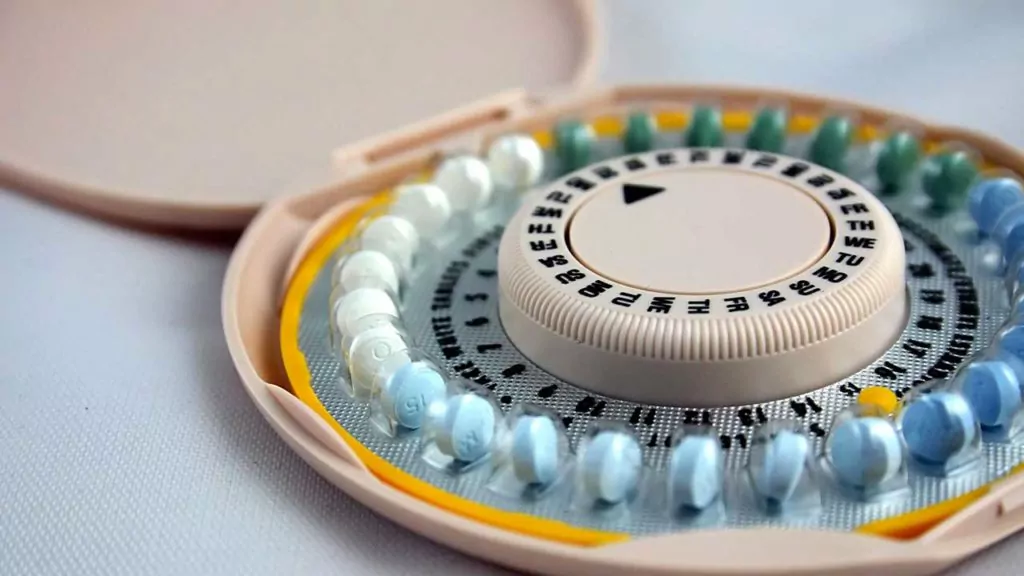
Investigating the Birth Control Pill

I was married in the summer of 2015, and a few months prior to this my fiancé and I began researching Christian methods of birth control. The minister officiating our wedding gave us two articles to read.1,7 This was the first time I had really read anything about oral contraceptives, aka the Pill. When I was in high school, I knew girls who were taking the Pill to help ease menstrual difficulties, so I was aware that it existed. But I had no idea how it worked, or whether there were problems with using it as a contraceptive.

The two articles the minister gave us noted the Pill was not only a contraceptive, but could have an abortive function, acting after a new baby was already conceived. In conversations with other women my age, it became clear that doctors weren’t talking about the Pill’s role as an abortifacient (something that causes abortions). They had never been informed.

3 ways the pill works

So how does the pill work?

It has three different mechanisms, and the first two do indeed act to prevent pregnancy.

The most well known mechanism of the pill is prevention of ovulation. And if there is no egg for the sperm to fertilize then there is no possibility of pregnancy.

The pill also causes cervical mucus to thicken, making it more difficult for sperm to reach the egg if the woman still ovulates. These first two mechanisms are indeed contraceptive, in that when they work, they serve to prevent the joining of the egg and sperm.

But there is also a third action, and this one is not contraceptive, but abortive. The hormones in the Pill cause the lining of your endometrium (on the wall of the womb, where the egg needs to attach) to be very thin so the baby cannot implant. And because it can’t implant it has no chance to grow and develop – it is chemically aborted.2

When contraception doesn’t “contra” conception

This third action isn’t well known, perhaps because it is still called “contraceptive” even though it acts after conception. You see, if you look up the definition of “contraception” it isn’t what you might expect. In the Merriam-Webster Dictionary it says “contraception: deliberate prevention of conception or impregnation.” In other words, when we read on a box that something is a contraceptive, that doesn’t mean that it just prevents conception – the word also includes the abortive function of preventing a newly conceived little human being from implanting in its mother’s womb.

That may be why most people don’t know about the Pill’s abortive function. Physicians use this word contraception, but mean something very different by it than we might be assuming. But information about this can be easily found on the Internet. For example, an article on Webmd.com describes this third function this way:

Hormonal contraceptives can also prevent pregnancy by changing the lining of the womb so it's unlikely the fertilized egg will be implanted.2

As pro-lifers, we understand that “the fertilized egg” they are talking about here is actually and already a human being made in God’s image.

Another sort of pill?

I now thought I knew how oral contraceptives worked, so my fiancé and I would not be considering this “option” of birth control. This does not mean that we were not scared that our other options would not be as effective. We also knew they would require more “work” than taking a pill (condoms, tracking basal body temperatures and cervical mucus, etc.).

Then I started hearing from various women that "my pill is different, my doctor says it's not the type that can cause abortions." I was quite interested, thinking that since I had only read two very religious articles, perhaps there were other, different pills the article authors didn’t know about – ones that do not have the third abortive mechanism of action. Wouldn't that be great?

But it didn’t take long, searching with Google, to dig up clear information on the many different brands of oral contraceptives. There are over 80 different names but they all contain either progestin or estrogen or a combination of both (most common), and therefore they all have the same three potential actions. I began reading more research articles, both Christian-based and non-Christian, and they amusingly enough agreed that it happens but then draw different conclusions as to what we should then do.

CHRISTIAN SOURCES: We do not and cannot know how often the third mechanism has to kick in because the first two fail, but we know it can and does happen, therefore we should not be willing to risk killing our baby.1,4,6,7

NON-CHRISTIAN SOURCES: There is no precise medical testing that exists which can prove how often a fertilized egg is not implanting and so Christians should not worry or care about a non-statistic.5,9

Not care about a “non-statistic”? Just because we cannot get a precise number, does that mean we should just ignore that it is happening altogether?

Even with perfect use, babies are conceived

We might not have clear numbers, but we do know babies are being conceived in women who use the birth control pill. There is no such thing as a birth control pill that has a 0% pregnancy rate…even with perfect use.8 We should also note that on most websites it states users of the pill must take it at the same time every day and not miss a pill.2,10 This would be considered “perfect use” and even with perfection, pregnancies are still occurring.3

And the pregnancy rates go way up under “typical use” (missing a pill or taking a pill late). In an article by Dr. William F. Colliton Jr., he shared that:

"...medical literature documents an incidence of 3-5 pregnancies per 100 women per year for Pill users. Dr. Don Gambrell, Jr., a renowned gynecological endocrinologist….noted a 14% incidence of ovulation in women taking the 50 microgram . This rate varies from pill to pill and from patient to patient. Now, every case of fertilization that does occur in women on the pill, in which the pill has made it difficult or impossible for there to be implantation, contradicts the thesis of those stating that the is not abortifacient."4

If 3-5 pregnancies are occurring despite all 3 actions of the pill, how many more ovulations are occurring that we don't see because the conceived baby is then terminated because it can’t implant in the thin endometrium? What about a 14% breakthrough ovulation rate? We don’t know how many children are killed by the Pill’s third mechanism, but the numbers could be very high. As Randy Alcorn writes:

The Pill is used by about fourteen million American women each year and sixty million women internationally. Thus, even an infinitesimally low portion (say one-hundredth of one percent) of 780 million Pill cycles per year globally could represent tens of thousands of unborn children lost to this form of chemical abortion annually. How many young lives have to be jeopardized for prolife believers to question the ethics of using the Pill? This is an issue with profound moral implications for those believing we are called to protect the lives of children.

We could guess the numbers for Canada might be around a tenth of the American figures, potentially amounting to thousands of children lost. Regardless of what the numbers are, as Christians can’t we agree that if our birth control choices risk killing even just one baby, then we need to use some other method?

Conclusion

While I was quite uninformed on this topic, it didn’t take much time to work through the readily available information and realize that the Pill is not for us. So with all this in mind I would like to encourage anyone who reads this with the following:

  • If you are a parent of a teenage girl, (and, even teenage boys should be informed too!) please talk with them about the birth control pill. Don’t let them find out for themselves or assume that they know already. I didn’t know, and many others did not and do not. This is important stuff because it truly is a matter of life and death!
  • If you are an engaged couple considering different birth control options please do more research than just asking your doctor for a non-abortive pill. The chances are high that your doctor does not have the same beliefs as you and does not consider hormonal oral contraceptives to be abortifacient (because he may regard implantation, rather than conception, as when new life begins). Don’t be tempted to take the easy way out and not ask questions. This topic is important enough to spend a few hours of your time researching it before putting hormones into your body uninformed. The information is all out there; you just have to look for it!
  • If you are married and currently taking one of the many brands of birth control pills, please don’t let guilt get in the way of change. What you’ve done in ignorance, you can turn from now that you know better. And because our God is merciful we can depend on His forgiveness, and live lives of thankfulness.

I believe that this conversation is extremely necessary, and as important, if not more so, than walking in a March for Life or standing in a Life Chain or any other pro-life work. We cannot tell others that it is wrong for them to kill their baby before it is born if we are ignoring the safety of our own unborn children. If we are pro-life, then let us truly be pro-life!

Endnotes

1 Randy Alcorn’s Does the birth control pill cause abortions? A short condensation.
2 Todd Nivin’s (MD) “Birth Control Pills” Retrieved August 16, 2016
3 Contraception: Success and failure rates of contraceptives. Retrieved January, 2017
4 W.F Colliton’s “The birth control pill: Abortifacient and Contraceptive” in Life and Learning X,
5 J.L. DeCook & D. Harrison & C. Hirsch & S. Crocket’s “Hormone contraceptives controversies and clarifications” in Prolife Obstetrician (1999)
6 M.A. Grisanti’s “Birth control and the Christian: Recent discussion and basic suggestions” in The Master's Seminary Journal 23(1)
7 N.D. Kloosterman’s “The pilgrim's pathway” in the Oct, 1994 issue of Christian Renewal
8 I. Milsom & T. Korver’s “Ovulation incidence with oral contraceptives: A literature review” in J Family Planning Reproductive Health Care 34(4)
9 C. Page’s “Much ado about nothing: Prolife misconceptions about contraception” posted Aug 22, 2008
10 U.S. Food and Drug Administration’s “Birth control: medicines to help you

This article first appeared in the March/April 2017 issue.

Red heart icon with + sign.
Documentary, Movie Reviews, Pro-life - Abortion, Watch for free

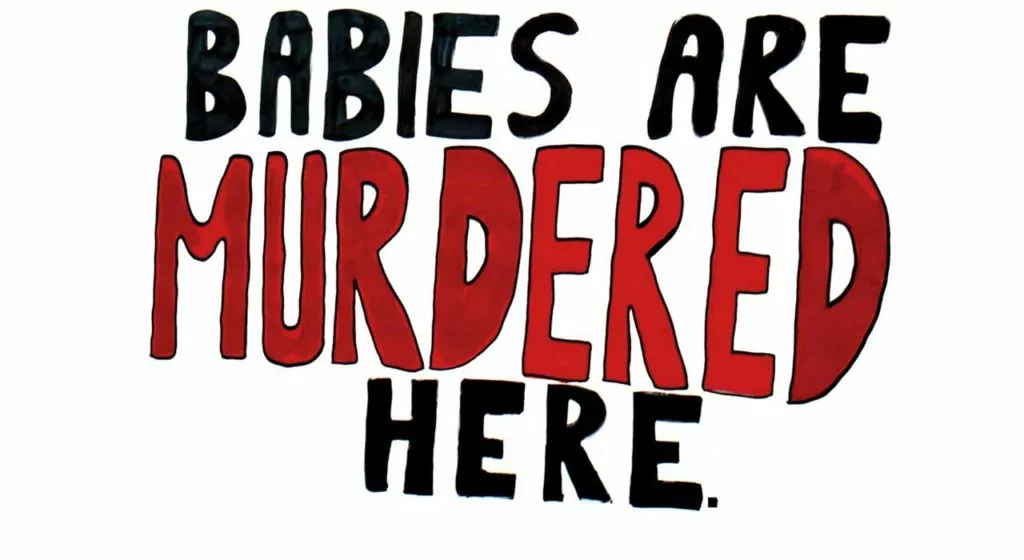
FREE FILM: Babies are still murdered here

Documentary 2019 / 102 minutes Rating: 8/10 If you were told the pro-life movement is made up of two groups that don't always get along, who would you guess? Old vs. young? Men and women? Catholics and Protestants? The answer is, none of the above. The real divide is between abolitionists and incrementalists. If you aren't familiar with these two camps, abolitionists want the unborn to be protected from the moment of conception onward and see anything else as being an unprincipled compromise. Incrementalists also want the unborn protected from conception, but they argue that this goal can best be achieved with a step-by-step or "incremental" strategy that involves protecting some now – saving whatever babies we can right now – even as we move towards protecting all at some later date. So an incrementalist might propose a law that would criminalize abortion in the third trimester, seeing it as a step towards full protection, while an abolitionist would see such a law as saving those third-trimester babies at the expense of babies in the first two trimesters. Babies Are Still Murdered Here comes from the abolitionist camp, and while I count myself among the incrementalists I'd say this is a thought-provoking watch for all pro-lifers. Overall the film makes three points: Pro-lifers need to call out abortion for what it is – murder – because we do nobody any favors by minimizing the wickedness of sin. A related point: Christian pro-lifers need to fight abortion as Christians. No more of these secular, scientific, supposedly "neutral" arguments. We need to call out abortion as a sin, call people to repentance, and offer them every help we can as representatives of God's Church. Some pro-lifers can get so caught up in strategy that they'll work against other pro-lifers. If this third point strikes you as incredible, the film gives a few different examples. Ohio Right to Life opposed a heartbeat bill in the name of being strategic. They argued that the bill would almost certainly be struck down by the courts, and the legal precedent could set the pro-life movement "back 40, 50 years" so they spoke out against it. And after the heartbeat bill was struck down by a federal district judge, this question came up at the National Right to Life convention: "If one of these more idealistic bills comes up in our state what advice do you think we should give to our legislature? Do we ask them to vote for something like that? Should we ask them to oppose it?" The answer given? National Right to Life General Counsel Jim Bopp said: "Not introduce it. Not consider it. Not a committee hearing. Not vote for it." This is what a pro-lifer was telling pro-lifers. Lest you think pro-lifers undermining the pro-life movement can happen only in the US, let me give a Canadian example. Back in the 1990s, I witnessed the Alberta pro-life movement get so intent on a strategy that they undermined the personhood of the unborn. The provincial government had taken a fiscally responsible turn and was cutting programs to balance the budget, so pro-life leaders proposed that we promote an end to the tax-funding of abortion as a financial issue - we could pitch it as one more budget item that could be cut. However, the pro-choice opposition saw through this approach and accused the end-tax-funding group of trying to save babies' lives rather than save budget dollars. And, of course, that was entirely true. But that's when things got crazy – the end-tax-funding group denied they wanted to save babies' lives and insisted it was about the money. And by making it all about money, when it was pointed out that a live birth cost the government more than 10 times what an abortion did, the whole strategy fell to pieces. Avoiding all mention of God or the worth of the unborn didn't fool anyone but did make pro-lifers seem money-grubbing and uncaring. So yes, there are times when a pro-life incremental strategy can go very, very wrong. We need to know that, so we can steer clear of it! It is by understanding how and why it can go wrong that we can head it off from doing so. It comes down to keeping our first priorities our first priorities. God's people save babies as a means by which we can glorify God: in reaching out to the desperate, we reflect His goodness, His mercy, and His love. But when we make saving babies our ultimate goal, then it becomes an idol, and in service to that idol, we might find ourselves opposing or undermining God's Truth. We can then, in the name of "effective strategy," downplay what abortion is and downplay what our own end goals are. But this is not honest. And it does not make glorifying God our goal. And, interestingly enough, as we saw in the Alberta tax-funding debacle, it doesn't even seem to be effective. RC Sproul, Jeff Durbin, George Grant, Voddie Baucham, Sye Ten Bruggencate, and John Barros are among the notable names involved in the film. They have a lot of provocative thoughts to share, and even if you don't agree with them all, there is something here every pro-life will find beneficial to hear. What's more, you can watch the whole film for free, below. If you find it edifying, then be sure to check out the original, also free: Babies are Murdered Here. ...

Red heart icon with + sign.
Human Rights, Pro-life - Abortion

Do we have a “right” to life?

If you’ve ever attended a pro-life rally or an abortion protest you’ve heard fellow Christians talking about the unborn’s “right to life.” But is this a phrase that Christians should use? Does it have a biblical basis? Can Christians claim a right to life, or for that matter, any rights at all? Rights vs. wishes It all depends on what you mean by the term “rights.” We'll sometimes hear special interest groups claim a "right" to healthcare or a "right" to a free college education but that's a trivialization of the term. They are using it in a way that is really no different than claiming a "right" to pepperoni pizza, or a "right" to free parking. These are items some might want at taxpayer expense, but describing your wishlist as rights does not make them so. Rights are better understood as that which it is wicked to deny. So, for example, if a government doesn't provide free college tuition, we aren't going to hold tribunals to investigate their human rights abuses – it is not a monstrous evil to deny citizens a tax-funded post-secondary experience. But if governments violate their citizens' right to property, then there should be an outcry because we recognize that the right to property is one that governments would be wicked to deny – this is a fundamental right. Rights before God? When it comes to the pro-life movement's "right to life" slogan, I've run across some Christians who object to the term. Since we are sinful creatures, wholly dependent on God’s grace, they argue that God doesn’t owe us anything. Are we in any position to make demands of our Maker, to make any claims of “rights” before Him? Clearly not. But as Stephen Pidgeon explains in this article, just because we have no rights before God doesn’t mean we don’t have rights given by God. In the Ten Commandments God spells out a number of prohibitions, and it is from these prohibitions that our rights spring. God has said, “Thou shall not murder” so from that we all have a God-given right to life. No man, no group, no government has the right to murder us because God has forbidden it. Since this right comes from a God-given prohibition, no authority on Earth may take this right from us. Individuals and governments can violate the right to life – they can and regularly do murder, ending the lives of one-quarter of all citizens here in the United States and Canada before they are even born. But even as they violate the right to life, and deny the unborn's claim to it, the right remains nonetheless. Governments and individuals did not award this right, so they cannot take it away. Of course, God can rightfully take our life – we are his, and He can do with us as He pleases. We have no rights before God. But we do have God-given rights that we can hold to before Man. And, made in His Image (Genesis 1:26-27, 9:6), the unborn, too, can claim a God-given right to life. And we can pray for the day when our governments start to recognize, honor, and protect that right....

Red heart icon with + sign.
Human Rights, Pro-life - Abortion

ABILITY ≠ WORTH ....but the world thinks so, and sometimes we do too

While we were at the library one of my daughters grabbed Nice Wheels, a book featuring a boy zipping across the cover in a wheelchair. I thought it was a great choice; my children don’t know anyone in a wheelchair so this seemed like it would a good way to teach them that whether we’re standing or sitting, we’re all people. But that wasn’t the moral of this story. The author wanted to teach my daughters that our value comes from what we can do. The book begins with a wheelchair-bound boy rolling into class and a second boy wanting to know, “Can he do what we can do?” By day’s end we’ve learned that the boy in the wheelchair can sing just like everyone else, and can paint, and listen, and laugh, and eat lunch, and share like everyone else too. And as the book draws to a close the second boy decides that, shucks, if this boy in his wheelchair can do everything we can do, why not be his friend? While the author’s heart was in the right place, her thinking couldn’t be more wrong. If we’re worth befriending because we can do things, what if we can’t do things? If our value is tied to what we can do, then what of a boy who can’t sing, or paint, or eat lunch with the other kids? Comedy and tragedy The world believes that our worth is tied to our ability. That’s why we have feminists arguing that women can do anything men can do, even including all that brawny stuff. No matter that men have way more muscle, feminists won’t admit men make better firefighters, soldiers or alligator wrestlers. They can’t concede that men can do more in these areas because in their worldview that means men are more valuable than women. Feminist confusion is comical, but equating ability with worth can also be deadly. It’s this same thinking behind abortion: we can kill the unborn at 10 weeks because they can’t do this yet, or at 20 weeks because they can’t do that yet. It’s also the impetus behind legalized euthanasia: if a strong healthy young man wants to commit suicide we’ll try to stop him, but if an old man requests euthanasia because his physical and mental abilities are diminishing, well, that’s supposed to be understandable. Dripping in the church In our churches we oppose abortion and euthanasia. We know our lives are valuable even when we can’t do anything at all. We know it, but daily we manage to forget it. We tie our sense of worth to how much we make, or have donated, or to the position we hold. Or we base it on how well our kids behave, how many books we’ve read, how many invitations we do or don’t get, or how many Facebook likes we’ve collected. We know better, but we still fall for the lie that our worth is somehow tied into what we can accomplish, or earn, or achieve. There can be something appealing about this lie in the short-term, particularly just after we’ve lost 20 pounds, or scored a game-winning goal. But in the long term it all fades; relying on our own strength is a dead-end. Unearned What a blessing it is to know, then, that our value doesn’t come from our abilities. Ours is a derived worth that comes from the God in whose image we are made (Gen. 1:27, 5:1 9:6, Psalm 8:5-6). Our status also comes from God’s command to love our neighbor as ourselves (Mark 12:31). But it doesn’t come from what we can do. We’re valuable because of how God made us, and because of what God commanded. So it’s all gift. Understanding that frees us from the impossible burden of trying to earn it. When we know for a fact that nothing we can give could ever be good enough for God, that frees us from worrying whether or not it will be. It frees us to simply respond in thankfulness, giving freely of ourselves and our gifts without being self-conscience about how little it is we have to offer. And understanding where our worth comes from should stop us from expecting others to earn their status. The newcomer to our church shouldn’t have to smile first before we welcome them. The lonely girl shouldn’t have to accept one of our first ten invitations before we offer her an eleventh. The awkward guy shouldn’t have to play hockey to be a part of our group. And that kid in the wheelchair doesn’t have to show he can do everything that the other boys can do before he’s worth befriending. They shouldn’t have to earn it. They can’t earn it. We can’t earn it. It’s all a gift from God....

Red heart icon with + sign.
Movie Reviews, Pro-life - Abortion, Watch for free

Some pro-life arguments are not pro-life arguments

Editor's note: the short pro-life film Crescendo is very well done – it is compelling, emotional, and has wonderful musical accompaniment. It’s very clear why it has won so many awards.  But this pro-life film is also notable for what it is missing, or, rather, what it gets wrong. As Rob Slane explains below, while the argument in the film is a common one in pro-life circles, it is a message completely at odds with the truth. https://youtu.be/CafJJNETvqM ***** Have you ever heard the Beethoven argument against abortion? It runs something like this: "If you knew a woman who was pregnant, who had 8 kids already – three who were deaf, two who were blind and one who was mentally retarded – and she had syphilis, would you recommend that she have an abortion? You would? Well congratulations – you just killed Beethoven!" I have heard this argument used many times as an argument against abortion and I must say it tends to leaves me with a thoroughly unappealing taste in my mouth. The problem with it is that in trying to establish the dignity of human life by using the idea that you might end up killing a genius if you abort babies, the argument ironically ends up completely undermining the dignity of human life. That's not what we believe The reasoning behind this little nugget is that by killing the unborn, you might just kill someone who, had you let them live, would have been great and who may have possibly brought great joy and happiness to millions. But the subtle subtext behind this argument is that the value of human life can be measured by success, or accomplishments, or by a person's genius. This contradicts the whole pro-life argument, which is based on the principle that all human life is special and of great value, not because of what a person may or may not do, but rather because each person is made in the image of God and so is automatically sacred – irrespective of future accomplishments and successes. Human dignity does not come from us. Ours is an objective dignity, given to us by our Creator and not by ourselves. It is not earned on the basis of what we do or by what we achieve, and it cannot be forfeited by reason of our sin. It is true that we often appear to do all we can to forfeit this dignity by our sinful nature and behavior, yet no amount of sin can alter our status as bearers of the Imago Dei, so we remain the possessors of great value. All sin does is to highlight how far we fail to live up to the dignity that God has given us. The proper perspective Having said this, I don't think we ought to abandon this line of reasoning completely. With a little tweaking and tinkering here and there, it could be used to good effect. Something like this: "If you knew a woman who was pregnant, who had 8 kids already, three who were deaf, two who were blind, one who was mentally retarded, and she had syphilis, would you recommend that she have an abortion? You would? Well congratulations – you just killed Mrs. Dorothy Anne Tweed of 55 Jameson Street, Edinburgh, Scotland. "What? You've never heard of Mrs. Tweed? Did you expect to hear that a somebody had been killed off, rather than this nobody? Maybe Beethoven or Einstein, for instance? Well sorry to disappoint you. I have to admit that Mrs. Tweed's resume doesn't look quite as impressive as Ludwig's. No choral symphonies to be found! No string quartets! No fate knocking at the door at the start of an awesome fifth symphony! "Yet despite not being one of the greatest geniuses the world has ever known and despite her clear lack of musical accomplishments, I am confident that Mrs. Tweed is as fully human as Ludwig ever was and has as much right to life as Ludwig ever did. "So tell me – would you consign her, along with millions of others just like her, to death just because they aren't Beethoven?" Rob Slane is the author of “A Christian & an Unbeliever Discuss: Life, the Universe & Everything” which is available at Amazon.ca here and Amazon.com here....

Red heart icon with + sign.
Human Rights, Pro-life - Abortion

Abortion supporters don't believe in equality

There are two ways society views human worth. Which leads to a better society? **** In his now famous TedTalk, author Simon Sinek unlocks the secret to how the most powerful leaders shape their messages. They start with “Why?"  "Your Why", says Simon, “is the purpose, cause, or belief that inspires you to do What you do." Simon illustrates with great clarity how powerful it is when leaders of any organization or movement start their message with an explanation of their purpose, their beliefs. I thought about this yesterday as I stood on the side of Main St. in Grimsby quietly participating in the Life Chain demonstration. I wondered how many of the people driving by really understood why we were there - our purpose, our belief. I wondered too if my fellow demonstrators really understood how people with opposite views on the issue of abortion can arrive hold the position they do. You can’t really take seriously the folks who drive by yelling at you and giving your kids the finger. But putting that aside for the moment, let’s be honest; demonstrations are not the most effective format for respectful and rigorous debate. They tend to polarize groups into opposing camps and do little to create empathy between people who hold different views. We’re content to consider each other crazy. However, at one point in yesterday’s hour-long demonstration a passing motorist rolled down her window and yelled to demonstrators “It’s my body, It’s my choice!” And I thought; There it is! Her “Why.” Her belief. And as horrifying as the consequences of that belief are, it struck me how perfectly logical it was that this woman might also support the idea that she has a right to end the life of another human being. There’s nothing wrong with her logic. She’s not crazy per se. She just doesn’t believe that the human growing inside her is...well, human. And that is precisely where we differ. Two views I believe that human life starts at conception. And that belief changes everything. I’m not crazy either. Far from it. Feminist author and pro-choice advocate Mary Elizabeth Williams (also a staff writer for Salon) would agree with me. In an article that Mary wrote titled “So what if abortion ends life?” she states the following:  "I know that throughout my own pregnancies, I never wavered for a moment in the belief that I was carrying a human life inside of me. I believe that’s what a fetus is: a human life.” She goes further: "When we on the pro-choice side get cagey around the life question, it makes us illogically contradictory....When we try to act like a pregnancy doesn’t involve human life, we wind up drawing stupid semantic lines in the sand.” I totally agree. Which makes Mary’s following statement so confusing. She says "And that doesn’t make me one iota less solidly pro-choice.” How can someone believing that the fetus inside them is human still claim the right to kill it? That does sound crazy to me. 1) All life is not equal But Mary explains... "Here’s the complicated reality in which we live: All life is not equal. That’s a difficult thing for liberals like me to talk about, lest we wind up looking like death-panel-loving, kill-your-grandma-and-your-precious-baby storm troopers. Yet a fetus can be a human life without having the same rights as the woman in whose body it resides. She’s the boss. Her life and what is right for her circumstances and her health should automatically trump the rights of the non-autonomous entity inside of her. Always." And there it is: Mary's “Why." Her belief. Mary believes that some humans are more important than others. She’s forced herself to believe that or else her pro-choice position would be, to use her own words, "illogically contradictory.” Mary also thinks she should be the one to decide whose lives, in particular, are more important and whose aren’t. And this why I (and many others) stand in silent demonstration at the corner of Main St. and Christie St. each year. 2) All are equal because all are made in God's image I believe that I am not my own (Nope. Not my body. Not my choice) ie: I do not belong to myself. Rather, I believe that in both life and in death I belong to my faithful saviour Jesus Christ. I belong to and submit to the one (and only) creator-God who made me and who alone determines the purpose of my life. Therefore I personally am not the ultimate authority on what I can or cannot do with my life or the life of others. I believe that all lives including the lives of those who stand in direct opposition to what I believe are equally sacred and worthy of protection. I believe that the protection of life is everyone’s responsibility and so also my responsibility. My purpose here on earth is to love God, love my fellow human beings and to serve them by putting their life and well-being ahead of my own. I and those who believe as I do are not fighting for self-importance or survival. We're fighting to outdo one another in kindness. I realize that we can’t make you believe what we believe. But surely you can see that we’re not crazy either. Which kind of society do you want? And to those of you who don’t quite know what you believe consider this: What kind of society do you wish to experience? What kind of society do you wish to build for your children? What kind of leaders will you choose to support and follow? Will you follow those who believe that some lives are more important than others (who believe that their lives are more important than yours perhaps)? Or will you choose to follow those who believe all lives are of equal value, and who believe that leaders should put others ahead of themselves? Simon "Start-with-why" Sinek has another book out which may help you decide. It’s called Leaders Eat Last. This choice is indeed yours. I’m praying that you’ll choose wisely. This article was first published in October 2016. Jason Bouwman is a graphic designer and author of the utterly unique book "Still Thinking" which we review right here....

Red heart icon with + sign.
Pro-life - Abortion

Only one question to debate: What are the unborn?

Abortion advocates love clouding the real issue. We don’t have to let them. ***** The answer to the question, What is the unborn?, trumps all other considerations in the abortion debate. Objections to the pro-life view based on choice, on bodily rights, and on back-alley abortions miss the point entirely as the dialogue below illustrates. Abortion advocate: Abortion is a private choice between a woman and her doctor. Pro-lifer: Do we allow parents to abuse their children if done in private? Abortion advocate: Of course not. Those children are human beings. Pro-lifer: Then the issue isn’t privacy. It’s, What is the unborn? Abortion advocate: But many poor women cannot afford to raise another child. Pro-lifer: When human beings get expensive, may we kill them? Abortion advocate: Well, no, but aborting a fetus is not the same as killing a person. Pro-lifer: So once again, the issue is, What is the unborn? Is the fetus the same as a person? Abortion advocate: But you’re being too simplistic. This is a very complex issue involving women who must make agonizing decisions. Pro-lifer: The decision may be psychologically complex for the mother, but morally it is not complex at all. When blacks are mistreated in a certain society, do we spin a tale about complex, agonizing decisions for the whites in power or do we condemn the evil of racism? Abortion advocate: Aborting a fetus that is not a person is one thing, discriminating against black persons is quite another. Pro-lifer: So we’re agreed, if abortion kills a defenseless human being, then the issue wouldn’t be complex at all. The question is, What is the unborn? Abortion advocate: Enough with your abstract philosophy. Let’s talk about real life. Do you think a woman should be forced to bring an unwanted child into the world? Pro-lifer: The homeless are unwanted, may we kill them? Abortion advocate: But it’s not the same. Pro-lifer: That’s the issue, isn’t it? Are they the same? If the unborn are human like the homeless, then we can’t kill them to get them out of the way. We’re back to my first question, What is the unborn? Abortion advocate: But you still shouldn’t force your morality on women. Pro-lifer: You don’t really believe what you just said. You’d feel comfortable forcing your morality on a mother who was physically abusing her two-year-old, wouldn’t you? Abortion advocate: But the two cases are not the same. Pro-lifer: Oh? Why is that? Abortion advocate: Because you’re assuming the unborn are humans, like toddlers. Pro-lifer: And you’re assuming they’re not. So the issue is quite simple, isn’t it? It’s not about forcing morality, it’s not about privacy, it’s not about economic hardship, it’s not about unwantedness; it’s just one question: What is the unborn? This article is an excerpt from Scott Klusendorf's "Pro-life 101" and is reprinted here with permission. Scott is President of Life Training Institute and the author of "The Case for Life: Equipping Christians to Engage the Culture." Scott has taught pro-life apologetics at the graduate level at Biola University and Trinity Law School, and lectured at over 80 colleges and universities including Stanford, Berkeley, UCLA, USC, Johns Hopkins, MIT, and the U.S. Air Force Academy — to name a few. Scott’s debate opponents have included Nadine Strossen (former President of the ACLU), attorney Edward Tabash (of the Council for Secular Humanism), attorney Kathryn Kolbert (who argued for abortion rights at the Supreme Court), and Katherine Kneer (President of Planned Parenthood California). At the practical level, Scott helps pregnancy centers raise money to assist women facing unplanned pregnancies. The money raised helps women with shelter, baby clothes, parenting classes, and medical care. Scott is a graduate of UCLA and holds a Master’s degree in Christian Apologetics from Biola University. He and his wife Stephanie have been married since 1985 and they have 4 children....

Red heart icon with + sign.
Documentary, Movie Reviews, Pro-life - Abortion, Watch for free

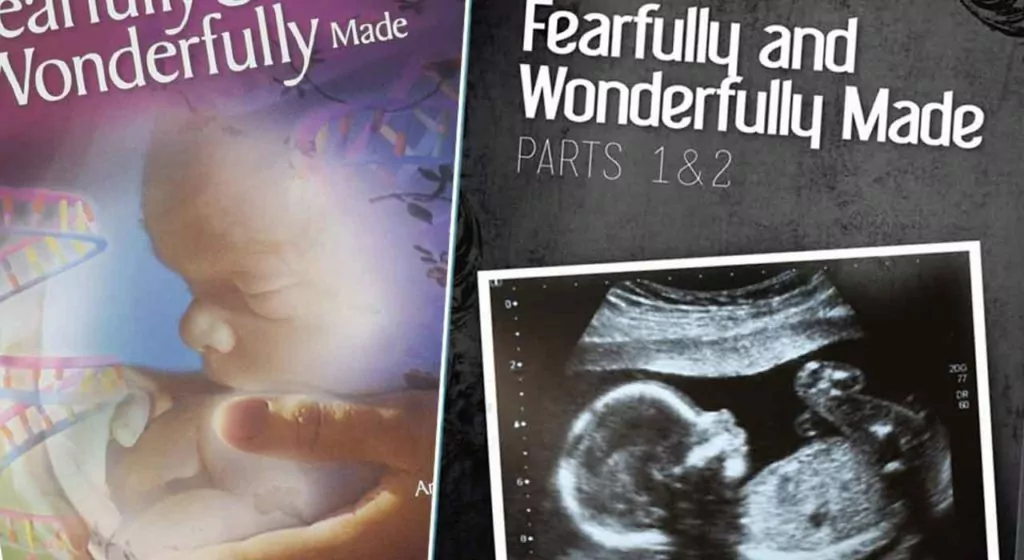
Fearfully and Wonderfully Made

Illustrated lecture 49 or 85 min; 2015/2012 RATING: 7/10 While this is little more than a powerpoint lecture, it was, for years, among Answers In Genesis’s top-selling DVDs. Since then the original 1-hour lecture has been expanded, split into two lectures, and remains every bit as popular. Why? The strength of this presentation is in its subject matter: the beginnings of human life. A Christian looking at their newborn might call the child a “little miracle” but Dr. Menton reveals the insufficiency of this description. There isn’t just one miracle involved in the conception and birth of a child – numerous miracles are involved at every stage, even before conception occurs. Fearfully and Wonderfully Made isn’t specifically a pro-life presentation, but by outlining the miracle of life, Dr. David Menton makes clear the waste and destruction involved in abortion. We have every reason to praise God because we are indeed fearfully and wonderfully made, and wonderful are His works (Ps. 139:14)! I will note this is not going to excite children. This is a lecture and takes some concentration to follow. But any adult who gives it 15 minutes will want to stay for the rest of it, and will be sharing this link with all their friends! You can buy an extended, two-lecture version of this talk at AnswersInGenesis.org here either on DVD or via download. Answers in Genesis has also made the two lectures available for free viewing here. And you can watch a shorter 49-minute version of the talk below that Menton gave at the Lutherans for Life National Conference back in 2015. ...

Red heart icon with + sign.
Documentary, Movie Reviews, Pro-life - Abortion, Watch for free

Harder Truth

Documentary 9 min / 2003 This film changed me. It is a video, taken in the womb, of an abortion. It is evil uncovered and brought into the light. Just as it took pictures of dead Jews, stacked like cordwood, to drive home the horror of the Holocaust, and it took the newspapers carrying pictures of the lynched teen Emmett Till to reveal the wickedness of what was happening in the American South, so too, visuals are important in the abortion debate. Ours is a visual culture and graphic pictures of bloody, broken, tiny bodies communicate what abortion really is (Eph 5:11). These images cut through words like “choice,” “rights” and “freedom” and make plain the fact that abortion is murder. While this short video, Harder Truth, is one I believe should be widely shared and seen, it contains pictures that are deeply disturbing so it should be shown with care. When you share this, the audience should be warned about what they are about to see. And what are they going to see? While there is no verbal narration, the film begins with two minutes of text detailing what is going to be shown and why it is being shown. Then there is two minutes of a baby in the womb, developing from zygote to fetus. Then, just after the 4-minute mark, we see what an abortion actually is and what it does to the baby. The final four minutes of the film show remains of aborted babies: bloody broken bodies, tiny detached arms and legs, and crushed skulls. I've shown this at dozens of presentations and, as the video itself suggests, when I show it I tell the audience that anyone who wants to look away should feel very free to do so. I also find that, while the film is very short, its nine minutes of content can be overwhelming and I often show only a middle selection of two or three minutes. The toughest consideration in showing this film is, how young is too young? As pro-life apologist Scott Klusendorf notes, girls as young as 12 can, in many jurisdictions, get an abortion without their parents’ knowledge or permission. Twelve is very young. But if they are old enough to get an abortion isn’t it important they know the real truth of it? I've been asked why I bother showing this to pro-life audiences. After all, we don't need to be convinced abortion is wicked, do we? Well, yes, we do. Abortion happens in even 100% pro-life churches too, and the reason it does is because sometimes those pro-life convictions are only an inch deep. That shouldn't surprise us. Abortions are all done behind closed doors. The victims are invisible. We might hear that 100,000 babies are murdered each year in Canada, and ten times that amount in the US, but those are just numbers, and too big for us to really fathom. So when a young teen finds herself pregnant and, mistakenly or correctly, thinks her parents will disown her if they ever find out, will inch-deep convictions stop her from taking the "solution" the world is readily offering? So there is a need then, to show even our Christian, pro-life, young people, the grim reality of what abortion is. Every bit as important, we need to tell our daughters that we will love them and will help them if they ever have an unplanned pregnancy. WARNING: THIS VIDEO CONTAINS GRAPHIC IMAGES OF AN ABORTION. ...

Red heart icon with + sign.
Pro-life - Abortion

Real progress: Canada is warming up to an abortion law

In October of 2011, Reformed Perspective published an article I wrote called “Saving some is not a compromise – the case for advancing abortion legislation one step at a time.” In the article, I made the case that passing an abortion law is realistic in Canada, and can be promoted by Christians without compromising our faith. Looking back, that article has likely had more impact than anything else I have written. While the initial response did include some strong criticism, most pro-lifers were both intrigued and encouraged to know that new strategies were being advanced, as we have gone for decades without any laws restricting this mass injustice. The ARPA Canada team welcomed the encouragement, but we also carefully listened to the critique, and over time it was evident that the majority of the criticism, though passionate, wasn’t interacting with the actual arguments the article had advanced. And since it was first published, the key points of the original article have been validated time and again. Because over 100,000 children were dying every year in Canada alone, we knew we had to continue pursuing prudent political initiatives, without compromising our faith. So we moved forward. That same year I was blessed with the full-time help of a bright, principled, and hard-working lawyer André Schutten, who now serves as ARPA’s Director of Law and Policy. And the following year we were blessed with the full-time help of a modern-day Wilberforce, Mike Schouten, who has been capably directing the We Need a Law campaign since, and now serves as ARPA’s Director of Advocacy. By God’s grace, we are now surrounded by a capable team of staff and a much larger team of big-hearted Canadians who are striving for protection for pre-born children from coast to coast. At times it is valuable to pause and reflect on where things have gone, as we all have much to learn. Now that over seven years have passed since that article was published I look back with thankfulness on the progress that has been accomplished. This isn’t a result of my work, or ARPA’s work. Sometimes it was in spite of us. It is a result of God’s work. And we can be encouraged that He uses each of us to accomplish this. RP Chairman Bruce Deboer and wife Helena at the Ottawa 100,000 flags display in 2014. “Progressives” today are often associated with championing abortion, sexual freedom, and “climate justice” among many other things. But a truly objective analysis, done with a biblical worldview, will show these causes to be regressive rather than progressive. True progress should involve moving us forward. In regard to abortion, it means taking steps to protect pre-born human rights. Since that article was published in 2011, I can look back with thankfulness to God for the true progress that is being made: A principled, legally-sound, and politically realistic strategy has been carefully developed: This strategy includes draft legislation (an actual abortion bill) and has been vetted past numerous experts. We are so grateful and blessed to now have multiple staff, including a lawyer, devoting their ongoing time to advancing this strategy. The strategy has garnered the support of a growing base of Members of Parliament: The law will only change if MPs champion the change. We are so encouraged to see dozens of MPs on board with this strategy and building support among their colleagues. And they are very grateful that the political arm of the pro-life movement is now willing to work alongside them in this regard. They understand that it is going to be a long game and are increasingly committed to working together to see this made a reality. These MPs are even getting pro-life apologetics training so they can publicly defend the need for abortion legislation. Canadians are increasingly aware that we have no abortion laws: Although most of our efforts are focussed on working with those who can change the law, we have also been educating the public. This includes our huge billboard campaign“Canada has no abortion law” which reached Canadian cities from coast to coast last summer. It also includes our now-famous pink and blue flag displays, which started with 100,000 flags on Parliament Hill and has been replicated dozens of times in towns and cities across the country (and even being replicated in other countries!). Our talking points have become increasingly accepted by the mainstream media: Ten years ago it was common to hear the media sharing inaccurate information, such as the claim that the Supreme Court has determined that women have a right to abortion. We have been respectfully challenging this for years, including through ongoing press releases. We are so encouraged to see the misinformation substantially declining and to even hear our talking points being shared by the mainstream media. We are now even seeing pro-choice advocates calling for an abortion law. In general, it has become far more accepted for our mainstream leaders to question the status quo on abortion: ARPA Canada has long pointed to the Overton Window theory to explain how ideas can transition from unthinkable, to radical, to acceptable, to sensible, and eventually to policy. And we are so encouraged to see that the idea of an abortion law has gone from radical ten years ago (and under a Harper government) to acceptable today (even under a Trudeau government). For example, Ontario’s Premier Doug Ford publicly challenged the fact that teens don’t need permission from their parents before they can have an abortion, and this didn’t hamper his efforts to become Premier. Progress is being made. I believe it is realistic that Canada can pass an effective abortion law in the next five to fifteen years. That big margin is because there are many factors that we simply can’t control. If that strikes you as painfully slow, I will agree – the life and death nature of this battle means we want the unborn protected now. But also bear in mind that to this point there has been no protective legislation for 30 years. This law will save many lives and also serve as a testimony to Canadians that pre-born lives deserve protection. If the Lord wills it, it will be a stepping stone from which more restrictions can be passed and more lives saved, as we see occurring in the United States, which passes dozens of pro-life laws each year. And this can be accomplished without compromise. We support complete protection for every human being. Advancing laws that protect a growing number of humans are important steps in the right direction. These steps can be taken without undermining the value of those who are not yet protected in law. Compromise involves a concession. We don’t have to concede anything. Although moving forward since the original article was published has been challenging and stressful, I’m grateful to God for answering our prayers and giving the strength to move forward, one day at a time. And I heartily thank all those who have been praying for a blessing on ARPA’s and We Need a Law’s efforts. The Lord willing, we will be able to look back ten years later with more reasons for gratitude at the progress God has made possible. Mark Penninga is the executive director of ARPA Canada....

Red heart icon with + sign.
Humor, Pro-life - Abortion, Satire

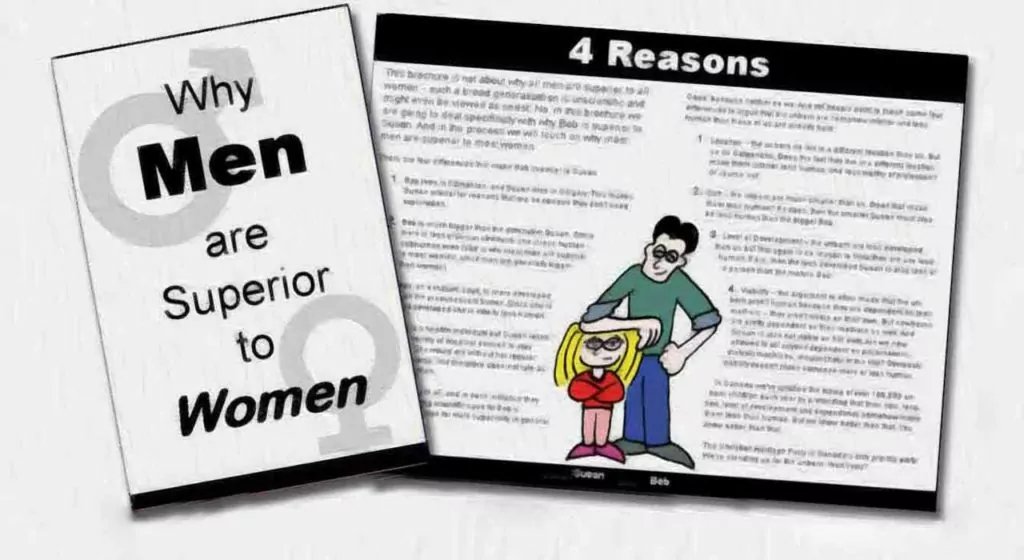
Why men are superior to women – a pro-life analogy

What follows is the text of a brochure that was delivered to more than 20,000 houses in Edmonton, Alberta during an election campaign about 15 years ago. It got a lot of people talking... and quite a number of them screaming. We'd assumed no one could possibly take the title seriously, but we were wrong, and many people did. But, strangely, when we explained that, rather than being an attack on women, this was actually a defense of the unborn, the screaming only got louder. **** This brochure is not about why all men are superior to all women – such a broad generalization is unscientific (as there are always the rare exceptions) and could even be viewed as sexist. No, in this brochure we are going to deal specifically with why Bob is superior to Susan. And in the process we will touch on why most men are superior to most women. Now, there are four differences that make Bob superior to Susan. First, Bob lives in Edmonton and Susan lives in Calgary. This makes Susan inferior for reasons that are so obvious they really don’t need explanation. Second, Bob, as a mature adult, is more developed than the prepubescent Susan. Since she is less developed she is clearly less human. Third, Bob is a healthy individual but Susan relies on a variety of medical devices to stay alive. She would die without her regular treatments and therefore does not rate as fully human. Finally, Bob is much bigger than the diminutive Susan. Since there is less of Susan obviously she is less human – subhuman even. And, of course, size is why most men are superior to most women since men are (aside from the rare exceptions) bigger than women. Four differences in all, and in each instance they make a compelling scientific case for Bob’s superiority… and also for male superiority in general. Right? You don’t agree? Good, because neither do we. And yet people point to these same four differences to argue that the unborn are somehow inferior and less human than those of us are already born. Location – the unborn do live in a different location than us. But so do Calgarians. Does the fact they live in a different location make them inferior, less human, and less worthy of protection? Of course not. Level of Development – the unborn are less developed than us but that again is no reason to think they are any less human. If it is, then the less developed Susan is also less of a person than the mature Bob. Viability – the argument is often made that the unborn aren’t human because they are dependent on their mothers – they aren’t viable on their own. But newborns are pretty dependent on their mothers as well. And Susan is also not viable on her own. Are we now allowed to kill anyone dependent on pacemakers, dialysis machines, insulin shots or the like? Obviously, viability doesn’t make someone more or less human. Size – the unborn are much smaller than us. Does that make them less human? If it does then the smaller Susan must also be less human than the bigger Bob. In Canada we’ve justified the killing of over 100,000 unborn children each year by pretending that their location, level of development, dependency, and size somehow make them less than human. But we know better than that. You know better than that. We’re standing up for the unborn. Won’t you? ----- A brilliant filmmaker used this article and brochure as the leap-off point for a short video. Check out Breanne Jansen's creation below.  ...

Red heart icon with + sign.
Pro-life - Abortion

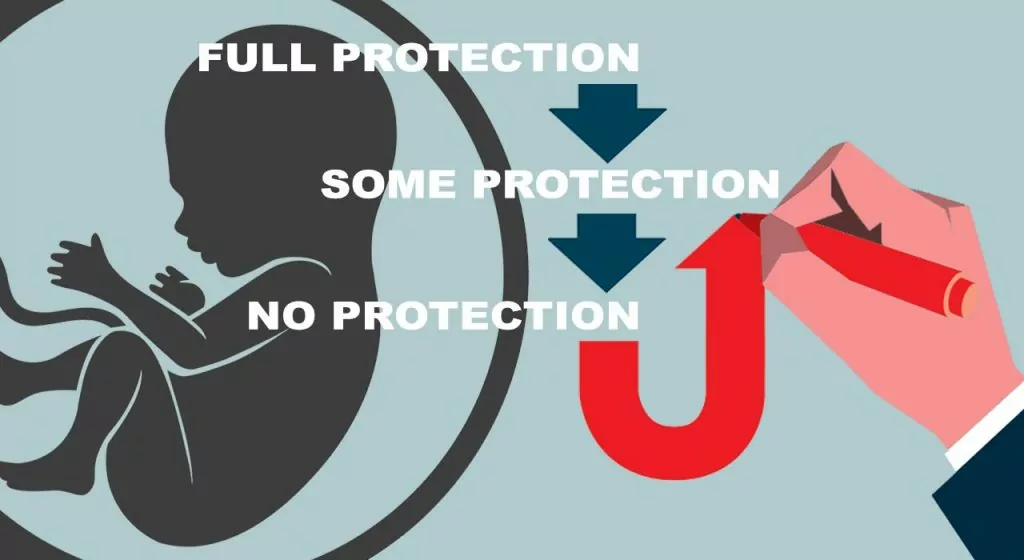
DIRECTION MATTERS: the difference between legal, decriminalized, and regulated abortion, & why we support gestational limits

It has been 30 years now since the Supreme Court struck down Canada’s last abortion law in their R. v. Morgentaler decision (1988). Soon after, the Mulroney government made an attempt to craft a new law. But Bill C-43 was a piece of legislation that would have protected only some pre-born children. Those involved in Canada’s pro-life movement during the early 1990s were divided on whether or not an imperfect law was something they could support. Today this issue is still being debated. On the one side there are those who argue we should not support legislative measures that protect some but not all pre-born children. On the other side we are arguing for advancing abortion legislation one step at a time. We wholeheartedly believe that Bible-believing Christians can, in good conscience, support partial restrictions on abortion, including gestational limits. IN DEFENSE OF DEBATE Trying to save the pre-born is a fight to which many Christians have devoted a significant part of their lives. It is an issue we are passionate about and heavily invested in. It is, consequently, very hard for us to discuss strategy in a dispassionate manner. But when we turn to the Bible we see there is good reason to try. Proverbs 18:17 tells us, “The first to present his case seems right, until a second comes and questions him.” Finding out who is right is often aided by hearing both sides. Proverbs 27:17 makes a similar point: “Iron sharpens iron, and one man sharpens another.” We need to imitate the Bereans (Acts 17) who were willing to hear, but then went to the Scriptures to test what was being said to them. In what follows, we are going to make our case for the morality of advancing abortion legislation one step at a time. We know some will disagree, but we hope that we can interact, as fellow Christians, in a God-honoring manner, having patience with one another and showing love to each other, as we search for the truth on this matter. WHAT WAS UNCLEAR WITH BILL C-43 IS CLEAR TODAY It’s been 30 years since Canada’s abortion law was struck down and 27 years since its intended replacement, Bill C-43, was defeated in the Senate. Many pro-life organizations celebrated the bill’s defeat. It was a piece of legislation that, according to then justice minister Kim Campbell, abortionists would have “no need to fear.” She wrote: “The legislation is designed to protect a doctor from being convicted under the new law (and) protect nurses and other medical staff acting under the doctor’s direction.” While the bill did offer more restrictions on abortion than we presently have, when compared to the law the Supreme Court had struck down only three years before, it had far fewer protections for the pre-born. There was also some reason to hope that if this bill was defeated it could be replaced with a better one. Few would have expected that for the next three decades no such bill would be forthcoming. But here is the key point: the situation then was far murkier than it is today. Then it was unclear whether a better bill might be passed, and it was unclear whether this bill limited evil or expanded it. Compared to the completely lawless situation they then had, the bill offered some limitations. But compared to the previous abortion law from just three years before, this bill greatly expanded the evil that could be done. There is nothing murky about the situation we now find ourselves in. Today we have had 30 years of unfettered abortion, and 27 years of governmental cowardice – no prime minister has ever again tried to pass an abortion law. So if a bill is proposed today that offers any limitations on abortion, it would be clear what direction this is taking us: towards limiting evil, and away from its expansion. THE COUNTER-ARGUMENT But some pro-life groups are convinced that any law that saves only some is unjust, and can’t be supported. Their argument goes something like this: Since Canada has no abortion law, promoting a law that restricts only some abortions (for example, making abortions after 12 weeks illegal) would mean that we are legalizing and condoning all of the abortions that are not banned (e.g., those happening before 12 weeks). In a January 20, 2014 editorial, The Interim, a Canadian pro-life newspaper, put it this way: We...find politically motivated compromise that creates arbitrary demarcations to protect some human lives but not others to be abhorrent, adding the insult of age discrimination to the injury of death by abortion. Protecting pre-born life requires political action, not political compromise. So the question we have to answer is: if we promoted a law that would restrict abortion to 12 weeks’ gestation, would we be legalizing and/or condoning the abortions that are permitted? ON LEGAL AND ILLEGAL To answer that question properly, we have to understand what is actually meant by the terms legalizing, decriminalizing, and regulating. From there we will explain why we all should support regulating abortion. But by no means should we support abortion being legal, let alone condoned. Confused? It actually isn’t too complicated. Please take a few minutes to walk with us through a few points.  1. What is not illegal is legal In our legal system, unless something is illegal it is presumed to be legal. For example, walking your dog without a leash is presumed to be legal unless and until a bylaw is passed requiring a leash. We could not say, before the bylaw was passed, that walking your dog without a leash was not legal; it wasn’t illegal, and so it was legal. We also need to make a distinction between something being legal and something being legalized. The common use of the word “legal” can simply be interpreted as “allowed” or “permissible.” Similarly, the term “legalized” can mean the process of removing a prohibition against something that is currently not legal (i.e., the process of making something permissible). With abortion in Canada there are no laws that regulate the practice (although some doctors’ manuals might advise some limitations). So, there are no laws regulating which procedures can be used, how late in the pregnancy the procedure can be done, or what information should be shared with the patient. And there are no waiting periods, age restrictions, parental notifications, etc. Generally speaking, we can say that abortion in Canada is completely legal from conception until the child is fully outside its mother. Abortion has yet to be regulated since the 1988 decision of the Supreme Court made it fully legal. 2. New restrictions do not make abortion legal – it is already legal Even if there is no abortion law, abortion remains legal. Adding restrictions doesn’t make it legal, nor does it make abortion more legal. Some of what was legal is now made illegal (e.g., abortion after 12 or 18 weeks’ gestation), thereby saving some lives and limiting evil. That is exactly what the Bible calls the State to do – to limit evil. Some might object, “Wouldn’t a law prohibiting abortions after a certain number of weeks arbitrarily divide humans into ‘protected’ and ‘unprotected’ classes?” The continuum of human life begins at fertilization and ends at natural death. Currently under Canadian law only “born” humans have protection, so our law today already divides humans into “protected” and “unprotected” classes. If the law was changed to reflect increased protection by extending it to “pre-born” humans from 20 weeks to birth, then fewer babies would fall under the unprotected class, thus limiting the injustice of abortion. We certainly do and would support any initiative that would move more humans into the “protected” class. 3. In a country where there are no restrictions or laws pertaining to abortion, regulating abortion is a step toward making abortion illegal  We have already established that abortion is allowed in Canada for any reason. In this case, regulating it does not mean we are granting something that was illegal the legitimacy of legal status. Rather it means limiting and regulating by law something that once had absolutely no restrictions. Note as well that regulating abortion is worthy of support only if we are moving in a direction that limits abortion. In a 1968 Canada, our argument in favor of a gestational limit law would fail: a gestational limit of 12 weeks would have expanded evil, greatly increasing the number of children left unprotected. However, in a 2018 Canada, proposing such a gestational limit is fully in accord with the Bible because such a limit would restrict evil, greatly increasing the number of children protected. It is understandable that pro-life organizations do not like to promote a law that doesn’t protect all pre-born children. We would all much prefer to see a complete ban. But the alternative is to maintain the legal reality of abortion-on-demand. A ban is simply not possible in a democratic state in which the people’s hearts are against God and against life. The Bible teaches us that the role of politics is to restrict The reality is that the law won’t be able to eradicate evil. FURTHERMORE... Two further points need to be made. First, there is a very real sense in which all pro-lifers have already endorsed a step-by-step approach to eliminating abortion, even though these steps will protect only some children. All pro-lifers support efforts to defund abortion. By doing so, they support a process that would protect some children, but not others. Under defunding, abortion remains legal as long as the mother or the father pays for the abortion. Someone could argue, “I won’t support that defunding law because it only saves poor babies while all the babies of rich mothers who can afford the abortion will still be terminated.” That may be so, but defunding abortion is a step in the right direction. Such a law does not say that abortion is right; it does say (implicitly) that you can do it as long as you pay for it yourself. So consistency demands that those opposed to gestational limits should also object to abortion defunding. Or that those who support defunding also support gestational limits. Second, one of the objections to this step-by-step approach is that it supposedly condones the death of those we cannot yet save. But saving some does not mean we condone the death of those we can’t save. As Jonathon Van Maren pointed out in a 2012 article, many Jewish children were saved during the Second World War (including by some of our parents and grandparents) because they were small enough to hide in the homes of brave families who took them in. Not only could they hide, more could hide in a small space than adults or seniors. Nobody would ever say – or even think the thought – that, because these families saved children and not adults, they were condoning the deaths of the adults that they couldn’t save. Clearly then, when we can save only some, saving them does not condone the death of any others we could not save! OUR CHALLENGE In this article we’ve explained that gestational limits would not legalize abortion because it already is legal. We’ve also argued that saving some does not condone the death of those we cannot yet save. And we’ve tried to show that all pro-lifers already support legislative efforts that will protect only some children (in this case, the children of poor mothers). We want to conclude with a challenge. If you think we are wrong, please address these points one by one and explain why. Be specific. Please show how abortion in Canada is, in any sense, not already completely legal right now. Show how a gestational limit that will protect only some differs morally from a defunding effort that will protect only some. And explain why those who saved Jewish children weren’t condoning the death of their parents (who they couldn’t save), but today when we try to save some pre-born children (via a gestational limit) we are supposedly condoning the death of the children we aren’t able to save. CONCLUSION In Canada we have opportunity right now to save some of the many pre-born children being killed by abortion. We value them all. However, in today’s political, social and legal climate, we can’t save them all – we can’t eliminate this evil. But we can take steps to limit it. We can take steps to protect more and more children. We can save some now, while continuing to push for further protection for all children in the womb. Gestational limits would be a step in the wrong direction in any country in which abortion was currently banned. But in a country such as Canada, where all abortions are legal, this is a step in the right direction. This would restrict evil. So direction matters – it makes all the difference. Of course, political and legal action in the pro-life cause can’t happen in isolation, so this is certainly not the only pro-life work that needs to be done. Far from it! The political/legal action discussed above must happen in concert with continued education, abortion awareness, cultural engagement, prayer, crisis-pregnancy counseling, adoption efforts, etc. Together, and by God’s grace, we can work towards the end of state-sanctioned abortion in Canada! This is an updated version of an article that first appeared in the March 2014 issue of Reformed Perspective. Mike Schouten is the director of WeNeedALaw.ca, Mark Penninga and André Schutten are both with ARPACanada.ca, and Jon Dykstra is the editor of ReformedPerspective.ca....

Red heart icon with + sign.
Pro-life - Abortion

STAY ON MESSAGE: a lesson from the Chilliwack pro-life flag display

When a politician gets ready to do a television interview he’ll have his staff prepare “talking points.” These are brief one or two line summaries of the points the politician most wants to discuss. They need to be short and sweet so they will be easy to remember, and so the politician can stay focused on them. Then, if a reporter wants to ask about a government scandal, the politician will try to turn the conversation to these talking points: “Linda, that’s not what Canadians are concerned with. But they do care whether they have a job which is why our government has…” Pro-life talking point In the abortion debate we have one core talking point: From conception onward the unborn are precious little human beings like you and me. And they deserve the same protection under the law. That’s it. There are other aspects of the abortion debate – other sub-issues – but this is the big one, the central truth that we want to advance. This is the talking point we want to bring up in every conversation we have about the unborn. Why is it so important to keep this talking point in mind? Because our opponents wants to gets us sidetracked. On rare occasion the other side will actually argue that the unborn aren't human, but that's not a discussion they can win – the facts are all against them. And the longer we talk about the humanity of the unborn, the more certain it is that the truth will come out. So, because they can’t counter the truth, they want to get the discussion moved to more winnable ground. They want to get us off topic. We want to defend who not how That’s what we saw happen some years back, right after the Fraser Valley East ARPA set up a 10,000 flag display on the grounds around the Chilliwack war memorial. Half the flags were pink, the other half blue, and each one represented 10 children who had been killed by abortion in the space of a single year in Canada. It was an eye-catching display. However, both local newspapers denounced it as a "stunt." According to their editorial and articles, the protest shouldn't have been set up so near the war memorial or so close to Remembrance Day. And they didn't like the way the ARPA group had gone about getting permission for the display, with one paper going as far as accusing the organizers of lying. They were offended because of how it was done, when it was done, and where it was done. What they were studiously avoiding was a discussion of who the display was about. In the face of this type of outrage it is easy to become defensive, and apologetic, even when we’ve done nothing wrong. But we need to understand this hostility for what it is: they said it was about the how, when and where, but that simply wasn’t true. If someone set up an identical display under identical circumstances, but each flag had represented someone who died from cancer, instead of denouncing it, the papers would have treated us to articles about courageous cancer survivors. The truth about cancer isn’t offensive, so it doesn’t need to be evaded. But because this was about the unborn, they wanted to move the discussion to more winnable ground. Instead of debating the humanity of the unborn, they want us to debate the timing of our event. Instead of discussing when life begins, they wanted us talking about appropriate locations. But none of this was genuine – it was all about distraction and evasion. So we need to keep our focus on just where they don’t want it to be. No matter what they say, we need to steer the conversation back to the unborn. So how might that look in real life? Here are a few possibilities 1. Argue by analogy The abortion debate hinges on the humanity of the unborn, and that’s what we want to discuss. One way to get there is by pointing out how people would act if this was about 100,000 people who were already born. They’ll say “That’s different!” and that, right there, is our opening to investigate with them whether it really is different.  How could you do this so near Remembrance Day? Abortion kills more than 100,000 children each year, and that’s bigger than the whole population of Chilliwack. If each and every year somewhere in Canada a Chilliwack-sized city was wiped off the face of the map, would you worry about the timing of the protest? Or would any time and all the time be the appropriate time? But that’s different. The population of Chilliwack is made up of human beings, and the unborn aren’t human yet. Ah, now we’re getting to the real issue here – are the unborn different than you and me? Why don’t we take a look at the facts… 2. Question the insult In debate, when someone throws an accusation at you, one of the more effective counters is to simply ask the person to explain their accusation and why it is valid. Their accusation isn’t valid, so they won’t be able to do it, and we can return the focus to where it should be. "Why did you have to do it next to the War Memorial?" "Abortion kills 100,000 children each year, so can you tell me why exactly it is wrong to tell people about them next to a war memorial?" "Because it dishonors the service of these soldiers." "Telling people that 100,000 children are being killed each year in Canada dishonors our honored dead? How so?" "Because it distracts from what they did!" "How so? They fought for our rights, and there is no more fundamental right than the right to life. So what more appropriate place could we speak up for the 100,000 unborn children who are being denied that right?" 3. Keep it simple And sometimes our response can be very short and to the point (so long as that point is our talking point!). "How dare you!" "When 100,000 children are being killed each year in Canada, how could we stay silent?" "I’m outraged" "1 in 4 children in Canada are murdered before they are born. If we want to get outraged, how about we get outraged about that?" Conclusion It doesn’t matter exactly how we do it, or exactly what we say. What’s vital is only that we stay on message, and that we don’t let ourselves get distracted into discussing issues that are nothing more than distractions. The unborn need us to stay focused....

1 2 3