Transparent heart icon with white outline and + sign.

Life's busy, read it when you're ready!

Create a free account to save articles for later, keep track of past articles you’ve read, and receive exclusive access to all RP resources.

White magnifying glass.

Search thousands of RP articles

Helping you think, speak, and act in Christ.

Open envelope icon with @ symbol

Get Articles Delivered!

Helping you think, speak, and act in Christ. delivered direct to your Inbox!

News

Euthanasia in the Netherlands: So bad even some supporters are now opposed

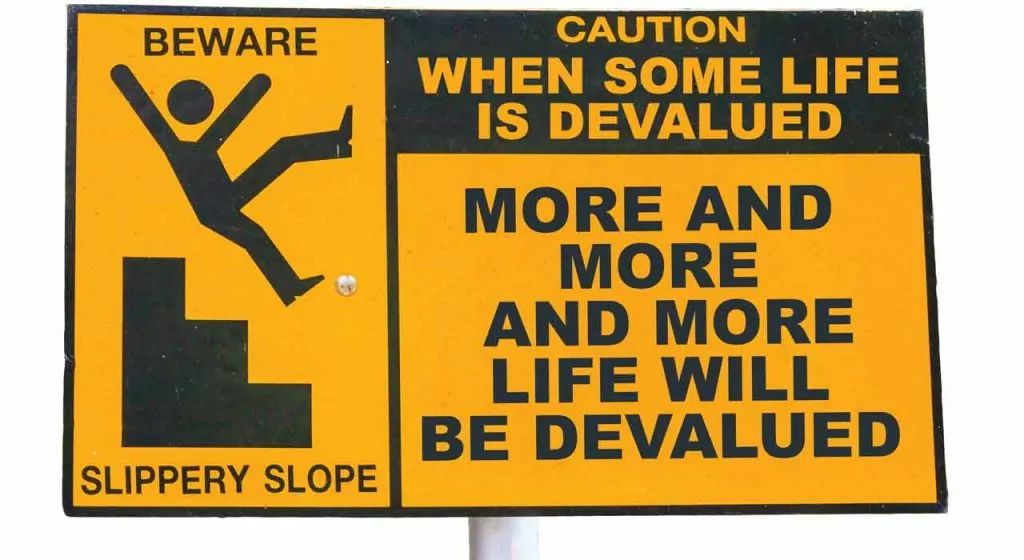
The Netherlands is a pioneer in the field of euthanasia. In 2002, it was the first country in the world to legalize physician-assisted suicide, and today it is becoming a case study in the slippery slope that quickly follows.

The quick slide down has prompted even some prominent euthanasia supporters to ask, “Where does this end?” One such supporter is ethicist Berna van Baarsen. For the last ten years, she served on one of the euthanasia-oversight committees established by the 2002 law. The committees are supposed to review each reported instance of euthanasia to ensure the doctor followed all the legal requirements.

As a member of one of these committees, van Baarsen obviously supports euthanasia. However, she resigned in January because she objects to the way euthanasia is now increasingly being administered to patients with advanced dementia. “That’s my boundary, based on ten years of reflection and reading dossiers,” she said in an interview with the journal Medisch Contact. She is using her resignation to make a public statement…and perhaps to ease her conscience.

Under Dutch law, a patient must have unbearable suffering to become eligible for euthanasia. They must also make a request to die that their doctor believes is voluntary and carefully considered. A Dutch person can draft a written declaration stating they wish to be euthanized when they develop advanced dementia and, thus, are no longer able to make an oral request. To date, such written declarations have only resulted in a handful of deaths, but the numbers are likely to rise in coming years. The Dutch Right to Die Society (NVVE) claims that one in twenty Dutch people has a written declaration requesting euthanasia, usually for the case of advanced dementia.

It is these written declarations that are giving van Baarsen her moral qualms. “In this phase {i.e., advanced dementia}, it is impossible to determine if the patient is suffering unbearably because they are no longer able to express this,” she told Dutch newspaper Trouw.

Van Baarsen is not alone. Last year, 220 doctors published an open letter in a major Dutch newspaper to express their unwillingness to euthanize patients with advanced dementia.

“Giving a deadly injection to a patient with advanced dementia on the basis of their written declaration? To someone who cannot confirm that they wish to die? No, we’re not going to do that. Our moral abhorrence at ending the life of a defenseless person is too great.”

Patients with advanced dementia typically are not aware that they are being killed. A doctor begins by secretly administering a sedative, usually via the patient’s food. A 2016 case that attracted considerable controversy involved a woman with Alzheimer’s who woke up from the sedative and began struggling. She was restrained by family members so the doctor could administer the fatal injection.

Sadly, van Baarsen’s proposed solution is for dementia patients who truly wish to die to orally request euthanasia while they are still able to do so – her solution would have patients killed even sooner. She does not understand that legalized euthanasia in the Netherlands has undermined the valuing of human life. A few tweaks to existing law will never solve the much bigger problem.

Red heart icon with + sign.
News

Chick-fil-A is always closed on Sunday… except when an ox falls into a pit

The American fast food chain Chick-fil-A is a favorite among Christians for the owners' unwavering stand against Sunday opening. But it turns out this unwavering stance has some jiggle room to it, when needed. In the past they’ve been so firm about their Sunday-closing position that even their outlet in the Atlanta Falcon’s football stadium stays closed for the 7 out of 8 home games the NFL team plays on Sunday. Not that it’s hurt their business - even though they miss these 7 games, ESPN’s Darren Rovell reports that the Chick-fil-A stand “sold the third most items of any stand in the stadium.” But, as consistent as their closed-on-Sunday position has been, they’re not Pharisaical about it – they recognize there can be a need for exceptions. Jesus healed on the Sabbath, and, when the Pharisees confronted him about it, he put them in their place asking, “Which one of you will have a son or an ox fall into a well, and will not immediately pull him out on a Sabbath day?” For Chick-fil-A, an exception occurred this past December when the Atlanta International Airport was hit with a complete blackout. This is one of the world’s busiest airports, and the blackout resulted in hundreds of cancelled flights and countless stranded passengers. While Atlanta's municipal government was busy trying to find accommodations for these passengers they tweeted out that the passenger's meals would be handled by someone else: “@Chick-fil-A will provide food for passengers.” So a store that’s always closed on Sunday was happy to open their doors on this particular day of rest because thousands of people needed their help. Not only is this a wonderful observance of the 4th commandment, it is Matthew 5:16 lived out as well: "Let your light shine before men in such a way that they may see your good works, and glorify your Father who is in heaven."...

Red heart icon with + sign.
News

Chip and Joanna Gaines and global warming

When Fixer Upper’s Chip and Joanna Gaines announced earlier this month that they were pregnant with child number five, the congratulations rolled in. Thousands of encouraging messages flooded the home-improvement-show hosts’ Twitter and Facebook pages. But over at CBC.ca there was one voice of dissent, notable for the objection she raised. In her article “It shouldn’t be taboo to criticize parents for having too many kids” Kristen Pyszczyk characterized the Gaines’ decision to have baby #5 as “a choice that affects everyone who inhabits our planet.” Yes, she was making the case that, due to the threat of climate change, the Gaines’ newest little one shouldn’t be seen as a blessing: “Procreation is becoming a global public health concern, rather than a personal decision. So when people do irresponsible things like having five children, we absolutely need to be calling them out.” Pyszczyk gets some facts wrong – she claims that “populations are multiplying exponentially” and they simply aren’t. But Christians don’t need to know the latest statistics to see through her argument. We just need to know our Bibles. It’s there we find that procreation isn’t a “public heath concern” and large families aren’t a problem. Children are a blessing, not a curse (Ps. 113:9, Ps. 127:3-5, Deut. 7:13, Gen. 48:4, etc.) But what of the increasing numbers of mouths to feed that Pyszczyk is worried about? Well, her worldview blinds her to the full truth. Yes, children come with their own carbon footprint, and a mouth that needs filling, but they also come with two hands to work, and a brain to dream up innovations. And as Solomon teaches us, we can “sharpen” one another (Prov. 27:17). Why have we seen so many technological leaps this past century? Because we have more minds on the planet than ever before, and that means all the more opportunities for one to sharpen another. We are not just consumers but producers and innovators too. The reason this matters is because Pyszczyk’s short-sighted “children as a concern” narrative isn’t just a minor mistake. This perspective has been a major justification for abortion, which, over the last half century, has killed hundreds of millions. So it’s vital, then, that we teach the world to see children as God sees them. We can do that by congratulating families, like the Gaines, who are blessed with growing families, and we can do so by, when God allows, embracing that blessing ourselves....

Red heart icon with + sign.
News

The Mike Pence rule won’t save us…but can it help us?

In the spring of 2017 the Washington Post got mainstream media pundits chortling, when they revealed that US Vice President Mike Pence had a rule that he wouldn’t dine alone with any woman other than his wife. The media hated this “Mike Pence rule” mocking it as some combination of childish and prudish. It was said to be sexist, suppressing advancement opportunities for women since they wouldn’t be able to get the same alone time with the boss as the boys. A half year later the New Yorker ran an exposé on Hollywood mogul Harvey Weinstein, accusing him of sexually harassing or assaulting 13 women. The publication of these accusations prompted dozens of other women to come forward with further accusations. This spawned a “#MeToo movement” with more and more women coming forward, alleging abuse at the hands of powerful men of all sorts, including US senator Al Franken, Today host Matt Lauer, storyteller Garrison Keillor, US senate candidate Roy Moore, actor Dustin Hoffman, and, just this week, the now former leader of the Ontario Progressive Conservative Party, Patrick Brown. And while most of the accused admitted to at least some sort of misconduct, others, like Brown, claim to be completely innocent. So in light of the #MeToo movement, and the enormous abuse of power it exposed among influential men of all sorts, is it time to revisit the Pence rule? Some say no, Christians among them. A month after the Weinstein allegations came out, Katelyn Beaty, an editor at Christianity Today wrote “A Christian case against the Pence Rule” for the New York Times. In it she gave this less than flattering assessment of the rule: “The Pence rule arises from a broken view of the sexes: Men are lustful beasts that must be contained, while women are objects of desire that must be hidden away. Offering the Pence rule as a solution to male predation is like saying, ‘I can’t meet with you one on one, otherwise I might eventually assault you.’ If that’s the case, we have far deeper problems around men and power than any personal conduct rule can solve.” This is quite the condemnation! And yet Beaty granted that the Pence rule – also known as the Billy Graham rule, as he adopted it long before the Vice President – has saved Pence from ever facing the same allegations that were leveled at Roy Moore, Patrick Brown and others. Beaty also grants that the “Bible says a lot about humans’ proclivity to sin.” In fact, she makes a good case for the rule before she then presents her case against: the Pence rule can be frustrating to women who know that alone time with the boss, and “the informal and strategic conversations” that can occur in that setting are “the stuff of workplace advancement.” There’s something to what she says – the Pence rule may make it harder for women to advance in some workplace settings…though a smart boss will be sure to create such opportunities other ways for valued female employees. But even if we grant the rule can cause such hindrances, so long as we live in an imperfect world, we need to acknowledge there are no perfect solutions, only tradeoffs. So then the issue is not, is the Mike Pence rule perfect? It is not. Instead we should ask, does it help more than it hinders, and is it better than the available alternatives? And in answer to that, consider: A large numbers of men have been accused of, and many have then admitted to, victimizing women. The harassment or assault often occurring when they got a woman alone. Other men have been accused of assault or harassment and deny it by women they spent time alone with. One man has a system by which he not only would never commit sexual sin, but could never even be accused of it. That man is mocked as a prude, Pharisee, fool, misogynist, etc. The Pence rule does more than shield women from male predation, so, no, it doesn't presume every man is a "lustful beast." It acknowledges that sexual temptation is real, and the workplace environment involves long hours of time spent together. This rule, then, also helps both men and women avoid workplace temptation. And it serves as an assurance to their spouses. Finally, it helps protect men from false accusations. There are downsides to this rule, but it also has quite the upside. It's important to note that, while there is a biblical basis to the Pence/Graham rule – it acknowledges the fallen nature of men and women and the powerful pull of sexual temptation – we aren’t going to find the rule itself in Scripture. That’s why we mustn’t treat it as something sacred or something every Christian business owner must be implementing. Maybe they have their own ways to combat sexual harassment, minimize temptation, and protect against false accusations. But there is a reason that Mike Pence and Billy Graham have never been tainted by sexual scandal, even as so many others in their positions have – there is wisdom to be found here. That said, we shouldn’t make the mistake of thinking this rule is going to save us. As Reformed blogger Tim Challies writes: Rules have their place, but they must never be separated from a prayerful determination to put sin to death. Picture is modified from file by Laurel L. Russwurm. It is licensed under Creative Commons Attribution 2.0 Generic license....

Red heart icon with + sign.
News

Best pro-life signs at the US March for Life

This year's US March for Life took place on January 19 and marked the 45th anniversary of the Supreme Court’s Roe vs. Wade decision, which struck down many of the country's restrictions on abortion. Canada also has a March for Life, but it takes place four months later, always on or around May 14, to mark the anniversary of Pierre Trudeau’s 1969 Omnibus bill, which first legalized abortion in Canada. Both are attended by tens of thousands. That means there are thousands of creative pro-life minds thinking through how best to communicate the truth about the unborn on thousands of signs, banners and t-shirts. And because the American event is months earlier, Canadians can be inspired by what we see south of the border! What follows is a dozen of the best signs and slogans as seen by yours truly, or shared by sites like The Daily Signal, LifeSiteNews.com and PJ media. Some are blunt, others are clever. One is simply an offer to help. May they serve to inspire! God planned parenthood I support a woman’s right to be born The strong must protect the weak I survived Roe vs. Wade. Roe vs. Wade will not survive me. Pretend I’m a tree. Save me. A person’s a person, no matter how small Me , Still me Abortion is murder Am I more valuable because of my size? You are not alone. We will help you. Already born? Check your privilege. The very best pro-life messaging I think I've ever seen wasn't at this year's March, and wasn't even on this continent. It came on a pair of t-shirts worn by a couple at last year's Romanian March for Life. The potbellied husband wore a shirt that read "This was from choice" while the obviously pregnant wife wore a shirt that read, "This was from God."...

Red heart icon with + sign.

News

Saturday Selections - Dec 16, 2017

Ten books every teenager should read It isn't important that your son or daughter has read all the books on this list, or even any. What is important is that, as parents, we're encouraging our teens to make it their business to grow in wisdom and knowledge of the Lord. And that's where a list like this can help, offering an assortment of awesome books, so that hopefully something here will spark their interest. John Piper's tribute to RC Sproul (1939-2017) There have been any number of tributes this past week, after RC Sproul passed on to be with his Father, and John Piper's may be the best because he gives a number of examples of Sproul's "jolting exposition." Evolution vs. the Bible A ten-minute read on how "Francis Collins and BioLogos seek a different story of our origins than the one told in Genesis" Who's distracted by a girl wearing skintight leggings? Maybe the girl?  This isn't a Christian perspective - it's from Psychology Today - but it is an interesting one on how tight clothing may be a distraction in the classroom...for the girls wearing it. On how the Reformation freed and elevated women This is a fascinating 40-minute presentation from the author of Popes and Feminists. On courtship vs. dating - a conversation between Joshua Harris and Thomas Umstattd Jr. This 17-minute conversation features Joshua Harris, author of I Kissed Dating Goodbye, and Thomas Umstattd Jr., author of Courtship in Crisis: The Case for Traditional Dating. It is a congenial and helpful discussion by two men who used to represent very different sides of this debate....

Red heart icon with + sign.
News

Science politicized: when democracy doesn't suffice anymore

In the West most citizens take pride in their democratic institutions, pointing to how it’s through democracy that change can be peaceably pursued. Of course, not all change is positive. As Christians we understand that getting the government we deserve – the government that most of us have voted for – is not always a good thing. Why? Quite simply, the majority can be wrong. But that’s an insight available to us because we have an absolute standard – God’s Word – by which we can evaluate the “will of the people.” But for the secular West, which has rejected God and his Word as their ultimate standard, democracy has largely been the replacement standard, and government is said to get its legitimacy from being supported by the largest number of voters. So it is with some interest, then, that we can see the idea that the best governments are democratically selected has come under serious scrutiny from some in the international community of scientists, and a new ultimate standard is being proposed. Scientists vs. democracy? For the last couple of years the influential scientific journal Nature has touched on this topic repeatedly. In editorials and other articles it has been suggested that some voter choices are more legitimate than others. In other words, not all votes are equally valid. The new assertive stance of many scientists became evident during the April 22, 2017 “March for Science,” when tens of thousands of scientists marched in Washington and in at least 600 other cities around the world. A news item in Nature (April 27, 2017) said this event “may have been one of the largest-ever demonstrations in support of scientific research and evidence-based policymaking.” These objectives may sound quite harmless, but the rationale was that the scientific agenda is under threat and needs to be more forcefully promoted in the political arena. These people apparently believe that the recommendations of scientists are not making it into policy choices nearly often enough. Thus an editorial in Nature on May 11, 2017 declared: “…fears are increasing that anti-science forces are on the march. Indeed, on last month’s March for Science, a ‘war on science’ was frequently invoked as a reason for researchers to mobilize.” Obviously the conflict cited is not overt, such as one with guns and other weapons. But it is a power struggle and the scientists want to make sure that they win. So who are the others involved in this conflict? Commentary in Nature labels the other side as “idiots” (December 1, 2016) or “dissenters, doubters and right-wing jackals” (January 5, 2017). Those are strong words to describe political adversaries. But this battle is intense. Globalism vs. democracy? The scientific view, at least as it is articulated by activists in Nature, includes a desire for governments to move further towards international, or even global control. This would involve taking it out of the hands of democratically-elected representatives. For example, a trio of advocates declared that countries need to put scientifically-advocated programs and ideals ahead of national priorities (Nature, October 6/16 p. 29) But what does this mean? Consider the case of the province of Ontario. A news item in the Edmonton Journal (November 21/17) reported that electrical power exports from sources with nearly zero carbon emissions (for example solar and wind energy) resulted in a loss to the province of Ontario of between $732 million and $1.25 billion over a period of 21 months. This is happening at a time when consumers in Ontario are suffering from exceptionally high electricity costs. This is an example of placing international priorities for climate control ahead of local interests. The scientific community keeps promoting international agendas in other ways too. For example, a Belgian microbiologist declared in Nature (February 16, 2017): “To prevent further breakdown of the EU, scientists must shout from the rooftops that many of our problems today can be solved only at a European, or even a global, level. We must challenge time and again the current populist view that countries are better off trying to address the most pressing problems on their own.” Similarly, a Dutch sociologist from Utrecht declared that: “Academics also have a moral obligation to protect liberal democracy. By promoting social and political pluralism, the system produces the circumstances under which researchers can do their jobs and science can flourish” (December 15, 2016). The people who favor policies which protect the interests of the voters, are considered to be right wing, according to the scientific press. These people are also much less interested in “racial, gender and sexual identity politics” (Nature December 1, 2016) than are many in science and academia. An editorial in Nature (same date) declares that scientists and academics are rightly worried about allowing political discussion to include conservative and religious viewpoints. The scientists consider that this latter initiative would lead to “unacceptably broadening the limits of acceptable discourse – and freeing and normalizing people’s worst base instincts and a rhetoric of hate.” This editorial admits however that academics are often “tolerant,” but only of their own point of view. Liberal democracy vs. populist democracy? With recent electoral results that are the opposite of what left wing interests had hoped for, some scientists are warning about an increasing tension between populism and liberal democracy. Thus Matthijs Rooduijn, a Dutch sociologist, declared that there are two types of voters: those that support “liberal democracy” and those who support “populism” (Nature, December 15, 2016). Obviously liberal democracy sounds very appealing, but what about populism? This latter term is what many scientists have suddenly adopted as a way to portray in an unfavorable light the opinions they do not like. Thus voters who make political choices that many scientists do not like are described as populists. So what are populists? The implication seems to be that populists represent an ignorant mob (such as in the French revolution.) Alternatively a sympathetic definition in an editorial in the Edmonton Journal (November 10, 2017) stated: “A populist political culture is one that includes a widespread belief in the moral and intellectual capacities of the ‘common people’ and thus a strong reluctance to defer control over decision-making to the state or other elites.” Dutch sociologist Rooduijn elaborated on this point: “populists not only attack political and economic elites; they also target ‘snobby intellectuals’ in academia” (Nature, December 15, 2016). Well, fair enough. The Dutch sociologist nevertheless declares: “Academics also have a moral obligation to protect liberal democracy.” A lead editorial in Nature on April 20, 2017 echoed the above sentiments: “Social scientists rightly see this co-opting of far-right policies by mainstream parties as being as dangerous to liberal democracy as populist far-right parties themselves…” It should be noted that some people succumb to the temptation to label anything with which they disagree as “far-right.” Media and academic elites vs. democracy? It is evident that scientists applaud some voter preferences but suggest that others are to be discouraged. Matthijs Rooduijn rejected the idea that voter preferences (as declared in the ballot box) should in general be translated into government policy. Thus he declares: “Right wing politicians in the crop currently making headlines are populists in that they want the will of the people to be the point of departure for political decision-making. This ‘general will’ should, according to their populist message, be translated as directly as possible into actual political decisions” (Nature, December 15, 2016) But the scientific view is to reject such an approach. There are many reasons such as climate change considerations or human rights that might discourage implementation of voter preferences. Liberal democracy, according to views expressed recently in Nature and other scientific press, apparently promotes whatever the scientific community prefers: pluralism (many cultures all equal), internationalism, human rights that take priority over religious values, and a climate change agenda. Populism apparently represents the opposite. Sensible people, informed people, one hopes will not be discouraged by unflattering terms. Let the voters make their own choices without intimidation from the media and academic elites. Let us all be aware that “Science is only one of many factors and interests that a thoughtful politician needs to weigh when choosing a position on a complex topic” (Nature editorial May 11, 2017). Indeed that editorial ends on a high note, and so will we: “Name-calling and portraying the current political climate as a war between facts and ignorance simply sows division.” Dr. Margaret Helder is the author of No Christian Silence in Science, a book every Christian teen considering a career in Science should read before heading off to university....

Red heart icon with + sign.
News

Canadian couples may have had adoption/fostering nixed because of their Christianity

An Alberta couple filed a lawsuit in November, accusing provincial authorities of discrimination after their application to adopt a child was rejected. The suit claims that Alberta Child and Family Services disqualified the couple based on their personal belief that homosexuality is wrong. According to the filing documents “The casework supervisor explained that our religious beliefs regarding sexuality were incompatible with the adoption process.... The casework supervisor said this stance was the 'official position of the Alberta government.'" The case, is expected to be heard in Fall 2018 This isn’t the first Christian couple to make the news this year after running into trouble with Canadian child welfare authorities. In April, Derek and Frances Baars filed a lawsuit against the Hamilton Children’s Aid Society. The Baars, in their suit, claimed a child support worker demanded the couple tell two girls in their care, aged three and four, that the Easter Bunny was real, despite the couple’s belief that lying is wrong. The children were abruptly removed from their home, even after the Baars attempted to negotiate an acceptable alternative. It is unclear when their case will be decided, but the Baars have insisted that the caseworkers viewed them as poor candidates because of their religious convictions. It’s important to acknowledge, as Dominic Verticchio, executive director of the Hamilton Children’s Aid Society, did, that there are two sides to every story and in both of these cases we’ve only heard one. That said, when asked if the Easter Bunny was real, Verticchio replied, “It depends who you ask.” Time will tell if these high-profile cases having an impact on the future of adoption and foster parenting in Canada. It’s worth noting that using a faith-based adoption agency may not help head off these kind of confrontations – the Alberta couple went through Catholic Social Services. However, if legal roadblocks do occur, one option may be to contact the Calgary-based Justice Centre for Constitutional Freedoms, which is representing both couples. Their website is www.jccf.ca. As discouraging as these stories can be, Christians must never let them have a chilling effect on their interest in taking in children. There is an acknowledged need for parents willing to adopt and foster, and the secular dogma that committed Christians aren’t up to the task must never be dignified. Rather, Christians should focus their concern on loving children who so often get forgotten in the smoke of social and political correctness....

Red heart icon with + sign.
News

Outraged all the time: why Christians can't be

When the weekend edition of the Daily Mail reported that British schools were swapping out BC and AD for BCE and CE to avoid offending non-Christians, other papers quickly followed their lead. As the stories explained, BC stands for “before Christ” and AD is an abbreviation of “anno Domini,” Latin for “year of the Lord.” BCE and CE cover the exact same time periods, but BCE (before Common Era) and CE (Common Era) deliberately avoid mention of Christ. So this seemed a deliberate rejection of Britain’s Christian heritage. Some of the headlines read: • Daily Star: “Schools scrap ‘BC’ and ‘AD’ to avoid offending non-Christians” • Express: “PC gone mad: Schools scrap BC and AD to avoid offending non-Christians” • Telegraph: “To BCE or not to BCE? Common era of BC and AD appears to be over” Soon after, Christian and conservative new sites like TheChristians.com, The Christian Post, Premier.org and The Daily Wire also picked up the story. But in midst of all this hullabaloo there was a problem. The story that started it all – the Daily Mail piece that the other newspapers and blogs referenced (if they had references at all) – didn’t have a lot of substance to it. The headline made it sound like this was happening everywhere: "Now schools are ditching AD and BC in RE lessons to avoid offending non-Christians... but critics blast the 'capitulation to political correctness'" But when it came to specifics, only three (out of 48) English counties were mentioned. And only one was said to have made a change to their syllabus, while the other two had, to this point, only been “urged” by "local authority committees" to make the change – it’s not clear if any actual change had been made. In other words, a small percentage of English schools – anywhere from 2 to 6 percent – may be considering changing from BC to BCE. Is that the sort of story that should get picked up by one newspaper after another, and make its way to North America too? No, not really. So why did it? Because, as the Daily Mail and the many media outlets that followed their lead understand, there is an appetite for outrage. So the Mail crafted a story out of very little and, to the unwary reader, it seemed a much bigger thing. Christians need to guard against swallowing and sharing this sort of fake news for two reasons. First, on a gut level, we all understand “whiners aren’t winners.” Whatever the sport, isn’t it the losing side that always gripes to the ref about all the ticky-tack fouls and missed calls? Thus, when we whine, we’re misrepresenting our side. If God’s people really believe what we say we believe - if we're sure of God’s victory – then we won't get stressed when this or that doesn’t go our way. Then we won't act defeated, because we know Christ has already won. Second, if we jump in and also make big of little, it has the effect of belittling what’s big. There are real outrages occurring; Christians are being threatened with loss of livelihood and even loss of life. If we’re busy getting upset about schools switching up from one set of terms that acknowledges Christ as the pivot point of history, to another set of terms that, in sticking with the same time periods, unavoidably still acknowledges Christ’s birth, then we’re wasting our outrage. That's something to keep in mind in the coming month, when we start seeing articles about the annual “War on Christmas.” We need to understand God isn’t threatened by it, and his sense of humor is even evident in it, as it turns out the term “Xmas” is Christian shorthand for Christmas. Instead of frustration, we can enjoy events like this, marveling at how very often God will arrange things so, even in the midst of their rebellion, the other side can’t help but acknowledge Him....

Red heart icon with + sign.
News

Saturday Selections - Sept 30, 2017

This edition has been brought to you by the number 6: six items, six actions, and six surprises.... God painted ants on fruit fly wings Some things are just too cool not to share: God has crafted detailed pictures of ants on the tiny wings of a particular fly. Why? Because it is brilliant! Lots of astonishing pictures here. 6 actions to take when grieving the death of a loved one Thought this is a very short post, it has helpful suggestions summarized from the twice-widowed missionary-wife Elisabeth Elliot. 6 surprises every premarital counselor should cover Even the apostle Paul speaks of marriage as a mystery. To minimize some of the surprises, this is a good article for engage or newly married couples to read together. And it's a good reminder for all couples. More on why euthanasia safeguards can't work From the article: "Safeguards are ineffective to prevent slippery slopes. As British moral philosopher Dame Mary Warnock has put it in another context, 'you cannot successfully block a slippery slope except by a fixed and invariable obstacle.' In governing dying and death that obstacle is the rule that we must not intentionally kill another human being." The only flaw in this article is that the Christian ethic, serving as the foundation to Margaret Somerville's argument, is never acknowledged. So we need to take her point as to the weakness of "safeguards" but then be explicit as to the eternal standards we are appealing to. Or, in other words, don't just tear down the lie, as Somerville does here, but also present the full Truth, as founded on God's Word and his Law. How to avoid poverty Everyone wants to reduce poverty, and in the West, the way to do so is clear. But the in the West, our culture doesn't want to hear it if it involves doing what God wants. Now this article doesn't present it quite that way, but the prescription – finish high school, then get a job, then get married, then have kids – lines up nicely with God's will for marriage, and his commandment Don't commit adultery. Around the world, capitalism has helped raise millions out of poverty, but why? Perhaps because at its ideal (ie., not the crony capitalism type) it also lines up with God's commands not to steal or covet. On social justice I've only had a chance to dip my toe in this free resource, but this video series looks fascinating, and solidly Christian. It addresses questions like: "What is social justice today?" and, "What sort of social justice should Christians pursue?" (This does require you share your email address with them.)...

Red heart icon with + sign.
News

Destruction only destroys - the "broken window fallacy"

We are halfway into the 2017 hurricane season and tropical mega-storms in the Atlantic basin have already broken several records. Hurricane Irma has sustained its destructive power longer than any super-storm ever recorded (and our data goes as far back as the 1970s). At the time of writing, the expected damage caused is upwards of $250 billion US. In the midst of this destruction, some are speaking of an economic “silver lining” – that the incoming hurricanes might in fact be good for the economy. For example, William Dudley, from the Federal Reserve Bank of New York, argues that, “the long-run effect of natural disasters is that it actually lifts economic activity.” The reasoning is that after the initial harmful effect on human and economic resources, the inevitable rebuilding efforts will stimulate local economic activity. It will also increase demand for labor, driving up wages and ultimately making people wealthier. And if we consider the way economic activity is most often measured – via Gross Domestic Product (or GDP) – reconstruction efforts might seem to cause an increase in the economy. Unfortunately, this is not true. Simply put: destruction does not benefit the economy. In the case of Hurricane Irma, the GDP figure will show the value of reconstruction efforts, but not the value of what was destroyed. It is true that the reconstruction of infrastructure and housing spurs on economic activity. However, this argument ignores the opportunity cost – it ignores what could have been done with that money if it didn’t have to be spent on reconstruction. This observation was first made by the French economist Frederic Bastiat. He illustrated the concept that destruction does not benefit the economy through the example of a broken window. Replacing the window may improve the economic position of the repairman, but it means that the owner of the window has lower disposal income to spend on anything else. If the window hadn’t broken he could have had a window and a pair of news shoes. Now he can only afford to replace the window. Similarly, the destruction caused by the hurricane requires the government to spend money on reconstruction and aid, at the expense of what it might otherwise have done with that money. The government has to use resources to rebuild something, as opposed to using the resources to build something new. As Christians, we need to be sensitive to this fallacy in the measurement of economic activity. The task of stewardship of God’s creation is not only about the utilization of the resources within it. It is also about considering the destructive impact we have on creation through our activities. Far too often do we only consider the value that was generated through our activities, but we forget to properly count the cost of our activities, whether it be environmental or socioeconomic. May the Lord be a refuge and strength to those affected by the destructive power of the ongoing natural disasters across the world....

Red heart icon with + sign.
News

Canadian colonialism dressed up as aid

Red tomatoes and purple onions pile in front of her. Behind is sugar, bagged by the kilo. Bottles of Fanta and 7-Up stand on a white shelf in this small, road-side kiosk, one of many in sub-Saharan Africa. In the midst of it she stands, a smiling woman in a blue shirt and white head wrap. Her smile adorns the official website of the UN’s Family Planning Summit, which met on July 11 in London, UK, to decide what to do with her. The website reads like a sales pitch: “Family planning is a best-buy in global development.” The Canadian government stood out as a champion of reproductive health at the Summit, part of its Feminist International Assistance Policy. Policymakers, donors and leaders have solved the life problem of the smiling African woman. But have they asked for her opinion? Chrystia Freeland, Canadian Minster of International Trade, told the House of Commons that our national values “includes sexual reproductive rights and the right to safe and accessible abortions. These rights are at the core of our foreign policy.” This statement profoundly concerned the Canadian Council of Catholic Bishops, which argued in an open letter that abortion advocacy cannot be the core of Canadian foreign policy when it is “not only legally contentious but completely contrary to the deeply held convictions of many both within and beyond Canada’s borders.” The numbers underscore their concern: $119 million in international aid will go to famine relief and $650 million to abortion and sexual reproduction rights. Fifty percent of the latter is dedicated to sub-Saharan Africa, including countries where abortion is illegal except to save a mother’s life. An African proverb says, “the absent are always wrong.” The same donors who are so eager to end poverty are proving deaf to the voices of those they claim to help. A different view of procreation I have lived in East Africa since the age of three. Congolese mothers often counted their children to me, including those who died as babies. Mama Rebecca, a gentle old woman, cried over her five children, each of whom died tragically and far from her. In Africa, children – all children – are carefully remembered. To speak of Africa is to speak of an immense continent with 54 nations and many unique tribes, each with their own culture. Yet commonalities do exist. Father Bonaventure Turyomumazima of Uganda wrote that generally traditional African cultures are centered in life. Procreation completes marriage. Children are the continuation of a physical line, important both for the living and the dead. It is commonly expected for the entire community to raise the child. That means there are few unwanted children or “orphans.” Elaborate taboos and rituals preserve the lives of mother and child. Faith Kasiva, author of the report "Robbed by Choice," explains, “We live in an African cultural setting where having a child or motherhood is glorified in a way that probably it’s not in other societies.” Telling a woman in such a cultural setting to not have children is almost like telling a Canadian woman to empty all her bank accounts, quit her job and publicly defame herself on all social media, just to avoid poverty. It doesn’t make sense, given the social construct. “Unwanted pregnancies” are not the problem as much as unwanted wars, unwanted famines, unwanted rape, unwanted incest and unwanted displacement. Mama Rebecca didn’t weep because her children ought not to have been born. She wept because they ought not to have died. A strange irony plays out here: the world’s first feminist policy warring against a culture that glorifies mothers! But do Minister Freeland and the Family Planning Summit tell the whole truth? The dark side of depopulation Often, benevolent NGOs hold out family planning with one hand. The other is behind their back, shut tight on hundreds of statistics linking abortion and family breakdown, psychological health, increased poverty, community disintegration and isolation. The contraceptive Norplant is one example of this. Designed to keep a woman infertile for five years, Norplant has suffered tens of thousands of lawsuits in America for its side-effects. Now Norplant is exported to developing countries as “aid.” It’s an old story. Norplant is even harder on the bodies of malnourished women. The consequences are often not fully explained. When faced with unexpected complications, life-long sterility and even death by hemorrhage, these women are without health support. More than that, long-term barrenness can ruin marriages and isolate women from communities. Family planning as the West understands it will not end poverty. Tying aid money to such an agenda prompted Nigerian activist Obianuju Ekeocha to hail Canada as the new “number one colonial master of the world.”  New face, old story Over a hundred years ago during the rubber trade in Belgian Congo, the colonial army raided the village of a woman named Ilanga. As the chained villagers were marched from their burning homes, soldiers forced Ilanga’s baby from her, tossing it aside so she could carry their looted pot. The agony of such men and women being “civilized” bleeds into one of their songs: “We are tired of living under this tyranny/ We cannot endure that our women and children are taken away/ and dealt with by the white savages.” Today, the Canadian Prime Minister can use the force of the dollar to tell millions of women in Africa – “Drop the baby. Carry the pot of civilization. We know what is best. Your child would never have a good life. You may as well kill it now.” At least, this is what is heard on the other end. According to a writer in the Lusaka Times in Zambia, “Abortion is one way of saying ‘do not multiply anymore.’ Our multiplying is disturbing the depopulation plans.. . . These NGOs in Zambia came in the name of ‘helping’ suffering Zambians; on the surface they do good things, but in the background, they start their main program.” Canada is the first donor country to call its foreign policy a feminist one. An “ism” denotes a belief system. Emil Hagamu of Tanzania writes, “In African communities, the death of a child is no small matter . . . . Expanded legalization of abortion is being forced upon us by the traditional colonizing powers of the West.” Ekeocha, founder of Culture for Life, told Catholic News Service that Western funds are used to bribe African politicians to accept abortion, “The polls show overwhelmingly that Africans hate abortion . . . . By ignoring the will of the people, this is spitting in the face of the very type of democracy we are supposed to have in African countries.” ‘Tired of tyranny’ The Democratic Republic of Congo, the giant heart of the African continent, is targeted by Canada to the tune of $97 million. Minister Bibeau told the Globe and Mail that the aid would be “subtle,” working to provide adolescents with extensive sex education and to push abortion in a country where it is illegal. The Democratic Republic of Congo is a deeply troubled nation. Her children already suffer because of greed-based violence. Instead of helping living children, Canada will prevent the birth of more. Maybe that musical country will sing again the old song, “We are tired of living under this tyranny/ We cannot endure that our women and children are taken away/ and dealt with by the white savages.” If Canada does not consider the true situation of the woman in her road-side shop or listen to the bereaved grandmothers, then Canada’s aid is just colonialization in a new outfit. The colonizing powers of Africa-past were confident in their superiority. They were sure their agendas were right. But blood and tears mark those pages. Canada is currently writing a colonization of Africa-present. This too, history will remember. This article was originally published August 28, 2017 in Christian Courier (www.christiancourier.ca). Trudeau picture credit: Shutterstock.com...

Red heart icon with + sign.
News

Restaurant chain won't compromise on the 4th Commandment

The Chick-fil-A restaurant in the brand-new stadium of the National Football League’s Atlanta Falcons is going to be closed on all but one of the team’s home games…because they are played on Sundays. The restaurant chain is known both for their good-guy sense of customer service (one Virginia location recently offered its space to a local church that had been suddenly displaced from its worship location) and conservative stand on social issues. The Christian owners of Chick-fil-A have also held a strict line against doing business on Sunday. ESPN commentators bemoaned the decision in August once it came to light, with Bill Plaschke going so far as to call it a “complete shame and a sham.” With its headquarters in Atlanta, Chick-fil-A has long been a part of the food scene at sports venues in the city. Likewise, the Falcons aren’t the only sports team planning to play games in the Mercedes-Benz Stadium, which was built right next to the soon-to-be-demolished Georgia Dome. However, with the vast majority of NFL games, including the Super Bowl, being played on Sundays, it takes a strong commitment to a principle to leave that much profit on the table in Chick-fil-A’s own hometown. It’s always refreshing to see the Sabbath honored publicly, especially when the day is no longer holy even in the eyes of many believers. Let’s recommit ourselves to being “called out” of the world and use our Sabbaths to look forward to the eternal one. Also, remember the Sabbath has been a blessing to mankind wherever it has been honored -- we love our neighbor best when we encourage a Sabbath rest....

1 2 3 4 5 6 7 8 9 10 11 12 13 14 15 16 17 18 19 20 21 22 23 24 25 26 27 28 29 30 31 32