















Drama
1934 / 107 minutes
RATING: 8/10
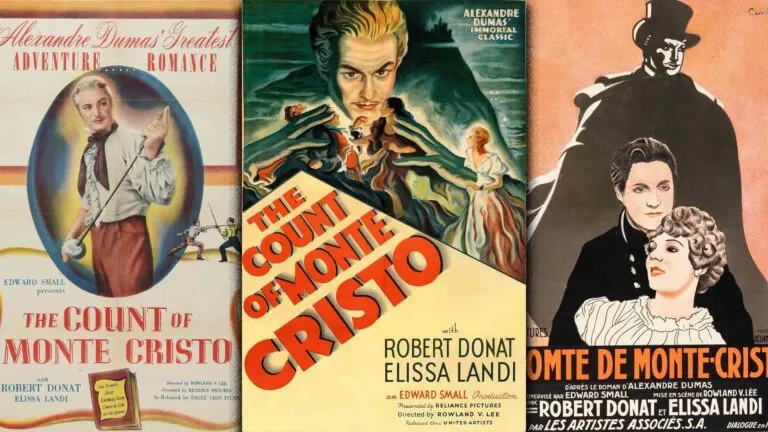
This is based on the story by Alexander Dumas (who also authored The Three Musketeers), and while it is a rip-roaring story it takes place during the French Revolution, which many of us may not be all that familiar with. So let me give you a short backgrounder
The story begins in 1815, a year after the French Emperor Napoleon had been forced to abdicate and exiled to the island of Elba. In the opening scene we learn that Napoleon wasn’t done yet, and was conspiring with his remaining loyalists to try to retake the throne.
The twists in this story start early. Napoleon sends a letter to his followers via the captain of a French merchant ship, the Pharoan. Before the ship lands, the captain dies, but not before he entrusts the letter to his first officer, Edmond Dantès. Dantès knows nothing of politics, but loves his captain and promises to do as asked, completely unaware of who the letter is from, and the trouble the letter will soon cause him.
When his ship arrives in port it sure seems like Dantès has everything going his way: he’s met by his love, the beautiful Mercédès, and the ship’s owner promotes Dantès to be the Pharoan‘s new captain.
But good fortune is followed by bad. Three men join forced to conspire against Dantès, using the letter he carried as an excuse to thrown him in jail as a conspirator against the King. The three men are:
- Danglars, who wanted to be the new captain instead of Dantès
- Fernand Mondego, who loves Mercédès too, but doesn’t have a chance with her so long as Dantès lives
- Gérard de Villefort, the King’s prosecutor, who discovers his own father was the intended recipient of Napoleon’s letter, so he frames Dantès to cover up for his father’s treachery.
The three get Dantès thrown into the deepest and darkest of prisons. But wait, if he’s in jail for supposedly supporting Napoleon, then won’t he be freed when the Emperor does successfully (if only briefly) retake his throne? Yes indeed, except that de Villefort, to cover his own tracks, signs off on an official statement that says Dantès was killed while trying to escape. That, then, gives Mondego his opening to marry Mercédès, who only agrees to his proposal because her true love is dead, and her mother’s dying wish was that she marry Mondego.
But Dantès isn’t dead. And in that deep dark prison he meets a fellow inmate, an Italian priest named Abbé Faria, who has been planning an escape for years… and it will take years yet before the two of them can finally complete their secret tunnel. But no worries – Dantès can pass the time plotting his very clever revenge against the three men who sent him here. But what does Abbé Faria think of his vengeful schemes? The priest rebukes Dantès anger, and encourages him to instead seek instead God’s justice, not his own personal revenge.
When Dantès does finally get out, he re-enters French society under the guise of being the Count of Monte Cristo, and in that role befriends the three men who stole his ship, his wife, and more than a decade of his life. None of them recognize him, and no-one is ready for him.
Cautions
Dantès doesn’t exactly seek vengeance, but he also won’t let the three men continuing on as they have been, pursuing their own gain at the expense of others. But there does sometimes seem only a hairs-breadth of a difference between stopping the three, and getting revenge against the three. So, it is worth a discussion with any younger viewers how a text like, Romans 12:17-19 would apply here:
“Repay no one evil for evil. Have regard for good things in the sight of all men. If it is possible, as much as depends on you, live peaceably with all men. Beloved, do not avenge yourselves, but rather give place to wrath; for it is written, ‘Vengeance is Mine, I will repay,’ says the Lord.”
So how much is Dantès concerned with justice, and how much with vengeance?
Conclusion
The original 1844 story was so popular that it was filmed 5 different times in the days of silent cinema, with this sixth adaptation the first to feature sound. I get it. Watching it now, nearly two centuries after the novel was first penned, and almost a century after it was filmed, it was intriguing. I loved the unfamiliarity of the story, not being able to predict just where it was going to go – we just don’t tell them like this anymore.
So who would love this? If you have a young viewing audience who has never seen a black and white film, this might not be the one that wins them over. The plot is a bit complicated, especially at the start where it assumes you know at least a bit about Napoleonic times. But I showed this to my own kids who are, I won’t say black-and-white film fans, but have appreciated a good number of them, and they, ages 12 though 16, gave this a thumbs up.
So, a solid 8 for classic film lovers, and maybe only a 6 if you haven’t watch B&W before.