Transparent heart icon with white outline and + sign.

Life's busy, read it when you're ready!

Create a free account to save articles for later, keep track of past articles you’ve read, and receive exclusive access to all RP resources.

White magnifying glass.

Search thousands of RP articles

Helping you think, speak, and act in Christ.

Open envelope icon with @ symbol

Get Articles Delivered!

Helping you think, speak, and act in Christ. delivered direct to your Inbox!


Most Recent


The Rest


Red heart icon with + sign.
Drama, Movie Reviews

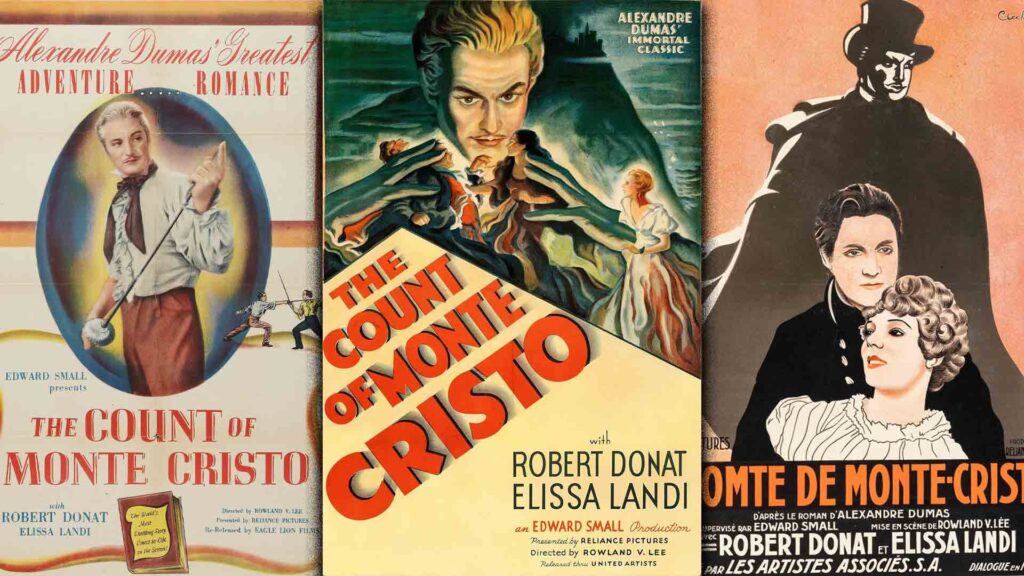
The Count of Monte Cristo

Drama 1934 / 107 minutes RATING: 8/10 This is based on the story by Alexander Dumas (who also authored The Three Musketeers), and while it is a rip-roaring story it takes place during the French Revolution, which many of us may not be all that familiar with. So let me give you a short backgrounder The story begins in 1815, a year after the French Emperor Napoleon had been forced to abdicate and exiled to the island of Elba. In the opening scene we learn that Napoleon wasn't done yet, and was conspiring with his remaining loyalists to try to retake the throne. The twists in this story start early. Napoleon sends a letter to his followers via the captain of a French merchant ship, the Pharoan. Before the ship lands, the captain dies, but not before he entrusts the letter to his first officer, Edmond Dantès. Dantès knows nothing of politics, but loves his captain and promises to do as asked, completely unaware of who the letter is from, and the trouble the letter will soon cause him. When his ship arrives in port it sure seems like Dantès has everything going his way: he's met by his love, the beautiful Mercédès, and the ship's owner promotes Dantès to be the Pharoan's new captain. But good fortune is followed by bad. Three men join forced to conspire against Dantès, using the letter he carried as an excuse to thrown him in jail as a conspirator against the King. The three men are: Danglars, who wanted to be the new captain instead of Dantès Fernand Mondego, who loves Mercédès too, but doesn't have a chance with her so long as Dantès lives Gérard de Villefort, the King's prosecutor, who discovers his own father was the intended recipient of Napoleon's letter, so he frames Dantès to cover up for his father's treachery. The three get Dantès thrown into the deepest and darkest of prisons. But wait, if he's in jail for supposedly supporting Napoleon, then won't he be freed when the Emperor does successfully (if only briefly) retake his throne? Yes indeed, except that de Villefort, to cover his own tracks, signs off  on an official statement that says Dantès was killed while trying to escape. That, then, gives Mondego his opening to marry Mercédès, who only agrees to his proposal because her true love is dead, and her mother's dying wish was that she marry Mondego. But Dantès isn't dead. And in that deep dark prison he meets a fellow inmate, an Italian priest named Abbé Faria, who has been planning an escape for years... and it will take years yet before the two of them can finally complete their secret tunnel. But no worries – Dantès can pass the time plotting his very clever revenge against the three men who sent him here. But what does Abbé Faria think of his vengeful schemes? The priest rebukes Dantès anger, and encourages him to instead seek instead God's justice, not his own personal revenge. When Dantès does finally get out, he re-enters French society under the guise of being the Count of Monte Cristo, and in that role befriends the three men who stole his ship, his wife, and more than a decade of his life. None of them recognize him, and no-one is ready for him. Cautions Dantès doesn't exactly seek vengeance, but he also won't let the three men continuing on as they have been, pursuing their own gain at the expense of others. But there does sometimes seem only a hairs-breadth of a difference between stopping the three, and getting revenge against the three. So, it is worth a discussion with any younger viewers how a text like, Romans 12:17-19 would apply here: "Repay no one evil for evil. Have regard for good things in the sight of all men. If it is possible, as much as depends on you, live peaceably with all men. Beloved, do not avenge yourselves, but rather give place to wrath; for it is written, 'Vengeance is Mine, I will repay,' says the Lord." So how much is Dantès concerned with justice, and how much with vengeance? Conclusion The original 1844 story was so popular that it was filmed 5 different times in the days of silent cinema, with this sixth adaptation the first to feature sound. I get it. Watching it now, nearly two centuries after the novel was first penned, and almost a century after it was filmed, it was intriguing. I loved the unfamiliarity of the story, not being able to predict just where it was going to go – we just don't tell them like this anymore. So who would love this? If you have a young viewing audience who has never seen a black and white film, this might not be the one that wins them over. The plot is a bit complicated, especially at the start where it assumes you know at least a bit about Napoleonic times. But I showed this to my own kids who are, I won't say black-and-white film fans, but have appreciated a good number of them, and they, ages 12 though 16, gave this a thumbs up. So, a solid 8 for classic film lovers, and maybe only a 6 if you haven't watch B&W before. ...

Red heart icon with + sign.
Family, Movie Reviews

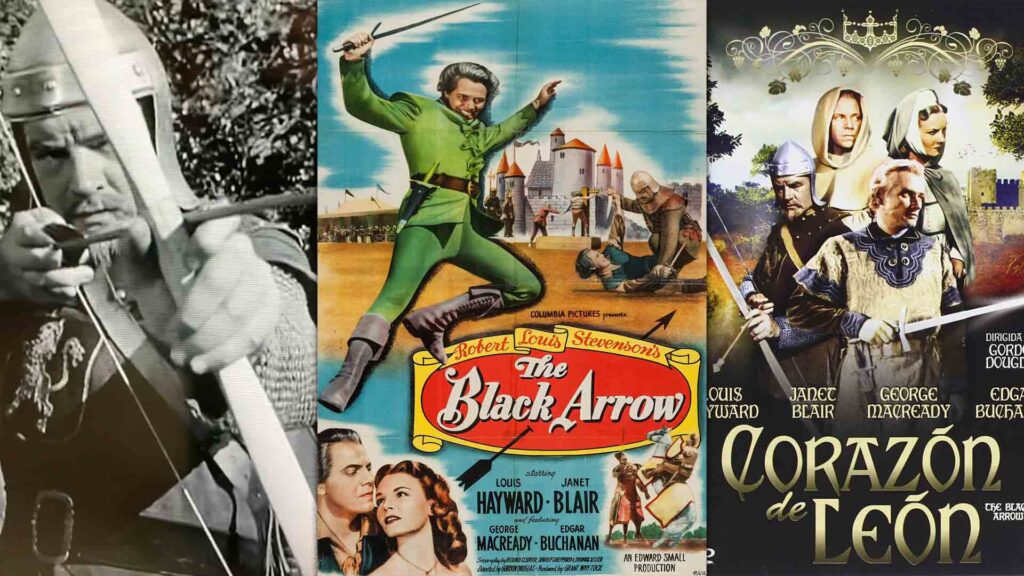
The Black Arrow

Drama / Family 1948 / 76 minutes Rating: 7/10 Sir Richard Shelton is a young knight returning from  three years away fighting in the latest installment in the ongoing "War of the Roses" (1455-1487). He is a loyal soldier for the House of York side, the side which, for the moment, is the winning side. And their rivals, those who supported the losing House of Lancaster, are now having their lands and manors taken, and given over to York supporters. If you're not a big English history buff, that's okay, because that's all you need to know. What surprised me at the start was that Richard, clearly our hero-to-be, is fine with Lancaster lands being taken, even when they belonged to a long-time friend and neighbor Sir John Sedley. Before Richard arrives home an arrow narrowly misses him, striking the tree trunk next to him. Attached to the black arrow is a poetic warning: Sir Richard Shelton best beware When to Turnstall Keep he goes Treachery is lurking there – Take the word of one who knows. One home he discovers his father has been murdered, and his uncle and three trusted advisors all tell him Sir John Sedley did it, angered at his lands being taken. But what of this treachery Richard has been warned of? Can he trust the word of these four men? While he's not sure who to believe inside the castle, outside of it there is a roving band of outlaws delivering more messages – some deadly – via their black arrows. So who are the bad guys? Who should Richard trust? The warnings from the Black Arrow band? Or his own uncle, who supports the House of York just as he does too? The choice might seem obvious... but then Sir John Sedley's daughter enters the scene. Now the question is, how can the daughter of the man who murdered Richard's father say anything that would sway him? This is a good story, and got a bit of depth to it, even it is is a very truncated version of the Robert Louis Stevenson (185o-1894) novel of the same name. Cautions As might be expected in a medieval swashbuckling epic with "arrow" in the title, there are lots of folk getting shot with arrows and also lots of knights and soldiers falling to the ground via a well-placed sword thrust. All these deaths are bloodless – there is no gore – but there are still quite a number of them. Kids 10 and up won't find it scary, but it might be for youngers. Conclusion There's some echos here of Robin Hood for sure, though this Black Arrow band laughs a little less. The film's short length, loads of action, touch of true history, and the fact it was based on a classic work of fiction means there's could be something for almost everyone in your family. Our family all liked it, but also weren't gripped by it. We liked it, but I don't know that we'll watch it again. I couldn't find a movie trailer, but did find the clip below where Richard is forced to duel his old sword-fighting instructor. It highlights how, even though this is a black and white movie, the strong crisp contrasts make this an attractive watch. There are colorized versions available, but they mar, rather than improve, on the original. ...

Red heart icon with + sign.
Animated, Movie Reviews

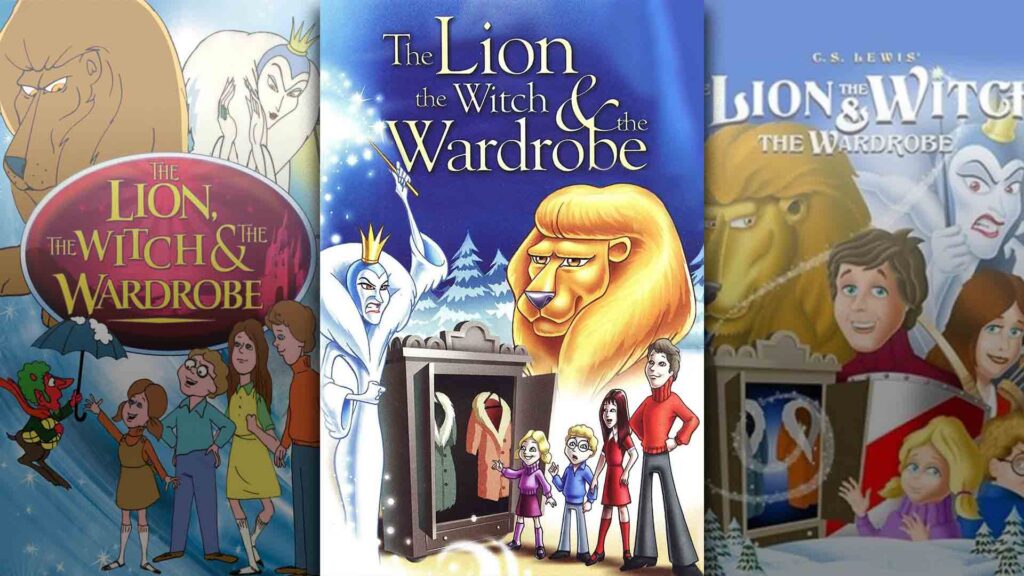
The Lion, the Witch, and the Wardrobe (1979)

Animated / Children 1979 / 95 minutes RATING: 7/10 This is the oldest surviving film version of C.S. Lewis's famous classic. It is absolutely fascinating as a curiosity, and I had some fun comparing the animated version to the 2005 live-action one. This starts off a little different – we see Lucy bursting out of the wardrobe shouting, "I'm back, I'm here." While both films are loyal to the book, small difference pop up throughout, the most notable being how the "Deeper Magic" is treated here. I suspect these scriptwriters might have been Christian and thus better understood the connection Lewis was making, while the Disney script was likely not by Christians. Cautions The cautions for this film would amount to the same warnings the book would get. As I share in my live-action review, the Bible speaks of God as being like a lion (Hosea 5:14, Is. 31:4, Rev. 5:5, etc.) and makes other analogous comparisons between God and animals such as a mother hen, eagle, and bear (Matt. 23:37, Ex. 19:4, and Hosea 13:8). But what should we think of depicting God as a lion? On the one hand, Lewis isn’t trying to say that Jesus is actually a lion – Narnia is supposed to be fantasy, not fact. But on the other hand, Lewis does make a close Aslan to Jesus connection in Aslan’s sacrifice to save Edmund in The Lion, the Witch, and the Wardrobe, and Lewis is just a hair’s breadth from stating the connection explicitly in The Voyage of the Dawn Treader (Book 5 in The Chronicles of Narnia), where Aslan tells Edmund and Lucy that in their world, “I have another name.” Conclusion If they'd never remade Wardrobe as a live action film, then this might have become a family favorite for many. It really isn't bad – it even won an Emmy back in 1979. I was initially going to give this a 6, but it keeps getting better and better as the story goes. There is a lot to like here! Visually, it isn't nearly as good as the 2005 update. You can get a feel for that difference watching the brief feature on it below. But for the passionate Narnia fan, it will be very fun to see another version of a favorite story. ...

Red heart icon with + sign.
Animated, Movie Reviews

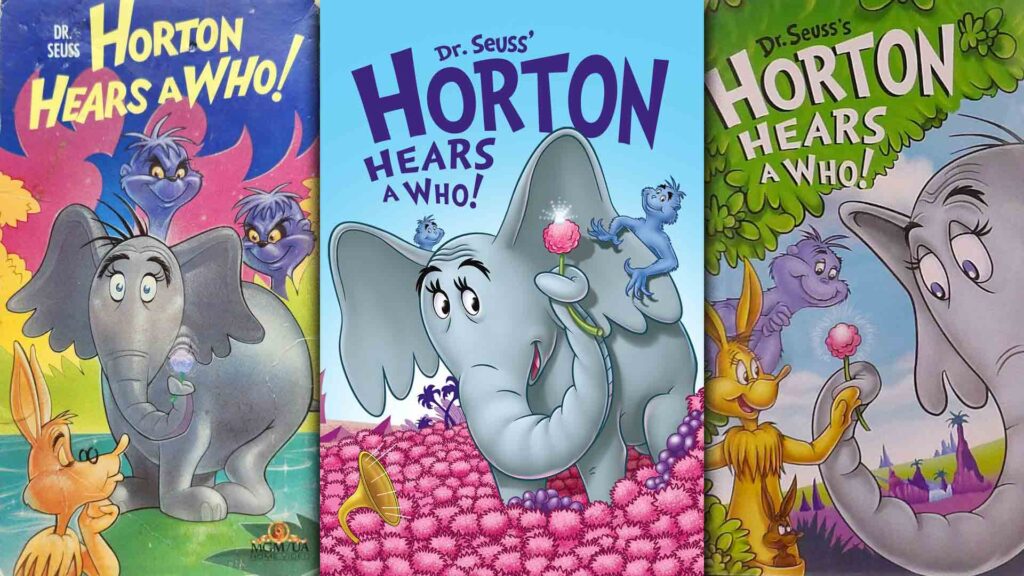
Horton Hears a Who! (1970)

Animated / Family 1970 / 30 minutes Rating: 7/10 Based on the Dr. Seuss classic picture book of the same name, this is the story of what a caring elephant heard, and what he did. With ears as big as his heart, Horton the elephant heard what no one else could – he heard the cry of some microscopically tiny people crying out for help. It seems there was an entire town of tiny persons – Whos is their name – living on a small speck of dust.  And with the wind blowing their speck about, a cry went out for assistance... and Horton came to their rescue. Why? Well, because, as Horton notes, "a person's a person, no matter how small!" He cushioned their fall, putting their speck on a clover fluff. While Dr. Seuss was not pro-life – at least according to his second wife – his story most decidedly is. Horton knows what others in the jungle do not: that size doesn't make the person. No one else believes that anything that tiny could have life on it, so they try to lock up Horton, and, in a vindictive twist, they try to boil the clover! But it doesn't matter what they all believe – it only matters what's so, and so, Horton fights on, while begging the tiny Whos to make themselves heard. Will their personhood be recognized? Will the murderous mob be turned? We can only hope so, because, as is true of the unborn, and Whovians alike, "a person is a person no matter how small." There is a 2008, full-length feature film version that might also be worth checking out, but I have yet to see it. You can watch the trailer for this half-hour version below. ...

Red heart icon with + sign.
Drama, Movie Reviews

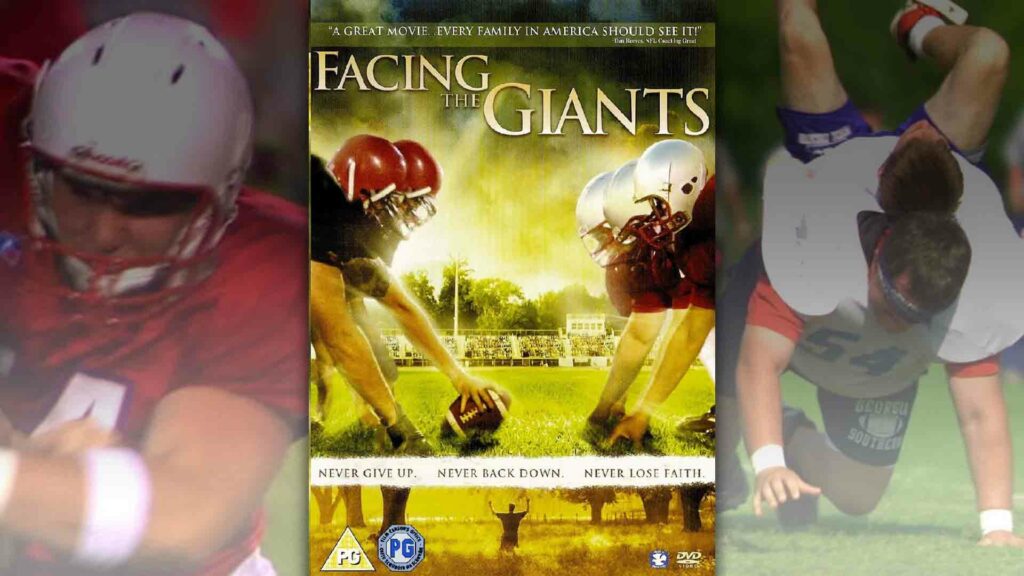
Facing the Giants

Sports / Drama 2006 / 111 minutes Rating: 7/10 Grant Taylor doesn't have a lot going his way. His car runs only sometimes, he's not all that successful at work, and now he's found out that he's the reason why his wife can't get pregnant. He is shook. So he goes to God in prayer. Facing the Giants is the second film from the Kendrick Brothers, a Baptist twosome who decided to use films to reach out to the unchurched. They've been using films like Overcomer and Courageous to draw folks in with the entertainment and then hit them right between the eyes with some gospel truths. Movies always have a moral, so a cinematic sermon isn't exactly something new. What is new here is the upfront earnestness – not a lot of subtle going on. The point is to preach, even more than entertain. But entertaining does happen. When Taylor is brought low, he's forced to turn back to God. And when he repents of his apathy, he can't help but share his new joy with the high school football team he coaches. And, they respond. It's one thing to be on a football team that only loses – that can be disheartening – but another to be on a team that realizes there's more than one way to win. Coach Taylor pitches a new vision of success to his players: "We need to give God our best in every area and if we win, we praise Him and if we lose we praise Him." As Proverbs recounts, when you serve God with all your heart, there's a tendency for good things to follow. Hard work brings its reward (Prov. 10:4, Prov. 22:29, etc.) and we get to see the football team putting in that work via training montages and gritty game footage. Coach Taylor even pulls off one of the better practice-field inspirational speeches – your kids will love it when he pushes a lineman to dig deep and discover a reserve ten times bigger than he even knew he had to give. That's when the wins start stacking up, and winning isn't the only ripple. Coach Taylor's Godward vision for this team has bad students becoming scholars, and a father and son reconcile. Older teens will see some of the happiest happenings as bordering on cringe, and they ain't wrong to think it. When one player's crippled father gets out of his wheelchair, this has become simply too good to ring true. But God can do anything. And this is far from beyond what God has already done, so I think we can rein in the criticism at least a little. My kids loved this up until about 12, and that's what I would suggest it for: the less critical 12 and under set. Cautions The main caution would be a "prosperity doctrine" undercurrent. Coach Taylor gives himself to God, and then God gives him everything he ever wanted, from a new truck, to a child, to a championship too. While it's important for your kids to recognize this implicit theme, it's an accidental inclusion, not intentional – the stunning turnaround is just the way of sports films overall. And I think the producers were aware of the danger, such that the prosperity gospel is pretty explicitly renounced. As Coach Taylor notes, "I've resolved to give God everything I've got and leave the results to Him." Taylor isn't pitching some guarantee to his family or team that God will make everything go their way so long as they pray hard enough. Conclusion Every sports film has the small guy stage a miraculous comeback to win it all. But Facing the Giants offers up a very different measure of success. Coach Taylor challenges his team not to make winning, but rather to make glorifying God, their goal. That's the vision we want our kids to understand and adopt too. So you know what would have been great to see? If the filmmakers could have shown someone succeed, not by winning the championship– that's every other sports film's story – but by losing the big game the right way. It's probably not giving too much away to say that we don't see that happen here. So what could have been a great story becomes merely a good one. Yes, it is preachy, and the acting is sometimes less than impressive (though not painfully so) but Facing the Giants could still have been something special if it had followed through on the sermon it was preaching – that we can honor God in failure too. Then it would have dared go where no other sports film has gone before. But as it is, there are funny bits, some solid sports action, inspirational get-the-blood-pumping speeches, and some pleasant people and good kids learning important lessons. A nice evening for the family. ...

Red heart icon with + sign.
Drama, Movie Reviews

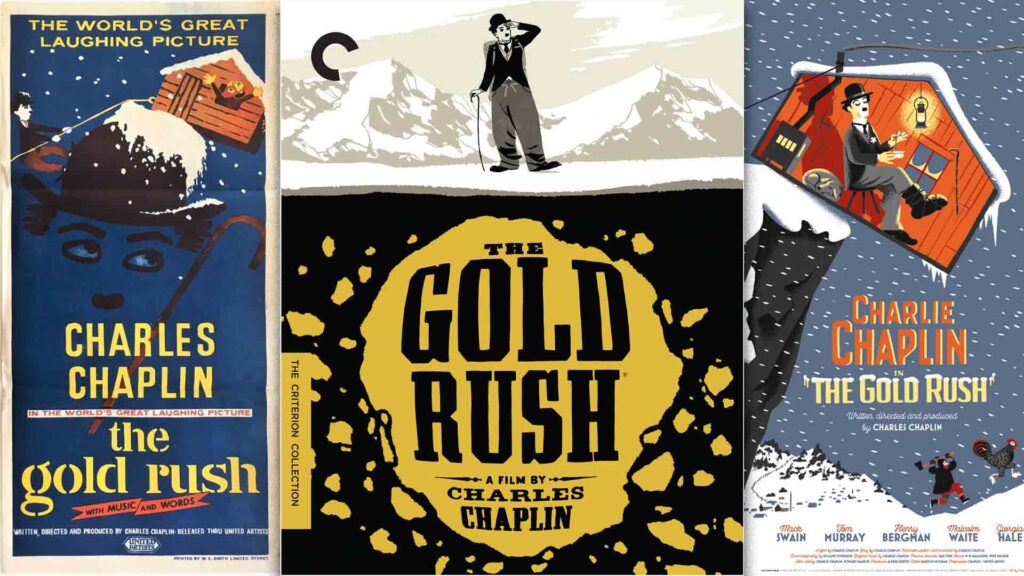
Gold Rush

Comedy / Silent (sort of) 1925 / 96 min RATING: 7/10 It's been 100 years now since Charlie Chaplin crafted his most famous film. He had two goes at this, actually, with the first, silent version coming out in 1925. Then, in 1942 he decided to re-release it, but this time with sound effects, music, and narration, garnering this updated edition a couple of Oscar nominations in the musical score and sound categories. If you are ever going to do a dive into silent films then you have to check out Gold Rush, Chaplin's best and most iconic go at his Tramp character. It is an all-time classic (even if there are a few even better silent films by Buster Keaton), making it onto the American Film Institute’s list of the 100 best films of the last 100 years. It begins with the Tramp heading to the Yukon to prospect for gold. The Tramp has the worst of luck – Chaplin’s films always have a good mix of tragedy thrown in with the comedy – so before too long the Tramp gets mixed up with a couple tough characters, gets lost in a snowstorm, becomes so hungry he eats his shoe, and then, after all that, he falls in love with a beautiful girl who barely notices he’s alive. Of course, in the end the girl can’t resist the Tramp’s simple charms – Chaplin’s films all do have happy endings. Cautions None to really note. Conclusion If you've never watched a silent film before, this should not be your first. Give the shorter and quicker-paced Buster Keaton movies Seven Chances, or Sherlock Jr. a go instead. Afterwards, if you've enjoyed those, then consider this all-time classic. Find a fully restored version, and think of it as a time-travel experiment, looking back at not just another era, but almost another world. The actual Alaskan Gold Rush took place just 25 years before this film was first made, so while I'm not pitching this as a realistic look, it is intriguing as a comedic take on what was then, pretty recent history. Check out the trailer for a restored 1942 version (it says 1925, but that's wrong) of the film below. ...

Red heart icon with + sign.
Animated, Movie Reviews, Watch for free

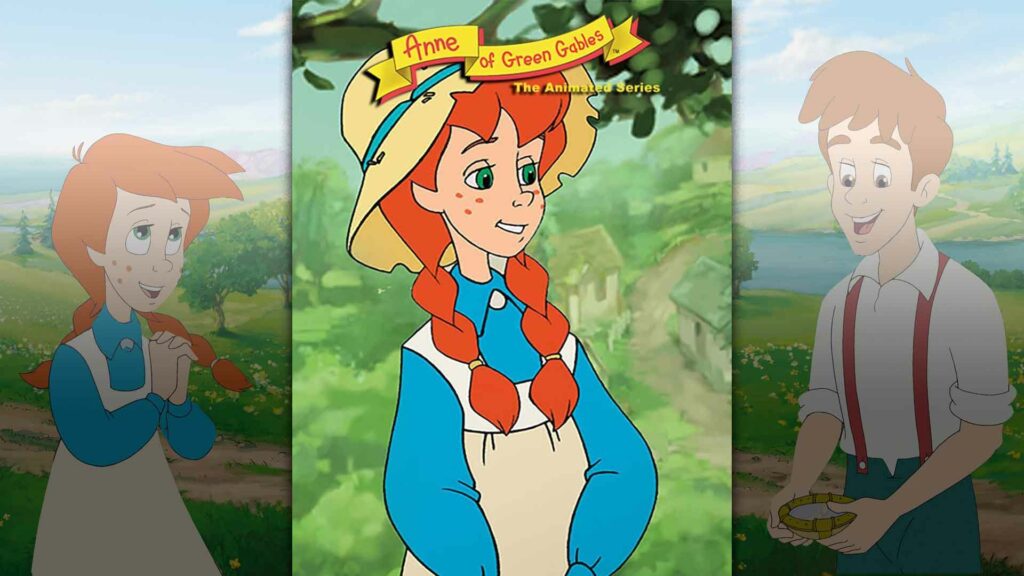
Anne of Green Gables: the Animated Series

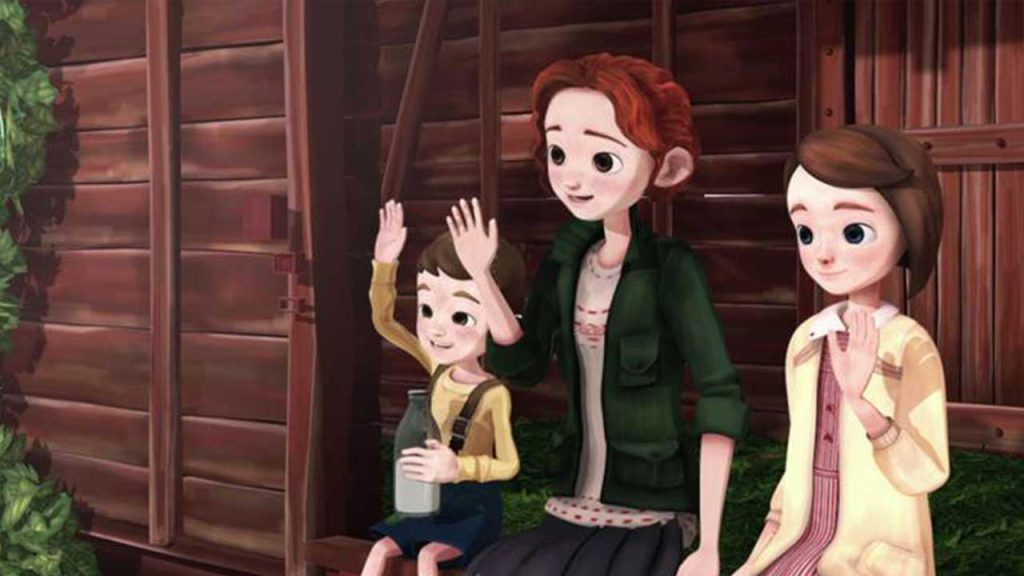
Animated / TV 2003 / 26 episodes x 25 minutes each Rating: 7/10 It’s an animated Anne brought to you by Sullivan Entertainment, the same folks behind the original Anne of Green Gables movie series. As always, Anne means well – it’s just that sometimes her exuberance gets the best of her! From her quest for puffy sleeves, to her first exposure to head lice, whatever Anne does she learns valuable lessons...though usually the hard way. I remember watching this with my girls when they were smaller and they loved it. So when I discovered that it is available for free now, I took a look over the first three episodes to see if it was as good as I'd remembered. And, for anyone with young daughters, it is indeed! In episode #1 Anne comes to accept her red hair, she in #2 helps Gilbert babysit, and in the third, she realizes that she need to try to return the stray dog she's fallen in love with. As we'd expect, there's loads of hijinks, and just as much heart! Cautions The only caution would concern Anne's imagination, which has her seeing a quintet of dryads – mythical tree spirits – in the first episode that assure Anne that her red hair, now turned green, is a part of who she is, and she should accept it, and enjoy it. So, good message, but some weird messengers for it. And kids might get a bit confused here about whether the dryads are real or something in Anne's head. Anne's flight of fancy is more clearly just in her head in the third episode where a couple of trees, and a bunch of flowers, also give Anne a brief talking to. So, nothing all that problematic. I'll also note that while there are 26 episodes in all, I can only vouch for the first three that I rewatched, but if my memory serves, the others were also charming and gentle. Conclusion This is actually the second time that Anne of Green Gables has been given the animated treatment, with the first a Japanese Anime version that I'd really love to track down some day, but which doesn't seem available yet on this side of the ocean. But this animated series can be watched for free – all 26 episodes. Watch episode 1 below, and watch the rest here.  ...

Red heart icon with + sign.
Family, Movie Reviews

Belle and Sebastian

Drama 2013 / 99 minutes Rating: 8/10 In the middle of World War II, Sebastian, a seven-year-old orphan, lives  with a grandfather figure, César, high in the French Alps. There are two enemies they have to contend with – "the Beast," a wild dog who is killing sheep, and the Nazis, who are are also taking what they will from the farmers. The Nazis are also trying to stop the flow of Jews escaping through the nearby mountain passes that lead into Switzerland. Sebastian is largely left to wander around on his own during the days – César doesn't making him go to school. During his wandering the boy learns more than the adults suspect. He knows about the refugees. And he knows something no one else does: the "Beast" isn't a wild dog at all. Maybe something is killing the sheep, but the giant dog he met is friendly, and would never think about eating sheep. Sebastian cleans the gray dog up, turning her white, and names her Belle. This being a dog drama, Belle is not beloved as quickly by the rest of the town, or by César, who still think her a sheep-killer. But she wins them over, one by one, by coming to their aid, against wolves, and against the Nazis. Cautions Sebastian doesn't tell César about Belle at first, and young viewers should be told that they shouldn't keep secrets from their parents (or, parent-figure, in this case). One oddity: as he is being put to bed, Sébastien asks an adult sister-figure, Angélina, whether she licks her boyfriend's ears, because he's heard that's what "real lovers" do. It is a passing question, quickly swatted away with a smile that is meant to show Sebastian is indeed a seven-year-old boy, yet to develop any filters between what's in his brain and what comes out of his mouth. When it comes to language, the English dub seems to be problem-free, but if you watch it in the original French, bastard and ass come up in the English captioning, though that's pretty much it. There's lots of guns, but only a little violence. A sheep gets killed right at the start, and later on Sebastian gets saved from a Nazi soldier when Belle jumps in and bites the German. A smidge of blood is shown. The most frightening scene is when Belle gets shot. It might be unexpected for younger viewers, which will make it all the more shocking, though you can offer reassurances that Belle will recover. Finally, adults will realize that César's family and friends think he drinks too much (and they are right), but I don't know that kids will even notice. Conclusion This is a much loved story that has been retold again and again. It started as a French TV live-action series in 1965, became a popular French children's novel in 1966, spawned a Japanese anime adaption in the 1980s, before being adapted for the silver screen in this version. And it has returned to TV since, in a French-Canadian production in 2017. Though it is not a true story, it is true that Jews escaped through the Pyrenees mountain passes, and were helped by the locals, who were risking their own lives in offering aid. So this is a fun one from a historical perspective. Titled Belle et Sébastien in the original French, its foreign origin gives it a slightly different rhythm and style that brings with it a novel appeal. Wide, lingering shots of the snowy mountain tops and valleys, and frequent quiet conversations give this an overall calm feel, but it isn't too much so – there are still Nazis to contend with and wolves to chase away. That said, it might be too calm for littles used to non-stop frenetic action. And the scary scenes will be a bit much for under 9 too. The English-dubbed version is more readily available, but if you don't mind reading captions, try to find the original French edition, Belle et Sébastien. I think hearing the actors' own voices will draws you further in, or, at least, it did so for me (though there are a couple few words - see cautions above). And the French version seems to be about 5 minutes longer, though I didn't notice any additions. Overall, a great family film for 9 and up, so long as your littles are up for a few short frightening scenes. ...

Red heart icon with + sign.
Drama, Movie Reviews

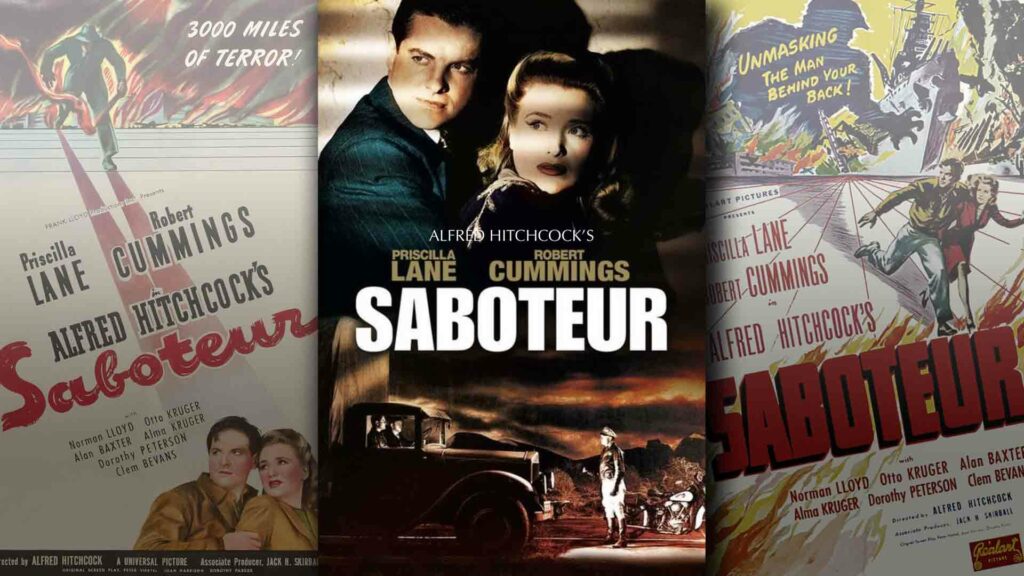
Saboteur

Drama / Mystery 1942 / 109 minutes RATING: 7/10 This is World War II as seen from the other side of the ocean. Barry Kane is one of the hundreds of employees at an airplane factory in Glendale, California, and when the plant suspiciously burns down, he becomes one of the chief suspects. Barry knows he's innocent, and thinks the real saboteur might be a man named Fry, who he bumped into just before the fire started, But Fry doesn't seem to exist – the factory never employed anyone by that name – which makes Barry look even more suspicious. With the authorities looking in the wrong direction, Barry decides he has to track Fry down himself and takes off. He has only one key clue, and to make it even more difficult, police departments across the country are now on the lookout for him! Love-interest Patricia Martin is a girl he meets along the way, and whose blind uncle somehow knows that Barry is trustworthy, no matter what the police might think. Patricia isn't quite so sure, and seems as likely to turn Barry in as to help him. Together they follow the clues and cross the country, uncovering a network of fifth columnists – Nazi sympathizers and agents amongst the highest echelons of American society. But now that they know who's responsible, will anyone believe them? This cast does a solid job, and while there's no one you'll recognize, the director is a name you'll know: Alfred Hitchcock. He always brings the stark, dramatic shots, of course, but also a bit of oddness. His quirkiness shows up in this picture when Barry and Patricia hitchhike a ride on a circus caravan and hide out among the circus sideshow performers – a midget, bearded lady, set of Siamese Twins, and more – who end up arguing it out about whether they'll help the pair. And this being an Alfred Hitchcock film, we can expect the director to make a brief appearance on screen – look for his cameo just after the one-hour mark. Cautions The caution here is also a feature: this is a film for discussion, not just consumption, and the conversation will be of a Romans 13 sort (or more specifically, Rom. 13:1-7) – when should we, and when shouldn't we listen to the appointed authorities? Barry is fleeing the police because if he doesn't, the true saboteur will get away, and because the police, however unwittingly, are aiding the fifth columnists. But while his motivation is clear, some of the people who choose to help him are defying those same authorities for tenuous reasons. Patricia's uncle, for example, trusts Barry based on little more than gut instinct. Conclusion This was already well into development before Japan's 1941, Dec. 7 bombing of Pearl Harbor pushed the United States into World War II. That might be why the focus was on the homefront – American soldiers weren't fighting in the trenches yet when the script was being written.Regardless, Hitchcock wanted his audience to know the fight was already going on, behind the scenes, right on American soil. This is an enjoyable film, but not the sort you'd pitch folks who aren't already up for black-and-white films. Start them on other World War II fare like Casablanca, The SeaHawk, and  Desperate Journey instead, and if they love those, then they'll be more inclined to enjoy Saboteur for the great war film it is. ...

Red heart icon with + sign.
Animated, Movie Reviews, Watch for free

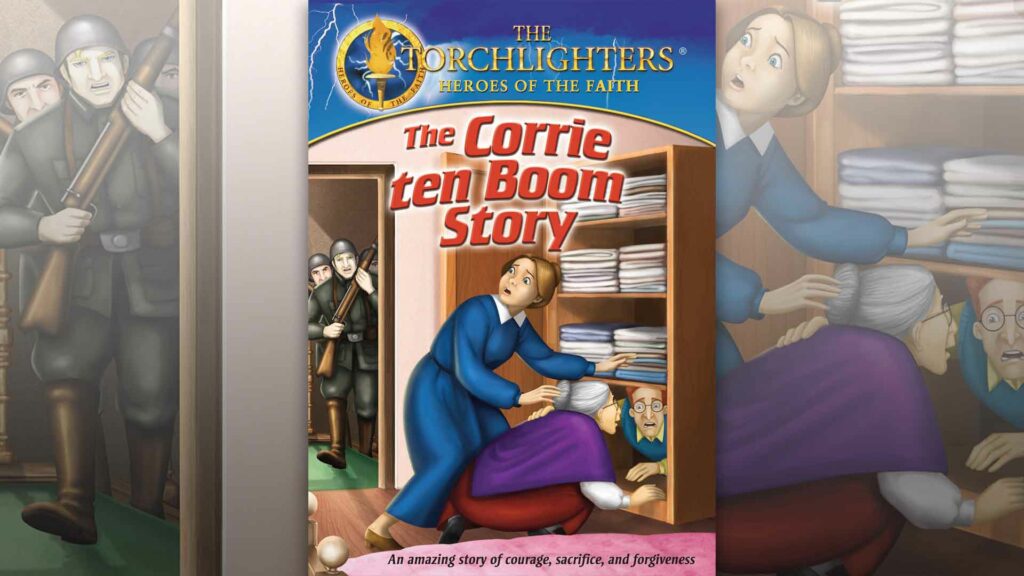
The Corrie ten Boom Story

Animated / Biography / Drama 2013 / 34 minutes Rating: 7/10 What's an appropriate age to expose our children to the truth about Nazis, concentration camps and dead numbered in the millions? Those are horrible truths, but ones that can't be avoided if we are to have the next generation remember the self-sacrificial love, bravery, and faithfulness of the many millions who rose up to fight this evil. The Corrie ten Boom Story might be a good way to begin. The film's producers suggest that it is appropriate for children as young as 8, but I read one review from a mother who watched it with her three-and-a-half year old (she pointed out to her little boy that the Ten Booms were Christ-imitators, offering up their lives to save the Jews). I don't know if I would go quite that young – I haven't shown this to my four-year-old yet – but the filmmakers have done a remarkable job of presenting a muted, yet still accurate account of the horrors of World War II. The Ten Boom family ran a watchmaking business in the Netherlands, and when the Germans invaded and started rounding up Jews, the Ten Booms began hiding Jews. It was a courageous yet simple decision for them – they knew this was what God wanted them to do. They helped many but were eventually betrayed and sent to concentration camps. Here the same love for God that had them hiding Jews helped Corrie endure the loss of her father and sister – she trusted that God knew what was best. After the war, she traveled extensively telling the story of God's faithfulness in all her trials. At one speech she met a former captor, a man who had viciously beaten her. He was asking Corrie to forgive him. What would have been too much to ask of anyone, Corrie was able to do with God's enabling strength – she gave the man the forgiveness he was seeking. Cautions The only caution I can add (other than to be cautious about age-appropriateness) is that other episodes of this series often feature animations of Jesus, which may violate the Second Commandment, and one of these depictions is shown in a promotional clip that automatically plays just after the film ends. Conclusion Corrie ten Boom will be a familiar name to many. Her biography, The Hiding Place, is quite famous, as is a 1975 film by the same name, and I believe there is also a play that many Christian schools have performed. What sets this animated account apart is that it makes her story understandable and accessible to a much younger age group. I would highly recommend it for any school-age children, but it must be watched with adult supervision, so mom or dad can talk with any child who gets confused or worried. Now you can watch it online for free, below. ...

Red heart icon with + sign.
Documentary, Movie Reviews, Science - Creation/Evolution, Watch for free

Mountains after the Flood

Documentary 2023 / 102 minutes Rating: 7/10 The folks who brought us Is Genesis History, have crafted a sequel of sorts. Host Del Tackett is back, and just as inquisitive as ever. Mountains after the Flood looks at areas of the Grand Canyon, and exposed layers around the world, including in our mountains, to show how quickly they were formed. The conventional evolutionary thinking is that all these layers took eons to form. However, there are folds in these rock layers... and how could that be? If these layers took so long to form then they would have been hardened and unable to fold – any bending would have resulted in cracks and fracturing instead. So these smooth folds serve as evidence against the prevailing "long age" dating of the Grand Canyon. But what if, instead of forming over hundreds of thousands of years, the folds were formed quickly in the cataclysmic aftermath of the Flood? Then the layers wouldn't be the result of millions of years, but would have been rapidly formed as the sediment settled during the Flood. And the bending could have happened while the layers were still soft. Under these circumstances we would understand how these still soft layers could have been bent over on themselves without cracking. Mountains after the Flood is more technical than the previous film, and that's part of the point. In addition to exploring the evidence for the Flood, Tackett and his crew are also trying to show what doing good creation science really involves. They want to show its rigor, and highlight its credibility – what they are doing here is following well-established scientific protocols to produce findings that can't be dismissed and need to be contended with. While there's loads of information for anyone already interested in the subject, this is not a film I’d show anyone, kids or adults, to try and get them interested. For that I'd point to the original Is Genesis History (which is reviewed, and can be watched for free, at this link). The producers have all sorts of supplementary material at IsGenesisHistory.com that is well worth exploring. And now they've made Mountains after the Flood available to watch for free, so start watching below! ...

Red heart icon with + sign.
Family, Movie Reviews

Twelve

Family / Sports 2019 / 92 minutes RATING: 7/10 Kyle Cooke is an 11-year-old baseball prodigy who's always the best kid on the field. When he gets cut from an all-star team – the coach picks his own kids instead of the best kids – his already impressive work ethic goes into overdrive. Kyle is going to make his next season the best ever, so he can take whatever team he's on all the way to the 12-year-olds' World Series. That sums up both what's great about Twelve and what's wonky with it too. If you have kids who aren't overly obsessed with sports then showing them a film about a 12-year-old who lives, sleeps, and breathes his sport could be a good bit of inspiration. If they really want to make their high school basketball team, or get onto the junior high cross-country team, then they need to put in the work. They could do with being more like Kyle. But Kyle, and his dad too, are quite a bit too invested in baseball. The saving grace is that theirs is a love-of-the-game kind of obsession and not a win-at-any-costs kind of thing. The dad proves he's too into baseball when he lets his generally solid sportsmanship slip after his son gets cut unfairly from the all-star team. And Kyle shows he's too obsessed in that his life doesn't have anything else to it but baseball. That said, he is respectful to coaches and to his dad. And even though he is by far the best player on his new team, he doesn't have an inflated ego around his teammates. So, the pluses are some fun training montages, cute interactions between him and his big brother (and his big brother's girlfriend, who is rooting for him), lots of drive and determination, and a fairly low tension level, which might be nice for the 10-12 year-old target audience – there's never really any doubt that Kyle is going to go all the way. Cautions The most notable negative is, again, just how seriously this family takes baseball, getting pretty close to a substitute religion, moderated only by the fact that the two boys aren't obsessed with winning (Kyle is super confident he will win, but he doesn't get all stressed out about it). Language concerns are minor: Kyle's brother "X" almost says a bad word, starting off with "bullsh..." before ending on a better note with "....shoes." Dad does it once too. Oh, and if you try to stream this, beware of the 2010 film of the same name which is about drugs, not sports. Conclusion The consensus in our house rated Twelve a solid 7. The one holdout didn't like the abrupt ending and dropped her initial 10 all the way down to a 0 – she wanted a little bit longer with these characters, but the final credits start just a couple of minutes after the climax. So, take that for what you will. If you're looking for sports flick with some good camaraderie, and not too much of an edge, this will fit the bill... as long as your kids aren't as sports-obsessed as Kyle. Check out the trailer below for a good overview of the admirable and the obsessive. ...

Red heart icon with + sign.
Drama, Movie Reviews

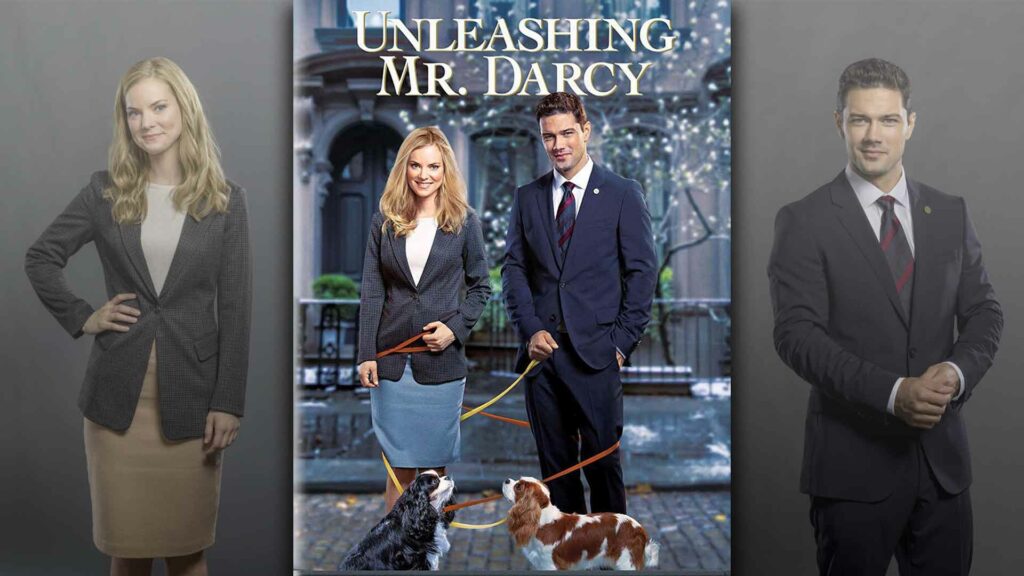
Unleashing Mr. Darcy

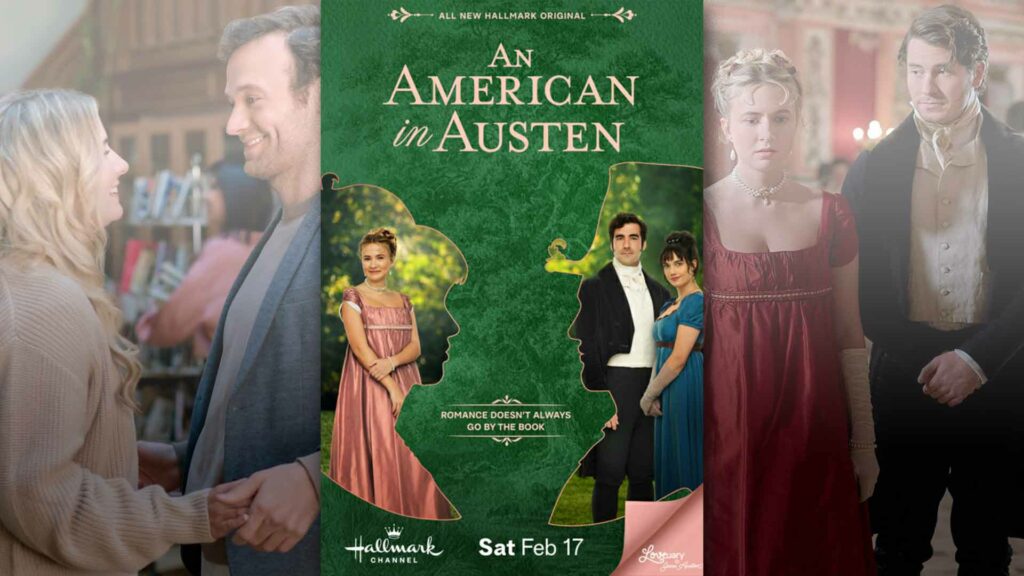
Drama / Romance 2016 / 84 minutes Rating: 7/10 My favorite movie of all time is a modern-day Mormon-produced Pride and Prejudice update. So, I am up for retellings. Whether you like or loath the Hallmark-produced Unleashing Mr. Darcy will largely depend on if you are too. This twist in the tale this time is that it takes place in the New England dog show circuit. Mr. Darcy is rich, of course, but he's also a dog show judge. And Elizabeth is a school teacher and a dog handler. The Bennet family has largely been excised, though her goofy mom remains. And Darcy's aunt, Lady Catherine de Bourgh in the original, shows up here as his Aunt Violet, every bit as snooty. What I liked about it, was all the thought put into translating the gist of Jane Austen's original into such a foreign setting. I thought it quite clever. What I didn't like about it was some of the acting. The male lead, in particular, is stiff – he got this on his looks, rather than his acting chops, I suspect. Cautions The only caution I can think of would be a brief glimpse of Mr. Darcy as he gets out of a swimming pool. He is shirtless for about a minute and, of course, has a six-pack. That relates to one other caution that would apply to most other Hallmark films: candy, in moderation, is a wonderful thing, but not as something to binge on. We all know that there aren't enough billionaires or royal suitors to go around, and since you are what you eat, too many Hallmark films might have a young teen thinking she's going to have to settle for someone ordinary. But choosing reality over fantasy isn't settling! Conclusion To sum up, this is a clever script, with okay performances, safe for the whole family. There is a sequel, Marrying Mr. Darcy, that might interest some. But because it takes things past the conclusion of Austen's book, there isn't the same clever reworking of her classic. This sequel is a wholly original story, but too much like every other Hallmark story to be at all original. If you liked the actors, then you may like the sequel too – it is another dose of safe viewing. But if, like me, you appreciated the first movie for how it put a new spin on Pride and Prejudice (this time with dogs!), then the sequel won't satisfy. I almost didn't include Unleashing Mr. Darcy's trailer, because it's terrible. The film isn't going to win an Oscar, but it is way better than this makes it look. ...

Red heart icon with + sign.
Documentary, Movie Reviews, Watch for free

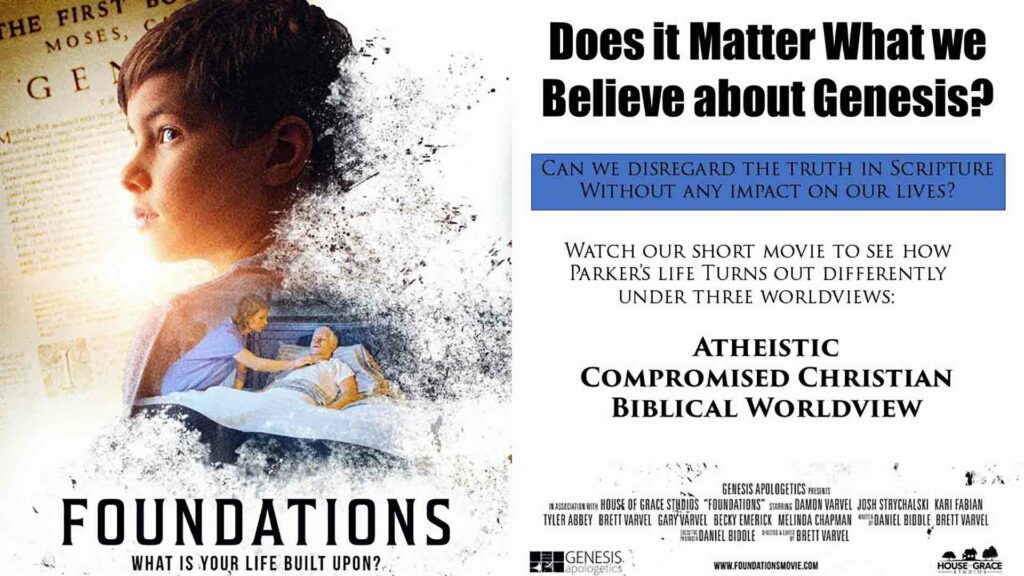
Foundations

Docudrama 24 minutes / 2020 Rating: 7/10 Foundations is the story of Parker, or rather the story of 3 different Parkers. All three stories start the same way. The little boy Parker is watching a TV show about evolution with his parents. When the commentator starts talking about how humans evolved over millions of years, Parker turns to his dad and asks, "Is that true... did we use to be fish?" This is the three-tined fork in the road. In the first story, Parker’s parents tell him that yes, we are former fish. And then we get to see how an evolutionary, agnostic worldview works itself out. We see an adult Parker, believing himself to be the product of nothing but chance, making questionable decisions. Finally, we get to see him on his deathbed, alone and full of regrets. Then we rewind, and this time Parker's parents give a different, but only slightly better, answer. In all, three different worldviews are featured, one after another. 1) Evolutionary agnostic 2) Theistic evolutionist 3) Bible-believing creationist As you have probably guessed, Parker has a nicer life, and a far nicer death when he lives out the truths his parents teach him in Scenario #3. But, as the producers point out, they aren't trying to say that following God always means you'll have a better life – as the Bible warns, God's people will face trials. But as God also teaches through Solomon, following God's wisdom will save you from many troubles, like the adulterous woman. This wouldn't be one you'd want to spring on your kids for your family movie night. If they were expecting Toy Story 6, they aren't going to be impressed by Foundations. But while it isn't pure entertainment, it is compelling. Yes, you are going to watch this for its educational value, but it is worthy of a watch, and even more so, a discussion. At just 24 minutes, it doesn't demand all that much from viewers, so you might be able to show this to even young teens. It could be great for a one-class session in a Science, Bible, or English class. Or it could be a great conversation-starter for a Young Peoples' free topic. Watch the entire short film for free below. For something similar, but a bit more demanding, these are also the folks behind the 1-hour Genesis Impact. It's another docudrama, but this time with a Christian college student debating an evolutionist lecturer. A must-see before your teen heads off to college. ...

Red heart icon with + sign.
Drama, Movie Reviews

Grace Unplugged

Drama 2013 / 102 minutes RATING: 7/10 This is a story about two prodigals. The first, Johnny Trey, was a one-hit wonder pop star who got into drugs and girls, before finding God, finding a good church, and repairing things with his wife. His rise, fall, and rise again is over by the end of the opening credits and the rest of the film is about his daughter Grace, who is every bit as musically talented as her father. Grace plays with her dad in the church worship band, but likes doing things her own way, and she doesn't have a good gauge on when and where to do so. So when she busts out a solo performance in the middle of the church worship time, her dad gives her a hard stare. About fifteen minutes in, Johnny's old agent, "Mossy," comes calling. It turns out an Australian Idol contestant has won their version of the show singing Johnny's old hit, "Misunderstood," and that's got folks interested in Johnny Trey once again. But Johnny isn't all that interested in returning to his rock and roll life, and turns down Mossy's offer for a tour and new album. Grace is listening to all of this. When she gets in one more fight with her dad, she decides to send Mossy her own demo of the song, and when he likes it, Grace takes off to LA to try and make it on her own. Cautions Parents will know where this story is going the moment Grace takes her prodigal turn, but may have some concerns about how graphic Grace's fall will be. They don't need to be too worried. It's all handled with a lot of care, aided by the fact that while Grace is turning her back on her dad, she isn't as bold in her rejection of God. When a handsome celebrity wants Grace to come back to his place, she makes her excuses not to go. And when music executives talk about trying to make use of her sexuality, and a fellow pop star talks about how "your body is the biggest asset you have," Grace won't go along with them either. She does get into drinking, but it's shown in a couple of quick montage shots, and younger kids won't even understand that what she's drinking is alcohol. In other words, she's shown to be sinking, but we don't spend a lot of time in her sinkhole. That makes Grace Unplugged less realistic than it might have been, but more appropriate for the young teen audience it is aimed at. The only sin we do see her committing a lot is her general disrespect for her father. Language concerns are limited to a few instances of "gosh." Conclusion This is a better than average Christian film, with decent production values (comparable to a Hallmark), and a musical star who can actually sing. I also really appreciated how the producers could tread into dark territory with care. There's even some subtlety, the filmmaker repeatedly taking the time to show rather than simply tell his story. For example, at one point dad and daughter play a song together – "It is well with my soul" – that symbolizes Grace hasn't left God behind. They play just the music and don't sing the words, but the director knows his Christian audience will be familiar with the hymn, so he is content to leave it unnamed. I would have loved to score it higher, but one problem with any prodigal story is in making the prodigal likable, and that doesn't really happen here. It isn't an impossible task – we are the prodigal after all – but for too much of this film Grace Trey is too bratty to really root for. They needed to make her more relatable, because the whole "got a recording contract at a major label" isn't something the rest of us have ever experienced. What is relatable is the whole rebellious teen versus parent who manages to say the right thing exactly the wrong way time after time. That makes this a decently entertaining film that could also foster a good conversation or two with your own teens. I'd recommend it for 12 and up. Check out the trailer below. ...

Red heart icon with + sign.
Animated, Movie Reviews

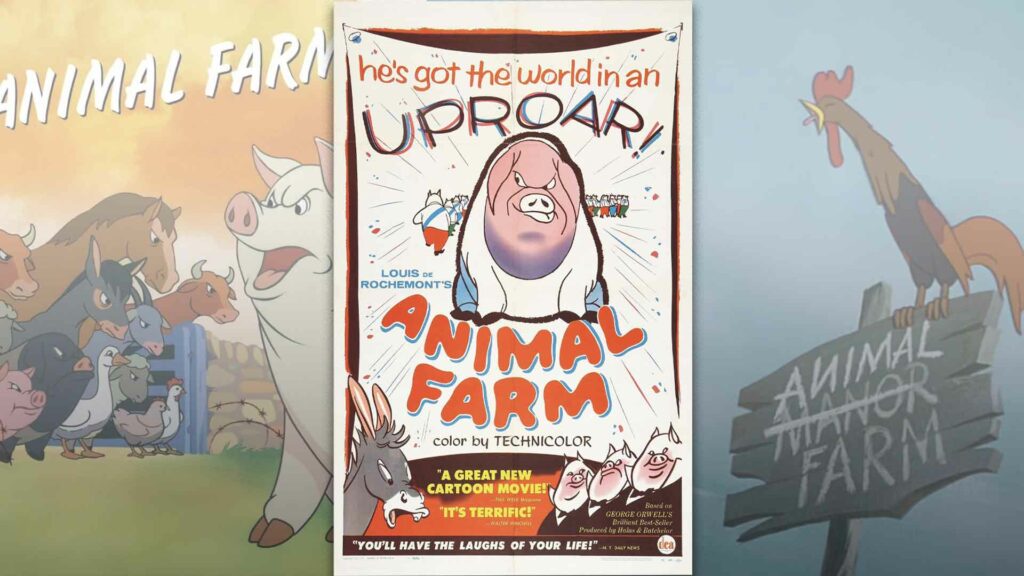
Animal Farm (1954)

Animated / Drama 1954 / 72 minutes RATING: 7/10 This is George Orwell's classic dystopian tale brought to the big screen. A farm setting is used to highlight a conflict between the "working class" – chickens, geese, cows, and pigs – and the wealthy, represented here by the farmer who owns everything. Orwell was anti-communist, but not blind to the problems of the arrogant elite who abused the poor, so his Farmer Jones here is a piece of work, shown whipping the animals in a drunken stupor. When Old Major, the most revered pig on the farm, calls a meeting, all attend. He gives a rousing speech, calling for solidarity against the oppressive farmer, and equality for all animals. But Old Major doesn't live to see the revolution he has called for – he punctuates his speech by collapsing at the end. But he has inspired action. The animals drive out Farmer Jones, and take over the farm for themselves. However, the animals soon learn the same lessons the poor Russians peasants learned when they overthrew the Tsar: being free of one tyrant isn't the same as being free. The pigs soon take the place of the farmer, because, after all, someone has to show some leadership. The pigs are soon eating the farmer's food, and sleeping in his bed too, even as the rest of the animals remain in the barn. All animals are equal, but some are more equal than others. Caution The cautions are of two kinds. Parents could see the trailer and think this could make for a good family night flick. While the simple 1950s animation does mute some of the violence, there are still creature killed both onscreen and off. At one point it is a full out war between a dozen armed humans and all the animals. Not a lot of blood is shown, but way too much for children. That's okay though, because this really isn't intended for an audience too young to understand the moral to the story. The other concern is that teens, and even some adults, might miss some of the nuance here, in part because of changes to the film that aren't in the book. This is a more hopeful version of the tale that ends with the dictator pig, Napoleon, getting overthrown, trampled to death by the other animals. In the book, it ends with the pigs still in charge, now making deals with the humans, and it is getting hard to tell the humans from the pigs and the pigs from the humans. The film's more hopeful ending was likely made because the film was, in fact, produced by the CIA. They may have wanted it to end on a more "democratic" note, the people rising up against their communist dictator. But Orwell's unresolved ending was likely meant to highlight the growing communist encroachment even in the West. And viewers will not get that from the film. But both book and film do critique the abuses that can happen under the arrogant. Orwell wasn't saying that the West was perfect and that only communism was a problem; he was highlighting that communism wasn't a solution to the problems happening in the West, and would only make things worse. Conclusion This is not a film to watch for entertainment; it rates only middling on that scale. But it is a great presentation of one of the more important novels of our time. At a time when "equity" is thought to be the ultimate goal, it's important to teach the next generation where that road really takes us. So, this would be a great one for 12 to 112. You may also be interested in Animal Farm: the Graphic Novel. ...

1 2 3