Transparent heart icon with white outline and + sign.

Life's busy, read it when you're ready!

Create a free account to save articles for later, keep track of past articles you’ve read, and receive exclusive access to all RP resources.

White magnifying glass.

Search thousands of RP articles

Helping you think, speak, and act in Christ.

Open envelope icon with @ symbol

Get Articles Delivered!

Helping you think, speak, and act in Christ. delivered direct to your Inbox!


Most Recent


The Rest


Red heart icon with + sign.
Documentary, Movie Reviews

Beyond the Gates of Splendor

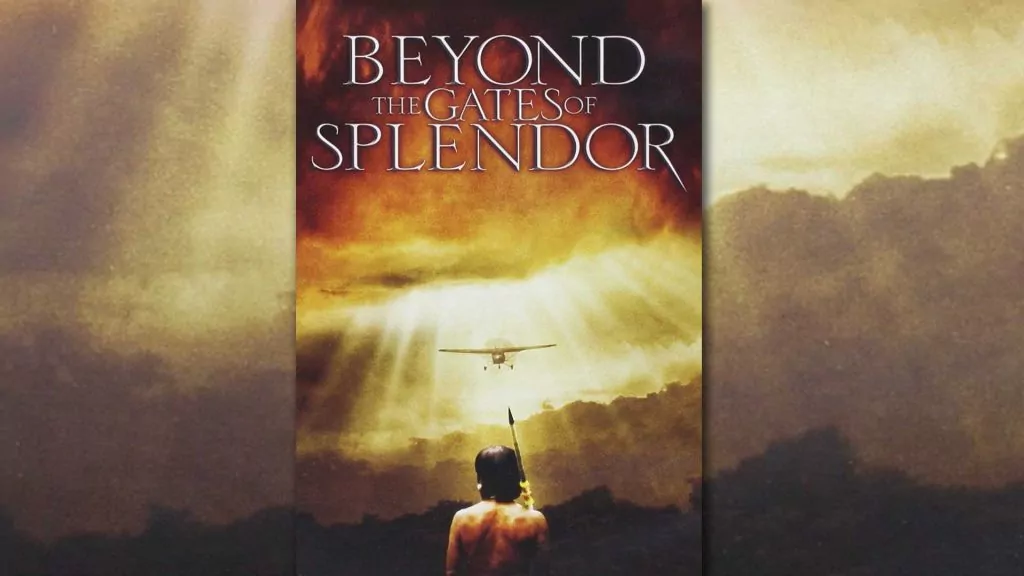
Documentary 96 min; 2005 Rating: 7/10 In 1956 a team of five missionaries were killed by the Waodani tribesmen they were trying to befriend. The murders caught the attention of the world, but what happened next wasn't widely reported. Beyond the Gates of Splendor tells the story of what happened when one of the missionaries' widows and a sister came to live with the very people who had killed their loved ones. They did so at the risk of their own lives. At the time of the missionaries' contact with them, the Waodani were a murderous people, not only to newcomers but with each other too. The documentary drives home that point with one native recounting his family tree by pointing out where each member of his family had been speared to death – his uncle over there, his dad a few years later by that bigger tree, another uncle further away in the bushes. “Waodani children grew up understanding they would spear and live, or be speared and die.” No one died of old age. But as brutal and vengeful as the Waodani were, the bloodshed stopped when the women's example was used by the Holy Spirit – some of the tribe turned to God. Caution Readers should bear in mind that, due to the native style of dress, there are frequent, though very brief moments of National Geographic type nudity, including topless Waodani women, and a lot of naked backsides. There are also some descriptive conversations about violent deaths, and some images shared of the missionaries' dead bodies. Conclusion While an animated video, The Jim Elliot Story, and a dramatized feature film, End of the Spear, have also been made about the missionaries, this documentary was needed to fill in the rest of the story – how the tribe lives today – and to bring more to the fore the spiritual transformation God worked, changing these rebellious murderers into repentant children. While some Christian films can be preachy, Beyond the Gates trusts that the facts of the matter will speak for themselves. That makes this a very good presentation of an astonishing story. Be sure to check out the trailer below. ...

Red heart icon with + sign.
Book Reviews, Graphic novels

Nathan Hale's Hazardous Tales (3 books)

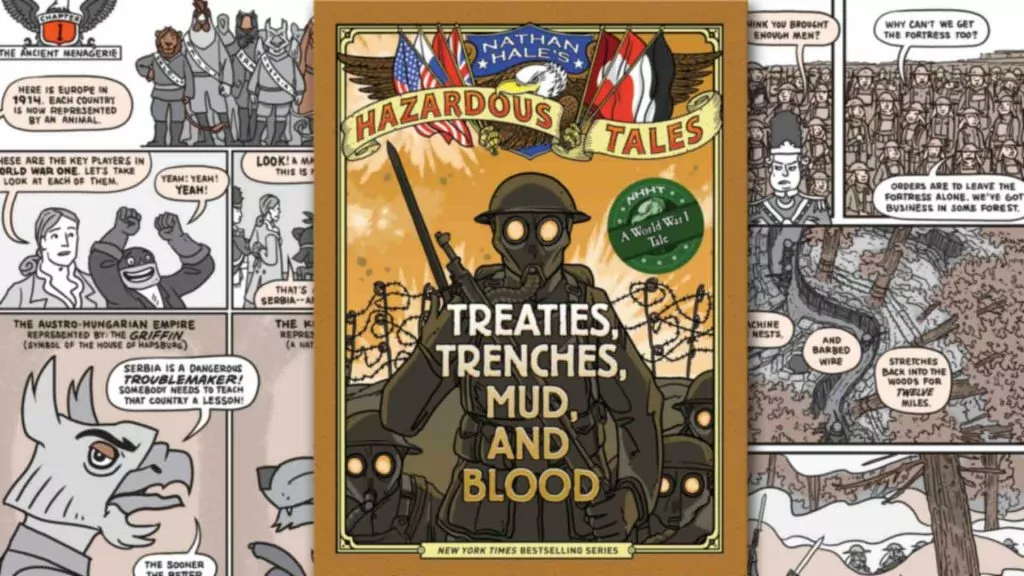
Nathan Hale's Hazardous Tales are a growing series of fast-paced, thoroughly researched, historical graphic novels. The best of these making learning easy, with humor and history intermixed such that kids will not just be eager to read them, but will be happy to reread them again and again. That makes them quite special. But the author does not seem to be a Christian, and that comes out more as the series has progressed. There are 13 books so far, with the second last spending several pages arrogantly belittling God. So, if you are going to introduce your kids to Hazardous Tales, be aware they aren't all alike. I've reviewed only 8 so far, and have recommended just 3. RECOMMENDED (3) I've listed these, not by publication date, but by preference, with my favorite right up top here. Treaties, Trenches, Mud, and Blood 2014 / 128 pages Rating: Good/GREAT/Gift A few decades ago a cartoonist decided to tell the story of the Jewish Holocaust in World War II via an animal metaphor. He made the Jews mice, and the Germans cats, the good folk dogs and the collaborators were pigs. It was a dark story, of course, but the use of the animals made it slightly less gritty, and thus more bearable. In Treaties, Trenches, Mud, and Blood, author Nathan Hale has done something similar for World War I. Each nation is assigned an animal: the Germans are eagles, the English are bulldogs, the Belgians are lions, the Ottomans are otters, the Russians bears and the Americans get stuck being bunnies, because eagle has already been taken. Hale does a good job of laying out the facts, and detailing the slaughter that amounted in the millions, but also lightening things up with doses of humor whenever he can. I knew the basic facts of World War I already, but learned a lot from this overview. Of course a comic, particularly one presented in metaphor form, shouldn't be regarded as an authoritative source, but it does provide a useful overview. Now if I want to find out more, I've now learned enough to know what I might want to read more about. This book is one of in a series of "Nathan Hale's Hazardous Tales" referencing both the author Nathan Hale, and the more famous American spy Nathan Hale who lived 250 years ago, and who appears in this series as the narrator. I hope to review the series at one point, as it has both high and low points. Hale used much more discretion in Treaties, Trenches, Mud, and Blood, though there are a couple cautions to share here too: this is a historic account that details the death of millions, so even though it is in animal/comic form parts of it would be too much for the very young. I'm not talking about gore - there isn't any - but rather the story itself. Also a language advisory: a couple of "good heavens"s pop up, a "holy moley" and in one instances a character says, "ye gods" (page 73). I'd recommend this for children 12 and up, though some kids might be able to handle it as young as 10. Big, bad, Ironclad 2012 / 128 pages Rating: Good/GREAT/Gift About the American civil war, and how the two sides each had, for the first time, ironclad ships (that cannonballs would just bounce right off of) fighting each other. If you only have a passing familiarity with the US civil war you might not know that it wasn't just a land-based battle. One lesser-known aspect, investigated in this graphic novel, is the attempt by the North to use a naval blockade to stop the South from exporting their cotton. To break the blockade the South built a ship with an iron hull, a hull so strong that cannon balls would bounce off of it. When the Merrimack was put out to sea it was every bit as devastating as it's creators had hoped, and was hampered only by an underpowered engine. The North had heard rumors about the Merrimack long before she was completed and had gotten to work on their own ironclad ship. So not too long after the Merrimack set sail, the North's response, the Monitor was completed. This is a fascinating tale, with the whole civil war as a backdrop. While the information is well researched, the book itself is drawn in a very comical style, with one character, Gustavus Fox, actually presented as a uniform-wearing fox. So this is great for someone trying to get a good overview of events – at 128 pages it has the size to give us much more than a glimpse – but it wouldn't be the sort of book that would be cited in the bibliography of any paper. Donner Dinner Party 2013 / 128 pages Rating: GOOD/Good/Gift The general gist of this tale is well known: the Donner party was a caravan of settlers heading to California that took an ill-advised short-cut and to survive the winter had to eat their dead. So this might not seem the sort of story that is well suited for a graphic novel account: too dark and disturbing. There is certainly something to that, but author Nathan Hale does ensure this is, at most, a PG-rated account - there is no gore of any sort, save one panel in which a man is stabbed and that is as muted as a stabbing can be. I enjoyed learning the true (or mostly true - the author fills in the gaps with his imagination) story behind the popular folk tale. But, unlike the previous story on World War I, there is no pressing reason to read this graphic novel. There is no real lesson to be learned (other than, as one survivor put it, "Don't take no cut-offs, and get where you're going as fast as you can") and the story of the Donner party has had no real impact on our culture or our world. So if you don't know much about it, well, you can still get by. But readers will get an idea of just how brave (and perhaps crazy) these first settlers were, to travel for months on end through wilderness and Indian lands and without even really knowing what they were in for. So my overall recommendation would be to get Treaties, Trenches, Mud, and Blood before you get this one. But while there is no pressing reason to get this one, there are no real reasons not to, and it is an interesting slice of American history well and quite delicately told. You can get a copy from Amazon.com by clicking here. NOT RECOMMENDED (5) While a few of the below are not recommended because they include an instance or two of God's Name being abused by a historical figure (such that a librarian with a black marker could perhaps handle things), there's also at least one where author Hale devotes several pages in a row to mocking God. I've listed these here in the order they were published. One Dead Spy 2012 This is the first book in the series, and American spy Nathan Hale's first story is his own – when he first decided to become a soldier, his part in booting the British out of Boston, the story of the supply ship he seized - which coincides with the story of the early part of the American Revolution. That's the real thrust of the book, to give readers a look at how the war started. But at just 128 pages there simply isn't room for the whole story, so this tale ends with the end of Nathan Hale. Or rather, it ends with him on the gallows, telling stories to the Hangman and his British guard. It is the first story, but finds it's place here at the bottom because, unfortunately, the author includes an exact quote from a British General that begins with the general taking God's name in vain (page 57). That wasn't necessary. The Underground Abductor 2015 This would best be described as a biography of Harriet Tubman, an American slave who helped dozens and eventually hundreds of other slaves flee to freedom. She worked with many others, who would shelter the slaves as they went from one stop to the next in their journey from the slave-holding southern states to the freedom found that was to be found in Canada. These escape routes that slaves would take, traveling from safe house to safe house, came to be known as the Underground Railroad...even though very few trains were involved in their transport, and none of it was really underground (though a few secret cellars were involved). This is a fascinating story, but there is some strange mysticism included: Harriet Tubman, after recovering from a severe head injury, would claim to get visions from God. But more troubling is that this book, like One Dead Spy takes the Lord's name in vain. In this book it happens at least a couple times, which is why it, also, is near the bottom of this list. Alamo All-Stars 2016 "Remember that Alamo!" - many of us have heard this rallying cry, but don't know what it is we're supposed to remember. This is the story of the stand that a 200 (or so) Texans took against a Mexican army many times that size in 1836. The Texans took their stand in a makeshift fort at the Alamo mission, and after a 13 day siege the Mexicans wiped the smaller Texan force out, leaving only a few women and slaves alive to spread the story in the hopes it would break down resistance to Mexican rule. It did the opposite - among those killed were the infamous Jim Bowie and famous Davy Crockett, and their deaths helped spark a revolution which saw the Mexicans defeated and Texas declaring its independence (10 years later Texas joined the United States). Hale does another fine job here of teaching history while keeping things very interesting, but in two instances (page 99 and 103) he again depicts God's name being taken in vain, both involving historical quotes. Blades of Freedom 2020 This is a grim history of Haiti presents Christianity as just another religion, akin to Voodoo. It has blood aplenty, and a naked butt. And it also repeatedly takes God's name in vain. Above the Trenches 2023 It's a World War I story about the very first fighter pilots. The story is incredibly complex, such that I don't think most kids will even be able to follow what's going on. God's name is taken in vain in French ("Mon Dieu!"). There's also an few F-word-related jokes about a Dutch plane builder, Anthony Fokker, and the Fokker plane he built. One example: a pilot is called a "Clever Fok –" before getting interrupted by the narrator telling him to "Shut your mouth." Add to that, the prophet Elijah makes an appearance on a half dozen pages because he is, so it is explained, the patron saint of aviators. The 2 Kings 1:1-17 story is told of how Elijah informed Israel's King Ahaziah that he was going to die from the injury he had suffered because he had chosen to consult Baalzebub rather than God. We also get to see how Ahaziah sent a group of 50 soldiers to bring him Elijah, and how God consumed those soldiers in fire.  We see it happen again a second time to the next group of 50 soldiers the king sends. "Crispy critters!" one of the narrators interjects excitedly. Then we see how the third group of 50 was led by a wiser soldier who asked Elijah to spare the lives of his men, which he does, to the disappointment of this same narrator. It's a portion of Scripture that has a context – God's utter holiness, and Ahaziah's incredibly arrogant rebellion – but to anyone new to this story (including many Christians) this is everything from bizarre to monstrous. Patron saint of aviators? That's a weak reason to include a story that readers will not understand at all, so this is just author Nathan Hale taking a shot at God, hoping to get laughs. Give this one a miss....

Red heart icon with + sign.
Book Reviews, Graphic novels

Owly: The Way Home & The Bittersweet Summer (5 books)

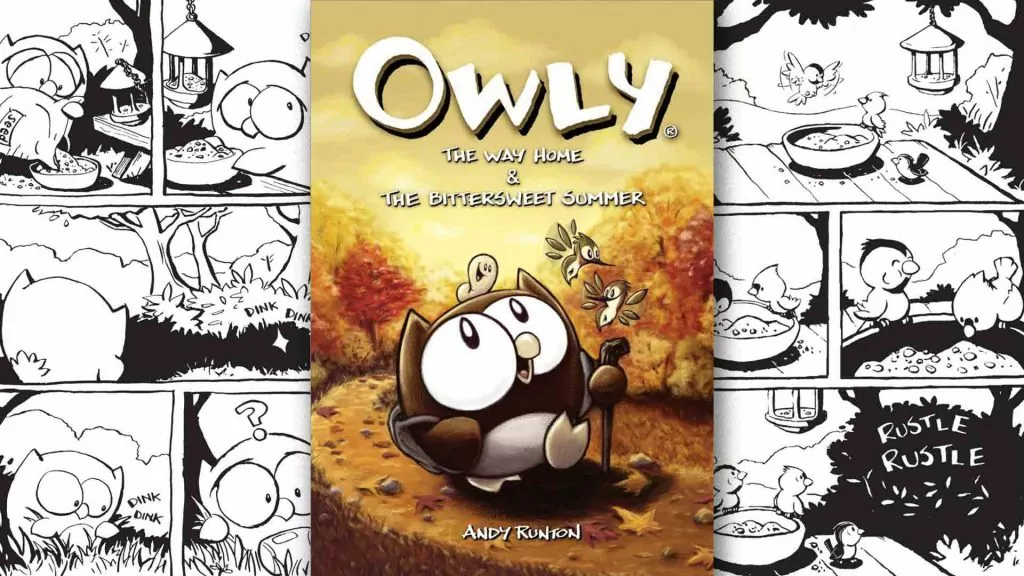
by Andy Runton 2004 / 160 pages Rating: GOOD/Great/Gift This is two stories in one, and at about 80 pages each, they have room for some real fun. In the first, we get introduced to Owly, who, as you may have guessed, is an owl. The forest creatures are afraid of him because, well, he’s an owl, and they know that typically owls eat creatures like them. But not Owly. He’s a kinder gentler owl, and all he wants to do is feed his fellow birds seeds. Sadly, no one trusts him, and Owly is all alone… until the night of the big storm! Then Owly finds a worm, half-drowned, and nurses it back to health. Worm, realizing he hadn’t been eaten, trusts and befriends Owly, which is the start of something beautiful. It’s never really explained what Owly does eat, but we can be certain that it isn’t cute little worms! In the second story, Owly and Worm meet a couple of hummingbirds and have a great time until the little speedsters have to head south for the winter. But don’t worry, they’ll be back come Spring! It’d be more accurate to call these “talkless” rather than “wordless” because, even as the dialogue between Owly and his worm friend is limited to symbols and punctuation marks – a question mark when one of them is puzzled and an exclamation mark when they are excited – there’s the occasional shop sign or even a whole encyclopedia page entry on hummingbirds that does require the reader to be able to actually read. If you’re considering getting this for your school library, you’ll be interested to know there are two editions of this story, the first in black and white with this symbol-based dialogue, and the second, now titled simply Owly: The Way Home (2020) that is in full-color and adds in a minimal bit of verbiage between the characters. While I really like the original near-wordless version, it was sometimes a bit hard to decipher what Owly and his pal were saying to each other, so the second editions are probably the best way to go. Everything in this series seems to be gentle and kind including Just a Little Blue (1st edition 2005 /2nd edition 2020, 130 pages), Flying Lessons (2005/2021, 144 pages), A Time To Be Brave (2007/2022, 132 pages), and Tiny Tales (2008, 172 pages)....

Red heart icon with + sign.
Documentary, Movie Reviews

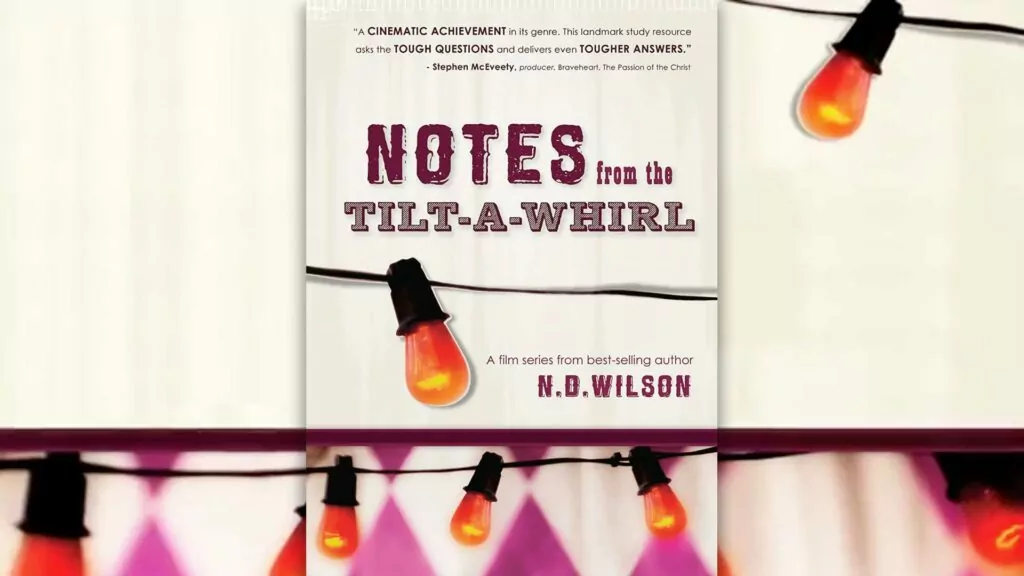
Notes from the Tilt-A-Whirl

Documentary 51 minutes / 2011 Rating: 11/10 You are going to like this. I haven't met anyone yet who has seen this and hasn't been impacted by it. Now at first look, this might seem a pretty random collection of thoughts put to film with moments of poetry, philosophy, biography, musical artistry, and nature documentary. But there is method to the seeming madness, and one clear overarching thought that unites all the chapters in this film – that God is great! That God is great is hardly a new thought, but getting excited about His greatness is a somewhat recent development. Martin Luther, for example, always knew God was great, but that was a fearsome thought for him in his early years. It was something that filled him with dread as he considered how great God was and what a wretched man he was. God’s greatness left Luther despairing of what he could do to ever earn a place before his Creator. After the Reformation, when we relearned that faith was a gift, that our great, holy, awesome God was also loving, merciful, and willing to humble Himself to become like us, to save us, well, His greatness is still fearsome, but now it is also something for us to explore – we can come near. He has invited us to enjoy Him forever. In this film, Nate Wilson teaches us to see again this greatness of God. Today we so often overlook the wonder around us - we think it unremarkable that we are sitting here, on a lump of spinning dirt, hurtling through space at an unimaginable rate of speed. Wilson, more in tune with the wonderous nature of our frenetic journey round the Sun, will, on a semi-regular basis, fall to the ground and get a solid grip on the grass just to ensure he doesn't go hurtling off into space. This film is about making us see the wonder that is really there, but which we have grown too cynical to see. Occasionally an "ordinary" miracle still impact us – parents, watching their child be born, will be awe-struck, even though this is an event much like what has happened literally billions of times before in the history of Man. Our awe is rekindled. In Notes from the Tilt-a-Whirl Wilson helps us understand – helps us feel again – the wonder of God's creative genius. God is great! And while trembling remains an appropriate response, wonder is certainly another. You can watch a "chapter" below. And be sure to check out the book of the same title. ...

Red heart icon with + sign.
Book Reviews, Teen non-fiction

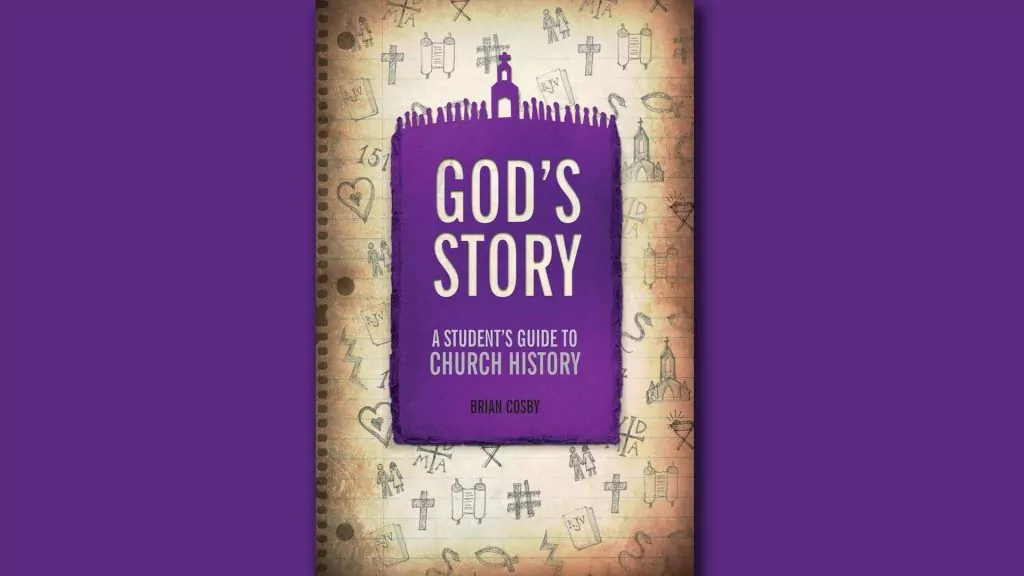
God's Story: A Student's Guide to Church History

by Brian Cosby 144 pages / 2014 Rating: GOOD/Great/Give This small book is an introduction to Church history written for students at the high school level. The author is the pastor of a conservative Presbyterian church in Tennessee and thus the book is written from a position that strongly favors Reformed theology. Not everything could be fit in between the covers – Dutch Reformed history is largely skipped over, and some significant documents such as the Belgic Confession, Heidelberg Catechism, and the Solemn League and Covenant fail to get even a mention. Nevertheless, considering the brevity of the book, it does a remarkable job of covering major events and issues. There is also an emphasis on how the church today has benefited from the faithful efforts of past Christians. For example, after describing the struggle against powerful heresies in the early centuries of the church Cosby writes: We, today, often take for granted the doctrine of the Trinity as it is so nicely defined and articulated (e.g. Nicene Creed). But this came at a price – the defense of biblical doctrine against a raging set of heretical views. We stand on the shoulders of these men who have given the church a rich heritage of theology, faith, and passion for truth. Of course, attention is paid to the growth of the papacy and gradual corruption of doctrine, the rise of Islam, and the split between the Roman Catholic Church and the Eastern Orthodox Church in 1054. Interestingly, when Islam conquered the city of Constantinople in 1453, Eastern Orthodox scholars headed to Western Europe, bringing with them Greek New Testament manuscripts. In his chapter on the Continental Reformation, Cosby refers to John Calvin as “arguably the greatest and most significant theologian in church history.” One of the most helpful aspects of the book is its analysis of the nineteenth century and how four particular movements originating in that century continue to plague the church today: extra-biblical revivalism liberalism cults, and evolution Under the category of extra-biblical revivalism, Cosby includes doctrinal currents such as the views of the influential evangelist Charles Finney (who had a defective doctrine of original sin) and a new method of interpretation called Dispensationalism, which became dominant among evangelicals in the early twentieth century. Dispensationalism is the source of the popular concept of the “rapture.” The nineteenth-century also witnessed the development of liberal theology. The liberal heresy had a destructive impact throughout the West, starting early in the twentieth century. As for cults, both the Mormon and Jehovah’s Witness heresies were invented in the US during the 1800s. And, of course, the theory of evolution spread like wildfire throughout the West following the publication of Charles Darwin’s book The Origin of Species in 1859. In sum, this is a short but effective introduction to church history and the developments that have set the stage for our circumstances today....

Red heart icon with + sign.
Documentary, Drama, Movie Reviews

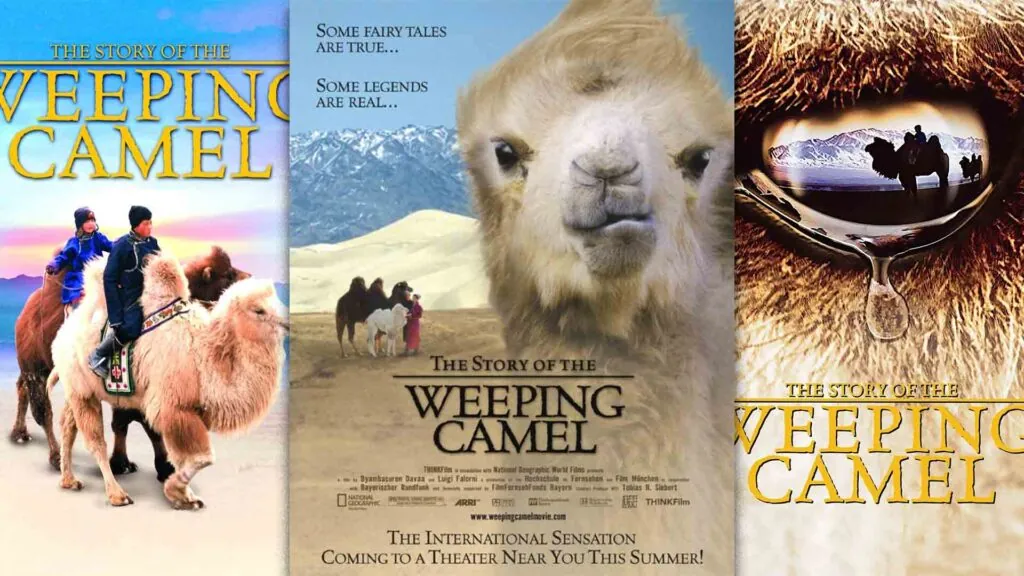
The Story of the Weeping Camel

Foreign film / Docudrama 2003 / 87 minutes RATING: 7/10 This is as much drama as documentary because, as film critic Roger Ebert described it, “It uses real people in real places and essentially has them play themselves in a story inspired by their lives. That makes it a ‘narrative documentary,’ according to the filmmakers.” What we get is a peek inside a Mongolian nomad family during their camel birthing season. The camel of the title takes three days to give birth and then refuses to suckle her calf. It will die unless she changes her mind so two young brothers go off on a 50-kilometer journey to bring back a musician from the closest village. They hope his music will soothe the mother camel into accepting her offspring. The legend is, if the camel does finally start to feed her calf, then that will cause the mother to weep. Cautions At one point a little boy is bathed, and we can briefly see him naked from the front. If you are watching this with little kids, the camel birthing scene might be a little intense - we see the calf delivered, still covered in the membrane and a little bloodied. Conclusion This is for the adventurous... and patient. Weeping Camel is too slow for children, and probably most adults, but if you like learning about other people and countries, and are a fan of documentaries, then this is for you, offering an up-close and fascinating look at such a completely different culture. There's certainly a reason this got a 2005 Oscar nomination for best documentary. I could only find a low-rez trailer online, but it'll give you a good feel for the film. ...

Red heart icon with + sign.
Family, Movie Reviews

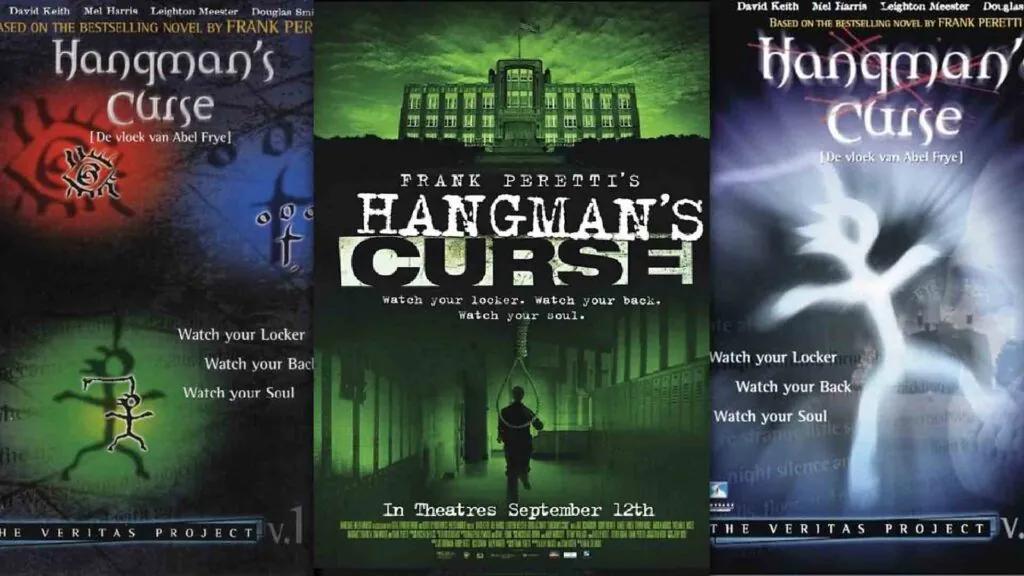
Hangman’s Curse

Teen Suspense / Mystery 2003 / 106 minutes RATING: 7/10 Bullies at Rogers High School are all getting deathly sick. Is this the work of Abel Frye’s ghost, a student who committed suicide ten years earlier? The Veritas Project, a family of investigators, is brought in to uncover the truth and they quickly find things are not at all as they appear to be. If you were going to judge this movie by its cover you would probably dismiss it as some weird supernatural thriller, but the villains in this story turn out to be familiar foes. At its core this is a movie about bullies and the bullied, about cliques and trying to belong. This is campy, for sure, but could still be an interesting one to watch with your teens and discuss. Cautions That said, Hangman's Curse begins with a student’s suicide and delves into the practice of witchcraft so this clearly isn’t suitable for anyone under 10. In fact, parents should really preview this before watching it with their kids. This has been billed as "Christian horror" and if you can't deal with spiders, you really should give this a miss. The tagline is: "Watch your locker. Watch your back. Watch your soul" and that just about sums up why this film is going to be too much for many viewers – we just aren't expecting a Christian film that'll make you jump. In some countries this has been restricted to 16+, though I'd say that might be more because folks rate anything with bullying (or cigarettes) rather severely, as compared to what they do with sexuality or language. Conclusion Horror, suspense, and more than a little cheese – whatever you want to call it, you haven't seen a Christian movie like this before. Based on a Frank Peretti teen novel of the same name, Hangman’s Curse is a Christian film that manages to get us thinking, at least a little. It's got some humor too, and it gets its anti-bullying message across crystal clear but in such a campy way that it isn't all that preachy. To get a good feel for it, check out the trailer below. ...

Red heart icon with + sign.
Animated, Movie Reviews

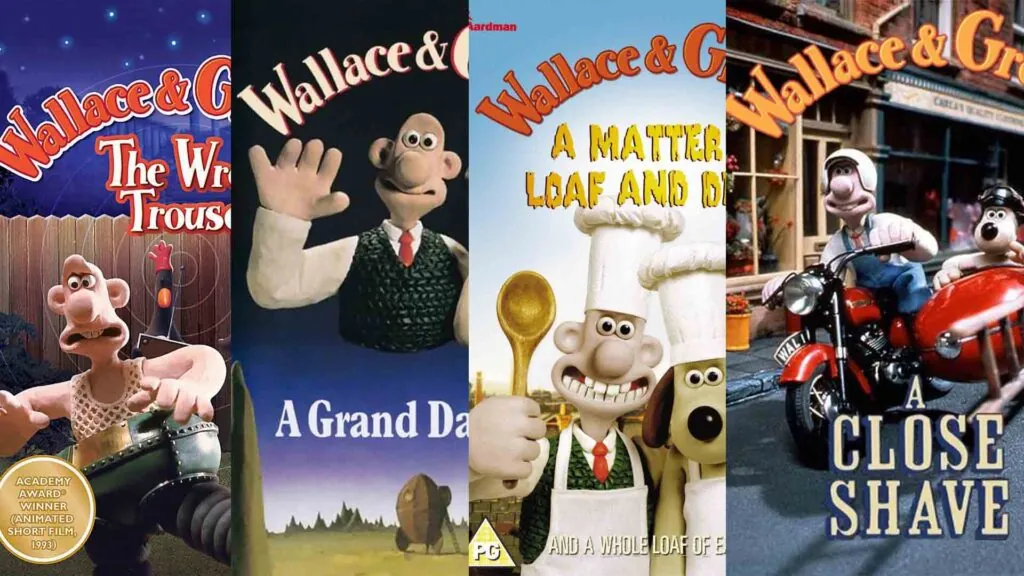
Wallace and Gromit: four short films

Animated / Comedy 1989-2008 / 114 minutes RATING: 8/10 It's been 35 years now, since student filmmaker Nick Park crafted his leading man out of clay. He made Wallace lovable and oh so inventive, but also more than a bit thick. Then Park carved up Gromit, Wallace's loyal, long-suffering dog who can't quite manage to keep Wallace out of trouble entirely, but who does manage to keep his master from getting in too deep. Wallace might be a brilliant inventor, but Gromit is the wise one. Since his first stop-motion claymation film, A Grand Day Out (where the duo managed to make it to the moon), Park has featured this duo in three more shorts and a couple of feature films; they've won a few Oscars, and spawned spin-off TV shows (Shaun the Sheep being the most notable). Not bad for a dim bulb and his dog. Part of the charm here is that the two of them do care for each other. Of course, that doesn't mean Wallace knows how to express his affection. He'll build an automatic patting machine, for example, rather than give Gromit the scratch behind the ears that his canine companion really wants. And when Gromit wants to go for "walkies," like every dog does, Wallace builds a set of "techno trousers" that he can attach Gromit's leash to, so the robot pants can take Gromit for his walk. Really Wallace, really? Gromit can't even talk, but the expressive dog sure can communicate. (They actually write dialogue for Gromit, even though he isn't going to speak it, so the animators will know how to shape Gromit's expressions.) Right behind this duo, third billing goes to the inventions – Wallace has more gadgets than James Bond, and they're twice as cool. He's built a machine that automatically throws him out of bed, sliding Wallace down a chute so he can land at his breakfast table, where another machine dresses him and yet another makes his breakfast. This process rarely goes off without a hitch, and the malfunctions are as fun as the successes. Another of Wallace's crazy contraptions is a knitting machine that just needs you to pop a sheep in one end, and a sweater will come out the other. Park has made four short claymation Wallace and Gromit films in all. A Grand Day Out 1989 / 24 minutes Wallace and Gromit need a vacation, and when Wallace discovers they are out of cheese, they decide the best getaway destination is the moon, what with all its bounty of green cheese. How are they going to get there? By building a rocket ship in the basement, of course! The Wrong Trousers 1993 / 30 minutes Wallace and Gromit’s happy home life is disrupted by a mysterious penguin who rents one of their rooms. Soon the shifty-eyed flightless foul is trying to replace Gromit in Wallace’s affections. But never fear, the loyalty of this tried and true dog does win out in the end. The moral of this tale? Either never neglect your dog, or don’t trust shifty-eyed penguins. Fun and silly, it won an Oscar. They even made a sequel, the feature film Wallace and Gromit: Vengeance Most Fowl. A Close Shave 1995 / 31 minutes To make ends meet, Wallace and Gromit have started their own window-washing business. A wool merchant, Wendolene Ramsbottom, asks them to clean her shop windows, and, of course, Wallace falls in love. There are two mysteries to solve: first, where has the country's wool gone? and, second, what or who is destroying the interior of Wallace and Gromit's house? (One hint: this is where Shaun the Sheep makes his very first appearance.) A Matter of Loaf and Death 2009 / 29 minutes Wallace and Gromit are now bakers, and great at it. It doesn't hurt their business, either, that all the other bakers in town are being bumped off one by one. Wallace is in love again, this time with Piella Bakewell, the spokesmodel for Bake-O-Lite breads. The ever loyal Gromit gets stuck doing Wallace's work in the bakery, even as he's also trying to prevent the two of them from becoming the "cereal" killer's next victims. The description pitched this as a "who-doughnut" in the tradition of Alfred Hitchcock, and I was skeptical; how could they pull that off in claymation? But they did! Cautions While A Grand Day Out would be safe for all ages, The Wrong Trousers has a somewhat creepy villain that the pre-school set could find a bit disturbing. The last two films amp up the tension more, with first sheep, and then bakers, getting killed. One baker even gets killed off screen but then falls back into the shot, face first into a cake. It's all claymation, so, not at all realistic (and there is no blood or gore). But it underscores how these aren't really intended as family fare. Some animation is for kids, with some jokes for adults thrown in. I'd say this is for adults, and some older kids  – 10 and up – could enjoy it too. Language concerns would be limited to a few uses of "heck" and "flipping" and I think an "oh my gracious." Finally, in A Matter of Loaf and Death, a bomb blows a hole in Wallace's pants, and we see a brief shot of Wallace's naked, claymation butt. Again, the claymation aspect of it means this is far from titillating, though it might get little boys tittering. Conclusion The appeal here is the spectacle of all of Wallace's crazy inventions, and the simple beautiful loyalty of these two friends. It's clever, and might even inspire some kids to give stop motion filming a try. I remember making one, not with clay, but with a pair of my shoes doing a dance across the floor. There are so many tools online to get an inventive kid going, and this might be just the thing to inspire them. That said, these are not all for the very young. The Brits rate these as 7+ but I'd say that especially A Matter of Loaf and Death should be 10 and up. For a taste of what Wallace and Gromit are all about, check out this compilation of their "cracking contraptions" –  8 two-minute videos of Wallace at his most inventive. ...

Red heart icon with + sign.
Book Reviews, Graphic novels

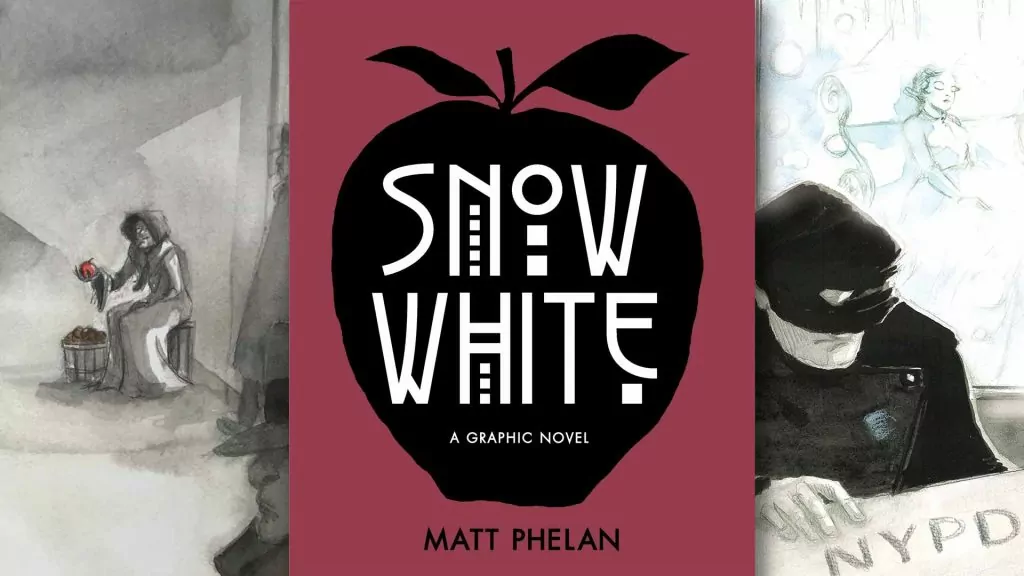
Snow White

by Matt Phelan 216 pages / 2016 Rating: GOOD/Great/Gift This is Snow White inventively reimagined as a 1920s Depression-era American tale. The "king" is a stock trader who has managed to survive the stock market crash. The stepmother is still a queen, but this time of the Ziegfield Follies, a popular Broadway show. The mirror is now a stock ticker, and the seven dwarves are seven street-smart kids. Prince Charming? Well, I shouldn't give too much away! Though over 200 pages, this is a very quick read, because it is much more pictures than text - several times there are stretches going on for pages, where there are no words at all. I first thought it would be hard to pick exactly who'd be the ideal audience. Fairytales are typically for children, but this seemed too somber to attract little ones – done in a black and white, it has a dark, noir style...all but for the last few pages with their happily-ever-after full-color conclusion. Some of the historical touches only adults would pick up on, but how many of them would pick it up? It's listed as for teens at my local library, but our Christian school library also got it, and there it seems more of a tween hit - my own tweens have taken it out a few times already. Cautions There are no real cautions to offer - if a child is old enough to read the original, then they will be old enough to read this one. There is a drop or two of blood here and there, but no gore. The worst is probably the pig or cow heart we see in full color at one point (in keeping with the original story). And there are no language concerns either. Conclusion This is an inventive, and very intriguing tale, done with style. Adults can't help but appreciate it, but it's really tweens who will most enjoy it....

Red heart icon with + sign.
Adult fiction, Book Reviews

Directed Verdict

by Randy Singer 2002 / 486 pages Rating: GOOD/Great/Give There are lots of layers in this intense courtroom drama. When the Saudi religious police uncover a secret church, Charles Reed, the American pastor, is tortured and killed, and his wife Sarah is beaten and deported on trumped-up drug charges. From there the action takes place both in an American court where lawyer Brad Carson helps Sarah bring suit against her torturer, and in Saudi Arabia, where the small church struggles to continue, their members fearful and shaken. The large law firm defending the torturer is willing to cheat, so what might their murderous client be willing to do? Sarah Reed’s team is growing to admire her courage but none of them share her Christian scruples, so what might they be willing to do behind her back to help her get justice? I was struck by the missing obligatory conversion scene that is central to so much Christian fiction. Sarah's legal team of Brad Carson and Leslie Connors weren't Christian at the beginning of the book, and still weren't at the end. That might not seem a feature in a Christian book; fictional though they may be, we don't want our favorite characters heading towards hell. But because it happens so often, it's quite the twist when we witness someone planting and watering, but don't get to witness the harvest. This quick read got me picking up the sequel Self Incrimination where Leslie is handed a copy of C.S. Lewis's Mere Christianity. It turns out that Singer wants the best for his characters too, but he's more patient about it, waiting until book two for the reaping. I wasn't as fond of this sequel, not so much because it had the obligatory conversion scene, as that it had our two favorite lawyers defending a murder suspect who seemed guilty, guilty, guilty. And they are trying to get her off! Is that what the heroes of the story are supposed to do? I don't want to give too much away, so all I'll note both lawyers aren't Christian during most of the trial and trial preparation. So if they aren't acting entirely right, maybe it's because they don't know what the right thing to do might be. Still, author Randy Singer doesn't really help readers figure it out either, and ultimately the resolution is tainted by what seems sentimentality over justice. To sum it up, I absolutely loved the first book and wasn't as impressed with the sequel. If Directed Verdict has you looking for another great Singer courtroom drama I'd steer you to Rule of Law instead...

Red heart icon with + sign.
Family, Movie Reviews

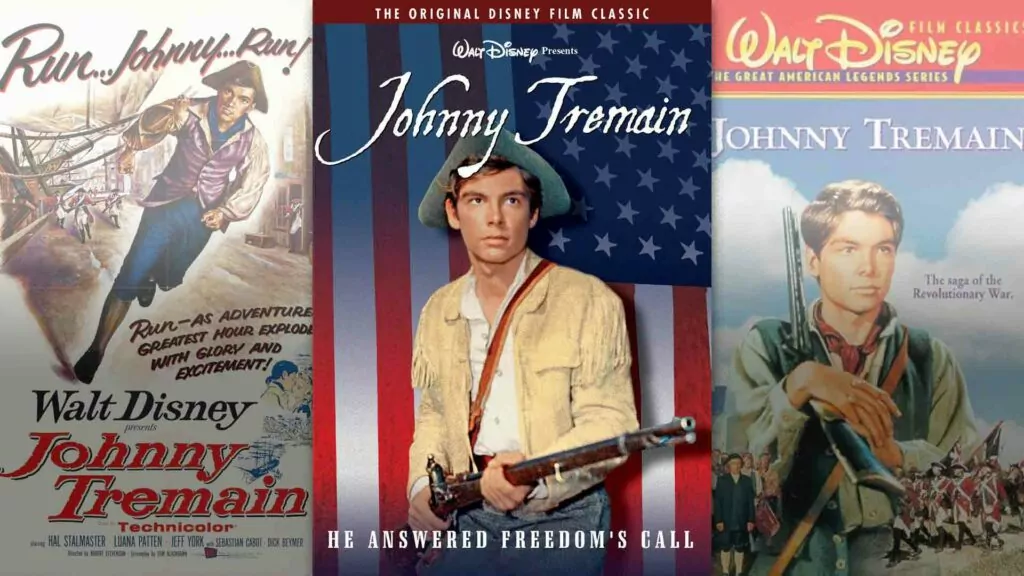
Johnny Tremain

Historical drama / Family 80 min / 1957 RATING: 7/10 Walt Disney clearly loved American history, and Johnny Tremain is another of his homages to it (The Swamp Fox and both Davy Crocketts being a few of the others). The setting is 1773 Boston, just weeks before the Boston Tea Party protest: on May 10, 1773, colonists who were masking their identities by dressing up as "Indians" boarded ships carrying tea, and threw the cargo into the harbor. This was a protest against a tea tax that had been imposed by the British Parliament. The Tea Party's actions stirred the pot, angering Parliament, which then passed further laws, described in the colonies as the "Intolerable Acts" which in turn angered more colonists. That's how the British Tea Party was an early precursor to the American Revolution that began two years later. So Boston is a busy place, as the story starts, but our hero Johnny is too busy to care much. He has his own concerns: his master is getting older, and losing some of his skills. Johnny seems to feel that if he is going to make his own name in the silversmith trade, he may need to take on jobs his master refuses to do. However, when he tries to complete a complex job while his master is away at church, it goes badly for him: breaking the Sabbath costs him the use of one of his hands which he badly burns on molten silver. The accident also costs him his trade, as a one-handed apprentice isn't much use. With his options limited, Johnny falls in with the "Sons of Liberty," becoming a revolutionary not so much out of principle, as out of friendship: these are the only people willing to give him a job. But as he gradually becomes acquainted with one of the movement's leaders, like Paul Revere and Samuel Adams, he gets won over to the cause and starts working as a secret courier. Cautions America is sometimes said to revere God, country, and guns, and not necessarily in that order. That might well be true of Walt Disney too, and comes out in this film in small ways, like how the most overtly Christian character is also the most joyless – the silversmith makes worship all about duty, not love. Still, God is not mocked. Other cautions include lots of gunplay but shown from a distance, which greatly mutes the impact. The most notable caution would be the "fight for liberty" this movie celebrates. Is it liberty, or is it simply rebellion? I don't know what to think about the American Revolution. The Canadian in me says, "You rebelled over a tax?" – that hardly seems warrant enough for a Christian to take up arms! But some American brothers have explained/argued that it wasn't so much a rebellion against the King as against the British Parliament. And, so their argument goes, the British Parliament imposing a tax on the colonies was akin to Alberta imposing a tax on Manitoba: it was an action they didn't have the jurisdiction to impose. What a viewer concludes about the rightness or wrongness of the American Revolution will greatly impact what they think about the film. Conclusion As a Canadian, watching this more for entertainment than education, this was a pretty good, and family-friendly, adventure film. There are brave folk taking their stands based on principles that they hold more dearly than their own lives. And that's an example we can learn from, especially when we have our Canadian government trying to penalize spreading His Truth to homosexuals. It might well be that we will need to risk much for what matters more. And American kids who have read the book in elementary school (where it has been a staple for decades) may really enjoy seeing how the story unfolds on the big screen. So, one thumb up. Johnny Tremain Trailer...

Red heart icon with + sign.
Documentary, Movie Reviews

The Green Prince

Documentary 101 minutes/ 2014 Rating: 8/10 Mosab Hassan Yousef is the son of one of the founders of the terrorist group Hamas, and served as his father’s right-hand man. But at the same time, he was working as an informant for the Israeli secret police, the Shin Bet. This is his unbelievable story. While the Israeli-Palestinian conflict is the background to everything, it’s clear that director Nadav Schirman is most interested in what was going on in Yousef’s head and heart. Yousef is adamant that “I would never betray my father,” but Shin Bet agent Gonen Ben Yitzhak also found him surprisingly easy to turn. The same young man who bought weapons to attack the Israelis later becomes passionate about working with the Israelis to save Jewish lives. One of the explanations for this dramatic turnaround is Yousef’s conversion to Christianity. But he starts working for the Shin Bet before he becomes a Christian: perhaps his willingness to work with the Israelis is evidence of how God was already stirring his conscience? Another part of the explanation might be the type of man his Shin Bet handler was. Ben Yitzhak was supposed to see Yousef as simply a tool, but he wasn’t able to distance himself like that and today Yitzhak’s children call Yousef “Uncle Mosab.” This is an excellent production, with dramatic re-enactments that give the whole thing a cinematic feel – at times this seems like an espionage thriller. It is a longer documentary and might be overly so for anyone not already interested in the Israeli-Palestinian conflict, but for the rest of us, this is about as good as any documentary you will see. Yousef has also told his story in a fascinating book, Son of Hamas. Watch the trailer below. ...

Red heart icon with + sign.
Book Reviews, Children’s non-fiction

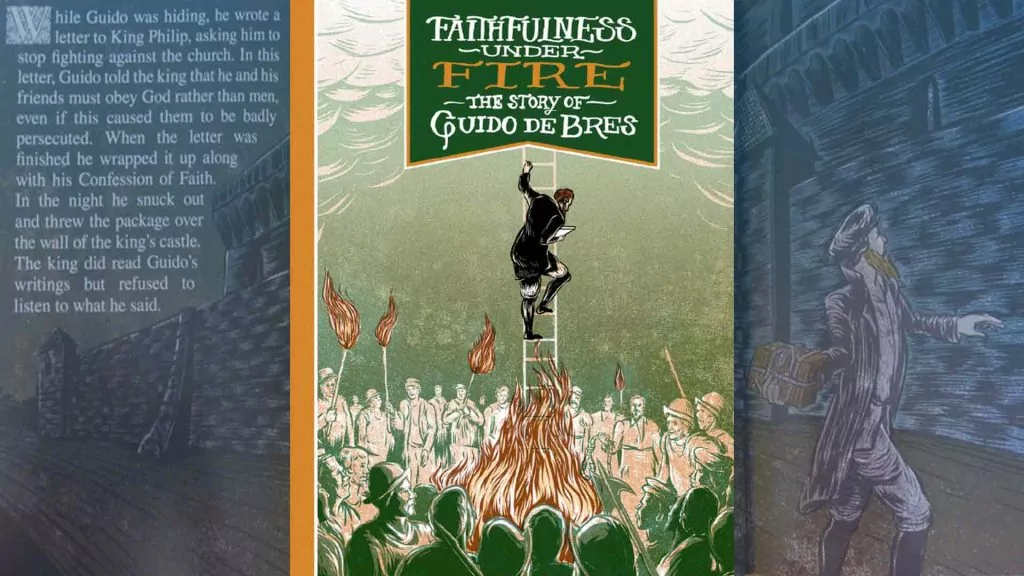
Faithfulness Under Fire: the story of Guido de Brès

by William Boekestein 2010 / 32 pages Rating: GOOD/Great/Give “Church history” and “picture book” are almost mutually exclusive terms, but William Boekestein, author (and URC pastor), and Evan Hugues, illustrator, show that they don’t need to be. Faithfulness under Fire is the story of Guido de Brès and how God used this man to craft the Belgic Confession. De Brès was born in 1522, and once he learned to walk, always seemed to be on the run. Persecution drove him to leave his hometown of Mons, Belgium, and head across the Channel to England. We learn that, for the brief period of Edward VI’s reign, Protestants could find refuge here, but the king’s death prompted Guido to return to Belgium, where he became a traveling preacher. Preaching was against the law, so he was always on the move, and didn’t even dare use his real name. About midway through the book, we see a great picture of de Brès throwing the Belgic Confession over a tall castle wall. This is where the Catholic King of Spain lived – de Brès hoped he would read the Confession and stop persecuting Protestants. That didn’t happen. But God decided to use de Brès’s efforts another way – the Confession has since spread around the world and been a gift to strengthen and instruct millions of Christians. As you may recall, Guido de Brès was eventually captured, imprisoned and hanged. A hanging might not seem a good way to end a children’s book, but as Boekestein makes clear this was not the end of the man, but only the means by which he entered “the comfort of his Lord” (and the hanging is never pictured). I’m not sure if this is a book children will read on their own, but the readable text and fantastic illustrations will certainly keep their attention if mom or dad reads it to them. ...

Red heart icon with + sign.
Culture Clashes

Are some cultures better than others?

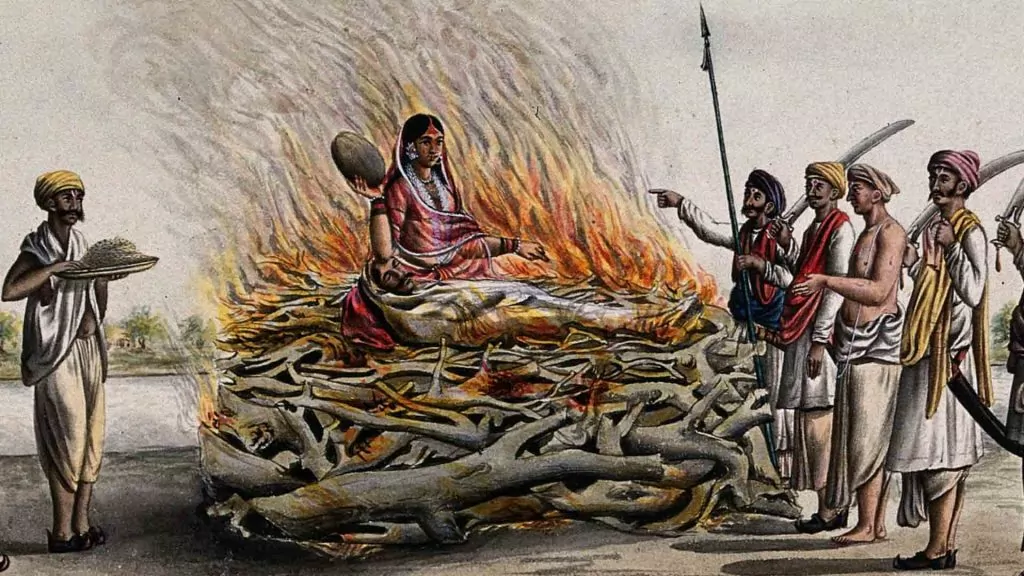
We know all people are equal because every one of us is made in the very Image of God (Gen. 9:6). So wouldn't it be wrong to think that some cultures are better than others? Isn't saying one particular culture is superior, pretty much the same thing as saying "whites are superior to blacks"? Or saying "Jews are inferior"? Culture clash If it feels that way to you, consider this story. While working in India, the British general, Sir Charles James Napier (1782-1853), was confronted by Hindu priests who were protesting the British prohibition against Sati (or suttee). This was a custom in India that involved a dead man’s widow being burned alive on his funeral pyre, and the priests wanted to be allowed to continue their custom. In response, Napier reportedly replied: "Be it so. This burning of widows is your custom; prepare the funeral pile. But my nation has also a custom. When men burn women alive we hang them, and confiscate all their property. My carpenters shall therefore erect gibbets on which to hang all concerned when the widow is consumed. Let us all act according to national customs." Was Napier saying that the British are better than the Indian people? That wasn't his point. He was making something very clear about their two cultures though, and it's a point everyone gets at a gut level. Were there no other differences between two cultures other than that one burned their widows alive and the other did not, we'd know which was superior. Some confused college student might try insisting that these different cultural practices are equally valid. "Judge not," he'd remind us, referencing the one half verse of Scripture he knows. But if the young man wants to push his relativism you could ask him how he'd respond if you were to swipe his phone – would his "judge not" scriptural misapplication still apply when he's the victim? Or would he now concede that some beliefs – like "do not steal" – are better than others? Swiping phones is wrong, and burning widows is wronger, and a culture that opposes either is superior to one that won't. Why isn't it racism? So if some cultures really are better and worse than others, why does saying so still come off as racist? It's because some on the Left deliberately conflate race and culture, pretending they are one and the same. Then they'll use the confusion they've created to frame arguments to their advantage, making opponents out to be bigots. Praise limited constitutional government, and they'll try to dismiss you for loving the "old dead white men" who brought it to us. Or if you wanted to discuss why it is that in the US so many more black than white children grow up without a father in the house, you might be attacked for hating on blacks. The other side doesn't have to debate your facts if they can just tar you with a label. But the label shouldn't stick because culture and race are very different. Race is about your skin color, and where you or your ancestors might have come from. And all of that is morally irrelevant. As Martin Luther King Jr. reminded us, the amount of melanin in your skin doesn't say a thing about the content of your character. To put it in more biblical terms,  when we're talking about where someone's ancestors might have come from, it all traces back to Adam and Eve, or more recently Noah and his wife. So you shouldn't be racist because we're all the same race – Adam's. You should be "culturalist," however, because culture is all about a group's shared values, customs, and behaviors. Whereas skin color isn't a right/wrong kind of difference, different values, customs, and behaviors can be better or worse. A culture that values intact marriages is better than one that embraces living together, or faultless divorce. And a culture that allows burning widows has something deeply wrong with it. As does a culture that celebrates the right to kill unborn babies. Matthew 7 and judge notting But what about Matthew 7 and not judging? In context, this isn't a ban on judging, but instead a guide on how to do it. God says: “Do not judge, or you too will be judged. For in the same way you judge others, you will be judged, and with the measure you use, it will be measured to you." It also highlights why racism is wrong and culturalism isn't. Racists base their judgment of a person’s worth on an inconsequential criterion. Would a Ku Klux Klan member want to be told “Sorry, you have the wrong skin color, so you can’t sit at this counter”? Nope, which highlights how stupid their racist standard is. In Sir Napier's case, a culture can be evaluated as better or worse on the basis of how closely it aligns with, or how far it departs from, God's standard. What made British culture superior here was that – for whatever other faults it had – it aligned more closely with God's law regarding the right treatment of His female Image-bearers. And that's no insignificant standard – both the 6th commandment (Ex. 20:13) and the second greatest (Matt. 22:38-39). Closer to home The importance of being able to evaluate cultures, and being able to fend off accusations of racism as you do it, is as important today as it was in Napier's time. Measuring other cultures against God's standard enables us to confidently critique some behaviors. We can rightly condemn a society that surveils its citizenry, or confiscates their property, or threatens death to anyone who converts from Islam. Closer to home, we need to be able to evaluate our own culture against the biblical measure to show us how progress can be made. We don't burn our widows, but we will euthanize them... and no one will be hanged for it. We've made murdering unborn babies something to celebrate, and irreversible transgender surgical mutilations a perverse right. It's also a mark against our culture that it holds only to the first half of the first verse of Matthew 7 – "Do not judge" – and none of what follows. Closer yet, the larger Church has its own cultures too, including groups who condemn any judging other than their own. They aren't objecting to hypocritical judgments like those of the racists, or the Pharisees of old (John 8:2-11). They aren't faulting conservatives for applying a standard we aren't willing to apply to ourselves. Nope, they are going the relativist route, judging us for being willing to judge at all. The key in all of this, then, is to understand that some judging is wrong, and other judging right. How can we know which is what? By turning to our Standard-maker, Who tells us what criteria matter and which don't because He knows what rules are best for us and everyone. A version of this article first appeared in the January 2012 issue....

Red heart icon with + sign.
Book Reviews, Children’s non-fiction

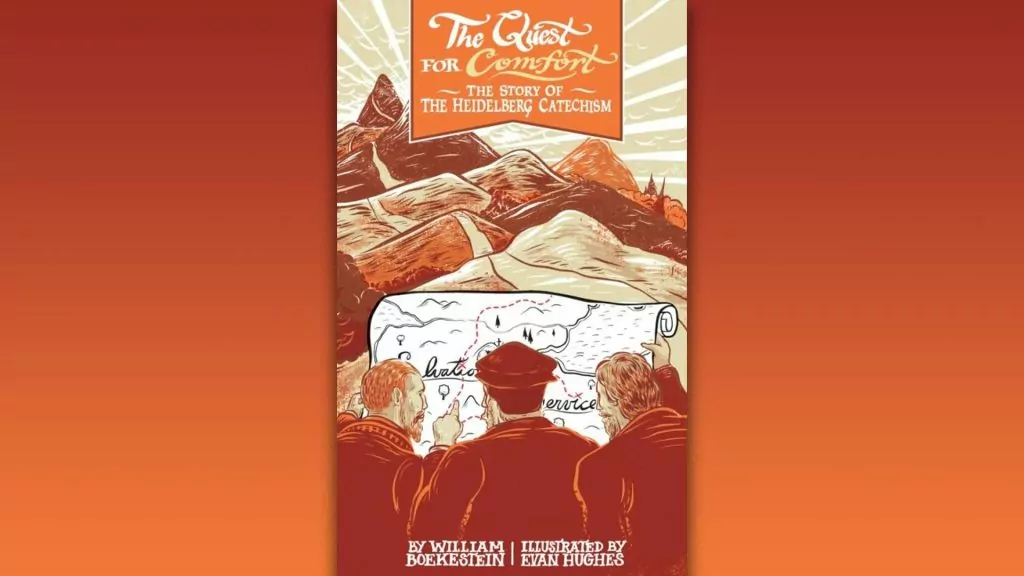
The Quest for Comfort: the story of the Heidelberg Catechism

by William Boekestein 2011, 32 pages, $10 US Rating: GOOD/Great/Give A while back I had the privilege of reviewing a previous children’s book by this author on the life of Guido de Brès.  I was impressed with Faithfulness Under Fire.  It was not only accurate, but also well-written and artfully illustrated.  The Quest for Comfort follows the same model and deserves the same accolades. This is a brief account of how the Heidelberg Catechism came to be.  In a simple way, Boekestein shares the stories of Caspar Olevianus, Zacharias Ursinus, and Frederick III.  He tells of how their lives came to be intertwined in that German city along the Neckar River.  Along the way we learn something about the character and structure of the Catechism.  It was designed to be a pastoral teaching tool for the youth of the church and deliberately based on the arrangement of Romans. I read The Quest for Comfort to our four children, a 3-year-old, an 8-year-old, an 11-year-old and a 13-year-old.  They all enjoyed it and it kept their attention.  Our 3-year-old daughter said, “I wuv it Daddy!” I think she probably enjoyed the pictures more than anything else.  But hey, the pictures are well done.  There’s no doubt that Evan Hughes is a gifted illustrator. Kudos to Reformation Heritage Books for publishing these excellent children’s books.  Let’s hope they make it a trilogy with one on the Canons of Dort.  Imagine that:  a children’s book on the Canons of Dort!  Writing and publishing these sorts of books helps keep up the level of confessional consciousness for generations to come.  Obviously what also helps is buying these books for and reading them to our children and grandchildren – and then, from there, teaching them to know the Catechism itself and the biblical truths it contains. ...

Red heart icon with + sign.
People we should know

A Rare Principled Politician: Ron Paul

The practice of politics notoriously requires compromise. Every politician must bend at some point in order to be electable. Many politicians are very malleable and change their views with the currents of popular opinion. This contributes to their continuing electoral success. Those who won’t go with the flow have a harder time succeeding and will get weeded out over time. Occasionally there are exceptions to this rule. One of the most outstanding examples in recent years has been Congressman Ron Paul who ran for the Republican nomination for president in 2008 and 2012. His career and the principles he represented are described in a book by journalist Brian Doherty called Ron Paul's Revolution: The Man And The Movement He Inspired (Broadside Books, 2012). Paul is best known as a “libertarian” but his views also appeal to many conservative Christians. Doctor to politician Ron Paul was originally a medical doctor who became involved in politics. In his medical career he delivered about 4000 babies, and his knowledge of fetal development contributed to his pro-life views. But it wasn’t the abortion issue that ignited his participation in electoral politics. Instead, it was his views about money and government finance. While practicing medicine, Paul had been reading a lot about the importance of free enterprise economics as the basis of prosperity. Then, in the early 1970s, President Nixon implemented wage and price controls to curb inflation. Paul was incensed that an American president would implement such socialistic policies and he decided to do something about it. He ran as a Republican candidate for the US House of Representatives in the 1974 midterm election but lost. When the victorious Democratic candidate later resigned the seat, Paul was again the Republican candidate in a special election and this time he won. He served a few months as a Congressman but lost the seat in the 1976 general election. He ran again in 1978 and won. He kept the seat until he decided to run for the Republican nomination for a Senate seat in 1984, but lost that contest to Phil Gramm. Libertarian Party Although Paul had been a strong supporter of Ronald Reagan during the 1970s, he became disillusioned with Reagan’s presidency during the 1980s because of the lack of progress in shrinking the size of the federal government. Thus he joined the Libertarian Party and became that party’s presidential candidate in 1988. With the failure of his Libertarian Party presidential campaign, Paul went back to his medical practice and also produced newsletters on financial and political matters. He decided to run for Congress again in 1996. Although he had rejoined the Republican Party, party leaders were no longer supportive of him and tried to derail his candidacy. They convinced the local congressman to switch from the Democratic Party to the Republican Party, and they supported that guy with money and prominent endorsements. As Doherty puts it, “The Republican Party did not want Ron Paul to be a congressman again.” Dr. No Nevertheless, Paul won and remained in office until 2012. During his time in office Paul became known as “Dr. No” because he voted against so many measures. He believes that the US federal government should be restricted to the powers authorized under the US Constitution. Much of what the federal government currently does is very questionable from a constitutional perspective. It has grown far beyond the bounds of its stated authority. Paul is thus known as a “constitutionalist” for this view. He is more popularly known as a “libertarian” because his views involve a very minimal role for the government. He does not compromise his views on these matters even when standing by principle makes his own constituents angry with him. Doherty quotes one congressman as saying that Paul is very predictable: If proposed legislation expands government or involves activities which he does not consider specifically authorized by the Constitution, then he will vote No. And Paul does not shy away from unpopular stances, even when they involve going against the flow. Doherty quotes Paul as saying, “when I take a vote contrary to a prevailing attitude, instead of hoping no one will notice I send out a press release.” There are 435 members of the House of Representatives, and sometimes the vote tally would be 434-1, with Paul being the odd man out. Some people believe Paul’s pro-life position contradicts his libertarian views. But that is not so. As Doherty points out, if an unborn child is a person (and he or she is), then “a libertarian believing in laws against abortion makes exactly as much sense as a libertarian believing in laws against murder.” Paul’s appeal Paul’s constitutionalist and libertarian views have made him very unpopular in many places including large portions of the Republican Party. On the other hand, during his presidential campaigns, his stances have resulted in a great diversity of people supporting his candidacy. Doherty notes that Paul campaign meetings would often bring together the usual Paul fan motley: concerned veterans, pierced anarchists, conservative Christian moms, real estate brokers and homeschoolers and weapons enthusiasts and peace hippies. Although Paul’s core supporters have usually been libertarians, he has also gathered a good number of conservative Christian supporters. Doherty writes, Paul could appeal to the religious right not just on the economic libertarianism and hard-money stuff – which resonated well with them then and now – but on social liberty issues such as free speech and just being left alone by the government to shape your own life in your own way. He could remind these people who valued homeschooling and the health of their own small religious communities that they should fear a government that interferes in their personal cultural choices – even if it means having to let the government respect choices they don’t personally like. Doherty also notes that Paul’s personal life should endear him to conservative Christians. He is a “serious family man, devoted to one woman, successfully raised five children with many happy devoted grandchildren and even great-grandchildren in their wake, a serious Christian.” Wikipedia lists him as being Southern Baptist. Republican presidential candidate Paul created a stir during both of his attempts to win the Republican presidential nomination, but he was never a front-runner. However, his campaigns did create a lot of excitement among libertarians, constitutionalists and some other segments of the conservative movement. He refused to endorse John McCain as the Republican nominee in 2008 and was therefore not allowed to speak at the Republican convention in Minneapolis. As a result, his supporters organized another event, the “Rally for the Republic,” that ran concurrently with the Republican convention in Minneapolis. The Rally for the Republic drew over ten thousand people and celebrated the constitutionalist and libertarian ideas promoted by Ron Paul. Doherty writes, “It had Ron Paul singers and Ron Paul intellectuals and Ron Paul economists and Ron Paul celebrities and, most of all, it had Ron Paul.” During his 2012 campaign for the Republican nomination, Paul decided not to run again for Congress, so his career as an elected official was over. However, his son, Rand Paul, was elected as a Senator from Kentucky in 2010 and is currently seeking the Republican presidential nomination for 2016. The Revolution: A Manifesto During 2008 Paul wrote a book explaining his principles and policy positions. It is entitled The Revolution: A Manifesto (Grand Central Publishing) and it became a New York Times number-one bestseller. One of the most important matters that Paul addresses in this book is his controversial views on foreign policy. Unlike most conservatives, he believes the United States should have a non-interventionist foreign and military policy. That is, the US should not become involved militarily unless it has been threatened or attacked. “Americans have the right to defend themselves against attack; that is not at issue,” he writes. But what is an issue is the use of American military power against other countries that have not harmed the US. The most famous example of interventionist foreign policy was the invasion of Iraq under President George W. Bush in 2003. But there have been other recent examples such as President Clinton’s attack on Serbia in 1999. And in 2011 President Obama authorized the use of offensive military force against Libya despite the lack of any threat against the US coming from this country. This is what Paul opposes. In fact, Paul points out that the unnecessary use of American military power abroad causes more problems than it solves. He writes that, “when our government meddles around the world, it can stir up hornet’s nests and thereby jeopardize the safety of the American people.” Perhaps his most controversial position is his belief that attacks against Americans abroad, and even against the US itself such as 9/11, can result from people who think they must fight back against what they see as American imperialist aggression. Paul cites Michael Scheuer, chief of the CIA’s Obama bin Laden Unit in the late 1990s (and a conservative), in support of this view. Paul writes, His point is very simple: it is unreasonable, even utopian, not to expect people to grow resentful, and desirous of revenge, when your government bombs them, supports police states in their countries, and imposes murderous sanctions on them. That revenge, in its various forms, is what our CIA calls blowback – the unintended consequences of military intervention. Small government, at home and abroad Interestingly, Paul’s foreign policy views reflect those of the original conservative movement before the Cold War. As he notes, The so-called old Right, or original Right, opposed Big Government at home and abroad and considered foreign interventionism to be the other side of the same statist coin as interventionism at home. Being in favor of limited government means supporting a small role for the government in domestic policy, but also a small role (or no role) in the affairs of other nations. This is a consistent and principled position. Furthermore, it is useful to note that the aggressive use of military power abroad involves a huge cost in money and lives. As Paul puts it, “we waste a staggering amount of manpower, hardware, and wealth on a bloated overseas presence that would be better devoted to protecting the United States itself.” A considerable amount of money is wasted on foreign aid as well. Over the last few decades there has been tremendous progress in raising the living standards of millions of people in underdeveloped countries. But foreign aid is not the reason for that. Paul notes that, the economic success stories of the past half century have arisen not from foreign aid but out of the extraordinary workings of the free market, the great engine of human well-being that everyone is taught to hate. Conclusion All in all, Ron Paul’s view is that many problems would be solved if the US federal government was restricted to the role authorized for it by the US Constitution. In both domestic and foreign policy the federal government has grown far beyond its constitutional limitations. The framers of the Constitution did not envision such a large and interventionist federal government. One might think that many American politicians would support following the Constitution. In rhetoric many will speak well of it when doing so is convenient. But in recent years it has primarily been left to Ron Paul to publicly argue for constitutional limitations on government power, especially when doing so is politically unpopular. Receiving harsh criticism for supporting unpopular positions has not caused him to back down. That is because he stands on principle. He will not waver even when the political consequences are harmful to his career. This marks him as a rare bird in contemporary politics....
Red heart icon with + sign.
Homosexuality

One in ten? Alfred Kinsey’s most famous lie

Even if you haven’t heard of Alfred Kinsey you probably have heard about one of his key “findings” – that 10% of all people are homosexual. Dr. Judith Reisman (in her book Kinsey: Crimes & Consequences, 1998) asks, “who, indeed, today has not heard the mantra that homosexuals make up 10 percent of the US population?” She points out that the 10% figure is based “on Kinsey’s authority alone.” In fact, “Kinsey claimed to prove that homosexuals represented between 10% and 37% of all males.” How did Kinsey arrive at such a figure? It was simple. He deliberately set out to interview a large number of homosexuals to include in his database of human sexual behavior. During the 1940s, when he was conducting his research, this was no easy feat. Back in those days homosexuality was considered shameful, and many states in the USA had laws forbidding such conduct. Therefore Kinsey and his associates had to make a special effort to contact the homosexual enclaves that existed in large American cities in order to be able to solicit interviews with homosexuals. They were very successful, and hundreds of homosexual case histories were included in Kinsey’s data. In fact, the large number of homosexuals in Kinsey’s data meant that they were clearly over represented in relation to the normal population. Thus it was inescapable that the frequency of homosexuality would be exaggerated in Kinsey’s findings. And this is exactly what Kinsey intended. Reisman puts it succinctly: “Much of Kinsey’s work is designed to advance several revolutionary notions about homosexuality: that secret homosexuality was relatively commonplace; that most normal Americans hypocritically and secretly engaged in illicit sex of various kinds including homosexuality; that people were commonly bisexual meaning they were both homosexual and heterosexual; thus prejudice against homosexuality was hypocritical and based on ignorance of normal sexual behavior; and children and adults should experience and experiment with both their homosexual and heterosexual sides. Kinsey’s “research” was definitely agenda-driven and meant to normalize sexual perversion and overturn traditional morality. Among other things, he wanted to advance the cause of homosexuality. This purpose could be served by convincing people that homosexuality was relatively common. Thus he produced the figure that 10% of the population was homosexual, and it has been the generally accepted figure since then. But it is certainly not true. This was first published in the March 2015 issue....
Red heart icon with + sign.
Adult non-fiction, Book Reviews

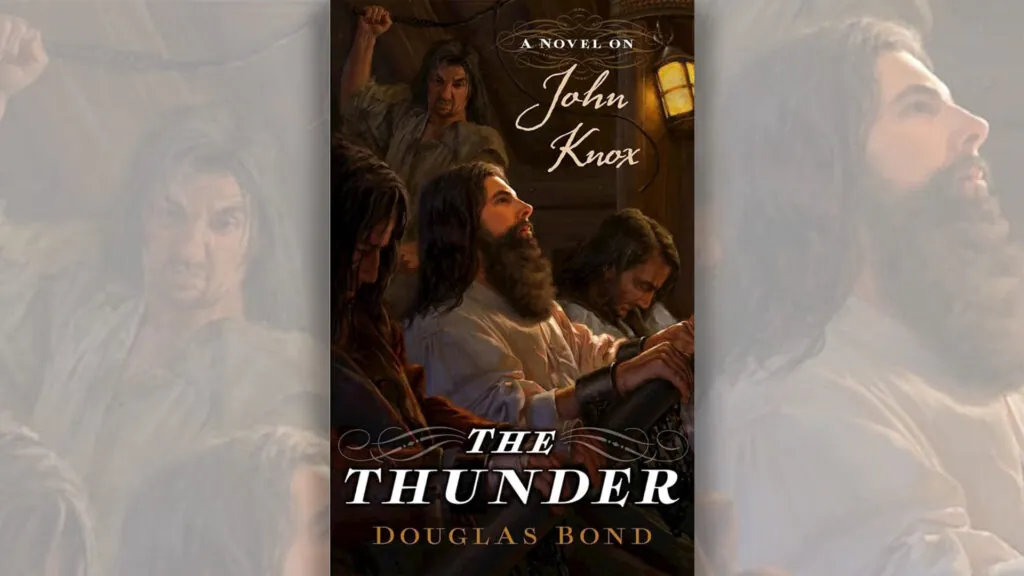
The Thunder: A novel on John Knox

by Douglas Bond 2012 / 400 pages Rating: Good/Great/GIFT John Knox turns five hundred this year and I can't think of a better way to mark the occasion than to read Douglas Bond's biographical novel of the man. All I knew of Knox before reading this was that he was supposed to be the Scottish John Calvin. But after The Thunder I think a better comparison might be some combination of action hero and Scottish Elijah. His first notable foray as a Reformer was as a bodyguard, wielding a two-handed sword in protection of a preacher. He was then ordained himself, and shortly thereafter imprisoned and sent to a French galley to row for almost two years. And when finally freed, though the trial left a permanent impact on his health, Knox then made a habit of speaking Truth to power, chastising the regent of England, encouraging the child King, Edward VI, and then admonishing Mary, Queen of Scots as well as her mother, the Dowager Queen Mary of Guise. This was a guy, weak though he was in body, who would not back down! So that's the man, but what about the novel? Douglas Bond does a smashing job, telling the tale from the perspective of one of Knox's students. This device allows Bond to tell one near unbelievable tale after another about his principle figure, but make it all believable by having the young student also marvel at the spiritual might of this Reformation giant. This is a great novel for anyone who likes history, older teens through adults, and simply an amazing tale told exceptionally well. It is available on Amazon.com....
Red heart icon with + sign.
Book Reviews, Popular but problematic

The Hunger Games: doesn’t tackle the issue it raises

A book about kids killing other kids, that is written for the teen market? If that doesn’t grab your attention, then you must not be a parent. The Hunger Games is the first book in a trilogy by Suzanne Collins that has, since 2008, sold more than 5 million copies. On March 23 a movie adaptation of the first book hit theatres and made a quarter of a billion dollars in just 10 days. This is the latest big thing in teen fiction. And like Twilight before it, a pivotal element of the plot is causing concern for Christian, and even non-Christian parents – this is a story about kids killing other kids. Deadly plot does not a bad book make Sixteen-year-old Katniss Everdeen lives in a post-apocalyptic world where what’s left of the United States has been divided up into 12 Districts, all subservient to “the Capital.” We learn that there was once a 13th district, but it rebelled, and in the resulting war the Capital destroyed it. Every year since then, as show of their submission, each of the Districts has had to provide the Capital with two Tributes, a boy and a girl, to fight to the death in a made-for-TV spectacle reminiscent of the Roman gladiatorial games. Katniss becomes the District 12 female Tribute after she volunteers to take her 12-year-old sister’s place. Now the setting is grim, but a grim setting does not necessarily a bad book make. After all, “kids killing kids” would serve as a good summary of Lord of the Flies. In William Golding’s classic, he makes use of grim plot elements to talk about Man’s depravity, and how even “innocent” children are fully capable of murder (or as the catechism puts it: “we are all conceived and born in sin”). A great writer can use a dark setting to present an important Truth. Rooting for the anti-hero However, Colllins is no William Golding. Her premise is intriguing - the hero of our story is placed between a rock and hard place. Since there is only one final winner in these “Hunger Games” Katniss would seem to have a terrible decision to make: to kill or be killed? But Katniss never makes that decision. Collins has created a moral dilemma that, on the one hand, drives the action, but on the other, is hidden far enough in the background that it never needs to be resolved. Neither Katniss nor any of the other Tributes ever consider the morality of what they are being told to do. And Collins so arranges the action that Katniss is not put in a situation where she would have to murder someone to win the game - she does kill several in self-defense, but the rest of the Tributes kill each other, and Katniss’s only immoral kill (which the author clearly doesn’t think is immoral) is a “mercy kill” near the end. This is quite the trick, and it is the means by which Collins maintains tension throughout the book: we’re left wondering right to the end, will she or won’t she? But consider just what we’re wondering: will the “hero” of our story murder children to save her own life, or won’t she? When the plot is summarized that way, it’s readily apparent why Collins never presents the moral dilemma clearly; if it is set out in the open, it isn’t a dilemma at all. It’s wrong to murder. It’s wrong to murder even if we are ordered to. And it’s wrong to murder even to save our own life. That’s a truth Christians know from Scripture, but one even most of the world can intuit. Conclusion Golding used his grim setting to teach an important Truth. Collins uses her grim setting to the opposite effect, confusing right and wrong for her young auidence by not directly confronting the sinfulness of obeying obscene orders: “You have been chosen to go kill other children for the enjoyment of a viewing audience.” Yes, there was a time when even the world understood it was no defense to say "we were just following orders" but that's far from common sense today (our culture has forgotten that all will have to answer to God for what they've done). Collins obscures the Truth when her unquestioning Tributes, Katniss included, are portrayed as just doing what they have to do. Many among her teenage readership won't have the wisdom yet to recognize that there is another choice: that the players could decide it is better to suffer evil than to perpetuate it. So this is not a book that will help our young people think God’s thoughts after Him. If your teens have already read or watched the "The Hunger Games" they may be eager to defend it, and explain why this review is quite unfair. If so, that's quite the opportunity. Parents, let them tell you all about it, but require from them that they defend it using God’s standards....

Red heart icon with + sign.
Adult non-fiction, Book Reviews

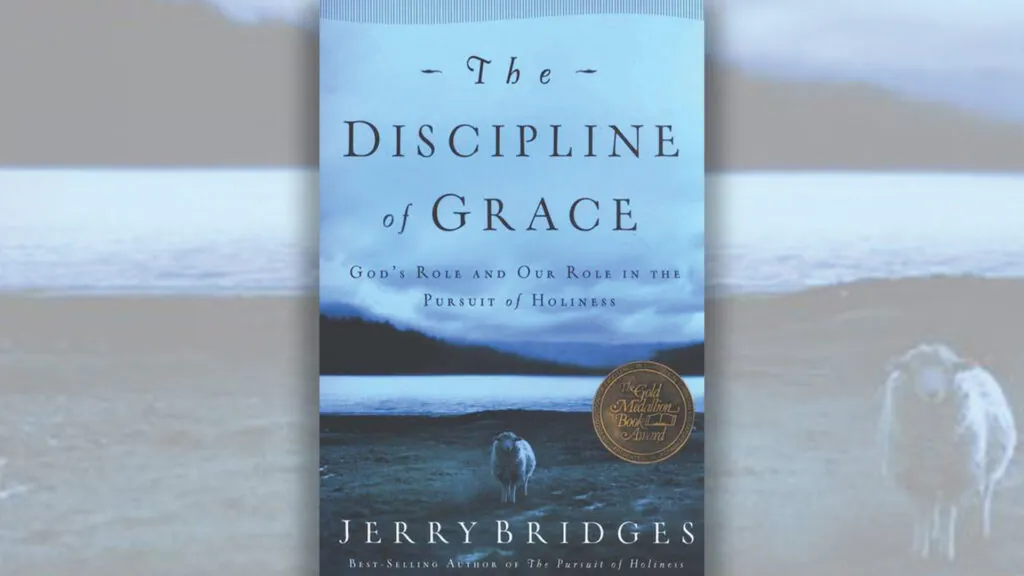
THE DISCIPLINE OF GRACE: God's Role and Our Role in the Pursuit of Holiness

by Jerry Bridges 2006 / 144 pages The title of Discipline of Grace seems to express a contradiction. Isn’t grace a free gift and discipline something we have to work at? How do these terms relate? Isn’t he confusing faith and works? Author Jerry Bridges focuses on the terms “dependence” and “discipline” and uses the analogy of a farmer. The farmer is completely dependent on God for the miracle of germination and for favorable weather conditions. Without these things there is no crop. However, he cannot just sit around waiting for God to produce crops for him. Cultivating, planting, fertilizing and harvesting are his responsibilities or the tasks in which he must be disciplined. In the same way, we are all completely dependent on God’s grace and the righteous work of Jesus Christ. Without this we are all nothing and not one of us can ever present God with a glowing personal report card based on our own merit or accomplishments. Understanding this eliminates all haughtiness and self-righteousness, but we must also understand that this same grace transforms and motivates us in the disciplines of holy living. The author emphasizes several times throughout the book that we must first and continuously preach the gospel to ourselves, and we must never feel complacent in our walk of faith, must never feel that we have arrived because we go a church with the right doctrines and do all the right things. Over and over he brings us back to our dependence on grace and the sanctifying work of the Holy Spirit, and once that is clearly established he shows how that grace enables us to live a life of gratitude and holiness. He outlines five different kinds of discipline. The discipline of commitment must be to God and serving Him, not ourselves or a set of moral values. The discipline of convictions explains that a conviction is something we believe so strongly that it affects the way we live. For the discipline of choices, he explains that, “Every day…we are disciplining ourselves in one direction or another by the choices that we make.” The discipline of watching cautions us to always be alert to those things which could cause us to fall, and the discipline of adversity encourages us to accept the Lord’s discipline. I highly recommend this very biblical book that is both liberating and inspiring and leads well into its companion book, The Pursuit of Holiness. This review appeared in the December 2011 issue....

1 2 3 4 5 6 7 8 9 10