We know all people are equal because every one of us is made in the very Image of God (Gen. 9:6).
So wouldn’t it be wrong to think that some cultures are better than others? Isn’t saying one particular culture is superior, pretty much the same thing as saying “whites are superior to blacks”?
Or saying “Jews are inferior”?
Culture clash
If it feels that way to you, consider this story.
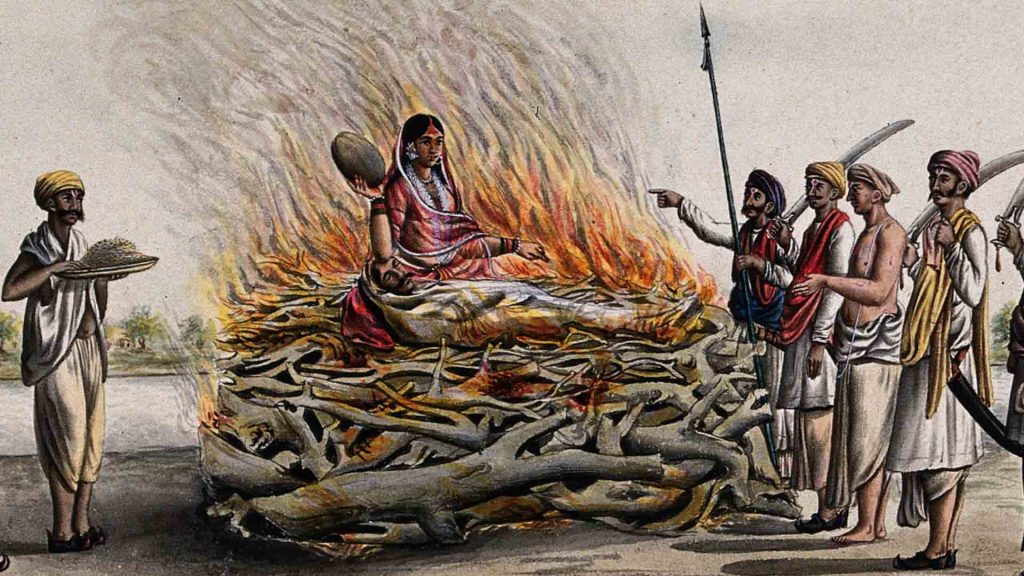
While working in India, the British general, Sir Charles James Napier (1782-1853), was confronted by Hindu priests who were protesting the British prohibition against Sati (or suttee). This was a custom in India that involved a dead man’s widow being burned alive on his funeral pyre, and the priests wanted to be allowed to continue their custom. In response, Napier reportedly replied:
“Be it so. This burning of widows is your custom; prepare the funeral pile. But my nation has also a custom. When men burn women alive we hang them, and confiscate all their property. My carpenters shall therefore erect gibbets on which to hang all concerned when the widow is consumed. Let us all act according to national customs.”
Was Napier saying that the British are better than the Indian people? That wasn’t his point.
He was making something very clear about their two cultures though, and it’s a point everyone gets at a gut level. Were there no other differences between two cultures other than that one burned their widows alive and the other did not, we’d know which was superior.
Some confused college student might try insisting that these different cultural practices are equally valid. “Judge not,” he’d remind us, referencing the one half verse of Scripture he knows. But if the young man wants to push his relativism you could ask him how he’d respond if you were to swipe his phone – would his “judge not” scriptural misapplication still apply when he’s the victim? Or would he now concede that some beliefs – like “do not steal” – are better than others? Swiping phones is wrong, and burning widows is wronger, and a culture that opposes either is superior to one that won’t.
Why isn’t it racism?
So if some cultures really are better and worse than others, why does saying so still come off as racist?
It’s because some on the Left deliberately conflate race and culture, pretending they are one and the same. Then they’ll use the confusion they’ve created to frame arguments to their advantage, making opponents out to be bigots. Praise limited constitutional government, and they’ll try to dismiss you for loving the “old dead white men” who brought it to us. Or if you wanted to discuss why it is that in the US so many more black than white children grow up without a father in the house, you might be attacked for hating on blacks. The other side doesn’t have to debate your facts if they can just tar you with a label.
But the label shouldn’t stick because culture and race are very different.
Race is about your skin color, and where you or your ancestors might have come from. And all of that is morally irrelevant. As Martin Luther King Jr. reminded us, the amount of melanin in your skin doesn’t say a thing about the content of your character. To put it in more biblical terms, when we’re talking about where someone’s ancestors might have come from, it all traces back to Adam and Eve, or more recently Noah and his wife. So you shouldn’t be racist because we’re all the same race – Adam’s.
You should be “culturalist,” however, because culture is all about a group’s shared values, customs, and behaviors. Whereas skin color isn’t a right/wrong kind of difference, different values, customs, and behaviors can be better or worse. A culture that values intact marriages is better than one that embraces living together, or faultless divorce. And a culture that allows burning widows has something deeply wrong with it. As does a culture that celebrates the right to kill unborn babies.
Matthew 7 and judge notting
But what about Matthew 7 and not judging? In context, this isn’t a ban on judging, but instead a guide on how to do it. God says:
“Do not judge, or you too will be judged. For in the same way you judge others, you will be judged, and with the measure you use, it will be measured to you.”
It also highlights why racism is wrong and culturalism isn’t. Racists base their judgment of a person’s worth on an inconsequential criterion. Would a Ku Klux Klan member want to be told “Sorry, you have the wrong skin color, so you can’t sit at this counter”? Nope, which highlights how stupid their racist standard is.
In Sir Napier’s case, a culture can be evaluated as better or worse on the basis of how closely it aligns with, or how far it departs from, God’s standard. What made British culture superior here was that – for whatever other faults it had – it aligned more closely with God’s law regarding the right treatment of His female Image-bearers. And that’s no insignificant standard – both the 6th commandment (Ex. 20:13) and the second greatest (Matt. 22:38-39).
Closer to home
The importance of being able to evaluate cultures, and being able to fend off accusations of racism as you do it, is as important today as it was in Napier’s time.
Measuring other cultures against God’s standard enables us to confidently critique some behaviors. We can rightly condemn a society that surveils its citizenry, or confiscates their property, or threatens death to anyone who converts from Islam.
Closer to home, we need to be able to evaluate our own culture against the biblical measure to show us how progress can be made. We don’t burn our widows, but we will euthanize them… and no one will be hanged for it. We’ve made murdering unborn babies something to celebrate, and irreversible transgender surgical mutilations a perverse right. It’s also a mark against our culture that it holds only to the first half of the first verse of Matthew 7 – “Do not judge” – and none of what follows.
Closer yet, the larger Church has its own cultures too, including groups who condemn any judging other than their own. They aren’t objecting to hypocritical judgments like those of the racists, or the Pharisees of old (John 8:2-11). They aren’t faulting conservatives for applying a standard we aren’t willing to apply to ourselves. Nope, they are going the relativist route, judging us for being willing to judge at all.
The key in all of this, then, is to understand that some judging is wrong, and other judging right. How can we know which is what? By turning to our Standard-maker, Who tells us what criteria matter and which don’t because He knows what rules are best for us and everyone.
A version of this article first appeared in the January 2012 issue.