Transparent heart icon with white outline and + sign.

Life's busy, read it when you're ready!

Create a free account to save articles for later, keep track of past articles you’ve read, and receive exclusive access to all RP resources.

White magnifying glass.

Search thousands of RP articles

Helping you think, speak, and act in Christ.

Open envelope icon with @ symbol

Get Articles Delivered!

Helping you think, speak, and act in Christ. delivered direct to your Inbox!

News, Politics

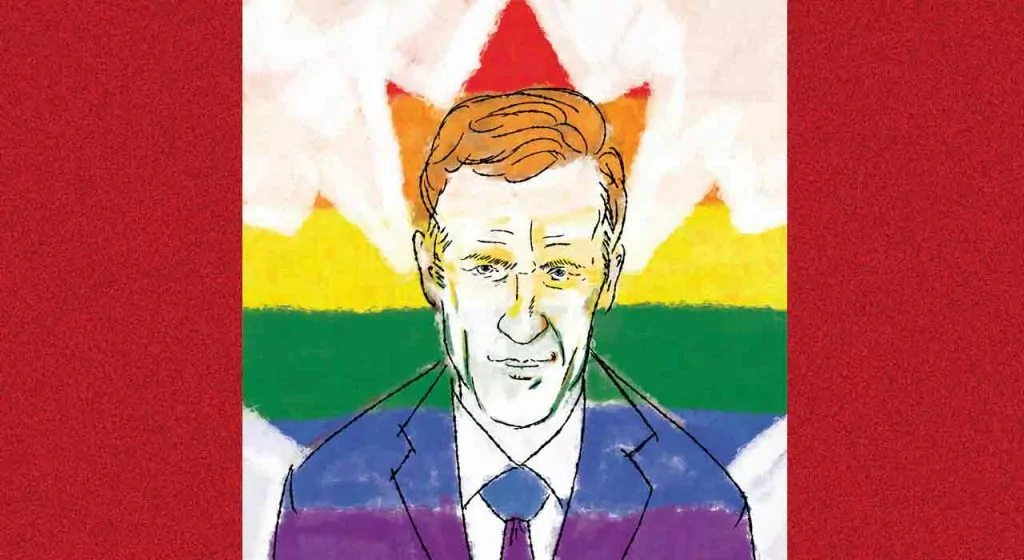
Bill C-4: the Conservatives did this to Canada

On November 29 the Liberals introduced a bill to ban "Conversion Therapy" that they'd twice before failed to pass. But what the Liberals couldn't do, Conservative leader Erin O'Toole promised he would get done. What was the bill about?  Under the pretense of protecting homosexuals from getting forcibly "converted" from their same-sex attraction, Bill C-4 targeted Christian pastors and counselors and others willing to help those who want out of the homosexual lifestyle.

As Jonathon Van Maren wrote:

"there were concerns that the deliberately broad definition proposed by Prime Minister Justin Trudeaus Liberals would ban pastoral conversations between clergy and their parishioners and leave adults with unwanted same-sex attraction unable to receive the counseling they desired. In fact, in some instances parents could be prevented from opposing sex changes for their own children."

This was actually the third time the Liberals had introduced such a bill, but the previous two had been derailed by the months-long process that it takes to get a bill approved. The previous attempt, then labeled Bill C-6, was introduced on September 23, 2020, and took nine months, until June 22, 2021, to pass through the committee hearings and the three readings required in the House of Commons. It was then given to the Senate for their own three-stage assessment process, but they didn't have a chance to pass it before the Prime Minister called an election on August 15. His election call meant that Bill C-6 (along with all the other bills not yet passed) "died on the order paper."

Bill C-4 might have had to go through this same process, and in the months and even years that it could have taken, who knows but that God might have derailed it yet once more. But on Dec. 1 Conservative Leader Erin O'Toole told the media that his party was going to "accelerate passage" of the government's bill. Later that same day Conservative MP Rob Moore put forward a motion to skip all the House committees and readings, and send the bill directly and immediately to the Senate. His motion required unanimous approval to pass – if a single MP had voiced a nay, the motion wouldn't have passed. How could the Conservatives have expected to get that unanimity when there had been 63 MPs willing to vote against Bill C-6 earlier this year? Of that number 62 were their own Conservative MPs. So why would they expect to have no opposition this time around?

Their confidence might have been, in part, due to the timing of their motion. Conservative MP Garnett Genius was the most vocal opponent of the previous Bill C-6, launching the website “Fix the Definition” to put a face to the people this bill would harm. But on December 1, Genuis was out of the country, attending a NATO conference in Latvia.

The Conservative strategy also involved pulling a fast one on their own MPs – the motion was made and passed in approximately one minute. They were able to do it so quickly because no one actually had to vote for the motion: the Speaker of the House only asked to hear from those opposed to it. When no one spoke up, it was passed. 

While many of the Conservatives were clearly in on this maneuver – as evidenced by the wild clapping immediately afterward – any MPs unaware of what Rob Moore was about to do could have blinked and they would have missed it, it was over that fast. The CPAC coverage of the vote shows that some of the Conservatives were not clapping, and remained sitting and the most downcast of them might have been Arnold Viersen (blue jacket, red tie, three rows from the back on the right side)

In a statement he posted to Facebook nine days later, Viersen explained that:

"...it was a surprise that caught me and some of my colleagues off guard. I am opposed to C-4 as written and should have said no, but I did not react fast enough. I'm sorry."

The comments below his post were filled with thanks for his apology. For almost two weeks it had been a mystery as to why a bill that criminalized the presentation of the Gospel would pass without any Christian MPs objecting. Now we had a partial explanation for the MPs' silence: this had been sprung on them. But even as surprise can be an explanation for what happened in the House, no such explanation was possible for the senators – they has the advance notice of seeing what was pulled in the House, and it made no difference. There, too, it was the Conservatives who put forward the motion to get the bill past all of the usual steps. And once again, not a single representative spoke up.

Curiously, in his Facebook post, Viersen suggested that: "Had we won the election we would not be in this situation." In a message fellow Conservative MP Cathay Wagantall sent to ARPA Canada some days later, and let them share publicly, she borrowed this same phrase: "Had we won the election, we would not be in this situation."

Let's consider that for a moment. Who was it, that pulled this on us? Wasn't it the Conservatives? We can be relieved that Garnett Genuis and Arnold Viersen have some sort of explanation or apology for why they didn't stand up against this bill, but the Conservative Party overall has no such excuse. Trudeau's Liberals introduced this bill, but it was O'Toole's Conservatives who accomplished what the Liberals never did: the Conservatives got it across the finish line.

It bears repeating just how wicked this bill is. As Jojo Ruba noted, while an earlier version of the bill at least "could not prevent consenting adults from having conversations about sexuality with their clergy or their counselor, as long as the counseling was free" this latest version removed even that protection. That's what the Conservative Party has accomplished under O'Toole: they've made the compelling case that they are not the lesser of two evils, but rather the more effective.

So where are politically-minded Christians to turn? Aren't the Conservatives still our only option? They are, after all, the only major party to tolerate pro-life Christians. That's true enough, but as the passage of this law highlights, tolerating Christians is very different from siding with them. If Christians are to be involved in the Conservative Party, it cannot be to further the party's agenda. We cannot let them use us for their ends, as happened here. If Christians are to continue in the Conservative Party then they have to do so with their eyes wide open, involving themselves in the party only to use it for our own, godly ends. If it becomes impossible to do that, then that should be the end of our involvement. Christians should have no loyalty to a party that has no loyalty to God, and, indeed, in this latest act, stands in direct opposition.

Red heart icon with + sign.
Politics

Compulsory voting is only for show

Should everyone have to vote? This past September the polling group Research Co. asked 1,000 Canadians if voting should be made mandatory in all federal elections. 62% thought it should be. Why would so many want to make voting compulsory? Advocates argue that higher voter turnouts give a government a higher degree of political legitimacy. In Australia, where voting is required, the 2013 election saw roughly 80% of the voting age population cast a ballot.1 To put that number in context, over Canada's last three federal elections we’ve averaged about 65% of the electorate casting a ballot. Compulsory voting could increase those totals. How? By forcing the apathetic to get up off the couch: folks who were too lazy to get educated about their choices, or those who know and hate their choices but who are too sluggish to step up and offer voters an alternative. Now here's a question: do we even want them voting? We can force them out to the ballot box, but nothing we do can force them to get informed. Why would we want to make them eenie, meenie, miney, mo their way through the slate of candidates? Are we really making democracy better when one voter's thoughtful choice can be countered by a guy making selections based on his favorite number? “I’m going with lucky number 4!” Making voting mandatory will inflate the voter turnout, but that’s really only a sham: requiring someone to vote doesn’t mean they will be any more involved. Compulsory voting won't motivate the I-won’t–vote-unless-you make-me sort to also spend time studying the issues and researching the various candidate’s positions. That's why, the very last thing we need to do is force people who don’t care, who haven’t done their research, and who otherwise wouldn’t vote, to now go down and mark their utterly random “x” on a ballot. Endnote 1 The official figure was 93% but that doesn’t factor in that, despite the law, 10% of Australians aren’t registered to vote. When we consider all the people of voting age, and then see how many actually voted, we get 80%....

Red heart icon with + sign.
Parenting, Politics

Exposing the poor research fueling the anti-spanking campaign

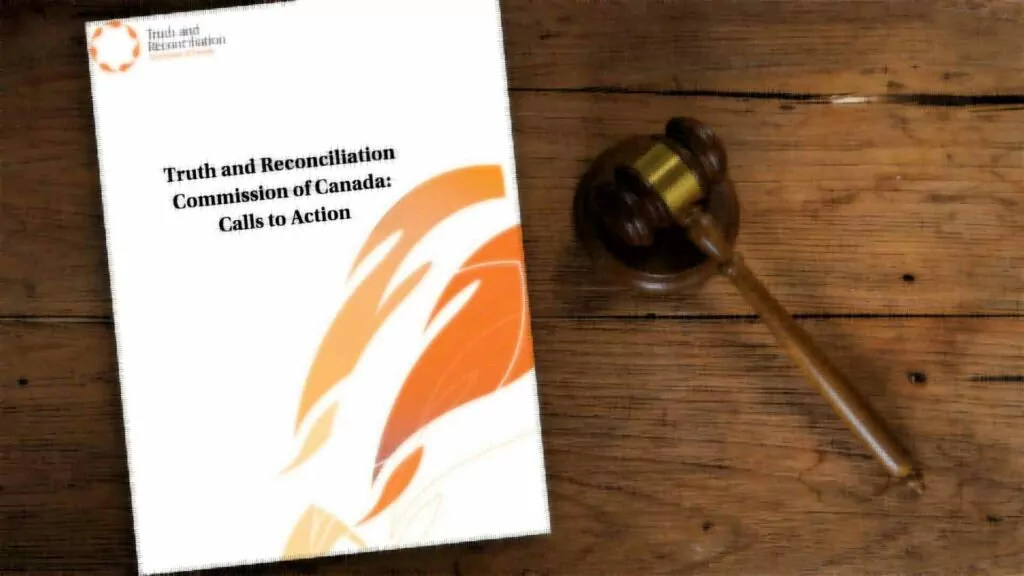
“Spanking is linked to aggression, antisocial behavior, mental health problems, cognitive difficulties, low self-esteem, and a whole host of other negative outcomes.” So declared a 2016 news article from Good Housekeeping, one of dozens of articles reporting on the latest overview of research on physical discipline. That 2016 overview not only condemned spanking, but went out of its way to make the case that its results also applied to the type of physical discipline that is both legal and commonly practiced. In other words, it argued that all forms of spanking are bad all the time.1 So where does such research leave all those who thought that physical discipline can be beneficial and appropriate when done in a controlled and loving way? The answer matters a lot, especially since the anti-spanking movement has received a lot of momentum in Canada. During the 2015 federal election, Canada’s Liberal party promised that, if elected, it would get rid of Section 43 of our Criminal Code – this is the section that allows parents to use appropriate physical discipline. Thankfully that did not follow through on that promise. But if that section is ever removed, the result will be that all parents who use physical discipline will be treated by the law as criminals and abusers. So it is important, then, that we take a closer look at the research. And when we do so, we’ll discover our confidence in the appropriateness and legality of physical discipline doesn’t need to be shaken. It is vital that we educate not only ourselves, but share this truth with our neighbors, and especially our legislators, before it’s too late. New spin – same flawed research The lead author of the 2016 study was Dr. Elizabeth Gershoff, a University of Texas researcher who has dedicated much of her career to opposing physical discipline. Her overview was an updated version of a previous meta-analysis she did (a meta-analysis uses statistics to combine the results of many studies on the same topic, with the goal of getting more precise average results). The news stories explained that her overview was based on studies of over 150,000 children, spanning over 50 years, which sounds really impressive but really just amounts to running new statistical analyses on the same kind of research that several experts have been summarizing for the past decades. None of the other experts supported an absolute anti-spanking conclusion from their summaries of the same kind of research.2-7 One of the reasons why Dr. Gershoff and her research partner Dr. Andrew Gorgan-Kaylor (hereafter G&G) updated their meta-analysis was to address a concern expressed about her previous research, namely that it failed to distinguish appropriate physical discipline from types of physical aggression that the law already criminalizes as abuse. It lumped measured, calm spankings in with the beatings given by enraged, out-of-control parents. So how useful could these findings be when it comes to evaluating the effectiveness of just the calm and collected spankings? The answer is, not very. Indeed, that is one of the arguments that ARPA Canada made in our policy report on corporal discipline that we sent to all MPs and Senators in 2014, and have defended on CBC radio and in the Vancouver Sun since. Those advocating that spanking be a criminal activity have never been able to respond to the contrary. We explained over and again that research that did take the time to isolate appropriate physical discipline did not find negative outcomes – in fact, physical discipline was shown to be as good as or better than all other forms of discipline. Three fallacies Another expert on the topic is Dr. Robert E. Larzelere, from Oklahoma State University (hereafter RL). He examined G&G’s latest overview and quickly found it to be wanting. RL pointed out that only four of the 75 studies in the meta analysis examined whether appropriate spanking does more harm than good when nonphysical methods were ineffective. Those four studies proved that spanking was better than two of the three alternatives investigated, and was equally as effective as the third alternative (forced isolation).8-11 So how then did G&G come to the conclusion that spanking was always bad? Her conclusion came from the other 71 studies and included three fallacies. RL exposed the following three fallacies:  Fallacy #1 – Correlation G&G’s conclusions rely entirely on the studies’ correlations – for example, children who were spanked more often tend to be more aggressive. But even a high school student understands that correlation does not prove causation. In fact, it could well be that aggressive children were spanked more often because they were aggressive. As RL points out, this type of research would even make radiation treatment look harmful since patients receiving radiation treatment have more cancer than those who don’t.12 Fallacy #2 – Extrapolation G&G conclude that spanking should simply not be done. It is a similar conclusion that the Truth and Reconciliation Report came to in 2015, in their effort to address the fallout from the now-infamous  Residential Schools. That report led to the Liberal government promising to repeal Section 43 of the Criminal Code. But do the studies actually bear this out? RL explains that only one of the studies in the entire meta-analysis compared a group that was never spanked to one that was, and that study actually proved that spanking had a beneficial effect.13 The authors wrongly extrapolated their conclusion based on the faulty correlational evidence. Even worse, two studies that did take the time to compare individuals who were never spanked with those who were, conveniently were left out of the meta-analysis.14,15 The fact that overly frequent spanking correlates with worse child outcomes does not necessarily mean that no spanking will lead to the best outcomes. It could instead mean that the best parents use spanking only when needed – but not more often than that. Fallacy # 3 – Lumping Although G&G went out of their way to emphasize that this study proves that spanking is bad even when done carefully and in keeping with the law, the reality is that only 4 of the 75 studies relied specifically on “hitting a child on their buttocks…using an open hand.” The truth has not changed, no matter how it is hidden or confused – the research that properly examines the effect of appropriate spanking shows it to be as good as, or better than, all other disciplinary tactics. RL expressed his regrets about the poor research exemplified in G&G’s overview, not just because it undermines appropriate physical discipline but also because it undermines efforts to discover other disciplinary tactics that may also be effective. Their reliance on correlational evidence is biased against every form of discipline, including time-outs, making the most effective disciplinary responses appear to be harmful. Does that mean that all discipline is harmful? The authors don’t go that far in this overview, but they have already claimed that “we don’t know anything that works” based on another study in which they investigated 10 other disciplinary methods using the same biased correlations.16 We all need to expose the dangerous research The sad reality is that truth and objectivity don’t matter much when a publication comes to the conclusion that others want to see to bolster their worldview or political objectives. The mainstream media loves to publish stories like these, and the fact that they come from peer-reviewed journals means they accept the conclusions as fact. To add to this, there are very, very few people who are willing to publicly defend something as politically incorrect as spanking. Who wants to be lumped in with child abusers? This risk of being misquoted is too great. I’m aware of only two or three people/organizations in this country that are willing to even touch this issue. The Overton Window concept explains that there is a range of ideas that the public will accept. That range shifts over time. An idea can move from something that is considered radical, to controversial, to acceptable, to popular, to public policy. Alternatively, it can go the other way too. Something like euthanasia was controversial five years ago but has quickly shifted to public policy today. Likewise, spanking can go from being lawful today to being criminalized ten years from now. If we believe parents are the appropriate authorities to determine which form of loving discipline is most appropriate for their children (so long as it is not abusive), it is crucial that we seize the opportunity to speak up in defense of Section 43 while it is still considered acceptable. Not only is the research on our side, the Supreme Court of Canada already examined this issue in 2004 and upheld Section 43. They went so far as to conclude that the decision not to criminalize such conduct is not grounded in devaluation of the child, but in a concern that to do so risks ruining lives and breaking up families — a burden that in large part would be borne by children and outweigh any benefit derived from applying the criminal process. Conclusion This is an example of an issue where education is vital – we need to educate our legislators about the facts of the matter before they step in line with a government bill that would criminalize spanking. Once a law is passed, most parents would understandably not want to risk having their children removed from their homes and will likely abandon physical discipline. If you want to uphold parental authority in child-rearing, please consider doing the following: Pray for courage, grace, and winsomeness; Read ARPA’s policy report on the matter at ARPACanada.ca (click on the publications menu) Email your MP to ask for a meeting to discuss this matter – follow up with a phone call if they don’t respond. Take a friend/family member along with you; Use the meeting to present them with the solid research and be sure to communicate your motivation so they don’t wrongly conclude we are seeking to hurt children in any way; Spread the word – share this article and encourage others to do the same. End Notes Gershoff ET, Grogan-Kaylor A. Spanking and child outcomes: Old controversies and new meta-analyses. Journal of Family Psychology. 2016. Larzelere RE. A review of the outcomes of parental use of nonabusive or customary physical punishment. Pediatrics. 1996;98:824-828. Larzelere RE. Child outcomes of nonabusive and customary physical punishment by parents: An updated literature review. Clinical Child and Family Psychology Review.2000;3:199-221. Horn IB, Joseph JG, Cheng TL. Nonabusive physical punishment and child behavior among African-American children: A systematic review. Journal of the National Medical Association. Sep 2004;96(9):1162-1168. Larzelere RE, Kuhn BR. Comparing child outcomes of physical punishment and alternative disciplinary tactics: A meta-analysis. Clinical Child and Family Psychology Review. 2005;8:1-37. Paolucci EO, Violato C. A meta-analysis of the published research on the affective, cognitive, and behavioral effects of corporal punishment. Journal of Psychology. 2004;138:197-221. Ferguson CJ. Spanking, corporal punishment and negative long-term outcomes: A meta-analytic review of longitudinal studies. Clinical Psychology Review. 2013;33:196-208. Roberts MW, Powers SW. Adjusting chair timeout enforcement procedures for oppositional children. Behavior Therapy. 1990;21:257-271. Bean AW, Roberts MW. The effect of time-out release contingencies on changes in child noncompliance. Journal of Abnormal Child Psychology. 1981;9:95-105. Day DE, Roberts MW. An analysis of the physical punishment component of a parent training program. Journal of Abnormal Child Psychology. 1983;11:141-152. Roberts MW. Enforcing chair timeouts with room timeouts. Behavior Modification. 1988;12:353-370. Larzelere RE, Baumrind D. Are spanking injunctions scientifically supported? Law and Contemporary Problems. 2010;73(2):57-88. Tennant FS, Jr., Detels R, Clark V. Some childhood antecedents of drug and alcohol abuse. American Journal of Epidemiology. 1975;102:377-385. Gunnoe ML. Associations between parenting style, physical discipline, and adjustment in adolescents' reports. Psychological Reports: Disability & Trauma. 2013;112(3):933-975. Ellison CG, Musick MA, Holden GW. Does conservative Protestantism moderate the association between corporal punishment and child outcomes? Journal of Marriage and Family. 2011;73(5):946-961. Gershoff ET, Grogan-Kaylor A, Lansford JE, et al. Parent discipline practices in an international sample: Associations with child behaviors and moderation by perceived normativeness. Child Development. 2010;81(2):487-502. A version of this article first appeared in the July/August 2016 issue under the title “New spin – same flawed research.” Mark Penninga is the Executive Director of ARPA Canada....
Red heart icon with + sign.
Politics

Reforming Canada's electoral system?

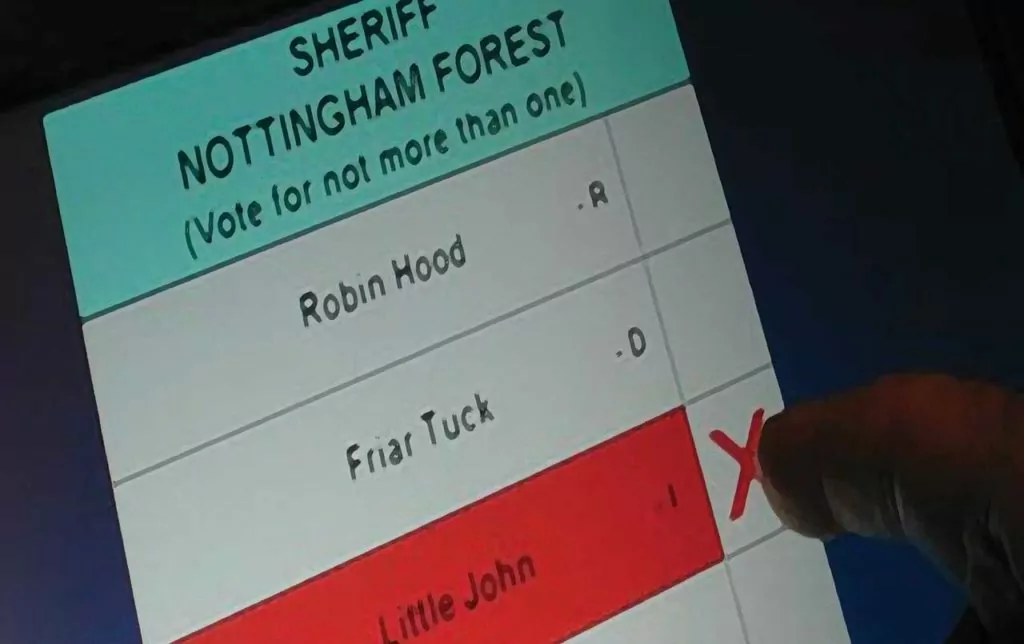
During the 2015 federal election, the Liberals campaigned on bringing in electoral reform. While they didn't deliver on that promise, they weren't the first to propose fundamentally changing the way Canadians vote, and they likely won't be the last. So what prompted their promise? Why did they think voters wanted a new electoral system? What exactly needs fixing with our current system? And what are the advantages and disadvantages of the alternatives? THE CASE AGAINST FPTP The common complaint with our current First-Past-The-Post (FPTP) system is that it doesn’t seem to reflect voters’ wishes. Under it a candidate doesn’t need a majority of the vote to get elected; he only needs one vote more than the second-place finisher. So, for example, in the 2015 Federal election that meant one candidate – the NDP’s Brigette Sansoucy – was able to win a seat in the House of Commons even though she received only 28.7 percent of the vote. In her riding almost three-quarters of voters picked someone else, and yet she is still their elected representative. In 2015 the FPTP system also allowed the Liberals to win a decided majority of the seats (54.4 percent) even though they had a decided minority of the votes (only 39.5 percent). Situations like this are why our representative democracy can be criticized for not being all that representative. THE RANKED BALLOT: FOR So what sort of electoral reforms have been proposed? The Liberals' plans never got all that specific, but back in 2014, in an appearance at Ontario’s Western University, Justin Trudeau told students, “I like the idea of a ranked ballot.” There’s a clear reason why the Liberals would. Under a ranked ballot (or preferential) system voters would rank the candidates from first to last (see the picture). If no one got 50 per cent of the vote, then the candidate with the least 1st place votes would be dropped off, and his ballots would be redistributed according to who those voters had marked as their second choice. The advantage of this system is that the eventual winner can claim the legitimacy of having more than 50% of voters picking him. He may not have been their first pick, but he was at least someone they voted for. THE RANKED BALLOT: AGAINST The problem with the ranked ballot is that it gives an advantage to whatever parties are present in the "middle" of the political spectrum. Why? Because when voters on the right or left rank their second choices they aren’t going to pick the parties on the other side of the spectrum. Instead they are going to default to the candidate who is the closest to them. In Canada that means an NDP voter will likely rank the Liberals second (or third behind the Greens), and rank the Conservative last. Likewise, a Conservative voter is more likely to rank the Liberals second than he is to pick the NDP or Greens. So Liberals can count on getting far more of the second-pick votes than any of their political rivals. There is a systemic bias in their favor. CBC’s Eric Grenier estimated that under a ranked ballot the Liberals would have picked up an additional 40 seats last election (mostly at the expense of the Conservatives). No wonder then that the Prime Minister prefers ranked ballots. PROPORTIONAL REPRESENTATION: FOR Another alternative often proposed is proportional representation (PR). While there are many forms of PR, the basic premise is that all involve parties getting seats in proportion to their total vote total. Under this arrangement, if we use the 2015 election as our example again, since the Liberals took 39.5% of the popular vote they would have ended up with just 39.5% of the seats in Parliament. That means that, as Eric Grenier noted, under the most basic form of PR, in the 2015 election the Liberals would have lost 50 seats, while the Conservatives would have gained 10, the Green Party 11, and the NDP 23 more. Interestingly, it is under the PR system that the Christian Heritage Party (CHP) is most likely to prosper. While the CHP’s 15,284 votes in the 2015 election wouldn’t have been enough to garner them an MP, under a PR system, Christians who had previously wanted to vote for them but thought it a wasted ballot could now cast that vote knowing it would help elect at least an MP or two. PROPORTIONAL REPRESENTATION: AGAINST But PR also opens up possibilities for other smaller parties too. The CHP would finally be in the House of Commons but there would also be a representative or from the Marijuana Party. We’d likely see a Communist too, and maybe even a Rhinoceros Party MP (yes, there really is a federal Rhinoceros Party of Canada). In addition, it would become harder for any one party to win an outright majority. As the Fraser Institute reports in their booklet Electoral Rules and Fiscal Outcomes, from 2000-1015  In countries with PR election systems...83 percent of elections resulted in coalition governments. That might not sound like much of a problem – so what if some parties have to work together? Why wouldn’t that be a good thing? The reason its a problem is because when a coalition government is built, each participant does so on the condition that they get something out of it. And that “something” usually requires the outlay of money. In the same booklet, the Fraser Institute noted that PR governments spend an average of 29% of their country’s GDP, whereas other governments elected via means such as ranked ballots or the FPTP spend only 23% of the GDP. So a downside to any PR type of system is that taxes will likely go up. Coalition governments are costly! Another downside? It increases party leaders' power. Proportional Representation most often involves voting for a party, not a candidate. A party puts out a list of their candidates, in an order of their choosing, and if they get enough votes for, say, three MPs, then the three people at the top of their list will get in. Canadian party leaders already have dictatorial powers over their MPs, and the PR system would only increase that power – refuse to pick up your party leader's drycleaning and he'll bump you down your party's list, or take you off it entirely. The last thing we need is to strengthen party leaders' stranglehold over their party's MPs. CONCLUSION Some countries have adopted a mixture of these different systems, which means there are a limitless number of possibilities. But these three are the core sorts. So what system should we, as Christians, push for? Each has its own strengths and weaknesses and there isn't an electoral system free of flaws. Ranked ballots give the centrist Liberals an advantage over the other parties that they don’t deserve, while proportional representation seems likely to expand the size of government and strengthen party leaders' power. None of these are attractive alternatives. Meanwhile, even as FPTP frequently gives minorities a majority of seats, that bias isn't specific to one particular party. So I will say of our present system what Winston Churchill once said about democracy: First-Past-The-Post is the worst form of electoral system…except for all others. A version of this article first appeared in the September 2016 issue under the title "Canada's electoral reform."...
Red heart icon with + sign.
Apologetics 101, Politics, Pro-life - Abortion

On "the Overton Window" and talking crazy

There are two ways to encourage our country to turn in a godly direction. Both involve talking. **** Glenn Beck, a radio talk show host in the US, authored a novel with the curious title The Overton Window. Before ever reading the book I had to google the title to find out what it meant. I was glad I did – it turns out "The Overton Window" is an enormously useful way of looking at how ideas are discussed in the public square. A political analyst, Joseph Overton, coined the term to describe how some topics/issues/ideas fall into a range - the Overton Window – where they are deemed acceptable for public discourse. To give an example, while no one likes property tax increases, we also wouldn't think it radical or unthinkable to talk about hiking them a point or two. It is an idea that can be discussed publicly without embarrassment, falling within the "Overton Window" of acceptable discourse. Now, some ideas fall outside the Overton Window. If we were to draw out a "spectrum of acceptability" (see the illustration below) for public conversations, then on the outer extremes would be ideas deemed simply Unthinkable. These are thoughts that, if anyone were to propose them, they would then be dismissed as crazy, bizarre, or bigoted. But as we move inwards, towards the middle, ideas start to become merely Radical, then become Acceptable, and as they become more and more Popular, they are so well thought of by the public, they may well become government Policy. The Overton Window helps us understand why some of the issues most important to Christians just don't get discussed. It's because a politician isn’t going to dare talk about ideas that will make him seem like a kook – if an idea falls into the Unthinkable, or Radical end of the spectrum, he won’t touch them. That’s where Christians are right now with the issue of abortion in Canada. And that's where we're heading on transgenderism. A daring politician may bring up ideas that are merely Acceptable, but most politicians try to find out which way the parade is heading, and then get out in front of it. So they will only bring up issues thought Sensible, Popular, or so accepted that everyone thinks they should be made Policy. I bring up the Overton Window because it is a very useful tool to direct, and measure, what we are doing when we set out to shift the public's stand on an issue. The opposition is trying, and largely succeeding, in making orthodox Christian beliefs seem radical. If we are going to change hearts and minds on issues like the protection of the unborn, marriage, human rights commissions, education policy, and restorative justice, we will have to begin by pushing our ideas back into Overton Window of "acceptable discourse." We want our ideas, once deemed unthinkable, to be seen by Canadians as simply common sense, and so popular they should be policy. Doing it right So how do we make the shift? There are two ways. 1. Speak the unthinkable to makes it less so Talking does wonders. The current transgender debate is being lost, quite quickly, and the biggest reason is that no one – at least none of our political leaders – are willing to speak up. The opposition has already managed to make it unthinkable to say, "God made us male and female, and wishing it was different can't change that truth." But what if someone did speak up? Here in Canada in recent months we've seen the impact that even one person can have when they are willing to voice what has become politically incorrect. University of Toronto professor Jordan Peterson has made waves for publicly questioning whether people can choose to be genderless or "non-binary." Because he hasn't backed down, his solitary stand has become a movement of sorts, with thousands echoing his concerns. And it all started because he was willing to speak. Here's another illustration, this one from Joe Lehman, president of the Mackinac Center think tank where Joseph Overton first thought up the term “Overton Window.” If a teenage girl wants her parents to change her curfew from 10 pm to midnight the most strategic way forward would be for her to start talking about how all her friend get to stay out until 2 am. Now there's no way her parents will let her stay out until 2 am and she knows it, but if she makes a credible case for this extreme, she might just succeed in shifting 2 am from an Unthinkable idea, to merely a Radical one. And that, in turn, might just make midnight seem downright Acceptable. By overshooting what she is really after, she can tug her parents to where she is actually hoping they will go. We can do something like that too. We aren’t going to exaggerate our position like this girl – that would be lying – but we can take inspiration from her and speak out fearlessly on our most unthinkable ideas. If we are vocal, if we are heard, we can pull the public towards us, even if we don’t yet bring them all the way over. So, for example, if in our day-to-day lives we all start wearing pro-life shirts that celebrated the humanity of the unborn, and if in the next election campaign CHP candidates effectively and vocally make the case for the humanity of the unborn, and then we all use the ARPA Easy Mail to write our MPs, and write in to our local papers too, all of us calling for an end to abortion, we could succeed in pulling the public enough our way to allow a Conservative MP to push for an “Informed Consent” law. This is a law that would require women be given all the facts before they have an abortion. Of course we wouldn’t be satisfied with this one small step forward, but some children would be saved. It would be a start. But it will only happen if we are willing to speak the unthinkable fearlessly and boldly. 2. Speak the radical repeatedly During the 2008 election, one-time US vice-presidential candidate Sarah Palin brought homemade cookies for students at a Pennsylvania school. She had heard that there was a debate going on over whether public schools in the state should ban sweets. “Who should be deciding what I eat?” she asked a cheering audience. “Should it be government or should it be parents? It should be the parents,” Palin concluded. That a child’s parent should make their nutritional decisions, rather than some arm of the government, is not an extreme position. But unless, like Palin, we speak this truth repeatedly, repetitively publicly, and repeatedly (and repetitively) it could easily become extreme. It is only by repetition that common sense remains common. How not to do it Now there are also two approaches we can use to be sure we won’t shift our nation in a more godly direction. 1. We can't expect change if we won't speak This might seem so obvious as to be not worth mentioning, But it is our default. It is easier not to let co-workers know we oppose how a homosexual couple rewrote the BC public schools curriculum. It is easier to be quiet than do the research to be able to speak persuasively for the unborn. It’s easier to remain ignorant about what our country’s human rights commissions are up to. It’s easier to be unprepared, and unnoticed, easier not to stick out, easier to keep our mouths shut. It’s easier, but we can’t expect change if we won’t ready ourselves to speak on the issues of our day intelligently and persuasively. 2. We also can't expect change if we pretend to be less radical than we are One of the reasons I'm bringing up the Overton Window is because it is a more accurate way to evaluate success than some of our more traditional measures. We sometimes get caught up in measuring our success by how many Christians MPs or MLAs we’ve elected, or how many votes our candidate received, or maybe how many pieces of legislation “our guys” have managed to pass. But there is a problem with measuring success this way. It is possible to increase our vote total and elect more Christian MPs even as our nation becomes increasingly godless. We can even pass positive pieces of legislation, without changing Canadians’ hearts and minds. How? By downplaying our Christian convictions. If we pretend that we aren’t radical, that our radical positions are quite conventional, we can get elected. But without any mandate to make the changes we are actually hoping for. I want to note before I bring up this next example, that I am not trying to attack this man. I greatly respect him. But the strategy he employed is a very relevant example. When he was a Manitoba Conservative MP, Rod Bruinooge, proposed a piece of legislation that would have made it illegal to coerce a woman into having an abortion. It was, possibly, the very smallest step forward in the protection of the unborn, since it would have only protected those few children who were wanted by their mothers, but were being threatened by their fathers. It was a small step, but still a step!  But it was not sold as pro-life legislation. Bruinooge was quoted by WorldNetDaily.com as saying his bill “doesn't have any bearing on access to abortion.” He noted: “That's not related to this bill. Access to abortion in Canada is in all nine months….This bill doesn't have any bearing on that… This bill is neither pro-life or pro-abortion.” Now anything abortion-related in Canada would fall in the Radical/Unthinkable range. But if the public had taken Bruinooge at his word, and believed that his bill has nothing to do with abortion, perhaps they would have found it an Acceptable idea. The bill wasn't passed. But if it had, its passage wouldn’t have signaled any sort of shift in our nation. It will only have passed because MP Bruinooge avoided talking about abortion – so the bill won’t have done anything to change the public's mind about abortion. It wouldn't have done anything to shift the pro-life position in any positive direction in the public's mind. Conclusion The shift that we are after is going to involve pushing boundaries, being radical, bringing up the unthinkable. That’s how we are going to start to shift hearts and minds - when we fearlessly and repeatedly and effectively present God’s truth to our nation (Heb 13:6). And so to conclude I want to encourage you to speak out, in whatever organization you are a part of, and wherever God has placed you:  at your work, in the park, behind a podium, over the back fence, at the gym, Equip yourself to speak out and then speak. We all need to take on this task. This article was based on a talk delivered Nov. 22, 2010 at a CHP event, which you can hear here. It appeared in the December 2010 issue. ...

empty throne
Red heart icon with + sign.
Politics

Dethroning the dictator

A simple electoral reform that might actually make our democracy more representative **** Canada’s democratic system has been likened to a four-year “elected dictatorship.” Why? The fault is often lain at the feet of our First-Past-The-Post electoral system which allows a political party with only a minority of the popular vote to form a majority government. We saw that happen again in 2015, when the federal Liberal Party won a majority government – 54% of the seats in Parliament – with only 39.5% of the votes cast. But does this make Canada a dictatorship? No, not this alone. The bigger issue is the control that party leaders have over who gets to run for their party. Anger your party leader, and he won’t sign your nomination papers. Then your only option is to run as an independent. However, independents don’t win; there have only been two elected independents over the last three elections. So if you want a seat in Parliament, you’d best not do anything to annoy your party leader. That means that, while the Liberals control Parliament, Justin Trudeau controls the Liberals. That allows him to sets the agenda for Parliament. He also chooses who will get Cabinet positions, selects individuals to the Senate, and picks Supreme Court Justices. Three hundred and thirty-eight Members of Parliament are elected, but all the power of Parliament is concentrated into the hands of this one man. Canada is an elected dictatorship. This is a problem This would be a problem even with the best and most noble of men leading our country – unfettered power is a potent temptation to anyone. As Lord Acton put it, “Power tends to corrupt, and absolute power corrupts absolutely.” Our neighbor to the south recognized this corrupting effect, and it led the American Founding Fathers to design a system of government that split power between three separate branches of government: Congress would vie with the President and with the Supreme Court. The three would compete with and hold the others in check to ensure that power was never concentrated in any one branch. But what holds the prime minister’s power in check? Theoretically, it’s the other Members of Parliament (MPs). The prime minister has only one vote, so if his MPs don’t like what he is doing, they could vote against it and stop him. But that’s not how it works. As party leader he has both carrots ands sticks with which he can control his party. An MP who stays loyal may eventually get rewarded with a Cabinet position. An MP who makes trouble may get demoted or even kicked out of the party. The result? MPs dare not disagree with their leader. More parties in control So what can be done? One frequently mentioned proposal is to replace our First-Past-The-Post electoral system with some form of Proportional Representation (PR). Though there are a number of different versions of PR, under the simplest version parties would receive seats in proportion to their popular vote. So if the Liberals received 39% of the popular vote across Canada they would receive 39% of the seats in Parliament. This would result in many more minority governments, forcing the PM to share his power with the other party leaders. Instead of dictating to them he’d be forced to cooperate with them to get his bills passed. The problem with Proportional Representation is that it most often involves voting for a party, not a candidate. A party puts out some sort of list, often with an order of their choosing. If they get enough votes for, say, three MPs, then the three people at the top of their list will get in. This gives the party leader even more power over his party because anyone who isn't willing to pick up his dry cleaning will get put far down the list, or not make it at all. It's true, PR would move us from a dictatorship, but to an oligarchy; instead of rule by one party leader we would be ruled by a council made up of two or three party leaders. However, those party leaders would have an even firmer grip on their parties. So that’s not much of an improvement. Empowering MPs A better option is to change the way a party leader is chosen. Presently, party leaders are chosen by the party members. This method means that, come the next leadership election, a party will be able to sell a lot of memberships. But this is what’s behind the power imbalance: a party leader still has his carrot and stick, and the MPs have no way to constrain their party leader because he is hired and fired not by them, but by their party’s membership. What if the party leader was chosen by the MPs? That’s how it used to be done in the United Kingdom, up until the early 1980s. Under such a system a party leader would still be able to exert considerable control over his caucus, but he wouldn’t be able to run roughshod over them. If he annoyed too many, then out he’d go. There would be some balance. Individual MPs might then feel free to occasionally vote as they think best, or as their constituents think best, and not simply as their party leader thought best. This is a change that the party membership can bring about, starting at the riding level, and the pushing it on to the annual convention. It would take time to win support – this would be a multi-year process – but it can happen. And if a party's membership demands this change, then we might well end up with a more representative democracy, and without any of the radical electoral reforms that have been proposed. Of course, in a sin-stained world a democracy isn't always ideal either: just consider how giving the people their say won’t put an end to either abortion or euthanasia any time soon. But a democracy is a step up from our dictatorship of one....

Red heart icon with + sign.
Politics

4 bad arguments for Traditional Marriage…and 1 good one!

The current Marriage debate has many people worrying about the institution’s survival. In Canada and the US, the battle has been fought, and seemingly lost. Now it moves to Australia, where a plebiscite – non-binding, but it has everyone talking – is happening in September. But what should be more worrying is how many Christians have not used this battle to give glory to God where and when we could. Instead of relying on Him and His unshakeable Word, too many Christians have decided to rely on secular reasoning. Oh, we might have signed petitions, and cast our ballot, and even encouraged others to vote the proper way, but in all that, many Christians have done so without battling as Christians. Too often we've relied on “neutral” non-religious arguments. And the problem with neutral arguments is that they have no foundation - they don't hold up under scrutiny. 4 bad arguments So, for example, you may have heard it argued (and perhaps you've used this yourself): Traditional Marriage is, well, traditional - it’s been this way for thousands of years, so why change it now? The problem is, slavery was also in vogue for millennia too. Does that mean it was right? Of course not. So tradition for tradition’s sake isn’t much of an argument. “Gay marriage” will undermine Traditional Marriage. This argument may well be legitimate, but the next time a divorced politician brings up this point he should be arrested by the hypocrisy police. Will “same-sex marriage” ever undermine the institution as much as no-fault divorce already has? Gay marriage is not natural. There is a sense in which this is most certainly true. In gay marriage the parts do not fit or function as they should. We are not designed for this sort of thing. And yet, they said that about human flight too – “unnatural” is hardly the same thing as “bad.” And besides, if we look to Nature, homosexuality is found among many animal species – it is “natural.” Christians should know better than to base any arguments for morality on what we see happening in our sin-stained world. We know that since the Fall, it is now in Man’s nature to sin – sin is natural. After the Fall, Nature was also stained and twisted, so we shouldn’t be surprised to find that brokenness evident there too. Most Australians are against changing Marriage. We’ll see once the results are in. But even if the vote goes our way, we know better than to believe that just because most people think a certain way that way is right. As our mothers used to say, “If all the other boys jumped off a bridge, would you too?” Instead of focusing on what’s popular, we should try and figure out what’s right. 1 good one There is really only one good argument for Traditional Marriage: God created this institution so He gets to decide what it is, and isn’t. That argument may not be very appealing to atheists and agnostics. But the alternative is probably even more unappealing because the truth is if you reject God’s standard for Marriage you’re left with no standard at all. Only one standard Some find God’s definition of Marriage too intolerant, so they want to replace it with something a little less discriminatory. So, for example, you’ve likely heard it mentioned that there was a time not so long ago when it was perfectly acceptable that women could not vote. In other words, since it was wrong to discriminate against women back then it must therefore be wrong to discriminate against gays when it comes to Marriage. But where does this new standard – that discrimination is always wrong – take us? Yes, gays will be allowed to “marry” but this new standard justifies much more. After all, if two men can marry, why not three? What about the bisexual? We discriminate against her, on the basis of her sexual orientation, when we require her to marry only one gender or the other. How can she live a fulfilled life in such a restricted setting? And what of homosexual couples who want to have children? These couples, by necessity, require a third individual to propagate. For example, it’s been more than ten years now since a New York lesbian, Beth Niernberg, decided to live with two gay men who have both fathered a son by her. The three co-parented the boys. We’ve entered the realm of polygamy and really, it only makes sense. If you reject God’s limits to Marriage then there’s really no reason to have limits at all. After all, if two men can marry, why not three? Or why not one? In the Netherlands Jennifer Hoes was one of the first to end her wait for the perfect man or woman and instead “marry” herself. There is even a name for this: sologamy. And in France, the government decided that they would grant marital benefits to two heterosexual men who "marry." After all, it really isn’t fair to discriminate against them just because they aren’t having sex. If God’s standard for Marriage is rejected then absolutely anything is possible. The way it was meant to be The only anchor, the only firm foundation for Marriage is found in God’s design for the institution. His institution recognizes that men and women need each other, and that being male and female has real meaning beyond just our body parts. He knows that children need a mother and a father, parents who are committed to one another for life, so He hates divorce and adultery. Over the past decades we’ve seen the damage that happens when we deviate from His standard. That's where, if we speak as Christians, we can offer our nation a prophetic voice. We can tell them that in this direction lies only further lawlessness. But we can also tell them about the God who thought up marriage in the first place. We can tell them about how his love is evident in his commandments – He made us, so He knows what's best for us – and that's why we see children in stable loving families, with parents living out their marriages as God intended, do better than in any other setting. Then, in standing as Christians against "gay marriage" and for Traditional Marriage, we can point people to the God they need to know....

Red heart icon with + sign.
Adult non-fiction, Book excerpts, Politics

The Bible and Pluralism

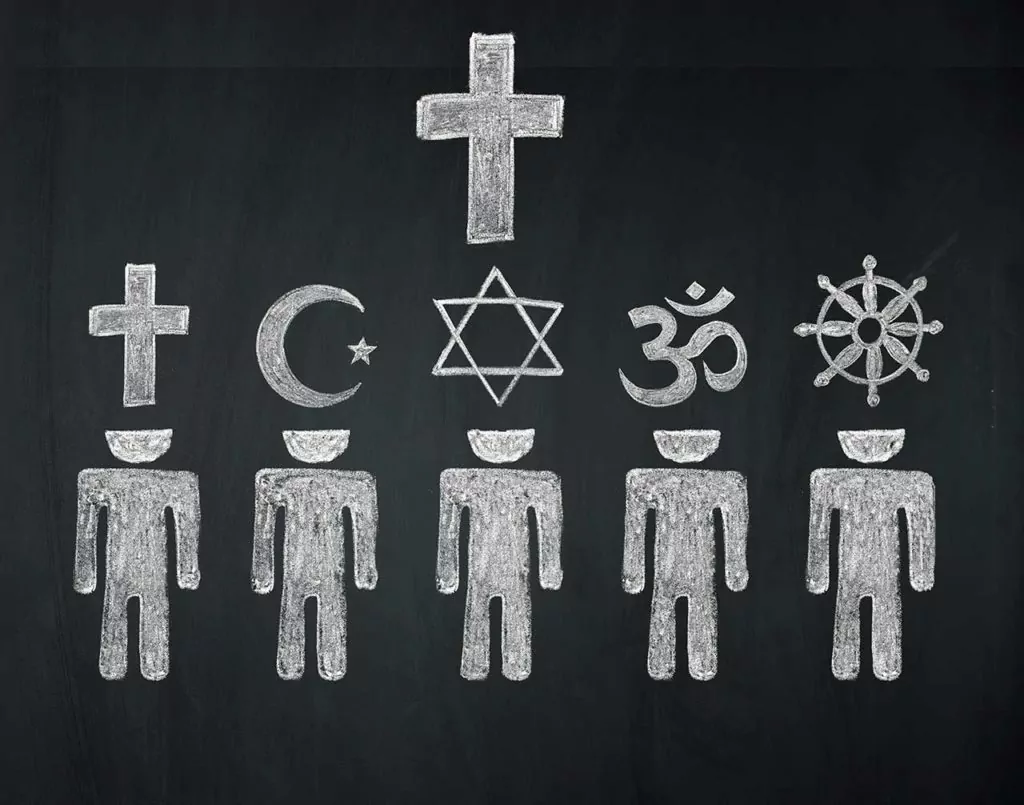
Pluralism is the belief that people of different cultures and beliefs can live together in harmony. But when their different values inevitably clash how do these differences get resolved? In this excerpt from Dr. Van Dam's “God and Government” he outlines a specifically Christian form of pluralism that allows for believers and unbelievers to live in peace together, because it recognizes that God and his law are supreme. ***** When God gathered his chosen people, his demands were clear. They had to be completely dedicated to his service. However, God recognized that within his kingdom of Israel, there was not only his holy nation, the church, but, as noted earlier, there were also others who did not really belong to the assembly of God’s people. They nevertheless lived within the kingdom of God on earth as established in Israel. To these people the Lord showed great forbearance. They were not forced to become worshippers of the God of Israel nor did God give any command to that effect to Israel’s rulers. However, they were expected to obey the prohibitive commands of God’s moral law. They could not, for example, indulge in sexual sin (Lev. 18:24–30), blaspheme God’s name (Lev 24:15) or sacrifice their children to the false god Molech. (Lev. 20:2). The people in whose midst they lived, as well as the land, was holy and they had to respect that. Indeed, God had expressly commanded that all the idolatrous nations living in Canaan had to be wiped out for the land was to be holy (Deut. 7; cf. Ps. 78:54; Zec. 2:12). There was, however, no such command for territories outside Canaan that were later conquered to be under Israel’s rule. It is noteworthy that after David defeated Moab, the Aramaean kingdoms of Hadadezer (Damascus and Maacah), Edom, and the Ammonites, there is no hint anywhere in Scripture that he worked to remove all idolatry and false worship. Also no special attempt was made to compel these people to become worshippers of the true God. Since David’s office as a godly king over these gentile peoples roughly parallels the office of government today, this tolerance points to a principle that can apply to government today. Tolerance of false religion Indeed, state tolerance of false religion is not in disagreement with Scripture. God is long-suffering and patient. “He causes his sun to rise on the evil and the good, and sends rain on the righteous and the unrighteous” (Matt. 5:45). He allows the good grain as well as the weeds to grow together, until the time of harvest. Then God himself will separate the two in the final Day of Judgment (Matt. 13:36–43). Government can tolerate what the church cannot endure. Each has its own office and calling. In a modern pluralistic society, the following words of Christ are relevant: “do to others what you would have them do to you” (Matt. 7:12). If one asks freedom of worship for oneself, then it should also be granted to others. As head of the church, Christ tolerates no ungodliness and sin. The church on earth must act accordingly. As head and ruler of his kingdom Christ is patient and bears with the weakness of the sinful human heart. His servants, the civil governments, must do likewise even as they are obligated to seek true righteousness and justice for the country entrusted to their rule. State is not the Church Besides the principle of toleration, there is the related principle of the civil authority being distinct from the religious authority in Israel. Even though church and state were very closely related, they were not identical. Each had its own jurisdiction. This has important implications. Even in Israel, which was a theocracy, there were clear limitations to what the king as civil ruler could do. Although the theocratic king had priestly and prophetic aspects to his office, he nevertheless remained in the first place the civil ruler in charge of the judicial and political affairs of the nation. Although the priests were vital in the theocracy, Israel as a theo cracy was not a priest state as found in other ancient near Eastern countries such as Egypt. Priestly authority was limited to all things related to the administration of the sacrificial service of reconciliation, including instruction in the ways of the Lord. And so there were clear distinctions. Religious matters were in the province of the priests and the civil ones were the responsibility of the king. Accordingly, in the time of King Jehoshaphat the civil courts were organized specifically along the lines of religious and civil matters (2 Chron. 19:11; cf. 1 Chron. 26:30, 32). We need to value the biblical principle that is involved here. Scripture gives no justification for a modern theocratic state such as we find in some Islamic jurisdictions. The Bible indicates that there is to be a clear separation of what we today call church and state, or spiritual authorit y and civil authority. Christ’s teaching affirmed this when he said “My kingdom is not of this world. If it were, my servants would fight to prevent my arrest by the Jews. But now my kingdom is from another place” (John 18:36). Such thinking is completely contrary to, for example, the Muslim idea of a jihad or holy war that is necessary to establish their kingdom in the here and now. All of this underlines the fact that the state is not given the duty to force people to love God and to worship him. The state is permitted to tolerate things that the church cannot tolerate. There is, however, more to this larger issue. Rule of Law Another important principle in considering the relation of church and state is the rule of law. The Davidic king was not to be autocratic and self-seeking, thinking himself to be more worthy than those around him. He was God’s representative in the theocracy, sitting on God’s throne (1 Chron. 29:23) and therefore a servant of God who needed to submit to God’s law. The Lord even stipulated that when the king assumed the throne of the kingdom then he “is to write for himself on a scroll a copy of this law, taken from that of the priests, who are Levites. It is to be with him, and he is to read it all the days of his life so that he may learn to revere the LORD his God and follow carefully all the words of this law and these decrees and not consider himself better than his brothers and turn from the law to the right or to the left” (Deut. 17:18–20). In this way God’s will would be done for his chosen nation in his kingdom. With all the plurality that may have existed in Israelite society, above it all was the law of God. It needed to be heeded for the well-being of the people. Israel’s rulers were not the only ones who were accountable to God. Pagan ones were as well. For example, Daniel told King Nebuchadnezzar that God had put him in power (Dan. 2:37–38) and so God warned the monarch through Daniel that unless he acknowledged God’s supreme place and repented of his sins in ruling, he would be driven from the throne to live with the wild animals (Dan. 4:24–27). There was accountability that had to be acknowledged. Today, rulers are to be servants of God in the first place and as such also have an obligation to heed the abiding principles of God’s Word for the good of society. Thus, when government makes decisions pertaining to morals and issues on which the Word of God gives clear direction, it should not set itself above the norms which God has revealed. It is the duty of government to restrain sin and evil (Prov. 14:33; Rom. 13:4). How does the calling of the church factor into this obligation of the government? Church is not the State Clearly the task of the church is to preach the gospel and administer the reconciliation that God offers to humankind. The church’s “job description” was given by the risen Christ prior to his ascension when he said: “All authority in heaven and on earth has been given to me. Therefore go and make disciples of all nations, baptizing them in the name of the Father and of the Son and of the Holy Spirit, and teaching them to obey everything I have commanded you. And surely I am with you always, to the very end of the age” (Matt. 28:18–20). The church is to proclaim the glad tidings of salvation and gather God’s people together. The state must give the church the freedom and opportunity to do its calling of spreading the gospel. That gospel includes the proclamation of Christ’s kingship, a message the state must hear from the church or its members so that it understands its servant role. The church’s task with respect to the state is not to make official pronouncements about the political issues of the day and to get involved in crafting government policy. The church as an institution has neither the charge nor expertise to do so. It is also not the task of the church to try to rule over the government (the Roman Catholic ideal). The state has its own God-given responsibilities. However, the church does have the duty to train and equip its members so that they can function meaningfully in today’s secular society as citizens of Christ’s kingdom and so influence also politics. Scripture is certainly relevant for the affairs of the state, but it is not the calling of the church as a corporate body to interfere in the political process and attempt to apply the biblical principles to the government agenda. That is the responsibility of Christians in all walks of life, also those involved in politics. All of this does not mean that the church should always remain silent. There can be unusual circumstances when the church needs to speak up by means of the pulpit or otherwise in order to protect its God-given mission to preach the gospel and condemn sin where sin needs to be condemned. There can also be occasions when the government invites input from interested parties on new legislation which is of great interest to the church. Churches should then participate and make a case for the application of biblical principles on the issues of the day. In summary, the church’s duty is to preach and safeguard the gospel and seek the spiritual well-being of its members. The resources and gifts of the church should focus on these central concerns. With respect to its task over against the government, the church must also lead the way in instructing its members to be good citizens and to be obedient to those in authority over them. Furthermore, the church is called to pray for those who rule over them (1 Tim. 2:1–4). Such prayer includes the petition that the state may continue to protect the freedom and ministry of the church so that the gospel can continue to be proclaimed. When that proclamation is blessed, it will eventually have a salutary effect on society and government. In our current age of secularization, it is easy for the people of God to grow weary in seeking the best for those who rule over them. But, one must realize that there are usually no quick fixes to the dilemmas of evil and sin in society and often incremental change is all that is possible. But the church need never become despondent. It has every reason to be encouraged for an important truth is that God is supreme ruler over everything already. In a broad sense his kingdom encompasses the entire universe. The battle against evil has been won (Col. 1:13–20; 2:15). One day God’s kingdom will arrive in full perfection when all will recognize him as Lord and Master. This excerpt is reprinted here with permission. To get a copy of “God and Government” email [email protected] for information (the suggested donation is $10). Or you can get a Kindle version at Amazon.ca or Amazon.com....

Red heart icon with + sign.
Politics, Pro-life - Abortion

Should one issue determine who we vote for?

Someone asked me why abortion should be the only issue that determines how we vote. It seemed silly to them that in an election when so many issues are on the table that we would decide things based on just this one issue. But is it silly? Consider that there are many other “single issues” that would be enough to disqualify a candidate from our consideration. If a candidate agreed with us on free trade but wanted to bring in Sharia law, we wouldn’t vote for them. This one issue would be enough to rule them out. And we couldn’t vote for them even if all the other candidates were worse. We also wouldn’t vote for someone who approved of slavery. We wouldn’t vote for a Communist, an anti-Semite, or a homosexual activist. So there are many “single issues” that, by themselves, would be enough to disqualify a politician from our vote. The reason it might seem silly to let the single issue of abortion disqualify a candidate is because abortion happens outside of our view, and because it has been with us for so long. It's understandable that we will have lost sight of the horror. To regain perspective it might be helpful then to consider how we would react if this same sort of devastation was being wreaked on other, more visible, groups. For example: what would we think of a candidate who stood with us on every other matter but who thought there should be a right to kill Natives - as many as 100,000 each year? Or what if a candidate said that they were all for a proposal to wipe out the town of Chilliwack this year, and then Red Deer next year, and the year after that Thunder Bay, and four years from now Waterloo, all cities of roughly 100,000? Would either of those be candidates we could vote for? Clearly not. When we restate their monstrous abortion stand in more visible terms we know such a candidate is simply too evil to support. What then can we do? There aren't many pro-life candidates so who can we vote for? If God has given you a CHP candidate, or a pro-life Conservative candidate in your riding then take full advantage. If you have neither of those options then please do still go out to the polling booth, but not to vote for any of the candidates. Instead take the opportunity to express as clearly as you are able, by spoiling your ballot (perhaps by writing "No pro-life candidate available across it") that none of these candidates are qualified to represent you. It is a small thing. But it is what you can do. However, the day after the election, that is when Jesus’ “Parable of the Persistent Widow” (Luke 18:1-8) can help guide us – this is first and foremost not a parable about how best to engage in political action, but it is that too. When faced with an unjust judge the widow simply persisted. And she got justice not because she won the judge over, and not because the unjust judge was replaced by someone who actually cared about right or wrong. No, she got her justice because she would not shut up. In a country in which there are no electable pro-life leaders, this is what we can still do - speaking up persistently, ever hopeful that God can make use of our persistence to help the unborn. And, of course, we must also remember the real point of this parable, which Jesus told to encourage us to persistent in our prayers to God. Casting our vote is important, but it is only a small, one time, thing. Our God is big and ever near us. And He wants to hear from us – He asks us to persistent in our requests to Him. So let us pray for the unborn and for our country without ceasing!...

1 2