Transparent heart icon with white outline and + sign.

Life's busy, read it when you're ready!

Create a free account to save articles for later, keep track of past articles you’ve read, and receive exclusive access to all RP resources.

White magnifying glass.

Search thousands of RP articles

Helping you think, speak, and act in Christ.

Open envelope icon with @ symbol

Get Articles Delivered!

Helping you think, speak, and act in Christ. delivered direct to your Inbox!


Most Recent


The Rest


Red heart icon with + sign.
Pro-life - Abortion

People with Down Syndrome in “civilized” Denmark almost all exterminated

Here’s one of those moral dilemmas. There are three people in a room. They all have the same medical condition and are in fact the last people alive who have it. It is by no means life-threatening, nor is it contagious, and its main symptoms are physical growth delays and varying degrees of intellectual disability. There is, however, currently no cure for it. Someone enters the room and tells you that they have found a cure, which they are going to give you. They hand you a gun. All you have to do, they tell you, is pull the trigger three times and you will have completely eradicated the condition from planet Earth. What would you do? Not hard, is it? Yet imagine someone carrying out the killing and then triumphantly proclaiming that they had indeed eradicated the condition. You’d be appalled at the Hitlerian cruelty. Appalled at the callous disregard for a fellow creature made in the Imago Dei. But perhaps even more than that, you’d surely be sick to the stomach to hear them acting like they had found a cure, rather than having simply killed three human beings to achieve their ends. You don’t cure disease by killing people, do you? Apparently you do. A few years back Iceland became the first “civilized Western” country to become a Down Syndrome-free zone, and Denmark is close to becoming the second. Back in 2015, CPH Post (formerly The Copenhagen Post), Denmark’s only English-language newspaper, ran a piece with the headline: “Down Syndrome heading for extinction in Denmark.” This must rank as one of the most misleading headlines in history. If you didn’t know better, you’d think that Denmark’s doctors had found a cure for Down Syndrome. Except they haven’t. What they have in fact done is not made Down Syndrome almost extinct, but rather people with Down Syndrome. The headline should have read: “People with Down Syndrome heading for extinction in Denmark.” Or more accurate still: "People with Down Syndrome heading for extermination in Denmark." Doesn’t sound quite as medical, does it, unless you mean in the Josef Mengele sense of the word! Yet this drive to eradicate Down Syndrome by eradicating people with Down Syndrome is apparently going down rather well in Denmark. According to the article, 98% of pregnant women who were revealed to be carrying an unborn child with Down Syndrome had him or her aborted, and 60% of Danes see it as a “positive development” that there are considerably fewer Down Syndrome children being born. Positive development? Ridding Denmark of Down Syndrome by curing it might be considered a positive development. But ridding Denmark of Down Syndrome by killing those with the condition? That’s a positive development??? Here’s what Britain’s biggest funder of abortions, the NHS, says about people with Down Syndrome: “People with Down syndrome can have a good quality of life. With support from their family and others, many people are able to get jobs and live fairly independently.” So 60% of Danes believe that the eradication from their country of “people who can have a good quality of life…can get jobs and live fairly independently” by killing them is a good thing? Have they ever seen the joy Down Syndrome people bring to those around them? Do they care? Have they any heart? Not so long ago, Down Syndrome could not be detected in the womb. Now that it can, 98% of Down Syndrome children are aborted in Denmark, over 90% in Britain, and – most shockingly – every single Down Syndrome child in Iceland. The real test of the character of any civilization is how it treats its weakest and most helpless members. If it loves them and seeks to help them, it should be praised. If it seeks cures to treat their conditions, great. But if it seeks to extinguish the people who have the condition from its midst, and then pats itself on the back at having eradicated the condition, what grounds do we have for calling it civilized? Rob Slane is the author of “A Christian & an Unbeliever Discuss: Life, the Universe & Everything” which is available at Amazon.ca here and Amazon.com here. He lives in Wiltshire, and definitely not Wales....

Red heart icon with + sign.
Pro-life - Abortion

Why pro-lifers should publicize, not mourn, the Morgentaler decision

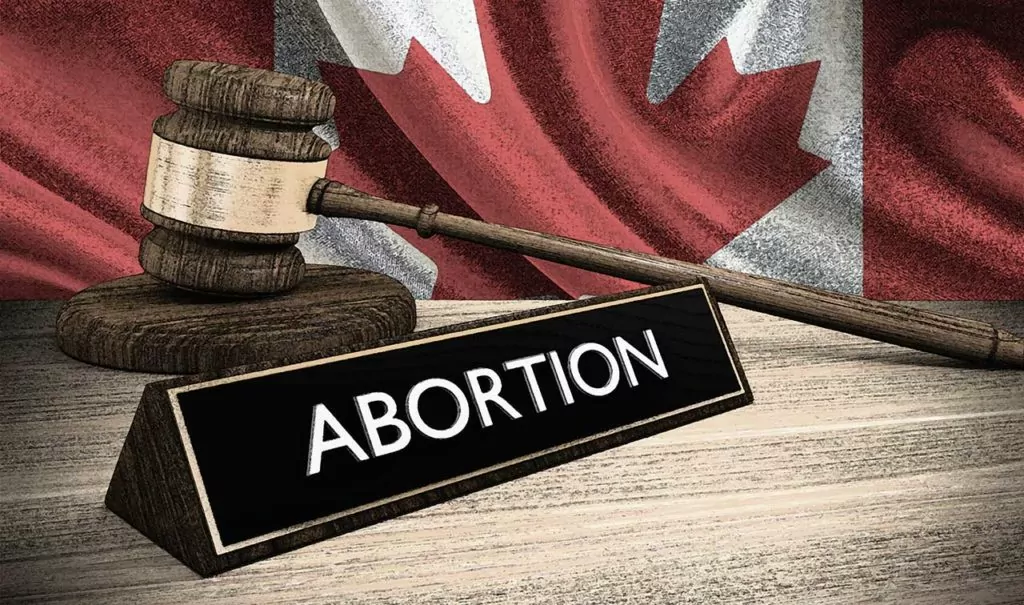
When the public misunderstands a court ruling, the consequences can be huge. For good or for evil. For good Back in 1772, the ruling in Somerset v. Stewart, to free one Black slave in England, was misinterpreted by the public as freeing all 15,000 slaves in England, even though the ruling was narrow and technical. Somerset, a Black slave, was brought from Virginia to England in 1769, by his master, Charles Stewart. Two years later he escaped. He was then captured and put on a ship to be transported to Jamaica, there to be sold. Somerset’s Christian godparents applied to the court for Somerset’s release. The case attracted a great deal of attention in the press. Somerset's lawyers argued that while colonial laws might permit slavery, neither the common law of England nor any law of Parliament recognized the existence of slavery, and slavery was therefore unlawful. Stewart’s lawyers argued that property was paramount, and that it would be dangerous to free all Blacks in England. Members of the public donated monies to support the lawyers for both sides of the argument. Guided in part by the maxim fiat justitia, ruat coelum ("Let justice be done though the heavens fall"), Lord Mansfield ruled that since England’s written laws did not clearly permit or establish slavery, Stewart had no legal right to force Somerset to go to Jamaica: “…no master ever was allowed here to take a slave by force to be sold abroad because he had deserted from his service, or for any other reason whatever.” Lord Mansfield’s narrow and technical ruling merely stated that British slave owners in England could not force their slaves to be forcibly taken to the colonies. But this judgment was actually silent about the status of slaves in England. However, Lord Mansfield's judgment had a profound effect on slaves. Many of them misunderstood the ruling to mean that slaves were emancipated in Britain. Despite Lord Mansfield’s best efforts, the case was reported in the press, and internationally, as ending slavery in England. After the ruling, numerous newspaper advertisements of the time show that Black slaves continued to be bought and sold in England. Nevertheless, this court ruling proved to be a boon for the anti-slavery movement. The perception of there being an “anti-slavery” court ruling, while inaccurate, helped turn public opinion against slavery. In 1807 Parliament abolished the slave trade, and by 1838 slavery in British colonies was also abolished. For bad In 21st Century Canada, there is much public confusion about the 1988 Supreme Court of Canada ruling in R. v. Morgentaler, rendered 29 years ago this January 28. In Morgentaler, five of seven Justices struck down section 251 of the Criminal Code, which allowed abortions only if approved by a Therapeutic Abortion Committee. Abortion supporters – and many pro-life Christians too – have characterized the Morgentaler ruling as a Canadian version of Roe v. Wade, by which the U.S. Supreme Court did, in fact, create a constitutional right to abortion. For example, some student unions have claimed that pro-life speech should be banned at universities “because abortion is a constitutional right.” Leaving aside the fact that a free society allows its citizens to criticize and disagree with the constitution, this claim completely mischaracterizes the Morgentaler decision. Justices Dickson and Lamer held that section 251 was arbitrary and unfair, and did not provide a clear exemption from the criminal law. Nowhere do they state that there is a constitutional right to abortion. Justices Beetz and Estey recognized society’s interest in the protection of the unborn child, ruling that Parliament is justified in requiring a reliable, independent and medically sound opinion as to the "life or health" of the pregnant woman in order to protect the state interest in a fetus. Justice Wilson held that protecting an unborn child is a “perfectly valid legislative objective,” especially during the latter stages of pregnancy, but not in the early stages of pregnancy. Justices McIntyre and La Forest ruled that, “no right of abortion can be found in Canadian law, custom or tradition” or in “the language, structure or history of the constitutional text …or in the history, traditions or underlying philosophies of our society.” These two Justices also recognized the public interest in the protection of the unborn, and stated that courts must refrain from imposing or creating rights with no identifiable base in the Charter. In short, the Supreme Court in Morgentaler recognized expressly that Parliament has the right to pass legislation to protect the unborn, with five of seven Justices striking down Section 251 as the wrong way to achieve that legitimate goal. This muddled and incoherent decision was certainly not a victory for pro-lifers. However, with the Court inviting Parliament to draft different legislation, this ruling is certainly no victory for pro-choicers. Conclusion The false notion that R. v. Morgentaler established a constitutional right to abortion can have a very powerful and negative impact in shaping public policy. If the Canadian public perceives the Morgentaler ruling as a pro-choice victory, this will influence public opinion in favor of abortion being legal. Those who want to see Parliament pass a law to protect the unborn should not mourn the Morgentaler decision as a victory for their pro-choice opponents. Doing so helps the pro-choice side. Instead, pro-lifers should point out that in Morgentaler, the Supreme Court invited Parliament to pass legislation to protect the unborn. Calgary lawyer John Carpay practices constitutional law....

Red heart icon with + sign.
Politics, Pro-life - Abortion

Should one issue determine who we vote for?

Someone asked me why abortion should be the only issue that determines how we vote. It seemed silly to them that in an election when so many issues are on the table that we would decide things based on just this one issue. But is it silly? Consider that there are many other “single issues” that would be enough to disqualify a candidate from our consideration. If a candidate agreed with us on free trade but wanted to bring in Sharia law, we wouldn’t vote for them. This one issue would be enough to rule them out. And we couldn’t vote for them even if all the other candidates were worse. We also wouldn’t vote for someone who approved of slavery. We wouldn’t vote for a Communist, an anti-Semite, or a homosexual activist. So there are many “single issues” that, by themselves, would be enough to disqualify a politician from our vote. The reason it might seem silly to let the single issue of abortion disqualify a candidate is because abortion happens outside of our view, and because it has been with us for so long. It's understandable that we will have lost sight of the horror. To regain perspective it might be helpful then to consider how we would react if this same sort of devastation was being wreaked on other, more visible, groups. For example: what would we think of a candidate who stood with us on every other matter but who thought there should be a right to kill Natives - as many as 100,000 each year? Or what if a candidate said that they were all for a proposal to wipe out the town of Chilliwack this year, and then Red Deer next year, and the year after that Thunder Bay, and four years from now Waterloo, all cities of roughly 100,000? Would either of those be candidates we could vote for? Clearly not. When we restate their monstrous abortion stand in more visible terms we know such a candidate is simply too evil to support. What then can we do? There aren't many pro-life candidates so who can we vote for? If God has given you a CHP candidate, or a pro-life Conservative candidate in your riding then take full advantage. If you have neither of those options then please do still go out to the polling booth, but not to vote for any of the candidates. Instead take the opportunity to express as clearly as you are able, by spoiling your ballot (perhaps by writing "No pro-life candidate available across it") that none of these candidates are qualified to represent you. It is a small thing. But it is what you can do. However, the day after the election, that is when Jesus’ “Parable of the Persistent Widow” (Luke 18:1-8) can help guide us – this is first and foremost not a parable about how best to engage in political action, but it is that too. When faced with an unjust judge the widow simply persisted. And she got justice not because she won the judge over, and not because the unjust judge was replaced by someone who actually cared about right or wrong. No, she got her justice because she would not shut up. In a country in which there are no electable pro-life leaders, this is what we can still do - speaking up persistently, ever hopeful that God can make use of our persistence to help the unborn. And, of course, we must also remember the real point of this parable, which Jesus told to encourage us to persistent in our prayers to God. Casting our vote is important, but it is only a small, one time, thing. Our God is big and ever near us. And He wants to hear from us – He asks us to persistent in our requests to Him. So let us pray for the unborn and for our country without ceasing!...

Red heart icon with + sign.
News

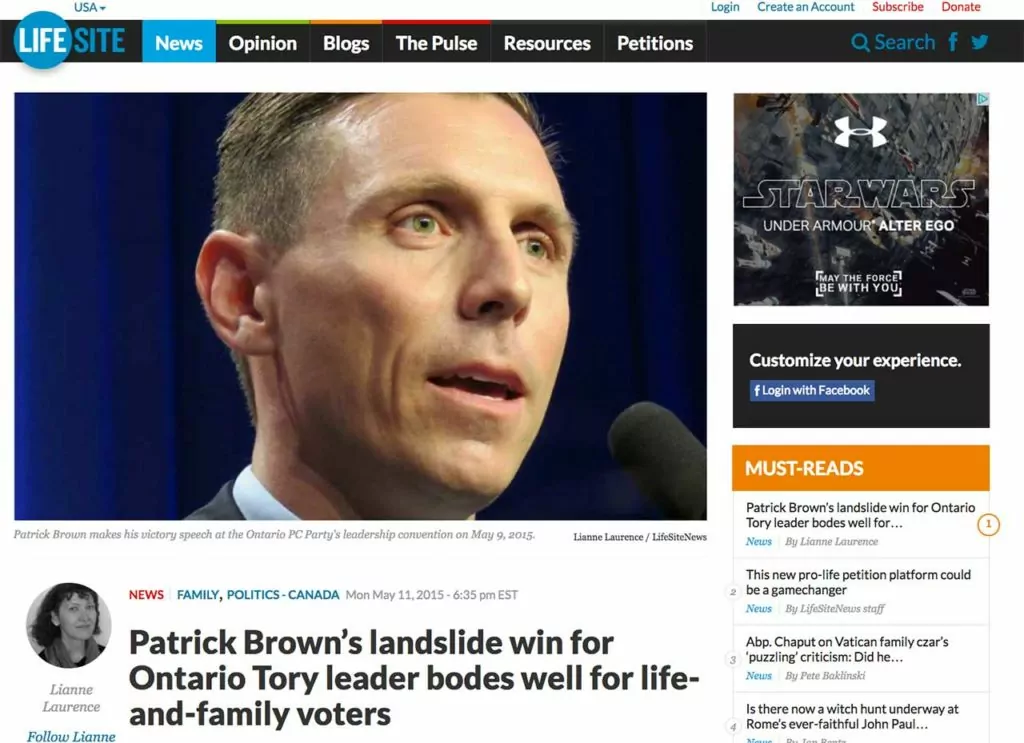
Patrick Brown isn’t pro-life and wishing won’t make it so

Two days after Patrick Brown was elected leader of Ontario’s Progressive Conservative Party, an article on Canada’s biggest pro-life news site declared: “Brown’s landslide win…bodes well for life-and-family voters." The LifeSiteNews piece highlighted how Canada’s biggest pro-life lobby group, the Campaign Life Coalition (CLC), played a key role in Brown’s victory. CLC Toronto’s vice-chair Jeff Gunnarson was “very pleased with the efforts of staff, volunteers and supporters who rolled up their sleeves and went to work on this leadership campaign…” He estimated that approximately 20 percent of Brown’s vote total came from CLC supporters and he sent out his “heartfelt congratulations to Patrick and to all of our people for a job well done!” Why was the CLC eager to support Brown? Because, by their measure, Brown had a 100 percent pro-life voting record during his three terms as a Member of Parliament. He had something that very few other political candidates possess: a history of voting the right way. Past performance… But there was just one problem. In September, at the kickoff for his leadership campaign, Brown pulled a page out of the Stephen Harper playbook. He promised he “would not change the status quo” on abortion rights and would “oppose any efforts to do so.” Lest there be any confusion on this point, the status quo for abortion in Canada is that unborn children can be killed at any time, and for any reason, and the government will pay for it. Brown might have a pro-life record, but he’s promised that if it is up to him Ontario will have a pro-choice future. That's not all. It gets worse. Brown’s opponents and the media (did I just stutter?) will use his pro-life record to paint him as a radical social conservative. If he doesn’t want this label to stick he’s going to have to run from his record. He’ll have to be consistently callous, spurning anything that might do even a hint of good for the unborn. We can see this already happening. On the day of his victory he was asked about his parliamentary votes by both CBC News and Global News, and asked about them again two days later in an interview with the Toronto Sun. He repeated his pro-choice pledge again and again and again: “We are not going to revisit issue. It will not be part of my platform.” Despite the impression that LifeSiteNews gave its readers, and Campaign Life Coalition gave their supporters, the unborn will not benefit from Brown’s leadership. A better sort It’s mystifying as to how the CLC and LifeSiteNews could be so wrong about Patrick Brown. One takeaway is that even the best new sources, and even the most reliable organizations, can get things horribly wrong. The bigger lesson is that we should never let desperation drive us to delusion. Principled politicians are rare, but it does the unborn no good to rally around a Patrick Brown sort. No champion at all is better than one who believes his political ambitions are more important than unborn children’s lives. The fact is, while rare, principled politicians do exist. There really are men and women out there eager and able to explain to the muddled masses why the unborn are as precious as the rest of us. They understand that God would rather they speak for the oppressed even if it means they lose, than win by staying silent. Our job is to search for these special sorts. When we find them we need to support them with our money and our time. Ideally we’d all have one in our riding, but they aren’t yet as numerous as that. We may need to drive a couple ridings over to volunteer for one of these faithful few. Or if there’s no one nearby, we can still send money. And if in the whole width and breadth of this country no one can be found worth supporting, then the need is clear. If we can’t find one, we need to become one. Better to stammer out the truth ourselves than to throw our support behind false hopes like Patrick Brown....

Red heart icon with + sign.
Pro-life - Abortion

An Emergency Room is not the Church

Why “We Need a Law” doesn’t talk about the Gospel but you should  ***** One of the questions ARPA Canada has received most often pertains to the promise of the Gospel and how it fits in with the mission of its We Need A Law (WNAL) campaign. The question comes in different variations but usually goes something like this: “Why is there no reference on the WNAL website to God?” or, “If we do manage to get an abortion law but people’s hearts aren’t changed, is it really worth it?” Perhaps you’ve thought about these issues yourself. Not our goal This is a good question. Should we include a Gospel presentation in our communication? The decision not to include references to Christianity and the Bible in the majority of WNAL communications has been intentional. Canada is no longer a Judeo-Christian country. We are a pluralistic nation made up of many different worldviews. While this slide away from Scripture is lamentable, and many (most?) hearts of Canadians are turned away from God, there remain opportunities to save the lives of pre-born children right now. The mission of WNAL is to build a groundswell of support among all Canadians for legislation that protects pre-born children to the greatest extent possible. So the reason we aren’t quoting Scripture is because we may be working with people who hate God, but who are still (strangely perhaps) willing to join with us in supporting laws that save the children of the needy and rescue them from oppression and violence (Ps. 72). Though they hate God, they are willing to help us who are striving to rescue those precious in His sight. Consider a Christian nurse in a hospital emergency room. When a patient arrives in need of immediate medical intervention she carries out the necessary tasks to help the patient. She doesn’t share the Gospel at this point, because there are other tasks to do. If an opportunity arises later whereby she can share the Gospel – it might be with the patient in recovery or the concerned family members after the operation – she should embrace it. Her primary task may be to save lives and not souls but she may not intentionally avoid confessing the name of Christ. You can insert any example you would like – a construction worker, accountant, lawyer, farmer, etc. As followers of Jesus and members of the Church we all have an awesome responsibility to share His truths in everything we do. But while we all have that individual responsibility to evangelize, that is not, and need not, be the goal of every organization we are part of. Spreading the Gospel is an organizational goal of the Church. But making good bread is the goal – or, at least, the main goal – of a Christian-owned bakery. And saving lives is the main goal of a hospital emergency room. Finally, saving unborn babies lives is the primary goal of We Need A Law. All are worthy, God-honouring goals. And all are goals we can work together with non-Christians to accomplish. A natural segue to the Gospel This is not to say that the message of salvation in Jesus cannot be incorporated into the WNAL campaign. As we carry out our mission many opportunities to share the Gospel do arise. I would submit that by virtue of standing up for justice and truth about our pre-born neighbors WNAL is already sharing nuggets of the truth. But there are always opportunities to share more. The reality is that, quite naturally, conversations evolve into discussions about the motivations for our efforts, the intrinsic value of all human beings, the Imago Dei (all humans having been made in the image of God), and other moral truths. However, those opportunities will arise most often at the personal level by the thousands of people tied into our campaign as they interact with others. Allow me a few examples as to how that can be done. The flag displays which started in Ottawa and are now being put up at dozens of locations throughout Canada are a great way to offer hope in Christ, especially when put up on church lawns. What better place to speak of both the truth about abortion and the truth of repentance, forgiveness and reconciliation in Jesus! This could be done by way of signs, tracts and most importantly, through personal conversations with those who come out to witness at the display. This year we are going to facilitate a lawn sign campaign. There is a federal election scheduled for the fall and we want the topic of pre-born human rights to become part of the narrative of this election. A sign on your front lawn is sure to get the community talking. When your neighbour asks you what the sign is all about, then you have just received an open invitation to share the Gospel. You could say something like, “Well Bob, as you know I am a Christian and that compels me to stand against injustices in the world. Did you know that abortion is legal throughout an entire pregnancy in Canada?” Another response could be, “Good question Sarah. Because I am a Christian I need to speak up for those who have no voice. Were you aware that only North Korea, China and Canada allow abortion up to the moment of birth?” Consider this a challenge – go get yourself a lawn sign. Here is one more example of how the Gospel can easily be integrated with the campaign message of WNAL. We regularly ask people to send an email to their MP or MLA. We make it really easy through our online SimpleMail technology. Though the letters are prepared for you in advance, these letters can be customized. There is no reason why you can’t edit these letters to beautifully reflect God’s care and providence in creating new life and how he demands we protect it (see Ps. 139 and Ex. 20). Conclusion In summary, it is not the mission of the WNAL campaign to evangelize Canadians. That mission is the responsibility of each of us as individuals and collectively as Church. May God be pleased to use our weak efforts as a part of WNAL to build support for laws that move us closer to ending the horrific barbarism and cruel injustice of abortion. May He also use us as Church members to present the Gospel of forgiveness and hope to those who are damaged and hurting because of this injustice. To find out more, like how you can get your own WNAL lawn sign, visit www.weneedalaw.ca. ...

Red heart icon with + sign.
Pro-life - Abortion

What Exodus 21:22 says about abortion

Is there a biblical case for abortion? This argument is coming up more and more often and it centers around one particular text in the Torah about accidental "miscarriage." Is this text pro-life or pro-abortion? Here are the facts. You decide. ***** Most attempts to argue against abortion from biblical texts are misdirected. In the absence of specific prohibitions against abortion in the Scripture, Christian pro-lifers quote equivocal passages. Some verses use personal pronouns to describe the unborn, but many of these are in poetry texts, so the conclusion is not entirely convincing. God's personal acquaintance with the unborn can be explained by His omniscience. After all, some texts make it clear that God "knows" us even before we're conceived. One text, however, is strong. Exodus 21:22-25 is usually used to argue that the Bible assigns a lower value to the unborn than to other humans. Rabbis and Jewish thinkers I've discussed this point with on the radio have been especially adamant – even irate. I think the evidence shows, though, that Moses taught just the opposite. If I'm right, we have a powerful argument for the value Scripture puts on the life of the unborn. Dead or Alive? The New American Standard Bible (NASB) renders Exodus 21:22-25 this way: And if men struggle with each other and strike a woman with child so that she has a miscarriage, yet there is no injury, he shall surely be fined as the woman's husband may demand of him; and he shall pay as the judges decide. But if there is any injury, then you shall appoint as a penalty life for life, eye for eye, tooth for tooth, hand for hand, foot for foot, burn for burn, wound for wound, bruise for bruise. 1 This translation suggests that if a miscarriage takes place and the child is lost, the antagonists are simply fined, but if the mother dies in the scuffle, then the penalty is "life for life." In the Torah, it seems, the unborn is not considered fully human. Theologian Millard Erickson notes that in this view, "the lex talionis is applied only if the mother is harmed. On this basis it is concluded that the fetus was not considered a soul or a person, and thus is not to be thought of as fully human."2 At issue is the phrase translated "she has a miscarriage." There is an assumption made about this word that is crucial. In English, the word "miscarriage" implies the death of the child. Webster's New World Dictionary defines miscarriage as, "The expulsion of the fetus from the womb before it is sufficiently developed to survive."3 In the struggle, the child is aborted, and so a fine is levied. Here's the crux of the issue: Does the Hebrew word carry the same meaning? Is it correct to presume that the miscarriage of Exodus 21:22 produces a dead child, just like an abortion? This is the single most important question that needs to be answered here. If it does, the English word "miscarriage" is the right choice. If it does not, then the picture changes dramatically. Are we justified in assuming that the child is dead? The answer is in the original language. There's a history of how these words are used in the Hebrew Bible, and that history is important. Let's look at it. Yeled and Yasa A word's meaning in any language is determined in two steps. We learn a word's range of meaning – its possible definitions – inductively by examining its general usage. We learn its specific meaning within that range by the immediate context. The relevant phrase in the passage, "...she has a miscarriage...," reads w˚yase û ye ladêhâ in the Hebrew. It's a combination of a Hebrew noun – yeled – and a verb – yasa – and literally means "the child comes forth." The NASB makes note of this literal rendering in the margin. The Hebrew noun translated "child" in this passage is yeled4 (yeladim in the plural), and means "child, son, boy, or youth."5 It comes from the primary root word yalad,6 meaning "to bear, bring forth, or beget." In the NASB yalad is translated "childbirth" 10 times, some form of "gave birth" over 50 times, and either "bore," "born," or "borne" 180 times. The verb yasa7 is a primary, primitive root that means "to go or come out." It is used over a thousand times in the Hebrew Scriptures and has been translated 165 different ways in the NASB – “escape,” “exported,” “go forth,” “proceed,” “take out,” to name a few. This gives us a rich source for exegetical comparison. It's translated with some form of "coming out" (e.g., "comes out," "came out," etc.) 103 times, and some form of "going" 445 times. What's most interesting is to see how frequently yasa refers to the emergence of a living thing: Genesis 1:24 "Then God said, 'Let the earth bring forth living creatures after their kind: cattle and creeping things and beasts of the earth after their kind'; and it was so." Genesis 8:17 "Bring out with you every living thing of all flesh that is with you, birds and animals and every creeping thing that creeps on the earth...." Genesis 15:4 "This man will not be your heir; but one who shall come forth from your own body...." Genesis 25:25-26 "Now the first came forth red, all over like a hairy garment; and they named him Esau. And afterward his brother came forth with his hand holding on to Esau's heel, so his name was called Jacob." 1 Kings 8:19 "Nevertheless you shall not build the house, but your son who shall be born to you, he shall build the house for My name." Jeremiah 1:5 "Before I formed you in the womb I knew you, and before you were born I consecrated you; I have appointed you a prophet to the nations." 2 Kings 20:18 "And some of your sons who shall issue from you, whom you shall beget, shall be taken away; and they shall become officials in the palace of the king of Babylon." As you can see, it's common for yasa to describe the "coming forth" of something living, frequently a child. There is only one time yasa is clearly used for a dead child. Numbers 12:12 says, "Oh, do not let her be like one dead, whose flesh is half eaten away when he comes from his mother's womb!" Note here, that we don't infer the child's death from the word yasa, but from explicit statements in the context. This is a stillbirth, not a miscarriage. The child is dead before the birth ("whose flesh is half eaten away"), and doesn't die as a result of the untimely delivery, as in a miscarriage. Yasa is used 1,061 times in the Hebrew Bible. It is never translated "miscarriage" in any other case. Why should the Exodus passage be any different? Clues from the Context This inductive analysis shows us something important: Nothing about the word yasa implies the death of the child. The context may give us this information, as in Numbers 12:12, but the word itself does not. This leads us to our next question: What in the context justifies our assumption that the child that "comes forth" is dead? The answer is, nothing does. There is no indication anywhere in the verse that a fine is assessed for a miscarriage and a more severe penalty is assessed for harming the mother. This becomes immediately clear when the Hebrew words are translated in their normal, conventional way (the word "further" in the NASB is not in the original): "And if men struggle with each other and strike a woman with child so that the child comes forth, yet there is no injury, he shall surely be fined as the woman's husband may demand of him; and he shall pay as the judges decide. But if there is any injury, then you shall appoint as a penalty life for life...." The text seems to require a fine for the premature birth, but injury to either of the parties involved incurs a more severe punishment.8 Millard Erickson notes that "there is no specification as to who must be harmed for the lex talionis to come into effect. Whether the mother or the child, the principle applies."9 Gleason Archer, Professor of Old Testament and Semitic Studies at Trinity Evangelical Divinity School, concludes: "There is no ambiguity here, whatsoever. What is required is that if there should be an injury either to the mother or to her children, the injury shall be avenged by a like injury to the assailant. If it involves the life (nepes) of the premature baby, then the assailant shall pay for it with his life. There is no second-class status attached to the fetus under this rule; he is avenged just as if he were a normally delivered child or an older person: life for life. Or if the injury is less, but not serious enough to involve inflicting a like injury on the offender, then he may offer compensation in monetary damages..."10 Two Rejoinders Two further objections need to be dealt with. First, if this is a premature birth and not a miscarriage, why the fine? Babies born prematurely require special care. Because their prenatal development has been interrupted, they are especially prone to difficulty. Pre-term babies often can't breast feed, and there can be respiratory problems leading to permanent brain damage. The fine represents reimbursement for the expense of an untimely birth, and punitive damages for the serious trauma. Anyway, even if the fine was for the miscarriage, this wouldn't prove the child was less than human. A few verses later (v. 32), Moses imposes a fine for the death of a slave, but this doesn't mean the slave is sub-human. Second, was this the only word that could be used to indicate a miscarriage? No. Two other words were available to convey this particular meaning, if that's what the writer had in mind: nepel and sakal. These are used seven times in the Hebrew text. The noun nepel11 means "miscarriage" or "abortion," and is used three times: Job 3:16 "Or like a miscarriage which is discarded, I would not be, as infants that never saw light." Eccl. 6:3-4 "If a man fathers a hundred children and lives many years, however many they be, but his soul is not satisfied with good things, and he does not even have a proper burial, then I say, 'Better the miscarriage than he, for it comes in futility and goes into obscurity.'" Psalms 58:8 "Let them be as a snail which melts away as it goes along, like the miscarriages of a woman which never see the sun." The verb sakal12 means "to be bereaved" and is used four times, including one time when it's actually translated "abort:" Genesis 31:38 "These twenty years I have been with you; your ewes and your female goats have not miscarried, nor have I eaten the rams of your flocks." Exodus 23:26 "There shall be no one miscarrying or barren in your land; I will fulfill the number of your days." Hosea 9:14 "Give them, O Lord-- what wilt Thou give? Give them a miscarrying womb and dry breasts." Job 21:10 "His ox mates without fail; his cow calves and does not abort. Moses had words in his vocabulary that literally meant abortion or miscarriage, but he didn't use them in Exodus 21:22. Instead, he chose the same word he used in many other places to signify a living child being brought forth. Yasa doesn't mean miscarriage in the sense we think of that word. Instead, the combination of yeled with yasa suggests a living child coming forth from the womb. Nowhere else is this word ever translated "miscarriage." Why? Because the word doesn't mean the baby is stillborn. It simply means the child comes out. Three Questions When someone raises this issue with you, ask these three questions. First, why presume the child is dead? Though the English word "miscarriage" entails this notion, nothing in the Hebrew wording suggests it. Yasa doesn't mean miscarriage; it means "to come forth." The word itself never suggests death.13 In fact, the word generally implies the opposite: live birth. If it's never translated elsewhere as miscarriage, why translate it that way here? Second, what in the context itself implies the death of the child? There's nothing that does, nothing at all. The fine does not necessarily mean the child is dead, and even if it did this wouldn't indicate that the child wasn't fully human (as in the case of the slave in v. 32). Third, ancient Hebrew had a specific word for miscarriage. It was used in other passages. Why not here? Because Moses didn't mean miscarriage. When his words are simply taken at face value, there is no confusion at all. The verse is clear and straightforward. Everything falls into place. Regardless of the translation, it's clear that killing the child – and the text does refer to the unborn as a child – is a criminal act. There is no justification for abortion-on-demand from the Torah. Instead, we have a reasonable – even powerful – argument that God views the unborn as valuable as any other human being. Footnotes 1 The 1995 updated version of the NASB now renders this verse, "If men struggle with each other and strike a woman with child so that she gives birth prematurely, yet there is no injury, he shall surely be fined..." etc. 2 Millard Erickson, Christian Theology (Grand Rapids: Baker Book House, 1985), p. 555. 3 Webster's New World Dictionary, Second College Edition (New York: Prentice Hall Press, 1984). 4 Strong's Index word #3206. 5 Definitions come from the New American Standard Exhaustive Concordance. For further documentation, see the Hebrew/English Lexicon of the Old Testament, by Brown, Driver and Briggs, the standard lexicon of ancient Hebrew. 6 Strong's Index word #3205. 7 Strong's Index word #3318. 8 The New International Version is correct in rendering this passage, "If men who are fighting hit a pregnant woman and she gives birth prematurely but there is no serious injury, the offender must be fined whatever the woman's husband demands and the court allows. But if there is serious injury, you are to take life for life." 9 Millard Erickson, Christian Theology (Grand Rapids: Baker Book House, 1985), p. 556. 10 Gleason Archer, Encyclopedia of Bible Difficulties (Grand Rapids: Zondervan, 1982), p. 248. 11 Strong's Index word #5309. 12 Strong's Index word #7921. 13 Again, in the Numbers passage the context indicates the death, not the word yasa itself. This article is reprinted with permission from a transcript of the radio show Stand to Reason. This article was first published in the February 2005 issue of the magazine....

1 2 3 4