Transparent heart icon with white outline and + sign.

Life's busy, read it when you're ready!

Create a free account to save articles for later, keep track of past articles you’ve read, and receive exclusive access to all RP resources.

White magnifying glass.

Search thousands of RP articles

Helping you think, speak, and act in Christ.

Open envelope icon with @ symbol

Get Articles Delivered!

Helping you think, speak, and act in Christ. delivered direct to your Inbox!


Most Recent


The Rest


Red heart icon with + sign.
Pro-life - Abortion

Real progress: Canada is warming up to an abortion law

In October of 2011, Reformed Perspective published an article I wrote called “Saving some is not a compromise – the case for advancing abortion legislation one step at a time.” In the article, I made the case that passing an abortion law is realistic in Canada, and can be promoted by Christians without compromising our faith. Looking back, that article has likely had more impact than anything else I have written. While the initial response did include some strong criticism, most pro-lifers were both intrigued and encouraged to know that new strategies were being advanced, as we have gone for decades without any laws restricting this mass injustice. The ARPA Canada team welcomed the encouragement, but we also carefully listened to the critique, and over time it was evident that the majority of the criticism, though passionate, wasn’t interacting with the actual arguments the article had advanced. And since it was first published, the key points of the original article have been validated time and again. Because over 100,000 children were dying every year in Canada alone, we knew we had to continue pursuing prudent political initiatives, without compromising our faith. So we moved forward. That same year I was blessed with the full-time help of a bright, principled, and hard-working lawyer André Schutten, who now serves as ARPA’s Director of Law and Policy. And the following year we were blessed with the full-time help of a modern-day Wilberforce, Mike Schouten, who has been capably directing the We Need a Law campaign since, and now serves as ARPA’s Director of Advocacy. By God’s grace, we are now surrounded by a capable team of staff and a much larger team of big-hearted Canadians who are striving for protection for pre-born children from coast to coast. At times it is valuable to pause and reflect on where things have gone, as we all have much to learn. Now that over seven years have passed since that article was published I look back with thankfulness on the progress that has been accomplished. This isn’t a result of my work, or ARPA’s work. Sometimes it was in spite of us. It is a result of God’s work. And we can be encouraged that He uses each of us to accomplish this. RP Chairman Bruce Deboer and wife Helena at the Ottawa 100,000 flags display in 2014. “Progressives” today are often associated with championing abortion, sexual freedom, and “climate justice” among many other things. But a truly objective analysis, done with a biblical worldview, will show these causes to be regressive rather than progressive. True progress should involve moving us forward. In regard to abortion, it means taking steps to protect pre-born human rights. Since that article was published in 2011, I can look back with thankfulness to God for the true progress that is being made: A principled, legally-sound, and politically realistic strategy has been carefully developed: This strategy includes draft legislation (an actual abortion bill) and has been vetted past numerous experts. We are so grateful and blessed to now have multiple staff, including a lawyer, devoting their ongoing time to advancing this strategy. The strategy has garnered the support of a growing base of Members of Parliament: The law will only change if MPs champion the change. We are so encouraged to see dozens of MPs on board with this strategy and building support among their colleagues. And they are very grateful that the political arm of the pro-life movement is now willing to work alongside them in this regard. They understand that it is going to be a long game and are increasingly committed to working together to see this made a reality. These MPs are even getting pro-life apologetics training so they can publicly defend the need for abortion legislation. Canadians are increasingly aware that we have no abortion laws: Although most of our efforts are focussed on working with those who can change the law, we have also been educating the public. This includes our huge billboard campaign“Canada has no abortion law” which reached Canadian cities from coast to coast last summer. It also includes our now-famous pink and blue flag displays, which started with 100,000 flags on Parliament Hill and has been replicated dozens of times in towns and cities across the country (and even being replicated in other countries!). Our talking points have become increasingly accepted by the mainstream media: Ten years ago it was common to hear the media sharing inaccurate information, such as the claim that the Supreme Court has determined that women have a right to abortion. We have been respectfully challenging this for years, including through ongoing press releases. We are so encouraged to see the misinformation substantially declining and to even hear our talking points being shared by the mainstream media. We are now even seeing pro-choice advocates calling for an abortion law. In general, it has become far more accepted for our mainstream leaders to question the status quo on abortion: ARPA Canada has long pointed to the Overton Window theory to explain how ideas can transition from unthinkable, to radical, to acceptable, to sensible, and eventually to policy. And we are so encouraged to see that the idea of an abortion law has gone from radical ten years ago (and under a Harper government) to acceptable today (even under a Trudeau government). For example, Ontario’s Premier Doug Ford publicly challenged the fact that teens don’t need permission from their parents before they can have an abortion, and this didn’t hamper his efforts to become Premier. Progress is being made. I believe it is realistic that Canada can pass an effective abortion law in the next five to fifteen years. That big margin is because there are many factors that we simply can’t control. If that strikes you as painfully slow, I will agree – the life and death nature of this battle means we want the unborn protected now. But also bear in mind that to this point there has been no protective legislation for 30 years. This law will save many lives and also serve as a testimony to Canadians that pre-born lives deserve protection. If the Lord wills it, it will be a stepping stone from which more restrictions can be passed and more lives saved, as we see occurring in the United States, which passes dozens of pro-life laws each year. And this can be accomplished without compromise. We support complete protection for every human being. Advancing laws that protect a growing number of humans are important steps in the right direction. These steps can be taken without undermining the value of those who are not yet protected in law. Compromise involves a concession. We don’t have to concede anything. Although moving forward since the original article was published has been challenging and stressful, I’m grateful to God for answering our prayers and giving the strength to move forward, one day at a time. And I heartily thank all those who have been praying for a blessing on ARPA’s and We Need a Law’s efforts. The Lord willing, we will be able to look back ten years later with more reasons for gratitude at the progress God has made possible. Mark Penninga is the executive director of ARPA Canada....

Red heart icon with + sign.
Humor, Pro-life - Abortion, Satire

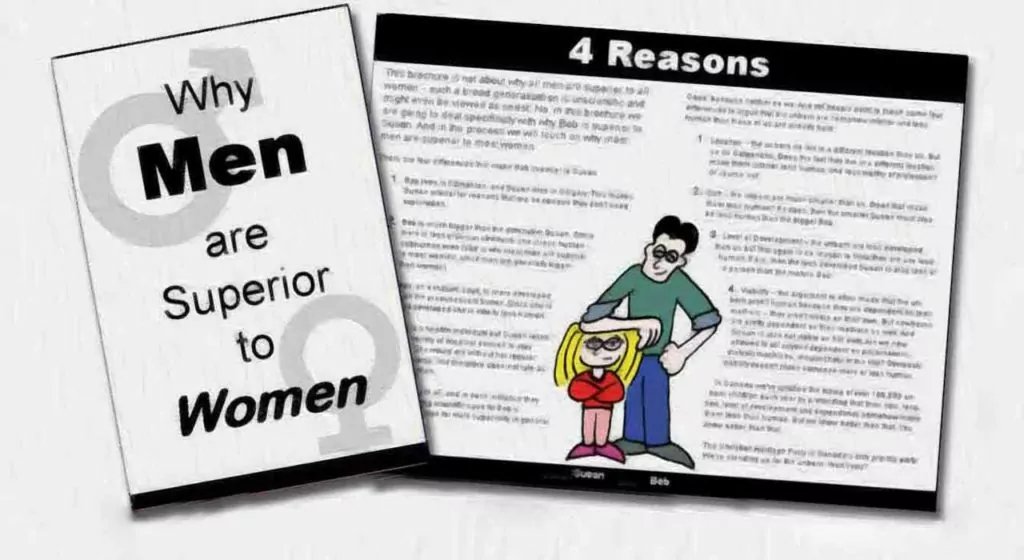
Why men are superior to women – a pro-life analogy

What follows is the text of a brochure that was delivered to more than 20,000 houses in Edmonton, Alberta during an election campaign about 15 years ago. It got a lot of people talking... and quite a number of them screaming. We'd assumed no one could possibly take the title seriously, but we were wrong, and many people did. But, strangely, when we explained that, rather than being an attack on women, this was actually a defense of the unborn, the screaming only got louder. **** This brochure is not about why all men are superior to all women – such a broad generalization is unscientific (as there are always the rare exceptions) and could even be viewed as sexist. No, in this brochure we are going to deal specifically with why Bob is superior to Susan. And in the process we will touch on why most men are superior to most women. Now, there are four differences that make Bob superior to Susan. First, Bob lives in Edmonton and Susan lives in Calgary. This makes Susan inferior for reasons that are so obvious they really don’t need explanation. Second, Bob, as a mature adult, is more developed than the prepubescent Susan. Since she is less developed she is clearly less human. Third, Bob is a healthy individual but Susan relies on a variety of medical devices to stay alive. She would die without her regular treatments and therefore does not rate as fully human. Finally, Bob is much bigger than the diminutive Susan. Since there is less of Susan obviously she is less human – subhuman even. And, of course, size is why most men are superior to most women since men are (aside from the rare exceptions) bigger than women. Four differences in all, and in each instance they make a compelling scientific case for Bob’s superiority… and also for male superiority in general. Right? You don’t agree? Good, because neither do we. And yet people point to these same four differences to argue that the unborn are somehow inferior and less human than those of us are already born. Location – the unborn do live in a different location than us. But so do Calgarians. Does the fact they live in a different location make them inferior, less human, and less worthy of protection? Of course not. Level of Development – the unborn are less developed than us but that again is no reason to think they are any less human. If it is, then the less developed Susan is also less of a person than the mature Bob. Viability – the argument is often made that the unborn aren’t human because they are dependent on their mothers – they aren’t viable on their own. But newborns are pretty dependent on their mothers as well. And Susan is also not viable on her own. Are we now allowed to kill anyone dependent on pacemakers, dialysis machines, insulin shots or the like? Obviously, viability doesn’t make someone more or less human. Size – the unborn are much smaller than us. Does that make them less human? If it does then the smaller Susan must also be less human than the bigger Bob. In Canada we’ve justified the killing of over 100,000 unborn children each year by pretending that their location, level of development, dependency, and size somehow make them less than human. But we know better than that. You know better than that. We’re standing up for the unborn. Won’t you? ----- A brilliant filmmaker used this article and brochure as the leap-off point for a short video. Check out Breanne Jansen's creation below.  ...

Red heart icon with + sign.
News

Glenn Beck on Stephen Hawking (1942-2018): When almost right is completely wrong

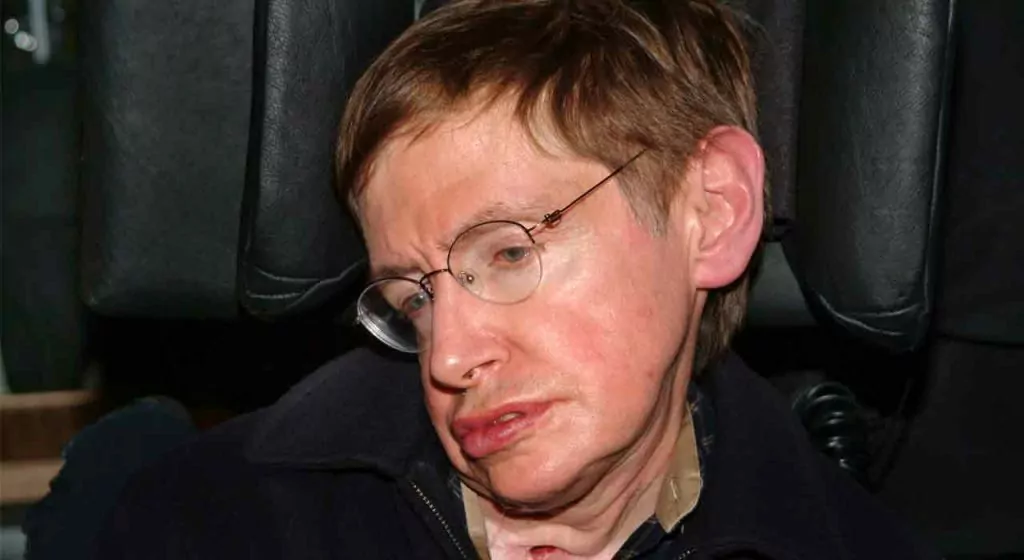
When renown theoretical-physicist and atheist Stephen Hawking, 76, passed away March 14, it made headlines around the world. He was probably the world’s best known scientist, his fame due in part to his 10-million copy bestseller A Brief History of Time: From the Big Bang to Black Holes. He was also known for his decades-long battle with ALS that confined him to a wheelchair and took his ability to speak, forcing him to communicate via a distinct computer-generated voice. In a tribute to the man, radio talk show host Glenn Beck addressed how the world doesn’t properly value the disabled: “Stephen Hawking is a prime example that all life is precious and has meaning. How would Margret Sanger or George Bernard Shaw view Stephen Hawking? They would say he didn’t have any quality of life. They would say he was disabled and therefore a burden on society. They would say he was worthless. “All of those sentiments are untrue. The world is a better place because Stephen Hawking chose to live his life to the fullest despite his crippling disease. He leaves behind a loving wife, three children and a legacy unmatched by many. Agree with him or not, he challenged our perception of the universe. But more than that, he showed us that no one can define your life except you. You are the master of your own world.” As a Mormon, Beck speaks from a generally Judeo-Christian perspective, and thus often defends the disabled. But while his sentiments here are right, his argument is wrong. In its push for euthanasia and abortion, the world argues that life is worth living only so long as we can be productive. Thus they justify euthanasia as the best end to a person’s life who, due to age, has become infirm. Similarly, the world touts abortion as the best “treatment” for unborn children with Down syndrome; since their disability will limit what they can do, their lives are not valued. To put it in more formal terms the world argues: If you can’t do much then your life isn’t worth much, And the disabled can’t do much; Therefore their lives aren’t worth much. Beck counters this argument by disputing the second premise: yes, Hawking was severely disabled but look at all he was able to accomplish! Some disabled people can do amazing things! This point is true enough. But in attacking only the second premise, Beck gives credence to the first. He acts as if the world is right: our lives are valuable only if we can do, and achieve, and accomplish. In granting this point, Beck is (albeit inadvertently) attacking the worth of any who are so severely disabled they can’t do much. Yes, some disabled people can make notable accomplishments…but what of those who cannot make decisions for themselves, can’t define their own lives, and are not the masters of their own world? Beck has lost sight of where our worth comes from. It isn’t found in what we can do, but instead is found in Who made us. We are all made in God’s Image, from the smallest unborn baby, to the most aged and infirm adult – this is why all lives are valuable and should be respected. This is also the only way in which we are all equal, and thus the only basis for equality. Beck was half right – many disabled people are able to accomplish notable things. But this is an example of how being half right is sometimes the same as being horribly wrong....

Red heart icon with + sign.
Pro-life - Abortion

A person’s a person, no matter how small-hearted (or not so) pro-lifers might be

A new study, released in January by LifeWay Research is part of an effective rebuttal to a common pro-abortion argument. Pro-lifers are often accused of hypocrisy – we’re said to only be interested in life before birth, but that if we truly thought life was precious from conception onward, wouldn’t we do more to help children after they are born? Why, the question is asked, aren’t Christians adopting more children? It’s a question intended to shut pro-lifers up, so, for the sake of the unborn, it’s important we understand the two problems with this accusation: it’s beside the point it isn't true Why is this hypocrisy charge beside the point? Because in the abortion debate there is only one issue that matters: whether the unborn are human beings. If they are, then they deserve the same protection as all other human beings, and that isn't going to change no matter how caring or uncaring pro-lifers might be. Even if pro-lifers really are the nastiest sort of two-faced frauds, our personal failings don’t have the power to grant, or do away with, their humanity. It's not about us. In addition, the charge doesn't stick. In Lifeway Research's poll of 1,010 American Protestant and nondenominational churchgoers (people who went to church at least once a month) 40% of respondents said that over the last year someone in their church had been involved in foster care, or had adopted, or their church leaders were encouraging foster or adoption. Much more could be done – there is still a pressing need for more willing families – but these numbers show that Christian pro-lifers are concerned with children after birth too....

Red heart icon with + sign.
News

Crass comedian challenges pro-choice allies…and pro-lifers too

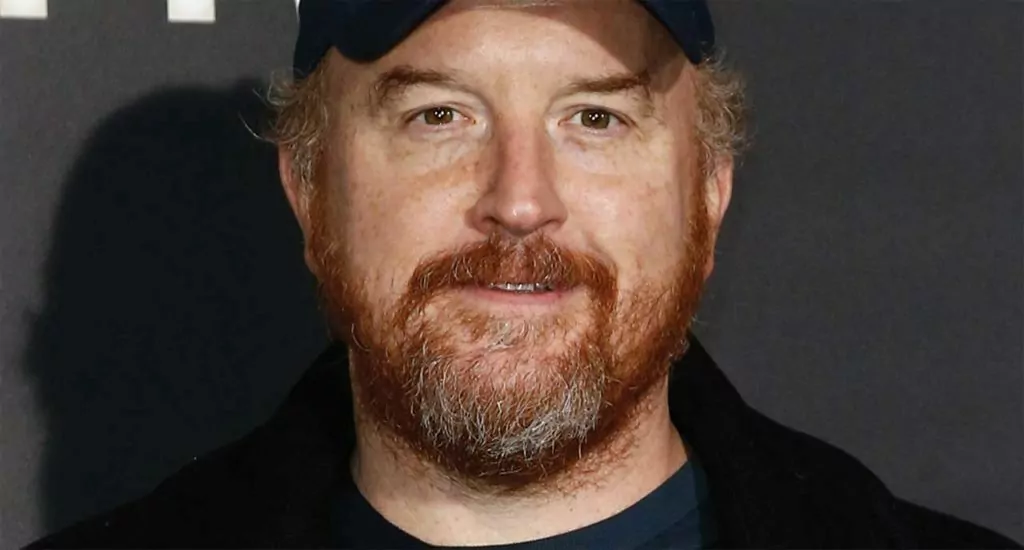
Louis C.K. is a vulgar, blasphemous and very pro-abortion comedian whose latest comedy special is certain to have upset many of his pro-abortion allies. He opened the show with ten minutes about how abortion was either like “defecating” (i.e. an unimportant removal of something from the body) or “murdering a baby.” He mocked that complete lack of logic behind Hillary Clinton’s “safe, legal, and rare” abortion stance. "Why rare if it should be legal? If it should be legal, it’s… … If it should be rare, it’s murdering babies." To finish the segment he gave two arguments for why, while abortion is “100% killing a baby” it should still be allowed: “I don’t think life is important.” “abortion is the last line of defense against people in the species.” Both arguments don’t dispute the humanity of the unborn; both simply devalue all life – if these justify abortion, they justify killing anyone. From the laughs it was clear his audience wasn't shocked. Of course, abortion advocates couldn't have been pleased. They don’t want abortion presented so clearly; they want to hide what this “choice” really involves. Interestingly C.K both defended and challenged pro-lifers, arguing that if someone thinks abortion is killing a baby that “means you should be holding a sign in front of the place.” He told his audience: "People hate abortion protesters. 'Oh, they’re so shrill and awful.' They think babies are being murdered – what are they supposed to be like? 'Uh, that’s not cool. I don’t wanna be a about it, though. I don’t want to ruin their day as they murder several babies all the time.'" Now, we could question why isn’t C.K. – who acknowledges abortion is “totally the killing of a baby” – out protesting in front of Planned Parenthood? But we shouldn’t be surprised when the world isn’t consistent. The better question is, what about us?...

Red heart icon with + sign.
Pro-life - Abortion

Abortionists as euphemists

The curious case of the shifting language **** Most abortionists are euphemists. By which I mean merely, to quote Chesterton, “that short words startle them, while long words soothe them. And they are utterly incapable of translating the one into the other, however obviously they mean the same thing.” If, for instance, you say to an abortionist, “The excessive burden upon the mother, particularly in light of the rights to autonomy, privacy and reproductive freedom, of an unplanned pregnancy precludes any ethical objections to surgically removing the products of pregnancy post-viability, but prior to completion of delivery,” a gentle, indeed a radiant smile will cross his face, and he will dose off as if to a lullaby. Say, on the other hand, in a forceful, straight-forward way, “Crush the skulls and suck out the brains of your children!” and he will leap from his seat, startled and full of objections. But the two sentences mean precisely the same thing. Or, if you were to say, “An analysis of the cost-benefit ratio of carrying to term a fetus found via amniocentesis to have non-disjunction of the 23rd chromosome invariably leads to the conclusion that medical resources would be better allocated by discontinuing the pregnancy,” your average abortion supporter will sway like a child borne carelessly upon the waves of a warm summer sea. But unapologetically bellow forth the declaration, “Save money! Kill all the disabled kids!” and you will get a very different reaction indeed. But, once again, cold logic says that the two propositions propose precisely the same thing. Hiding the baby Abortionist literature is chock full of a million similar instances. Pro-abortion writers keep a whole stash of such long words at their disposal, which are ushered forth to carefully hide the tracks of any stray meaning that might have crept into their sentences. I need only reach out my hand and grab the mostly excellent book What to Expect When You are Expecting, which my wife, who is pregnant with our first child, has been reading. On pages 42 and 43 we find information about prenatal diagnosis and we are told that in case of fetal abnormalities there are two options: to continue the pregnancy or to terminate the pregnancy. Already, I would argue, we have taken our first steps into the weird world of abortionist euphemisms with the ambiguous and oddly mechanical word “terminate.” But I won’t press the point. What especially interests me is not this, but that in the paragraph about continuing the pregnancy, we are told all about a “baby.” But in the next paragraph, which is all about “terminating” the pregnancy, there is no mention of a baby; the baby has been completely replaced with the “products of pregnancy.” What, then, has become of the baby? Nothing at all, of course. It’s still right where it was and no matter how much they wish to do so, our illustrious authors cannot actually make the baby go away merely by changing their language; but what they can do is the next best thing – they can hide the baby, shove it behind the sofa or under the rug, like an embarrassing mess they haven’t yet had the chance to clean up, and the guests are already arriving. In other words, they can come up with a long word. And so they come up with “products of pregnancy.” And when the “products of pregnancy” are safely and properly “terminated” we can all get on with our lives, displeased that the pregnancy did not "turn out favorable" (an actual quote from the book), but unbothered by either our consciences or any of those pesky handicapped children. Please ignore the obvious Of course, if we were to press the point and ask, “But what are the products of pregnancy?” the authors would have to respond, “A baby.” But they are hoping that no one will ask the question. And many (including, I suspect, themselves) don’t. Which is why up to 95% of babies diagnosed with Down syndrome are never born: because all we’re doing is “terminating” the “products of pregnancy,” and what could be wrong with that? The answer is nothing at all, unless you happen to prefer precision to muddleheadedness and replace the comfortably cumbrous word “terminate” with the uncomfortably curt “kill,” and the melodious “products of pregnancy” with the wholly unpoetic “baby.” That would leave us with “kill the baby,” or, to use another short and unpopular word, “murder.” I recall hearing a story somewhere, told by a fellow who attended an abortion debate, where the representative of the pro-life position repeatedly spoke of “killing the unborn baby.” After the debate this fellow happened to step into an elevator full of pro-aborts, and as the elevator slid down everything was silent, until somebody soberly observed, “‘Kill the baby’ You just can’t argue with that.” If the speaker had ever stopped and questioned why you can’t argue with that, he might now be pro-life. Words with no meaning I take another example at random. In a 2003 article published in The Nation, Katha Pollitt complained that “anti-choicers” had coined what she termed the “imprecise” phrase “partial-birth abortion.” This phrase, she says, “has no precise medical meaning and cannot be found in any medical text,” but has nevertheless been widely used by the mainstream media, possibly out of a “fear of seeming too liberal” (not a fear that I myself have ever detected in the media). Instead, Pollitt very helpfully suggest the terms "dilation and extraction" and "dilation and evacuation." These terms, she says, are much better than what she calls the “oxymoronic” phrase “partial-birth abortion,” which “with accompanying gory description - crushed skull, sucked-out brains, half-delivered fetus - was a stroke of public relations genius.” According to Pollitt dilation and extraction (D&E) and dilation and evacuation (D&E) are the proper terms because they describe “actual methods” used for abortions in the second or third trimester. But, of course, if there is one thing that these terms do not do, it is “describe.” She might as well say that the media should always speak of “mastication” instead of “chew” and “perambulate” instead of “walk” because “masticate” and “perambulate” describe actual methods of eating and moving. The thing is absurd. To most everybody the two D&Es convey not a thing, which is precisely how Pollitt wants it. Stop a man or a woman on the street and say to them, “Dilation and extraction. Define it!” and odds are (unless you’ve stopped a doctor or Katha Pollitt) they won’t have a clue what you’re talking about. Or if you were to say to an acquaintance, “I’m going in for a dilation and extraction today,” they might smile and say, “I pray that it goes well,” and walk away with the vague sense of sympathy that we reserve for people who are undergoing obscure and technical sounding medical treatments that we don’t understand. They very probably wouldn’t at all suspect that you were about to authorize a doctor to suck out the brains of your own child. If Pollitt really wants words that “describe” the “actual procedures” used in killing a fully formed baby moments before birth she has no option but to fall back on such things as, “punch a hole in the back of the baby’s head,” and “vacuum out the brains,” and, “crush the skull” and “corpse,” which, undoubtedly, are not nearly as long as “dilation and evacuation,” and not nearly as useful in conveying absolutely no meaning at all. Let clarity reign However much Pollitt may object, she will have to face the fact that if medical doctors applied the standards she is advocating to every other medical procedure, all the patients in our hospitals would be extremely confused. If Pollitt fell ill, for instance, and her physician would only tell her that she had Retroperitoneal Fibrosis (an actual name for a condition found in medical textbooks) and that they would have to remove the “products of the illness,” I’m sure Pollitt would be quite put out. She would certainly want to know what the “products of the illness” are and how they are to be removed. But in her world the doctor would merely cluck his tongue at her plebian ignorance and get on with the thing. So far I have only discussed euphemisms in the abortion debate. But you will find that whenever a “progressive” bioethicist or politician is doing something naughty and not at all popular, they will create a host of long words to ensure that they are misunderstood by everybody except their like-minded colleagues. At the beginning of this piece I quoted Chesterton on this issue. The thing is that Chesterton was not himself writing about abortion, but about eugenics - another horror which very erudite and progressive scientists and politicians were attempting for foist on the British at the time, always under the cover of long words and sentences. And so it is with most every other branch of the culture of death, whether it be abortion, eugenics, embryo research, and all the rest; the culture of death always makes its greatest strides under the disorienting and heady fog of ambiguity. Reprinted with permission from the January 9, 2009 LifeSiteNews.com. This appeared in the February 2009 issue of Reformed Perspective....

1 2