In our garden is a plum tree. Now this may not sound unusual except that stone fruit trees, like plums, do not grow well on the northern prairie. The cold winter winds can dry out the delicate branches of the plum, killing it.
Yet our plum tree thrives. And it is growing larger and producing more delicious purple plums each summer. So why is it not just surviving, but thriving? Because it is planted in just the right spot; close to the house and a garden shed where these two buildings shield it from the brunt of the west and north winter winds. Conversely, in the summer the tree has good exposure to the east and south, providing it with enough sunlight and warmth to ripen the plums by the end of August.
Perfectly planted planet
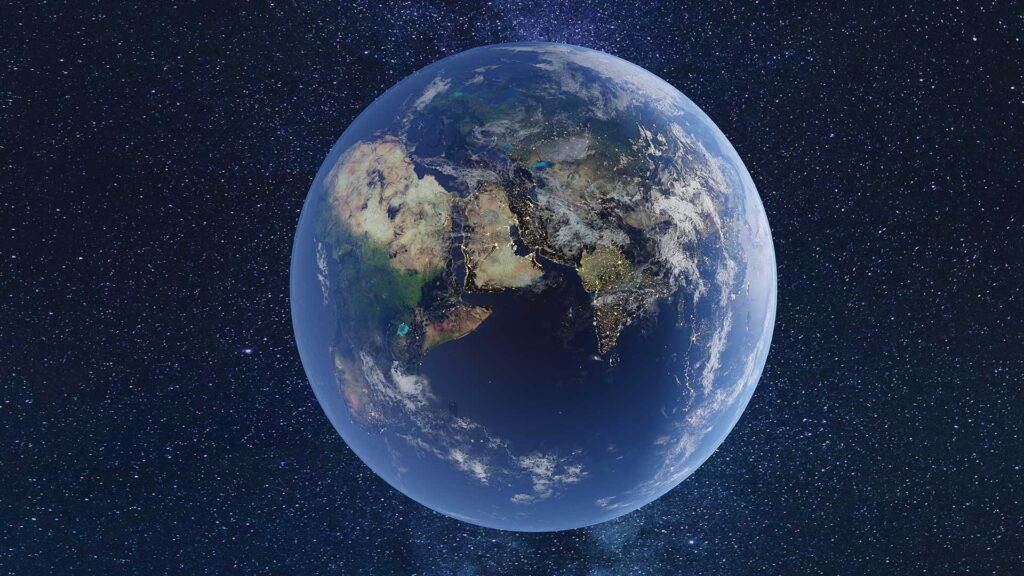
Earth is like our plum tree, thriving because it has been placed with care.
In fact, everything in the universe evidences the design of a careful Creator. Nobel Prize-winning professor of physics Charles Townes, in his 2003 article, “The convergence of science and religion,” asserted that,
“we are here only because the laws of physics have certain particular values.”
Townes recognized that these carefully balanced laws of physics, which “may be associated with intelligent planning,” are the reason life exists.
In order for our Sun or other stable stars to exist “the properties of nuclear reaction and gravitation must be just right,” wrote Townes. This is because over-abundant nuclear reactions in the Sun would cause it to expand and eventually explode, while it would be inherently unstable if its gravity was even a little too strong.
The composition of the elements available on Earth is also fine-tuned. According to Townes, the approximately 100 different chemical elements on earth – including carbon and oxygen on which life is based – could only exist if the electrical and nuclear forces were “just right and balanced.” Physicist Sir Fred Hoyle was impressed by the existence of these finely-tuned laws of physics. Even though he was a religious skeptic, Hoyle recognized that:
“a common sense interpretation of the facts suggests that a super intellect has monkeyed with physics, as well as with chemistry and biology, and that there are no blind forces worth speaking about in nature. …[T]he facts seem to me so overwhelming as to put this conclusion almost beyond question.”
God placed planet Earth in exactly the right spot for life to not just exist, but to thrive. In their book The Grand Design, renowned physicists Stephen Hawking and Leonard Mlodinow gave three important reasons why Earth has the right temperature for life to exist:
- Earth orbits only one star, not two or more. About half of the known star systems are binary (two stars). If a planet were in a stable orbit in a binary star system it would be either too hot or too cold to sustain life;
- Earth’s orbit is nearly circular. “Eccentricity” is a measure of how elliptical or oval an orbit is. An eccentricity of zero will result in a perfectly circular orbit and an eccentricity of one will be an elliptical orbit resembling a very squashed circle. With an eccentricity of 2%, Earth’s orbit is very nearly circular which keeps our planet’s temperature relatively stable throughout the year. In contrast to Earth’s orbit, Mercury’s orbit has an eccentricity of 20%, causing temperature swings of 93°C as Mercury orbits the Sun.
- Our Sun is just the right size, and Earth is just the right distance from it for the Earth to have a temperature at which liquid water may exist throughout the year. The size of a star dictates the amount of energy it gives off, and if the Sun were just 20% larger, Earth would be as hot as Venus (464°C), and if just 20% smaller, Earth would be as cold as Mars (-64°C).
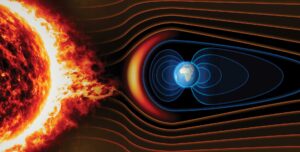
“Without this magnetic field shielding our planet, the constant solar wind bombardment would strip away our atmosphere until our Earth became like the Moon or Mars.”
It all had to come together
Our blue and green planet is unique in many other ways that make it habitable.
1. A magnetic field
For example, neither Mars nor the Moon has a global magnetic field, whereas Earth does. Earth’s magnetic field extends out into space, protecting our world from the solar wind – that stream of charged particles released by the Sun. Without this magnetic field shielding our planet, the constant solar wind bombardment would strip away our atmosphere until our Earth became like the Moon or Mars.
2. Right rotation
In addition, the Earth rotates on its axis fast enough and at a sufficient angle of inclination to regulate the temperature across the globe so that it doesn’t get too hot nor too cold. These temperature differences provide us with seasons, but also generate ocean currents that redistribute heat and important nutrients.
3. Moon of right size and location
Our moon is also the right size and distance from the Earth to allow its gravity to moderate the ocean tides. Tidal action is not just important for mixing of ocean waters along coastlines, is also vital for the mixing of deep ocean water, the circulation of which allows the exchange of a wide variety of substances between it and the atmosphere.
This action is essential to the overall maintenance of the climate system as heat, fresh water, carbon dioxide, and nutrients are redistributed. The Moon also stabilizes the degree of tilt of the Earth’s axis. Without our moon, large variations in the tilt of the Earth’s axis would result, driving cataclysmic changes to our world’s climate.
4. Stable Sun
In their article “How special is the Solar system?” astrophysicist Martin Beer and colleagues reluctantly accepted that our solar system is atypical and there is the possibility “that none of the observed planetary systems is likely to harbor an Earth-like planet.” Not only is our solar system rare in that it has only one star, our Sun is in the top 10% of star outputs and its output is incredibly stable compared with other stars of similar magnitude – important factors in making our solar system a perfect place for life on Earth.
5. Goldilocks zone
Ever since Isaac Newton first recognized in 1725 that Earth is the only planet in our solar system on which liquid water could exist, scientists have acknowledged that the range of distances from the Sun suitable for sustaining life is very narrow.
In Strategies for the Search for Life in the Universe, professor of astronomy, and expert on solar systems, Tobias Owen declared that
“in our solar system we have a situation that might be described as Goldilocks and the three planets – Venus is too hot, Mars is too cold, and Earth is just right!”
The “habitable zone” occupied by Earth is now popularly described as the “Goldilocks Zone” because it is “just right” for life.
Scientists have noted that the temperature of a planet directly affects the interaction between oceans and atmosphere, an interaction that is critical for maintaining a planet’s long-term suitability for life. When oceans interact with carbon dioxide (CO2) in the atmosphere, a planet that is too cold will become even colder as more and more CO2 is removed from the atmosphere by the oceans, eventually causing the planet to cool and the oceans to freeze. Conversely, a planet that is too warm will become even hotter as greater amounts of CO2 are released from the oceans into the atmosphere, raising the planet’s temperature due to the greenhouse effect, and eventually rendering it too hot to sustain life. Our Earth is perfectly situated to keep this interaction between oceans and atmosphere correctly balanced.
6. O2 needs to be OK
We know that much more than the mere presence of liquid water is required to make Earth habitable. For example, a planet must also have sufficient gravity – but not too much – to retain its atmosphere.
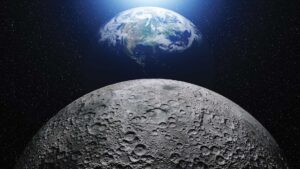
“Without our Moon, large variations in the tilt of the Earth’s axis would result, driving cataclysmic changes to our world’s climate.”
One interesting fact about our atmosphere is that the oxygen level is exactly what we need for respiration, which supplies the correct amount of oxygen to our brain and organs. Too much or too little oxygen in the atmosphere will have a negative impact on human life, which is finely tuned to an atmospheric concentration of 21% oxygen. The amount of oxygen in our atmosphere is also the right amount needed for humans to work with metals. God gave us the ability to work with metals (Genesis 4:22), which requires heating ore, metals, and alloys with fire. Too much oxygen and fire will burn hotter and the flame will also spread much more rapidly, giving less control over combustion. Too little oxygen and combustion would not be a self-sustaining chemical reaction and the fire would go out shortly after the fuel is ignited. God created Earth as a place for humans to thrive (Ps. 115:16), and so He created our world, including the atmosphere, to be perfectly suited to both human life and human activity.
The presence of oxygen in Earth’s atmosphere is important not only for respiration but also for oxygen-based chemical reactions which are essential for the existence of life. Professor of physiology Kenneth Olson explained that the vast majority of these chemical reactions
“are driven by energy from the Sun; plants capture solar energy to oxidize water to oxygen and reduce carbon dioxide to simple sugars and other compounds [i.e., photosynthesis] while animals reverse the process, obtaining their energy by reducing oxygen to water and oxidizing sugars to carbon dioxide.”
Evolution chicken-egg problem
Atmospheric oxygen is also necessary to create ozone (O3), which provides an effective screen to shield the Earth’s surface from harmful ultraviolet radiation. However, notes Olsen, according to Evolutionary theory, “in the prebiotic world there was neither photosynthesis nor oxygen and life had to take its origin elsewhere,” such as sulfur-rich hydrothermal ocean vents. The problem with Evolutionary theory is that, without oxygen, there would be no protective layer of ozone and so any prebiotic life that did evolve would be bombarded by ultraviolet radiation and destroyed.
The fact that our Earth’s atmosphere is oxygenated requires secular scientists to come up with a pathway to get from a prebiotic world without oxygen to the current world of complex life that utilizes oxygen. Many scientists now propose that oxygen-producing photosynthesis first evolved in cyanobacteria – algae – causing oxygen to be introduced into the atmosphere during what they call the Great Oxygenation Event.
However, some scientists have pointed out that the presence of any oxygen in the atmosphere would be lethal to emerging life, including the developing algae. Why? Because oxygen is very reactive and will damage DNA and cell proteins, breaking them down. In the beginning, God created living organisms with enzymes that dispose of damaging oxygen as it enters their cells… but life emerging via Evolution would not have had sufficient time to develop these complex enzymes yet.
Others explain away this difficulty by claiming that early life first developed mechanisms to deal with various reactive sulfur compounds which, with the appearance of oxygen, were then “tweaked” via evolutionary processes to deal with the presence of oxygen. Once levels of oxygen in the atmosphere increased, secular scientists suggest that more complex organisms must have co-evolved numerous mechanisms to protect themselves from reactive oxygen compounds that would literally bleach the organisms’ proteins and DNA.
However, these hypotheses fail to explain how early life survived long enough to develop mechanisms to deal with reactive sulfur compounds in the pre-oxygenated world in the same way that they fail to explain how an organism could survive the rapid damage caused by oxygen long enough for any “tweaking” to take place by the very slow evolutionary processes of mutation and natural selection.
The dilemma for scientists promoting Evolution is striking: on the one hand, oxygen forms highly reactive compounds that are destructive to biological life, while on the other hand, scientists contend that complex life could not have evolved without oxygen.
Only some of what all needed to happen
So, what are the requirements for Earth to be habitable? We’ve hardly named them all, but here’s just some of them:
· right planet size,
· only one Sun that is stable and the right size,
· right distance from the Sun,
· a circular not elliptic orbit,
· the presence of a Moon of just the right size,
· an inclined rotational axis,
· a strong magnetic field,
· the presence of certain elements in the right proportions – including an oxygen atmosphere of the correct composition,
· and a large amount of liquid water.
God made our planet perfectly suited to be inhabited (Is. 45:18) and for this He should be praised (Ps. 104:24, Ps. 111:2–4)!
Dr. Mark Sandercock is a retired forensic chemist who worked for the Royal Canadian Mounted Police and is the author of “Foundation: A Biblical Worldview.” This is an abridged extract from Chapter 5. His book is available on Amazon.ca and Amazon.com.