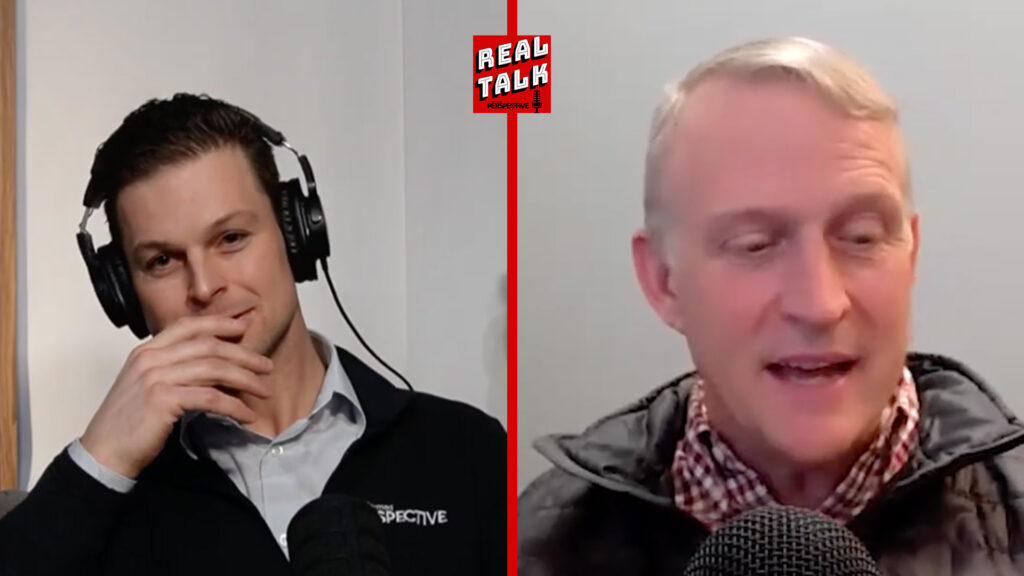
This episode can also be found on your favorite podcast platform: Spotify, Apple, Podbean, Amazon Music or on our website.
Be sure to subscribe to our YouTube channel and our podcast profiles so you can be notified when new episodes are released.
Please note that the transcript below was automatically generated and quickly edited so it may contain some errors.
*****
Opening
As Reformed Christians, our communities are full of organizations, many of which took decades of hard work to build – from schools and churches to charities serving locally and abroad. We’ve been blessed in many ways and have been able to bless countless more. But these organizations take work – not just the blood, sweat, and tears of a generation that built them from the ground up, but ongoing day-to-day effort of so many volunteers and workers who work with such good intentions. How often do we hear, though, from the founding generation, from the generation that built these organizations, that an organization that we lead no longer really resembles the purpose that it was intended to serve? Are these organizations living up to their mission, or to the name that they were once given? Today, I’m joined by Peter Greer, president and CEO of Hope International, a Christ-centered nonprofit equipping underserved communities to break the cycle of poverty around the world. Peter is a co-author of over 15 books and has been inspired by the idea of keeping Christian organizations from straying from their intended purpose. Today we talk about his book Mission Drift and how Christian organizations can serve, grow, and prosper without losing their roots. Wherever you serve, I hope this conversation will help you understand the value of clarity and purpose. A big thanks to our friends at Nearalta for making this conversation possible. Be sure to check them out at nearalta.com.
Intro
The world’s changing fast, but what questions should we really be asking? You’re listening to Real Talk, a podcast presented by Reformed Perspective, where we take God’s word and apply it to the nitty-gritty of life. Buckle up for real questions, real answers, and real direction. This is Real Talk.
Tyler Vanderwoude
Peter Greer, appreciate you joining me. This is a privilege. I read Mission Drift many years ago, before I started, I mean, my adult life, I don’t know. Maybe that began 10 years ago, but before I got into like committee work in my community and stuff like that, I actually read Mission Drift. Someone recommended it to me, and it was it was something that’s kind of changed my attitude on the approach I take to especially like nonprofit work and community work, so it’s something that I was excited to read again in the last little bit, and you know, kind of dive into today with you. So I see you got another one of your books in the background there. I’m guessing this is very much tied in, although I haven’t had the privilege of reading all – What is it? – 15 plus books that you’ve written.
Peter Greer
It’s a problem, but yeah, I do love researching and writing. And you are correct. I mean, you always have kind of the last one behind you, I guess.
Tyler Vanderwoude
So that’s how leaders lose their way. So that’s I guessing right quite tied in.
Peter Greer
Yeah, some people have called it Mission Drift: The Personal Edition. Some of the same principles that we found about how organizations drift. It’s really just an exploration of what happens in our heart, what happens in our lives. How do we drift? So there is an unmistakable and intentional connection between the themes and topics of the two books. Just a decade apart, Mission Drift did come out 10 years ago, and fun to have this one that just launched recently.
Tyler Vanderwoude
Yeah, awesome. Yeah, so yeah, I must read that book when it first came out, then. Mission Drift, because it it’s been a while. But yeah, the yeah, my hope is to dive into that. So we’ll definitely touch on the personal side of it. I haven’t had the privilege to read that book, but yeah. So I guess how did you get into this world? You got into like mission work or you know not-for-profit work, and then you’re the president and CEO of Hope International. So how did you get into that? And then what is that organization?
Peter Greer
Yeah, no thanks. And so it was it was early in my kind of life, I grew up as a pastor’s kid and had this interest in global missions, and then got into kind of global studies. I thought you know business and finance was an area of interest, and at the time, I didn’t necessarily see how those two fit together. But I was studying in Moscow and met someone who was using the tools of business and entrepreneurship to open up doors to some challenging contexts, and I thought that was the coolest thing that I had ever heard. These two interests of global missions meeting this interest in finance and entrepreneurship, and so that’s really been my career. So I went to Cambodia initially, and then to Rwanda, and then to Zimbabwe, and then joined Hope International 21 years ago. So those were a few stops along the way. But we exist to invest in the dreams of families, so provide access to capital and training and coaching, and we do it in the world’s underserved communities. And for us, our faith is at the very core as we proclaim and share, yeah, the love of Jesus as we do this work in the places where we serve. So it’s a little bit of global missions and entrepreneurship and poverty alleviation. It’s like the where those three spaces overlap is the place where Hope International resides.
Tyler Vanderwoude
Oh, that’s cool. How did you personally – so you said you you mentioned you went to a few places. Were you doing the on the ground work? Were you like, how did you get to the point where you’re this leader? You’re the CEO now, and you’re also writing books about how leaders should you know lead organizations.
Peter Greer
Yeah. So, I mean, you graduate from university, and you’re excited, you’re passionate, and you have no skills. At least that’s what I had at that moment. And so I reached out to every organization that I knew that was doing this sort of work, and I said, “Hi, I’d love to join your team.” And not surprisingly, I got zero responses. I mean, not even acknowledged, and ended up actually getting some other experience that, in retrospect, was really really helpful. So I worked at a private school and got some experience that was helpful. And then the door did eventually open, and initially it was on the internal controls and fraud prevention side because you’re dealing with money and you’re dealing with these organizations, and so I joined World Relief, and that’s what I did in Cambodia. And then an opening, they needed someone to come in urgently, and so I moved to Rwanda from there. Same organization, World Relief, and then yeah. Anyway, so those were the initial door openings, and then it was in graduate school that I did a project on Hope International, and I was doing it in the Democratic Republic of Congo, and spent a week overlapping with the president at the time. At the end of that week, he said, “I’m going to be leaving the organization to go to another,” and he said, “Would you consider applying for my role? I think that this would be a great spot for you.” And so, at age 29, that’s when I joined Hope International, and it really has been an amazing team, an amazing global mission, and I am just as enthusiastic and excited about what we’re doing today as I was when I started, but really the space of how do we really create excellent organizations around the world that provide investment capital to entrepreneurs with the intentional outreach, discipleship, and church strengthening in the way that we operate around the world. So that’s the career. That’s what I’ve been doing.
Tyler Vanderwoude
Wow, that’s yeah. I’ve definitely… there’s impact to be had all up and down that. So that’s really cool. How did you get into writing books about it? Like you, at some point, people are asking you probably for advice and things. And I guess so we can tie this into the book Mission Drift, like how did you come across this idea? When did that kind of come about?
Peter Greer
Yeah, so 2008 I was on a hike in California, and I was you know… these people I hadn’t met before, and one of them his name was Donald Miller, and he was talking about… I was just very interested and very generous in learning more about the work that we were doing, and near the end he said you should write a book about that. And this other individual who was on the hike with us, his name was Jeremy Cowart, and he said, “And Jeremy, he’s a global photographer. You should put his pictures in the book.” And he made it sound very easy, and turns out it’s not quite that easy to write a book, but that started a journey, and I did start writing at that moment. And I guess in many ways I didn’t stop. I love the journey, and I guess there’s two kind of components of that. One is that writing makes you go deep, and in leadership we’re always pulled to be shallow. And for me, a book writing is like my own professional education to not be shallow, but to say I’m going to go deep in a subject. And then the second piece is I’ve never written anything out of expertise. It’s always been out of an area that we’re thinking through. And so you ask the question about Mission Drift. That’s because I looked around and I saw a lot of organizations that had drifted from their founding purpose and mission and identity, and it wasn’t that we had figured it out. If anything, I felt the same pull. In fact, there was one foundation that looked at Hope International, and this was kind of the one of the origin stories of the research. And they said, “We love the mission. We love the microenterprise development. We love the places where you serve, but..” they said, “because we’re a publicly traded company, tone down the Jesus stuff, and then we’ll be able to fund you, and then we’ll be able to come alongside you.” And in that moment, I did not have the clarity that I have now at that moment, my initial response was, “How can we make this work? We have to make this work. We need those funds. Think of all the good that we can do. How do we find the creative way around it?” And I’ve come to realize that that money would have would have been a contributing factor to Hope losing its way, for Hope drifting, and so we never got the money. We actually started the research and came back and said, “Can’t do that. That is at the core. It’s who we are. It’s what we do.” And I do look back at that moment and say that was the biggest gift that we’ve ever been given as an organization, and it didn’t come with any check. It didn’t come with any finances. It didn’t come with any dollars, but it came with clarity of who we are and what we’re all about as an organization. And I would say that was one of the defining moments that we had as an organization.
Tyler Vanderwoude
Wow! Yeah, that’s a that’s cool to hear that you say that. You’re kind of… the book is helping you work through it because it’s like I mean I feel like that with the podcast. I’m like the more I the more I do this, the more I read, the more I learn, the more I’m exposed to. And you know I use you know podcast to talk through the things you’re learning, and it helps you clarify it in your mind. I can see how the writing does the same thing, but I’m… Yeah, I mean it’s always easier to learn off someone else’s mistakes. So I mean, it doesn’t sound like you made the mistake necessarily, but it’s but looking at other people’s mistakes,
Peter Greer
Just to be clear, we’ve made plenty, I’ve made plenty, we’ve made plenty of mistakes, but that one I do think we were able to learn from others and identify it early on and make some significant changes to how we think about our work and governance and structure and what we measure, what we celebrate. There really were tangible ways that we were redirected as an organization.
Tyler Vanderwoude
Yeah. So, so I guess we could… I mean, we could talk about how this happens. Like, so I guess what is mission drift for people who haven’t heard the term before? I’m sure people could piece together what they think it would mean, but like, what is that? How did you kind of define it? And then, and then, can you give some examples of organizations that have drifted and use that to kind of, yeah, kind of help us understand what are we talking about? Yeah, you mentioned your one example, which is pretty clear in my mind, but..
Peter Greer
Right, and one of the pieces that we wanted to do was to not feel like this is investigative journalism, that in meant anyway the stories that we tell would be breaking news of an organization. No, we wanted to look at a bigger period of time, and we wanted to focus on organizations that are not, you know, there’s not like on the on the line. It’s long ago that those decisions were made, and unfortunately, they are so easy to find. Higher education, health, non-governmental organizations, outreach to care for those in need. Every sector has so many organizations that were founded with a very clear and Christ-centered mission, and yet over time are doing something very different. So, one of the well-known ones is an institution that was created for higher education, and they said this: their mission statement was to be plainly instructed and consider well that the main end of your life and studies is to know God and Jesus Christ, they chose as their word and their logo to have veritas, which means truth, and then they talked about words around Christo et ecclesia. Until recently, that was on the diploma, so truth for Christ and the Church, and that institution is known as Harvard University, and it is not necessarily doing that.
Tyler Vanderwoude
Decidedly not that.
Peter Greer
Right. Right. Yeah, and in many ways, it’s not like we’re not saying there’s not good things happening. It’s just saying when you actually look at the founding purpose, if you look at the founding mission, and you look at what they’re doing today, those two things are completely different. Another organization was called Christian Children’s Fund, and that was an organization that was created by a minister to care for individuals. One of the pioneers in the child sponsorship kind of model, and grew, and then they ended up changing their name to Child Fund, and they’re still doing good humanitarian work. But the interesting thing is when they changed the name from Christian Children’s Fund, one of the phrases that was used in as they were talking about this is a board member summarized very succinctly: “This organization has nothing to do with Christianity.” But wait a minute, it’s in the name. Wait a minute, it’s in the founding story, but it was not in the current practice. And the president at the time said this: “An organization changes slowly, and then all of a sudden, you have to take a step back and see if the name accurately represents who you are.” And so, I think that is the most incredible definition of drift. That, in her own words, it’s like it all of a sudden we realized, but long ago, decisions were made that separated the practices that they had, the organizational activities, from the core mission. And so we, I could go on and on and on. But we see this in healthcare. We see this in in in all kinds of different domains. But higher education, there’s plenty more that I could share as well.
Tyler Vanderwoude
Yeah, that yeah, that makes sense. Is it is it a.. like, do you view that as a like.. it could be that the mission has drifted, or was it like a misnamed organization from the beginning?
Peter Greer
Yeah, my experience is it was not misnamed at the beginning. If you read the following documents, right? If you read the passions of the first generation, here’s what Dr. Paul Tripp says. He says too often the passions of the first generation become the preferences of the second generation and become irrelevant to the third generation. That’s what happens. And so, no, I don’t think it was misnamed. I think it was the clear passion of like we want to make an impact. We want to be living out our faith. We want that to be the core of who we are, and yet slowly and over time, small compromises compounded by time lead to a very different destination.
Tyler Vanderwoude
Well, yeah. Well, that’s a really good, yeah, that’s a really good way to put it. Like, it makes you think: Are the principles actually principles, or are they preferences at this point? You know, yeah. So okay, so let’s talk about. I guess how. What are some of the things that like we can we can see? How do we see this happening over time for like an organization drifting. We see the start and end point of, or you know, end point of like something like Harvard, where it’s very obvious now. What were those things along the way? How did that.. how did that happen? What are we looking for?
Peter Greer
Yeah, you know, we were looking for like order of operations. What do we need to pay attention to most? And it seems like every story had different contributing factors, and I think that it’s one individual talked about death by minnows as opposed to swallowed by a whale, meaning like it’s not one big event, it’s not one big issue, it’s just these small compromises. The reason that’s so significant is it means it’s really hard to identify right now. It’s easy to identify when you have enough time. It’s very difficult to identify in the moment, and I think for all of us, my working assumption at this point, after studying this for a number of years, is every organization is drifting in some important way. The question is: Do we see it? Do we spot it? Are we identifying it? And are we correcting it? And so that’s why I love this idea of drift. It’s like there’s currents that we’re in, and if you just stop paying attention, you will go along with the current. The easiest thing to do is nothing, and I tell you that will not lead you to a place of more missional fidelity. It will not lead you to a place of more vibrancy in mission. It’ll slowly pull you away to a very different destination. And I think your point is so well said. It’s like in the long term we can see it. In the short term, we need to be aware. So, what are some of the things that we should be aware of?
Number one, clarity. If you want to have a question, go in the first five people you meet at your church or your organization or your school. If you’re working in a place that has this, and you say this is important to who we are, first five people, and do you hear consistency? Do you hear clarity? And most of us think there’s more clarity about who we are than is actually understood. And so clarity is number one. And then if there’s not that clarity, got to figure out how do we live it out? How do we regularly connect it to the decisions that we’re making?
And that’s the point number two: is you got to have clarity of who you are, and then you’ve got to connect it to today, the decisions that you’re making. And there are no neutral decisions. Everything can be looked at through a lens of mission, and that’s why every single person on staff can play a role. Every single person can shape the way that you’re connecting the mission to what you are, and so a decision. Our next strategic plan: Do you start with the opportunity and market assessment, or do you start with the mission as you’re looking at the new product to launch? Is it this is going to be the cost? This is going to be the risk reward, or this is going to be the way that it connects to our mission, and so I really think the mission true organizations – they’re vigilant, they’re attentive, they’re clear, and they connect that mission to the day-to-day decisions that they’re making.
And then one other, just final thought is: and people are really important. Thinking longer term – if that’s true that passions become preferences, become irrelevant, it means the way that we do staff development is mission critical, not just for the competency, not just for the technical ability to do the job. That’s important in every organization, but to also be growing in the missional passion, the passion for who you are, what you are, not just the technical skills and abilities. So the organizations that stay on mission are hyper vigilant about staff development, and again, not just the technical components, but growing in the underlying yeah faith in action that is so essential for mission-driven organizations.
Tyler Vanderwoude
Wow! Yeah, there’s so much in there. I think I think all four of those points are convicting for me, and I’m thinking about this from, I’m on I’m on our local school board, so we have we have a school run like community school, so not run by our church, but church you know a community basically spanning over several congregations, several different denominations, even, but yeah, the clarity to start just to start at the beginning, it isn’t really super obvious when if you ask somebody what the mission of the school is, it’s something that we’ve been working on at our school for the last couple years is making sure that people can actually express what the what the mission is, what the vision is. I think our vision statement a couple years ago was like 45 words or something. Like that probably isn’t going to work. Yeah, there’s there’s a lot there. So I guess can we connect this to like can we think about drift in our organizations the same as we think about, you know, say cultural drift, like our culture’s pulling us in a direction? Even like deformation in the church, like we’re all, I mean, we’re all tended toward evil. Or is there something that’s more specific about like a culture or an intention of an organization that we can kind of control a little better than we can, you know, address culture.
Peter Greer
Yeah, I think the principles are the same. And going back to where we started the conversation, that’s why I was so interested and initially, the conversation with the publisher was like, should we do a revised and expanded version of Mission Drift 10 years later? Right. And I feel like what we missed in the original book was just how important what happens in us is, and so that’s where how leaders lose their way came from. It was basically like take those same principles, apply them to an individual, not just an organization. But the principles are the same; they really are in what we need to be vigilant, and the small steps and the small cracks in and what can we do to pay attention to them. But my favorite hymn, the line in any hymn, is from “Come Thou Fount of Every Blessing”, and it was written by Robert Robinson, and he has this line, and he says, “Prone to wander, Lord, I feel it prone to leave the God I love”, and I think He nailed it. I think He nailed it that we don’t do the work if we don’t believe that we could lose our way. And I would say the same thing for organizations. The worst thing you could do is have an assumption that future generations are going to stay on mission. To have the assumption that what’s happening right now is going to happen, everyone, everyone, everyone that we studied that stayed on mission said we just didn’t take it for granted. We knew our moment in time, one of our primary preoccupations was living out the mission and then passing it on to the next generation. And I think the same thing applies individually. Recognizing drift and how easy it is to drift means that we’re going to maybe do some things differently in our life. We’re going to pay attention to things. We’re going to we’re going to understand and identify where, not if, we’re drifting. And again, by God’s grace, make some minor course corrections as opposed to major issues that will form if we think we could just ignore this or it’s going to go away on its own, that never tends to happen organizationally or individually.
Tyler Vanderwoude
So, how do you, say you’re sitting on a board and you want to bring this up? I mean, aside from handing Mission Drift to everyone, handing them the book and saying, “Read this whole thing before we chat.” How do you avoid sounding like a kook when you’re like, you could you could say, “Look, guys, this decision is going to completely derail this organization in 10 years.” Everyone will be like, “Wow, okay, settle down. The you know you don’t need to lose sleep over this or you know settle down with the alarm bells. Like it’s not that bad.” It’s the same thing people say about culture. It’s the same thing people say about anything that’s deforming. I guess how can you frame those things to be like this is important, and then like yeah, how do you identify what those… you identified four key pieces.. how do you, when you’re sitting in in a board chair, say this falls into this bucket? How do you find out what those things are? And yeah, like pay attention to them.
Peter Greer
Yeah, and this is the great thing that anyone in on a board or on a staff, anyone can have a positive influence. And I think about the power of questions. Oftentimes, my experience is, especially in the early compromises, it’s not because people are trying to take the organization – we’re going to have a coup, and we’re going to take it in a different direction. Oftentimes, it’s just benign neglect, as opposed to willful or intentional steering. It’s just like we just stopped paying attention. So I would say, in the early stages of drift, the power of a question – that’s a really interesting idea. How does that connect to the core of who we are as an organization? Like questions that can start to weave in the mission. That person seems wonderfully technically qualified, but can you tell me a little bit more about how his or her, like who she is or who he is, aligns with the mission of what we’re all about as an organization. That’s great that person is interested in being in our board. What do we know about that person’s commitment to the core foundational mission of who we are as an organization? And so I would say in the early stages, because it’s not most of the time like willful, intentional. I just think that’s a powerful way. Now, the further you go down, the further entrenched there are. Yet, it does not get easier to raise these issues. So, maybe that will be my sober assessment: is the sooner you make course corrections, the less painful they tend to be. The more you ignore, the more you grow with some faulty implementation of that core mission. The more painful it is to try and get back. And so I would just say, like, pay attention wherever you are. Like right now is a great day. It’s that classic one. Like, when’s the right time to plant a tree? 50 years ago. The second best time? Today! So in a similar way, like focus on that mission, come back and clarify and connect it to the decisions that are being made.
Tyler Vanderwoude
So if we talk about clarifying a mission, like what are some tools I guess that we people can use to make a mission? Because I would say, like I’m talking again from a school board perspective, we have a mission. If you ask the board, I mean, you would get similar answers. I would think, and again to your point, like if you have good people, they’re all aligned if you really press them on these things, but yeah, if you go down the road, they’re not maybe all aligned, you know exactly. So, what are some things that you can use to clarify that? Like, how do you how do you get that understanding and like pin it in like you know the present so that you have that for the future?
Peter Greer
Yeah. So there’s a lot of creative exercises and tools and ways and this is not dodging your question, but my honest answer is it actually doesn’t matter too much which of the tools because they all accomplish the same thing, elevating the mission, reminding us of the mission, connecting the mission to what we do, and I don’t think it’s yeah. There’s only one way to do that. So if you want some specific tools, you can go to missiondrift.com. We created a toolkit. There’s a workbook that’s there. It’s called the Mission True Workbook. That’s available for free if anyone wants to try it. Put these ideas into practice, but I don’t think there’s a wrong way to intentionally see, celebrate the mission that you have. And then, in terms of clarification, this is the other piece that I think sometimes people think we’re saying something different. But I’m not opposed to change. The world is changing. The models change. Education changes. The reality is the world is changing. The reason why I resonate with the idea of drift is because drift is just going along without intentionality. And I would say for a board, you have to understand who you are. But that’s not to say there’s not significant moments or big decisions about model and operating and systems and change. There are big changes happening in our world. We need to, but the question is, when we make those decisions, when we make those changes, is it to become a truer version of ourselves or to walk away? Is it to hold on to the core, or is it to let go of what is most important? And I like how Fred Smith he says, you know, it’s oftentimes like selling the family heirlooms for a little more cash. Those things that are just so precious that right now we feel like ah, we just are going to sell them. I think a lot of times people. I wish I could have that back, and I know hearing stories there of some that have seen mission drift, experienced mission drift. They’re like, “Oh, I wish we could go back to that decision.” And that’s really what we’re trying to do is just be aware of how prevalent mission drift is, know who you are, and then connect that to the decisions that you are making in your life and in your leadership.
Tyler Vanderwoude
Yeah. Okay. So that’s helpful. So there’s not really a specific tool. Is there a format? I guess maybe not specific format, but is there like what would a what does a good mission look like? Is there a is there like if I have a vision statement, I have a mission statement. Is that enough, or is it like? Do you put like core values down? Do you do you do you specify it very particularly? Like I think there’s examples in the book of even like actionable items like having to the way to change the mission would have to be over the course of many years with you know unanimous approval from the board, those types of things. Like, what does a specific, what does a mission look like? Because I’m, I’m thinking, it’s not always that it would be with I guess with bad intentions or with like just because someone’s asleep at the wheel that it would drift. Like I’m thinking some of the organizations that I’ve been a part of or heard of, the next generation it’s not necessarily a preference, but they actually look at the mission and they redefine it because maybe because of cultural drift, but also maybe they thought that the I guess the strategy of the mission wasn’t being executed well, or even that the mission was set up properly to begin with, they no longer necessarily value the things that the founders valued. If I give you an example, like so, if you have a if we have a school that’s like a community school that’s you know aligned with the church, certain churches, you might two generations down the road have a crop of leaders who doesn’t think that that’s actually a Christian thing to be doing to have maybe a more insular school and would like to open it up to everybody, and there then your entire I mean it’s the mission is completely different. It redefines the organization. So, is there a way that you can build that mission so that that cannot happen, or is that a valuable thing to be doing?
Peter Greer
Yeah. So, again, I just highly, highly, highly recommend separating the mission from the means and having super clarity and saying what are the things that are most important, and I think to clarify that, one of the pieces that we do is the 50-year test. You come back in 50 years. What would break your heart if it’s lost? And assume 50 years, the world is going to change a lot in the next 50 years, right?
Tyler Vanderwoude
Two years!
Peter Greer
Yeah, exactly. But you don’t then, given that, when you think about education, you’re not going to be talking about what happens in the current mode of technology. Like you’re going to be talking about more core, fundamental things about who you are, what you are trying to do in the school and in the world, and in a similar way, I think that 50-year test it clarifies what do you still hope to be true. And then I know there’s a bunch of organizations put it in the ground, put it in the ground, do that time capsule, write a letter to the future leaders of that organization, and just pass it on to future leaders. That might be one way to start. And then for me, the other piece is just simple clarity. There is a negative return on complexity when it comes to mission. The simpler you can make it, the more you can focus on the essence, on the core, the more likely it is that it’s going to be seen and understood and implemented.
Tyler Vanderwoude
Yeah, you mentioned Simon Sinek in the in the book. Yeah, and I guess that book. I mean, I read that book years ago too, probably around the same time I read Mission Drift. But that that idea, I guess there’s also an exercise and a whole maybe a whole other organization that goes along with that to clarify that is that is that pretty similar like doing something like that Y exercise to come up with I think it’s pretty short and punchy right.
Peter Greer
Yep, exactly right.
Tyler Vanderwoude
What that is so is that is that good enough like that little piece of. Wording like four or five words that, or is it like is it something deeper where you have to kind of like also have some you know fine print? It feels like you should have a contract, right?
Peter Greer
Right, right. No, and that’s where you know you reference this already, but we wanted to make this as difficult as possible to change the who we are, the primary purpose. Why do we exist? So again, it’s that why question, not the what. And so we have that system, and you cannot change the primary purpose of the organization without unanimous vote from the board directors in three separate years. That slows down the decision making. Unanimous vote in three separate years, and that’s with intentionality because you don’t want to have just one meeting. You’re like, hey, we’re facing this crisis. If we only change this, we can therefore, and yet it’s not impossible. You can change the mission. It just is, “Are you really sure? Are you really sure you want to change the mission? Tell me more. Let’s slow this down.’” And that has been really helpful, I think. But again, that’s differentiating mission from means.
Tyler Vanderwoude
Yeah. How does that work with? I guess like so, like charitable, a lot of charitable organizations are run specifically by the board, obviously with input from donors or other people who have kind of a stake in the game. But what about something where there’s like a society running it, or there’s like is there is that just another layer that makes it harder to change things or harder to pivot from the from the mission, or I mean, or that could that be another danger where you know the society is actually pulling the board?
Peter Greer
Yeah, again, not to be too alarmist, but there’s all kinds of ways for an organization to drift, and who’s making the decisions? Who has that? And what I find so interesting is most boards of directors understand their fiduciary responsibility. They understand they need to have an audit committee, and they know their responsibility. But you know what? Most boards don’t understand? Their primary job is to ensure that the organization does and stays on mission, and yet there’s not often clarity on that, and so we disconnect over time. And the boards that help an organization stay on mission, they’re creative. They’re like, let’s make sure we read that mission statement before we do anything. Let’s make sure before that decision is made, we pray about it. Give space to listen and see what happens. And the organizations that stay on mission, they understand that one of the core, if not the core, responsibility they have is not just evaluate the CEO, but make sure that the organization is staying on mission. And again, even that is an example. When the CEO or president or executive director is evaluated, are they evaluated for growth numbers, metric numbers, or missional impact? That will guide decisions that will change behaviors. And most of the time, we drift towards what is easiest to measure, which is growth in revenue and number of people served, as opposed to also saying, “But what is the impact? What is the way that we’re living out the mission? Those are questions that are harder to assess, but I think over time more important if you want to have an organization that is anchored to its mission.
Tyler Vanderwoude
Oh yeah, that’s a really good point. Yeah, you bring it up in the in the book too. That’s um, yeah, what you measure is kind of what you what you’re gonna care about, and a lot of times that’s fiscal. You know, you know what? Yeah, how much revenue we bringing in? Do we meet in budget, or what kind of impact do we have? How many? And it’s always a number based because that’s the easiest thing to track. But you know, how many you know people did we impact along the way? Yeah, and you get, I guess, you get kind of distracted by like growth or whatever. So yeah, that’s and then you talk you talked about a way to you know kind of create those metrics for the things that matter. So I think that’s a really cool thing to consider if you’re in that position. How does you mentioned people like the staff and the board? I guess what do you say to people who struggle to find people to join their organization? Whether staff like there’s just a shortage of labor, or you know the board members, there’s not just like you know clamoring to be on your board. You’re just so tempted to take the first person available who has you know three hours available in their week. Like, what do you want to just say to those people?
Peter Greer
Availability is great, but availability is insufficient, right? I mean, if you want to stay on mission, you’ve got to have people that believe in the mission, and so compromise in the board is unwise. So in that sort of a situation, you feel like you must have a board. Maybe you don’t have to have it quite so large. And I would rather have five people that are on mission than 15 people that have 7 that are on mission, like that’s not a net positive. That is a net negative. You got to go 100% for those people that believe in the mission of the organization who are going to be on the board of directors. So, yeah, maybe slow down. Maybe state when you feel like you might be tempted to compromise, and then figure out what is your assessment and onboarding process, and how much of that is connected to what it is that you hope to protect and to preserve as an organization. So again, this is not this is not earth shattering research. It makes sense, but it’s just we aren’t paying attention. It’s just we feel the urgency, we feel the need, and we justify small compromises and woefully underestimate the impact that they’re going to have on the organization over time.
Tyler Vanderwoude
Yeah, and any bad decision there can snowball, like you said. Like if you have seven, if you’re outnumbered on the board with people who don’t care about the mission, but even if you have two or three, you run a staff. Even it just turns into a culture of not, you know, that keeping that mission front and center. And that I like, I like the point you raised about reading the mission at the beginning of the at the beginning of the meetings. I think that came from an example in your book. Can you share a couple examples from the book, or you know that you’ve seen since writing it of organizations that are doing this really well, and like what they’re like what they’re doing different than organizations that are just kind of hoping for the best?
Peter Greer
Yeah, no, that example you’re referencing is the Kroll Trust, and so the founder of Quaker Oats, his name is Henry Kroll, and he saw that mission drift was happening, and so he said, “For my estate, for the resources,” he was a titan of industry, and he said, “I want to make sure that these resources are used in the long-term alignment of what I believe matters most.” And so he created a charter, and that charter must be read before the meeting begins and I think that is a great practice, and it really was born out of his awareness of just how easy it is to drift. And so they make the decisions in alignment with that decision. He went further in that, in that he said, “And I know family. I love my family, but I want to make sure I’m not creating a family board. I want to make sure I’m creating a missionally aligned board.” And so he was creative in how individuals were invited to join the board. I thought that’s really interesting. And for him, it was like blood relationship is insufficient. We got to make sure that people are vetted for their not just family relationships, but vetted for their missional alignment. So that’s one example. I also just love the way that Alec Hill at Intervarsity he was so intentional about pouring into these cohorts of future leaders, and his example stands out to me as someone who is like recognizing that his time was temporary. He was interim in his role and recognized that he needed to be pouring into future generations. One individual talked about the know-how and the know-who, and really just wanting to make sure the connections were made, and that requires a posture of humility, a posture of mission first, and I could go on, but those are some that come to mind.
Tyler Vanderwoude
Yeah, those. Yeah, it’s cool. It’s cool to see guys with that intention. Do people have a fear that when they do something like that, that you know their organization will be insufferable to work for or work with, or a fear that maybe there’s not enough people that align specifically with what their what their position is? That yeah, their organization is not going to improve. Is that I mean a way that you know the mission is kind of pushed aside?
Peter Greer
Yeah, probably answer D. All of the above.
Tyler Vanderwoude
Always seem to be! Yeah, that makes sense. It’s like, yeah. But if you don’t do it, then you you just don’t have an organization in 50 years. So I think that 50 year test is a it’s a real thing to keep in mind.
Peter Greer
Yeah, I think the benefit, right, is 50 years. It’s a long enough time horizon that I can do the math. I’m not going to be doing my job in 50 years, so it’s intentionally extending beyond what most people would consider their time, their tenure with a particular organization.
Tyler Vanderwoude
Is that a struggle people have to think past their own time? I mean, you serve on a board maybe you know three to six years, 10 years, and maybe you can keep the mission in mind for that period of time. But do people do a good enough job when they’re founding an organization or being a part of an organization, thinking like, or is it a struggle to be like, well, I don’t even feel like this is going to exist past my lifetime. That you know, or you’re, or maybe you’re solving problems so you know that feel so critical in the moment that it doesn’t feel like there is a future.
Peter Greer
Yeah, and again, I just feel like it’s benign neglect. I just think it’s you’re not thinking about it because when you show up, what is your what are you thinking about? Today, these are the decisions that we need to make. Today, these are the pain points. Today, this is the urgency that we have around these items, and in the thinking about, I think it’s the Covey quadrants, but thinking about the important and not urgent, those are the most difficult things to actually prioritize. I know it’s important, but it just doesn’t feel urgent right now, and therefore we kick the can down the road. Therefore, we don’t deal with the things that we need to deal with. We think there’s going to be a future day when we’re going to show up and have nothing else to do other than wrestle through. And my experience is that day never comes. There’s always something that feels urgent and timely, and so we don’t do the work of extending our time horizon a little bit longer.
Tyler Vanderwoude
Anyone who has woken up for work more than three times knows that that’s not true. I guess it’s hard to feel right because you’re like, oh, if we can only just get these three things off our plate, you know, these two things are urgent, and yeah, it’s hard to make time for that that big picture thinking. But what are some what are some I guess responsibilities if you’re not say part of an organization, but you donate or you’re, yeah, you’re funding an organization. What are some of the things that that donors can do to help keep an organization on mission, not even being part of the day to day?
Peter Greer
I think the donors way underestimate the role and influence that they could have, because what donors sometimes think is I’m just giving the money and then let them go. But I actually don’t think that’s the type of engaged philanthropy that’s going to help organizations stay on mission. I love that there’s multiple times in my life, in my career, where people have reached out after I’ve sent something or said something, and said, “Hey, Peter, that was nice, but you forgot what was most important”, and they called me out, and they were totally right on the times that I did not, with clarity, talk about the core of who we are and the mission that we have, and my only response to them is thank you. Keep doing it. And the irony is, there is great influence of funding, but oftentimes it’s the sources of secularization. I get way more questions on the other side of saying we’d love to do this matching grant, but you are a Christian organization and looks like you require a statement of faith of your staff, therefore, we can’t fund you. And I feel the tension. It’s like, “Oh, if we would just soften that, we could get more money.” And so there is a pull towards secularization in funding. And I wish that people who cared about the mission recognized the pull and influence that they could have in the opposite direction. Obviously, doing it gracefully and doing it with kindness, but as Proverbs 27:17 says, “Wounds from a friend can be trusted”, and so maybe we have some friends that say, “Hey, I think that you might be slowly moving away from what seems to matter most. Let’s talk about that.”
Tyler Vanderwoude
How do you determine what matters most? Because somebody will say that you’re, if you could take that money and have more impact, like what are you trying to do? So, how do you define what that should be? I guess it’s kind of organization by organization and what your goal is. But I guess as a leader in a Christian organization, as a Christian leader in a Christian organization, how do you how do you think through that for Hope International and all the things that you’ve done? Like, how narrowly do you define that the Christian-ness of your organization in order to like if somebody from a yeah if someone from not a Christian organization but someone who’s sympathetic works alongside you. Do you take money from a Catholic organization and not a Protestant organization? Like, there’s a different, I guess there’s different levels of this. Like, how specifically do you try to narrow that focus? And or is it kind of on a case by case?
Peter Greeer
Yeah, yeah. For me, the principle is: Do they know who we are and what we’re about, and I think it’s not loving or honest to not share about who you are as an organization, and to have two different marketing materials. This one talks about mission. This one doesn’t talk about it. That doesn’t feel genuine to me. So we have individuals that support us that love the microenterprise, and they know who we are and what we do. But that’s not necessarily… they like the outcomes that we’re seeing, and they choose to fund us anyway. But they’re not surprised. There’s never going to be a moment that they’re going to see something online or hear something that I’m going to say on this podcast, and say, I had no idea that we were trying to our mission statement, as it says, as we proclaim and live the gospel. Like that shouldn’t be a surprise or secret. And so to me, the onus of responsibility is on the organization. Be clear who you are internally and externally. Be clear on who you are, and don’t be willing to compromise. And I think that’s really the sensitivity for me is if I feel like I care more about the money than the mission, I have lost my order of operations, I have lost the order of prioritization, and hopefully have friends internally and externally that will call me out when that happens.
Tyler Vanderwoude
Oh, that’s yeah, that’s super wise. How does how does this work for I guess non charitable organizations? Like trying to think of all the different types of organizations. Like we, my co-host Lucas and I we run a business and we have core values. We have them on our wall. I think they’re Christian core values. We meet with our staff. We you know we pray before our you know staff dinners and things like that. But we don’t we don’t have an intentional Christian mission. We’re a for profit door company, so how does that work with for profit companies? And can we apply the same thing to organizations whose main goal isn’t ministry, but is you know, selling a door.
Peter Greer
I would say the answer is yes, because it doesn’t matter what the company is, doesn’t matter what the tax status is of an organization, whether it’s for profit or nonprofit. There are core things that you want to be true, and the level of what do we talk about clarity and intentionality, and it’s going to look a little bit different, and there’s going to be different opportunities and challenges in both of them, but I don’t think it changes any of the core components of: Do you know who you are? Do you know what you value, and how are you living that out? So for you and the values that you have, great to put them on a wall. What are you doing? What are you doing to live them out? And would you be willing to compromise on one of those core values if it means a new order that’s going to increase revenue from X to Y, and the mission-driven organizations? They just have clarity, intentionality, and they know what’s most important to them, so I would say you probably could go through a pretty interesting exercise personally on the business side, and you might find more alignment in this conversation than just the school or the nonprofit that you’re engaged with as well.
Tyler Vanderwoude
Yeah, it’s interesting. Yeah, like I mean, our listeners will be engaged in all sorts of things, businesses, and yeah, obviously schools and churches and all sorts of organizations. We’re part of the Dutch Reformed community in in Canada here, and there’s organizations for everything we’ve got up and down. So, and I know that this actually this book has been really impactful. Our executive director at Reformed Perspective is Mark Penninga. He speaks highly of this book. He used it at ARPA, which is an organization for Association for Reformed Political Action in Canada. They had this. They actually used a bunch of the tips from the book to make sure their mission doesn’t drift. And things like that, so it’s been impactful already. I think just in terms of the business, the struggle is looking at in other places is um, I’m not giving I’m not going to be given money with uh with strings attached in the same obvious manner, I guess, right. So maybe it takes a little more discernment to decide on, yeah, are the you know values aligned with my with my customer? It’s a lot more. Yeah, it feels more long term customer value equation than it feels like an immediate mission, you know, drifting type of experience. But we do use it a lot with our staff, like our core, our core values. Like we’re not willing to compromise on that. I think that’s, I think that’s even more common though in the secular world to keep things on mission or keep an organization on track the way that they think they should be. How else can we apply? Like you have a you have the book behind you about personally, you know, looking at this in your personal life. What where are some things that we can apply this? Can we apply this to the you know I don’t know if we can call it like the mission of our families or things like that. Like are there other places where we can consider this?
Peter Greer
So we already mentioned this book came out 10 years ago. I’ve been writing ever since, and I had one friend say, “Peter, you have written, but every book connects to Mission Drift,”and I don’t think they’re wrong. I actually put this into ChatGPT. I say, “Create a diagram of all the books that I’ve been a part of, and in the center it says “mission, mission/purpose”, and then it connects in different ways in different groupings. And I don’t think it’s wrong. We did a book called Board and CEO, and it’s all about how mission is applied to governance. We did a fundraising book, and it’s like how mission applies to these relationships. And we did one called Rooting for Rivals. And the more you have clarity on your mission, the more you’re going to be able to enter into partnerships with others and collaborate on things that are beyond yourself, and how leaders lose their way. It’s like unless you know what your personal mission is, you are very likely to drift, and that’s true on a family level. So I don’t know. Maybe I only have one book in me, but I’ve had different covers. But it’s true. Like it really, I do believe that it connects to everything.
Tyler Vanderwoude
It’s such a saturating idea.
Peter Greer
Yeah, yeah.
Tyler Vanderwoude
Have you done any of this in in not just in the organizations, but like, do you do any exercises with your staff to make sure they’re on mission, or even with your family,
Peter Greer
Oh, all of the above. And again, that’s the answer. It’s if drift is small compromises compounded by time, then the way to stay mission true is small shifts back to your mission compounded by time. It’s like the regular course corrections, and I absolutely believe that this has personal implications. One of the other things we found in how leaders lose their way is that most leaders who drift in their life don’t have anyone in their life who can help them see when and where drift is happening, and so they pretend it’s not there. They stuff it down, and that is utterly lethal. They don’t have anyone. They don’t have any time to slow down. And I love in Psalm 139 It says, “Search me and know me. Show me if there’s any…” And I just think our ability to slow down personally and organizationally to look around and say where, not if, drifting might be happening; where, not if, there might be a slow slide towards a lukewarm attitude or approach; where in our lives we might have lost sight of what is most important, and I think that requires a little bit of courage and a little bit of slowing down to have those types of conversations. So yeah, I think real world implications, personally and organisationally, but it requires courage and it requires a different pace and requires an awareness of how easy it is for drift to happen and how rare it is for organizations to really have long term faithfulness in the same direction.
Tyler Vanderwoude
Well, like wow, yeah. Personally, have you taken, do you take time regularly to kind of sit in that, like to understand, uh, yeah, what your goals are? Have you written down like a mission statement for yourself, or is it like something that you know you kind of do through your life to reassess and make sure that you’re doing that.
Peter Greer
Short answer: Yes. My birthday is coming up very soon, and one of the things that I have on my calendar on my birthday is going to sound maybe a little bit odd, but I was so struck by watching people that have gone before me and listening to the words that were spoken at their celebration of life, and I don’t know anything that recalibrates us faster than remembering to number our days. And so this is odd, but on my birthday, you know what I do? 7:00 a.m. on my calendar, I read a eulogy that I wrote about myself.
Tyler Vanderwoude
That does sound our but also, I could totally see the value.
Peter Greer
I mean, some people are just going to absolutely say that’s ridiculous. But I tell you, if you don’t have clarity of what matters most, you’re not going to know where you’re drifting. And so I read those words, and then I look where in my life do I need to recalibrate? Where in my life do I need to make some micro, hopefully micro course corrections? And again, that’s just true personally and organizationally. See the drift, spot the drift, don’t ignore the drift. And the sooner you see it, the easier it is to address.
Tyler Vanderwoude
Wow! Yeah, how do you see that in your personal life? Like, I mean, maybe you’re not a good example because you’ve thought about this for 15 years now. But like, would you see it coming up? Or I mean, I’m starting to think of like if you do have a conflict of your own mission personally, and you’re not really aligning your actions or what you’re doing every day with what you believe you should be doing. Like if you if you read a eulogy at the end of every day and you were sad about what you did in that day because it didn’t align with what you hope would be said at your funeral, what like do you not end up with like a mental health crisis, like where you’re like, “I can’t go on living the way I’m living”?Like, is that is does that contribute to people’s yeah directionlessness, I guess?
Peter Greer
Ah, it’s so interesting.
Tyler Vanderwoude
At some point, like you must feel like you’re just floating, like you’re just you’re just you’re just going through the things that are put in front of you, but you don’t really have anything to move yourself to.
Peter Greeer
Oh, I feel the exact opposite. I feel like most days there’s a fog or a haze because you’re just in the whirlwind of all the activities that you need to do today, and I think it’s the exact opposite that looking at that point on the horizon brings focus, brings clarity, brings alignment, and so I’ve experienced it the exact opposite.
Tyler Vanderwoude
If you, yeah, if I guess if you’re like you almost if you do it in the morning, you would have that point to look at. If you’re just doing it always retroactively and saying “I’m sad, I can’t actually I’m not meeting that that standard or that goal.”
Peter Greer
Oh, and that’s where I just feel like the other thing that is so matched with this is this is not like a try harder, do better message. It’s like recognize where drift happens, and what I believe is that I serve a God who says my mercy is new every single morning. You wake up today, new mercy, new grace, amazing grace. How sweet the sound, right? And so, I think those two things of understanding how much I drift does not lead to some sort of self, you know, feeling terrible about myself. I think understanding just how much we’re loved, just how much we’re forgiven – that does the exact opposite. That reclarifies, that re-motivates, that recenters, and so those two things can come together. And that’s why I love. We talked about the hymn Come, the fan of every blessing: Prone to wander, Lord, I feel it. Yeah, I drifted yesterday, and I’m going to drift today. Here’s my heart, Lord, take and seal it. Like here we go. Show me the way. Show me the way today, and help me to, yeah, take that next step. So I don’t know, I don’t find it demoralizing. I find it clarifying, and maybe that would be different if it was devoid of grace. If drift led to just like, oh, I’m so terrible, but drift that leads us to grace is an incredible gift in equipping, empowering us to take that next step today in what we can do to live out that mission.
Tyler Vanderwoude
Yeah, that’s so true. I think a lot of times we just feel like it’s like a work harder and be smarter. Like, what do you, if you’re drifting, well, then we should have just worked harder, or we should have we should have done something different. But yeah, it’s not like you can’t do it. I think it’s not if you yeah. Walking through the book, you give you also have some questions at the end of every chapter that that kind of like help you to think through. I thought that was a really cool, I thought that was a really good touch for the book to help. Like it brings it to life to show you like here are the things you could be asking about your own organization, your own situation.
Peter Greer
I’ve had one compliment that I really appreciated from someone who had read a couple of the books, and the individual said, “I appreciate that they’re practical”, and I think part of the reason for that is because we’re not writing about just ideas in theory. These are practical because we’re trying to live them out. Like we, by our own admission, I don’t know how to stay on mission and not drift. Like, yeah, I mean we’re all trying to do it. So it’s what are the tools? What are the techniques? What are the approaches? What’s going to help put these ideas into practice? And my experience is it’s not that we don’t know what to do. It’s just really hard to then actually do it. And so at the end of every chapter, those reflections or exercises or the workbook or whatever, there’s a all of those are designed to put ideas into practice that I think is most of the time where we either stay on mission or where we slowly drift.
Tyler Vanderwoude
Yeah, so I’m encouraging it to people. I mean, people should definitely go read the book, read all your books. Yeah, it take a while because there’s lots, but the questions, like I felt the same way. I was like, these are all you’re reading through them, like you know, as if you’re just reading them and you’re not, you know, answering them as you go. You’re reading them. You’re like, oh, that’s a good question to ask in my situation. Oh, that’s a good question to ask, and you just you just keeps going through the list. But it again, it makes it so practical that there’s not a lot of there’s not a lot of barrier if you’re struggling with this or you’re seeing a little bit of this like I would encourage get this book and just go through these questions even and ask them about your organization because they it’s not something where you have to be like you know the smartest guy in the world to try to figure it out like it’s just a matter of asking the right questions and doing it continually, I think, like basically at any point you are at, it can it can be valuable. So that’s yeah, it’s really cool. Trying to think if we’ve missed anything. Otherwise, I’m like, I’m trying to picture how to do this in my own life, like just to bring this into like, if I can make a mission statement for myself, it would also help me guide you know the organizations I’m a part of or donating to or, but yeah, is that I gotta give that some more thought. I gotta pick up the book how leaders lose their way. That’s what I’m coming out with.
Peter Greer
Can’t wait to hear what you come up with. No, that’s great. So thanks. I mean, so kind. But it is like a journey that we’re on, and I think just regularly reminding each other. Like every time I talk about this, I’m like, oh, I need to refocus on that, or that’s an area to lean more into, or focus more on. So no, I think we need these regular reminders of what matters most, and how do we how do we live today in light of that?
Tyler Vanderwoude
Yeah, and if you’re a leader, this is a book you could read every year, and remind yourself. But I guess I guess one more question we had them we talked a little bit about change, and I guess this is one of the things that people ask about is like, well, if I can’t if my mission can’t drift, then how does it change? Like, how can I change it? And then, I guess, what are some good examples of why it would change? Like, you mentioned cultural things, but like a lot of times you think about that in terms of drift. The culture moved. You know, we should be moving with the culture. Like, that’s no, no, no. Let’s not move with the culture. But there’s obviously technological things. Like, what are some of the reasons why you might make a sudden shift?
Peter Greer
Oh, I mean, I think about just some of the ways for Hope International that we’re wrestling with that right now is some of the things that we can do can now be automated, and that’s great. That’s more efficient. Some of the things we can do can actually replace all human connection with the people that we serve. For our theory of change, for our mission, if we lose personal connection, we lose the opportunity for outreach and discipleship that doesn’t work with us. That approach doesn’t matter if there’s a technological solution if it replaces the importance of life on life. So that changes what we do and how we… So we’re looking for more efficiency, but we’re not looking for replacement. And that would be different if we were just trying to maximize the financial aspect of who we are and what we do, but that’s not what we’re trying to maximize. We’re trying to maximize the way that we share Christ’s love, and that requires a physical embodiment, life on life. And so, anyway, that’s one very small example of right now some of the ways that we’re thinking through this.
Tyler Vanderwoude
Oh yeah, that’s a great example. I mean, that’s like the example, like the you know, that’s the biggest change right now, right? AI can do everything, but yeah, I guess same thing with the school. It gets me thinking about the school. You can, AI can educate your kids, but can it really do the thing that your school is meant to do? You know, you can you can have a daycare or any kind of any kind of thing, but it’s yeah. There’s definitely technology to push back on if you really believe in your mission. Wow, yeah, no, that’s a great example. I’ll I’m gonna have to grab some more of your books, and I’m gonna need to join the web that you’ve created around this this this topic, the mission. So, but I really appreciate your time. I think this is this is great. I don’t know if there’s anything you have to add to the conversation other than go buy all the books.
Peter Greer
Well, no, just to say so great to have the conversation with you, and love the way that you’re living out your mission at work and in the places where you serve as well, so really appreciate the conversation so much.
Tyler Vanderwoude
Thanks, Peter. Yeah, really appreciate you joining us. This opportunity to talk to you guys. All the best with Hope International. All that you do with microfinancing and you know serving those in yeah in in poorer states than we are in in you know Canada and the States. So you know, really appreciate all your work there too.
Peter Greer
Right.
Tyler Vanderwoude
Thanks so much. Thanks everyone for listening. Until next time, keep having real talk.
Outro
Thanks for tuning into Real Talk. If this episode inspired you, please share it with a friend so you can continue this conversation in your own life. We encourage you to send us your feedback or let us know who you would like to hear on the podcast. You can email us at [email protected]. This episode is produced by Tyler Vanderwoude Vanderwood, Lucas Holtvluwer, and Mariah Tamminga in partnership with Reformed Perspective. Until next time, keep having real talk.