Transparent heart icon with white outline and + sign.

Life's busy, read it when you're ready!

Create a free account to save articles for later, keep track of past articles you’ve read, and receive exclusive access to all RP resources.

White magnifying glass.

Search thousands of RP articles

Helping you think, speak, and act in Christ.

Open envelope icon with @ symbol

Get Articles Delivered!

Helping you think, speak, and act in Christ. delivered direct to your Inbox!

A A
By:

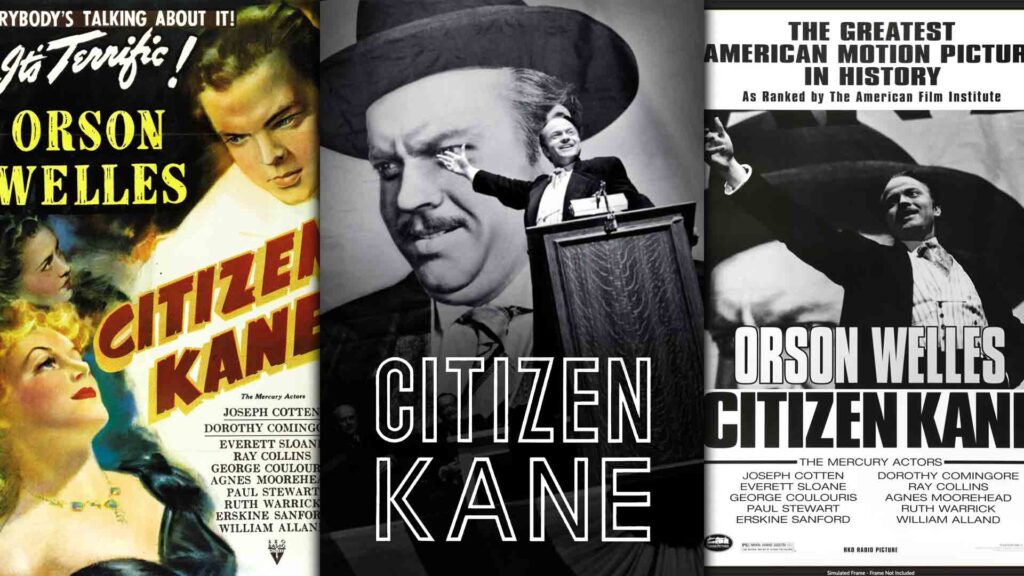
Citizen Kane

Drama
1941 / 119 minutes
Rating: 7/10

It’s a mystery with a moral. Often called the greatest film ever made, Citizen Kane is a story told backwards, beginning with the death of fantastically wealthy newspaper tycoon Charles Foster Kane. His final utterance? Just one word: “Rosebud.” The rest of the movie is told in flashbacks, with reflections from different people Kane knew, who have been tracked down by a reporter trying to figure out the meaning behind this great man’s mysterious final utterance.

We learn that Kane started poor, and had some ambitions to help the ordinary little guys just like him. Then, when he gained control of a newspaper empire, he had just the tool to do it. But little by little Kane’s success twists him into a prideful man, never satisfied with what he has, and always looking for love. The quest for belonging has him ruin his marriage, and turn to politics to get some sense of affirmation from the masses. But it is never enough. And it never lasts.

And that reporter? He never figures out what Rosebud means… though we get to find out in a flashback to Kane’s childhood. I won’t give it away, but I think, for Christians watching, it’s going to strike be an anticlimactic reveal.

Cautions

The only concerns – an attempted suicide, and marital infidelity (but nothing sexual shown onscreen) – would be somber material for any kids watching, but no kids are going to to sit through this.

Conclusion

I still remember the anticipation I had getting ready to watch Citizen Kane for the first time with my cousin way back in our teens. We were going to see it because his dad had been hyping it as the best film ever. Even today, when it might not be at the tippy top of every critic’s list, it’s almost certain to be found somewhere on their Top 100. The world can’t agree about much, except that Citizen Kane is amazing.

Except it isn’t.

My cousin and I were underwhelmed by just how ordinary Citizen Kane turned out to be. Was there something above-average about the cinematography? Sure, probably, but not enough to wow us. What we were both struck by was the moral to the story, and how incredibly banal it was. The message was straight out of the life of Solomon, and the book of Proverbs and Ecclesiastes. You can have all sorts of women, and money, and power, and it won’t be enough if you don’t have God. Vanity of vanities, we thought. Duh!

But what we weren’t appreciating, is what the world’s response to Citizen Kane demonstrates about how foolish people become when they turn their backs on God. Lessons my cousin and I were taking for granted because God so readily shared them with us in His Word, can only be learned the hard way otherwise. Or, as happens in this film, can only be learned by watching someone else learn it the hard way.

So, maybe the best reason for a Christian to see this film is to consider the gift God gives us in His warnings. What the world saw as a deep, powerful, tremendously insightful cautionary tale was obvious to a couple of Christian teenagers. And not because we were special, but because of what God, in His love, was sharing with us even when we were toddlers.

Enjoyed this article?

Get the best of RP delivered to your inbox every Saturday for free.

A A
By:

Meet John Doe

Drama
1941 / 122 min
Rating: 7/10

Director Frank Capra is probably best known for It’s a Wonderful Life, but that only became his best-known film later on. He actually had 13 films nominated for Oscars, including Meet John Doe in 1941.

As in It’s a Wonderful Life, Capra’s Roman Catholic upbringing is evident in the general Judeo-Christian ethic running through Meet John Doe. That doesn’t mean Capra’s films are always theologically orthodox – we know angels don’t get their wings when a bell rings – but there is a moral depth to many of them, including this one here, that is almost unknown today.

Set in the Depression, the story revolves around a reporter, her editor, and a derelict, and the politician who is trying to take advantage of them all. When a round of layoffs at The New Bulletin leaves columnist Ann Mitchell out of a job, she decides to go out with a bang. For her last column, she submits a letter from an unemployed “John Doe” who is threatening to jump off the roof of City Hall on Christmas Eve to protest society’s degeneration.

The letter is actually a fake, concocted by Mitchell to express her own disgust, but it causes a sensation. Readers flood the newspaper with letters, some of them marriage proposals from concerned women, some job offers, but all wanting to know, “Who is John Doe?” When Mitchell’s editor finds out the letter is a fraud, he hires her back to prevent the public from learning about the deception. Then he takes things one step further, hiring a derelict former baseball player (played by Gary Cooper) to take on the role of Doe.

What starts as a deception soon takes a positive turn. When the paper’s new “John Doe” begins making public appearances his simple speeches encourage a helping spirit among his listeners. John Doe Societies spring up spontaneously to enable neighbors to help one another. Doe becomes the leader of a huge, helpful movement… that’s built on the lie of his false identity. Things come to a climax when a conniving politician threatens to expose this lie, unless Doe endorses him.

Caution

Some have called this a Christian film, even though it came out of Hollywood. That claim is made because God’s second greatest commandment, “To love your neighbor as yourself” (Mark 12:31), undergirds the whole movie. It’s worth noting then, and sharing with any others in the family watching it with you, that the film largely divorces the Second Greatest Commandment from the First. We hardly hear about God, and the need to “love the Lord our God with all your heart, soul, and mind and with all your strength” (Mark 12:30). That makes this more humanist than Christian – Man-focused, rather than God-focused – but there is one scene which shifts it in a Godward direction, at least in part. To avoid spoilers I’ll share the words, but not tell you the speaker or context:

“You don’t have to die to keep the John Doe idea alive. Somebody already died for that once, the first John Doe, and He’s kept that idea alive for nearly 2000 years. It’s He who kept it alive in them. And, He’ll go on keeping it alive forever and always.”

A powerful profession, but isn’t it curious how Jesus is not actually mentioned by name? And this reference also doesn’t talk about the real reason Jesus came, and what He accomplished. It presents Him more as an example to follow than as the One who suffered and died to take away the punishment for our sins. So… this is a near miss, but not really a Christian film.

That said, it is a film Christians can really enjoy, understanding the truth of what is said here, and being able to fill in for ourselves what was not.

Conclusion

At just over 2 hours long, the pacing is slower than us modern folk are used to. But just be sure to make a little extra popcorn: this is a classic for a reason.

That said, this is not the first movie I’d show anyone not already used to black and white films. Also, with suicide an ongoing topic throughout, this is not a film for younger viewers…but it wouldn’t catch their attention anyways. So who should see it? This is a film for anyone who wants to peek into another culture and another time, to learn what they thought was important, and admirable, and worth fighting for.

Meet John Doe is in the public domain, so you can watch it, for free, below.