














Parenting
Real Talk: Recovering family worship
This episode can also be found on your favorite podcast platform: Spotify, Apple, Podbean, Amazon Music or on our website.
Be sure to subscribe to our YouTube channel and our podcast profiles so you can be notified when new episodes are released.
Please note that the transcript below was automatically generated and quickly edited so it may contain some errors.
*****
Opening
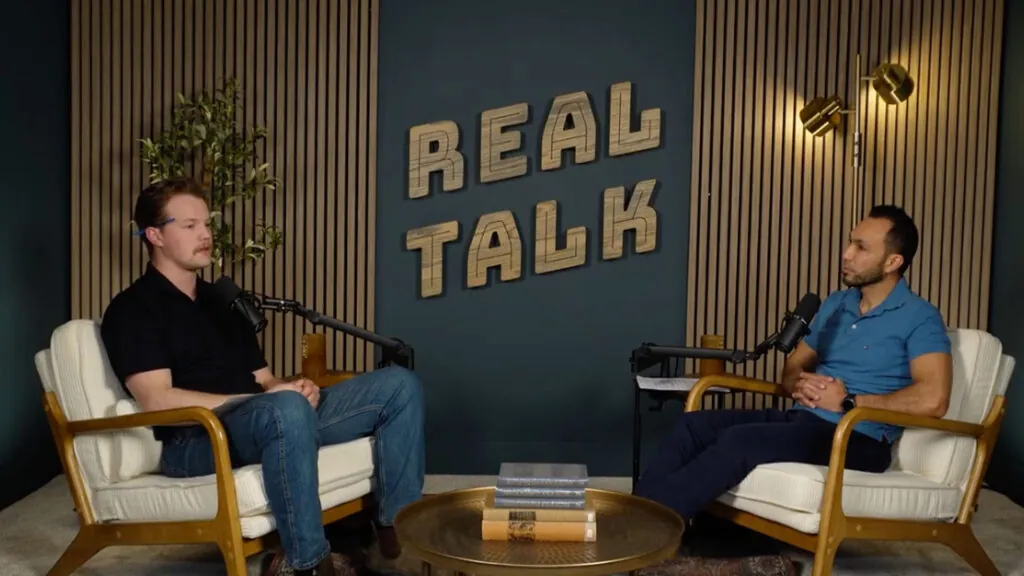
What if your home was more than just a place of routine? What if it became a place of worship? Family worship is not complicated, but it does require intention. We often say we don't have time, but the reality is we make time for what matters, and when we consider all that Christ has done for us, worship in the home is not an obligation, but rather a grateful response. Today, I'm joined by Pastor and author Dr. Brian Najapfour, and we're talking about what it means to intentionally lead our families in worship.
A big thanks to our official sponsor, Trivan, for making this conversation possible. Be sure to check them [email protected].
Now on to the show.
The world's changing fast, but what questions should we really be asking? You're listening to Real Talk, a podcast presented by Reformed Perspective, where we take God's word and apply it to the nitty gritty of life. Buckle up for real questions, real answers, and real direction. This is Real Talk.
Lucas Holtvluwer
We're glad to have you here.
Dr. Brian Najapfour
Thank you.
Lucas Holtvluwer
And we're gonna be talking all about family worship, of course, but I thought you have a very interesting story coming from your father from Iran, and you growing up in the Philippines and coming to know Christ. Can you tell us a little bit just about your story in a brief few minutes before we're going to jump into the family worship. How did you become a Christian, and what was it like growing up in the Philippines?
Dr. Brian Najapfour
Yeah, so I grew up Roman Catholic, which is the predominant religion in the Philippines. Yeah, I think even today, about 80% of the population is Roman Catholic, but I imagine nominal. A lot of them, they don't really go to church, and that was the case with me when I was in the Philippines, when I was Roman Catholic. I would go to church probably five times a year, Christmas, Holy week, my birthday. And I remember back in 19, I think 1995 a Baptist pastor came to share the gospel with me and even today I have that relationship with that pastor, his name is Pastor Willie Cruz, and in fact, whenever I go to the Philippines, I would preach for his congregation, so he has been the pastor of that church for over 30 years, because the Lord saved me in 1996 by God's grace, and another pastor by the name of Pastor Bong Lug Tu, he discipled me. He was really the one who would spend time with me. I remember he would come and visit me at home, and we would jog, and he would pray for me, help me understand more the gospel of the Lord Jesus Christ, and so when I, maybe this is a promotion, quick promotion of evangelism. Yeah, I wrote a book, which I entitled Every Christian Is an Evangelist: Biblical Motivations for Sharing the Gospel. I dedicated that book to those two ministers of the gospel, Pastor Willie Cruz, and then Pastor Bong Lugto. And so that was 1996 when the Lord converted me, and I remember having this realization that I basically wasted 16 years of my life, and I said, Lord, if it would please you, I want to serve you for the rest of my life. So, believe it or not, the next year, the following year, 1997 so I was a brand new Christian. I wanted to serve the Lord, and so I, I decided to attend a seminary, and I still remember when they interviewed me. One of the questions was, How are you going to finance your, your studies here, and I said, well, I don't have money in my pocket, but I have faith in the Lord here in my pocket, and sure enough, the Lord provided, and so 2001 I was only 20 years old, turning 21 I graduated in a local church called me, extended a call, which I accepted, and so I started pastoring in 2001 before I turned 21 years old. So I've been serving now the Lord for 25 years, so this year marks my 25th in the ministry. Only by God's grace.
Lucas Holtvluwer
Wow, congratulations!
Dr. Brian Najapfour
Yeah, thank you. And, like, what I mentioned, I was the first one to become a Christian in the family, and by God's grace, my mom came to know the Lord Jesus Christ after my conversion, and I have a half brother from my mom, and he too eventually became a Christian. Now, my father, who originally came from Iran, but he left Iran in the 1970s he's been in Australia now for 4040 plus years. I don't think he's a believer, and it's really my, my prayer that someday he too will enjoy the blessing of salvation in the Lord Jesus Christ. And I know nothing is impossible with the Lord, we will talk about family worship, and I want to encourage to those parents who might have the so-called prodigal sons and daughters, prodigal children, maybe they once grew up in the church, but they've left for some reason, and at the end of the day, we know that it is the Holy Spirit who will regenerate our dead souls. Salvation belongs to the Lord, and that happened to me when I grew up. There was no family worship, after all. I grew up in a broken family, and it's not easy. My mom had to work hard to raise us, to provide for us, and I also lived in an environment where drugs were there, I actually to survive before my conversion, before the Lord saved me. I even entered Jueteng. Jueteng is a form of illegal gambling in the Philippines, but when the Lord saved me, I gave up that gambling. Of course, we know that it's, it's not something that Christians should, should do. It's, it's against God's, God's will as revealed in His word. But here I am right now, sitting right next to you as a token of God's grace, and so if I may encourage to our viewers that at the end of the day it is the Lord who will save their children. Now, it doesn't mean that they should not pray, they should, and we will talk more about talk about the use of family worship.
Lucas Holtvluwer
Yep, wonderful. Well, thanks for sharing that. I appreciate that. It's a wonderful story. So, I guess we fast forward 26 years or 25 years there. So, we're sitting here today, we want to have you on because you had this Go and Teach conference, and you gave a speech there on family worship and the importance of it. So, we were chatting just before the show, we had Dr. Beeke on, and we kind of touched on this a little bit in that episode. So if the listeners are listening to this, you know, today in the future, they'll, they may have checked that out. So we touched on that a little bit in that episode, but in this one we want to go a little bit deeper and really like dive into, like, okay, what is this concept of family worship, and why does it matter? Why is it called like, why do you, why is God call us to do this, and how is that different from just reading the Bible, or just, just praying after a meal? And while those are important, there's, there's more to it there. So, maybe we'll just start from kind of where you started your talk at the beginning about this idea, the concept of family inside the church. Do you feel that we have a bit of a misunderstanding of, like, the importance of the family in the church, or how that kind of functions in relation to corporate worship and then family worship? Can you want to touch on that a little bit?
Dr. Brian Najapfour
When you say misunderstanding, what exactly do you have in mind?
Lucas Holtvluwer
Well, like, do we, I guess, do we think of worship as something that's more done, like, outside of the family circle, and don't think about it as, like, the family is almost like a mini church in some ways, and the not only the impact and the means of grace that can exist through family worship, and I'm sure we'll touch on that as well, but just the opportunity that is there to praise and glorify God in our, in our family life as well. Like, it's I think it's easy, especially in our Western culture, and perhaps you can speak to that, coming from the Philippines, as well as kind of an outsider to that, and then coming into it, of how, like, we can really like bifurcate and separate. Separate our different portions of our life, right, and compartmentalize, and I think sometimes the worship in the family home, in the family aspect, doesn't always get brought in there in the same way we think about it in church, so maybe just kind of speak to that about, like, okay, worship is not just for in church, you can also do it in a family context, why does that matter, and what's important about that?
Dr. Brian Najapfour
Thank you for clarifying that. I think it's helpful too to realize that worship has basically three aspects. So, first of all, there is what we call personal, or closet, or private worship, that's our personal worship with the Lord. You alone with the Lord. The Puritans would use the term closet, that's like being inside the closet when no one sees you, but, but, but the Lord. So that's very important, because the second aspect of worship is what we call family worship, and I think this is where we have the misunderstanding, especially with regard to worship. Sometimes we think that worship can only be done outside our family, thus we have the third aspect of worship, which is public worship, corporate worship, which we are very familiar with, because that's what we do. If you are a believer, you go to church twice on Sunday. In our tradition, we have two services. I understand that there are many evangelical churches today that only worship once on Sunday, and that's what we know when we think of worship, that's good, and the Lord has commanded that, commanded us, do not forsake the assembling of ourselves together, but let us not forget too that there is what we call family worship or family altar, and I remember what John Chrysostom said, that we should treat our family as a little church, and that idea was carried on by the Protestant reformers, like Martin Luther, especially the Puritans, even Matthew Henry would also strongly say that our family is actually a little congregation. And why is it so? Well, because our family, our home, is not just a place where we eat, where we sleep, where we have that enjoyment that we can enjoy from the Lord all the blessings, but this is also a place of worship where there is a tent. One Puritan said there is also an altar where you can offer sacrifices to the Lord, and I think that's where the misunderstanding comes, because a lot of us don't think of our home as a place of worship, but it is, it is, and that's why family worship is so crucial, because think about this, Lucas. Well, first I mentioned about the private worship, your personal worship with the Lord. If your personal relationship with God is weak, let's say as a father, that will reflect your family worship will be affected by that, because really, family worship should be an outcome, natural overflow of what you are inside the closet, and then at the same time, if your family worship is weak, that will eventually affect the congregation. Yeah. public worship, and I'm afraid that one of the problems, Lucas, that we have nowadays, you know, we often complain, how come that the attendance is declining for public worship? A lot of families are no longer worshiping the Lord, children, they are not worshiping young people. They would rather go to a baseball game or watch a hockey game on Sunday than be in the house of the Lord. Why is it so? Well, really, it's a reflection of what happened inside the house. Now, I'm not saying that that's always always the case, but if our family worship is shallow, weak, what do we expect? We will also have a shallow, weak corporate public worship.
Lucas Holtvluwer
And you see that as a real, like, pressing need, especially in today's society, like where things are at, because I would, I would say, like, even just in my experience growing up in Dutch Reform circles, yeah, like, there were consistent patterns of, you know, reading and praying at meal times, and some families would sing, like, if you go over to someone's house on a Sunday, like, certain families would, certain wouldn't, whatever, but this, like, when we had Dr. Beeke on, we were talking about this whole idea of, like, you go to a separate room, and like, you get the books out, and you do, yeah, you sing, and you read the Bible, and you discuss it, and you know it's like a whole separate event, almost, right? Is that kind of what? How do you practice that in your home? What does that look like exactly?
Dr. Brian Najapfour
Yeah, so my wife and I, we have five children, ages between four and 13, and what we do again, each family is unique, and sometimes, depending on the age, two of your children, so because we have five kids in the range is quite big, four to 13, so we have this practice where we make a rotation, we take turns as to who will open in prayer, so before we eat, let's say my oldest daughter will open in in prayer, and then we eat, and then we go to our family room, the living room, and we have seven bibles, because five kids, plus myself, and then my wife, we have, we have seven bibles, and each one will have a bible, now of course, our four year old daughter cannot read yet, but it's good for her to see, to observe, so we don't expect her to read yet, but those who can, they should read, so we will take turns right now, we have been reading from the book of Exodus, so let's say Exodus chapter 32 and each will read two verses. So I usually start, so I will start two verses, and then I guess this is my advantage too as a pastor. If there is something that I would like to stress underscore, I will pause, and then explain that to them. So, for instance, when we read about the Tabernacle, yeah, a lot of symbols there. Yes, so then you can, you can help them. Okay? Why do we have this? Because the goal also is that you look for Christ. Otherwise, when you just read and then give moral lessons, it will be moralistic and I think that's one of my concerns, by the way, too. In many family worship today, it becomes moralistic, and by that I mean they simply read it. Let's say if they read about the narrative or story about David and Goliath, so or Daniel and his three friends. Well, we want to be like Daniel, brave, courageous, and then you stop there, or like David, strong. Well, yeah, not really, but strong in the Lord, yeah, courageous, and we say to our children, you see, we need to be courageous like David, no, no, go beyond that story, look for Christ, and you can say that here, my child or my children, David really represents the Lord Jesus Christ, the greater David, who fought the greater Goliath, Satan. So you bring out of the text the Christology and pointing them to the cross and sharing the gospel, which the goal is really to share the gospel with our children, and another misconception, too. Sometimes we think, well, my, my child is already a believer. Praise the Lord for that. If your child is showing the marks of grace, but it doesn't mean that your child, your believing child, does not need the gospel anymore, because Lucas, I cannot imagine my life without the gospel. I need the gospel every day, when I, when I sin, I need the gospel. I need forgiveness, I need Christ, I need His blood. When, when I am down, I need the encouragement rooted in the cross of the Lord Jesus Christ. So that's one thing that we need to do also as we lead our family in family devotion, and so we read, and then the next person will read two verses also, until we sometimes it doesn't need to be long, so you play by ear also, sometimes the text or. The chapter will end naturally. There will be a division, and then you can pause there. You can say, "Okay, I think we can, we can stop here and then continue next time.” Let's say, if you're reading about the plagues, you may want to just read one plague or two plagues. Stop there and then after that you ask them what do you think, what can you learn from, from, from this passage, or better yet, where is Christ here? Where's the gospel here? How can we use this, and then you help them to apply it practically. Oh, you know, between, between siblings, there is a fight, mini fight. You probably know that. You have.. how many siblings? Five siblings. Then, then, as parents, now.. and my wife is so good at this. Yeah. Then, then she will help me. Then, okay. Then, how.. how can we apply this? How can we use this if we are angry? Yeah, how can we use this if let's say someone did this to you or that things like that. Again, let it come naturally from the text. Yeah, there are practical applications, but my point earlier, if all that we get are practical applications devoid of the gospel, then you will end up with moralism, and there's no power there.
Lucas Holtvluwer
Yeah, you need some heart behind it as well. You need the gospel.
Dr. Brian Najapfour
And then after that, we sing.
Lucas Holtvluwer
Yes. Okay.
Dr. Brian Najapfour
So the one who opens in prayer will have the opportunity to pick a song, so we're using the Trinity Salter hymnal, that the OPC and URC have produced. Excellent. What I like about that hymn book, you have psalms and then hymns together so in a good selection, really good selection of hymns, so we will sing one, and then I always speak the second. We sing two, and sometimes too, we just sing from memory. Let's say, for the sake of our four year old daughter, we can, we can sing in the name of Jesus. In the name of Jesus, we have the victory, you know, something like that, or read your Bible, pray every day, sometimes with, with actions, yeah, and you grow, grow, grow, yeah, so that the little ones can, can relate to it, bring them into it, but at the same time you can sing hymns where the old ones can appreciate better than read your Bible. Sometimes, for some reason, you know that, yeah, as you're entering the teenage year, you somehow feel embarrassed to read your Bible. And then we close in prayer. Yeah, we gathered the prayer request. Okay, do you have prayer requests now? Because they go to school, they, they will share something from the classroom. Please pray for my classmate, his dad is going to have surgery, or please, like one of our teachers, or not teachers, a librarian, she has cancer, Mrs. Chaytor. Okay, so the kids will say, Mrs. Chaytor, pray for Mrs. Chaytor always, every time, every time. To the point that if it is my turn and I'm coming near the end of my prayer, especially the youngest “Mrs. Chaytor”, it's like, don't forget that. Yeah, I hear you. Yes, I will get to Mrs. Chaytor. Yeah, yeah. So, probably 15 minutes by the time you, you're done.
Lucas Holtvluwer
So there's a kind of like four major parts. There's the Bible reading, there's like the explanation, looking for the gospel, Christology, yeah, and then there's the singing, and then prayer,
Dr. Brian Najapfour
Yeah.
Lucas Holtvluwer
Okay, and so when you were putting together this whole go and teach conference, and then you wanted to speak on this issue, what kind of caused you to say, oh, like this is a really relevant topic that we need to talk about, like today, especially like, is it the whole, like, whatever, entertaining ourselves to death kind of thing, like what is distracting us, or how did this habit kind of get lost over the years? Because I know, like, HRC Church, like you guys draw from the Puritans, and kind of that whole tradition a lot too, and there's lots of great things to learn from them as well, including this idea of family worship and trying to revive that and bring that back, but like historically, is that something you looked into at all? Like, oh, like, how did this practice kind of fade out, and why is it so important? I guess to bring it back in.
Dr. Brian Najapfour
Yeah, it's actually interesting. I think when you look at church history, even among the earlier church fathers, I mentioned the name John. Chrysostom, he was big when it comes to family altar, family worship. Yeah, he would say that our home is a little church, little congregation, and the Protestant reformers, John Calvin, Martin Luther would carry that idea, and especially the Puritans. And then, for some reason, when we reached the 18th century, the rise of evangelicalism, I think the focus shifted from family to personal, and that's why…
Lucas Holtvluwer
It’s a whole like, expressive individualism.
Dr. Brian Najapfour
It’s interesting too, because even the hymnology hymns, you will see that, for instance, Charles Wesley, notice his hymns, very personal, Fanny Crosby, that thou, my God, should die for me. My, the me sort…
Lucas Holtvluwer
of the we in the us and all that.
Dr. Brian Najapfour
No, there's nothing wrong about that. I'm not saying because they were also reacting to the cold dry spirituality of the Church of England, then in the 18th century, and we thank God for men like George Whitefield, Charles Wesley, Joseph Hart. I did my dissertation on Joseph Hart; he was one of contemporaries of George Whitfield, Charles Wesley, and he himself, Joseph Hart, wrote several hymns, 222 in total. You will probably recognize one of them, Come Ye Sinners, Poor and Needy.
Lucas Holtvluwer
Oh yeah. He wrote that one.
Dr. Brian Najapfour
He wrote that one. So he's lesser known compared to other great hymn writers of the 18th century, but same, the focus was personal, and again, please don't get me wrong, there's nothing wrong about that, but I think, too, as we moved forward to the 19th century, it became too personal, not familial, not the, not more family, so probably that contributed. I could be wrong, but that's one of my observations in church history. And, of course, fast forward now, 20-first century, with the rise of media, cell phone. You know what's sad, Lucas. I remember my wife and I with our children, we went to this restaurant, and I remember sitting right next to this family, where so the two kids and the parents, they were all holding their cell phones, and they were like this, there was no conversation around the table, so gently I said to my… I remember telling one of my children, I said, do you know this? Look, look at them. Yeah, because our kids, they're excited to have their cell phones. Like, when can I have my cell phone? Not right now. You're only 13 years old, or you're only 11 years old. You need to wait, but look at that. Maybe those children were only maybe 10, 11, 12. They had their own cell phones. There was no conversation.
Lucas Holtvluwer
Yeah, it's not good.
Dr. Brian Najapfour
And, and you know, Lucas, to another problem. Actually, my wife, who is a teacher, told me about this when she was in British Columbia, so she went to Fraser Valley University, and there was a course where they, the teachers had to be aware of this, that they, need to teach their students how to interact somehow. Kids, they don't know how to interact, they don't know how to converse, they don't know how to talk. Yeah, and why is it so well? First of all, each room has a television, so here you have a household, a family. If they have two children, three children, they have each will have his or her own bedroom, and there's a television. They, they rarely eat together. Lucas, one child will eat in his own room, the other one in her own room. There is no fellowship around the table. And so, this is, by the way, so common in the world. Like, family worship is so rare. So rare. And I'm afraid that even within a Christian community, and yes, Reformed community, it's becoming so rare too, and that's why we want to, and I'm so glad that you're taking the time to interview me about family worship, because it's a crucial, a very crucial topic, because think about this, if our family is broken, what kind of society shall we expect to have? And when? Because a society is composed of families. When you, when you have weak, broken families, you will have a broken society. And when you have a broken society, you will have a broken nation. And unfortunately our politicians don't see that problem, that we need to strengthen our families,
Lucas Holtvluwer
Or they come from a lot of broken families, probably.
Dr. Brian Najapfour
Yeah, no, I did, like that's why I started with emphasizing God's grace, too, because at the end of the day, it's the grace of the Lord that will change us, transform us, but let us not also forget that God is using this means for conversion to save our children and to transform our children to strengthen our family worship.
Lucas Holtvluwer
Well, you mentioned Joshua 24, “As for me, my house will serve the Lord”, as kind of like a key text in this regard, for sure. And I mean, I think this was a bit later on the outline, but I think it's relevant to what we're talking about right now, in terms of as reform folks, we don't usually get into the language of like we choose to do this or we choose to that, right? We're kind of like allergic, but like in that way, like, why is it so important to say, like, no. As for me, at my house, we will serve the Lord and make that distinct choice, yeah? Like, for you and your wife, maybe you could speak to your experience or what you've seen as a pastor in general, but I don't know if we've, if we, and I say we, as like the collective reform, not like I'm speaking for them, necessarily, but just from in my own mind, maybe like thinking about that as like put your line in the sand, this is what we're going to do, that's kind of a new way of thinking, it's more just like, oh, I've grown up in this, this is yes, this is how our family kind of operates, and these are the things we do, but being very explicit about it and creating some of these good habits around family worship, that's yeah, that's a key choice you make. So, when you were kind of putting together this talk and speaking about this and writing on this, how important was it to say, "Hey, like, put a line in the sand and say, as for me and my house, we will serve the Lord?
Dr. Brian Najapfour
It's a resolution, Lucas, that we need to make you don't make that on my behalf, that choice, that decision, you don't decide for me as a father of my home, my household, I make that decision, and even if I'm the only father in the world that will do this, I will, by the grace of God, make that decision, that no matter what happens, like in the context of Joshua, and by the way, really, when, when we take that verse within, within its context, you will appreciate better, because prior to that, Joshua has just reminded God's covenant people of what, what the Lord has done for them.
Lucas Holtvluwer
The whole history, yeah.
Dr. Brian Najapfour
The Lord has redeemed them from the land of Egypt, from bondage, slavery. The Lord has given them victory over their enemies, the Canaanites, Jebusites. The Lord has given them this promised land, a land flowing with milk and honey, and now Joshua is saying, now therefore choose you this day whom you will serve. In light of this, how can we not serve the Lord, like when we think of what God has done for us, when we think of what He has given to us. Now, of course, in the gospel, in the gospel, He has given us far better, far more better blessings than what the God's covenant people experience that time because in the gospel the deliverance that we have is not just from the slavery bondage of Egypt or Pharaoh, but deliverance from the bondage of sin and bondage of Satan. We have that freedom, not freedom to sin, but freedom to worship. We have been set free. The Lord has given us that, that liberty to worship Him. The Lord has given us this promised land, now the Beulah land, the celestial city that awaits us someday, that we. Will be dwelling in the house of the Lord forever, and not to mention all the spiritual blessings that we have in Jesus, the blessing of justification, that in Christ we have been justified by faith in Him. We have the blessing of salvation, that we have life everlasting blessing of sanctification, that we are being conformed to the image of the Lord Jesus Christ. Day by day, we have the blessing of spiritual adoption, that in Christ we have become the children of God. We belong to God's family, and, and not to mention all the physical and material blessings that the Lord is is giving to us. That's why, in our family, we do our family worship right after our supper. And so you have that natural way of reminding your children, children, the Lord has just blessed us with food. Are you aware that there are other children who are literally starving when we think of the children, for instance, in Gaza, I've seen a lot of videos, yeah, like they are starving, they need food, and, and we can say, my child, the Lord has just fed us, shall we not thank him, shall we not worship him as a family? Look at you. You have nice clothing. You live in a beautiful home. If it is cold outside, we have furnace. If it is hot outside, we have AC. You go to school, there is a school bus. You don't need to walk, whereas some kids will have to walk for five kilometers just to get to school with an empty stomach, they have no food. You can go to school with snacks, you are so blessed. And when we like what one hymn writer says, count your blessings, name them one by one, and it will surprise you to what the Lord has done. You know, we are quick to count what we don't have. Weare quick to count the afflictions and trials and problems, but the moment we pause Lucas, and think of all the blessings the Lord has given to us, then why shall we not choose to serve the Lord, to worship Him. This the least thing that we can do in return for what the Lord has given to us, to have our family worship, where all together we bow down before the Lord, kneel down and say, as a family…
Lucas Holtvluwer
Do it together.
Dr. Brian Najapfour
… “Lord, thank you so much. You have been so, so good to us.” I understand there will be a problem, affliction, cancer, loss, death in the family, and when you have that trial, it might not be easy to thank the Lord, but still, when we now focus on Christ and think of His suffering, His agony. Here you have Jesus, who cried out, "My God, my God, why have you forsaken me? He suffered, He did not sin. Now I deserved to suffer Lucas because of my sin, but Jesus never sinned, and yet He took my sin. He died, and yes, there will be loss - a loss, God forbid you might lose your child. Now, my wife and I, we had two miscarriages. It was not easy. I remember crying like, like a baby, but God, the Father, lost His son too. His son died on the cross, and He can very well relate to us at that moment, and say, Lord, please help me, sustain me as a family, help us as a family, help us to say with Job, the Lord gave, the Lord has taken away, blessed be the name of the Lord, that's family worship.
Lucas Holtvluwer
It’s there during the highs and during the lows. How did you? Well, I guess maybe how did you, or how do you continue to keep that spirit of thankfulness in your family worship and not let it shift into one of obligation and duty, and having it just become rote
Dr. Brian Najapfour
Again, once we do our family worship as an expression of our gratitude to the Lord, I think that will change the way we do it. So, in other words, if one of my children were to ask me, "Dad, why do we have to do this? Why do we need to have family devotion, few families on earth do this anyway.” Now, if I, if I say, well, it's a good tradition, it's our tradition, by the way. Well, that's good, but it's not really convincing.
Lucas Holtvluwer
No.
Dr. Brian Najapfour
If I say, well, you see, if we don't do this, our elders will come in and maybe castigate me, especially I'm a pastor, I need to do this, set a good example. No, we can, we can give them a better reason, and the reason really is we're doing this because of what Jesus has done for us at the cross of Calvary, this is our way of saying thank you as a family. So, family worship is really a thank you to Jesus for all that He has accomplished for us on the cross of Calvary. Now, our children may not understand it that way, and that's why it's so important that we again help them focus on Christ, because if, if the reason for having family worship is merely material, material, or financial, or physical, well, let's worship the Lord, because the Lord has blessed us, the Lord has given us this food on the table. What if Lucas one day we come to the table and there's no food on it? We're blessed here in Canada, in North America, but think of other Christian families, let's say in, in many countries in Africa, where there is really starvation. How can you, how can you worship the Lord when, when you're so hungry? How can you worship the Lord when you don't even know if you have food tomorrow. How can you worship the Lord if there is severe, intense persecution that you know that that any, any time one of the officials of the government will come and arrest you because of the gospel? It's, it's not easy, but again, if we do family worship because of Jesus, then we have always the reason to do it, and that's really the reason, it's Christ, and so I would, I would encourage parents, families that when we do it, give, give that reason to our children. We do it to say thank you to Jesus for what He has done for us. Because think about this, as the psalmist says, the Lord is good. The Lord is good, and He's always good. And if we really believe that, then we always have a reason to thank him and praise him and worship him.
Lucas Holtvluwer
Amen to that. You talked earlier about the different areas that kind of correspond with each other, of personal devotion, and then you have family worship, of course, then the corporate worship within church and congregation, as a father, as a husband, as a leader in your home, how do you keep your personal devotional life strong, so that you have that overflow that can feed into, I mean, in your case also as a pastor, but obviously into the family worship, then into your church family as well.
Dr. Brian Najapfour
Very good question. The key is to be consistent. Now, do I do it all the time? Of course not. There are times that, let's say, as a pastor, let's say you have a meeting, consistory meeting, elders meeting, and you have to go to bed late, sometimes 12 midnight, or something, something happens unexpectedly, or one of my children broke her two wrists. Emergency.
Lucas Holtvluwer
Oh, wow.
Dr. Brian Najapfour
So, I do my personal devotion in the morning, and yeah, it's hard to wake up early in the morning, so I had to skip because of what happened, so I might do it later that day, but you want, you want to be consistent, but let's set a time, so like in my case, if you don't set a time, it will never happen. Likewith this interview.
Lucas Holtvluwer
Yeah, we got a book it.
Dr. Brian Najapfour
Exactly, exactly. And once you do it, it becomes a habit.
Lucas Holtvluwer
Yep.
Dr. Brian Najapfour
You to the point that if you don't do it, you know you're missing something. Yeah, it's like I go to the gym regularly and if I don't go to the gym, my body misses it somehow. There, there is, something is missing. I know that I need to go to the gym. It's the same with my personal devotion. I know that I need, I need to do it to spend time with the Lord. Now, there, there are dangers too, for us ministers of the gospel to substitute right sermon preparation, that that you now do this to replace your personal devotion.
Lucas Holtvluwer
That's just part of your job.
Dr. Brian Najapfour
Yes, and I will discourage pastors for doing that. I think it's sacred that we need to protect our personal devotion again. It doesn't need to be long. Now, in my personal devotion, I pray for my children, obviously, and for my congregation also. I can, I can pray for this family, two families, or sometimes you have special requests that you remember. Again, I want to be realistic also, because easily you can spend time just praying. 30 minutes is too short if you want to pray for your members, and not to mention your friends and family members, so you need to say, okay, I need to focus on this time for just one family. I spend like five minutes, 10 minutes, and usually to for my prayer I use my passage, so if I read from Genesis, let's say Genesis chapter seven, chapter eight, let's say about Noah, then you use that in your, in your prayer, you thank God for the ark, for the Lord Jesus Christ, you use that as a basis, otherwise you develop a cliche. And I think that's another thing also that we need to watch as fathers, that we develop cliche cliches, and, and our children will notice that. Yeah, so it's good if your prayer is based on the passage that you, that you read for that devotion. So, yeah, I watch it, I watch my personal devotion, I fail, but I, I want to go back again.
Lucas Holtvluwer
If it's a habit, give up, you know, you're missing it, that's that's a good key point to take home for all.
Dr. Brian Najapfour
Doesn’t need to be long.
Lucas Holtvluwer
But consistent.
Dr. Brian Najapfour
Yeah, you know, Al Martin, he died recently, and he said in his, in his office, he had two chairs, one chair for his study and one for prayer, for his personal devotion. Well, I only had one chair, but I thought that that was a good way to make that distinction, that you have another chair that you use,
Lucas Holtvluwer
Your prayer chair.
Dr. Brian Najapfour
your prayer chair, your worship chair, right. Now, having said that, it should also be that whatever we do that day, whether you are a plumber, a doctor, or a nurse, or a builder, that you do what you do as an act of worship, and so in that case you worship the Lord every day, every single hour. For a mom, when, when you wake up in the middle of the night to change your baby's diaper, when you do it for God's glory, that's an act of worship. So, right there, changing a diaper, you're worshiping the Lord.
Lucas Holtvluwer
Yep
Dr. Brian Najapfour
So yeah, we, we want to do everything for God's glory. Start to finish of the day.
Lucas Holtvluwer
Agreed. What are some of these idols in our culture, specifically in family life, that we can kind of let get in the way of a habit of family worship, because, like, some of the objections you might hear to this would be I don't have the time for it, or I wouldn't know what to say, or isn't, you know, reading the Bible and praying enough. Why do we have to go take these extra steps? Now, you talked about that last one a bit with the idea of gratitude and seeing what Christ has done for us, but what are some idols in our culture today that you see that are inhibiting us from taking the necessary steps to have a healthy regular practice of family worship?
Dr. Brian Najapfour
Good question. So, generally speaking, an idol is anything that takes priority over over the Lord, it could be your sport, whatever it might be, hockey, hockey game, or basketball. I love basketball, but if basketball becomes my priority, more important. And then the Lord, then that becomes an idol, and I think the challenge too is that again, let's, let's be realistic now, so I'll give you a realistic scenario of our family, so my daughter, she needs to practice piano, and that's in the evening, so that's Monday night, every other Monday night, so that that night she won't be able to join our family devotion, and then my wife too, but I have to do it, so like my myself, and then the other four kids, now is that our preferred time for the practice? No, but that's the only time that she could, she could practice the piano lesson. Yeah, the piano lesson. So, sometimes, sometimes we will, we will wait for her. Sometimes also, let's say I have a meeting, let's say consistent meeting, and then let's say we happen to eat late that night, then the family worship will be shortened..
Lucas Holtvluwer
Expedited, yeah.
Dr. Brian Najapfour
But then I will say, love, that's how I called my wife, yeah, love. I need to go, please just close in prayer without me. But that's not ideal.
Lucas Holtvluwer
No,
Dr. Brian Najapfour
Sometimes too, my son, James, will practice baseball. Let’s say Saturday. They're practicing, although I think after for four for four weeks every Saturday night, then after that I forgot exactly which day of the week, because I don't like Saturday, because I protect my Saturday night for my sermon preparation, like final preparation for the Sunday, but anyway, so sometimes he has to go after supper, so then he will miss, but it's not ideal. So, that can be a challenge, by the way, Lucas. So, we need to be careful, because if you do it regularly every day, then something is wrong, but if you do it, let's say occasionally, and with the understanding that, okay, when you come back, we will still do it. You will join us. That's another story. But I think what we're seeing in many families is that, well, they will say they have no time for family worship, but in the meantime, the father has time to go out hunting for four days, he will be gone for four days, or five days. Yeah, he will even go to another province to look for elk or moose. And I have a problem with that, because if you, if you have time to hunt for five days, and you say to me you have no time for family devotion or fishing, they will be gone for two days, three days fishing, but no time for family devotion, that's some something's wrong right there.
Lucas Holtvluwer
It’s a misalignment.
Dr. Brian Najapfour
Yes, what is your priority? You're right, or some people would say, well, I, we don't have resources, you know, I can't afford to buy that family worship Bible guide. Well, really, and you have money to buy cigarette or tools for fishing, which are more expensive than maybe tools for family devotion. Yeah, you need the Bible, and if you can afford to buy that guide, family worship Bible guide. So, I think the issue is priority. Is it really a priority? And it goes back to what Joshua said. As for me and my house, we will serve the Lord. Choose you this day. We need to make a decision, because if we don't, then the world will make a decision on behalf of our family, and we may not be aware that the world is catechizing our children. Do you actually think that when, let's say, we watch a baseball game or hockey game, and during the break time, or before or after the game, they will, they will play a song. Do you actually think that our kids are not listening to those songs, the conversation that they over, that they overhear from other people attending?
Lucas Holtvluwer
Yeah.
Dr. Brian Najapfour
And the world is not neutral. The world has an agenda. The world will teach catechize our children, and we need to counter that. And sometimes we parents, we say, "Oh, what, what happened to my children? What, what have you done?” Sometimes you know, we ask that question to our children. Well, maybe we should ask the question, "What have I done?” As a parent, as a father, because maybe we have let them, we have surrendered our children to the world, and now the world is teaching them with things that are not according to the word of God, even having friends, right? So, if we don't train our children, they have no weapons. Yeah, someone actually said one Puritan, and when you don't have family devotion, family worship, it's like having a house with no roof.
Lucas Holtvluwer
Yeah.
Dr. Brian Najapfour
You're open to dangers.
Lucas Holtvluwer
Yep, yep, you're not protected.
Dr. Brian Najapfour
You're not protected, yeah.
Lucas Holtvluwer
But so, given your family circumstance, and you came from a family that was a broken family, and no Christians in that family, and you were able to come to Christ and become a pastor and lead the life you leave lead, rather, if someone were to critique that and say, well, you didn't have family worship growing up and see what the Holy Spirit was able to do in your life, isn't it all the Holy Spirit at the end of the day? How important is it to still take the time and effort to do family worship in light of the power of the Holy Spirit?
Dr. Brian Najapfour
Yeah, so we believe that it is the Holy Spirit that will regenerate our children, will circumcise their hearts, will save them. Salvation belongs to the Lord. And yet the Holy Spirit, in His word, has given us the responsibility. Also, it is our holy obligation to raise our children in the ways of the Lord, in the fear of the Lord, and one of those ways that we can raise them in the fear of the Lord is through family devotion, and we should not neglect it, but use it, actually take, take advantage of this gift from the Lord, this blessing, it's a blessing, and if let's say one of our listeners, let's say has not yet done this. It's not too late.
Lucas Holtvluwer
Yeah.
Dr. Brian Najapfour
You can start now, and that's why going back to the Joshua passage, choose you this day. It speaks of urgency. Joshua did not say choose, choose you tomorrow or next week. No, right now today it's so urgent. Why? Because time is of the essence. Our children, they grow fast.
Lucas Holtvluwer
Oh yeah.
Dr. Brian Najapfour
Before you know it, they are out of our home, they are married, they live on their own. So, while we still have this opportunity, golden opportunity, let's take advantage of this, let's seize every opportunity that we have as parents to train them, to help them, to equip them, because we, they will not be forever living with us, they will be going to colleges, and guess what, some of their teachers, professors may not be Christians. How, if we don't equip them, then how can they respond to challenges? So it is our responsibility to equip them, and we can use family worship. I dare say that family worship is really one of the most important things that a father can do for his family. Family worship.
Lucas Holtvluwer
I would agree. Yeah, it's that daily, you're just again bathing them in the gospel, right? And those, those regular routines of coming together as a family, I mean, you hear it even just in a more general social context of people lamenting the loss of eating dinner together, right, and just in the society kind of breaking down around us, and like you mentioned earlier, families eating in separate rooms and broken families, and that sort of thing, so it's good to good to know that largely we have still retained that, I think, unless you're seeing that as a trend, I feel like people still eat dinner together.
Dr. Brian Najapfour
Yeah, of course. You know, in my experience, to having been a pastor for 25 years, I have not yet heard someone say to me, someone who is dying, I wish I had worked more, or I wish I had visited this place or that place. When there is a regret, oftentimes it is something like this. I wish I had spent more time with my family. Always like that. I wish I had spent more time with my family. I remember Lucas, one of my professors in the seminary. He said to me, and he said this when his two children were not attending church, were backsliding, they were backsliding. And he said to me, I wish I had prayed more for my children. That was his regret. I remember hearing that. I said, “this is my professor regretting.” You look at him as a godly professor, but he himself has this regret, and he thinks that he had not prayed more enough for his children. Now, of course, we think of God's sovereignty, right? At the end of the day, if your children is not among God's elect, they will not be saved, but we don't use that as an excuse. We have the responsibility, and one of our responsibilities is to pray for our children, and part of our family worship is prayer.
Lucas Holtvluwer
Yep, it's a good reminder. You mentioned the hymn, I have decided to follow Jesus in your talk, and just how that's an example of family leadership. Can you expand on that, and just kind of explain for our listeners what that's like?
Dr. Brian Najapfour
Yeah, so there is one version that says this is the story behind this hymn. I have decided to follow Jesus. Several years ago, many, many years ago, there was a family in, in India, I believe, northern part of India, and this family was living in, in a village known for headhunting, really, really terrible, terrible village, pagan, pagan village, but a missionary from the West came, and to make the story short, through this missionary, this family of that village in that I think North East India came to know the Lord Jesus Christ, and when the chief of that village found out about the conversion of this family, especially the conversion of the father. He, he pressured him, he wanted him to recant his faith in the Lord Jesus Christ, and he said, "If, if you don't recant, we will kill, we will kill your wife.” And basically he said, “I have decided to follow Jesus, not turning back, not turning back.” And again the chief said, “Well, if, if you don't really recant, we're going to kill not only your wife, but all your children as well.” And he added, “the world behind me, the cross before me, no turning back, no turning back.” In other words, “I have made this decision. No matter what happens, whatever you do to me, I will not recount my faith in Christ, because I have made this resolution to follow Jesus, no matter what.” And by the grace of God, by the way, they killed his wife, and they also killed him, and even when he was one, one witness said that as they were persecuting, or they were about to kill this father, they kept hearing him say, “the world behind me, the cross before me, no turning back, no turning back”. Now the chief of that village was so touched by the testimony of this father that he declared, “I too will follow Jesus”, and by the grace of God that village turned to be Christian, that pagan village as amazing story. Now, of course, that's a version I have a friend who challenged that. He's a hymnologist, but anyway, if that was true, beautiful story, really. And this will also help us appreciate this hymn, because a lot of people, especially from a Reformed tradition, would not sing that hymn. I have decided to follow Jesus. I think because they associate that with decisionism, or is it Believism? That no, we don't make a decision. Again, the idea of, you know, choosing, we react to that, we become allergic, but it's a biblical expression that indeed we make, we need to make a choice. Yes, we believe in the doctrine of election, but to believe in Jesus is your choice. I can't make that choice for you, Lucas. Yeah, through the spirit, it's my choice that I have to make that I need to believe in the Lord Jesus Christ, but of course in that context here you have a believer who is making a decision to follow Jesus. Now, so it's really within the context of sanctification, and family worship should also be understood within the context of sanctification. In other words, we don't do family worship to gain God's favor. We don't say, "Okay, children, let's do this so that somehow in doing so God can save us.” No, there is no salvific power in family devotion, devotion, but God can use it in the context of sanctification to strengthen our faith. And, and also, God can use that if you have a child who is not yet a believer, as the child hears the gospel from that family worship. Then you pray that the Lord will use that for the conversion of your unbelieving child.
Lucas Holtvluwer
Yep, it's a, it's a powerful means, means of grace, right?
Dr. Brian Najapfour
Exactly.
Lucas Holtvluwer
Yeah, 100% In the home where the husband is not the strongest in his faith, or is not a great leader, but the wife desires her husband to be so, and if, if a wife is listening to this podcast, or whatnot, and thinks that, yeah, we should kind of get this whole family worship thing going, and you know, Dr. Najapfour is making some great points here, and we need to really do this in our home, but doesn't feel like her husband is able to lead her in that regard, or whatnot. What would you kind of say to a wife in that position to help foster some of these habits, even if the whole family's not bought in, so to speak.
Dr. Brian Najapfour
So interestingly, you brought that up, that question. One of the attendees at the Gointage conference was a mother whose husband doesn't want to have family worship at home, and so I said, “well, you do it, you do it, you lead it. If your husband will not do it, then you take the responsibility, and you pray that as you do that, your husband will be touched by it, will be convicted of his own sin”, because we should take lead, we fathers, that's our primary role, not our wives, but if we're not home, then the wives will take over the responsibility, that happens like in my case too, as a pastor, when I travel, if I speak at this conference. Sometimes I'll be gone for three days, four days. Obviously, I can join my family for family worship. Now, does it mean that we then stop? No, they will continue. So, what we do if I'm at home, they will read a different passage, because we want to save the series. So, our goal is to read the entire Bible. I don't know how long will it take us, but so be it. If it takes us five years, four years, I don't know when. It's okay. So then my wife will read another passage because we want to save the series. So, I would encourage that that wife to take the lead. Do it, do it, and pray to the Lord that eventually your husband will join you, will come to the saving knowledge of the Lord Jesus Christ. And sometimes to Lucas, I think I'll give you an example. When I was in Michigan, I met this young man, well, not really young man, he was already in his late 20s, and he was married with kids, and I remember he said to me, "Pastor,” he said to me, "you know what really bothered me when I was growing up, I never heard my dad talk about spiritual things, I never heard my dad talk about the gospel. My dad would, we would have, quote unquote, our family worship, which simply means he would read, and that's it, and then pray, that's it. He would not expound it, elaborate it, nothing at all.” So he saw, he saw that as, as, as, as really a problem. Well, it's good to have that. That's as a blessing, because God could use the mere reading of His word for our conversion, but for him now as a father of his own children, he wants to also explain what they've read, and for him to do that, he needs to prepare, he needs to read, and that's why the idea of family devotion to requires preparation, it has to be intentional, and we need to be prepared as well, which means that, well, as a father, if you, if you can watch a movie for two hours, or if you can watch a baseball game. Now, I remember someone invited me to watch a baseball game, went to the stadium to Toronto Blue Jays. First time, I would not do that when I was in Michigan, no idea about Blue Jays, but so I remember I had to leave three hours before the time.
Lucas Holtvluwer
It’s quite a commitment to get there. If you go through Toronto.
Dr. Brian Najapfour
Yes! I had to walk for 15 minutes, because of….
Lucas Holtvluwer
the take the train
Dr. Brian Najapfour
…station, yeah, train station, because we parked, we left my car, I forgot, not the older
Lucas Holtvluwer
At the older shot go station?
Dr. Brian Najapfour
No, somewhere here in Hamilton area, I think, and then what, oh yeah, Burlington station, yeah, so we left my car there to the train, yeah, and then the last stop, well, before the stadium, and then you still had to walk for 15, 10, 10 to 15 minutes, and then you had to be there before the time, before you know it, my whole day was gone just to watch this game,
Lucas Holtvluwer
Yeah
Dr. Brian Najapfour
One game, and I had to spend, because then the hot dogs and very expensive bottled water, so in my mind I said, “wow, it's really commitment.” Then can we not do the same, right? Can we not commit to doing this family devotion? You spend 30 minutes to read in advance, if you, if you're not confident where you, what you're going to say, then read it in advance, and read commentaries. There are many commentaries that you can buy, read books that will help you develop your skill in family worship.
Lucas Holtvluwer
There’s so much information out there.
Dr. Brian Najapfour
So, there's no really excuse now, Lucas. It has to be intentional,
Lucas Holtvluwer
it's a mindset,
Dr. Brian Najapfour
A commitment.
Lucas Holtvluwer
yeah, and like, as a young man leading his family, too, like, it's just, yeah, you see, like, I grew up with, with this sort of habit of family worship, but to, yeah, to think about it this intentionally, and to, to really, yeah, make sure it's a priority is, is definitely a mindset shift, which, yeah, seeps in from the culture, you don't realize it, but you have to, you really have to put your stake in the ground and be like we're doing this, and like, or…
Dr. Brian Najapfour
It will never happen.
Lucas Holtvluwer
Yeah, you're not going to just find your way into it, it's not a natural thing to do, right?
Dr. Brian Najapfour
And Lucas, to the more you do it, you get better, yeah of course, maybe your first, your first year, or first few months of doing it, don't expect to be an expert right away, because even myself, I'm not an expert. You always learn, and what's wonderful, too, your wife can help you. When you ask your children, they say things that I've never thought about. Oh, like it's amazing to use in my sermon preparation, too. I said, "Oh, I'm going to use that idea, precious idea. And even when kids ask questions, like they ask you, "Okay, why did God create the tree of the knowledge of good and evil? That's not fair. Why, if God knew that Adam would sin, why did He create Adam? Why? Why? There is hell? You know those questions now. There are times when to be honest and say good question, and I don't know the answer. Let me, let me study that, that subject. I'll maybe, yeah, yeah, and be honest. And then that, that should make you excited. Yeah, excited to do that. Okay, I have an assignment. My child is asking me this question. I want to, I want to answer it. Yep, so we can learn. We can learn.
Lucas Holtvluwer
Yeah. Well, it's nice that your kids always start young and then you get older, right? So, like, I have a two year old and three year old, and it's like, okay, you get some of the questions and you get it, you get a while to kind of grow in it, and as a teacher and explainer, and yeah, it's a blessing that way, for sure, too. Okay, I feel like I don't know for sure, but I'm guessing we're running tighter on time, so we get in the old wrap-up symbol here. So I'll hit you with a couple quicker ones to kind of end off. Yeah, I guess we kind of touched on this in terms of like people might object to the family worship to say, like, oh, this is too formulaic, and it's just like, you know, you put these inputs in, you get these outputs out. Where's the Holy Spirit in this? How do we.. how do you.. I guess keep that in mind when you're doing your family worship, or when you're pastoring other families to say, like, yes, put these habits in place, these are good habits, holy habits, even. They serve your sanctification in your sanctification process, but they are not the end all be all in themselves, either. Right? How do you kind of help people to kind of keep, keep both of those things in hand when they're thinking about family worship, that it's not this like easy formula, like your kids aren't guaranteed to be saved, because you're doing family worship, right? Yeah, how do you kind of guide people through that process?
Dr. Brian Najapfour
You just answered it on to the next. That will save us time.
Lucas Holtvluwer
That will save us time.
Dr. Brian Najapfour
It’s no guarantee. There's no guarantee, not because you have family worship, doesn't mean that all your children will be saved, but the Lord is pleased to use that means too, to save them. So,
Lucas Holtvluwer
And it's a calling.
Dr. Brian Najapfour
Yeah, it’s a calling, our responsibility, our duty. So we, we do it mindful that at the end of the day it is the Holy Spirit who will bless this, this means, and that's why we prayed too. Yep, we pray before, we pray after. Lord, bless this family worship. If
Lucas Holtvluwer
If you had one closing thought, for maybe in particular, like for fathers in the home, a kind of a closing like charge to leave with them, what would that be?
Dr. Brian Najapfour
I would say maybe addressing those fathers who have not yet done family worship.
Lucas Holtvluwer
Yeah.
Dr. Brian Najapfour
Do it now, don't wait. Time is time is too short, and think about this too.
Lucas Holtvluwer
You only have a few years to train them,
Dr. Brian Najapfour
By the time they turn 18, they want to be independent, they might move, maybe go elsewhere for college, then you don't have that opportunity anymore. So, basically, you have 18 years to train them, and if we think that, well, that's a lot of years. No, that means 18 summers, only 18 summers. So do it now, and if let's say you're doing it, but like what we discussed, maybe you're just reading, you're not really elaborating, guiding your family. Then pray to the Lord and look for tools that can help you. There are many books, resources, reform book services, they can always ask them, do you have books on family worship that I can, I can use, learn, or podcast, something like this, a similar podcast, for sure. They can google online also how to, how do it. Listen to messages on Family Worship Sermon audio.com is a good resource.
Lucas Holtvluwer
Come to your conference.
Dr. Brian Najapfour
Yeah, come to our conference. So, my point is that there's no excuse. No, do it, do it now, and, and do it as an expression of your gratitude for what God has done to us, and for us, and in us, and through us in the Gospel of the Lord Jesus Christ.
Lucas Holtvluwer
Wonderful. Well, Dr. Najapfour, really appreciate your time on the podcast. It's been a pleasure.
Dr. Brian Najapfour
Yeah, thank you. Thank you, Lucas, and to our listeners. Thank
Lucas Holtvluwer
And to our listeners, thank you for listening along. And if you have any questions, comments, concerns, feel free to send them in, and maybe we'll have you back one day again too.
Dr. Brian Najapfour
Wonderful, I'll be delighted again.
Lucas Holtvluwer
Wonderful. Okay, it's been real talk. We'll catch you next time.
Closing
Thanks for tuning in to Real Talk. If this episode inspired you, please share it with a friend, so you can continue this conversation in your own life. We encourage you to send us your feedback, or let us know who you would like to hear on the podcast. You can email us at Real Talk at Performed perspective.ca This episode is produced by Tyler Vanderwood, Lucas Holtfleur, and Mariah Taminga in partnership with Performed Perspective. Until next time, keep having Real Talk.