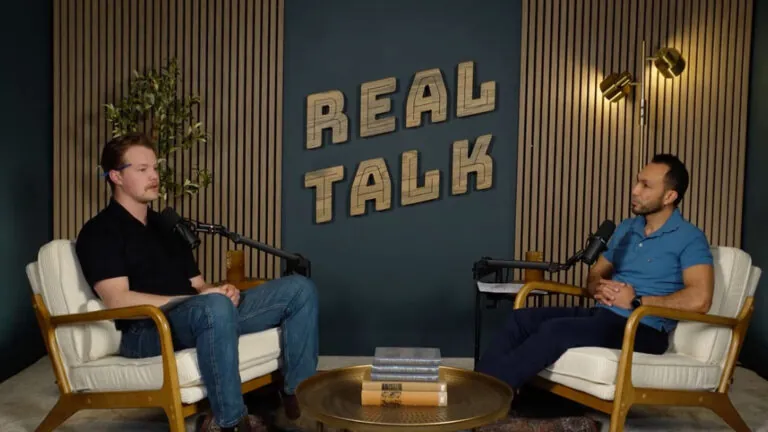


















This episode can also be found on your favorite podcast platform: Spotify, Apple, Podbean, and Amazon Music.
Below is a transcript of the episode. Please note that this transcript was automatically generated and may contain some errors.
*****
Lucas Holtvluwer
Many men say they will die for their wives and children, but the real question is, will you actually live for them? In a time where leadership in the home is often misunderstood, avoided, or pushed into extremes, we want to bring clarity back to what scripture calls men to, in the strength of Christ. Not passivity, not control, but faithful everyday leadership. We’ll explore what it means to lead as a prophet, priest, and king in the home, and what that looks like in real life, not just in theory. And joining us for this conversation is author and theologian Dr. Joel Beeke. For men who feel the weight of responsibility or the sting of failure, this episode is about clarity, conviction, and hope. Let’s get into it.
Intro
A big thanks to our official sponsor, Trivan, for making this conversation possible. Be sure to check them out at trivan.com. The world’s changing fast, but what questions should we really be asking? You’re listening to Real Talk, a podcast presented by Reformed Perspective, where we take God’s word and apply it to the nitty gritty of life. Buckle up for real questions, real answers, and real direction. This is Real Talk.
Lucas Holtvluwer
Well, Dr. Beeke, thank you for joining us here at Real Talk. It’s a real pleasure to have you.
Dr. Joel Beeke
Great to be with you, Lucas.
Lucas Holtvluwer
Excited to talk about leadership in the home and how to lead your family well. Of course, you’ve written a book, many books, I’m sure, on this topic broadly, and specifically this small one we have here today in the studio, which is a great little bite-sized taste of information and scriptural wisdom that, yeah, I enjoyed reading it myself, and I enjoyed reading it for preparation for this podcast, and I would encourage our listeners to go check it out, but we’ll talk through it today. There’s many kind of angles we could take with an episode like this. It’s a big topic, how to lead your family well, and one you’ve been speaking about and writing about and talking about for many years, but I think we’ll just start off at the top here.
The biggest issue that I, at least, see like in my own life and amongst my peers and younger men in the church, and perhaps older men who are listening to this can relate as well, is kind of a confusion about what does it mean to be a good man, and what does it mean to lead your family well, and to do this in a way that honors and glorifies God, in a way that balances out yet, not being too heavy-handed on the one hand, of course, but not being too laid back, and abdicating your duties on the other side, and there’s a real temptation, I would say, in both directions, in today’s culture, but broadly speaking, the biggest push from my standpoint seems to be that we’re not clear on what it means to do this well and do this in a way that is in line with the biblical standard that’s laid out in scripture. So, off the top, big question, what does it mean to do this well, to lead your family well?
Dr. Joel Beeke
Yeah, big question indeed. And sometimes, our, you know, there’s an old Dutch saying that’s on plaques sometimes that says your talk talks and your walk talks, but your walk talks more than your talk talks.
Lucas Holtvluwer
Can you say it in Dutch?
Dr. Joel Beeke
No, not quite. I only read theological Dutch, and not every day. But I think the point that sign makes is a very important point. One of the best things we can do is to shadow a father who’s really doing it right and well, and observing, and if that’s our own dad, praise be to us. I mean, praise be to God. But, we’re the beneficiaries, and so my own father did a lot of things right, and I learned a lot from him, but basically over the years I came to be convicted that to get our arms around this issue and to give men a framework to work within this issue that we need to use the prophet, priest, king paradigm because we’re really ultimately as fathers to be image bearers of Christ in our homes and in our leadership, and the way to do that is to image Christ, of course, and to image Christ, He leads us, and He meets all our needs, if we’re true believers, by His prophetical priestly and kingly office, which are all one in Him. So as fathers we are to be small p, small k imitators of Christ in our families as prophets, priests, and kings. So, what that means is you go to things for your prophetical office, like Deuteronomy 6:4-9, where we’re told to teach our children diligently all the truths of the word of God, the whole counsel of God. So we’re to be real teachers. Prophets are not just predictors of the future, that was actually a side issue, but they were the mouthpiece of God.
Lucas Holtvluwer
Instruction.
Dr. Joel Beeke
Yes, yeah, and so, but they were to do it passionately. They weren’t to get more excited about a score of a ball, putting this contemporary, score of a ball game, than they were about Jesus Christ, so in the home the father must be full of passion, diligently teaching his children, maybe that means sometimes weeping, but it with the sobriety of what he has to teach, and the awesomeness of what he has to teach, and the magnitude of what he has to teach. This is huge. We’re to teach, Moses says in Deuteronomy 6, when we lie down, when we rise up, when we go to bed, etc. All those expressions are just a Hebrew idiom to say we need to teach every day.
Lucas Holtvluwer
All the time.
Dr. Joel Beeke
Yes, yeah. And, of course, our very walk is a teaching. I always say this to dads: your very life is the second most important book your children will ever read.
Lucas Holtvluwer
Yeah, that’s true.
Dr. Joel Beeke
Next to the Bible. So that’s one, but then we’re also to be priests to our, our children by showing our, our sacrificial personality. We have to model not meritorious sacrifice like Christ did, but a gratuitous sacrifice that we lay down our lives for our wife and our children out of thankfulness, and as an image bearer of Christ laying down his life for us, but also, and this is huge, and I hope we talk about it later, we’re to be prayer leaders in our family, prayer warriors in our family, and our children are to see us pray often, to hear us pray often, and we’re to pray for them often also in their absence, as well as with them, this is a big part of our calling to be interceders, and for that I like to take people to Job 1:1-5, where his children are in the house having a good time together. We don’t read that they’re sinning, but he said it may be, it may be that in their heart they’re sinning against God. So I’m going to be offering sacrifices every day and praying. Now we don’t have to offer any bulls or turtle doves or anything today, because we go straight to the blood of Christ. So we go straight to God in prayer, and as Spurgeon said – so beautiful, I love the statement of Spurgeon – Job did it early in the morning, so Spurgeon said he hurried to the cross first thing every morning with his kids. Yeah, you know what a beautiful picture of a God-fearing father. And the text ends verse 5: “Thus did Job continually.” So it wasn’t a hit or miss, it was a consistent day by day storming the mercy seat for his kids, and of course the mother needs to do that too, but as a leader of the home, the man needs to really marinate all his leadership in this, this prayerful ethos and pathos and demeanor, and so kids should be able to say of their dads, “well, my dad’s not perfect, he’s got his faults and flaws like everyone else, but he prays for my soul, he cares about my soul.” Because, as J.C. Ryle said, “soul love is the soul of all love”, and that’s what my dad did so well. I don’t think he could care less about my body out, quite honestly. My mother took care of those needs, but boy, did he love my soul.
Lucas Holtvluwer
Yeah.
Dr. Joel Beeke
And it came across in his prayers, came across in his prophetical teaching. And then there’s the third thing, which is kingship, and that’s a very broad concept, but kingship, I think, means in a nutshell to defend your children from enemies, soul enemies, defend them from excessive use of social media, defend them from unwise romantic relationships, defend them from bullies, defend them from bad teaching – don’t let them go to a school where they get inculcated with anti-biblical material. And then protection and guidance. The wise, kingly father gives a lot of guidance to each child, and that’s one of our greatest weaknesses as fathers, I think, today, including my own. And, oh, thank God for family worship, which helps a lot in this area, but just also sitting down with your kids at times where there’s non-family worship times, and just talking with them, and getting inside their mind, and giving them guidance in a fatherly way, like the wise men in the book of Proverbs, you know.
Lucas Holtvluwer
Okay.
Dr. Joel Beeke
Or, like, you know, come unto me, my son, and I’ll give you understanding, yeah. And giving you understanding, I’ll give you wisdom,
Lucas Holtvluwer
Yeah. Hear my instruction.
Dr. Joel Beeke
Yeah. And you can feel the affection of that, you know, from the time the child is three years old on your lap, and you’re, you’re encircling your arms, maybe you got two kids that are young, you’re encircling your arms around them both, and they’re both looking at you, and you’re just talking to them calmly, teaching them already at three years old about who God is, and how to hate sin, and you’re giving them guidance how to share each other’s toys, and you know, and the fruits of the spirit in Galatians 5:22-23, you’re modeling that for them, but you’re, you’re also talking to them about it from a very young age. Like Luther said, “Give me a child until he’s seven, you can have him for the rest of his life. I’ve already formed him.
Lucas Holtvluwer
Yeah.
Dr. Joel Beeke
Or the guy who Napoleon Bonaparte said, I think it was Napoleon Bonaparte, said, “If you start training a child at five, you’re too late.
Lucas Holtvluwer
Yeah, it’s amazing what they can pick up.
Dr. Joel Beeke
Yes it is! And I was just two weeks ago, I was just with my whole family in the swimming pool in Florida vacation, and I’m talking. It, by the way, that’s a great time to talk to kids, because you’re, you’re just treading water in the pool, and, and, and you know, you just talk. So, I try to corner each one, or corner him is the wrong word, it wasn’t anything forceful or heavy, but I just start chatting with them, and I’m talking to my, this four year old grandchild, one of the 13 grandchildren, and I said, “So what do you, what do you think? Do you think you hate sin, and you love God?” And she said, “I think I have some love for God, but not as much love as I should have.” “Okay, you hate sin.” “Well, I do sometimes, but I love my toys too much, and I just.. I enjoy life so much,” she says, “I’m afraid I’m.. I’m not ready to meet God.” “Oh, do you.. do you think you will be ready to meet God when one day in the future?” And she said, “Yep, I think so. I think on the day of judgment I’ll be ready to meet God.” I said, “Oh, on the day of judgment, but when do you need to start seeking God?” And she snapped her head around, she looks at me, and she goes, “Right now, Grandpa!” And I said “Yes, amen, you got it.” I think that’s the model, prophet, priest, king,
Lucas Holtvluwer
Got it. Okay, that’s that’s very clear, so I appreciate you laying that out. It’s definitely daunting as well, in terms of like what you need to be as a man, to be able to live up to those callings, right? I mean, we know we’re not gonna live up to it perfectly, but it’s there’s a lot there to build on and work on, like if I think of the typical, like if we think of the cultural vestiges that are left around from a more Christian time, like the whole protect and provide side of things, like that’s still like in our, in my psyche as a young man, for sure, right, and like growing up in the church as well, but then that whole provision element also being not just you go to work and make sure your family’s got enough money to put food on the table, kind of thing, like you got to be providing for them the soul care side of things too.
Dr. Joel Beeke
That’s correct, and I should have said that under the under the King-ly office also provide is another important thing. I just kind of take that for granted. I think all fathers know that they need to provide for their family, but the thing we really have to fight against today, and I think I think we’re making inroads, but is that that’s just the beginning.
Lucas Holtvluwer
Totally, that’s the basis.
Dr. Joel Beeke
That’s just the beginning. At the same time, we don’t want to fall in the trap, Lucas, of the father has to do everything and burden him overly much, so that he comes home from work is very tired. Well, you’re not allowed to take a 10 minute map, because you got to be, you got to be watching the kids now. This is nonsense, you know, he’s going to be much better father if he takes a 10 minute nap, at least most men are, and then has the energy to go, but his wife, even though she’s been working all day as well, but she should not think, well, now he’s going to be working hard from 6pm to 11pm being with the kids for five straight hours, and doing dishes and all kinds of things. I mean, he can do dishes, that’s fine. And I always, our family, I wash the dishes until the kids got married. My wife said, ‘Now you don’t need to anymore.” But you know, you find your own way in some of these things.
Lucas Holtvluwer
Yes, you do.
Dr. Joel Beeke
We’re in a day now where some fathers are just henpecked by their wives, and man, they’re working all day hard, and they come home, they work all day till 11 o’clock, and their wife says, “Well I worked all day so you need to work all day, but men needed little time as a break on their own, as well as do wives. So, there needs to be kind of a sharing of the workload, but let’s not go to the other extreme and say men have got to just be working all the time with their kids.
Lucas Holtvluwer
No, yeah, and that’s more of a result of a lot of people, like with women working much more nowadays, right. There’s that natural pressure there, of like, well, they’re literally at work all day. If your kids are in daycare or something like that, right and that’s, you can, you can see how people go down that road, but if they don’t have clarity about what the vision is of Prophet Priest and King, what it means to do that. Well, that’s, I think, that’s where people can get confused, right. So, I appreciate you kind of laying that out, my one question, hearing you say that, was like, how did this build for you over time? If you think back to your time as a younger father, throughout different, you know, teen years and whatnot, like, I have a two year old and a three year old daughter, so I’m at the beginning stages of this, but now you’re in the grandparent stage, like you say, with you said 13 grandkids there, that’s a wonderful blessing. So, how did that kind of develop over time for yourself, making some of these habits, maybe to get practical? Like being a prayer warrior, like that’s not something that comes naturally for me, at least as a young guy.
Dr. Joel Beeke
So, I would evaluate myself with different grades on different as I look back on different aspects of fatherhood. The overwhelming daunting problem I had is that the denomination I was in when I became a minister had five ministers for 10,000 members, so when I was 25 years old, I was ordained in Sioux Center, Iowa, and I had 2000 members in my charge. Well, I had 15 weddings a year, about 20 funerals a year, all these sacraments, I had to see every person in the hospital. I had to prepare two new sermons every week for Sunday. It was overwhelming, but right from the get-go until to now, until now, at 73, I’ve got the mode of working long hours, but my wife is – this is something I want to say too, very important – every woman is different, and so some wives can handle a man who works longer hours much better than others, and my wife happens to be one of those. So, I say to my theological students, don’t follow my example, don’t work as many hours as I worked, but know your wife, know the needs of your kids, and do the very best you can, and so some of those years when our kids were very small, I was also the only minister in a new denomination, and in nine churches, so that was very, very hard, very hard, but I was caught between a rock and a hard place, but then when we got more ministers as a seminary picked up, Puritan Reformed Seminary, and we could fill the pulpits, I was able to spend a bit more time with my kids, but when I look back in my life, I wish I’d spent more time with them, but what did happen was I tried to, after supper every night, we, without fail, we would have family worship. If I didn’t do family worship, my kids would say, “What’s wrong with you, Dad? Are you sick?” And then many nights, not every night, some nights we had to go away, right then, but many nights, I would, I would play with them for about an hour or something, do things with them, and then I would go back to the study. So, I’m not a very good example in some ways with the time factor, but you know, I did do probably more with my son than my daughters, and I did go golfing with my son, and hunting, and things like fishing a little bit, but I could have done more there too. So, in some ways, I think you always feel guilty that you’d never spend enough time with your kids. With my wife, it was different, because we’re both really late night people, so after all the kids are in bed, we’d jump in the hot tub and chat for an hour. We go for still till today we go for a long walk around 11:30 at night.
Lucas Holtvluwer
Really?
Dr. Joel Beeke
Yeah!
Lucas Holtvluwer
I’m sleeping then. Yeah, that’s crazy.
Dr. Joel Beeke
Then we go to bed about usually it’s between 12:30 and 1:00. So I, you know, have that time with her, but and I do think I do think that where I did do better at was being aware of my kids’ needs, asking my wife every day, what’s up, you know anything about? Okay, Esther has a test tomorrow, Calvin is getting sick, going right away to Calvin, praying with him, talking with him, praying for Esther and Calvin in the family prayer after supper, talking with the kids. I did better, I did better at that, but I think my greatest downfall was not enough time.
Lucas Holtvluwer
Yeah, that is tricky. Okay, so if we think about that, I’m just trying to think about, yeah, practical ways that, like, guys can improve and kind of get up to that standard of leadership, right?
Dr. Joel Beeke
Yes, and one thing that we did do, we tried to develop different things, what, like, the Puritans called holy habits, where we would have certain customs that we would follow, tried, tried to do quite, quite a few of those, one of them, of course, being in family worship. For example, on Sunday morning I would teach the children that today regularly is a very, very special day. God is coming to speak to us today. I would wake them up every Sunday morning. I don’t know if they appreciated it at the time, but I hope they do now. I would knock on the door and say, “Time to get up. We get to worship God today, and God is going to speak to us today. Let’s get up out of bed. This is an exciting day.” And you know, my prayer would be longer at breakfast, and with excitement that we’re going up to the house of God, and that type of thing, and so you develop, yeah, with the Puritans called holy habits. Maybe we’ll talk more about some of them later.
Lucas Holtvluwer
Yep, yep, yep. No, that’s important. It’s important to have some tangible things that we can all work on that way. I guess you kind of mentioned this earlier about this, the reaction to cultural egalitarianism, but I guess, and we kind of sketched it out with a prophet, priest, and king thing, in terms of what that looks like to do that well, and to not be on one side of the ditch or the other side too far. Do you want to say anything more to that, or you want to keep moving on? We can keep going.
Dr. Joel Beeke
Well yeah, you can go to either extreme can’t you? You can go to a point where you’re the head of the household, and you exercise it by authoritarianism. You do what I say, or else, and lay down the law, and you come across hard and crass and crude and rude, and you alienate your kids. You may, you may beat them, you may beat brow them into obedience, but as soon as they grow up and they’re out of your sight, they’re going to sow their wild oats, because they’re not close to you. And then there’s the other extreme where you know you’re wimpy and the kids set the agenda and you follow them, you’re constantly giving in to them, and they rule the household. Same result, when they get older, they’re going to sow their wild oats, because they haven’t had good leadership. But if you maintain that right balance, and I think the right balance, and this is where I think all my kids knew all the all the upbringing. Dad and Mom both loved them like crazy, and, and that’s why we care. That’s why we teach you. That’s why we pray for you. That’s why we defend you. That was big in our whole household. Lots of verbal affirmations. I love you. Lots of hugs of mom and the kids, yeah. And you know that gives children a sense of security, so it’s love, love, love that’s got to pervade every single one of those offices. And that’s what Jesus said in Ephesians 5, didn’t he? You’ve got to love your wife, like I love my people. Well, he died for them. He shed blood for them. So it’s a sacrificial love, but it’s also a sweet love. It’s a genuine love, and love covers a multitude of evils, and so that’s key, if you don’t show your kids that you love them, you don’t tell them, and your wife as well regularly, you will fail as a father.
Lucas Holtvluwer
That kind of, it’s interesting you say that about the regular affirmations, and then the verbal, like, “Hey, I love you, I care about you, I’m here for you, you need to talk” all that kind of stuff, which is all good, and I agree with that, but I think there’s a kind of a gentle parenting movement as well, of course, nowadays too, and that tends to go kind of in that direction as well. So, maybe, do you want to just speak on a little bit, like when you say love, and you kind of just do this a little bit, but I just want to touch on it more. It’s not the easy love, right? It’s like it’s usually the thing that takes more work to do.
Dr. Joel Beeke
Yeah, but the gentle parenting movement, as far as I see it, is more like you’re affirming your kids for everything, you’re telling them when they did something very poorly that they did it well. You know, that’s not being honest with them.
Lucas Holtvluwer
That’s lying to them.
Dr. Joel Beeke
Yeah, so gentle parenting is, is, is really a lack of leadership. It’s putting the kids in the driver’s seat, I think. Whereas genuine love is, is ruling all three of these offices, means that the three offices still function – you’re still teaching, you’re still praying, you’re still sacrificing, you’re still defending, protecting, guiding – so you’re still, you’re still in the driver’s seat, you’re still the head of the home, you’re still leading the family, but you’re doing it in love. So, even when you discipline your kids, you know, I, you know, Ted Tripps’ book, A Shepherd in a Child’s Heart. I read that when our oldest was two years old, and I went to Mary, and said, “Oh, wow, I’m not disappointing my kids, right? And neither are you. We need to follow this model.” So I did. So from then on, and I would take a child, say it’s my son, I would take him into a separate room, I would administer the discipline, not with it to save him from shame, not to not to do in front of the other kids. First of all, I talked to him about his sin and show him why it’s wrong. He has to repent, and after he repented, I would say, “Well, I still need.. I need.. if it was a fairly serious sentence, I need to spank you twice, and lay him across my lap, and if I need, of course, spank him only on the rear end, which I think is the only place on the human anatomy that God is designed to sustain spankings, and if it wasn’t quite as serious, I’d say I’m going to just spank you once, and I would do it, and I would do it firmly for him, because he didn’t feel much like compared to the girls, and then I would scoop him up in my arms, and then I would pray, pray with him, and then I would tell him I love him, and I would tell him, this sin is now buried, you’ve repented, and yeah, and one time, one time, he was like maybe four, and we’ve been doing this for a couple years, and we walked out of the room, and we always walked out the room holding hands. I figured that was a really good affirmation for him, also, that the matter is buried, never brought up again, never to be brought up again. Just like God, when He forgives us, He doesn’t resurface it. Yep, Spurgeon said, “when you bury a dead dog, you don’t leave its tail sticking up out of the ground and revisit it.” Done.
Lucas Holtvluwer
Yeah.
Dr. Joel Beeke
Okay. So I told kids that, you know, you’re forgiven completely. We’re never talking about this again, but don’t do the sin again. Hold hands as we walk out, and we’re walking out, and my son looks up at me and goes, “Dad, how come you never sin?” Whoa, okay. Back into the, we called it the sun room, because the sun shined in a lot of the windows. Back into the sun room, I sat him down. I said, “Son, I’m just as big a sinner as you. I need Jesus Christ just as much as you do to be my Savior and my Lord. So, don’t ever think your dad doesn’t sin, but we’re in this together. We want to walk in God’s ways. I want to, you want to, we want to live by the Bible, okay, son. Pray for me that I don’t sin. I’ll pray for you that you don’t sin.”
Lucas Holtvluwer
Well, that’s awesome. That’s so cool. That’s okay. Just to go back to this, the I’m interested in the order of operations. Or do you give your kids like a couple minutes to slow down and like kind of cool off before you come and talk to them? Like, would you put them in the sunroom, and then, because it usually they’re like crying or something, because they did, it’s kind of a mess.
Dr. Joel Beeke
I think Ted Tripps’ book is a good paradigm, but one of the tricky things about parenting is, I have this theory, it’s, it’s not written in the Bible inspired, but I still think it’s true. It’s this: I think God made every one of our children so astonishingly different from each other that He wants us to be dependent on His grace for wisdom to rear each one, and so often what works with one doesn’t work with another. I had a daughter that if I spanked her this hard, she would weep and wail uncontrollably, and I mean, and not stop. Very, very, very tender. But if you left that daughter in a bedroom all by herself for five minutes, she would feel the pain of what she had done, and she wouldn’t feel the rebellion from that she felt when she was even lightly spanked. So I only spanked her once or twice in her life, when she did something wrong with a sibling that I had to give them somewhat equal treatment here, and but for the rest, oh, it was much more effective to put her in a separate room. So I don’t think whether there were.. there were two families. I’ll tell you this quick story: two families had 10 kids each, and I’m.. I don’t want to give any details in case people guess who they are, but the one father whose family was a total mess came to the other father, whose family was amazing, and said, “What do you do? I treat all my kids alike.” And the other father said, “That’s probably your problem.”
Lucas Holtvluwer
Yeah.
Dr. Joel Beeke
You know, I mean, there’s a certain equality you need to maintain, like you can’t give one kid a $3 allowance per week and give the other one a $1 you know, in the same age range, you’ve got certain areas of equality, and you can’t play favoritism, but boy, oh boy, you better not raise all your kids alike, because then you’re not accounting for their, the originality of their personalities.
Lucas Holtvluwer
Yep, that makes sense. In order to lead your family well, what is required of the man in terms of personal holiness?
Dr. Joel Beeke
Yeah, this is a huge question. Thank you for it. First of all, you’ve got to be saved. You’ve got to have a big heart for the Lord. You’ve got to want to rear your children according to the Bible, and you want to ransack the Bible, for tips for fatherhood. In fact, I would put it this way, that the Bible is still the best parental textbook on the market. Look at all the wisdom, explicit, implicit, given in the book of Proverbs alone. So, gotta have a heart right with God. You have to be born again, want to love Christ. Second, you got to guide your children by the Bible. Thirdly, you’ve got to understand that there’s a sense in which these children are your children, and there’s a sense in which they’re God’s children by the external covenant. They’re included in that covenant, and what God is really doing is He’s opening the womb of your wife and giving you children as a father to loan those children to you, and you’re to bring them up, Ephesians 6:4, in the nurture and admonition of the Lord, and as it were, return them to the Lord in your prayers and in your upbringing, and dedicate them back to the Lord, in a sense like Hannah did, although not have them leave your home, so the net result of that is that you on the day of judgment want to be able to say to God, “Lord, I had many shortcomings and I need, I need them forgiven, and please forgive me for all my shortcomings, but by the grace of God, I did try to govern my family and lead my children according to your will”, so that when I’m in situations, and I would tell my own kids this too, I say “I must discipline you because God is commanding me to discipline you as head of the home, and I need to obey God. This is no fun for me to discipline you.” But I’m to raise children for the Lord. That means we need to follow the Bible, and we need to follow biblical principles. So I think we’ve got to get away from this business of I’m going to do what I feel like doing because I’m the head of the home. No, no, no, you got to do what God wants you to do because you’re the head of the home so you need to, you need to sit still and say what does God want me to do, and if you’re angry because your children have been disobedient and you’re ready to discipline them, I learned the hard way that it’s not the right time to discipline them because you’re angry.
Lucas Holtvluwer
Yes.
Dr. Joel Beeke
So what I say to them at that point is, I say, “Well, you’ve, you’ve committed a sin.” I try to keep my voice calm, sometimes a bit earnest, but never yelling, never yelling, and never angry, but I would say, “You’ve committed a sin, and your daddy is going to think about how to discipline you, and I’ll come back to you soon.” But then what I don’t tell them is I’m feeling angry inside, and I’m not ready to discipline you right now, and I walk away. Sometimes you only have to count to 10, and you regain yourself, so to speak. Other times you say, “I need a few more minutes. I really got to settle on a position here, exactly what I’m going to do.” Sometimes I even need to drop down to my knees and just say, “Lord, give me light and wisdom to know what to do,” and then when I feel more ready and more in self control, I go back and do the discipline.
Lucas Holtvluwer
Okay
Dr. Joel Beeke
When you discipline in anger, it will always come back to bite you. Just like when you get angry at anybody. I’ve had two times in 48 years of ministry where people were so angry with me, it was unbelievable, but I made the mistake of getting angry back, and I’ve lived to regret those times for decades, and but it’s the same with children, you know, every time you lose control and get angry, you will deeply regret it afterward. Yeah, and your conscience won’t be satisfied if you say, “Oh, well, they deserved it.”
Lucas Holtvluwer
Yeah, you should have seen what they said. Yeah, no, no, doesn’t matter. No, no.
Dr. Joel Beeke
No, no. So that helped me a lot, and I thank God I did learn that when the kids were very early. So, I. I don’t think my kids ever heard me yell at them, ever.
Lucas Holtvluwer
No, no. So, that makes sense on the anger front. What about when, if we talk about personal holiness and you have these – you mentioned these habits of holiness earlier, and you talked about one of them. Did those habits of holiness help sustain you through some of those seasons of life? And maybe you don’t have this, because if you’re a pastor, you’re in the Word every day, it’s not as, as like this, but I find you go through seasons where it’s more dry. Yes, you’re still a Christian, but your faith is not as alive, but you still are called to leave, lead your family, right? Like, how did you kind of get through some of those seasons?
Dr. Joel Beeke
Oh, okay, yeah, that’s an outstanding question. Yeah, well, of course, every believer has times where, if he’s not careful, if he doesn’t develop holy habits. In fact, the lack of developing holy habits is what usually generates lukewarmness and eventually backsliding, and it usually begins in the secret closet of prayer, where your prayers become colder, more distant, more formal, more brief, more without a heart, and that just slips away bit by bit, and Satan doesn’t usually grab us and take us 10 feet away in one shot, but he inch by inch by inch he just works away at our vibrant godliness until it seems to dissipate and float away. So, yeah, so what are those, some of those holy habits? Well, one thing is praying with children on their knees, in addition to family worship, and I hope we talk about family worship later, because that’s the biggest holy habit.
Lucas Holtvluwer
We’ll get into.
Dr. Joel Beeke
But when kids go to bed, is a wonderful time to pray with them, and just to lay by them, and talk, have real talk. Dinner conversation, my wife is really big on this one, have real talk at dinner time. She actually has a talk called conversations at dinner time and if I came home from work, and I’d be sitting there, and I wasn’t focusing on real talk. My wife is very gentle. I would feel this little gentle tap, tap of her foot on my leg underneath the table, oh yeah, and I know what you’re saying. She’s saying, “Join us, you’re still thinking about your sermon”, you know, and that type of thing, so that. That’s a really good thing, so that happy time around the dinner table is a really good time to talk about things about the Lord, just real things at school, and then a big thing for me, and I know a lot of men don’t do this, but a big thing for me, which we establish from the get go in our marriage is that at night when we go to bed we get down on our knees, hold hands, and one night she prays and one night I pray, and it’s not just a short little good night prayer, we pour out our heart for what happened that day, and pray that God will bless our feeble efforts of family worship that day, and I love to hear my wife pray. I love the feminine side of prayer, hearing that and the tenderness of it all, and I think she appreciates my leadership in prayer, and so that’s a very sweet time, and that’s like recharges your batteries, so that the next morning you’re ready to go again. We don’t do, we don’t do it as well in the first right when we get up, because, like I said, we’re late night people. Hi, I read about all these Puritans getting up at 4 o’clock in the morning and going to work and having two hours of prayer. I just, that’s just not me, but I get a second wind in the evening, so I’m much better in my devotions in the evening, so, so that, that’s a holy habit for us that I think is very important. But we also developed other holy habits and faith in our family that are just, you know, just automatic, like before you go on a trip, a vacation, all go down underneath in the living room, pray for safety and guidance, and so on. And then we van is all packed, and then we get in the van and drive away. As soon as we come home, we all go back into the living room want to acknowledge the Lord, we’re safe, all get down on our knees again and pray, and then we unpack the car and stuff. So just that type of, I want to build in the consciousness of our children and my own, that every moment God is protecting us like an eyelash is protecting an eye 1000 times a day. And that’s what Psalm 121 is all about. He shall preserve thee, and thy going out, thy coming in. He shall preserve thy soul. He shall preserve thee from all evil. The Hebrew word there, preserve, has a root meaning of the eyelet, protecting the eye,
Lucas Holtvluwer
Really?
Dr. Joel Beeke
Yeah, over and over and over and over again. And that’s what God does for us so you want to acknowledge that.
Lucas Holtvluwer
Beautiful, yeah, it’s small, small but powerful habits like that.
Dr. Joel Beeke
Yeah.
Lucas Holtvluwer
And you would literally all get like physically on your knees together as a family. Wow, okay, that’s quite something. That’s beautiful. All right, okay. Why don’t we delve a little deeper into Prophet, Priest, and King, and then I think we’re going to come through some of this family worship stuff from there too, so on the prophet end of things, is biblical leadership primarily about the teaching rather than the authority? Like, where does the authority play into, like, does, like, the husband have to teach, or can, like, the wife teach, and, like, how did that kind of work out in your home, and where have you seen that modeled well?
Dr. Joel Beeke
I think the biblical model is not that the man has to do all the teaching and all the praying, but the biblical model is that the man is the leader. So, in family worship, for example, I would lead the family worship, I would do the opening prayer. My habit was to then divide the reading of the chapter into so four parts, first the prayer, and then the reading of scripture. Let’s say we’re going to read 20 verses. We used to read about 20 verses in the Old Testament. It was the New Testament, we used to read about 15, maybe 10, because it’s more packed full of essence of doctrine, and that would just divide it, but as soon as they could all read, I’d say, you know, every one of us just reads four verses, and they know we’re going to talk about it, they know I’m going to ask them questions, so having them participate makes them makes them feel very involved, and then I lead the conversation. Of course now we have the Family Worship Bible Guide, which we worked on for five years, so we use that. Now we’re empty nesters. My wife and I still use that. And we still do it just like we did, as if the kids are there but we just do it with the two of. And then when it comes to the question at the end of that little section of one of the major takeaways of the chapter in Family Worship Bible Guide, maybe my wife would jump in if nobody answers right away, or one of the kids would jump in, but she’s there to assist me, and she has a whole talk, actually, for women on how to assist your husband and family worship. And so it becomes a co-labor thing, but she allows the leadership be to me, so, and that’s the wisdom of God in the scriptures that He’s given not in terms of hierarchy, but in terms of function, two different roles for man and woman to play in marriage. You can’t have two heads in the family, you need a leader, but, but particularly when the woman is theologically astute, and can maybe she’s more astute than the husband.
Lucas Holtvluwer
I was gonna ask you that.
Dr. Joel Beeke
But she must still give him the leadership reins, and she must be wise in not dominating him, but she can jump in and offer answers or offer important questions to ask the children, and as long as he doesn’t feel threatened, that can only strengthen his ability to do family worship. So, and then what happened with us was we wouldn’t do long family worships, maybe the maybe the instruction part, instructing on that chapter would last from 5 to 12 minutes. There were the times when you know we got really talking on something, and we kept going, but as a rule, and then we would have a closing prayer, and I would do the same thing. I would, I would take turns with my wife and each of my three kids to do what they called the daddy’s closing prayer, and it happened by accident, actually, or maybe I should say by providence, there’s no such thing as accident. So, my three year old sitting in my, my lap, my son, my daughter was one year old, sitting on the other knee, and I’m going to ask my wife to close in prayer, which was normal at that time. My son looks up at me and goes, “Daddy, can I do the daddy’s prayer?” I’m thinking three years old. Yes. So I said, “Daddy will whisper some words in your ear, and then you say them, and I’ll whisper some more, and you say them.” So we did that for a whole year, when it was his turn to pray, and he felt very important when he was doing the daddy’s prayer. When it was four, his fourth birthday, I said, “Okay, now you start to pray. And remember what Daddy taught you: A C T S, Acts formula, is the way we pray. You adore God, you confess your sins, you thank Him, and you supplicate, you spread out your needs.” Now he mixed up the order, that’s okay, but pretty much got those four things, at least a little bit, and of course it’s not always theologically as sound as you want, and as sound as you want. He’s four, so you let him go. But I said then when you run stuck, you just kind of poke your elbow in my stomach, just give me a little poke and I’ll help you again. So we did that from four to seven, three years, and then at seven I said, “Son, it’s all yours now, you pray the whole prayer”, and what was beautiful, Lucas was, and I didn’t even anticipate that, but by that preparation, I mean the Holy Spirit alone can teach them to truly pray, but by preparing them this way, even outwardly, when their peers would come over, when guests would come over, when unbelievers would come over. By the way, that’s a great time to evangelize people in your family. Is have them come over for something, and then just bring them into the living room, where you have all your books set up, and have them participate in family worship. So, anyway, then what would happen is he would pray in front of the whole group of people at seven years old, no problem, he’s been used to it.
Lucas Holtvluwer
Yep.
Dr. Joel Beeke
So then I did my, I did our daughters the same way, because I realized this was working, so I did the daughters the same way, and one daughter responded a little better to it than the other, when one was a little more shy than the other, so it took a tad bit longer, but I think that’s very important to involve them, and then we would sing, which is the fourth part of family worship. Psalm 118:15, “I hear the songs of rejoicing in the tents of the righteous”, and our one daughter got to play the organ, and our son got to play the cello and they would get out their instruments, and we would have just a wonderful time singing. I loved it. We get, we get, we’d sit right around our daughter, that was more shy, she really poured out her heart in playing the, in the organ, and, and, oh, could she play that thing, or no, it was a piano, piano, she could play it so well, and put all her expression into it, and we would just sit around her and sing it is well, with my soul, there’s things like that, it was, I missed her so much when she got married, just for that alone. So, family worship is meant to be an enjoyable time. It’s a serious time. You don’t let.. you don’t let the phone.. you don’t answer the phone, you just let it ring. You’re in the audience of God. This is the most sacred time of your day. This is your primary responsibility, Father. To bring your children into the Word of God every day.
Lucas Holtvluwer
So you would go into a separate room to do that, not at the dinner table.
Dr. Joel Beeke
Absolutely.
Lucas Holtvluwer
Okay. And you feel like that was an important distinction.
Dr. Joel Beeke
Yes, because at the dinner table, where are your books? Where’s your salt book? Where’s your Bible? You know, so you have it all set up on a regular basis. It’s a holy habit, everyone goes to the same seat every time, everyone’s got their particular books, it’s all ready to go, and then you come back in and you clean off the table and do the dishes.
Lucas Holtvluwer
Yep, yep, love it. Okay, so I just want to zero in on that, that point of potential point of tension with a wife who’s more educated or potentially more gifted in explaining theological matters that would typically be associated with the head of the household, the male, right, the husband, so that balance there that you mentioned your wife as a talk about as well. I think you used an interesting phrase of like, if the husband isn’t threatened by it, right? So, is it, is it just predicated on that, or like, where does that responsibility lie with the husband? Because there should be probably some real conversation there. If you know your wife is gifted in that area, you are not as eloquent, perhaps, or as well studied even. How do.. how have you advised people over the years to kind of handle that?
Dr. Joel Beeke
As a pastor, I’ve been around the block a few times, actually, just in a couple months from now, I started preaching 50 years ago. I can’t believe it.
Lucas Holtvluwer
Wow.
Dr. Joel Beeke
But what I’ve learned from working with people over the years is that one size doesn’t fit all in many of these things and people have different personalities, and a wise woman will be able to understand her husband well and know her boundaries, so that she doesn’t take over the family worship completely, or also take over, or take over to such a degree that he would feel uncomfortable, like “I’m out of it”, whereas another man will say, hey, honey, I’m glad for any help you give me, and she can be freer. Doesn’t mean that one is good or one is bad, it just means you need to develop a chemistry between the two of you.
Lucas Holtvluwer
Would you talk about that before, like you and your wife, about how you want to kind of proceed with this, or that just kind of developed over the years, or what did that look like for you guys?
Dr. Joel Beeke
I don’t even remember if we talked about it before, but we started. We started this extended family worship, instead of the typical traditional Dutch way of just praying before the meal and reading the Bible, and shutting the Bible, and then praying, and no singing, and no talking about the chapter. We started the more extensive form when my oldest was three years old, and I was asked to give a talk on family worship in South Africa.
Lucas Holtvluwer
Oh, wow.
Dr. Joel Beeke
And it changed my life. I read the Scottish Divines, I read the English Puritans, I read the Dutch, and I realized, wow, I thought all my life my dad was doing family worship, but.. and he did in many ways, on Sunday nights, he certainly did. It was a long family worship, about an hour, but on weekdays he did a partial family worship, but that was what the Dutch thought was family worship, at least in the 20th century. But I realized, no, no, no. After reading all these books on family worship that the Puritans wrote, this is only a little part of it. You’ve got to talk to your kids every day on the chapter, and so that’s when we, we change. But my wife is just a natural, so she, she would just jump in the conversation. I’m not sure we ever talked about it, and I’ve never felt threatened by her at all by contributing. I just felt grateful, but of course I’m a minister, so maybe that’s a difference. But I think 90% of Christian marriages, this is a non-issue, but I’m just saying that when a woman is very gifted theologically, she, she needs to understand her husband and continually defer to him on certain issues, even as she imparts her wisdom to the children. And he should learn to appreciate that very much.
Lucas Holtvluwer
Yes, she can give that much more help.
Dr. Joel Beeke
Absolutely
Lucas Holtvluwer
Yeah, that makes sense. Okay. Interesting. What just again, when we’re on the topic, what is one way that your wife, like, assists you or really helps you that you appreciate?
Dr. Joel Beeke
Yeah, so let’s say I’m trying to ask my middle child at 10 years old a certain question, and she’s not quite getting it, and I framed it maybe a little bit above her level, or you know how you give kids a little bit of a clue to help them. My wife would jump in and say, “Well, what about this”, and say it in a little different way than I would say. Sometimes it would connect with her, and she’d come up with the answer. I’d be crazy to be.. I’d be crazy to be offended by that. She’s only helping the conversation along.
Lucas Holtvluwer
Yep, yep. Okay. No, that’s interesting. Just figured I’d ask that, because it’s not just guys who are listening to this too, but it’s easy to get stuck on that as well. Okay. Yes, we talked about some healthy rhythms of family life and family worship there, so that obviously that involves active teaching of scripture in the time of family worship and that’s different, that’s an extension of the typical Dutch tradition, like you say. Yeah, that many of us are familiar with.
Dr. Joel Beeke
I need to say this. The Family Worship Bible Guy is written at a level of like 10 years old and up and so since then, since these four guys, mainly four guys, spent five years writing this, forefathers, and it’s been our best-selling book, and it’s transformed 10’s of 1000’s of families in the family worship – I encourage everyone to use it, and I’ve never heard one complaint. Well, I did hear one complaint on it, that the questions were too long, but no one else has said that, but it, that that book has been so blessed of God, but I had a lot of fathers come to me and say, can you do something similar for very young children. So now we’re doing a nine volume family worship series from Genesis to Revelation. Four of them are in print, two more at the printer. We’ve got three to go, and we’re working on the seventh volume right now.
Lucas Holtvluwer
Awesome.
Dr. Joel Beeke
Each volume has 90 family worships. So, there’s first volume is called Beginning, which is 90 family worships from Genesis, and we do four things in each family worship on two pages, takes six to seven minutes to do, review two questions of reviewing yesterday’s family worship, and you, and the answers are right there for the dad, and you just ask your kids, then read – here’s the new portion of scripture to read, and two questions on the reading, and then reflect, and the reflection is something that relates to young children, ages four 3 or 4 to 11 or 12, and that they can identify with, and then there’s three questions on that reflection, and the whole reflection relates to the text read. And then the last thing is request, so there’s a prayer need that corresponds with what the Bible reading is, and the reflection, so you have review, read, reflect, request, and it’s just each one is on two pages, takes 6 or 7 minutes, and this also is such a tremendous help the parents with smaller children. I find it very, very helpful.
Lucas Holtvluwer
I’m getting excited about you talking about, yeah.
Dr. Joel Beeke
There’s all kinds of people right now. I mean, I’m talking 1000’s of people who’ve gone through these, and, and they, and they say they, when I go to conferences, they come to me. When’s the next one coming out? We went back and we started with Genesis, because we’re caught up with you and upset. We’re trying,
Lucas Holtvluwer
Yeah, yeah, yeah. Oh, that’s awesome. Okay, let’s get into priest, then, for a minute, just because I know we got to be respectful of your time here as well. So, you say in the book here, many men would willingly die for their wives. If you truly would die for her, you would also live for her. Can you explain what it means to love your wife like Christ loved the church, and how, in your doing that, how are you living for her in that so powerfully?
Dr. Joel Beeke
Yeah, well, I have this formula that I get from Ephesians 5, and let me, let me just walk this through, through in like three minutes. I think I think this is a very, very important question. It comes at the whole heart of being, being a husband and so I have four words that describe the man’s role as a husband in Ephesians 5. So, first of all, husband’s love your wives, verse 25 even as Christ also loved the church and gave himself for it. Not 50% 100% So, first of all, you love your wife absolutely as Christ loved the church. I’m to love her best welfare, for 100%. I’m to protect her, I’m to teach her, I’m to pray for her, I’m to, I’m to be a prophet, priest, king for her, which I explain also in that little book.
Number two, that he might sanctify and cleanse her with the washing of water by the word, that he might present her to himself, to that is to Christ, a glorious church. Wow, I’m to love her purposefully. This is my purpose. This is the reason I should have married her in the first place, that I want to wash her with the water of the word and present her to Christ on the judgment day. And this, this means a lot to me personally. I want my wife on the judgment day to be able to say, “Lord Jesus, because I was married to this man, he washed me with the water of the word, and made me much holier than I ever would have been, by the Spirit’s grace, if I hadn’t been married to him.” So this is the purpose: you love your wife so that you might sanctify and cleanse her with the washing of water by the word, and then present her to Christ as a glorious church.
Lucas Holtvluwer
So can I interrupt there? That’s, but ultimately still for the glory of God, not just for your satisfaction.
Dr. Joel Beeke
Oh, no, no, no, no, totally, totally for the glory of God. So you love her absolutely, you love her purposefully, and then, thirdly, you love her realistically. It goes on to say, not having spot or wrinkle. So, every wife, every person is a sinner. So, every wedding I do, by the way, I slip this in somewhere in the way, I look at the couple and I say, “you know who you’re marrying today, you’re marrying a sinner, you know that, and you’re marrying a sinner.” And it’s interesting, because conservative religious Dutch weddings, everybody takes that in stride, everybody realizes that, yeah. And note, there’s no comment at all, but in some ways people burst out laughing, they don’t even think of that, that you’re marrying a sinner, but I purposely want to say it there too because if you expect perfection from someone, you put a burden too heavy on their shoulders. Yes, and the marriage will collapse inward, because the spouse will feel like I can never measure up, so you love your wife. This is the third word, realistically. She’s the center, I’m the center. Yep, so what that means is your wife has some little awkward habits or things you don’t like that aren’t all that major. Hey, man, just look the other way. Doesn’t mean anything. If there’s sin involved, you need to learn that the method of constructive criticism, sandwiching your, your, your loving criticism between two slices of bread, two areas of compliments, just like Paul did in First Corinthians, where he complimented the Corinthians, then gave them seven levels of meat, dealing with seven criticisms, and the answer to all seven, by the way, was Christ. And then he gave them a top slice of bread by saying, you know, I want to come and meet you, give each other a holy kiss, and so on. And so that’s the way to criticize, but that’s only if there’s sin involved. But you need to understand every single spouse is going to have weaknesses, and don’t even bother to correct the small things. Fundamentally, what you see is what you get. Fundamentally, you don’t change people’s personalities. And you can nitpick and you can nag this can go both ways, be realistic.
Okay, and then fourthly, you’ve got to love your wife also sacrificially, as you love your own body. So, if you get something in your eye, what do you do? You don’t say, “Hey, eye, I’ll deal with the pain tomorrow.” No, it’s your body, you want it fixed now. Your wife is hurting, you drop everything, you give her attention now, you listen to her now. So that’s how a man needs to love his wife. Those four words.
Lucas Holtvluwer
So this whole model of the man, obviously being Christ and caring for his wife like Christ cares for the church. I’ve seen a lighter critique, perhaps, of the book where it said the writer of the piece was saying perhaps this is a bit too high of a view of what a man can do, but what would your response to that would be like, is it, are you’re not. Not saying that this is the only way that Christ could be shown to, to a wife, or to the family, right? But do you think it’s of such importance that it’s one of the primary ways?
Dr. Joel Beeke
Oh yeah, oh yeah, it is the primary way.
Lucas Holtvluwer
It’s the, okay.
Dr. Joel Beeke
But of course, but we also have our spots and wrinkles as men, so we’re never gonna, we’re never gonna reach in this side of the grave, we’re never going to reach the total ideal but the Bible always sets the duties before us in the ideal form. So, as Paul says, I count my not myself to have attained, but I strive after. So, please don’t misunderstand me, in every relationship in life we always come short, but this is the goal, this is the model, this is what we, what we aim for.
Lucas Holtvluwer
And you would say it’s the primary, because it’s so active every single day.
Dr. Joel Beeke
Oh, yes, and because it’s, it’s, it’s Ephesians 5 is the theological chapter on marriage, and it plumbs the depths of marriage like no other place in the whole Bible and so this is the primary goal. So I look at it this way: post fall, what was the greatest weakness of man naturally? The greatest weakness of a husband, naturally, is not to really love his wife, to be selfish. So that becomes the primary, just because it is the greatest weakness, and because it models what marriage is to be. So, husbands love your wife. What is the greatest weakness of a woman post fall? Submission, lack of I want my way,
Lucas Holtvluwer
Yeah, it’s just two sides of selfishness.
Dr. Joel Beeke
Right.
Lucas Holtvluwer
Okay, so you, you think that’s the primary way, because the contrast is so strong against the backdrop of our sinful nature.
Dr. Joel Beeke
That’s a good part of it. The other part is, this is realistic. This is the primary duties of marriage, just all by itself, not even regarding the post-fall emphasis, but the post-fall emphasis of our sinfulness just makes this all the more obvious, that my primary duty is to love, and as Ephesians five says of the woman, it’s not just submission, it’s reverence, respect, that’s what that’s what a man needs from a wife, right.
Lucas Holtvluwer
So, okay, so, but this would be primary, like above, like preaching at the word, or like, how do you kind of rank that in terms of like how people know Christ? I’m just trying to, I’m probably misunderstanding what you’re saying.
Dr. Joel Beeke
Oh, I misunderstood. I thought you talked within the marriage relationship. Okay. Oh no, preaching of the word is always, always primary. Yeah, of course, that’s God speaking to us directly, from the pulpit through His word.
Lucas Holtvluwer
But in a marital context, yes, it’s primary means. Yeah, okay, that makes sense to me.
Dr. Joel Beeke
Yeah, that’s yeah, the word is always primary.
Lucas Holtvluwer
Yeah, yeah. Okay. No, I just wanted to.. I saw that as a critique. I thought, oh, hey, I’ll ask that question. All right, so talking about kingship, then how does Christ model authority that is strong but not domineering and servant-hearted but not passive?
Dr. Joel Beeke
Yeah, every step of the way. And when he talks about himself, this is exactly the balance, right? Come unto me, I’m meek and lowly and come unto me, all ye are weary and heavy laden. So he’s very inviting, he’s very coming, he’s very tender. He comes low, he eats with sinners. At the same time insists on obedience, and he says, if you love me, keep my commandments.
Lucas Holtvluwer
Yeah.
Dr. Joel Beeke
You know, walk in my ways, fear God. And so there’s a balance in Christ that comes through every office, but also through the kingship office, where he, and this is a model for father as well.
Lucas Holtvluwer
Yeah
Dr. Joel Beeke
Yeah, that kind of balance.
Lucas Holtvluwer
Okay, maybe just to end it on a nice positive note here, because we always like to do that too. If, if there’s been a father listening to this, and they feel that they’ve come up short, which we all do, and they’re, they’re, they’ve learned a lot from this episode, from the wisdom that you shared, from scripture, of course. Do you have anything to offer them if they look back, especially if it’s someone who’s a bit older in their journey, and you know that maybe their kids have grown up now, and maybe they have the opportunity to be to be a good grandfather for the grandkids, or whatnot? What would you say to encourage them, and then what can they kind of do in their lives at that stage?
Dr. Joel Beeke
I would say the Lord restores the years that locusts have eaten, and whatever mistakes you’ve made, you can correct. I confess, I didn’t spend enough time with my kids, I was young, all the pressures of such a widespread ministry, but I am trying to make up for that with my grandchildren, It’s one reason why I’m cutting back at my conferences, just to spend more time, probably the main reason, spend more time with the grandchildren, but also when we go to God and confess our shortcomings, it’s amazing how God himself can take over with his grace and cover our shortcomings with the fullness of Christ and the grace of Christ so that when we see God working in our children as well as our grandchildren, we just say this is incredible grace. We’re loaded with blessings. My wife and I often say that to each other. We’re loaded with blessings. Our kids turned out better than we raised them. It’s just, I mean, that’s amazing grace. So I would say to fathers or grandfathers, don’t give up, start right away, and go to godly men in the church who are more godly than you are, and ask them for help. All you need is one or two accountability partners, ask them to hold you accountable, if they’re willing to be your accountability partner, help get, help get you going in family worship and that you can bring certain individual cases, maybe cases of discipline, and replay them in front of that wise, godly father, and say, “What did that, what do you think I should have done better, or what did I do wrong”, and get serious about your fatherhood, and, and remember, you don’t learn to swim better by just looking at the water.
Lucas Holtvluwer
No.
Dr. Joel Beeke
You have to jump in, you have to start making motions with your arms and legs. They may, you may feel uncoordinated doing family worship the first time, but now you’ve got the resources you just have to get the books from rhb.org and or no, I’m sorry, in Canada it’s Reformed Book Services. You get the resources and you, you start, and you ask God to help you, and before you know it, you’ll be doing a pretty effective edifying family worship, and your sincerity will impact your kids, even if you don’t have really great content, but you’ll learn to have better content by using these resources, and God will help you.
Lucas Holtvluwer
Yeah, they’ll see that you love God and that you love them
Dr. Joel Beeke
Absolutely. Absolutely. Persevere, don’t give up, and don’t skip a day. Okay, family worship. Soon as you skip a day, guess what? You’ll skip another day, and the next week you’ll skip two days, and then three. Don’t do that. I don’t care how tired you are. I don’t care who you are. Every day, set time, holy habit. Just do the family worship, and you will be greatly blessed, and you will see impact on your children. I believe that will humble you.
Lucas Holtvluwer
Amen to that. Dr. Beeke, thank you for your time. This has been Real Talk, I would say, and yeah, you’re welcome back anytime.
Dr. Joel Beeke
Thank you, my pleasure, and God’s blessing on Real Talk.
Lucas Holtvluwer
Thank you, appreciate it.
Outro
Thanks for tuning in to Real Talk. If this episode inspired you, please share it with a friend, so you can continue this conversation in your own life. We encourage you to send us your feedback, or let us know who you would like to hear on the podcast. You can email us at [email protected].
This episode is produced by Tyler Vanderwoude, Lucas Holtvluwer, and Mariah Tamminga in partnership with Performed Perspective. Until next time, keep having Real Talk.