Transparent heart icon with white outline and + sign.

Life's busy, read it when you're ready!

Create a free account to save articles for later, keep track of past articles you’ve read, and receive exclusive access to all RP resources.

White magnifying glass.

Search thousands of RP articles

Helping you think, speak, and act in Christ.

Open envelope icon with @ symbol

Get Articles Delivered!

Helping you think, speak, and act in Christ. delivered direct to your Inbox!


Most Recent


The Rest


Red heart icon with + sign.
Contests, Your Turn 2026

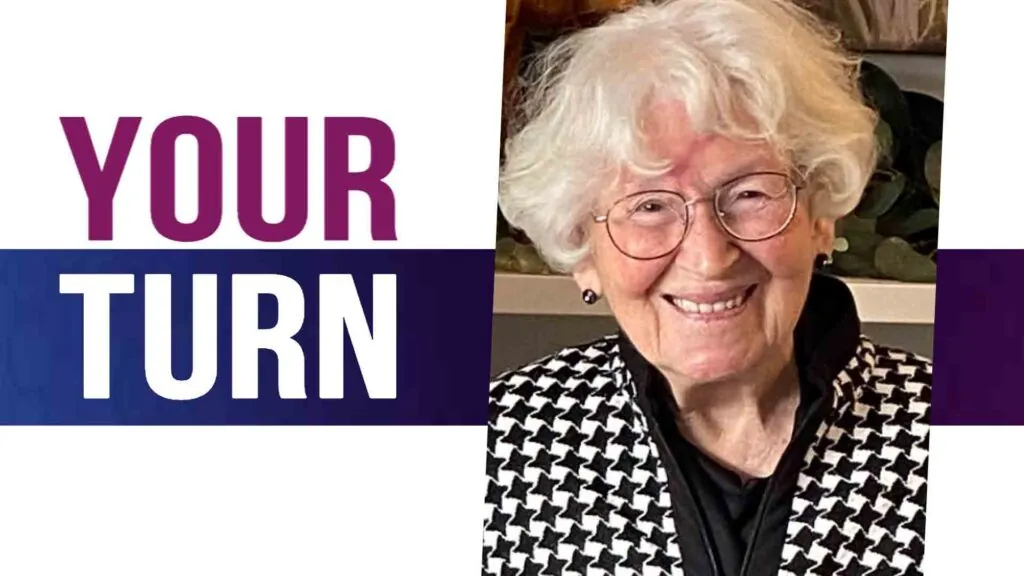
How hardships bring you closer to God in true faith

Have you ever wondered what it would be like with no hardship at all? No pain, no struggles, and no tears; just joy and perfection? This question has often entered my mind as someone who struggles with a physical disability: Cerebral Palsy. We all have, or will be in, those situations where it's out of our control, it seems as though bad things keep happening, and your life is crumbling down with no one to stop it. Why would God do this, especially to those He loves? May 21st, 2011, was a very special day. The day I came into the world, 10 weeks earlier than expected. Not only was I unexpected, but also very jaundiced, born only 3 pounds, one ounce. Being this tiny was a very scary thing, especially for my parents, who felt like I might slip from the grip of their arms if they didn’t watch me carefully enough. Getting a diagnosis such as this for your child is one of the worst fears of parents, not being able to protect them from this when they first come into the world. Getting told that your daughter has a permanent condition that is caused by changes in the development of the brain in infancy, often due to being born really early, which causes hardship in mobility, balance, and many other things, is a shocking thing. I don’t think my parents knew how they could handle this. I never wanted this for my parents. I never wanted to be the child who causes all the problems. All the appointments and driving were definitely exhausting. But of course, they couldn’t show that. My parents have never complained that I was a burden; they have always helped and encouraged me in any new task I wanted to take on. Instead of being disappointed that their daughter was born this way, they constantly became more proud of the daughter the LORD has given them. As a girl with Cerebral Palsy (CP), hardship is a regular occurrence. Constant tripping over your own feet while getting winded in the process, with no one to stop the pain. Everyone asks what happened, but really, it happened way too fast to even remember. Doctors and therapists are constantly on your agenda, and the constant dread of getting criticized for something you can’t help. But you know that this is for your own good, that they're just trying to help you, yet you can’t help but feel the tears dripping down your face because you know deep down, no matter how hard people try to help you or how much effort you put into yourself, it won't leave you. It's a part of you. Really, it's who you are. However, when we go to school, that’s where hardship really begins, when all you get from people are stares and points. When you go outside to play, all the kids run past you at 100 miles an hour, ten times faster than you, leaving you to be by yourself. Making friends was always the hardest part for me. You always feel less. You feel like people only look down, never at you. It’s like I’m a faceless person, someone people look past instead of at. When I got older, around two years ago, I had a major surgery that affected my life forever. The day before my surgery, I couldn’t begin to grasp what was about to happen. I was so afraid because I didn’t know what to expect. The morning came sooner than I wanted. After an agonizing wait, I finally walked myself to the surgery room, got laid on the table, and soon enough I felt my dad’s hand squeeze mine, telling me to be brave. Tears rolled down my face, asking God to protect and guide the surgery. I woke up after six hours in surgery with all my family surrounding me. My family came to hug me, but I didn’t really feel their touch. I felt like I was the only one there, hearing only the soft shuffle of feet coming towards me. As soon as night fell, my dad sat beside me and started to play organ music on his phone, just like every Sunday. All I could do was laugh for the first time in a long time. Somehow, it felt good, like home was being brought to me even while lying in a hospital bed. In times like these, it was really hard to see God near me and to be grateful for everyone trying to help me. I felt really trapped in this web of confusion and helplessness, even though my mom was there with me the whole time. I got through it after five days, finally getting to go home, but even there, I felt like such a burden, my mom having to do everything for me. It was a very painful time for me, having to sit with my legs far apart all day with big, constant pressure. After around three weeks at home, I went to the rehabilitation center for five weeks straight, only able to go home on the weekends. But here I started to feel a lot better. It was a slow and gradual process, but I was making progress and moving again. What hurt the most was my family going home without me, while my mom and I stayed at the hospital. But really, it wasn’t all bad. The most important part was how much this experience opened my eyes to how hard others had it, how much worse their lives were. I was so thankful for this, for how much joy I brought to these people, and for how much I meant to them in such a short time, making me feel not alone. When you have a disability, you can’t explain to others what it's like, but to these people I could because they were going through the same thing. I felt this was God reassuring me that I am never alone. He gave me the strength not only to get through my own hardship but to help others get through theirs by shining Christ's light. The negative voice in my own head is constantly telling me I'm not enough. And I truly think that it will never leave me, but they helped me find a way to cope by putting the positive voice louder. As I get older, I question many things: how deep you can get in sadness. What’s out there for me? Will I be able to get a good job? Will I find someone who truly loves me? Will I be able to give my kids the life they need and deserve? But until then, you will always feel behind in life, seeing everyone have plans for their life already, while I’m here still trying to deal with my permanent condition – at least I do. Everyone asks how I do it, how I live my life normally, always staying strong. But I know I definitely am not strong; not on my own anyway. If I didn’t have God constantly carrying me, I wouldn’t have the strength to stand. He is my stronghold. No, my life isn’t normal. I am not a normal person, but that doesn't make me any less human. And you know what? That’s okay, because hardship doesn’t only scar you, it pushes you. Having CP naturally moves you out of your comfort zone. If we want to do something different, it takes a lot of practice and thought before action. Life is not worth living if you stay in your own safe corner. These are the times when I feel the most grateful that I don’t have to deal with this alone, but that God is beside me giving me the strength to do it. Like I’ve said many times over, I wish I had been born “normal,” but normal is so overrated. God never made normal. We all have something unique that glows inside us. Psalm 139:13-14 says: “For You formed my inward parts; You covered me in my mother’s womb. I will praise You, for I am fearfully and wonderfully made; marvelous are Your works, and that my soul knows very well.” Let your glow shine for all to see. Even when we are struggling, we all have the strength to overcome it with God’s help. Isaiah 41:10 says, “Fear not, for I am with you, be not dismayed, for I am your God, I will strengthen you, I will help you, I will uphold you with my righteous right hand.” Philippians 4:13 says, “I can do all things through Christ who strengthens me.” No matter the amount of tears you may shed or how much you may be struggling, God loves you. Whenever I feel weak, I look in the mirror and tell myself, I am beautiful. I am a glowing light to others. No one can tell me otherwise because my Father in heaven is more powerful than negativity or hardship. If you're struggling, just know it doesn’t make you any less human. If anything, it makes you a stronger and more resilient human. Being dependent on God is a privilege. Psalm 27:1 says “The Lord is my light and my salvation, whom shall I fear? The Lord is the stronghold of my life, of whom shall I be afraid?” Don't be afraid to be different and to go through hardship. Hardship is an opportunity to fully lay yourself on the LORD and let yourself grow with God. One day, we will run into the arms of our Savior without any spot or blemish. So don’t run from hardship but towards it. Let it draw you closer to God in faith. For us, hardship becomes hope because God is the anchor in our storm. ***** “I always felt God gave me CP for a reason. I’ve been through challenges some people just cannot understand. I know I am a compete and beautiful child of God, I wanted people to know my story because I know I might touch the hearts of people and help them in hardships they may be going through and inspire them to not be afraid of hardships but look forward to becoming a stronger and better person because of it.” - Leanna...

Red heart icon with + sign.
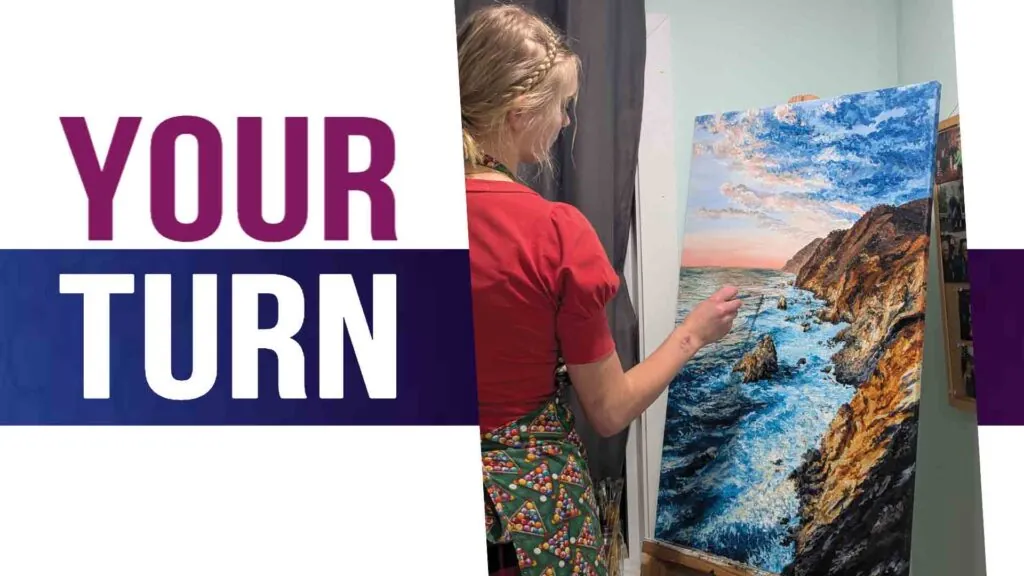
Contests, Interview with an artist, Your Turn 2026

Life Inside the Lines: a profile of an artist

Twelve-year-old Klaas Stel sat uncomfortably before a blank canvas at a beginner art class. The year was 1958, and as the son of poor Dutch immigrants, Klaas could not have felt more out of place. The rest of the class consisted entirely of older ladies, who squeezed generous amounts of expensive paint onto their palettes. For Klaas, in whom thrift was as deeply ingrained as the Heidelberg Catechism, this felt like unnecessary extravagance. On the well-lit table before him sat the day’s subject: a carefully arranged bowl of fruit. It was a financial stretch for his parents to consider art lessons for their son, evidence of their faith in his abilities. Perhaps for his father, Klaas Stel Sr., from whom he inherited his creative streak, there was the desire to see his son have opportunities that he could not. The Stel family came to Ontario, Canada, in the 1950s, joining a flood of immigrants from the Netherlands in search of a better future for their five sons. In his later years, Klaas Stel Sr. wrote a book in his native Frisian tongue about the family’s immigration experience. He gave his book the lofty title The Land of Dreams and Wishes. With such high expectations, reality hit hard. But like many other Dutch immigrants at the time, the family rose to the challenge. The Stel boys, especially the older brothers, were expected to work to help support the family. As the youngest, these pressures had eased by the time Klaas was old enough for regular work, even to the point where his parents could consider modest “extras” like art lessons for their budding artist. Finding inspiration But it was to be the first and last art lesson for Klaas. Painting fruit bowls with old ladies just wasn’t for him. It wasn’t long after that class that he discovered a far more interesting subject for a new painting. He had picked up a book on shipbuilding at the local library and was fascinated by its detailed illustrations of a ship’s design. Still tight on finances, it was pointless to consider buying art supplies such as a new canvas. This was not an issue; he had a canvas! It was just filled with an uninspiring bowl of fruit. With quick, decisive strokes, the bowl was covered, and a new scene emerged: a ship at full sail, tossed upon stormy seas. If one looks closely at this early painting, the faint outline of the original still life remains as a shadow beneath. To reuse and recycle was a way of life for Dutch immigrants long before it became a municipal program with blue-colored bins. Thriftiness was inveterate; spending money on hobbies and frills was impossible. When young Klaas had another inspiration for a painting, a scene of deer grazing along a riverbank, he painted it on the exposed backing of upper cupboards in the family kitchen. Thankfully, this painting was saved when the family moved. But the small nail holes in several spots in the wood are a reminder of its original purpose. Finding vocation Just as ingrained in Klaas’s family was the biblical adage that he who does not work does not eat, and as someone who dearly loved his meat and potatoes, that meant practical work needed to be done and would always need to be done. An art career was not considered a practical vocation in those days, and therefore was not a consideration for Klaas. But providentially, he found a career path that was an excellent fit for his creative side: Architecture. The lines of perspective and symmetry clearly appealed to him, providing rules that his artist’s eye could already pick out. As he grew older, married, and began to raise his family of five daughters (of whom I am the fourth), his commitment to rules grew, not only in his work but in life. The same instincts that drew him to clean angles and clear perspectives in buildings also drew him to love the firm and gracious lines that God draws for human flourishing. “How I love Thy law, O Lord! Daily joy its truth affords,” exclaims the Psalmist. In keeping within the lines of law of both nature and God, rather than suffocating restriction, he found increasing joy. Coloring in the lines My sisters and I were clearly taught these boundaries. When it came to art, like most children, we were encouraged to color within the lines. As young children, the discipline of mastering the skill and patience to fill in each clearly defined space on our coloring pages was praised. The most beautiful art we could create generally followed the rules of correct perspective, proportions, lighting, and color theory. We learned by example that in art, as well as life, our best work flourished within a framework of what was right and good. And though our home had fairly strict rules by common standards (and though I was the child who most often pushed against them!), the overall hindsight impression of my childhood was that it was a home not primarily characterized by its restrictions, but by its sense of love and joy. Art, of course, can come in many types and forms; many artists defy what the eyes see in the form of impression and expression, creating beauty outside of the lines. There are certainly wonderful opportunities in art to expand boundaries. But in a world where a banana duct-taped to a wall is hailed as groundbreaking and sells for $6.2 million, it’s not surprising that we are often still drawn to traditional styles. In Proverbs 8, the personification of Wisdom poetically describes herself as the unlikely companion to the Creator in His ultimate creative work, highlighting an aspect of creation left unstated in Genesis: “I was beside Him, as a master workman; And I was daily His delight” (Prov 8:30). It’s in God’s amazing creation that we see rationality and natural law hand in hand with beauty and design. God delighted in weaving wisdom into the created order, and we too can appreciate the logic at the heart of all created things. My dad’s artwork is characterized by this sense of rightness, and the result is particularly beautiful. His paintings – serene landscapes, ordinary moments, and nostalgic scenes, especially of his native Holland – follow the well-established rules of composition learned through careful study of light and shadow. Often featuring paths and laneways, we are drawn into scenes that feel both familiar and inviting: moonlit farmyards, sun-dappled lanes, overgrown fields where farming implements are left to rust. They are places we may have passed a thousand times without ever pausing to notice their unique beauty, and we wonder how we could have missed it. Even without formal art training (besides that ill-fated art class at age twelve), his work reveals an instinctive grasp of not just linear perspective, but of the subtler ways depth is suggested through shifts in color and clarity. His architectural background lends his paintings a pleasing correctness. It makes sense. It’s right. It fittingly reflects not just what we see, but how we feel about it. “By the way…” When Leonardo da Vinci applied for a job to the ruler of Milan, he identified himself first as an engineer and architect. It is only at the end of his 10-point letter that he adds, in essence, “By the way, I can also paint.” We may be astonished that the painter of the Mona Lisa and The Last Supper only mentions his painting ability as an afterthought, but he truly felt his gifts and interests lay elsewhere (such as inventing elaborate weaponry that was never built). Similarly, my dad would never introduce himself as an artist. His identity lay in the many other roles in his life. He was an architect, a husband, father, and elder in our church. Painting was never his “passion”; he would far rather throw his creative energy into renovating derelict cottages, building a miniature village for his grandchildren, or assembling creatures out of driftwood found along the shores of nearby Lake Ontario. But, by the way, he can also paint. Gifts Rather than something primary in his life, painting became simply a delightful gift he would use when it could bless others. Every year, he painted a much-anticipated Christmas card for our family. He donated elaborate murals to two local schools. He paints beautiful backdrops for our homeschool plays. He wrote and illustrated a children’s story for his grandchildren.1 Almost every painting he’s ever created has been given away. Even now, in retirement, he is creating paintings for his twenty-five grandchildren. You won’t find his paintings in a gallery, art studio, or online. They only hang in the homes of family and friends who were fortunate enough to receive them as gifts. The Dutch thriftiness and practicality remain. Dad uses whatever supplies he happens to have on hand to create his masterpieces, including craft paint from Dollarama (defying those who would say that good art requires expensive supplies!). Though he no longer resorts to painting on kitchen cabinetry, most of his paintings are created on canvases picked up at thrift stores. While I was admiring one of his recent pieces, he pointed out to me that the original image of painted flowers was still visible on the reverse side. “That way,” he said, “if whoever receives this painting gets tired of what I painted, they can always turn it over!” Pleasant places “The lines have fallen to me in pleasant places,” says the Psalmist – a verse my dad has often quoted, and one that seems particularly fitting for someone who spent his life drawing careful lines and teaching us to appreciate them. Both architecture and scripture gave him boundary lines that were not seen as fences to keep creativity out, but frameworks where beauty and artistry thrive. In a world where so many lines are blurred, despised, or ignored, my dad’s life has been a joyful testimony that boundaries are not barricades, but invitations. The same young man who discovered an appreciation for the disciplines of architecture learned that the Lord’s lines are a yoke that is “easy and light.” Within those lines, he created a life and a legacy filled with joy, usefulness, generosity, and creativity. And like his paintings, his life continues to be shaped by the gracious lines of a faithful God. ***** "The Story of Bluebeard’s Treasure" was written to accompany an annual treasure hunt my dad organizes for his grandchildren at our family cottage. Predictably, he didn’t want any royalties, so it’s available on Amazon for simply the cost of printing. Holly Enter has long been inspired by her dad’s artwork. She desired to “share not just his artwork, but a bit of his life story as well. The theme of ‘lines’ connects his work in architecture, his style of art, and his faith. "I was struck by how his life reflects a deeper truth: that beauty and joy are often found not in rejecting structure, but in living within the good boundaries God has given.”...

Red heart icon with + sign.
Contests, Your Turn 2026

Educational peace

It was the closest to a deal breaker we’d had. In our year and a few months of dating my fiancé and I had covered all the important topics extensively, or so I thought. That summer evening as we talked it finally hit me that my husband-to-be was set on Christian school for any future children we might be blessed with, and not, in fact, ever, interested in homeschooling. “He really means it” I thought. I saw resolve and promise. He wanted something very good for his children and he would provide this for his family, Lord willing. I had been homeschooled and it had been a wonderful experience that had filled my mind with possibilities. I had strong opinions about education and wanted to teach my future children myself. Stubbornly optimistic, I swung the opposite way as I thought this through, “Maybe I can still change his mind!” I knew he’d already seen a new side of homeschooling by getting to know my family. I figured this was just the beginning of him seeing things from my perspective, ignoring that perhaps that meant I should also try to see things from his. The more sobering realistic side of me had to consider this man I loved and his desires for any children we might have. Could I follow his lead if it was different from my plan? Discussing topics that are far in the future can result in two people thinking they know their future selves so well that they can decide now what they will be then. It sounds a little arrogant, but isn’t that what the marriage commitment is as well, a promise to have and to hold, through sickness and health, till death do us part? We really don’t know what that will truly mean, when those vows are made. However, we do so in faith, and faith can move mountains. Our first son was born and any conversations about education were few and far between in those first years. In my day-to-day choices I opted out of the early education classes that were numerous in our area as I didn’t believe in rushing children towards early reading, but instead set out to provide our son with lots of natural learning opportunities; get our hands messy, read lots of books and answer his many questions, as simple as that. Before our oldest was Senior Kindergarten (SK) age we had 2 more children and had moved to a new neighborhood and school district. For my precocious oldest I set up a ‘school room’ in the basement while knowing full well that homeschool families generally do school at the kitchen table. I was not immune to being a rookie. We worked through the alphabet, doing an activity or two per letter and searching for those letters in books and on signs when we were out for walks or running errands. Learning became a part of every day. We did the program, Five in a Row by Jane Claire Lambert and enjoyed that very much. I gave my son a harmonica after we finished reading the book Lentil by Robert McCloskey and found that to be a musical instrument that sounds kind of nice, even from a beginner! Was this homeschooling despite my husband’s wishes? Well, yes and no. He liked the idea of me educating our son until he was SK age, at which point he would go to school. By this point we had talked about this often and agreed on this plan. I felt really good about this most of the time, especially since our son was becoming so excited to go to school and I got to try out some of the teaching methods I’d had in the back of my mind for so long. I recognized that I was still feeling pulled in two directions and I remember praying about my lack of peace, and arriving time and time again to the answer to trust Him. To trust that God led me to my husband and that I could follow his lead because he also loved the Lord. Sometimes this was a literal cap to the bottle of endless misgivings. Trust Him, and trust him. When the time came for us to pick a school, there was that same tug in my heart in the opposite direction as we considered a school that was nearby. The school was small, and that appealed to me. If my babies had to leave me I was glad it was to a school where they wouldn’t be lost in a crowd and ignored. A little dramatic, but these were my early thoughts! If I was going to be a school mom I wanted to like the school. What was involved with being a school mom anyway? That first day of school arrived much too quickly for me, and at long last for him. He was born in February and had been 5 for ages. His enthusiasm soothed me immensely, but I put him on that bus and then went inside to cry over a sink of dishes. His words at the end of the day, “It was my first day of school and I did it!” have made me smile so many times in the years since. My thoughts during this first year were many. In some ways it felt so wrong to pack a small child a lunch and send him off for the day. I didn’t want to ignore that feeling, but was still trying to trust. I would need to let him go eventually, right? An impossible thought when they have bright trusting eyes, and still climb into your bed every morning for a snuggle before the day starts. In conflict to these thoughts was a thriving happy child with a teacher and community we were beginning to love. I spent time thinking about the course my life was taking in comparison to what I had known growing up. I went back and forth a lot as God was showing me the way. It was a special kind of fun to show up at school and see my child light up with excitement to show me what they had been learning. I felt myself being established as the one who welcomed him home and caused that big exhale at the end of the day. Homeschooling had always been an example to me of the only schooling option that allowed a child to be an individual. Simply by moving through the day as a group, a student in a classroom setting did not have the freedom to be ahead or behind their peers. Expecting all to fit neatly into a shape grated on me as I had seen in my own family that my older brother excelled at many things, and being homeschooled allowed him the time to pursue his interests, and to glean education from them. Similarly, I had a strong interest in art and our schedule offered ample time for creative expression. My younger brother by 3 years was easily doing my math, peering over my shoulder and giving the answers long before I understood what the lesson was asking. I’ve since forgiven him for this but it really got on my nerves at the time. I was able to grow at my own pace, in the biggest way perhaps in that I didn’t read well until grade 3, and I didn’t know that until I was an adult. I didn’t know that I was behind. Is there a school anywhere where a child could be “behind” and not know it, besides in homeschooling? I am so thankful I wasn’t aware of my slower pace, and had the space to figure it out without pressure. That later start has not held me back, though it easily could have been a shadow I carried with me if I’d endured teasing, or had seen worry in the eyes of my parents or teachers. My own life experiences were the main reason why I felt a pull to homeschool my children. Additionally, I felt I needed to defend myself, for the rest of my life if that’s what it took. “We aren’t weird, we aren’t lacking in social skills, we don’t have holes in our education.” (These situations do occur, but it’s not simply because of homeschooling. Every educational environment has students that don’t fit the mold perfectly, and teachers that unfortunately miss the mark.) That defensive position would have been a selfish reason to homeschool, and would have been an unsteady foundation for an education. It was humbling to admit to myself and others that I could grow up homeschooled, absolutely love it, and then leave it. Once you are on the team you don’t leave it and do something else. At least that’s how it can feel. The other team, the one I was outside of for so long is full of… loving parents too. What did I think would be there? In walking through each school year beside my children I’ve been able to glean a great deal of wisdom from fellow parents and the staff at school. Many of them struggled to send their babies to school too. I wasn’t alone in missing them and wasn’t alone in relishing the quiet house. One mom pointed out to me that each teacher has their strengths in teaching, and those strengths can bless our children. I saw this in the grade 1 teacher who taught the Christian faith in a way that made my 6-year-old truly love the Lord and pray with new understanding. Or the teacher who showed how to be determined and not give up when something is hard, or who said just the right thing to make a hard concept suddenly click. We are so blessed by these adults that pour Christ-like love and excellence into our children! Each teacher has made an impression and each year has brought positive growth. Many of my fears were for nothing, and many of the strengths homeschooling offered we have been able to provide within and alongside the school. I don’t think I’ll ever stop being the Mom who works a lesson into the day, as homeschooling showed me that lessons learned as you live your life have as much impact as the ones learned in a classroom following a curriculum. When your school recognizes that educating children falls primarily on the parents, and their intention is to come alongside that goal in support and with the Christian faith held central, well, that can be counted as nothing but a great blessing. This past September we began our 8th year at our school. I am no longer going back and forth in my mind wondering again if this was the right choice. God gave me an unexpected opportunity to learn in leading us to send our children to school. I thought I was one of the fortunate ones who was more open minded than others due to homeschooling, but I had misunderstood others the same way they had me. By trusting God through following my husband’s lead I have been rewarded in more ways than I could say. There is no way to guarantee our children the very best in life, but that is often what we receive despite ourselves. I had an excellent upbringing, and by God’s grace and great love, my children are too. ***** “This article is about following God’s lead for education choices for our children. My husband and I had differing opinions about education as we started our marriage, and I wanted to encourage others who might face something similar. I hope to show how God can surprise us with His goodness when we trust Him.” - Tamara...
Red heart icon with + sign.
Contests, Your Turn 2026

Your Turn: the audio finalists

What follows are the very best of the audio submissions, starting with the two best 18-and-under youth submissions, followed by a trio of songs by the adults. The best of the youth   WINNER Meaghan's "The archive of unspoken words" (5 minutes) “Growing up I was someone who often tried to hide bits and pieces of my personality. I only showed parts I thought other people wanted to see. I've since learned that you should never ever apologize for who you really are because God made us all unique. I love writing poetry! Like loooove it. So what better way to wave goodbye to that part of my life than through something I love." ***** FINALIST Talia's "Her name was Mia" (12 minutes) “I decided to do an audio recording on a story which I wrote about a woman and her journey through faith. It emphasizes a few main points, the main one being faith over fear." ***** The best of the adults WINNER Miriam Bruning's "Little man" (4.5 minutes) “I wrote this song towards the end of a very difficult postpartum phase with my first child. I was finally able to start feeling genuine joy again, watching my son grow and develop. This song wrote itself over two evenings as I reflected on how much I had to be grateful for. I feel so overwhelmed by God’s grace and love shown to me, both in giving me my beautiful son and blessing me with an incredible husband. I get so much joy out of watching our little man (who is two years old now!) copy everything his daddy does. I hope that by sharing this song, it can help to remind families, and mothers in particular, of the joy that can be found in the midst of the highs and lows of parenthood. I feel that the more I try to focus on gratitude, the more the Lord gently and lovingly shows me what I have to be grateful for." ***** FINALIST Mary Koppert's "All that I need" (6 minutes) “This song was born when I stepped into the shower on a Saturday afternoon. The verse that’s in my bathroom was tumbling around in my head. Suddenly, it had a melody, a meter; it even rhymed, right out of the pages of Scripture. On Sunday I was picking out the music on the piano. By Tuesday, I was refining the lyrics and laying down the melody on my notation software; the song, though needing refinement, was complete. Curiously, it wasn’t until I made yet another tiny tweak to the lyrics, that I was hit by the truth. This song that God gave me, was the very deepest cry of my own heart. I am a mother of 5 children living with a rare, incurable (but treatable) blood disorder. I am intimately acquainted with endless sighing and physical weakness. What began as a general meditation became a personal journey through 2 Corinthians 12: His strength is made perfect in my weakness and His grace is all that I need. My prayer is that this song would be a companion for those walking through their own 'night.'" ***** FINALIST Savannah Brouwer's "It was never easy" (6.5 minutes) “This faith is a fight. It is a battle. We are meant to be soldiers. Soldiers are not sitting around waiting for the battle to be won, they are walking with an aim, a goal, and they will not rest until they reach that goal, even if it costs their life! That’s the purpose in this song – to encourage you to walk into those dangerous places, those unknown places and know God is carrying you to see his glory in it all! A couple months back I was expressing all these thoughts to my friend Hailey Vanderhorst and she said she would write a poem about it all. Just from a handful of notes and a good conversation, It Was Never Easy was created. These are the words she wrote down to capture the things God has been pressing upon my heart and I am deeply grateful. This song wouldn’t be together without her!" ...

Red heart icon with + sign.
Contests, Your Turn 2026

Child of God

A mother held her newborn son and whispered in his ear, “I love you so much, little one, I hold you very dear. I love exactly who you are, I love you through and through. The LORD knew how He was blessing me, when He gave me you. Knitting together your heart and mind as you grew inside of me, In His wisdom He fully planned who you were going to be. God made your little hands and feet, your eyes and nose as well, so you can do so many things like dance, jump, see and smell. You will grow bigger every day, and as more time will pass, you and I will both wish that time had not flown by so fast. You are a child of God, He declares you are His own. The truth is your identity is found in Christ alone. This truth is dear to us, but some people get it confused. They think “whatever makes me happy” is a good excuse to completely change how they look, and change their very self, so they can try to live as someone other than themself. They think that they will love themselves more than they did before, but they do not know that Jesus Christ loves them so much more. Our Saviour loves these people so much more than they could know. He loves every inch of them, from their head down to their toes. He died out of pure love for them, exactly as they were. The way that God created them is what they should prefer. When you attempt to change yourself in every single way, you find that loving how God made you is the better way. I hope when you grow up, my dear, you love how you were made, so that others may look to you and see God’s love displayed. Reach out to those who have no hope, give them a listening ear, so by loving them they will see that God is always near. Surround the people who do not know what to be or do, pray for them and tell them that through Christ they are renewed. My darling, if you ever have thoughts that you need to change, or if you don’t feel good enough just the way you are made, you can come to me and tell me, I’ll wrap you in my arms. I’ll whisper that I love you, exactly the way you are. I love you because you are mine, but not just mine alone. You are a precious child of God who bought you as His own.”   ***** “I wrote this poem a couple years ago for an assignment in my Health class. We had been discussing the topic of Identity, what our society has made it, and how we as Christians are to respond. I wanted to write something for children as well as adults to remind them that our identity is not dependent on our fluctuating emotions, but our identity is in Christ as image bearers of God.” - Jenny...

Red heart icon with + sign.

Contests, Your Turn 2026

On kids in the pews and God’s faithfulness

Don't you sometimes sit in church. and look in amazement at some of the young families in the rows ahead of you, and wonder how these little ones can possibly sit still for a whole hour? True, some are better at it than others, even in the same family, but they are there faithfully every Sunday. It is amazing that week after week, you see improvements! It makes you laugh when you see an older sibling straightening out a younger fidgeting one. Not always easy! In our Reformed tradition, taking your children to church, from age 3 or 4 on, has been the norm for many years. It hasn't been an easy thing to do! It's often a trial for Mom and Dad, to see to it that the youngest is learning to sit still, just like the older brother or sister. But amazingly, they learn! We have friends who, many years ago, gave up the battle of taking their children to church, saying it was much too difficult to keep them quiet: they needed to be entertained in a much more appealing way. They found a church that catered to the needs of their kids; they wouldn't need to sit still; they could interact and speak their minds (and oh! they had minds of their own) as much as they wanted to. So often the kids’ wants were catered to. What they liked and disliked was taken into account. It so happened that these friends visited us last year. Yes, they had their worries about their now grown and married children, who didn't go to church anymore, and in turn had not taken their children at all – "It's a different world, Mom and Dad, that was maybe okay in your days, but things are so much faster paced, our kids have to keep up with all the latest. But Mom, don't worry, we still say a simple prayer at mealtime, the one you taught us, Mom!" Our friends came with us to church during their stay, morning and afternoon services. They were appalled that again there were families with little children in church in the afternoon. "Ach, die arme kinderen!" exclaimed my friend Betsy – (Oh those poor kids!), "Do they have to sit still again for another hour?" I leaned over and replied to Betsy, "Isn't that how you and I learned to sit still during worship services so many years ago? And it hasn't hurt us!" Just then another family walked in, sitting in front of a family with little kids, and it being before the service, they turned around and exchanged little tidbits with giggles. It warmed my heart! And then I just had to share with Betsy – "Watch them sing when the service starts!” Oh! How thankful I was that our local Christian school still had the custom of teaching the students a psalm or hymn every week. Our pastors knew which ones! And oh! Those kids in the rows ahead of us didn't disappoint. Even though it was a difficult Genevan melody, they knew the song! They sang their hearts out, and I couldn’t help it, I had tears in my eyes – it was so moving. I didn't say anything to Betsy, but after the service, if I'd had a huge bag with chocolate bars, each of those kids would have gotten one from me. We live in worrisome and confusing times, for us, and for our children. The pace of change in society seems to increase every year. What a comfort to have the solidity of God’s unfailing Word as our comfort and our guide. Our God is faithful – even when we are not always! The Lord made a covenant with us His children – something we can bank on! Psalm 105 is often sung at baptisms; reflect on these beautiful words from the Genevan Psalter, verse 3: He is the Lord, our God unfailing, His judgements everywhere prevailing. He will remember and uphold His covenant made in days of old. The STEADFAST WORDS of His command A THOUSAND GENERATIONS STAND! When our children learn these psalms, the meaning of the words is not always grasped, but the words are committed to memory. And by God’s Holy Spirit they are brought to mind through different circumstances throughout their lives! That’s God’s Word; it never returns to Him empty. We can reflect on the beautiful words of Isaiah 55:9-11: “As the heavens are higher than the earth, so are my ways higher than your ways and my thoughts than your thoughts. “As the rain and the snow come down from heaven, and do not return to it without watering the earth, and making it bud and flourish so that it yields seed for the sower and bread for the eater, so is my word that goes out from my mouth: it will not return to me empty, but will accomplish what I desire, and achieve the purpose for which I sent it.” Thank the Lord for faithful parents, for faithful pastors, for faithful teachers at our Christian schools!! Hold them up in prayer!! And remain faithful – it comes with many blessings! He has promised! ***** "The reason I wrote the article was to tell how easily we’re influenced by the culture around us – it’s so easy to give in, and it’s so understandable to wish your kids to be happy and unfettered by old-fashioned dictates. But our faithful God wants us to be obedient – to obey is better than sacrifice. He wants our hearts and commitment. “How shall the young direct their way – What light shall be their perfect Guide? Thy Word oh Lord will safely lead If in its wisdom they confide!” That’s from Psalm 119. Again and again, we’re reminded that we need to be under the faithful preaching of His Word – and what better way than to bring your children to Church! Haven’t you had it, when you really don’t feel like going to church on a hot Sunday afternoon – yet you go, and somehow been richly blessed by the preaching, the singing! Don’t underestimate the power of the Holy Spirit to bring the great truths and comfort of His Word to us. Let’s be thankful that we still have the freedom to take our children to church!! Our forefathers did this under much more difficult circumstances, and parents under repressive regimes must teach their children before they attend school the eternal truths and comfort of salvation in Jesus Christ – belonging to Him, body and soul!! That He will never leave them!!!" - Jennie...

Red heart icon with + sign.
Contests, Your Turn 2026

 The First Bell

The first bell came all too soon. The shrill cry echoed through the empty halls. Hands cold and clammy, she rose from the chair, facing the empty classroom. The desks were smaller than she remembered, all twenty-three of them, lined up in neat rows towards her. Bulletin boards proudly showcased the planned curriculum, every poster hung perfectly straight. Freshly dusted bookcases held a collection of familiar favorites and new exciting titles, promising one adventure after the next. The cubbies stood organized and labeled, waiting for little fingers to give them life. This was the moment she had prayed for. This was the moment she had trained for. And this was the moment she most wanted to run from. Doors swung open, and little footsteps filled the halls, uneven and eager. Laughter rang out as old friends reunited, eager to share a classroom once more. Backpacks slid from shoulders and slammed against the walls, zippers being tugged open for the first time that year. Gentle reminders wove through words of welcome, reminding returning students that shoes were to be neatly tucked away so that they could not become a tripping hazard. Then the little blond head appeared, slipping through the doorway. Blue eyes lifted to meet hers. Her breath caught. The room seemed to narrow until it just held the two of them. Her knees trembled. Tick. Tick. Tick. The clock narrated the seconds of silence, each sound pounding into her chest in rhythm with her beating heart. I’m not ready. Her fingers gripped her pen tightly, knuckles whitening from the pressure. What if I fail them? What if I’m not good enough? The thoughts came rushing – overlapping and crashing until it consumed her entirely. I can’t do this. Then the boy smiled, hesitant and small. He offered a quiet hello. She returned the smile. Relief washed over her, and she drew in a steadying breath, willing the shivers and shakes to still. In came the next blond head, then a pair of brown eyes. A frenzy of jeans and colored t-shirts filled the room, the chaos of the hallway spilling over into the classroom. The bell rang again, sharp and final, followed by the echoes of doors closing around the newly emptied halls – the sound of other teachers ready to start their day. Yet she stood there, frozen, trapped under the expectant gaze of twenty-three pairs of eyes. Hope. Innocence. Expectancy. Please don’t let me fail them. Her eyes met those of a little dark-haired girl, twirling her hair between her fingers, sparkly letters spelling “faith” across her pink t-shirt. She closed her eyes. Her breathing slowed. Her fingers loosened their grip on the pen. She let the sound of her own heartbeat steady herself, as the verse from her morning’s devotions rose in her mind – not fully formed, not fully confident, but present. God, you have placed me here for a reason. I’m not sufficient on my own. I am your servant. I need your strength to obey. May your will be done, whether I am ready or not. She opened her eyes and smiled at her class. The words of greeting came, hesitant at first, then steadier. Soon, the first notes of a psalm started, soft and uneven, but quickly transforming to dance throughout the room. Something loosened inside of her. The minutes quickly blurred into hours. Stories sparked laughter that bounced off the desks. Pencils rolled and were retrieved with giggles and flushed cheeks. Whispers erupted as students noticed a misspelt word on the whiteboard. Sunlight shifted across the floor. Student questions came more quickly now. Some she answered with confidence, others she could not. Once, she stopped mid-sentence, heat rushing to her cheeks. Students shifted in their seats, waiting. She admitted she did not know yet. The pause stretched out, longer than she had wanted, her heart racing once more. She answered with honesty instead of certainty before continuing to circle the room. When the final bell rang, the weight had lifted from her shoulders. She waved as buses pulled away, a quiet Thank You forming on her lips. The inadequacy remained, but the fear had loosened its grip. God had met her there, in the small faithfulness of the day, not by removing her weakness, but by sustaining her obedience within it. Tomorrow she will return to the same room. The same desks. The same expectant eyes. The fear may return, fed by doubt and inadequacy. She may stumble through the day, calling a student by the wrong name or being unable to answer a question. But God did not require her to feel ready, because He already called her to be faithful. The lessons that she taught that day were not just for her students. They were reminders of God’s faithfulness: revealed through weakness, obedience, and trust that comes before assurance. And so it is with us. God places His people in moments that expose our weakness, where our limitations quickly rise to the surface. Our voice falters. Our hands shake. We hesitate. Yet, God does not leave His people to stand on their own strength. He does not step back when we falter, but calls us forward, asking for faithful obedience even when our hands tremble and our voices waver. His power is made perfect not in our readiness, but in our obedience in times of weakness. God meets His people there, supplying what they need as they move forward, one faithful moment at a time. God knows our weaknesses, and still He calls us. He provides what we do not have when we move forward in trust and in prayer. It is there, in small and faithful obedience, that His glory shines most fully. So, as you face the doorway where your weaknesses are exposed, where your hands shake and your voice falters, don’t wait until you are comforted. Lift your eyes to Him. Pray for the strength you do not have, not to be made comfortable, but to be made obedient. The God who met this teacher in her trembling will meet you in yours, calling us to obey even when fear remains. “For He said to me, ‘My grace is sufficient for you, for my power is made perfect in weakness’” (2 Cor. 12:9 NIV). ***** “As I prepare to begin my first year of teaching this September, I have faced many changes and external pressures that have shaped this season of my life. The words of 2 Corinthians 9:12 have inspired me to pray, trust in God’s plan, and seek His will, even in the midst of my own weakness and imperfection. Through the story of a teacher on her first day, I hope readers are encouraged to reflect on these truths, to rely on God in every moment and trust that He can use even our shortcomings for His greater purpose.” - Ilse...

Red heart icon with + sign.
Contests, Your Turn 2026

14 Ways of Looking at a Star

I. Star: noun. A fixed luminous point in the night sky which is a large, remote incandescent body like the sun. II. There were no birthday candles, curled chips, dandelions, wells, eyelashes, or bones. But a single star shot across the night sky. III. A star is just a sun, but too far away to keep us warm. IV. On ancient faded sailors’ maps dangerous waters, trading cities, marked with tiny perfect stars. V. Someone once said to find the first star of the night to make a wish. But what happens when it’s cloudy? VI. Some stars are long since dead. The light just hasn’t ceased shining yet. VII. A starry black sky reflects grains of sugar, spilled across a kitchen counter. VIII. A shooting star isn’t shooting. It’s burning up and falling. Nobody makes a wish for such destruction. IX. A single star imprisoned in a frosted window pane pretends not to eavesdrop. X. A fading star at dawn’s edge spreads rumours of daylight. XI. Stars cry out behind city lights, desperate to be seen and admired. XII. Things that can be mistaken for stars: Street lamps Planes Satellites Hope XIII. A million stars reflected in the water’s surface, making it impossible to tell which way is up. XIV. If a star falls and there’s no one around to see it, does it still burn? ***** “The idea and beginnings for this poem started at the end of high school for me, in my Writer's Craft course, around this time last year. We had just studied the poem ‘Thirteen Ways of Looking at a Blackbird’ by Wallace Stevens. It was a very confusing read, but I was inspired by what I could do with the idea behind it. I used a similar formatting and created my own meaning for it. Stars are one of the most majestic parts of God's creation and it's impossible not to feel overwhelmed by beauty standing under a blanket of inky night sky, scattered with them. I also wanted to make this poem to speak to a wide audience, so I wrote it as a brief series of perspectives to reflect how the meaning of a star shifts depending on who we are and how we look at something. So, for me, a star is a beautiful, inspiring representation of God’s creation. But it could also be the twinkle in someone’s eye, a wish, a marker on ‘ancient, faded sailors’ maps,’ or a simple dictionary definition. I didn’t want to go in-depth for each perspective, because I wanted to leave space for the audience to relate or connect with each piece differently than someone else might. I hope you enjoy it!" - Ariel...

Red heart icon with + sign.
Contests, Your Turn 2026

Created to Commune

A first neighborhood I was far too young to remember staying over at the neighbors’ on the fateful day my sister –  vernix-covered and with oh so perfect fingers and toes – entered the world. But I remember the house down to each room and can picture each tree in the expansive backyard – so large it seemed like a vast pasture to a younger me, the kind in which I was accustomed to seeing cows or sheep grazing as I sat through the miles and miles of driving to Ontario and back each August. I remember climbing in the willow and swimming in the infinitely deep pool and drinking Coca-Cola standing on the cold kitchen floor. Dinner at the Aunt Barbara’s house But memories and photographs become jumbled, and I wonder if any of it is really a memory. I can see my parents’ wedding reception in the very same backyard through these photographs – boxes and boxes of them that seem to diminish with each successive cross-country move my parents make – the laughing faces of people ages older now, sweating joyfully in the June sun. Through another set of photographs, I can see my brother as a chubby and moody baby held in my honorary Aunt’s lap on a lawn chair by the pool. Today, the house is inhabited by strangers, just as is the house nearby to it on Coles Boulevard, where at nine months I took my first steps so precociously. Between these two houses stood another where a happy but fading part of my childhood was lived. There, I remember eating perfect dinners of spaghetti, salad, and jello in the pink dining room. Dinners were followed by joining my mother for a thoughtful examination of Aunt Barbara’s new paintings in the small art studio at the top of the stairway. These neighbors we had a more perfect communion with; Sundays did not separate us. One of these “aunts” was the photographer for our family’s iconic series of baptism photos taken in the graveyard behind our two-hundred-year-old church building. Each Lord’s Day, we inhabited this building twice, listening to long sermons that changed everything each new week. Their handwritten summaries once filled drawers of filing cabinets in the laundry room. Now they spill into the online world in messy virtual piles, filling email inboxes. Could I be coming home again? My baptism photo It’s been nearly fifteen years since I sat in the cold, cushionless pews of the church where my baptism took place. Now I’m far away, driving down another long-forgotten street after having lunch with a long-lost childhood friend. It’s a few weeks before my third semester of university begins. I turn right onto McNabb Street and cross Silver Creek, where years ago my sister and I would catch crawfish at lunchtime. With shock but no surprise, I see in front of number 17 the most enormous wall of sunflowers rising out of a tangle of vines. Gourds, squash, and pumpkins grow with singular abandon between their stalks. The sidewalk is barely passable, and where grass used to grow in the front yard, there are more vines and wildflowers than should be proper in such a small space. I don’t have to look at the familiar cars in the driveway to be certain that the neighbors from our brief years living at number 19 next door still inhabit the large brick house behind the jungle. I park and walk around the block twice before I work up the courage to knock on their door. I imagine their children, the event of whose births I can vividly recall, who must nearly be teenagers now. I wonder what it would be like if one of them answered the door and I had to explain myself. But no such thing happens, and after lingering on the porch for a few minutes, I walk back to my car and drive away with a feeling of finality I can’t shake the whole way home. Disconnection and distance  Late on a March night the following year, I call my mother from the top bunk in my rented basement room, exhausted from the impossible combination of relentless on-call work, loads of coursework, and the part-time job I try to fit in between it all. She gives me her usual account of the joys and entertaining politics of teaching first grade, her first time with a classroom of six-year-olds in decades, then pauses and says that she had sad news that morning. Our former neighbor has died after an unfathomable battle with the rapid physical and mental breakdown of Alzheimer’s. This battle was evident in her diminishing presence in the immaculate garden she’d created over her lifetime. We don’t live beside them anymore, but I can almost see the devastation on the face of her husband, the architect who rebuilt their beautiful house with floating walls and stairs to surround his wife’s presence so perfectly. Later in the year, I’m squatting beside an inflatable pool with dripping sleeves, lost in the wonder of the moment, a few seconds after the clock turns 1:17 a.m. Come Thou Fount of Every Blessing plays in the background, and with irrelevant enthusiasm, I say “Oh, I love this hymn” as I hear it for the first time accompanied by the cries of a brand-new baby still sticky with vernix and warm from the radiant comfort of her mother’s skin. My visit there the next day is a quiet one – the younger children are still next door with their grandparents, and the new baby is utterly content with the colostrum filling her tiny but growing stomach. I hesitate to undress her and press my cold stethoscope to her steadily rising chest to hear her lungs and heart move in a remarkable synchrony they’ve only known for 34 hours now. From the end of their driveway as I leave, I can see the letterbox next door that bears the same family name as the new baby, the name of her grandparents, and I think about how impossibly distant we tend to put ourselves from our own families. I look across the blue-green waves of Lake Huron on the following Saturday afternoon. I force myself to take my car down to the lake so I won’t drown in the malaise of indecision and aloneness I so often encounter these days. As I stand on the narrow beach, I can’t even make out the other side of the lake, let alone the thousands of kilometers of fields, trees, mountains, desert, and more lakes beyond that my mind traverses to imagine myself back at the dining room table that’s followed my family to each new home they make. Losing ourselves and finding a home  In C.S. Lewis’ vision of Hell in The Great Divorce, the reader finds himself in a neighborhood, an uncanny departure from the flames and circles of Dante’s Inferno imagined eight centuries before. But soon the reader of Lewis finds out this is no ordinary neighborhood; rather than every house being crowded, there is hardly a block with more than one occupant. In fact, the more houses empty, think Hell’s inhabitants, the better. C.S. Lewis imagines Hell as a constant movement away from other people, an endless conflict that isolates people again and again and again. When Hell’s inhabitants have the opportunity to visit the glassy, bright, and mysterious world of Heaven, they are disgusted. They long for the darkness of their tomb-like homes back in the false neighborhood to which they’ve been banished. C.S. Lewis seeks to answer the nagging question: if we keep moving away from one another, where do we end up? In Proverbs 27:10, the wise king tells us, “Better is a neighbor who is near than a brother who is far away.” Solomon is calling us to first love and care for those who are near – both our literal neighbors and those who make up our communities. Nowhere is this better manifested than in the life of Christ, who ministered to the lost sheep of Israel (Matt. 15:24), working amongst those who knew Him despite their reluctance to hear His voice (Luke 4:16-30). For Christ, being rejected by His people – the very Jews He grew up amongst and journeyed alongside to Jerusalem for the Passover as a child – was the moment of His entrance into Hell. As a result of Christ’s full isolation first from His community and finally from God, we do not have to experience such isolation any longer. Christ’s aloneness was part of the way God chose in His wisdom to restore our communion with Him and with others. When we reject isolation and live in gratefulness for communion and service in the body of Christ, we experience the true joy of fellowship. The story of our salvation mirrors that of Israel’s, the story of journeying as strangers from one foreign land into another and miraculously finding a beautiful home. In Psalm 119:17-21, the Psalmist pictures our lives as a sojourn from the isolation caused by sin towards God’s perfect law of love, a Holy Spirit-directed journey to restored fellowship. This journey is embodied in the context of community, particularly the Church community. Because we belong body and soul to our Savior and thus to our brothers and sisters in the Church, our identity is tied to others. We were made for people. The idea of belonging and community seems popular in our modern world, but connections between people are often brittle and shallow, rooted in common interest rather than common confession. Common interest alone cannot truly bind people together. Devastating cultural impacts are evident in a world driven by technology, social media, and political causes, all ready to replace dependence on other human beings with self-sufficiency and self-determination. True community, however, means giving up self-ownership and self-interest and becoming grafted into the assembly of the redeemed – a people of God’s choosing. New life and our responsibility in the communion of the saints Since our spiritual well-being is dependent on our belonging to a community of believers, our physical well-being must also carry ties to relationships and dependence on others. This is made so clear on the path I currently travel as a third-year midwifery student. Maternity care makes the role of being bound to a community in improving physical health particularly evident. Both anecdotal and peer-reviewed evidence point to the effectiveness of community-based models of care, where home visiting by midwives and other caregivers is central to improving mental and physical health for mothers and babies.1 These outcomes extend to the rest of the family and can lead to more involvement by fathers in parenting and improved health outcomes for all members of the family.2,3 My little sister’s baptism photo In the communion of the saints, these benefits seem natural and logical, but the support we take for granted, such as meals being provided unconditionally following a birth or tragedy or serious illness, is unheard of amongst the majority of people in Western countries. Our strong understanding of the covenant and its attendant blessings that spill down through generations helps us care for one another in the early days of parenting and be instruments of Christ in the way we care for our children. The absence of such a connection to community is evident in the intergenerational inheritance of poor health and parenting outcomes that so many in the world around us suffer from. Accessing help for the basic needs of life while trying to feed and care for a new human being is no small task. It leaves many in a position of compromise for themselves and their infants that continues down several generations.4 If no community of those physically or spiritually “next door” exists, new families lack the love, care, and support they need to thrive. Perhaps more important than the tangible benefits (food, childcare, clothing, etc.) of a strong community is the comfort that our neighbors, particularly our fellow church members, can provide through the most challenging circumstances of life. Certain research has shown that there is a positive but finite role for both social support and healthcare provider-initiated intervention in preventing and alleviating serious mental health concerns.5,6 There is clearly a limited extent to which these supports, however important they are, can practically provide a long-term solution to mental health struggles like postpartum depression. Interestingly, research on spiritual health postpartum in North American contexts finds a connection that is widely supported between religious involvement, community support, and positive mental health outcomes.7 Of course, we understand that for all the medical research on the “hormonal” and “psychological” benefits of faith and religious community, it is only by the work of the Holy Spirit, a confounding variable more powerful than any that can be randomized or controlled for, that any true well-being can be conferred. Furthermore, we confess that such benefit comes through the preaching of the Gospel, an act that occurs only in communion with others. How are we then to live?  It’s a few weeks after I visit Lake Huron when I turn into the icy gravel road where my vast rented farmhouse sits. I’ve inhabited the house for the past six weeks, moving from one room to another each time the loneliness grows to fill the kitchen or attic or drafty front bedroom. Sandy, my little white sticker-covered car, groans in the frozen air, air so cold the small screen on my dashboard flashes a pathetic-looking snowflake and beeps a strangely aggressive warning against venturing outside. It’s only the third week of November, and yet winter, with its confounding grace, has already descended on the countryside in patches – driving from one town to the next out here can mean the difference of half a foot of snow. Since I left for my postpartum home visits this morning, the road has been ploughed and covered again, and the laneway’s entrance is no longer passable, at least for Sandy, who has been known to flounder in snowbanks much less formidable. For the first time, but without hesitation, I call the neighbor who is kindly renting me the house. I first came into contact with her through the happy confluence of church and clinic connections. “I’m really just being lazy, but if I had a shovel…” I start, but then I find myself in the warmth of her home fifteen minutes later, eating apple pie and talking about birth and the passage of time that to me is still totally beyond comprehension. Every new home I’ve made in every new place has made it clear to me that life without a neighborhood, life without an embodied community, life without flesh-and-blood people, is no life at all. My hope is to remain always connected to a community that rejects futile individualism and finds itself belonging in a way that defies our lonesome contemporary culture. My hope is also that we as believers pray to belong to the beautiful God who has rescued us from ourselves and to the beautiful people He is making into His holy Bride. In this way, we can echo Christ’s high priestly prayer in John 17 that gives believers the hope that they will never be alone in the world. For we know He will accompany us every day by granting us the Holy Spirit and helping us show love in the most tangible ways to one another through the communion of saints that He is continuously building. End notes 1 “Postpartum care for parent-infant dyads: A community midwifery model” by Ariana Thompson-Lastad (and associates), published in Birth: Issues in Perinatal Care, April 8, 2024 2 “Midwives’ perceptions and experiences of engaging fathers in perinatal services” by Holly Rominov (and associates), published in Women and Birth: Journal of the Australian College of Midwives, August 2017 3 “The impact of paternity leave and paternal involvement in child care on maternal postpartum depression” by N. Séjourné (and associates), published in the Journal of Reproductive and Infant Psychology, June 29, 2012 4 “Experiences accessing nutritious foods and perceptions of nutritional support needs among pregnant and post‐partum mothers with low income in the United States” by Jessie Benson (and associates), published in Maternal & Child Nutrition, October 2024 5 “Systematic Review of the Literature on Postpartum Care: Effectiveness of Postpartum Support to Improve Maternal Parenting, Mental Health, Quality of Life, and Physical Health” by Elizabeth Shaw (and associates), published in Birth: Issues in Perinatal Care, September 2006 6 “A systematic review of community-based interventions to address perinatal mental health” by Jihye Scroggins (and associates), published in Seminars in Perinatology, October 2024 7 “Social support, religious commitment, and depressive symptoms in pregnant and postpartum women” by Andrea D. Clements (and associates), published in Journal of Reproductive and Infant Psychology, on March 15, 2016 ***** "My name is Madeleine and I am a young believer in my final year of training at McMaster University to become a midwife. In my work over the past couple of years, I've come to realize how instrumental community and the support of neighbors are for new mothers in the early days postpartum. In this article, I wanted to use my personal experiences of moving frequently throughout my life and connect these to some writing about the spiritual and physical benefits that our neighbors provide. I hope what I have written can be edifying to readers and give people encouragement in their simple, daily, neighborly acts of love." - Madeleine...

Red heart icon with + sign.
Contests, Your Turn 2026

The Lion, the Witch and the Wardrobe: a play for family gatherings

Gather your family together and relive the beloved story of CS Lewis’ The Lion, the Witch, and the Wardrobe. This would be great to do at Christmas or Easter time. (Note: Some portions of the script – such as poems – are direct quotes from CS Lewis’ novel.) Roles to assign When assigning roles, it’s great to have everyone involved. Consider having Grandma and Grandpa as the White Witch and Aslan. If you have kids who can act, but can’t read, assign an adult to be their voice. The narrators should be good readers and pause for the actors to act out what they are narrating. Some parts can be played by the same people. A baby can play the role of the robin and dwarf (with an adult being the dwarf’s voice). The stone statues and other animals provide great opportunities for small children, pets, or stuffed animals too! Plan your roles ahead of time and have enough scripts for actors. Consider some simple costumes. Narrator 1 Narrator 2 White Witch Aslan Susan Peter Edmund Lucy Mr. Tumnus Mr. Beaver Mrs. Beaver Robin Professor Father Christmas Dwarf Animal 1 Animal 2 Maugrim Other wolf Evil messenger Props Gather these ahead of time and plan how to set up your living room as a stage area. Feel free to substitute props with things you have on hand. We had Father Christmas giving Lucy a bottle of coke and Peter a banana sword and pizza cardboard shield out of a grocery bag. We didn’t have a sewing machine and used an orange. It was good for some extra laughs. If you don’t have the prop, you can pretend while acting. Wardrobe (ex. large cardboard box, cupboards kids can climb into, French doors) Tree (Christmas tree) Lamppost (Livingroom lamp) Package Umbrella Tea party supplies Handkerchief Sleigh (ex. Empty laundry basket, GT) Turkish Delight (something yummy to eat) Small piece of paper Table to sit around at the Beaver’s dam (coffee table) Father Christmas’ bag Sewing machine (ex. needle & thread) Bow & arrows Horn Small bottle (ex. Coke) Small dagger (ex. Butter knife) Sword Shield Breakfast (ex. Box of cereal) Rope (ex. Skipping rope) Stone Table (ex. Kitchen table that pulls apart, Two tables beside each other) 4 thrones of Cair Paravel (kitchen chairs) Shaving supplies (ex. Razor) Mice (ex. Cat toys)Stone statues (ex. Stuffed animals) Copies of script for all actors with speaking roles Script Narrator 1: Four kids named Peter, Susan, Edmund and Lucy stepped up to the professor’s house. Because of WWII in London, the evacuees had to move to this giant house. London was being bombed and it was safer in the country. They were going to live here for a while. Narrator 2: The next day it was raining. So, the siblings decided to explore the house. The passed a room with a small doorway. It didn’t look very exciting, but Lucy, who was the youngest, decided to step in and look around. There was nothing but an old, musty wardrobe. Lucy decided to look at what was inside. She didn’t close the door but walked many steps inside of it. First, she noticed that she could no longer feel coats with her fingers, which were stretched out in front of her. Then, she started to feel something cold. Then it started to get sunnier. Then she saw a tree in front of her! Curious Lucy decided to keep walking. Soon she came to a lamppost. After waiting a while, because she was tired, she saw a Faun with a package. Mr. Tumnus: Goodness gracious me! Are you a daughter of Eve? Lucy: I’m just Lucy. What’s your name? Mr. Tumnus: I’m Tumnus. Are you a human? Lucy: Yeah. Mr. Tumnus: I am pleased to meet you. How did you come to Narnia? Lucy: Narnia? I just came from the wardrobe. Mr. Tumnus: Ah! I see. Narrator 1: Lucy finally realized what was making it so cold. Lucy: It is winter here? It is summer in England. Mr. Tumnus: It’s been winter here for a long time. Do you want some tea? Narrator 2: Lucy was going to ask Mr. Tumnus why it has been winter for so long, but then she decided that that was rude and followed him under his umbrella to Mr. Tumnus’ cave. They drank tea while talking and Mr. Tumnus played music. Lucy became sleepy. Lucy: Mr. Tumnus, I must head home now. Narrator 1: Suddenly, the faun started to cry. Mr. Tumnus: I am such a bad faun! Lucy: Why are you crying? Narrator 2: She gave him a handkerchief. Mr. Tumnus: The White Witch is paying me to capture humans. You are the first one I have met. It is the White Witch who makes it always winter and never Christmas. Lucy: That’s simply awful! Please let me go home. Mr. Tumnus: Of course you can. Narrator 1: Mr. Tumnus quietly took Lucy to the lamppost. Mr. Tumnus: Please forgive me. Can you? Lucy: Of course. Mr. Tumnus: Can I please keep your handkerchief? Lucy: Yes definitely. Narrator 2: Lucy could see the wardrobe from here so she headed there on her own. She pushed her way through the coats and climbed out of the wardrobe. Lucy: I’m here! I’m back! Susan: What do you mean? Lucy: Didn’t you miss me? Peter: You were hiding. We’re not playing hide-and-seek. Lucy: I was gone for hours. Edmund: That’s crazy. Lucy: I went through the wardrobe and saw a faun. He brought me to his house and we drank tea together. Susan: That’s just silly. You were barely gone for a minute. Lucy: No. the wardrobe is magical. Come and see! Narrator 1: Lucy tried her best to persuade her siblings to believe that adventure actually happened, but the wardrobe was just an ordinary one that time. Once they were back in the hallway, Edmund began to tease her. Edmund: Remember last time? When you said that you visited Unicornland. We know better than to believe you now. Narrator 2: Lucy stomped away. --- Break opportunity --- Narrator 1: A couple of days later they happened to be playing hide-and-seek. Susan was it. Lucy hid in the wardrobe. Edmund followed her through the wardrobe. He saw the snow, tree and the lamppost, but he didn’t see Lucy. Edmund: Lucy! Where are you? Narrator 1: A sleigh appeared with 2 reindeer, a dwarf and a white lady. She was a witch. They were not the normal reindeer, because they were a gray-white color. Edmund’s stomach growled. He inquisitively walked over to the sleigh. White Witch: Stop! Narrator 2: The dwarf stopped. White Witch: WHO and WHAT are YOU? Edmund: I-I’m Edmund. Narrator 1: The white lady frowned. White Witch: Is that how you talk to royalty? I am the Queen of Narnia! Edmund: I’m terribly sorry – Your Majesty. Narrator 2: The White Witch was still not satisfied. White Witch: WHAT are YOU!? Edmund: Your Honored Majesty, I truthfully don’t know what you mean. White Witch: Are you a giant dwarf without a beard? Edmund: No! - I mean no, Your Majesty. I’m a boy, Your Highness. White Witch: Are you a son of Adam? A human? Edmund: Well, of course I’m a human! – Your Majesty. Narrator 1: The Queen still wasn’t pleased. White Witch: HOW did YOU come to Narnia? Edmund: I went through the wardrobe, most gracious Queen. Narrator 2: Finally, the Queen was satisfied. White Witch: Come, it’s cold, hop onto my warm sled and have something to eat and to drink. What’s your favorite food? I’ll prepare some of it. Edmund: Thank you very much, Your Highness. I like Turkish Delight. Narrator 1: The Queen of Narnia proceeded on to ask if Edmund had any siblings. While munching on Turkish Delight, Edmund told the White Witch about Peter, Susan, and Lucy. He talked like he knew everything about his brother and two sisters. But what Edmund didn’t know was that he had eaten magic Turkish Delight and would soon be addicted to that candy. Edmund finished the Turkish Delight. Edmund: Please may I have some more Turkish Delight? White Witch: Et-hemmm? Edmund: Your Majesty. White Witch: NO! I mean no. I’ll tell you what. I would like to meet your siblings. If you come to my palace with your brother and two sisters, I will give you more Turkish Delight and make you a prince, later a great king. Edmund: I’ll try. Where’s your castle? White Witch: Look over there. Do you see those hills? I live right between them. Just don’t tell your siblings who I am. Edmund: Please can I have some more Turkish Delight your Highness? White Witch: No. Narrator 2: Edmund hopped off the carriage and the White Witch drove away. Edmund didn’t have to walk far to see Lucy walking out of a cave. Edmund and his sister walked through the wardrobe together. Lucy: I’m happy you finally discovered the land of Narnia! I just had tea with Mr. Tumnus. I’m happy that the White Witch didn’t do anything to him. Edmund: Who’s the White Witch? Lucy: She’s a terrible person. She makes it always winter and never Christmas! Narrator 1: Edmund felt sick and grumpy. He and Lucy went to find Susan and Peter. Susan: I thought you guys were in a big argument. And we’re in the middle of a game of hide and seek. Why are you walking together and talking like you’re best friends? Edmund: It’s none of your bees’ wax. Lucy: We just went to Narnia. Didn’t we Edmund? Edmund: Of course not! Narrator 2: He turned to Susan and Peter. Edmund: We were just playing a game. Narrator 1: The next day, while Edmund and Lucy were playing by themselves, Susan and Peter found the professor in his study. They told him of their problems. Professor: Which of your siblings do you consider more trust-worthy? Peter: Lucy. Professor: Then Lucy is telling the truth. Peter & Susan: But how? Professor: Many strange things can happen in this house. --- Break opportunity --- Narrator 2: The next day, the siblings played hide and seek again. They were about to start another game when they heard Mrs. Macready showing some guests around. Mrs. Macready was one of the Professor’s servants. She did not fall into Peter, Susan, Edmund and Lucy’s liking. So, since the room with the wardrobe was the closest, they ran inside and hid, all piling into the wardrobe. Susan: It seems cold in here. Peter: It’s also quite wet. Edmund: I want to keep going through the wardrobe. Susan: I see a tree! And a light! Peter: It’s Lucy’s Narnia! Narrator 1: Peter shook Lucy’s hand. Peter: Sorry Lu. I should have believed you. Susan: What should we do next? Peter: I think we should explore. Edmund: If we go left there’s a lamppost. Peter: So you have been in here before! You liar. Narrator 2: Susan tried to change the subject. Susan: Where are we going to go? Peter: Lucy you’re the leader. Where do you want to go? Lucy: I think it would be nice to go to Mr. Tumnus’ house. Narrator 1: They walked over to the cave – or where they thought the cave was – but found it destroyed. Edmund: This house is no good. Peter: What’s this? Narrator 2: He pointed to a small piece of paper. Susan: Is that writing? Peter: Yes. It says, Tumnus the faun was arrested and put on trial for High Treason against Jadis, the Queen of Narnia, for comforting enemies, spies and humans. Secret Police. Long Live the True Queen. Susan: I don’t like Narnia. Peter: Who is this Queen, Lu? Lucy: She’s not a queen. She’s a witch. She makes it always winter and never Christmas. Susan: I want to go back to the Professor’s house. This isn’t fun or safe. I’m cold and hungry. Lucy: I can’t go home. It’s my fault that Mr. Tumnus has been captured. I must rescue him! Edmund: I’m with Susan. We should get back to the Professor’s and have some supper. Peter: Shut up Edmund. Susan, I think Lucy makes a good point. What about you? Susan: Lucy’s right. We should at least try to do something. Peter: I agree. Lucy: What’s next? Look a robin! Let’s follow it. Narrator 1: Peter, Susan, Edmund and Lucy followed the robin for about 1 hour as it flew from tree to tree through the forest. Edmund and Peter fell behind. Edmund: If you’re not angry, Peter, just talk with me at least. Peter: What? Edmund: Listen. I don’t want the girls to hear and get scared, but what if the robin is leading us to a trap? Peter: That’s nonsense – a nasty idea. Robins couldn’t be on the wrong side. Just look at how cute it is. Edmund: We’re lost. How do we know which side is right? Is Jadis a witch or a queen? Peter: The Faun saved Lucy. If what he says is true, Jadis, the witch, is like a terrible monster against us little mice. Edmund: But how do we know that that’s true? Peter: Great Scott! Edmund, we don’t know. It just seems like Mr. Tumnus is the most reliable source right now. Edmund: There’s not even any supper here. Peter: Seriously, Ed. Isn’t th- Susan and Lucy: Oh! Peter and Edmund: What? Lucy: The robin flew away! Edmund: Now what should we do? Didn’t I tell you Peter that it was a trap? Susan: Shhh! Look, there’s something moving by that tree. Peter: What? Where? Susan: A little to the left. Narrator 2: All the kids looked around and felt a little uncomfortable. Susan: It’s an animal! Peter: It looks like a beaver. I saw its tail. Susan: It wants us to go to it quietly. Lucy: I think it’s a nice beaver. Susan: Should we risk it? I’m getting very hungry. Peter: Come on. Let’s try it. Mr. Beaver: Come close. It’s not safe out in the open. Are you the sons of Adam and the daughters of Eve? Peter: Yes. Mr. Beaver: Shhh. Peter: What are you afraid of? Mr. Beaver: The trees are listening. They’ll betray us and hand us over to the Queen. Edmund: What side are you on? Are you a friend? Peter: We don’t want to be rude, but we are strangers. Mr. Beaver: Quite right. Quite right. Here’s my token (hands over Lucy’s handkerchief) Lucy: That’s the handkerchief I gave Mr. Tumnus! Mr. Beaver: Poor fellow that Mr. Tumnus. He heard news about his arrest ahead of time and gave me his handkerchief. He said to meet 4 children here and take you all to … (make motion for the kids to come closer, then whispers) They say Aslan is on the move. Perhaps he has already landed. Narrator 2: All the children, without knowing who Aslan was, reacted to this news differently. Edmund jumped back with a look of horror on his face. Peter felt brave and adventurous. Susan smiled like she just smelt something delicious or heard some delightful music. Lucy had that feeling you have when you wake up and know it’s the beginning of the holidays. Then Lucy spoke. Lucy: Where is Mr. Tumnus? Mr. Beaver: Shhhh. We can’t talk here. We’ll go to my house and have something to eat and talk there. Narrator 1: The group went to the dam. The girls helped Mrs. Beaver set the table for supper while the boys helped Mr. Beaver fish. In the forest beyond the dam, Edmund recognized the mountains the Queen had pointed out as the landmark to her home. Mr. Beaver: Now we can sit back and eat and talk. Lucy: Tell us about Mr. Tumnus. Mr. Beaver: He was taken by the police, according to the robin you saw. Lucy: What will they do to him? Mr. Beaver: Most creatures are turned into stone. They become statues all over her palace. Lucy: That’s too dreadful! We must do something! Mrs. Beaver: No doubt you’d save him if you could, but you can’t. Only Aslan can do that and he’s on the move! Susan, Peter, & Lucy: Tell us about Aslan! Susan: Who is Aslan? Mr. Beaver: Don’t you know? He’s the King. The Lord of Narnia. He’s not often here. He’ll settle the White Queen all right. He’ll save Mr. Tumnus too. Edmund: Will the Queen turn Aslan into stone? Mr. Beaver: No way! There’s a poem that says Wrong will be right, when Aslan comes in sight, At the sound of his roar, sorrows will be no more, When he bares his teeth, winter meets its death, And when he shakes his mane, we shall have spring again. Susan: Will we see Aslan? Mr. Beaver: I am taking you to meet him. Lucy: Is Aslan a person? Mr. Beaver: No! Of course not! He’s a lion. Susan: Ooh! Is he safe? I’d be nervous meeting a lion. Mrs. Beaver: Yes everyone’s fearful meeting Aslan. Lucy: So he’s not safe? Mr. Beaver: He’s not safe. But he is good. Peter: I am longing to see Aslan, even if I am frightened when I meet him. Mr. Beaver: Yes you will tomorrow at the Stone Table. There’s another old rhyme that says, When Adam’s flesh and Adam’s bone Sits at Cair Paravel in throne, The evil time will be over and done. (Edmund quietly leaves without anyone noticing) Peter: Is the witch a human? Mr. Beaver: No she’s part Jinn and part Giant. Mrs. Beaver: But she’s bad all the way through. Mr. Beaver: She looks like a human, but she’s not a human. Therefore, she is bad. She needs humans though. Especially four of them. Peter: Why? Mr. Beaver: Cair Paravel, which is a castle on the sea, has 4 thrones meant to hold 4 humans on them. When they are filled, it will be the end of the Queen’s reign and the end of her life. Narrator 1: The kids listened carefully. Lucy: Where’s Edmund? Narrator 2: Everyone looked for Edmund. Susan: This is perfectly dreadful. I wish we’d never come here. Peter: What should we do? Mr. Beaver: We must leave immediately! Peter: We’ll form search parties for Edmund. Mr. Beaver: No! Don’t you know? He’s gone to her! He’s betrayed you. Susan: Surely not! He couldn’t have. Mr. Beaver: No? Peter: How could he have? Mr. Beaver: Has Edmund been here before? Lucy: Yes, but he didn’t say what he did. Mr. Beaver: Edmund has the look of one who’s eaten the Queen’s food. Peter: He’s still our brother. Mrs. Beaver: Your only chance to save your brother is to go to Aslan. The Queen wants all four of you, so you can’t go to her. We have no time to lose. When Edmund talks to the Queen, she’ll come straight here. We must leave now! --- New scene --- Narrator 2: Now our story must tell of what happened to Edmund. Edmund was more hungry for Turkish Delight than ever. He also wanted to be Prince of Narnia, but he didn’t want Peter, Susan and Lucy to be turned into stone. Edmund: The Queen was nicer to me than they were. She must be better than Aslan. Narrator 1: Deep inside, Edmund knew the witch was bad. Edmund was getting colder and colder, walking in the snow. Edmund: When I am King, I will make some decent roads. Narrator 2: Edmund found a yard full of statues. He saw a lion and was terrified, but realized it was only a statue and he laughed at it. A little later he found a wolf and thought it too was a statue. He tried to walk over it to get to the door, but the wolf awoke and snapped at Edmund. Maugrim: Who’s there? Edmund: I am Edmund. I want to go see the Queen. My brother and sisters are at the Beaver’s house. Maugrim: I will go tell her. You stay here. Narrator 1: Edmund waited for Maugrim to return. Maugrim: Come. I’ll lead you to the Queen. White Witch: How dare you come here alone! Edmund: Please, I tried the best I could. White Witch: Is that all you have to say? Edmund: No. Narrator 2: Edmund told her all he heard at the Beaver’s house. White Witch: Aslan!?!! What? Are you lying to me? Edmund: I’m only repeating what I heard. White Witch: Get my sleigh ready. --- New scene --- Narrator 1: Now we must return to Mr. and Mrs. Beaver’s house. They had all been as busy as bees packing and hurrying away. After a long walk they climbed into a small hole. Peter: Where is this? Mr. Beaver: This is a hiding place for beavers in bad times. Mrs. Beaver: I forgot pillows. We’ll have to sleep without them. Narrator 2: They all slept for the night and awoke to the sound of jingling bells. Mr. Beaver sprang out of the hole and soon returned. Mr. Beaver: It’s all right! Come and see. Didn’t I say the Queen made it always winter and never Christmas? Well come and see! Narrator 1: Everyone crawled out of the hole to see what all the fuss was about. They saw Father Christmas. Father Christmas: Come Come! The Queen has kept me out of Narnia for a long time. But Aslan is on the move. The Queen’s magic is growing weaker. I have presents for you all. For Mrs. Beaver, a new sewing machine! For Mr. Beaver, your dam is now all mended and all the leaks are stopped. For Peter, Son of Adam, a shield and sword. These are tools, not toys. You may need to use them soon. Bear them well. Susan, Daughter of Eve, a bow and quiver of arrows and a horn. I do not mean for you to fight in battle. Only use them when you are in great need. The arrows rarely miss. When you blow the horn, help will soon come. For Lucy, Daughter of Eve, a small bottle and a small dagger. This bottle holds a formula from the flowers that grow between the mountains in the sun, which will heal anything. The dagger is for your defense when you are in great need. I do not want you in the battle either. Lucy: But I think I could be brave. Father Christmas: That is not the point. Battles are ugly when women are fighting. Now for all of you. I have breakfast. Narrator 2: Everyone ate and Father Christmas left. Mr. Beaver: It is time for us to be moving on. --- New scene ---- Edmund: Please can I have some Turkish Delight? White Witch: Silence fool! Dwarf, get the sleigh ready. Maugrim, go to the Beaver’s house and kill everyone inside it. Then, head to the Stone Table. If you see any people, you know what to do. Maugrim: I hear and obey O Queen. Narrator 1: The dwarf and Edmund and the Queen went in the sleigh toward the Stone Table. The world around them began to melt until there was no snow for the sleigh to ride on. Everyone hopped off the carriage. The dwarf tied Edmund and they all walked. The ice of the river melted, flowers began to bloom and bees buzzed around. Dwarf: It’s Spring! Winter must be ending. That means Aslan is on the move. White Witch: Speak that that name again and you’ll be dead. --- New scene --- Narrator 2: It seemed to the kids that they and the beavers were walking in a delicious dream. They enjoyed the beautiful spring. They followed the river, then turned a little to the south and arrived at the Stone Table just as the sun was going down. The light grew redder and the shadows longer. Mr. Beaver: It shouldn’t be long now. We just have to get over this hill. Peter: Wow! The Sea! Narrator 1: Then they saw Aslan. He was surrounded by creatures, and they also caught a glimpse of his golden royal mane. They couldn’t look. He was too ferocious and majestic. Mr. Beaver (whisper): Go on. Peter: No,you first. Mr. Beaver: Sons of Adam before creatures. Peter: Susan, ladies first. Susan: You’re the oldest. Peter: Come on. Pull yourself together. (Peter approaches Aslan). We’ve come, Aslan. Aslan: Welcome Mr. & Mrs. Beaver. Welcome Peter, Susan, and Lucy. Where is the 4th? Mr. Beaver: He betrayed us and joined the White Witch. Peter: It was partly my fault. Lucy: Can anything be done to save Edmund? Aslan: All shall be done that can be done, but it may be harder than we think. First, let a feast be prepared! (To Peter) Come, Son of Adam, ,et me show you Cair Paraval where you will be King. You are the first born and will be the High King. Narrator 2: Aslan showed Peter the castle far off by the sea. Peter could almost imagine the 4th throne inside the castle because Aslan was so descriptive. Then a bugle sounded. Aslan: Your sister’s horn. Quick! Go back and fight! Narrator 1: Peter ran back to the pavilion. He saw Lucy running to him and Susan up a tree with a wolf snapping and snarling at her legs. Peter did not feel brave, but he did what he knew he had to do. He slashed his sword and after a blurry few seconds, he saw the wolf lying dead at his feet. Aslan: Quick! The White Witch must be close by. Creature, go find her! (To Peter) You’ve forgotten to wipe your sword clean. Narrator 2: Peter blushed and wiped it clean on the grass. Aslan: Kneel and rise, Sir Peter, Wolf’s Bane. --- New scene --- Narrator 1: Let’s go back to Edmund’s story. Edmund sat down. He was too tired and hungry to move. Dwarf: Don’t you think those other kids are at the Stone Table already? White Witch: Maybe a wolf will come with some news. There’s four thrones. What will happen if only 3 are filled? Dwarf: He is here. Who cares about thrones. White Witch: Aslan might leave, then we can go and defeat the other 3 and no one will ever interfere with our plans. Dwarf: We should keep Edmund for bargaining. White Witch: What if he gets rescued? That’s a terrible idea. Dwarf: Then we’ll do what has to be done. Narrator 2: The White Witch prepared to kill Edmund, but then a wolf appeared. Wolf: Maugrim has been killed! We must run away! Fly! White Witch: No! Go summon the army. We will fight. I have a wand. Narrator 1: The wolf bowed, then left. White Witch: There’s no Stone Table here, but whatever. Put him again that poplar tree and prepare the victim. Narrator 2: As the evil Queen sharpened her knife, in rushed Aslan’s creatures into the clearing. “Edmund! Edmund!” yelled all the creatures. They cut the ropes that tied him and searched for the White Witch and dwarf. The White Witch, who after all did have her wand, had turned herself and the dwarf into a rock and a tree stump. The creatures took Edmund straight back to Aslan, Peter, Susan and Lucy. Aslan: Here is your brother. Please don’t talk about the past. Edmund: Sorry. Peter, Susan, and Lucy: That’s all right. Narrator 1: An enemy messenger approached. Aslan: Speak. Messenger: The queen wants to speak safely to you. Aslan: Yes. I will speak with her if she leaves her wand at that tree. Narrator 2: Soon the White Witch came, rather reluctantly leaving her wand at the tree. White Witch: Edmund is a traitor! Aslan: His offense is not against you. White Witch: Have you forgotten the deep magic? Aslan: Tell us about it. White Witch: Tell you? I have the right to kill. Aslan: That’s true. Susan: O Aslan! Can’t you do something? Aslan: We can’t work against the emperor’s magic. Let me talk with the White Witch alone. Narrator 1: Everyone obeyed and waited for their conversation to end. Lucy: Oh Edmund. (cry) Aslan: Come back everyone. It’s all been settled. The White Witch has renounced her claim on your brother’s blood. White Witch: How do I know you will keep your promise? Aslan: Haa-a-arrh! Narrator 2: The White Witch picked up her skirts and ran for her life. Aslan: We must move at once to the Fords of Beruna. Narrator 1: They left and ate and all the while on their trip, Aslan told Peter of his battle plans. Peter: You will be there though right? Aslan: I can make no promise. Narrator 2: As Susan and Lucy journeyed they noticed that Aslan was sad and they couldn’t talk. They too felt sad. They set up camp and everyone went to sleep, but the girls still felt sad. Lucy lay awake and sighed. Susan: You can’t sleep? Lucy: No. I have a horrible feeling. Susan: Me too. Lucy: Something is up with Aslan. Let’s go outside and see him. Susan: Alright. Let’s. Look,there’s Aslan. Aslan: Children, why are you following me? Lucy: We can’t sleep. Susan: Please can we come with you? Aslan: I’d be glad for the company, but please promise to stop when I tell you and let me go on alone. Narrator 1: The girls walked on each side of Aslan. Aslan moaned. Aslan: Please can you put your hands on my mane and stroke it? Narrator 2: The girls put their hands on Aslan’s mane as they walked to the bushes. Here Aslan made them stop as they had promised. Aslan: Please stop here children. I may not see you again. Farewell. Narrator 1: The girls cried bitterly as they looked after Aslan. A crowd of horrible creatures was around the Stone Table. (the kitchen table) The gremlins were too terrible to describe. They were howling and holding torches with the witch in the middle. White Witch: The fool has come! Bind him! Narrator 2: The girls waited for Aslan to roar and spring on the evil crowd, but he didn’t. The animals hesitantly approached Aslan with ropes in their hands. White Witch: Bind him!! Narrator 1: The animals grew braver. They tied him and put Aslan on the Stone Table. White Witch: First. Let him be shaved! Animal 1: He’s only a cat! Animal 2: Pussy. Pussy cat. Lucy: How can they? White Witch: Muzzle him. Tie him more. Put him on the Table. Narrator 2: At last, the White Witch approached. White Witch: Did you think you’d win and save the human traitor? I am going to kill you instead of him as we agreed and the Deep Magic will be appeased. When you are dead, who will keep Edmund safe? No one. I will kill him too. You give me Narnia forever. Now die in despair. Narrator 1: The children couldn’t look at the actual moment of the killing. They covered their eyes. White Witch: Follow me, all you creatures. We are off to war. The Great Fool, the Great Cat is dead! Narrator 2: All the evil things cheered and there was a great noise as they left. Then all was silent. Lucy and Susan came out to see Aslan. They were very sad. Susan: Let’s try to untie him. We can’t. The ropes are too tight. Lucy: Look! The mice are chewing the ropes off. I’m cold. Susan: Let’s walk around a bit. Narrator 1: They left the Stone Table and looked around at the grey country. The red sky turned to a golden burst of light. Suddenly there was a giant creaking noise. (Aslan gets off table and hides out of view. The kitchen table gets pulled apart). Lucy: Let’s go back to Aslan. Susan: Yes, let’s. Narrator 2: They returned to the Table only to find it empty and split in two. Susan: What does this mean? Is it more magic? Aslan: Yes! More magic! Lucy: Aslan! Aren’t you dead? Susan: Are you real? Aslan: Do I look real? Lucy & Susan: You are real! (girls hug Aslan) Susan: What does this mean? Aslan: It means that there is deeper magic than the White Witch knows. When a willing victim who is innocent is killed in a traitor’s place, the table creaks and death works backwards. Now we have a journey to make. Narrator 1: The girls climb onto Aslan’s back and fly to the White Witch’s house. There were statues everywhere. For some reason, Aslan began breathing on each statue in turn. Susan: What are you doing? Lucy: He’s breathing life into all of them… Mr. Tumnus too! Narrator 2: Aslan, Susan, Lucy, Mr. Tumnus, and all the creatures, who were once stone statues, met at the valley, where Peter & Edmund and Aslan’s army were fighting the White Witch and her wicked creatures. Aslan: Hurry off my back children. Narrator 1: The girls ran to safety where they hardly saw the battle, but they soon heard the victory of Aslan killing the White Witch and her army giving up. The girls saw Peter and Asland shake hands. Peter: It was Edmund’s victory really. The White Witch was turning everyone into stone. Edmund broke her wand, and then we had a chance. Edmund is badly wounded though now. Aslan: Quickly Lucy. Your magic medicine. Narrator 2: Lucy put a drop of her medicine from Father Christmas in Edmund’s mouth. Edmund: I’m feeling better now. Let’s eat. Narrator 1: They all feasted and then went to Cair Paravel where the four children were crowned on the 4 thrones. All: Long Live Queen Lucy! Long Live King Edmund! Long Live Queen Susan! Long Live King Peter! Aslan: Bear it well. Once a King or Queen of Narnia, always a King or Queen of Narnia. Narrator 2: Amidst all the rejoicing, Aslan quietly slipped away. The Kings and Queens reigned peacefully for many years and the children grew to mature adults. Peter became a tall and great warrior known as Peter the Magnificent. Susan became a tall and gracious woman known as Susan the Gentle. Edmund was graver than Peter and wise in council and everyone called him Edmund the Just. Lucy was always delightful and had golden hair. She was known as Lucy the Valiant. They lived in great joy for many years. Narrator 1: Once while hunting the white stag, which grants you one wish, the siblings found a lamppost. As they walk away from it, the trees started getting thinner. They found that they were no longer trees, but coats, and soon they were tumbling out of the wardrobe, no longer as adults, but kids again! In the coming days, they told the Professor of their adventure in Narnia. Lucy: Professor, do you think we’ll ever go back there someday? Professor: Of course you will go to Narnia again someday, but not through the wardrobe. That magic has passed. Keep your eyes open. Narrator 1: That is the end of the adventure of the wardrobe, but only the beginning of the adventures in Narnia. ***** “I love acting out stories with my family at Christmas time. This year we wanted to relive C.S. Lewis' 'The Lion, the Witch, and the Wardrobe,' so I wrote a script and gave parts to all my siblings, aunts, uncles, cousins and grandparents. We had so much fun and I wanted to share it with other families.” - Brianna...