Transparent heart icon with white outline and + sign.

Life's busy, read it when you're ready!

Create a free account to save articles for later, keep track of past articles you’ve read, and receive exclusive access to all RP resources.

White magnifying glass.

Search thousands of RP articles

Helping you think, speak, and act in Christ.

Open envelope icon with @ symbol

Get Articles Delivered!

Helping you think, speak, and act in Christ. delivered direct to your Inbox!


Most Recent


The Rest


Red heart icon with + sign.
Book Reviews, Popular but problematic

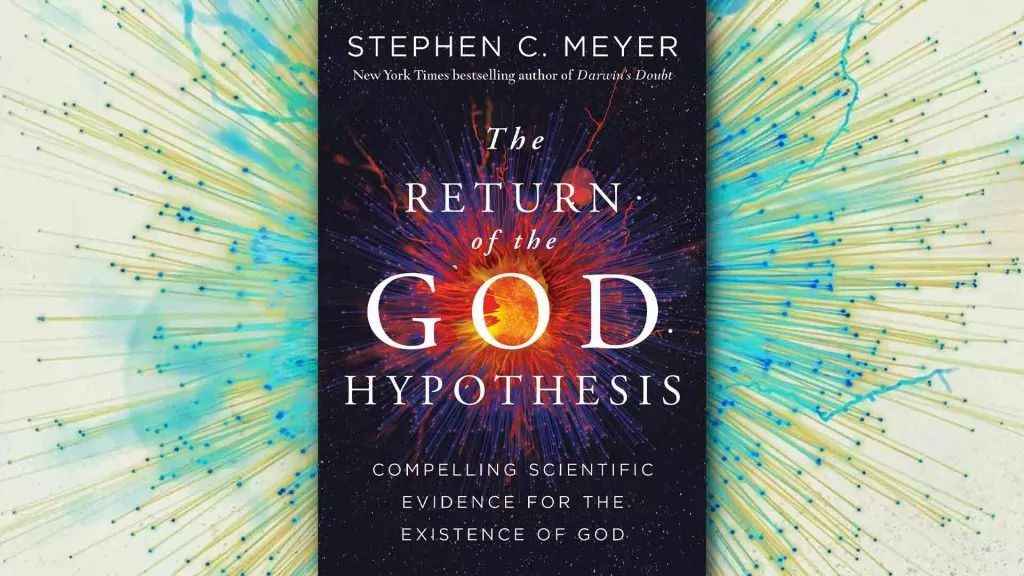
Is God a Hypothesis? A critical review of Stephen Meyer's "Return of the God Hypothesis"

Stephen C. Meyer’s Return of the God Hypothesis continues to receive accolades. Most recently, World magazine chose it as one of their 2021 books of the year. On Amazon, as I write, it’s currently the #1 best-seller under “Creationism” and #4 under “Science & Religion.” This is an important and influential book coming out of the Intelligent Design movement. However, from a biblical perspective, it has several glaring problems. The subtitle reads, “Three Scientific Discoveries that Reveal the Mind Behind the Universe.” Those three “discoveries” are: the Big Bang the fine-tuning of the universe the existence of highly-detailed DNA information. Meyer works with these three to argue for the eminent plausibility of the “God hypothesis.” 1. The Big Bang While I’m not qualified to evaluate the scientific evidence for the Big Bang, I do know that Big Bang cosmology is not consistent with the biblical account of origins. In a video on this subject, Christian astrophysicist Dr. Jason Lisle explains how Big Bang cosmology and the Bible conflict at several key points. They conflict on the method of creation; the Big Bang says that the universe came into existence naturalistically, whereas the Bible says that it was created supernaturally by God. There’s also a conflict on the time scale; Big Bang cosmology says that it happened billions of years ago, whereas the Bible says that creation happened several thousand years ago. The order of events is different, with the Bible saying that the earth is made before the stars. Finally, Dr. Lisle points out how they each tell a widely different story of the future. Big Bang cosmology posits a universe that will eventually end in heat death. The Bible says that God will judge all people and then there will be a new heavens and new earth where God will dwell with the redeemed. The Big Bang irreconcilably contradicts the Bible. A Bible-believing Christian can’t use something that contradicts God’s Word in order to argue for the likelihood of the existence of God. That brings us down to two scientific discoveries. 2. Fine-tuning I won’t say much about the second one, the fine-tuning of the universe. Given what the Bible says about God as our wise and good Creator, one would expect what Paul Davies is quoted as saying: “The really amazing thing is not that life on earth is balanced on a knife-edge, but that the entire universe is balanced on a knife-edge, and would be total chaos if any of the natural ‘constants’ were off even slightly.” While Meyer’s argument is that this fine-tuning points to the probability of a Creator (more on the problematic nature of that in a moment), the fine-tuning of the universe is indeed an observation consistent with the revelation of who God is in the Scriptures. 3. DNA information When arguing for the “God hypothesis” with DNA information, Meyer makes his case using what’s called “deep time.” Contrary to what the Bible indicates, Meyer believes the earth has a history involving hundreds of millions of years. In fact, chapter 10 is entitled, “The Cambrian and Other Information Explosions.” The Cambrian explosion allegedly took place 530 million years ago. As the story goes, this involves an explosion of new life forms in the fossil record. Meyer argues that this also represents an explosion of biological information. It poses a difficulty for materialistic theories of biological evolution, but could possibly “also provide positive evidence for intelligent design” (p.209). However, for a Bible-believing Christian, the problem is that God said he created the heavens and the earth at the beginning (Gen. 1:1) – and Jesus said that God created Adam and Eve at the beginning (Matt. 19:4). If you subsequently take the genealogies of Scripture seriously, even granting some gaps, you’re left with a world with an age on the order of thousands of years, not millions. Some value Now before I get to the most serious issues with The Return of the God Hypothesis, let me say that Bible-believing Christians can get some value out of it. Some of the value comes when Meyer is critiquing materialist scientists. For example, Stephen Hawking is quoted as saying, "Because there is a law of gravity, the universe can and will create itself from nothing.” But Meyer points out that: “causes and scientific laws are not the same things…The laws of physics represent only our descriptions of nature. Descriptions in themselves do not cause things to happen.” There’s yet more value in Meyer’s critique of prominent theistic evolutionists like Deborah Haarsma of BioLogos. I also appreciate his setting the historical record straight on Isaac Newton and his alleged “God-of-the-gaps blunder.” As Meyer describes it, “Supposedly, Newton invoked specific acts of God (or angels) to occasionally fix the orbits of the planets and to compensate for Newton’s inability to describe the regular motion of those planets accurately.” However, when Meyer went back to the original source, Newton’s Principia, he discovered that Newton didn’t posit this kind of divine action at all. The story is completely false. Finally, Meyer illustrates how materialist scientists and philosophers live contrary to the beliefs they profess to hold. For example, David Hume questioned the uniformity of nature.  This is the idea that, in the future, the world will act as it has in the past.  While Hume questioned it, he still acted as though he believed in it, just as every skeptic does when he walks through a door rather than a window. As Meyer notes, “All of us act as though we believe the world in its most fundamental regularities, will behave in the future the way that it has behaved in the past.” Alvin Plantinga furthers this point, in noting that, if evolutionary naturalism is true, “we have significant reason to doubt the reliability of our minds.” Charles Darwin had already identified this problem in an 1881 letter: But then with me the horrid doubt always arises whether the convictions of man’s mind, which has been developed from the mind of the lower animals, are of any value at all or at all trustworthy.  Would anyone trust in the convictions of a monkey’s mind, if there are any convictions in such a mind? Yet no one really does doubt in this way. To do so would ultimately be self-defeating, since we would also have to doubt our beliefs about evolutionary naturalism. This is a good example of answering a fool according to his folly (Prov. 26:5). Too tentative My two biggest beefs with Return of the God Hypothesis have to do with the method of argumentation and the conclusion which results. There are these three scientific discoveries mentioned earlier. Meyer incorporates these discoveries into what’s called an abductive argument for the existence of God. Such an argument works by way of inference to the best explanation. It takes this form: Logic: If A were true, then C would be as a matter of course. Data: The surprising fact C is observed. Conclusion: Hence, there is reason to suspect that A is true. Filling it out, it looks something like this: Logic: If a personal God existed, then DNA information would be as a matter of course. Data: The surprising fact of DNA information is observed. Conclusion: Hence, there is reason to suspect that a personal God exists. One of the crucial things to note here is that the “logic of abduction…does not produce certainty, but instead plausibility or possibility.” This tentativeness is reflected throughout Meyer’s book. His argument is ultimately that “the God hypothesis” is possibly the best explanation of the three scientific “discoveries” discussed. So: a personal God quite likely exists. From a biblical perspective, this is unacceptable. The Bible doesn’t reveal the existence of God to us as a likelihood, but a certainty. His existence is real and on some level everyone knows it (Rom. 1:18-20). Furthermore, the idea that God is a hypothesis to be tested or evaluated by sinful creatures is repugnant to biblical revelation. The creature ought never to stand in judgment over the Creator or reduce him to a hypothesis. Human beings have no right to judge God’s existence or anything else about who He is or what He does. The whole premise of Meyer’s book flatters people into thinking they do have such a right. That’s not a minor procedural peccadillo, but a massive misstep, even an affront to the Creator. Too general Meyer’s conclusion has another problem embedded in it. He argues for the plausibility of the existence of a personal God. In chapters 13 and 14, his reasoning excludes pantheism and deism as possibilities. That leaves him with a God who is personal and involved with his creation, not only at the beginning, but on an ongoing basis. But the problem is that this is still not the God of the Bible. Meyer’s God who very likely exists could be the Allah of the Muslims, the God of the Jews, the Jehovah’s Witnesses, or the Mormons. What we’re left with is plain vanilla theism. Meyer has argued for a god, but not the Triune God of the Bible, and certainly not for the biblical worldview package. Meyer professes to be a Christian, but his book could just as well have been written by a Jew or Muslim. Conclusion Ultimately all the problems in Return of the God Hypothesis trace back to one fundamental difficulty in Meyer’s method: he doesn’t start with the Word of God. Instead, he starts with the notion of neutral intellectual ground. He doesn’t seem to apprehend that the problem with unbelief isn’t intellectual, but moral. There is no neutrality. Those who reject the God of the Bible are rejecting him because of the wicked rebellion in their hearts. It’s this foundational issue that really needs to be addressed. Meyer doesn’t do that. In his book, there’s no sin from which unbelievers need to repent. There’s just errant thinking that needs more information and sounder logic. In his book, there’s no Saviour to whom unbelievers need to turn, no gospel to deliver from vanity and futility. There’s just science and logic putting our minds at ease about origins. I bought Return of the God Hypothesis in a Christian bookstore, but I really don’t know why it was there. Even if Christians may find some things of value, it’s not a Christian book. For a far better biblical alternative, I highly recommend Jason Lisle’s The Ultimate Proof of Creation: Resolving the Origins Debate. Dr. Wes Bredenhof blogs at Bredenhof.ca.  ...

Red heart icon with + sign.
Parenting, Popular but problematic

Patricia Polacco gets woke

In my idyllic and very Christian small town I keep forgetting that even here there’s a spiritual war going on. This past weekend I got a reminder in amongst the books we borrowed from the public library when two titles were pushing the same agenda. The first was by well-loved children's author Patricia Polacco about a family with two moms. God's view of marriage – as being between a man and woman – was represented in the story by a snarling, glaring neighbor. The second was a chapter book about a girl competing in a TV game show who had two dads. While we parents should know what our kids are reading, if you have a child who reads a lot this becomes harder and harder to keep up with as they get older. But, as the Adversary knows, you are what you eat. And if he can sneak in a diet of "homosexuality is normal," he can win our kids over before parents even know a battle is happening. So, what's the answer? Should we monitor our children’s book intake closer? That's part of it. Should we rely on Christian school libraries more (if you have access to one)? That seems a good idea. Would it be wise to invest in a high-quality personal home library – only fantastic (and not simply safe) books? That’s a great idea. But, as our kids get older, it's going to come down to talking through this propaganda to equip them to see through it. It will mean explaining to them that we oppose homosexuality because God does, and that even in prohibiting homosexuality God shows his goodness. As Cal Thomas put it: “God designed norms for behavior that are in our best interests. When we act outside those norms – such as for premarital sex, adultery, or homosexual sex – we cause physical, emotional, and spiritual damage to ourselves and to our wider culture. The unpleasant consequences of divorce and sexually transmitted diseases are not the result of intolerant bigots seeking to denigrate others. They are the results of violating God’s standard, which were made for our benefit.” We have to share with our children that our Maker knows what is best for us, and homosexuality isn't it. Like many an idol (money, sex, family, career, drugs) it might even bring happiness for a time, but, like every other idol, it doesn't bring lasting joy, it won't save us, and it will distance us from the God who can....

Red heart icon with + sign.
Popular but problematic

Fifty Shades of Grey - the phenomenon

I have to begin this piece with a couple of confessions. The first is that I have not yet read Fifty Shades of Grey, the bestseller that “everybody” is talking about. The second is that I have no intention whatsoever of doing so. The downright tawdriness of it all just doesn’t appeal. Now, as everyone knows, it is bad form to review a book that one has not read so rather than fail miserably in the attempt, my aim is simply to look at the Fifty Shades phenomenon through a Christian worldview lens. If you are wondering why we even have to consider this sort of thing, the answer is simply this: the walls of the church and of families are probably more porous than they have ever been, and rather than light pouring out from them into the surrounding culture, the traffic is largely the other way. Stuff is getting in, much of which is not good. Pretending it doesn’t exist is not an answer. Even Christians are reading books like this, which is obviously not good, but even if they weren’t touching it, the influence of such stuff would still manage to find its way into Christian families and churches as once cultural taboos become cultural norms. The only way to stop its pernicious effects is to know what it is we are dealing with and to be fully persuaded that we have the antidote. What is it? Just in case you have managed to remain blissfully unaware of its existence, E.L. James’s Fifty Shades of Grey is the biggest selling book in the world right now, having sold somewhere in the region of 40 million copies. It is also reputed to be the fastest selling paperback of all time, knocking J.K. Rowling’s Harry Potter series off the top spot. The plot centers on the “relationship” between a naïve 22-year-old woman, Ana Steele, and Christian Grey, a successful 27-year-old businessman whom she meets when interviewing him for a college paper. She is attracted to him and hopes for a romance, but it soon becomes clear that he is not the “flowers and chocolates sort” and the only kind of relationship he is interested in is a purely sexual one involving BDSM (bondage, dominance, sado-masochism). I won’t bore you with any more of the tacky details, suffice it to say that the rest of the book is littered with scenes that would find a comfortable home in any “hardcore” pornographic magazine. Why feminists love/hate it The most interesting thing about the Fifty Shades phenomenon is that the overwhelming majority of its readers are women. Why interesting? Well here we are half-a-century after the apparent emancipation of women, and millions of women are eagerly lapping up a pornographic book about a girl who submits to an overbearing, domineering deviant and lets him do pretty much whatever he wants to her. How empowering! How emancipating! Feminism can be mighty confusing to those of us outside the loop. Do feminists approve of pornography or do they condemn it? Is it a liberating and empowering force in the hands of women, or is it a demeaning and oppressive tool in the hands of men? Well that all depends on which feminists you happen to be speaking with. During the late 70s and early 80s a schism opened up amongst what were known as the Second-Wave Feminists, and in the ensuing Feminist Sex Wars two groups emerged, both using the term “feminists” to describe themselves, yet managing to come up with diametrically opposite views on issues such as pornography. A quick search of the web reveals precisely this divide over Fifty Shades of Grey. For instance, over on Feministing.com are the “Fifty Shades is liberation” sisters who speak in gushing terms about how refreshing it is for women to be able to read such apparently enlightened literature without feeling ashamed. One commentator says, “To me, the popularity of Fifty Shades is evidence that, at the very least, women like reading about many kinds of sex – and people should probably try doing all of them, because they all seem really great.” Meanwhile over on Hercirclezine.com, the “Fifty Shades is oppression” sisters stand aghast wondering how on earth their fellow feminists could possibly endorse such a book. As one commentator says, “These books tell women that they want not only to be objectified … but also that they want to be dominated – in the bedroom and outside of it. It’s pornography in its purest form, and pornography thrives because men demand it.” I must admit that if I have to stand with one group, I come down fairly and squarely on the “Fifty Shades is oppression” side. Of course pornography turns women into objects – that is the entire point of it. It is specifically and intentionally anti-relational. Fifty Shades of Grey is no different, and if the “Fifty Shades is liberation” sisters really believe that books such as these will not do their bit to further chip away at what is left of honor and kindness between the sexes then they need to do three things: Get with the real world; Study the statistics on the increase in sexual and violent crimes over the last 50 years and set them next to some figures charting the explosion in pornography; Go figure. What biblical submission isn't But much as I am with the “Fifty Shades is oppression” sisters in their criticisms of the book, this is as far as any alliance can go. They are right in-spite of their worldview not because of it. This is seen in the following comment posted on Hercirclezine.com, reacting to the news that the Anglican diocese of Sydney is about to include a pledge by the bride to “love and submit” to her husband: What I find especially disturbing is this new trend happening in Sydney in which women have adopted a trend from Fifty Shades of Grey. Their wedding vows includes a submission contract. This is degrading and is a giant leap backwards. All of these women who revel in being submissive are pathetic sheep stuck in a different time era (or possibly need psychological help). Somehow this lady and many others like her, seem to believe that the kind of submissiveness being vowed in the Sydney marriage service – lifted from Paul’s Epistle to the Ephesians – is the same as the kind of submissiveness being portrayed in Fifty Shades of Grey. For such folks, there are only two possible types of submissiveness in male/female relations: Islamist-style, where the woman is nothing but a drudge, emptied of any thoughts of her own and made to walk behind her husband dressed in something resembling a bat costume, or sexual-chattel submissiveness, where the woman is a mere slave to the demands of some overbearing deviant. And so when Paul writes that women must submit to their husbands, he must be urging either Islamist-style submission, or sexual deviance submission. Or both. Right? Well, not quite. This is what Winnie-the-Pooh might have called A Very Big Misunderstanding. Let me put it like this: Fifty Shades of Grey did not come out of a Christian culture. Nor could it have come out of a Christian culture. The culture it came out of is a secular humanist one which puts sex and the right to an orgasm on a par with the liberties granted in the Bill of Rights. So to the feminists who confuse the Apostle Paul with E.L. James: much as you might loathe Fifty Shades of Grey, you didn’t get it from my worldview, you got it from yours – a worldview that specifically rejects Christianity and all it has to say on male/female relations. What it is For the record, the type of submissiveness envisaged by Paul does not resemble the relationship of shoe to doormat, nor the relationship of pimp to prostitute (see Hebrews 13:4), but rather a wife submitting herself to a husband who “loves his wife as Christ loves the church and gave himself for it” (Ephesians 5:22,25). Of course it will be objected that many women aren’t married to such selfless men and so how can they be expected to submit. True enough, but Paul is writing to Christians within the context of the New Covenant, and so if any husband behaves in such a way as to make it just about impossible for her to submit to his headship, then as a last resort she has every right to go to the elders of the church, and they have every obligation to deal with it. At the same time, such an objection is a red-herring. For the feminist rejection of Paul’s teaching is not that a woman might have to submit to a lousy skunk, but that she has to submit to anyone – even to a self-sacrificing, loving husband. What they simply don’t get is this: the Christian woman’s submission is not a sign of inferiority. It does not mean that she is in any way beneath her husband in dignity or honor, or that her opinions and desires are of any less worth than his. On the contrary, she is his equal in every respect – the glory of her husband as Paul makes clear elsewhere – but with one exception: in the hierarchy established by God it is the husband that is the “family CEO.” He is the one who bears responsibility for its direction and he is the one who will have to give an account for what went on in it. Fifty Shades of Grey will no doubt continue to draw in its millions, and in so doing will give the hordes of women reading it a false sense that what they are reading is female emancipation. It is not. Neither is female emancipation to be found in first rejecting a Fifty Shades type of submission and then rejecting an Ephesians kind of submission because you can’t tell the difference. The truly emancipated woman is one who first trusts in Jesus Christ and then seeks a man who strives to resemble Him. Submitting to that kind of man will be her glory and her delight. This article first appeared in an edited form for Samaritan Ministries International....

Red heart icon with + sign.
Book Reviews, Popular but problematic

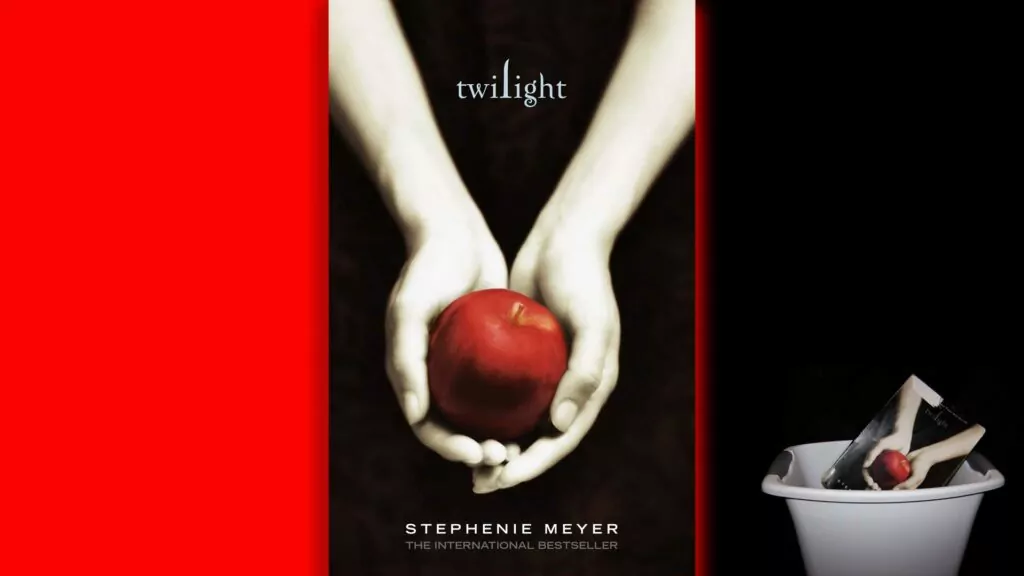
Twilight: a horrible book that fathers should consider reading with their daughters

In 2005 Stephanie Meyer published Twilight, a novel for teens she described as a "suspense, romance, horror, comedy." It tells the story of Bella, just starting grade eleven at a new school in rainy Washington state, and her love interest Edward, a ninety-something-year-old vampire. And to add to the oddness, the cover features a pair of pale hands offering up an enticing rosy red apple. That’s just a three-line summary, but it should be enough to creep out Christian parents; we know romanticized vampires offering up forbidden fruit can't amount to anything better than frothy trash, and might well be something worse. So we know this isn’t the sort of fiction we want our daughters reading. It might turn out, though, that they have other thoughts. This is the literary and celluloid big thing right now – Twilight has sold 17 million copies and spawned three sequels and two, going on three, films with the third due out this June. It’s an entirely female fan base, and as the books and movies keep coming the phenomenon is also making inroads into the Church. If you have daughters and you haven’t already seen these books lying around your house you soon could. Of course if the series hasn’t made it to your house yet, why not keep it that way – tell your kids to steer clear. But if it’s already arrived, or if your older daughters are pressing to read it and asking you what’s so wrong with it, you might want to rethink a blanket ban and instead decide to read through the first book with them. Reading trash Reading trash with your daughters isn’t an approach I’d normally advise, but there are a couple reasons it’s worth considering in this case. The first is a matter of practical parenting. When our children are young we tell them what to do and what not to do, and shouldn’t feel obliged to always explain ourselves; our job is to protect them, their job is to listen. When they get older this "no questions asked" approach has to be replaced and explanations have to be offered so our children can learn to grow in discernment. Telling a seventeen-year-old they are forbidden from reading a particular book is treating them too much like a ten-year-old; we don't want to be doing that unless we really have to. If our daughters want to read these trashy novels that might be an indicator that Mom and Dad still have some important teaching to do, and reading the first book together is one good way to do it. Secondly, if your daughter is a fan of these books, she’s being attracted to something that should concern parents. On the surface these seem silly, not-so-out-of-the-ordinary teen romances mixed with a bit of nonsense about vampires. The hero is a bloodsucking demon but he is at least a restrained sort who limits himself to animal blood. Because it is written by a good Mormon lass, there is no swearing, and no sex (or at least none in the first book). In fact, even though Bella desperately wants to become a vampire like her beloved Edward, he won't consider nibbling on her neck until after they are married (no premarital sex and absolutely no premarital blood letting - there's an abstinence message we can all appreciate - phew!). The master manipulator But below this PG surface there is a much simpler, much more vile story being told about an abusive relationship. That’s not how young women are understanding it but any father will recognize what’s really going on. Edward is the boy fathers have nightmares about, and it has nothing to do with him being a vampire. He is a self-confidant, self-absorbed charmer preying on a vulnerable, lonely young woman. When Bella looks in the mirror she sees a “soft” unathletic girl with “pallid” skin who can’t figure out how to get along with anybody. Edward is the boy who dazzles her. She describes him having an “absurdly handsome,” “perfect face” complimented by “a crooked smile so beautiful that I could only stare at him like an idiot.” And from his “perfect, ultrawhite teeth” and “flawless lips” proceeds a  “musical voice.” He is, in short, gorgeous and Bella can’t figure out why he would ever be interested in someone like her. We get pages and pages on his looks, long before we learn anything about what he’s like – Bella is obsessed before they even speak. And what do we learn when they do start talking? Edward is charming when he wants to be, but also prone to sudden and “unpredictable mood” swings – one moment he’s smiling, the next he is furious. In the space of ten pages he goes from being amused to bothered to charming to scowling to mischievous to fierce to smiling, and then fury. Pastor Douglas Wilson has been doing a chapter by chapter review of Twilight and in his posting on Chapter 10 describes the game Edward is playing: “If you want a certain kind of female to do anything for you, and follow you anywhere, keep her off balance. Be moody and unpredictable. Be as erratic as you can be, and blame her for every change. Wobble down the highway, and every five minutes yell at the person in the passenger seat. The astonishing thing is that this really does work, but it only works if your daughters are the kind of girls you shouldn’t want them to be. It only works if they have the kind of parents who let them read Twilight like it was a Nancy Drew book from the fifties or something.” Much has been made of the couple’s abstinence pledge, but Edward, it turns out, is the sort to push boundaries, to see just how far he can go without losing control. And Bella is a willing victim – she doesn’t care if he does lose control, even if it destroys her. Her only concern is that she wouldn’t want him to feel bad about it afterwards. Good girls and bad boys If our daughters aren’t seeing through Edward, if they're proceeding from the first book to the second and third and fourth, still caught up in the “romance” of it all, it’s clear Dad needs to step in and do some remedial teaching about the right sort of things young women should be looking for in young men. But if this Twilight phenomenon goes beyond our household and our daughters and has spread amongst all the young women of our churches it could be an indicator about a lack in our young men. Good girls are most attracted to bad boys when all the nice boys they know are of the spineless sort. Yes Edward is moody, selfish and above all dangerous, but he does offer a perverse, domineering form of male leadership. Young women in the world around are starved for real male headship so they’ll find even a sham “dazzling.” If our Christian young women are succumbing to this craze it could mean they are similarly deprived. This was first published in the March 2010 issue. Jon Dykstra’s copy of Twilight served for some time as his coffee cup coaster, and was infinitely improved in its new role....

Red heart icon with + sign.
Popular but problematic

The Shack

The Shack, the sensational book by William P. Young, was the #1 paperback trade fiction on the New York Times Best Sellers list for more than a year and a half. Over 18 million copies have been sold. It has been praised by none other than Regent College theologian Eugene Peterson and recording artist Michael W. Smith. The Shack is a gripping story. Mack's little daughter, Missy, is kidnapped and murdered while Mack is on a camping trip with his three children. The place where she was killed, a shack in the mountains, is discovered, though Missy's body and the killer are not found. Some time later, Mack receives a letter from God, "Papa", inviting him back to "the shack." Mack goes to the shack and meets the Trinity there. God the Father is an Afro-American woman; Jesus is a mildly clumsy blue jeans-wearing man; the Holy Spirit is an ethereal woman called Sarayu. In unique sessions with each of the Trinity, Mack struggles with anger against his abusive father and his hatred against Missy's killer. After he forgives his father, God the Father appears to him – and for the rest of the story – as a man. After Mack forgives the murderer, God leads Mack to Missy's body and the four of them bury her. Mack, then, returns home to his wife Nan and his other two children. It is a very imaginative story, but contains some serious theological difficulties. Running up against the second commandment Young runs into trouble with the second commandment which says that we are not to make an image of God in any way and that God cannot and may not be visibly portrayed in any way. When Young "paints a picture" of God with words, he bumps up against the second commandment. Arguably, one could portray Jesus, since he is a true man, but one may not portray the Father nor the Holy Spirit. "You saw no form of any kind the day the LORD spoke to you at Horeb out of the fire. Therefore watch yourselves very carefully, so that you do not become corrupt and make for yourselves an idol, an image of any shape, whether formed like a man or a woman.…" (Deu 4:15,16). Wrong on the Trinity Young's view of the Trinity is not right. God the Father, at one point in the book, says that he is truly human in Jesus, and he has scars on his wrists to prove it. The wrong teaching that Youn g subscribes to at this point is likely patripassionism, the teaching that the Father also suffered. Young confuses the persons of the Father and the Son. The ancient Athanasian Creed warns against this. Wrong on the atonement Young also espouses a wrong view of the extent of the atonement. Whereas scripture teaches that Christ died for the forgiveness of the sins of his people, Young says that God has forgiven all sin in Christ and that it is up to the human individual to choose relationship with the Father. His view of the atonement is Arminian (see Chapter II, Canons of Dort); his view of man's unregenerate will is Pelagian (see Chapter III/IV, Canons of Dort). Although it's a nice story to read, I cannot recommend The Shack because of its many doctrinal errors. This review was originally published in December, 2008 Year End issue of Clarion magazine, and is reprinted here with permission. Some of the numbers have been updated to 2016. Rev. George van Popta is the Minister Emeritus for the Jubilee Canadian Reformed Church....