Transparent heart icon with white outline and + sign.

Life's busy, read it when you're ready!

Create a free account to save articles for later, keep track of past articles you’ve read, and receive exclusive access to all RP resources.

White magnifying glass.

Search thousands of RP articles

Helping you think, speak, and act in Christ.

Open envelope icon with @ symbol

Get Articles Delivered!

Helping you think, speak, and act in Christ. delivered direct to your Inbox!


Most Recent


The Rest


Red heart icon with + sign.
Technology

Less screens = more life

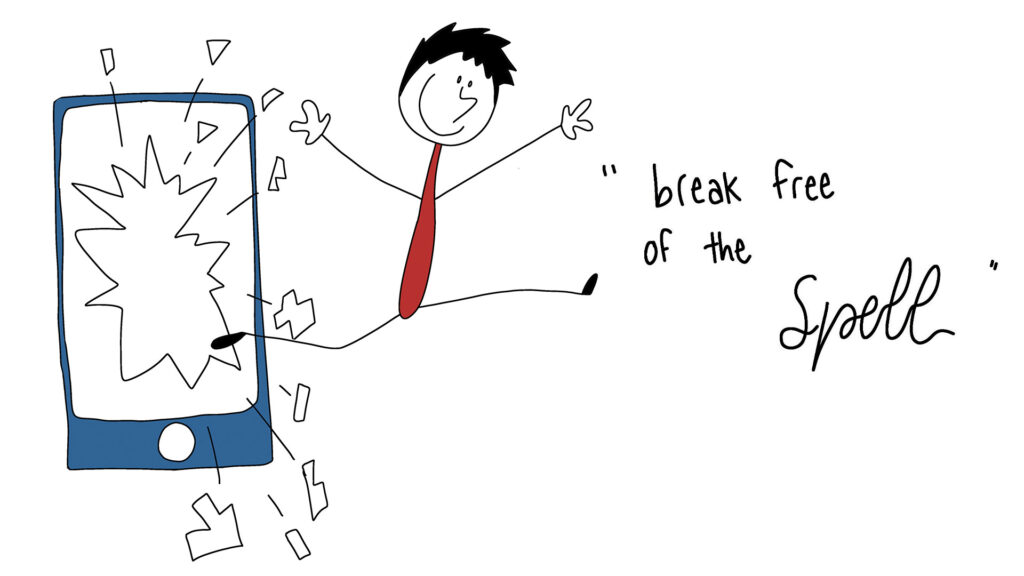
What we learned by stepping away from our phones for 10 days ***** We were hoping for 200 to sign up. Turns out a lot of us were ready for this – more than 900 registered for RP’s July 21-30 screen-fast challenge, and we heard about others who joined the fast without signing up. Safe to say, over a thousand people across the country came together to put our screens in their place. That is amazing! But maybe it shouldn’t have been surprising. God’s people know He wants us to make good use of the time He’s given us, and we know that our phones too often have us wasting moments that turn into minutes, which can add up to lost hours each week. We needed to hit the reset and get back control. So how’d we all do? Of the 160 responses we received, three-quarters managed to stay away from their screens for 9 days or better. They also shared stories, tips on what worked, what they found toughest, suggestions on how we could do this even better next time, and what got them most excited about the fast. And we’re very excited to share their thoughts with you. EYE OPENING One term kept popping up in the feedback – “eye-opening.” “It was a very humbling experience for me. I am a fairly busy person as it is, between nursing school, 2 kids, and running a household, but I will say that the amount of hours I still managed to waste away doing mindless scrolling or pointless video-watching was disconcerting, to put it lightly.” “I thought I was pretty good about staying off my phone, but I really had to remind myself not to pick it up. I've only had a phone since October, and already it has become such an integral part of my life.” "The screen-fast started while we were away on vacation, and what a blessing this was! At first, I thought it would be easy; after all, I had books to read, family to visit with, and a beach calling my name. I had deleted all of my social media accounts a couple of years ago. I thought I barely used my phone in comparison to others. Boy, was I wrong. I never realized how often I was reaching for my phone, oftentimes for no specific purpose other than to fill time or cure boredom! Looking at the weather, reading the news, playing games – my phone sucked me in even without social media being present! The screen-fast has truly been a blessing. It reminded me of the value of being present, of shared experiences, of all the little moments that I would have missed out on had I been scrolling on my phone. I learned that it's okay to have moments of quiet, stillness, and even boredom! Sometimes, it is in these quiet moments of being in creation that God speaks the loudest: His power in the wind and waves, His beauty in the flowers, His tenderness, care, and grace towards me in that He used these moments to calm any anxieties that were lurking within me. Thank you, Reformed Perspective, for encouraging this experience!" “My oldest (11) had a hard time sticking to the screen-fast and caved 3 times. Hard to believe how much of a pull a screen has on a person! Makes me want to live in the Little House on the Prairie times, where screens just weren’t available and outside play was their entertainment.” “I just itched to check social media and would find myself comforted by just holding my phone close, even though there was nothing to look at. I realized that I don't like this about myself.” “It was well needed and brought my screen time down to about 15-30 minutes a day from my usual 2-2.5 hours. I hope to keep my screen time down as much as I can because I’m so much more productive and observant of the world around me when I’m not on it.” TOGETHER IS EASIER Some participants didn’t know anyone else doing it, even with a thousand across the country involved. Those with friends and family joining in found it much easier. “My sister and I challenged each other and we both finished (almost) successfully. We both started reading again after having lost the habit of reading and gained the habit of scrolling. I’m very happy to be reading again and I noticed how much I can get done with the time I used to waste. I will definitely be more careful with my screen time in the future.” “I found that since my family didn’t participate, it was hard to maintain self-control when others were using their devices.” “I did it with my wife – we found that especially when we were both free in the evening, we would be more productive, but also, we spent more quality time with each other. It made me realize how often I would just reach for my phone when I was bored or between tasks; it feels great to have kicked that habit.” "We had family come for summer holidays and they willingly partook (kids too)! Fishing and bike rides at 7 am rather than cartoons…win! We enjoyed creation so much more, especially in the evenings. I loved having it as a challenge; it kept me more accountable and successful. Thanks for doing this for us!" DON’T ALWAYS NEED INSTANT ANSWERS “I have a tendency to google everything as it comes up in a conversation, and not being able to was refreshing, and kept me more focused on the person instead of the topic.” “The thing that surprised me was how often I had the compulsion to Google a question that popped into my mind, or research the proper way to do something, or make a quick purchase of something I remembered I needed. I realized that technology is very helpful, but also there is benefit in taking a pause, making a shopping list, or asking a friend rather than Google when I have a gardening question. My 10-year-old said that she found more space to be creative when the computer and TV was off. " “My kids didn't miss their own screen time, but they realized how much they asked me to look things up for them. Not having immediate access to information is not such a bad thing.” FAMILY-LIFE Less screens = more life was evident on the home front. “We had meals at the kitchen table instead of in the living room while watching YouTube.” “I noticed our kids really improved in playing for longer periods of time. If they complained they were bored, I would suggest they try an activity for 20 minutes, and often 1 hour later they would still be busy.” “We did do more different things together when we didn't spend as much time playing games or watching videos on the TV or computer. It forced my kids, in particular, to stretch their imagination a bit to come up with more different things to do. The intermittent cries of 'I'm bored!' were met with, 'Well, then you need to find something to do!' My kids had always been good at keeping busy, but it was good for them to exercise those creative muscles, and remind us all of all the options that we have, both on and off the screen.” “The main things I've been struggling with were not wasting time on my phone (e.g., games, videos), not using my phone during time with my toddler, and not using my phone in bed, so I focused on those and was able to significantly improve in those areas. It definitely helped with spending quality time with my son without distractions so that I was more focused on him and his needs.” “It helped me reconnect with my wife. Instead of sitting on the couch consuming content in the evenings, we went for more walks and had more time to talk about what was going on.” “There was a lot more interacting happening throughout the family, and everyone seemed happier. It felt like a lot less fighting happened.” “It was easier to connect and interact with my kids. I realized how much I used my phone when they were awake even though I thought I was being conscious of not using it while they were awake." “My children (4 and under) appeared less needy, and I think it is because I was more focused on what was going on around me.” “Because I was screen-free, my kids didn't even ask for screen time. My 18-year-old daughter loved it. She noticed she was far more creative and read more books (which is her natural habitat) than when she had a screen to distract her.” “It was harder than I thought it would be. Especially right before bed. But not being on screens before bed allowed more time for my wife and I to spend time together.” WANTING TO BE AN EXAMPLE “Helped me to realize that in a screen-filled world, as a parent and adult, I am an example to my daughter and the younger generation as to how much a phone has a hold on me." “It was better when the children are around not to have YouTube on in the background; I could be more present with them, even while doing dishes. I think I will continue to try to save my Podcast/YouTube listening for when the children are in bed.” “I am disappointed that I didn’t do this sooner. My oldest kiddo is 7 and I feel like my phone has been a large part of her life. It’s my job now, as it was before, to teach her, along with my other kids, how to use this technology properly and not to use and abuse it. I am striving to use it less and less, and more for emergencies, or for the free time that I’ve allowed myself to use it.” DEVOTIONS Many mentioned how helpful the fast was for their devotions, making sure time with the Lord didn’t get crowded out by inconsequentials. “Just made me realize I need to read my bible FIRST……not after the morning's scroll!” "I found I actually had time to do my devotions in the morning, even if my kids were up. Before I had been grabbing my phone if I wasn’t going to have perfect uninterrupted time for devotions.” “My morning devotions improved immediately! When you don’t have your phone in the morning you really do need to replace it with something. " READING In addition to the Bible, many, many other books (and at least one magazine) were read too. One person shared: "More reading in 10 days than the last 3 years!” "I definitely did more reading! I haven’t picked up a fictional book in a long time because, as a busy mom, I found it a ‘waste of time’ to read fiction…. somehow scrolling on my phone every evening to have some mindless down time was better?! I don’t think so. I enjoy that time in the evening to relax for a bit, but it is much better spent reading an engaging book!” “I read the whole RP magazine front to back in the moments that I would pick up my phone when I was bored.” “The biggest difference for me was dedicating more intentional time to read. I managed to finish 3 of Jane Austen's novels. I'm thrilled to add them to my recommended reading list!” “…relearned how to read a book in under a day. Been through so many books.” “…for downtime, instead of watching a show every night like I normally do, I read more and had more conversations with my family as well.” BETTER MENTAL PLACE Sociologist Jonathan Haidt is convinced that social media is fueling this generation’s teen mental health crisis, but doing without Facebook and Instagram isn’t just good for the kids. “In regards to social media particularly, the fast made me realize that while social media can be enjoyable and good, it's also almost like a subconscious burden to try to ‘keep up’ with everyone and everything all the time. Being off of it for 10 days was really freeing and refreshing.” “I… learned that when I'm anxious, instead of running to Google to try to ease my anxiety, I should run to God in prayer.” “It felt good, in the sense that my brain didn't feel distracted by useless information coming in at a fast pace. I found I could spend time on my screen sorting photos, but I didn't scroll Instagram. It took a few days to notice that my brain felt a little less full, and I felt totally focused on my life, instead of having a 20-minute binge session after lunch to be inundated with strangers’ lives. I did read more, during that after-lunch quiet time, and also before bed. My screen time didn't interfere with family time, it was just something I would do to 'wind down' or 'relax' once kids were napping or in bed for the night. I didn't miss it. One evening I did log on to find a recipe I'd saved on Instagram and ended up scrolling...I felt gross. It felt like I had to re-join the real world when I finally put my phone down, and it became very obvious to me how little value it adds to my life for the amount of time spent on the app.” “One of the biggest things for me was not checking my work email on my phone. I didn’t realize how much head space that had been taking up! It was a big relaxant to have set hours to check only on my laptop.” “My brain felt quieter. All those little moments where I would have quickly checked Facebook, or scrolled, to ‘relax’ were removed from my day and I didn't realize how much they cluttered my mind. The screen-fast really helped me to be more aware of that, which will hopefully give me more control over those impulses to reach for my phone moving forward. My husband and I both did it and found ourselves going on more evening bike rides, having more chats, and just doing more quality time things than we did before. It was so refreshing, and I think we definitely feel more connected. I also had more focused time for devotions, and because I deleted many apps from my phone, I had no reason to pick it up and get distracted. I'm hoping to keep a lot of the habits enforced by the fast because I definitely need them, and life is better when your phone has less time in your hand!” “What a beautiful challenge! My experience was that I suddenly became much more present: in my home life, my church life, and my friend life. It brought me closer to God in my devotional time, provided time for reflection, enabled me to read most of a book, and granted me a peace that I didn't even realize was missing.” “I also felt less stress because I was not being inundated with news…. Although a person never thinks they are spending ‘that much’ time on their phone, it's not just the physical act of scrolling or being on social media. It occupies mental space after you put the phone down. Your attention is divided and things you see and do on your phone inadvertently affect your mood and ability to focus throughout the day. You may be worrying about something you saw in the news and it will affect how you treat people around you, even if you cannot do anything about it, or it doesn't even really affect you. You may be in the habit of checking your phone for notifications every few minutes (you'd be surprised how often you may do this) and it can make the simplest tasks take much longer than required, which will in turn make you feel frustrated. The less time you spend on your phone, the more wisdom you will use when you do pick it up. I noticed I was much less likely to scroll Instagram and more naturally inclined to listen to a sermon in the evening after the children were in bed. I was always feeling stressed about the time I thought I was spending on my phone, and appreciate the push to try just being on it less. It has certainly been an eye-opener for me!” “I found myself more content with everything, and could easily enjoy hobbies I had long forgotten. I found myself thanking God for the little moments and was reminded of the blessings He has given me." “I listen to a lot of podcasts and audiobooks while doing housework, and not doing that for 10 days made me realize that always having something on to listen to does not help me be present with my family. It was good to have the quiet space, and engage in some spiritual warfare by taking thoughts captive that are not obedient to Christ. I’m not going back on any social medias because I’ve broken the spell that says I will miss out or not be in-the-know…. They take up too much brain space that is needed for more important things.” BETTER SLEEP "I feel I slept better because of no screen time before bed, and I read a biblical book in the morning instead of going on Facebook.” “…I had to get used to sleeping without going on my phone right before bed. I had dreams that I could remember in the morning!” MORE PRODUCTIVITY Ten minutes here, and ten minutes there, can really add up in time wasted, but also in time put to good use. “I somewhat reluctantly signed up for the screen-fast, as my wife and kids were participating, but reflecting on it now, I can see God's hand working through them and the screen-fast. I spent more time reading the Bible and additional study material, and more time in prayer and reflection. I was able to think more clearly after the first few days, as the cheap distraction of screens was gone. This gave me time and focus to think through issues at work which I've been contending with for around a year, and come to difficult decisions there that I had perhaps been avoiding.” “I am working on a baby blanket for my son (knitting) and I was able to set a minimum for how much I wanted to complete on it daily, a minimum that seemed impossible to me before, and I was actually able to meet the minimum no problem.” "My husband participated as well, and has continued to not go onto social media. I found it most difficult to not pop onto social media when waiting for the mundane things, like water to boil/meat to cook. I would often go onto social media in these moments; at first it felt odd to not scroll, but I quickly would start to tidy the kitchen in these moments, so the result is a cleaner house :) and I did spend more time in God's Word, and reading short devotions here and there instead of picking up my phone." “The first few days I noticed a significant amount of improvement in my productivity. Without doom-scrolling on my phone, I was able to head out for a walk, dust off my book, and go to bed on time. I was able to spend a little more time with family and friends. Rather than watching a movie with my girlfriend after a long day, we decided to head out for a drive to enjoy the summer weather, which was awesome! I was able to spend more time reading my Bible before bed by keeping my phone in the kitchen, and used a good old-fashioned alarm clock to wake me up.” DOWNSIDES While there was lots to love about putting our phones aside for a time, there were some downsides too. “…I also found that it made me less likely to organize get-togethers if I had to phone people up instead of fire off a quick text; the kids and I ended up not doing as many things with friends or neighbors. I did make a few nice phone calls to people, since I was conscious of phoning instead of texting.” “I had a hard time not listening to my audiobooks and podcasts. I was more available for my kids (when I listen to audios, I have noise-cancelling headphones), but I had less ambition to do projects around the house that I would normally listen to something while doing. I also missed watching something at the end of a long day, but did enjoy my walks, and more reading of a physical book compared to an audio.” "I felt very disconnected from my family without WhatsApp group messaging! I was available via regular messaging, but it turns out that one-to-one messages are a rarity... if you aren’t on the group chat there isn't much to say. My 10-year-old son said: ‘It affected me because you didn't know as much about what other people in our family were doing.’ Keeping email off my phone (both work and personal) will stay. It was very restful to not be constantly checking emails and going down rabbit holes in the moment." “I missed seeing update posts from friends on Instagram or Facebook. For example, there was a family wedding and I wanted to go on social media to see some photos. I felt that I was missing out, not being able to do this. I came to the conclusion that family and friend updates can be one of the fun things about social media.” LASTING IMPACT? How can we apply the lessons learned? Some are planning on “having periodic screen-fasts in the future.” “…our family has decided to do a ‘modified fast’ for the rest of the summer and this was initiated by our children. Our stage of life (everyone working and/or attending post-secondary) means we don’t often have large blocks of time together but it was nice to spend more time in the evening sharing about our days and chatting.” “Going forward, I’ve used the settings in my phone to limit my time on certain apps. I’ve also cut out around half of the influencers I follow on Instagram so that I’m only following people I learn from (news, DIY, Christian content, etc.)" “Now that I’m done, I’m way more okay with leaving my phone in a bag or even at home.” “Going forward, I will be deleting social media apps from my phone. Thank you for prompting us to give this challenge a try! I think that it's fair to say that it will be life-changing.” “I intend to do this screen-fast again in the future and strongly encourage anyone who has not done it to do so, and aim to grow in service of our gracious God.” “I enjoyed the screen fast, and hope to do it again, and include more of my family members.” “From the get-go, I decided not to try 10 days but figured I could do 5. And you know what? It was easy! And it was good for me. I know I spend too much time on social media and playing games on my phone. I plan to do it again on a regular basis.” TIPS The most common tip mentioned was to delete social media apps from our phones. Another idea was to buy an alarm clock instead of using your phone to wake up. Here’s more… “…eliminate phones from your bedroom. Reading my Bible nightly is way more likely to happen when Instagram is more than a click away. That Christian influencer's advice might be insightful, but God's Word will not return empty (Isaiah 55:11)." “I …have continued a few habits I built, like delaying the first phone check of the day.” “I found freedom also in separating my phone from bedtime and wake time. This led to more prayer time. I think I was allowing the phone, instead of faith, to ease me into my day and I’m looking forward to continuing practice.” “We realized that phones are still an essential part of our lives but that the 'social media' part of it doesn't need to be so extensive. A regular phone call to someone can be so enjoyable and truly connecting. I have since called many people and just had a good chat. Hoping to keep this method up. I will keep my notifications 'OFF.'” “I made a rule for myself a couple years ago, that at the start of every day, I may not look at my phone until after my breakfast devotions were finished. It really helps to be very disciplined about not falling into bad habits. Make rules and stick to them. I also tell myself that it's okay to be bored.” ***** Join us for our 2026 screen fast from July 13-22! Sign up here. Cartoons by Hannah Penninga....

Red heart icon with + sign.
Internet

Is AI helping you, or dumbing you down? Yes.

3 questions to help us use AI better. ***** The Preacher declares in Ecclesiastes 1:9 that “there is nothing new under the sun.” He was saying it with a sense of despair, but there’s a reality there that can prove helpful too. Even with something newfangled like AI, the issues aren’t all new. And because we’ve seen some of this before, we can look to history for guidance. So here are three questions to help us look to the past to see how we can best use today’s AI. Q. 1: Am I using AI to skip my exercise? For as long as there have been schools, there’s probably been boys learning how to do division in ways their math teacher wasn’t intending. If little Timmy and a couple of his third grade buddies did their homework together, the three of them would quickly realize that an assignment of 15 questions could be done 3 times as quickly if they did 5 questions each and shared their answers. That gets the assignment done in record time, but these “get ‘er done” boys misunderstood the point. The teacher’s goal isn’t simply to get 15 right answers from them – she could go to the back of the teacher’s edition if that was all she was after. What she wants is for her students to go through the struggle of working through each of the 15 questions so that their brain muscles will grow. What Timmy has done instead is the equivalent of recruiting his two friends to each attend a third of his basketball practice for him. That’d be a better cheat actually, because it wouldn’t take him long to figure out that his shooting percentage isn’t going to improve so long as he isn’t putting up the shots. The issue is older even than schools, addressed in various ways throughout Scripture, but maybe most pointedly in Proverbs 10:4: “Lazy hands make for poverty, but diligent hands bring wealth” and Galatians 6:7: “Do not be deceived: God cannot be mocked. A man reaps what he sows.” Now, in our AI age, there are students using ChatGPT, Claude, and Gemini to skip their school “workouts” in this updated fashion, and still not making the connection as to how that’ll keep them mentally and spiritually flabby, stopping them from growing in knowledge, wisdom, and capacity. Adults have their own version of this problem, complicated by the reality that sometimes it is just about “getting ‘er done,” while other times it’s about needing to get stretched and refined by the work you put in. Need a pile of rocks moved? Then having a couple of friends help is a great idea. Got access to some tech that will do the heavy lifting for you? Great, go drive that tractor over here. In an office setting, AI can help us move all sorts of “rocks,” by doing the big-effort-but-little-thought tasks of quickly compiling your week’s billable hours, assembling your spreadsheets into an array of insightful, colorful pie charts, or gathering and summarizing vast amounts of research material. But if, like little Timmy, we thought it was always about the results, we’d miss out on when it’s important to put in the sweat. There’s a Stephen King quote about how “I write to find out what I think” and it’s exactly there that AI might be most harming us. We don’t all have to be writers, but if we’re going to be thinkers, then we need to be able to get our thoughts down on paper, or up on a computer, or batted around with our coworkers. That process will allow them to be tested and refined, and sometimes discarded. It’s the sweat invested that helps us really think through things. AI can even be a part of the process, being a part of the batting-around refinement. But we can’t use it to skip over that process. When we should or shouldn’t use AI will depend on whether we just need to get ‘er done, or whether we should be putting in the exercise to increase our own capacity, knowledge, and wisdom. Figuring out which we’re doing is complicated by the fact that our jobs are going to regularly involve a mix of both. A pastor might use AI as an upgraded search engine to much more quickly gather up what his most trusted theologians have said about the text he’s planning to preach on. But he can’t pull a Timmy and have AI write his sermon, because his job isn’t simply to read a sermon, but to glorify God in the preparation of it, so that he can tailor it to the flock God has entrusted to him and not to AI. Q. 2: Am I owning my output? And that takes us to the issue of responsibility. AI brings up some powerful temptations on this front, but, again, it’s nothing new for Man to try to avoid blame by sidestepping his own responsibility. “The man said, ‘The woman you put here with me – she gave me some fruit from the tree, and I ate it’” (Gen. 3:12). With AI’s instantaneous output, what that prompts is the very strong temptation to skip over the “is this actually right?” stage. After all, if you’ve generated a whole report in seconds, doesn’t it seem weird to spend half an hour checking through it? And that’s how you get output like the pictured post from the US Department of Education. It was meant to promote jobs that AI isn’t going to replace any time soon, but it went viral for showing what kind of output AI can provide when the humans in charge aren’t really taking charge. Pipes, pipes, everywhere… and what is that tool she’s using? In our day-to-day, this temptation will pop up in small ways, like using Gemini’s auto-response to reply to an email you’ve barely read. See how impressed your coworker will be when he pops by your office door for a follow-up and you can’t recall what he’s even talking about because your brain was never engaged. This isn’t a big thing – it might be the difference between having AI complete an email response in 3 seconds that you should have taken 30 seconds to do yourself so you’d know and recall what you wrote. In our schools, AI can be used to generate math and spelling worksheets, and history and geography pop quizzes in just seconds. For the most part, that’s just AI helping teachers “move rocks,” and what a wonderful resource for them to have. But their students will be wondering why teachers can turn to AI to do the heavy lifting when their pupils aren’t allowed to. To keep students’ hypocrisy-detectors from firing off, teachers will then need to model the highest standards of responsible AI usage. Practically speaking, that means putting in the time proofreading whatever they have AI outputting. How can they convince students they need to put in the sweat if they’re not willing to sweat themselves? Q. 3: What’s missing from my AI output? What makes a lot of AI output cheesy? What’s “off” about it? The other side of this question would be, “What makes something valuable?” There’ll be a subjective nature to any answer to that question because there’s a degree to which beauty is in the eye of the beholder. One person might like Rembrandt, another AI-manufactured alien landscapes. To each their own. But a friend passed along something he’d learned from a Tim Keller sermon on 1 Cor. 13. Here Paul makes the point that prophecies, tongues, and even charity, without love, are nothing. While we were excited about all that AI could do just a year ago, now we’ve coined the term “AI slop” and lament the “AI gloss” detectable in its pictures and written work. Maybe what Paul is saying explains this reaction. Someone could use AI to produce a “new” Rembrandt or maybe a “new” piece by Bach, manufactured in seconds by having these artists’ styles convincingly mimicked. The result could be beautiful, and we might not detect even a hint of “AI gloss.” Yet would we treasure these new works like the old? No. Why? Because AI allowed them to be created without sweat or thought. They were made without love. Love is why the kids’ art on Oma’s fridge is treasured – because of the love going both ways. And love is why the poems many households craft to accompany Christmas presents were better before AI was there to perfect them. Butchered meters and forced rhymes – and the care involved in crafting each line – were what made the merriment. Could an aspiring poet partner time and intent with AI to lovingly craft a poem for his beloved wife? Certainly. AI usage doesn’t have to be loveless. But AI without love? That’s nothing at all. Jon Dykstra realizes he should write his beloved wife more poetry, with or without AI help....

Red heart icon with + sign.
Technology

Screen-fast strictness – how tough is tough enough?

The screen-fast sign-up form had a space for “My listed exceptions” where people could list the important but limited screen-usage that their life and job required of them. Unfortunately, after the screen-fast began, we started hearing from people who didn’t sign up because they thought no exceptions were allowed. Shucks. I wish we’d managed to be louder about the possibility of exceptions, since we wanted to give everyone every reason to participate. For many this was more about turning away from social media than screens. Some listened to podcasts instead of watching videos, even if that meant they were using their phone. Exceptions maybe, but good ones. So, come next time, your screen-fast could like this: “We didn’t do any internet browsing (I searched for recipe inspiration via books!), or anything that could become a time waster/rabbit hole. We did have to order some needed items that came up (quick order and done), checked email once day in case there was committee work that needed attention (unlikely but possible this time of year). I spent more time in real books (loved that!) and no browsing/scrolling in bed before lights out (probably my favorite part), and used messaging as needed for necessary communication (though for extended chats, phone calls happened too, more than usual). I didn’t open Facebook or Instagram (my biggest time wasters) at all. My husband didn’t open Facebook Marketplace or Varagesale (his scrolling vices).” Some also thought the “the ‘rules’ were vague, and left too much for interpretation so creating an excuse...was easy at times.” Good point – the exceptions might allow some of us more flexibility than we should take. For example, I fully planned for my family to go just 9 days, because part way through the fast we had a 5-hour plane flight. I thought that would be too long to be stuck in one seat without a video to pass the time. But my wife encouraged the kids to read, play card games, chat, and watch the scenery out the window, and they all did just fine. It was wonderful that we didn’t just wimp out. Here’s how some fasters used creativity and determination to keep their screen usage to an absolute minimum. “Went camping with the family…..Had to get out our old GPS to find where we had to go. Left the phone home.” “Early on the kids kept coming up with reasons to go online – a recipe they needed, some piece of music they wanted to play, and we got a little Pharisaic, letting them ask their neighbor friend to help download whatever. It still meant that, instead of turning to a screen, they had to interact with a friend.” “I did take the opportunity to sift through some of my parents CD collections and listen to music that way…” “We found it very helpful to become aware of our instant gratification culture in the family. Suddenly Amazon shopping was off the table and if somebody needed something they had to wait until we went to town.” “The hardest thing for my wife and I is that about twice a week we would watch a show in the evening together. Otherwise, I found it freeing but not super difficult.” “I was in kitchen and realized I was missing an ingredient for dinner. Usually, I would just grab my phone and Google substitutes or a recipe for what I'm missing. During my screen-fast I had to thumb through a cookbook, or just wing it.” “…we had a 4-hour drive during the challenge where they would normally get a tablet to watch shows. Instead, we picked out a couple fun fidgets, coloring books and new crayons, and I read them a chapter book. On the way home… even though the 10 days were past, the kids didn't ask for a tablet once!? So how hard is too hard? When it’s so hard you don’t think it’s possible to do it. When is it too easy? Maybe it’s like weight training – if you don’t strain, what’s the gain?...

Red heart icon with + sign.
Technology

We took the "No Screens Challenge"

… and now we’re changing our habits ***** Do you remember the last time you were without your phone for a day? Maybe you left it at your friend’s house, and couldn’t retrieve it till the next day, or maybe you misplaced it on your camping trip and it never showed up. How unsettling was that feeling? “What if someone needs to get a hold of me? How can I contact my friends about our schedules for tomorrow?” You likely felt very disconnected. Even more unsettling might have been how much you missed your constant companion. First thing in the morning, you had nothing to scroll on in those minutes between waking up and leaving the warmth and comfort of your bed. When you sat to wait for the meeting to start at work, you had nothing to distract you from the waiting; you might (shudder) even have had to start a conversation with someone! Gasp! Very different not long ago Just twenty years ago, none of us carried an electronic device with us at all times, or at least, not one as capable as today’s iPhones and Androids. As of 2020, 96% of Canadians aged 15 to 44 owned such a device, and 87% of citizens aged 45 to 64. So how are we being influenced by our phones? What habits have we developed that distract us from real life? Theologian David Wells summarizes the influence of smartphones in Tony Reinke’s book 12 Ways Your Phone is Changing You: “There is no doubt that life is more highly distracted, because we get pings and beeps and text messages. We are, in fact, living with a parallel, virtual universe, a universe that can take all of the time that we have. What happens to us… when we are almost addicted to constant visual stimulation. What is this doing to us?” Think about that phrase – “a universe that can take all of the time that we have” – how sad it would be if Christians allowed all of our time to be essentially squandered. A challenge personalized A few weeks ago, inspired by the Reformed Perspective “Screen Challenge” in the May/June issue, I joined a small group of Christians of varying ages in putting aside our screens for ten days. Our goal was to see how we could cope without them, and to discover if there were any habits we had developed that we would like to change. Each of us had slightly different, self-imposed regulations – only one of us was able to go entirely screen free, since his work didn’t need a phone or screen, and a flip phone sufficed for his needs. For my own rules, I still used my phone’s communication tools (phoning and texting), but I gave up any entertainment or passive consumption through screens – no Netflix, no TV, no YouTube, no Facebook, no Internet browsing, no Craigslist, not even electronic books. I didn’t even watch the Leafs get eliminated in the NHL playoffs, but I figured I can always watch that again next spring (sorry, I couldn’t resist!). Surprises Ten days is not very long – but it was long enough for most of us in our group to realize that we had developed some poor habits. At first, my hands would reach instinctively for my phone when I had a few leisure minutes, particularly in the evening, or first thing in the morning. For some of us this screen fast was an opportunity to build up some better habits. One of our group said that she was able to start each day with a lot more energy, because she jumped out of bed as soon as her alarm went off, instead of “mindlessly scrolling” for a time. Another decided to make his Bible the first thing he reached for in the morning instead of his tablet, reading an extra few chapters each day, and catching up to the schedule of his “Bible in a Year.” Almost all the participants said that they read many more printed books than they normally would have. Some visited a library for the first time in a few years, and some enjoyed “Books on Tape” in the car on their commute, rather than a podcast. (Remember when you used to stop in the driveway a few extra minutes because you just couldn’t wait to find out what happened next?) One Mom said that she stopped listening to podcasts, and didn’t really miss them, especially the ones with alarmist views, or fear-instilling content: “Instead, I found myself pulling out my CD collection and listening to uplifting music – so much more relaxing!” I was surprised at how much extra time I found in each day. I love watching soccer and hockey highlights, but it is amazing how watching just one set of highlights that should take about 10 minutes leads to a very interesting video about Nissans (they are amazing!), and then to a technology review, and then to coverage of an outrageous political statement, etc., etc.! My conscious decision to watch highlights of the Canucks game often leads to a lot of time wasted – I’m not making an active choice about what I want to watch next, but instead the YouTube algorithm keeps feeding me more and more and more, while I just watch passively. As one screen fast participant said, “This made me think about my time, what that should look like, even down time. It’s so easy to scroll and watch but it takes a lot more brain power and creativity to be productive (even conversation!).” A small number in our group did not complete the challenge: after less than 24 hours without screens, they dropped out. Perhaps they hadn't fully realized what they were committing to, or perhaps it was the wrong time to make such a radical change. (I hope they will be inspired to try again!) Most of us, however, were able to last the ten days, and all of us seemed to be glad that we did, because it forced us to look more closely at the relationship we have with our screens and devices. Being the boss It is difficult to “get by” in modern society without some kind of internet connected device. (Imagine trying to get on a “Swoop” flight without a phone!) But how can we make these devices better servants, and not allow them to become masters of our time? Here are some ideas to consider: Delete apps that you know are timewasters for you. Many of these will be apps that continue to “feed” you content based on their knowledge of your viewing preferences – Instagram, Facebook and YouTube are probably the top three for many adults. If you look up after 45 minutes on one of these apps, and can’t remember where the time went, or even what you watched, that’s an app you should delete! Put a timer on your phone to restrict data usage first thing in the morning, or after your evening meal. You can have a friend or sibling or spouse have the password so that you stick with your schedule. Don’t take your phone into your bedroom! Leave it to charge on the kitchen counter – you might have to invest in an old-fashioned alarm clock, but you will not regret it! Set a reasonable goal for how many minutes of “screen time” you are allowed per day, and monitor it daily. Practice a new household rule – we won’t watch screens alone; we’ll only watch content together (as a family, or as a couple). If you acknowledge that you too are spending too much time on your screens, and none of these ideas work, maybe you should trade your iPhone or Android for a flip phone, or a phone with no internet data. It’s radical, but why would you let that phone be your master? Let’s do this together In Ephesians 5, Paul tells the believers at Ephesus to: “Look carefully then how you walk, not as unwise, but as wise, making the best use of the time, because the days are evil. Therefore, do not be foolish, but understand what the will of the Lord is.” The RP Screen-Fast Challenge is an opportunity to encourage one another to “make the best use of the time.” And, if we fill the time that was being wasted with better reading materials, including our Bibles, we will indeed better understand what the will of the Lord is! Good habits take time to develop, while it sometimes seems that bad habits stick to us instantly, like ticks embedded in our skin. (Can you picture your phone as a tick, engorged on your blood, and infecting you from outside?) If you haven’t taken the 10-day “No Screens” challenge yet, you should! Better yet, challenge your friends and family to join you, so you can encourage each other along the way. Your walk before the Lord will be less hindered by the cares and temptations of the world, and you will progress in godliness and virtue. If you don’t believe that statement – if you think I’m overhyping this – then try the challenge and see!...

Red heart icon with + sign.
Internet

How to stay sane in an overstimulated age

Reconnect information and action ***** In today’s hyperconnected world, information comes at us fast and furious, from every direction, 24-7. We wake up to news alerts about a major earthquake in Japan or a political assassination in Ecuador. We open our social media feeds and, within the first minute of scrolling, see the latest grim headlines about war or rumors of war, the latest anger-inducing missive in this or that culture war debate, and the latest foolish oversharing from this or that uncle or college friend. Because we are human and emotionally wired, it’s natural that these things provoke us and inflame our hearts to want to do something. Yet what can we do with this abundance of troublesome information aside from being informed about it? We are overstimulated but underactivated. Information bombards us but action is elusive. I’m convinced this dynamic is one of the major sources of anxiety and mental unhealth in today’s information age, and it’s something Neil Postman warned about. More info than we can do anything with Postman talked about it in terms of what he called the “information-action ratio.” For most of human history, there was a high correlation between the information that filled human brains and the tangible actions they could take in response. “News of the world” was inaccessible to most people. The information that concerned them was closer-to-home realities of family, farm, or community: information with direct bearing on the actions of everyday life. But this all changed, Postman argued, with the invention of the telegraph. Suddenly, the “news of the world” was much more accessible to average people, who found it an amusing novelty. The problem, however, is that this influx of far-flung information “gives us something to talk about but cannot lead to any meaningful action.” As Postman observed, “For the first time in human history, people were faced with the problem of information glut, which means that simultaneously they were faced with the problem of a diminished social and political potency.”1 If Postman’s observations about “information glut” were accurate forty years ago, how much more are they today, when we’re speeding down the “information superhighway” faster than ever via our ubiquitous smartphones and ever-present Wi-Fi? And the resulting problem of impotence is even more pronounced than it was in Postman’s era. In today’s world, it’s not just occasional televised traumas that burden our souls; it’s the constant feed. “Breaking news” is no longer the alarming verbiage that signals a rare calamity; it’s the everyday parlance of twenty-four-hour news and social media publishers skilled at the art of clickbait. These media publishers are eager to garner eyeballs by any means necessary. Another school shooting. A salacious scandal. An election “shock poll.” A helicopter-filmed police chase. An Amber Alert for a missing child. But what are we to do with all these alarming headlines and triggering dings of “breaking news”? Media outlets don’t care about this question. Their only interest is that we have tuned in, clicked, and fallen for the pseudo urgency of the Important Information they’ve put on our radar. Making audiences “aware” – at best, helping them become “informed citizens” – seems to be the chief value proposition the news industry can offer in its defense. But awareness to what end? Is this tidal wave of chaotic information informing us merely for the sake of us “being informed”? Awareness as an end unto itself We’ve come to a point where, yes, the primary goal of most information mediated to us is that we should be informed and aware of it. Not educated or activated about important things happening in the world, mind you; merely aware. The benefits of an informed citizenry have long been trumpeted as a valorous purpose of the free press (and indeed, the benefits are real). But we also need to talk about the liabilities that come with an overinformed or trivially informed citizenry. In Amusing Ourselves to Death, Postman argued that TV had altered the meaning of “being informed” by “creating a species of information that might properly be called disinformation.” This is not the same as outright misinformation, he said. It’s rather misleading information, which “creates the illusion of knowing something but which in fact leads one away from knowing.”2 In Postman’s view, mass media (led by television) created a world of dilettante experts whose absorption of vast amounts of information – packaged to them as entertainment – gave them a false sense of know-how about the happenings of the world. Referencing this know-how (e.g., “I saw this news story about ____” or “I read this Atlantic article about ____”) became status markers. Information awareness took on a cultural cachet quite apart from its actionability. Fast forward four decades, and we now take it for granted that “awareness” is a value in its own right. The conversation starters might be different today (“I saw this TED Talk on YouTube about ____” or “I saw this TikTok about ____”), but the status it brings has only increased. Our ability to cite, allude to, or summarize secondhand information about a breadth of things (even if our grasp of the “thing” is actually wafer thin) turns information into a means of signaling our claim on that most coveted virtue, relevance. For digital natives who’ve lived their whole lives in a hyperaware, globally connected information ecosystem, it’s understandable that a word like woke would come into prominence as a shorthand for social justice. In the twentieth century, social justice “activism” involved tangible actions like volunteering or picketing in a real physical place; in the twenty-first century, someone can be an “activist” without ever getting off his or her phone. Activism (or “slacktivism”) moves from being primarily about doing to largely about saying: participating in the correct lingo, hashtags, and accepted speech (e.g., preferred pronouns) becomes the means of activism more than, well, actions offline. “Doing justice” becomes a discursive activity more than a tangible one. In this upside-down world, people can – and often are – accused of apathy and inaction for being silent (“silence is violence”) on social media, even if their offline, unpublished activities are thoroughly oriented around addressing the injustice they’re being accused of ignoring. So it goes in a world where discourse about a problem (talking about it publicly) occupies a higher social standing than actual efforts to solve the problem. This is problematic. Problem of being overinformed Five years after publishing Amusing Ourselves, Postman gave a speech to the German Informatics Society that elaborated on the information-action ratio. In the talk, titled “Informing Ourselves to Death,” Postman described how, for the average person in 1990, “information no longer has any relation to the solution of problems.” The way he described it could just as easily describe the average person in 2025: The tie between information and action has been severed. Information is now a commodity that can be bought and sold, or used as a form of entertainment, or worn like a garment to enhance one’s status. It comes indiscriminately, directed at no one in particular, disconnected from usefulness; we are glutted with information, drowning in information, have no control over it, don’t know what to do with it.... Our defenses against information glut have broken down; our information immune system is inoperable. We don’t know how to filter it out; we don’t know how to reduce it; we don’t know how to use it.3 Remember, Postman observed this “information glut” problem in the pre-internet era. How much more are we glutted with information today? If we didn’t have good “information immunity” defenses back then, we’re even worse off now – especially in the age of ChatGPT, deepfakes, political misinformation campaigns, and the resulting epistemological crisis. The information crisis we face is at least threefold: too much information that moves too fast and is algorithmically tailored to be too focused on me.4 In a sense, “being informed” is more of a liability than an asset in today’s world. The quality of digitally mediated information is simply too untrustworthy. What happens to us when we’re overinformed but underactivated? From my experience and observations, some common side effects occur. We become anxious – When a world’s worth of “breaking news” calamities, injustices, and apocalyptic headlines steadily feed our souls, we naturally feel anxious and on edge. We become angry – Rising blood pressure and seething anger follow when we’re constantly exposed to partisan clickbait, triggering troll provocations, and other forms of foolish talk. We become addicted – Algorithms easily figure out what types of information each of us can’t resist. Soon we’re scrolling and clicking like addicts, unable to resist the intoxicating allure of our favorite genres of “news,” trivia, or juicy gossip. We become numb – A diet of information disconnected from tangible action makes information abstract and surreal, disconnected from our real life. Eventually, headlines about a horrific mass shooting become things we scroll past as casually as we glance at a friend’s vacation photo. We become lonely – When we spend large segments of our lives binging on digital information far removed from local, embodied communities – even if it’s information we debate or discuss with others online – we become lonelier. The online influencer we listen to, or the interlocutor avatars we fiercely debate, are hardly substitutes for the know-and-be-known community we really need. We become delusional – Because of the algorithmic shape of information today, no two of us live in the same information universe. We all see things differently, in ways tweaked to please our preferences and biases. Naturally, this further entrenches us in echo chambers, deepening our confidence in our own rightness (however wrong we are). We become detached from reality – The cumulative effect of all the above is that an overinformed life becomes a pseudo real life. When awareness trumps action and we’re more compelled by narratives than by reality, our sense of the world becomes ever more surreal. Perhaps C. S. Lewis sums it up best in this letter to a friend, when he laments the dynamics of an information-action disconnect: It is one of the evils of rapid diffusion of news that the sorrows of all the world come to us every morning. I think each village was meant to feel pity for its own sick and poor whom it can help and I doubt if it is the duty of any private person to fix his mind on ills which he cannot help. (This may even become an escape from the works of charity we really can do to those we know.) A great many people do now seem to think that the mere state of being worried is in itself meritorious. I don’t think it is.5 Not only is Lewis right to challenge the social merit attached to “the mere state of being worried” (i.e., the social capital of awareness), but he hits the nail on the head when he says we should avoid fixing our minds on problems we can’t solve. This not only burdens us in all the ways described above but tends to distract us from the local problems we can help fix. Neglecting the local With all the energy we devote to keeping up with the goings-on of the world, we might neglect the people we can love and the problems we can address in our own backyards. For Christians called to love our neighbors and tangibly pursue mercy and justice, this is the crux of what’s wrong with an imbalanced information-action ratio. Such is the state of our mass-mediated information environment that your average twenty-first-century young person can tell you far more about national politics than local politics. He develops strong opinions about presidential candidates and Supreme Court cases but couldn’t tell you the name of the mayor or a city council member in his city, nor identify the most pressing challenges facing his proximate community. Of the millions of Gen Zers who posted a blank black square on Instagram in June 2020 (#blackouttuesday) to protest police brutality, how many have ever had a conversation with a police officer in their own neighborhood? Of the millions who changed their social media avatars to the Ukrainian flag in February 2022, how many have tangibly helped refugees or immigrants from war-torn nations in their own cities? Online hashtag actions are well intentioned. And maybe the viral power of such “collective online action” makes some difference. But as Lewis points out, the danger is that such actions “become an escape from the works of charity we really can do to those we know.” There are many reasons why everyone should strive for a more balanced information-action ratio. It’ll help your mental health and ground you in local life and embodied community. For Christians specifically, it’ll remind you of your creaturely limits and deepen your trust in a sovereign God who is omniaware in ways you can never be. And it’ll present more fruitful avenues for loving your neighbor and being a faithful witness in the particular place where God has situated you. Bringing balance to the ratio Christians should be countercultural by striving to reconnect information and action, modeling a healthier way of living for a world out of balance. How can we do this? Here are ideas for individual Christians and ideas for churches and leaders. For Individual Christians Audit your news and information diet – Make intentional efforts to reduce your intake of national and global information while increasing your intake of local information (which has more potential to be actionable). Don’t turn your ears off to the cries of the world. But listen more eagerly to the cries closer to home. Embrace your limits – As you become more “unaware” of the steady hum of information in the news that might be making others anxious, angry, and stressed, see this as an opportunity for resting in God’s sovereignty and praising him for his power. A world’s worth of burdens is too much for you – but not for God. Contemplating our limits in contrast to God’s unlimitedness is a fruitful path toward wisdom (see Ps. 90). Rejoice in how God designed you – You are an integrated mind and body. What comes into your brain has a natural outlet in your physical activities. You weren’t made to just be aware of faraway problems and global chaos about which you can’t do much. You were made to bring order to the chaos in your immediate vicinity. You weren’t made to be a gawker but a gardener (Gen. 2:15). Pray – Prayer is an important action we can take. When you inevitably encounter information about an injustice or tragedy in some far-flung part of the nation or world, don’t let the information sit idly in your troubled brain. Take it to the Lord in prayer. As much as our secular culture demands more than “thoughts and prayers,” Christians know prayer is actually potent and crucial. If we can’t do anything else in response to troublesome information, we can pray to the one who can. For Churches and Church Leaders Disciple people in media habits – Information intake should be a subject addressed in discipleship – not in a legalistic sense but as part of wisdom. Help the people in your church think through the amount and type of information they consume and how it’s shaping their souls. Promote localism – Church leaders should lead people (especially Gen Z and Gen Alpha) to prioritize the local, proximate, and offline as much or more than the distant, disembodied goings-on of the online world. Make the case for why a balanced ratio of information and action is not only a recipe for improved mental and spiritual health but conducive to a more effective Christian mission. Gather people for prayer – When some national or global calamity does occur, in such a way that most in your Christian community will be aware of and troubled by it, prayer is an appropriate communal response. Both in the regular church gathering and in impromptu meetings, the church can and should take the action of prayer. It’s an “action” in the truest sense, and one we should never neglect. Call people to take action – Churches should regularly organize opportunities for people to tangibly solve real problems in the community. Often this works best by establishing long-term partnerships with organizations already doing specific work that aligns with biblical neighbor love: crisis pregnancy centers, foster and adoption agencies, homeless shelters, food distribution centers, and so forth. There is no end to the needs in your own backyard. And if a national news headline happens to be about something happening in your city or community, then your church should spring into hands-on action. This is a rare opportunity for burdensome information about calamity to directly translate to tangible community service, in partnership with local organizations and civic authorities. Beauty of activated Church For much of my adult life, I was an overinformed news junkie. The onset of social media amplified this addiction – and my soul suffered as a result. Thankfully, I found a healthier way to live, in no small part because I rediscovered the beauty and necessity of the local church. Once I gave myself wholeheartedly to local church life, I came to see that the burdens and griefs of ten people in my small group were far more important for me to carry than the burdens and griefs of countless sufferers on social media. Not only could I see the actual tears on actual faces as they shared, but I could hug them and know them in their suffering – and help them through it. I also came to see that the tangibly activated local church is a far more satisfying and functional community than the virtually aware community of social media. Whether they’re distributing food in partnership with local food banks, mobilizing volunteers for a local foster and adoption agency, or simply rallying the congregation around the needs of the community (single moms, meal trains for sick families, house cleanup for elderly members, and so forth), a church’s localized, tangible action is beautiful to behold. And when troublesome news from distant places does reach our corner of the world – as it invariably will – the local church is where I go first to process and pray through it, even if no other “action” is possible in response. For centuries, the church’s “prayers of the people” liturgies have borne witness to the fact that in those instances where we can’t “do” anything with our hands to help, we can always drop to our knees and pray. Christians can model a different mode of living in an over-informed, underactivated world. It’s a mode that isn’t numb or ambivalent to the countless problems that plague our world but realistic about our limited scope and where we can best be used. It’s a mode that leads to calmer minds, more focused souls, and more engaged bodies. It’s a mode that syncs up with how we were created and resists the digital era’s many temptations toward god-like limitlessness. Content taken from “Scrolling Ourselves to Death” by Ivan Mesa and Brett McCracken, ©2025. Used by permission of Crossway, a publishing ministry of Good News Publishers, crossway.org. Endnotes 1 Neil Postman, Amusing Ourselves to Death, 20th anniversary ed. (1985; repr., New York: Penguin Books, 2005), 68. 2 Postman, Amusing Ourselves, 107. 3 Neil Postman, “Informing Ourselves to Death” (address to the German Informatics Society, Stuttgart, Germany, October 11, 1990), https://web.williams.edu/HistSci/curriculum/101 /informing.html. 4 I devote chapters to each of these three challenges in my book, The Wisdom Pyramid: Feeding Your Soul in a Post-Truth World (Wheaton, IL: Crossway, 2021), chaps. 1–3. 5 C. S. Lewis, letter to Dom Bede Griffiths (1946), quoted in Paul F. Ford, ed., Yours, Jack: Spiritual Direction from C. S. Lewis (New York: HarperCollins, 2008), 119....

Red heart icon with + sign.
Internet

How to use AI like a Christian boss

Imagine you’re the boss of your own company. After months of searching, you’ve just landed the most brilliant assistant in the country. He’s lightning-fast, top of his class in every subject, and available 24/7. He never sleeps, never complains, and never forgets a deadline. You can ask him for ideas, outlines, editing help – even technical research – and he’ll give you an answer in seconds. Best of all? He’s already sitting at your desk. His name is AI. Now here’s the catch: he’s not human and doesn’t share your values, or know right from wrong, and he always speaks with confidence even when he’s completely wrong. If you hand over your work to him, he might give you something that sounds smart, even impressive. But he might also serve up something misleading, shallow or just plain false. And because you’re the boss, it’s your name – and your integrity – on the line if anything goes wrong. Most of us aren’t bosses of our own companies…but every Christian has a calling to steward time, talents and resources. From the beginning, God made man to rule over creation (Gen. 1:26), and that includes ruling – rather than being ruled by – technology. There are valid reasons to approach AI with caution (as we’ve seen in previous Reformed Perspective articles like “Will AI Replace Reading?” and “Is AI Just Another Tool – or Something More?”). Even so, AI is here to stay, and it’s already reshaping the job market, communication, and everyday life for many people. One global management group says AI has the potential to be as transformative as the steam engine. AI is a tool unlike anything we’ve seen before, but at its core, that’s what it remains: a tool. And like any tool, it can be used for good or evil, depending on the people designing and directing it. Used wisely, AI can be an excellent assistant, capable of drafting hundreds of words in a short time. However, not all that AI produces is wise, relevant or true. That is why it’s important to think critically and test everything it says. Proverbs 14:15 reminds us, “The simple believes everything, but the prudent gives thought to his steps.” Just as it would be unwise to operate heavy machinery without proper training, Christians should not use AI without preparation and thoughtfulness. Quick answers can be tempting, but Proverbs 21:5 reminds us: “The plans of the diligent lead surely to abundance, but everyone who is hasty comes only to poverty.” Rushing to use AI without wisdom or careful review can lead to shallow or even dangerous results. I work as a project coordinator for a company that produces curriculum and I use AI almost daily in my work. It’s helped me draft content, edit writing, brainstorm ideas, and even develop Christian material (it does know a thing or two about Reformed theology). But I’ve also seen how quickly it can go off course. Used wisely, AI can be part of faithful stewardship. If you’re considering AI – or already using it – these seven principles can help you use it to the glory of God without compromising convictions or integrity. 1. Be the boss – not the bystander AI is here to assist, not lead. Think of it like a new apprentice: helpful, fast, and tireless – but not wise. AI can draft an article, summarize a report, or give you a list of ideas, but it doesn't know whether those ideas are any good. That’s your job. Use AI to boost your productivity, not replace your discernment. If you're an engineer or electrician, you know how this works already. An apprentice can be a huge help – they might prep materials, run calculations, or handle basic wiring to save you time. But when it's time to sign off on the plans or certify the work, it's your name that's on the line. If the apprentice makes a mistake and the building collapses or catches fire, you're the one held responsible. That’s why every detail needs to be carefully checked and approved by the licensed professional. AI is no different. It's an assistant – not the one who signs the final plans. 2. Think critically and watch for mistakes AI tools are designed to sound convincing – but convincing doesn’t always mean correct. Sometimes they generate information that looks polished but is actually shallow, misleading, or outright wrong. This is known as a “hallucination.” For example, a US lawyer who used AI for legal research is now facing his own court hearing after using false AI-generated information in court. The lawyer didn’t realize that several of the legal cases that AI had cited for him didn’t actually exist. He passed them along unchecked. I’ve experienced many hallucinations myself, such as when I asked AI to clarify a punctuation rule and it said one thing in the rule and presented the opposite in the example it gave. That’s why you can’t just copy AI’s response and hit “send.” You need to review the results carefully. If you’re using AI to explore a topic you don’t know well, make sure you double-check the facts, confirm the logic, and – if possible – ask someone with more experience to give it a second look. AI has saved me significant time researching unfamiliar topics, but before finalizing anything, I verify the sources or have someone with expertise review it. Ideally, you should have at least some grasp of what good work looks like in the area you’re using AI for. If not, treat the AI’s output as a starting point, not a finished product. Use it to learn, refine, and check your thinking… but don’t assume it’s right. 3. Train AI like an apprentice What AI gives you after your first prompt is often just a rough draft. The result might be serviceable, but it’s rarely great unless the task is very simple. After all, apprentices need training. Here are some key tips for getting better results from AI: • Tell AI the role it should take on (math teacher, history professor, writer, business expert, travel agent, event planner, etc.). • Outline as many details as possible – task, tone, purpose, websites it can research, intended audience, length. • Provide examples. • Ask AI what questions it has for you. • After reviewing the output, point out how AI can improve the results. • Do a few edits of your own and let AI know what you did for future reference. For example, a first prompt for writing could look like this – you would tell ChatGPT: “Assume the role of an expert copywriter, familiar with Reformed theology as taught by John Calvin and R.C. Sproul. You are deeply familiar with the Heidelberg Catechism, Canons of Dort and Belgic Confession. Your job is to write articles for Reformed Perspective magazine. Here are some writing guidelines for this magazine… “I'd like to write an article for this magazine titled ‘How to Use AI Like a Christian Boss.’ In it, I'd like to compare AI to a smart apprentice. You can use what they come up with, and it might be very good, but before an engineer or architect can put a stamp on it, they have to go through every detail and make sure that they stand behind it… “Write this article in prose, but structured with numbered points for how to use AI like a Christian boss. Start with an outline. But before you do that, what questions do you have for me?” The first prompt is just the beginning. After that, a “Christian boss” process would look like: • Answering AI’s questions. • Instructing it to draft the outline for the article. • Carefully reviewing the outline, making some refinements yourself and/or telling AI to make refinements. • Instructing AI to draft the article. • Doing a detailed review and editing. The edits can be done on your own or by prompting AI (see the next point for some tips on that). I usually do a mix of both personal and AI-prompted edits. With refinement, specific instructions, and key edits, working with AI can turn a mediocre first result into a solid piece of writing. Note that because getting an excellent AI response often requires multiple rounds of prompting and giving feedback, it’s not always faster to use it for a task that you only need to do once. 4. Use AI like a creative sidekick AI can be a great help when you need a creative boost. You might ask it to: • Rewrite a sentence five different ways so you can choose the best version. • Give practical examples to strengthen a concept you’re trying to explain. • Help you generate ideas for starting or improving a project. • Reword a section of text for clarity, flow, or tone. • Give feedback and ideas for improvement on something you’ve written. • Ask you questions to help you think about something in new or deeper ways. Sometimes AI comes up with something surprisingly helpful. Other times it completely misses the mark. The key is to use it as a creative partner, not a crutch. Be prepared to write things yourself if AI just doesn’t give you what you need. (Yes, AI can have an off-day too.) 5. Protect your privacy – and your mind AI tools aren’t generally private. What you type may be stored or used to train future models, depending on the platform. That means anything personal or sensitive might not stay confidential. So be cautious. Don’t share anything you wouldn’t want repeated or misunderstood. Because it can mirror your tone and affirm your ideas, AI can start to feel personal, to the point that some people have started treating it like a friend, therapist or romantic partner. However, hearing exactly what you want from a machine can pull you away from real, God-given relationships. God calls us to grow in community, where we can be encouraged in our faith and held accountable when we wander. Proverbs 27:17 says, “Iron sharpens iron, and one man sharpens another” (ESV). AI can echo your own voice, but it will never call you to repentance, speak truth in love, or walk alongside you in genuine discipleship. 6. Train for discernment before you use it Just as students need to understand what 2 + 2 means before using a calculator, Christians need foundational knowledge before turning to AI. Skills like reading, writing, theology, math, and logic help us recognize when AI is inaccurate, shallow, or biased. AI is trained on massive amounts of data, and although it can recite the Heidelberg Catechism, most of its data likely didn’t come from a Christian perspective. One English teacher shared that when her students used an AI tool to give feedback on their writing, it consistently flagged Christian content as “too one-sided.” Romans 12:2 warns: “Do not be conformed to this world, but be transformed by the renewal of your mind, that by testing you may discern what is the will of God, what is good and acceptable and perfect.” God calls us to use discernment. Without a strong grounding in Scripture, truth, and general knowledge, we won’t have the tools to spot harmful ideas or use AI wisely. 7. Don’t let AI replace real mentors AI can be a useful support for learning, without replacing skill development. It can offer feedback, generate ideas or ask helpful questions to deepen your thinking. But it should never replace the guidance of real people. For Christians, learning isn’t just about improving skills or producing results. It’s about growing in wisdom and character. AI can’t be trusted to help you think biblically, challenge you in love or walk you through real-life decisions. That happens best in relationships. God commands, “Train up a child in the way he should go; even when he is old he will not depart from it” (Prov. 22:6). That is not a task we should trust to AI. If young people are going to use AI, they need a strong biblical foundation and wise guidance. Without that, AI becomes a shortcut rather than a tool – and we can’t shortcut godly wisdom and discernment. Conclusion Used wisely, AI can strengthen our work and spark new ideas. But as Christians, we don’t just care about what works, we care about what honors God. “The fear of the Lord is the beginning of wisdom” (Prov. 9:10). Faithful stewardship isn’t measured by cleverness or creativity, but by our trust in Christ and obedience to His Word. AI reflects the priorities of the person using it. So let’s bring ours under the lordship of Christ. Take responsibility. Stay alert. “Whatever you do, work heartily, as for the Lord and not for men” (Col. 3:23). Whether you use AI or not, let this be your aim: to honor God in all things, rule over creation, and never let created tools rule over you. P.S. In case you’re wondering, I did use AI like a Christian boss to write this article. See the short article below. ***** WHOSE SPEECHES WERE THEY? A quick conversation on having AI, and others, writing for us JON DYKSTRA: The one question I know readers will be asking, so let’s give them an answer, is, approximately what percentage of the article is AI written? Or is that even something you can put a percentage on? VALERIE VANDENBERG: That percentage question is a tough one. My process with AI involves a lot of back and forth. To give some more details, by the time AI drafted the article, I had already given it about 1,500 words of my own instructions (including the ideas I had for the article and answering AI's questions for me) in addition to giving it your writing guidelines from the Reformed Perspective website. JD: Can you get into the process just a bit more? VV: My first prompt included my ideas for the article and detailed instructions for my vision for it. Then I had AI draft an outline, which I adjusted until I was satisfied. After that I instructed AI to draft the article itself, which was followed by detailed editing (sometimes done by me, sometimes prompting AI to edit a section, and usually a mix of both). I often have AI write things a few different ways so I can glean the best ideas from the list. Or I just write it myself if I think my idea is better than what AI suggested. JD: This is something Reformed Perspective staff have been wrestling with, trying to think through the extent or limits we’d want to use ChatGPT or other AI. To this point I haven’t used it to generate text, but that’s been more a hesitancy – I’d like to listen in on the debate some more before coming to a firm conclusion – than any specific principled objections. Your article is a part of that debate, and I’m grateful for it. My initial take is that using AI to generate text, as in this article, is akin to a president using a speech writer. The writer crafts the words, but the president sets the direction, and adds in his own tweaks and orders rewrites, such that at the end he will so completely own these words, that we will fully attribute this speech to him, and not the writer. VV: Yes. The key Christian boss part of the process is that by the time I hit send to submit the article, every aspect of it (tone, content, structure, wording, etc.) is something I can stand behind, and as good as I could do alone or ideally better....

Red heart icon with + sign.
Adult non-fiction, Internet

13 quick thoughts on "Screen-Smart Parenting"

Parenting is _________.  You fill in the blank. It is so many things. It is an adventure with no shortage of ups and downs. I am sure we have felt at times proud and accomplished and then just as quickly felt embarrassed and insecure. These beautiful children God has entrusted to our care lead lives that are also filled with adventure and with healthy doses of curiosity. Screen time: less is more This year, we have been reading Screen-Smart Parenting in our homes and coming together to discuss its content together as parents. Our children have access to so much now and the book is encouraging us all to be good gatekeepers so that our children do not develop unhealthy habits and behaviors that the Devil longs to exploit. The digital devises in our homes and that many of our children possess provide opportunities for growth, learning and connection. Here are some tips that the book gives for healthy homes and habits: 1. No TV in the bedroom. 2. No background TV in the home. 3. Turn off devices at least 30 minutes prior to bedtime. 4. Teach your children to ask permission to use technology. Make technology a privilege, not a right. 5. Download/buy games and apps yourself, don't let children do so. 6. Oversee YouTube. Tell your children to report any inappropriate games/sites/social networks to you. 7. Keep family computers/devices in as public a space as possible. 8. Don't permit technology use during meals. 9. Designate screen-free times for the entire family. Smartphones: you need complete access Our children need help with time management online and offline. They need protected study and sleep time. They need coaching on how to use good judgment online, with sticky and uncomfortable situations online. If your child has a smartphone: 10. Parents, you should know all their passwords. 11. Start with having all texts come to your devices. 12. Hold the phone when your child is sleeping (set up a nighttime charging station in a common room). 13. Encourage selfies in moderation. Most of all, our children need for us as their parents to be good digital role models for them. Model that we can be engaged and present with our children without digital technology. We are now reading the last section of the book, Part 3. In it, the author Dr. Jodi Gold walks readers through the development of a Family Digital Technology Agreement. Each will look different but it will help shape the healthy practices you commit to as a family. I am really looking forward to completing this for our own home! Technology: the Devil wants it for his ends Ultimately, we understand that this world is God's and He made it good.  We believe that there is not one square inch of God's world that doesn't have his mark and stamp as creator - and ultimate redeemer.  Satan is not a creator.  He is merely creative in how he has distorted and twisted what God has made.   Technology is a gift. It is good - and we see and experience its benefits all around us. But it is also something that needs boundaries and limits in order for us not to fall into traps of unhealthy habits and behaviors that the Devil has set up to exploit. This is good, hard work, parents. But it is important. And you are not alone! May God continue to give us courage and grace and wisdom as we raise up a generation of young people to know, love and serve Him. To His glory!  Randy Moes is a high school principal at Calvin Christian School in South Holland, Illinois  This article was originally published in our June 2017 issue....

Red heart icon with + sign.
Pornography

How to lock your phone from pornography… 101

A taste of Into the Light Ministries’ TechSafe series ***** “Always lock the doors.” As a boy, this teaching served me well. We lived in a place with frequent break-ins, so the danger was real and present. We only had four doors in our home so “Always lock the doors” was an easy command to follow. Teaching us this was part of what my parents did to protect our home. And protecting the home front is what loving parents do, right? But in 2025, there are new kinds of dangers. The most dangerous doorway into your house is no longer through your front entrance – it’s in your pocket. It is in our children’s pockets and hands. And there are often hundreds of doorways to pornography on your phone. It takes time and energy to find, monitor, and lock all of these. I’m here to help. In this article, I will show you how to lock down your phones, protect yourself and your children, and live with a phone to the glory of God. Here are eight key steps that will make your devices far safer. Step 1: Learn the phone Think about how often you use your phone. Have you ever asked what a phone is? Have you ever asked how information gets to your phone? Simply put, a smartphone is an information machine. Any time you use your phone to watch a video, listen to music, or read an article you are receiving video and audio information. But information can come into a phone through Wi-Fi, data, Bluetooth, the phone's camera, and other means. Each one of these represents a unique doorway into your device and, therefore, your home. And since smartphones can fit in your pocket, they are designed to be personal and private. Statistics show that most pornography is accessed on a smartphone. What does this mean? You need to get to know your device. You do not need to be a tech wizard, but you do need to be generally familiar with it. Step 2: Control Wi-Fi The main way information enters the phone is through Wi-Fi. Every app on your phone uses Wi-Fi to access the internet to obtain whatever information it needs, whether that's Spotify to stream music or Google to find a new recipe. We sometimes think of the internet as something that is in our home, but it’s not. The internet is way out in the wide world. We access the internet through our internet service providers (ISP), and we connect to the internet providers through Wi-Fi. How does that Wi-Fi get to our devices? A router. A router makes Wi-Fi so that all your devices can connect to the internet. Without a router, your Wi-Fi could not travel from the wire in the wall, through the air, and into your phone. Your wireless devices couldn’t connect to the World Wide Web. The router creates a Wi-Fi signal and carries the internet service through the Wi-Fi signal to every part of your house so that all your devices can connect to the internet. This access to the internet can be used for good, such as searching for a new recipe or for a used car on Facebook marketplace. It can also be used for evil, such as searching for pornography. Normal routers carry all of this information to your phone indiscriminately of what is good and what is evil. A smart router, on the other hand, will monitor, filter, and (if necessary) block this content before it even sends it out over the Wi-Fi. This smart router will let that recipe reach any device that searches for it, but it might block Facebook for some of the younger teens' phones while allowing it for the parents’ phones. Best of all, it will block pornography for all devices, entirely. So your second step to locking doors on your phone is to buy a smart router like Bark or Gryphon to have powerful router-level monitoring, blocking and filtering tools. If you want more information on routers, we have an entire video on this in the TechSafe router series. Step 3: Install Covenant Eyes Wi-Fi-level router monitoring systems are amazing, but they only work while on Wi-Fi. When a phone is not in your home or not on your Wi-Fi network, these smart routers can’t filter anything for you. This is why an accountability system that stays on the device at all times is essential. So step three is to install accountability software to monitor, filter, and block content on the smartphone device. We recommend you install Covenant Eyes. This accountability software helps you keep your kids or yourself accountable to what is viewed online. It even sends reports to any ally of choice. Covenant Eyes enables you to block specific websites or apps that you don’t want your child browsing on, ranging from explicit websites to even benign websites that may waste time. To learn how to set up and install Covenant Eyes on your phone, go to CovenantEyes.com, and they will walk you through the entire process. You can try it out and get your first month free by using the code: INTOTHELIGHT. Step 4: Assess apps In steps one through three, you have increased your security for the whole house, but there are many doors still left open on individual devices. The most common danger points show up in a phone's apps. Apps are just roads to get you to the information you want to view, receive, or send. While some apps can be monitored by accountability software, some cannot. An app with open access to the internet that is not monitored, filtered, or blocked is simply too risky to leave unattended. It is vital to go through all the apps on the phone and delete any that are unnecessary or could be a road to access explicit content. If you see apps that you or your child don’t need, then delete them! There are also app categories like social media, dating, or streaming services that are very dangerous to have on a device. Unless you or your child have demonstrated significant levels of self-control, these apps should not be on the phone. They often provide direct access to explicit material through their internal browsers. Other app types like gaming or messaging can be dangerous for other reasons, like getting sent inappropriate pictures, being groomed by a predator, or seeing sexually provocative ads after a game. This is why every app must be assessed and reviewed before leaving it on your or your child's device. It will take some serious time to work through each app, testing links, looking for chat boxes, watching for ads, and assessing any other potential danger points, but it is worth it! Step 5: Set up parental controls Finally, step five is to set up parental controls. Many apps and phones have parental controls built into the phone – these are good and powerful tools. See our video on video smartphones to learn more about these parental controls and to find links to the websites of the specific devices you use. What do parental controls do? Why are they helpful in protecting yourself and your home? They keep you from losing all the work you did in step four. Without parental controls on the device level, locking down the app store or play store, the deleted apps can just be redownloaded! Most phones have parental or screen time controls built in that allow you to disable the app store with a password that only you know. You can also set time limits for games or communication apps, set age-level content restrictions, block in-app purchases, and set device-specific downtime. For example, if you don't think that your children should be on their devices past 10:00 pm, you can set that up through parental controls on their devices. Many of these parental controls can be found in the settings portion of the phone itself, or have their own accompanying app that can go on your phone, so you can monitor, block, and filter your child's phone from afar. Remember, these parental controls are not designed for tech wizards, they are made for you. Step 6: Consider other devices If you’ve not guessed it already, smartphones are complex and very difficult to lock down. They are very powerful devices, which make them powerful to accomplish good… but also evil. Because of this, you might want to question whether or not you or your child needs a smartphone. Step six, consider “dumbphones” and “child phones.” On the outside, dumbphones look very similar to smartphones, but their operating system is hyper-minimalistic. They have black and white screens and only a handful of features like calling, text, GPS, and a few other basic functions. That's it. Many adults love dumbphones because they are distraction-free. But because they are so limited, they are also a safe option for your child’s first phone. It's literally impossible to surf the internet on a dumbphone, unlike some old-school flip phones. We recommend looking at the LITE Phone and the WISE Phone. A quick Google search will bring you to their website, and you can also get a small discount on your order when you use the code: INTOTHELIGHT. If the temptation to pornography or to doomscroll Instagram is an active struggle in your life, then you should consider a dumbphone or child phone. Step 7: Change rhythms and rules While all of these “tech” solutions are essential to making a smartphone safe to use, they are only one-half of the conversation. You need to think through household rhythms and rules that will bolster your ability to keep an eye on things and protect yourself. If your children want a particular app, allow them to make a case for it, and then evaluate together the dangers and benefits of the app. Here is a list of ideas to get your brain working on the patterns you might want to put in place for your home. While this list isn’t comprehensive, it is a good place to start. No phones in the bedroom: personal devices need to be used in a common area in the house. Device curfew: All devices in the home get turned off at nine or ten at night. You can also have all devices charging in the kitchen overnight, even friends' devices. All apps, software, and media need to be approved by you, the parent, or your spouse before being downloaded or watched. You, not your children, own the devices in the home, and you have the authority to check on those devices as needed. Let your children know that you might look at their apps or search history from time to time. If there is a particular way you want your children to act with their smartphone, make sure you model that yourself. If you have children, invite your older children into the conversation. These ideas should just be a start to get your mind thinking. Ultimately you know what's best for your home. Spend some time in prayer asking the Lord for wisdom as you set up rules for your house. If you are married, make sure you do this with your spouse. Step 8: Rinse and repeat because it’s worth it Step eight is to rinse and repeat. Imagine if you only locked your house’s doors one day in the year. You might say to yourself, “Alright, everything is safe and locked up!” Of course, this does not account for the other 364 days of the year or the regular unlocking that happens over time. The same is true for smartphones. This “how to” is not a one-time, fix-all solution. Rather, it’s a roadmap to a lifestyle change. And thankfully, God addresses the very work you’re doing here. In Matthew 5, Jesus teaches us how to handle these temptations to sin – radical danger calls for radical measures. He says, “If your right eye causes you to sin, tear it out and throw it away. For it is better that you lose one of your members than that your whole body be thrown into hell.” Of course, Jesus does not want you to literally tear your eyes out. Rather, He wants you to take the necessary steps to protect yourself from sin. Where temptation is present, radical measures are necessary. In fact, the way Jesus describes the dangerous result of indulging in sin – which is the eternal judgment of God – makes radical measures appear normal, even necessary. In fact, to Jesus losing an eye is nominal compared to losing your whole body. If you are tempted to sin with your phone, Jesus is calling you to tear out your right eye by locking down the doorways to sin on your phone. Be encouraged, Jesus never calls His people to do something without providing the grace to do it. Conclusion Whew. That’s a lot. We understand how overwhelming this can be, but be encouraged – the fact that you are reading this article shows that you have the desire to make changes and protect your family. May God bless your efforts to secure your home, raise children of integrity, and glorify Him supremely. Where can I get more help? This article is a taste of what we’re doing at TechSafe, a tutorial series for protecting every device in your home. The help doesn’t stop with just your phone; we’ve also tackled your computer, tablets, Smart TVs, gaming consoles, routers, VR headsets and more. And we have a separate tutorial for each one. So now you don’t have to be a tech wizard to protect your home! Whether you are a parent wanting to safeguard your family, a struggler seeking to cut off access, or a pastor looking to equip your church, this series is for you. These tutorials will equip you to safely live with and enjoy your technology to the glory of God. Let us walk you through this complicated process on our website, where we will provide everything you need to know about every device that you own. It’s all at IntoTheLightMinistries.ca/TechSafe – we will ask you for your name and email, but that’s it. It’s all free....

Red heart icon with + sign.
Internet

Will AI replace reading?

Empty libraries and human-less humans ***** Many new technologies are sold with the promise of freeing people from menial tasks. Dishwashers, dryers, tractors, and word processors are just a few of the many inventions that have made life easier, reducing the amount of backbreaking labor involved in necessary chores and leaving users more time for things worthwhile, like learning, creating, and enjoying relationships. But what happens when technology promises to “free” us from even those worthwhile activities? That’s one of the many questions we face in the age of artificial intelligence. For example, entrepreneur and “Shark Tank” judge Davie Fogarty recently told his 40,000 followers on X that “(r)eading books is now a waste of time. AI reasoning models can distill key insights and tell you exactly how to implement them based on everything they know about you.” Can reading really be outsourced to AI? Should it be? Is this a post-schooling version of the new epidemic of AI-based cheating where students have chatbots do their research and compose their assignments? Is the study and reflection on ideas now as much of an historical anachronism as plowing a field by hand? The process is the point The belief that reading and writing should be delegated to AI betrays a confusion not only about what technology is for but, even more, what we are for. Also, it lands us in some dark places, philosophically and spiritually. Author and classics professor Spencer Klavan wrote on X that many students who outsource the slow work of reading and writing soon find themselves wondering what the point of life is. After all, why go on if humans are obsolete, and chatbots can perform every task better in a fraction of the time? All new technologies require humans to wrestle again with what it means to be human. Human work is vital, not only because it is a way in which humans love and serve our neighbors, but because it is a fulfillment of the creation mandate. It’s true the Fall has turned much of our work into toil, and so any technology that alleviates futile, dangerous, and pointless work is a blessing. However, for some of our work, like reading, the process is the point. Not all activities can be measured in the narrow, utilitarian way that Fogarty and other over-eager fans of AI claim. Assuming AI can “distill” a work accurately, or that we need to be made “free” of sitting with an author, following an argument, or experiencing a narrative reduces truth, goodness, and beauty to mere data. To optimize or automate reading is simply not to read. It is like asking AI to free us from eating a delicious meal or taking a walk in the park with our kids. Some things cannot be optimized or outsourced, because they are irreducibly embodied, conscious, and human. Required to read and wrestle The best case-in-point is the Bible. God could have revealed what He wanted us to know in a bulleted list of “distilled” theological “insights” or moral pronouncements. Instead, He gave us a library of stories, proverbs, epistles, history, and authors, writing diverse types of literature over centuries, all of which comprise Holy Scripture. Part of what makes the Bible such a gift is the work and the humility God requires of us as we wrestle with It. Describing the slow and divinely blessed act of reading the Bible as a “waste of time” is a failure to grasp what it is, why it was given to us, and why we, as creatures, need it. And this is also true of many other books. To “free” us from this wonderfully inefficient process is to free us of our humanity. It is asking to be liberated from the nature given us by the God whose image we bear. To paraphrase the Psalmist, this will be how humans in this technocratic age become like our artificially intelligent idols. Novelist and songwriter Joseph Fasano wrote a poem entitled “For a Student Who Used AI to Write a Paper”: I know your days are precious on this earth. But what are you trying to be free of? The living? The miraculous task of it? Love is for the ones who love the work. The most important part of that work, in fact, reflects what it means to be made in the likeness of God instead of a computer. For more resources to live like a Christian in this cultural moment, go to Breakpoint.org. This is reprinted with permission from the Colson Center....

Red heart icon with + sign.
Adult non-fiction, Book Reviews

Digital Liturgies

Rediscovering Christian Wisdom in an Online Age (with study questions) by Samuel D. James 2023 / 184 pages As I read Digital Liturgies, I kept being vaguely bothered by the title and the cover. This looks like an abstract, philosophical book – useful in its own way, but not necessarily a helpful read for the average Christian, who might pick up something like Andy Crouch’s The Tech-Wise Family instead. I only cracked it open because of a recommendation – and was surprised to find it a very accessible, relevant, and important book about our technology-immersed world. In the author’s own words, this book is about the “spiritually formative power of the web.” James points out that, as Christians, we’re very aware of the dangerous content online; but we may not realize how much we’re influenced, and not in a biblical direction, by the medium itself. He explains the underlying philosophy of “expressive individualism,” and how it plays out in many harmful and problematic ways. He describes the “liturgies” of the online world: authenticity – “my story, my truth outrage – James likens the web to a “gladiator arena” shame – “cancel culture”/online “mobs” consumption – specifically of pornography meaninglessness – “death by minutiae” James further talks about how technology is “rewiring” our brains: “Conversation is harder, reading is much more of a slog, and mental busyness is so alluring I almost feel restless when I’m not distracted.... All of us seem to feel like we’re in some kind of spiritual and intellectual haze.” Yes, some of his arguments get a little academic (like the section where James delves into personal computing’s roots in transhuman philosophy), and I admit I didn’t follow every detail. Whether you’re interested in getting quite that deep or not, though, you’ll find a lot to ponder and use in James’ book. As I finished it, I was also struck by how my first complaint with the book was actually a reinforcement of one of the book’s arguments: my Internet-trained brain wanted something catchier, splashier, more attention-grabbing. Maybe it’s time for us as Christians to start deliberately re-training our brains – with the help of resources such as this one, but, more importantly, as we’re “transformed by the renewal of our minds” through the work of the Spirit (Romans 12:2). You can listen to the author discuss his book on the What Would Jesus Tech podcast below. ...

Red heart icon with + sign.
Pornography

A church response is needed to stop the porn crisis

Parental controls are not enough ***** Over the past several years, I have spoken in dozens of Christian communities to thousands of students and parents on the issue of digital porn addiction. Ten years ago, many parents thought the warnings about the digital porn threat were well-intentioned, but exaggerated. These days, most people are aware that porn use is swiftly becoming a norm in Christian communities. Not a single Christian high school I have spoken at did not have a significant number of students struggling with pornography. Protecting your home doesn’t protect your kids So, how do parents take steps to effectively porn-proof their homes? Many parents try to do just that. They install internet filters. They monitor the devices their children have or have access to. They use Covenant Eyes, Qustodio, or other accountability software. But time and again, frustrated parents tell me that their children have been exposed to explicit content anyways, because the parents of the friends their children hang out with do not take these precautions. Additionally, parents who actively monitor the internet access of their children by not giving them a smartphone face constant fights with their children if they are among the few who do not have one. The reality is that if Christian communities are going to respond effectively to the crisis of porn addiction among the young, it will take a community response. Yes, it is essential that individual households ensure that internet access is both restricted and closely monitored. But this is clearly not enough. In fact, secular governments are for the most part ahead of church leaders in recognizing this reality, which is why American state legislatures, the UK government, and other governments across Europe are grappling with the problem of how to keep pornography away from children. They recognize that this is a social problem requiring a robust collective solution, and Christian communities must recognize this, as well. Christian communities are, for the most part, lagging behind secular leaders in recognizing this problem and considering collective solutions. This needs to be “all in” In a recent essay in First Things titled “Parents Can’t Fight Porn Alone,” in which they make the case for government restrictions on digital pornography, Clare Morell and Brad Littlejohn explain why communities need to work together: “Pornography’s addictive properties raise the stakes. Not only are children ill equipped to make rational choices about whether to consume a product, but their developing brains are more likely than adult brains to become hooked, with lifelong consequences. Adults may abuse alcohol, tobacco, and porn (indeed, for porn, there is no good “use,” but the law cannot suppress every vice), but they are less likely to become addicted if the first exposure occurs after age eighteen, when their brains are more fully developed. And the addictive qualities of porn make a mockery of parental controls: Once a child has encountered porn for the first time (perhaps through a friend, or on a parent’s device, or before the parents realized they needed to put controls on the child’s device), his or her brain will be programmed to hunt for it again and again, so that any and every loophole or glitch is an opening to ongoing porn consumption. “Too often, portals to porn come in the form of friends. For many American children, the dark journey with pornography begins on the school bus, at recess, or even at youth group. Even when parents set up content-filtering regimes for their own families, they cannot control what other families in their communities are doing. With 95 percent of teens carrying around mini-computers in their pockets, it is all too easy for a peer with an unfiltered smartphone to expose another child to pornography. An Oxford Internet Institute study thus estimated that for a single child to be shielded from online pornography in any given year, at least seventeen households in his or her network (and possibly as many as seventy-seven) would need to be employing filters.” Porn is looking for them Re-read that for a moment: At least seventeen households in the network of a single child need to be monitoring and restricting internet usage in order to protect him or her from online porn for a single year. And as I emphasize in my presentations, it doesn’t matter whether your kids are looking for porn – if they’re online, porn is looking for them. As Morell and Littlejohn put it: “Today, the average home has multiple internet-connected devices: smart TVs, laptops, iPads, gaming consoles, and smartphones for every member of the family, not to mention school-issued devices. Each of these ‘smart’ technologies may have hundreds of individual apps, many with their own in-app internet browsers, which means there may be thousands of points of entry to the internet in a single home. A minor using Snapchat, for instance, can reach Pornhub in just five clicks without ever leaving the app. “The abundance of portals requires several different parental control solutions, few of which are intuitive or wholly reliable. Apple’s Screen Time filter, one of the best, requires seventeen steps to set up properly, has been known to stop working without warning, and even when fully functional can be hacked by tech-savvy teens. Better-designed third-party parental control apps are barred from accessing and regulating many of the most popular – and dangerous – apps, such as Discord, Snapchat, and TikTok. And if a parent, recognizing that no one solution is comprehensive, tries to install more than one external control app on the same device, the apps will often conflict with one another. “Parents thus find themselves losing the arms race against Big Tech and Big Porn. This is dire, since children do not need to go looking for pornography; it finds them on social media. The porn industry has adopted the social media influencer model, with porn performers promoting their content on platforms such as TikTok, YouTube, X, Facebook, and Instagram, in order to entice users (many of them minors) to click through to their own sites.” Unsurprisingly, many parents despair. Plenty of parents eventually give up, worn down by the begging and badgering of their children and the lack of community support for their decisions about smartphones and internet-capable devices. If all the other kids have them, they can’t be that bad, right? Porn has been around forever, and most people turned out okay, didn’t they? If we are taking this problem more seriously than our community leadership, we’re probably being paranoid or going overboard, aren’t we? It is far easier to cave, cover our eyes, and hope for the best – but this invariably has devastating consequences, many of which I detail in a comprehensive chapter in my recent book How We Got Here: A Guide to Our Anti-Christian Culture. A growing problem If we are to protect our children from being exposed to explicit content and developing porn addictions – and again, I emphasize that this is a significant and growing problem in every Christian community I have visited – we will need to work together. Christian communities should treat pornography addiction with the same level of seriousness we would apply to a wave of addiction to other drugs. Pornography is more insidious because its effects, at first, are less visible – but they are no less destructive. They rewire and fundamentally transform the mind, alter our ability to relate to the opposite sex, and profoundly poison our ability to have healthy relationships. Thus, community leaders should address the pornography crisis head on. Yes, parents should ensure that every internet-capable device is locked down and monitored. But we must also work with other parents and ensure that the networks we are a part of are pulling in the same direction. (As the American psychologist Dr. Leonard Sax put it in a presentation I attended recently, it is the task of parents to find out if the household their child is visiting has unrestricted internet access.) Christian schools should develop and enforce rigid policies on smartphone use at school and, ideally, cultivate a community with a collective standard that recognizes the dangers of giving teenagers smartphones to begin with. We are all in this together, and we cannot protect our children from pornography if other parents are not willing to do the same. Time to catch up Again, secular experts are ahead of most Christian communities on this issue. Intellectuals such as Jonathan Haidt (The Anxious Generation: How the Great Rewiring of Childhood is Causing an Epidemic of Mental Illness) are driving a new consensus: Giving a child (and that very much includes teenagers) a smartphone (or device with unfiltered internet access) is one of the most damaging decisions a parent can make. Morell and Littlejohn are right: Parents cannot do this alone. But they shouldn’t have to, either. Christian communities are lagging behind secular governments and experts on this issue. It is time we caught up. This is reprinted with permission from TheBridgehead.ca where it was first published under the title “Parental controls are not enough: A community response is needed to stop the porn crisis” and where Jonathon Van Maren blogs and also hosts a regular podcast....

Red heart icon with + sign.
Internet

Stop swiping, start serving

Romans 13:13 in the age of online escapism ***** I’m going to go out on a limb and suggest that in the past few weeks, you have probably not gotten rip-roaring drunk nor participated in a debauched drinking party. You have probably not given yourself over to rampant sexual immorality or a life obsessed with sensuality. At least, I hope not. I raise these particular issues because Paul raises them in his letter to the Romans. As he helps the Christians in Rome understand how the gospel is meant to work itself out in life, he lists three pairs of sins that are unfitting for Christians. “Let us walk properly as in the daytime,” he says, “not in orgies and drunkenness, not in sexual immorality and sensuality, not in quarreling and jealousy” (Rom. 13:13). It seems to me that if he went to the trouble of listing such sins, we should go to the trouble of considering them – and not only as vague representative sins that other people may be tempted to commit, but as actual sins that may be present in your life and mine, whether subtly or explicitly. Using rather than loving It is my understanding that what binds these sins together is that they are a failure to love. After all, Paul makes clear that the great implication of the gospel he has outlined in the opening chapters of Romans is love! Your duty, your calling, your responsibility, your privilege is to love others as a display of God’s love for you. And each of these sins represents a failure to do so. And so you can’t love others when your life is marked by drunkenness or partying. And what stands behind these sins is a desire for escapism. It could be bingeing on alcohol or on Netflix, on video games, or on social media – whatever causes you to lose control of your time and devote too much of it to pursuits that are ultimately vain and distracting. If you are utterly devoted to addictive substances or addictive entertainment, that will necessarily diminish your willingness and ability to love others. You also can’t love others when you’re given over to sexual immorality and sensuality. By definition, when you commit sexual immorality you are using other people instead of loving them. You become captivated by that sin so that your focus in life becomes satisfying yourself instead of blessing others. Quarrelsome much? And then you can’t love others when you are quarrelsome or jealous. That’s because you are failing to love others with your words and attitude. I think I’ve met more quarrelsome people in Reformed churches than anywhere else in the world. Quarrelsome people usually think they are wise or discerning or otherwise gifted by God, but more often they are prideful and rebellious. They get pleasure from an argument, they gain satisfaction from playing devil’s advocate. And often at the root of it is jealousy – they are jealous of what other people are or what other people have. If that’s you, you need to consider that being quarrelsome is not some minor peccadillo, but a major transgression that is listed alongside drunkenness and adultery. You need to put such sins to death and direct your passion, your time, and your intensity to loving other people and devoting yourself to their good. Wasted potential I recently found myself pondering this: How many men could be serving as elders in any given church, except that they have sold themselves out to sexual immorality? Or how many men and women could be serving as deacons in any given church (if that church opens the office of deacon to women), except that they’ve devoted vast amounts of time to hobbies or games that just don’t matter that much? Or how many church members could be leading important ministries, except that they spend hours on social media thinking that some daft controversy on Twitter in any way impacts the real world? And all the while there are people right before them who need to be loved and cared for and shepherded. The local church desperately needs qualified elders, committed deacons, and faithful ministry leaders, but so many have disqualified themselves. What does it say about you if you know more about the controversies in the wider church than the needs in your local church? Hear it from me: the real troubles of the real people in your real church have nothing to do with what happens on Twitter or YouTube. The more time you spend clicking and scrolling and swiping, the less you’ve got to give to the people you have covenanted with, the people you can actually impact, the people who need to be loved. Your church needs people who are experts in love, not experts in controversy and celebrity. Put away whatever is captivating you when you should be captivated by Christ. Stop swiping and start serving! Indulgent sins, sexual sins, social sins – all these are a failure to love. If you’re in bondage to any of these sins, plead with God for his help in putting it to death. But don’t stop there. Consider how as you labor to diminish the power of that sin in your life, you will at the same time increase love in your life. Consider how you can replace self-indulgence with expressing love to others, self-centeredness with a life of blessing and serving others. For this is why God made you, why he called you, and why he saved you – so you could live a life of doing good to others for the glory of his name. This first appeared on Challies.com and is reprinted here with the author’s permission....

Red heart icon with + sign.
News

The most popular girlfriends are AI

Satan’s efforts to corrupt God’s design for marriage and sex has evolved yet again, spurred on by the advance of Artificial Intelligence (AI). AI technology now allows people to create their own virtual girlfriend. For a fee, you can design not just their looks, but also their personality, and then have a “relationship” with them. “Create a girlfriend who is judgement-free! Who lets you hang out with your buddies without drama! Who laughs at all your jokes!” reported British freelance writer Freya India in her article “We Can’t Compete with AI Girlfriends.” According to a recent Breakpoint article, “since 2008, the share of men under 30 reporting no sex at all has nearly tripled.”  With more young men being single and lonely, the appeal of these apps is no surprise. Their popularity has already led some “real” social media influencers to adapt the technology for their own profit. India gave the example of Caryn Margorie, a young woman who has a large following on the social media platform Snapchat, who worked with an AI company to make an AI version of herself. She charges users $1 a minute to chat with this AI self. She is bragging about the thousands of boyfriends that she has and reportedly makes over $100,000 in a single week. This is the latest step in a trend towards increasing isolation and individualism, made popular for years already through the internet. Instead of embracing the joys and challenges of living with the families and neighbors that God has given us, it is easier to retreat to communities of like-minded people online. And with AI, these are not even real people any more but technology that has been made to figure out exactly what we want and like. It is a retreat into our own selves. The first human, Adam, started his life alone. But God said “it is not good that the man should be alone; I will make a helper fit for him” (Gen. 2:18). As with so many other steps being taken by mankind today, AI girlfriends is a choice to ignore God’s good design for humanity. Although it may satisfy desires for a time, it will never fill empty hearts and souls. As our world quickly changes, the church can be a beacon of light and hope simply by living the “ordinary” calling God has given us. Getting married, and having children, is becoming extraordinary. Thankfully, it is also the means through which Christ grows His covenant community. And no technology will ever be able to stop this....

Red heart icon with + sign.
Internet, Pornography

…the Internet can pervert anything  

Parents need to know that, whether it's biblical fiction or a favorite boy band, innocent interests are being used to draw good kids into evil, dangerous corners of the Web **** Warning: the following addresses pornography and sexual content Born in 1998, I grew up in the generation when the iPod Touch and cellphones were starting to become more accessible to teens. This had a massive effect on my journey through puberty, my struggle to view sexuality in a healthy, biblical manner, my exposure to non-biblical perspectives and content, and my relationships with peers. This technology was new to parents as well, and many were none the wiser to what information and entertainment their children were suddenly able to access. Today, we no longer have that excuse; private, personal access to the Internet is here, and it is riddled with temptations and depraved content. Parents need to keep informed. No real limits, no oversight At age 13, I was surrounded by classmates using the iPod Touch, which had all the features of an iPhone except the option to place calls or texts without Wifi. Any app could be downloaded, any website accessed, and any game played. I bought a second-hand iPod off of a classmate for $20, and a whole new world opened up to me; I could message my friends from home rather than having to call them on the landline! We could talk privately without being overheard, something that was of paramount value to awkward youths who had reached the age when nothing is more embarrassing than your parents overhearing you discuss crushes and the like. Just girls reading Old Testament fiction… Several apps began trending amongst my peers, one of which was an app and website anyone could use to write a book, and anyone else could use to read those books; all you needed to do was create an account. This was very popular amongst girls my age. A particular fictional favorite series in my class was set in Old Testament times; it was from a young woman’s point of view, and contained a fairly innocent love triangle. There was little harm in the series itself. But the app contained scores of books, accessible to whoever desired to read them, and as we all began exploring the app, we discovered something else entirely: erotica. I cannot count the number of poorly written stories I devoured. My parents had told me about the basics of sex, and about God’s design for it, but this new narrative was something completely different. It didn’t matter that I had been taught a biblical view of sex; I now had access to a different definition of it. Curiosity can fester into a full-fledged addiction. We see this with drugs, alcohol, money – all of which are things that children raised in a God-fearing home do not have unhindered access to, things that parents can monitor with relative ease. And it used to be simple to monitor your child’s access to pornography; it took bold action to get ahold of dirty magazines purchased at a corner store, and those magazines had to be hidden under a bed. Even when looking back on your lifetime to your own childhood, most if not all of parents would agree that children and teenagers did not have the same ready access to pornography then. Today is not the same. If your child has a device, they have the possibility to discover virtually thousands of corner store magazine racks. And all of this in the palm of their hand. Whether in the past or the present, children are not equipped with the discretion to navigate most conversations about sex, let alone sexual content and entertainment. By the age of 15, I had read hundreds of gratuitously graphic pieces of literary pornography; I was addicted. The majority of these consisted of “fanfiction.” … to erotic fan fiction Fanfiction is defined by Google as “fiction written by a fan of, and featuring characters from, a particular TV series, movie, etc.” To give some further context, the popular and sexually charged book-turned-film franchise Fifty Shades of Grey started out as a fanfiction of the popular young adult vampire series Twilight. There are different genres in fanfiction, one of which includes the “y/n” character, meaning “your name”; these stories are written as though from the reader’s point of view, and fuel fantasies in which the reader is inserted into romantic and sexual relationships with the characters from whatever story the fanfiction is inspired by. Young preteens can explore written fantasies in which they are the love interest of one or more of their favorite characters, fueling incredibly unrealistic ideals and twisted notions of healthy sexuality. Another genre of fanfiction that is hugely popular is where two characters who do not have a romantic/sexual relationship in the original canonical story are given a new storyline. The vast majority of these “ships” (the slang term for relationships) are not heterosexual. Preteens and teens are lured in by extra content about their favorite characters, while gradually being desensitized to sexually graphic content. They can take their pick from hundreds of smutty stories about Sherlock Holmes and John Watson, Captain America’s Steve Rogers and Bucky Barnes, Harry Potter’s Sirius Black and Remus Lupin, Merlin and Arthur, etc. Even more alarming are the number of stories in which real people, generally celebrities, are “shipped” together. Does your child have a favorite secular music artist? Chances are, there are fanfictions out there about them. Most common among these are fanfictions about members of boy bands. There are stories in which two band members have a secret relationship behind the scenes, and fans don’t know; there are stories in which two band members – who live in an alternate universe and happen to be vampires, or rich CEOs of companies, or strippers, or baristas – meet and start dating. There are stories in which five plus members of a boy band are all members of a werewolf pack, and engage in polygamous sexual activities together. As PluggedIn’s article on fanfiction puts it, “a major draw for fanfiction writers and readers is usually the exploration of forbidden romance.” Maybe you have parental controls installed on your phone, and you think, “My child has no access to these sorts of things.” But fanfiction is literary, and it isn’t screened in the same way that visual pornography is. Children can access these stories by merely clicking “I accept” after reading a warning of graphic content. Boys and their cartoons… While I and many of my female peers were exploring these things, the boys were doing something similar. Many boys were watching “anime” on their iPods and iPhones. Anime is defined by Google as “a style of Japanese film and television animation, typically aimed at adults as well as children.” Just as with the content on my writing/reading app, some of these anime shows were harmless, and even contained messages of loyalty, friendship, and other important themes. If you’ve ever noticed your child watching an anime series, you may have thought it was merely an innocent cartoon, and not paid any further attention to it. But many anime series have overtly sexualized female character designs, with unnatural body proportions, and severely immodest clothing. Worse than that, many anime series contain graphic sexual scenes; there is even a category of anime geared specifically towards pornographic content. Male peers admitted to me in later conversation that it was through anime that they discovered pornographic websites. As young teens, they had no credit cards to pay for authentic, licensed anime streaming sites, and so they accessed their anime shows through illegal websites, many of which had flashing advertisements on every page. Nearly every boy in my class and wider peer group was watching pornography on a regular basis by the age of sixteen; some of us girls were curious enough to check it out, too. The pull parents didn’t understand Our parents tried to keep an eye on what we were up to. But it was easy enough to convince them that we were simply reading a harmless book or watching a harmless cartoon. For some of us, our parents set a boundary of not having our electronic devices in our rooms when we went to bed, but we still had access to these things in the bathroom, on the school bus, even in the foyer at school. If you passed by your child in the living room and saw them reading a paragraph or watching an animated show on their phone, how often would you sit next to them and see what they’re reading? Or, perhaps the more relevant question: what is the likelihood they would hide their screen immediately? Many parents today fall into one of two categories: they don’t want to invade the privacy of their teens, and thus leave them to their devices or they constantly demand to know what their children are up to, leading their kids to become more aloof and secretive. I remember being a young teen, and how I chafed against my mother’s occasional questions about what I was reading on my phone. I’d even blatantly lie about it for fear of the truth being discovered. I cannot imagine how much more I would have pulled away from her if she had badgered me about these things. Leaving our kids defenseless In Reformed circles, it is not uncommon for parents to refrain from teaching their children about sex before adulthood. In some cases, parents are so uncomfortable with this that they do not tell their children until they are preparing for marriage, or they do not tell them at all. Some parents, in contrast, give their children too many details at too young an age. I have peers who fall into all of these categories. Finding the balance in this seems very difficult. The biggest issue here is that, due to the prevalence of graphic sexual content available to today’s youth, many are learning about sex through erotic literature or visual pornography. Pornography is typically filmed by men, for men; erotica is typically written by women, for women. Men are creating a fantasy of what to expect from women in a sexual relationship, and women are creating a fantasy of what to expect from men in a sexual relationship. The result is an incredibly narcissistic view of sexuality, stemming from a focus on the reader or viewer’s satisfaction, with no consideration for the other party and no understanding of God’s design for sex and the expression of love it is meant to be. When a boy or young man watches porn, he is buying into a fantasy where he has ultimate power, and the woman’s presence is meant for his pleasure alone. When a girl or young woman reads erotica, she is buying into a fantasy where a man is so utterly consumed by his need for her that he will do absolutely anything for her, as he cannot resist her near-goddess status. (Most females depicted in these books do not believe themselves to be attractive, feeding everyday women the narrative that the most attractive men out there will be attracted to them, and they should not “settle for less.”) This sort of content creates a fantasy of self-worship. It teaches boys and girls to view sex through a greedy, twisted lens. And it’s not slowing down. Common Sense Media’s research report “Teens and Pornography” surveyed a demographically representative set of teens in the United States, and the collected data revealed that 72% of the teens surveyed they had seen pornography; of those, 54% saw it by age 13, including the 15% who saw it by age 11. I am a Gen Z’er. The Oxford Dictionary defines Generation Z as “the group of people who were born between the late 1990s and the early 2010s, who are regarded as being very familiar with the Internet.” I would like to suggest a new definition: “The group of people born between the late 1990s and the early 2010s who have been, en masse, bombarded with pervasive, self-indulgent content – deemed acceptable under the label of expression – to the point that they have been convinced to take up the mantle of blurring the line between advancement and destruction.” Better to pluck out your eyes Roughly two years ago, I made the decision to leave social media. Facebook, Instagram, Snapchat, I deleted my accounts for all three. Very quickly I noticed an improvement in my moods, thought processes, and overall mental health. But today’s modern message of the importance of identity and sexual expression is everywhere. It’s on Pinterest, in the form of an advertisement under the search bar titled, “Beyond blue and pink - Breaking down the binary.” It’s on YouTube, in the form of reaction videos in which you, the viewer, watch someone else react to a video, typically of a third “someone else.” There is no end to technology’s primary narrative: “It’s all about you.” Youth today are growing up surrounded by a message that is directly contradictory to God’s Word. That’s just as true for the youth of the Church. Don’t be fooled into thinking your children are the exception; my parents did their best with what knowledge they had, but without directly monitoring my every move online, they had no way they could know the full extent of what I was accessing. As someone who grew up in the Church and in a Bible-teaching home, I could still write multiple articles on how today’s social environment and media made me question my sexuality, struggle with extremely low self-esteem, and buy into the notion that a message that contradicts Scripture is maybe not so harmful after all. By the grace of God, the worst of those seasons are behind me, but there are still after-effects that have repercussions on my day-to-day life. Many peers I’ve spoken to about this express the same sentiment. Not all e-books are harmful. Not all animation is harmful. In both categories, there are stories to be found with great messages. But they are the rare diamonds in a pile of coal, and parents must be made aware of the danger present in these forms of entertainment. On a broader scale, parents ought to know how many seemingly “harmless” things their children have access to, and the way it is affecting the development, lifestyles, and perspectives of youth across Western civilization as a whole. If you do not want your child exposed to the Internet or social media, but are looking for a smartphone alternative that offers calling and texting in case of emergencies, you can search for "dumb phone" offerings online (though you'll need to do your research as even some "dumb phones" still do have access to the Internet). Americans have a couple of options: the Light Phone (www.thelightphone.com) and the Gabb Phone (https://gabb.com). To ensure accountability – that a writer is willing to stand behind what they write – RP doesn't publish anonymous pieces, but for the nature of this article made an exception in this case, so "Emily Arend" is a pseudonym....

Red heart icon with + sign.
News

Saturday Selections – Aug 5, 2023

Unintended consequences In socialist states like the USSR, the government's central planning failed because people are complicated and to correctly predict their wants, needs, and actions, government leaders would have to have God-like omniscience. In socialist states like our own, the government central-plans things less, but it still has quite a lot on its plate: everything from school sex ed curriculum to their citizens' soda consumption, and so much in between. Despite the best of intentions, their plans fail too, and for the same reason: even the wisdom of Solomon wouldn't be up to this task... though he'd be smart enough not to try.  Wrong more often than right: the problem of psychological diagnosis Psychology Today recently published an article titled: "The Myth of Mental Health Diagnosis: Disagreement between clinicians is the norm, not the exception." This is quite the admission – Christians need to understand that when they turn to these secular experts for help, that "much of the modern method of caring for the souls of people is built on sand." Global warming saves lives? Did you know more people die from cold than from heat? Get your own seed! A challenge for evolutionists: make a flower grow out of a bucket of dirt. The catch is, you have to do it without a seed. What's the point? "If a well-equipped research facility, staffed by the world’s best scientists, couldn’t produce a seed or even a single living cell from raw materials, what basis is there for assuming unguided natural processes could do it?" More people are being euthanised in Canada than anywhere else in the world Reasons why include: the promotion of euthanasia as if it is a standard treatment suicide contagion raising it as an option to patients you didn't ask lack of oversight not caring enough to even get proper data collection But those are all symptoms of the main reason: when you stop seeing Man as made in the image of God (Gen. 9:6), you start treating him like just another animal. Eco-Colonialism: the First World is using green policy against the Third World (20 min) This is a longer video – 20 minutes – but it highlights an important topic: that today's environmentalism is much like the colonialism of old, "right down to the conviction that know better than the people they’re colonizing so it’s justified to make decisions for them 'for their own good.'” ...

Red heart icon with + sign.
Internet

Google or God? Who are we turning to for guidance?

This article is being shared, with permission, from Clarion, "a biweekly magazine aimed at servicing families and congregations in the federation of Canadian Reformed Churches." You can find an archive of 50 years of past issues, as well as information on how to subscribe, by clicking here.  ***** Google it! How often don’t we use that phrase when discussing a matter? Within moments of saying it, someone will have done exactly that and tell you what they found. There is an amazing amount of information accessible at our fingertips, or, if desired, by means of voice activated searches. With our hand-held devices always connected to the Internet, it only takes moments to produce results. Truly, we depend on our devices. They are ready to serve us at our beck and call. At the same time, we also seem ready to serve them at their beck and call. Many react instantly when they hear their phone ring or ding to indicate an incoming call or message. The ubiquity of our devices and their dominance in our lives is evident even when you watch people in a restaurant. In many cases, rather than looking at and talking with their fellow diners, attention is on the phone. A father with children hitting the teenage years recently related how he now understood the concern of parents with teenagers about the obsession with and the attachment to their devices. He thought it was fitting to call this a pandemic, as people are always googling, always watching YouTube videos, always paying attention to everyone’s posting on social media and sharing links to videos and blogs.  Google wisdom While it is concerning that such an inordinate amount of time is spent on electronic devices, the specific concern I wish to address is the way so many turn to Google for direction and guidance on the issues of the day and the issues of life. As was mentioned, in many discussions someone will say, “Google it.” Usually, you don’t have to say it, for someone has already done it. From Facebook and other social media posts, it is obvious that some spend a great deal of time researching on the internet. Google is the lamp that lights up their path, and they readily share the latest wisdom and insight they have found on their favourite websites or blogs. Others are encouraged to follow the links to read what is found there, watch the latest video, or listen to the latest podcast. All this searching for answers with Google, however, seems to come at the expense of searching for answers with God. Not web but Word Of course, it is not possible to simply type in some words in some search engine and get an answer from God. There is, however, a way to get answers from God by searching his Word. In Psalm 119:9, it is said that a youth can keep his way pure by guarding it according to God’s Word. Later in that same Psalm, it is confessed that God’s word is a lamp for our feet (v. 105). God’s Word, after all, is the essential tool of the Holy Spirit to work and strengthen faith (cf. Romans 10:14–17; 1 Peter 1:23–25; see also LD 25:65, CD I 3; III/IV 6, 17; V 14). Paul writes to Timothy that, “All Scripture is breathed out by God and profitable for teaching, for reproof, for correction and training in righteousness, that the man of God may be complete, equipped for every good work” (2 Tim 3:16-17). This emphasis on the Word of God was necessary in Paul’s days. There may not have been social media to distract, confuse, and mislead people, but there were other “media” tugging on their hearts. In his first letter to Timothy, he instructed Timothy to warn people “ to devote themselves to myths and endless genealogies, which promote speculations rather than the stewardship from God that is by faith. . . . Certain persons, by swerving from these, have wandered away into vain discussion, desiring to be teachers of the law without understanding either what they are saying or the things about which they make confident assertions” (1 Tim 3:4-7). Just after his words about Scripture being God-breathed in his second letter to Timothy, Paul mentions how there are many competing for the attention of God’s children, eager to scratch itching ears, to tell them what they want to hear (cf. 2 Tim 4:3-4). As God’s children, we should be searching the Scriptures to deal with the issues before us day by day, rather than sites on the web. We need to go to the Bible, not blogs. Search Scripture carefully Searching Scripture is not simply a matter of typing in some words in your Bible app, or, if you are old school, using a concordance. To be sure, you can find words fast enough, but words are used in different contexts. One needs to run a mental scan on what Scripture teaches, keeping in mind where information is found within the unfolding of the history of salvation. You may even have to go to a commentary which goes into considerable detail, or a book that elaborates on an issue at some length. Wikipedia can be great for an introduction to a topic, but it is not in-depth scholarship. Tweets may sound clever and profound, but they are not the fruit of in-depth reflection on an issue. A person who lives by tweets is in danger of looking like a bird brain when discussing a topic. Speaking of tweets, the Lord addressed that problem through the prophet Isaiah. During the reign of king Ahaz, when people were not listening to God’s Word but following false prophets and teachers who scratched their itching ears, Isaiah prophesied: “And when they say to you, ‘Inquire of the mediums and the necromancers who chirp and mutter,’ should not a people inquire of their God? Should they inquire of the dead on behalf of the living? To the teaching and to the testimony!” (Isa 8:19–20.) To apply this to the topic at hand, there is so much nonsense on the web, so much chirping and muttering. We should go to the testimony of God instead. Searching the Word, turning to God, not Google, is also being true to our spiritual roots in the Reformation. One of the sola statements associated with the Reformation was sola Scriptura – only Scripture. God’s people are people of the Book. When we speak about an issue, we should be able to say, “This is what Scripture says,” and then refer to a relevant passage. If we feel the urge to speak out about a matter, our point should give evidence of having searched God’s Word rather than the Web.  Suggestions Earlier in this article, mention was made of the way one father referred to the obsession with electronic devices as a pandemic that had hit his family too. Even the slightest exposure to social media makes clear it is not just a problem for teenagers. These devices are a reality of life. The challenge is to let them be our servants rather than us being their slaves. How do we bring that about? I offer a few suggestions. It should be recognized how easily devices that can be helpful in running our lives begin to run our lives. Our goods become our gods and enslave us. In this case, it will be evident in how quickly we turn to our devices for answers. We can gauge their hold on our lives by asking ourselves how much time in the day is spent looking down at our devices. How quickly do we ask Google rather than God? Keep in mind that we are speaking here especially for guidance on the issues of the day and of life. Take the time to let one’s fingers run through the pages of Scripture rather than scrolling through web pages. Run to the Bible rather than blogs. Let thinking be governed by our confessions rather than subtly reinforced by computer algorithms that are designed to scratch itching ears. When there is some time to fill, rather than seek amusement by watching videos, scrolling randomly, or catching up on what’s posted on the various apps, open a Bible app and read Scripture. This suggestion may be radical, seeing we read Scripture at set times in our schedule. But God’s children are to be people of the Word. Consider going on a fast from your device in terms of seeking your guidance, responding only to actual calls or texts. This would automatically result in a fast on forwarding links to Google-sourced “wisdom.” Fill the available time by reflecting on what God’s Word says about the issues. Not Google but God Finally, seeing that this article may not reach the eyes of all who might really benefit from it, share this article, and let it be a conversation starter with your family and friends. Then challenge each other to work on ways that a servant in your life does not become your master. When it comes to guidance for our lives and the issues of the day, it should not be wisdom from the Web through Google, but wisdom from the Word of God. Rev. Eric Kampen is pastor for the Orangeville Canadian Reformed Church and is coeditor at Clarion magazine....

Red heart icon with + sign.
News

Saturday Selections – October 1, 2022

Loud for the unborn (3 min) On Sept 3, in New York, abortion defenders showed up at a pro-life protest. And this gentleman saw it as an opportunity to speak truth to people who need to hear it. The marijuana emergency This US article is an alert to all parents to understand that marijuana is more dangerous than is commonly presented. It also shows a way that Christians in Canada and wherever marijuana is already legal can still help their neighbors by pushing for limits on the THC potency of the marijuana being sold. REAL Women of Canada has also detailed some of the problems. Why your "Christian" friends have become LGBTQ... allies "When a loved one says their sexual sins are an intrinsic part of who they are, they’re suggesting that if we do not love their homosexuality or transgenderism—then we do not love them. That is a powerful, manipulative argument that many parents, siblings, and friends do not have courage or integrity to resist." Meet Italy’s new pro-life, pro-family prime minister Giorgia Meloni is being denounced by the West's mainstream media as "far-right" and "facist" for saying things like this: “Yes to natural families, no to the LGBT lobby, yes to sexual identity, no to gender ideology, yes to the culture of life, no to the abyss of death.... Chesterton wrote more than a century ago: ‘Fires will be kindled to testify that two and two make four. Swords will be drawn to prove that leaves are green in summer.’ That time has arrived. We are ready. Thank you.” Kevin DeYoung on patriarchy Christian supporters of "complementarianism" will often use that term to distinguish themselves from "patriarchy." But as DeYoung notes, many in the world would regard complementarianism as synonymous with patriarchy since both espouse male leadership in the church and home. 9 ways to flee from lust John Beeson offers up "nine practical ways to battle lust in our lives..." Vivi's life under socialism (7 min) Socialism is a violation of the 10th commandment and runs up against the 8th too, so we shouldn't be surprised that it doesn't bear good fruit. That's evidenced in this PragerU video about the Venezuelan government's socialist turn. ...

Red heart icon with + sign.
Internet

We can't save the world, and that's OK

What if our insatiable interest in the world’s injustices is really just an Edenic desire to be gods ourselves? ***** We are weary. Gloom and malaise are the shadows of the moment, inescapable beneath the blazing ball of stressors that blinds our eyes to what is true and hinders our feeble attempts at faithful living. Why? Why do weariness and anxiety trail us wherever we walk or however fast we try to run? There are, of course, any number of reasons that an individual person may feel weary or sad or anxious. But there is reason I believe that our collective sense of dread is at least partially self-inflicted. We are weary because in an attempt to image our Savior we may actually be trying to be him. The paralysis of information Our parasitic relationship with the social Internet leads us to see a literal world of burdens and deceives us into believing we must bear them all. This isn’t a new phenomenon: in Amusing Ourselves to Death, Neil Postman traced it all the way back to the advent of the telegraph: "The news elicits from you a variety of opinions about which you can do nothing except for offer them as more news, about which you can do nothing. "Prior to the age of telegraphy, the information-action ratio was sufficiently close so that most people had a sense of being able to control some of the contingencies in their lives. What people knew had some action-value." We feel burdened by the events of the world because we consume information in such a way that we could never meaningfully act on the information we consume. This isn’t just a practical problem or a mental health problem. This is a spiritual problem. Bearing burdens or being gods? In Galatians 6:2 Paul tells us to: “Bear one another’s burdens, and so fulfill the law of Christ.” To live as a faithful follower of Christ in our own daily lives is difficult in its own right. But to bear others’ burdens, like those of our family, friends, or church family, is what we are called to do in this verse. Bearing one another’s burdens is important! It is one of the ways we most clearly image Christ to the world. But I think it is fair to say Paul is not calling us to bear the burdens of the world, a destructive calling to which many of us believe we have been called simply because of our ever-increasing awareness of world events. How can we possibly faithfully follow Jesus while also attempting to bear the countless burdens highlighted by our Twitter feeds? We can’t. And we should stop trying. This is not to say we shouldn’t care for and pray for the global church or the state of humanity in general. Of course we should approach our God on behalf of others who may be suffering any variety of plight around the world. My call is not a call to global ignorance but local faithfulness. One of my concerns is that our rightful concern for the vast brokenness and injustice around the world distracts us from faithfulness in our neighborhoods and churches. Beyond that, though, the constant gnawing we feel as we scroll through pictures of poverty and clips of corruption on our thousand-dollar smartphones may be a God-given conviction toward justice and righteousness … but it also may not be. What if our insatiable interest in the world’s injustices is really just an Edenic desire to be gods ourselves? The social Internet becomes a virtual tree of knowledge of good and evil – it opens our eyes to the harsh realities of a world fractured by sin and fools us into bearing the burden of the world’s brokenness. Our convictional awareness of the world’s problems may actually be a modern manifestation of our most ancient transgression: our desire to be gods rather than trust God. Wearying ourselves with public injustices in front of a watching world is more appealing than quietly advocating for justice in our communities because it makes us feel like gods, and gods receive praise. Good friends and neighbors usually don’t. To bear the burdens of others is to fulfill the law of Christ and to image Christ to the world. To want to save the world is to attempt to be Christ and reap the praise he alone is due.  The measure of the world Reflecting on the cultural power of the nightly news broadcast in 1985, Postman wrote: “It has not yet been demonstrated whether a culture can survive if it takes the measure of the world in twenty-two minutes.” Indeed, one may say that it has not yet been demonstrated whether a culture can survive if it takes the measure of the world in a brief scroll of Twitter, but the forecast is, well, a bit gloomy. Perhaps we, and our communities of faith or proximity, would be better served if we attempt to bear the burdens of our neighbors rather than feeling as though we have to bear the burdens of the world. Everyone’s problems are not all of our problems. Yes, we are called to bear one another’s burdens, but not everyone’s burdens. Christ alone can bear the burdens of the world. Our feeble attempts to do this are the roots of our gloom and malaise. Being a Savior is exhausting and it’s not who we were made to be. This originally appeared in Chris Martin’s "Terms of Service" newsletter and is reprinted here with permission. “Terms of Service” looks at the social internet from a Christian perspective, and you can sign up at www.termsofservice.social. His book, also called “Terms of Service,” is available at online retailers....

Red heart icon with + sign.
Technology

The smartphone stack

You're out with some friends having a nice dinner. But one has been talking on his phone for the last ten minutes, and a second is managing to fork food into her mouth while still using both hands to type text messages. And the fourth member of your party is preoccupied with tracking down some YouTube video he just has to show everyone. So you're out with your friends for dinner but it seems an awful lot like eating alone. We've all experienced something similar... and put our friends through something similar. So how can we return a little decorum to our dinners-out? One suggestion making the rounds is something called "The Phone Stack." After everyone orders their meals all smartphones are placed in the center of the table, one on top of another, face down. Though the course of the meal it's simply a given that one of these, or all, are going to buzz, bing, or sing, but here's the kicker: no one is allowed to grab their phone until dinner and dessert is done. If someone feels they just have to pick up their phone, that's okay, but then they also have to pick up the check for the night! Can there be exceptions made? Maybe someone is a doctor on call, or a volunteer member of the local fire department, and just needs to check their messages. Yup, allowances for that kind of thing can be made. But for the rest of the group this is a fun way of ensuring we all connect with one another, rather than with our devices. And for those dining-in nights, a variation can be done involving who is going to do the dishes!...

Red heart icon with + sign.
Internet, Parenting

Parents, you are your child's best protection from online horrors

“You cannot raise your children as your parents raised you, because your parents raised you for a world that no longer exists.” – Author unknown ••••• I was born in 1988, and my generation straddled a lot of things. As kids we listened to cassette tapes and videos were on VHS – a video camera was roughly the size of an over-the-shoulder Hollywood contraption. The pace of technological change was so swift everything seemed to go defunct in just a few years, from the Walkman to the Discman to the iPod in a blink, while Blockbuster went big and bust in just a few years, with corner stores and gas stations investing in videos and then DVDs just in time to see their investments become obsolete as the digital world swallowed everything. And at the backs of many of the scuzzier corner stores were little rooms usually covered by ratty curtains where furtive people would duck to pick their pornos, from big-bellied greasy truckers who didn’t care who saw them to sneakier folks with a worried eye out for parents, spouses or neighbors. An aura of shame and moral grossness hung about the whole thing, and those heading back there seemed to know it. But besides that, everything seemed largely contained, and it was. Our parents could let us head outdoors without worrying too much. Some kids got their hands on porn magazines and hid them; many got caught; but the digital deluge had not yet begun, and it was easier to assume that children could roam free without risking their innocence. Then, in 2006, came the iPhone. Everything changed. Instant access to the pits of hell Suddenly, pornography became next to impossible to contain. A generation of Christian kids grew up looking at porn on devices that their parents had not had as children, and had not considered a source of risk. Parents didn’t know their kids’ phones or iPads or most any other device could connect to some shop’s free Wi-Fi, allowing them to scour the Internet’s filthy caverns. Curiosity, temptation, mistake – it didn’t (and doesn’t) take much to get hooked, and pornography swept the culture and the churches like a tsunami. In 2016, on the sites owned by a single porn company, the number of hours of pornography watched, once tallied up, amounted 524,641 years – or roughly twelve porn videos for every man, woman, and child on planet earth. I’ve been speaking on pornography in Reformed communities and elsewhere for over ten years, and I can confirm – and I’m sure you’ll agree – that the consequences have been catastrophic. Our children now grow up entirely surrounded by devices that act as portals to the demonic. I could tell scores of stories about children from Reformed homes who got addicted to porn simply by clicking a pop-up that flashed across the screen while playing an innocent game. This isn't how we grew up The digitization of our society has resulted in a world actively hostile to the innocence of children, and there is no simple solution – no book, filter, conference, or course that will protect them. As Dawn Hawkins of the National Center on Combatting Sexual Exploitation has said, we can no longer trust that our children will not see pornography – even with our best efforts. We must prepare their minds for when, inevitably in this culture, they do see it. That means that only cultivating powerful personal relationships with our kids will do. The uncomfortable truth is that parenting in the digital age is different than parenting in previous generations. The fundamentals remain the same, as do our vows at baptism. But never in recorded human history have children had such widespread access to the most depraved sexual fantasies the human imagination can produce – never. I often hear people dismiss or downplay the dangers of the digital age by noting that there is nothing new under the sun. This is true insofar as sexual sin has been existed since the Fall. But it is not true that any previous generation has been so thoroughly poisoned and so many lives destroyed, with the average age a child is first exposed to hardcore porn dropping year over year (it now sits around age 8 or 9). It is true that porn has always existed, but the things kids are exposed to now are nothing like the crass etchings on the walls of Pompeii, and it is a false comfort to suggest that they are. Children today have access to things their parents couldn’t purchase and their grandparents couldn’t imagine. Our children do. Not so long ago, parents could send their kids outdoors to play without worrying about what devices the neighborhood kids might have and what they might show their friends at the park (I’ve heard plenty of stories of kids getting exposed to porn the first time this way). Although the culture has long since stopped inculcating Christian values – when my mom went to public school, they still opened the day with the Lord’s Prayer – it was not yet hostile, and it was not yet permeated with pornography the way it is now. With comparatively little effort, the innocence of children could be protected. Today’s mainstream entertainment is packed with blasphemy and filth. Children’s entertainment features LGBT content as a matter of course. Within the span of a single lifetime, TV shows have gone from Leave it to Beaver to having a post-sex change transgender beaver on Blue’s Clues with chest scars from her double-mastectomy – and this is a show for children. The world our parents raised us in is dead and gone. It is important to recognize this. Let me put it as bluntly as I can. The forces of evil have broken loose, and they are no longer contained to video rental stores, or corner store magazine racks, or even computer screens. It is in your house, on all of your devices, including the one you carry everywhere in your pocket. The Devil is up close and personal now, so close you can feel his breath. He wants to destroy our marriages, our families, and our communities – and his digital dragnets are doing a horrifyingly magnificent job. Who will be there for your child? There is no easy fix to this problem. Parents in the digital age must face the fact that the only way to protect our children is for us to spend an enormous amount of time with them. Not just quality time – quantity time. Parents must ensure that their influence counterbalances the many influences that will be fighting for their children’s time. The gravitational pull of parent-child relationship must be stronger than the gravitational pull of Pornhub, secular entertainment, and the temptations clamoring for their attention. In the digital age – also sometimes referred to as the information age – we have a choice: the Internet-driven culture will shape our children, or we will. As prevention fails, parents' presence is crucial Over the past ten years speaking on pornography and related cultural issues in Reformed communities, I have seen porn use among the young go from a problem to the norm. The same is true for sexting. The views of many of our children on LGBT issues are also shifting radically as they are exposed to LGBT social media and YouTube influencers with millions of young fans. As the Internet opens up countless new worlds for the young, old certainties that were once taken for granted are up for grabs, and our children will be exposed to every imaginable poison. It will not be enough to merely attempt prevention (and if we do, it is likely to fail.) We will have to commit ourselves to being present in a way that few other generations needed to. This will mean prioritizing family interests over business interests. It may mean making less money in order to spend more time with the kids. It will certainly mean carving out large amounts of time when you are simply available to talk to your kids about all of these issues, and to begin these conversations. Be assured, the culture is starting these conversations with missionary zeal, and they are winning converts. In response, we will need to equip ourselves to talk to our children about all of these issues – and form relationships with them that will give us the space to have these conversations. In many, if not most cases, it will be a difficult task. We will shape our children, or the culture will. Jonathon Van Maren blogs at TheBridgehead.ca....

1 2