Transparent heart icon with white outline and + sign.

Life's busy, read it when you're ready!

Create a free account to save articles for later, keep track of past articles you’ve read, and receive exclusive access to all RP resources.

White magnifying glass.

Search thousands of RP articles

Helping you think, speak, and act in Christ.

Open envelope icon with @ symbol

Get Articles Delivered!

Helping you think, speak, and act in Christ. delivered direct to your Inbox!


Red heart icon with + sign.
Assorted

When we have to parent our parents: help and hope for caregivers

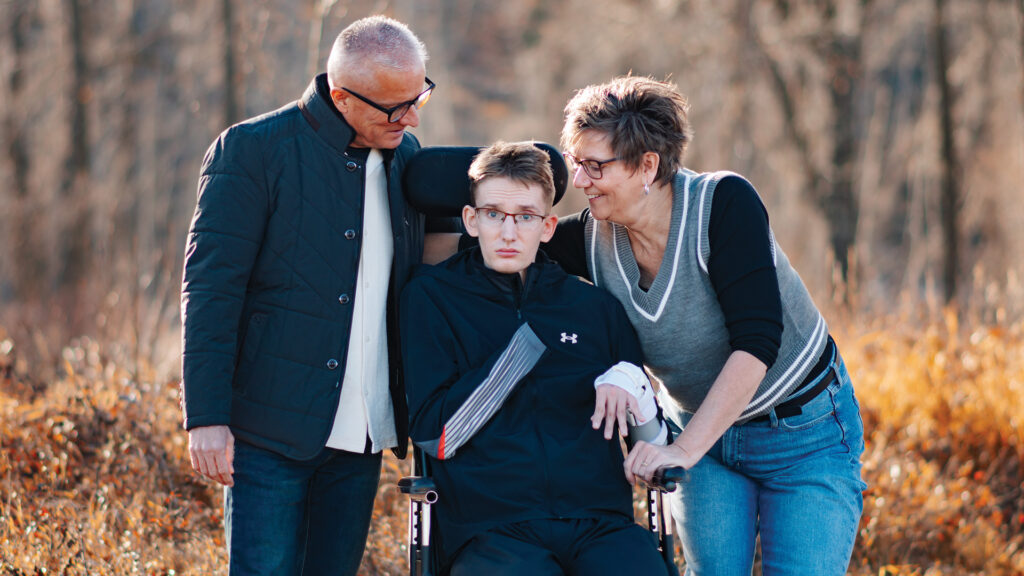
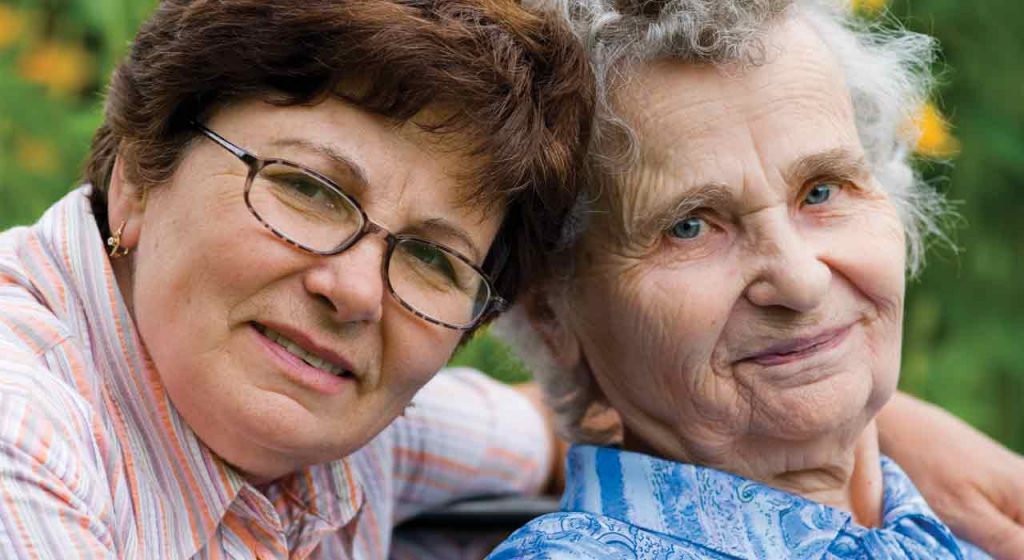
Paul pulled the car into the driveway. “Okay, Dad, now stay there and I’ll come around and help you out of the car.” “Okay.” Paul put the car into Park, turned off the lights, and opened the door. He rounded the back of the car planning to open the passenger side back door to retrieve Dad’s walker. But there was Dad, door open, lying face down in the gravel already. Paul was not amused.  **** Aging parents want to be independent. They want to continue living the way that they always have. They don’t want any help from strangers, and they certainly don’t want to give up their beautiful home and move into “one of those places.” What they want...may be impossible. What they have to choose between...is sometimes a choice too impossible for them to make. Dealing with one’s aging parents is like walking barefoot down a long series of gravel roads branching in every direction. It’s painful, uncomfortable, and confusing. Sometimes suddenly, and sometimes over a period of a couple of years, offspring are thrust into the position of having to parent their parents. It’s a role reversal that doesn’t please anyone. **** “You are NOT my mother - I am YOUR mother!” Mom yelled angrily. “I know that,” Susan said. “Then STOP bossing me around all the time!” Mom shouted. Susan sat down hard on the dining room chair and put her head in her hands. “You need to take your medicine now, Mom. Please?” **** The coming months, or years, will at times strain the relationships between the siblings, their spouses, and the aging parents. Who will help them? How often? Should someone quit a job to do so? Cancel a vacation? Who will pay the bills? Who will make the decisions that they won’t like? For those who know very little about medicine, caregiving, diseases, Alzheimer’s, or even the best way to deal with a doctor’s visit, it may be even harder. In 2018, it’s very common to hear both the aging and their younger family members say that parents really don’t want to live any longer if they cannot live independently as they used to. They would rather die. They don’t want to be a burden. Our culture has become so health-and-happiness oriented that the Right To Die (or euthanasia) movement grows stronger every year, not only in the Netherlands but here in Canada and the United States as well. It seems that the general public can see no purpose for an imperfect human being to exist. So when is it time to step in and step up? Each case will differ but according to one doctor, Mark Sawka, everyone always waits too long to make their decisions. Usually, by the time the senior citizens move into independent living, it should have been done sooner, and by the time they move to assisted living, they would have benefited greatly from going there sooner than that. We all want to maintain the status quo, keeping life as much like it has been as possible. Many older folks do not want to “face the music,” accepting their new limitations, and being grateful for what they are still able to enjoy. **** “Mom, you have fallen several times lately. We are worried about you living here in this house by yourself. Please...you can come and live with Susan and me, or you can go and live with Betty and Randall. Either of us would be happy to have you,” Paul said gently. “Oh, no, I could never do that. I won’t be a burden, and I don’t want to move away from my home.” Paul and Betty exchanged glances. What Mom didn’t understand is that since her children lived 3 hours away, she was being much more of a burden by living in her own home than she would be living with one of them. **** “Dad,” Susan began. “Your balance is not good. Your eyesight is nearly gone, you need constant help with your hearing aid, and to be honest, you need help with everyday things like bathing and dressing.” “Naw, I don’t need any help.” “Yes, you do, Dad.” “Mum can help me, can’t you, Mum?” Mom nodded her head, but had a weary and wary look about her. She was 82, used a walker, and took about 15 prescriptions a day, mostly to deal with back and shoulder pain. “I can help you if you stop being so stubborn!” Mom said. Susan tried again. “You either have to move into an apartment where people can help you, or you have to have people come to your house and help you here.” “I don’t want anybody coming into our house. I don’t need any other help.” “What if Paul and I moved in with you?” Susan offered. “No. Now you know that wouldn’t work. We would all end up fighting with each other. It’s hard enough for two of us to decide things, let alone having four opinions in the house,” Dad said. “Okay, then can we get some help through the Senior Citizens agency in town?” “We’re staying in our own home. And we don’t need any help,” Dad said with finality. Three lessons to learn  The first lesson to learn is that the best way to make your way through it is to view caregiving as a ministry given to you by God, instead of as the burden that your parents never wanted to be. There will have to be a lot of Scripture reading and prayer for patience and guidance. In her book entitled Ambushed by Grace: Help and Hope on the Caregiving Journey, Shelly Beach says: When I began caregiving six years ago, I did not expect to embark upon a journey of grace. I expected to learn of service and sacrifice, to explore new facets of patience and tolerance, love and forgiveness, but I did not expect to be changed at the core of my being. I did not know then what I know now — that caregiving, by the power of God ’s grace, can be a work of redemption powerful enough to reverberate into the hearts of those around us…. To make caregiving simply a task is a distortion of its purpose; rather, it is a divine appointment, a redemptive encounter, and an act of worship…. It wasn’t until I learned to relinquish my stride to His, to abandon control of my direction, and to match the rhythm of my pace to His that I discovered He was carrying me like a child standing upon her father’s shoes, clinging to his legs as she stared into his face, waiting for the next step. The second lesson is that none of this is going to be easy. It is very difficult to explain to your dad that he simply must let a staff member (read: stranger) help him to bathe, or tell your mother that she definitely must quit driving. It is difficult for siblings who have grown apart to mesh their ideas and agree on a plan of action. It is exhausting to add to one’s already busy work and home schedule the long days of research, packing and moving, doctors’ visits, cleaning, searching for lost dentures and wedding rings, meetings, and regular visits to these loved ones. **** “Mom, you drove 15 miles past your apartment building the other day and couldn’t find your way back. And last week you turned the wrong way and ended up going ten miles in another direction. You need to stop driving and give up your car.” “I need my car. I can still drive just fine.” “What if you have an accident?” “If I die I’ll go to Heaven, and that’s fine with me.” “Yeah, well, what if you crash into another car and hurt a woman and her baby, what then?” “I haven’t crashed into anybody and I’m not going to.” ****             The third lesson is that there is a lot of critical information that one or more of you must learn. Information such as: What is your parents’ financial situation? Is Assisted Living an option (at anywhere from $3000-10,000 per month!) or will they move in with someone or have someone move in with them? Or, how do you find an affordable assisted living apartment that will give your rapidly declining father all of the care that he requires and let your parents live together in more than one room? How many days will the insurance company or social benefits pay for your parent to stay in rehab, and will he be released earlier if he doesn’t cooperate in physical therapy? When should you contact the patient advocate in the hospital to intervene when your parent is not being treated well, discharged from the hospital as promised, or given the correct medication? How do you sign up for financial assistance from the various government or social agencies? For example, in the U.S. the Veteran’s Administration may send a monthly check if your parent served in the Armed Forces during a war. This research and application may take many hours, but it is well worth it. How do you accurately and safely hook up an IV with Vancomycin antibiotic to a port in your mother’s arm every single day for 8 weeks, or give your father his daily insulin shot? What is the purpose of the medications that they are taking? Four recommendations I will leave you with four recommendations. The first would be to read. Read books such as the aforementioned book by Shelly Beach and The Overwhelmed Woman’s Guide to Caring for Aging Parents, by Julie-Allyson Ieron. You may also find encouragement in John Calvin’s Golden Booklet of the True Christian Life. Second, contact people who have gone through this and ask a multitude of questions. Ask for one of them to be a prayer partner. It’s helpful if you know someone in the medical field who is able and willing to be consulted on occasion. Third, it's very important to involve all siblings in decision-making, even those that are reluctant to participate. They will have opinions. If possible, encourage everyone to be involved in the care, whether it is hands-on, financial assistance, regular visits, letters in the mail and regular phone calls, doing research online, shopping, or driving a parent to one of many doctors’ appointments. It is often the case that some step forward quickly and others hang back hoping not to have to do very much. Clear communication, understanding on all sides, and forgiveness may prevent anger and bitterness from occurring. Finally, encourage your parents in their faith in God as they live out these difficult days, and give them love in every way that you can. Remember that these loving parents cared for you when you were young, and it was not always convenient, exciting, or fun to do so. This ministry may go on for numerous years, but someday they will be gone, and you will miss them. This is your opportunity to be used by God to serve them. Conclusion Shelly Beach writes: Caregiving teaches us to see what is precious and valuable in life. It teaches us what it means to live out commitment and honor. It gives us the opportunity to love someone better who we may have struggled to love in the past. It gives us the opportunity to demonstrate God is sufficient and that He is a God who redeems. Caregiving is the hardest work we will ever do because it demands that we love as Christ loved, sacrificing our time, our jobs, our commitments, our friendships, and our health, while standing against the tide of culture.…It is a call to suffer, to sacrifice, and to serve. It is a call to abandonment and tears, to hardships and difficulties. It is a glorious call to be conformed to the image of Christ and join the God of the universe in ministering grace and mercy to one of His image bearers. There will be difficult terrain ahead, and you will likely feel fear and dread about walking this road. Remember that God is sovereign and in control of all parts of life, including this next part which can not be avoided. This, too, is part of His will. Unlike our culture around us, we who follow Jesus Christ can know that God has promised to care for us all of our lives – even as we watch our parents get old and feeble, and then walk that path ourselves. If He didn’t have a purpose for them to still be here on the earth, He wouldn’t have left them here. Your caring for them, in whatever way you are involved, is a part of that purpose. Sharon L. Bratcher is the author of Soup and Buns: Nourishment From God’s Word for Your Daily Struggles which is available by emailing [email protected]....

Red heart icon with + sign.
Assorted

A history of Healthcare...and why Christians have done it different

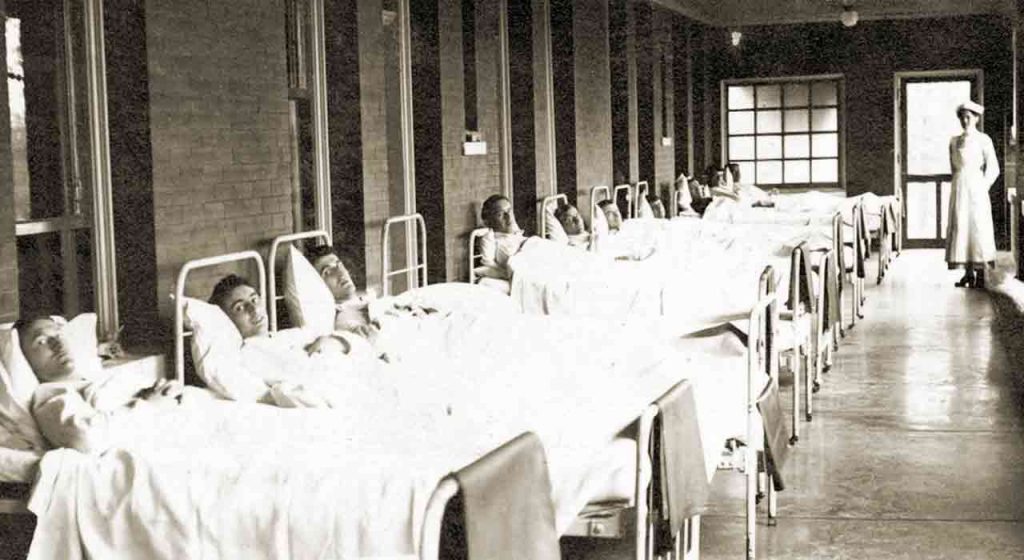
Within a short time span hospitals and medical care have greatly changed. In fact, today a man of seventy can justly claim that more medical progress has been made in his lifetime than in all of previous history. This medical progress forces us to cope with issues our forefathers never faced. The most common and most pervasive issue is how new medical science has transformed medicine: it used to be about caring for a person; now it is about curing a disease. According to this new philosophy, when someone is faced with a medical problem, everything that can be done ought to be done, no matter what – they are treated as an object to be fixed, rather than a person to be helped. That’s why it is important to understand the Christian origin of hospitals, and the Christian view on healthcare. We have an important message to share with the world. We can show them what true compassion is about. HEALTHCARE MENTIONED IN THE BIBLE The medical profession is an old one, and physicians were unquestionably a visible part of society in Bible times. Scripture refers to the medical practice both favorably and disdainfully. Job gives a passing reference to doctors when he refers to his comforters as "worthless physicians" (Job 13:4). Charlatans, magicians, and witchdoctors were to be driven from society and avoided at all costs (Lev. 19:31; Deut. 18:10). However, doctors like Luke (the author of Luke and Acts) were respected men (Col. 4:14). In the New Testament, Jesus is the Great Physician. He was concerned not only with humanity's spiritual condition but also with its physical state. He did not teach that we should accept suffering stoically; He saw it as an enemy which must be fought. He was also involved in the lives of people who were in a situation of distress. All four Gospels reveal that, along with his teaching, He healed many. He showed compassion to the multitudes (Mark 8:2) healing the sick, opening the eyes of the blind, and making the lame walk, and the deaf to hear. When Jesus healed a woman on the Sabbath, his reply to the criticism was: "Should this woman... not be set free in the Sabbath day from what bound her?" (Luke 13:16). Jesus expected his disciples, along with their teaching, to also heal: "He sent them out to preach the kingdom of God and to heal the sick" (Luke 9:2). He told his disciples when they looked after the sick, they were caring for Him (Matt. 25:36). HEALTHCARE IN THE EARLY CHURCH This exhortation of our Lord did not go unheeded. And as the early Christians were dispersed throughout Asia Minor, largely as a result of being persecuted, we find them engaged in healing in addition to their preaching and teaching. History shows that these early Christians did not only oppose abortion, infanticide, and the abandonment of infants, but they also nurtured and cared for the sick, regardless of who they were. Christian or pagan, it made no difference to them. Bishop Dionysius (approximately 200-265 AD) tells us that Christians, when it came to caring for the sick and dying, ignored danger to themselves: "Very many of our brethren, while in their exceeding love and brotherly kindness, did not spare themselves, but... visited the sick without thought of their own peril... drawing upon themselves their neighbors' diseases, and willingly taking over to their own persons the burden of the sufferings around them."  HEALTHCARE IN PAGAN GREECE AND ROME The world the Christians entered during the Greco-Roman era had a colossal void with respect to caring for the sick and dying. The Greeks built large temples in honor of their numerous gods and goddesses, fashioned statues of all sorts, and wrote a wide variety of illuminating literature but never built any hospitals. The Romans were subject to most of the same illnesses and ailments which afflict us today but diseases which are minor problems today were often life-threatening then. Because cure rates were low, they distrusted doctors or even scorned them. And their skepticism is easily understood. Anyone could call himself a doctor – there were no licensing boards and no formal requirements for entrance to the profession. The Roman scholar Pliny the Elder (23-79 AD) said: "Medicine is the only profession, by Jove, where any man of the street gains our immediate trust if he professes to be a doctor; and yet surely no lie would be more dangerous. But we don't worry about that; each one is lulled by the sweet hope of being healed." The key difference between the early Christians’ attitude toward the sick and the Greco-Roman attitude is their conflicting worldviews. The American church historian Philip Schaff summed it up well when he said, "The old Roman world was a world without charity." Dionysius vividly described the behavior of non-Christians toward their fellow sick human beings in an Alexandrian plague in about AD 250. The pagans, he said: "thrust aside anyone who began to be sick, and kept aloof even from their dearest friends, and cast the sufferers out upon the public roads half dead, and left them unburied, and treated them with utter contempt when they died." No wonder the pagan world took note when the early Christians appeared on the scene and started caring for the sick and dying. THE HISTORY OF HOSPITALS Hospitals in the Western world owe their existence to Christian teachings and Christian culture. Charity hospitals for the poor did not exist until Christians founded them – these Christian hospitals were the world's first voluntary charitable institutions. Out of compassion for the sick and suffering, Christians felt that something ought to be done. It is very important that we should keep this point before us. Secularism, which has such a negative and condescending attitude toward Christianity, should be reminded of this history. The first ecumenical council of Nicea in 325 AD directed bishops to establish hospices/hospitals. Although their most important function was to nurse and heal the sick, they also provided shelter for the poor and lodging for Christian pilgrims. They were prompted by the early apostolic admonition by Christ's command that Christians be hospitable to strangers and travelers (1 Pet. 4:9). The first hospital was built by St. Basil in Caesarea on Cappadocia about 369 AD. It was one of a "large number of buildings with houses for physicians and nurses, workshops, and industrial schools." The rehabilitation units gave those with no occupational skills the opportunity to learn a trade while recuperating. Deaconesses worked as nurses, visited the sick and the poor, and contacted pastors for spiritual care when deemed necessary. Christians searched for the sick in the city, and the latter were brought to the hospital. In about 390, Fabiola, a wealthy widow and associate of St. Jerome (347-419 AD), built the first hospital in Western Europe, in the city of Rome. By the sixth century, hospitals had become independent of bishops and were linked with monasteries. For many monasteries, the hospital was as much an essential part of the complex as a dining room, sleeping quarters, and the church. Monasteries without a hospital usually had an infirmary and herb garden which also enabled them to tend to their sick brethren and members of the general public. The love for Christ was their motivation. "Care of the sick," states the Rule of St. Benedict, who founded the great Benedictine Order in 527, "is to be placed above... every other duty, as if indeed Christ was being directly served by waiting on them." In our time when so much is said about the "glorious past of Islam," it is interesting to note the impact of Christianity upon Islam's health care. In Under the Influence: How Christianity Transformed Civilization Alvin J. Schmidt observes that nearly four hundred years after Christians began erecting hospitals, the practice drew the attention of the Arabs in the 8th century. Impressed with the humanitarian work of Christian hospitals, the Arab Muslims began constructing hospitals in Arab countries. This demonstrates once more that Christianity was a major catalyst in changing the world, even beyond the boundaries of the West. In the course of time Christian hospitals were founded in many countries across the world. I will mention only a few. St. Bartholomew's, the oldest British hospital, was started in 1123 by Rahere, Court Jester to Henry I, when he founded a religious order. St. Thomas's Hospital, the second oldest, was opened in 1213 by Richard, Prior of Bermondsey, against the wall of his monastery. Most of the work was performed by monks and nuns. In 1524 Hernando Cortes, the Conquistador, founded Jesus of Nazareth Hospital in Mexico City, which is still operative today. As early as 1639 Ursuline nuns established a hospital for French colonists in Quebec. In 1801 there were only two hospitals in the United States. The one in Philadelphia was founded by the Quakers in the first half of the 1700s.  NURSING When Christians introduced hospitals, it was, of course, necessary that the sick be nursed. But little is known about those who first took on the nursing role. Most of the evidence, though sparse, indicates that widows and deaconesses commonly served as nurses in early Christian hospitals. They can be compared to social workers and home care nurses of today. Paula (347-404), a female associate of St. Jerome, was essentially a nurse. But in 533 the Synod of Orleans abolished the office of the deaconess and her functions were taken over by the monastic orders. In the 12th century, the Knights Hospitalers of St. John, a military order of the Crusaders, recruited women to serve as nurses to care for leprosy patients in Jerusalem. The physician and medical historian Fielding Garrison once remarked, "The chief glory of medieval medicine was undoubtedly in the organization of hospitals and sick nursing, which had its organization in the teaching of Christ." In 1822 a young German pastor, Theodor Fliedner in Kaiserwerth, tried to revive the function of deaconesses by recruiting women from the middle and upper classes who were willing to work with the spirit of Christian sacrificial love. They were carefully selected and trained. This ministry led to the establishment of deaconesses hospitals, which provided spiritual and physical treatment for the whole person. When Fliedner died in 1864, thirty-two Deaconesses' houses and 1,600 Deaconesses were spread throughout Germany, Asia Minor, and the USA. Florence Nightingale, the "Lady of the Lamp," making her rounds at night. Florence Nightingale (1820-1910), known as "the Lady of the Lamp" became a reformer of hospitals and the founder of modern nursing. Her interest in medical matters horrified her mother, who frustrated her attempts to gain nursing experience at Salisbury Hospital in 1844. Nevertheless, although nursing was considered unsuitable for a woman of respectability, she spent three months at Kaiserwerth in 1853. In the same year she visited the Sisters of Charity in Paris. These visits made a deep impression on her. She became famous for her work in the 1854 Crimean war. She was invited by the British government to take a team of nurses to aid wounded and soldiers. She selected thirty-eight middle-aged nurses from several religious orders and included eight who had nursed cholera cases in the Plymouth slums. This small number of willing workers were sent to the huge base hospital at Scutari across the Bosporous from Constantinople. To this hospital came boatloads of sick and wounded. The conditions in this military hospital, which was no more than a collection of dirty barracks lacking all medical equipment, defies description. But with scant resources, Nightingale and her assistants did their utmost to change the awful unsanitary conditions for the better. Nightingale developed new treatments, made ward rounds daily, even if it meant being 20 hours on her feet. The stricken soldiers – upwards of 5,000 at one time – soon regarded her as a saint, an angel sent to save their lives. Upon her return from the Crimean War in 1856 she became a national hero and an authority on hospital care. The money the grateful nation gave to her was mainly used to found a school for nurses in the St. Thomas Hospital in London. Her Notes on Hospitals published in 1859, were widely read, as were her Notes on Nursing, published the same year. The two books recommended better sanitation, construction, and management of hospitals. Her prime aim in life was to secure the effective training of nurses. By the 1880s and the 1890s nursing had established itself as a suitable and respected career. WHY DID CHRISTIANS TREAT THE SICK DIFFERENTLY? So it was clear Christians treated the sick differently… but why? There are two reasons. 1. IMAGE BEARERS OF GOD The way doctors answer one key question will have a large impact on how they approach medical care. The question is: Who are we? Or, What is Mankind? Secularists see people as things, maybe treasured things but things nevertheless. They don’t regard man as having an eternal destiny. They value people in terms of status and productivity, good looks, credentials, income and wealth. But we are not merely animals, objects, consumers, or spirits. God's attitude about the value of a human being is far different from that seen in the secular world. Each human being is precious in God's sight. After the fall into sin, man has not ceased to be man. We are still God's representatives in his world. We are made in his image (Gen.1:26; 1 Cor. 11:7; James 3:9). The high view God has of human beings is clearly demonstrated through his Son's Incarnation. His Son became one of us, but without sin. Furthermore, in contrast to the view of the secular and pagan world, our Lord's teaching provides a clear picture of our value in God's sight (Matt. 6:26; 12:12). In fact, the cross of Christ is the ultimate proof of the value of mankind (Mark 10:45). The Bible also teaches the importance of the unity of body and soul. We may never separate the soul from the body. We may not say, "winning souls for Christ is more important than the ministry of healing." We love the whole man, not just his soul. Man is a unity of soul and body, indivisible, and this is also true for the medical patient. The body is not a neutral thing. Paul set it firmly in place as a "temple of the Holy Spirit." (1 Cor. 6:19). The body belongs to the Lord. To treat it as an object for medical experiments is sacrilegious. It will also have a dehumanizing effect on the patient. The Christian worldview leads us to see the sick and distressed from a totally different perspective. Therefore, it is not strange that the commands of love taught in the Scriptures make Christians concerned about the whole man in all of his dimensions. 2. LOVE The atheist British philosopher Bertrand Russell, famous for his book Why I Am Not a Christian, later wrote, "What the world needs is Christian love or compassion." I am sure Christians agree with his observation. But to show Christian love is easier said than practiced. How can we love those who persecute or hate us? The love standard revealed in Scripture goes against our human nature. What is love? True love is from God: "Love is of God, and he who loves is born of God" (1 John 4:7). Consequently, we are the instruments of God's love (2 Cor. 5:14). Our helping someone in need is the same as helping the Lord Himself (Matt. 25:40). How did the early Christians view love? The Church father St. Augustine had much to say about love, but it had nothing of that oozing, sentimental, sensual feeling promoted by our modern culture. He observed that love is always preferential; it gives of itself voluntarily, not because the giving is legally due another. What is not loved for its own sake and its own right is not actually loved at all. Love, or compassion, is a relationship between persons. But love is not limited to one's friends. Love is desiring and doing the good of the other (1 Cor. 13:4-7). It is self-sacrificing for the other. Jesus said, "Love your neighbor as yourself" (Matt. 22:39). Our neighbors are people in need, whoever they are and wherever they may be. For example, Jonah discovered that even the wicked Assyrians were his neighbors (4:2). So Christians treat the sick differently because we recognize them as being made in God’s image, and because we have been instructed to seek after the good of our neighbor. CONCLUSION The Christian origins of hospitals and the nursing profession seem almost forgotten. But the precedent the early Christian hospitals set not only alleviated human suffering but also extended the lives of multitudes of people, whether rich or poor. These institutions did not treat patients as objects. They reflected Christ's love for the whole person. In our technological age, the Biblical concept of love is lacking more and more in the medical sector, and unfortunately also in the caregivers. That's why the Christian perspective on healthcare has an important message for today. Love is concerned about the whole man with all of his needs. The hungry need food. The sick need to be healed (James 5:14). The lost need to be told the Gospel. Today's Christian healthcare giver has a great responsibility. Going against the flow, he/she is called to offer priestly and prophetic healthcare. Rev. Johan Tangelder (1936-2009) wrote for Reformed Perspective for 13 years. Many of his articles have been collected at Reformed Reflections. This article first appeared in the July/August 2007 issue....