











Transparent heart icon with white outline and + sign.

Life's busy, read it when you're ready!

Create a free account to save articles for later, keep track of past articles you’ve read, and receive exclusive access to all RP resources.

White magnifying glass.

Search thousands of RP articles

Helping you think, speak, and act in Christ.

Open envelope icon with @ symbol

Get Articles Delivered!

Helping you think, speak, and act in Christ. delivered direct to your Inbox!

Science - Environment, Theology

Catastrophic global warming? A brief biblical case for skepticism

The media tells us that the question is settled, there is a 97% consensus, and that anyone who has questions is a “denier,” likened to those who are either so foolish, or malicious, as to deny the reality of the Holocaust.

But there are reasons to question. And while climate science might be beyond most of us, God has given us another means – a far more reliable means – of discerning truth, via His Word.

Gender: the Bible shows the way

Sometimes it doesn’t take much Bible study to be able to discern truth from error, and that’s certainly true in today’s gender debate. Young children are being surgically mutilated and hormonally sterilized and yet the government, doctors, psychologists, and media are applauding. While it might not be at 97% yet, the consensus is growing such that fines are being issued, teachers fired, students expelled, and Twitter mobs set loose on any who disagree.

Despite the pressure, few Christians are being fooled, though that might be due as much to the newness of the debate as it is that Evangelicals are turning to their Bibles for guidance. But if they do open His Word it won’t take a believer long to figure out God’s position. In Genesis 1:27 we learn it is God, not Man, who determines our gender:

“So God created Man in His own image; in the image of God He created him; male and female He created them.”

Population: following the Bible would have saved tens of millions

The overpopulation crisis has a longer history to it and, consequently, many more Christians have bought into it. Since the 1950s we’ve been hearing that sometime soon the world’s population will outstrip the planet’s resources. In his 1969 book The Population Bomb Paul Ehrlich warned:

“The battle to feed all of humanity is over. In the 1970s hundreds of millions of people will starve to death in spite of any crash programs embarked upon now. At this late date nothing can prevent a substantial increase in the world death rate.”

You would think that by now it would be easy to see that these overpopulation fears were mistaken. As economist Arthur Brooks has noted, what’s happened is the very opposite of Ehrlich’s dire prediction:

“From the 1970s until today the percentage of people living at starvation’s door has decreased by 80%. Two billion people have been pulled out of starvation-level poverty.”

Yet the overpopulation hysteria has never gone away. And the damage it has done has been on par with that of a Hitler or Stalin – tens of millions have been killed. Under threat of this crisis China implemented their infamous one-child policy, with its fines and forced abortions for couples who tried for two. And the deaths weren’t limited to China; overpopulation fears were used to justify the push for legalized abortion in countries around the world. Murdering your own children wasn’t cold and selfish anymore; now it was a woman doing her part to save the planet.

Christians opposed abortion, of course, but some believers started questioning whether overpopulation concerns might be correct. Maybe God’s call to “be fruitful and multiply” and fill the earth (Gen. 1:28) was just a temporary directive that we’ve fulfilled and should now treat as being over and done with.

But it takes only a little more digging to find out that’s not what God thinks. Overpopulation proponents saw children as more mouths to find – they saw them as a problem – but God speaks repeatedly of children as a blessing (Ps. 113:9, 127:3-5, Prov. 17:6, Matt. 18:10, John 16:21).

And opportunities present themselves when we see children as God sees them. When we understand they are a blessing, then we realize that not only do children come with a mouth that needs filling, but they also have hands that can produce even more than their mouth consumes. And they have a brain to invent and problem solve. When we see children this way – as a blessing and not a curse – then we'll realize there’s a real practical benefit in having lots of them: as we’ve been told, many hands make light work, and two heads are also better than one!

That’s why it shouldn’t have surprised Christians when in the 1950s and 60s a group of inventive sorts, led by American Norman Borlaug, helped develop much higher-yielding strains of cereal crops. This “Green Revolution” turned wheat-importing countries into wheat exporting countries by more than doubling yields. And while there are no prophecies in the Bible specifically mentioning Norman Borlaug, Christians could have seen him coming, and in a sense some did. Those who continued having large families, despite the dire predictions, could do so confident that any problems caused by the innumerable nature of their progeny would be solved by something like the Green Revolution happening.

Today, decades later, we can look back and see that a country like China, that ignored what God says about children, is facing a different sort of demographic crisis. A young Chinese couple will have two sets of parents and four sets of grandparents to look after and support, but have no siblings or cousins to help them. As soon as 2030 China will see their population start to decline, with not nearly enough working age citizens to provide for their aging population.

It’s not all that different in the Western world where, even without government coercion, our families have been shrinking and women are averaging far less than two children each. We aren’t as near the crisis point as China, but by aborting a quarter of the next generation, we’ve created our own coming demographic crisis.

Catastrophic global warming: a biblical case for skepticism

The population and gender debates remind us that the Bible is more reliable than any-sized consensus no matter how big. They also teach us that the world can get things not just completely wrong, but monstrously so, leading to the deaths of tens of millions. That’s why when it comes to global warming, where we’re being told once again that the fate of the planet is at stake, we want any and all guidance we can get from God’s Word.

Cornelius Van Til once noted:

“The Bible is thought of as authoritative on everything of which it speaks. Moreover, it speaks of everything. We do not mean that it speaks of football games, of atoms, etc., directly, but we do mean that it speaks of everything either directly or by implication.”

The Bible does speak to global warming, but not directly. This isn’t like the gender debate, which runs smack up against Genesis 1:27 (“male and female He created them”) or the overpopulation crisis, which directly opposes the very next verse (“be fruitful and multiply”). When it comes to global warming the Bible isn’t as direct.

But there are lots of implications. Time and space only allow me to present a half dozen texts. I’m not pretending that any one of them makes the definitive case for skepticism. But I do think that together they start pointing us decidedly in that direction.

"You will know them by their fruits" – Matt. 7:15-20

In Matthew 7 Jesus tells us that we can tell a good tree from a bad one by the fruit on it. His concern wasn’t with trees though, but with telling false prophets from good ones. When it comes to global warming the science is beyond most of us, but we can evaluate the people.

So let’s return to this 97% consensus we’ve heard so much about. This statistic is used to argue that there is no question but that the planet is headed to catastrophic climate change. But is this a reliable number, or is it like the greatly exaggerated 10% figure commonly given for the homosexual population?

The figure has a few different origins, but one of the more commonly cited is a paper by John Cook and his colleagues reviewing 11,944 published peer-reviewed papers from climate scientists. Did 97% of those papers’ authors agree with the statement “humans are causing global warming”? That’s what we would expect. But instead of 10,000+ papers with that position, there were 3,894, or approximately 33%. So how did the 97% figure come out of that then? Well, it turns out only approximately 34% of the papers took a position one way or the other, with just 1% disagreeing or uncertain, and 33% agreeing. Thus, of the 34% who took a position, 97% agreed that humans are causing global warming. Is it honest to ignore the two thirds who didn’t state a position, and say there is a 97% consensus and no room for a debate?

How this statistic has been used reminds me of a trick from another debate – equivocation about the definition of “evolution.” In his book, The Greatest Show on Earth, Richard Dawkins notes that when poachers shoot elephants with long tusks, the next generation is liable to have shorter tusks. Okay, but creationists also believe species can undergo changes over time. We’re the folks arguing that the array of cats we see today are all modified versions of a single cat kind brought on the ark. Dawkins has presented “minor changes over time” – a definition of evolution so broad that it enfolds even creationists into the evolution camp – as if it were proof of the from-goo-to-you sort of evolution that is actually under dispute.

Similarly, the 97% consensus is being presented as if all those counted hold that the warming is catastrophic, humans are the primary cause, and there is a need for immediate, drastic, global action. But the agreement was only that “humans are causing global warming.” And that’s a statement so broad as to enfold even many of the so-called “deniers.”

So on a statement we can verify – whether there really is a 97% consensus on catastrophic global warming – we find “bad fruit.” There are many other facts and claims we can’t evaluate, but doesn’t this tell us something about the “tree”?

“The one who states his case first seems right, until the other comes and examines him.” – Proverbs 18:17

God says that to find the truth good questions are helpful. That’s not going on here, where questioners are likened to Holocaust deniers. But here’s a few questions worth considering:

  • Aren’t there bigger priorities than global warming, like the millions who will starve to death this year, or the billions who lack basic access to clean water and sanitation?
  • If fossil fuels are harmful, and solar and wind problematic, why aren’t we turning to nuclear?
  • How will the world’s poor be impacted by a move away from fossil fuels toward more expensive alternatives? Are we again (as we did in response to overpopulation fears) seeking to save the planet by harming those who live on it?

Samuel’s warning against kings – 1 Samuel 8:10-22

President Obama’s chief of staff famously said, “You never want a serious crisis to go to waste” and if you want to understand what he meant, looking no further than Justin Trudeau’s proposed ban on single-use plastics. This past year a video of a sea turtle with a plastic straw stuck up deep inside his nose went viral, alerting the tens of millions of viewers to the growing problem of plastics in our oceans. The movement to ban plastic straws has taken off since then.

But will Trudeau’s single-use plastics ban save turtles? No, because our straws don’t end up in the ocean. Of the mass of plastic in the ocean it’s been estimated the US is responsible for one percent, and it’d be reasonable to conclude that Canada is responsible for far less. So how, then, does all the plastic end up in the ocean? It turns out that the vast majority of it comes from poorer countries that don’t have proper trash disposal. They simply dump their waste into the ocean and into their rivers. Trudeau’s ban will do nothing to help the turtles…but it will expand the government’s reach.

The proposed solutions for climate change all involve expanding the government too, giving it a larger role in directing all things energy-related.

So, how is 1 Samuel 8 relevant? Here we find Samuel warning against an expansion of government – get a king and he’ll start intruding into all areas of your lives. If there is a biblical case to be made for limited, small government (and there is) then Christians have a reason to question crises that seem to necessitate an ever-expanding role for the State.

“…and it was very good.” – Gen. 1:31

While we no longer live in the perfect world Adam and Eve started with, we have only to wriggle our toes, or watch a ladybug crawl across the back of our hand to recognize that God’s brilliant design is still evident and at work all around us. We are on a blue and white marble, spinning at just the right angle, and orbiting at just the right distance from the sun, for it to rain and snow in season. We have a moon just the right size, and circling at just the right distance for us to study our own sun, and to bring the tides that sweep our beaches each day. And our planet is graced with a molten iron core that generates the very magnetic field we need to protect us from the solar winds, which would otherwise strip away the ozone layer that protects us from ultraviolet radiation. It is wheels within wheels within wheels, and while we can do damage to it, when we appreciate how brilliantly our world is designed we aren’t surprised there is a robustness to it.

Meanwhile, the unbeliever thinks our world is the result of one lucky circumstance after another – a tower of teacups, all balanced perfectly, but accidentally. If the world did come about by mere happenstance, then what an unbelievable run of happenstance we’ve had, and isn’t there every reason to fear change? Sure, the teacup tower is balanced now, but if we mess with it, how long can we count on our luck to hold?

“He who oppresses the poor taunts his Maker” – Prov. 14:31

At first glance, this text might not seem to provide much direction in this debate. After all, couldn’t a Christian who holds to catastrophic man-caused global warming cite it in support of their position too? Yes they could. If climate change is real, then the oppression it would bring on the poor would be a reason to fight it.

Yet this text does provide a very specific sort of direction. It lays out limits on what sort of global warming plans Christians should view as acceptable: any plan to save the planet that does so by hurting the poor is not biblical. That means increasing energy costs has to be out. Millions are starving already and raising energy prices will only increase those numbers.

“Be fruitful and multiply” – Gen. 1:28

Children come with an inevitable “carbon footprint” which is why some global warming proponents echo the same sentiments as the overpopulationists before them. “Save the earth; don’t give birth” is catchy, but if that was the only possible way we could lower carbon emissions then Christians could, on that basis, conclude there was no need to worry about CO2. Because God tells us children are a blessing, not a curse.

Of course there may be other ways to lower carbon emissions. But the more we hear people portraying children as a problem, the more we should recognize there is an element in the global warming movement intent on attacking God’s Truth, rather than taking on any real problem.

Conclusion

Other passages could be mentioned like Genesis 8:22, Romans 1:25 and Psalm 102:25-26 but this is good for a start. And that’s what this is: a start. My hope here is to encourage an exploration of what Scripture says that’s relevant to the issue of catastrophic global warming.  The Bible isn’t silent on this topic; we need to look at global warming biblically.

This article first appeared in the July/August 2019 issue under the title "Global warming crisis? A brief biblical case for skepticism."

Red heart icon with + sign.
Theology

Did Adam have enough time to name all the animals?

Some people argue that the activities assigned to Adam on the sixth day, described in Genesis 1:26-28 and Genesis 2:19-20, were too many for him to have been completed in a single 24-hour day. The activity of naming all the animals, in particular, would have needed much more time. And if he couldn't have done it in 24 hours, then this would contradict the literal interpretation of the six days of creation, forcing us to opt for a non-literal interpretation of these days. Let us examine this argument more closely to see if it is valid. Adam finished the task In Genesis 2:19-20 we read: "Now out of the ground the Lord God had formed every beast of the field and every bird of the heavens and brought them to the man to see what he would call them. And whatever the man called every living creature, that was its name. The man gave names to all livestock and to the birds of the heavens and to every beast of the field. But for Adam there was not found a helper fit for him." According to this text, Adam actually finishes naming the animals that God has shown him – he completes all this activity even before the creation of Eve. We can see, then, that this wasn't a task Adam was supposed to accomplish over the course of the rest of his life, or which he could have shared with his future wife, or which he could have passed on to future generations (as it was the case for the mandate to rule over the earth and over the animals). Adam indeed named all the animals that God has shown him before the end of the sixth day. God presented the animals to Adam So we can see that Adam had some tight time constraints. But we also read, concerning the animals that Adam had to name, that God "brought them to the man." This detail is not trivial. Adam did not need to go everywhere looking for these animals. The Lord brought them to him. We can well imagine that this would make greatly increase the speed at which Adam could name the animals, greatly reducing the duration of the naming process. The species of animals named were limited We should remember that Adam wasn't called to name every animal. The animals named were "all livestock," "every bird of the heavens," and "every beast of the field." The latter category may correspond to terrestrial mammals. The text doesn’t say anything about Adam naming the fish of the sea, other marine organisms, insects, arachnids, reptiles or dinosaurs (distinguished from terrestrial animals in Genesis 1:24), which excludes a large number of species. For example, the arthropods – excluded from this list – are by far the phylum that counts the greatest number of species of the animal kingdom (80% of known species, more than one and a half million living species: trilobites, crustaceans, arachnids, insects, etc.). For this first exhibition of animal kind, God left aside the strangest "creeping and crawling" creatures and presented to Adam only the most useful (livestock) and beautiful (birds, mammals) specimens of His collection. Thus Adam named only a small fraction of all the animals created by God, which greatly reduced his work. The sort of naming Adam was doing On the sixth day, Adam was not doing taxonomy, in the sense that he did not need to describe the living organisms or to classify them in a specific system. All that God proposed to him was to name them. It was not necessary for Adam to give names that would be used as a basis for a rigorous classification. Furthermore, it seems that God did not give any specific orders to Adam about this activity. The text simply says that God "brought them to the man to see what he would call them." Adam did not have to give specific names to each animal neither was he requested to follow a rigorous method. It is therefore possible that God presented to ​​Adam successive groups of birds gathered according to what we call genus, family, or even order. Genesis says that Adam named all livestock, all the birds of heaven, and all the beasts of the field. However, this can be achieved in various ways. Today the class called "birds" lists almost 10,000 known species, distributed in 29 orders, including more than 200 families and 2,200 genera. As for the class called "mammals" (including marine mammals), it includes more than 5,400 species, distributed in 29 orders, 153 families, and 1,229 genera. God may have presented to Adam a first group of birds that included every type of pheasants, partridges, cocks, quails, that Adam could have generally named chickens. Then God could have presented another group of birds including mergansers, scoters, mallards, teals, etc., that Adam could have all named ducks. It was legitimate for God to do so for practical reasons of simplicity and efficiency. Although less detailed than if he had named all the specimens to the species, this way of naming fully complies with the nature of the activity of naming according to the Bible. There was no problem, therefore, to do all this work in less than half a day. There were fewer species We must also understand the phenomenon of speciation, which took place during the period of time between the creation of the first "kinds" of animals and today. Speciation is a rapid increase in the number of species due to the loss of genetic information in the genera originally created by God. This is a phenomenon that goes in the opposite direction to the transformism taught by the neo-Darwinian theory of evolution. Evolution in the technical sense (and not the blurred meaning of "change"), involves a slow but significant increase in genetic information in order to achieve the tremendous transformation involved in the production of a man from the first tiny living cell (a phenomenon never observed by any modern scientist, admitted by Richard Dawkins). Speciation, in contrast, is a scientific phenomenon frequently observed, that some Christians mistakenly call "micro-evolution" (a very unhappy and confusing designation, since speciation has nothing to do with evolution, which goes in the opposite direction). For example, the initial "canine" genus created by God on the sixth day could have contained in its genetic material all the genes capable of producing all the many breeds of dogs and wolves that we know today. In order to subsequently see the appearance of the many breeds of modern dogs, with the observable traits of each race (phenotype), the process of speciation had to happen. To have dogs with short legs only, it was necessary to remove from the line all individuals with long legs, thereby eliminating the genetic information "long legs" from this line. This loss of genetic information occurring in only a few generations has resulted in a rapid increase in the number of subspecies. In many cases, speciation is so marked that it is impossible for different lines coming from the same original "kind" to reproduce together. It is quite possible that in the beginning God created a couple of big cats, producing thereafter all extant species of cats (lions, leopards, tigers, etc.) through the rapid process of speciation. The same applies to other kinds of mammals and birds. In short, the species included in the "livestock," the "birds of heavens" and the "field animals" that God presented to ​​Adam were probably far fewer than today. Obviously, God gave Adam less work than he gave to modern taxonomists. Adam was smarter than us Theistic evolutionists and progressive creationists often make the mistake of projecting the conditions of life as we know them today on the special and unique period during which God performed His creative works. Thus they think that Adam had similar capabilities to ours. But what do we know exactly about Adam’s intellectual capacity to claim that he was unable to perform the task of naming the animals in only one day? It is extremely difficult for us to imagine a man who could have had much greater intellectual abilities than us. But the brain of Adam was undoubtedly greatly superior to those of Isaac Newton and Albert Einstein together, because man had not yet suffered the destructive effects of sin greatly affecting our present intellectual capacity. We must let Adam have the freedom to have been much smarter than us and to have been fully capable of naming in a single day all the animals that God has shown him, without even becoming tired. Why would God made ​​Adam languish? Note that the activity of naming the animals is surrounded by the "problem" of Adam’s solitude. First, God noticed this loneliness and expressed His intention to create a companion for him. "The Lord God said, It is not good that the man should be alone; I will make him a helper fit for him" (2:18). Then God came to present the animals to Adam, to see what he would call them, which Adam did (2:19-20). Finally, Adam himself expressed his newly discovered emptiness, as a clear conclusion of his naming of the animals. "But for Adam there was not found a helper fit for him" (2:20). From this text it seems clear that one of the main purposes for which God presented to ​​Adam the animals was to awaken him to the reality of his solitude. As he watched all these animals that were passing before him, Adam must have realized that they were all male and female, while he had no "female" with him. In sum, the development of a taxonomic system was not the sole purpose of the presentation of these animals (otherwise God would have asked Adam to also name all the fish of the seas and all the other small terrestrial creatures). This exercise was also intended to make Adam sigh and to prepare him to be grateful for the wonderful gift that God had already planned to give him. So why would it have been necessary for God to impose upon Adam an activity requiring a long period of time? This would have suggested either the stupidity of Adam – who would have needed a lot of time before realizing he had no companion of the opposite sex with him – or the perverse pleasure of God in making Adam languish before finally giving him the companion after which he sighed. Adam was not stupid and did not need a long time before realizing his loneliness. As to his Creator, He had no malicious intent and even longed to give him this much-needed companion. God, therefore, had no reason to prolong the activity of naming the animals before finally giving him the gift of a wife and of marriage. This activity was accomplished in less than one day In conclusion, the argument claiming that Adam had to do too many tasks in one day – supposedly causing a problem to the literal interpretation of the days of creation – seems to be an ad hoc argument, created from scratch to annoy and disrupt those who believe in literal days. There is no reason to doubt or to question that all the activities of the sixth day – listening to God’s mandate to keep the garden, being ordered not to eat of the tree of knowledge of good and evil, naming the animals and finally rejoicing with his wife – have occurred within a day of normal length, the literal sixth day of creation. All this to the glory of God alone and to the greatest good of man… and woman! End notes For a complete catalogue of the birds of the whole world, one may consult with profit and wonder the fabulous website The World Bird Database, administered by the Quebec ornithologist Denis Lepage For a complete catalogue of the mammals of the whole world, see the wonderful website Mammal Species of the World See the list of pure and impure animals in Leviticus 11, named according to broader categories than the species, nevertheless sufficient for the Israelites to be able to clearly distinguish them. We know the example of the mule, a hybrid of a horse and a donkey, but unable to reproduce. It is astonishing to see some scientists today who can produce what they call "zorses" (hybrid zebra/horse), "zenkeys" (hybrid zebra/donkey), "ligers" (hybrid lion/tiger), "wholphins" (hybrid whale/dolphin). An eloquent testimony to the speciation that happened not so long ago! I suggest that you consult the famous website creation.com and that you look for the word "speciation." You will find many articles about this subject. We may say something similar about the number of species that embarked into Noah’s ark. Rev. Paulin Bédard is an ERQ minister, and pastor of the Reformed Church of Saint-Georges, Quebec. He is the author of In Six Days God Created, which analyzes and rebuts the Framework Hypothesis, and tackles other figurative interpretations of the days of creation. ...

Red heart icon with + sign.
Theology

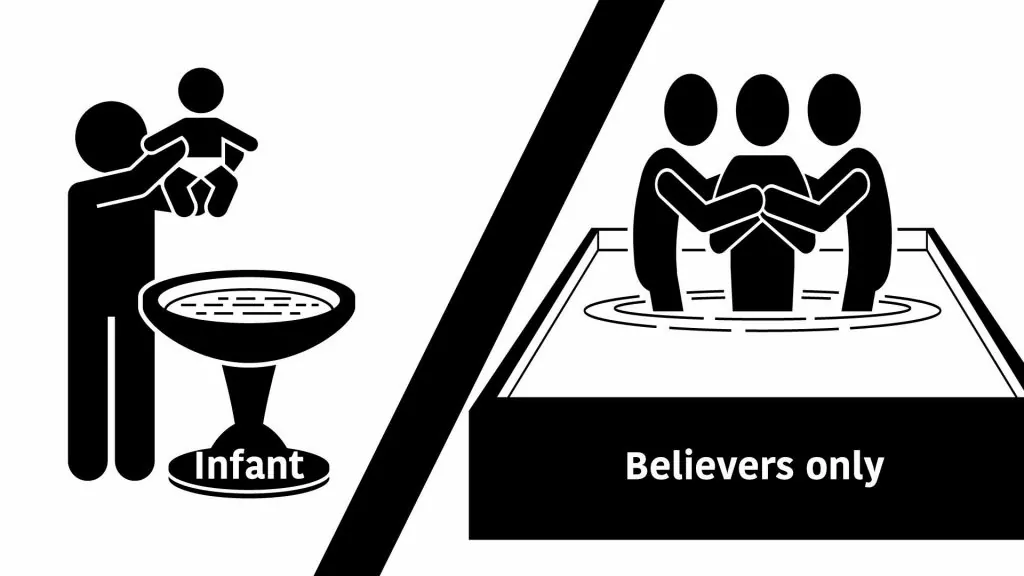
Should we baptize infants? Resources that make the case

On the evening of Sept. 27, 2018, two Reformed pastors debated "Should we baptize infants as well as adults?" Pastor Jared Hiebert, of the Covenant Reformed Church of Stienbach holds to Adult baptism / believer's baptism / credobaptism. This is the belief that while someone need not necessarily be an adult ("adult baptism" is a bit of a misnomer) before being baptized, they do need to be old enough to be able to understand, and confess, their dependency on and devotion to our Lord. Pastor James Zekveld of the Canadian Reformed Church in Niverville holds to Infant baptism / paedobaptism. This is the belief that God's covenant promises are available to the children of believers, and thus these promises can be given not only to adults, but to infants – baptism is for babies too. A 100-minute edited recording of their debate can be viewed below. Reformed Perspective holds to a paedobaptism position, and in preparation for the debate we shared a list of some of the very best resources available in defense of infant baptism. Audio Baptism debate with R.C. Sproul and John MacArthur (2 hours) Two Reformed stalwarts go head to head in this debate, with each given an hour to lay out their best case. R.C. Sproul argues for paedobaptism, and John MacArthur makes the case for credobaptism. Article-length treatments Infant baptism vs. believers-only baptism: What’s the main difference? by Garry Vanderveen A brief defense of infant baptism by Kevin DeYoung Why I changed my mind on infant baptism, by Liam Goligher Paedobaptism by Guy M. Richard Not your average paedobaptist by Jared Oliphint Baptism – a personal journey by David Robertson Why can it take so long to explain Infant Baptism? by R. Scott Clark Shortest argument In Jay Adams’ book Greg Dawson and the Psychology Class, the author poses an intriguing argument for infant baptism. One of the characters in the book, Brian, is trying to convince his girlfriend that infant baptism is biblical, and shares with her this scenario: “It’s the day before Pentecost. Andrew, a pious Jewish father, has just had his child circumcised. He is happy because he now knows that little Simeon is a part of the covenant community – the visible church. The next day, he hears Peter preach and believes the Gospel. Now, according to Baptist thought, his child is no longer in the visible church. In for one day and out the next.” Books worth buying Jesus loves the little children: why we baptize children by Daniel R. Hyde 96 pages / 2006 At under 100 pages, this book by United Reformed pastor Daniel Hyde can be read in just a few evenings, and it provides a solid foundational understanding. Children of the promise: the biblical case for infant baptism by Robert R. Booth 190 pages / 1995 This will take some time to work through, but with short narrative bits to start each chapter, it is incredibly readable. And with recommendations from Greg Bahnsen, Vern Poythress, and Douglas Wilson, it seems everyone likes this book. Baptism: three views edited by David F. Wright 200 pages / 2009 Able defenders of three views – paedobaptism, credobaptism, and the dual view (that both are legitimate) – make their case, and then get to interact with the other two as they critique the offered argument. To a thousand generations by Douglas Wilson 123 pages / 1996 A former baptist, and pastor of a church that has both credo and paedo believers, makes the case for infant baptism. What is Baptism? by RC Sproul 69 pages / 2019 The main features of this title are its insightful and engaging author, its brevity, and its price – you can download the e-book version for free at the link above. Video Paedobaptism vs Credobaptism (6 minutes) This, from the producer of the documentary Calvinist, gives a very brief and balanced presentation of the two sides. The intent here is to help define the two sides of the debate, rather than to defend one side or the other. Did the early Church baptize infants (2 min) W. Robert Godfrey explains how much we can know about the practice of baptism in the first 300 years of church history. ...

Red heart icon with + sign.
Theology

Heaven-bound: What will it be like?

We've all been told there's no such thing as a stupid question. And we all know that just isn't so. That may be why in our desire to avoid the embarrassment of asking that big dumb one, many seemingly silly, but actually good, even important, questions go unasked. And I think that's particularly true when it comes to the topic of heaven. So, for example, many of us may remember back in our younger years, wondering if heaven was going to be boring. The idea of strumming on a harp and singing all day, every day, isn’t appealing to most children (nor to many musically inept adults). But while this question bothers many kids, few will ask it out loud – even at a young age they’ve discovered asking these sorts of questions can be embarrassing. Adults also have “heaven questions” that go unasked. What is heaven going to be like? When we get there, will we remember our time here on earth? And will we recognize each other in heaven? When these questions are raised, they rarely get treated with much respect. Instead of garnering thoughtful responses, questions about heaven are usually answered with another question: Does it really matter? After all, we’re going to get to heaven soon enough and then we’ll find out exactly what it’s like, so what’s the use in thinking about it now? What’s the point? Comfort and correction Well, when we turn to Scripture, we find out there are at least two reasons to learn more about heaven. First, many of the heavenly descriptions are a means of comfort to us. Those who weep now will laugh in heaven. Mourning, crying and pain will end and God himself will wipe away every tear from our eyes. Yes, here on earth we may have to suffer, stumble, and endure but we can do so knowing that God has prepared a heavenly reward for us. And God does more than comfort us with His descriptions of heaven – He also uses them to correct our misdirected desires. You see, Satan loves to use our desires, even our desires for God and heaven. If he can twist them, just a bit, he can use them to point us in exactly the wrong direction. For example, a friend recently told me about his desire for a “great teacher.” He had learned from some of the smartest men alive, and yet, ultimately, they had all disappointed him. They might provide great insight in one area, and yet be blind in another. This friend wanted to be able to sit at the feet of a great teacher, and just learn. He was very surprised when I told him that what he was really looking for was Jesus. He had wasted all this time trying to satisfy a desire that couldn’t be met here on earth; it was one that could only be fulfilled in heaven. In his book In Light of Eternity Randy Alcorn gives another example of this misdirected desire. A couple in his congregation wanted to give more to the church but also had a strong desire for a “perfect home” in the country. Was that desire wrong? “Not at all,” Alcorn noted. “In fact, the dream of a perfect home is from God. It’s just that such a dream cannot and will not be fulfilled in this life.” That perfect home does exist though, but we have to look to heaven for it, where Jesus has prepared just such a place for us. All of us have misdirected desires. We might be looking for that special someone who will finally complete us, or the friend who will totally understand us, or that career that will fulfill us. All of us are busy storing up treasures here on earth, investing our time and energy into things that will rust away or be broken, the sorts of things that will be destroyed by fire when Christ returns. If we focused more on heaven, talked more about it, and thought more about it, perhaps then we would start trying to store up treasures there instead of here. So will heaven be boring? That’s why it’s worthwhile thinking about heaven. Now what will it actually be like? Let’s try and answer a few of those questions.  1. When we get to heaven will we remember our time here on earth? It would seem we will have to remember our time on earth, as we are going to be called to give an account for our every earthly word and deed. Works done in faithfulness will follow us into heaven, where we will be rewarded for them. so it seem clear we will remember these acts as well. Revelation 6:9-11 gives a glimpse into heaven where the martyrs there remember what happened to them on earth – they call out to God to avenge their blood. And the fact that the crucifixion scars remain in Christ’s eternal resurrected body seems to be conclusive proof that we will remember earth. These scars will forever bear witness to what He did for us; they will be a constant reminder of just how undeserving we were, and how gracious and merciful God is. Since we are going to remember our time on earth that means what we do here is a foundation for our eternal life. This is only the beginning, but it is a beginning we will build on later in heaven. 2. Will we recognize each other in heaven? Some think that since in heaven we will “no longer marry nor be given in marriage” we will no longer recognize our marriage partners or any of our other past relationships made on earth. But that reads far too much into a single text. Many other passages in the Bible would suggest that we will recognize each other. For example, in the parable of the rich man and Lazarus, the rich man recognizes both Lazarus and Abraham in heaven. When Moses and Elijah come down from heaven for Jesus’ Transfiguration, they were still recognizable as Moses and Elijah. And according to Luke 16:9 the friends we make through our generosity here on earth will remember us in heaven and welcome us into their eternal dwellings. So friendships, interrupted for a time by death, can continue on in heaven. 3. Will heaven be boring? One of Satan’s biggest lies is his portrayal of heaven as a tedious place of idleness and enforced endless singing. We are not going to be idle in heaven – we’re going to reign with Christ, and be assigned responsibilities based on what we did on earth – and when we sing, it will be because we can’t contain the praise within us (and even the musically inept will now be able to carry a tune). Have you ever been to a wedding where the bride beamed happiness? Where the joy just spilled out of her? Her joy is but a pale reflection of the greater Joy we will experience in heaven. Everything good and amazing here on earth, from the Niagara Falls to the Grand Canyon to the intricacy and wonder of a single living cell, reflects only a tiny part of the glory of their Creator. And in heaven we will finally be able to see Him face to face. Face to face! Heaven will be the very opposite of boring! Though every reader will find some points of disagreement, Randy Alcorn's book "Heaven" is a great, biblically-rooted look at what God has planned for us after this life. It is an encouragement and challenge to Christians - highly recommended! https://youtu.be/zOL8jkWy8MY...

Red heart icon with + sign.
Church history, Theology

Why and how the Nicene Creed came to be

The word “orthodoxy” comes from the Greek orthos which means right, true, or straight, and doxa which is praise, or opinion. Therefore, orthodoxy is having the right opinion on a specific topic, usually religious. In the early church, orthodoxy had to be discovered and established by means of study, debate, and decisions. While the early church was quite unanimous in the use of baptism in the Name of the Father, Son, and Holy Spirit, there was some significant disagreement about the nature of the interrelationship between, and nature of, each person of the Trinity. For example, Sabellianism taught that there was not three distinct persons in the Trinity, but that God simply manifested himself differently for different purposes: God was Father at Creation, Son at Redemption, and Spirit in Sanctification. Attending to Arius The impetus for articulating the Nicene Creed, however, was not in response to Sabellianism, although it certainly addresses this belief, but in response to Arianism. Arius taught that Jesus was the first created being, created from nothing, and inferior to God. As Bruce Shelley puts it in his, Church History in Plain Language: “He was a lesser being or half-God, not the eternal and changeless Creator. He was a created Being – the first created Being and the greatest, but nevertheless himself created.” Arius was an elder in Alexandria, and the bishop of that city was Alexander, whom Arius falsely accused of Sabellianism. However, Arius and his followers were eventually deposed and excommunicated by a Council held in Alexandria, and including 100 bishops from Egypt and Libya. But his deposition did not keep Arius from hosting religious assemblies and sharing his views. Even some well-positioned bishops empathized or agreed with his position. As time progressed, “Alexander vs. Arius” became a dividing point between bishops, between provinces, and started to cause increased division in the church. The emperor at this time was Constantine. He noticed that the debate on the nature of Christ was dividing the Church and might even be a threat to the empire. In a startling shift from the severe persecution by Diocletian the previous emperor, Constantine invited bishops and elders from all across the empire, at his expense, to come to Nicea, in order to reach a consensus on this important issue. There were between 1500-2000 attendants at this council. In his History of the Christian Church, Philip Schaff explains that the members of the council were divided into three camps. The smallest camp was made up of members who believed in the deity of Christ from eternity (i.e., Alexander, Athanasius, etc.). The second group was made up of those who agreed that Christ was created and of a lesser substance then the Father (i.e., Arius, etc.). The third group, the vast majority, leaned towards the orthodox position, but were undiscerning and did not seem to care for doctrinal debates or scholastic discussions. They could have been prepared to accept a compromised position. Arius’ camp proposed the first summary of their position; their creed was quickly dismissed and the debate must have been convincing. Sixteen of the eighteen original proponents of the Arian creed abandoned the cause. No room for compromise Eusebius, a church historian at that time, presented an alternative creed, originally approved by Emperor Constantine. It was similar to the completed Nicene Creed, but missing the claim that Christ was of the same substance as the Father. It acknowledged, in general terms, the divine nature of Christ, but was not explicit in articulating the co-equality and co-eternality of Christ with the Father. The Arian camp was prepared to adopt the creed as presented by Eusebius which caused the camp of Alexander and Athanasius to be quite suspicious. They wanted a creed that Arians would reject entirely. There was no room for compromise. They continued to insist on the inclusion of the phrase “of one substance” which Arians rejected as Sabellianism – that the Trinity is three modes of the one God, not three persons. However, as the debate continued, Constantine noticed that Eusebius’ creed would not pass, and so he gave his consent to insert and include “of one substance” in the creed. The version of the Nicene Creed, adopted by the Council and signed by most of the members at the Council read thus:  “We believe in on God, the Father Almighty, Maker of all things visible and invisible. “And in one Lord Jesus Christ, the Son of God, begotten of the Father, the only begotten; that is of the essence of the Father, God of God, Light of Light, very God of very God, begotten, not made, being of one substance with the Father; by whom all things were made both in heaven and on earth; who for us men, and for our salvation, came down and was incarnate and was made man; he suffered, and the third day he rose again, ascended into heaven; from then he shall come to judge the quick and the dead. “And in the Holy Ghost. “But those who say: ‘There was a time when he was not;’ and ‘He was not before he was made;’ and ‘He was made out of nothing’ or ‘He is of another substance’ or ‘essence,’ or ‘The Son of God is created,’ or ‘changeable,’ or ‘alterable’ – they are condemned by the holy catholic and apostolic Church.” (Philip Schaff’s Creeds of Christendom, Vol. 1) This is the first instance in the Christian Church that office-bearers signed such a document. It expresses agreement with, and also submission to, the content of this creed. Eusebius, the one who had presented the creed without “of one substance” was prepared to sign this creed without the last paragraph, the condemnation of Arius teaching, and for this he was deposed and banished until he later conceded to sign the creed in its entirety. In the end, only two bishops, together with Arius, refused to sign and were banished. This is also the first time that there was a civil consequence applied because of church issues. The separation of church and state was eroding quickly. Round 2 We might think the story ends here and the debate on the nature of Christ and his relationship to the Father is finished. We’d be sorely mistaken. Some of those who had signed this did so because of the Emperor’s approval of it. As such, it didn’t take long for some of them came to the defence of Arius. Eusebius the historian (who presented the compromised creed) starting to throw all of his influence against those who supported the phrase “of one substance.” Even Constantine was convinced at some point of the idea that Christ was created “of a like substance” to the Father (not the same), but eventually came back from that. However, Arius was no longer banished and he was expecting to take up his place as elder as he had previously, but by this time Athanasius was the bishop and refused to reappoint him to the office. However, two Arian councils were held that condemned Athanasius, and even the Emperor banished the bishop for being a disturber of the peace. Arius was formally acquitted by a council in Jerusalem (A.D. 335) and was to be received as a full member by the church at Constantinople. Schaff goes on to explain, “But on the evening before the intended procession from the imperial palace to the church of the Apostles, he suddenly died (A.D. 336), at the age of over eighty years, of an attack like cholera, while attending to a call of nature. This death was regarded by many as a divine judgment; by others, it was attributed to poisoning by enemies; by others, to the excessive joy of Arius in his triumph.” Athanasius had to wait until the death of Constantine (337) to be recalled from his banishment (338) by Constantine II. A few months later, he convened a Council in Alexandria to reaffirm the Nicene Creed, but his victory was short lived. The changing emperors, the constant divide between the Eastern and Western portions of the empire with regards to church doctrine, and the opposing Councils hosted by various bishops did nothing to bring peace or unity. At one point, Constantius, a son of Constantine, held three successive synods that supported a moderate Arianism (i.e., “of like substance”) and forced the decrees of these councils on the entire Church, East and West, and then deposed and banished bishops. At then, as Schaff highlights, he even brought in the troops: “ drove Athanasius from the cathedral of Alexandria during divine service with five thousand armed soldiers and supplied his place with an uneducated and avaricious Arian.” For a number of decades, through various emperors, the fight for orthodoxy seemed grim. At some point, even in the city of Constantinople, there was only one congregation, pastored by Gregory Nanzianen, that remained faithful to the Nicene Creed. Many bishops had been banished, recalled, banished again, etc., depending on the emperor’s perspective. During a short period of a revival of paganism, under the rule of Julian that Apostate, both parties were invited to exist side by side as he wanted the Church to keep fighting among itself in order to destroy itself. Finally, in 381, Theodosius the Great, who was educated in the Nicene faith, called the second ecumenical council at Constantinople in May. Only bishops from the East came to this Council, it seems, as the Roman (Latin) church was quite agreed with the orthodox position. This Council did not create a new creed, but they rearticulated the Nicene Creed, as we have it today, for the most part. Schaff explains that, by July, the emperor “enacted a law that all churches should be given up to bishops who believed in the equal divinity of the Father, the Son, and the Holy Ghost… the public worship of heretics was forbidden.” Conclusion Orthodoxy had to be discovered and defended. Today, almost anyone who identifies as a Christian confesses the truth of the Trinity as expressed in the Nicene Creed (Mormons and Jehovah’s Witnesses are significant exemptions). I sometimes wonder if we truly appreciate the battles that were fought in order to maintain truth and to keep a right understanding of scripture. This, of course, is the most significant outcome of the battle for and around the Nicene Creed. However, two other major points that were mentioned briefly should be reconsidered for a moment. First, the importance of adding one’s signature to the Creed at the first Council: office-bearers today also sign a form of subscription when they enter upon their respective offices. We do this, in part, to protect orthodoxy, and the orthodoxy of our churches, as it were. We express agreement with the Ecumenical and Reformed Creeds, and should we have any concerns with any part of them, we agree not to address them in public, and to submit to the decisions of our local consistory or classis. Doing otherwise would lead to being suspended from the office. This sounds similar to what happened at the Council of Nicea. The second important point is the role of the government in these affairs. Once Constantine championed Christianity, the emperors that followed thereafter had a significant role on the formation, deformation, and reformation of the Church. Under Constantine’s rule, the Church enjoyed an unprecedented sense of prestige, protection, and power but with the change of an emperor, things quickly changed. However, the truth of God’s Word does not change with changing circumstances. That’s important to keep in mind, as today again, the Church’s circumstances have changed dramatically from even fifty years ago. In the West the Church is no longer held in any sort of regard, but is considered a fringe organization, especially when it persists in defending orthodoxy. Many churches have reacted to the changing of society by changing what they consider to be orthodox. May faithful churches today continue to strive in remaining faithful to the entirety of God’s Word, to his honor, and all the more so when persecution, tribulations, and trials come our way. Culture does not define or set the parameters of the truth of God’s Word, but God’s truth should define what is acceptable and good to cultivate. Dr. Chris deBoer is the Executive Director of Reformed Perspective Foundation....

Red heart icon with + sign.
Theology

On the Regulative Principle of Worship, and elements vs. circumstances

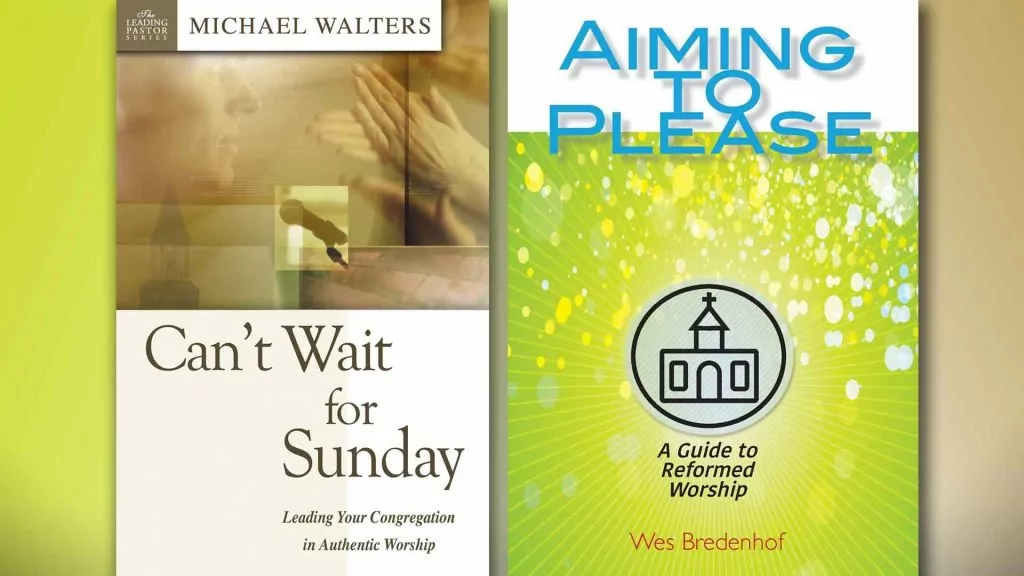
Many moons ago, in the days of Pine, Lynx and dial-up modems, there was an online discussion group known as Ref-net. I can’t say I was among the first participants of this e-mail forum, but I’m quite sure I got in while it was still made up mostly of university students. We were exploring what it means to be Reformed Christians in cyberspace. All sorts of ideas were up for debate, including public worship. RPW in the HC Through the Ref-net I met a friend from South Africa who introduced me to the "Regulative Principle of Worship" (RPW). What is the RPW? While, you can find it the Three Forms of Unity – though I had never really noticed it before – and it is most clearly stated in Heidelberg Catechism Answer 96 where it declares: “We are not to make an image of God in any way, nor to worship him in any other manner than he has commanded in his Word.” Worshiping God only as He has commanded: this is one of the rudiments and distinctives of Reformed worship. I became involved in a number of discussions about Reformed worship on the Ref-net. These ranged from general wrangling about the RPW as such, to specific polemics on applications of the RPW to questions like psalm-singing and “days of commemoration.” One of the objections I heard to the RPW in general was that it was impractical. If we’re to worship God only as he has commanded, then where has God commanded us to worship at 9:30 AM? Why do we sit in pews when God hasn’t commanded that? In these and many other ways, no Reformed or Presbyterian church really follows the RPW. To the lurkers it must have appeared as if this objection had just detonated the RPW into oblivion. Elements vs. circumstances However, this gotcha moment didn’t last very long. It was quickly noted that the RPW comes with an indispensable distinction. When it comes to public worship, Reformed theologians have often distinguished between elements and circumstances. Elements are the things God commanded in Scripture for public worship, things like preaching, singing, the reading of Scripture, prayers, etc. Elements are governed by the RPW. Circumstances are the incidental things which surround the elements. Circumstances include things like the time of worship, whether one sits on pews or chairs, what temperature the room will be, and far more. Circumstances are not governed by commands from the Bible, but by wisdom and discretion informed by the Bible. It’s true that this distinction doesn’t appear in the Heidelberg Catechism. Since the Catechism was written for children, you shouldn’t expect it to. But Zacharias Ursinus (its main author) does use this distinction in his theological commentary on the Catechism. It was also employed by Puritans such as John Owen and Jeremiah Burroughs. Not surprisingly then, it becomes part of the Reformed confessional heritage in Westminster Confession 1.6, speaking of circumstances in worship “which are to be ordered by the light of nature and Christian prudence, according to the general rules of the Word, which are always to be observed.” But is it biblical? The historical pedigree of this distinction is sound, but the most important question is whether it’s biblical. Certainly in the New Testament we see believers worshipping God in a variety of places – homes, synagogues, and even the temple. We see believers worshipping God at different times: evening, late evening, and morning. This sort of variability observed in Scripture is what undergirds this distinction. Outside of the elements commanded for worship, God grants liberty to his church to order the circumstances wisely. Debate continues This distinction doesn’t instantly solve every question in Reformed worship. There are disagreements amongst Reformed and Presbyterian liturgists about what constitutes elements and circumstances. Probably the most well-known example has to do with musical instruments. Some, such as myself, would contend that musical accompaniment (done judiciously) is circumstantial. Others would maintain it has the character of an element and, since it is not commanded in the New Testament, it cannot be justified by the RPW. Note: both sides fully affirm the RPW. However, they differ at the application of it, specifically when it comes to defining elements and circumstances. And no, it’s not a matter of “strict” RPW versus “loose” RPW. You either hold to the RPW or you don’t. While those disagreements can be quite intense at times, we do well to note the broad consensus existing amongst confessionally Reformed churches. There’s unanimous agreement that things like the time of the worship services and the type of seating are circumstantial. Whether you worship in a custom-built church building or use a school gymnasium – God-pleasing worship in Spirit and truth can happen regardless. Conversely, we all agree that what matters are the God-commanded elements. Without elements like the reading and preaching of Scripture and prayer, you simply don’t have Reformed worship. You have something less than authentic Christian worship. Because of our love for the Saviour and what he’s done, we want to follow his Word carefully when it comes to the content of our worship. But we’ll also be careful about imposing our own opinions where God has granted liberty to be different. For more on Reformed worship, be sure to check out Dr. Bredenhof's book "Aiming to Please: a Guide to Reformed Worship" (Amazon.com/Amazon.ca).  And be sure to watch his interview with Focal Point host Chris deBoer below. ...

Red heart icon with + sign.
Theology

Criticizing like a Christian

“Any fool can criticize, condemn and complain – and most fools do” – Dale Carnegie ***** In his bestseller How to Win Friends and Influence People Dale Carnegie begins with the story of “Two Gun” Crowley, a famous killer from the 1930s. When authorities tracked him down: …150 policemen and detectives laid siege to his top-floor hideaway. They chopped holes in the roof; they tried to smoke out Crowley, the “cop killer,” with tear gas. Then they mounted their machine guns on surrounding buildings, and for more than an hour one of New York’s fine residential areas reverberated with the crack of pistol fire and the rat-tat-tat of machine guns. Shortly before, Crowley had been parked along a country road, kissing his girlfriend, when a policeman had walked up and asked to see his license. Crowley responded by immediately shooting the officer several times, grabbing the officer’s gun, and shooting the now prone man with his own gun. He then fled to his hideaway where he was soon discovered. Though completely surrounded Crowley shot back incessantly, but also found time to write a letter, addressed “To whom it may concern.” In this letter Crowley described himself as a man with “a weary heart, but a kind one – one who would do nobody any harm.” When he was finally caught, convicted and sentenced to the electric chair he continued to think highly of himself. Instead of admitting this was the consequence of his sins he said: “This is what I get for defending myself.” The moral of this little story? Even when our guilt is clear, we will find ways to justify our actions and convince ourselves that someone else must be to blame. Or as Carnegie puts it “ninety-nine times out of a hundred, people don’t criticize themselves for anything, no matter how wrong may be.” A solution? Carnegie has it exactly right. It is human nature to try to elude criticism, and when we can’t manage that, we will at least try to spread the blame around. After all, we know we’re good, so if we did something bad it must be someone else’s fault. “…but you made me lose me temper!” “They had it coming.” “You wouldn’t believe what she said first…” We are all prone to presenting “the devil made me do it” excuses and justifications as if they were valid reasons for our behavior. Carnegie concludes that because we all hate criticism, and pay so little attention to it, “Criticism is futile.” He suggests that, as a general rule, we “Don’t criticize, condemn or complain” and instead focus on the positive and the praiseworthy. God’s thoughts on criticizing Most of us could benefit from taking a large dose of Carnegie’s advice. But does it work as an absolute rule? Should we never criticize? While Jesus spoke against quick, thoughtless, and hypocritical criticism (Matt. 7:1-5), He also called on listeners to “repent and believe” (Mark 1:15), which is a decidedly critical message. It demands that people stop and turn from the evil they are doing! In fact, God says a dividing line between the righteous and the fool is in how they take criticism. Whoever loves discipline loves knowledge, but he who hates reproof is stupid. - Prov. 12:1 A wise son hears his father’s instruction, but a scoffer does not listen to rebuke. – Prov. 13:1 A fool despises his father’s instruction, but whoever heeds reproof is prudent. – Prov. 15:5 A rebuke goes deeper into a man of understanding than a hundred blows into a fool. - Prov. 17:10 Clearly, if taking criticism is a mark of wisdom, then there is a need also to give it – for Christians it is not a matter of whether we should ever criticize, but instead when and how we should go about doing it. When we look to the Bible for guidance, we find at least four questions to consider. 1. Is criticism needed...or grace? To those all aware of their sins and already sorry for them, further fault-finding isn't needed (though some who say they are sorry for their sin are simply sorry they were caught). If a person is already broken, then we can make them aware of our Saviour – we can skip the criticism and get right to grace! It is only those who don't know the bad news – who as Carnegie puts "don’t criticize themselves for anything, no matter how wrong may be” – that we need to first bring to Moses, the law, and the evidence of their sinfulness, before we bring them to Jesus. 2. Are we doing it in love? There are so many wrong reasons to criticize – because we are angry or frustrated, because we want to feel superior, because we want to defend ourselves and don’t want to listen to someone’s criticism of us. That’s why when we are going to criticize it is important to question our motivations. Do we want to build this person up, or tear them down? Are we doing this out of annoyance, or out of love? A good rule of thumb might be that, if we really want to criticize, we probably aren't doing it with the right motivations. But the reverse is also true. If we see a friend, our spouse, a brother or sister, or our children, heading off down the wrong path and we don't want to speak up, that's also a good time to question our motivations – are we being apathetic and cowardly, and, consequently, unloving in not going after a straying sheep? Now, in 1 Cor. 13:4-7 we read that love is patient and keeps no record of wrongs. And 1 Peter 4:8 communicates a similar thought – love overlooks a multitude of sins. If we are to lovingly criticize one another this means we will only speak up about something substantial – something that matters – and won’t keep a running tally of petty grievances. Criticizing lovingly also means doing so inclusively – a matter of coming alongside rather than lecturing from high atop our pedestal. As Paul Tripp puts it, we need to make it clear we are “people in need of change helping people in need of change.” How might this look in practice? Street preacher Ray Comfort, when confronted by a homosexual, will talk first about the sins they hold in common. He will ask whether the man has ever stolen anything, ever lied, ever hated someone in his heart. By starting with the sins they hold in common, rather than the sin they do not, Comfort makes it clear he has no delusions of grandeur. He knows he is in need of this same promise of forgiveness he’s preaching. 3. Are we criticizing with care? We should criticize with care. In Matthew 7:1-5 Jesus condemns how quick we are to judge others by standards that we don’t measure up to ourselves. “Why do you look at the speck of sawdust in your brother’s eye and pay no attention to the plank in your own eye? How can you say to your brother, ‘Let me take the speck out of your eye,’ when all the time there is a plank in your own eye? You hypocrite, first take the plank out of your own eye, and then you will see clearly to remove the speck from your brother’s eye. This rules out casual critiques. We too easily evaluate the faults of those all around us, and know just what they should do to fix their hair, their wardrobe, their children or marriage. But this sort of flippant evaluation isn’t done out of love. We aren’t looking to help our neighbor; we point out their flaws so we can feel superior to them. It also rules out reactive criticism. Jesus wants us to consider our own problems and sins – the “plank in our own eye.” So when these problems are pointed out to us, it is may be human nature to respond in kind with a snap assessment of our critic, but that isn’t the godly response. There is one whose rash words are like sword thrusts, but the tongue of the wise brings healing. – Prov 12:18 4. Have we tried it privately? Whenever possible, we should offer criticism privately. In Matthew 18:15 the first step in correcting a sinning brother involves a private meeting “just between the two of you.” This is the approach Aquila and Priscilla used when they wanted to explain the “way of God more adequately” to Apollos, who “knew only the baptism of John.” They invited him back to the privacy of their home to talk and teach. None of us like to be criticized but we especially don’t like to be criticized publicly. In the spirit of doing unto others as we would like them to do unto us we should offer our criticism privately. This is just as true for our children. We clearly have to criticize and correct them – that is a parent’s God-given role. But we can try to do this in private as much as possible. Spankings can be administered in a room far from guests or other children. Talks, too, can be done behind a closed door, away from the ears of their siblings. Matthew 18 also makes it clear that not all criticism can be done privately, but when it is possible it is best. Conclusion We should criticize carefully, lovingly and privately, but we most certainly should criticize. God has put us together in a community so that we can “teach and admonish one another” (Col. 3:16). Sometimes there can be a temptation to stay quiet, even when we have some godly wisdom to offer a brother having problems. We can even fool ourselves into thinking we are simply “minding our own business” (and that our silence has nothing at all to do with cowardice). But minding our own business isn’t exactly a Christian virtue - we are our brother’s keeper and we must be concerned with his welfare. So if we love him, and he is in need of correction, silence is simply not an option. “My brothers and sisters, if one of you should wander from the truth and someone should bring that person back, remember this: Whoever turns a sinner from the error of their way will save them from death…” – James 5:19-20 A version of this article originally appeared in the February 2012 issue. **** Postscript: How should we receive criticism? As Carnegie notes, it is human nature to bristle at criticism and ignore it, but human nature is sinful, so the way we do react might not be the way we should react. God tells us that it is simply stupid to hate correction (Prov 12:1). We know we are far from perfect, and clearly in need of improvement, so we should “listen to advice and accept instruction” (Prov. 19:20). So how do we overcome our defensiveness? How can we learn to welcome criticism? We need to ask God to make us want to be wise, rather than foolish. We need to pray for a growing awareness of our own sins, and our need for correction. It is only when we understand how needy we are that we will embrace the help that is offered. That doesn't mean listening to every critic – many are fools. But it does mean we need to recognize that criticism of the godly sort is a precious, if not always pleasant, commodity....

Red heart icon with + sign.
Theology

Envy dressed up as equality

A few weeks ago two of my daughters were fighting over a stuffed animal, both insisting it was theirs. I wanted to stop the fight but this struck me as a teachable moment...and I knew I had just the right story to share. “Do you remember when two women came to King Solomon and both said a baby was theirs? King Solomon was going to use a sword to cut the baby in half so that each woman could have half.” Then came the mike drop moment: “Would that be a good idea to do with your stuffie?” The story didn’t impact my girls like I’d hoped: both agreed that splitting the stuffie lengthwise was the way to go. Hmmm… I was left wondering what Solomon would have done if both women had said, “Sure, go ahead.” The best I could come up with was to have the toy bear come stay with the “king” for a while – instead of half a stuffie for both, it was no stuffie for either of them. Kids have a hard time seeing it A few days later I came across another illustration, and because of the less than satisfactory conclusion to my earlier conversation with the girls, I wanted to share this with them too. In the June 6 “Nearer to God Devotional” Pastor Mark Stewart shared an old Jewish folktale, in which an angel visits a businessman known for being envious. The angel wants to encourage the shopkeeper to give up his envy so he tells the man that he can have one wish but with one condition: whatever he wishes for, his neighbor will get twice as much of it. The spiteful man considers the offer for a few moments, and then makes his request: “Please make me blind in one eye.” Both my girls were shocked, and then somewhat amused. What a clever, but ever so wicked, man! He would be blind in one eye, but his neighbor would be blind in both. This story reminded me of another, so I shared an old Cold War joke – something Ronald Reagan might have said. One day a genie visited a Russian peasant and told him he could have one wish. The peasant was quite excited and told the genie about how his neighbor had gotten a goat. He shared how the goat provided the neighbor’s whole family with milk, and goat’s hair for clothing, and was also a wonderful pet for that family’s children. “So you want a goat too?” asked the genie. “No,” said the peasant, “I want you to kill my neighbor’s goat.” In the Bible, the words covetousness and envy seem to be used interchangeably. But if a distinction were to be made, we might describe envy as taking covetousness one step further. The merely covetous man wants what his neighbor has – he wants to be rich too. But the envious man isn’t as concerned with his own state as that of his neighbor’s. He won’t be satisfied until his rich neighbor is poor. Adult miss it too I shared these stories with my daughters because there were obvious connections to be made. There are going to be times when one child gets something – whether it’s piano lessons, a new toy, an opportunity to visit a friend’s house, etc. – that the other siblings don’t get. And many a time those other children will have a hard time being happy for their sibling’s opportunity. They’d be happier if only their sister’s “goat” was killed. Among adults, this destructive envy is harder to spot but that’s only because we’re better at hiding our sins – we’ll even present them as virtues. One example: As I finished sharing the second story my wife noted, “This sounds like the Canadian healthcare system.” In the great white North we aren’t always pleased with our healthcare; wait times can be not simply burdensome, but even deadly. However, one thing Canadians take pride in is how it is the same healthcare for everyone. Politicians and voters stand united against queue-jumping and against a two-tiered healthcare system. Consider though, what we are doing when we try to prevent someone who uses their own money from buying better care than is available to the rest of us. Aren’t we wishing his “goat” was dead? Trying to improve healthcare is a noble desire. But trying to prevent others from seeking better healthcare for themselves is envy disguised as principle. This same “envy as virtue” is behind complaints about income inequality. We live in a time and a place where we are richer than we have ever been – every house has conveniences that even a hundred years ago were luxuries for only the richest of the rich...if they existed at all (running hot and cold water, central heating, phones, computers, TVs, dishwashers, washing machines, vacuums, etc.). So how can the Devil get us to overlook the many ways we have been materially blessed? By getting us looking over the back fence at the new toys in our neighbor's yard. The 10th commandment (Ex. 20:17) forbids just that, but to obscure that clear commandment the Devil presents this sin as something noble. “This isn’t coveting; this is about equality,” he tells us. “This isn’t coveting; it is about compassion for the poor!” Poverty is a problem. When some don’t have enough to eat, or a place to sleep, that is a real concern, and an evil to be fought. But income inequality is simply about envy – anger at how much more someone else has than us. Conclusion Covetousness and envy are sins of ingratitude, of not recognizing how much we’ve been given. Would income inequality be an issue if “poor” protesting college students understood they are richer than 85% of the world? Would my daughters fight over one stuffed animal if I had them first go count their dozens of other stuffies? More to the point, would we envy even Bill Gates if we understood what we’ve been given in the sacrifice of Jesus Christ? As Pastor Stewart writes: “Secure in the love of Jesus Christ and our identity as the Father’s children, I have no need to envy my brother or sister. I am a recipient of favor and kindness and grace that I could never earn or pay for. There is no higher or better privilege to reach for…. Content in what the Father has chosen to give to me, I am now freed up to want the best for you....

Red heart icon with + sign.
Theology

On the benefits and limits of creeds and confessions

Most RP readers belong to creedal churches. We hold to creeds and confessions because they have helped the Church preserve the truth of God’s Word though the generations. So what are these confessions? In his article “The Necessity of Creeds and Confessions," Garry Vanderveen defined confessions as a: “common/shared interpretation of Scripture, which is the highest and only infallible rule for faith and life.” Orthodox Reformed churches generally still adhere to the ecumenical creeds (Nicene, Athanasian, and Apostles’) and some set of Reformed creeds (e.g., Westminster Standards, Three Forms of Unity, Augsburg Confession, etc.). In this article I want to explore both the benefit of creeds, and their limits. Symbols that came with risks In the early church, to hold to a creed or confession was often done at risk of one’s social and/or physical safety. In his A History of Christianity (Vol. 1), Historian Kenneth Scott Latourette explained that creeds and confessions are known as “symbols” because the term symbol here, “comes from a word which in one of its usages meant a watchword, or a password in a military camp. As applied to a creed, it was a sign or test of membership in the Church. Assent to the creed or symbol was required to those who were being baptized” People made this confession with a conviction to join the Lord’s army, as it were. They were convinced that Jesus Christ was the true Son of God, that He made full payment for their sins, and that they were assured of the resurrection of the dead. Each believer was prepared to “deny himself and take up his cross daily and follow ” (Luke 9: 23). Philip Schaff, in his Creeds of Christendom (Vol. 1), explains that the earliest creeds were often committed to memory and not written down. “From fear of profanation and misconstruction by unbelievers… the celebration of the sacraments and the baptismal creed, as a part of the baptismal act, were kept secret among the communicant members until the Church triumphed in the Roman Empire.” The earliest creeds are found in Scripture itself. When Christ asks the disciples, “But who do you say that I am?” Peter confesses, “You are the Christ, the Son of the living God” (Matt 16:15-16). The importance of making a confession was quickly tied to one’s baptism and membership in the early church, and it included a confession of the Triune God before being baptized into the Name of the Father, Son and Holy Spirit. The authority of creeds The creeds have an ecclesiastical authority but not in the same way that the Roman Catholic Church, and others, would suggest. The Roman Catholic Church believes that the creeds, traditions, and the papacy share a co-ordinate (equal) authority with Scripture, and that, then, is a denial of Scripture alone. Of course, with the Roman Catholic view of continuing authoritative revelation, we can anticipate, and we learn from experience, that the result is an ever-changing view of what God’s Word teaches. Councils, encyclicals, and formal Church documents become as authoritative as Scripture, and because these come later, they can be seen as progressive revelation. Protestant churches need to be careful that we do not fall into the same trap; we need to be very cautious that we do not elevate the ecumenical or Reformed creeds to such a status that we start arguing that any topic they don’t address must therefore be left to the freedom of the individual believer. Many of the creeds were written to articulate what Scripture teaches in response to a perversion of the Scriptures, a heresy. They were written in a historical context, addressing particular matters that were pertinent. They could not have foreseen issues such as abortion, euthanasia, gender confusion, etc. as topics that would need to be addressed. To grant freedom on these issues simply because the creeds don’t speak to them would be to ignore what Scripture does say. Then we would be elevating the confessions to the same level, or even higher than Scripture. And if we do that, then we risk causing the pendulum to swing the other way, leading to an abandoning of creeds and confessions and a turn towards rationalism and unfaithfulness. At the same time, the confessions do have an ecclesiastical authority as they regulate the public teaching of the church. They also allow members to express their commitment to the truth of the Scriptures as articulated by the church. The Apostles’ Creed appears to be the first formally crafted creed, and seems to have developed in response to Gnosticism, Marcionism, and Monasticism. The Nicene Creed, more prevalent in the East, seems to be an expansion of the Apostles’ Creed, with a somewhat stronger emphasis on the Trinity, and in particular, the nature of Christ. So, also, Reformed creeds were written to elucidate the biblical teachings on salvation by grace alone, the sovereignty of God, the sufficiency and completeness of Scripture, etc. They were written to echo the truth of Scriptures on core doctrines of the faith after those doctrines were perverted or misunderstood by the Roman Church and others. Just as early church members used the Apostles’ Creed to make their public profession of faith in order to receive access to the sacraments, so also today, we do something similar. It is quite reasonable to think that members of Reformed churches would express their agreement with Reformed confessions as a way to experience access to the sacraments for themselves and their children within Reformed churches. Are the truths expressed in the later creeds less true, or less important? Are they not expressing crucial truths? Or perhaps we have come to a point in the 21st Century that such truths are of secondary importance – to our detriment, I fear. To be clear, the Scriptures have a self-authenticating authority while the confessions have a provisional authority – they are authoritative in so far as they agree with or accurately summarize the Scriptures. This bears repeating. As Schaff puts it: “The Bible is of God: the confession is man’s answer to God’s Word”  No creed but Christ? I recall numerous discussions I had as a young adult with my peers, about the role of the confessions. Many wanted to adopt a “no creed but Christ” attitude. For them, this means that we do not need to express anything other than Christ – only Christ. This sounds pious and echoes the sounds of “Christ alone.” But what does only Christ, or “…but Christ” really mean? Does Scripture allow us to accept the Marcionites and Gnostics in the church of Christ? Or better yet, does Christ accept them as members of His bride? Today’s Mormons and Jehovah’s Witnesses also speak piously of Christ. In fact, the Mormons sing so many evangelical hymns about Christ, it is a wonder that they will not rightly comprehend what they sing. But the truth is, the Apostles’ Creed is – but Christ; the Nicene Creed is – but Christ; the Heidelberg Catechism is – but Christ. What I mean, of course, is that these creeds seek to be nothing more than an articulation of but Christ – they are only what Christ’s Word teaches us. All of the Bible, from Genesis to Revelation, is equally the Word of God. As long as creeds and confessions echo the truth of God’s Word, they remain but Christ. Grey Areas To be fair, the aforementioned points raise some real challenges. In particular, how do we view or interact with those who cannot articulate agreement with Reformed confessions, but bear fruit as confessing Christians? They could agree with the Apostles’ Creed or all the ecumenical creeds, but not the Reformed ones. Can they not also be members of local Reformed congregations? Do they have to answer “I do” to this question: Do you believe the Word of God, summarized in the confessions, and taught here in this Christian church, to be the true and complete doctrine of salvation? These are questions I’ll explore in future articles as I seek to read through the forms for making a public profession of faith in use among faithful Reformed churches. As a start, however, there are things that churches cannot know, or things that we cannot decide – this is God’s hidden will. God decides who is and will be a member of the New Jerusalem, and every individual there will be there only because of Christ’s redeeming work. What the church can and must do, however, is ensure that the thrice holy God is honoured and His Word obeyed, and preached. If the Church no longer believes that the confessions articulate fundamental truths of God’s Word, necessary for salvation – if they are more than but Christ –  then one wonders why they should maintain any kind of ecclesiastical authority. Is there no room for grace, further education, disagreement? On a practical level, I find this very difficult. I believe, for example, fundamentally, that children should be baptized as members of Christ’s covenant congregation. I also believe that I have true brothers and sisters who would agree that children of believers belong to God, but who would disagree that baptism is a sign and seal of that reality, and so refuse to baptize their children. Is there a way to express and experience this unity despite the significant difference? Can I be honest and say, “I don’t know”? Perhaps we need to begin by identifying a difference between a personal conviction and a church’s position. That is, while I enjoy fellowship and relationship with such brothers and sisters, the fullness of our unity cannot be expressed until there is repentance and/or until Christ returns, in whom all of our sins are completely forgiven. If we were to put the problem the other way, a Reformed Baptist congregation would not agree to baptize my children if that church believed, fundamentally, that doing so would be sin or at least meaningless. Would I be permitted to be a full-fledged member if I refused to be rebaptized? Probably not. Creeds and confessions express a church’s understanding of the truth of God’s Word. They are not meant to serve as a catalogue of ideas from which we can pick and choose. The church adopts these statements of faith because they delineate our expression of the faith from those who express this faith differently. So, while we are on earth, we must strive to maintain the truth, and unity in that truth. Where there is not unity in understanding of the truth, there might need to be a limit to the experience of the spiritual unity we trust often exists. God is gracious, and while it is not good that brothers and sisters are separated because of sin, it is the way things are. Perhaps, even before Christ returns, we’ll all agree on why we baptize (or not) children of believers, but not likely. So, we wait patiently and pray fervently for Christ’s return when we will all experience the fullness of joy in belonging to Christ and to each other, in perfection. Until then… let us be careful that we do not compromise on the truth of God’s Word...

Red heart icon with + sign.
Theology

Repent therefore, and turn back, that your sins may be blotted out

New Year's resolutions - we all make them and then we all break them. Perhaps praying the first part of the Proverbs 30:8 prayer is a great reminder as we move further into 2021: Remove far from me falsehood and lying... ***** I can't lie; my bed is broken. This small one-liner has you thinking twice, and is designed to create a smile in those who hear it. The underlying sad truth, however, is not really funny because all of us can, and do, lie. Every day we lie, again and again. We are surrounded by lies. We only have to turn on the daily news to be overwhelmed by the untruthfulness of the world around us. The voter fraud that has gone on in the presidential election of the US, (and many other countries), is only a small example of continual lying. There is nothing in the world so abysmally sad as to catch someone we love and admire in lies. The October 2020 edition of WORLD magazine ran an article by Emily Belz on Christian apologist, Ravi Zacharias. Sexual misconduct claims on this well-known figure were investigated. Accusations were addressed in which a number of women, who provided regular massage therapy to Zacharias at spas he owned, claimed he had touched them without their consent. A nasty business and one which dishonors our Lord! Zacharias died in May of 2020 of cancer. While alive, he steadfastly denied all these accusations. Refuge for those who seek We've all had to deal with lies, disappointments, and broken promises. We all live in a world tainted by sin. As such we need help, we need a place to which we can run, a place in which to hide, a place which has comforting truth. There are stories of hiding, especially stories dealing with Jews during the Second World War when they were so brutally hunted down by the Nazi regime. There is the accounting of a husband and wife, a Jewish couple, who were hidden in a church in Rotterdam, a church situated on Breeplein. They had three daughters who were taken care of by way of foster homes throughout the duration of the war, but they themselves were hidden by the pastor of that church in an area behind the organ. One of the granddaughters, Daphne Geismar, later wrote: “Access to the attic hiding place was by a retractable ladder, through a trapdoor, which was covered with a cloth when closed. The attic sat below a steeply pitched roof, its brick and cement walls were windowless, and there was no floor—only joists, forcing one to step from beam to beam to avoid falling through the ceiling below. It was frigid in winter and suffocating in summer.” Her grandparents thankfully made it to the end of the war and thought themselves ”lucky” to have done so. This despite the fact that each Sunday, they must have been privy to preaching, to the proclamation of God's Word; this despite the fact that hopefully the pastor would have testified to them by his words and actions of Jesus Christ. This truly might have been their hiding place in a deceitful and perfidious situation. But as far as we know, they did not avail themselves of it. In his The Treasury of David, a commentary on the Psalms, Charles Spurgeon writes a note on Psalm 32:7. He says: "Suppose a traveler upon a bleak and exposed heath to be alarmed by the approach of a storm. He looks out for shelter. But if his eyes discern a place to hide him from the storm, does he stand still and say, ‘I see there is a shelter, and therefore I may remain where I am’? Does he not betake himself to it? Does he not run in order to escape the stormy wind and tempest? It was a 'hiding-place' before; but it was his hiding-place only when he ran into it and was safe. Had he not gone into it, though it might have been a protection to a thousand other travelers who resorted there, to him it would have been as if no such place existed." It is a good thing to remember that the Judge of all the earth is merciful and kind, not holding us accountable for our sinful lies if we go to Him, confess our sins to Him, and repent before the cross of our Lord Jesus Christ. But that is only if we, as the Prodigal Son did, run to Him. If liars, if sinners, do not do this, then it is vital to know that the Judge of all the earth will do what is right. An allegory There is an allegory, and I'm not sure where it came from but I will recount what I remember of it. There was a man who had been heavily involved in the hunting down of Jews during the Second World War. He was a fellow whose days had been filled with murder and bloodshed. He had personally been responsible for the killing of thousands during the Holocaust. Cruel and willful, he had no thought of repentance to either man or God, but he was afraid. To the outward eye, to his post-war neighbors, he appeared a gentle and successful businessman, but inside his mind and heart he continually relived his war days. His fear, a fear which ate him up every day, was of being caught by earthly authorities and earthly judges. Sadly, instead of turning to Jesus Christ and pleading forgiveness for his heinous past, he tried to devise a means of escape on his own. This man, we'll call him Esau for the sake of clarity, concocted a strange plan to escape his feared earthly judgment. He loved paintings. Each week he would spend hours in the museum gazing at masterpieces. One painting which he loved above all other paintings was an idyllic nature scene. Visible peace oozed from the canvas. In the center of the painting was a small boat. A man sat in that boat, a fishing rod in his hand. Mountains lined the background and the sky above was vast and still. There was a bench in front of that painting and Esau often sat on that bench drinking in and contemplating the peace and the quiet of that scene. He coveted it. There were times that he was almost transported, almost becoming the man in the boat. He then fancied that one day he would be able to relocate himself into the vessel and literally sit in the boat. It became a fixation for him and he was sure that he could become that man, and thus be freed from all his worries. Inevitably the day arrived when Esau's wicked past came to light and the police began to investigate and search him out. Esau became aware that they were about to arrest him and he panicked. Leaving his house in the dead of night, he drove straight to the museum. Able somehow to enter, he made his way through the dark corridors of the building and came to the room where the painting he so admired hung. But it was very dark and his steps were unsure. He knelt in front of where he thought the picture was hung and tried harder then he ever had before, to transfer his entire being into that painting. He felt himself succeeding. A few hours later the police finally traced Esau to the museum. Eventually they too came to the room where the painting Esau had so admired hung. "Nice painting," one commented and another agreed with him. They both failed to notice that next to the peaceful, pastoral scene hung another painting, a painting depicting pain and the crucifixion of criminals. They also both failed to notice that the contorted face of one of those criminals was eerily like the man whom they were seeking. “But I have stripped Esau bare; I have uncovered his hiding places, and he is not able to conceal himself. His children are destroyed, and his brothers, and his neighbors; and he is no more” (Jeremiah 49:10). We enter 2021. Who knows what the year will hold? Oh, Lord, remove from us falsehood and lying....

Red heart icon with + sign.
Politics, Theology

2K is not OK

A review and discussion of Willem J. Ouweneel’s The World is Christ’s: A Critique of Two Kingdom’s Theology **** A tour a few years back by ARPA Canada prominently featured a famous statement by Abraham Kuyper: “There is not a square inch in the whole domain of our human existence over which Christ, who is Sovereign over all, does not cry, Mine!” Many Christians undoubtedly agree that Christ is king over every aspect of human life. However, there is a relatively new theological movement within conservative Reformed and Presbyterian churches in North America that stands in direct opposition to Kuyper's view. This new movement draws a sharp distinction between the kingdom of God and a secular “common kingdom” that is not directly under the rule of Christ. Hence the movement is often referred to as “Two Kingdoms” or 2K theology. Sometimes it is known by the acronym NL2K which stands for “Natural Law Two Kingdoms” theology. This is because it teaches that most institutions in society (e.g. schools, businesses, civil governments, etc.) are to be governed by “natural law” (or the law that we can deduce, not from the Bible, but from the “natural” world around us. And the reason these institutions are to be governed by natural law, rather than the Bible, is because schools, business, the civil government and more, are said to be in that secular “common kingdom.” Two Kingdom’s growing popularity in some Reformed circles has prompted Dutch scholar Willem J. Ouweneel (who holds PhDs in Biology, Philosophy, and Theology) to write an extended analysis called The World is Christ's: A Critique of Two Kingdoms Theology (Ezra Press, 2017). This book demonstrates that 2K is highly problematic from a confessional and biblical perspective. New, but not so new It is legitimate to label 2K as “new” because it has only appeared within the Reformed and Presbyterian churches in the last decade. However, there is a sense in which it can be considered to be the return of an old error. According to Ouweneel, 2K is deeply rooted in medieval scholasticism which has a dualistic perspective that divides human activities into the sacred realm and the secular realm. For 2K, the authority of the Bible is restricted to the church and the life of individual Christians. It is not to be used as a guide for politics, economics, science, literature, etc. because those fields are part of the “common kingdom” governed by natural law. Ouweneel’s simple summary of scholasticism also functions as a summary of the basic 2K perspective: “there is a spiritual (sacred, Christ-ruled) domain and a natural (secular, common, neutral) domain, which have to be carefully kept apart. There is a domain under the authority of God’s Word and a domain that is supposedly governed by the God-given ‘natural law’ . . .  There is a domain under the kingship of Christ and a ‘neutral’ domain (which is at best a domain that falls under God’s general providence)” 2K versus the early Reformers However, 2K advocates claim that their view is the original Reformed position. They believe Abraham Kuyper’s “not one square inch” perspective added a new twist that conflicts with the teachings of the Reformers. The confessions indicate otherwise. The confessions formally summarize the essential theology of the Reformers, and their statements on civil government demonstrate 2K to be in error. The original wording of the Belgic Confession on civil magistrates included this statement: “Their office is not only to have regard unto and watch for the welfare of the civil state, but also that they protect the sacred ministry, and thus may remove and prevent all idolatry and false worship, that the kingdom of antichrist may be thus destroyed and the kingdom of Christ promoted.” The Belgic Confession (at least in its original form) saw an active role for the civil magistrate in advancing the kingdom of God. He was not outside the authority of the Bible. Modern Christians may not agree with that statement in the Belgic Confession, but it is clearly in conflict with 2K. The original Westminster Confession contains similar statements about the civil magistrate. For example: "...it is his duty, to take order, that unity and peace be preserved in the Church, that the truth of God be kept pure and entire; that all blasphemies and heresies be suppressed; all corruptions and abuses in worship and discipline prevented or reformed; and all the ordinances of God duly settled, administered, and observed.” Ouweneel summarizes the confessional point this way: “it would have been unthinkable for the divines who wrote the Belgic Confession (Guido de Brès, d. 1567) and the Westminster Confession to accept the idea that the “secular” state falls outside the kingdom of God.” Therefore, if we use the confessions of the sixteenth and seventeenth centuries as the standards for determining early Reformed and Presbyterian theology, 2K cannot be said to represent the original position. 2K versus Christian schools Many Reformed Christians send their children to Christian schools because they want their children taught from a Christian perspective. Each of the subjects in such schools is rooted in a Christian approach. However, according to Ouweneel: “This is the very reason why many NL2K advocates object to Christian schools: they do not believe in the possibility of a Christian approach to all these disciplines. In their view, both the school and the disciplines taught there belong to the ‘common realm,’ which is neutral and secular. So why should we need Christian schools?” If there is no distinctively Christian perspective for subjects like English, science and history, then there is no need for Christian schools. This is a consequence of the NL2K theology. Neutral history? Ouweneel asks, “Can you imagine studying history from a ‘neutral’ perspective?” How is that even possible? How do we determine whether particular historical events or people are good or bad without a biblical perspective? Someone may argue that a figure like Adolf Hitler is widely regarded by almost all people, Christian and non-Christian alike, to be evil. Therefore that demonstrates the existence of a common “natural law” standard for judging historical figures. But wait just a minute. In the 1930s there was no consensus that Hitler was evil. In fact, he was supported by millions of people in Germany and he had numerous admirers in other countries as well. It was only after he lost the war that he was regarded everywhere as being evil. If he had won the war, Hitler would have likely remained popular, at least in Germany. From a biblical perspective, Hitler was evil right from the start. But from a “natural law” perspective (whatever that means), things aren’t so obvious. As Ouweneel writes: “If a person is a radical Christian, let him look for an equally radical Muslim or Hindu, and try to find out how much ‘natural law’ the two have in common!” Natural law does not provide a clear and objective standard for determining right and wrong. But the Bible does. Ouweneel describes 2K’s usage of natural law as follows: “Such a Scripture-independent natural law is nothing but a loincloth, a fig leaf, to hide the shame of refusing to acknowledge Christian philosophy, Christian political science, a Christian view of the state, etc.” Two kingdoms in the Bible Now, the Bible does teach that there are two kingdoms. However, they are not the kingdom of God and a “common kingdom,” but the kingdom of God and the kingdom of Satan (Matt. 12:25-28). According to Ouweneel, every societal relationship (e.g. family, school, business, political party, etc.) is either a part of the kingdom of God or a part of the kingdom of Satan. As he puts it: “in every societal relationship, the kingdom of God can be, and is, manifested if this community is, in faith, brought under the rule of King Christ Jesus and under the authority of God’s Word.” This means that a political community where the citizens and government have placed themselves under the authority of the Bible manifests the kingdom of God. There are historical examples of such communities: “The kingdom of Christ did indeed clearly come to light in various German lands and European countries (Scotland, England, the Netherlands) in which Protestant convictions dominated public life (sixteenth and seventeenth centuries).” Clearly, the early Protestants did not believe 2K theology. And as Ouweneel asks, “Can you imagine John Calvin telling the city council of Geneva that they had to be ‘neutral,’ and that for their rule it did not matter whether they were Christians as long as they were good rulers?” The key issue Ouweneel sees the dispute over 2K coming down to one key point: “This is the issue: either God’s Word has full authority over the entire cosmic reality, or only over a limited part of it: the church.” For 2K, the Bible is authoritative only over the church. It does not have authority over politics and government or the other spheres of the “common kingdom.” The real-life consequences of 2K are serious. As mentioned, it undermines the rationale for Christian schools. Another effect is to remove all Christian influence from political life. As Ouweneel points out, 2K plays “…into the hands of all the atheists and agnostics who propagate the neutral, secularized state and wish to restrict religion to the church and to the private religious lives of people. The growing number of non-Christians in North America should be thanking their new gods for the support they are receiving from NL2K advocates with their commitment to a secular state.” Conclusion The consequences of embracing 2K theology would be devastating to Christian influence in politics and society. Public policy in Canada, the United States and other Western countries has been moving in an increasingly anti-Christian direction for years. If Christians were to abandon their distinctively Christian efforts to influence government, that trend would only get worse. Yet that is what 2K theologians essentially advocate. Abraham Kuyper was certainly correct that Christ is sovereign over every square inch “in the whole domain of our human existence.” Excluding the Bible from certain spheres of society is a recipe for accelerated decline and ultimate disaster. As Ouweneel puts it, “All talk about a so-called ‘common kingdom’ means in the end that we allow the kingdom of Satan to prevail in the public square.” Michael Wagner is the author of "Leaving God Behind: The Charter of Rights and Canada’s Official Rejection of Christianity,” available at Merchantship.ca....

Red heart icon with + sign.
Gender roles, Theology

Who’s Afraid of Proverbs 31?

I can still see the cartoon in my memory – she was robed in white, her nose in the air, gracing a marble pedestal under which lesser women cowered. Inscribed on the pedestal were the words, “The Proverbs 31 woman.” It was illustrating a comedic piece in a Christian women’s magazine, describing exactly what the author felt when faced with such a perfect, perfect woman. My mother lifted the magazine out of my hands. “Don’t read that nonsense,” she said. “Why not?” I wanted to know. She thought a moment. “People like to mock her. It’s easy to make fun of her. But I don’t like it.” *** Lots of women do feel intimidated by Proverbs 31. We feel if we were to meet her in real life, we would only meet with judgment. We react to her as if she is a standard that points out all our inadequacies. And authors who write about her know this – they feel compelled to include an apologetic paragraph somewhere near the beginning of their article: Don’t worry, everyone comes from a different life situation. Don’t worry, this woman appears to be rich, and you might not be. Don’t worry, everyone is unique, and not everyone needs to live up to this passage in the same way. A recent article I read started off with, “Reading Proverbs 31 can be discouraging! Who can live up to such expectations?” The first reaction to her is to downplay her a little, and make her more approachable. The assumption is that an unsoftened look at the woman in Proverbs 31 will lead to discouragement. The assumption is that the first emotions this passage will raise in us will be negative emotions, and that these negative emotions will need to be navigated and managed before we can get anything useful out of the passage. I don’t deny that this is often the case, that often these are the emotions stirred up by this passage. But I don’t think this needs to be the case. It should be possible to re-frame the passage as a whole, from discouraging and disheartening to uplifting and inspiring. Maybe the Proverbs 31 woman can be encouraging without being softened. Actually, I know it is possible. I have often read this passage with a sense of excitement, a sense of possibility. In contrast to many human writings, it does not downplay the capabilities of woman, and it acknowledges and appreciates them (and urges the rest of society to do so). It is not a passage that needs to be clarified with the sentence, “oh, this applies to women too,” but it is directly applicable. However, this woman can clearly inspire either excitement or discouragement in many women. What causes the difference? Can she be inspiring to everyone? The value of ideals One problem is that we tend to think of ideals in the wrong way. The woman in Proverbs 31 is an ideal, and ideals are judges. Ideals are meant to draw our attention to the gap between them and us. They do give a verdict on our conduct by demonstrating the ways we fall short of them. But ideals are meant to be a vision of what could be, of what we can strive for, rather than a standard that is meant to crush and punish us. They aren’t there to push us to quit, but instead give us a vision of a different way to live. Our modern world doesn’t like ideals very much. In the past, people did frequently talk about the ideal country or ideal city or ideal king. But nowadays, who talks about the ideal prime minister? We don’t believe any politicians could ever be ideal. Our cynicism is unavoidable – we are much more comfortable speaking about the way our current society is not just and equal, than speaking of what a just and equal society would actually look like. Human realities have led us to give up on utopias, and create lists of our problems instead. But maybe we should take our eyes off our lists of problems, and learn to feel inspired once again. We can draw fresh enthusiasm from working towards a vision of the good. When presented with an ideal, we feel like ideals force conformity on us, tell us to be all the same, and can only make us feel bad about ourselves. But instead, the power of ideals is that they can open our eyes to a better way of living. In that way they are not limiting, but rather are a demonstration of opportunities we would never have imagined in our current circumstances. After all, children look to their parents to see what it is like to be a person who can accomplish more than what their childish limbs can manage. They can’t do what their parents do, but they can imagine growing into a future where they will be able to do more. When they look to their parents they can see an example of how to live a life they have never yet experienced – an adult life. And Christians are inspired by Christian role models too. Paul the apostle advises the Corinthians to imitate him as a model in their Christian life, as an example of a more mature Christian (1 Cor. 11:1). Having examples can be freeing rather than limiting, because we see how different lives than ours can be lived. Yes, visions of what could be are intimidating. But to erase them is to limit ourselves only to what exists right now. An ideal woman And this is the way I think the woman in Proverbs 31 can function. She can demonstrate the power of a virtuous woman, and lead us in turn to feel enthusiasm about what is possible for us in our femininity. After all, it does not take much for us to feel ground down in our femininity – we're confronted daily by negative portrayals of silly women, clingy women, bullying women, or passively helpless women in media, online, or just mentioned in general conversation. We can feel hormonal and wonder if our genetic makeup is a curse. We can struggle to perform heavy labor and feel dependent on others as a result of who we are. We can hesitate to speak up and make our voice heard, and feel held back. And when others reject us and label us or neglect to appreciate us, and we become vulnerable to harmful images of femininity. When we turn to our Bible to counteract this, we find the Bible itself does not shy away from portrayals of the shortcomings of women (just as it does not shy away from the shortcomings of men). Women can be gullible (2 Tim. 3:6), weak, (1 Pet. 3:7), or just unpleasant (see elsewhere in Proverbs itself, such as Prov. 21: 9). Faced with all this, how does one remain hopeful about womanhood? Is there any vision of a woman being a woman in a positive way? Yes, there is. When we need a picture of a woman exercising female traits and positively affecting the world around her as a result of being a woman, we can look to Proverbs 31. We can look to Proverbs 31 and begin to heal from our doubts and worries about womanhood. There are many things a woman can do, even a very “traditional” woman such as this woman. She can be strong, both physically and mentally, even though we’re tempted by negative images to believe we’re doomed to be fragile and unstable. She can be effective, even though we’re afraid we’ll only be passive and ineffective. And she can be courageous, even though we’re worried and anxious. In this way she is purely encouraging. We are not fated to be that taunting caricature of ourselves that may live in our imagination. When we need to insist our womanhood is a gift God has given us and the world, she is on our side. “A heroic poem which recounts the exploits of a hero,” is how one commentator classes this passage. Another calls it, “an ode to a champion.” What women do is not only worthy of being recorded, it is worthy of being applauded in exactly the same way as a warrior who slew a lion. But she girds her loins and takes up the heroic role in a very different setting. We can feel confident in this picture that we receive in Proverbs 31. This is not like the argument over whether Cinderella is a good role model for girls or not; we can take it as a given that this woman is a good role model. And if she is, what opportunities does that present to us?  She brings so much to the discussion that I cannot begin to include everything in a single article, so I’ll have to limit myself to the example of her strength. Strength is not the first word I associate with women, but it is the first association brought out here, in the very first line: “A woman of strength, who can find?” She draws our eyes to the quality of female strength specifically. Looking for a strong female character What is a strong woman? On one hand, we have many talking heads in media calling for more “strong female characters” in entertainment. On the other hand, strength is not typically the first female trait that comes to mind. If asked to come up with a list of feminine qualities, and you weren’t too afraid of going with the honest associations that came into your mind, you might come up with words like delicate, soft, gentle, meek. Asking for strong female characters is seen as one way to counteract this, to create new stereotypes that counteract the old. But too often “strong females” are interpreted as physically strong, as demonstrated by the number of “kickass” female characters who keep up with, surpass, or beat up men. But this kind of knee-jerk, opposing reaction to the stereotype of a weak female often glosses over the reality that women actually live. Women live their lives under the awareness that they will never be as strong as men. There is a limit to what we can physically do, and aside from a few exceptional women, most of us will burn out measuring our strength against men’s. Because of this, some of us can conclude it is not worthwhile to develop our own strength and capacity. Or others may choose to highlight only these exceptionally strong women as a defense against perceptions of weakness, in a way that makes regular women feel inadequate. Another way we do not feel strong is in our awareness of our vulnerability—we live knowing we can be overpowered and harmed by others with more strength. We structure our lives because of our awareness of our vulnerability, not walking alone in the dark, or holding our keys in our fists when we feel threatened. So no, I don’t believe that physically strong female characters in media are enough by themselves to encourage and inspire us in our regular lives. Strong and weak stereotypes However, it does not follow that in order to be a woman, we must emphasize our weakness. There has been a growing awareness through time that strength in women is a benefit and not a drawback, starting with the nineteenth-century encouragement to throw off tight-laced corsets and be physically active. Nowadays, the capacity of women is recognized on a society-wide level, and women are encouraged to develop and use their abilities to accomplish what they set their hand to do. And Proverbs 31 gives no support to ideas that weakness, fragility or delicacy are defining characteristics of womanhood. It is at this intersection between “kickass” female stereotypes and the experiences of regular women that the woman in Proverbs 31 stands. Remember, this passage is “a heroic poem which recounts the exploits of a hero,” or, “an ode to a champion.” In this way, she stands alongside Achilles and Beowulf. And yet she is not unreachable or alien to us in our everyday life. In fact, one thing many commentators notice about her is the mundane normalcy of what she is described as doing, even as the passage uses phrases such as “girds her loins” as she does these things. We might expect a woman who does “great things for God” would have more in common with female superheroes than with us. But we can relate to the strength needed to consider a field and buy it – or, in more modern terms, decide to launch a business, or plant and harvest a garden, or challenge ourselves with an activity we have never tried before. Let’s take it a step further and compare the Proverbs 31 woman with some older female stereotypes – she may be rich and of high status, but she does not spend her days in the cool shade of her porch, being fanned by servants. She has not retreated from the world to seek the safety of a carefully ordered life, buffered from anything that might jolt her poor nerves – an image of femininity that would be unreachable to most of us, even if we did desire such a life. Instead, her strength is demonstrated by taking up the task of living, including the hard things, and by working with her own hands. In other words, she demonstrates that strength is a non-gendered Christian quality. It is not men with strength, and women with fragility. But both draw on God’s strength to use their full capacity. Christianity has never been about strong men and weak women. Christianity has always been about strong men and strong women. A woman of strength We’re not used to hearing the first verse of this passage quoted as, “a woman of strength, who can find?” It is more recognizably quoted as, “a wife of noble character.” The description is translated in various ways: a wife of noble character, an excellent wife, a virtuous woman. Literally, it is a woman of valor, and the description is the same description given to Gideon (“The Lord is with you, O mighty man of valor”) and Ruth (“I will do for you all that you ask, for all my fellow townsmen know that you are a worthy woman”). When we read it translated as “virtuous woman” we might not quite get all the overtones of power, competency and initiative this word carries. But it would be misguided to read this chapter and come away thinking this woman is not empowered (she is a woman of power), or that she is a passive housewife experiencing a lack of control over her life. And it doesn’t really matter if the power this woman possesses does not come through in every translation, because further verses in the passage underscore it: “She dresses herself with strength and makes her arms strong,” and “Strength and dignity are her clothing.” If there exists any strong female character, it is this female character! She is the purest demonstration that strength and women can, in fact, go together. It is clear that while she is described with power, capacity and strength, this is not reduced to the physical ability to bench-press heavy weights. It is not an ability to defend her home from intruders, or protect herself through hand-to-hand combat. The various translations demonstrate the meaning of this word is much broader. Her strength is her competency at what she does, and her capacity to consider a plan and complete it. Strength in this passage is not only physical strength (though a certain amount of physical strength would be necessary for her to accomplish all the things she does), but also includes competency and strength of character. And when we talk about “strengths” we tend to use this term in a broad way as well. Strength of character in particular is important, as she is “a woman who fears the Lord.” When we think of that other “worthy woman,” Ruth, we understand it was her character that brought her notice, and not only her unflagging energy while gleaning for grain. Lastly, don’t forget that this passage is directed to a man – a king, instructing him on what kind of wife to look for. A strong woman will not be a drawback for him. “She does him good, and not harm, all the days of her life.” Strength in action There is, then, such a thing as female strength, in that woman can develop and exercise their strength. There are some aspects of this that are uniquely female, such as the ability to bear a child, but in a more general way it is women intentionally developing their capacity, skills and character. Developing one’s individual capacity is something everyone can do, regardless of what your starting point is. Sometimes women don’t realize how strong they are. They may hesitate to do things by themselves, or to take initiative to develop an idea of theirs, or to build on their skills and talents. There is nothing wrong with depending on other people, as humans are made to interconnect and rely on the strength of each other. But sometimes, if we habitually rely on others, we forget what we ourselves can do. In Proverbs 31, it does not mention her consultations with her husband over her initiatives, such as buying a field or planting a vineyard – this is not to say that she did not consult her husband (and I would argue most likely she did, and it says he trusts in her completely and her plans always brings him good).  But it does demonstrate that the emphasis in this passage is that this woman can have an idea and carry it through. She knows her strength, and does not shrink away from taking action. She makes plans, and then puts in the grunt work necessary to bring her vision into reality. This is especially true when it comes to our own faith life – we all need spiritual leaders to follow, but we also need to be able to study, learn, grow, tell truth from error, and so on, even when not directed by someone else. When many sections of Christian publishing target fluffy, easy, devotional reads to women, we can get a glimpse at what some marketing bodies think of the readers of these books. But we can also counteract these stereotypes by growing in our own faith. Strength can be used wrongly, of course. Strength can be used to bully. Strength can be used to overwhelm others. This is true of female strength too, and there can even be extremes such as female-on-male abuse. However, strength and gentleness are not contradictory. After all, 1 Peter 3:4 still applies: “let your adorning be… the imperishable beauty of a gentle and quiet spirit.” If you can think of strong men who are gentle, you will know strong women can be as well. Am I a strong female character? There are two responses to this idea of strength. The first is to glorify the strength of women as if this strength did not come first from God. To elevate the strength of women to the point where we almost require women to attain the same level of strength as men, or to speak as if female strength always surpassed men’s. We are afraid we’d be betraying our gender by speaking of our fragility A broader understanding of strength is a good defense against this. The other response is to feel intimidated because we personally feel so very beaten down and weak. There are many of us who hate hearing about how strong women are because we don’t feel able to take even another step. Can you tell I relate more to the second? I have never considered myself the strongest, and because of health reasons I’ve spent the past couple years feeling very weak. I was weak to the point where, when certain types of men have expressed the idea that women are inconveniences, I felt like I agreed, in that I wasn’t sure I could help anyone much. It is a modern cliché – “the strong, female hero”– but I tend to notice all the ways I am not strong, physically and otherwise. And then I am reminded of verses like 1 Peter 3:7: “live with your wives in an understanding way, showing honor to the woman as the weaker vessel,” and I feel like a weaker vessel. “A woman of strength, who can find?” In this regard, it’s worthwhile to remember that weakness is not a gendered characteristic either. What does Paul say about weakness? “For when I am weak, then I am strong,” he says, because as he says elsewhere, “I can do all things through him who strengthens me.” He knows his weakness points him to the power of Christ. We all know what it is to be weak, and we all need to know where to turn to be strong. The modern female hero can feel intimidating and unreachable and alien, in a way the woman in Proverbs 31 is not. Female superheroes might be fun to watch, but they do not change how I live. But Proverbs 31 is different. Proverbs 31 inspires me, because she is both like me and better. She challenges me to reach higher, through Christ who strengthens me. The greatest ideal Let me conclude with a question: what do you do if you don’t feel this way? What do you do if, instead of being inspired, you feel ground down by Proverbs 31 and don’t feel enthusiastic about its picture of opportunities for women? First, you need to recall there is another ideal that is very familiar to Christians, and that is the ideal of Jesus Christ himself. All Christians are called to conform themselves to Christ. And all Christians are aware of where we fall short in this. Do we look to Christ to feel bad? Of course, the woman in Proverbs 31 is not an ideal in the same way Christ is. We are not required to live up to the ideal of Proverbs 31 in the same way we are commanded to put on Christ-likeness.  But while pursuing Christ we can see the examples of other Christian role models, who give us ideas about how to apply Christ’s work in our own lives. The Bible has not neglected women – rather, it speaks right to us. Second, there is an undeniable cultural context here. It’s not wrong to point out that this woman is set in a specific place and time, and this affects the way she is described. She acts in the way a wife of a rich, high-standing husband would act. And since this passage is advice given to a king by his mother (see Prov. 31:1), it is, in a sense, an ideal woman viewed through the eyes of a man who will need to find a wife someday, which does explain why some features are emphasized more than others. After all, Jesus Christ himself put on human flesh in a specific place and time, and we still understand that the universal application of his example is not tied to being an unmarried carpenter. It is correct to say she’s rich and you’re not, but not as a way of downplaying her achievements or making her easier to stomach, but rather as a way of re-contextualizing your response to her. In your circumstances, what can she inspire you to do? Therefore, the third point is that we can see her as an example of a different way to live, rather than a standard meant to intimidate us. We are not doomed to some of the repeated negative stereotypes about females that are spread around: neurotic, weak, anxious, gullible. None of this is our destiny. It is not encoded in our genes, a sentence given by God at birth. No, we can draw enthusiasm about our femininity from this picture presented here. The woman in Proverbs 31 does many things. As Wikipedia sums it up, she is “an industrious housewife, a shrewd businesswoman, an enterprising trader, a generous benefactor (verse 20) and a wise teacher (verse 26).” You can look at all that and think, oh wow I have to do all that? Or you can think, wow, I could be a businesswoman. I could be a trader. I could be a benefactor. Look at all the things I could do and be. And that sense of possibility is a good place to start. Don’t be afraid of her. Remember, she comes to you with words of kindness in her tongue. Author Harma-Mae Smit loves theology and loves the Lord. If you want more articles like this, you’ll be interested to learn she has started a monthly newsletter (where this article first appeared) as an antidote to the shallow and negative stories that tend to get shared online. Join her by signing up at the bottom of this webpage to get a new issue every month, and engage in discussion....

Red heart icon with + sign.
Theology

Fighting error in the Church

Sometimes it may seem that we spend too much time refuting falsehood.  All of us are chagrined at the preponderance of error both within and without the Church.  We may write off those who attempt to combat it and set forth the truth in clarity over against it as “heresy hunters.”  The term is used pejoratively; but should it be?  Take a quick look at the Books of the New Testament, merely scratching the surface, and see what you think. In the Gospels Jesus warns against false teachers, speaks of wolves in sheep’s clothing and the “leaven of the Pharisees.” The record of His ministry is one of conflict with those who refused to accept the teaching He set forth. Acts contains the record of the church’s first major controversy over whether or not a person must become a Jew before he could qualify as a Christian. A church council was called to settle the matter. Paul goes to lengths to warn the Ephesian elders about wolves who would devour the flock and schismatically draw away disciples to themselves. Romans is an entire doctrinal treatise about justification by faith alone in contrast to salvation by works, and how sanctification follows thereafter. In it, Paul also takes up the rejection of the Jewish church. I Corinthians is loaded with problems; schism, misuse of gifts, church discipline, marriage and divorce, and on, and on, on. II Corinthians takes on false apostles who had invaded the church and charged him with pretending to be an apostle. The place of apostolic authority is set forth, along with the qualifications of an apostle. Galatians is a sterling defense of Justification by faith alone over against those who taught otherwise, and were upsetting the church by Judaistic legalism. Ephesians is less controversial, being a universal epistle rather than directed to the adverse circumstances of an individual or a congregation Philippians deals with a split in an otherwise good church. But it has to do with self-centeredness and sets forth a key Christological passage. Colossians is consumed with fighting Judaistic Gnosticism. I & II Thessalonians take up false teaching about the Lord’s coming and eschatology. I & II Timothy & Titus teach “healthy” doctrine over against many false ideas. And, in them, Paul doesn’t hesitate to name specific heretical individuals. Philemon is a welcome exception Hebrews, in its entirety, combats all influences that would cause Jewish Christians to revert to Judaism. James utterly destroys the idea that one can have genuine faith that does not result in good works. I Peter explains how the New Testament church is no longer a physical political entity, but that the church is now the spiritual people of God, the new Israel. II Peter warns against scoffers and libertines unsettling the church and reveals the true picture of final things. I John argues quite effectively throughout the book against Gnosticism of a Cerenthian sort. II John warns against hospitality for heretics III John deals with church discipline gone so far astray as to virtually destroy a church. Jude throughout its entirety is an exhortation to contend against the libertines who invaded the church that failed to listen to the warnings in II Peter. Revelation speaks of the warfare of God against apostate Judaism, the first persecutor of the church, and Rome, the second persecutor, and predicts the fall. It also mentions cults like the Nicolatians. Now, in light of the above, if you can, tell me why we should not be prepared to detect and refute falsehood in the Church? This originally appeared on Dr. Adams’ blog at www.nouthetic.org and is reprinted here with permission....

1 2 3 4