















Legislatures make laws, the executive enforces them, judges interpret and apply them in specific cases. Three branches, checks and balances – that’s Civics 101.
As Calvinists, we get why we need checks and balances. We know that voters, lawmakers, bureaucrats, police, judges, juries – everyone – is fallen. So we don’t want to entrust one sinner or one group of sinners with too much power. And we want to hold people with power accountable. It’s this Calvinistic insight into human nature that contributed to strong checks and balances emerging in the UK and the US.
But who checks whom and how, exactly? That’s where things get interesting.
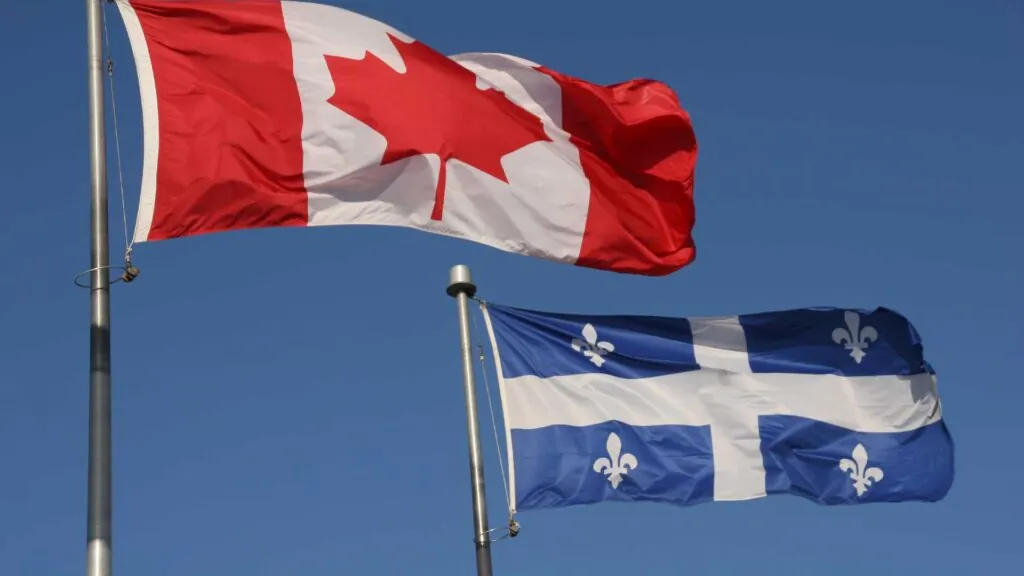
Canada currently awaits a ruling from our Supreme Court on whether the legislature or the judiciary has the final say in disputes over Charter rights and freedoms. More specifically, the Court is reviewing the Quebec government’s use of the notwithstanding clause (section 33 of the Charter) to shield its secularism law (Bill 21) from being declared unconstitutional and unenforceable by the judiciary.
The federal government has intervened in the Quebec case to argue that the Supreme Court should impose certain limits on the use of the notwithstanding clause – limits that do not appear anywhere in the text of the Charter. Various other interveners insist that the clause is dangerous and contrary to the spirit of the Canadian constitution.
What is the notwithstanding clause?
Prior to 1982, Canada had no constitutional bill of rights, unlike the US, which adopted its Bill of Rights in 1791. Today, Britain and several other Commonwealth countries continue to go without such a constitutional bill of rights, which would authorize judges to strike down legislation. Britain, therefore, is said to maintain legislative or Parliamentary supremacy on rights questions, while the US is said to have judicial supremacy.
Canada has a kind of hybrid model. Ordinarily, a judge in Canada can strike down a statute if, in the judge’s opinion, the statute violates Canada’s Charter of Rights and Freedoms. However, section 33 of the Charter says that a legislature may declare that a law will operate “notwithstanding” certain parts of the Charter, which include the fundamental freedoms listed in section 2, and the legal rights in sections 7-15.
Any invocation of the notwithstanding clause expires in five years, though a legislature may re-invoke it limitless times. This five-year-expiry rule ensures voters can have a say, since the constitution requires an election within 5 years of the last election.
Judges’ role in lawmaking
Returning to the basic notion that legislatures make laws and judges interpret them – well, that’s not the whole story.
1. Judges have been setting precedents of centuries
In the nearly 1000-year-old common law tradition, much of the law is judge-made. Their rulings set a precedent that other judges then follow, and it’s these precedents that make up what’s called common law.
But common law is subject to statute. Legislatures might choose to codify the existing common law, or they could pass a law that deliberately modifies or overturns it. But the key is, any legislation they pass prevails over common law precedents whenever there is a tension between the two. The maxim that legislatures make law and judges interpret and apply it may lack nuance, but it highlights the supremacy of statute law over common law.
2. Judges interpret the laws
Where we have a statute, there is still an important role for judicial interpretation and precedent, since legislators cannot conceive of and cover every possible situation.
But for centuries under the common law tradition, judges have recognized that while they have an inherent civic authority to resolve civil disputes, they are also duty-bound to apply any statute that applies to the case before them.
3. Judges can overturn laws when they find a conflict with the Charter
When it comes to the Charter, however, it gets a little odd, because there’s always another law involved. Judges recognize that they should not apply the Charter in the abstract. Rather, as with other laws, judges apply the Charter in particular cases with particular facts. But the Charter is normally used to argue that the other law in question in a given case must not be applied. If applying the law – say, a law forbidding noise above a certain decibel level in a park – would violate the Charter in a particular case (e.g. a group gathers in the park and shouts a political slogan), then judges may declare the law itself to be void.
The Charter has massively expanded judges’ lawmaking role in Canada. Most Charter rights are stated broadly and abstractly. Consequently, although a judge is supposed to rely on the facts of a particular case and not make rulings about the constitutionality of statutes in the abstract, judges still end up deciding major policy questions via their Charter rulings. Here, the basic principles underlying the differentiation between the legislative and judicial roles are in tension. Judges end up deciding what the law on a given matter will be for the country, or province, or town, based on the evidence and legal arguments presented to them in a particular case.
Legislatures vs. courts
The legal process is supposed to discover the truth and reach a just outcome in individual cases.
The legislative process ideally channels the wisdom and experience of the broader community and persons from various walks of life into formulating generally applicable rules that reflect what society considers just and good.
As John Finnis explains, while courts are fundamentally backward-looking (resolving particular, concrete disputes between parties based on pre-existing rules) legislatures are fundamentally forward-looking – deciding what ground rules should govern society in the future.
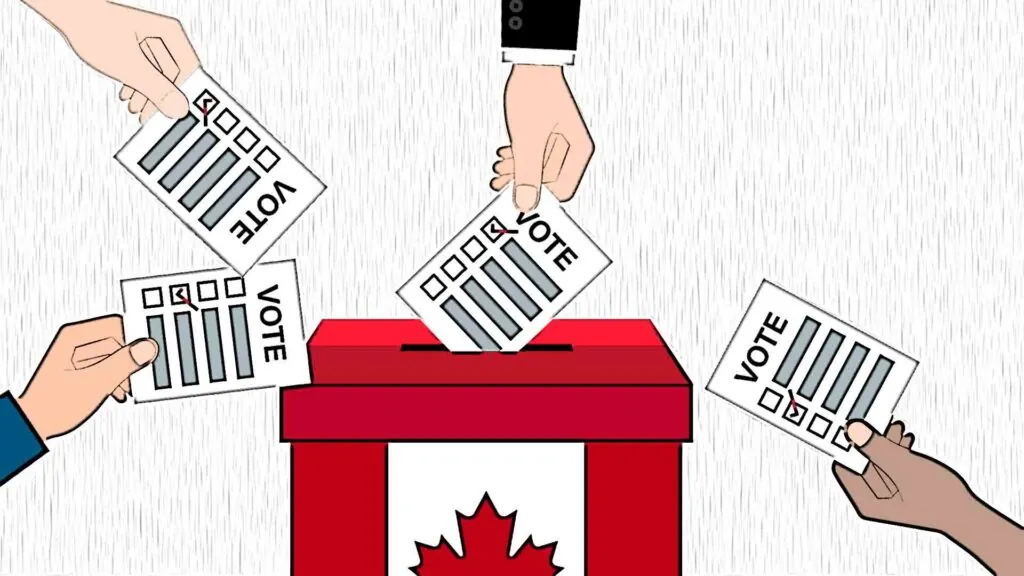
Legislatures are sometimes referred to as majoritarian bodies, in two senses. First, bills become law by majority vote among legislators. Second, legislators are elected, so presumably legislation reflects majority views in society. The fear, then, is that legislators may not care about the rights and interests of minorities.
The latter point may be more or less true depending on how elected members conceive of their role. Do they decide their vote based on public opinion polling? Or do they, in line with Edmund Burke and Abraham Kuyper, see themselves as elected to exercise personal judgment, bring their personal knowledge and experience to bear, and seek to enact just laws for all citizens? Legislatures need not be merely majoritarian bodies codifying shifting popular opinion into law. At their best, they are representative and deliberative bodies endeavoring to enact just laws for everyone in society.
Meanwhile, we tend to overlook the fact that the judiciary, too, is majoritarian in the former sense – in appellate courts, cases are decided by a majority vote of justices on the bench. Of course, judges in Canada are appointed, not elected. When a judge fulfills his role of carefully deciphering the facts, and faithfully interpreting and applying the law to the facts, he should not be worried about whether his ruling will be popular. Legal training and expertise are most applicable to applying pre-existing laws to specific events that occurred in the past.
But what if a judge is not deciding whether Person A violated Law X, but whether Law X (e.g. a law restricting abortion or euthanasia) should even be law? Should the latter be shielded from electoral and legislative accountability (short of amending the constitution)?
Of course, a constitutional bill of rights only gives judges final say over laws that affect the rights listed therein. But since such rights tend to be broadly worded (e.g. freedom of expression, liberty, security of the person), and judges often take considerable liberties in interpreting them, the result is that a small group of unelected people – judges, especially on apex courts, who often serve for decades – can decide major political issues for a province or nation.
A prominent justification proffered for giving judges the final say on rights matters is that these are matters of principle and courts are better forums for resolving them on principle rather than politics – which supposedly has more to do with negotiating the distribution of material benefits in society. But this is mere question begging. Rights are matters of principle, sure, but so are questions about the just and proper limits on rights, the duties that correspond to rights, the just distribution of benefits in society, and so on. Really, these are all political questions. They all raise competing moral views and involve judgments about how we ought to live together as a community.
Against judicial supremacy
There’s an instrumental or consequentialist case to be made – in terms of better or worse policy outcomes – against judicial supremacy, to be sure. Canada’s judges invalidated Canada’s abortion restrictions and euthanasia ban, for example. They also struck down various laws that were premised on spouses being opposite-sex, paving the way for same-sex marriage. The same is true in the US, except on euthanasia.
A principled, biblical case against judicial supremacy is somewhat more difficult, and necessarily fairly nuanced. I think Christians can make decent principled arguments in defence of the American system over the British or the Canadian system. But allow me to attempt a more principled case against judicial supremacy and explain why I’m grateful for the notwithstanding clause.
The biblical truth that all persons are image bearers of God is the fundamental basis for the equality of all citizens. And while the imago dei admits of distinct, unequal offices (e.g. parent, elder, magistrate), one political implication of imago dei is that each person is God’s representative on earth, and together we exercise dominion. We are equal before God, and we all bear some (albeit not equal, depending on our office) responsibility for our political community and the rules that will govern it. Representative legislatures, arguably, best reflect this Christian anthropology as it applies in the political sphere.
A nation’s citizens share a common civic responsibility to respect and preserve public justice, the common good, and each other’s individual rights. The body politic, as David Koyzis explains, is by its nature not a private concern, but a community of citizens and their government called by God to do justice. Therefore, it seems appropriate that citizens should bear political responsibility within that community.
“Liberty lies in the hearts of men and women,” the famous Justice Learned Hand observed. “When it dies there, no constitution, no law, no court can save it. While it lies there it needs no constitution, no law, no court to save it.”
By assigning “rights questions” to unelected judges to finally resolve, legislators and citizens effectively wash our hands of this responsibility. Does a person have a “right” to abort a baby, euthanize a patient, or “marry” a person of the same sex? Does a pre-born baby have a right to life? Should people be free to publicly proclaim the gospel? And so on. A system of judicial supremacy obscures if not reduces the responsibility we have as citizens for preserving others’ rights and the common good.
“Isn’t it awful that Barry Neufeld was censored so severely by the Human Rights Tribunal?” you might say. “Yeah, let’s hope he wins in court,” your friend might reply. I hope that too, of course. But do we realize, as citizens, that we are responsible for the law that applies in such cases? A constitutional model – in which legislatures remain ultimately responsible for deciding whether we will be a society that will permit abortion, prostitution, euthanasia, and easy access to online pornography – makes our responsibility as Christian citizens more clear.
Also, a system in which judges play a predominant law-making role privileges legal rhetoric and “rights talk” while displacing or marginalizing moral and theological language and perspectives. This accelerates secularization and makes the prophetic task of the Church in politics more difficult, as there is more translating to do.
Outstanding opportunity?
Functionally, outside of Quebec, Canada has had a system of judicial supremacy since 1982. Cracks have started to show recently in some provinces, as Ontario, Alberta, and Saskatchewan have all used the notwithstanding clause in the last three years. Alberta and Saskatchewan have used it to protect parental authority. Alberta has also used it to preserve its law against medically transitioning minors. Federally, it has never been used, though Conservative Party leader Pierre Poilievre has, notably, endorsed its use.
I think this represents an opportunity for us as Reformed Christians. While biblical truth is generally ignored in Canadian society, it is systemically ignored in our highly secularized legal system. Canada’s courts are a uniquely challenging forum to make biblical arguments – in fact, if arguments are explicitly biblical, a judge will likely reject them outright. The notwithstanding clause could offer Christians opportunities to advance more just laws by persuading their fellow citizens instead.
“Who will guard the guardians?” has been a classic question in politics throughout the ages. Reformed political thought, Koyzis explains, posits various checks, including those built into government itself, such as separation of powers, recurrent elections, limited jurisdiction of government agencies and ministers, federalism, and so on.
But within such a system, some body must bear primary responsibility for resolving great public problems. It is best, I believe, for that body to be a representative and deliberative one, one for which each and every citizen bears some responsibility. The Charter has greatly obscured the sense of citizens’ responsibility to preserve fundamental rights and freedoms. The notwithstanding clause offers an opportunity to recover it.