Transparent heart icon with white outline and + sign.

Life's busy, read it when you're ready!

Create a free account to save articles for later, keep track of past articles you’ve read, and receive exclusive access to all RP resources.

White magnifying glass.

Search thousands of RP articles

Helping you think, speak, and act in Christ.

Open envelope icon with @ symbol

Get Articles Delivered!

Helping you think, speak, and act in Christ. delivered direct to your Inbox!


Most Recent


The Rest


Red heart icon with + sign.
Apologetics 101, Pro-life - Abortion

Pro-life 101: Removing the red herrings

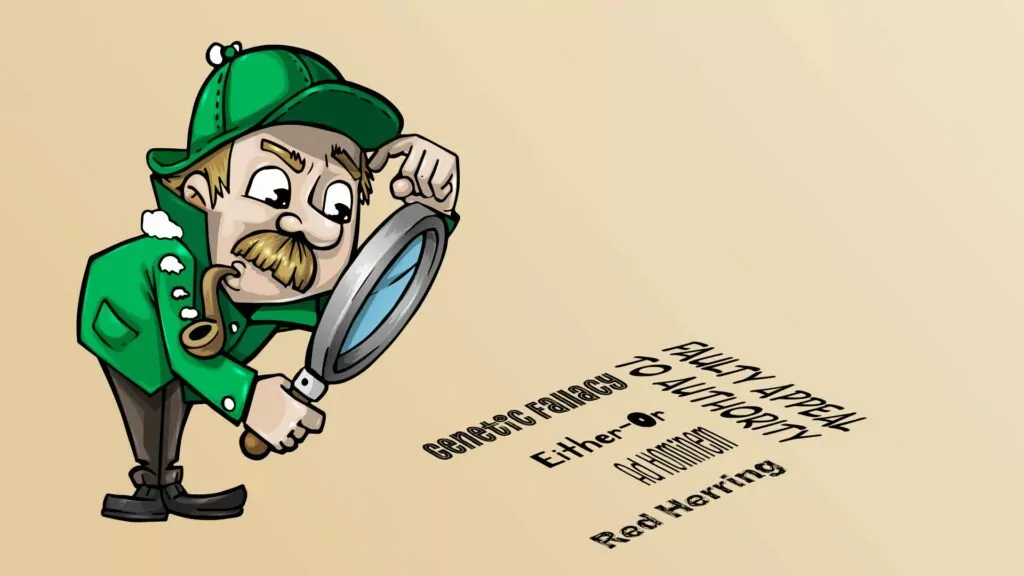
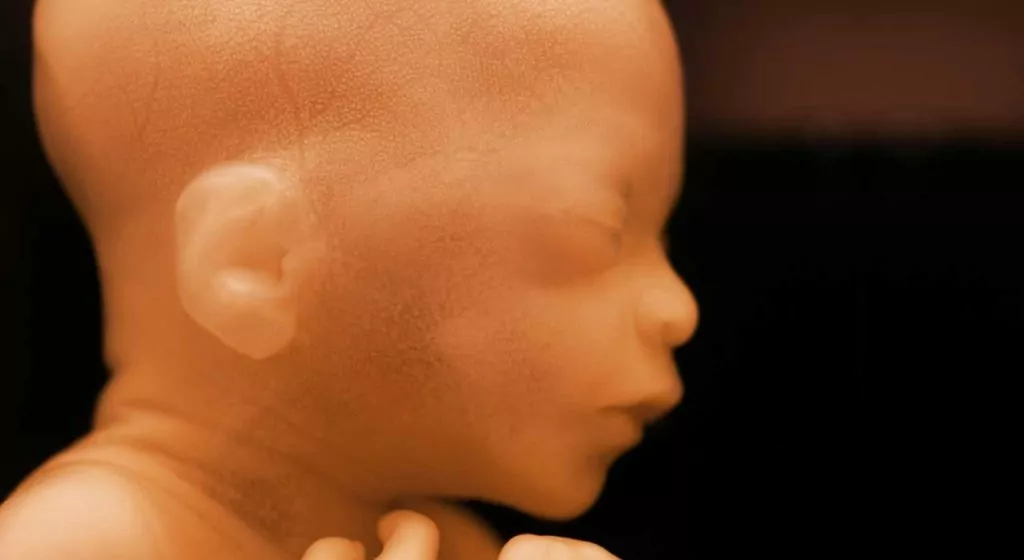
RED HERRING: In argument, something designed to divert an opponent's attention from the central issue. If a herring is dragged across a trail that hounds are following, it throws them off the scent. – Dictionary.com ***** It’s about the unborn, but we so often get distracted. There’s only one issue that matters in the abortion debate, and that’s who the unborn are. If they aren’t human beings made in the very Image of God (Gen. 1:26-27) – if the unborn is just a bit of tissue – then no one should care if a woman goes in for elective tissue to get this bit of excess tissue taken care of. Tonsillectomies, appendectomies, bunionectomies: we don’t protest any of these things. If the unborn aren’t human, no one, including Christians, should object. But if they are human, if they are fellow Image-bearers, then the unborn warrant the same protection that everyone else has under the law. God has said, “You shall not murder” (Ex. 20:13) and written that on our hearts (Romans 2:14-15) such that even the world acknowledges (or at least knows) that killing human beings is wrong. So it comes down to just one issue, just one question: “What are the unborn?” That’s what it’s about…but this isn’t what we most often talk about. Abortion supporters will talk about anything and everything else, trying to distract us with red herrings. And, strangely, pro-lifers will throw out red herrings of our own. So how can we stay focused? First, we need to be able to spot these red herrings whether offered up by their side or our own. Then we need to always, always, get back to the only issue that matters: the humanity of the unborn. 5 pro-choice red herrings So what are the most common pro-choice, pro-abortion red herrings?* #1 "Women have the right to privacy.” This argument is the basis for legal abortion in the United States, and it is popular in Canada as well. But we all know a right to privacy has limits and can’t be used justify child abuse – parents aren’t allowed to abuse their children so long as they do it behind closed doors! So the real issue isn’t privacy, but rather whether the unborn is a human being. If it is, then it shouldn’t be abused or killed, even if that abuse/dismemberment takes place behind closed clinic doors. #2: "Women should have the freedom to choose.” This is another right that must have limits. We aren’t free to do everything, so the key question here is: “women should have the freedom to choose what?” We don’t believe people should have the choice of whether they are going to kill others, so if the unborn are human beings then they should be protected like all other human beings. #3: "Women shouldn't have to carry a child conceived through rape.” The emotional impact of rape can be devastating, and complex. However, the moral issue is clear – it still depends on whether the unborn are human. If the unborn child is human we shouldn’t kill it for the sins of its father (we don’t even kill rapists!). So the issue is not rape, but rather whether the unborn are human. #4: "Making abortion illegal forces women into dangerous back-alley abortions.” In what other circumstances are we worried about making crime safer? Bank robbing is also hazardous, but no one thinks that a good reason to make it legal. Thus, if the unborn are humans, we would not be all that concerned that those who want to kill it may have to do so under risky conditions. So, once again, the issue isn’t back-alley abortions, but the humanity of the unborn. #5: "What about when the woman’s life is in danger?” Before Canada’s abortion law was struck down, this was one of the reasons abortions would be legally permitted. However, in many instances it was only the mother’s mental, not physical, health that was said to be at risk. So while this was a frequently used justification, it is only a very rare situation in which a mother’s life can be saved by aborting her child. This might seem an ethically complicated situation, but clarity can be found if we ask the one key question in the abortion debate: “What is the unborn?” If the unborn aren’t human beings, then if the woman’s life was in any sort of danger, abortion should be permitted. However, if the unborn is human, then this baby should be treated as fully human, just like the mother, and treated as such. Then abortion wouldn’t be permitted for faux dangers, as was happening in Canada. But it would be an option where there is a genuine danger, not because the unborn is worthless but because in some circumstances only one life can be saved. Common ground Both abortion advocates and pro-lifers employ red herrings and for the very same reason: pro-choicers raise red herrings because they don’t want to talk about the real issue. pro-lifers also raise red herrings, and again, it's because pro-choicers don’t want to talk about the real issue. When the abortion supporters absolutely won’t talk about the humanity of the unborn – when they won’t stick around for it, when they won’t take their fingers out of their ears, when they won’t stop screaming long enough to listen – then what use is there to talk at all? In the face of such bluster there is no reasoning, and no chance to dialogue. That's why many pro-lifers have changed tactics. Instead of asking the pro-choice side to join with us in common cause for the unborn, we've instead looked for a common foe. Feminists don’t want to defend the unborn, but they oppose sexism. Can we work together to stop sex-selective abortions, which target girls far more than boys? Might a woman who cares nothing for the unborn, still be concerned with anything that would impact her own health negatively? Can we save her baby by raising the abortion/breast cancer link and showing her that abortion isn’t in her own best interest? What of a vegan who catch-and-releases even the flies in her home? Might she be shocked to hear that a 20-week fetus feels pain as its limbs are being torn off one by one? Though she has no interest in the unborn as human beings, she wouldn’t treat her rescued pet goldfish like this. Maybe this sort will join with us in opposing abortion when the fetus is developed enough to feel pain. These are “red herrings” in that they don’t address the only issue that really matters: whether the unborn is a human being. But we use them because through them we seem able to make the forward progress that can’t be had while talking about the humanity of the unborn. 4 pro-life red herrings Thus there seems real potential in talking about more than just the humanity of the unborn – trying other approaches can save lives! But there is also an accompanying danger. The truth is that the only reason abortion should be illegal is because the unborn are human beings. As pro-life apologist Scott Klusendorf has noted, it would be fine to experiment on fetuses, clone them, use them in make-up, harvest them for their stem cells, eat them, kill them for any reason at all… if the unborn were not human beings! But if they are precious human beings like you and me, they deserve the very same protection. That's the heart of the matter and the only relevant issue. The danger with using "pro-life red herring" arguments comes when we present these arguments as our only, or main, objection to abortion. These are arguments we can use, but they are not ones we can stand on...because they won’t support us. What follows are four of the more common pro-life red herrings, and explanations of how these arguments fall to pieces when they are presented on their own, apart from the issue of the unborn’s humanity. #1: “Maybe your unborn baby is going to cure cancer!” There are many versions of this argument (it is sometimes called the “Beethoven argument” as in “What if your child is going to be the next Beethoven?”) but all focus on the baby’s potential: the reason a child shouldn’t be aborted is because of what they might do in the future. But what if a mother already knows that their child isn’t going to be a genius? What if they’ve been given a Down syndrome diagnosis? Do we think the mother should be allowed to abort then? No, of course we do not. So this isn’t about what the child might be able to do one day, but rather about whether or not they are human beings. If they are, then no matter what they will or will not be able to do some day, they should be given the same protection as all other human beings. #2: “What if the fetus can feel pain?” Here the focus is on what the unborn can do right now. Other forms of this argument focus on other abilities: it has brain waves, or a beating heart, or can react to music, etc. But what if a child doesn’t have this ability yet? Would it be fine to abort the child then? No – that’s not what we believe at all. The real issue for us is not what the unborn can do right now – whether they have this ability or that – but whether they are human beings, made in the very Image of God, just like you and I. #3. “Studies show that abortion causes breast cancer!” While some studies show abortion increases a woman’s chance of getting breast cancer, drinking a glass of wine a day, or being overweight also increases her risk. Should we then restrict wine or caloric intake for women? No? Then why would this be a good reason to restrict abortion? This issue is not whether abortion harms a woman, but whether it kills her child. #4. “Did you know they’re selling baby body parts?” The Center for Medical Progress has exposed that Planned Parenthood in the US is selling body parts from the babies they abort. This is contrary to federal law and the details have horrified many millions. In response Planned Parenthood has agreed not to take money for these body parts – they promise to stop selling them, though the abortions will continue. Are we satisfied? No, our objection isn’t to the selling of body parts, but rather that there are body parts to sell. The killing is what we want to stop. Using red herrings the right way To be clear, it’s not wrong for us to use these “pro-life red herrings,” but we shouldn’t rely on them. These are not, after all, our arguments. We don’t believe them. We know it’s not the possibility of breast cancer, or that the fetus could feel pain, that makes abortion evil. That’s not only not our position; we know that it is factually and actually wrong. Instead, these are arguments we’ve adopted from the other sides’ worldview. We aren’t feminist (or at least, not at all in the way they are) but we can step inside their worldview and consider why a godless feminist might still object to abortion. And then, with that insight in hand, we can confront them with the reason why they, by their way of thinking, should oppose at least some abortions. But we always want to up be clear about the fact that they’ve got it all wrong. We want to use their arguments, but we sure don’t want to stand on them because they are without foundation. Thus when we make use of their arguments, they should always be connected to our own. First we adopt their worldview for the sake of argument, and then, once we have them talking, we lay out our own. Our argument need not be presented explicitly, but it does need to be done clearly. That might seem a contradiction in terms, but that's exactly what has been done by the Center for Medical Progress (CMP). Their brilliant undercover work exposed that Planned Parenthood was illegally selling fetal baby body parts. Their explicit argument was that Planned Parenthood was breaking the law, but barely concealed was the real issue: Planned Parenthood isn’t just doing something illegal, but murderous. The CMP aren’t speaking to the humanity of the unborn, but the video footage they shared speaks for itself. It’s hard to miss the horror of what’s really going on when we hear abortionists laughing as a speaker recollects the time a baby’s “eyeball just fell down into my lap!” ARPA Canada is another example of how to make good use of red herrings. They use the fetal pain and parental notification arguments, and then put on enormous cross and flag displays (see the October 2014 RP issue for stunning pictures of the Parliament Hill display) that speak directly to the humanity of the unborn. Again, it is hard to miss the horror of what’s really happening when 50,000 pink and 50,000 blue flags – each one representing a child killed by abortion in Canada this year – cover the hillside. Conclusion There are many arguments offered in the abortion debate, but just one issue that matters. If we can spot the red herring arguments, and then either clear them away, or put them to our own uses, we will be ready to direct the conversation back to where it belongs. Then we can highlight the humanity of the unborn to a culture and a country that wants desperately to talk about anything else. May God grant us insight, clarity, and courage as we speak up for these little ones. Endnote * These five examples are taken from a list in Making Abortion Unthinkable: the Art of Prolife Persuasion, a DVD-based pro-life apologist group study by Greg Koukl and Scott Klusendorf (that I highly recommend). The wording is mine but the ideas are largely theirs. A version of this article first appeared in the November 2015 issue....

Red heart icon with + sign.
Pro-life - Abortion

Pro-lifers aren't helping people after they're born?

When it comes to the topic of abortion, I often hear the claim that pro-lifers aren't helping people after they're born. The idea/objection is that pro-lifers are hypocritical and thus shouldn’t speak out against abortion. Is this a good objection? I don’t think so, for two reasons. Reason 1: It isn't true First, is it true that pro-lifers aren’t helping people after they’re born? Well, maybe some aren't. But many are. Witness the proliferation of crisis pregnancy centers/ pregnancy care centers. According to the Charlotte Lozier Institute, in the U.S. in 2017 there were 2752 such centers, providing much help to women and their children. Also, witness the fantastic response gotten from a newspaper editor who asked via Twitter (disparagingly and dismissively, expecting no good answers) what pro-life people have done personally to help lower-income single moms. It turns out this editor received 13,000 responses indicating that pro-life people in fact do a lot! Permit me to speak from personal experience. My wife Carla is deeply pro-life. But she is also humble and doesn't talk much about the good things she does. She sees such talk as morally inappropriate – as bragging. So I will brag on her behalf! When Carla and I were dating and during our first years of marriage, Carla worked in a group home caring for – helping – children who were severely handicapped physically and mentally. Later (while I was completing my PhD and beginning to teach philosophy courses) we lived for eleven years in a low-income, high crime neighborhood. During this time Carla (along with a couple of her friends) began a community center to help our needy neighbors. This community center was supported by one church initially, then two, then three, then seven—and more. Carla also tutored some of our neighbors' kids. She also taught single parents how to make inexpensive but nutritious meals (Carla even took the time to become certified by our local health department to do this). She also helped organize a weekly food distribution. She also helped a neighbor (a low-income single mom with five kids) learn to drive, obtain a driver's license, and find some part-time employment (subsequently Carla often loaned our car to this mom for grocery shopping). Carla also helped a young woman deal with her abusive husband. Carla also used her nurse training to help injured neighbors as well as neighbors with young children, including a home birth. Carla also was instrumental in having our family provide ongoing financial support for an orphanage in Bolivia begun by a young couple at our church. And there's much more, but space doesn't permit. (She also homeschooled our two sons during this time!) You get the picture: Pro-life people (like my wife) are against abortion and they often do lots of good stuff – which we tend not to hear about. Reason 2: Even if it was true, so what? Second, an important logical point should be made: Even if pro-lifers weren't (contrary to fact) helping people after they're born, this would not make the killing of unborn children morally correct or permissible. And it wouldn’t mean pro-lifers shouldn’t speak out against abortion. Pro-lifers hold the view that abortion is the killing of an innocent unborn child – and is wrong, period. Maybe the following parable from Scott Klusendorf will help: Joe found the young girl unconscious in her upstairs closet. By the time he got there, the structure was a raging inferno. No one else dared go inside. Scooping up the girl, he took his only exit, straight out the second-story window and into the bushes below. The girl lived. Joe sustained three cuts and two sprained ankles – and an avalanche of questions. The media wanted to know how he planned to pay for the girl’s food, clothing, and health care now that he’d rescued her. A pastor asked if time spent saving the girl from temporal flames might be better spent saving people from eternal ones. The social justice coordinator at a local parish insisted that if Joe truly cared about saving lives, he’d care about all life and spend equal time rescuing poor workers from rich corporations. The local Congressman asked if Joe supported tax hikes aimed at reducing fire risk. Joe just kept looking at the girl. The above story is contrived, but it’s played out in the real world every day. Only the issue is abortion. The minute you state your pro-life convictions, foes attack. Or think of it this way: I believe that killing kittens by suctioning off their legs (via a high-powered suction machine) is wrong, period. Objecting to my view because I don’t volunteer at my local animal shelter is beside the point. (Oh, by the way, our cat Rupert came from our local animal shelter.) The critics' objection is beside the point, too. Conclusion In conclusion, the objection that pro-lifers aren't helping people after they're born is often false and it’s not relevant to whether or not a pro-lifer should speak out against the killing of innocent human beings via abortion. Hopefully, pro-choicers are helping people after they're born, too, to provide a real choice, and thus not merely advocating for the right to kill unborn children. P.S. Permit me to brag about my wife once more. Carla donates blood regularly. At time of writing, she once again donated blood – for the 73rd time! Seventy-three blood donations. SEVENTY-THREE. Pro-lifers aren't helping people after they're born. Yeah, right. Hendrik van der Breggen, PhD, is a retired philosophy professor and author of "Untangling Popular Pro-Choice Arguments: Critical Thinking about Abortion," now available at Amazon.com and Amazon.ca....

Red heart icon with + sign.
Pro-life - Abortion

Only one question to debate: What are the unborn?

Abortion advocates love clouding the real issue. We don’t have to let them. ***** The answer to the question, What is the unborn?, trumps all other considerations in the abortion debate. Objections to the pro-life view based on choice, on bodily rights, and on back-alley abortions miss the point entirely as the dialogue below illustrates. Abortion advocate: Abortion is a private choice between a woman and her doctor. Pro-lifer: Do we allow parents to abuse their children if done in private? Abortion advocate: Of course not. Those children are human beings. Pro-lifer: Then the issue isn’t privacy. It’s, What is the unborn? Abortion advocate: But many poor women cannot afford to raise another child. Pro-lifer: When human beings get expensive, may we kill them? Abortion advocate: Well, no, but aborting a fetus is not the same as killing a person. Pro-lifer: So once again, the issue is, What is the unborn? Is the fetus the same as a person? Abortion advocate: But you’re being too simplistic. This is a very complex issue involving women who must make agonizing decisions. Pro-lifer: The decision may be psychologically complex for the mother, but morally it is not complex at all. When blacks are mistreated in a certain society, do we spin a tale about complex, agonizing decisions for the whites in power or do we condemn the evil of racism? Abortion advocate: Aborting a fetus that is not a person is one thing, discriminating against black persons is quite another. Pro-lifer: So we’re agreed, if abortion kills a defenseless human being, then the issue wouldn’t be complex at all. The question is, What is the unborn? Abortion advocate: Enough with your abstract philosophy. Let’s talk about real life. Do you think a woman should be forced to bring an unwanted child into the world? Pro-lifer: The homeless are unwanted, may we kill them? Abortion advocate: But it’s not the same. Pro-lifer: That’s the issue, isn’t it? Are they the same? If the unborn are human like the homeless, then we can’t kill them to get them out of the way. We’re back to my first question, What is the unborn? Abortion advocate: But you still shouldn’t force your morality on women. Pro-lifer: You don’t really believe what you just said. You’d feel comfortable forcing your morality on a mother who was physically abusing her two-year-old, wouldn’t you? Abortion advocate: But the two cases are not the same. Pro-lifer: Oh? Why is that? Abortion advocate: Because you’re assuming the unborn are humans, like toddlers. Pro-lifer: And you’re assuming they’re not. So the issue is quite simple, isn’t it? It’s not about forcing morality, it’s not about privacy, it’s not about economic hardship, it’s not about unwantedness; it’s just one question: What is the unborn? This article is an excerpt from Scott Klusendorf's "Pro-life 101" and is reprinted here with permission. Scott is President of Life Training Institute and the author of "The Case for Life: Equipping Christians to Engage the Culture." Scott has taught pro-life apologetics at the graduate level at Biola University and Trinity Law School, and lectured at over 80 colleges and universities including Stanford, Berkeley, UCLA, USC, Johns Hopkins, MIT, and the U.S. Air Force Academy — to name a few. Scott’s debate opponents have included Nadine Strossen (former President of the ACLU), attorney Edward Tabash (of the Council for Secular Humanism), attorney Kathryn Kolbert (who argued for abortion rights at the Supreme Court), and Katherine Kneer (President of Planned Parenthood California). At the practical level, Scott helps pregnancy centers raise money to assist women facing unplanned pregnancies. The money raised helps women with shelter, baby clothes, parenting classes, and medical care. Scott is a graduate of UCLA and holds a Master’s degree in Christian Apologetics from Biola University. He and his wife Stephanie have been married since 1985 and they have 4 children....

Red heart icon with + sign.
Documentary, Movie Reviews, Pro-life - Abortion, Watch for free

Harder Truth

Documentary 9 min / 2003 This film changed me. It is a video, taken in the womb, of an abortion. It is evil uncovered and brought into the light. Just as it took pictures of dead Jews, stacked like cordwood, to drive home the horror of the Holocaust, and it took the newspapers carrying pictures of the lynched teen Emmett Till to reveal the wickedness of what was happening in the American South, so too, visuals are important in the abortion debate. Ours is a visual culture and graphic pictures of bloody, broken, tiny bodies communicate what abortion really is (Eph 5:11). These images cut through words like “choice,” “rights” and “freedom” and make plain the fact that abortion is murder. While this short video, Harder Truth, is one I believe should be widely shared and seen, it contains pictures that are deeply disturbing so it should be shown with care. When you share this, the audience should be warned about what they are about to see. And what are they going to see? While there is no verbal narration, the film begins with two minutes of text detailing what is going to be shown and why it is being shown. Then there is two minutes of a baby in the womb, developing from zygote to fetus. Then, just after the 4-minute mark, we see what an abortion actually is and what it does to the baby. The final four minutes of the film show remains of aborted babies: bloody broken bodies, tiny detached arms and legs, and crushed skulls. I've shown this at dozens of presentations and, as the video itself suggests, when I show it I tell the audience that anyone who wants to look away should feel very free to do so. I also find that, while the film is very short, its nine minutes of content can be overwhelming and I often show only a middle selection of two or three minutes. The toughest consideration in showing this film is, how young is too young? As pro-life apologist Scott Klusendorf notes, girls as young as 12 can, in many jurisdictions, get an abortion without their parents’ knowledge or permission. Twelve is very young. But if they are old enough to get an abortion isn’t it important they know the real truth of it? I've been asked why I bother showing this to pro-life audiences. After all, we don't need to be convinced abortion is wicked, do we? Well, yes, we do. Abortion happens in even 100% pro-life churches too, and the reason it does is because sometimes those pro-life convictions are only an inch deep. That shouldn't surprise us. Abortions are all done behind closed doors. The victims are invisible. We might hear that 100,000 babies are murdered each year in Canada, and ten times that amount in the US, but those are just numbers, and too big for us to really fathom. So when a young teen finds herself pregnant and, mistakenly or correctly, thinks her parents will disown her if they ever find out, will inch-deep convictions stop her from taking the "solution" the world is readily offering? So there is a need then, to show even our Christian, pro-life, young people, the grim reality of what abortion is. Every bit as important, we need to tell our daughters that we will love them and will help them if they ever have an unplanned pregnancy. WARNING: THIS VIDEO CONTAINS GRAPHIC IMAGES OF AN ABORTION. ...

Red heart icon with + sign.
News

Saturday Selections - Jan 20, 2018

Parents, your teens are being pressured to ‘sext.’ Even at Christian high schools. Jonathon Van Maren asks parents to stop being naive – this is happening, even at Christian schools. God's creation big and small In this three-minute video we get a look at God’s creation on an unimaginably vast scale, and on an infinitesimally tiny scale too. Though the presentation is secular, it reveals His genius through and through. The damsel and villain The whole of history, in one 7-minute spoken word piece. Hope for the frozen unchosen What happens to the millions of babies who are created via IVF? As WORLD magazine reports, many (British numbers put it at more than half) never make it past conception – they are discarded as being abnormal. Some of the others will be implanted, but since the normal IVF practice involves conceiving many more embryos than will be implanted, "excess" children are discarded, or donated to science for medical experimentation, or, in most cases, left in a frozen state awaiting a yet undetermined fate. In the US there are somewhere between 600,000 and a million of these children frozen right now, and some Christians are working to provide these survivors a chance to be born. Free e-book: Scott Klusendorf's The Case for Life If you're willing to fill in a 10-minute survey on your Bible reading habits, Crossway books will give you a free e-book copy of Scott Klusendorf's fantastic pro-life "how-to" manual for defending the unborn. There's no such thing as a free education With the increasing push for free university education, the Institute for Faith, Work & Economics thinks it's important we understand how a free education's costs are considerable....