Transparent heart icon with white outline and + sign.

Life's busy, read it when you're ready!

Create a free account to save articles for later, keep track of past articles you’ve read, and receive exclusive access to all RP resources.

White magnifying glass.

Search thousands of RP articles

Helping you think, speak, and act in Christ.

Open envelope icon with @ symbol

Get Articles Delivered!

Helping you think, speak, and act in Christ. delivered direct to your Inbox!


Red heart icon with + sign.
Theology

After Evolution: 4 Reformed figures who accepted evolution and kept on moving

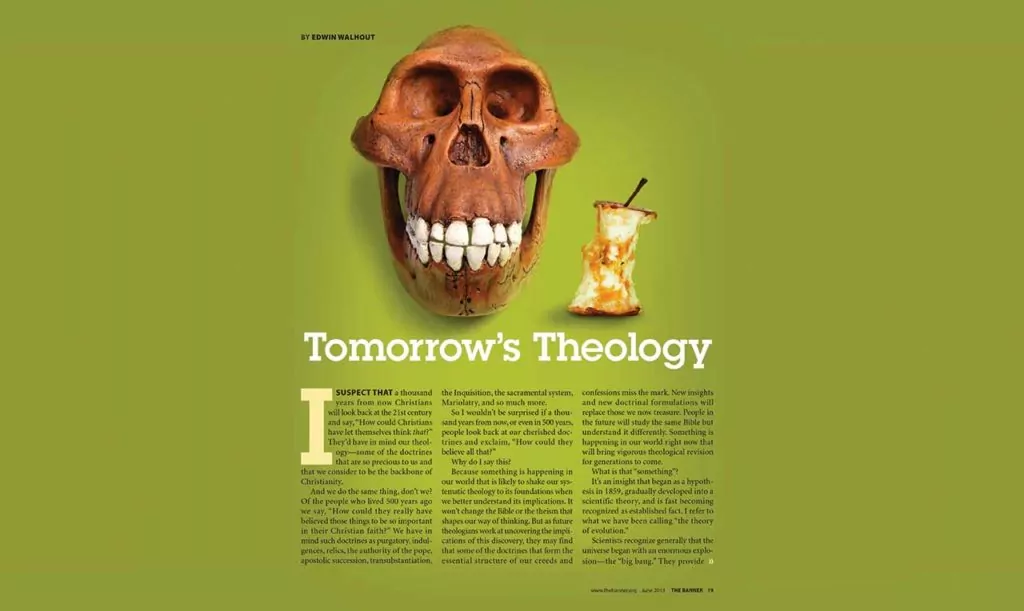
What follows are very brief bios of four prominent Reformed figures who have accepted evolution and gone on to accept increasingly unorthodox positions. Peter Enns Enns once taught at Westminster Theological Seminary (1994- 2008) from where the Orthodox Presbyterian Church (OPC) gets many of their ministerial candidates. After accepting evolution, he now has a very different understanding of the Bible, claiming, “God never told the Israelites to kill the Canaanites. The Israelites believed that God told them to kill the Canaanites.” He's also promoted homosexuality on his blog, and noted that embracing evolution and homosexuality both require the same sort of "disassembling" of how we once read the Bible. Howard Van Till Van Till taught at the Christian Reformed Calvin College (1967-1998) and was for a time one of the best-known Reformed defenders of evolution. He no longer holds to the Reformed confessions and, according to a 2008 piece in The Grand Rapids Press, seems to have migrated to some form of pantheism, seeing “God not as a transcendent, separate creator, but an active presence within and inseparable from creation.” Edwin Walhout Walhout is a retired Christian Reformed Church (CRC) pastor, and was once the denomination’s Editor of Adult Education. In 1972 he suggested: …it may well be that science can give us insights into the way in which God created man, but it can hardly discover or disclaim that man is an image of God. In a 2013 Banner article "Tomorrow's Theology," he was far more definitive, proposing that in light of evolution, the CRC needs to re-examine the doctrines of Creation, Original Sin, the Fall and Salvation, as well as whether Adam and Eve were real historical people. Deborah Haarsma Haarsma was a professor at Calvin College from 1999 until 2012. In 2007, along with her husband, she authored a book that discussed various views on origins and, while endorsing none, treated evolution as at least credible. She is now the president of Biologos, a think tank that aggressively promotes evolution as true and that questions Original Sin, the Flood, the Fall into Sin, and whether Adam and Eve were actual historical people. Moving in just one direction? Does this mean that accepting evolution always leads to liberalism? Couldn’t we counter this list by coming up with one made up of Reformed luminaries who have accepted evolution and stayed generally orthodox? We could come up with such a list and maybe we'd place the still unborn-defending, homosexuality-opposing Tim Keller on it. But how many others can we think of? And the problem is that a few decades ago Peter Enns might also have been on such a list. He didn't reject orthodoxy immediately. Any such "counterlist" might simply be a list of evolution-believing Reformed figures who don't reject orthodoxy yet. Only time will tell. No, if we're going to try to make the case that evolution and orthodoxy are a natural fit, then the better counterlist would be that of liberals who, after embracing evolution, moved in a more orthodox direction. That would be a good answer to this list. But does that ever happen? A Dutch version of this article can be found here. This article first appeared in the April 2016 issue....

Red heart icon with + sign.
Book excerpts, Book Reviews

Book excerpt: "How Should Christians Approach Origins?"

Evolution is just a theory. Then again, so is gravity.  – as seen on a t-shirt. Is the theory of evolution like the theory of gravity? How are they different? This is just one of the topics that professors John Byl and Tom Goss cover in their book, How Should Christians Approach Origins? In this excerpt they You can right-click on the cover to download it for free. note that there are two very different sorts of science happening here. ***** It is sometimes argued that it is inconsistent to use modern medicine and technology origins while rejecting evolution, since both are products of mainstream science. However, we must be careful to distinguish between two types of science: operational science and historical science. OPERATIONAL SCIENCE is the experimental science done in the lab or in the field. It investigates repeatable events in the present. This concerns most of physics, chemistry, and biology, as well as observational geology, astronomy, and the like. It gives us all the science needed for technology, such as in developing smartphones, satellites, cars, planes, cures for diseases, and so on. It studies the present material reality and how it normally functions. HISTORICAL SCIENCE, on the other hand, is concerned with extrapolating from present observations to the distant, unobserved, and unrepeatable past. This includes various theories and explanations in archaeology, cosmology, historical geology, paleontology, biological evolutionary development, and so on. These two types of science differ significantly: Operational science aims to discover the universal laws by which nature generally operates, whereas historical science aims to establish ancient conditions or past causes. Operational science explains present events by reference to general laws, whereas historical science explains present events in terms of presumed past events. Operational science calculates forward, deducing effects from causes, whereas historical science calculates backwards, inferring past causes from present clues. One problem here is that more than one possible historical cause can give rise to the same effect. For example, in a murder trial, the prosecution and defense may present very different historical scenarios to explain the material evidence. Operational science assumes methodological naturalism. Since it is concerned with what normally happens, in the absence of miracles, it is reasonable to consider only natural causes. Historical science, on the other hand, seeks to find what actually happened in the past. Constraining ourselves to natural causes amounts to metaphysical naturalism – the further assumption that no miracles have in fact happened in the past.¹ The well-known evolutionist Ernst Mayr acknowledged, Evolutionary biology, in contrast with physics and chemistry, is a historical science – the evolutionist attempts to explain events and processes that have already taken place. Laws and experiments are inappropriate techniques for the explication of such events and processes. Instead one constructs a historical narrative, consisting of a tentative reconstruction of the particular scenario that led to the events one is trying to explain.² In short, the scientific know-how needed to make smartphones is much better established than, say, the claim that humans evolved from . End notes ¹ Stephen Meyer, Signature in the Cell (New York: NY, HarperCollins, 2009), 150–172. ² Ernst Mayr, “Darwin’s Influence on Modern Thought.” Scientific American, November 24, 2009 (http://www.scientificamerican.com/article/darwins-influence-on-modern-thought/). This excerpt reprint with permission. How Should Christians Approach Origins? can now be downloaded for free here....

Red heart icon with + sign.
Adult non-fiction, Book Reviews, Teen non-fiction

No Christian Silence on Science

SCIENCE FROM A CHRISTIAN PERSPECTIVE by Margaret Helder 2016 / 110 pages From the title onward, No Christian Silence on Science is a clarion call to Bible-believing, six-day creation upholding Christians to stand up and be counted. It's much more than that too. The author, Margaret Helder, has written for Creation Science Dialogue and Reformed Perspective  for years, and if you've read her there, then you know Dr. Helder approaches God and His creation with awe, and teaches us how to tackle evolution without fear. This book is very much an outgrowth of that work. This, then, is intended to equip us, so we will be able to give a ready defense of our faith, and fortify us, so we will continue to trust in God, even when we face that attacks that will come in this predominantly Darwinist and secular field. That's a big task to tackle in a book that's just 110 pages. That's why, while this is a great book, it is no light read - there is a lot packed in here. In the five sections Dr. Helder addresses: Science from a Christian Perspective How Design in Nature reveals God's Character and Work Christian vs. Darwinian Ethics The Christian Student: Meeting the Challenge of Secular Institutions Impact of Evolution Thought on Church and Society My favorites were the last two. They are worth the price of the book all on their own, and if I was giving this to a university student I'd tell them to head to Chapter 4 first, to hear Dr. Helder's advice on how to interact with evolutionary-minded professors. At one points she gives an example of a find that seems to prove evolution, and she then shows how a Christian student could respond. She suggests students be ready to ask questions, and starting with the 5 Ws is always a good idea (in Science, and journalism too!). A question-asking student will often find that this new, exciting, revolutionary find, is being really over-hyped. That's not to say creationists have all the answers. As Dr. Helder notes, in the early and mid 1900s Christians holding to a six-day creation had little supporting scientific evidence available to them, so it was only because they were so confident in the trustworthiness of the Bible that they weren't swayed by evolution. Today many problems with evolution can be pointed to, but there will still be occasions where a challenge to the biblical explanation is presented that we cannot answer. And perhaps we won't be able to answer it for several decades. But we, too, should hold to the Bible, because it is trustworthy. Who should read No Christian Silence? This will be of interest to anyone, but for the young high school graduate heading into the Sciences this is a must. If they were to read it before heading to their first university science class, and really work through it slowly and thoughtfully, they would be well-prepared. There are other books they should read too, but this is a very good place to start because Dr. Helder covers all the key controversies, and gives good solid direction on how to meet and deal with the opposition. No Christian Silence on Science is us available through the Creation Science Association of Alberta website or can be had by sending a $20 check ($14 for the book and $6 for shipping) made out to the CSAA, at 5328 Calgary Trial, Suite 1136, Edmonton AB  T6H 4 ...

Red heart icon with + sign.
Culture Clashes, Theology

Did Adam have a belly button?

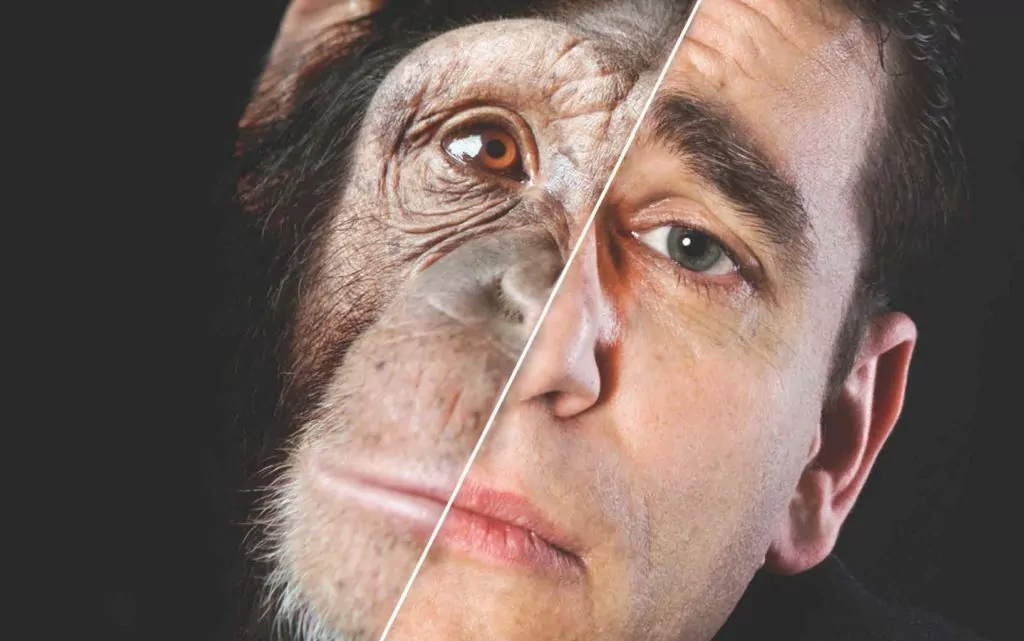
Why we need to clarify Article 14 of the Belgic Confession In the fourth century a big battle was fought over a one-letter difference. The Church professed that Christ was homoousios – “of the same substance” – as God the Father, while the Arians argued that Christ was homoiousios, or merely “of a similar substance.” The two Greek terms used differed by only a single iota (the Greek “i”) but what was at stake couldn’t have been bigger: the Arians said Christ was like God but was actually a creature. Today we’re contending with an issue that seems quiet small: our battle is over a belly button. On the side are those that profess Adam had no belly button, because he had no mother and because he was never born. As the Belgic Confession Article 14 puts it, ...God created man of the dust from the ground… On the other side or those who say Adam may well have had a belly button and a mom, and ancestors, and may have shared one of those ancestors with the chimpanzees. So this belly button battle quickly shows itself to be about matters much more important. It comes down to whether Adam brought death into the world through the Fall into sin, or whether God used death – millions of years of creatures evolving up from the primordial slime – to bring about Adam. The issue here is every bit as big as Christ’s nature: it’s about the character of God. That’s why Hamilton’s Providence Canadian Reformed Church has proposed amending Article 14 of the Belgic Confession to clarify that Adam has no ancestors. They propose that the Article begin with these two new lines: We believe that God created the human race by making and forming Adam from dust (Gen. 2:7) and Eve from Adam’s side (Gen. 2:21-22).  They were created as the first two humans and the biological ancestors of all other humans.  There were no pre-Adamites, whether human or hominid. Their addition would add about 40 words to the confession, and remove any doubt as to what should be believed. But is the change needed? Is there really anyone in our church circles that’s confused about Adam’s origins? Yes, and yes. Not only is there confusion in our churches, this same confusion exists in other Reformed churches including the OPC. Canadian Reformed confusion One prominent member of the Canadian Reformed Churches, Jitse Van Der Meer, was asked how he could square man and chimpanzees having a common ancestor with what we confess in the beginning of Belgic Confession Article 14 about man being made from the dust. Prof. Van Der Meer answered: I am not sure why you think there is something to square between Article 14 and the idea of a common ancestor for chimpanzees and humans, but let me make a guess. Some have taken Gen. 2:7 to mean that God acted like a potter. If you take that literally you might see a contradiction with the idea that chimpanzees and humans have a common ancestor. But other biblical scholars reject the literal “potter” interpretation because they see this as coming close to disrespect: Did God fashion the liver, the lungs of clay? My conclusion is that the text neither justifies nor excludes the possibility that humans and chimpanzees had a common ancestor for the obvious reason that it is not a scientific text. Prof. Van Der Meer manages to take both Genesis 2 and Belgic Confession Article 14 and read them in such a way as to allow for the possibility that humans and chimpanzees had common ancestors. According to this perspective, Adam may have been crafted from the dust, but may still have had a belly button, a mom and dad, grandparents, and much, much more. Confusion in the Christian Reformed churches The Christian Reformed churches also hold to the Belgic Confession. But it hasn’t served as a sufficient safeguard against evolutionary inroads. Almost 25 years ago, in the CRC’s 1991 Statement on Origins they wrote in “Declaration F”: The church declares, moreover, that the clear teaching of Scriptures and of our confessions on the uniqueness of human beings as image bearers of God rules out the espousal of all theorizing that posits the reality of evolutionary forebears of the human race. That sounds good, right? But this was part of a minority report. The majority had recommended that there be no statements made about human evolution because, “much research remained to be done in that area.” So the majority of the committee, even back in 1991, didn’t want to go as far as to rule out ancestors for Adam. Synod did adopt Declaration F, but attached two notes which rendered the Declaration meaningless. Note 1: Of course, private research, theorizing, and discussions are not addressed by this declaration Note 2: Declaration F is not intended and may not be used to limit further investigation and discussion on the origin of humanity. In other words, even as the 1991 Synod of the CRC took a stand against Adam having ancestors, they specifically allowed for their academics to talk about Adam having ancestors. What the right hand giveth the left taketh away! In 2014, the CRC did away with Declaration F altogether. They still hold to Belgic Confession Article 14, but that is not being understood as an impediment to speculation about Adam having ancestors. Confusion in the OPC Closer to home, confusion about Adam’s origin also exists in the Orthodox Presbyterian Church. Our sister church was running into trouble way back in 1992 in a case that involved a Calvin College biology professor by the name of Terry Gray. Dr. William VanDoodewaard gives an account of Gray’s case in his book The Quest for the historical Adam: Terry Gray…proposed that both the increasingly accepted hermeneutical alternatives to the literal tradition and what he viewed as the realities of the record of natural history should allow for the possibility that Adam and Eve were created through a process involving primate ancestors. How did Gray address Genesis 2:7, where we are told “…the LORD God formed a man from the dust of the ground…”? Disagreeing with John Murray’s literal reading…Gray argued that the “dust of the ground” was “a non-technical term” that simply referred to “the physical-chemical constituency of the human body” and that the verse did not address the process by which God formed man. When complaints were first made about Gray’s stance, his session (the OPC term for consistory) “held that the charges were unwarranted.” Fortunately his Presbytery (similar to our Classis) ruled against Gray, and the 1994 OPC General Assembly also ruled against Gray. So the OPC stood strong, right? Not so fast. Gray was suspended from his office as a ruling elder, but as he explained in a blogpost titled “Being an Evolutionary Creationist in a Confessionally Reformed Church” he was restored in 1998 after he admitted “…I did not know how to hold my views about human evolution together with the uniqueness of Adam as taught in the Confessions and in Scripture.” Gray found that what Scripture taught conflicted with his views about evolution. But that did not lead him to reject evolution. Instead he simply stopped trying to revolve the conflict, continuing to hold to evolution, but no longer suggesting as to how it could be fit in with Scripture. That the OPC thought this an acceptable resolution to the issue underscores the need for clarity. If something is found to conflict with Scripture then it needs to be rejected, not sequestered! That’s what it means to live by God’s Word. Gray eventually left the OPC, joined the CRC, and worked with others there to get Declaration F rescinded. Conclusion In the fourth century you can be sure that many wondered what all the fuss was being made over. Just one letter! But the fight was about the very identity of Christ – Who He is – so it wasn’t possible to compromise. The same has to be true today. Some want to position this as only a minor matter. Maybe Adam had ancestors; maybe he didn’t. Can’t we all just get along? But the issue of Adam’s origins impacts every aspect of what we know about God. If Adam had evolutionary origins then he came about through a process of death, disease, and dead ends. Then, rather than Adam bringing death into the world via the Fall, it was death that brought about Adam. If God created using the tooth-and-claw, survival-of-the-fittest, process of evolution which He then called “good” and “very good” that completely changes our understanding of what good is. It changes how we understand our good God. What’s at stake here is our understanding of God’s. So no, we can’t all just get along. We need to help the confused and stop those who are causing the confusion. One very good way to do so would be to adopt Providence’s proposal to revise Belgic Confession Article 14. This article first appeared in the June 2015 issue of Reformed Perspective....

1 2 3 4