Transparent heart icon with white outline and + sign.

Life's busy, read it when you're ready!

Create a free account to save articles for later, keep track of past articles you’ve read, and receive exclusive access to all RP resources.

White magnifying glass.

Search thousands of RP articles

Helping you think, speak, and act in Christ.

Open envelope icon with @ symbol

Get Articles Delivered!

Helping you think, speak, and act in Christ. delivered direct to your Inbox!

Pro-life - Abortion

Don't know? Don't kill.

Tom and Bob comic

Red heart icon with + sign.
Pro-life - Abortion

Does God require, or forbid, graphic pictures in the abortion debate?

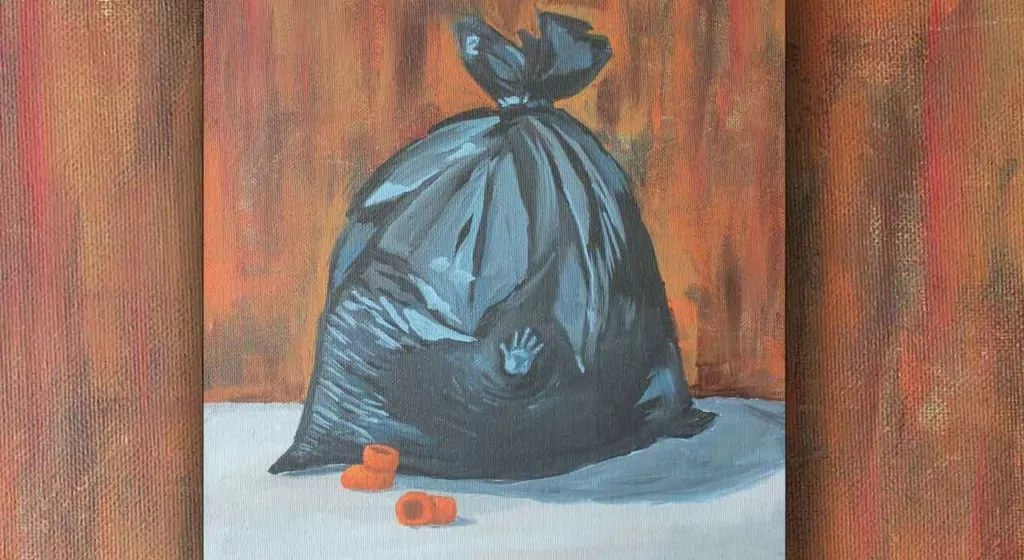
Among pro-lifers the topic of graphic pictures can cause some heated debates. Should we make use of pictures of aborted children to expose the public to what happens in an abortion? It’s an important question, but a key to answering it comes in realizing this is about practicalities, rather than principles. DOES THE BIBLE FORBID, OR REQUIRE THEM? If it were about principles then we should be able to make a clear biblically-based case either for or against the use of these gory, brutal, bloody pictures. But it doesn’t seem a case can be made either for forbidding or for requiring their use. If God forbids the use of gore in visual presentations, then what of Jesus, who was beaten and bloodied and raised up on a cross in front of the crowds? God didn’t hide the horror that was being done to his Son. And think also of the countless public sacrifices done for hundreds of years before, all pointing to this moment. No, God doesn’t forbid bloody messages. But does God require them? Again we can say no – the Jews were, for a time, required to make sacrifices, but we aren’t. There is no command now to pass on Truth with gore. Now, if graphic message are allowed but not required then whether we use these pictures should comes down to evaluating their effectiveness. This isn’t a matter of wrong or right, but rather, do they work? Do graphic pictures shock people into realizing that the unborn are precious human beings? Or do they so disgust people that they turn away and refuse to even to consider the humanity of the unborn? GRAPHIC AND EFFECTIVE I think the answer is both. Jonathon Van Maren recently wrote about how, more than 100 years ago, graphic pictures shocked Europe into ending the brutal treatment of the Congolese people at the hands of Belgium's slave-trading King Leopold II.  The US civil rights movement was spurred on, in part, by the use of graphic pictures that showed the savagery being committed against blacks in the South. I've seen graphic pictures have an impact today too, when I made use of graphic pictures with student groups and then saw students who were apathetic about the unborn get stirred up. And I’ve seen graphic pictures spark campus-wide discussions at universities and colleges. But some people do walk away. Just a glance, and off they go headed in the opposite direction, and there’s no chance to talk. Graphic pictures have their place, but there also seem to be limits to their usefulness. So if graphic pictures have mixed results, what of other approaches? NON-GRAPHIC AND EFFECTIVE Two years ago ARPA Canada created an impressive display on Parliament Hill using of 100,000 small pink or blue flags. Each representing one child killed via abortion in Canada each year. There was no gore, but it was effective. And what of the two pictures accompanying this article, painted by Lisa Van Dam? They clearly illustrate the humanity of the unborn, and the inhumanity of abortion. Doesn’t it almost hurt to look at them? Imagine them, paired together on a billboard – that’s a clear message, an unforgettable message, and no blood to be seen. Dr. William Lile has another approach. In 1999 he bought an abortion clinic to put it out of business, and ended up with all of its instruments and machines too. He decided that he would give people tours of the facility to show them what had been happening there. As LifeSiteNews.com's Pete Baklinski reports: "He used the tools, including the suction machine, to show how first and second trimester abortions were performed. He also showed how a partial-birth abortion was performed in the last trimester using a doll as a model. "The doctor holds that demonstrating the reality of abortion while using the actual tools of the trade on models allows people to see the horror without being traumatized by seeing blood or body parts. "'What I’ve found is that the more graphic the demonstration the more the audience will have their hands over their ears and their eyes closed. And, you can't educate anybody when their ears are covered up and their eyes are closed,' he said." Dr. Lile doesn’t want to make use of graphic pictures, and yet his own method seems impactful. But like graphic pictures, it has limitations the biggest of which is reach: he can only sway those willing to come visit his clinic. CONCLUSION So what is the best approach? That’s going to continue to be a matter of debate. But as we have this discussion it’s important to remember that whatever our thoughts as to the use of graphic pictures – yeah or nay – we shouldn’t condemn the other side. They aren’t doing something wrong; they simply disagree as to which approach is more effective. When we understand this as a debate about effectiveness – rather than wrong vs. right – then we can be more objective as we evaluate all the various approaches. Then we can more easily work together to find out how in this situation or that, this approach or that will work best to highlight the humanity of the unborn. Both paintings are by Lisa Van Dam. Related resource Why Graphic Pictures of Abortion are Necessary...

Red heart icon with + sign.
Politics, Pro-life - Abortion

Should one issue determine who we vote for?

Someone asked me why abortion should be the only issue that determines how we vote. It seemed silly to them that in an election when so many issues are on the table that we would decide things based on just this one issue. But is it silly? Consider that there are many other “single issues” that would be enough to disqualify a candidate from our consideration. If a candidate agreed with us on free trade but wanted to bring in Sharia law, we wouldn’t vote for them. This one issue would be enough to rule them out. And we couldn’t vote for them even if all the other candidates were worse. We also wouldn’t vote for someone who approved of slavery. We wouldn’t vote for a Communist, an anti-Semite, or a homosexual activist. So there are many “single issues” that, by themselves, would be enough to disqualify a politician from our vote. The reason it might seem silly to let the single issue of abortion disqualify a candidate is because abortion happens outside of our view, and because it has been with us for so long. It's understandable that we will have lost sight of the horror. To regain perspective it might be helpful then to consider how we would react if this same sort of devastation was being wreaked on other, more visible, groups. For example: what would we think of a candidate who stood with us on every other matter but who thought there should be a right to kill Natives - as many as 100,000 each year? Or what if a candidate said that they were all for a proposal to wipe out the town of Chilliwack this year, and then Red Deer next year, and the year after that Thunder Bay, and four years from now Waterloo, all cities of roughly 100,000? Would either of those be candidates we could vote for? Clearly not. When we restate their monstrous abortion stand in more visible terms we know such a candidate is simply too evil to support. What then can we do? There aren't many pro-life candidates so who can we vote for? If God has given you a CHP candidate, or a pro-life Conservative candidate in your riding then take full advantage. If you have neither of those options then please do still go out to the polling booth, but not to vote for any of the candidates. Instead take the opportunity to express as clearly as you are able, by spoiling your ballot (perhaps by writing "No pro-life candidate available across it") that none of these candidates are qualified to represent you. It is a small thing. But it is what you can do. However, the day after the election, that is when Jesus’ “Parable of the Persistent Widow” (Luke 18:1-8) can help guide us – this is first and foremost not a parable about how best to engage in political action, but it is that too. When faced with an unjust judge the widow simply persisted. And she got justice not because she won the judge over, and not because the unjust judge was replaced by someone who actually cared about right or wrong. No, she got her justice because she would not shut up. In a country in which there are no electable pro-life leaders, this is what we can still do - speaking up persistently, ever hopeful that God can make use of our persistence to help the unborn. And, of course, we must also remember the real point of this parable, which Jesus told to encourage us to persistent in our prayers to God. Casting our vote is important, but it is only a small, one time, thing. Our God is big and ever near us. And He wants to hear from us – He asks us to persistent in our requests to Him. So let us pray for the unborn and for our country without ceasing!...

Red heart icon with + sign.
Pro-life - Abortion

An Emergency Room is not the Church

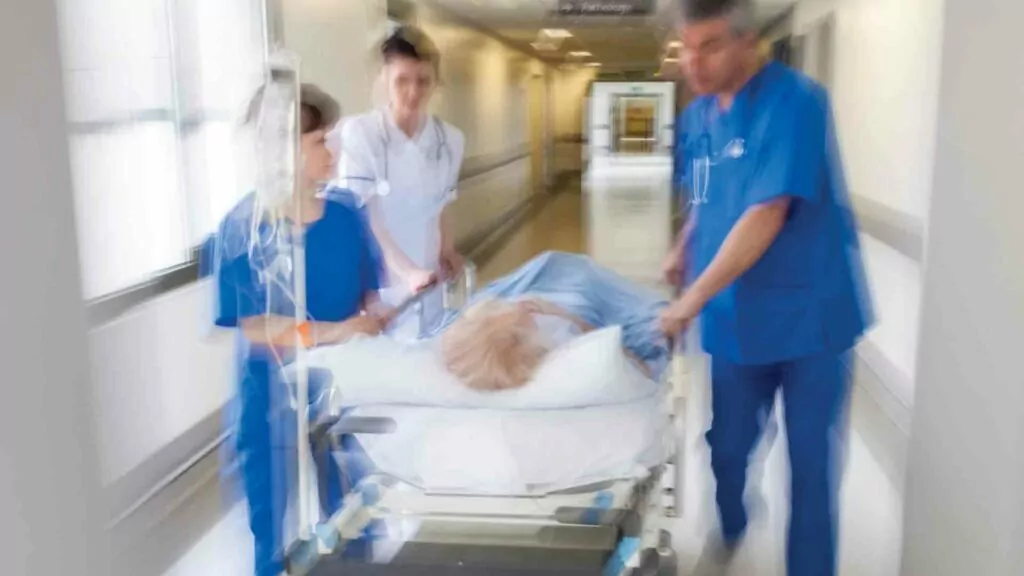
Why “We Need a Law” doesn’t talk about the Gospel but you should  ***** One of the questions ARPA Canada has received most often pertains to the promise of the Gospel and how it fits in with the mission of its We Need A Law (WNAL) campaign. The question comes in different variations but usually goes something like this: “Why is there no reference on the WNAL website to God?” or, “If we do manage to get an abortion law but people’s hearts aren’t changed, is it really worth it?” Perhaps you’ve thought about these issues yourself. Not our goal This is a good question. Should we include a Gospel presentation in our communication? The decision not to include references to Christianity and the Bible in the majority of WNAL communications has been intentional. Canada is no longer a Judeo-Christian country. We are a pluralistic nation made up of many different worldviews. While this slide away from Scripture is lamentable, and many (most?) hearts of Canadians are turned away from God, there remain opportunities to save the lives of pre-born children right now. The mission of WNAL is to build a groundswell of support among all Canadians for legislation that protects pre-born children to the greatest extent possible. So the reason we aren’t quoting Scripture is because we may be working with people who hate God, but who are still (strangely perhaps) willing to join with us in supporting laws that save the children of the needy and rescue them from oppression and violence (Ps. 72). Though they hate God, they are willing to help us who are striving to rescue those precious in His sight. Consider a Christian nurse in a hospital emergency room. When a patient arrives in need of immediate medical intervention she carries out the necessary tasks to help the patient. She doesn’t share the Gospel at this point, because there are other tasks to do. If an opportunity arises later whereby she can share the Gospel – it might be with the patient in recovery or the concerned family members after the operation – she should embrace it. Her primary task may be to save lives and not souls but she may not intentionally avoid confessing the name of Christ. You can insert any example you would like – a construction worker, accountant, lawyer, farmer, etc. As followers of Jesus and members of the Church we all have an awesome responsibility to share His truths in everything we do. But while we all have that individual responsibility to evangelize, that is not, and need not, be the goal of every organization we are part of. Spreading the Gospel is an organizational goal of the Church. But making good bread is the goal – or, at least, the main goal – of a Christian-owned bakery. And saving lives is the main goal of a hospital emergency room. Finally, saving unborn babies lives is the primary goal of We Need A Law. All are worthy, God-honouring goals. And all are goals we can work together with non-Christians to accomplish. A natural segue to the Gospel This is not to say that the message of salvation in Jesus cannot be incorporated into the WNAL campaign. As we carry out our mission many opportunities to share the Gospel do arise. I would submit that by virtue of standing up for justice and truth about our pre-born neighbors WNAL is already sharing nuggets of the truth. But there are always opportunities to share more. The reality is that, quite naturally, conversations evolve into discussions about the motivations for our efforts, the intrinsic value of all human beings, the Imago Dei (all humans having been made in the image of God), and other moral truths. However, those opportunities will arise most often at the personal level by the thousands of people tied into our campaign as they interact with others. Allow me a few examples as to how that can be done. The flag displays which started in Ottawa and are now being put up at dozens of locations throughout Canada are a great way to offer hope in Christ, especially when put up on church lawns. What better place to speak of both the truth about abortion and the truth of repentance, forgiveness and reconciliation in Jesus! This could be done by way of signs, tracts and most importantly, through personal conversations with those who come out to witness at the display. This year we are going to facilitate a lawn sign campaign. There is a federal election scheduled for the fall and we want the topic of pre-born human rights to become part of the narrative of this election. A sign on your front lawn is sure to get the community talking. When your neighbour asks you what the sign is all about, then you have just received an open invitation to share the Gospel. You could say something like, “Well Bob, as you know I am a Christian and that compels me to stand against injustices in the world. Did you know that abortion is legal throughout an entire pregnancy in Canada?” Another response could be, “Good question Sarah. Because I am a Christian I need to speak up for those who have no voice. Were you aware that only North Korea, China and Canada allow abortion up to the moment of birth?” Consider this a challenge – go get yourself a lawn sign. Here is one more example of how the Gospel can easily be integrated with the campaign message of WNAL. We regularly ask people to send an email to their MP or MLA. We make it really easy through our online SimpleMail technology. Though the letters are prepared for you in advance, these letters can be customized. There is no reason why you can’t edit these letters to beautifully reflect God’s care and providence in creating new life and how he demands we protect it (see Ps. 139 and Ex. 20). Conclusion In summary, it is not the mission of the WNAL campaign to evangelize Canadians. That mission is the responsibility of each of us as individuals and collectively as Church. May God be pleased to use our weak efforts as a part of WNAL to build support for laws that move us closer to ending the horrific barbarism and cruel injustice of abortion. May He also use us as Church members to present the Gospel of forgiveness and hope to those who are damaged and hurting because of this injustice. To find out more, like how you can get your own WNAL lawn sign, visit www.weneedalaw.ca. ...

1 2 3