













Politics
Who is Mark Carney?
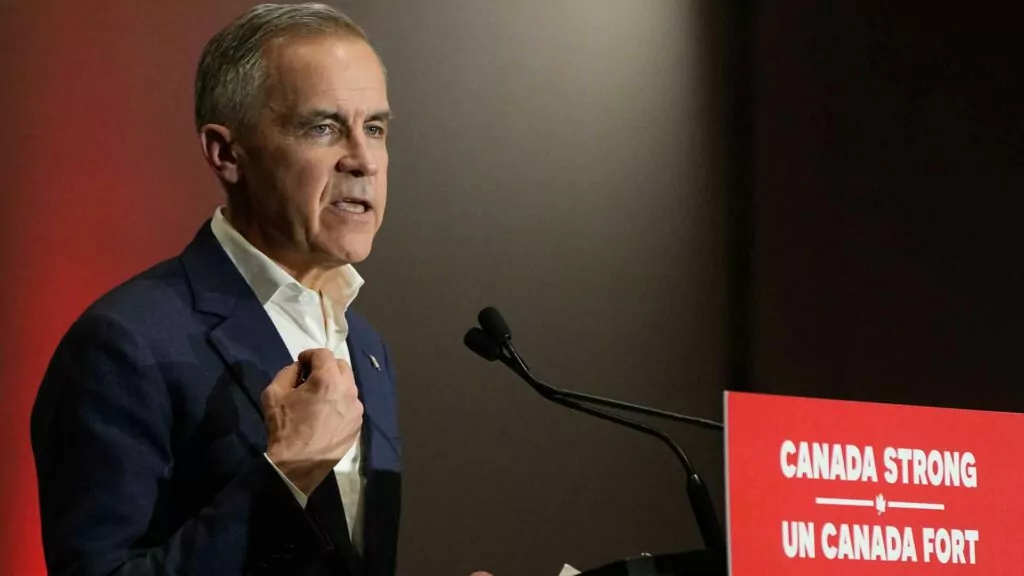
After winning the leadership of the Liberal Party of Canada, and then leading his party to victory in April’s federal election, Mark Carney has become Canada’s 24th Prime Minister. So, who is he?
Mark Carney may well be the most credentialed Prime Minister in Canadian history, despite never having held elected office. His CV includes:
- Graduate of Harvard (1988) and Oxford (1993)
- Analyst at Goldman Sachs (1990-2003)
- Senior associate deputy minister for the Department of Finance (2004-2007)
- Governor of the Bank of Canada (2008-2013)
- Governor of the Bank of England (2013-2020)
- United Nations special envoy for climate action and finance (2020-2025)
- Special advisor and chair of the Liberal task force on economic growth (2024)
- Vice chairman at Brookfield Asset Management (2020-2025)
- Board member of the World Economic Forum (2010-2025)
Most Canadians know Mark Carney as “a central banker/climate change guy,” but we want to explore Carney’s political, religious, and moral beliefs that will likely guide him as Prime Minister.
Mark Carney’s political beliefs
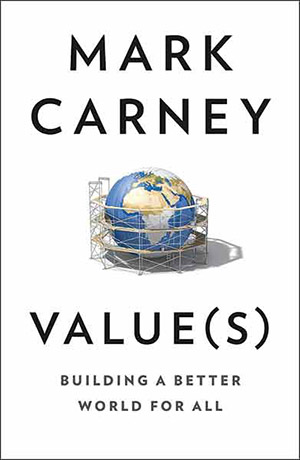 In his 2021 book Value(s), Carney isn’t shy about what he thinks is the duty of the state: “The most fundamental duty of the state is to protect its citizens.” That sounds reasonable, but the question is: protect citizens from what?
He elaborates further:
“An expansion of state duties has occurred over the centuries. The government’s role as protector now extends well beyond shielding citizens from violence and direct injury to cover areas as varied as promoting financial stability, protecting the environment and maintaining data privacy. Much of this growth has been a response to risk-averse populations that expect ever greater protections from government authorities. Moreover, the duties of governments today reach well beyond their traditional roles as protectors to include the provision of basic services, the promotion of welfare and the fostering of culture.”
Compare this with a Reformed view of the duty of the state. With Article 36 of the Belgic Confession, we confess that God “wants the world to be governed by laws and policies so that human lawlessness may be restrained and that everything may be conducted in good order among human beings.” These twin responsibilities can be boiled down to public justice and public order. Although both concepts could be stretched to include all sorts of activities like providing education, welfare, or healthcare, Reformed Christians usually maintain that public justice and public order are relatively narrow responsibilities.
A third of Carney’s book is dedicated to discussing the “triple crises of credit, Covid, and climate.” In each of these cases, he frames the government’s responsibility in terms of protection. When it came to the financial crisis of 2008, the government’s job was to protect people from financial instability. In 2020, the government had to protect citizens from a pandemic. Today, the government needs to protect its populace from climate change.
Carney uses just these three examples, but there is hardly a hint in the book that he considers there to be many limits to what the state can or should do.
That doesn’t necessarily mean that Carney thinks the state needs to be huge or swallow up the other institutions in society. At numerous points in his book, Carney recognizes that businesses and markets are efficient and indispensable in a modern society. He recognizes that markets – not the state – are the engine of the economy.
But if businesses and markets are the engine of the economy, Carney believes the state should be the steering wheel, guiding the generative potential of the economy in what it perceives is the right direction. As he puts it, governments must “use regulatory policy to frame the future direction of the economy.” Carney gives this power to the state because only “the state embodies collective ideals such as equality of opportunity, liberty, fairness, regional solidarity and caring for future generations.” In his view, business and other private institutions will always be selfish and self-seeking. Only the state is selfless and altruistic.
Religious/moral beliefs
Carney is Roman Catholic. In 2015, a British newspaper called The Tablet called Carney the most influential Catholic in Britain. A 2021 Wall Street Journal article noted that Carney “goes to Catholic church at least once a week.” He also sits on the Steering Committee of the Council for Inclusive Capitalism at the Vatican.
Although he didn’t write Value(s) from an explicitly Christian perspective, his faith does peek through in his writing. For example, the book begins with a story of his interaction with Pope Francis at the Vatican when various Catholic leaders gathered to discuss the future of the market system. The book ends with quotations from a New Year’s Day service that he attended in 2021. Sandwiched between these stories are occasional references to Scripture, such as Jesus’ warning that “everyone to whom much was given, of him much will be required, and from him to whom they entrusted much, they will demand the more” (Luke 12:48) and “as you wish that others would do to you, do so to them” (Luke 6:31). Carney uses religious worldview language to describe faith or beliefs in markets. He also discusses medieval Catholic canonists like Thomas Aquinas as they attempted to incorporate their faith into their economic thought. Sprinkled throughout the book are words related to Christianity, such as faith, vocation, divine coincidence, meditation, the common good, and the unborn.
But perhaps where his faith is most on display is in the overarching theme of his book, in how government, markets, and society must do more than assign economic value (in the sense of worth) to everything but also recognize the importance of values (in the sense of virtues) in building our society. Carney recognizes that the moral foundations of our society are critical and highlights seven principles that he believes public policy needs to take into account:
- “Dynamism to help create solutions and channel human creativity;
- Resilience to make it easier to bounce back from shocks while protecting the most vulnerable in society;
- Sustainability with long-term perspectives that align incentives across generations;
- Fairness, particularly in markets to sustain their legitimacy;
- Responsibility so that individuals feel accountable for their actions;
- Solidarity whereby citizens recognize their obligations to each other and share a sense of community and society; and
- Humility to recognize the limits of our knowledge, understanding and power so that we act as custodians seeking to improve the common good” (8-9).
A Catholic in name only?
Having a Catholic as Prime Minister will likely raise the hopes of some Reformed Christians that the federal government might finally take action on social issues. After all, the Catholic Church is opposed to abortion, euthanasia, same-sex marriage, and medical transitioning. Wouldn’t it follow that a Catholic Prime Minister would follow the teachings of his own church?
Unfortunately, that isn’t likely. Ten of Canada’s preceding 23 Prime Ministers have all claimed to be Catholic. Yet, their Catholic faith didn’t guide their political decisions. Catholic Pierre Trudeau legalized abortion and homosexuality. Catholic Paul Martin legalized same-sex marriage. Catholic Justin Trudeau legalized euthanasia.
With respect to Mark Carney, the Catholic Register concludes that:
“his track record betrays a stronger alignment with the mores and allegiances of global markets than with Catholic sensibilities… Carney is undoubtedly a Catholic of a different stripe than the Trudeaus and all the prime ministers who came between… but the wait for a prime minister who will address some of the more glaring divergences of Canadian culture from a culture of life may yet be a long one.”
Forward with hope
As Mark Carney takes up his task, Canada will be watching. As Christians, let’s also be praying for him during this transition, and for all our leaders that they would have wisdom and strength, and ultimately that they would recognize their place under the God of heaven who gave them their position.
This is reprinted with permission from ARPACanada.ca where it was originally published under the title: “Besides being our new Prime Minister, who is Mark Carney?” Photo credit: Shutterstock.com/Harrison Ha









News
Saturday Selections – Aug. 9, 2025
Four guys, one piano, doing a One Direction cover
The Piano Guys, getting clever...
Anything can be an idol
"I have worshiped an hour of uninterrupted sleep. I have worshiped a number on the scale. I have worshiped a number in my bank account. I have worshiped a pregnancy test, a tidy to-do list, a stocked pantry, a nicer vehicle, a certain number of social media followers, my reputation, positive book reviews, the way I look or didn’t look, perfect obedience from my kids, a certain home aesthetic. And on and on the list goes. I have a heart that loves to produce idols, and unfortunately, so do you..."
Keep our kids from the public school Kool-Aid
"The world wants our children to buy into poisonous ways of thinking. These ways of thinking are destructive and dangerous. They’re Satanic."
How voting with your feet helps
"You vote every day when you go to the grocery store or the gas station, pay your rent, purchase a washing machine or buy a latte. You are voting with your feet and sending important messages about your preferences and desires to the folks who are trying to give you what you want... The private voting we do through economic exchange is possibly the most important voting that we can do: It brings about change, it helps us express our values and it serves the public good in awe-inspiring ways."
AI and the threat of Mutually Assured Boredom
"The great danger is that we increasingly find real, flesh-and-blood people boring. It’s already the case that many ordinary human interactions, filled with quirks, annoyances, and complexities, struggle to compete with nonstop entertainment from our devices. AI promises to exponentially expand our options for distraction, drawing us even further from genuine relationships, but this time by successfully imitating human conversation."
Union leaders oppose family and life values
Reformed church leaders have, over the years, had several different reasons to oppose union membership, including the Marxian ideology that underlies adversarial negotiations, and the claims that are made on employment that amount to theft – i.e., when strikers prevent others from doing the work they've abandoned, they are acting as if they (and not their employer) own the job. Then, as the article above highlights, in Canada, compulsory union dues have been used to promote "abortion, euthanasia, special rights for LGBTQ, same-sex marriage and transgenderism."
Fortunately, in some jurisdictions in Canada, there is an option – on the basis of religious conscientious objection – to have your union dues redirected to an agreed-upon charity.
What about the higher wages that are supposed to come with unionization? That happens. But as the video below highlights, that often comes with a cost, too.




Today's Devotional

April 3 - A longed-for passover
“And he said to them, “I have earnestly desired to eat this Passover with you before I suffer. For I tell you I will not eat it until it is fulfilled in the kingdom of God.”” - Luke 22:15–16
Scripture reading: Luke 22:7-23
With everyone sitting down, Jesus explains His eager desire to celebrate Passover with them. As they eat bread dipped in bitter >
Today's Manna Podcast

The Bread of Life
Serving #1173 of Manna, prepared by John Bouwers, is called "The Bread of Life" and is based on John 6:48.