Transparent heart icon with white outline and + sign.

Life's busy, read it when you're ready!

Create a free account to save articles for later, keep track of past articles you’ve read, and receive exclusive access to all RP resources.

White magnifying glass.

Search thousands of RP articles

Equipping Christians to think, speak, and act

Open envelope icon with @ symbol

Get Articles Delivered!

Equipping Christians to think, speak, and act delivered direct to your Inbox!


Red heart icon with + sign.
Transgenderism

Transgenderism 101: Share the truth with compassion

Transgenderism is the latest political cause du jour, dominating media headlines, saturating academic deliberation, the subject of new laws and radical educational policies across the country. Lost in the debate, from either side, are the kids themselves. It is important that, in so far as we are able, we ensure our part in this debate isn’t confused as being an attack on the dignity of individuals genuinely struggling with gender identity disorder. As psychologist Dr. Mark Yarhouse notes, in his 30 years of counseling patients struggling with gender identity, most who come into his office are not seeking to tear down the “social constructs” of maleness or femaleness. They are simply looking for help as they navigate these very troubled waters in these times of social change. Today people who believe they were born the wrong gender are being encouraged by the intellectual elite in media, politics and academia to embrace that notion and run with it. That might mean they start identifying as the other gender, or it might mean undergoing surgery to try to resemble the other gender. This must be strongly opposed. Why should Christians oppose it? Because we know it will hurt people! As one Canadian Reformed pastor said at a recent political rally, these new policies require us to love less. They silence genuine concern for transgendered kids, while advocating a celebration of an ideology that, by any measure of science and common sense, will do irreparable harm. What is transgenderism? The term “transgendered” is an umbrella term for the different ways in which some people might experience or express their gender – their maleness or femaleness – differently from people whose gender matches their biological sex. Put another way, transgenderism describes the experiences or expressions of a small proportion of the population who say there is a difference between their mind and their body when it comes to the question of whether they are male or female. One of the debates within the social sciences today revolves around the question of whether we should bring the body into conformity with the mind (via hormone injections, male genitalia removal, breast augmentation, or other surgery) or bring the mind into conformity with the body (via counseling). Perhaps the group that captures the most attention today are those who struggle with gender identity disorder, also known as gender dysphoria, a psychological phenomenon. We might hear them say something like, “I’m a woman trapped in a man’s body” or vice versa. According to the revised language of the Diagnostic and Statistical Manual of Mental Disorders, 5th Edition (the DSM‑5), gender dysphoria refers to the distress that may accompany the incongruence between one’s experienced or expressed gender and one’s assigned gender. Gender dysphoria is a rare ailment: according to the same manual, it manifests in only 0.005% - 0.014% of adult men and 0.002% - 0.003% of adult women. However, we can expect those numbers to increase dramatically as the popularity of the phenomenon increases with the fawning media coverage of transgender celebrities like Bruce/Caitlyn Jenner and the gender-bending behaviors of Jaden Smith (the son of actor Will Smith who “challenges gender stereotypes” by regularly wearing dresses and make-up, etc.). The celebration and indoctrination happening more and more in elementary schools across the country only exasperates the problem. A somewhat related but separate condition happens when, due to genes, hormones, or body structures that differ from the norm, a child may have an “intersex condition” (in older literature, “hermaphrodites”). This could make it difficult to identify a child’s gender at birth – we live in a fallen world, and one of the results of that brokenness is that some people are born with malformed genitalia. This is not, however, what we’re talking about with transgenderism. An intersexed condition is a biological disorder, and should be distinguished from a transgendered person’s gender dysphoria, which is a psychological disorder. It is important to note that most intersex people are not lobbying to pass as the other sex or as a third sex, but are simply seeking to discover to which sex they belong. Their biological sex identification can typically be discovered through a chromosomal or blood test. Truth with grace We know from the creation story (see Gen. 1:27 and 2:18) that God created humankind in his image (imago dei) and that the wonderful mystery of that design includes the binary reality of the sexes: we are made either male and female. That means a woman’s femaleness reflects something of the image of God, and that a man’s maleness reflects something of the image of God. The binary nature of humanity is implicitly confirmed in the words of Jesus in his discussions on marriage (see Matt. 19:4 and Mark 10:6) and in Paul’s directions to the new Christians in Corinth and Ephesus and to Timothy on the distinct responsibilities and natures of men and women. (See, for example, 1 Cor. 11:7-9; Eph. 5:22-33; 1 Tim. 2:12-14.) To mar or to diminish the masculine and feminine diminishes our God-given identity as males or females. Both reflect the glory of God. This is probably why God forbade cross-dressing in Deuteronomy 22:5. This prohibition goes beyond whether boys can wear dresses (the clothing of men at the time of the exodus from Egypt probably resembled something more akin to modern female clothing today). The point is not the article of clothing per se; it’s the intentional diminishing or obscuring of masculine or feminine differences, which is an assault on our design. It should be unsurprising that the sciences confirm this binary reality. With the exception of a few simple organisms, all creatures (including humans) are marked by a fundamental binary sexual differentiation: male or female markers are imprinted on every one of their trillions of cells. The testimony of biology, chromosomal data, and social-scientific evidence all confirm the essential biological binary of the sexes. (For more on this point, see my book review of Why Gender Matters.) But the Bible does not only speak to the issue of gender confusion, it also speaks to how we should relate and communicate on this issue. The Bible reminds us that gentle answers turn away wrath, but harsh words stir up anger (Prov. 15:1) and that “gracious words are like a honeycomb, sweetness to the soul and health to the body” (Prov. 16:24). Jesus Christ fulfills this in his ministry and example. “In the beginning was the Word, and the Word was with God, and the Word was God… And the Word became flesh and dwelt among us, and we have seen his glory, glory as of the only Son from the Father, full of grace and truth” (John 1:1,14). Randy Alcorn calls this pairing of grace with truth a paradox, and one Christians must emulate: our speaking and relating and communing on this issue of transgenderism must be characterized by grace and truth. Where truth is conveyed without love, it is nothing but noise (1 Cor. 13:1). The truth needs love, and the truth communicated in love will be kind, patient, and will not be rude, irritable or boastful. (1 Cor. 13:4,5). But love also “rejoices in the truth” (1 Cor. 1:6) meaning that we cannot let our instinctive compassion run unfettered because that will end up hurting, not helping. Having established this foundation, let’s examine some of the science and policy surrounding this phenomenon. When helping hurts – medical testimony Celebration of transgenderism is seen by some as the best way to assist transgender individuals. There is no evidence, however, that the negative outcomes associated with transgender identification – including higher rates of suicide and attempted suicide, overall mortality, and need for psychiatric inpatient care – are alleviated by accepting and encouraging alternative gender identities in those with gender identity issues. The theory behind this celebratory approach to transgenderism is not scientific – it is political. Gender dysphoria is a psychological phenomenon. Gender fluidity – the idea that we can shift from one gender to another – is a concept that is socially constructed and normalizes gender dysphoria, and thereby impedes its diagnosis and treatment. To leave the dysphoria untreated is to leave struggling individuals without help, and to ignore experienced researchers in this field. Johns Hopkins Hospital was one of the first institutions in the United States to perform so-called “sex change” operations. Dr. Paul McHugh, the chief psychiatrist there in the late 1970s, commissioned a study of the sex change program. Its authors found that In a thousand subtle ways, the re-assignee has the bitter experience that he is not – and never will be – a real girl but is, at best, a convincing simulated female. Such an adjustment cannot compensate for the tragedy of having lost all chance to be male, and of having in the final analysis, no way to be really female. Some 40 years later, Dr. Sander Breiner concurs, explaining that she and her colleagues had to tell the surgeons that “the disturbed body image was not an organic at all, but was strictly a psychological problem. It could not be solved by organic manipulation (surgery, hormones)”. Many Canadian experts in the field of psychiatry, including those who regularly work with transgendered youth, have grave concerns about the politicization of this psychiatric issue. Toronto psychiatrist Dr. Joseph Berger says that some transsexuals “have claimed that they are ‘a woman trapped in a man’s body’ or . Scientifically, there is no such thing.” Dr. Ken Zucker sees the political approach to gender identity and fluidity as unsound. And Dr. Susan Bradley considers the political moves of some activists “disgraceful.” Dr. Paul McHugh, cited above, points out, “This is a disorder of the mind. Not a disorder of the body.” Canadian policy makers should take these warnings to heart. Apotemnophilia: a comparison Apotemnophilia is a neurological disorder characterized by an individual’s intense and long-standing desire for the amputation of a specific limb. It is a type of Body Integrity Identity Disorder (BIID). Some with this condition look for surgeons willing to perform an amputation of a healthy limb and some apotemnophiles have purposefully injured limbs in order to force emergency medical amputation. In 1997, Scottish doctor Robert Smith was performing these amputations before a public outcry brought them to a halt. What would the compassionate option be: to accommodate the person’s self-perception by amputating healthy limbs as Dr. Smith did, or to treat the psychological condition itself? The comparisons between gender identity disorder, anorexia, apotemnophilia and other similar conditions are clear. As Dr. McHugh says, It is not obvious how this patient’s feeling that he is a woman trapped in a man’s body differs from the feeling of a patient with anorexia that she is obese despite her emaciated, gaunt state. We don’t do liposuction on anorexics. Why amputate the genitals of these poor men? What ought we to do as a compassionate society? Alleviating the psychic distress of transgendered individuals requires nuanced answers. We hear about the high rates of suicide among the transgendered. Well, if we want to address this, we must distinguish between suicides that result from rejection by family, isolation, bullying, etc., (all of which are unacceptable) and suicides where psychiatric care is offered that seeks to resolve the dysphoria in keeping with their birth sex. This is not to say that bullying, rejection by family, isolation, etc., are not an issue for transgender people. They can be, and that type of behavior must be corrected. But the reality is that family rejection, isolation and bullying increase suicide risks for all youth, not just transgender youth. The unfortunate politicization of this issue results in the condemning of anything less than full affirmation, reinforcement and celebration of the gender incongruence in transgender youth, a “solution” that compounds the problem. Where family and community walk alongside a transgender individual with love and compassion, all with the goal of resolving the dysphoria in keeping with the patient’s birth sex as much as possible, we predict the suicide rates will dramatically decrease, particularly because other coexisting issues can also be properly treated. The way we frame our approach to this issue is of the utmost importance. A compassionate society must recognize the mental illness dimensions of gender identity disorder and reject the dangerous and unhealthy human experimentation of hormone treatments and surgical amputations and modification. A compassionate society gives space for expression of struggles and helps to answer the questions “who am I?” and “where do I belong?” without deconstructing gender. And a compassionate society affirms the inherent dignity and intrinsic value of every human being as either male or female, including those who struggle with confusion regarding their sexuality and gender. Recommendations In terms of scientific and social research, the field of gender identity is still relatively new. Unfortunately, when the State attempts a radically new policy response to transgenderism, it becomes an agent of forced social and cultural change without any standard or criterion of success, and without clearly understanding the possible outcomes. Take just one example that illustrates this concern: in an effort to accommodate transgendered children, the provincial government in Alberta wants every school to work towards eliminating gender differences not only in the classroom, but even on sports teams and in change rooms. This is not the well-reasoned, scientifically-based public policy we should expect of our representatives. Here are a few suggestions for better public policy as it relates to protecting transgendered youth and enhancing social and public policy. State actors must cease to use the phrase “sex assigned at birth” and maintain the scientifically accurate term “sex.” Sex is a biological reality. It is not assigned. To use the language of “assigned” instils a flawed assumption that any incongruence is a biological error, rather than a psychological Provinces must ban all gender reassignment surgery on children before the age of 18. Further, in light of the fact that those who have had sex reassignment surgery have higher rates of attempted suicide, surgical transition should be abandoned as a treatment option even for adults. Provinces must ban all cross-gender hormone treatment on children, including puberty suppressants, due to unacceptably high risks of depression, suicide and sterility. To chemically alter the natural and healthy development of a child with such incredible risks before the child can give their own informed consent is nothing short of child abuse. The State must provide ample room for civil society to respond to this issue. Parents, the medical profession, churches and other community groups must have the freedom to address gender dysphoria in their families and communities without threat of enforced ideological conformity by the State. Provinces must abandon laws that make gender reinforcement illegal. Such laws violate children’s rights and doctors’ conscience rights and interfere with parental decisions regarding the best interests of their children. For example, Ontario’s Bill 77 – which amended the Health Insurance Act and the Regulated Health Professions Act to prohibit services that seek to change the sexual orientation or the gender identity of patients – should be repealed. This law, and others like it, promote an ideological blindness at odds with the best interests of the patient. The terms “gender identity” and “gender expression” should be removed from law because the terms are based on subjective perceptions and cannot be objectively evaluated or measured. There is no consistent policy reason to protect transgenderism, but not protect trans-racism, trans-ageism, trans-ableism, or even trans-speciesism (all of which have manifested in recent years). Further, laws that add the terms “gender identity” and “gender expression” as protected grounds of discrimination such as those passed in Ontario and Alberta and being contemplated federally with Bill C-16 are unnecessary since all transsexuals are already protected in law, no less than anyone else. In the interim, we urge that a better balance of rights occur. In places where a reasonable expectation of privacy exists, (washrooms, women’s gyms, etc.) the biological measure of a person’s sex must be the determining factor for access. Due to the reality that there is no objective means to identify a transgendered person, this measure of preventative access can help protect against devastating consequences. Interestingly, spaces of privacy have become "gender-neutral." Adding different genders has had the pernicious effect of subtracting the difference between the sexes expected in public, and removing the privacy and the shield for natural modesty appropriate to them in certain social contexts. Conclusion Gender matters because people matter. Maleness and femaleness are distinct and complimentary realities that correspond to our biological selves and go to the core of what it means to be human. When governments ignore or undermine this reality they do so to society’s detriment. While some children struggling with gender identity disorder may need exceptional care in their various situations, the State helps no one by “breaking down gender” across the province or country. Canadian politicians must be willing to take a stand for good public policy as it relates to gender and sexuality. With sound public policy, we can help our transgendered neighbors as they navigate these troubled waters in times of social change. Out of compassion for our transgendered neighbors, inspired by our duty to love them as ourselves, we need to speak out against an ideology that harms them. It won’t be easy, but the right thing to do rarely is. This article is adapted from a fully footnoted 2016 Policy Report for Parliamentarians on Gender Identity which is available at ARPACanada.ca. This first appeared in the Nov/Dec 2016 issue....

Red heart icon with + sign.
Adult non-fiction

BOOK REVIEW: Understanding Gender Dysphoria

A book worth chewing on…but not swallowing whole UNDERSTANDING GENDER DYSPHORIA: Navigating Transgender Issues in a Changing Culture - by Mark A. Yarhouse - 191 pages / 2015 Christian leaders have a new, helpful and thorough resource available to help them respond to the recent phenomenon known as “gender identity disorder” or “gender dysphoria.” Understanding Gender Dysphoria is authored by Dr. Mark Yarhouse, a clinical psychologist and Hughes Chair of Christian Thought in Mental Health Practice at Regent University. He has a long career of counseling those struggling with gender dysphoria, a condition in which the person feels there is some sort of disconnect between their biological sex and the gender they feel they really should be – they are men who feel like they should be women, and women who feel like they should be men. Yarhouse’s book brings a Christian perspective to the issue that avoids simplistic answers and embraces and grapples with the psychological and theological complexity. Yarhouse engages with an incredible amount of social-scientific and medical research, but avoids the pitfall of producing a merely clinical document. Rather, he emphasizes pastoral sensitivity and challenges the Christian reader to walk side by side with people struggling with their identity. OVERVIEW OF THE BOOK There’s a lot in the book, so let’s begin with a quick overview. Understanding Gender Dysphoria is written for a Christian audience, a fact made obvious by the dedication on the first page: “To the Church, the Body of Christ.” Yarhouse is motivated by a desire to see the Church proactively grapple with this issue and help those who desperately need help. He has a lot of criticism for the “culture wars” mentality, which tends to be too simplistic in its engagement of issues like transgenderism. He lays the groundwork by explaining what exactly gender dysphoria is and how complex of an issue it really is. He then delves into Scripture, and wrestles with a number of different texts, analyzing them in light of their historical or literary context and applying them to the issue. He spends a chapter on the causes of gender dysphoria (the short answer is, we just don’t know!), a chapter on its prevalence and how it manifests, and a chapter on prevention and treatment. Throughout these chapters, Yarhouse cites the latest studies, and is careful to note strengths and weaknesses in the reliability of those studies. He makes it clear that much more careful study is needed. Yarhouse ends his book with two chapters on a Christian response, one at the level of the individual and one at the level of the institution. Here he enters the pastoral realm and gives suggestions for better ways in which Christians and churches can compassionately assist and walk alongside transgendered neighbors. GENDER IDENTITY CONFLICTS: THREE LENSES A theme that runs throughout the book is an analysis of three frameworks or “lenses” through which different groups see the issue of transgenderism and gender dysphoria. It’s helpful to explore these in order to understand the starting point for how the various groups in society view and understand the issue. All three perspectives have something to offer, and also have limitations. After discussing them, Dr. Yarhouse proposes his own fourth “lens” or framework, which includes aspects of the other three. So what are these frameworks? 1. Integrity framework The integrity framework is probably the lens through which most Christians, as well as most orthodox Jews, and Muslims, view the transgender issue. This framework understands gender in terms of the sacred integrity of maleness and femaleness. We are our biological sex, and there’s no changing that. God created mankind as male and female, equal in dignity and worth, yet with distinct and complementary roles. But you don’t have to be religious to believe that our gender is stamped on us and unchangeable. A naturalist (one who denies the supernatural) might simply note that in nature we see humankind and the animals as being a binary species: male or female markers are imprinted on each and every one of the trillions of cells of each human and animal body. According to the integrity framework, men and women are to conform to, and live in accordance with their biological sex. Scriptural backing for the integrity framework can be found in the creation account, particularly in Genesis 2, and also some Mosaic prohibitions in Deuteronomy against cross-dressing, as well as Jesus’ teachings in the gospels and Paul’s teaching in his letters to the Ephesians and to Timothy. Meanwhile, the naturalist can look to the consistent testimony of biology, DNA and chromosomal data, as well as abundant social-scientific evidence to confirm the binary biological differences between the sexes. Are there any limitations or potential pitfalls to this approach? Well, holding exclusively to this view might leave a person liable to seeing all male/female differences as unchangeable, including those that are actually just gender stereotypes (i.e. women are bad at math, men are bad at cooking). It might also lead some to overlook and dismiss the struggles of individuals with gender dysphoria (as in “He’s a guy not a girl – what doesn’t he just smarten up!”). And it also has the potential to paint all transgender people with the same brush. 2. Disability framework Another way of understanding transgenderism is through the disability framework. As the name suggests, it focuses on the mental health dimensions of the phenomenon of gender dysphoria, and views transgenderism as a disorder of the mind. Most Christians would see some value in this framework too. As our society begins to understand the realities of mental health issues such as schizophrenia, multiple personality disorders, anorexia or post-partum depression, then we get a new sense of what gender dysphoria is like. The potential pitfall to the disability framework is that in presenting the problem as a health one or a medical matter, it might well prevent discussion of any theological dimension. Treatment becomes very clinical; theological or spiritual responses are sidelined. As one transgender Christian said, “By reducing gender dysphoria to a mere medical diagnosis, I felt trapped and robbed of a spiritual solution.” 3. Diversity framework The diversity framework is the way most social progressives view transgenderism – they see gender dysphoria as a good thing, to be celebrated. There are two subgroups within the diversity framework. A vocal minority – Yarhouse calls them the “strong” form diversity framework – sees the sex-gender binary as a socially constructed authority structure to be destroyed and eliminated. But there’s another group within the diversity framework (the “weak” form) that simply seeks to give expression to the lived experience of a transgendered person and to answer two questions of identity and community: “Who am I?” and, “Where do I belong?” For those who subscribe to the integrity framework and, to a lesser extent, those who subscribe to the disability framework, there are many problems with the diversity framework. We know that our gender is fixed, and, in fact, a gift from God. So any efforts at undermining the reality of gender are to be opposed. But Yarhouse argues there is still some value in the weak form of the diversity lens, particularly for the Christian community. What can we learn from this framework? Well, Christians recognize that all humanity is disordered. Any honest Canadian would agree that every human being struggles with the brokenness of life, biologically, psychologically, and spiritually. So “Who am I” and “Where do I belong” are important questions that need to be answered. There are answers, and they apply to all, including the transgendered. Indeed, there is a lesson here for broader Canadian civil society: we can give space for expression of struggles and assist with answering deep questions of identity and community without having to go so far as to deconstruct gender or to embrace and affirm new and dangerous social theories. 4. An integrated approach Dr. Yarhouse argues that we need to take the best of all three of these approaches and create a new framework altogether: what he calls “an integrated approach.” The integrated view recognizes the integrity of the two complimentary sexes as God has created them. It also recognizes the psychological element or disability associated with this issue, which needs to be addressed with compassion. And the integrated approach takes from the diversity framework the understanding that every individual in their particular circumstances and struggles want their experience or struggle to be understood and heard and want to know who they are and where they belong. The Christian worldview offers a compelling alternative to the approach of the proponents of the “strong” form of the diversity framework, which seeks to deny and destroy all gender differences. Sadly, the strong form of diversity framework has been adopted – without critical reflection and to the exclusion of other perspectives – by too many provincial governments and is now being imposed onto our communities and schools with the force of law. CAUTIONS ABOUT THE BOOK A legitimate question can be asked at this point: Is Yarhouse’s integrated model backed up by Scripture on all three points? I think they are, with this caveat: an integrated approach does not necessarily mean taking an equal measure of each of the three views (integrity, disability and diversity). Yarhouse himself seems to favor the disability model first (he is a clinician, after all), informed by the integrity model, with the diversity model adding a smaller piece to the overall puzzle. Dr. Robert Gagnon, a leading theologian on the bible and sexuality, has offered some push back on Yarhouse’s thought (I commend to the reader his article published Oct. 16, 2015 titled “How Should Christians Respond to the Transgender Phenomenon?”). Gagnon takes issue with points of conflict between the disability lens and the integrity lens. While he acknowledges the disability lens, Gagnon is concerned that Yarhouse’s use of the disability label might have the unintended effect of accommodating sinful choices, since Yarhouse argues that “the disability lens also makes room for supportive care and interventions that allow for cross-gender identification in a way the integrity lens does not.” To put it in other words, Gagnon is worried that understanding this as merely a disability might lead to treatments that, in themselves, could become sinful behaviors. It is important to note here that Gagnon agrees with Yarhouse that the mere existence of gender dysphoria is not sin itself. He writes: I do not view the mere experience of gender dysphoria as necessarily resulting from active efforts to rebel against God… Where I would qualify Yarhouse is in noting a more complex interplay of nature, nurture, environment, and choices. Incremental choices made in response to impulses may strengthen the same impulses. Gagnon suggests that it is here that Yarhouse departs from the Biblical language by referencing the clear dictates of Scripture in Deut. 22:5, and Paul’s reference to “soft men” in 1 Cor. 6:9-10. Gagnon suggests that while having the internal turmoil over gender identity is not sin, “acting on a desire to become the opposite sex can in fact affect one’s redemption.” How far should Christians following Yarhouse’s suggestions of compassionate accommodation go? On the one hand, were a man wearing a dress to attend one of our services, his attire should not be our first concern. We can greet him, and get to know him, ask what brought him, etc. The Church is, after all, a place for sinners, so we should be able to accommodate all sorts of seekers. But Yarhouse pushes accommodation further. He talks of intermittent (and often private) cross-dressing as a way for some Christians to manage their struggle with gender dysphoria. But this is no longer accommodating a seeker who doesn’t yet know what God has said about gender. It is accommodating someone who knows God made us male and female, who wants to indulge in sinful behavior on occasion. So Yarhouse doesn’t properly limit the extent of the accommodation the Church should show. One final caveat: Yarhouse makes repeated reference to the Church rising above the culture wars or abandoning the culture wars on this issue. I do think there is value in the Church elevating our language and avoiding the typical style of the so-called culture wars, by avoiding debates that lack all nuance and are blunt or belligerent (the style of Ezra Levant is an easy target, but there are many on both sides of the debate who engage in this style). That being said, Christians cannot avoid the culture wars altogether – it’s one manifestation of the antithesis. The question is not whether we do it, but how. We must engage with the culture as salt and light. We must engage winsomely and relationally. Perhaps this is what Yarhouse is getting at. But simply because some do the culture wars poorly isn’t any reason at all for Christians to disengage. RECOMMENDATION This book was a challenging yet rewarding read. It really opened my eyes to a much fuller understanding of the issue of transgenderism and, in particular, gender dysphoria. It's pastorally sensitive while also being scientifically grounded and very well researched. Yarhouse is definitely an expert in the field and has given me a deep appreciation for the complexity of the issue. This book does require work to get through, but the payoff is a much better, fuller and more nuanced understanding of the issue than what is readily available through any short-form articles in the mainstream or social media. With the cautions noted above, I recommend this book for Christian counselors, pastors, elders and teachers....

Red heart icon with + sign.
Transgenderism

You think feelings can redefine reality? What if I told you I feel like they don’t?

There’s a special sort of tyranny at work these days – it is the sort that not only ignore reality itself, but demands that everyone else do so too…or else. There are many examples of this. For instance: there is the idea that there really are no differences between men and women, and that both can perform all tasks to the same degree. there is an idea that the unborn only become human beings when the mother decides they are human beings. there is the idea that marriage is something that can take place between two men or two women. there is the idea that a person who was born biologically male can transition to become female, and vice versa. How they’re pulling off this trick Transgenderism offers a good case in point. Take the recent Gender Identity Guidance issued by the Massachusetts Commission Against Discrimination. According to Eugene Volokh, writing in the Washington Post:  “Under Massachusetts law, refusing to use a transgender person’s preferred pronoun would be punishable discrimination. (At least this is true of “he” or “she” — I saw nothing in the document about “ze” and other newly made-up pronouns.) The Massachusetts document … makes that clear in the employment context, and it also makes clear that the antidiscrimination law rules apply to places of public accommodations (including churches, in “secular events” “open to the public”) just as much as to employment.”  Now, let’s notice the sleight of hand that has taken place in the whole transgender issue. Take the imaginary case of Bob, who is transitioning to become Carol. He is objectively male, right? That is his factual, actual biological sex. By which I mean that at some point in the past, the midwife present at his birth pronounced him to be a boy, and we can assume that she made this assessment on the basis of objective data, rather than on a personal whim. Indeed, had she pronounced Bob to be a girl, or even non-gender specific, despite the clear evidence to the contrary, Bob’s parents would no doubt have corrected her and, had she still insisted on ignoring the evidence, made a complaint.  But at some point after that, Bob came to believe that the objective data was wrong. So he chose to undergo a process of bodily mutilation. Note, however, that the objective data was not wrong. How could it be? It is objective, including physically provable characteristics and XY chromosomes. As a report by two American College of Pediatricians doctors put it: “Human sexuality is an objective biological binary trait: “XY” and “XX” are genetic markers of male and female, respectively – not genetic markers of disorder.” They go on to say that: “No one is born with a gender. Everyone is born with a biological sex. Gender (an awareness of oneself as male or female) is a sociological and psychological concept; not an objective biological one.” In other words, while we can state with absolute certainty that biological sex is a demonstrably objective reality, Bob’s decision to transition away is based on a subjective feeling. Indeed, the very fact that Bob needs surgery to make the transition rather proves the point. (As an aside, those arguing for transgenderism need to answer the question of why the body, which is objectively one thing or the other, should be made to conform to a subjective feeling of the mind, rather than the other way around.) But having made this demonstrably feelings-based decision, what happens next? Having taken a decision which is contrary to objective reality, Bob now not only identifies as a sex which is opposite to his objective biological one, but now expects everyone else to accept his feelings as having the power to redefine objective reality. Do you see what has happened? We’ve gone through four stages: Objective reality Denial of objective reality The presentation of a subjective experience The insistence that this new subjective experience is now objective truth to be assented to and obeyed Oh and there is now a fifth stage, which is that if we don’t play along, and also pretend that feelings can redefine reality, we get a label pinned to us – hater, transphobe, bigot etc – and possibly accused of a “hate crime.” If feelings beat facts…  Here are a couple of questions that we should be asking those who insist on this: If someone acts contrary to objective reality, what grounds do they then have for insisting that everyone else treat their feelings as objectively true facts? If someone chooses to make their identity a matter of feelings, what grounds do they have for saying that the rest of us cannot do the same, and call them “him” or “her” depending on how we feel? The answer to both these questions is that they have no grounds whatsoever. Having denied objective reality in favor of subjective feelings, they have no grounds to then demand that we all accept their subjective feelings as being objective facts. Secondly, having insisted on their own subjective experience as being the ultimate authority, they have no grounds for denying anyone else the same right to exercise their subjective feelings on the subject. So if someone believes Bob to be a box of breakfast cereal, for instance, I can say that they are wrong, and I can do so on the basis that the objective data shows clearly that Bob is not a box of breakfast cereal, but rather a human being. However, if Bob tries to deny someone the right to believe and openly state that he is a box of breakfast cereal, this flies in the face of the logic he used in the first place to proclaim against his own objective biological sex. Who knows – perhaps denying people their subjective rights to call other people boxes of breakfast cereal might even be a new hate crime. Bransphobia? It’s not going to get better soon And yet despite having no grounds to insist on these things, they are insisting on it in increasingly vitriolic tones, and with the threat of the law behind them. This is how the new sort of tyranny works. It tears up objective reality, then imposes a new subjectivity in its place. But it doesn’t stop there. It then insists that society embraces that subjectivity as now being objectively true, and censure, shout down, and even prosecute those who refuse to play ball. The bad news is that things aren’t going to get better anytime soon. Those who are busy denying reality as God has given it and defined it, are too invested in their delusions to give them up. They aren’t suddenly going to say, “Hey, I guess it is really rather stupid to insist that there are no differences between men and women, or that two men can marry.” No, they will double down, and triple down on it for the foreseeable future. And as they do, there will come more assaults on objective reality, more attempts to force others to embrace their delusion, and more efforts to get us all to put our rubber stamp of approval on this folly. Those who dissent will be stigmatized, penalized and coerced into silence. This is what this newest sort of tyranny does. Our hope and our response? But the good news? It is that the Triune God of Heaven and Earth – not these tyrants – is actually the final arbiter of what is real and what is true, and He will not allow this situation to go on indefinitely. It’s his world and his reality, and He will at some point overthrow those who attempt to overthrow his order. Time and time throughout history, He has risen up to overthrow his enemies and deliver his people. And He will do so again. However, these deliverances ordinarily come when his people truly “cry out to the Lord.” So let me finish up by asking a very searching question. I recently held a discussion group with some Christian friends, where I covered a little of the history of how we ended up with transgenderism, same-sex marriage, no-fault divorce, family breakdown, tolerance and diversity, sex education, egalitarianism, feminism, “homophobia” and “hate” crimes. Having gone through it all, and having unanimously agreed that it was all quite mad and more than a little disquieting, I asked the following question: “Put your hand up if you are praying fervently to the Triune God on a regular basis to come and save us and our culture from this mess.” No hands went up. How about you? Rob Slane is the author of “A Christian & an Unbeliever Discuss: Life, the Universe & Everything” which is available at Amazon.ca here and Amazon.com here....
Red heart icon with + sign.
Transgenderism

A is A…except when it wants to be S?

The transsexual debate and the death of logic “Hi A. It is A, isn’t it? I hardly recognized you there. It’s B. Remember me? How are you doing?” “I’m fine. Well I’m … well it’s just … I’m …” “What is it A? Is something the matter? You don’t look quite yourself.” “Look, B. There’s something I need you to know. I’m no longer known as A.” “What do you mean you’re no longer known as A, A?” “I mean I no longer identify as A. In fact, from now on I’d like you to call me S.” “S?” “Yes. S.” “I’m afraid you’ve lost me.” “Look, it’s quite simple. You’ve always known me as A, and all my life everyone told me I was A. But recently I started to question whether that’s really who I am. And the more I questioned it, the more I realized I was just the victim of social conditioning and prejudice. To put it bluntly, I’ve been brainwashed into thinking that I’m A.” “Social conditioning? Brainwashing? But A, you are A. How could you be anything else? Remember the first rule of logic: A = A and so A can’t = non-A.” “Well I simply don’t agree. In fact I believe that’s nothing but an outdated social construct.” “Social construct? But it’s an obvious truth. And it’s true for all times and all places.” “There’s nothing obvious about it whatsoever, and frankly I’m amazed that anyone living in our post-modern culture could still think it is.” “Ah, I thought as much. You’ve been listening to the post-modernists haven’t you? Well frankly I don’t much care what they say about it. It’s self-evidently true that A = A and there’s an end to it.” Do feelings make the man? “You know, B, I had always thought of you as a fairly open-minded letter. But I’m beginning to detect a quite shocking level of intolerance in you. Listen. Maybe this will persuade you. All my life I’ve had this nagging suspicion that I might be different. I’ve never much liked the way I look. That silly pointy bit at the top and that even sillier horizontal bar in the middle. And that’s just the capital “me.” Don’t get me started on the little “me”! But I’ve always admired S. Beautiful curvy letter is S. Well thankfully we’ve moved on from outmoded stereotypes that would have meant that I stayed an S trapped inside an A’s body, and I can now be any letter I want.” If gender, why not species? “But you can’t be an S. Surely you can see that?” “You know, I don’t think I’ve ever come across such a shocking level of bigotry. Why can’t I be another letter entirely, if I want to? Who are you to say what I can and can’t be?” “Why stop at a letter then? Maybe you could identify as a number. I could call you 1. Or 19 if you like. Or maybe even a duck.” “Adding sarcasm to hate speech doesn’t make it any less hateful.” “Hate speech? I said nothing hateful. But A, do you not see what will happen all if you insist on calling yourself S?” “Such as?” You already have a role to fill “Well, I don’t know how we’d get along without an A. I mean, imagine if we tried driving to Alberta without you.” “What do you mean?” “Ever tried driving to Slberts? And what about that fellow who got caught up in the tree after trying to topple his father from the throne. Now what was his name?” “Absalom?” “No. Sbsslom I think it was. Not to mention what we’ll do with the poor old SSrdvsrk. Can’t you see how ridiculous it all is?” “Well I’m not going to stand here all day being lectured by someone who is clearly a Hater and a Transletterphobe.” “You mean ‘someone who is clesrly s Hster snd s Trsnsletterphobe’? You see, all you’ve succeeded in doing by refusing to abide by the simple truth that you are A and that you cannot therefore = non-A is to sow chaos and confusion. Imagine what will happen if T wants to become C, or Y wants to become X.” “As it happens, Y is already well on her way to becoming X thank you very much. She’s a chromosome, you see. She used to be male but now identifies as X. And as for X, he’s sometimes identifying as Y. You have a problem with that?” “Well yes, actually. It’s just a clear denial of objective reality.” “Objective reality? Hah! What you need to realize is that every letter has the right to identify as whichever letter they want, and every other letter ought to respect their feelings.” Why should your feelings win? “Hmm! Fair enough. You win. I will no longer identify you as A.” “Good. Thank you.” “Instead, I shall now identify you as H.” “H? But I just told you I identify you as S, didn’t I.” “Yes you did, but your basis for doing so was based firstly on a denial of objective reality, and then on making subjective opinions and feelings your standard. And, I might add, you said we all have to respect that. Well okay, in my subjective opinion, I no longer identify you as A, or indeed as S, but as H. Are you prepared to respect that?” “But I’m S and you have no right to call me H.” “No right? So let me get this straight. You decree that there is no such thing as objective reality (A = A) and that your feelings are king. Then you insist that I accept your definition as truth and call me a hater, a bigot and a phobe if I don’t. So what you have done is to use your subjective feelings to create your own new ‘objective reality’ and insist that I accept it. Well sorry, I refuse. Two can play at that game and I say you’re an H! Now you’re not going to be a Transletterphobe, a bigot, and a hater and deny me my rights are you? Or is subjectivism taken to its logical conclusion as hard for you to bear as it is for me?” Postscript After this exchange the letter B was hauled off for tolerance training where he is learning that the right to define objective truth is the sole preserve of the Cultural Marxists who denied it in the first place. Rob Slane is the author of "A Christian & an Unbeliever Discuss: Life, the Universe & Everything" which is available at Amazon.ca here and Amazon.com here....

Red heart icon with + sign.
Apologetics 101, Sexuality

Apologetics 101: Give them what they are asking for

This summer the Brandenburg State Parliament (in Germany) debated whether to create an action plan for, among other things, the acceptance of "gender diversity."  Now as every good storyteller knows, the key to a gripping yarn is to show, rather than tell. So when parliamentarian Steffen Königer spoke out against the proposal he made his point by giving a demonstration of the sort of foolishness the bill would promote. It was as if he said, “You want diversity? I’ll give you diversity!” So he began by giving a greeting to more than 50 supposed genders. Dear Mr. President, Ladies and Gentlemen, dear Homosexuals, dear Lesbians, dear Androgynes, dear Bi-genders, dear Female-to-males, dear Male-to-females, dear Gender-variables, dear Gender-queers, dear Intersexuals, dear “Neither”-genders, dear Asexuals, dear Non-binaries, dear Pan-genders and Pansexuals, dear Trans-males and Trans-men, dear Trans-females and Trans women, dear Trans-humans, dear Trans-with-*(gender star), dear Trans *females and Trans*women, dear Trans *males and Trans*men, dear Trans-humans, dear-Trans-feminines, dear Transsexual persons, dear Inter*females, dear Inter*males… At this point the Parliament’s president interrupted: “Would you allow an interposed question?” Königer replied, “But I’m not done with my introduction yet Mr. President. Sorry, no.” And he continued: Dear Inter*men, dear Inter*women, dear Inter*humans, dear Inter-genders, dear Inter-sexuals, dear Dual-genders, dear Androgynes, dear Hermaphrodites, dear Two-spirit third genders, dear 4th genders, dear XY-women, dear Bartsch (the German seems untranslatable), dear Gender-absent, dear Transvestites, dear Cross-gender, dear Zero-gender, and of course a warm welcome to all the “Other” genders….dear (male_ or female_) Mrs. or Mr. Nonnemacher, dear (male_ or female_) Mrs. or Mr. Baader, Dear (male_ or female_) Mrs. or Mr. Mus… party rejects your proposal. Thank you. When the world wants madness, one good way to counter them is to take them seriously and give them exactly what they are asking for. Königer’s 2-minute introduction and 5-second speech did just that, and it was met with smirks and laughter. He delivered it with restraint – he seems a dry wit – and with a twinkle in his eye. And despite the craziness being proposed, he did not whine, bemoan or otherwise despair. He was, in a word, winsome. We can learn from his stunt. Like him, we can expose the world’s foolishness with a smile. And then we can improve on his example, pointing our audience not simply away from the foolish lie, but towards God’s precious truth! SOURCE: Jacob Bojesson’s “German politician trolls gender-identity debate greeting parliament in 60 genders” posted to DailyCaller.com on June 10; “German MP speaks out on diversity bill, addressing 60 genders” posted to RT.com on June 22; AFD Party press release (Google translated) “AFD Group rejects meaningless Action Plan” posted to AFD-fraktion-brandenburg.de on June 9; Picture is screenshot of AFD party video found on the AFD-Televion YouTube channel, posted June, 2016....

Red heart icon with + sign.
Culture Clashes

White sister thinks she is black mother

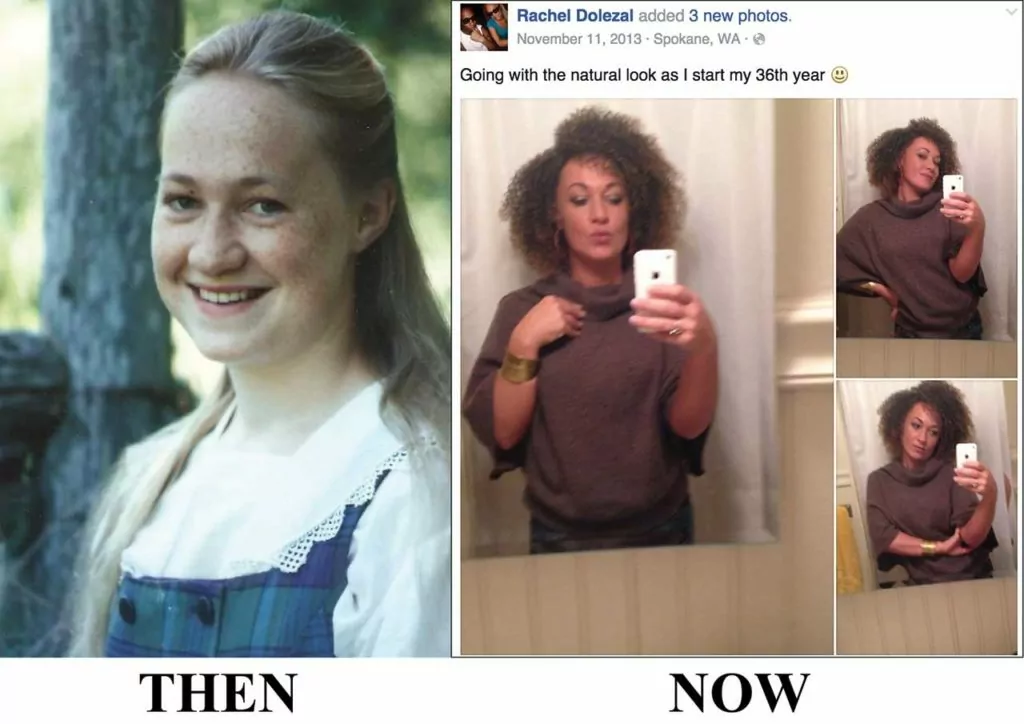
This summer a former Olympic athlete convinced the world that a man can become a women. Bruce Jenner underwent surgeries that included breast implants and facial sculpting. He either has already, or is considering, amputating his penis. He was given the Arthur Ashe Award for Courage. Soon after the National Post then featured an article on able-bodied people who want to be disabled, and like Jenner, want to make use of surgery to amputate parts of their body. And like Jenner, they describe themselves as feeling like imposters in their own bodies. One fellow, now known as One Hand Jason went so far as to cut off his right arm with a “very sharp power tool.” He has yet to receive any awards for the courage involved in his transformation. In mid June the president of the Spokane chapter of the National Association for the Advancement of Colored People (NCAAP) told her local news station that despite being born from two very white parents, she considers herself black. Rather than amputation, Rachel Dolezal needed only to make use of a change of hairdo and perhaps a tanning booth. She also has not received any awards for her transformation. Dolezal also shared that she considers her adoptive black brother her son. Can men become women, abled become disabled, white become black, and brothers become sons? The world is sure about the first, and confused about the last three, though they have no justifiable reason to be so. If amputation is understood as a legitimate option in Jenner’s case, on what basis can they object to it for One Hand Jason? And if what we are is defined by how we feel things should be – which is how the world is treating Jenner – then of course a white can be black and your brother can be your son. Whereas the world despises discernment (they call it being judgmental), God encourages it. God made us male and female, and assigned different roles on that basis. So this is a difference to be embraced, not ignored or fought. And while He has made us in a rainbow of skin tones, this is a difference He minimizes – in the opening chapters of the Bible we are told that all of us are of one blood and there is just one human race. The world is confused, but Christians need not be. God has given us guidance as to which differences matter, and which differences are made too much of. Whether we can convince our non-Christian neighbors and friends that God's ways are the best ways is up to the Holy Spirit, but with a question or two (like, "If Jenner wants to amputate his penis and One Hand Jason wants to amputate his hand, is that something we should encourage?") we can show them the vast gulf that exists between His ways and the wacky world's ways. (Updated June 18, 2015, to reflect the uncertainty about whether Jenner has already amputated his penis.)...

1 2 3