Transparent heart icon with white outline and + sign.

Life's busy, read it when you're ready!

Create a free account to save articles for later, keep track of past articles you’ve read, and receive exclusive access to all RP resources.

White magnifying glass.

Search thousands of RP articles

Helping you think, speak, and act in Christ.

Open envelope icon with @ symbol

Get Articles Delivered!

Helping you think, speak, and act in Christ. delivered direct to your Inbox!


Red heart icon with + sign.
Book Reviews, Graphic novels

Eric's Greatest Race

The Inspiring True Story of Eric Liddell by Tim Challies 2025 / 128 pages Rating: GOOD/Great/Give Eric Liddell is probably best known as the man who refused to run the 100 meters at the 1924 Olympics because the finals were going to take place on a Sunday. He wanted to obey his LORD, and God's 4th Commandment: "Remember the Sabbath day by keeping it holy. Six days you shall labor and do all your work, but the seventh day is a sabbath to the Lord your God. On it you shall not do any work, neither you, nor your son or daughter, nor your male or female servant, nor your animals, nor any foreigner residing in your towns...." (Ex. 20:8-11). Instead of the 100, Eric competed in two other events that weren't his specialty, the 200 and 400-meter races. While Hollywood played a little loose with the facts in their 1981 biopic Chariots of Fire, they got the gist right – Liddell went on to win a gold in the 400. Tim Challies' comic book biography does better than the film in keeping strictly to the facts. It also includes more of Liddell's life. He and his brother were often separated from their missionary parents, but they both enjoyed their schooling and many athletic ventures. After his Olympic win, Liddell went on to become a missionary himself in China. When the Japanese invaded China during World War II, Liddell spent his final years as a prisoner in a Japanese internment camp where he encouraged other prisoners by pointing them to the God who was still in control, even in these circumstances. Liddell died in that camp right as the war was nearing an end in 1945. Cautions None. Conclusion I liked, but didn't love Eric's Greatest Race. What I liked was the opportunity to learn a little bit more about the man I'd first encountered in Chariots of Fire. But with only about 30 words a page, this was still quite a brief overview of his life. The black and white artwork is solid, but it isn't vivid enough to grab a young reader's attention. I pitched this to my teen daughter, and she echoed my own take: this is a solid base hit, but no home run. That said, the comic format makes this more accessible to any interested audience than a book-length treatment could ever be. And those 30 words per page mean it is also a quick, easy read. I think Eric's Greatest Race would make a great addition to any Christian school library; however, there are more exciting options to consider as a gift for your kids or grandkids....

Red heart icon with + sign.
Book Reviews, Children’s fiction

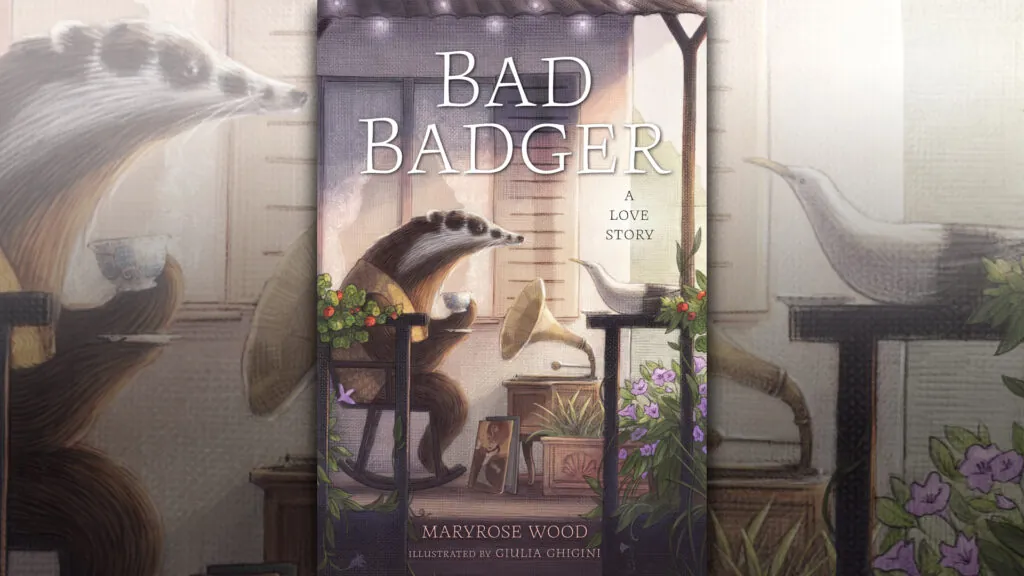
Bad Badger

by Maryrose Wood 2024 / 184 pages Rating: GOOD/Great/Give This was a wonderfully strange book that left me wondering where it was going to go next. It is about a badger that isn't bad at all, though Septimus – that's his name – thinks he might be bad at being a badger. After all, he doesn't act like all the other badgers do. For one, he lives in a cottage, near the ocean, not a den deep in the forest. And he quite likes opera, which other badgers are quite indifferent to. So we have this one lonely badger who wears clothes and shops in town amongst the humans and it is never explained why no one else thinks this the least bit odd. He would like to have a friend, so when a seagull drops by, he invites the bird for tea. But, seagulls aren't great conversationalists – all Gully (the name he gave her) ever says is "Caw!" But Septimus seems very good at deciphering just what Gully means with each particular caw. In another quirky twist, Septimus eventually meets other seagulls, and that lot does speak in sentences. It's such a fun silly journey, with the rules turned all upside down and sideways. Are these animals "people"? Septimus certainly is. But Gully didn't start off seeming so – it looked like he might just be a regular bird. But then we discover his seagull relatives are "people." This is fun, but what makes it a particularly good read, in our present cultural climate, is the lesson Septimus learns about who he is. He is worried he isn't a badger because he does so many non-badger like things. I was wondering if this book was going to turn into some woke work, with Septimus deciding that he was actually a gull instead. But no, he eventually learns he might be quite the atypical badger, but a badger he remains. And isn't that good to know? Bad Badger is, then, a kind, gentle, and counter-cultural little animal tale....

Red heart icon with + sign.
Adult non-fiction, Book Reviews

Transgender to Transformed

by Laura Perry 2019 / 192 pages Rating: GOOD/Great/Gift This may not be a book for everyone. It’s a hard-hitting, at times overly graphic, account of one person’s struggle with transgenderism. While painful, it’s also a hopeful book because it peels away the layers of lies, deceptions, and mistruths commonly found in most media outlets. It’s most definitely a book for mature and discerning readers only. Laura Perry, the author of Transgender to Transformed, grew up in a Christian community. Already at an early age, she felt trapped in her female body, and she eventually had her breasts cut off, and began living as a male. She soon become disillusioned with transgenderism. Rather than feeling free, she was bound to a growing snowball of lies and fakeness. However, she did love presenting herself as a man and even thought she could be a “man of God” after she returned to Christianity. But God laid it on her heart that He does not make mistakes and it was her feelings that had to change, not His reality. Convinced she had to completely submit to God’s will, and acknowledging she could only do it by His power, she left her partner, her job, her fake identity as a man, and returned to God and embraced being a woman. In her words: “When I left the lifestyle, I didn’t know if He would ever take away those feelings. But if I had to suffer with the feelings the rest of my life and feel like a freak in a body I hated, I was willing to endure it to serve Jesus Christ.” A troubled childhood and youth Already as a child Laura began to hate the body she was born in. A noisy, rambunctious extrovert in comparison to her quiet, obedient brother, she thought her mom would love her more if she was a boy. Her innocence was stolen when she was only eight years old, and this set her on a path of sexual promiscuity. Feeling that boys and men seemed to have all the power in a relationship, Laura fantasized about being a boy. Supremely angry at her parents and at God, and addicted to her self-centered lifestyle, she made a conscious decision to sin in every way possible. As a teen, Laura struggled with her health, especially her monthly cycle. This made her jealous of men. Then, when her mom found nutritional supplements that helped improve her health, it didn’t change Laura’s attitude – she still hated her female system. In fact, she refused to take the supplements, causing her health to spiral out of control, and then she blamed God for her misery. Her ballooning weight made it difficult to find men interested in a relationship. Turning to pornography and casual sex left her feeling dirty, used, and broken and she wished she could become the boyfriend she so desperately wanted. Life-changing decisions As Laura drifted through life searching for happiness, she became certain that her life would improve if only she became a man. Desperate to escape the prison of her female body, she surfed the web. This was in 2007, prior to transgenderism becoming a buzzword, and when she first learned the term “transgender,” it opened a whole new world for her. Finding a support group for people who wanted to be the opposite sex seemed like an answer to prayer. The first few years were a honeymoon period. Physically, the male hormones she started taking began to change her, and she was elated when strangers started seeing her as a man. Living as a man (renamed Jake), together with a biological male identifying as a woman (renamed Jackie), Laura was in love with her new identity. Disillusioned with the transgender lifestyle But over the next years Laura became severely depressed. A piece of paper now said she was a man, but the promised freedom had become a prison cell: clothes that didn’t fit, ongoing monthly injections, the feeling of living a lie. She was especially afraid of discovery when using the men’s restrooms. Laura started realizing she was never going to truly be a man, but she resolved to live her life in limbo rather than embrace her female reality again. While summarizing Bible lessons for her mom’s Bible study group, she came to realize there was life in the Bible and that it wasn’t just an old-fashioned rule book. The Bible and God were becoming real to her, but she still clung to her feelings, convincing herself she had a birth defect, and that God intended for her to be a boy. But as she pored over the Bible over the next few years, Laura became more and more convinced of her sin of living as a man. Then, while listening to a conservative radio show one day, Laura heard: “We are made in the image of God, and we can choose our behavior despite our feelings.” This cut her to the heart, and she began to admit to herself that she needed to repent. She realized that on Judgment Day, God would be calling her by name, and it would not be “Jake.” Finally, Laura did the hardest thing she had ever done, even more difficult than her identity change eight years before. She left behind her male name, her partner, her home, and her job, and returned to her parents and church, as a woman. Conclusion In reading Laura’s story, young adults – and older ones – will realize that growing up in a Christian community won’t insulate us from transgenderism. Fifteen years ago, Laura had to intentionally search the Internet to discover the world of transgenderism and a support group. Now, rough estimates are that 65% of youth who change their gender identity are first introduced to this confusion by influencers on social media… without any prior struggles or thoughts about being the other gender. Do you know someone struggling with feelings of wanting to be another gender? Show compassion – and tough love. Laura credits her family with being a lighthouse in her storm. They stood unwavering, refusing to affirm her feelings, and continuing to call her by her given name. Although she hated them for it at the time, she now knows it was the most loving thing they could have done, and she says: “Despite the fact that I had rejected God and all the truth I had heard growing up in a Christian home and attending a Christian school, it was not in vain. Everything I had learned had planted the seeds that were just waiting to burst forth to life.” Individuals truly struggling with their identity are often hurting. Pain may come from past abuse, or trauma can transform into self-love, with the desire to escape reality and put on a mask. This is in direct rebellion to our Creator. The Potter creates vessels for His use and purposes, but it is fallen human nature that rebels and says God must not have known what He was doing (but as we read in Isaiah 29:16: “…shall the thing framed say of Him that framed it, He had no understanding?”) In Transgender to Transformed, hurting individuals can find hope and help without turning their back on their family, their faith, and their community by self-creating a new identity. Although Laura loved her life masquerading as a man, she quickly became disillusioned with the transgender lifestyle. Eventually she came to realize that breast amputations and chemical cocktails can never change gender: she could never become a man. More importantly, she could never call herself a true Christian without denying herself. This crushing reality brought with it a true struggle against self, and only with God’s power could she fight her fleshly desires and live as God created her....

Red heart icon with + sign.
Book Reviews, Graphic novels

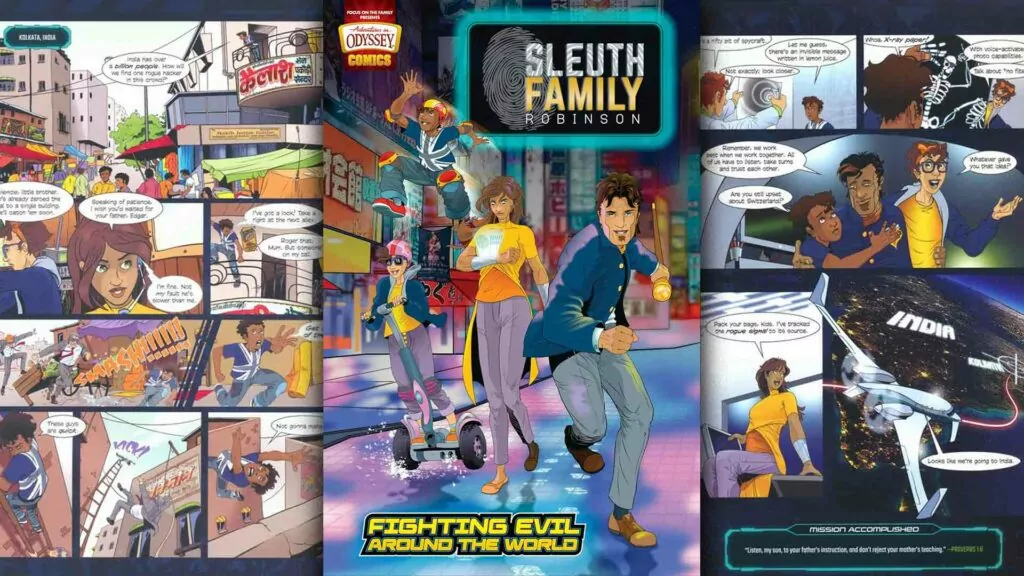
Sleuth Family Robinson: fighting evil around the world

by Christopher P.N. Maselli 2025 / 160 pages Rating: GOOD/Great/Gift The Robinsons are an undercover spy family working for the UK. When someone hacks the British spy database, the Robinsons are the only spies whose cover wasn't blown, so they are called up to see if they can track down the hacker. Mom and dad are up for it, and brother and sister Edgar and Christie are ready too. In a nod to James Bond, they have their own super secret spy gadget supplier, a genius named W. The four of them end up traveling around the world, fighting an evil AI set on ruling the world. This is an explicitly Christian comic from Focus on the Family, an organization dedicated to building up the family. They've had a decades-long-running audio drama called Adventures in Odyssey, and the "author" of this comic, Wooten,  is one of the fictional characters from that drama. The comic itself was first serialized in Focus's Clubhouse magazine for kids, with two-page spreads each issue. My daughters read a few of these chapters so they were very excited to get their hands on this complete collection of the whole 44-chapter Sleuth Family Robinson adventure. That amounts to 88 pages, so what's in the rest of this 160 page book? There's some Sleuth Family Robinson trivia, and some background bios for the characters, but the bulk of the rest of the book is two page almost-devotional type reflections on the adventure. They explore questions like: What is a family?, Is it okay to fight? and The deal-o on adoption. I don't know if kids will spend much time in this second half, but if they do, it offers a solid conservative Christian perspective Cautions The only caution I'd offer is for this second half, and only because the "author" Wooten will sometimes ask questions that would be better addressed together with parents, and not by a kid reading alone. For example, on page 142 Wooten asks, "Do you believe God answers prayers? Why or why not?" I like the question, but I would like to help my kids answer it. But, again, I don't know how much time kids will even spend in this second half, unless a parent is reading it with them. Conclusion Christian comics are noted for their lack of nuance – the bad guys will change from story to story, but subtlety is always the enemy, and right and wrong will always be belabored. There's some of that here too, but the art is fantastic, the story fast-paced, and the target audience young enough that being a bit obvious isn't so bad. I'd pitch this to 10 and up, maybe all the way up to 16 if your family ever got Clubhouse magazine. I think even older teens will enjoy it then for the nostalgia....

Red heart icon with + sign.
Book Reviews, Graphic novels

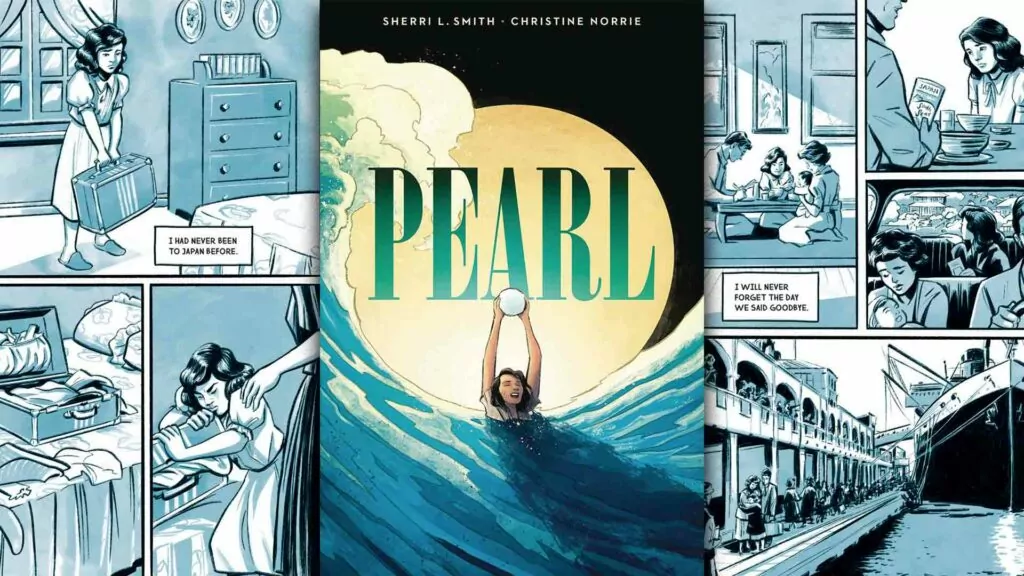
Pearl

by Sherri L. Smith and Christine Norrie 2024 / 144 pages Rating: GOOD/Great/Give This is a very different slice of World War II history. Amy is a Japanese-American teenager, living in 1941 Hawaii. The US is not at war with Japan... not yet. So when news comes that her Japanese great-grandmother, her sōsobo, is sick, maybe even dying, the family decides to send 13-year-old Amy to go tend to her. So on to a boat she goes, and off Amy heads, to a farm just outside of Hiroshima, and a country where everything is so very different. She is supposed to be there for just a few months. But then on December 8, 1941, news comes that the Japanese Navy has launched a surprise attack on Pearl Harbor. Now the American Amy is living in enemy territory, though amongst cousins and uncles, aunts, and her dear sōsobo who are all part of the... enemy? She's in an entirely unexpected situation, and what's a mere child to make of all this? Her relatives tell Amy, "You are Japanese now." But she is American too. So, Amy wonders, can she be both? Her English skills are noticed by an officer. He takes her away from her Japanese family and assigns her to a team of women listening to and translating American radio broadcasts. Amy wonders, is she a traitor? Or could her work help end the war, by helping Japan understand America? Then rumors start coming in, of the US locking up Japanese Americans in prison camps. Amy can't believe it... but finds out the rumors are true. Her parents have been imprisoned, and her little baby brother has died in the camps. Amy stops worrying about being a traitor. She does the work she is assigned. This is the story of a girl trapped between nations. Yes, in World War II there was a clear divide between the wicked aggressors and the good Allied forces – we're not trying to muddy the waters or make equivalences where they don't exist. But in our broken world, even the "good guys" aren't good always. That nuance might make this a hard one for some kids to read and contend with. What would they have done in Amy's shoes? Did she betray her country? Did it betray her? Cautions That'd be the big caution: this isn't for kids who can't wrestle through the moral grays yet. So this is for older teens. The other caution would regard some imagery after the atom bomb is dropped on Hiroshima. The horror is most certainly muted, but horror still. It's not the stuff to give nightmares though - I think any kid old enough to deal with the nuances will be easily old enough to deal with the visuals. But you won't want this somewhere where the littles can get hold of it. Conclusion In a world in which the choice too often is portrayed as being between a Trump Derangement Syndrome, or a Trump Worship Syndrome, understanding that no one is as depraved as they could be, or as good as they should be, is a lesson that many are in need of learning. This book could help....

Red heart icon with + sign.
Adult non-fiction, Internet

13 quick thoughts on "Screen-Smart Parenting"

Parenting is _________.  You fill in the blank. It is so many things. It is an adventure with no shortage of ups and downs. I am sure we have felt at times proud and accomplished and then just as quickly felt embarrassed and insecure. These beautiful children God has entrusted to our care lead lives that are also filled with adventure and with healthy doses of curiosity. Screen time: less is more This year, we have been reading Screen-Smart Parenting in our homes and coming together to discuss its content together as parents. Our children have access to so much now and the book is encouraging us all to be good gatekeepers so that our children do not develop unhealthy habits and behaviors that the Devil longs to exploit. The digital devises in our homes and that many of our children possess provide opportunities for growth, learning and connection. Here are some tips that the book gives for healthy homes and habits: 1. No TV in the bedroom. 2. No background TV in the home. 3. Turn off devices at least 30 minutes prior to bedtime. 4. Teach your children to ask permission to use technology. Make technology a privilege, not a right. 5. Download/buy games and apps yourself, don't let children do so. 6. Oversee YouTube. Tell your children to report any inappropriate games/sites/social networks to you. 7. Keep family computers/devices in as public a space as possible. 8. Don't permit technology use during meals. 9. Designate screen-free times for the entire family. Smartphones: you need complete access Our children need help with time management online and offline. They need protected study and sleep time. They need coaching on how to use good judgment online, with sticky and uncomfortable situations online. If your child has a smartphone: 10. Parents, you should know all their passwords. 11. Start with having all texts come to your devices. 12. Hold the phone when your child is sleeping (set up a nighttime charging station in a common room). 13. Encourage selfies in moderation. Most of all, our children need for us as their parents to be good digital role models for them. Model that we can be engaged and present with our children without digital technology. We are now reading the last section of the book, Part 3. In it, the author Dr. Jodi Gold walks readers through the development of a Family Digital Technology Agreement. Each will look different but it will help shape the healthy practices you commit to as a family. I am really looking forward to completing this for our own home! Technology: the Devil wants it for his ends Ultimately, we understand that this world is God's and He made it good.  We believe that there is not one square inch of God's world that doesn't have his mark and stamp as creator - and ultimate redeemer.  Satan is not a creator.  He is merely creative in how he has distorted and twisted what God has made.   Technology is a gift. It is good - and we see and experience its benefits all around us. But it is also something that needs boundaries and limits in order for us not to fall into traps of unhealthy habits and behaviors that the Devil has set up to exploit. This is good, hard work, parents. But it is important. And you are not alone! May God continue to give us courage and grace and wisdom as we raise up a generation of young people to know, love and serve Him. To His glory!  Randy Moes is a high school principal at Calvin Christian School in South Holland, Illinois  This article was originally published in our June 2017 issue....

Red heart icon with + sign.
Adult non-fiction, Book Reviews

Stockholm Syndrome Christianity:

Why America’s Christian leaders are failing – and what we can do about it by John G. West 2025 / 348 pages Rating: GOOD/Great/Gift While it is common to blame atheists and agnostics for the current wave of secularism, author John G. West convincingly points out that Christian leaders are to their shame playing a key role in the demise of Christian influence in today’s society. The “Stockholm Syndrome” his book title refers to is “the psychological tendency of a hostage to bond with, identify with, or sympathize with his or her captor” (Merriam-Webster). West notes that most Christians are immersed or captive in a culture that is hostile to biblical Christianity. After being immersed in such an environment for years, it becomes easier for Christians to identify with the thinking of those who reject historic Christian norms and principles and eventually to actually adopt as one’s view that which one first rejected. A recent example of this development is how the former Reformed Churches (Liberated) in the Netherlands, which used to belong to the International Conference of Reformed Churches, have over the last few years abandoned biblical norms and have most recently even welcomed those who practice a homosexual lifestyle to the Lord’s Supper, and opened all the ecclesiastical offices to them. The leaders of these Dutch churches have succumbed to Stockholm Syndrome and adopted the views of those with whom they had first disagreed because they were against Scripture. But now the biblical norms are explained away and the views of those hostile to Christianity have been adopted. Evolution is acid There is too much good material in this book to reflect on in a brief review. So let me simply mention two points to give a flavor of this publication. In the first place, West shows how this syndrome is at work in all areas of life, including one’s views on sex, race, and liberty, but a pervasive underlying factor is the acceptance of the theory of the evolutionary beginning of creation and the worldview that results from it. When reality is seen through the lens of evolution the consequences are enormous and destructive for a Christian worldview. The biblical doctrine of creation is critical and abandoning it has disastrous results. Accepting current evolutionary theory of the earth and humanity’s beginning means, to mention but two consequences, that there was no fall into sin and so no need for redemption and that moral standards are ultimately not from heaven but from nature. The morals have evolved over time as determined by the need to survive. There are no absolute moral standards. It is therefore hugely tragic that prominent Christians like scientist Francis Collins and the late theologian Tim Keller made concerted efforts to promote the acceptance of evolution among Christians through BioLogos, an organization that promotes evolution in Christian circles, and through other means. West details how these men have facilitated and contributed to the acceptance of unbiblical notions among Christians and the devastating consequences that followed. Approval of the (academic) world A second area that West underlines is the need for Christian leaders and scholars to resist the temptation of seeking the acceptance of secular scholars and authorities. This urge to please can lead to compromising biblical truth. West takes the well-known evangelical historian Mark Noll as an example of the pitfalls involved. Noll famously published The Scandal of the Evangelical Mind (1994) in which he berated evangelicals of shoddy scholarship and anti-intellectualism. West notes however that, “some of the particulars of Noll’s indictment were troubling. Take his identification of ‘biblicism’ (which he defined as ‘reliance on the Bible as ultimate religious authority’) as one of the obstacles to evangelical scholarship. Noll seemed to suggest that the only way ‘the life of the mind may have a chance’ among evangelicals was if they restricted the Bible’s authority to ‘pointing us to the Savior and… orienting our entire existence to the service of God.’” West goes on to note that “that may sound good, but it actually leaves out quite a lot. What about the Bible’s accounts of God’s actions in history, starting with the Old Testament,” including “his creation of the world and mankind and the particulars of the moral law?” (Noll, like Tim Keller and Francis Collins, supports the work of BioLogos). He observes that “perhaps the biggest problem with Noll’s book was that it fed a lust for secular approval among many evangelical intellectuals.” Conclusion West’s book is fittingly dedicated to Francis Schaeffer (1912-1984) who indicted evangelicals for seeking to accommodate their Christian faith to the thought forms and teachings of secular culture. In his The Great Evangelical Disaster, Schaeffer warned that “Accommodation leads to accommodation – which leads to accommodation.” Not accommodation, but confrontation to unbiblical views is what is needed. This is a most timely wakeup call and a must-read simply because West hits an issue that is vitally important for Christians, especially leaders. May his call to biblical faithfulness be heeded. Cornelis Van Dam is emeritus Professor of Old Testament at the Canadian Reformed Theological Seminary and author, among others, of “In the Beginning: Listening to Genesis 1 and 2.” ...

Red heart icon with + sign.
Book Reviews, Graphic novels

Golden Boys: the Winnipeg Falcons of 1920

by Paul Keery and Michael Wyatt 2021 / 58 pages Rating: GOOD/Great/Gift This is a graphic novel account of how the 1920 Winnipeg Falcons had to overcome decades of discrimination to be able to compete for the national championship, and then represent Canada in the 1920 Olympics. The upcoming 2026 Olympics will involve the very best players from all the teams in the NHL. But in 1920, it wasn't the best players, but the best team that got to go. Teams across the country competed for the national championship and the right to represent Canada. The Falcons were barred from their own city league – some people back then had a thing against Icelandic Canadians – so they formed their own league. And it turned out, winning their own league's championship, versus the Selkirk Fishermen, was the toughest competition they'd face that year. Afterwards, as they played against Winnipeg's other league's champion, and then played for the provincial and finally the national championship, they ran up the score on everyone else they played. As Canadian champs, they were invited to play in the Olympics. To get to the Games in Belgium, the Falcons had to raise their own funds and then take a 16-day boat ride across the Atlantic. When they got there, they discovered the rink was much smaller than they were used to. And they would have to play with an extra player – 7 players rather than the 6 they played with at home. The game length was different too – two 40-minute halves instead of three 20-minute periods. The other teams weren't nearly at their level. Some played in shorts, and one goalie wore a dress shirt and tie. The Canadians ended up holding training sessions for some of their opponents. And in a further demonstration of sportsmanship, they tried to keep the scores down, working hard to beat their opponents by "only" 10 or 15 goals. Fortunately, the Americans, at least, offered some real competition. Cautions No cautions with this one. Conclusion This will interest any kids who are into hockey. It's well done, though more news account than gripping story – we don't get to know any of the individual players all that well. It's by the same author as Canada at War, and has that same look - the pictures are solid, but... let's call them conventional. This is a thoroughly polished professional presentation, but there aren't a lot of visual surprises. So a very good, but not quite great, graphic novel. The video below isn't the book's trailer, but it does tell a bit more about the story behind it - a Heritage Minute on the Winnipeg Falcons. ...

Red heart icon with + sign.
Adult non-fiction, Book Reviews

On comforting suffering Christians

Christians are called to mourn with those who mourn. How can this be done well, when a comforter’s experiences differ vastly in type and degree from the sufferer’s? These three books can help. Don’t Sing Songs to a Heavy Heart offers advice and perspective for the close friend or spouse of a person battling cancer or long-term pain. Someone I Know is Grieving educates all Christians in the art of comforting compassionately. And A Small Book for the Hurting Heart is a devotional for those grieving, gently pointing hurting hearts to God. Don’t Sing Songs to a Heavy Heart: How to relate to those who are suffering by Kenneth C. Haugk 2004 / 154 pages When we see someone suffering, we might tend to think of them as fragile as crystal, and see our own words as the proverbial bull let loose in the china shop. Author Kenneth Haugk explains why this is often the reality, but, thankfully, he also explains what the Bible calls us to say and do to comfort others well. As a clinical psychologist (who is also a pastor), Haugk researched this topic for years, and also ran studies with participants who have experienced all sorts of trials. This book is reflective of what thousands of suffering people have to say on the topic. Thus, it is a great resource for anyone who is at a loss for how to serve others through trials. The title is taken from Proverbs 25:20, and like the title indicates, this book cautions us to speak carefully when comforting others going through trials. Haugk explains that our temptation in uncomfortable or painful conversations is to encourage people to look at the bright side – whether by reminding them of their future hope, or by simply refusing to share in their sorrow. Such talk tends to alienate sufferers. While we know that only “the heart knows its own bitterness, and no man shares in his joy” (Prov. 14:10), this doesn’t excuse us from trying to be compassionate and faithful listeners. Haugk emphasizes that we share in Christ’s sufferings by weeping with those who weep (Rom. 12:15). It is a command, but it is also a privilege, because as we meet other Christians in their sorrow, we can expect to find Christ there as well! Haugk has done a great service in bringing in so many different voices to the discussion. Unlike many resources on suffering, this book is not tied to one person’s experience of sorrow. Haugk’s goal is to catalogue and then express how many people feel during seasons of deep pain. This book is especially meant for Christians walking alongside a friend or spouse who is experiencing grief or facing death. However, it is also a beneficial read for all Christians, since we are all called to “mourn with those who mourn” (Rom. 12:15). Haugk’s goal is to help Christians understand how their words can affect those who are suffering. The insights you gain from this book will give you confidence to face other people’s grief and walk alongside them compassionately, giving words that build up, “that it may give grace to those who hear.” (Eph 4:29). Someone I Know is Grieving: Caring with humility and compassion by Edward T. Welch 2023 / 80 pages If you’ve ever been at a loss for words when comforting a hurting soul, you are not alone. Someone I Know Is Grieving is a short book (though part of a large, 14-book “Ask the Christian Counselor” series). It was written to give direction to anyone facing the daunting task of caring and comforting a fellow Christian who is in a difficult trial or is grieving. Author Edward T. Welch is a licensed psychologist and a Biblical counselor serving at the Christian Counseling and Education Foundation (CCEF.org). His goal here is to answer this question: “What can I say to my friend who is going through a painful trial or grief?” His short book is rather closer to a booklet, but comes complete with questions to prompt deep thinking, and blank space where you can write down your answers and reflections. Within the 65 pages of instruction, questions, and tips, you will be asked to reflect on your own experiences of pain and hurt, so as to become more equipped to empathize. Welch, of course, turns to Christ for instruction – Jesus, as our sympathizing great High Priest, understands our suffering on Earth, and it is His wisdom that equips us with the words and actions to show compassion to others. While the first chapter considers our calling to minister to those who are grieving with compassion – it makes the case that we are all called to comfort – the rest of the book teaches us how to do this work. We are to proceed humbly, not relying on our own gifts, but relying on the grace of the Spirit. Humility teaches us to know when to refrain from offering advice – to not assume we have all the answers – because there are some things better left unsaid. Humility also teaches us not to shirk our responsibility to comfort and care for a suffering soul. Welch reminds us that we are not God, which is both a humbling and freeing thought. Compassion helps us to ask wise questions in an effort to know someone better and thus care for them well. True compassion ultimately points the suffering Christian to their true hope: Christ. Welch reminds the reader that you will also be encouraged as you learn more about God in the way He relates to His hurting children. And in your comforting role, Christ’s glory will be revealed to you as well, as He brings healing in His time to your friend. While no book other than the Bible can fully counsel a hurting Christian, this small book is a powerful tool for that will leave you feeling more equipped and encouraged as you journey alongside others in their grief. The last page in the book includes recommended resources, so this is not intended to be the end-all be-all of grief counseling. That said, you will likely find it a very useful stand-alone resource, especially given its compact, easy-to-read form. A Small Book for the Hurting Heart by Paul Tautges 2020 / 192 pages Have you been asked by a friend who is suffering for some resources on grief? Are you looking to encourage a family member as they go through trials? While many books on suffering give advice and perspective for those supporting fellow believers in their trials, that’s not the target audience for this book. This is a little devotional you can pass on to the person who is grieving. Small, and short, this book includes 50 brief devotionals, in no particular order, which replicates the ups and downs of grieving. Titles like “The Unsearchable Ways of God” and “How Long Does Grieving Take” address real fears and deal honestly with pain. The author is brief and direct, a useful quality when our minds are clouded with grief. Trials as well as grief take time, and this book is not attempting to bandage pain with biblical platitudes. Rather, it’s intended as a companion for sufferers that directs their gaze to Christ as they digest their grief over time. At the end of each mediation, the author gives a Bible passage to read and reflect on, and a prompt for prayer. Because this book addresses real fears followed by biblical counsel, this could still be very good for anyone who wants to be better equipped as a comforter. It would be a great resource for pastors, elders and deacons who are struggling to find the appropriate passage to bring encouragement or express sympathy on a home visit. Tautges offers wise and compassionate words that you can borrow so you can better respond to deep pain. There are also books to help children deal with their grief. See our reviews of “The Moon is Always Round” and “Henry Says Goodbye.”...

Red heart icon with + sign.
Book Reviews, Children’s non-fiction

The Moon is Always Round

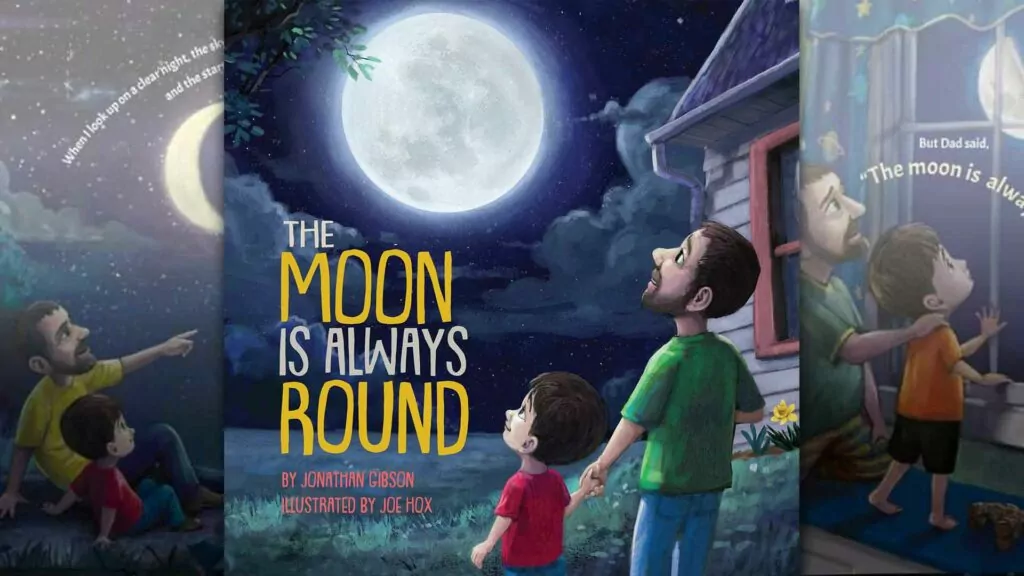
by Jonathan Gibson 2019 / 32 pages Rating: GOOD/Great/Give This picture book is a beautiful catechism truth wrapped in a heartbreaking story of loss. Author Jonathan Gibson places his son Ben as the lead character. Through Ben, we look outside at the night sky and see the moon in its different stages. Sometimes it’s sliced like an apple. At other times it's shriveled like an orange. But no matter what shape the moon appears to be, Ben knows that the moon is always round. When Ben’s little sister Leila passes away at 39 weeks gestation, Ben must rely on faith, not sight. Although God does not appear to be good, his goodness extends even beyond Leila’s death. God is always good. Short, simple phrases leave room for the reader to pause and contemplate the story as it unfolds. Kids will love saying along with Ben’s dad, “but the moon is always round” when Ben wonders if the moon has really changed. At the climax of the book, Ben’s dad asks him what that means. It feels natural for kids and parents to answer with Ben that “God is always good.” While this book deals with heavy topics, simple sentences for big truths are what make this book profound. The book closes on a sweet note – a family picnic, a beautiful sunset, a full moon, and the words from Psalm 100:5: “For the Lord is good; his steadfast love endures forever, and his faithfulness to all generations.” Children aged 4-8 will gain the most from Gibson’s simple catechism. Younger readers will love hunting for the yellow daffodils sprinkled inside the vibrant pictures. However, even older children and adults will be touched by this sweet, sad story honoring Gibson’s stillborn daughter, Leila....

Red heart icon with + sign.
Adult non-fiction, Book Reviews

Trusting God

by Jerry Bridges 1988 / 368 pages Rating: GOOD/Great/Gift Since the apostles Peter and Paul, and indeed Jesus, warn the Christian to expect suffering in this life on account of our faith, it would be wise for us to prepare our hearts to be able to suffer well. Trusting God is a great resource for such preparation. Bridges spends the first few chapters exploring hard questions like “Can I really trust God?” and “Is God actually in control?” Much of the value here is that Bridges doesn’t require that readers be in the depths of a trying event, but instead invites us to reflect on how well we trust God in even the smaller difficulties in life – the “stubbed toe” frustrations of daily life, or the far-away wars, that make us long for heavenly explanations. Bridges uses many examples from the Old Testament to prove to the believer that God does control the course of this world, He is very in tune with our sorrows, and He truly weeps with those who weep. While Bridges is writing for the layperson, he reminds us that we are dealing with heavy and complicated topics. Therefore, while this book is very useful for preparing our hearts to suffer well, it may be too “on the nose” for those are hurting, depressed, or struggling right now. This is best read before you ever need it. Trusting God concludes with several chapters on the love and faithfulness of God, which gives balance to the topic as a whole. Discussion questions are included at the back for each chapter, making this an excellent recommendation for a book club study....

Red heart icon with + sign.
Adult non-fiction, Book Reviews

Digital Liturgies

Rediscovering Christian Wisdom in an Online Age (with study questions) by Samuel D. James 2023 / 184 pages Rating: GOOD/Great/Gift As I read Digital Liturgies, I kept being vaguely bothered by the title and the cover. This looks like an abstract, philosophical book – useful in its own way, but not necessarily a helpful read for the average Christian, who might pick up something like Andy Crouch’s The Tech-Wise Family instead. I only cracked it open because of a recommendation – and was surprised to find it a very accessible, relevant, and important book about our technology-immersed world. In the author’s own words, this book is about the “spiritually formative power of the web.” James points out that, as Christians, we’re very aware of the dangerous content online; but we may not realize how much we’re influenced, and not in a biblical direction, by the medium itself. He explains the underlying philosophy of “expressive individualism,” and how it plays out in many harmful and problematic ways. He describes the “liturgies” of the online world: authenticity – “my story, my truth outrage – James likens the web to a “gladiator arena” shame – “cancel culture”/online “mobs” consumption – specifically of pornography meaninglessness – “death by minutiae” James further talks about how technology is “rewiring” our brains: “Conversation is harder, reading is much more of a slog, and mental busyness is so alluring I almost feel restless when I’m not distracted.... All of us seem to feel like we’re in some kind of spiritual and intellectual haze.” Yes, some of his arguments get a little academic (like the section where James delves into personal computing’s roots in transhuman philosophy), and I admit I didn’t follow every detail. Whether you’re interested in getting quite that deep or not, though, you’ll find a lot to ponder and use in James’ book. As I finished it, I was also struck by how my first complaint with the book was actually a reinforcement of one of the book’s arguments: my Internet-trained brain wanted something catchier, splashier, more attention-grabbing. Maybe it’s time for us as Christians to start deliberately re-training our brains – with the help of resources such as this one, but, more importantly, as we’re “transformed by the renewal of our minds” through the work of the Spirit (Romans 12:2). You can listen to the author discuss his book on the What Would Jesus Tech podcast below. ...

Red heart icon with + sign.
Adult non-fiction, Book Reviews, Economics

No Free Lunch: Six economic lies you’ve been taught and probably believe

by Caleb Fuller 20021 / 138 pages Rating: GOOD/Great/Gift Every now and again I’ll hand out a book to any nephews or nieces willing to give it a go. And with Caleb Fuller’s No Free Lunch, I’ve found the next book I’m going to pitch to them. While Fuller addresses six lies, there is one truth he’s trying to present: that every opportunity you pursue, comes at a cost. What cost? The time and money you put into it – and here’s the important part – which can’t then be spent on other opportunities. This “opportunity cost” could be known as the “you-can’t-have-your-cake-and-eat-it-too principle” or, as the book title puts it, “there’s no free lunch.” So, then, when a government jobs program funds summer work for students, what we see is all the students getting jobs. But what we don’t see is the opportunity cost to this program – we don’t see all the other jobs that companies might have started on their own – and maybe full-time even – had the government not taxed them to fund their summer jobs program. Fuller shows how much damage is done by the well-meaning, but economically ignorant, and highlights how there is on many issues a consensus among economists on both the Left and Right, that politicians on the Left will simply defy. My only disappointment with this punchy book is that this Christian professor never makes plain why the Left fails, and the free market works. He never mentions how the foundation for the free market – private property rights – is simply obedience to God’s command, “Do not steal” (Ex. 20:15). In fact, God is not mentioned in the whole book. For a more explicitly Christian economics book sharing this same great name, check out David Bahnsen's No Free Lunch....

Red heart icon with + sign.
Book Reviews, Children’s non-fiction

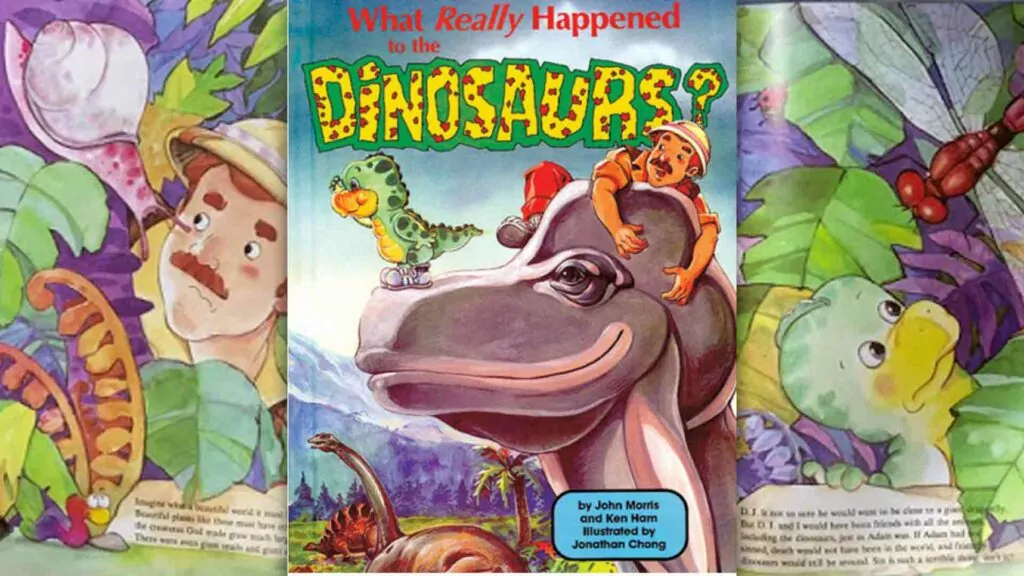
Guide to Dinosaurs

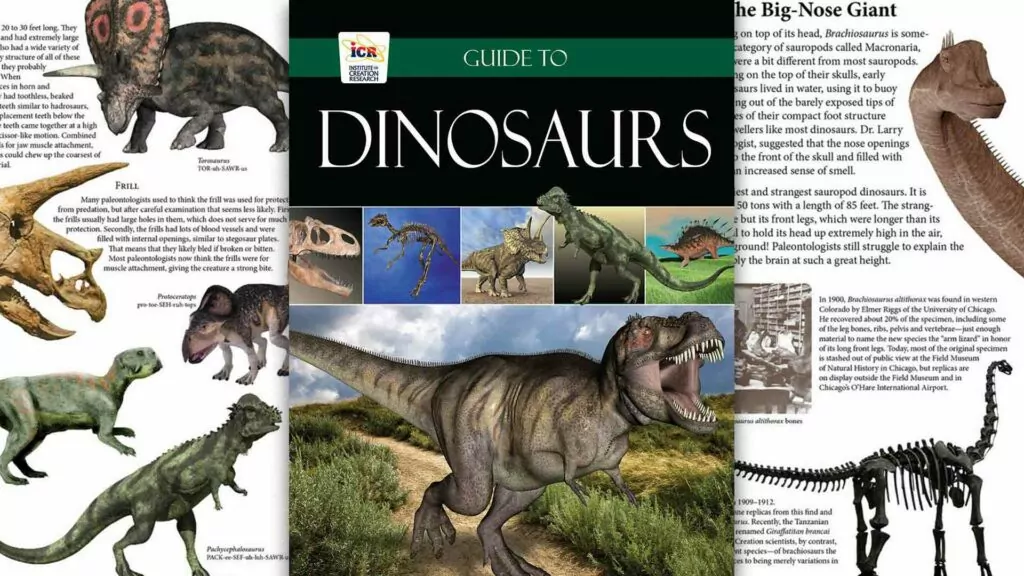
by the Institute of Creation Research 2014 / 120 pages Rating: GOOD/Great/Give Hardly any other field of science has been so distorted by secular, unbiblical theories as that of the dinosaurs. The Institute of Creation Research (or ICR), has done significant work in righting that wrong, and this encyclopedic book is born out of their labors. Information is neatly organized and covers Biblical history, fossils, and types of dinosaurs. Concise two-page spreads on topics such as What is a Dinosaur?, Dinosaur Extinction, and Did Dinosaurs Evolve into Birds? answer all your dino-related questions. This is an ideal book for school libraries to offer, as students will find this book invaluable in their research papers. Teachers and parents will find great illustrations to help children understand the history of dinosaurs from a reliably Christian perspective. For the dino-maniacs, at least a third of this book delves into dinosaur types and sub-types, including notes on the structure, distinctions, likely diet and current locations of fossils found for each type. Kids will enjoy the beautiful visual aids that show what each dinosaur would have looked like, and how big they were compared to humans. Finally, this book ends with a short but invaluable section on “dinosaurs in the big picture” which summarizes sections and includes a brief paragraph pointing us to the most important conclusion: fossils are the result of death, the wages of sin. ...

Red heart icon with + sign.
Book Reviews, Graphic novels

Sir Ladybug (3 books)

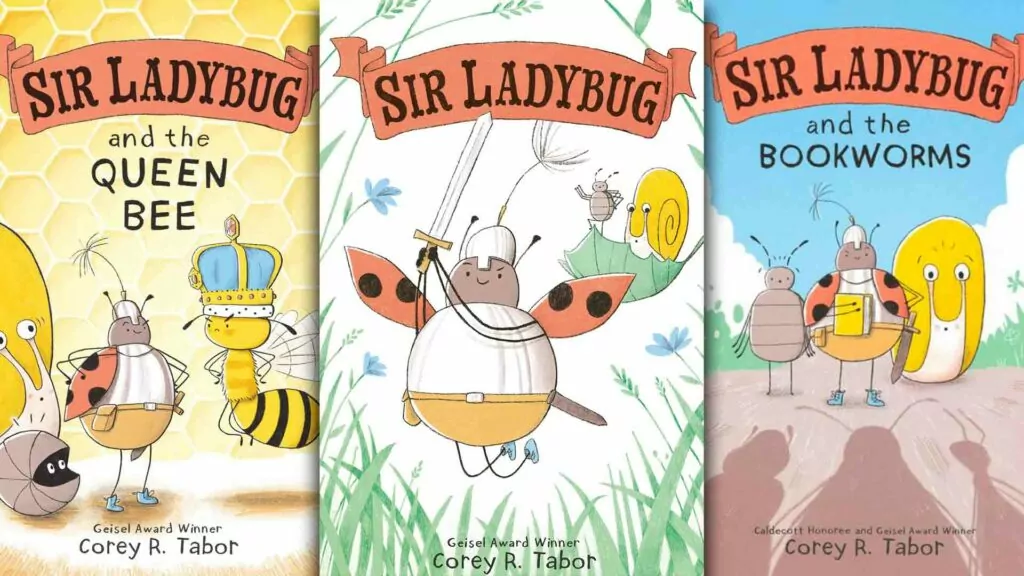
by Corey R. Tabor 2022 / 68 pages Rating: GOOD/Great/Gift Pell is a roly-poly bug with a mission: he wants everyone to know just how important his friend is. Who is his friend? As Pell puts it, he is "duke of the dandelion patch," "the champion of truth and justice," "the one, the only, Sir Ladybug!" Sir Ladybug is different from most other bugs in that he has a sword. Pell is his self-appointed herald, and their snail friend Sterling serves as Sir Ladybug's very slow, but trusty, squire. More importantly, in a Dr. Who-ish quirk, Sterling's shell seems to be bigger inside than out, with bedrooms for all three, a kitchen, hot tub, and, of course, a video game room. In this, their first adventure, Sir Ladybug is recruited to stop a chickadee from eating a caterpillar. Now, birds gotta eat, and caterpillars aren't wild about getting eaten, so how is this dilemma going to be solved? Well, not wanting to give it all away, I will note that Sir Ladybug doesn't have to unleash his fierce swordsmanship skills... though he does have to get baking. And, of course, by comic's conclusion, everyone is friends. Caution The word "poop" makes an appearance, when a couple of worms pop up, and one notes that the chickadee shouldn't eat them either, because "Worms are very important to the ecosystem, you know. We aerate the soil. The whole world is built on our poop." There is also a "gosh" in the second book in the series, Sir Ladybug and the Queen Bee, and a mention of "bum" when Pell notes that the queen "has a very sharp stinger on her bum." In the third book, Sir Ladybug and the Bookworms, they briefly help a dung beetle, who is – as dung beetles do – rolling a dung ball around. So, a smidge of potty humor, but again, as with the instances above, the juvenility here is in keeping with reality, so I find it pretty inconsequential. Conclusion There are two others in this charming series of graphic novels for young readers. In Sir Ladybug and the Queen Bee they have to deal with a queen who is a bully, and in Sir Ladybug and the Bookworms our favorite bug knight sets out on a quest to return an almost overdue library book. Speaking of libraries, these come in hardcover, so they will stand up to some library usage. This trio of Sir Ladybug adventures are sweet, goofy, and have just a bit of quirk that'll appeal to parents too – these would make for a fun read together on the couch with your little ones. I sure hope the author keeps creating more....

Red heart icon with + sign.
Book Reviews, Graphic novels

Survival Scout: lost in the mountains

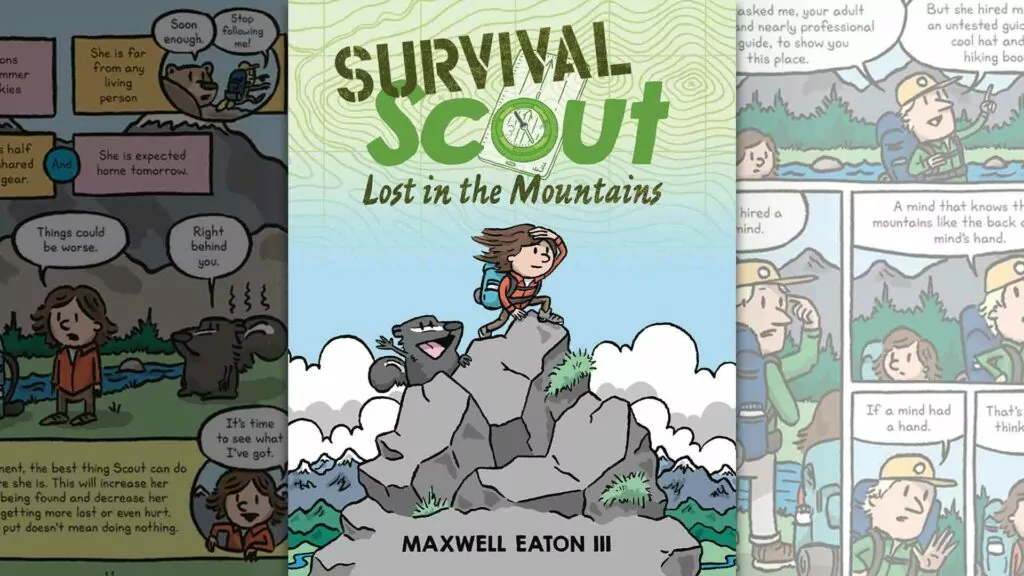
by Maxwell Eaton III 2023 / 144 pages Rating: GOOD/Great/Gift Scout and her big brother have gone on a four-day backpacking trip in the mountains, but while he thinks of himself as a "nearly professional local guide," her brother hasn't known where they are for the last three days. So he can't get them home. Then, when he drops both his GPS tracker and phone in the river (what horrible luck!), they have to turn to the compass that Scout brought along. But, wouldn't you know it, a bear shows up, and her brother takes off with compass in hand, not to be seen again until story's end. So, that's the setup: Scout is now all alone, lost in the middle of the woods, with some of the basic supplies you should always have when hiking, minus a compass, tent, stove, and water treatment supplies, which are all with her brother. So how is she going to survive and help her rescuers find her? This might sound a little tense, but with the goofy brother starting things off, and a skunk providing Scout companionship, this is low-key throughout. It's meant to be instructional. We see Scout devising a shelter, and learn about others she could have made. Similarly, Scout shows us all sorts of ways to get a fire started, and the proper way to ensure it burns safely. There's all sorts of other lessons to be learned, but it's done in such an engaging style that even kids who'd never want to be out amongst the worms and bugs will want to read Scout's adventure. Cautions No warnings of note in this book but a sequel, Survival Scout: Tsunami, has a handful of evolutionary assumptions popping out about the age of the earth, so, you can give that one a miss. Conclusion This graphic novel is a lot of fun and would make a great gift for any kid who loves the outdoors. And for everyone else it will be a great borrow from the library. A third book in the series has been announced, Survival Scout: Lost at Sea, and I look forward to checking it out....

Red heart icon with + sign.
Book Reviews, Teen non-fiction

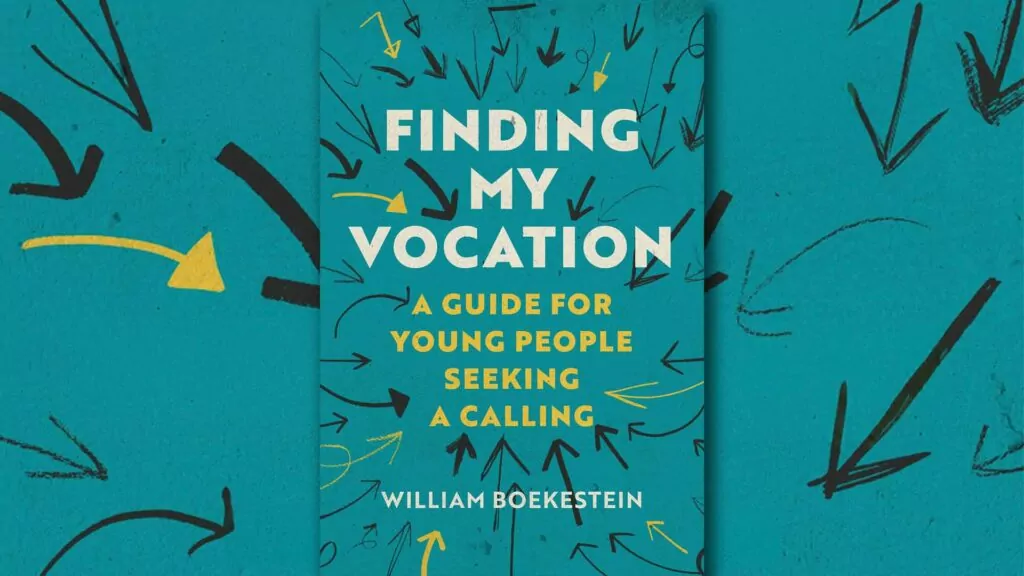
Finding My Vocation

by William Boekestein 2024 / 154 pages Rating: GOOD/Great/Give William Boekestein wants to help young readers figure out how they can pick the right job, and like the good Reformed pastor that he is, he offers up three points.... or, rather, parts. In Part 1, “Pondering Vocation,” he covers what work is, and the different reasons that Christians have to want to work, like providing for our family, serving others, and as a means of expressing our gratitude to God. Part 2 gives us biblically-grounded tips on how we can start “Preparing for Your Vocation.” We need to make ourself valuable to an employer by fostering key character traits – honesty and respect for authority might seem bare minimums, but they can really set a Christian apart – and by developing specific marketable skills, like welding, framing, accounting, etc. The author encourages readers to be ambitious to make the most of the skills God has given you. And he reminds us also of the other vocations God has called us to, like parent, elder, friend, and more. Then in Part 3, “Practicing Vocation,” we’re challenged to work hard, and reminded that God does give us a weekly Sabbath rest. This is a solid primer, and could be a great tool for high schoolers, Grade 9 or 10, as they start planning for their post-school years. It'd be best used with a parent or teacher along for the ride. If I were to pick a nit, it would be with a couple of the appendices – “Is my vocation compromised by sin?” and “Is Military a Good Option for Me?” – that raise important topics, but in what struck me as too cursory a manner. The military question, for example, raised some cautions about women in the armed forces, but didn’t even touch on the issue of women in combat roles. It's one thing for women to serve in the armed forces when male and female differences are understood and appreciated, and another thing for women to serve in the military when the higher ups have started to pretend that men and women are interchangeable and want to have women leading the charge. But this critique – not for what Rev. Boekestein said, but for what more I wish he had addressed – is indeed a nitpick, faulting his 154-page book for not being a dictionary-sized tome instead. And he offers us some of that more I was after in his great conversation with Lucas Holtvlüwer in the Real Talk episode below, so be sure to check it out. ...

Red heart icon with + sign.
Book lists, Book Reviews, Graphic novels

The best of TOON Books for young readers (18)

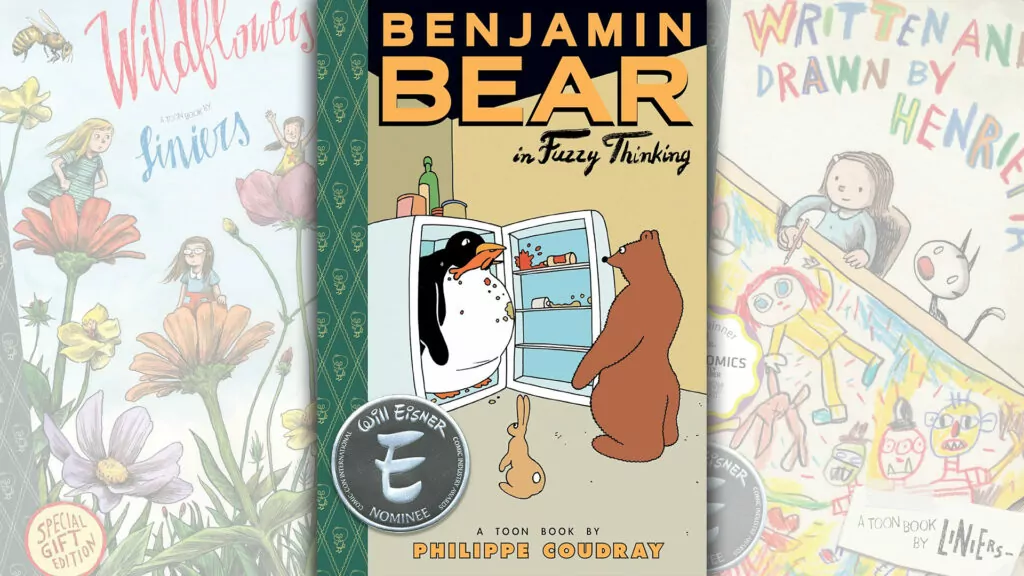
TOON Books don't have much in common with each other besides their younger target audience. As the story is told, the founding publisher, Françoise Mouly, was looking for good readers for her own son and found that what was available was boring. She was already a comic publisher, so she decided to start publishing an imprint of comic books aimed at children ages 4 through 9 to help them learn to read. Based on some of the titles she's published for adults, there'd be no reason to think Mouly is Christian or her selection of children's titles would be "safe" for our kids. But a lot of them are, simply because the target demographic is so young. I think even the world recognizes that children this young should be protected, or maybe Mouly is simply bowing to market forces. Still, these are not all worth reading – the single biggest problem would probably be bratiness – the "hero" of too many of these stories isn't all that admirable. But when they are good, they are quite good. What follows are the bulk of TOON Book comics organized into three categories: Recommended Take It or Leave It Don’t Bother Recommended (18) These could all be solid additions to a school library. I've ordered them roughly from best to more middling. Little Mouse gets ready by Jeff Smith 2009 / 32 pages When mom calls on Little Mouse to get ready to go, he struggles to quickly put on socks, underwar, shirt, pants, and shoes, only to have his surprised mother declare, “Why Little Mouse! What are you doing? Mice don’t wear clothes!” A silly bit of fun for Grade 1. 3x4 (2) by Ivan Brunetti 2018 / 38 pages The class is assigned a task of drawing 12 things, but in sets. That could be 2 sets of 6, or 4 sets of 3, or even, as the book title puts it, 3 sets of 4 – it is up to the students. As the students go home, they all talk about what they will draw and in how many sets. This is quite the creative way to introduce this early math concept. He also has an equally clever one about compound words called Wordplay, where a girl pictures a housefly as a flying house, and a mailman as a man made out of mail, and so on. A goofy guide to penguins by Jean-Luc Coudray & Philippe Coudray 2016 / 36 pages This is page after page of fascinating facts – and a few of them might even be true! – all about penguins. Children can turn here to find out why penguins don't grow flowers, and why they need diving boards. For kids who want just the facts, pages in the back note nuggets like this: the deepest recorded dive for a penguin is 1,853 feet, and a male Emperor Penguin egg-sit for an average of 64 days, all the while without eating. This is quite the quietly charming title. Wildflowers (3) by Liniers 2021 / 40 pages We’re taken into the imaginative world of three girls exploring the island their plane has crash landed on, which is inhabited by a dragon, talking flowers, and a miniature gorilla. Only at the end do we see things as they really are – this being the forest behind their house. This is just one of the three comics the author has based on his three daughters. The Big Wet Balloon is about a big sister showing her toddler little sister the delights of the rain. The third, Good Night, Planet might sound like something with a climate change agenda but is instead about a girl’s stuffed bunny, named Planet, and what she gets up to when the little girl is asleep. Benjamin Bear in Fuzzy Thinking (3) by Philippe Coudray 2011 / 30 pages A bear and his friends have a series of one-page adventures. It feels a lot like what you get in the daily newspaper comics, but with a few more panels to explore and set up the gag. These are just fluff, but gentle fluff. Two sequels, Benjamin Bear in Bright Ideas (2013) and Benjamin Bear in Brain Storms! (2015) continue the fun. If you look up the author you’ll discover he also has a series of “Bigby Bear” comics that look remarkably similar. That’s because they are similar, two different companies translating his French comics and giving the bear two different names. The notable difference is that the larger Bigby collections have occasional references to evolution while the Benjanim collections do not. We dig worms! (4) by Kevin McCloskey 2015 / 30 pages This is as boy a book as you'll find – a book about all sorts of worms, from small to one that is ten feet long (and there's even a bit on the gummy sort). We learn that worms have no eyes or nose, and that they have cold blood. We learn they do important work, eating, leaves and bugs and bringing air to plant roots. We even get a peak inside worms and see they have 5 hearts! And there are oodles of other facts about worms. It's a book any little boy would find fascinating all the way up through Grade 2. This is a part of author Kevin McCloskey's "Giggle and Learn" series, and three others worth getting include Something's Fishy, Caterpillars: What Will I Be When I Get to Be Me? and Ants Don't Wear Pants. But not everything in this series is worth getting - see the "Don't Bother" category down below. Tippy and the Night Parade by Lilli Carré 2014 / 32 pages This is a nice one for girls. The story begins with Tippy's room in a big mess. Her mom wants to know how it happened, but there's a problem: even Tippy doesn't know. There's a snake under the bed, a pig in the sheets, a turtle on the carpet, and bats flying overhead. How'd they all get there? Tippy and mom get to tidying up, and Tippy heads to bed, still wondering how her room got so messy. That's when we see how it happened - Tippy, it seems, is a sleepwalker, and so off she goes, on a trip through the woods, picking up friends here and there, before they all head back and she tucks herself back into bed with a zoo's worth of animals to keep her company. It is a quiet little story, that might be perfect as a bed time story to girls from 3 to 8. Written and Drawn by Henrietta by Liniers 2015 / 60 pages This one is a bit scary, but quite imaginative too – Henrietta is a little girl with a new box of colored pencils, and she has decided to create her own comic adventure... about "The Monster with Three Heads and Two Hats." The funnest part is that she doesn't know how the story is going to end, and so has to draw quickly to find out! A trip to the bottom of the world by Frank Viva 2012 / 36 pages A mouse and his human friend make a trip to the Antarctic and the little mouse would rather go home. But his boy first wants to see some sights like waves, and penguins, and whales. This is only middling as far as story and artwork, but it is safe and an accessible read for Grade 1. A companion title, A Trip to the Top of the Volcano, is also gentle and approachable. Take it or leave it (9) These aren't the sort you'd ever buy, but if your local library has them, you might want to borrow them once. I've also ordered these by preference, with the ones higher up better than the ones lower down. Adele in Sand Land by Claude Ponti 2017 / 44 pages Little Adele's mother takes her to the playground sandbox where Adele has an imaginative, and quite bizarre, adventure. This might have made the recommended list if some of the creatures Adele meets weren't so ugly – they aren't so much scary as weird, and I suspect off-putting for some kids. Otto's Backwards Day (2) by Frank Cammuso 2013 / 28 pages This is a clever story about palindromes - words that are the same backwards as forwards, like the name "Otto." It's also about a little self-absorbed boy named Otto, who thinks birthdays are all about the presents (and who cares about the people!?). In other words, this bratty little boy has it all backwards! When Otto is told by his Dad that he has it all backwards, he ends up in a backwards world, where everything is "topsy turvy." It's fun to visit a world where you get in trouble for picking up trash, and where Otto has to ask the Ogopogo's three questions and if he gets them right Otto will face his wrath. It's all mixed up, with backward spelling, and a robot friend who can turn into just about anything, so long as it is a palindrome...like a "kayak" or a "race car." By the end, Otto learns his lesson and realizes that the best part of any birthday is the people you get to spend it with. There is an instance of "pottyesque" humor - in the backward world everyone wears their underpants on the outside, so Otto has to as well. There is nothing immodest about it - only silly in a way that might not be the sort of thing we want to encourage among some more rambunctious boys. Otto has another adventure, in Otto's Orange Day. It's fun too, but features a genie, and I don't quite know what I think of genies – an all powerful, supernatural being – for this preschool to Grade One level. Hmmm...what do you figure? Otto uses his wish to turn everything his favorite color, orange. He likes the orange world at first, but it turns out orange lamb chops are not that good, and when he wants to change things back he realizes there is a problem: the genie only gave him one wish! Cast Away on the Letter A by Frédéric Othon Aristidès 2013 / 48 pages When you look at a world map, and then focus in on the waters between Europe and the Americas you'll find the words "Atlantic Ocean" there somewhere in big and bold letters. What if those weren't just letters? What if, in some crazy mixed up alternate but parallel Earth, those were actually letter-shaped islands in the middle of the ocean? That there is the premise of this little story. Philemon, a French farm boy, falls into a well, and the currents in the well sweep him past fish and sharks and , and eventually deposit him on the sandy shores of the first letter A in the "Atlantic." That is a crazy beginning, and as you might imagine, this is a crazy island, with two suns, and exploding clocks that grow out of the ground, and a centaur butler. Philemon eventually finds another human on the island, Bartholomew the well digger, who fell through a well he was digging and end up stranded on the island, looking for a way back for the last 40 years. This is surreal, crazy, Alice-in-Wonderland, type of fun. And as you might expect from a story that takes place on the A in Atlantic, there are lots of surreal jokes throughout, like full-size ship in a bottle sailing through these waters. The only caution is a minor one - a few characters express anger using made up curse symbols like these: "#@?!!" Philemon's father, who is only a minor character is this first story, is an ill-tempered sort, and makes use of these symbols a few times. Two more of Philemon's tales, The Wild Piano, and The Suspended Castle, have also been translated from the original French. They are even stranger, and the stories take seemingly random turns – they border on being nonsense. I like a little absurdity every now and again, and so quite enjoyed the first, but the next two were simply too weird for me. Jack and the Box by Art Spigelmen 2008 / 32 pages A little boy bunny named Jack, gets a Jack-in-the-box – or rather a Zack-in-the-box – toy from his parents, and the two become zany friends. Kind of fun, but very short. Luke on the Loose by Harry Bliss 2009 / 32 pages A frenetic little kid runs after a flock of pigeons all over the city as his dad, and the police, try to find him again. Might not be the greatest example for kids (see many more of those below) but that Luke is on a leash in the last frame is dramatic enough every kid will understand this is behavior to laugh at, not imitate. Barry's Best Buddy by Renée French 2012 / 36 pages A bird's pushy friend gets him out of the house on his birthday only to take him on a circular route right back to his house. But while they were away, ants have painted his house as a wonderful surprise! An ugly style of art, and the pushiness of the friend, are why this is here and not among the recommended. Don't bother There are quite a lot of TOON Books – too many for me to highlight all of the ones that weren't recommended. But I figured I'd share the titles of a the dozen or so I thought might be good, but which ended up not cutting it. Brattiness is the main concern with most of the books below. Kids' stories can have bratty characters, so long as the young reader is shown that this is the wrong behavior – the brat either has to reform his ways by story's end, or his behavior has to be denounced in some form or fashion. In what follows the brat is generally somewhat repentant by the final page, but the proportion of name-calling to niceness is tipped way too much in the wrong direction, leaving young readers with all sorts of examples of how to be creatively nasty, and just a brief illustration of how to do better. So, not the sort of story our kids need to chow down on. Some of Kevin McCloskey's "Giggle and Learn" series is recommended above and Snails Are Just My Speed! would've been included if it didn't touch on how "snails shoot arrows at each other before they make babies." Kids will be left mystified as to what that means, and equally mystified adults are not going to want to answer questions about baby-making to the Grade 1 age group this is intended for. Another title in this series, The Real Poop on Pigeons, is just too poopy. Geoffrey Hayes has a series of books and I don't like any of them. In Benny and Penny in Just Pretend, Benny and Penny in the Big No-No, Benny and Penning in Lights Out, and Benny and Penny and the Toy Breaker, Benny is a jerk to his sister for much of the book. Benny and Penny in How to Say Goodbye is supposed to teach children how to deal with death, but does so with brattiness once again, and without God. Hayes also has a second series that hits the right notes more often but brattiness pops up in Partick Eats His Peas, and little Patrick gets naked outdoors in Patrick and a Teddy Bear's Picnic. In Silly Lilly in What Shall I Be Today, one of the things Lilly decides to be is a vampire, and the sequel, Silly Lilly and the Four Seasons, is simply boring. Zik and Wikki in Something Ate My Homework uses the word "bugger" in reference to a pesky fly, but as the term is more commonly used for "sodomite" this isn't a term our kids need to learn right now. A sequel, Zikki and Wikki in the The Cow, is fixated on poop, and doesn't entirely make sense if you haven't read the original. Nina in That Makes Me Mad is about a bratty girl justifying her brattiness. Meanswhile Mo and Jo: Fighting Together Forever puts a super spin on sibling brattiness, and in  Maya Makes a Mess, a rude girl presumes to teach her parents manners. Finally, Ape and Armadillo Take Over the World is about two friends plotting to do as the title suggests - more dumb than bad. And Chick & Chickie Play All Day! is simply boring....

Red heart icon with + sign.
Adult non-fiction, Book Reviews

A Good Old Age: an A to Z of loving and following the Lord Jesus in later years

by Derek Prime 2017 / 184 pages Rating: GOOD/Great/Gift They say not to judge a book by its cover, but how about by its title? “A Good Old Age,” written by the 86-year-old pastor and seasoned veteran, Derek Prime, reminded me of what the Bible writes about Abraham: “And Abraham died in a good old age” (Gen. 25:8). So yes, this book had me by its title. Perhaps the title also grabbed me because I’m at an age where my parents have/are close to following the Lord Jesus into glory. Witnessing their time in the “waiting room” as they prepare for the last years of their earthly life, I see both the joys and the challenges these years represent and so was keen to see what Derek Prime had to say about the A-Z’s of following Jesus in the sunset years. The book did not disappoint. But it did surprise. I soon realized I needed its wisdom in middle age as much as my parents did in their elderly age. I needed it as preparation for the last lap of my life, which the Bible tells me will come more quickly than I realize as “the grass withers, the flower fades” (Isaiah 40:8). Like Alistair Begg asserts in the foreword: “(This book) needs to be read long before we find ourselves in the senior citizen seats on the train.” So, whether you’re young and want to understand your grandparents and their behaviors more, whether you’re middle aged and giving extra time and love to your parents, or whether you’re nearing the Jordan crossing, this book is for you. In A Good Old Age, Derek Prime goes through the entire alphabet, assigning a letter with its corresponding spiritual priority to each chapter, posing insightful questions along the way for the reader to consider while providing encouraging prayers at each chapter’s conclusion. Although not a deeply theological book, it is an extremely practical one which won’t have you skim-reading over the fluff, because, quite simply, there isn’t any. While written simplistically, its truths are profound and, with the help of the Spirit and through prayer, will prove transforming. Both its content and its font size make for a highly readable book (in good light I didn’t need my reading glasses). The author points out many perils to avoid in old age: Do you tend to compare the present with the past? Do you distrust the motives of those around you? Are you pessimistic? Do you indulge in self-pity? Are you grumpy and demanding? He also points out potentials to embrace while spending time in the waiting room: Do you take the extra time you have to pray for those you love and for those in authority over you, including the minister and elders/deacons? Do you share good and wise counsel that has guided you in life? Do you encourage those around you? Do you speak to others about the hope that is within you, also as you approach the time of your death? Does your obedience to the Word of God shine from your life as a witness to your children and grandchildren? There are several recurrent themes that run through this book and pop up in various different “letters”: seeking God’s approval before man’s approval; the power and importance of prayer as one of the most important things that you can do in old age (something not hampered by physical limitations); living your days in praise and thanksgiving; being an encourager and not a critic; pressing onward toward the goal of following our Savior into glory. To give you a little bit of a taste of A Good Old Age, here are a few of my favorite “letters” (and no, I won’t tell you what “x” stands for – you’ll need to buy the book for that!): A is for Acceptance. Accept the fact that you are old. Accept the truths of aging – loss of a certain amount of independence, increased frustration, more physical ailments. Accept that your children are busy and can’t visit you as much as you would like. C is for Contentment. Be content with your health, finances, family members, friends. Be satisfied in Jesus Christ and witness this by your contentment in the everyday circumstances of your life. L is for Love. When love is in place, everything falls into place. Keep the cross in focus and everything else comes into focus. The more you realize Christ’s love for you, the more you love Him and reflect that love to one another. “Even as well-established fruit trees often provide the best fruit, so older Christians should produce the best examples of Christ’s love in a Christlike life.” Since I started with the letter A, I had better finish with Z. Z is for Zeal. Zeal for the honor of God’s name, zeal for right relationships before we die, and zeal for the coming of God’s kingdom. Derek Prime didn’t know how long he would spend in the waiting room of his sunset years before God called him Home. But God numbered his days, and the author died three years after this book was published, at A Good Old Age of 89. He left behind a legacy to his children and grandchildren of what it looked like to love and follow the Lord Jesus. May the same – by the grace of God – be said about us. This review first appeared in the May 18, 2024 issue of Una Sancta, a magazine “for the Free Reformed Churches of Australia” and it is reprinted with both their and the author’s permission....
1 2 3 4 5 6 7 8