Men and Women in the Church: A Short, Biblical, Practical Introduction
by Kevin DeYoung
2021 / 170 pages
Kevin DeYoung’s latest tackles an always timely topic. In the last few years, the “women in office” issue has been on the radar of various Reformed churches. This is especially owing to the fact that the Reformed Churches in the Netherlands (Liberated) went in that direction in 2017. But we shouldn’t think it’s only a Dutch issue. In every church I’ve served as a pastor there have been those convinced that women should serve in church leadership. The need is always there for well-written resources clearly explaining the Bible’s teaching.
DeYoung, pastor of a Presbyterian church in North Carolina, wrote this book with his congregation in mind. He writes in the Introduction:
“I have often wished for a book that explained the Bible’s teaching about men and women in the church in a way that the interested layperson could understand and a size that he or she could read in a few hours.”
I’d say DeYoung has hit the mark.
A complementarianism stand
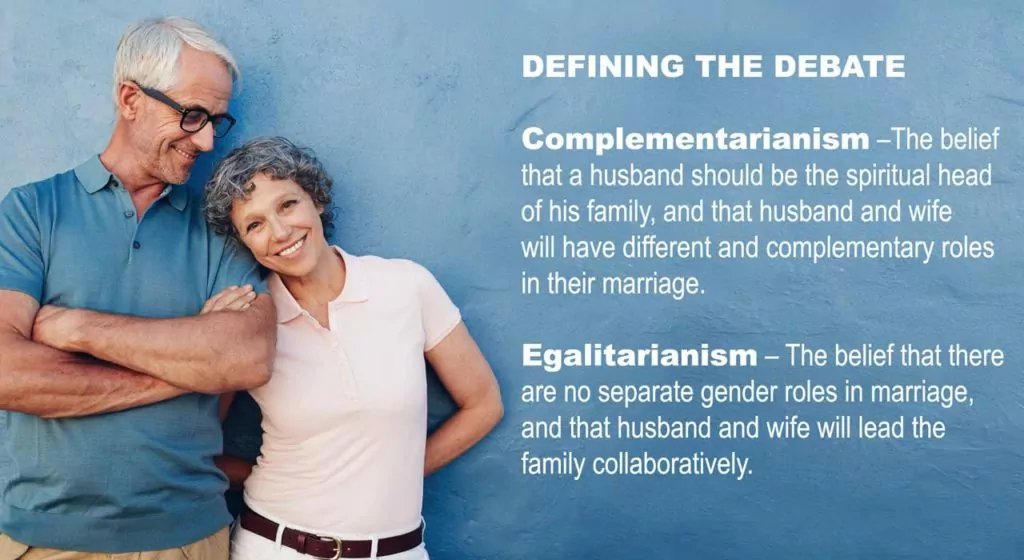
Men and Women in the Church advocates for a position known as complementarianism and against egalitarianism. Complementarians hold that men and women are essentially equal, but have been given different, complementary roles. Egalitarians hold that whatever roles men can perform, women can also perform. All of this is in the context of the church and its offices. Complementarians are against women in office and egalitarians are for.
About two-thirds of the book is taken up with exposition of the most debated passages: Genesis 1-3, 1 Corinthians 11:2-16 and 14:33-35, Ephesians 5:22-33, 1 Timothy 2:8-15, and 1 Timothy 3:1-13.
The last third of the book looks at common objections made against the complementarian position (Deborah? Phoebe? Junia?), as well as explaining how the biblical teaching applies to boys and girls, men and women. The book concludes with an appendix interacting at length with John Dickson, a “broad complementarian” who nonetheless argues that women should be permitted to preach in public worship.
I’ve read a number of pro-complementarian books over the years, but DeYoung stands out. He rightly argues, for instance, that this issue isn’t the proverbial molehill – the gospel is at stake. This is because of how God links male/female complementarity with the relationship between Christ and his church in Ephesians 5:32. So DeYoung writes:
Ephesians 5 may be about marriage, but we can’t make any sense of the underlying logic unless we note God’s intentions in creating marriage as a gospel-shaped union between a differentiated and complementary pair. Any move to abolish all distinctions between men and women is a move (whether intentionally or not) to tear down the building blocks of redemption itself.
When the issue is stated like that, its importance comes into clear view.
Refuting eternal subordination
Another highlight is DeYoung’s helpful correction of some complementarians who’ve argued that the husband-wife relationship is parallel to God’s headship over Christ. The Trinity thus furnishes a model for marriage, particularly the relationship between the Father and the Son. This position has come to be known as the eternal subordination of the Son (ESS). It’s based on a misunderstanding of 1 Corinthians 11:3, “I want you to understand that head of every man is Christ, the head of a wife is her husband, and the head of Christ is God.” DeYoung offers a sound refutation, though the language here does get technical.
Cautions
There were only a couple of things I must be critical about. DeYoung argues that women should be able to “share a testimony, give an announcement, or offer a prayer” in public worship. It’s debatable whether testimonies and announcements belong in public worship. Prayer certainly does, but it is corporate prayer being led by someone. Moreover, corporate prayer in public worship has a teaching quality to it. The congregation is learning to pray by being led in prayer. DeYoung bases his argument on his observation that 1 Corinthians 11 assumes there is some place for women to be speaking in the church’s public worship. However, as my colleague Dr. Dean Anderson has pointed out, 1 Corinthians 11:1-16 is not speaking about public worship services.
Another criticism, of less importance, is not about what DeYoung said, but what he left out. Near the end, he writes that “men and women should not relate to every other man or woman as husband and wife. And yet there is something about the marriage relationship that shows for everyone the sort of people men and women were made to be” (p.136). It would have been helpful to flesh that out a little more. For example, what does that mean for women in politics, business, the military, or law enforcement? I know it’s meant to be a “short” book, but couldn’t we just have had a paragraph or two?
Conclusion
Men and Women in the Church ought to be in church libraries and high school Bible classes. It’s also important reading for church leaders. Our church runs something called the Service and Leadership Training program. This is to prepare young men for church leadership. One of the sessions deals with the topic of women in office. Kevin DeYoung’s book will be on the recommended reading list from now on. It’s a fairly simple and biblically faithfully guide in an area where Satan is working furiously to undermine not only God’s Word in general, but also the gospel in particular.
Dr. Bredenhof is the author of many books, including Aiming to Please: A Guide to Reformed Worship, which is excerpted here. ...