Transparent heart icon with white outline and + sign.

Life's busy, read it when you're ready!

Create a free account to save articles for later, keep track of past articles you’ve read, and receive exclusive access to all RP resources.

White magnifying glass.

Search thousands of RP articles

Helping you think, speak, and act in Christ.

Open envelope icon with @ symbol

Get Articles Delivered!

Helping you think, speak, and act in Christ. delivered direct to your Inbox!


Red heart icon with + sign.
Family, Movie Reviews

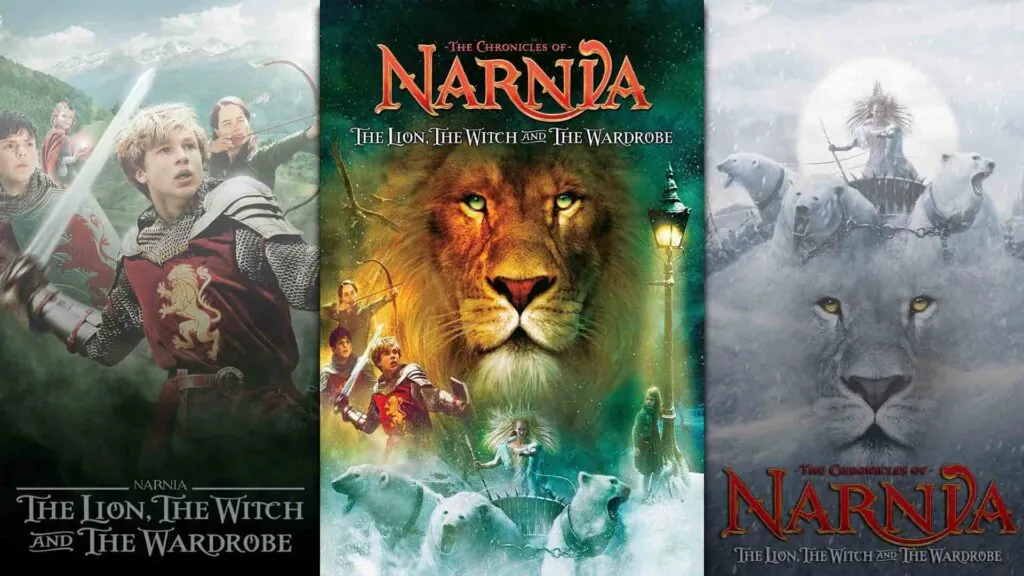
The Lion, the Witch, and the Wardrobe

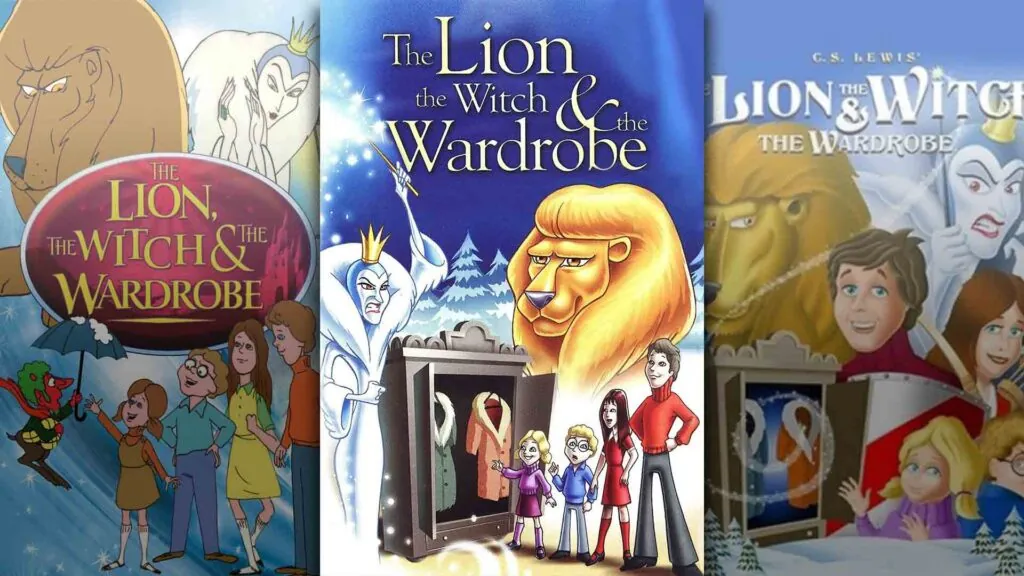
Family / Drama 2005 / 125 minutes Rating: 8/10 For those who have not read the C.S. Lewis book of the same name, this takes place during World War II. Four Pevensie children, Peter, Edmund, Susan, and Lucy, are among the thousands of children sent away from London to escape the dangers of ongoing German bombardments. They end up at the enormous house of a reclusive professor, and in exploring the house, the youngest of the children discovers a gateway into another world. No one believes little Lucy, though. They think she is just letting her imagination run away with her. But another world it is, populated by fauns, and talking beavers, and ruled over by a wicked White Witch who has kept this land of Narnia entombed in winter's embrace for more than one hundred years. There is also hope. A prophecy speaks of two sons of Adam and two daughters of Eve coming to help. So when Lucy finally manages to get her sister and brothers to come to Narnia with her, the prophecy seems ready to be fulfilled. But then Edmund disappears. And the White Witch gathers her army. And the newly arrived leader of the free animals of Narnia – a lion by the name of Aslan – doesn't seem able to stop her. Cautions While this won't be scary for kids over ten, the White Witch, her wolf minions, the battle scenes, and Aslan being killed in front of the White Witch's horde, could well be too much for younger viewers. Other cautions are of a more theological nature. The Bible speaks of God as like a lion (Hosea 5:14, Is. 31:4, Rev. 5:5, etc.) and makes other analogous comparisons between God and animals such as a mother hen, eagle, and bear (Matt. 23:37, Ex. 19:4, and Hosea 13:8). But what should we think of depicting God as a lion? On the one hand, Lewis isn't trying to say that Jesus is actually a lion – Narnia is supposed to be fantasy, not fact. But on the other hand, Lewis does make a close Aslan to Jesus connection in Aslan's sacrifice to save Edmund in The Lion, the Witch, and the Wardrobe, and Lewis is just a hair's breadth from stating the connection explicitly in The Voyage of the Dawn Treader (Book 5 in The Chronicles of Narnia), where Aslan tells Edmund and Lucy that in their world, "I have another name." Another objection is simply what Aslan gets wrong about forgiveness here. When Edmund returns to his siblings, Aslan says, "What's done is done. There is no need to speak to Edmund about what is past." But, of course, there is. Edmund didn't commit some mistake or oopsy – he betrayed everyone. It's a movie, sure, so there's only so much time, but to let Edmund reconcile without any sort of request for forgiveness or acknowledgment of the enormity of what he had done is to model the "C'mon, what's the big deal?" sort of repentance the world has on offer, which is exactly the sort that gets in the way of both true repentance and true forgiveness. Finally, in conversing with Peter, Aslan says that "there is a Deep Magic, more powerful than any of us, that rules over all of Narnia. It defines right from wrong, and governs all our destinies. Yours and mine." Insofar as Aslan represents Jesus here, Aslan is saying that there is a right and wrong apart from and above God Himself. Really? No. Good and bad aren't above Him, but their definitions spring out of the very character of God – Who He is defines what right and wrong are (see 2 Tim. 2:13, Matt. 5:48, Rom. 3:3-4, etc.). Conclusion There are three different adaptations of The Lion, the Witch and the Wardrobe to choose from, and this is the very best. While Netflix has plans for a fourth, it's hard to imagine how it could be better, and it is easy to anticipate – given some of the revisionist nonsense already leaking out (Aslan is to be voiced by a woman) – that it will be a great deal worse. But if you want a more gentle, calmer version, be sure to check out either the 1988 BBC TV series (a solid 6/10, with the talking animals portrayed via life-size puppets) or the quite good 1979 animated version, which rates a 7. Be sure to check out the trailer below. ...

Red heart icon with + sign.
Adult fiction, Book Reviews

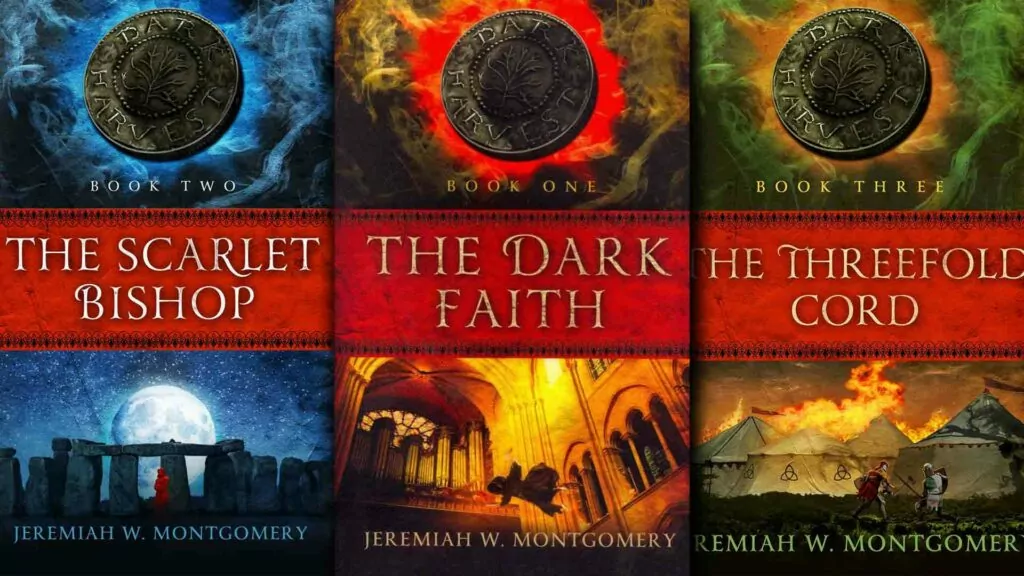
The Dark Harvest Trilogy

The Dark Faith 368 pages / 2012 by Jeremiah W. Montgomery The Scarlet Bishop 304 pages / 2013 by Jeremiah W. Montgomery The Threefold Cord 312 pages / 2014 by Jeremiah W. Montgomery Rating: Good/Great/GIFT ***** I gave The Dark Faith to my oldest daughter, knowing only that it was by an OPC minister. The cover looked a bit dark and ominous, but I figured It's by a Reformed pastor, so how freaky can it be? I hadn't gotten to it yet because, well, I'd also figured It's an epic fantasy novel by a Reformed pastor, so how good could it really be? I was wrong on both counts. This was really good, and quite freaky. My daughter was only a few chapters in when she gave me this update: "Dad, the main girl has just fallen into a well of blood!" "Real blood?" "Yeah, real blood!" "Hmmmm... maybe this isn't a good one to keep reading." "No Dad, it's okay. I can keep reading." An OPC pastor writing about wells of blood? A couple of days later, and another update from my daughter: "They're going to skin this nun alive!" And then, "Oh Dad, there's something even worse!" A story this freaky, that my squeamish daughter still wouldn't put down? I had to start reading it too... and it was so good I didn't stop until I was through all three. The trilogy is set on a Great Britain-like island empire called Aeld Gowan, and the time is very pre-Reformation. The Church here isn't quite the bed of hypocrisy that got Luther going, but it attracts both the devout and the power-hungry eager to use its influence. Our hero is one of the devout, a monk named Morumus, who turned to the Church for another reason: knowledge. When still a boy, Morumus saw his father, Raudron Red-Fist, and all his soldiers, slain by nightmarish creatures whose song rendered the men unable to raise their swords and shields in defense. The boy Morumus was overlooked and escaped. Now, as a grown man, Morumus thinks that whatever it was that attacked his father, they were likely followers of the "Dark Faith" that once ruled the island. And he wants to learn more, to prepare the Church for what might be coming. But in ten years of study so far, he hasn't found much of anything. What his learning has done, however, is make him an expert in languages, and now his archbishop wants him to translate Holy Writ into the language of peoples who might still follow the Dark Faith. His love for the Lord, and his obsession with solving the mystery of his father's murder seem to be converging! This is a complex story, and not one that can be briefly summarized (the appendix of names is a much-needed feature to keep track of the extensive cast). There's just so much here – whether it's palace intrigue, a compromised Church, cunning enemies, or unexpected friends, it's all here, and all wrapped up in an epic fantasy that is very relevant for our own time. Caution The cautions concern the gore, and especially a scene in which a monastery of monks, who were having their evening meal, are found slaughtered, their innards piled up on the plates in front of them (this was the scene my daughter was warning me about). Why did the author include that? I think to show the evil to be evil. And while there is gore, he's not glorying in the gore, as some writers do. That's why my 14-year-old could read it without getting too bothered, though this was a book she wouldn't read at night. It is, however, why this might be better for 16 and up. Conclusion I was struck by just how well-written it is – this would make for a great read-out-loud if only I could find an audience brave enough to hear it. I don't want to overhype it, so I won't make comparisons to Tolkien or C.S. Lewis, but I will say that outside of those two, this is really among the best of the best of Christian fantasy fiction. Epic, excellent, and insightful, telling an old tale that has lessons for our modern age. Two thumbs way up! And if you want to hear another Reformed perspective on the Dark Harvest Trilogy, be sure to check out this review, by OPC member and teen (at the time), Katharine Olinger....

Red heart icon with + sign.
Book lists, Book Reviews

Christian fantasy after Tolkien: a Top 10

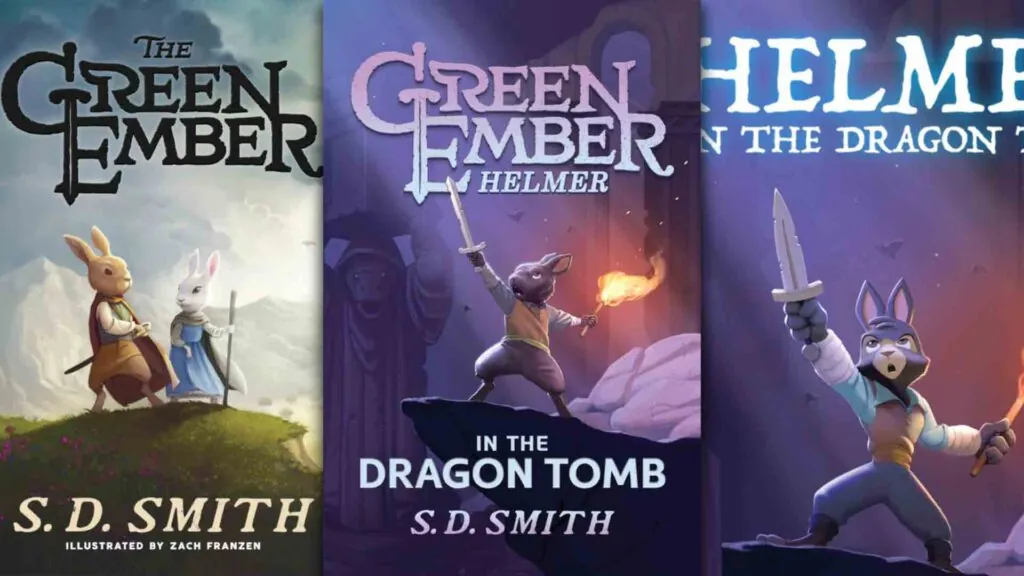
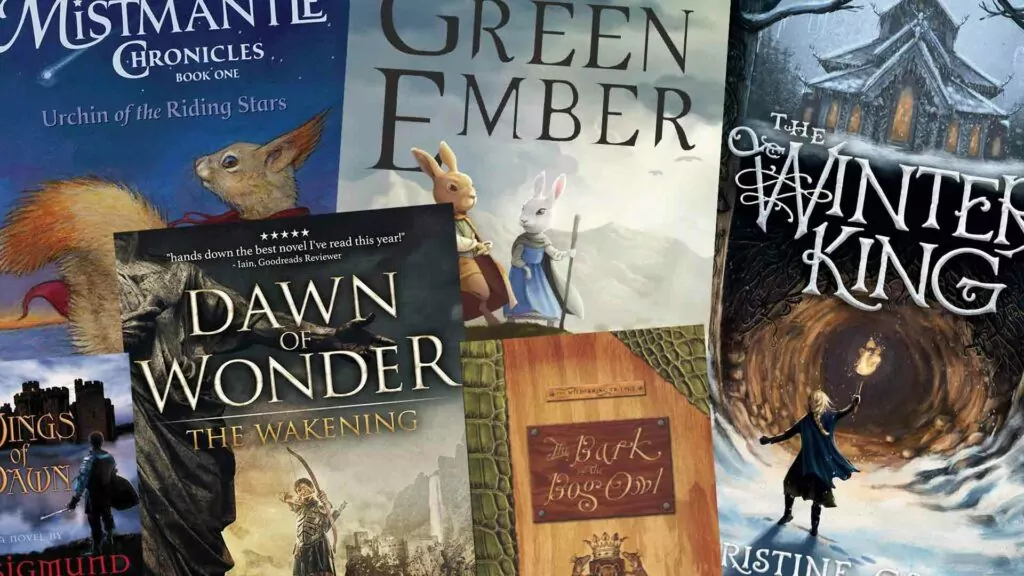
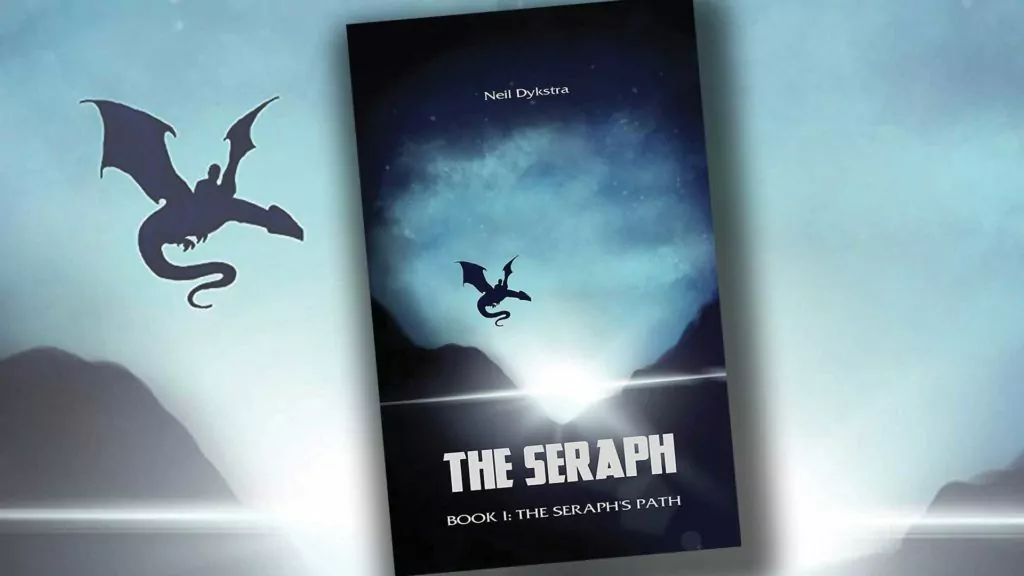
If your kids are just gobbling books, and have already worked their way through all 7 books of Lewis’s Narnia, then what’s next? If you've read through Tolkien’s The Hobbit and Lord of the Rings a couple times already, where can you go now? What follows is a Top 10 list of Christian fantasy novels – some more obviously Christian than others – that are a fantastic follow-up. These aren't all suitable for the very young, so be sure to click on the article titles for longer reviews. And before we begin, I'm going to list a few honorable mentions. I'd recommend these too, but not everyone can make the top 10! Neil Dykstra's The Seraph's Path tells us the tale of Dyrk, a horse trainer who finds himself delivering the king's mail on a flying tarn that may want to kill him. I can usually predict the general direction a story is heading, but not this time, which made for an especially intriguing journey – this isn't like anything I've read before. However, at almost 1,200 pages, this series isn't for the casual reader. Wings of Dawn is by my favorite Arminian, theistic evolutionist author, Sigmund Brouwer, though, thankfully neither of those elements comes out in this story. Thomas is a young boy seeking to win back his castle by using technologies – like gunpowder, and kites – that seem like magic in his feudal England but which were in use at that time elsewhere in the world. I would have ranked this a bit higher up on the list, but it is getting harder to find. I just discovered an Australian best known for his poetry, but who also crafted a solid other-world fantasy series. Andrew Lansdown's The Chronicles of Klarin is a 3-book series that comes in this collected volume. A boy, Colin, finds a knife that allows him to cut through the curtain separating one world from the next. And the world next door is one filled with wicked dragons, and people who need his help, and who seem to have some connection to his family. Each novel is around 100 pages, making this a quick fast-paced read, but it didn't make the Top 10 because it is hard to come by in North America. As mentioned, be sure to click on the titles for their full-length reviews. 10. In the Hall of the Dragon King by Stephen Lawhead This is a well-written sword-and-knights story set in another world. Lawhead had some clear Christian undertones to his earlier stories that get lost in his later books, so stick with early Lawhead series like this one. 9. The Winter King by Christine Cohen 15-year-old Cora is resourceful, but boy are the odds stacked against her! Her dad is dead, her neighbors all avoid her, thinking she's cursed, and the village god, the tyrannical Winter King seems to hate her. This beautifully written book is best suited for 15 and up because it has echoes of the Reformation – the "official" church is foe, not friend – that might confuse a younger reader. 8. Urchin of the Riding Stars by M.I. McAllister Squirrels with swords. Need I say more? 7. The Rise and Fall of Mount Majestic by Jennifer Trafton A fun romp, with all sorts of inventive ingredients including: Piles of poison-tongued jumping turtles A castle built on top of a mountain that rises and falls once each day A tyrant twelve-year-old pepper-hoarding king 6. Brave Ollie Possum by Ethan Nicolle The author was one of the guys behind Babylon Bee. A kid who is scared of everything can’t get his parents to believe him that there is something on the roof outside his window. But he’s right. Kind of a terrifying premise, but the comic hijinks soon take over, with the scared boy getting turned into a possum, a creature that faints whenever it is scared. 5. Dawn of Wonder by Jonathan Renshaw A nephew made me and most of our church read it and no one has regretted doing so. The only downside is that book 2 has been more than 8 years in the waiting. But book 1 is really, really good. 4. The Dark Harvest Trilogy by Jeremiah W. Montgomery I gave the first book in this series to my oldest daughter to test out. The cover looked a bit dark and ominous, but I figured "It’s by a Reformed pastor, so how freaky can it be?" I hadn’t gotten to it yet because, well, I’d also figured "It’s an epic fantasy novel by a Reformed pastor, so how good could it really be?" I was wrong on both counts. This was really good, and quite freaky. 3. The Green Ember by S.D. Smith Rabbits with swords! ’Nuff said. 2. Bark of the Bog Owl  by Jonathon Rogers Loosely and hilariously riffing off the story of David and Saul. But in the American South, if it had castles. It’s been described as a Mark Twain crossed with C.S. Lewis. 1. On the Edge of the Dark Sea of Darkness  by Andrew Peterson This sat on my bookshelf for more than a year because the author is a well-known and talented musician, so I figured, how can a person so good at music be any good at writing too? I mean, what are the odds? But this is fantastic, rating right up there with Lewis and Tolkien. Three children contend with the Fangs of Dang, lizard creatures that have conquered the land of Skree, and their ruler Gnag the nameless....

Red heart icon with + sign.
Book Reviews, Teen fiction

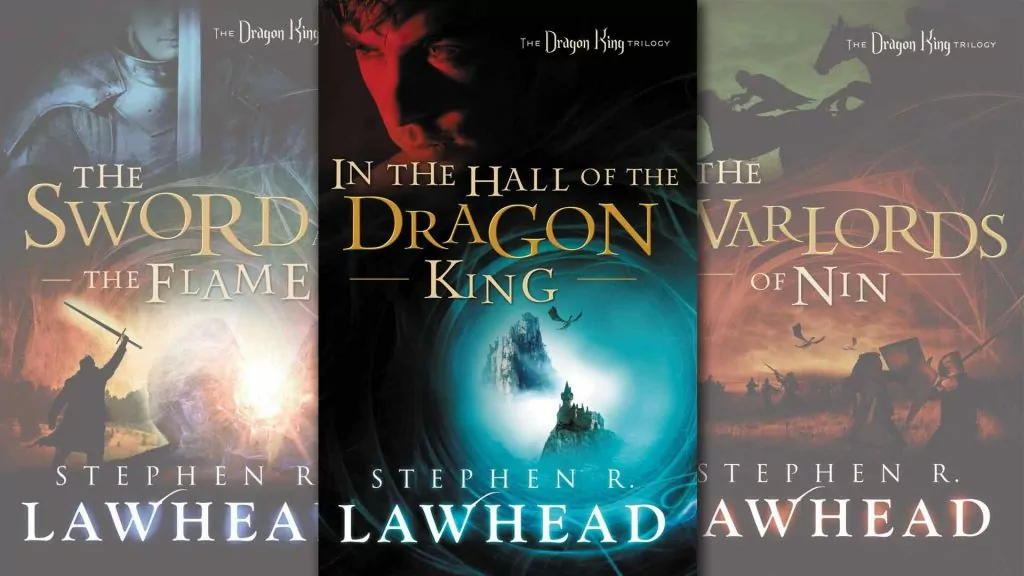
In the Hall of the Dragon King

by Stephen Lawhead 1982 / 370 pages Rating: Good/GREAT/Give This is an old-fashioned fantasy tale, with a loosely Christian underpinning. Quentin is a young man who has had a quest thrust upon him. He was going to spend his life behind the walls of a temple, so this turn of events isn’t unwelcome. But he has to figure out how he can see the queen. And someone needs to rescue the king. Oh, and there’s a dark wizard that needs to be dealt with. Is this really a job for a young former priest-to-be who doesn’t know one end of a sword from the other? The young Quentin, looking for help, meets a hermit of sorts, who serves not the gods, but the one God. That’s an ongoing theme throughout, as author Stephen Lawhead is trying to point readers to the true God. Cautions However, Lawhead sometimes gets it wrong. Quentin is told that God leads by “hunches and nudges” and “very rarely by direct command.” But our God does give us clear direct commands, in His Word, though some who profess to be Christians reject His Word in favor of hunches. Also, when a soldier is dying and asks how to go to heaven, the hermit tells him to just believe, but doesn’t mention anything about repentance. Conclusion While those are notable flaws, and worth bringing up with younger readers, they amount to only a few paragraphs in a rollicking adventure. There is a true and proper villain who had delved deep into the dark arts – he's a necromancer even! – which sharpens the contrast with the hermit, who has turned away from magic to serve his Lord. One feature I really appreciated is that, while this is the first book of a trilogy, it is a full and complete story – this is not the sort of trilogy that is actually one story split over three books. But readers can look forward to Quentin's further adventures in The Warlords of Nin and The Sword and the Flame. Like any great children's book, this will be a great read for adults too – I'd recommend it for 12 and up. I'll add that in his later books the author took, first a Roman Catholic turn in his "Celtic Crusade" series where he reveres relics, and then afterward a general turn to spirituality rather than Christianity (or, at least, any Christian underpinnings are far from clear). But in his earlier books like this series, there's lots to love. You can listen to the first chapter being read below. ...

Red heart icon with + sign.
Book Reviews, Teen fiction

On the Edge of the Dark Sea of Darkness

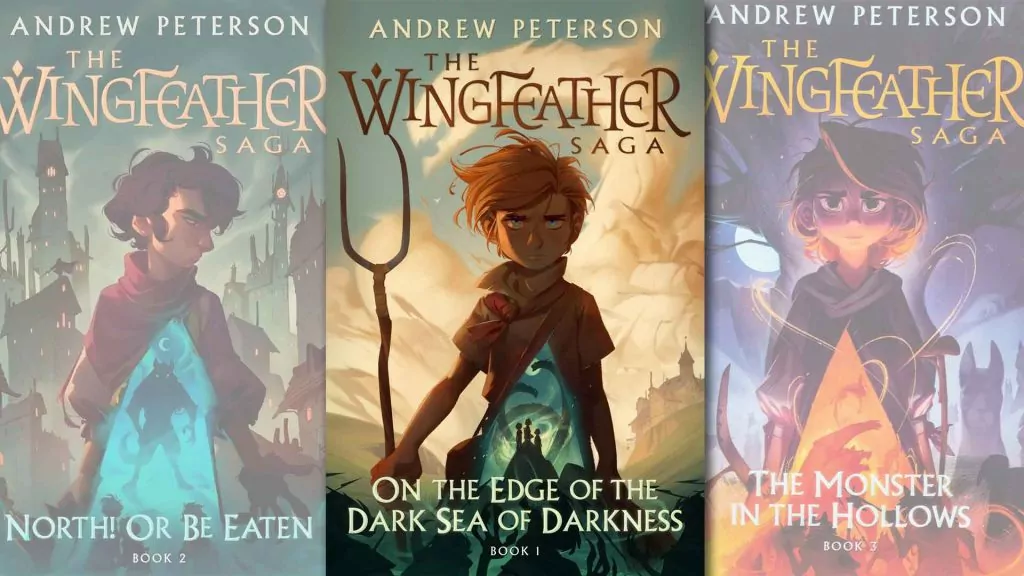
by Andrew Peterson 284 pages / 2008 Rating: Good/Great/GIFT My wife hasn't read this book, but she enjoyed it too. As I made my way through I couldn't help but read whole chapters to her, or, if she wasn't nearby, the next time she came by I'd update her about all the wackiest bits. And there are a lot of wacky bits. The "Dark Sea of Darkness" in the title gives a clue right off as to Peterson's goofy sense of humor. The subtitle is even better: "Adventure. Peril. Lost Jewels. And the fearsome toothy cows of Skree." While I read the first three chapters to my wife I'll restrain myself here, and pass along only the first few lines of the opening which is titled: "A Brief Introduction to the World of Aerwiar." Peterson wants us to know this takes place on an entirely made-up world so he begins with his own creation story: The old stories tell that when the first person work up on the first morning in the world where this tale takes place, he yawned, stretched, and said to the first thing he saw, "Well, here we are." The man's name was Dwayne, and the first thing he saw was a rock. Next to the rock, though, was a woman named Gladys, who he would learn to get along with very well. In the many ages that followed, that first sentence was taught to children and their children's children and their children's parents' cousins and so on until, quite by accident, all speaking creatures referred to the world around them as Aerwiar. That gives a good taste of the fun that is to follow. The heroes of this epic tale are three siblings: Janner and his little brother Tink, and their littler sister Leeli. The villains are the Fangs of Dang, under the direction of the "nameless evil...whose name was Gnag the Nameless." Our story begins nine years after the Fangs sailed across the Dark Sea of Darkness and conquered the lands of Skree, and it is in a little cottage, in this conquered land, that the family Igiby resides: the three children, their mother, and their grandfather. The Fangs are cruel, bureaucratic, and they look exactly like "...humans except for the greenish scales that covered their bodies and the lizard-like snout and the two long venomous fangs that jutted downward from their snarling mouths." Oh, and they have tails. And worst of all, they think the Igbiy's have the lost Jewels of Anniera! Janner, Tink, and Leeli don't know anything about any jewels, but they're curious sorts, and they are eager to find out all they can. So Peterson is writing not just a fantasy, but also a mystery, and certainly a comedy. And he's managed to slip in a really good chase film too. Caution A word of warning might be due as far as the comedy is concerned. Some of it could be described as juvenile: no potty humor, but Janner does, at one point, discover a candle made of "snot wax." Peterson peppers the book with footnotes and for the candle he has this entry: 1. Snot wax is too repulsive a thing about which to write a proper footnote. Then there are the vile Fangs of Dang. Their name gives a good indicator of the line that Peterson draws: it leaves no doubt that they are a vile bunch, but Peterson isn't going to use vile language. And yes, the Fangs like to eat brown lettuce, maggot-loaves, and anything that wriggles, but this humor is all of a sort that will appeal to boys, gross out their sisters, and leave parents largely untroubled. Conclusion But what mom and dad are sure to love is the prominent place that parents have in Peterson's story. In most teen fiction parents are either dead or dumb; the teen hero is either an orphan or wishes he was. Here we have a well-respected mother and a grandpa who is doing what he can to fill in for the siblings' long-dead father. So when Janner makes a big mistake and doesn't know what to do he is smart enough – and he loves and respects his grandpa enough – to know he should go to the old man for help. This might be where the author's Christian faith most comes to the fore. Andrew Peterson is better known as a Christian songwriter, and while this is not a specifically Christian fantasy, the virtues lauded in this book are of the sort found in Philippians 4:8. These three siblings know they can look to their grandpa for guidance, for love, and to see what sacrificial leadership looks like. So I'd recommend this as a very fun and positive book for fathers to read with their boys 10 and up, or in some cases maybe even a couple of years younger if they can handle battles and lizard-like villains. This is a fun one that will have both dad and son laughing, and turning pages quickly. I'm learning too, that while there are some notable distinctions between "girl books" and "boy books" if a dad really loves a book, his daughter is quite likely to love hearing him read it. So this could be a very good dad/daughter book too, maggot-loaf aside, with little Leeli giving daughters someone to cheer on too. This was so good I was thankful to discover there were three more titles in this wild and wacky Wingfeather Saga series, plus a short stories collection! The series has been republished now, with new covers and extra pictures inside, so be sure to get the newer version. It's also being turned into a TV series, and a sneak peek is available below. ...

Red heart icon with + sign.
Book Reviews, Children’s fiction, Teen fiction

The Bark of the Bog Owl

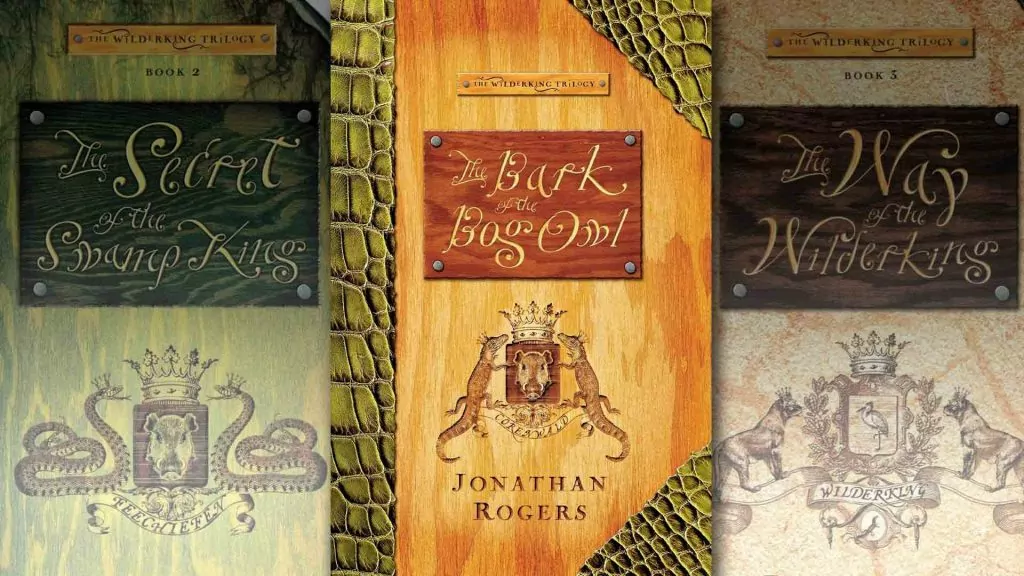
by Jonathan Rogers 2014 / 248 pages Rating: Good/Great/GIFT Our hero, Aidan Errolson, is a medium-sized twelve-year-old with dreams that are far bigger. When we join his story he's just putting the finishing touches on a letter: My Dearest King – You will be glad to learn that I am still available for any quest, adventure, or dangerous mission for which you might need a champion or knight-errant. I specialize in dragon-slaying but would be happy to fight pirates or invading barbarians if circumstances require. I would even be willing to rescue a fair maiden imprisoned by evil relatives. That would not be my first choice, since I am not of marrying age. Still, in peaceful and prosperous times like these, an adventurer takes whatever work he can find... For Aidan, it's all that peace and prosperity that's the problem. While his father was a great warrior, and his grandparents carved out a settlement on Cornwald's wild eastern frontier, Aiden's only excitement comes from the imagined foes he fights in defense of the flock he's been tasked to tend. However, things quickly take a turn. First, Aidan hears the bark of the Bog Owl, a creature that has never been seen. Then the Bog Owl turns out to be one of the feechiefolk, who are no less the stuff of campfire stories, akin to impish elves, or fierce boogeyman, and like them both, entirely made-up. But this feechie boy is anything but... and he wants to wrestle. Second, Bayard the Truthspeaker makes an unannounced stop at the Errolson farm to see, so he says, the "Wilderking of Corenwald." And Bayard declares that it is none other than little brother Aidan. That's quite the surprise, and quite awkward too, because Corenwald already has a king, and the Errolson family are his most loyal supporters. Now, if you're a bit quicker than me, this last bit might be ringing some bells, reminding you of Samuel's visit to the house of Jesse (1 Sam. 16). This is where my middlest caught on, but I needed several more chapters. I finally figured it out when Aidan fights a giant. With a sling. And five stones. In my defense, this is only very loosely based on David – Aidan has to deal not only with a giant, but cannons too, and there's no feechie folk in the original either. That it is inspired by, but does not pretend to be, the story of David is part of what makes this so intriguing. While there'll be no confusing the two tales, Rogers' account will have you reflecting on what a tough position David was in, the king not yet crowned, loyal to, and yet chosen to replace, the failed king. Requirements I usually list any possible cautions for the book being reviewed, but there are none for Bark so I'll list one requirement instead: this absolutely needs to be read aloud. The feechie folk dialogue, as it is paced and misspelled, will have you speaking with the most delightful accent, without even trying. Jonathan Rogers makes it easy for a dad to sound good. Conclusion I really can't praise this one enough. I started reading it on my own, and had to stop midway and start again with my girls because this was simply too good not to share. The Bark of the Bog Owl has been compared to The Lion, the Witch, and the Wardrobe, not so much for story similarities, but because both are clearly Christian and utterly fantastic fantasy. Bark of the Bog Owl is a book that, if you do read it to your children, you can be sure that one day your grandkids will hear their own parents reading it to them too. The two sequels – The Secret of the Swamp King, and The Way of the Wilderking – complete the story. This is really one epic tale split into three parts, so be sure to buy the set. You can preview the first 2 chapters here. And for a second opinion, read Hannah Abrahmason's take at Reformed Reader....

Red heart icon with + sign.
Book Reviews, Graphic novels

The Hobbit: an illustrated edition of the fantasy classic

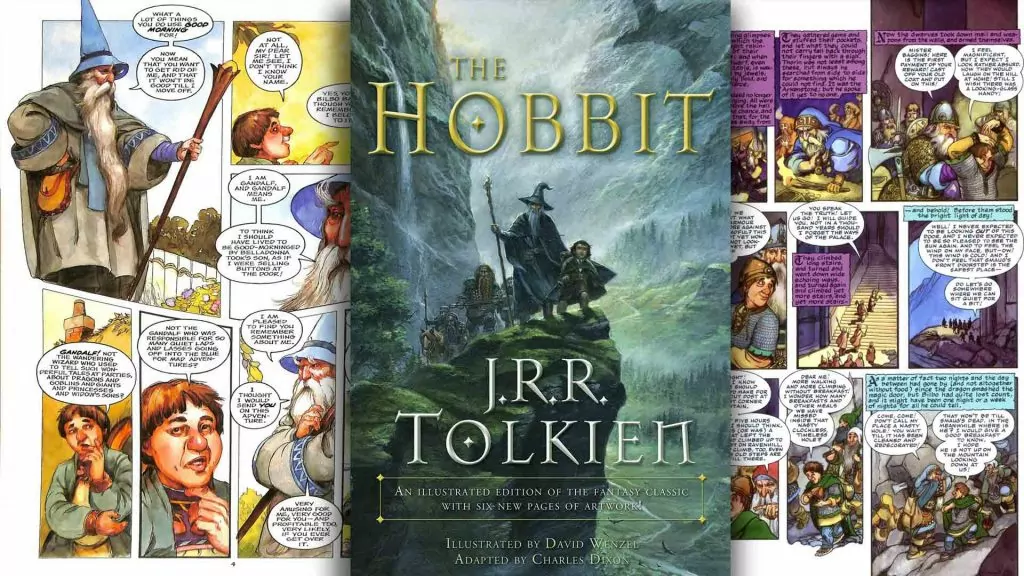
by J.R.R. Tolkien  adapted by Charles Dixon illustrated by David Wenzel 1990 / 133 pages Rating: Good/Great/GIFT There's a hierarchy so unfailingly true it could be carved into stone: the book is always better than the movie, and the movie better than the graphic novel adaptation. But this otherwise unfailing rule does have an exception! I'm not going to start talking all crazy and tell you that this comic is better than the book – that has never been and never will be! – but it is better than the film! It is even better than many a book, paling in comparison only to its original source material. For those unfamiliar with the epic tale, this is the story of Bilbo Baggins, the titular hobbit, which is basically a human-like creature though half the size, and with twice the hair on their feet. Hobbits are homebodies so Bilbo isn't exactly sure how he joined a dwarfish expedition to steal back their treasure from an enormous talking dragon. Small and retiring though he might be, Bilbo is big in character, and while he doesn't think himself brave, in meeting up with trolls, goblins, giant spiders, and the even more gigantic dragon, he ends up doing many a brave thing. This is an old fashioned epic tale with good eventually triumphing over evil...but not without paying a price. That's the original, and the 133 pages of this graphic novel adaptation provide the space to capture it all. Illustrator David Wenzel has given this a classic look for this classic tale - there's a reason that in the 30 years since this adaptation first came out, no one has even attempted to improve on it. Its size and depth do mean this isn't for the casual comic fan, but for fantasy fans 14 and up, this will be such a treat!...

Red heart icon with + sign.
Adult fiction, Book Reviews

Dawn of Wonder

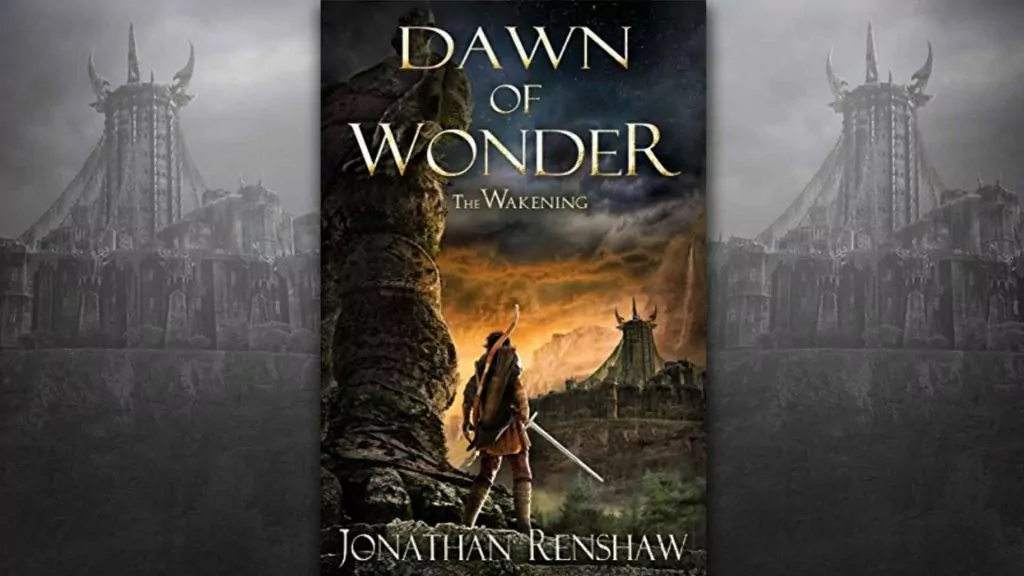
by Jonathan Renshaw 2015 / 708 pages Rating: Good/Great/GIFT This might, at first glance, seem to be your typical boy-meets-girl, boy-dares-girl-to-jump-off-of-a-thousand-foot-high-bridge-into-the-icy-cold-stream-below-and-girl-shows-him-up-by-actually-doing-it story. And, as many a fantasy tale contains, there are swords, courageous heroes, battles to be fought (and sometimes with large, very toothy creatures), and evil not yet here but lurking ominously. Our hero, Aedan, is not yet thirteen but he has a sharp mind, and he's had a hard life, which makes him wise beyond those few years. So when an officer comes galloping into the village with warnings of slavers on the way, Aedan is the first to suspect the man might not be the ally he seems. But when no one will listen, his foresight isn't enough to save his not-yet-a-girlfriend-but-already-his-best-friend Kalry. In the adventures that follow Aedan is equal parts determined and desperate, willing to do and try whatever it takes to retrieve, or revenge, his lost companion. The book's size is not so typical – the 700-page first-of-the-series would make for a good doorstop. And not just any story would get my nephew recommending this to all his brothers and sisters, and any friend within earshot too. It is atypical too, in that it accomplished what no other book has managed: it made me look forward to running. I only let myself listen to the fantastic audiobook reading when I was out jogging, and at 30 hours long, it got me out the door roughly 60 times. It is Christian, but not obviously so. The author is content to let the deeper tale – the moral of this story – come out gradually. I should add, I don't know the author is Christian but like the best bits of Narnia, or Lord of the Rings, this book is simply too good, and too true, not to be rooted in the Word. The only downside is that Book 2 still seems to be a good ways out. Fortunately, there is a sense of resolution to Book 1 – it's as satisfactory a cliffhanger as a reader could really hope for. So I'll pass on a most enthused two thumbs up, and express my gratitude to my nephew for being insistent that I should read Dawn of Wonder; I can't recall enjoying a fantasy novel more!...

Red heart icon with + sign.
Adult non-fiction, Book Reviews

The hidden meaning of "The Chronicles of Narnia"

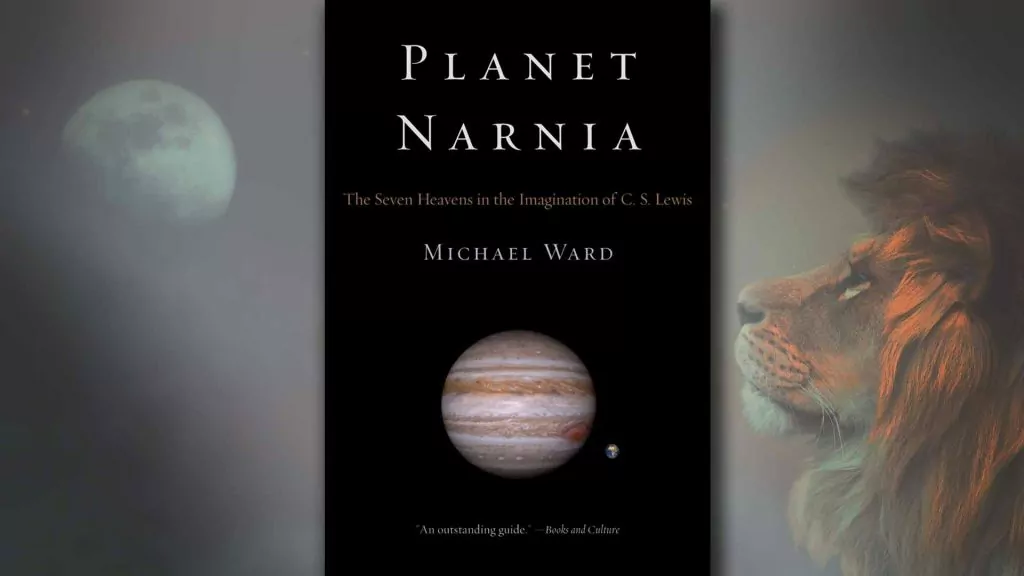
What if there was a secret cipher that unlocked a meaning behind C. S. Lewis’ beloved Chronicles of Narnia? What if Lewis used a concealed template to map out each book in the series, with a specific contextual aim that can be completely missed unless you know exactly what to look for? That is the intriguing premise of Michael Ward’s much-praised book Planet Narnia. As an unofficial Lewis aficionado, my wife recently read through Ward’s book, pausing between chapters to relay what she had learned to me. The material in Planet Narnia provided for many a night of excitement, discovery, and discussion. Even as someone who has digested most of this book’s thesis second-hand, I find myself convinced by Ward’s paradigm-shattering work. Understanding the key to Lewis’s true and foundational intent for The Chronicles of Narnia unlocks the secret to numerous mysteries about the books: Why does Father Christmas make an appearance in The Lion, the Witch and the Wardrobe? Why is there a bacchanal (i.e. a party very heavy on the wine) in Prince Caspian? Why is The Voyage of the Dawn Treader the only book with dragons in it? Why does Aslan never actually enter Narnia in The Silver Chair? What’s the point of the emphasis on twins, doubles, and symmetry in The Horse and His Boy? Why is The Magician’s Nephewmore comical than any of the other stories? Why is The Last Battle the only book with an adult protagonist? So, what is the key that unlocks these (and many other) questions? Simply this: the seven Narnia books are heavily – indeed, primarily – influenced by the concept of the Seven Heavens. In medieval cosmology, there were seven planets, each with its own personality and characteristics. In Lewis’ view, these planets embody spiritual symbols of permanent value. As Ward explains, the seven planets determine, “the basic plot of each story, countless points of ornamental detail, and, most significantly (from the theological point of view), the presentation of the Christotypical figure of Aslan.” The planet Lewis assigned to each book, as laid out by Ward, is as follows: Jove (Jupiter): The Lion, the Witch and the Wardrobe Mars: Prince Caspian Sol (the Sun): The Voyage of the Dawn Treader Luna (the Moon): The Silver Chair Mercury: The Horse and his Boy Venus: The Magician’s Nephew Saturn: The Last Battle Of course, it takes Ward an entire book to lay out the evidence and make his case. And a convincing case it is. Riddles in the dark Without reading the book, though, one might (rightly) ask, “If the Seven Heavens was so integral to the creation of The Chronicles of Narnia, why has no one noticed before?” Ward addresses this specific question. One reason, he says, is this: “…many readers were content to accept that the apparent lack of was evidence of hasty writing, not a sign of an unidentified inner meaning. Since Tolkien dismissed the as a mishmash it is hardly surprising that many critics have done the same.” Another reason is this: …those critics who were looking for a third level …may not have been as open to the subject of astrology as work really requires, for, as I have pointed out, astrology, a subject disdained by academics, tends to be given a doubly wide berth by Christian academics. Since most Lewis scholars have been Christian or well-disposed to the Christian tradition, there was an in-built improbability that researchers would fully understand his most successful work… The apparent connection between Lewis’ beloved fantasy series and astrological elements is a concept that many Christians might find troubling. Heavens declare the glory of God This connection, Ward explains, need not trouble Lewis’ Christian readership: It must be emphasized that the pre-Copernican model of the cosmos was a Christian model for all its acceptance of astrological influence. As Lewis points out in  English Literature in the Sixteenth Century, astrology and astronomy were not really distinguishable until the Copernican revolution and no Christian theologian before that time denied the general theory of planetary influences or the significance of constellation. Furthermore, as Lewis himself said in The Discarded Image, “Orthodox theologians could accept the theory that the planets had an effect on events and on psychology, and, much more, on plants and minerals. It was not against this that the Church fought. She fought against three of its offshoots.” Lewis goes on to describe the three offshoots of medieval astrology that the church rightly opposed: Astrologically grounded predictions (i.e., horoscopes). Astrological determinism. (i.e., the idea that the planets affected one’s personality to the point of overriding his or her human responsibility and free will. A modern equivalent of this determinism might be using your Myers–Briggs personality type as an excuse for your faults – i.e., “I can’t help criticizing you all the time; it’s just who I am.”) Any practice that would “imply or encourage the worship of planets.” Lewis’ inclusion of the Seven Heavens avoided all three of these heretical dangers. Ward explains: “…the Church was content to sanction what we would now call ‘astrology.’ After all, the Bible appeared to support the belief that there were seven planets and that they possessed influences. . . . The author of the Book of Job as translated in the King James Version mentions the ‘sweet influences of Pleiades’ (Job 38:31)…. And throughout the Bible the stars are seen as ‘signs’ – most notably at Bethlehem, signifying the birth of Christ – and sometimes as a celestial court or angelic choir. Christ himself is shown in the Book of Revelation (1:16, 20; 2:1) holding the seven stars – that is, the seven wandering stars, the planets – in his right hand, a vision that Austin Farrer, Lewis’s close friend and an expert in apocalyptic imagery, understood to be a portrayal of Christ’s lordship over time, ‘for it is after these seven that the weekdays are named.’ Saturn gives Saturday its name, the Sun Sunday’s, the Moon Monday’s, and so on.” As such, Lewis’ use of medieval cosmology falls well outside the scope of what modern-day Christians would condemn as astrology. Widespread praise Another factor promoting the legitimacy of Ward’s work is the praise it has received from all across the political and theological spectrum. Below is just a sampling of the endorsements Planet Narnia has received: “My own was gradually but utterly demolished as I read this thoughtful, scholarly, and vividly-written book.” – Alan Jacobs, Professor of English, Wheaton College and author of The Narnian: The Life and Imagination of C.S. Lewis “Planet Narnia is…utterly convincing and compelling.” – N. T. Wright “I cannot contain my admiration. No other book on Lewis has ever shown such comprehensive knowledge of his works and such depth of insight.” – Walter Hooper, Literary Adviser to the Estate of C.S. Lewis “Planet Narnia…is one of the best books I have ever read.” – Douglas Wilson, author of What I Learned in Narnia Further up, further in Historically, I have dismissed The Chronicles of Narnia as being based more on themes and ideas rather than well-defined story arcs. Michael Ward’s insights have shown that I was both right and wrong. Rather than a sloppy mismatch, the Narnia tales comprise a carefully and meticulously crafted set of stories, much more rich in structure and meaning than I ever gave them credit. Planet Narnia has been instrumental in giving me a fresh perspective and a fresh interest in the world of Narnia. I have only scratched the surface and if you want to learn more, I recommend checking out Ward’s work through his website PlanetNarnia.com, or books Planet Narnia, or The Narnia Code (which is Ward’s shorter, simpler version of Planet Narnia, designed for consumption by the general public). Ward has laid the groundwork to help us, in the words of Reepicheep in The Last Battle, “Come further up, come further in” to what Lewis has accomplished. There is also a documentary about Michael Ward’s discovery, called “The Narnia Code,” which is reviewed here. This article first appeared on Cap Stewart’s blog where he loves “to write about the arts and theology.” It is reprinted here with permission....

Red heart icon with + sign.
Animated, Movie Reviews

The Lord of the Rings animated "trilogy"

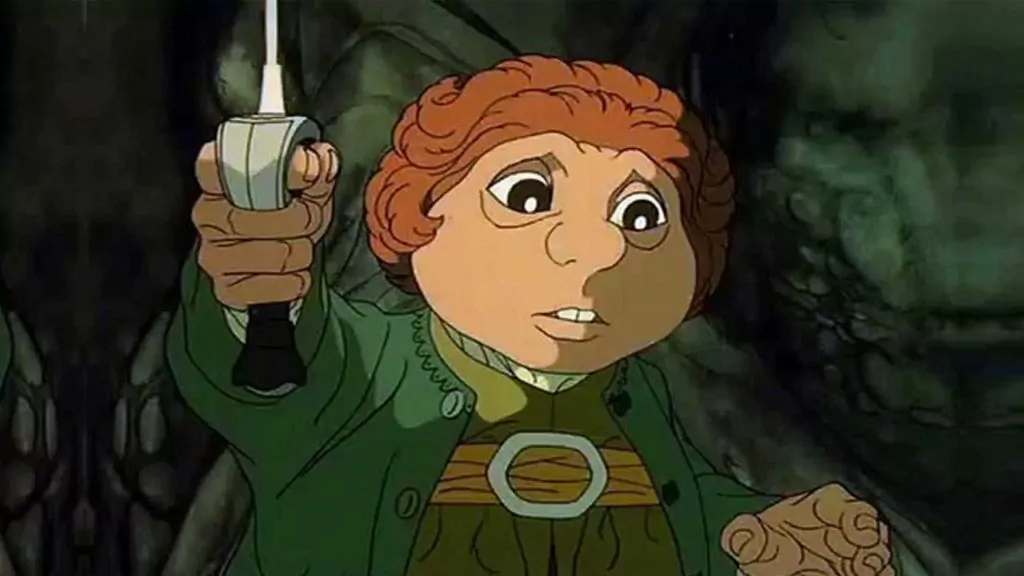
Peter Jackson wasn't the first to put J.R.R. Tolkien's books on film. Two decades before the first of Jackson's live-action/CGI films hit theaters, three animated versions were crafted in the space of three years, and by two different animators. The first two are well worth checking out. The third is not. THE HOBBIT Animated 77 minutes / 1977 Rating: 7/10 The Hobbit was the first Tolkien book to be filmed, in 1977. Director Authur Rankin chose a particularly cartoonish style of drawing that made it clear from the start that this was intended as a children's film. But his work had some humor to it – just as the source material does – which makes it pleasant enough viewing for adults too. Our hero Bilbo Baggins is a Hobbit, creatures that look much like humans, though they are half as tall and have far hairier feet. Normally Hobbits like nothing better than to stay close to home, but when the wizard Gandalf brings 12 treasure-seeking Dwarves to his doorstep Bilbo signs up for the adventure. And with the help of a magic "ring of power" Bilbo finds, he helps his new friends fight Orcs, Elves, and even a dragon. At 77 minutes long, readers of the book may be disappointed as to just how much the film condenses the story. However, as children’s films go it is quite a nice one, and a good introduction to Middle Earth. There are some fairly frightening bits, including attacks from trolls and goblins, and giant spiders and a "Gollum" that want to eat our heroes. But the animators have softened some of the villainy – e.g., the spiders have fuzzy bunny ears, and the goblins look vaguely cat-like – to tamp down quite a bit on the scariness. That meant my 8-year-old, not a fan of anything remotely tense, was able to endure these bits of action and really enjoy the overall film. So, while this isn't suitable for the very young, school-age kids will generally be able to handle it (though, as always, parents will want to preview this to see how suitable it is for their children). This is a children's film, which is in keeping with the intended audience of the original book. For them, the elementary school crowd, this might even rate an 8 (one of my girls even gave it a 9) but I've rated it a bit lower because it doesn't work as simply a children's film. This isn't one you can pop in the DVD drive and get back to loading the dishwasher - the scary moments mean that mom and dad will have to come along for the ride. And for them, this is only going to be okay. THE LORD OF THE RINGS Animated 133 minutes / 1978 Rating: 7/10 A year after The Hobbit was released, another animator, Ralph Bakshi, decided to try his hand at The Lord of the Rings.  The story begins with an aging Bilbo Baggins passing on his magic ring to his nephew Frodo. Shortly after, the wizard Gandalf shows up to warn Frodo of the ring's danger. It turns out this ring is so powerful that whoever holds it could use it to rule the world. This is why the evil Sauron wants it, and why the good Gandalf knows that it must be destroyed – this all-encompassing power is too much of a temptation for even the best of men to contend against. It is up to Frodo, who as a little Hobbit is far less tempted by the pull of power, to take the ring deep into the enemy's lands to destroy it in the lava of the mountain where it was first forged. And on the journey he has the company of hobbits, men, an elf, a dwarf, and a wizard to help him. Animator Ralph Bakshi used a style of animation that involved filming scenes with real actors and then tracing over each frame of film to create a line-drawing picture of it. This "rotoscoping" allowed Bakshi to incorporate the endless possibilities of animation with the realism of live-action. The realism also meant that this is a scarier film than The Hobbit. The lurching Ringwraiths (see the picture) are freaky, and some of the combat scenes, especially at the very end, are quite bloody. Though this is animated, it is not for children. There is one major flaw with the film: it is only half of the story! The director planned it as the first part of a two-film treatment, but the second film was never made, so things wrap up abruptly. While it lacks a proper ending, the story it does tell is intriguing. THE RETURN OF THE KING Animated 97 minutes / 1979 Rating: 4/10 This is sometimes treated as a sequel to Ralph Bakshi's film, but it isn't. Arthur Rankin directed, and he returned to the cartoonish animation style of The Hobbit. And while the events in this story do, loosely, follow after the events of the Bakshi film, Rankin seems to have been envisioning this as a sequel to The Hobbit, so he begins with an overview of everything that took place between it and The Return of the King. Or, in other words, it begins with a quick summary of two 500-page books – as you might expect this overview doesn't do justice to the contents of these enormous tomes, and the continuity of the story is completely lost. If a viewer isn't already familiar with the books he'll have no idea what's going on. Things don't get any better once the overview is complete - there is no flow to the story. Huge plot elements are skipped over, and random snips of scenes are stitched to other scenes with stilted narration and cheesy ballads. In addition, Frodo Baggins twice calls on God to help him. Some might argue this could be an appropriate use of God's name, but in the context of a fantasy world in which God is never otherwise mentioned, this seems a misuse. In short, The Return of the King is a dreadful film that is not worth anyone's time....
Red heart icon with + sign.
Adult fiction, Book Reviews, Teen fiction

The Seraph’s Path

by Neil Dykstra 2019 / 475 pages Rating: Good/GREAT/Give Maybe I should have gotten someone else to review this, what with me sharing the same last name as the author. But this is a fantasy title, so I had to take a peek. And once I got started I wasn’t going to hand it off. Besides, the two of us aren’t actually related. I know Neil, but only well enough to recall he is the superior volleyball player, and nowhere near well enough to have had an inkling he could serve up something like this. It’s remarkable! The Seraph’s Path has quite the cast of characters, but it is mostly the story of Dyrk, a young horse trainer who wants to make something of himself, in part, because his parents don’t seem to think about him much at all. Our story begins with Dyrk determined to enter a competition his father won’t even let him watch. Somehow he finagles his way in, and reaches the final round, a free-for-all among 16 mounted soldiers-in-training, with the last man standing guaranteed entry into the King’s own College. I won’t tell you what happens, but I will say that for every good thing that happens to Dyrk something bad soon follows…and vice versa. The wonder of fantasy fiction is that anything can happen. Young children can open a wardrobe and get transported to a world of talking beasts. Or little fellows with hairy feet can be trusted with a mission that the most powerful could never accomplish. Or a horse trainer can suddenly find himself delivering the mail mounted on a flying tarn. The problem with fantasy fiction is just the same: anything can happen. That means if the author doesn’t have a tight hold on the reins the story can run amuck, and quickly lose all connection with the real world. If you haven’t read much fantasy, you might think a world of dragons, gryphons, and flaming swords couldn’t possibly ring true. But the author has pulled it off. In The Seraph’s Path, Dyrk doesn’t understand the opposite sex, and he’s prone to dig himself deeper via ongoing procrastination, and then he can’t figure out how best to ask for forgiveness. There’s something very real about this made-up world. I was also impressed with how patient the author is and I’ll give one example. In this world, the god Arren is served by seven Seraphs. Dyrk sends his prayers via those angelic servants because he thinks Arren is too holy to approach directly. If that strikes you as Roman Catholic-esque, I’d agree. But isn’t Dyrk our hero? So how can he, via his repeated prayers, be teaching us something so very wrong? Well, a few hundred pages in Dyrk has his first encounter with people who talk to Arren directly. And he doesn’t know what to think about that.  By the end of this book, the issue is still unresolved, but our hero has been given something to think about. Caution I can only think of one caution worth noting. At one point a key character faces sexual temptation, and while the passage is not lurid – there’s nothing here that would make grandma blush – it is sad and realistic enough that pre-teen readers might find it distressing. Conclusion Dykstra has engaged in some downright Tolkien-esque world-building, with not only exotic creatures and nations to discover, but layer upon layer of legend and history shaping the events. If you never made it through The Hobbit, or you haven’t read a fantasy book with a glossary in the back to help you keep track of the characters, then this might be too intense a read for you. But if you want a whole new world to explore, and a story that’ll not only entertain but really get you thinking, you’re going to love The Seraph’s Path. I finished this nearly 500-page tome in 3 days, and the only downside to it was the cliff-hanger ending. So I was very happy to discover that the 700-page sequel, The Seraph’s Calling has just been released. I look forward to finding out what happens next! You can buy both books at Amazon.com and Amazon.ca....