Transparent heart icon with white outline and + sign.

Life's busy, read it when you're ready!

Create a free account to save articles for later, keep track of past articles you’ve read, and receive exclusive access to all RP resources.

White magnifying glass.

Search thousands of RP articles

Helping you think, speak, and act in Christ.

Open envelope icon with @ symbol

Get Articles Delivered!

Helping you think, speak, and act in Christ. delivered direct to your Inbox!


Red heart icon with + sign.
Book Reviews, Children’s non-fiction

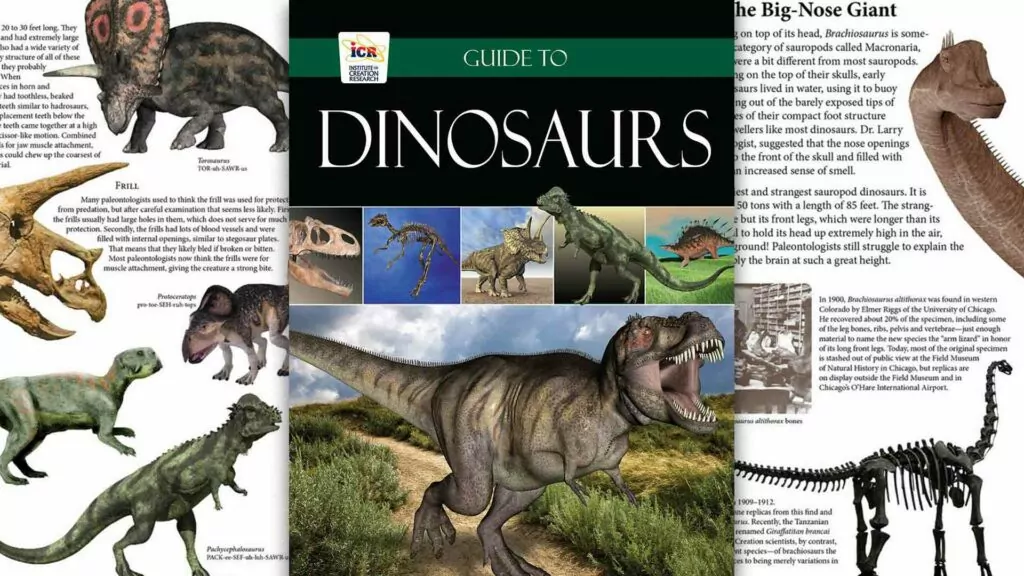
Guide to Dinosaurs

by the Institute of Creation Research 2014 / 120 pages Rating: BORROW/Buy/Give Hardly any other field of science has been so distorted by secular, unbiblical theories as that of the dinosaurs. The Institute of Creation Research (or ICR), has done significant work in righting that wrong, and this encyclopedic book is born out of their labors. Information is neatly organized and covers Biblical history, fossils, and types of dinosaurs. Concise two-page spreads on topics such as What is a Dinosaur?, Dinosaur Extinction, and Did Dinosaurs Evolve into Birds? answer all your dino-related questions. This is an ideal book for school libraries to offer, as students will find this book invaluable in their research papers. Teachers and parents will find great illustrations to help children understand the history of dinosaurs from a reliably Christian perspective. For the dino-maniacs, at least a third of this book delves into dinosaur types and sub-types, including notes on the structure, distinctions, likely diet and current locations of fossils found for each type. Kids will enjoy the beautiful visual aids that show what each dinosaur would have looked like, and how big they were compared to humans. Finally, this book ends with a short but invaluable section on “dinosaurs in the big picture” which summarizes sections and includes a brief paragraph pointing us to the most important conclusion: fossils are the result of death, the wages of sin. ...

Red heart icon with + sign.
Book Reviews, Teen non-fiction

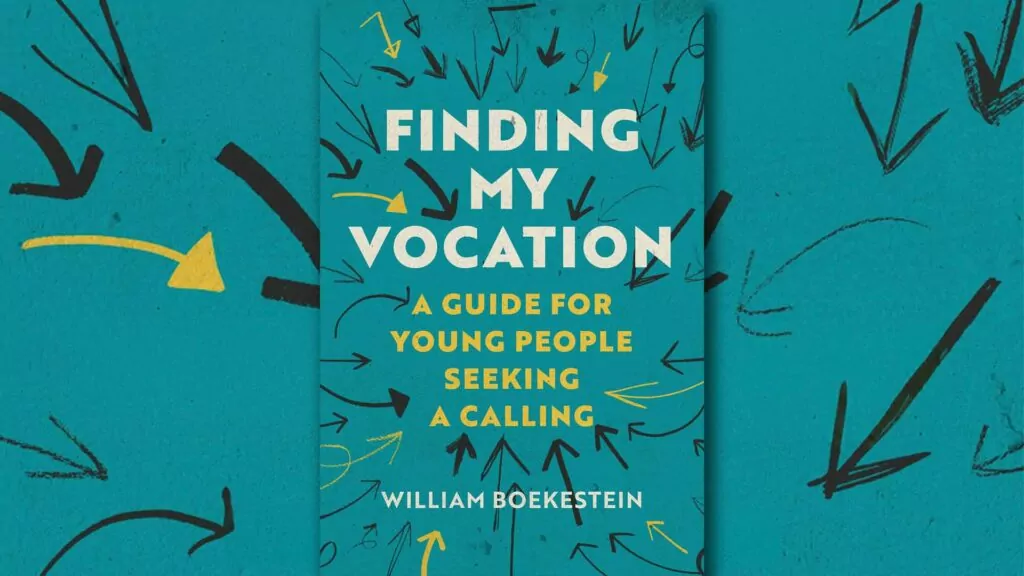
Finding My Vocation

by William Boekestein 2024 / 154 pages Rating: BORROW/Buy/Give William Boekestein wants to help young readers figure out how they can pick the right job, and like the good Reformed pastor that he is, he offers up three points.... or, rather, parts. In Part 1, “Pondering Vocation,” he covers what work is, and the different reasons that Christians have to want to work, like providing for our family, serving others, and as a means of expressing our gratitude to God. Part 2 gives us biblically-grounded tips on how we can start “Preparing for Your Vocation.” We need to make ourself valuable to an employer by fostering key character traits – honesty and respect for authority might seem bare minimums, but they can really set a Christian apart – and by developing specific marketable skills, like welding, framing, accounting, etc. The author encourages readers to be ambitious to make the most of the skills God has given you. And he reminds us also of the other vocations God has called us to, like parent, elder, friend, and more. Then in Part 3, “Practicing Vocation,” we’re challenged to work hard, and reminded that God does give us a weekly Sabbath rest. This is a solid primer, and could be a great tool for high schoolers, Grade 9 or 10, as they start planning for their post-school years. It'd be best used with a parent or teacher along for the ride. If I were to pick a nit, it would be with a couple of the appendices – “Is my vocation compromised by sin?” and “Is Military a Good Option for Me?” – that raise important topics, but in what struck me as too cursory a manner. The military question, for example, raised some cautions about women in the armed forces, but didn’t even touch on the issue of women in combat roles. It's one thing for women to serve in the armed forces when male and female differences are understood and appreciated, and another thing for women to serve in the military when the higher ups have started to pretend that men and women are interchangeable and want to have women leading the charge. But this critique – not for what Rev. Boekestein said, but for what more I wish he had addressed – is indeed a nitpick, faulting his 154-page book for not being a dictionary-sized tome instead. And he offers us some of that more I was after in his great conversation with Lucas Holtvlüwer in the Real Talk episode below, so be sure to check it out. ...

Red heart icon with + sign.
Adult fiction, Book Reviews

Where the blue sky begins

by Katie Powner 2022 / 343 pages Rating: BORROW/Buy/Give The back cover pitched this as, quirky dying woman meets confident cute guy. Hmmm.... I don't know if that would have gotten me to pick it up. What actually sold it for me was a recommendation from a friend who'd previously passed along a curve ball that ended up being exactly my kind of book. Now, with Where the Blue Sky Begins, she's 2 for 2. I went in not knowing if this was going to be a somber reflective read, what with the 40-something small-town Christian girl Eunice Parker having only 6 or so months to live. Or was this somehow going to be a comedic odd coupling, with the early 30s, non-Christian pretty boy/city boy Eric Larson moving in as her next-door neighbor? It's a bit of both – as lighthearted as a book about death could be expected to be, but one that'll still have you thinking about how you'd like to end your own time here on Earth. Our story begins with Eric Larson arriving from Seattle to fill in as branch manager for a small rural branch of his uncle's financial company. When his GPS has him wondering where exactly his rental unit is, his inattentive driving sends Eunice and her scooter careening off the road. It isn't exactly a hit and run, but close enough, so when she discovers Eric is her new neighbor she makes him a deal: she won't press charges if Eric will chauffeur her to different addresses over the next weeks. Feeling bad, and without much choice, Eric agrees. And where does Eunice want to go? To make amends. With the ultimate deadline approaching, Eunice is certain that God wants her to seek forgiveness from seven different people she's wronged. It's a very different sort of bucket list. This plot could have been tacky and lame in the hands of a different writer, but Katie Powner has got some skills. Eric Larson starts off as a bit of a stock character – good-looking, athletic, shallow, and a little smug – but these sorts do exist. And as Eric drives Eunice around, he grows. And Eunice grows with him: she's let her illness shut her off from the world, but now, with a mission from God driving her to where she desperately doesn't want to go, she's been given this unexpected angel of sorts, to offer assistance and even encouragement. Caution The one caution is only that this isn't one for younger readers. Eric isn't a Christian and he does have a girlfriend back in Seattle. A few comments are made that make it clear their relationship has involved more physical intimacy than non-married folks should be up to. But Powner doesn't get into any details. When Tiffani with an "i" comes by for a short stay, and Eric wants to see how compatible they would be apart from the physical stuff, Tiffani doesn't make it easy for him. So, the most "explicit" passage would just be a mention made of how she left the bathroom open a crack when she took a shower. Conclusion Things could have gotten strange if there had been a romantic angle between the shallow Eric and the dying Eunice, but there wasn't. The lack of romance is a nice twist – this became more of a "buddy pic" story. I really enjoyed Where the Blue Sky Begins, and if you're up for a book that will get you smiling some and crying a bit too, you should check it out....

Red heart icon with + sign.
Book Reviews, Children’s picture books

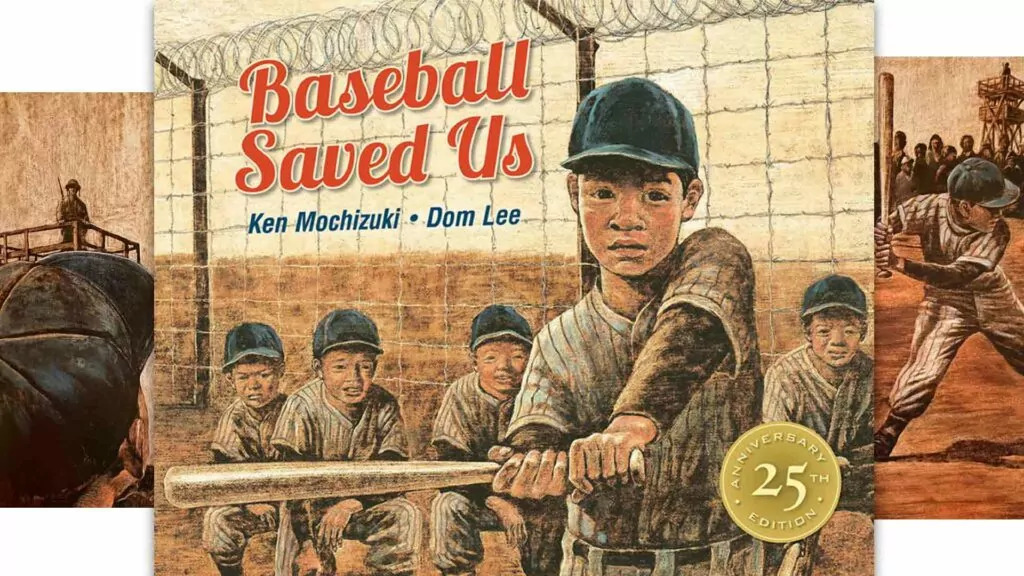
Baseball saved us

by Ken Mochizuki 1993 / 32 pages Rating: BORROW/Buy/Give This is the story of a chapter of World War II that I didn't know anything about until quite recently: the internment of the coastal Japanese-Canadian and American-Canadian populations. In both countries, citizens with a Japanese heritage were shipped away to internment camps until War's end, and their homes and businesses and most of their goods were sold or otherwise taken from them. All in the name of safety and security. And as this picture book shares in an author's note before its opening page, none of these immigrants "were ever proven to be dangerous to American during World War II." Based on author Ken Mochizuki's experiences, this tells the story of a Japanese-American family already in an internment camp. The young narrator tells us how it was his dad who came up with the idea for building a baseball field. No one had anything to do but sit around, and it was fostering disrespect among the youth and tension among the adults. So they got busy and built a field complete with stands, and an irrigated outfield, to get the grass growing. "Bats, balls, and gloves arrived in cloth sacks from friends back home. My mom and other moms took the covers off mattresses and used them to make uniforms. They looked almost like the real thing." The games gave the prisoners something to do, and look forward to. Our narrator gradually learns how to play, and hits the winning run in the championship game. But that's not where the book ends. The story continues with what happens after the war. These Japanese-Americans were now free, but they weren't welcomed home. The boy has to sit by himself at lunch at school. But here too, baseball helps. "By the time the first game came around, I felt almost a part of the team." But when the game begins, he realizes "Nobody on my team or the other team, or even anybody in the crowd look like me." Someone from the crowd shouts "Jap" when he drops a ball. Things are still far from improved out here, far from the camp. But, when he gets up to bat, he's able to put that all aside. It's just him and the pitcher. Caution The only caution would be regarding age-appropriateness. The internment of the Japanese is presented very matter of fact, which minimizes some of the horror of it. That's appropriate for the picture-book age group – Grade One kids don't need to have a full grasp on how a big government can perpetuate big injustices when a willing populace doesn't object. But to get it in part is important. So, this is a picture book that should be read, but probably with an adult alongside, to help a kid understand it, and emotionally deal with it. Conclusion A Christian who reads the title "Baseball saves us" should be a little disturbed – it seems to be propping up baseball as an idol. But this story is more about contrasting the justice on the baseball diamond with the injustice going on around. On the sports field, it's just whether you can play, and nothing else. While it is an older book, because it was reprinted again on its 25th anniversary, it's available at most libraries, and both new and used copies easily found with just a bit of hunting. And it's worth hunting for – this is a largely unknown chapter in our history, so it's not just an engaging read, but an important one....

Red heart icon with + sign.
Book Reviews, Children’s picture books

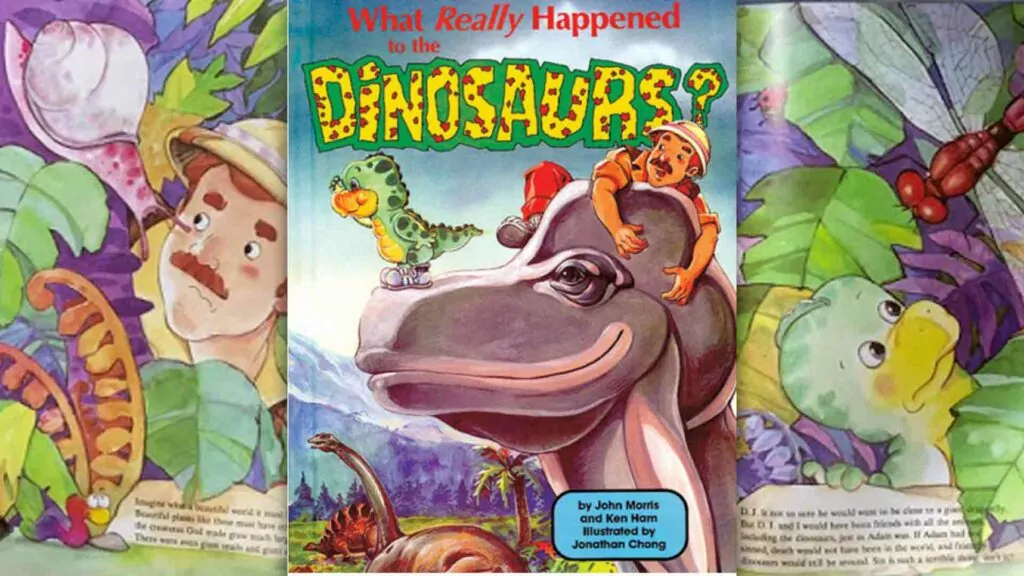
What really happened to the dinosaurs?

by John Morris and Ken Ham 1990 / 32 pages Rating: BORROW/Buy/Give Some children, it seems, are born with a love for all things dinosaurs while others might need their curiosity stirred. In parental hands, What Really Happened to the Dinosaurs? could do some real stirring. Colorful watercolor graphics accompany a narrative journey about the dinosaurs – Tracker John and his dinosaur friend DJ take us to the beginning of history, when God made dinosaurs on the sixth day. They discover clues which teach them why dinosaurs are different than other land animals. As we travel along with Tracker John, we see how sin changed God’s good creation, and how the Flood may have life for the dinosaurs. One neat aspect of this large hardcover picture book is the many illustrations of dinosaurs and humans living side by side. This is a fact of history that is denied by secular scientists, but has such power to capture a child’s imagination. Children in the second grade and younger will enjoy having this book read out loud to them, and the rainbow of colors used in the artwork will draw in young eyes. However, some more technical paragraphs will need to be summarized or skipped to make this a more attainable read-aloud for preschool kids aged 3 to 5. Older elementary kids in turn might find some of the watercolor graphics to be childish. This book is therefore a great selection for the parent who wants to encourage their young children to study God’s big world, even when the topics can be confusing. But it does require some effort on the adult reader’s part to make the words interesting and understandable to their young listeners. ...

Red heart icon with + sign.
Book Reviews, Children’s fiction

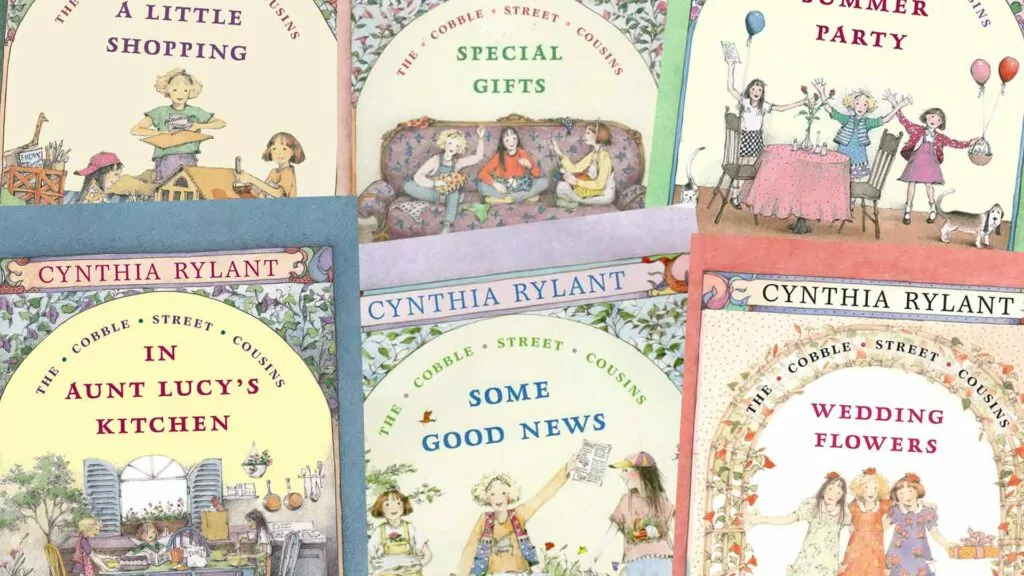
In Aunt Lucy's Kitchen

by Cynthia Rylant 1998 / 56 pages Rating: BORROW/Buy/Give Three nine-year-old cousins are staying with their Aunt Lucy, and wondering what sort of fun they can cook up. When Lily comes up with the idea of a cookie company, Rosie and Tess are quickly on board. And all it takes to convince their Aunt is the promise of some free Cinnamon Crinkles, her favorite. It's this enthusiasm, right from the start, that most appeals in this "The Cobble Street Cousins" series. All 6 books are low on the drama – no fights or conflict – but high on the creativity, with the three girls always eager to build on each other's ideas. Lily is the writer, so she composes a poem to help them advertise their cookies: Cookies to your door, Who could ask for more, Aunt Lucy's girls will bake for you Cinnamon Crinkles, sweet and true Call us for a Baker's dozen We'll bring them over with no fussin! This is just the first of Lily's works, and while not her best (one of the others prompted my youngest to blurt out, "That was a really good poem!") it gets the word out. And then the orders start a'coming! Their first delivery is to a young man stuck on his couch with his leg in a cast. The outgoing Tess just has to know how it happened, and before long the girls have learned the man's name (Michael) and his occupation (he studies plants), and they find out that he has visited their aunt's flower shop but been too shy to really talk with her. That, of course, gets the girls thinking, and before long they've figured out a way to have the two of them meet: the girls will have a performance and invite the neighborhood! There are 5 others in this Cobble Street Cousins series, all just as sweet. They are, in order: In Aunt Lucy's Kitchen A Little Shopping Special Gifts Some Good News Summer Party Wedding Flowers In #4, the girls start their own newspaper, which got my middlest doing so as well. She described the whole series as "inspiring." Cautions The one caution concerns the cousins' parents, or more specifically, their absence. Whether it is Peter Pan, Frozen, or The Green Ember, a common theme in kids' stories is for the parents to be conveniently out of the way. That's because it will be harder for children to have big adventures if their big folk are still around to keep them safe. Sometimes the absence is because the parents are dead (Pollyanna) or desperate times have required desperate measures (WWII bombings in The Lion, the Witch, and the Wardrobe). But in the Cobble Street Cousins series, the three girls are with their aunt because their parents are professional dancers doing a year-long tour. My kids didn't notice that this was a lame reason to leave your kids behind for a year... but I wanted them to notice because this is the "career over kids" misplaced priority that the world is so often pitching. To disarm it, we need to be able to recognize it. In addition, Tess only has a mom, and her dad's complete absence – no explanation is offered as to whether her dad is dead, or her parents are divorced – is odd. Conclusion While these will only appeal to girls (girls read boy books, but a boy wouldn't dare be caught reading a book about three girl cousins!), they most certainly will appeal. And at between 56 and 72 pages long, these are a nice digestible size for Grades 2 through 4. I'll also note that our family really enjoyed them as a bedtime read – the Cobble Street cousins are gentle, happy girls, who will inspire pleasant dreams! Cyntia Rylant has also authored the absolutely wonderful "Mr. Putter and Tabby" series, which, if you haven't checked it out already, you really should. Find my review here....

Red heart icon with + sign.
Adult biographies, Book Reviews

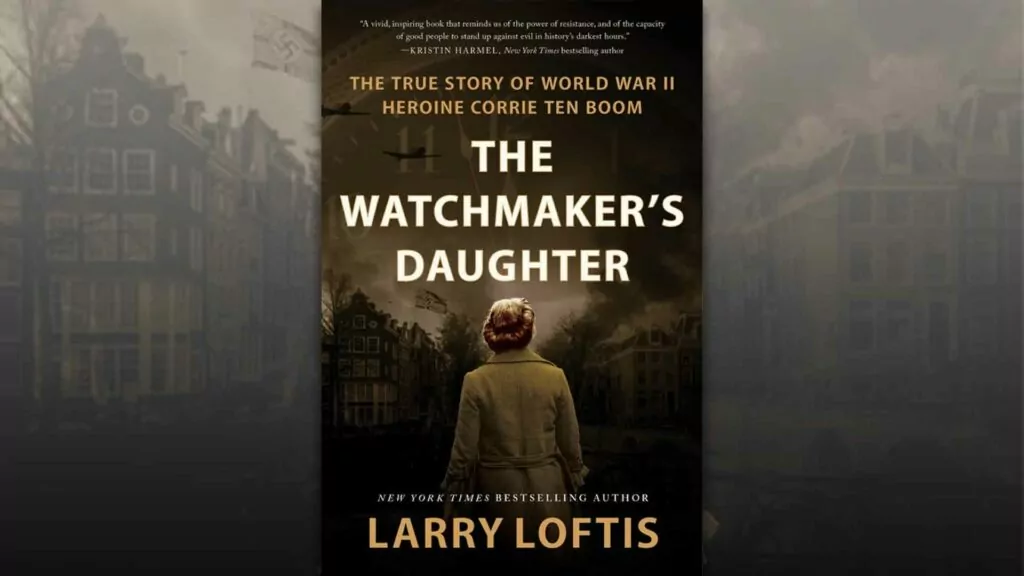
The Watchmaker's Daughter

The true story of World War II heroine Corrie Ten Boom by Larry Loftis 2023 / 384 pages Rating: BORROW/Buy/Give Larry Loftis is an international bestselling author who has written three other nonfiction thrillers of World War II heroes. Now, with The Watchmaker's Daughter, he has written an excellent, well-paced and very well-researched biography on Corrie Ten Boom. I really enjoyed this book; I read it in one sitting while enjoying the sunshine on my patio! At a young age, Corrie started to learn the watchmaking trade from her father, Casper, widely renowned for his amazing skills and known as the Grand Old Man of Haarlem. Shortly after they celebrated the 100th anniversary of the business, Hitler's Nazi forces took over the Netherlands. The Ten Boom family was deeply religious and believed that they needed to protect the Jews who were “the apple of God's eye” so they opened their home to Jews and to onderduikers (dutch for "divers"), young men hiding from the Nazis. But in March 1944, the family was betrayed by a Dutchman, one of their own. During the rest of the war, as Corrie was moved from one concentration camp to another, she finally ended up in Ravensbruck, a hellish place. But during the years of giving refuge, and throughout her and sister Betsie's imprisonment, she relied completely on her Savior, finding blessings even during the darkest of days. After the war, Corrie spent 25 years visiting more than sixty countries telling her story of love, forgiveness and grace. In his afterword the author writes that “writing about Corrie's message of faith, hope, love and forgiveness was an empowering and spiritually moving experience for me.” What I also enjoyed about the book was the occasional mention of Anne Frank's family in Amsterdam, and of Audrey Hepburn in her early to mid-teens who lived in Amersfoort. Hepburn worked in the military hospital there and put on private ballet performances in nearby homes, donating the proceeds to the underground. Dietrich Bonhoeffer also gets mentioned, as he was also in concentration camps, and towards the end of the war was shot. And all three of these connections are dovetailed right into the Ten Boom story. I also liked the several appendices, the “rest of the story” which completes the story of the refugees in the Ten Boom home. Appreciated as well were the 45 pages of notes where we read quotes from Bonhoeffer and Victor Frankl, and the extensive bibliography and an exhaustive index. This would be an excellent book for school and church libraries. There are at least two other books with the title "The Watchmaker's Daughter," one of them even about Corrie Ten Boom (but a children's book), so be sure to track down the one by Larry Loftis....

Red heart icon with + sign.
Book Reviews, Children’s fiction

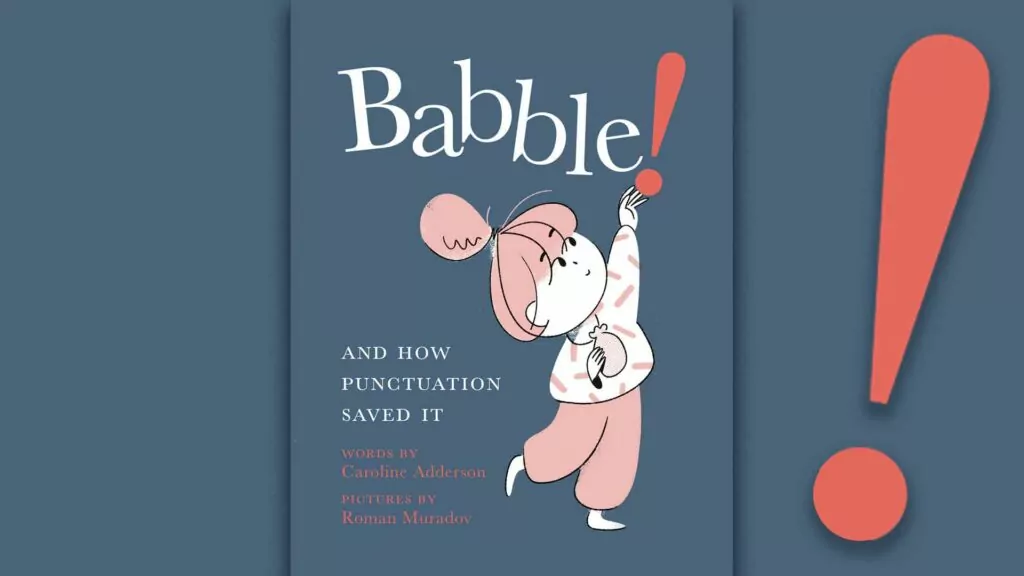
Babble! And how punctuation saved it

by Caroline Adderson illustrated by Roman Muradov 2022 / 72 pages Rating: BORROW/Buy/Give In the village of Babble no one knows what punctuation is which means they do not know when a sentence ends and the next begins they can't even figure out when they are saying things out loud or just thinking them because they don't have quotation marks But then along comes a little girl who introduces them to the period. Whewww. That helps a lot but the villagers have all sorts of questions they want to ask. But they can not. Because they still do not have question marks. Can you imagine the relief they felt when the little girl shared that special little squiggle with them? Onward it goes with quotation marks, commas, exclamation marks, and apostrophes introduced in the following chapters. The village of Babble, where there was once nothing but noise, now has people talking, thinking, questioning and, don't you know, contracting too! This would make for a great introduction to the importance of punctuation. Kids will especially love the chapter where the comma is introduced. In what's an old gag, but will be new to kids, accusations are made about Babble villagers indulging in cannibalism! But how could that ever be? Well, it's all about how the following sentence sounds if you don't include a key comma: "Soon we will eat Grandpa." Commas can save lives! This cute tale is really a must for every elementary school library!...

Red heart icon with + sign.
Book Reviews, Children’s fiction

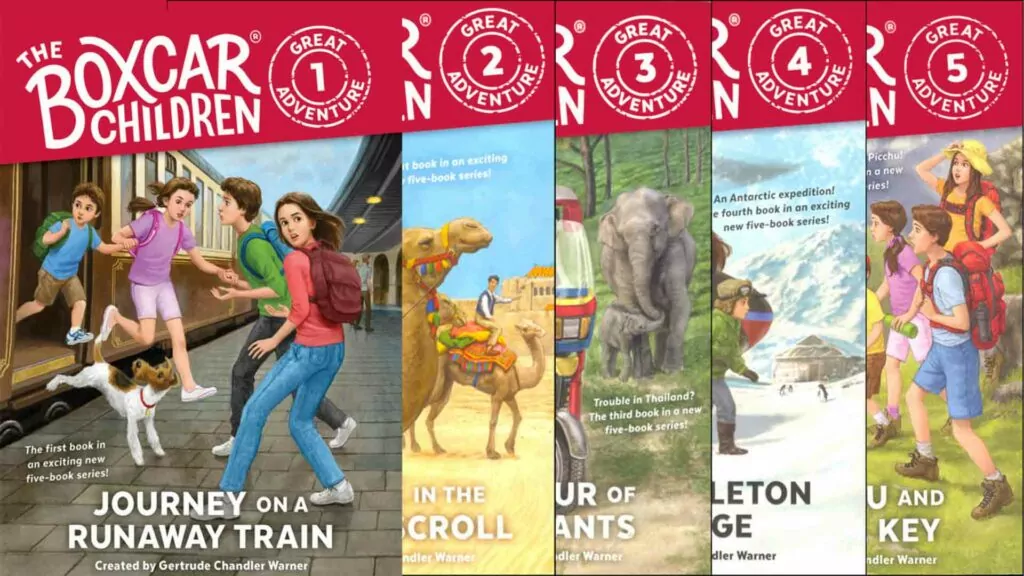
The Boxcar Children: Great Adventure

1. Journey on a Runaway Train 2. The Clue in the Papyrus Scroll 3. The Detour of Elephants 4. The Shackleton Sabotage 5. The Khipu and the Final Key created by Gertrude Chandler Warner  2017 / 687 pages total Rating: BORROW/Buy/Give The Aldens are four children – Benny, Violet, Jessie, and Henry – aged 6 to 14, who, after being orphaned, ran away and found an abandoned railway boxcar in the woods which they turned into their new home. The very first book in the series, The Boxcar Children, published way back in 1924 is all about how their grandfather searches for them, and how they hide from him, thinking him to be a mean man since he'd never come to visit the family when their parents were still alive. But, as so often happens in children's stories, this bad guy turns out to be not so bad after all: Grandfather Alden is actually a wonderful man (and rich too) who loves them very much. Eventually, all the misunderstandings are cleared away and the children go to live with him in his big house. To top things off Grandfather Alden has their boxcar brought to his house's backyard, so they can use it as their clubhouse. That first Boxcar book spawned 200 more, with this Great Adventure series published almost 100 years after the original story. Great Adventure is really just one story, 687 pages long, that's been divided into five books (each 129-145 pages) for the sake of making it a lot less intimidating for the intended 8- to 10-year-old audience. The setting is modern day, and the mystery that starts it all takes the children around the world to retrieve lost treasures. It turns out there are two groups after the treasures: a good "Reddimus Society" that wants to restore the items to the museums where they belong, and a bad Argent group that just wants to keep the treasures for themselves. The children are allied with the Reddimus Society and use the group's plane to fly from one place to the next. But somehow the Argents always seem to know where the Aldens are heading. Could one of their pilots be a traitor? And if so, which one? Cautions The main caution is God's complete absence. This struck me as a lot like a typical Christian kids' fiction series in how safe it is: a loving grandfather, his sweet grandchildren, and all sorts of other very kind people contend with villains who are most often misunderstood rather than evil. And unlike pretty much all the children's fiction published after 2020, there's no one here sharing their pronouns or any of that sort of wackiness. Safe. But that's not exactly a recommendation – to badly paraphrase Chesterton, it's good for children to read about evil, not to learn about its existence, which they already know, but for them to realize that evil can indeed be fought. At the same time, there is a time and place, so some nice safe books, in a moderate dosage, can be good too. It is that safety that makes these a favorite among Christian families (and even sold in some Christian bookstores).  But it struck me that in the stories themselves, there's not a Christian to be found anywhere. Nor is there any hint of Christianity – Sunday is celebrated as a day off of school when they can work on their projects. When the kids get into trouble, God's absence becomes all the more noticeable since the kids never think to ask Him for help. So, even though the first story was written a century ago in what was still a largely Christian culture, this is an entirely secular series. So, this 5-book series could be great fun, but you might not want your kids immersing themselves in dozens and dozens of books from this godless 200-book series. One other caution has nothing to do with these 5 books. If your kids want to check out more Boxcar, there are a couple of hundred others. However, while the original 19 books written by Gertrude Chandler Warner all seem similarly "safe," the 150+ books written after her death aren't always so. There's still no one offering pronouns (so far) but in one, Native spirituality is given a soft endorsement, and it might have been that same book where Man was presented as more an enemy of Nature than as the caretaker that God has charged us with being. So parents shouldn't presume that the whole series is reliably safe. Conclusion This 5-book set is just a fun, simple adventure that has enough suspense to keep its young target audience on edge. It's also a bit of an educational travelogue, with readers learning at least a bit about each country they visit, which includes Egypt, England, Italy, India, China, Thailand, and even Antarctica. For kids just learning to read, they'll feel a sense of accomplishment in tackling all five, and if a little one finds working through it a bit tough, the audiobook version is quite well done. Overall, this is a story that most boys and girls under 9 will really enjoy, whether it is being read to them, or they are tackling it themselves....

Red heart icon with + sign.
Book Reviews, Economics, Teen fiction

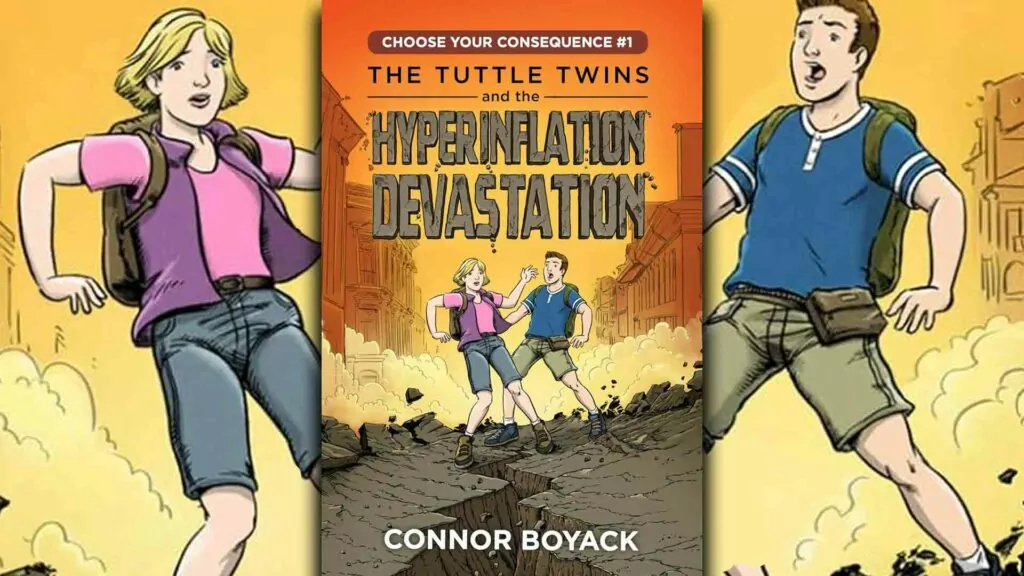
The Hyperinflation Devastation

by Connor Boyack 400 pages / 2019 Rating: BORROW/Buy/Give Remember those “Choose Your Own Adventure” books kids loved back in the 1980s? Readers would be brought to a fork in the road, given two options to choose from and if they chose Option A, they would be told to go to one page, and if they chose Option B then they would be directed to another. Afterward, they would continue on their chosen track with the adventure continuing to branch repeatedly thereafter. In The Hyperinflation Devastation, author Connor Boyack has taken that concept and expanded on it, creating a 400+ page “Choose Your Consequence” adventure to teach teens various lessons about economics. In this, the first book in the series, Emily and Ethan Tuttle, a pair of 15-year-old twins, head out on their own to the small South American country of “Allqukilla.” If 15 strikes you as young to be out without parents, I’m with you. However, these two are a particularly independent pair who have spent the last year planning and saving for this trip. They want to go to Allqukilla to check out the country’s ancient ruins. But is it to be? Right after their plane arrives, they see local news reports warning about an impending earthquake and it’s here that readers face their first choice. Are the Tuttle twins going to have an incredibly short adventure and head back on the very next plane, or are they going to go on to their hotel? Of course, no reader is going to take the cautious route, so onward and forward the adventure continues. While exactly what happens depends on the choices a reader makes, the twins will encounter that earthquake, and then, with power disrupted, they’ll have to deal with roads in bad repair, hyperinflation, a lack of available food and water, and no cell phone service, as the two figure out their way home. The author’s economic outlook is a small government, libertarian one, which comes out in the lessons the twins learn. So, for example, in one story branch, they end up in a small village in the hills that still has power because these villagers have never relied on the government to provide it. In another branch, they encounter some not-so-warm-hearted help – entrepreneurial sorts who will do them good…for a price. The twins sometimes get entirely altruistic help, but the point is, they also get help from people who wouldn’t otherwise be helpful, except that it is in their own self-interest to do so. The lesson here is that the free market is important because it gives people a motive to provide things other people want. While this is intended as an educational story, Boyack doesn’t beat readers over the head with the lessons he’s trying to teach. Only once, in the eight or so different story arcs does a character offer up a prolonged economics lecture. But even then, it isn’t too long. CAUTIONS The one caution I would offer deals not with this book, but with the author. He writes from a generally Judeo-Christian, libertarian perspective. Often times, those two perspectives can match up quite nicely since both Christians and libertarians recognize that the government shouldn’t try to be God. Thus we both believe in some form of smaller, limited government, which sets us apart from the many who call on the government to solve whatever problems they face. But in some of Boyack’s other books, his libertarian perspective comes in conflict with his Judeo-Christian perspective. In The Tuttle Twins Learn About the Law (one of the Tuttle Twins picture books he’s written for younger readers) he teaches readers that governments gain their authority from people, and not God. Based on that assumption the author argues that governments should only be able to do what people are able to do, therefore just as it would be wrong for a person to forcibly take money, so too the same must be true of government. But this simply isn’t true. God has empowered governments to do some things which individuals must not do, and taxation is one of them (Luke 20:25, 1 Peter 2:13-14). The libertarian perspective in Hyperinflation Devastation is more restrained, and thus in keeping with a Christian worldview that understands God as distributing powers and responsibilities not simply to the state, but to parents, and the church, and individuals too. CONCLUSION I would recommend this for any kid from 10 to 15. The adventure is a solid one, and the Choose-Your-Own-Adventure component will grab their attention. Yes, this is an economics lesson, but it is a generally subtle presentation that never gets in the way of the story. That allows most kids, whether they are politically-inclined or not, to enjoy this. But because the economics angle is so very different from what they are reading in other books, it may well spark an interest in learning more about money, inflation, politics, and more. It may interest parents to know there are other titles in this “Choose Your Consequence” series so far, but as I haven’t read them, I can’t recommend them as of yet. There is one mistake in the book, on page 388, where we are directed to Page 335 but should be directed to Page 111. I recommend some of the Tuttle Twin pictures books on my personal blog here....

Red heart icon with + sign.
Book Reviews, Children’s non-fiction

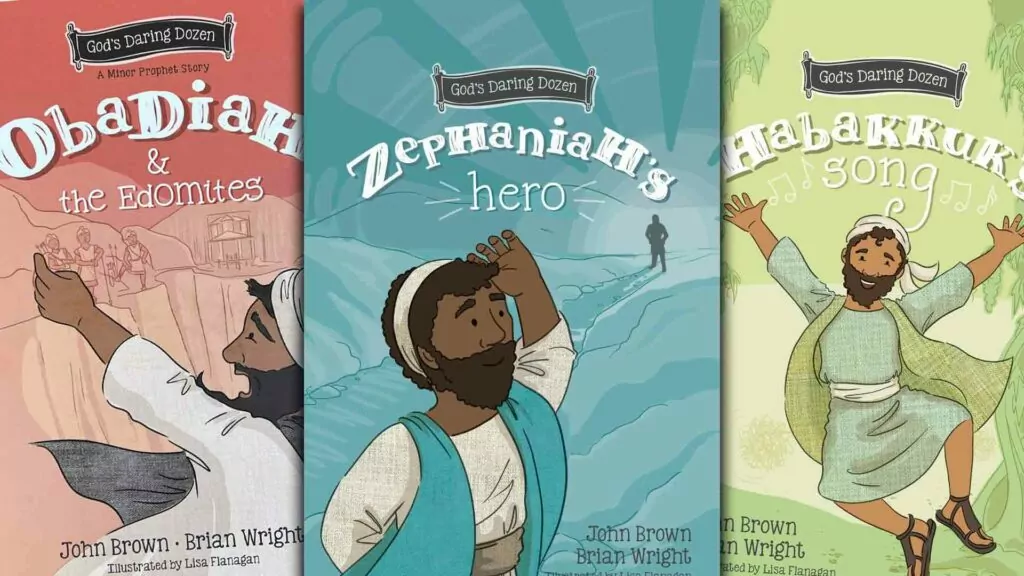
God’s Daring Dozen: A Minor Prophet Series

by John Brown and Brian Wright Illustrated by Lisa Flanagan 2021 / 40 pages each Christian Focus Publications Rating: BORROW/Buy/Give I’ve never been a fan of children’s Bibles. When our kids were young, we never used them during our daily family worship. We always just read straight from the Bible. I figured they would get enough Bible stories at school – and they did. My negative attitude about story Bibles is due to a couple of factors.  One is their tendency to moralize everything and the other is to miss the One to whom the whole Bible is pointing: Jesus. So I was a tad skeptical about this series of storybooks based on the Minor Prophets. I looked at the first four volumes in this series: Obadiah & the Edomites, Habakkuk’s Song, Haggai’s Feast, and Zephaniah’s Hero.  They’re meant for reading to kids ages 4-6, but kids ages 7-10 should be able to read them for themselves. I read through them for myself and mostly appreciated the approach. They’re well-written, capturing the message of these books, and helping kids see how they point to Christ. The illustrations are colorful, bold, and appropriate. I don’t have any young children at home anymore and no grandchildren yet either. However, I have a daughter who works as a nanny.  I asked her to test drive these books with the children she cares for. These were kids on the younger side of the target audience and she found they had a hard time focussing. However, she did say that they would probably work well in the Christian primary school environment or perhaps Little Lambs (Sunday School) at church. ...

Red heart icon with + sign.
Book Reviews, Teen fiction

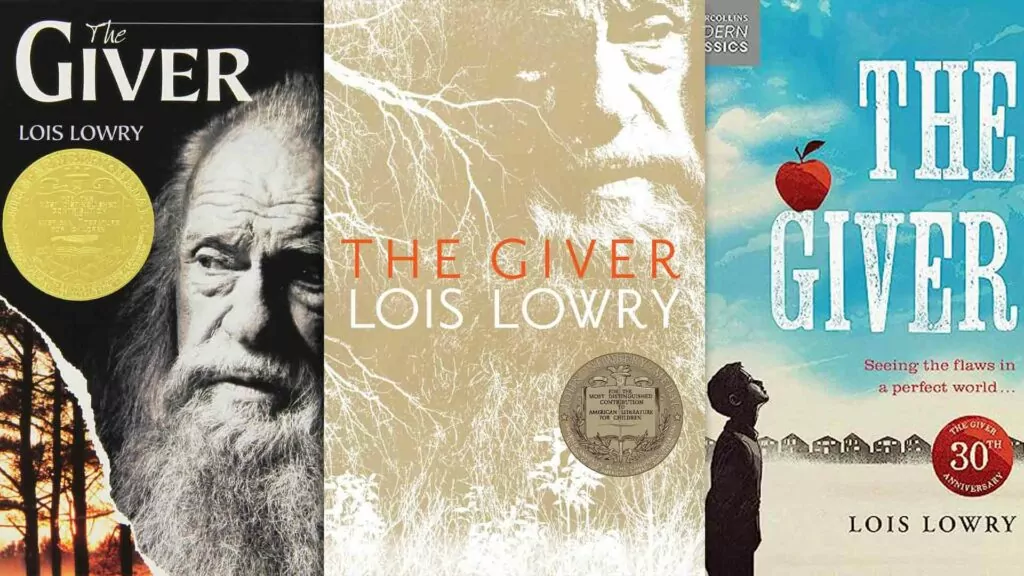
The Giver

by Lois Lowry 1993 / 208 pages Rating: BORROW/Buy/Give The Giver is a book that is not specifically Christian, but has been studied in Christian schools and is stocked in our Christian school library. Why? Lois Lowry's novel is a brilliant dystopia - a vision of the future where things have gone horribly wrong. What makes it so brilliant is that in the brief space of a children's novel, Lowry shows, as dystopian novels always do, how the desire to make a utopia leads to disaster. The original Utopia (which literally means "no-place"), by Thomas More (an English Catholic writing around the time of the Reformation), is a vision of an ideal, perfectly regulated society, where people live their lives with leisure and work balanced, and the wealth is fairly shared among all. All these features are appealing, but given human nature, any attempt to build society through regulation will result in the stomping out of individuality and the oppressive power of whatever authority we trust to organize everything. Basically, there is a kind of idolatry of human systems and power. Of course, we know that idols always disappoint, and idols always demand horrible sacrifices. That's what's going on in The Giver. Lowry builds up a picture of an ideal, well-organized society where everyone has his or her specific role set by 12 years old. All the angst of adolescence in our society has been taken care of through this selection of each person's career by the community, as well as by the suppression of the disruptive disturbance of teenage hormones. The result is a village in which there is no significant crime; in which each person is given a specific role and, in return, has all his or her needs are met from cradle to grave by the community; and in which both the physical storms and emotional storms have been subdued by technology. This "sameness," as the narrator calls it, has been maintained for generations. Even the memory of the relative chaos of our own society has been wiped out, but the elders of the village have ensured that the past is not entirely lost, so that in the event of crisis, the elders can learn from it. This is where the main character, Jonas, comes in. At twelve years old, he is given the unique role of the Receiver of the community. What does he receive? The memories of the village before the "sameness" - from the Giver. Jonas's unique knowledge enables him to see what a terrible place our own world is - with war and other suffering - but also what emotional ties like family and romantic love were lost with the oncoming of the "sameness." His own crisis comes when he sees what sacrifices his seemingly utopian village demands to keep its stability. Why would Christians want to read this? The Giver shows us both the beauty and the cost of human emotion and desire, but also the foolishness of playing God in trying to wipe both out by human power. What we need is not liberation from our own humanness, but liberation from the sin which has corrupted our humanness - by the death of Christ - and the redirection of our emotions and desire - by the work of the Spirit. Lowry may not explicitly put us before God's throne, but she does a fine job of knocking down one of the idols that serve as a stumbling block blocking our view of His glory. ...

Red heart icon with + sign.
Book Reviews, Teen non-fiction

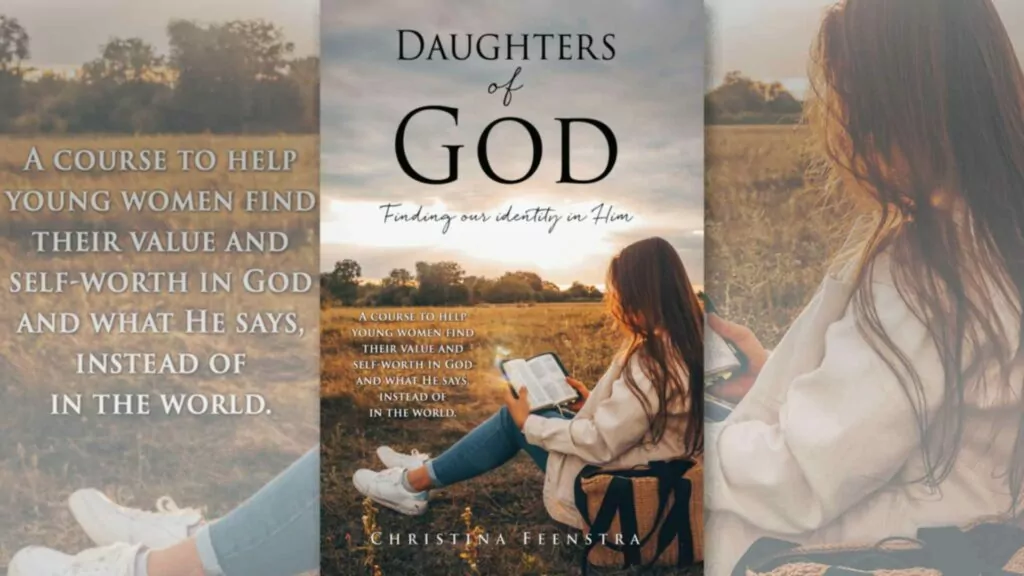
Daughters of God: Finding our identity in Him

by Christina Feenstra 2022 / 198 pages Rating: BORROW/Buy/Give This workbook of six chapters is “a course to help young women find their value and self-worth in God and what He says, instead of in the world.” Christina Feenstra is a grade five teacher in southern Ontario and has developed this course for young teenage girls to find their way in the world. It is primarily meant as a group study but can be used singly. Feenstra uses many Scriptural passages and the Three Forms of Unity for the girls to look up, to study and apply to their own lives. As daughters of God, we are created in His image, living for His purposes to the glory of God's Name. We belong to the body of Christ and thus are members of a community of believers.  This book teaches young girls how to love God and to show thankfulness by loving their neighbor. Each chapter begins with a Bible reading and a prayer, followed by questions and a study, and ends with things to focus on during the week.  Feenstra makes good, practical suggestions such as keeping a journal to record devotions; to record five things daily for which we are grateful.  Because we are temples of the Holy Spirit, we need to take good care not only of our spiritual needs but also of our physical needs by eating well, exercising, and getting enough sleep. I highly recommend this book for the young sisters in our churches. I'd even recommend it for the older sisters, especially the chapter on forming good habits, to review their own lives in the light of God's Word....

Red heart icon with + sign.
Adult fiction, Book Reviews

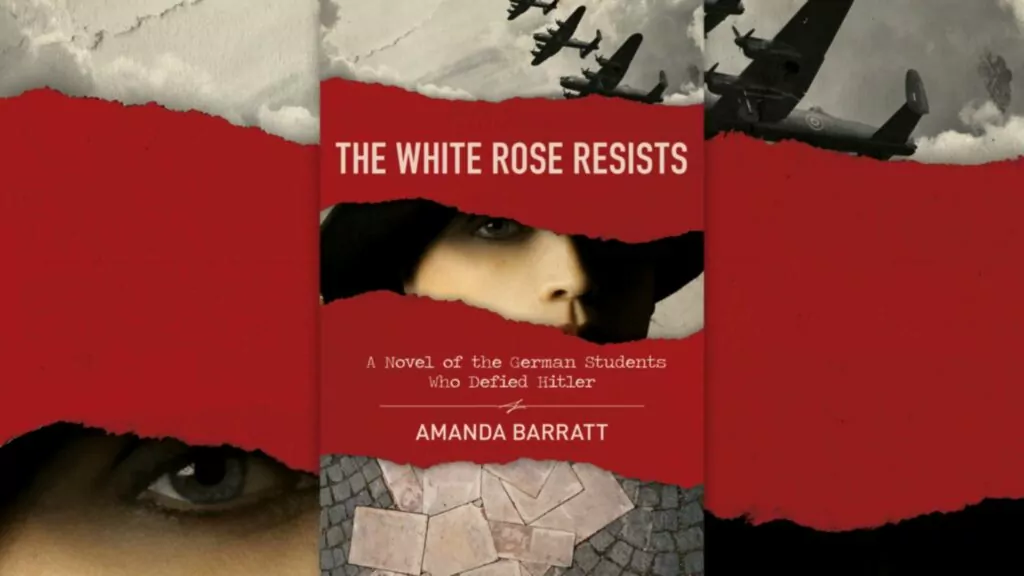
The White Rose Resists: a novel of the German students who defied Hitler

by Amanda Barratt 2020 / 320 pages Rating: BORROW/Buy/Give In Amanda Barratt’s novel The White Rose Resists, a candle is being lit in the midst of the Nazi darkness that has cast its shadow upon the world. The White Rose was a group of five college students and a professor operating in Munich, Germany. Their goal was to combat the Nazi propaganda that was blinding the German people. The White Rose accomplished this by printing and distributing leaflets, giving a voice to the truth. Their leaflets detailed and denounced the atrocities that were being committed against the Jews across Europe. The group called for the students of Germany to rise up against Hitler. I really enjoyed this novel. Barrett does a terrific job bringing this historic resistance group to life. She was able to blend fact with fiction to create a cohesive narrative of what this group may have experienced. This Christian author weaves in a message on God’s sovereignty. Members of the White Rose grapple with their faith and ultimately come to the knowledge that God’s will must be done. They place their trust and hope in Him to give them the strength they need to pass through their trials and tribulations. When darkness has seemed to triumph, God, in his sovereignty, begins lighting candles so that the darkness will not overcome the light. The White Rose was one of many candles that God used to bring down Hitler and his Nazi regime. This book is a great read for teenager and adult alike. The only criticism I have to offer is that the author blended several German words into the narrative. Initially, this was quite distracting but improved as the novel progressed....

Red heart icon with + sign.
Book Reviews, Teen fiction

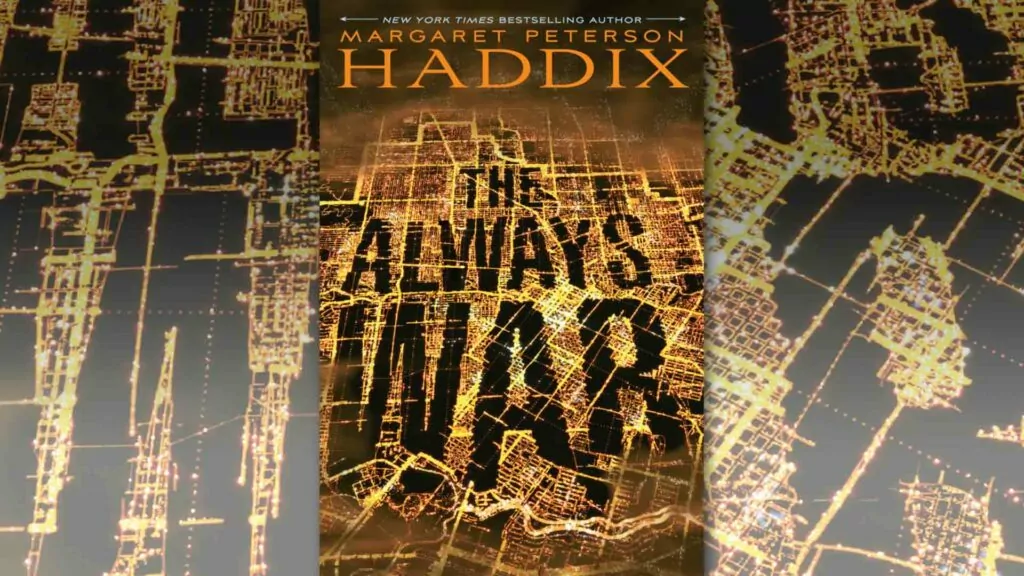
The Always War

by Margaret Peterson Haddix 2011 / 197 pages Rating: BORROW/Buy/Give When my 13-year-old got a gift certificate to the local bookstore, it was an excuse for the two of us to spend some serious time perusing the shelves. But after an hour we’d discovered there wasn’t much there for her that she hadn’t already read. The teen books were either silly stories about teen crushes, or weird stuff about witches, demons, and vampires. We finally settled on something with a cover that looked almost like some 1950s nostalgia, only to later discover one of the key characters had two dads. Another trip to the same store ended up with a decent book, but on the final page the author noted he uses “they/them” pronouns. Third try was the charm... sort of. We found something by a preteen author I'd heard was quite popular, and whose books I'd seen in our Christian school library. But while the book we settled on – Margaret Peterson Haddix’s Found (2008, 314 pages) – wasn't bad, I appreciated it more for being harmless than stupendous. It’s a time travel adventure/mystery, with a bunch of adopted children trying to figure out where they came from. There’s the typical cautions – kids acting behind their parents’ backs, along with a couple passing mentions of evolution – but none of the newer cautions needed. Peterson isn’t advocating for amputative surgeries on youth or adults (as the fellow with the “they/them” pronouns implicitly is, by pretending that gender is changeable), or for alternative lifestyles. The biggest caution I’d have concerns the fact that this is just the first of Peterson’s eight-book The Missing series, and at roughly 300 pages each, even if they all turn out to be mostly harmless, that’s a lot of cotton candy for any kid to be ingesting. I’ll also add a concern about whether this would be good or bad for adoptive kids to read, as the topic of adoption, and kids searching for who they are, is a big part of the story. Finally, as just a general caution on the author, I do know another book  (Double Identity) by this author that features a female pastor as a major character. So it was more like one thumb up for this one. But while I'm not going to be continuing with that series, it was still good enough for me to check out more Haddix material. And now I've found one I think worth recommending. The Always War is a mystery of sorts, set in a world like our own, yet one that has been in a constant war for the last 75 years. We come along for the ride with Tessa, a girl who still reads old stories, even though no one else does anymore. She's at a celebration for a young war hero, a pilot named Gideon, that doesn't go as expected – instead of accepting his award for bravery, Gideon runs off. Why would a hero run away from his adoring and appreciative fellow citizens? Well, as Tessa slowly begins to discover, Gideon doesn't think he's a hero, because he did his arial combat, not from the sky, but from behind a computer – he was flying a drone. And he has discovered that instead of hitting a legitimate military target, he seems to have hit a civilian marketplace. Distraught, Gideon is determined to fly down to the marketplace to offer his repentance, for whatever that's worth. And Tessa comes along for the ride. But Gideon has to go behind the military's back, work with black market privateers, and sneak past his own border guards. Then, when they arrive, nothing is as he expected. There are no angry grieving crowds to meet him. In fact there's nothing at all! So what's going on? What's actually real? The mystery lasts most of the book, which means that this requires a reader with some patience. As for concerns, God is not a part of this world, and seeing as one of the themes of this story is about discerning reality from what authorities tell us is real, that the characters simply rely on their own wherewithal makes a bit too much of Man. But that's the biggest problem. A good read for 12 and up so long as they don't mind working through a mystery bit by bit – they will need to have some patience....

Red heart icon with + sign.
Adult biographies, Book Reviews

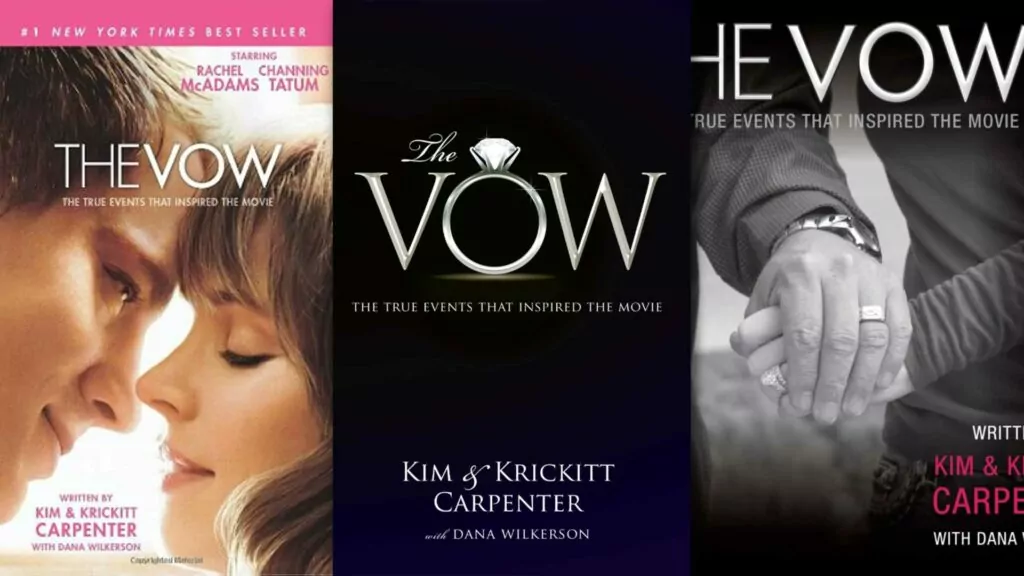
The Vow

by Kim and Krickitt Carpenter 2012 / 183 pages Rating: BORROW/Buy/Give This is Exhibit #1 in why you should never judge a book by its movie. If you've ever wondered what it meant when a Hollywood film said it was "based on a true story," if The Vow is any indication, it doesn't mean much at all. Both the book and film tell the story of a couple whose marital vows are put to the test after a horrific car accident leaves the wife with no memory of marrying, or even meeting, her husband. The real-life couple is Kim and Krickitt Carpenter, both Christian, which impacts every part of their story They met each other when Kim, a baseball coach, purchased some team uniforms from the company where Krickitt worked. Krickitt always loved her family, which is why Kim went to her father to ask for permission to marry his daughter. They saved sex until after they were married and had a big traditional church wedding with family and friends. They said their vows before God and his people. After the accident, Krickitt briefly stayed with her parents, but the couple never considered divorce, and three years later they had a second wedding ceremony and renewed their vows. In the film the couple have been renamed, with Leo owning a recording studio and Paige a vegetarian artist who hates her family and hasn't spoken to them in years. So, of course, Leo doesn't ask Paige's dad for permission to marry his daughter because Leo doesn't even meet his father-in-law-to-be until after the accident. The couple lives together before marriage and has sex long before marriage. Their marriage ceremony is an impromptu one that takes place in an art museum, it includes lots of giggling, warm and fuzzy promises, and is interrupted by museum security guards. After the accident the couple eventually divorces, only to later get married once again. So why such a departure from the real events? It turns out the film’s two primary scriptwriters, Abby Kohn and Marc Silverstein, never met the Carpenters, and never even read their book. Kohn noted: gave a couple of lines about the true story and allowed us to go invent a movie that we liked.... I think if they told us too much we’d feel responsible to those details. But we felt responsible to nothing. The irony is, while the scriptwriters decided to depart from the real story in order to make it more interesting, the end result was a movie that didn't feel authentic. The vows Leo and Paige made were frivolous, done seemingly as a lark, and the sort that couples facing far easier trials break every day. In this secular setting why would Paige feel any reason to keep promises to a man who, after that accident, she doesn't even know? The true story teaches the meaning of faithfulness, both in how Kim refuses to turn his back on Krickett no matter how much she has changed, and even more remarkably in how Krickett decided to keep promises she didn't remember making, to a husband she didn't know, because she knew she had also made those promises to God. Now that's a story. But it’s clearly one that Hollywood could never do justice to. At 183 pages the Carpenters’ book is a quick, fun read. It may not be great literature, but the story itself is extraordinary… and so much better than the “inspired by true events” Hollywood version. A version of this originally appeared in the July/August 2017 issue....

Red heart icon with + sign.
Book Reviews, Teen non-fiction

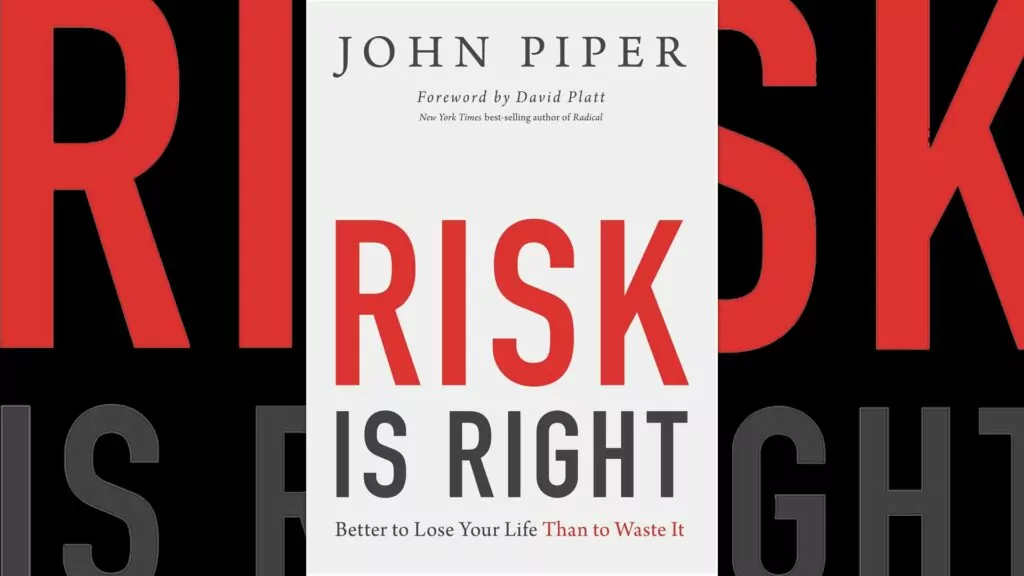
Risk is Right: Better to lose your life than to waste it

by John Piper 2013 / 51 pages Rating: BORROW/Buy/Give How often do you take risks? If you’re anything like me, it’s not often. I like to maintain the status quo and to never feel that knot in the pit of my stomach when the outcome of a decision is in limbo. I like to feel safe. John Piper in his short book, Risk is Right, sets out to destroy this myth of safety. We live in a world full of uncertainty. No matter how hard we may try to eliminate risks from our lives, it is impossible. But as Christians, we need never be afraid of risk, for we have the ultimate security, salvation through Jesus Christ! This one thought should release the chains that hold us from risk: we have been freed to honor Christ in this life and in death.  That is not to say that safety is wrong. We don’t need to be adrenaline junkies, looking for the next adventure to get our blood pumping. Rather, it's the safety that comes from cowardice that is wrong. Queen Esther risked it all when she approached King Ahasuerus without being called. Esther did not know the outcome but trusted that God was powerful enough to save both her and her people. Shadrach, Meshach, and Abednego could have bowed down to Nebuchadnezzar's statue and guaranteed their safety. Instead, they refused, handing the outcome of their lives to God. It is right to risk for the cause of God, and refusing these risks because of cowardice is wrong.  I recommend this short book to everyone. We live in a culture that is so risk averse that “two weeks to stop the spread” became two years. We wanted safety so badly, that even as it became evident the government wasn’t able to provide it, we settled for having at least a false sense of security. This book knocks away such crutches so we can live a life worth living, by finding our security in Christ.  A bonus: you can download it for free here....
Red heart icon with + sign.
Adult fiction, Book Reviews

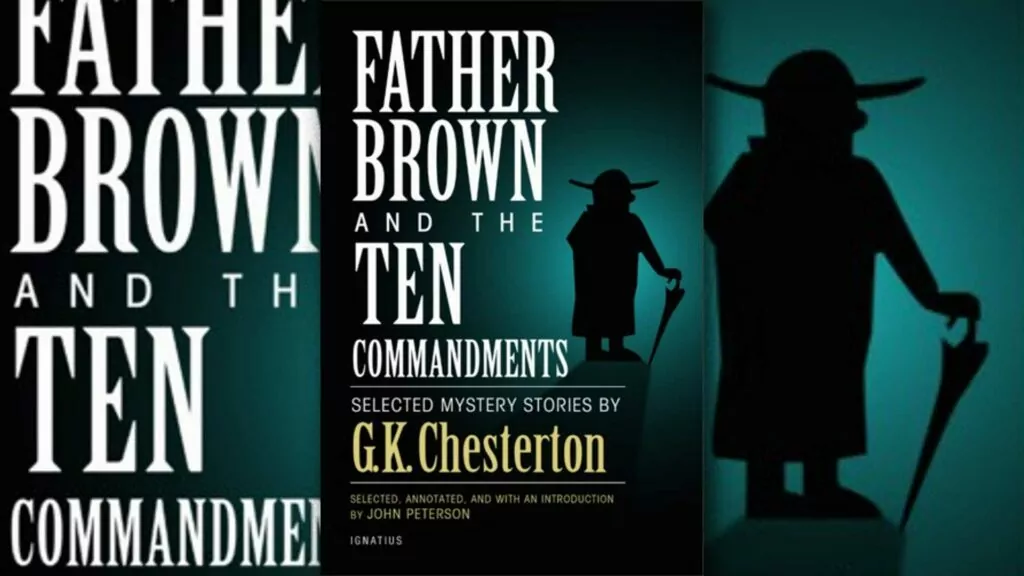
Father Brown and the Ten Commandments: Selected Mystery Stories

by G.K. Chesterton 2017 / 249 pages Rating: BORROW/Buy/Give An heiress of a large fortune has fallen to her death, and suicide seems the obvious explanation. But then along comes a short man in clerical dress with an explanation that shocks everyone. This short man is Father Brown, Roman Catholic priest, who doubles as an amateur detective. Brown often finds success in his investigations because of his perceptive understanding of human nature. Brown also uses his unimposing character and position to gain valuable information from witnesses who see him as only a priest. This information, often overlooked by even the reader, helps Father Brown bring the criminal to justice. Brown was a creation of G.K. Chesterton, who was Catholic himself, but whose apologetic writings are much appreciated by Protestants too. His Father Brown character has been featured in over 50 short stories. This collection of mysteries is focused around the Ten Commandments, taking on the commandments one by one. I enjoyed all of them – each story is just 20-30 pages long, which is great if you don’t want to commit to reading a novel. And Chesterton still manages to build enough suspense to leave the reader shocked by the criminal and their motive. Two cautions: first, G.K. Chesterton wrote over one hundred years ago so his vocabulary may be less accessible to younger readers. Some of Chesterton’s characters use racial slurs (Agar Rock in The Scandal of Father Brown) and there are a couple uses of “salty” language. I have never been a huge fan of mystery novels but found myself thoroughly enjoying each story. I look forward to picking up another collection of Father Brown mysteries....
1 2 3 4