Transparent heart icon with white outline and + sign.

Life's busy, read it when you're ready!

Create a free account to save articles for later, keep track of past articles you’ve read, and receive exclusive access to all RP resources.

White magnifying glass.

Search thousands of RP articles

Equipping Christians to think, speak, and act

Open envelope icon with @ symbol

Get Articles Delivered!

Equipping Christians to think, speak, and act delivered direct to your Inbox!


Assorted

The evil of simplicity

If ever there was an idol thoroughly ripe and ready for a great heaving into eternal hell fire, it has to be the idol of simplicity.

This leapt to my attention, not for the first time, this morning when I made the grave mistake of wandering from the “Holds” section of our depraved local library and into the cookbook aisle. My sight was immediately accosted with drivel — 5 Easy Ways to Feed People So That They Will Never Ask You to Do It Again, Eating with No Grain and Only a Fraction of a Grimace, and Whole 30 to Become Half a Human.

I might be paraphrasing.

A little.

We are people captivated by convenience and ease, by a false simplicity. The only simplicity worth having is that simplicity we don’t want: simplicity of heart, childlike faith, accepting what our Father gives us without throwing a fit about it, because He is our dad and if He says we need it, then we do.

Everything spelled out?

No, we have no use for true simplicity. We want systems. We want all the ways to save time, money and calories. There is a paradox here – true simplicity gives rise to perfect complexity, the sort that can be in awe of fungus that is good to eat, and in awe of the mystery of breastfeeding, the sort that can know it is worthwhile to make a thing with your own hands, and that saving time can be the most deadly waste of all. But when simplicity is the goal in and of itself, all such glorious complexity is once and for all abandoned for the sake of efficiency, of economy, of a time-saving system or technique.

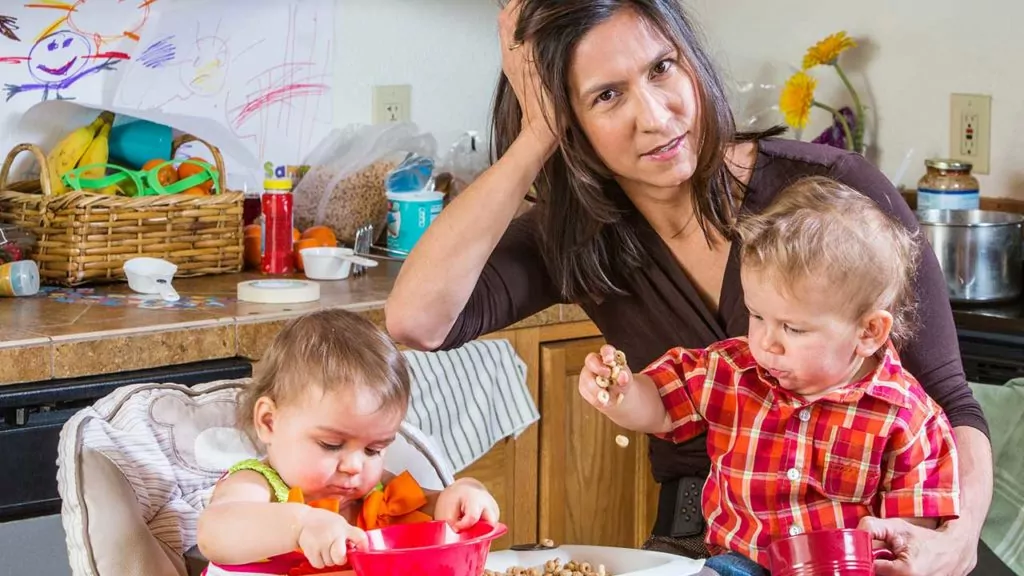
Ironically, our quest for simplicity often goes hand in hand with a devotion to busyness, and thus the vicious cycle is born. You worry that if the only socialization your kids receive is at home (gah, what if they start talking like me??) and at church, such that they will grow up to be like that oddball who sings with a sign on the corners of intersections trying to get you to buy mattresses. So you sign them up for activities and sports and lessons (I wonder how many of the decisions we make as parents have their beginnings in fear...). This busyness drives you to seek out ways to “maximize your time.” You meal prep – perhaps you cook one day a month and freeze it, if you are an ambitious homemaker at heart, or maybe you just buy pre-packaged meals and snacks, things that can be heated up quickly or eaten on the run. You make a detailed plan for getting all the laundry done as you seek the simple life... but true simplicity just does the wash, and thanks God for having people to dirty the clothes He gave you.

The quest for simplicity blinds us to the stunning complexity that is living.

Simple shouldn’t drive

Don’t get me wrong – the frozen pizza is not the problem. I love frozen pizza and canned food is a gift. It is always about the heart. Simplicity is a bad master. So is complexity, for that matter. Pride creeps in on both fields and makes a mess of our enjoyments and our work.

All well and good, you might be saying, but the laundry actually does need doing and I think better with a system! Without a plan, my whole house reeks of stinky socks!

Take a breath (well, unless you haven’t been doing your laundry). This is not an indictment of planning or of systems. It is not even necessarily a criticism of trying to find the easiest, fastest, cheapest way to do things. There are good reasons for pursuing all of these goals. The evil I find is when the means becomes the end. We are a forgetful people; we build idols out of anything and everything.

So much to appreciate

Let’s contemplate an example of what I am talking about, shall we? It is August as I write this and all the vegetables on the farm are ripe for the taking. There is tremendous abundance. I am delighted by everything about summer squash: the color of sunshine, the smooth, thin exterior, the butter-colored flesh, and a flavor mild enough to serve with anything. Our visit to the library was cut blissfully and providentially short by the knowledge that we needed to get back home in time to bake a Yukon gold potato and summer squash torte that I had prepared for lunch. This delicious dish was new to me and I think it demonstrates the principle I am fumbling around to express. There is nothing inherently difficult or fussy about this torte. It is thinly sliced potato and squash, layered with drizzles of olive oil and a cheese and salt and pepper mixture, with green onions sprinkled throughout, baked to a golden, crispy-edged perfection. Yet it was captivating – appreciation led me to take the time to slice, to stir, to grind, to arrange, to bake. It took time and attention to use the gifts of the ultimate Husbandman well, and the result was lovely, a feast for the senses. It was not the easiest way to use the vegetables, it was not the least expensive lunch, it was in no way time saving. But there is glory in gratitude. One of the interesting side effects of offering up your time and money and effort during the preparation of a thing is that it tends to encourage a similar offering up in the receiving of the thing. A torte that took two hours to prepare (not even considering the time and effort spent in the growing of the vegetables) could certainly be scarfed down in mere moments... but it felt so natural to eat it slowly, to lift layers and perceive what the heat of the oven had accomplished in the time it was given. Simple, right?

His world is far from simple

You are up to your eyeballs in the generous, way over-the-top gifts of God. And the only simple part of this gift-giving is meant to be the receiving – wide-eyed, hands clapping, laughter bubbling out of you because He did it again! He made wild things grow in the wood, He caused the carpet fibers to hold their form and be soft under your feet, He spoke flowers and hummingbirds and green lacewings into existence and taught them to dance. So sing while you work, drink your water from a pretty glass, be in awe that hair can be combed, live amazed. He has not given you the future; today’s gifts are more than enough to keep you occupied, to fill your arms and your thoughts and your affections.

This story is way too big to waste on simplicity.

Red heart icon with + sign.
Assorted

Dominee’s friend

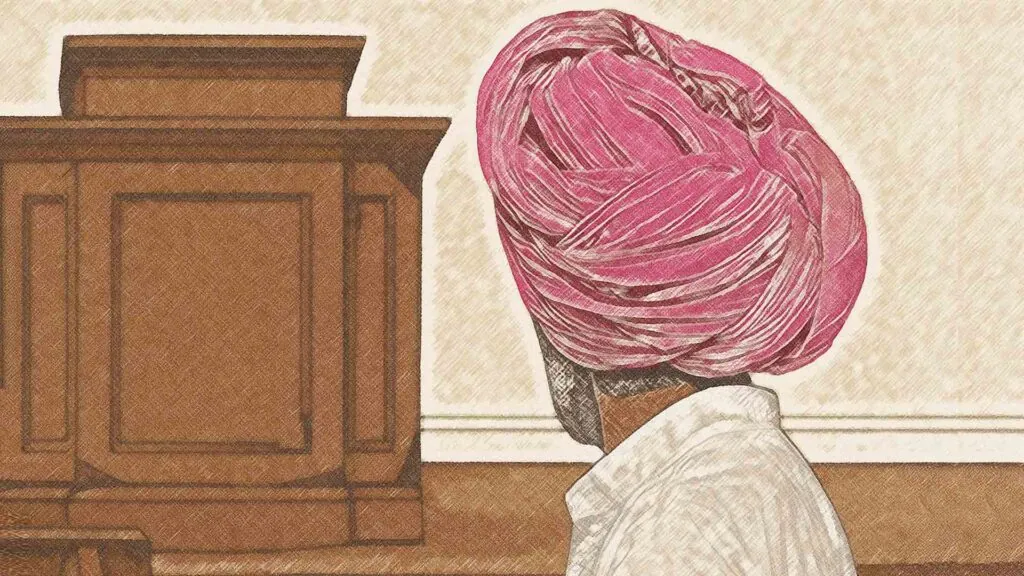
There is style and there is class. Dominee may not have had much style, as the world considers style, but he had class. Dominee had accepted a call to another church. At such a time we cover up the pain of separation with laughter. How could we be happy? This was the man whom God had sent to us to speak to us the Word of God every Sunday. We heard the voice of the Great Shepherd through His under-shepherd twice every Lord’s day. Because Dominee’s voice was so familiar, and his sermons somewhat predictable, we thought we knew him. We knew from the cadence of his heavily accented sentences when he was wrapping up the sermon — just the final song yet, and the benediction, and we’d soon be outside chatting, swapping stories, and laughing. Dominee was not what you would call an especially stylish man. During all the years he preached to us he wore a grey suit. He may have replaced it with a new one once in a while, but we never noticed because the new one was identical to the previous. Nothing stylish about Dominee. Even when he would drop by because of illness in the family or if someone needed encouragement, he’d wear a grey suit. We thought we knew him, until his farewell evening. As I said, when we are sad, we turn to laughter. To cover up our sadness. The farewell evening had begun and was evolving in a predictable way. There was only one unusual thing that immediately caught everyone’s attention. Near the front of the church sat an old Sikh gentleman and his wife. We could tell he was a Sikh because he was wearing a turban. The turban happened to be pink. Later I was told it was, in fact, lavender. The chairman of the men’s society, a serious man, ascended the pulpit. He read some Scripture, prayed, and invited us to sing a well-known Psalm. On behalf of the men’s society, he spoke some kind words of farewell to Dominee, his wife, and the children, and then presented them with a gift, a beautiful painting of local scenery: “We don’t want you to forget this beautiful part of the country!” This was followed by several presentations — women’s, young people’s, youth. And on it went, predictably and comfortably. The presentations alternated between funny, sad, and poignant. But mostly we laughed. When the elders and deacons performed a humorous skit about Dominee’s typical way of leading a meeting, we laughed heartily. When one of Dominee’s local colleagues told a story about Dominee at a classis meeting, we laughed so hard we thought our sides were going to burst. After several hours, when everyone was good and ready for coffee and cake, the chairman of the men’s society ascended the pulpit once again. With gravity, he thanked everyone for coming, bade Dominee farewell once more, and asked if there was anyone whom he had missed, or who had not been on the program but yet wanted to say something. The Sikh gentleman stood up. Well, this was interesting. Slowly, with age and dignity, he walked to the front of the church. He began to speak. This was very interesting. No one could remember a Sikh speaking in our church. He began to tell a story. It had been a hot summer afternoon when he and his wife were walking along the sidewalk. Suddenly overcome by heat, thirst, and exhaustion, he sat on a stone wall in front of a house. That house, as it turned out, was the Manse. Dominee was sitting in the shade reading a newspaper from the old country that had just come in the mail. He noticed the Sikh man sitting at the end of the driveway on the stone wall, and the man’s wife bending over him with a look of concern on her face. Dominee got up to see if he could help. “My husband is very thirsty,” said the lady. “Could he please have some water?” Dominee went to the house and came back with a pitcher of water and some glasses. He poured two glasses of water, and then he took a moment to speak about the other water, the living water that Jesus provides. On that day Dominee and the Sikh became friends. The Sikh gentleman and his wife would drop by more often to talk with Dominee. We never knew. We thought we knew our Dominee. We all listened intently to the Sikh as he told us the story about our kind Dominee. He considered it an honor to count him a friend and wanted to give him a parting gift. The Sikh explained that it was their custom to give the turban they are wearing to their departing friend. The turban would be a reminder of their friendship. With that the Sikh removed the turban from his head, reached forward, and placed it on Dominee’s head. Dominee was mostly bald and had a smaller head than his Sikh friend, and so the turban sank down over Dominee’s forehead. It was a sight to behold! Our Dominee clothed in his trademark grey suit, the only way we had ever seen him in all the years he had ministered to us, wearing a lavender-colored turban. No one laughed, snickered, or tittered. Instead, after a moment during which you could have heard a pin drop, the congregation slowly rose and began to clap. We did not know whether we were clapping for Dominee or the Sikh. Likely, we were clapping for the Lord. We had seen a remarkable thing. Our immigrant congregation may not have had much style, but on that evening we had class. Dominee wore the turban for the rest of the evening, during coffee and as we all came by his table to say farewell. He wore it with pride. Dominee did not have much style, but he had a lot of class. And we thought we knew him. There is style, and there is class. This is a true story, which I experienced as an adolescent boy at the departure of a neighboring minister. The references to style and class were inspired by Sietze Buning’s “Style and Class” collection of poems. This first appeared in the January 2015 issue....

Red heart icon with + sign.
Assorted

Veya’s story

The fight for her life in a broken and biased healthcare system – one that sees doctors perpetrating euthanasia and abortion and calling them both medical care. ***** “Our sweet Veya Hope ran into the arms of Jesus yesterday.” So shared Veya’s mother, Krystal Vanderbrugghen, on her Instagram page on August 2, 2025. Krystal continued: “Her name was her calling – Hope. She carried it with her every single day she spent inside those hospital rooms and gave it to all who knew her.” Veya was first introduced to the waiting world, and to the arms of her parents Krystal and Jeremy, just a year and a half earlier, on December 4, 2023. Although the LORD didn’t have many days allotted for Veya here on Earth, her life touched tens of thousands of hearts. And her experiences here also exposed just how difficult it can be to fight for care in a broken world and medical system. “We pray that Veya’s story continues to encourage other families who are given this same precious gift – the gift of loving and raising a child with Down Syndrome,” Krystal explained. Hope born Jeremy and Krystal, along with their other children Ivylee, Irelyn, and Lincoln, live in Caledonia, Ontario. In the fall of 2023, as they were eagerly awaiting the birth of another child, they learned that their baby had a congenital heart defect which would require surgery at some point after birth. “While this is a lot to process, we know without a doubt God truly has a perfect plan for this baby even though the road ahead is filled with uncertainties.” That’s what Krystal shared at that time on Instagram, not realizing just how true these words would be for her and her family. She would continue to share, with all who took an interest, the challenges of the road they were on. In an appearance on RP’s Real Talk podcast earlier this year, talking with Lucas Holtvluwer, Krystal explained that hospital stays brought their own problems. “She was born with Down Syndrome and a cardiac defect – pretty straightforward – but she has now encountered some medical complexities from living her life in a hospital this long and from delayed treatments.” One complication and delay led to another, and Veya was transferred from Hamilton’s McMaster Hospital to SickKids Hospital in Toronto, which is one of the leading children’s hospitals in the world. Crumbling care “Our journey started off really great, like we had teams that were really invested,” Krystal explained to Lucas. “But then we experienced her care declining January of this year, so that kind of set her on a totally different trajectory.” “Specifically with her last ICU admission, you could just tell through the conversations with the doctors that they were really just trying to wrap things up with her and kind of coerce us into letting her go rather than help her,” she shared on the podcast. “I feel like the team coach, trying to keep the spirits alive…. But they all just kind of vanished.” Krystal was particularly confused when Veya was denied a necessary liver transplant. She asked their Pediatric Advanced Care team if it was Veya’s Down Syndrome that was influencing their decision-making. “They can never say yes or no, but they said, ‘Mom, I think you know the answer to that deep down in your heart.’ And I said, ‘well, that is the confirmation.’” One particular incident really broke Krystal’s trust in Veya’s care. “Right after her liver surgery, she got RSV , and then a few days after that, she got overdosed with a lethal amount of potassium. It wasn't just a little bit, it was 10 times the regular amount that she normally gets, and it was during the evening when none of us were there.” Veya’s heart rate went to 350 beats per minute, and she had to be shocked three times to stabilize her. “I do have questions whether it actually was an accident or not, because these sorts of things happen when families step away. So, the timing of it, but also the amount. You know, it's one thing, if you gave a little extra, but 10 times the amount, like, an actual lethal dose?” Growing support Krystal shared the ups and downs of Veya’s journey on her Instagram account. Her photos, videos, and touching words lit a fire in many hearts around the world, and she ended up with close to 40,000 Instagram followers, many of whom were praying for Veya, and encouraging Krystal and her family. “For me, social media was like an open diary and a way for me to process but also a way for me to be able to connect with others that were raising children with Down Syndrome, because I knew nothing about it, and so it's been a really great place for resources and connecting.” But the care hasn’t only been virtual. Krystal and Jeremy are members of Trinity Canadian Reformed Church in Glanbrook, Ontario. And as she told Lucas back in July, “Our church community, they're phenomenal. I'll tell you this, we had a meal train set up for Veya when she was born, and we are 19 months into this and that same meal train is still going.” She added that the amount of support they have received allowed them to be fully present and to advocate for Veya, because everything else was being taken care of. The many prayers that were raised for their family carried them. “I don't think my husband and I really understood that till we lived this experience. Like you really feel carried by prayers. There's just this indescribable peace that comes with it.” Growing faith We read in James 1:3 how “the testing of your faith produces endurance” and Krystal attested to this when speaking about their journey prior to Veya’s death. “As much as we want to enter the next season of life and be off of this medical journey, there's a part of you that doesn't, because of the experience you have with God's nearness. Because it forces you to slow down and really lean into Him. “….The ways we've experienced God's goodness and care over these 19 months, we're forever thankful for that. Faith is not without pain. It's there to give you the courage to face it, right? And a lot of times this journey has really forced us to our knees.” She later added that, as hard as it has been, they have seen so much good come from this journey already, particularly with the many interactions with people in the hospital. Seeking justice After Veya’s promotion to glory, Krystal shared with Reformed Perspective that they hope to have further meetings with SickKids Hospital regarding the neglect that Veya experienced, which Krystal sees as a push to end Veya’s life rather than care for it. “What was happening was the team was trying to 'stealth euthanize' Veya through means of denying life-saving measures.” They are working with other families who experienced similar harms for their medically complex children at the same hospital, seeking to raise their concerns collectively. Her hope is to see a formal acknowledgement of harm, public reporting requirements, independent investigations, disability rights training, and whistleblower protection so that staff can report unsafe practices without fear of losing their jobs. Although she has devoted much of her past couple of years to being an advocate for Veya and others with disabilities, she also understands that she can only do so much. And that is OK. “Our God, The Creator of Life has the final say.” Advice for others When asked by RP what advice she would have for other families who may face similar situations, she urged them to document everything, including conversations and decisions, names, and copies of medical records. She also advised to never go into important meetings alone. Bring someone to witness and support you. Further, use clear and assertive language like “can you explain in writing why you are denying this treatment?” And if there are concerns, escalate them by asking to speak with a patient’s relations person or ombudsman, or even filing a complaint with the hospital leadership or licensing board. She encourages others to seek a second, or third opinion, and not be afraid to transfer care to another institution, even if it feels scary. And “trust your instincts – God gives them to us for a reason!” You know your child best so “if something feels wrong, it probably is.” Most soberly, she warns “know that Canada has become a death culture.” In an age where it has become legal to end the life of someone who requests it simply because they are suffering, it becomes all the more important to be on guard for the care of our loved ones, particularly those who are more vulnerable. “Instead of offering care, too many hospitals offer ‘comfort care only.’ Instead of fighting for life, they push families towards giving up and will blame you for your loved one’s suffering.” Her final advice is most encouraging. “You are not alone, God goes behind you and before you…. When you are battling the medical system for your child never forget to stop and ask God for guidance, strength, wisdom and peace. He sees, He knows, and He will lead you step by step.” A tribute for Veya In the weeks following Veya’s death, Krystal paid tribute to Veya with these words: “I didn’t have to look into your eyes to fall in love with you. I didn’t need to hear your soft, raspy cry to know you loved me too. I didn’t have to hold your hands to cherish you forever – because from the very beginning, within my womb, our hearts were already intertwined. “Veya, you changed me. Through you God gave me a deep perspective. You touched my soul and awakened a love so deep that can only be explained by His goodness. You gave me countless memories that I will hold close for the rest of my life. My heart aches in a way words can’t fully capture, and I know that ache won’t leave until we’re together again. …Though the longing never fades, each day moves me closer to the joy of holding you in Heaven.” Pictures used with permission of the Vanderbrugghens....

Red heart icon with + sign.
Assorted

A hill to die on

A couple of weeks ago, I attended a public lecture by Dr. Jordan Peterson at the University of Western Ontario. For those of you who don’t know, Dr. Peterson has found himself the target of transgender activists, some of whom actually claim that his refusal to use recently-invented “transgender pronouns” constituted violence. Labeling someone a perpetrator of violence for refusing to use the words you just made up, of course, also allows you to begin perpetrating real violence in response, and this has resulted in Peterson’s lectures being shut down by angry mobs. After the lecture, one student asked Peterson an interesting question. You’ve articulated at great length the dangers of post-modernism and political correctness, the student pointed out. But why this issue? Why choose transgender pronouns as the proverbial hill to die on? Peterson’s response was striking. “Why not?” he replied. When you’re fighting a war, there’s very rarely a compelling reason to die for the next yard of soil – but that’s how wars are won, and that is how the line is held – yard by yard. You have to pick something, and this is what I chose. His response reminded me of something I wrote about at length in my own book The Culture War: the tendency of Christians to count the cost and decide to opt out of fighting. Secular progressives are willing to fight a bloody war of attrition for every crimson inch of soil, from prayers at city council meetings to nativity scenes in public to launching cyber-lynch mobs on little old ladies who don’t want to bake cakes for gay weddings. Christians, on the other hand, often cave at the first sign of pressure. Douglas Wilson commented wryly on this habit on his blog in 2015: Whenever we get to that elusive and ever-receding “hill to die on,” we will discover, upon our arrival there, that it only looked like a hill to die on from a distance. Up close, when the possible dying is also up close, it kind of looks like every other hill. All of a sudden it looks like a hill to stay alive on, covered over with topsoil that looks suspiciously like common ground. So it turns out that surrendering hills is not the best way to train for defending the most important ones. Retreat is habit-forming. Now granted, as I’ve written before, Christians are often too busy raising their families and trying to live their lives to take a stand in the culture wars. For every baker or florist who gets targeted by gay rights activists, you can bet there are hundreds of others who quietly knuckled under to avoid becoming the center of a noisy lawsuit. But we need more men like Dr. Jordan Peterson. He may not be a Christian, but he is, as one writer so eloquently put it, “the frog that wouldn’t boil.” Each yard of ground we give up without a fight is another step closer to being backed into a corner. Dr. Peterson was willing to take a stand. He was willing to stop, look around, and say “Here. This is where I fight.” Each of us will have to make that decision sometime in the near future. And better now than later – it is easier to defend territory than it is to reclaim it. Jonathon Van Maren is the author of The Culture War and blogs at The theBridgehead.ca This article was first published in 2017....

Red heart icon with + sign.
Assorted

Why I don’t have a bucket list

Admittedly, to get guilt tripped into a camping trip exposes character weakness on my part. When someone bounds up to you, excited as a kitten encountering his first ball of yarn, and says they have the best idea for a geology fieldtrip, spanning 3 days (“ooh, ooh, no let’s turn it into 4!”), 400 miles, and something like 8 piles of rocks, any person with their wits about them would laugh and say, “Y’all have fun now, I’ll be over here, sleeping in my own bed.” People who camp on purpose, non-ironically, are an utter mystery to me. The more I learn about camping, the more outrageous and certifiable it seems! Did you know that KOA (one of the largest campground empires in the United States and yes, there is such a thing as a campground empire) stands for Kampgrounds of America?? How are we not promoting illiteracy and the overall degradation of our dignity by paying these people to borrow their dirt so we can sleep on it? Did you further know that after you have paid to sleep on dirt out in “nature,” you still are required to either buy or pack in your own wood for building campfires? In the (wait for it...) woods? Yet for the longest time during the diabolical planning of this trip, whose chief stated end was to go and stare at rocks, I could not bring myself to say “no, absolutely not, life is too short.” Which leads me to the character flaw, and my grandmother. ***** In the same week that this trip was scheduled to take place, I received word that my grandmother, my dad’s 94-year-old mother, had suffered a severe stroke. As I write this, I await further word on her condition; things didn’t look good last night. So I have been contemplating my grandmother, someone I have always found to be remarkable and not, perhaps, for the usual reasons. My grandmother was the quintessential farmwife. She raised four children, kept a lovely home, and was known for feeding people well. In many ways, I didn’t truly get to know her until I got married at age 20 and we both discovered that I shared her love of beautiful dishes, and of tables set to appeal to the senses. It was something she was teased about a bit over the years, her large collections of glassware, full sets of tableware, antique bowls and coffee service, but it has captivated me since childhood. She gave me my first everyday serving bowls when my oldest was a toddler – the same ones she used when her kids were little, and then proceeded to gift me antique glassware for my birthday for the next nearly 20 years. The year the glassware stopped was the same year she stopped calling on my birthday; that was, perhaps, the first time a birthday ever made me feel my age. I was blessed with 2 beautiful, intelligent farming grandmothers growing up; my mom’s mom went to the Lord a couple of years ago, and I like to think there are flavors of each of these women’s influences in my own farmwife homemaking. My maternal grandmother was known for ingenuity with the food at hand, with using her abundant garden to set visually peaceful tables, with the sort of minimalism that employs only that which is meaningful. My paternal grandmother was known for overflowing tables (why serve one kind of meat when you could serve three?), and for leftovers that could feed an army, created with simple recipes that everyone loved, served with what I find to be an uncommon blend of elegance and utility. She had no shame in making her mashed potatoes from a box, and paper napkins were a blessing. No one ever left her table hungry. I asked her once to teach me how she cooked various meats, how her meals always taste so good. She shrugged and said, “just a little salt and pepper?” As a person tempted by gourmet magazines, it was an important lesson for me. ***** And this, obviously, leads me to the ill-fated camping trip (not obvious, you say? We should spend more time together). The thing that guilted me into agreeing to this grand adventure of curiosity and literally leaving no stone unturned was the feeling that good mothers, or for that matter, that really interesting people, are the sort who long to travel the world, to always be experiencing new things. They are the ones who cannot simply read about a volcano, they have to climb it! At sunrise! And then go glissading down it, trying all the while to avoid hidden frozen lakes (you think I am making this up. Friend, I couldn’t make this stuff up. I refer you to your friendly neighborhood internet browser to prove the point)! How could I be worth anything at all if my bucket list was not perpetually on the verge of overflow? What does the truth – that I don’t even have a bucket list– say about me, about my value as a mother, as a wife, as a Christian? My grandmother has run well. She has lived an extraordinary life, and why? Because her life has been marked by extraordinary faithfulness to the task at hand. She has steadily built the portion of the kingdom wall God put in front of her. The pitfall I fell into was to believe that true faithfulness had to look different than embracing the life God has given me – it had to look both more “normal” and more exciting. I gave room to the lie that setting a gracious table was inferior to seeing something new, to having an adventure outside my own home. I am kicking myself as I write this... how could I have been so daft as to think that kicking rocks was more full of glory than grilling fresh corn on the cob, that sleeping on dirt had more inherent value than putting clean sheets on my family’s beds? Sitting here in the morning light, having removed myself from the geology fieldtrip, the truth of what it means to live well shines brightly before me. Only what’s done for Christ will last....

Red heart icon with + sign.
Assorted

Fun is something you make

11 tips for family road trips ***** “Bored” is a curse word in our house. Say that word, and my mom is liable to wash your mouth out with soap. Because here’s the thing: boredom is just a socially acceptable word for ingratitude, for being discontent with the things God gives us. Your kids have plenty of toys and activities to occupy themselves, so why are they coming to you looking for something to do? Maybe it’s because we tend to think the toys are the ones doing all the work, the ones keeping kids from getting bored, when in reality, the child is the one bringing the fun. As with everything else, this is a heart issue. This is an attitude that needs changing. And that is all well and good if you are in your home, surrounded by possibilities during a normal day. But let’s say you’re in a situation where you literally have nothing to do, like waiting in the waiting room of the hospital, or driving six long hours to visit relatives, or standing in a long line at the grocery store. How do you teach them to occupy themselves? How do you ban boredom from your family? It is fair to say that my family and I have done a lot of driving. We have always been the one family that is farther away from relatives, from town, from church, and from practically everything, so we have had to learn how to pass the time well! It bears repeating, so I’ll say again that with the tips and suggestions I have for you the key to the success of all remains gratitude. Without gratitude, without recognizing that God has given you the exact moment you are in and equipped you to delight in it, you are waiting for the game to entertain you, which almost always end in boredom. But if you enter everything with gratitude, it’s like sitting with your hands outstretched, just waiting for God to bless you with that present you know you’re getting. And the gift is ten times better when received in thankfulness. With that said, here is a list of things that have helped my siblings and me numerous times. Would you rather? A simple game where one player makes up two scenarios, and each of you say aloud which you would rather do if given the choice. Questions can be as wild or as ridiculous as can be! Encourage the players to explain the pros and cons of each situation, and the hows and whys. I have played this very recently, and my brother gave the following scenario: “Would you rather be on the very top of a skyscraper, or below the earth approximately the same height as the skyscraper?” Personally, I’d choose the skyscraper, because there’s no oxygen the deeper into the dirt you go, but my brother was assuming there would be air. See how many digressions there can be within one topic? Rock, paper, scissors A classic that is highly underrated! Play multiple rounds high speed, and your kids will dissolve into giggles. (Maybe it’s only me...) We have learned a trick to the game from watching YouTuber Mark Rober: You have rock, paper and scissors in a row in your head. Let’s say you start with rock. If you win with rock, you move to right, which would be paper. If you win with paper, you continue with scissors. Now, if you lost with rock, you go to the left, which would mean you would play scissors. If you lose with scissors, you play paper. This is a tested strategy by Mark Rober that, if followed, will help you win a disproportionate percentage of time. But if you want to have plain fun without all the technical junk, just play the game as you normally would. It’s still fun either way. 20 questions Definitely a go-to for us, because each person comes up with the weirdest things to think about! Each person has 20 questions to ask the one who has the topic in their head. If I’m thinking about spiders, well, you have 20 questions to find that out. No cheating! No giving hints! And make your topic as clear as possible. I once picked oblivion as a topic, and my siblings were infuriated because they couldn’t figure it out. It’s literally nothingness! You can’t guess that! (Which is why I chose it.) Make everything a competition I cannot begin to relate how many things my siblings and I turned into a competition! Who can leave their bare hand on the icy car window the longest? Who can hold their water bottle at arm’s length the longest? Who can make the silliest face? Who can hold their breath the longest? And the list goes on! (All of those examples are real competitions that have been hosted in our van on long drives, and all too recently. I participated in them all. In fact, I came up with them. Mad skills, anyone?) Buggy Fingers What an odd name for such a simple game that can be played anywhere, because everybody I know possesses fingers! Many long hospital stays granted us ample opportunity to play Buggy Fingers. You stick your pointer finger out, and this becomes the head and face of “Buggy,” while the rest of the fingers on that hand act as the legs. Now, the original character, made by my father, was named Artie, and Artie would eat everything in sight, but finding it inedible, would spit it out and grunt, “Needs salt.” The future generations of Artie broadened their horizons, and tales were spun surrounding these little misbehaving fingers. Stuffed animal adventures Grab those stuffed animals, because you’ll be needing them here. My older sister and I would place our stuffed animals on the ledge of the windowsill of the car, and pretend they were on a motorcycle. The motorcycle would travel along the scenery that rushed past our windows. Was Kitty Cat about to collide with a barbed wire fence? Well, for pity’s sake, JUMP! Once you were over that obstacle, you might have to navigate through a field of smelly cows, and end up on the other side without getting caught by the farmer. So many stories and exciting adventures are at your fingertips here! Sing hymns My whole family loves to sing around the piano, and in fact our parents are trained musicians, so a love for singing runs deep in our veins. We enjoy bringing our church hymnal, the Cantus Christi, into the car, and singing in harmony to the various hymns selected, especially the 4-part melodies. It is much like caroling, but not in winter. And not to an audience. So feel free to warble your way through a song. We won’t laugh. Count cars Who hasn’t done this, seriously? My brother is an avid vehicle enthusiast, and he and my little sister began counting how many Teslas they would see on any given drive, because we live in the Seattle area, and Teslas seem to be popular there. There were so many Teslas, we soon got tired of counting them, so we have now moved on to cool and unusual cars, as well as vintage vehicles. Make landmarks We have driven across Washington State many, many times, and we have come to recognize familiar landmarks along the way. There’s the lonely tractor that’s always sitting at the base of a hill; there’s the bicycle that is parked by a street sign; there’s the company that Grandpa used to work for years ago, before we were born; there’s the blue bridge with the American flag mounted on it; there’s the train yard, where we count how many trains’ lights are on. I have such happy memories of those drives, and the excitement of searching for the “landmarks.” Make traditions As a child, my older sister and I were forever going to the children’s hospital in Seattle, and those doctor trips were depressing and no fun in and of themselves, but we made the time fun. There are a couple of tunnels you have to drive through on your way to that specific hospital, and my sister and I, as soon as we entered the tunnel, would suck in our breaths and hold them until the car emerged out the other side. Of course, Dad would slow down on purpose and see how purple he could make our faces by the time we finally could draw a breath. Another tradition we had was ducking under tunnels, overhead signs, and traffic signals. To signify this, we would shout “Duck!” To signal that it was clear, we would shout “Peacock!” The point is, make your own fun. With a bit of prodding, and a dreary situation to be placed in, you can come up with a lot of great games and memories that will be treasured for decades, and will hopefully help you survive those long relentless hours with nothing to do. Count it all joy I’ll say again, how much fun your kids have with these will depend largely on the gratitude they bring. They might not like you for reminding them of this, but they should take even boredom as an opportunity for joy, like the Apostle James says in James 1:2; “My brethren, count it all joy, when you fall into various trials, knowing that the testing of your faith produces patience.” God has given you so many gifts; you just have to use them....

Red heart icon with + sign.
Assorted

Our family’s trip to the Ark

Ken Ham’s creationist organization Answers in Genesis has built a life-size replica of Noah’s Ark in the State of Kentucky. These Christians are proudly leading with the Flood – one of the most ridiculed portions of Scripture – and attesting to the reliability of God’s Word in this big bold way. It is glorious! ***** It started in the airport. We were picking up a rental car and the friendly agent asked why we were in town. I had a moment’s hesitation, the mental blip I get when a stranger totally sets me up to talk about God and I’m wondering what the guy will think if I take him up on it. A fear-of-man moment. It helped that I was wearing my “Made in His Image” t-shirt so onward I plunged: “We’re here to see the Ark.” "It just kept getting bigger and bigger!" “Oh that’s great! I think half the people who rent a car from us are here to see it,” and then he went on about his uncle – or maybe it was a friend of his grandfather – who had donated a biblical manuscript featured in the Ark’s Bible Museum display. Not quite sure I got that all right, but what I do remember is the surprise of meeting a stranger who just started talking about things biblical. I come from a small town where there’s about 5 churches for every coffee shop, and I was still struck, in this spot somewhere in Kentucky, that this might be the most Christian place I’ve been. And the airport was just the beginning. Shucks, even our Airbnb rental was bedecked in a full shopping cart load of Christian crafts and signs. But what we came for was the Ark, and it is enormous. You can’t see it from the parking lot because it’s situated in the middle of 800 woodland acres – these folks are planning for all sorts of expansion possibilities (we could see the beginnings of their ancient Jerusalem walk-through exhibit). The Ark is set so far back you have to take a five-minute bus ride just to get there. Then you see it! It is wonderful and just a bit surreal. A replica of the Ark, to try and reach a lost world? But the world thinks the Ark is a fairy tale, and kids’ stuff! They’ll make fun of anyone who takes it seriously, won’t they? Yes, they will. And worse too. When the Ark opened they had to have pretty intense security – there are still guards everywhere – because they were getting all sorts of bomb threats. So, yes, the world will mock anyone who believes the Bible’s Flood account, and that’s what got me just a little verklempt as we walked up to the Ark. It kept getting bigger and bigger! I couldn’t miss just how many people had to have been involved to plan and build it. And to keep it running there are more than 1,200 part- and full-time staff employed by Answers in Genesis across their three enterprises – the Ark, their Creation Museum, and their publishing arm (it had me thinking of 1 Kings 19:18). These are Bible-believing folk who are happy to risk the ridicule of the world to proclaim the gospel of their God. If that doesn’t get you right in the gratitude, I don’t know what will. Favorites inside the Ark Our family went to the Ark one day by ourselves, and a second day with our neighbors so we got to share our favorite sights with them, and see what you might skip if you just had the one day. The first floor should be your last priority. It is still interesting – half the length of the floor is filled with bamboo cages showing how Noah and his family might have housed the smaller animals. How could just eight people feed and clean away the waste for thousands of critters? Well, the exhibit designers had some ideas: gravity-fed water and food dispensers that would only need to be filled every few days, and chutes that would also use gravity, this time to funnel the waste away from the cages to where it could be easily collected and carted away. This is all “Arktistic” license (as one display puts it), since the Bible doesn’t go into detail about the Ark’s inner workings. But these cages show how a small crew could have taken care of thousands of animals. So the first floor is worth seeing, but all our kids’ favorites were on the top two floors. As you move from one level to the next, challenge your kids to spot Noah and his family. All eight members can be found on each of the three floors, caring for the animals, and doing other chores. That’s 24 family members to spot in total. We all had our favorite spots and exhibits. One of mine was the bookstore below the Ark. It’s one thing to read online reviews of creationist books, but so much better to be able to page through a physical copy. Another of my favorites were the two ten-minute films being shown on the third floor. It was just nice to take a break from walking, but these were also clever stories. They take place 4,000 years apart, but cast the same actors in both films, and in similar roles. The first is set right before the Deluge, with a hostile secular reporter scoffing at Noah, asking why he built his boat. The second story takes place today, and once again we have a hostile reporter, this time asking the Ark Encounter president, Noah Zomarsh (a Ken Ham stand-in) why they built the Ark. Street evangelist Ray Comfort, who might be familiar to some readers, makes an appearance via holography to issue a call to repentance, and offer up a gospel presentation. The Gilgamesh ark was not the seaworthy vessel the ark was. My wife Janice loved how everything was a gospel presentation. She also enjoyed the science and engineering aspect, with Ark Encounter designers addressing the problems Noah’s family would have had with pumping waste out, and bringing fresh air in. We don’t know how they did do it, but the designers showcase some pretty ingenious ways they could have done it. Our neighbor Brian loved how he didn’t have to correct the information for his kids, like we get used to doing whenever we go to a secular museum. Everyone enjoyed the crew quarters. Again, a lot of imagination was involved, including names given to Noah’s wife, and his daughters-in-law (the Bible doesn’t list any). Since Noah’s three sons probably all bore a resemblance to each other, the Answers in Genesis folk wondered if the differences we see today among the world’s ethnicities came about via Noah’s sons’ wives. The three women are presented as the progenitors of the three “races” – one looked African-ish, another Caucasian-ish, and the third Asian-ish. It’s an intriguing idea, so long as your kids understand it is more “Arktistic license” and just a guess, not a fact. The third floor was tops among almost everyone, though for different reasons. My oldest was intrigued by the different Ark stories found in other cultures, and the mock-up models of their Arks. Bible skeptics will point to the Story of Gilgamesh and its flood account as the precursor for what we read in Genesis. They say Noah’s Flood is just a rip-off. But if you work out the dimensions of Gilgamesh’s “Ark” you get a square that would get rolled over and over by the waves. The dimensions of Noah’s Ark are the only realistic measurements among all these accounts. The top floor also featured a teaser exhibit for the Bible Museum in Washington, DC. My youngest liked the very last hall which features what was basically a comic book enlarged and thrown onto the walls. The plot revolves around a group of university friends who are wrestling with the purpose of life in very different ways. The story’s got a bit of grit to it, and, again, ends with a gospel presentation. Favorites outside with the animals What would an ark be without animals? The zoo here isn’t as large as you might find in some big cities – there’s no lions or elephants – but when was the last time you’ve pet a kangaroo? (They aren’t soft like a cat, but are maybe as soft as a Labrador.) For just a bit extra, our girls got a short camel ride, and for free they got to pet goats named Abraham, Sarah, and Hagar. We all got to see a Zorse – half horse, half zebra – and a Zonkey – half zebra and half donkey – which highlighted that these species might all be part of the same single horse “kind” that was taken on the Ark. Janice and our girls caught a “creature feature” – a zookeeper bringing out an owl to speak about it and show it around – and Janice was struck again by how this too was a gospel presentation. They didn’t want the audience to miss how amazing this owl was, and more importantly, how amazing its Creator was. 3 tips Depending on when you go there can be some pretty lengthy lines to enter the Ark. If you start with the crowds, it’ll be slow progress all the way up. One way to skip the lines is to enter through the gift shop on the bottom floor at the front prow of the boat (on the far left end as you approach). Then take the elevator up to the third floor and start there where it won’t be crowded yet. If you do go through the entrance at the back of the boat, they’ll try to take your picture, which you can purchase as a souvenir later. It only takes a minute, but you can save your time and money by politely but firmly expressing that no, you don’t want a picture. Food, even snacks, are quite expensive, and they don’t want you bringing in food. There are cheaper options nearby, but be sure to get a wristband before leaving so you can get back in. One caution Before our visit, a friend suggested we read Genesis 6-9 for family devotions, to act as a refresher for what the Bible actually says about the Flood. It was a great idea. And while you’re there you’ll want to encourage your kids not to take everything on display as fact. This is quite the counter to the Ark-as-a-children’s-bathtub-toy, or as a fable likened to the Greek myths, but there is still a lot of imagination going on here – possibilities and maybes and might have beens. And our kids need to know it. Conclusion An Ark selfie, with my wife Janice So who would enjoy the Ark Encounter experience, and how long should you go? I can’t really imagine a Christian adult not loving this. I could have stayed longer, even after sneaking in part of a third day while my family was resting back at the rental. Some of my appreciation comes from remembering my youthful wrestlings with evolution, back when it disturbed me. I’ve long since settled that issue in my head and heart, but I still appreciate the encouragement and insight on offer in such a concentrated form at the Ark Encounter. My kids and my wife loved going two days. That was, in part, because going two days meant we didn’t have to race through the whole thing. We could meander, linger, and stop wherever we liked because we knew we were coming back to see the rest. That also meant we didn’t have to make it a super long day. We didn’t even get to the third floor on our first day. Our neighbors went for just one day, and with a little help from us, were able to hit the highlights. If you skim through that first level, and focus on the last two, and the zoo, that’s do-able, and a good way to save some money – tickets are expensive! As to age, adults are going to be awed, and teens will find lots of little things here and there to pore over. It’s more of a question of how young is too young? All of our kids – both the neighbors and ours – are ten and over and I suspect that’s about how old you’d need to be to get a lot out of the experience. So if you have only littles, you might want to wait a few years yet before making it a family trip. And then what a trip it will be! After I marked 25 years as RP editor, the RP Board gave the whole Dykstra family a wonderful present, sending us to the Ark and to the Creation Museum (which I might have to write about too!). It was the trip of a lifetime and we are very grateful!...

Red heart icon with + sign.
Assorted

“It’s only a dollar!” – on bingos and raffles

Some churches hold bingos and sell raffle tickets, so can gambling really be wrong? ***** “I think we should have a bingo night to raise money for our community.” “All you spend is $1.00 on a ticket and you could win $1,000,000!” “Our organization is having a raffle to raise money for the handicapped; will you buy a ticket for only $1.00? You might win a 10 speed bicycle!” “I just won $2,000 in the lottery – isn’t that great?” Often we have friends and neighbors and perhaps even relatives who participate in the lottery, raffles, or other types of games of chance. And among secular and some professing Christian groups, games of chance are popular fundraisers because they are a fairly easy way to raise a large amount of money fast. I once came under quick attack in a neighbors’ meeting for refusing to participate in a raffle. “What do you mean it’s against your Christian principles? St. Whoever’s church at the corner has bingo every week, and raffles twice a year to raise money. How could it be wrong?” It was too difficult on a moment’s notice in a suddenly hostile group to formulate and express my reasons. I finally stated that I was not going to defend myself there in front of an entire group; however I would be willing to explain to them individually at another time just why I was against all forms of gambling. Happily, one Baptist neighbor spoke her agreement with me and the issue ended. It is sometimes difficult to give a quick answer because there are no specific Bible verses which state, “you shall not gamble.” Is it “only a dollar” and therefore unimportant whether we participate? Or are there principles from God’s Word which regulate even this small purchase? Does it become acceptable when the recipient is a worthwhile cause? Furthermore, how do we react to a friend or relative’s big winnings? Though the odds are ridiculously high, you might know a winner from time to time. Should someone feel so generous as to spread his/her newfound wealth in our direction, what should be our reply? (The questions only get harder, for instance: what if a relative won a large sum of money – what about accepting a Christmas gift of a new car?) I spoke with our minister, the Rev. Kenneth A. Kok, concerning how to express an answer to the basic question, “What’s wrong with gambling?” He provided three answers: 1. It encourages a “something for nothing” mentality Throughout the Bible, we clearly find that God expects us to work to provide for our material needs: “By the sweat of your face you shall eat bread…” (Gen. 3:19) “He who tills his land will have plenty of bread, but he who pursues vain things lacks sense. The wicked desire the booty of evil men, but the root of the righteous yields fruit.” (Prov. 12:11,12) “He who tends the fig tree will eat its fruit; and he who cares for his master will be honored.” (Prov. 27:18) “…give her the product of her hands, and let her works praise her in the gates.” (Prov. 31:13-31) Why would we want to get something for relatively nothing? Aren’t we thankful to God for all He has given us? Doesn’t He provide us with all that we need? And as LD 42, Q 111 of the Heidelberg Catechism states in regards to the commandment “You shall not steal,” here we also learn, “In addition God forbids all greed…” Perhaps we are tantalized with the thought of what we would do if we could only have $1,000, or maybe $5,000, or better make it $10,000, or what if we got a million? With the character Tevye, from “Fiddler On The Roof”, we inwardly pray: Lord, who made the lion and the lamb You decreed I should be what I am But would it spoil some vast, eternal plan If I were a wealthy man? Does this reflect the same sentiment expressed by Paul in Philippians 4:11-13: “Not that I speak from want; for I have learned to be content in whatever circumstances I am. I know how to get along with humble means, and I also know how to live in prosperity; in any and every circumstance I have learned the secret of being filled and going hungry, both of having abundance and suffering need. I can do all things through Him who strengthens me.” It is one thing to work hard and have God bless your endeavor. It is another to look for an easy break. 2. It encourages poor stewardship Gambling often encourages the people with the least amount of money to be irresponsible with what they have. Much money is wasted on chances and this money could be put to better use – saved, spent well, or given to a worthy cause. As Heidelberg Catechism question 111 goes on to say, “…God forbids all greed and all abuse or squandering of His gifts.” Numerous references are listed there. By participating in even a small way, we promote an activity which may be weakening the financial status and even the family life of others. Only one or a few win, at everyone else’s expense. Is this loving our brother as we love ourselves? As Question 112 further states, “I must promote my neighbor’s good wherever I can and may, deal with him as I would like others to deal with me, and work faithfully so that I may be able to give to those in need.” Even if the “chances” benefit a worthy cause, we still have the question from point 1 regarding our attitude. In this case, if we want to help, we should simply donate the money and not take the raffle ticket. 3. It encourages seeing money as one’s savior People begin, with the larger gambling items, to see money as their savior. Their hope is placed upon money, rather than God. This is evident in the long, long lines which form as the state lottery “pot” soars to $24 million or more. People call friends in other states requesting the purchase of these tickets for them, just for that chance – that possibility of being one of the ones to win. Conversations at the office turn to: “What will you do with it if you win?” Smiles and sighs. “Pay off all my debts.” “Buy a fabulous house.” “Quit working here.” “Take a trip to Hawaii.” Or perhaps even “Make a large donation to the school/church/hospital.” It seems, in those few moments of dreaming, as though our main problems in life, i.e., financial ones, would be solved. We do not believe the various accounts we’ve read or heard about money causing new problems. But the point here is this: “My God shall supply all your needs, according to His riches in glory” (Phil. 4:19). We must behave as children of God, children who present our needs and desires to Him, who work diligently for them as far as possible, who trust Him to provide, and who accept with thanksgiving, not as a young child asking after Christmas, “Is that ALL I get?” “But realize this, that in the last days difficult times will come. For men will be lovers of self, lovers of money, boastful, arrogant… ungrateful, unholy, unloving… without self-control… reckless, conceited, lovers of pleasure rather than lovers of God; holding to a form of godliness, although they have denied its power; and avoid such men as these” (II Tim. 3:1-5). The next time we are faced with the temptation to “get rich(er) quick,” to spend “only a dollar” with the mostly false promise that we might gain much more, let us ask ourselves, “Why am I doing this? Does this reflect a godly, thankful attitude? Am I looking for a different savior?” God’s Word answers the whole question the best: “Now there is great gain in godliness with contentment, for we brought nothing into the world, and we cannot take anything out of the world. But if we have food and clothing, with these we will be content. But those who desire to be rich fall into temptation, into a snare, into many senseless and harmful desires that plunge people into ruin and destruction. For the love of money is a root of all kinds of evils. It is through this craving that some have wandered away from the faith and pierced themselves with many pangs. But as for you, O man of God, flee these things. Pursue righteousness, godliness, faith, love, steadfastness, gentleness. Fight the good fight of the faith. Take hold of the eternal life to which you were called and about which you made the good confession in the presence of many witnesses.” (I Tim 6:6-12). This article was originally published in RP's March 2006 issue....

Red heart icon with + sign.
Assorted

If businesses tithed

Christians are familiar with the Biblical principle of tithing, and support many kingdom causes as a matter of course. They apply the principles of Galatians 6:10 with their talents, time and treasure: “So then, as we have opportunity, let us do good to everyone, and especially to those who are of the household of faith.” Followers of Jesus Christ are known for their enthusiastic support of their local church, Christian education, organizations helping the homeless and poor nearby and in other parts of the globe. We are giving, and we can see God blessing those gifts. So, what might the Lord do if Christians who own their own businesses or are shareholders in a venture with others, found ways to apply these same principles in their business operations? Retained earnings Often in the first years of establishing a company, funds can be tight, and any profits that are made need to be invested back in the business to pay down debt, or to purchase new equipment, or to hire more staff. (These profits that are not pulled out of the venture, but are used by the company are often called “retained earnings.”) Sometimes, a new firm can operate for years without paying out profits to its owners, but meanwhile, the company is growing, owns more assets than when it was starting up, and itself is now worth far more than it was when it was just an idea percolating in the minds of its founders. When Christian owners or shareholders are rewarded with a dividend payout from the business, it’s relatively easy for them to make an individual decision about giving back to the Lord from these earnings, just as they would decide when receiving a regular paycheque. All these good gifts that we receive are really the Lord’s, and for us to “give back” from our first fruits should be a given. In Proverbs 3:9-10, Solomon reminds us to: “Honor the Lord with your wealth, and with the first fruits of all your produce; then your barns will be filled with plenty, and your vats will be bursting with wine.” But what about the wealth that has been building up inside the venture, the “retained earnings” referenced above? In Luke 12:16-21, the Lord Jesus warns against covetousness and greed with the story of the rich fool: “The land of a rich man produced plentifully, and he thought to himself, ‘What shall I do, for I have nowhere to store my crops?’ And he said, ‘I will do this: I will tear down my barns and build larger ones, and there I will store all my grain and my goods. And I will say to my soul, “Soul, you have ample goods laid up for many years; relax, eat, drink, be merry.”’ But God said to him, ‘Fool! This night your soul is required of you, and the things that you have prepared, whose will they be?’ So is the one who lays up treasure for himself and is not rich toward God.” Stewards, not owners The rich man’s declaration of what he will do with “my grain and my goods” tells us how he thought of what he owned – it was all his, and not the Lord’s. That’s a point that the Lord Jesus makes again and again – not to think of the possessions God has entrusted to me as mine. All of it is the Lord’s, and all of it is only lent to us here on earth, to use wisely, and give back to Him (Luke 12:42-48, Matt. 25:14-30, etc.). And leading into this passage, He also warns us against thinking that one's life consists “in the abundance of the things he possesses” (Luke 12:15). Although it’s not an exact analogy, the retained earnings inside our companies can function like the grain and goods in the rich fool’s barn – our company’s growth can be a temptation to measure ourselves by what we have built – so we need to be very careful how we view them. So, how can we resist that pull? Firstly, we should consider all of it the Lord’s, to be used for His kingdom and His glory. This does not mean we can’t invest in new equipment, or purchase additional property for our companies, or keep a prudent amount of funds available for potential emergencies. All of these are good business practices. But we should have in the forefront the idea that all of this is the Lord’s: just like the servants entrusted with the master’s property in Matthew 25, we will also be asked to give an account by our Master for how we managed what He lent to us. Secondly, just as we financially support kingdom causes by giving from our paychecks and dividends, our companies could do the same with their retained earnings and with other resources they have built up. I was exposed to this idea of “corporate tithing” years ago by other Christian business owners. At their annual shareholders’ meeting, where they reviewed the past year’s performance, the shareholders were given an update on how much, and to whom the company had donated in the past twelve months, with the expectation that it would add up to a tenth of the retained earnings from the previous year. This built-in accountability helped the company’s management be intentional about their charitable giving, because there was a specific expectation around a measurable quantity – ten percent of last year’s retained earnings is a clear expectation, and one that can be easily communicated and measured. So how about it, business owners? Could a principle like this be adopted in your business? Can you encourage the company you work for to consider more than nominal support of causes that promote the Kingdom of God? May we be encouraged also by Paul who writes in 2 Cor. 9:6-7: “Whoever sows sparingly will also reap sparingly, and whoever sows generously will also reap generously. Each of you should give what you have decided in your heart to give, not reluctantly or under compulsion, for God loves a cheerful giver.” Just imagine Business tithing brings with it all sorts of opportunities and possibilities. Imagine a business tithed from their profit of $100,000: they could cover the cost of a part-time special needs assistant at their local Christian school. If they tithed from $1M, they could provide the means for a church or non-profit to hire a full-time employee, or do a renovation, or fund a medical clinic in the third world for a year. Imagine doing this consecutively over 10 or even 40 years? It really adds up. It could cover the cost of an entire orphanage etc. Another way businesses can tithe, beyond money, is by hiring people who are otherwise not likely to get a job, or a great job. It might be people with special needs, or who are in a place in life where they really need help/grace. Employment is so meaningful. But if we are only thinking about the bottom line, we won't be keen to take them on. While this editorial focused primarily on the financial portion of a company’s giving back, there are many other ways that businesses can contribute to their community with their employees’ and owners’ time and abilities. If you have suggestions for good practices that encourage good stewardship in these areas, we’d be delighted to learn more! Send us your thoughts. Marty VanDriel is the chief executive officer of two small businesses in Washington State, voluntary treasurer for three non-profit organizations, and assistant editor of Reformed Perspective....

Red heart icon with + sign.
Assorted

Life in bloom: The gift of flowers

“Consider the lilies, how they grow: they neither toil nor spin, yet I tell you, even Solomon in all his glory was not arrayed like one of these.” - Luke 12:27 When God created the first humans, He placed them in a garden. So it’s natural enough that, since then, people have not only cultivated plants for practical reasons (food, medicine, clothing), but have delighted in the beauty of plants and flowers. Our love of flowers seems to be built into our DNA. In a sense, a garden is our natural habitat. I was reading an article recently about all the ways flowers are good for us (which include lowering stress, improving mood, and boosting memory and concentration). The article quoted from a 2005 Rutgers University study that investigated why exactly humans have the seemingly innate positive relationship with flowers that they do – which is, after all, hard to explain from an evolutionary perspective. I was struck by how the researchers (with their evolutionary assumptions) seemed baffled as they summarized their findings: “For more than 5000 years, people have cultivated flowers although there is no known reward for this costly behavior.... There is little existing theory in any discipline that explains the findings. We suggest that cultivated flowers are rewarding because they have evolved to rapidly induce positive emotions in humans...” But what baffles evolutionists simply delights Christians, teaching us about our Creator. Surely our love for flowers points us to a God who made the world more extravagantly beautiful than it had to be, a God Who takes pleasure in His creation and invites His image-bearers to do the same. Surely flowers are one of His good gifts to humanity – a gift with many different facets. Flowers are good for us Flowers do more than bring us passing joy; their impact can go much deeper, offering benefits in a variety of ways. Mental, emotional, and physical benefits As the Rutgers study, among others, found, flowers are good for people – mentally, emotionally, and even physically. The positive response of humans to flowers seems to be universal, crossing age and gender lines, and going beyond cultural associations with flowers (for example, the idea of flowers as gifts representing affection or gratitude). As the Rutgers study summarized it, “The presence of flowers triggers happy emotions, heightens feelings of life satisfaction and affects social behavior in a positive manner far beyond what is normally believed.” Exposure to nature in general, and to flowers in particular, can contribute to many health benefits. Even the simple presence of a vase of flowers has been shown to reduce stress and increase wellbeing in studies of college-age women, male office workers, and hospital patients. Other research in multiple settings has shown that the activity of flower arranging can lower blood pressure and heart rate, and decrease stress, in participants (including the elderly and those struggling with mental health issues). Theresa Brouwer and Christine VanEerde, sisters who own a flower shop in Fergus, Ontario (and who happen to be my cousins), wouldn’t be surprised by the results of these studies. “Being in the floral industry can be quite therapeutic,” they told me. “We get to be creative and expressive using God’s creation. To be busy with one’s hands, creating floral designs, is a great way to spend one’s day.” The sisters agreed that flowers generally bring a lot of joy to their customers as well. “People typically leave the shop with flowers in hand and a smile on their face. Flowers tend to bring joy all around – whether it be the joy of giving them, or receiving them. To be able to assist others in ‘making their day’ is quite rewarding." John and Margaret Helder at Muttart Conservatory, where John served as director for many years. Horticultural therapy John Helder is a horticulturalist with many years' experiences working as both the long-serving director of Edmonton’s Muttart Conservatory and greenhouses, and as the city’s Principal of Horticulture. He and his wife, Margaret, a botanist, appreciate flowers both personally and professionally. Their beautifully planted front and back yards bring smiles to the faces of many passersby; and John has seen first-hand the far-reaching benefits of flowers in his work. “At Muttart , opportunity is provided for people to be exposed to and enjoy the beauty of plants of God’s creation. Many people come to relax and to be spiritually or emotionally refreshed in such a beautiful, calm setting.” His work with the city of Edmonton also involved working with plants for social improvement. “As Edmonton’s Principal of Horticulture, I worked with community beautification, school plantings, community gardens. Some projects were with various social agencies whose clients were helped through their volunteering in horticulture (planting and caring for floral beds) and using their activities for horticultural therapy.” “Horticultural therapy” was a new term for me, and I was fascinated to learn more about it. This type of therapy is generally designed for people with physical limitations, mental illness, or other particular challenges. Working with plants can stimulate, engage, and bring joy and satisfaction, as well as give opportunities for beneficial socialization. John described his work in helping establish community gardens and community planters in several low-income, troubled areas of the city. Over time he witnessed both personal and social growth for those who participated. Residents began to take pride in their neighborhood, interact more, and even support each other more (in one case by developing a cooperative babysitting service) as they built relationships and trust while working together. Community gardening was a catalyst with many ripple effects, providing “a non-threatening environment start to interact, socialize and counter their loneliness and grow as people.” John also told me about a member of his church who lives at a seniors’ home which started making planters available for residents’ use. “A number of people now gather at the planters and chat, interact and enjoy the growing or just observing and enjoying each other’s company.” Horticultural therapy can be a structured, formal activity; but everyone can benefit from growing or simply appreciating natural beauty. “In my mind, gardening, working with plants and soil, is enjoyable, and people should be exposed to horticulture from an early age to learn to appreciate flowers, plants, nature and beauty,” John concluded. He added, “This also goes for music, the arts, literature, culinary arts, and in whatever other ways we can stimulate our senses and our talents, enjoy life and God’s gifts, and through our interests serve and share with others. As per Philippians 4:8: ‘Whatever is true, whatever is honorable, whatever is just, whatever is pure, whatever is lovely, whatever is commendable, if there is any excellence, if there is anything worthy of praise, think about these things.’” Flowers teach us Like all of the “book” of creation, flowers teach us about their wise and creative Designer. And we can learn other things from them as well. Lessons from God’s Word In the Bible, flowers are sometimes used as a metaphor to remind us of the brevity of life. As David soberingly put it, “As for man, his days are like grass; he flourishes like a flower of the field; for the wind passes over it, and it is gone, and its place knows it no more” (Ps. 103:15,16). Flowers remind us to “number our days, that we may get a heart of wisdom,” as Moses expressed it (Ps. 90:12). Flower imagery in the Bible also gives us a vivid picture of the blessings God will pour out on His people: “I will be like the dew to Israel; he shall blossom like the lily; he shall take root like the trees of Lebanon; his shoots shall spread out.... they shall blossom like the vine” (Hosea 14:5-7). In Isaiah 58, when God promises restoration to His repentant people, He tells them, “you shall be like a watered garden” (Is. 58:11). In Isaiah 35:1, the result of the coming of the Messiah is described as the bursting into bloom of a dry and lifeless land: “The wilderness and the dry land shall be glad; the desert shall rejoice and blossom like the crocus; it shall blossom abundantly and rejoice with joy and singing.” These types of word pictures sink into our minds and hearts in a way that more dry, abstract teaching may not. “Working and walking in my garden... reminds me of God’s goodness, blessings, and grace,” says Gina. Learning experientially Working with flowers can also teach us lessons, and help us experience truths, that we wouldn’t as easily learn in a less tangible way. For myself, my (very small-scale) flower-growing is always a hopeful but also a humbling endeavor. So many variables are outside my control, and the final results are usually not quite what I’d pictured. When I do end up with vases full of vibrant flowers, I know I can’t really take any credit. The flowers from my garden – like so many of the good things in my life – truly are a gift. Gina is one of the women in my church who enjoys growing and sharing flowers on a somewhat larger scale. She shared how working in her garden is a powerful reminder that she has a choice every day whether to focus on all the weeds – the difficulties and discouragements of life – or on the flowers, the beautiful blessings in the middle of the messiness. “Working and walking in my garden full of flowers reminds me of God’s goodness, blessings, and grace,” Gina told me. “Just like life, my garden is chaotic, often a mess full of weeds. I can’t control the weeds or stop them from coming – they keep popping up – but in the midst of this messy garden I can see little patches of beautiful flowers growing. “I will need to deal with the weeds and mess on a daily basis. Sometimes it can be discouraging or overwhelming to keep going. So it’s the flowers in front of me I choose to focus on – like beautiful rays of sunshine of God’s grace and goodness.” Theresa and Christina, co-owners of Grand Floral, love helping their customers “say it with flowers.” Flowers communicate & express “Say it with flowers” is the slogan of Grand Floral (the Fergus, Ontario flower shop), and it captures this key communicative aspect of flowers. As co-owners Theresa and Christine explain: “There are so many things you can express to others by giving flowers…. Gratitude, love, thankfulness and celebration to what may already be a joyous occasion. Expressions of sympathy or simply ‘thinking of you’ to lift someone’s spirits on a difficult day. “Being able to help our customers convey this message to others is often a joyful task – either in meeting their needs or supporting them through any of these occasions. It is often through the difficult times (grief, loss) that we have the opportunity to provide a word of encouragement and support.” Expressing joy and gratitude Flowers have meanings, or can evoke emotions, which make them a beautiful way to express things like joy and thankfulness – also in the context of worship. Both the Old Testament tabernacle and temple included floral designs, and flowers can add a note of joy and vibrancy in our own churches as well. My church has enjoyed beautiful bouquets and arrangements at the front for many years. Mrs. Lenie Noort provided these for well over a decade. “Going to church should be a joyful thing,” she told me, explaining that it’s natural to express that joy with the beauty of flowers. “I loved using the flowers God created to make His house beautiful.” Kim sees her flower arrangements as a way to express and share gratitude and thanksgiving. Several years ago, Kim Kieneker took over providing flowers for our church. Kim, who comes from a family of flower growers and arrangers, loves all things green and colorful; she’s always had a perennial garden as well as a vegetable garden, and enjoys growing as well as foraging for beautiful flowers and plants, and then using them in creative ways. “I love the soil,” she told me. “I enjoy beautiful and created things, I enjoy creating with them.” As she described how she goes about putting together arrangements for the church, and her thoughts during the process, the words “thanks” and “thankfulness” came up often. Kim sees her work as a beautiful way to express, share, and inspire gratitude and thanksgiving in the congregation, giving glory to God for His bounty and blessings. “God gives us so much natural beauty around us,” she commented; “it’d be shame not to give a thank offering of it to Him.” Kim often subtly integrates meaning into her arrangements. She likes researching the meanings of particular flowers, and also thinking about the church season and significant occasions or celebrations in the congregation. She finds it interesting how different people often see different things in her arrangements, and she loves giving people something to reflect on. For example, in her arrangement for Good Friday last year, she made use of palms (looking back to Palm Sunday), thorns (representing the crown of thorns, “but pulled apart to recognize that Jesus no longer wears the crown of thorns”), white lilies (which are often association with Christ’s resurrection), and yellow forsythia (which evoke hope, joy, anticipation, and the coming of spring and new life). Even if we don’t consciously make all these connections, we as members of the congregation often experience an emotional response and are given something to ponder. More simply, some Sundays Kim just enjoys providing “seasonal bouquets from nature” – many of which she gives away to church members at the end of the day. She loves foraging for plants and flowers, wherever she happens to be – “I always keep a pair of rubber boots and a pruner in my vehicle” – and delights in creating from what she finds. Kim is drawn to asymmetrical designs and interesting shapes, finding beauty in the natural “quirkiness” of nature, rather than aiming for stiff, static perfection in her arrangements. Often the results are a bit unexpected or whimsical; I loved the flowers arranged inside a pumpkin last fall, and the blueberries peeking out of a bouquet early last summer when they were in season. “Sometimes it’s hard to find a way to use your talents and passions in a special way to serve in the church,” Kim commented. In her case, providing weekly flowers has been a beautiful and rewarding way for her to do just that. Flowers connect us Finally, flowers can connect us – with our roots, our families, and with our neighbors – sometimes in wonderful and unexpected ways, Connecting the generations My parents grew (and still grow) big, beautiful dahlias, while my father-in-law introduced me to colorful, sturdy zinnias. Both flowers have become standbys for me, and I enjoy how they remind me of people I love. And, although I’m several generations away from the Netherlands, I have a soft spot for tulips and like seeing these bright little reminders of generations of flower lovers before me. Similar experiences were shared by many people I talked to. As Theresa Brouwer remembered, “My Oma always had windows full of plants, and took such good care of her gardens. I spent a lot of time there and must’ve picked up on her love for ‘everything nice.’” Her sister Christine VanEerde felt the same way. Even before working with flowers at Grand Floral, she always had a love for them; “Often you could find fresh cuts on my table after a grocery run.” Mrs. Lenie Noort also reminisced about her flower-growing family when we talked. She says she inherited her love of flowers from her mother: “After the house was cleaned up, then the flowers went on the table. A table without flowers was nothing.” Gina has also found flowers to be a wonderful way to connect the generations. Her young granddaughters enjoy working in her garden with her, and Gina has especially loved helping them pick and prepare flowers as gifts for other family members. Gina described the rewarding feeling of “seeing the joy in whole being when she picked, arranged, and wrapped up a bouquet to give to her great-grandmother. I realize I am passing on the joy of giving. The anticipation of thoughtful giving by choosing the flowers from the garden, arranging them into a bouquet, wrapping them up and seeing the smile of the person receiving your hand-picked gift – it’s worth more than words can describe.” Henk and his daughter Shelley planting dozens of their yearly baskets together. In Henk and Ginny Vanderhorst’s family, planting baskets together in spring has been an all-day father-daughter tradition for twenty-five years now (although, with one of the two daughters having moved away from Langley, BC, where her parents and older sister still live, the tradition has changed over the years). The sons of the family don’t participate, and Ginny understands that, although she is politely welcome to bring coffee, it’s “dad and daughter” time. Preparations begin several weeks ahead of time, as the three visit favorite nurseries and select a variety of plants and flowers, which they’ll later share and exchange with each other. Back at the parental home on the designated planting day, the three use the back of Henk’s truck as their work surface, putting together countless planters and baskets – enough for all their homes, and often a few to give away. The running joke is that, while shopping for their plants, they “didn’t go over budget” – mainly because they didn’t have one. Some things are priceless. The Helders’ frame-worthy front yard, which features a diversity of ground cover, flowers, and shrubs, gets a lot of attention. Connecting with our neighbors The beauty of flowers and plants can also connect us to neighbors and even strangers around us. John and Margaret Helder have found that their beautifully planted (and unfenced) property has become a draw for acquaintances and passersby alike. At first, this “sharing” of their yard and garden was unintentional; “we never thought of fencing our yard because I (a cheap Dutchman) thought a fence to be an unnecessary expenditure,” John told me with a smile. As well, the couple liked having an open play area for their children (and a small collection of outdoor pet rabbits, pigeons, and a chicken), connected to the municipal grassed walkway and treed berm behind their property. “As the grassway became more popular for residents, our menagerie became a popular destination for the neighborhood: little children with parents, as well as school and child-care groups,” John explained. Over time, as their yard matured and the Helders made various changes and additions, including adding an experimental rain garden, “people continued to stop by.” A number of years ago, as part of a more dramatic makeover, they replaced all the grass in their front yard with “a wild diversity of ground cover, flowers and shrubs.” Especially in the spring, when all the front bulbs were blossoming, “we got a lot of attention,” John told me. Eventually the Helders started “sharing” their property in more deliberate, organized ways: “Along with the general public, school and summer camp groups stop by and learn about plants, composting, our rain garden, etc. We have invited specific groups to our garden as well” – including sending out an impromptu invitation to their congregation for a “yard open house” this past summer. “Many people enjoy our property and chat with us about our garden,” John concluded. “The conversations lead to a wide diversity of topics well beyond flowers and plants.” Connecting in Covid A unique example of connecting with the community through flowers took place in southern Ontario in the spring of 2020, during the first of the Covid lockdowns. During the “Covid spring” of 2020, the Ravensbergens’ full greenhouses (shown here this past February) called for creative solutions. Many wholesale florists, including P. Ravensbergen & Sons in Smithville, Ontario, found themselves with greenhouses full of flowering plants – hydrangeas, begonias, chrysanthemums – that were no longer needed by many of their regular buyers. Although Ravensbergen was already regularly donating surplus flowers to charitable organizations such as the Grimsby Benevolent Fund, Habitat for Humanity and others (as they still do today), the sheer volume of “extra” plants called for creative solutions. Staff searched for new and creative ways to sell and donate the plants. “We sold some from trucks by the side of the road,” said general manager William Ravensbergen, “and donated some to seniors’ homes and senior living neighborhoods in the area.” Help was received from a local business that wished to help scale up the distribution from the immediate West Lincoln area to create a larger impact. This involved reaching out to many local Reformed churches with an offer to sponsor flower distributions in the churches’ communities, if groups such as home mission and outreach committees were interested in organizing these activities. The response was positive – both from many churches, and from neighbors who eventually received the cheerful blooms, along with messages of support and encouragement, during that difficult and isolating spring season. Countless plants were delivered door to door or, to avoid physical contact, left on porches, and the gesture clearly made an impact. “We received literally hundreds of thank-you cards from those who got flowers,” William told me. I spoke to one young woman who had been part of the “flower drop” around Dunnville, Ontario. She described how her young people’s group knocked on doors around town, delivering the flowers along with encouraging notes and invitations to their church’s live-streamed services. She remembers it as a very positive experience; “you never got tired of seeing people’s reactions to the flowers.” One older woman broke down and cried when she received her flowers, explaining that she hadn’t had contact with anyone for days. The young woman who had brought them was struck by the older woman’s utter loneliness, and decided to maintain contact. The two of them continue to visit regularly to this day. Although the older woman has hesitated to accept her new friend’s invitation to church, she says she sees God’s hand in making their paths cross. Another friendly church family has recently moved in down the street, and the woman has also expressed that she now feels so much less lonely – surrounded by caring community. And sometimes during a visit the older woman will smile and say, “It all started with flowers, eh?” “O LORD, how manifold are your works! In wisdom have you made them all...” – Ps. 104:24...

Red heart icon with + sign.
Adult non-fiction, Assorted, Book Reviews

Necessary Endings

Finding the courage to let go in business, church, and family ***** Why did my dad’s tomatoes and cucumbers always flourish? I used to think it may have something to do with the tobacco smoke from his pipe, which he puffed while tending to them. But the success carried on even when the days of the pipe ended. I got my answer some years ago when my dad checked out our greenhouse and noticed lanky cucumber bushes with little fruit. He showed me how to identify “suckers” and shoots that needed to be pinched off. For a new gardener, it seems strange, even shocking, to cut off healthy branches and flowers. But whether it is cucumbers, apple trees, or flowers, God designed many plants to produce more buds than they can sustain. Plants have limited energy, so without pruning, that energy goes towards growth that literally isn’t fruitful. I was looking for cucumbers, not huge cucumber plants without fruit. In other cases, sick branches or dead branches need to be removed, as they will hold back the plant or tree from flourishing. Contrary to popular thought, nature doesn’t do best when left alone. Through these plants, God is teaching us something about our own lives and the causes we invest in, including in business and the Church. We need deliberate pruning – we need to make endings happen. That is true for all stages of life, but especially as we feel the effects of age. Endings are necessary As much as we value beginnings and growth, God has made endings a natural and important aspect of life, even before the Fall into sin. There is day and night, and a season for planting, watering, harvesting, and cleaning up so that it can start over (Eccl. 3:1-2). Accepting endings, and making them happen at times, is the design that God wove in the very fabric of our lives. “In your business and perhaps your life, the tomorrow that you desire and envision may never come to pass if you do not end some things you are doing today.” That is how Christian psychologist and business coach Dr. Henry Cloud opened his book Necessary Endings. This book gave direction and encouragement when I had to make some hard endings a few years back. But the value of it keeps resurfacing as I notice how much we can struggle because we resist endings: • We hold onto possessions that have no more use to us; • Teens refuse to end their childhood, and continue doing little to help the family; • Young adults grow older but fail to launch, continuing to be cared for by their parents; • Seniors don’t deal with past hurts or ongoing sinful patterns because they have resigned themselves to who they are; • Spouses endure abuse because they think they have no choice. In some cases, endings seem to be even a bigger challenge for Christians: • Committees and societies continue longer than they should because the people involved are simply fulfilling their term, and don’t think it is their place to end something that others started; • Poor performance by people in positions of authority (pastors, elders, deacons, volunteers, school board members) can carry on perpetually because others feel that if they speak up, they will be seen as the problem, inviting unwanted conflict and stress into their lives; • A church member can take advantage of the kindness and care of their congregation year after year, without consequence; • Church leadership can struggle for years with following through on church discipline because of the desire that things will turn around. Dr. Cloud pulls no punches in response to scenarios like these. Endings are crucial and “your life and business must face them, stagnate, or die.” He explains that we prune our lives for the same reasons we prune plants. 1. “If an initiative is siphoning off resources that could go to something with more promise, it is pruned. 2. “If an endeavor is sick and is not going to get well, it is pruned. 3. “If it is clear that something is already dead, it is pruned.” Why aren’t we pruning? This is a proven formula for flourishing. So why do we sometimes have such a hard time doing it? An obvious reason is that endings often require confrontation and some pain. Cutting away an apple tree, or pulling flowers off a plant, doesn’t feel good. There are no immediate rewards. We convince ourselves that the status-quo is a better option than change. But the problem with this approach is that we are being led by our feelings rather than reality. It is wishful thinking. Dr. Cloud compares our reluctance to make necessary endings to getting an infected tooth pulled. It isn’t a pleasant experience. But it is so important to get done. “We all hurt sometimes in facing hard truths, but it makes us grow…. That is not harmful. Harm is when you damage someone. Facing reality is usually not a damaging experience, even though it can hurt.” Another reason why we may not be making necessary endings in our lives is because we don’t know what we are aiming for, or pruning towards. We are drifting with the current, reacting to whatever comes our way. This makes sense for our unbelieving world, which struggles to understand what it means to be a human being, man, woman, parent, or senior. The world isn’t interested in following God’s blueprint. It isn’t sure it even wants the cucumber plant to produce cucumbers. Unfortunately, it is also an issue for Christians, even though God gives very clear direction for our lives. We struggle with disciplining our children in response to behaviors that need to stop, even though the Bible makes it clear that God has entrusted parents with this task. We let teens have the responsibilities and expectations of children even though an entire Bible book was given to them to chart a path of responsible living (see Proverbs). And even church leadership can have a difficult time seeing through commands like 1 Corinthians 5:13 to “expel the wicked person from among you.” When we refuse to prune, not only are we making growth more difficult, we are also getting in the way of the beautiful plan that God has for our lives, the church, and society. Perhaps another reason why Christians may feel uncomfortable with this talk of pruning is that it seems to clash with our calling to love even our enemies, or to care for the vulnerable. As we read in Isaiah 42:3, the Lord sustains the weak: “A bruised reed He will not break and a smoldering wick He will not snuff out.” This is where we need to realize that the pruning metaphor has its limitations. The point of this article, and Dr. Cloud’s book, is not at all to cut away people who have weaknesses. Caring for the vulnerable is one of the goals we are pruning towards and aiming for. We are pruning away what hurts the vulnerable. For example, a church committee that has long passed its expiration date will continue draining the time of its members, and cut into their capacity to help those who really need help. And a person or family who is taking advantage of the care of others in the congregation because they keep asking for help (when they could be taking care of themselves) is preventing the congregation from caring for those who really need it. If all of this sounds like it is based on worldly motivations for productivity, it may help to remember that our Lord Jesus Christ spoke strongly about this: “I am the true vine, and my Father is the gardener. He cuts off every branch in me that bears no fruit, while every branch that does bear fruit he prunes so that it will be even more fruitful” (John 15:1-2). He was also willing to leave an area and move on. For example, in Mark 1 we read how Jesus went to a solitary place to pray. When his disciples came they said “Everyone is looking for you!” To this, Jesus replied “Let us go somewhere else – to the nearby villages – so I can preach there also. That is why I have come.” Proactive pruning I have written elsewhere how I learned the hard way (through burnout) that life produces too much to sustain. Unfortunately, I had to feel significant pain to pull the pruners out. The problem with waiting until something crosses a line is that it unnecessarily leads to lasting hurt for ourselves and others. My lack of pruning may have seemed to benefit my family (as I was fixing up our home and property) and employer in the short-term, as there was a lot of growth, but it ending up hurting them both. As we age, it is critical that we make pruning a normal and healthy practice of our day-to-day living. As with a cucumber plant or apple tree, this pruning should be done before there is obviously a problem. Proactive pruning also means that we have to let go of meaningful relationships that we once had, even though there is nothing wrong with them. Dr. Cloud points to brain research that shows we seem to have capacity to manage 140 to 150 relationships. As we grow older, our circle will grow quickly. Trying to juggle 300 relationships in a meaningful way is a recipe for doing a horrible job with all 300. So we will only be able to take on new ones if we are pruning old ones. Settling in a new community will mean having to let go of wonderful people from your old home that meant so much to you. Serving on the school board may mean having to give up that weekly visit you treasure so much. And yes, this also means that some people that we used to send a Christmas card to may no longer get it. It doesn’t mean that we no longer care for these people. Rather, it means we are investing in the relationships that God is calling us to in this time and place. Like a cucumber plant, we are directing the limited energy or “juice” we have to the fruit God wants to see. It also means pruning off parts of our lives that haven’t been fruitful, even if we really hoped they would be. A successful business like Starbucks will still regularly shut down hundreds of stores. Dr. Cloud notes that often “when that occurs, the stock prices go up.” That is because the business community understands that pruning isn’t a sign of weakness but of health and strength. The fact that a church plant isn’t growing to the point where it can sustain itself is a reason to consider working towards an ending, not to stop planting churches, but to try again somewhere better. More fertile ground may be waiting, but your next effort can’t start until the other has ended and sufficient resources are freed up. This is also why it was so important that Christian aid organizations have come to realize that simply giving more money, food, and supplies to people in need isn’t necessarily a blessing. In fact, it may be the very thing holding back people from making the changes necessary to succeed long-term. Sometimes the best way to help a person, family, or non-profit is to stop giving them what they are asking for. They won’t make necessary changes until you stop enabling them to carry on as they are. The wise, the foolish, and the evil Throughout his book, Dr. Cloud coaches the readers to figure out if endings are necessary and how to make them. He teaches the reader to get realistic, and even get hopeless if they expect change while carrying on the same way, so they’ll get motivated. But I found the most value in a chapter he devoted to figuring out how to discern whether the process of change is even worth it. For example, “how do you know when to invest the effort with someone to work on making things better and when should you tell them that you are done talking about it?” He does this by explaining that there are essentially only three categories when it comes to people’s character: the wise, the foolish, and the evil. Although his audience isn’t all Christian, he explains that these Scriptural categories are proven true in all fields of life, including business, psychology, and law. It is critical that we understand whether the person we are dealing with is wise, foolish, or evil, because it will determine the track we take and whether an ending is necessary. A wise person recognizes truth for what it is, takes it in, and adjusts themselves accordingly. When corrected, they listen and change their life. As a result, they improve every day again. They are motivated to change, and are willing to show genuine remorse when they need to. When dealing with a wise person, communication goes a long way. They are eager to be trained or coached. Talking helps. A fool doesn’t adjust to the truth. Rather, they adjust the truth so that they don’t have to change themselves. He or she isn’t the problem. Others are. They are defensive, they blame, and talking to them doesn’t help at all. Instead, it creates conflict and division. “At this point it is time to change the conversation from trying to get them to change to talking about the fact that no change is happening and that is the problem…. Roger, this team and the environment we want to have around here are important to me, so I can’t allow your abusive behavior to ruin it anymore.” Adding consequences is often required. “Dave, I want to live in a sober house, and since you have chosen to not do anything about your addiction, I won’t be living with you anymore until you get treatment and get sober.” The key with dealing with foolish people is to end the pattern. “You cannot control them or get them to change. What you can do is create an ending to the effects their refusal to take responsibility is having on you or others.” Although we would love to think otherwise, there are no shortage of fools in our lives. Apart from God’s grace and the working of His Holy Spirit, we are all fools. But we have been born again, and it is important that we act accordingly. Finally, there are evil people, who intentionally want to hurt you. An evil person is the “kind of person who likes to bring others down, is intentionally divisive, enjoys it when someone fails, and tries to create the downfall of others or of the company is to be protected against at all costs.” As Christians, we can be guilty of a living in a pretend world. We see numerous examples of evil people in the Bible, including among God’s covenant people (e.g., Old Testament Israel or the New Testament Church). But we act as if there are no evil people in our families, schools, or churches today, even when the evidence is clearly stacked against us. Untold pain has been caused by tolerating wicked abusers in our circles, simply because we foolishly assumed that if they came from another Reformed church, they must be trustworthy. Parents, elders, and school boards must have the courage to do whatever is necessary to protect God’s children from these wolves in sheep’s clothing (see Matt. 7, 1 Cor. 5). It's time for change Is God looking to you to make a necessary ending? Will you prayerfully consider this? It may be the beginning of a whole new life. A transition begins with an ending, not a new beginning. We don’t just become an adult. We first stop acting like a child. At this point I should add a caution. Some people are so motivated to see things change that they are too eager to prune. Pruning isn’t something to be done carelessly. It takes discernment. If you attack an apple tree with a chainsaw without knowing the right season or method (something I’m guilty of), your tree may die. The goal of this article, and Dr. Cloud’s book, is not to pursue endings for their own sake. Rather, it is to nurture flourishing lives. As such, if you are eager to see an ending, it would be good to first search your heart to discern what is motivating you. Dr. Cloud is a Christian, but the book is written for a broader audience. If we go to Scripture, we can find even more wisdom and perspective as it relates to the importance of endings. God makes it clear in His Word that our lives, and all history, are progressing towards an ending: our impending death and the judgement we will face before His throne. Whether it is through the pain of burnout, disease, or old age, God is reminding us that our lives on earth won’t carry on forever and we shouldn’t pretend they will. He has given us a blueprint to show us how He wants us to use the time He has given. And He also warns us to “keep watch, because you do not know on what day your Lord will come” (Matthew 24:42). But Scriptures also show that God is not a harsh boss who is only interested in the bottom line. Our works aren’t going to satisfy Him. Thankfully, because of the good news of Jesus Christ’s victory over death in our place, death isn’t an ultimate ending. Rather, it is a door to a whole new life of joy. Once again, we see how endings are necessary and open the door to a new life. May our willingness to make endings here reflect the confidence we have in the new life that is waiting. ***** Necessary Endings: The employees, businesses, and relationships that all of us have to give up in order to move forward by Henry Cloud 2011 / 238 pages It is one thing to see the need for pruning, and another to know how to do it. The idea of ending an activity that has gone on for years, or cutting someone out of our lives, can be scary and needs to be managed carefully. Space doesn’t allow me to summarize all of Dr. Cloud’s advice so I’m going to instead encourage readers to get a copy of the book to discover the wealth of wisdom he shares. This includes topics like “having the conversation: strategies for ending things well.” And if you find it difficult to read a whole book on the topic, it is also available as an audio book. Perhaps you can listen to the book with someone else who would be blessed by it....

Red heart icon with + sign.
Assorted

The peculiar blessings of Covid

God used even this evil for good ***** In the early spring of 2020, Christian pastors from across Alberta sat on a telephone townhall with Alberta Premier Jason Kenney and Chief Medical Officer Deena Hinshaw. On the call – which had been scheduled to offer Alberta’s religious leaders an opportunity to ask questions about Covid-related regulations – pastors shared opinions, asked for medical advice, and requested clarification on the government’s early pandemic guidelines. Uncertainty about the future of the pandemic and its effect on in-person worship dominated the conversation. In the months following the townhall, as pandemic restrictions became more hotly contested and closely enforced, pastors and other church members reckoned with deep theological questions about the nature of human embodiment, the importance of in-person worship, and the efficacy of the Lord’s Supper. In addition to such practical theological questions, Canadian Christians – like their non-Christian neighbors – faced a litany of disappointments and devastation over the course of the pandemic era. These included cancelled weddings, cancelled funerals, the death of loved ones from Covid, the death of loved ones from suicide, frayed family relationships, and crushing financial hardships. As a result, many Christians – and most non-Christians – now view the pandemic as a long international nightmare which must never be repeated, and which would best be forgotten. This response to the human devastation of the Covid pandemic is natural. And in many ways it might even be healthy: a desire to constantly relitigate past events at the expense of tackling present problems serves no good purpose. However, underneath the severe difficulties of the Covid-era are surprising proofs of God’s covenant-keeping faithfulness – proofs that should make Christians rejoice in God’s sovereign activity during the Covid pandemic, and should produce hope about God’s activities amid today’s often-grievous cultural developments. Nothing to do but be renewed For some, the hated pandemic restrictions became the means through which God saved their soul. Allison, a young government employee from Alberta, spent much of the pandemic in the United Kingdom, unable to return home. As a result, she stayed at the house of a kind friend who invited her to watch livestreamed worship services. Convicted of her sin and curious about the God proclaimed in the sermons, Allison’s atheistic thinking began to fall apart. Renewed by the Spirit, she embraced the gospel. Today, she is a member of a local church in Calgary, having rejected the godless ideology of atheism and instead now embracing the whole counsel of the God who purchased her with His blood. Jared, a young data scientist from Hong Kong, was unable to find work at the height of the pandemic. Forced to change plans, he moved to Canada to pursue his education and career in a new country, eventually taking a job in Calgary. With no immediate social connections in his new city, Jared started consuming hours of YouTube content and the site’s algorithm eventually led him to Christian apologetics. Intrigued by arguments defending Christianity, he was learning as much about the Christian faith as he could, and soon turned to Christ for salvation. He now faithfully serves his local church where he is beginning to teach theology classes to fellow church members. As Covid spread throughout the world in March of 2020, God carefully laid the foundation for Allison and Jared’s conversion. Long before patient zero, God had chosen vessels of mercy to be converted during the pandemic and ordered the decade’s darkest circumstances to bring His chosen sons and daughters into the marvelous light of His grace. Public education exposed A second proof of God’s covenant-keeping faithfulness during the pandemic is the dramatic expansion of Christian school and homeschool participation in Canada. As school buildings closed, and mom and dad began to pay closer attention to the public school content that was now being streamed into their homes, parents didn’t always like what they were hearing. Some then responded by homeschooling their children, or by placing them in faithful Christian schools. As a result, both homeschooling and Christian school registration rates skyrocketed in the immediate aftermath of the pandemic. Jeff Park, the Executive Director of the Alberta Parents Union, commented that, during the Covid pandemic, parents, “…saw hostility to their values, and less competence than they had always assumed. Public trust in public schools took a big hit, especially for people of faith.” According to Park, “God meant for good – to wake up the sleeping giant of Christian parents and save their children from godless indoctrination.” God is using the previous difficulties of school closures to help Christian parents think more deeply about their children’s education. And He is causing many to ask deep questions about the kind of education that will most benefit the souls of their children. Conclusion The Lord grieves the death, division, and persecution of His people. However, He is never surprised by such occurrences. As Christians braced for the unknowns of a viral pandemic in early 2020, God had already prepared for the salvation of men and women who previously cursed His name. As congregations bitterly disputed about distancing requirements, God applied His pruning to strengthen the unity of His church. As governments made school closure decisions, God established the steps of Christian families. In 2020 – despite the fears of many of His people – the God of Abraham, Isaac, and Jacob did not falter in His promises to the church He’d bought with His own blood. He used a virus to build and strengthen His chosen assembly, against whom the gates of Hell have not prevailed. And if God’s faithfulness did not falter through some of the most dramatic world events of the modern era, should we not also have joyful confidence that He will use every other sin and disaster that besets Canadian society for the good of those who love Him? None of this lightens the tragedy of death, the pain of unhealed division, or the grievousness of sin. It does, however, offer a small glimpse into the eternal perspective. As we approach today’s news – war in Ukraine, war in Israel, a society in rapid moral decline, skyrocketing inflation – we must not do so as those without hope. Instead, we do so with the expectation of eternal joy and with a lasting confidence in the wisdom of an Almighty King who will one day split the sky and prove forever that what man meant for evil, God meant for good....

Red heart icon with + sign.
Assorted

More time to pray

Martin and Christina Veenstra on retirement in your nineties ***** Little did Christina Veenstra know, more than six decades ago, that meeting her future husband, Martin Veenstra, at Reformed Bible Institute would help her preparations for retirement. I recently had the opportunity to interview Christina and Martin, and as she explained, prayer was a part of her life then, and is all the more so now, in her nineties. “I went to Reformed Bible Institute (RBI). I wanted to go into nursing, then, but I didn’t know enough English yet, after three years, so they advised me to take . So I went to RBI and that’s where I met Martin. He was in his first year, and I was in my last year, and for me, it was love at first sight. But he had other plans, and he had other girlfriends, but I prayed for three years. When I was in nurses’ training, I prayed for three years that the Lord would give me Martin. “I was a C student in nursing at RBI, but I always passed everything. But then I did not pass my state boards for nursing, because it was multiple choice, and I still was having some problems with dealing with English, so my mind went blank. So I became a graduate nurse. And after I graduated, I think it was either the same week, or the week after, I got a letter from Martin that we would correspond. Then I knew that’s what the Lord meant me to be, that the husband I prayed for would become my husband.” While we do not always get the spouse that we desire, even when we pray for them, in the grace of God, Christina’s three years of prayer brought her two great spiritual benefits: a partner to pray and serve with, and practice in persistent prayer, which she carries on now in her retirement years. Partners in prayer and service God did see fit to grant Christina the husband who, sixty-three years later, continues to join her in prayer for the people they care most about. Martin: “Now that we’re retired, and we’re both 90, I think that our service is more here , because I don’t drive anymore either. But we do get a ride to church every Sunday. So we talk to people here, the people here who don’t know the Lord. We hope that we can help to mold them, and talk to them at hymn sing.” Christina: “We have a hymn sing every Monday evening. Martin plays the organ, and I more or less lead it. We have 50, sometimes 60 people come, and some of them are not from the church. So we are so happy about that. I pray the Lord that I can sing until the day I die.” Practice for persistent prayer Three years of earnest prayer for a very specific thing is good practice for the life of prayer that is now the focus of Martin and Christina’s retirement. Me: “What do you see right now as your role in your own family?” Martin: “Prayer, and more prayer, and then some more prayer, because we have some grandchildren or great-grandchildren that don’t walk with the Lord. They all love us, and we love them too, but they need the Lord.” Christina: “That’s why I pray every morning for the whole family, every one of them, in the morning.” Me: “What do you think is your greatest challenge in life right now?” Martin: “The greatest challenge is prayer, and just, to live daily for the Lord. And hopefully that somehow, in time, rubs off on our children, that they say, ‘We love the Lord.’” Christina: “The Lord can change the heart. As long as we are alive, we’ll pray for them until the very end. The Lord can change their hearts and lives.” “Living the dream” Of course, a life of prayer is not what our culture sees as ideal “golden years.” Back on May 20, 2000, John Piper told a crowd of 40,000 college students to aim for more than just comfort in their retirement: “I tell you what a tragedy is. I’ll read to you from Reader’s Digest what a tragedy is: ‘Bob and Penny took early retirement from their jobs in the Northeast five years ago when he was 59 and she was 51. Now they live in Punta Gorda, Fla., where they cruise on their 30-foot trawler, play softball and collect shells.’ “That’s a tragedy. And people today are spending billions of dollars to persuade you to embrace that tragic dream. And I get forty minutes to plead with you: don’t buy it. With all my heart I plead with you: don’t buy that dream. The American Dream: a nice house, a nice car, a nice job, a nice family, a nice retirement, collecting shells as the last chapter, before you stand before the Creator of the universe to give an account of what you did: ‘Here it is Lord – my shell collection! And I’ve got a nice swing, and look at my boat!’ “Don’t waste your life; don’t waste it.” Is that “Freedom 55” attitude still around? It seems to be harder to achieve now, but many of those who have the money still want it. Recently, as I was waiting in line at A&W beside an older gentleman, he said that it was good that “we” retired people (I guess I look retired) had plenty of time to kill. So I asked him what a typical day was like for him. He told me that he spent six months every year in Arizona, playing softball and tennis. Living the dream? A counter-cultural daily life Martin and Christina have certainly not bought into that “American dream.” Me: “In what ways are you staying close to the Lord?” Martin: “I love to read Scripture. One thing we learned at Bible school; we fell in love with our Bibles. We love our Bibles; we want to read it more, and I should read more, and now I have the time, so I can. There’s some wonderful things in there that we can know, and remember, and put into practice.” Christina: “I do it in the morning. I’m an early bird. I’m up at five, and Martin gets up at seven, so I have my devotions in the morning.” Martin: “So I read more at night.” Me: “Do you have any things that you share, Bible readings that you share?” Christina: “More or less all day long. If he finds something, then he will tell me, and if I find something in my Bible reading….” Me: “Do you have a list of people that you pray for?” Martin: “Mostly family. We pray for people when we hear about the need, but it changes all the time…” Christina: “And people from the church…” Greatest joy in life So, what is retirement like without the 30-foot boat, the shell collection, or even a driver’s license? For Martin and Christina, it is, even with all the problems of aging, a time of joy: Me: “What is your greatest joy in life now?” Martin: “You raise a wonderful subject. Yesterday we heard about Levi, who is a tax collector who came to know the Lord. He could instantly know the Lord. I think the greatest joy is that we can serve the Lord, and we know that we are His. He made a covenant with us: ‘I am your God, and you are my people,’ and we take that to heart, and believe that, and we rejoice in that. I do think that sometimes there may not be joy enough in this place. We need to dwell on that more. The joy of the Lord is our strength.” Christina: “What is your only comfort in life and death? That I belong with body and soul to my Lord Jesus Christ.” Martin: “I think He strengthens us daily for the walk that we have with Him, and if we want to live with Him, we get reminded of that daily. He wants us, daily, to read the Scriptures, how He loves and cares for us each day….” While Christina needs a walker for her daily walk, because of peripheral neuropathy – ”The outlying nerves don’t like getting old, so they let me know” – she also finds joy in the Scriptures, and the opportunities she has to serve others less formally. Christina: “Over the years, the Bible means more and more to you – how much the Lord means to you. It’s just wonderful. I love this age. You have all the time in the world to be of help, or to read the Bible. When I see somebody that looks a little bit sad, I do encourage them, as much as I can.” Martin: “You want to encourage people as much as you can. When people live in a community, it gets very lonely for people, especially when their spouse dies. So when somebody says, ‘Hi, how are you today?’ – sometimes that’s all it takes.” Christina: “We love it here. We do believe that God put us here….” Unlike Bob and Penny from John Piper’s illustration, who have cause to tremble at their eventual meeting with their Creator, Martin and Christina are not wasting their lives. They are, instead, living in genuine hope in the time that God continues to give them on this earth, as the final Bible passages we discussed show. Me: “Is there a specific Bible passage that lifts you up at this time in your life?” Martin: “Philippians 1: ‘For me to live is Christ; to die is gain.’” Christina: “‘The LORD is my light and my salvation; whom shall I fear? The LORD is the strength of my life.’ (Ps. 27).” Martin: “Or 103 would be a good one: ‘Bless the LORD and forget not all his benefits.’” Christina: “He is in communion all the time.” Interview responses have been lightly edited for brevity and clarity....

1 2 3 4 5 6 7