Transparent heart icon with white outline and + sign.

Life's busy, read it when you're ready!

Create a free account to save articles for later, keep track of past articles you’ve read, and receive exclusive access to all RP resources.

White magnifying glass.

Search thousands of RP articles

Helping you think, speak, and act in Christ.

Open envelope icon with @ symbol

Get Articles Delivered!

Helping you think, speak, and act in Christ. delivered direct to your Inbox!

Assorted

The pot experiment has been a disaster

If marijuana definitively destroys lives, should we be free to smoke? 

*****

A few weeks ago, Dave Portnoy of Barstool Sports publicly supported a measure that would legalize marijuana in Florida. “As an adult,” Portnoy said, “I should be allowed to smoke weed, watch football, and eat pizza on Sunday regardless if I’m at home in Mass or Florida.”

To which, Matt Walsh replied:

"Can you point to any state or city in the country where life has been, in any way, measurably improved after legalizing marijuana? Where are the legalization success stories? Give me just one please."

After the rushed social experiment by many states to legalize marijuana, we know the answer to this important question. Study after study has demonstrated that legal pot has been even more disastrous than predicted.

The most obvious consequences have been in basic safety concerns. Legalizing pot correlates with a rise in auto crashes, as well as property and violent crimes. Also, despite the fact that this is now a multibillion-dollar industry, legalizing pot has grown rather than reduced the black market. Promises of health benefits have also proven to be more smoke than substance.

Pot’s most devastating impact has been in the arena of mental health, which has declined to epidemic levels in the U.S. This is largely due to the increased potency of pot that is sold today, which is significantly stronger than what was passed around at Woodstock. Analyzing medical data from 6 million people, researchers in Denmark found that up to 30% of schizophrenia cases among young men could be linked to marijuana use. Though advocates and lawmakers have worked to “decrease the public’s perception of its harm,” as the study’s lead author said, they have misrepresented the reality.

Other studies also have shown a clear link between marijuana use and psychosis. For example, according to a report at CBS News,

"eople who smoked marijuana on a daily basis were three times more likely to be diagnosed with psychosis compared with people who never used the drug. For those who used high-potency marijuana daily, the risk jumped to nearly five times."

In other words, pot isn’t a victimless crime and, given its social impact, cannot simply be reduced to a matter of personal freedom. Not only are cannabis users more likely to start using opioids, but the National Academy of Medicine reports that using pot “is likely to increase the risk of schizophrenia and other psychoses; the higher the use, the greater the risk.” Between 2006 and 2014, emergency room visits for marijuana-induced psychosis tripled to 90,000.

Most troubling of all is the link between pot and teen suicide. According  to Colorado state statistics, the drug was found in the system of some 42% of teens who had taken their own lives, a rate nearly twice that of alcohol and four times that of any other substances. Colorado consistently ranks among the worst states in terms of suicide rates.

Critics will quickly argue that correlation does not imply causation, but connections like this must be investigated. If nearly half of stroke victims took the same medicine, would we wonder if there was a link worth our consideration? Why the reluctance to connect the dots when it comes to marijuana? Since suicide rates have risen every year that pot has been legal, we’re far past giving the benefit of the doubt.

Of course, if lawmakers took up Matt Walsh’s challenge, they’d have to reconsider and recant their promises of personal liberty, not to mention millions of dollars for education and better roads. The science here is all but settled. Pot is bad for individuals, and it’s bad for society.

The kind of freedom Portnoy is claiming ends in slavery, a slavery to one’s own passion. It is a freedom from rules and restraint, not a freedom for the good life. True freedom is a necessary means for human flourishing, but as Chuck Colson often noted, there is no true freedom without virtue. A freedom that wrecks the mind, puts families, children, and neighbors at greater risk, and contributes to general social degradation is not freedom. It’s license built on selfishness.

For more resources to live like a Christian in this cultural moment, go to Breakpoint.org. This is reprinted with permission from the Colson Center.

Red heart icon with + sign.
In a Nutshell

Tidbits – December 2024

Red flags apply to politics too John Piper thinks that deciding who you are going to vote for is a lot like picking out a potential spouse. In both cases, you have to decide what will and will not disqualify a candidate. Or as he puts it: “not liking cats would not have disqualified a woman as my wife, but not liking people would. Drinking coffee would not, but drinking whiskey would. Kissing dogs wouldn’t, but kissing the mailman would. And so on.” The same holds true in politics. Before we vote we have to ask ourselves what issues matter enough to us to disqualify any candidate who holds a differing stand. To quote Piper again: "....there are numerous single issues that disqualify a person from public office. For example, any candidate who endorsed bribery as a form of government efficiency would be disqualified, no matter what his party or platform was. Or a person who endorsed corporate fraud (say under $50 million) would be disqualified no matter what else he endorsed. Or a person who said that no black people could hold office—on that single issue alone he would be unfit for office. Or a person who said that rape is only a misdemeanor – that single issue would end his political career. These examples could go on and on. Everybody knows a single issue that for them would disqualify a candidate for office." There are, of course, no perfect candidates. But there is imperfect and then there is wicked, and we all know there is a line we need to draw. So a candidate who wants to waste tax dollars on an Olympic bid might still get my support, but if he's racist, wants to indoctrinate children into the LGBT lifestyle, or wants mothers to continue to be able to kill their unborn children, then he isn’t getting my vote. Some Christians refuse to vote for pro-life candidates because they say that it is silly to vote based on just one issue. True enough: just because someone is pro-life doesn’t mean they will know what to do about foreign affairs, Indigenous treaties, or problems with unemployment and homelessness. A candidate’s stand on one issue, even if it is a stand against abortion, is never enough to qualify him for office. However, a candidate’s stand on just one issue can certainly be enough to disqualify him. Being able to make the trains run on time means nothing if the candidate also supports mass murder. Source: “Single-issue politics” World, Nov. 4, 2000 Annie Wilson's Red Flag Top 10 pro-life slogans As seen here, there, and everywhere across the Internet: Life – the choice of the next generation Pro-woman, Pro-child, Pro-life She’s a child…not a choice. Abortion is legal. So was slavery. Thanks Mom! I got born! It’s a wrong, not a right – stop abortion now Abortion doesn’t make you “un”pregnant; it makes you the mother of a dead baby. Life begins at conception…and ends at Planned Parenthood Abortion stops a beating heart Choice before the act, not after the fact. What Jordan Peterson gets right As the headline of Brad East's Christianity Today article put it, "Jordan Peterson loves God's Word. But what about God?" The Canadian psychologist is as famous for the stand he took against compelled speech – he refused to be forced into calling male students by "preferred pronouns" – as he is for his passion for God's Word. There's reason to hope he might someday become Christian, but he isn't there yet. But why, then, does much of what he says and write have an appeal to Christians? Brad East has thoughts on that too. "About a decade ago, a friend of mine mentioned a series of videos about the Bible he’d discovered online. It was by an obscure Canadian academic whom neither of us knew. My friend had been raised evangelical and remained a Christian, but after watching, he asked me a question he’s repeated many times since: 'Why didn’t anyone ever tell me the Bible is interesting?' "....An odd ally for Christians, in other words, at least at first glance. Yet my Christian friend found Peterson a breath of fresh air. The reason, I’ve come to see, is simple. Peterson was speaking about the Bible as if it were the most important thing in the world, as if the stakes were a matter of life and death, as if the stories and themes of Scripture demanded an immediate existential decision on the part of everyone who encountered them. My friend was familiar with old-time religion. He wasn’t familiar with this." There is a question apologist Del Tackett asks, along the lines of "Do you really believe that what you believe is really real?" Any time our actions don't match our profession, then the answer is plain, no, we don't really believe what we say we believe... or we'd act differently. I'm not suggesting everyone (or anyone) go out and buy Peterson's books, but in one big way there is something we can learn from this yet-to-be-Christian – his kind of enthusiasm is what it looks like to love God's Word! Quote of the month “Sports don’t teach character; sports reveal character.” – John Wooden Two cults and a Christian In the predominantly Mormon town of Cardston, Alberta, a certain Dave De Haan used to go door-to-door asking people if they would like to learn about Jesus Christ. This well-dressed man was hardly the only person going door-to-door in Cardston, but while most of the others were Jehovah’s Witnesses (yup, JW’s love to try and recruit Mormons!) Dave was different – he’s Christian. One of Dave’s favorite door-to-door stories is of the time one of the town’s higher-ranking Mormons pulled him into his house. After hustling Dave into the kitchen, the Mormon elder confessed that he had been seriously examining the Bible lately and was starting to doubt his Mormon faith. And now he wanted to ask Dave some questions about Christianity. “That’s great!” Dave exclaimed, “Go grab your Bible, and we’ll talk.” The elder disappeared and then reappeared a moment later with his New World Translation of the Holy Scriptures. It turns out this Mormon took his first steps from Mormonism to Christianity using a Jehovah’s Witnesses translation of the Bible! God can even use two cults to make a Christian. Source: a speech by Dave De Haan on February 2, 2002 at Missions Fest 2002 If you don’t have grace… Sometimes, we may take Jesus’ saving grace for granted. An excerpt from the Talmud of Jerusalem describes what life is like for those who do not rely on Jesus as Mediator and Savior. "When Rabbi Jochanan was close to death his students came and visited him. When he saw them all he burst into tears. “'Rabbi!' they exclaimed, 'Light of Israel! Our chief pillar! Why are you weeping?' "The Rabbi answered, 'Were I to be brought before a king of flesh and blood, who is here today and tomorrow in the grave; who may be angry with me, but not forever; who may imprison me, but not forever; who may kill me, but only for this world; whom I may sometimes bribe; even then I would be afraid. But now, I am to appear before the King of kings, the Most Holy One, blessed be He who lives through all eternity. If He is angry, it is forever; if He imprisons me, it is forever; if He slays me, it is for the future world; and I can bribe Him with neither words nor money. So now, on my deathbed, two paths are before me, one leading to punishment, the other to reward, and I don’t know which path He will have me travel. Should I not weep?'” Good questions Folks on the Internet want to know: Why don’t they just use the fattest man in the world for a hockey goalie? How do you get off a non-stop flight? Why don’t you ever see the headline "Psychic Wins Lottery"? How do you throw away a garbage can? Why do ballet dancers dance on their toes? Why doesn’t the company just hire taller dancers? How does the guy who drives the snowplow get to work in the mornings? Why isn't there a mouse-flavored cat food? How do you know when you've run out of invisible ink? Why is it called lipstick if you can still move your lips? The lazy man’s guide to getting fit If you’re considering a New Year's resolution to rid yourself of some excess baggage but think exercise is just too painful, then the latest, greatest fitness craze might be just the thing for you and me. We’ll still have to exercise – there’s no avoiding it – but with this program, it’s unlikely we’ll feel pain. The key is starting off slowly, very slowly – the first day you exercise only 1 minute. The next day you increase that by 30 seconds, and then continue adding 30 seconds each day. In a month, you’ll be up to 15 minutes! Missed a day? No worries. Just resume the next day using the same length of time you used in your last day. If you miss 3 or more days in a row, you may have to lower your time by 30 seconds or a minute when you resume, because your fitness level will have dropped a bit. Most people start exercising with the best of intentions, and with a very vigorous first workout. Then the next day they are so stiff they have to take a day off. The slow start in this “lazy man’s exercise program” will help you avoid all those aches and pains, and will allow you to get into the habit of exercising regularly. It’s a pretty simple program, but that’s the beauty of it. English is a weird language People on the Internet also want to know this: Why does the word monosyllabic have five syllables? If poli means many, and tics are blood-sucking creatures, then what does politics really mean? Why do the words loosen and unloosen mean the same thing? Whose cruel idea was it to put an “s” in the word lisp? Why is bra singular and panties plural? How come the word one has a “w” sound in it, but the word two doesn't? Why is abbreviation such a long word? Why is it that when you send something by ship, it's called a cargo, and if you send something by car, it's called a shipment? Turnabout is fair play Can someone be pro-life and still be in favor of the death penalty? Certainly. While abortion and the death penalty both involve killing a person, abortion involves the killing of someone who has committed no crime, while the death penalty involves the killing of a murderer. So, a pro-lifer who wants to stop the killing of the innocent unborn does not necessarily have to be against the killing of the guilty. In fact, this question can be turned around and addressed to opponents of the death penalty. How can they be against the death penalty and not be against abortion – how can they be against the killing of the guilty and not be against the killing of the innocent? Seeing hope in Hitler’s children The late Nancy L. Harvey suffered from Crohn’s disease, or as she put it, she was a “gut cripple.” Totally dependent on a wheelchair and a portable machine, she still traveled extensively, and in 2001 went to Germany to do research on the pianist Werner Haas. It was there she met Hitler’s children – born in 1929, her German hosts were part of the generation that had grown up under the Nazi leader’s tutelage. “But,” she writes, “my three hosts, Hitler’s children, taught to despise cripples like me, were not spiritually blind. They cared for me as if I were Christ himself – often touching my hand to see if I was cold, bringing me spring water for my dry mouth, continually replenishing the supply of toilet paper, carrying my IV bag and pump into churches and restaurants, setting up and taking down the wheelchair, parking the car on the sidewalk, kissing me every morning and evening, reaching out to caress my cheek. How could I be a life unworthy of Life when I could receive and return such love? Our hosts lifted up my spirits. If Hitler’s children could turn away from the evil teaching of the Third Reich and become such Christ-like people, surely there is hope, even in abortion-bloodied America, for the rest of us.” Source: “Hitler’s children” The Human Life Review, Fall 2001...

Red heart icon with + sign.
Being the Church

On encouraging courage

Part of God’s equipping us to courage also involves rightly understanding what real courage is ***** Fear. We all feel it at times. We might be facing a job interview or something even more serious like a disease, or the loss of a loved one. We wonder, What’s going to happen? Even though we trust in God’s sovereignty, our weak selves cannot help but flail about at times. So what’s the answer to such fear? Courage, of course. But not simply the sort that depends on the steadiness of our own resolve. God calls us to a different sort of courage, and He equips us to it too. Part of that equipping is the communion of saints He gives us. I find it intriguing that the word “encouragement” is, well, full of courage. To encourage is, as the dictionary puts it, “to inspire with courage, spirit, or confidence: to stimulate by assistance, approval, etc.” Our words and deeds can aid others to feel courageous and tackle or re-tackle whatever situation was frightening them. We’ve all experienced it – a person comes along at the right time, and offers the right words to turn discouragement into hope. Or your support may have come from a sermon, a book, a family member, or a brother or sister in Christ. From feeling downcast (the word that Psalms uses), you began to see your way forward. We all need courage, which means we all need the encouragement of others. Specific attributes of courage Part of God’s equipping us to courage also involves rightly understanding what real courage is. We all admire the person who’ll run into a burning building or jump into a river to save someone’s life. This takes courage, for certain. As the actor John Wayne once said, “Courage is being scared to death but saddling up anyway.” That is so true. But as we look at our daily lives, we can find many less dramatic but important ways that this virtue should also be applied. Before we look at a few specific ways we may need to “saddle up,” let’s delve into a few more specific attributes of courage. In a recent presentation at my church entitled “You’re Gonna Need That Spine,” Dr. Joe Rigney gave the following in-depth definition of courage: “Courage is a habitual, sober-minded self-possession that overcomes fear through the power of a deeper desire for a greater good.” Along those lines, Rigney exhorted us to consider the following summarization of its attributes: Courage involves double vision. You not only see the danger out there that’s frightening you, at the same time you can also foresee the good that would come in overcoming your fear. For example, a child is drowning and though you are afraid of the cold water and waves, you know that your swimming ability may save the child’s life. Or perhaps you are afraid of presenting yourself poorly at a job interview, but you go because you foresee the good that will come if you are hired. Courage is a habit. You don’t just wake up one morning and have courage – to have it, you need to cultivate and grow into it. This will involve facing difficult situations repeatedly, and successfully overcoming them. For example, public speaking is a common fear. But if you go ahead with your speech even as your knees and hands are shaking, then repeating the experience will build courage. Living through a difficult situation teaches you that God has given you these abilities, and assures you that you’ll be able to manage future such situations, through God’s strength. Courage manifests in risk-taking and fortitude. There is a daring or risk-taking that is about seeing the good we don’t yet have – the girl you’d like to ask out, or the job you’d love to have – and being willing to risk danger, despite the fear we feel. This the courage that’s needed to take a hill in battle. Then there is the kind of courage involved in keeping that same hill when the counterattack comes. This fortitude or endurance is about holding onto the good that we already have. It resists the impulse to flee or retreat in the face of hardship and difficulty and pain. This is the courage that has us fight for our marriages, even if the going gets tough. Instead of giving up, we courageously address the problems. Recklessness is the opposite of courage. We understand that cowardice is the flipside of courage – cowardice shrinks back from danger, gives in to fear, and retreats in the face of pain, difficulty, or death. But courage is also the opposite of recklessness, which it is sometimes confused with. Reckless is more akin to crazy – thoughtlessly punching the gas pedal on an icy curve. Courage is always guided by reason, wisdom, and what is true. Courage recognizes the difference between necessary and unnecessary risks – some risks are not worth taking, so the reason you’d take a risk matters. Everyone needs a spine Just as Esther in the Old Testament was told, we have been placed in this world now, “for such a time as this.” We live in an unrighteous culture, where Christians are attacked as narrow-minded or haters when we dare to speak God’s truth. We need to hear again the words of Joshua 1:9, where God encouraged Joshua: “Have I not commanded you? Be strong and courageous. Do not be frightened, and do not be dismayed, for the Lord your God is with you wherever you go.” As Rigney said, “ is the source of our strength. There’s a reason. He is both the good that you cling to and the power that enables you to cling to it. He enables us to hold on when we want to let go.” In an article from the C.S. Lewis Institute on courage, Arthur W. Lindsley says: “How can we be free from this fear and have the courage to live for the truth in our times? Jesus says, ‘If you continue in my word, you are truly my disciples; and you will know the truth and the truth will set you free’ (John 8:32). Jesus exhorts us to continue obeying His word as the path to knowing the truth (in an experiential way) and to freedom. This is especially true with fear, anxiety, and worry.” Lindsley goes on to say, “Courage is not the absence of fear but acting despite it.” It is also important to note, as Rigney stated, that “Courage is a human trait, not a masculine one. It is required of everyone.” How many ways do we often give in to fear, anxiety, or worry instead of courageously trusting God to take care of us? If there is an illness that must be remedied by a difficult and frightening procedure, we must step forward in courage. If we are in need of a new job or home, we need courage to take the necessary steps to find one. If we are supposed to provide for a family, it may take courage to go day by day to a job that we really don’t love. If we have a rift between us and a brother or sister in the Lord (or anyone, really), we may feel fear about addressing the situation. But Christ says that we must (Matt. 5:24; 18:15), and so we need courage to do so, even within our own households. If a woman finds it a scary thought, to follow a fallible man in her marriage, she needs courage. 1 Peter 3 describes a submissive attitude and action and a gentle and quiet spirit, and he ends that section by saying that we can take inspiration from “holy women of the past who put their hope in God” – we can be like Sarah “if you do good and do not fear anything that is frightening.” Rigney states that “Courage is about what happens when things get hard.” He encourages us to face hard situations by Christ’s strength without grumbling and self-pity. “It’s such hope that firmly believes that hardships, trials, and dangers are instruments in the hands of a good God for our good. This subdues the passion of fear and the anxiety that rides up – What’s going to happen? I can’t control the future, what about the kids? One of the key traits of the Proverbs 31 woman is that she laughs at the time to come. She looks at the future with all the possibilities, including the horrific ones, and she says ‘bring it on.’ Sarah is a model of the sober-minded hopeful obedience and submission to her husband. Because of her hope in God, she conquered her fears, maintained that gentle spirit in submission first to God and then to Abram.” Imagine the absolute trust in God that made David step forward and challenge Goliath. Imagine the courage that enabled Jael to invite her enemy into her tent and conquer him. We may never be in that sort of danger. But we need courage to face the fears that we encounter in our daily lives. As this quotation from Mary Anne Radmacher suggests, “Courage doesn’t always roar. Sometimes courage is the little voice at the end of the day that says, ‘I’ll try again tomorrow.’” We all have fears that need tackling, and we all need to do what we can to inspire courage in others. Conclusion How wonderful that God has established a community life for us in our churches where we are told to stir up one another to good works (Heb. 10:24), to have the older ones teach the younger ones from their experience (Titus 2), and to show compassion and love one another in every way (John 13:34-35). After we have stepped forward courageously, we are in a position to help someone else to do the same. Whom might you encourage today? Sharon L. Bratcher has just published her new book "Life and Breath and Everything" containing over 50 articles that were published in the past 15 years. You can find her book on Amazon.com or Amazon.ca....

Red heart icon with + sign.
News

Saturday Selections – Dec. 14, 2024

Why you shouldn't lie to your kids about Santa... ...or else this will happen! For more lies check out this follow up. And for a more serious take on why not to lie to your kids about Santa, check out "Yes Virginia, there was a Santa Claus." Responding wisely to pop psychology Much that trades on the name of "Science" is trying to claim for itself that same credibility that we all found in our basic physics and chemistry classes back in high school. Drop that ball and it will fall at a steady 9.8 m/s² every time. But the "science" of evolution is not reproducible like that. And in the field of medicine, the human body is so complex that the same treatment on two different people could result in two very different outcomes. So there's certain science, and then there is a whole realm that shares this same name but which involves guesswork, assumptions, and even philosophy. Christians need to be aware that psychology isn't as measurable as physics –  it isn't that sort of firmer science – and it has, over the decades, had trends that at times were clearly unbiblical, like the 1980s self-esteem trend. Christian counselors that leaned too hard on popular psychology then baptized this trend with the biblical text "love your neighbor as yourself" and put a twist to it, saying self-esteem was important because you can't love your neighbor if you don't love yourself. Which isn't at all what Jesus was saying. This isn't a long article, and it is worth a slow read. Did Pangaea really exist? "Today, we have seven continents scattered across the globe. North America, South America, Africa, Asia, Australia, and Antarctica. But once upon a time, did all of these continents link together to form one single supercontinent?" More scrolling = more marital problems Smartphones are causing problems for our children, but did you know more smartphone usage is also associated with lower marital happiness, a higher inclination toward divorce, and infrequent sex? 5 ways the world would be worse without Christianity ...and number 5 is the big one. The one thing that'll free you from FOMO When you look upward, with a heavenly mindset, you won't be obsessed with FOMO – the Fear Of Missing Out. God is better than anything here, so don't make your life about experiences – make it about Him. ...

Red heart icon with + sign.
Economics - Home Finances

How do you buy a house when you are 19?

Our son pulled it off with hard work, and more than a little help from his parents ***** Our son Seth read this story and gave his permission to share it. How do you buy a house when you are 19? The answer in our case is hard work, lots of saving and a whole lot of parental help. My husband and I have four children of whom Seth is the oldest at 19. I’ve always enjoyed keeping an eye on the housing market, and after I learned Seth was interested in buying a house, my eyes were glued to the daily real estate listings. It wasn’t long before one came to my attention due to its low, low price. It was a 920-square-foot, 72-year-old small house on a large lot, right in town, listed for $315,000. To put the price of this house into perspective, in our town right now there are 16 houses listed between $385,000 and $777,000. We set up an appointment to see the house the very day it was listed and it had already had five views and one offer on it. We looked at it at 5pm and put in an offer a couple hours later that same evening. As my son says, he went to work without any idea that he would even be looking at a house that day, never mind putting an offer on one that very evening. This was the first house he had looked at. He started at 13 Seth started working at McDonald’s at 13. We live in a town where if your family is trying to limit screen time and your kids aren’t really interested in sports, there isn’t a lot to do. So, that meant there was lots of time to work Saturdays and a couple hours for a couple days a week after school. The rule we made for our kids when they started working was that 10% of what they made went to church, 10% to spend on what they wanted, and the rest went to savings. These savings could only go towards something big, like a car or a house. As this was something we also did with their allowance when they were younger (although different percentages) it was a natural progression, and did not come as a shock to the kids. As we provide everything our children need, we didn’t want them to have access to huge amounts of spending money – we did not think this was wise, or a fair representation of what life as an adult is like. Baggie budget Also, wanting our children to learn more on making wise financial decisions, at age 13 we instituted “baggies.” We take plastic Ziplock baggies and mark them with an amount and a description, and every month we fill them with the amount listed on the baggie. Money in the baggie can only be used for what it says it is for on the baggie. For example, we have a baggie for clothes that is $45/month. Every month we fill that baggie with $45 which the child uses for all his/her clothes needs. The child can decide to shop the sales, save the money for a couple months for a larger purchase, buy second-hand or even possibly have to wait for a couple weeks if money is not spent wisely. Some other baggie examples we have used are for gifts and school supplies. We started out with a lot more categories, but eventually found these to be most useful. Invest low During the spring of 2020 when the stock market crashed, I talked to Seth about investing his savings under my name as he was too young to open an account himself. I used this time to teach him how to look for solid companies, read financial documents, search for past dividend payment history, and explain the difference between owning a part of a good company versus gambling your money away by putting it into meme stocks hoping to get rich quick. By 2024 Seth had saved up $30,000 for a down payment, and having graduated in 2023 he was working full time at a small company. Actually, more than full time: he was picking up an extra half hour each day of overtime, as well as working any Saturdays that he was offered. A day or two after we put in our offer, we got word back that the seller was willing to work with us. I think the seller picked us over the other offer partly due to the fact that we did not make the offer subject to financing, and because we were willing to consider taking on the renter (a relative of the owner) with the property. Help from mom and dad Probably the biggest factor in being able to buy this property was that we, the parents, were willing to use the equity that we had in our own house to take out a loan to cover the other house. We bought our own house 7 years ago and since then it has almost doubled in value according to our BC assessment. So we actually hold the mortgage that Seth pays for – all three of our names are on the title to our son’s house. As soon as Seth is able to take on the mortgage amount himself (as he pays the mortgage down and gains equity in his own house) he will do so, and we will take our names off his title. Another way we have helped out is that Seth lives at home rent free (he is renting his house out at $1900/month), with the understanding that the extra money he makes will go towards making extra payments on his house. This arrangement won’t be long term, as we will be reassessing in a year and a half. After that he can either move into his house or try to find a smaller, cheaper rental for himself so that he is still making extra by renting out his house. We could allow him to stay, either with or without rent, but we think it is also good for young people to struggle a bit, not always relying on their parents, because, as the Apostle Paul says (in a different context), suffering produces endurance, and endurance produces character, and character produces hope, which does not put us to shame (Rom. 5:3-5). The pros to the situation include the obvious: that not only was Seth actually able to purchase a house without a huge down payment, but also that, with our names on the title, it brought his house insurance down as we haven’t ever had a claim. Probably the most concerning con is that lending and borrowing between family members can lead to strain and resentment and family discord (according to Dave Ramsey). Another concern for us is that if Seth ever needed to make an insurance claim it would probably affect our own insurance rates in the future. From 25 to 10 years Right now, Seth pays $683 bi-weekly with only $212 of that going towards his principal. His mortgage is 25 years, but he makes as many extra payments on his principal as possible, which will hopefully see him paying off the house within 10 years. It is pretty crazy to see how much interest there is on a 25-year loan and how little your regular payment actually goes towards paying off your debt. On the other hand, it is amazing how putting extra payments on your mortgage can take months and even years off the mortgage payment schedule. I feel like as parents we have tried to teach our children to be good stewards of their money, tried to open their eyes to different opportunities and tried to show them how to use the gifts that God has given them in ways that glorify His name....

Red heart icon with + sign.
Entertainment

The case against MMA, boxing, gladiatorial combat, cockfighting, bullbaiting and other blood sports

Violence might sometimes be necessary, but it should never be amusing ***** Under what circumstances are Christians permitted, in good conscience, to view adults deliberately inflicting violence on one another for the purposes of entertainment? This may seem like a strange question, but it isn’t. On social media, Christians regularly post commentary on the latest UFC match – most recently, several prominent accounts posted minute-by-minute updates on the fight between veteran boxer Mike Tyson and Jake Paul. The sight of two adult men inflicting violence on one another for the entertainment of others was enormously popular, which is why Tyson was paid a staggering $20 million, and Paul was paid $40 million. I’ve been thinking quite a bit about this issue recently. Last year, I was invited to participate in a long-form discussion on a range of cultural issues with Catholic podcaster Matt Fradd on his podcast Pints with Aquinas. One of the topics that came up was the acceptability for Christians of viewing violence – and combat sports – as entertainment. We both agreed that we found combat sports fascinating, and that we were attracted to them as feats of strength and skill. Yet, we both concluded that watching violence as entertainment should be avoided. Now, I am aware – after years writing on cultural issues – that nothing attracts a backlash like criticizing someone’s preferred entertainment. Tim Challies has observed the same trend, and I think the fierceness with which people defend their entertainment is evidence of how central it has become in so many of our lives. But when considered objectively, it is not difficult to conclude that inherently violent combat sports such as Ultimate Fighting Championship (UFC) are inappropriate entertainment for Christians. Entertained by what we shouldn’t do? Biblically, we are forbidden to do violence to others and to harm our own bodies outside of specifically justified circumstances, which would include a just war or law enforcement. I want to make clear that I am not making the case against learning or practicing skills such as boxing, mixed martial arts, or other forms of fighting and self-defence. My argument is that violence should not be entertainment, which is defined as “the action of providing or being provided with amusement or enjoyment.” I would apply a similar standard to films that glorify violence, which is distinct from depicting violence. A film about war or genocide that portrays reality would not, I hope we can agree, be “entertaining” as such. There is a distinction between learning to inflict violence in the context of a legitimate vocation (like soldier or police officer) or learning how to do so in self-defence, and watching violence to amuse ourselves. The early Christians were universal in their condemnation of gladiatorial combat, and the difference between gladiatorial battles and UFC fights is one of degree, not kind. We know what the physical effects of combat sports such as UFC and boxing are, and we cannot pretend that the fighters are not doing permanent damage to themselves and others. Violence is inherent to these sports, as the intent is to win by inflicting physical violence on the opponent until he or she is knocked out or submits. The research into the physical damage that fighters inflict on one another is extensive and conclusive. From that perspective, I suspect that we may one day come to see violence in sport the way we now view bullbaiting or cockfighting. Young men should not be sacrificing their bodies and their cognitive abilities for the entertainment of the masses. While it is true that other sports can also result in physical harm – hockey, basketball – violence is an aberration rather than an intrinsic part of these sports. Those who make this point are making a category error. For those who think violence as entertainment is acceptable, I would be interested in hearing their answer to this question: How is sport and entertainment a justifiable exception to the general Christian prohibition on violence? Two defences In order to claim that combat sports such as UFC are justifiable entertainment for Christians, you must defend this thesis: Human beings are morally permitted to inflict violence on one another for money and the entertainment of others. I have yet to see this thesis convincingly defended. In most discussions I have had on this subject, people are remarkably unwilling to apply Christian standards to entertainment combat fighting. Instead, one of two responses is usually offered: “You’re being legalistic” or “I really enjoy watching fights.” The first response is the lazy Christian’s preferred defence of many indefensible things (and misunderstands the term “legalistic” to boot); the second is irrelevant. Many violent combat sports – especially UFC – bring out profoundly unhealthy and unchristian attitudes in the spectators. The bursts of particularly savage violence are not incidental – they are a key reason many enjoy these sports so much. The sight of two men attacking one another and physically damaging one another sends crowds into a frenzy that in many instances can accurately be described as bloodlust. Skilled yes, but brutal still Many fans rightly note that professional fighters display enormous skill, and that fights resemble a game of enormous chess. But surely we can agree that the atmosphere at the fights as well as the attitude towards physical violence being cultivated by the spectator are profoundly unedifying. In short, I believe UFC is to human relations what pornography is to sex. Some lusts should not be stoked. Some things should not be entertaining. ...

Red heart icon with + sign.
News

Saturday Selections – Nov. 30, 2024

What actually is fire? (8 min) In a "don't try this at home" spectacular, a BBC hosts tries to figure out what actually makes up fire. And the wonder of it is, there's kind of nothing to it. It's another marvel that God created for us to investigate – slack-jawed, we discover that the closer we gaze, the more wonder there is to find. How could 10,000 dinosaurs end up in just 1 meter of mud? "There is a layer of mudstone that is 1 meter (3 feet) thick and it stretches for 80-acres. That’s really shallow and really wide. But it’s filled with over a million bones. The big bones are at the bottom and the little bones are at the top, having been 'graded' through a gravity-sorting process." How to get things done: deal with interruptions Appreciated this – I'd never really thought through how the way I deal with interruptions had theological implications. Can Satan perform miracles? What Pharaoh's magicians pulled off in Exodus 7–8 has always had me wondering about the limits on what Satan can do. Clearly, his magicians couldn't do everything Moses and Aaron were enabled by God to do... but they did seem to be able to "create," at least in a sense. So can Satan do miracles? This gent makes a good case to think not. The case for and against visual depictions of Jesus Are images of Jesus violations of the Second Commandment? On top of the cases for and against detailed in the articles above, I'm going to add an additional thought: if you don't know one way or the other, you shouldn't do it. If something might be sinful, and not doing it is fine, then why would you risk doing what's sinful? Jay Adams explains that thought further in his article "What To Do When You Don't Know What To Do." Keith Green rebuts the other world religions in 1 minute He cuts right to the core. ...

Red heart icon with + sign.
Education

10 lessons learned at 8 post-secondary institutions

Like most high school students, I didn’t really know how to answer the “what are you going to do after school?” question. The world was so big and my experience was miniscule. How was I supposed to commit to something when I had no idea how it would go? Geology sounded interesting, but I knew it wasn’t a good idea to spend weeks in the mountains and away from church and family. And my teachers’ feedback suggested that I may be better suited for something that involved a classroom or office. I decided to aim for a teaching degree, in part because my wiser and older brother blazed that trail ahead of me. College or university had some appeal, but I was more interested in getting a job in the “real world.” Perhaps that was in part because I had to pay for my studies out-of-pocket and always had a hard time remembering what I learned. So, I would never have guessed the post-secondary path and resulting careers that the LORD had planned for me since then. It has straddled 25 years and eight different types of institutions so far: Northwest Community College University College of the Fraser Valley BC Institute of Technology Laurentian Leadership Centre Trinity Western University University of Lethbridge Crest Leadership Centre Colson Fellows Although I didn’t see it at the time, in hindsight I can see how God was directing each step and weaving it to accomplish His purpose in my life. The careers that resulted didn’t even exist when I graduated from school.    Lessons learned If I could sit down with the teen or young adult version of myself, or if my own teenaged children were willing to ask, I would offer the following lessons based on this journey. 1. “Seek first His kingdom” Our lives aren’t first and foremost about us. God put us here, and wants us to follow Him where He leads. So do your best to filter out motivations that are self-interested and people-pleasing. And listen carefully when you see a need in the world that aligns with how God made you. Many of these callings, like being a mom or a carpenter, don’t require post-secondary studies. 2. Trust God to guide… and provide Yes, jumping into a particular program or stream can be daunting and comes with a cost in both time and money. But, assuming that you made the decision wisely, you can trust in the LORD to provide. That also means not closing doors that God hasn’t closed for you. I would never have expected that I would have the financial means to get a degree from a private university, or do grad studies. But God provided through many means, from a generous Christian foundation, to a scholarship from the government. Whether we devote eight years to becoming a minister, or work for eight years pouring concrete or fixing vehicles, either way we are working hard. Life is hard. Don’t look for shortcuts. God will walk with us every step of the way. 3. Start walking Instead of being overwhelmed by all the options, just start taking steps. As Kevin DeYoung says so well in his book Just Do Something, we don’t have to wait for mysterious signs from above or crack the code to a secret plan for our life that God expects us to find. If we are seeking first His kingdom, we can pick from many wonderful options. Don’t expect to know what is a good fit without experience. There is nothing wrong with pivoting along the way. 4. You don’t have to plan too far ahead We may want to have a satisfying answer for those who ask What are you going to do with your life? But there are just so many more options than we can ever foresee from where we are standing at 18. If we are too fixated on “our plan” we may miss opportunities where we can be even more effective in God’s kingdom. Keep your eyes and options open. While completing a very good semester studying marketing management and entrepreneurship at a technical institute, I surprised everyone (including myself) by leaving the program to seize an opportunity to study at the Laurentian Leadership Centre in Ottawa, even though it hadn’t been anywhere on my horizon. That switch changed the trajectory of my whole career from marketing to political science. Yet I can now also see how God used those marketing studies to assist with building ARPA Canada years later. None of it was a waste. 5. Work experience can be the best education Although I’m generally grateful for all my studies, my jobs have taught me as much, or more, than I learned in school. And jobs can be much more rewarding, as you get to apply your work to the real world, rather than put a lot of time into something that never goes beyond your professor. Be as intentional with what jobs to pursue as which programs to apply for. Over the last fifteen years I have hired many people. Some of the best ones had no, or limited, post-secondary studies. They were able to learn on the job. What mattered far more was their character and work ethic. In other words, you may not even need the degree or diploma that were expected in the past. 6. Study within your means As much as possible, avoid student debt. When you are done your studies you likely will be prioritizing being married and having a family. “The borrower is a slave to the lender” (Prov. 22:7), especially at a time in your life when there will likely be a lot of pressure and expenses already. Unless you are very confident that you can pay off your student debt within a couple of years of graduating, it may be best to pick a different track. 7. Keep your eyes wide open Satan is the author of lies, and he seems to thrive at post-secondary institutions. I experienced this head-on in my first year, when my “Christian” professor at a community college attacked anyone who wasn’t fully committed to evolution. But I also experienced it in more subtle ways at Trinity Western University, where many of my philosophy classes simply weren’t taught from a biblical worldview. Instead, most involved confused professors teaching confused students about secular ideas, with little or no biblical basis. If you are going to study at a private institution, make sure that the professors are fully committed to God’s Word, including things like creation and God’s design for sexuality. Don’t trust the brochures or the smiling person giving you a tour of campus. Talk with people who study there and ask the hard questions. For example, ask them how God’s Word is used in the classroom. Is it opened and examined? Does the professor demonstrate humility under God’s Word? Is there a willingness to apply Scripture to sensitive topics, without compromise? Otherwise, why pay big bucks for an education that isn’t going to help you think and live faithfully? 8. Don’t just jump through the hoops I was so keen to finish my program as quickly as possible that I didn’t take the time to treasure what I was being taught nearly as much as I should have. Later in life, people often wish they could have the time to study at a college or university again (or for the first time). Don’t squander the gift you have been given by treating it as a means to an end. Take the time to really listen, think, and engage. The goal isn’t getting studying over with. Rather, the goal is to get an education. And if the content isn’t worth learning, that should make you question whether you ought to be there at all. There will always be some garbage being taught in secular institutions that require you to hold your nose and get through. But if that is a big part of your program, it is probably best to study something else or somewhere else. 9. Education really is life-long Although the years out of high school are often the only window most of us have to devote time to post-secondary studies, in more recent decades so many new opportunities have been made possible that allow people of all ages and all positions in life to get a great education, at very little or even no cost. Some of my favorite studies have been the online programs that I have done in the past four years, like the Colson Fellows program (ColsonFellows.org). The wonderful thing about these opportunities is that they are accessible to most people, regardless of your experience, your financial situation, or whether you even finished high school. And if you aren’t able to go through a program, simply reading good books and listening to good podcasts/lectures may be just as valuable. 10. It isn’t necessarily about the degree, or the cost Most of my certificates, diplomas, and degrees are hidden. They really don’t matter. The more important take-aways from the studies are being able to focus, discern, analyze, and write, among other things. And these skills are all the more necessary in a world where concentration levels keep diminishing and people have trouble writing more than a few words in a text message. LOL LMK TTYL. Although studies may not result in a great return on investment for you personally, we need to think about God’s kingdom as a whole. If everyone pursues the trades, what impact will that have around the consistory table, or when it is time to send elders to synod? Now would my teenaged version of myself have listened? Well, sometimes we need to experience life to be open to learning. And I still have a long way to go....

Red heart icon with + sign.
Interview with an artist

Jordan Feenstra is copying His work

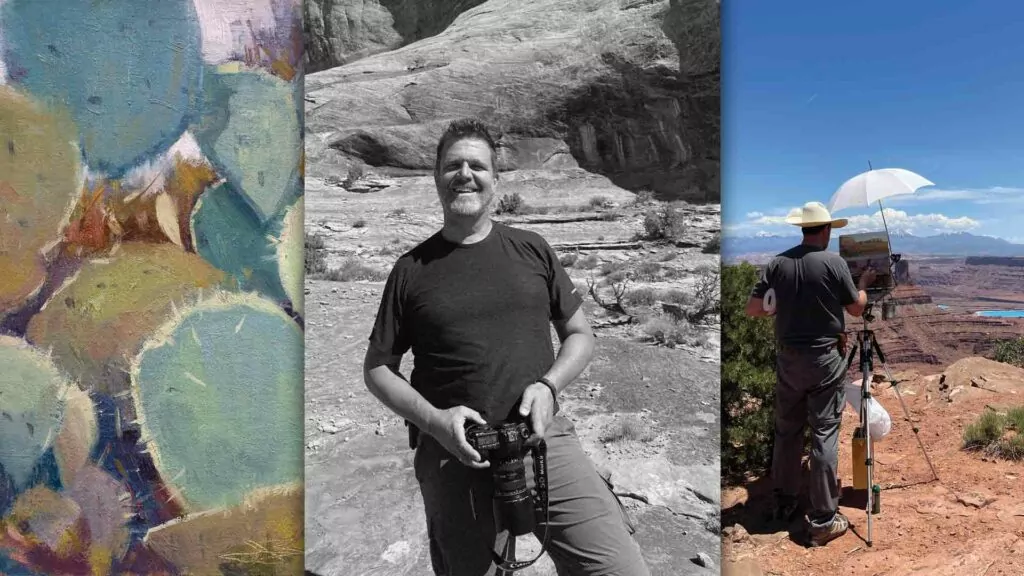
“I’m talking to you. Yes, your faith. Believe it, test it, prove it, show it, share it. Start small, take one step in faith. Your faith is your sharpest tool – don’t forget to use it. All you need to start is faith like a grain of mustard seed.” - JF Jordan Feenstra is back in British Columbia for the second time in her life. Jordan, who was born and raised in “small town” Ontario, first moved to BC as a teen to pursue a graphic design diploma in Vancouver. This move was temporary, however, she returned to the province in her late twenties, along with her husband and young daughter. Jordan describes herself as “a lifelong follower of Jesus, a wife, stay-at-home mom, designer, small business owner and adventurer.” Her favorite place to be? Outside. Her love of the outdoors makes the mountains, forests, and rivers of British Columbia feel like home. Feenstra is also the mind behind “A Thousand Elsewhere,” a boutique design firm offering handcrafted inspirational goods and creative services. Whether it's pen on paper, or paint on the kitchen wall, chalk, paint, markers, or pixels, Jordan has used it. Jordan has been hand lettering and drawing for as long as she can remember. But it was after studying graphic design in college that Feenstra challenged herself with a unique project – to hand letter a Bible verse every day for 5 months straight, and to then share a photo of the work to social media no matter what, mistakes and all. The purpose of the project was for Feenstra to refine her lettering and illustration skills while letting go of her need for perfection (a tendency she was struggling with at the time). The project was also intended to encourage Jordan to spend more time with God. “That project,” she says, “changed my life.” “Jesus, looking at the disciples said, ‘you are the salt of the earth.’ He didn’t say that they should be salty or that they needed to do something in order to become salt. Instead, at the moment of conversion, a believer becomes the salt of the earth.” - JF Feenstra continues to share her experiences through writing and hand lettered artwork on social media and her blog. As a mental health advocate, this includes sharing her experiences with anxiety and postpartum depression. In 2015 Jordan, together with her husband, completed the Life Renewal program – Jordan then founded A Thousand Elsewhere with the vision of helping others fight the same battles she once fought. It is now many years and thousands of creative explorations later and Jordan continues to, in her words, “share imperfect gospel-centric musings and creative meditations while living ‘a thousand elsewhere’ until she can spend a day in His courtyard” (from Ps. 84:10). “I don't consider myself an artist, but a creative,” Jordan says. “I think God is the original Artist, and we're all just copying His work.” She continues: “In my experience, pursuing a life outside of Jesus is in vain so I am poised to live a life that brings glory to Him (the original Creator, my inspiration), and brings others to Him. I am restless for His return and can think of no better way to spend ‘a thousand elsewhere’ than caring for my family, exploring creation and sharing His word in the form of creative meditations, goods and resources with the world around me along the way.” You can view more of Jordan’s art at Instagram.com/AThousandElsewhere, and visit Etsy.com/shop/AThousandElsewhereCa or her website, AThousandElsewhere.ca, to buy her artwork on shirts, hoodies, wall art, toques, greeting cards and more.   If you have a suggestion for an artist you’d like to see profiled, email Jason Bouwman at [email protected]...

Red heart icon with + sign.
Christian education

What about a Christian university? My experience at Dordt University

I love learning. Whether that love is innate or whether it was instilled in me as I grew up, I don’t know. I’ve always loved learning about pretty much anything. The biological intricacies of life, the vastness of space, the stories of history, the nuances of political philosophy, or the mysteries of the end times have all taken their turns at seizing my imagination. And that learning didn’t stop at head knowledge. I remember a specific story from Ralph Moody’s Little Britches, a novel that my dad once read aloud to me and my younger siblings. I’ve forgotten most of the plotline, aside from the fact that the homesteading setting reminded me of the Ingalls in The Little House on the Prairie, but I remember the analogy that the father  relayed to his younger sons. “Your character is like a house,” Pa said, “You can either add boards to build it up, or you can tear boards off.” Ever since, that idea that your character requires constant building and maintenance has been etched into my mind. And so, when I was in my final year of high school, I naturally looked for places to pursue this love of knowledge and continue to build my character as a young Christian man. I didn’t even bother applying to secular institutions. I knew that I might glean some knowledge there, but that they certainly wouldn’t form me into a godlier Christian. To borrow from some of the parables of Jesus and the analogies of James, why would I expect a bad tree to produce good fruit or a salty spring fresh water? No, if I truly wanted to mature in my faith, I felt that an education in an institution that is antithetical to God simply wasn’t a wise option. I had spent twelve years being homeschooled, studying at a Christian school, and attending a Reformed church. My parents, my teachers, and my pastors all emphasized the importance of Christian education. Why would I forsake that lynch pin in my Christian formation after graduating high school? And so I applied to the Christian institution I was most familiar with: Dordt University. My parents had both attended the rural university in northwest Iowa. I had just stayed on campus for a week during a family reunion the previous summer. I had extended family in the area. I got a decent scholarship and was lured by the opportunity to play on a university hockey team. And so, two months after graduating from high school, I packed my bags and made the twenty-five-hour road trip stateside. Now, I have no idea what God has in store for me over the remaining years of my life, but my four years at Dordt have been the best four of my life. And I count myself a wiser, godlier, and more successful person for them. The benefits The formal academics were part of it. Dordt is a liberal arts university, meaning that every student has to take a wide range of courses in addition to required courses in their field to graduate. All of these courses were based in a Reformed Christian worldview, focusing on the religious orientation, creational structure, and creational development of all the subject matter and contemporary responses of Christians in these fields. In my experience, this Reformed worldview was applied just as consistently – if not more consistently – than the Reformed high school that I had attended. The relationships that I formed, though, were even more impactful. In university, you might be shaped by professors in the classroom 15-20 hours a week, but I interacted with other students almost every waking hour. Over 90% of Dordt’s student body lives on campus in dormitories or apartment buildings, so you are with fellow Christian students virtually all of the time. Because of this continual contact, I formed more and deeper friendships with fellow students at Dordt than at any other time of my life. I developed deep friendships with roommates, hockey teammates, and members of my “Dordt family.” These friendships even extended to the professors. I visited the homes of three or four professors over the years, attended church with some of them, and even exchanged Christmas cards with one over the years. Some of the godliest role models that I have met were fellow students from Dordt’s hockey team and from student Bible studies. Dordt is also where I met my wife, Jillian. Now, both Jillian and I very intentionally went to Dordt not to find a future spouse. We were there to study and learn, particularly in our first couple years of study. But God, in His providence, had other plans for us. He brought us together in our first year of university. We dated and were engaged most of our university life and got married a few months after we graduated. One of the most important decisions of your life is finding a spouse. I’d hazard a guess that most members of the Reformed community have found a godly spouse from their local church or local Christian high school, though some may have gone further afield to a regional youth retreat in search of marriage partners. One of the advantages of a Christian post-secondary institution is that it brings young Christian men and women from across the country – and, in my case, across the world – to the same spot. And while I firmly believe that the primary reason for education is for personal formation – formation of character as well as knowledge and skills – getting a post-secondary degree is certainly an ancillary bonus. With so many professional jobs today requiring or giving preference to applicants with a post-secondary degree, getting a degree opened up a whole new world of employment opportunities and has made me better at the job that I have now. There would be no way that I could write in this magazine as well, or analyze policies for ARPA as astutely, without having attended a Christian post-secondary institution. And finally, attending a Christian post-secondary institution was just plain fun. I stayed up well past midnight almost every night for four years laughing with friends and engaging in deep conversations with roommates. I hit the ice four times a week for hockey practice and traveled the central states playing back-to-back hockey games Friday and Saturday evenings. I started a Sunday afternoon board games club to challenge friends to friendly games of Settlers of Catan, Seven Wonders, or Tammany Hall. I traveled to Washington, DC, to attend a national conservative political action conference and volunteered at a presidential debate with the College Republican Club. I volunteered to visit a fundamentalist Mormon community in Arizona, a Navajo reserve in New Mexico, and hurricane-battered New Orleans for short-term missions trips on three of my spring breaks. I won a campus air band competition, participated in the campus choir, and jammed with talented student vocalists and musicians. A growing number of people point out that a university education might not have a positive return on investment. In other words, it might end up costing more to attend in tuition payments and lost years of income than would be made up in higher salaries over the rest of your working life. And, depending on your field of study, that can be true. But, in my opinion, that is a pretty bare, narrow calculation. If it is just about the money and just about the degree, don’t bother with Christian post-secondary. You can definitely find cheaper alternatives to get a university degree. But Christian post-secondary is more than just about dollars and cents. If you prioritize deepening your spiritual walk with the LORD, developing a godlier character, making lifelong friends, and cultivating a more consistent Reformed Christian worldview, then Christian post-secondary, especially when it has a solid Reformed base, has a lot more plusses in its column. The dangers Of course, that doesn’t mean that there are no minuses to Christian post-secondary. No institution this side of glory is perfect. Even the best Christian post-secondary institution has its faults. The temptations common to young people in every other sphere of life don’t simply disappear because they are on a Christian campus. Discerning parents and prospective students should certainly be aware of the imperfections of Christian post-secondary institutions. I saw students kicked out because of substance abuse and disciplined because of sexual sins. Some students seemed to be more interested in partying and troublemaking than studying. A saddeningly high number of students didn’t attend church on a regular basis, much less twice a Sunday. Most students thought that it was perfectly acceptable to study on Sundays. Some professors were fired for bad theology or inappropriate conduct. And some unorthodox views will certainly be present on any Christian post-secondary campus, either among the student body or among the faculty. I encountered a belief in theistic evolution, the embrace of LGBTQ identities, and an egalitarian view of gender. Many Christian universities certainly leave something to be desired on these topics. The bottom line In my experience, the perceived and real dangers and costs of Christian post-secondary have led many in the North American Presbyterian and Reformed churches (NAPARC) orbit not to even seriously consider a Christian post-secondary education, much less actually pursue one. At the end of the day, I’m sharing my positive experience with a Christian university. And I’m not necessarily arguing for a specific Christian institution. There are lots of Christian universities, colleges, institutes, and Bible colleges in North America that are faithful to God’s Word to varying degrees, and I think that there is a strong case to be made that new orthodox institutions need to spring up to train the next generation to participate in all areas of society with a Christian worldview. But I certainly am arguing for the concept of Christian post-secondary education. I’ll wrap up with an application of the familiar parable of the talents. In this parable, a master gives each of his servants different amounts of money to steward while he is away. When he returns, he rewards the fruitful servants who grew that money and rebukes the fearful servant who simply hid his talent in the ground. Sandwiched as it is between other accounts of the final judgement in Matthew 25, the central message of this parable is clear. God expects us to develop the gifts that He has given us to their fullest extent. Burying those gifts is not only a waste. It is condemned. Not every high school graduate has the academic aptitude, moral character, or the financial means to attend a Christian university. But to those who do, I encourage you to at least seriously consider one Christian post-secondary institution. It can be an excellent way to cultivate the gifts that God has given you and to grow in your development as a follower of Christ....

Red heart icon with + sign.
Education

I’m graduating – now what?

You’re a high school senior; you’ve worked hard from kindergarten through 12th grade, and now you’re almost ready to graduate. You’re a little tired of being asked by friends and relatives: What are your plans after high school? You know they mean well, and are genuinely curious about your next steps, but you can’t answer them, because you just don’t know! I was once in your shoes, and I’d like to help you make fewer mistakes than I made as I muddled my way through the morass of post-secondary schooling and different job opportunities, before finding the right path for me. I stumbled, and I muddled, but am grateful that the Lord provided in all circumstances. What direction? When I was your age, most young folks who showed interest or aptitude inside the classroom were encouraged to pursue a university degree, for two main reasons. First, most people believed that to be able to provide well for your family, you needed a college or university degree to get the kind of job that would generate a reasonable income. Second, many Reformed Christians believed that we as the children and grandchildren of immigrants needed to have more influence on the academic and professional culture of North America. Therefore, it would be good if more Christian young people obtained undergraduate and graduate degrees. Have things changed since my high school graduation in 1986? In a word: yes. A college or university degree remains a necessity for some professions, and a helpful résumé addition for many others. But you can go without and still generate an income that will allow you to support your family, your church, and your community. If you have a specific plan that requires a degree – if you want to become a lawyer, or a minister, or a teacher – then university is your path. But what if you’re not sure? Don’t be a Logan Consider this fairly common scenario for two young Canadian students. Good buddies Logan and Josh both got pretty good grades at school, although Logan didn’t have to work very hard to get them, thanks to his good memory. He even qualified for a scholarship to McMaster University that enabled him to get reduced tuition! Josh and Logan both enjoyed working in the summers for a small local company, Boomtown Builders, doing small renovations and building decks, learning from their boss how to build efficiently and safely. Offered an opportunity, Josh decided that he would stay on full time at Boomtown after high school graduation. Logan was looking forward to his new university life at McMaster. But there were a couple of problems: Logan didn’t really know what he should study, and he hadn’t really learned how to study – in high school, he had rarely needed to crack open the books in the evenings. But of course, this was all about to change. In order to find his way, Logan took general courses in English, History, Biology and Calculus – he would have time to declare a major later. But with no one to look over his shoulder and remind him to get his assignments in on time, and without a clear direction and target to inspire him, Logan started to fall behind. Feeling behind the curve, he started to skip classes. Not going to classes meant he was ill-prepared for quizzes and tests, and he didn’t hand in some of his assignments. At the end of his second semester, Logan had failed two courses, and his marks were so poor overall that he lost his scholarship and would have to pay full tuition the following school year. Will Logan end up going back for his second year, or has he just wasted ten months and thousands of dollars? Meanwhile Josh was taking on more responsibility at Boomtown, even running a small job on his own so the company could take on a few more projects. With the boss’s encouragement, Josh enrolled in a college course on estimating, so that he could help out on that side of the growing business. His responsibilities grew, and his income grew, and Josh became a very valuable member of Boomtown Builders, with a promising future. In this simple story, Logan wasted his time and treasure by not working hard, and Josh made good progress and established a healthy direction for his life by applying his skills and working diligently. Had Logan just worked hard, attended classes, and applied himself, perhaps he also would have charted a path towards a successful career. But by enrolling at university without a clear target and direction, Logan ended up spinning his wheels ineffectively. It might have been far better for him to work a year at Boomtown to find out more about what he was good at, and what he enjoyed, before deciding on a target, and how to get there. Have a plan In Proverbs 21:5, Solomon reminds us “The plans of the diligent lead surely to abundance, but everyone who is hasty comes only to poverty.” Earlier, in chapter 19, he advises “Listen to advice, and accept instruction, that you may gain wisdom in the future.” There are many resources available to high school students to help you make a plan for your post-secondary life. Your school has guidance counselors who would be glad to make you aware of opportunities that may suit your skills. Your parents, your uncles and aunts, and grandparents all might encourage you in different directions. The next time they ask you, “What are you going to do after high school?” you can ask them what they think you should do! You can’t follow everyone’s advice, but you can certainly listen and reflect on what those who know you well give you as counsel (Prov. 1:8-9). By the end of your high school years, you’ll probably have worked part time, or during the summers, with different employers. These job experiences can be hugely valuable in discovering your skills, your interests, and what long-term prospects are like in these fields. Whatever your current job is, work diligently and industriously for the benefit of your employer and their customers. On your breaks and at lunch time, ask lots of questions to your boss and your co-workers, especially about what this business needs to be even more successful. What kind of talents are needed there, and what kind of education or training might one need to fill the areas of need? Even if you determine that the type of work you did as a student isn’t something you would want as a career, you haven’t wasted your time. The experience will leave you more determined to find an occupation that you enjoy, and more motivated if you do enter college or a trade school to push through to get your qualifications: “I know I don’t want to do that, so I’ll work extra hard to chart out a different path!” Knowing how hard a restaurant server works, or how difficult it can be to work construction on a cold winter’s day will also help you gain appreciation for your neighbors who do labor in these occasionally thankless fields. Consider the cost! In Luke 14:28-29, Jesus says: “For which of you, desiring to build a tower, does not first sit down and count the cost, whether he has enough to complete it? Otherwise, when he has laid a foundation and is not able to finish, all who see it will mock him.” It’s a basic principle in life, also echoed often in the book of Proverbs: have a plan, and count your costs up front! Before enrolling at a college, trade school, or university, you should carefully consider how much your certification will cost, and how you will pay for your years of schooling. One financial analyst recommends that a student spend no more on tuition and books over the course of their schooling than how much they could expect to make in their first year of employment in that profession. As an example, if a newly certified teacher could be expected to earn $45,000 in his first year of teaching, then he should find a way to spend less than $45,000 in educational expenses to earn his degree. This is just a general guideline, not a hard and fast rule, but it may give you some direction for a reasonable and prudent budget as you begin your studies. It is even more important to consider how you will pay for your degree. In the United States, it is very common for young people to borrow over $120,000 to obtain a four-year degree, and lenders have made it very easy for them to get these loans. According to Statistics Canada’s latest numbers in 2020, on average, Canadians graduating with an undergraduate degree have $30,000 in student loan debt, and will take an average of eight years to pay off these debts. Avoid the debt trap The Bible has warnings against becoming indebted, at one point comparing debt to becoming a slave: “The rich rules over the poor, and the borrower is a slave of the lender” (Prov. 22:7). For many, student loan debt is a trap, easy to fall into and hard to get free of, so I would strongly advise against borrowing to pay for your degree. If you find yourself short of your first-year tuition, perhaps you need to work for a year full time before starting school again. Count on working part time during the school year, and full time during breaks between semesters. Yes, homework takes time, and studying requires many hours: that is why it’s great to get your degree while you are young and have the energy and focus that may be more difficult as you take on more responsibilities later in life. Living at home and commuting to school can have a huge impact on your ability to stay out of debt. Moving out into a dorm apartment, or into a house near school with roommates may sound great, but these scenarios introduce all kinds of additional costs: groceries, utilities, rent, fast food, entertainment – these bills go up exponentially when you are away from home. No one cooks like your mother, and she would love to still have you home at dinner time. Your parents would most likely greatly encourage you to live at home so that they can enjoy your contributions to the family culture for a few more years. I know, it may sound lame, and you may wish to spread your wings already now… but your older self will thank you for your decision to study from home! Stay north young (wo)man! While researching this article, I was surprised at how low annual tuition is in Canada compared to the average costs in the USA. A full-time student at Simon Fraser University in Burnaby, BC may pay less than $7,000 CDN for one year; while the equivalent cost at Western Washington University in Bellingham is nearer to $14,000 USD! Costs at private colleges may be considerably higher, but again the rates at Canadian schools can be far more reasonable than those at American institutions. Consider that tuition at Redeemer University in Ancaster is currently less than $10,000 CDN (thanks in part to some generous donors!), while Calvin University in Michigan begins at nearly $40,000 USD annually! (It is very common for Christian university students to get discounts and scholarships relatively easily, but these numbers do provide a helpful baseline.) Since most readers of Reformed Perspective live in Canada, I can unequivocally advise, “stay north to study – your wallet will thank you!” Are you mature enough? University can be exciting and enjoyable when you find the right course of study, but are you ready? It’s possible that you are not yet spiritually mature enough to take on the intellectual challenges of what is often a hostile environment for Christians. Professors and teaching assistants at most colleges and universities are no longer sympathetic to a Christian worldview. When you assert that there are two genders, that life begins at conception, or that you believe homosexuality is against God’s created order, teaching staff and students will let you know you have fallen far outside of the mainstream of opinion. Perhaps even more dangerous, you may begin to feel “old fashioned” or “out of touch” – does the Bible really say that? Christian post-secondary schools are not necessarily havens of safety either. Just consider how many universities were founded as Christian and aren’t now – Harvard, Yale, Oxford, and the University of Toronto to name just a few. So, drift is common, and the lecturer at the front of your class may call himself a Christian, but his view of what the Bible teaches may be vastly different from how you have been taught, and what you know to be true. I don’t mean to infer that every teacher at a Christian college is dangerous – not at all! But you must be thoroughly grounded yourself in the truths of God’s Word so that you can weigh others’ theories in the light of Scripture. How do you know if you’re ready? Ask people whose opinion you trust for their thoughts. Your grandmother, your uncle, your elder, your parents – those folks who know you well will be able to offer good insight on your readiness to make your way in the post-secondary world. Ask them to be honest, and don’t be offended if they give different counsel than you expect! Stay grounded If you haven’t yet publicly professed your faith, continue pre-confession classes while you are at college. Yes, it may fill up one more evening in your busy week, but the Lord gives us the great gift of ministers and elders who are qualified to teach the church’s confessions to young people, and who enjoy the task. So take their instruction seriously – they may be providing the very answers you’ll need when you are challenged in university. If you have professed your faith, stay diligent in your Bible study opportunities with brothers and sisters in your congregation. Take the opportunity to ask questions about anything you’ve encountered at school: you may be surprised at the wisdom of a farmer or framer, or the insight of a housewife or teacher. Chances are very good that what you are wondering about has been faced by the saints before! Closing thoughts University is not for everyone. There is nothing shameful in deciding that you don’t want a degree, and would rather get a two-year college diploma, or a certification in the trades! But if you do decide to enroll at a university, I pray that this short article can give you some guidance in how to plan your years of study. The Lord has given many different gifts to His children: work diligently with what you have, and be wise in how you use the talents He has entrusted to you....

Red heart icon with + sign.
News, Transgenderism

Trump says what few dare about transgenderism madness

A Donald Trump campaign video made almost a year ago resurfaced after he secured his second term as American president. In Canada, Alberta Premier Danielle Smith has spoken against transgender “surgeries” on children, and south of the border, Florida Governor Ron DeSantis denounced them more pointedly, labeling them “mutilation.” But neither was anywhere close to as plainspoken as President Trump in this 4-minute presentation. It is remarkable enough to warrant printing in full: “The left-wing gender insanity being pushed on our children is an act of child abuse, very simple. Here's my plan to stop the chemical, physical, and emotional mutilation of our youth. On day one I will revoke Joe Biden's cruel policies on so-called ‘gender affirming care’ – ridiculous – a process that includes giving kids puberty blockers, mutating their physical appearance, and ultimately performing surgery on minor children. Can you believe this? I will sign a new executive order instructing every federal agency to cease all programs that promote the concept of sex- and gender-transition at any age. I will then ask Congress to permanently stop federal taxpayer dollars from being used to promote or pay for these procedures, and pass a law prohibiting child sexual mutilation in all 50 states. It'll go very quickly. I will declare that any hospital or health care provider that participates in the chemical or physical mutilation of minor youth will no longer meet federal health and safety standards for Medicaid and Medicare, and will be terminated from the program immediately. “Furthermore, I will support the creation of a private right of action for victims to sue doctors who have unforgivably performed these procedures on minor children. The Department of Justice will investigate Big Pharma and the Big Hospital networks to determine whether they have deliberately covered up horrific long-term side effects of sex transitions in order to get rich at the expense of vulnerable patients – in this case, very vulnerable. We will also investigate whether Big Pharma or others have illegally marketed hormones and puberty blockers, which are in no way licensed or approved for this use. My Department of Education will inform states and school districts that if any teacher or school official suggests to a child that they could be trapped in the wrong body, they will be faced with severe consequences, including potential civil rights violations for sex discrimination, and the elimination of federal funding. As part of our new credentialing body for teachers we will promote positive education about the nuclear family, the roles of mothers and fathers, and celebrating rather than erasing the things that make men and women different and unique. “I will ask Congress to pass a bill establishing that the only genders recognized by the United States government are male and female and they are assigned at birth. The bill will also make clear the Title IX prohibits men from participating in women's sports, and we will protect the rights of parents from being forced to allow their minor child to assume a gender which is new, and an identity without the parents’ consent. The identity will not be new, and it will not be without parental consent. No serious country should be telling its children that they were born with the wrong gender, a concept that was never heard of in all of human history – nobody's ever heard of this, what's happening today. It was all when the radical left invented it just a few years ago. Under my leadership this madness will end. Thank you very much.” As thankful as we can be for the President’s courage – can you believe he actually said this? And imagine if he follows through! – Christians mustn’t overlook what he didn’t say, because someone still needs to. Trump has guts, no doubt, but he took this stand more as a matter of smarts – he understood this is still what most of his country believes. But we know from history that this sort of common-sense conservatism is shifting sand. Traditional marriage was once common sense, and only about a decade back everyone knew that killing our elderly was murder, not medicine. That sense isn’t so common now. In Canada, we have Pierre Poilievre and other conservative leaders heading our own “common sense revolution,” and it too has appeal. But what it doesn’t have is staying power: the conservative common-sense of today is merely the liberal’s position of 10 years back. We’re sliding, sometimes quickly, sometimes slowly, but always in the same downward direction. The only way to turn it around is to set our feet on something solid, and we know the only unshakeable foundation is God and His Truth. It’s up to the Church, then, to tell a very confused world where they can find traction. Will they join us atop the Rock? We can’t know what the Holy Spirit will do with the Truth we share, but we can be certain that we’ll honor God in the sharing of it. So, let’s say what no one else dares to: that God made us male and female, and that only He decides our gender. And let’s explain that when we ignore reality as He has made it, then craziness results, like men playing women’s sports, and people cutting off their genitals. Let’s speak what even our most courageous, common-sense politicians are scared to: that it isn’t just crazy when it is done to children; it is abuse too when mentally ill adults are maimed for some doctor’s profit. We know God’s Truth; our neighbors need to hear it. May God grant us the courage to speak. !function(r,u,m,b,l,e){r._Rumble=b,r||(r=function(){(r._=r._||[]).push(arguments);if(r._.length==1){l=u.createElement(m),e=u.getElementsByTagName(m),l.async=1,l.src="https://rumble.com/embedJS/u4"+(arguments.video?'.'+arguments.video:'')+"/?url="+encodeURIComponent(location.href)+"&args="+encodeURIComponent(JSON.stringify([].slice.apply(arguments))),e.parentNode.insertBefore(l,e)}})}(window, document, "script", "Rumble"); Rumble("play", {"video":"v2597vg","div":"rumble_v2597vg"});...

Red heart icon with + sign.
Gender roles

More to consider: women on setting life and post-secondary goals

The timing of a woman’s life can get complicated, especially when she faces decisions about whether to pursue higher education or not. In a society that insists on women getting an education and establishing a career before even thinking about marriage and family, it’s not always fashionable to point this reality out. But women simply have more considerations to take into account when making these decisions. The challenging part is because there is no guarantee of a husband coming along, or children being born, she faces an added layer of uncertainty. Essentially, a woman who wants marriage and a family is trying to plan for two futures, without knowing which future will happen for her. The questions are endless. Should she pursue practical education and a career just in case she doesn’t get married? Should she work in a dead-end “for now” job because she expects to transition into motherhood soon? Should she take out student loans, which could limit her freedom to make choices in the future? And when a woman is intellectually gifted, or “smart,” the questions can be tougher. Is she “wasting” her gifts if she doesn’t pursue an education? Did she waste her time or money if she does pursue an education and never “uses” it after she gets married? The ultimate answer to this bewildering maze of questions is simply that there is no one-size-fits-all path. The many possible ways an individual woman uses her gifts can look quite different from one woman to another. Life, after all, is not mapped out for us ahead of time, but it is a journey where we take each step as best we can, trusting in God. But in this article I want to explore these challenges in a bit more depth so that, first of all, women see that they’re not alone in facing these questions – especially in a culture that shies away from discussing them. And secondly, I want to explore them so that the Christian community understands how complex (and frustrating!) navigating these questions can be. And lastly, I want to offer guidance where any guidance can be given. Making a life plan For me, deciding what to do after high school was a confusing mess. I was open to marriage and children, but I hadn’t met anyone. I was considered “smart” and everyone expected me to go to university, and I did want to study, but I didn't know what to study. The idea of having a “career” didn't appeal to me – I certainly didn't relate to the idea of being a “girlboss.” But I felt stuck between devoting time and energy and money to studying things I enjoyed, or finding a career that could support me while I was single, or keeping my options open if I met someone. I wanted to go beyond what I personally experienced in writing this article so I reached out to other Reformed women I’d connected with through Facebook. And I received a flood of responses about their own experiences in considering post-secondary education. How women timed their education was an important question for me, because I’ve heard a lot of theories about how college is to blame for the low birth rate in North America. My assumption initially was that women who wanted children had always had that on their mind to some extent. But in my conversations it turned out that not everyone did. For some women, the timing of their life just “worked out.” As Jen Crowder explains, “As a young person in my 20s, there were times where it felt ‘hard’ to not be dating, but the Lord richly blessed me – with peace to be patient, and even more so in bringing my spouse and I together in His marvelous timing shortly after I started my first teaching position. As a young person, it’s very hard to see four, five, or six years as a very short period of one’s life, but looking back on it now, God’s timing is always perfect.” And her experience was echoed by other women who met their husband in their last year of their studies, or just after, and didn’t experience a big conflict between education and beginning a family. Life does not nicely “work out” for everyone, but when considering whether to study or not, this is a comforting reminder to young women that everything is in God’s hands. Sometimes you do borrow worry about the future before you need to. For other women, the timing of life events did overlap. “I remember studying for an exam while in labor at the hospital, and writing an exam a week after giving birth!” says Anna Nienhuis. Some had to fit their studies in around taking care of small children, or put their studies on hold and resume them when their children were older. Some women did not start until later: “I did not consider post-secondary possibilities until I was in my early 30s, married for 12 years, and had five children,” says Sarah Vandergugten. And some found themselves required to go back to school in order to support themselves or their families when they hadn’t expected it. All of these circumstances made studying much more challenging, but somehow they continued to see God’s hand guiding them through it all. Sometimes when you’re young you can feel like you have to be able to predict your future and plan for it responsibly. And to some extent, women do have to consider how their education, jobs and financial situation might impact their freedom to have children. But well-meaning advice can make it sound like your life can all be planned out perfectly. It’s easy to say, “women should pursue marriage first, then children, and then a career if she wants,” or, alternatively, “women should get an education and a career first, and then marriage and children.” But in real life, the path individuals take tends to be more much complex than that, in ways that can’t always be planned out. Even when events in our life overlap in chaotic ways, women and families muddle through while trusting in God. The challenges teach them to trust in Him and the strength He provides. Some women did change their plans when they met their future husband. It might have been a switch from a longer program to a shorter program, such as switching from nursing to healthcare aide. Or it was a switch from something less flexible to something more flexible. “The career I was studying for was not compatible in any way with my husband’s and so I chose to change my plans. Since I had just started my education it was easy enough to change it,” says Deanna DeWit. Others switched from something with fewer career opportunities, such as a Ph.D., to a regular teaching degree which offered more employment. And lastly, some women went the opposite direction, switching from something “practical” to pursuing study at a Master’s and Ph.D. level when they discovered their love of learning, with the encouragement and support of their husbands. This simply shows how, as you grow up, you can become more aware of yourself and your gifts, and what makes sense for the life God has called you to. You can start something and change paths later. Sometimes changing your path while you can is the best decision. Then there were more than a few women who regretted pursuing higher education, or at least weren’t sure it had been worthwhile for them. A few felt they had pursued it because of family expectations, or because they’d absorbed the message from culture to pursue a career first. Some even mentioned in hindsight they felt they’d delayed marriage and hadn’t been accepting God’s will for their lives at that time, though they had come to terms with the choices they’d made. It seems that post-secondary wasn’t a perfect fit for every woman. And it’s true that higher education is not for everyone! For many women it makes sense, especially if there is no husband on the horizon and they may have to support themselves one day. In fact, many women felt free to begin because they weren’t expecting marriage in the very near future. But decisions should never be made primarily because of cultural messages, family expectations, or fear of bad consequences. And cultural messages do shift over time – older generations felt unusual when pursuing higher education, whereas younger generations felt more cultural pressures to pursue it. “I had believed the idea – a lie actually – that if I was to be successful I had to go to university,” says Rebecca Van Middelkoop. “No one ever told me that directly but it was an idea that I seemed to have picked up over the years and I think many people believe it as well. As someone who was academically gifted it seemed like I was obligated to do something ‘big’ ... We often think that some careers are superior or more meaningful compared to other careers, especially ones that are more entry level.” She suggests job shadowing, internships and summer jobs in a field you’re interested in to test out what opportunities exist and whether you do need more education. For other women, higher education could be a path God is calling them to. “God doesn’t have a general plan or calling for all women... God has a specific plan for each of His children,” says Rachelle van Leeuwen. “God’s plan for me was to put people in my life who would continue to encourage me to further my education. If He is putting those people in your life, don’t balk at it; instead, explore different paths that are realistic for you in your current stage of life (not on where you hope to be one day).” Which brings us to discernment, or listening to God’s will for your life. Discernment In the end, making this decision is simply a process of discernment, of drawing near to God. What is God’s call on your life specifically? For me, the phrases “pray about it,” and “seek God’s will,” felt formulaic when I was trying to make decisions, and felt frustrating when it felt like He was silent. But so often phrases become a cliché because they’re true. When I'm making decisions in life, when I feel in the dark and confused, that is when these supposedly tired and formulaic statements hold the most truth. That is when God is teaching me to be persistent in seeking after Him, making decisions as best I can at each step, and trusting that I don’t need to be afraid of the future. You may not hear God’s voice from the sky telling you directly what to do, but you can lean on Him as you study your gifts, circumstances and responsibilities and make the best choices about how you can serve Him with what He’s given you. This means that, yes, if your passion is to be a wife and mother, it’s worth discerning what steps to take to pursue this too! Sometimes we feel we have to leave this area of our lives entirely in God’s hands without taking any action that we might take in other areas of our lives (in the way we might in our careers). Of course, we can’t pursue marriage in the same way as a career, but we can do things like staying social with other likeminded Christians (even if we're busy studying at university), being involved in church activities, being open to being introduced to possibilities, and maybe even visiting other areas of the country. While we should do the tasks God gives us, it’s not an either/or choice when it comes to marriage or career. Society might tell you to not think about marriage until after your career is established but if you want it, it’s worthwhile to keep your eyes open even while you're studying. Lastly, some women mentioned feeling judged, both for looking too “desperate” for marriage by not pursuing a career, or for having a career when most women around them didn’t. But if we truly believe our sisters are looking to God to discern how He will work in their individual lives, we can expect it to look a little different from person to person. God created humans in His image to glorify Him, but this also happens in an individual sense – we are not all eyes, or hands, or heads. We do not start off knowing all that we as an arm (for example) can do, but we grow into it by fixing our eyes on Christ. And so we can also turn to one another and encourage each other, and take the time to truly understand how others navigated their experiences and made their own decisions. And so, my last piece of advice would be to talk to other women! Through writing this piece, I was inspired by my fellow sisters in Christ, as I listened to how God had guided their life journeys. Each story is an amazing story, whether their path was straightforward or more bumpy. In fact, I wish I had more room to tell these stories. In my confused high school years, I could've benefited from having some of these conversations about how life paths can be anything but straight and still be clearly guided by the hand of God. Jenn VanLeeuwen sums it up like this, “If you would have asked me at 18 what my life was going to look like at 24, I definitely envisioned being married and having a few kids and a dog. However, God, in His wisdom, had that in store 10 years later. I was able to complete a number of university degrees and certifications, move across the country a few times for different teaching jobs, travel, and grow so very much as an individual!” Conclusion There are many more considerations I haven’t covered, including financing education and whether debt makes sense, whether to choose a practical career or follow your passion, whether secular college is wise, and when seeking knowledge for knowledge’s sake is worth pursuing. Debt, in particular, can have a huge impact on young women’s freedom to make choices, but her passions and goals can also shape the path of her life. In short, while figuring out how education fits into the timeline of your life is one piece of the puzzle, there are many other factors to take into account. However, ultimately the process is not about weighing every possible consideration, but rather about drawing closer to God and to what He is calling you to. May He guide you....

1 2 3 4 5 6 7 8 9 10 11 12 13 14 15 16 17 18 19 20 21 22 23 24 25 26 27 28 29 30 31