Transparent heart icon with white outline and + sign.

Life's busy, read it when you're ready!

Create a free account to save articles for later, keep track of past articles you’ve read, and receive exclusive access to all RP resources.

White magnifying glass.

Search thousands of RP articles

Helping you think, speak, and act in Christ.

Open envelope icon with @ symbol

Get Articles Delivered!

Helping you think, speak, and act in Christ. delivered direct to your Inbox!

News, Theology

A secular defense of the Sabbath, and how it falls short

Fast Company is a secular business magazine, as likely to pass on presentation tips from industry leaders as it is to pass on marketing tips from drag queens so this isn't the first place you'd look to find a defense of Sabbath rest. But there it was in a Sept. 14, 2018 piece titled: "Let's bring back the Sabbath as a radical act against the always-on economy."

The author, William Black does overlook the core of Sabbath rest – there's nothing in this article about taking our rest in the Lord, and coming together to worship Him. But because God's Law is written on our hearts (Romans 2:14-15), even unbelievers can recognize that Law's validity, at least in part.

A practical case for the Sabbath

Black began his article by pointing to the religious roots of the commandment, but he certainly wasn't making a religiously-based appeal for it. Implicit in his argument was that, despite how "the commandment smacks of obsolete puritanism," there was still something radical and vital about it.

"When taken seriously, the Sabbath has the power to restructure not only the calendar but also the entire political economy. In place of an economy built upon the profit motive – the ever-present need for more, in fact the need for there to never be enough – the Sabbath puts forward an economy built upon the belief that there is enough."

In a materialistic world, whose gods include "career advancement" and "more take-home pay" there's no end of the work that can be done to earn the gods' favor. Enough is never enough, because extra work can help you advance further and faster, and help you earn more. In that kind of world, the idea of taking one day off every week is not only radical, but downright blasphemous – such a break can only be enjoyed by those who recognize the materialistic gods are not worth giving our full devotion.

Black continues by sharing how Sabbath rest was a benefit for the whole community:

"The fourth commandment presents a od who, rather than demanding ever more work, insists on rest. The weekly Sabbath placed a hard limit on how much work could be done and suggested that this was perfectly all right; enough work was done on the other six days. And whereas the pharaoh relaxed while his people toiled, Yahweh insisted that the people rest as Yahweh rested: 'For in six days the Lord made heaven and earth, the sea, and all that is in them, but rested the seventh day; therefore the Lord blessed the Sabbath day and consecrated it.'

"The Sabbath, as described in Exodus and other passages in the Torah, had a democratizing effect. Yahweh’s example – not forcing others to labor while Yahweh rested – was one anybody in power was to imitate. It was not enough for you to rest; your children, slaves, livestock, and even the 'aliens' in your towns were to rest as well. The Sabbath wasn’t just a time for personal reflection and rejuvenation. It wasn’t self-care. It was for everyone."

While Black repeatedly mentions the Jewish origins of Sabbath rest, his is still a secular case for the command. He's touting the practical benefits, and not that this is God's authoritative command. Black may or may not be a Christian himself, but his approach – praising God's Law, without praising the Lawmaker – is one Christians commonly take. Whether it's abortion, sex-ed curriculums, or refusing to bake cakes for same-sex marriages, Christians regularly argue for the godly position while avoiding any mention of our God.

Without God the argument fails

We do that for tactical reasons – the world's not interested in God, so they'll just ignore us if we start any argument with His Name, right? But the problem is, all of God's Law – every position we're arguing for – stands on Him.

So when we try to defend His Law without any mention of Him, it will, ultimately, fail. To put it another way, this not only robs God of the glory that He is due – God's people refusing to mention our Lord's Name does rob Him of His due – it isn't even an effective tactic.

Take abortion as an example. Christians will argue that abortion is wrong because killing babies is wrong. And because God's Law is written on everyone's hearts, that's an argument the other side will concede. But they'll dispute that the unborn are babies and question how something so small and immature can really be of the same worth as much larger, already-born human beings.

So the real argument is not, "Is killing wrong?" but "Where does our worth come from?"

Only God provides a satisfactory answer to that question: our worth comes not from any abilities we have, but is intrinsic in being made in His Image (Gen. 1:26-27, Gen. 9:6). That's why an unborn baby has value, no matter how small, and doesn't gain worth as it gains in abilities. This intrinsic value is also why a disabled adult isn't of lesser worth even though he can do less, and why an elderly adult doesn't lose their worth as they lose some of their abilities. Our worth comes not from what we can do, but from in Whose Image we are made. Even as the world rejects this explanation, they can offer no viable alternative. Why do they believe we – at least those of us who have already been born – are of equal worth? Where does the basis for equality come from? Some are bigger, or smarter, or faster, or more inventive, or more artistic, and some are less so – in every which way, no two human beings are exactly alike, so on what basis would we ever talk about equality? There is no worldly justification for it. The world holds to equality, but can't offer an explanation for it.

But we can.

Only God makes sense of the world

Isn't that something we should be pointing out? That's God makes the world make sense?

It's no different with Sabbath rest – any argument for it needs to be built on God, and if it isn't, the argument will fall short. In his article Black speaks of an economy that embraces Sabbath rest as being one "driven, not by anxiety, but by...enoughness." And he contrasts that with our current 24-7 "anxious striving for more." Black wants our society to make the switch; he wants us to leave the "always-on economy" and start trusting in "enoughness." But what Black can't explain is on what basis his secular audience can confidently make that leap. Is there always going to be enough? Can we really depend on that?

His readers will know that in some spots on our planet there isn't enough right now. They'll also know that if our economy takes a downward turn, there might not be enough here too. That's why the secular soul always has a reason to strive for more – so they can build a better cushion against whatever difficulties the future might bring.

In short, as much sense as Sabbath rest makes – as great as the practical benefits are for mental, physical, emotional, and even relational, health – it doesn't make near the same sense without the Sabbath Lord. The world always has reason to fear the future, so they always have reason to continue striving anxiously. It is only the Christian, trusting in the Lord, who can not only take a break each week from the constant demands of work, but who can take rest where it can truly be found:

"Come to Me, all you who labor and are heavy laden, and I will give you rest. Take My yoke upon you and learn from Me, for I am gentle and lowly in heart, and you will find rest for your souls. For My yoke is easy and My burden is light” (Matthew 11:28-30).

That the secular argument for the Sabbath doesn't stand up on its own isn't a reason to give up on the practical arguments for obeying God's law. But it is a reason to start with God – to start with Him as our cornerstone – and build up from there.

Red heart icon with + sign.
Culture Clashes, News

Samuel Sey on Critical Race Theory

This is an edited excerpt from Lucas Holvlüwer and Tyler Vanderwoudes’ Real Talk podcast Episode 43 where they discussed Critical Race Theory with special guest Samuel Sey of SlowToWrite.com. They've had a lot of other great conversations with all sorts of intriguing guests like Tim Challies, Arnold Viersen, André Schutten, and Jonathon Van Maren, so be sure to check them out on YouTube, their website, or any of the places you find your podcasts! ***** Lucas Holtvlüwer: Define Critical Race Theory (CRT) for our listeners, and maybe give a couple of examples of where it's infiltrated our society. Samuel Sey: Critical Race Theory is very complex, intentionally. Many people call it Marxist, and some Critical Race theorists would deny that but it really is a version of Marxism, a newer version of Marxism. So, I'll explain Marxism first in a very brief way. Marxism, basically, is the idea that there is an essential conflict between groups in society, and these groups are the bourgeoisie, or you would say the privileged class of rich people, versus the proletariat, being the poor lower class. That's the idea. There's a book called From Class to Race, by one of the founders of Critical Race Theory, Charles W. Mills. What he says is, Karl Marx was right that there is a conflict in society, a conflict that has been plaguing society from the very beginning and is still ongoing today, until there is a revolution. But what this author says is, Marx was right about there being a conflict; what he was wrong about is what the conflict was really about. Marx said it was an economic or class struggle. Critical Race Theory says, it's a racial struggle – it's really between white people and black, white people versus non-white people. That is really what Critical Race Theory is about. And it also says, in very post-modern thinking, is that Western society, especially Canada, is built by white people for white people. So even the values that we think are impartial – things like freedom, rights, impartiality, our legal system, our schools, our government, our churches, all the things we think are impartial – they're designed by white people for white people, as a way to marginalize and oppress non-white people. That's what Critical Race Theory is, in a very general, brief way. The implication is that white people – unless they are fighting against the systems and the culture – are racist. If you want to abolish the system, then you are anti-racist; if you're not for revolution, then you are a racist by nature. In terms of examples, I don't know if you guys know about this, but last year around Black History Month, I was invited to a school in Alberta to speak about racism. But, I guess they didn’t Google me. They did not read any of my articles, so they thought, I guess, that I was going to be teaching Critical Race Theory. They didn't know that I was going to be actually speaking against Critical Race views. Tyler Vanderwoude: Oops! Samuel Sey: That’s a big oops indeed. I was actually fairly tame. I didn't want to shock them. The title of the speech was “What is racism?” and I was defining racism biblically as partiality (Acts 10:34-35, Gal. 3:28, Lev. 19:15). Racism is simply partiality against someone because of their skin color. Or to use a more broad definition, racism is bias against anyone because of their skin color, therefore you can be racist against black people, white people, Asian people, brown people, indigenous people, it doesn't matter. Then I said – and this is a key part that became controversial – if racism means partiality, then systemic racism means systemic partiality. What that means is if someone claims Canada is systemically racist then they need to identify a policy or a law from the government that shows partiality or a bias against black people. Systematic racism is shown, not by outcomes, not by disparities but by clear favoritism against black people. I asked if they could find a single such law or policy in Canada. They could not find a single one. So that was it. I leave. Then a few weeks later the school wrote a public letter denouncing me for denigrating students, for denying racism, for sharing racist views, essentially calling me a racist. Now the one thing they didn't do was mention my name. Everyone knew who they were talking about – people from the talk at the school knew they were referring to me. But I guess if they mentioned my name, someone would Google me and they would realize that, wait a minute, this guy's black! Which probably doesn't jive with what they're saying. That's one example where, by simply defining racism through biblical theology, they deem that I'm racist because I am protecting the white supremacist definition, in their mind, of racism. Another example: I think it was in the Durham region here in Ontario you had the school board giving non-white teachers more weight in their votes, because they believe that non-white people are oppressed and are marginalized in society. They, therefore, need to compensate for that by making their votes count more than the white person, which is, of course, racism. But that's an example of critical Race Theory. There’s many more. The federal government has given – I'm forgetting what they call this project – but there's a project from the federal government that gives black businesses more funding because they're black, because, again, they live in a racist society, they have more barriers, therefore they need more help from the government. Lucas Holtvlüwer: The tricky part about Critical Race Theory is that, perhaps there are grains of truth to some of the claims. There has been, obviously, discrimination in the past, there are disparities today, and people find themselves in different situations. And often you can categorize that, generally speaking, certain demographic groups based on race are in better or worse positions, financially speaking. So, I guess what I would ask is, is Critical Race Theory just a tool that people can use to look at the world, and sort through disparities, and figure out why disparities exist, or is there more of a theological, more of a worldview at play behind it? Samuel Sey: Critical Race theorists claim it is “just a tool,” or what they call an analytic tool. But I think they're not being honest. I also don't mind them calling it that. It clearly is a worldview – they see Western society, or Canada, or white people, as being a certain way. They have a definition for what is injustice or what is just. They're not simply analyzing things. They are claiming good and evil, righteous and evil. They have a theological view as to what is right or wrong, what should be punished and what shouldn't be. Through that worldview, they analyze the world. That is true for every worldview – every worldview is analytical by nature. So yes, they analyze things, but fundamentally CRT is a theology. They have, what I like to call, their own past and future. We say that through Adam all humanity became sinners. We know that there's no distinction between Jew or Greek, or black or white; we are all fallen people. The problem is Critical Race theorists would essentially say white people, since they have more power, are more evil or more “sinful“ than non-white people. That’s why they oftentimes say only white people can be racist, because white people have power and other people don't. So they have a different theological understanding of sin. And they also have their own future, in the sense that they have their own heaven which is really a socialist or communist utopia. The key word in Critical Race Theory is “equity.” They really believe that we can have equity, which basically means “equality of outcome” – that you can have all non-white people and all white people having an equal outcome. According to the most prominent political race theory scholar today, Ibram X. Kendi, the only way – and he's kind of right about this – to produce equity is to discriminate. He actually says this very openly. He says that the remedy for past discrimination is present or future discrimination. That's also because in his book How To Be An Anti-racist – which I call How To Be A Racist because the book is all about racism – he says that racial discrimination is only wrong if it leads to inequity, but it's good if it leads to equity. That means it's okay to be racist against white people, it's okay to discriminate against a white person if it will lead to equality of outcome between all people. So it's okay to bring white people down so that you can make them equal with all groups. It never works out that way, of course. There are always going to be people who have more power than others. But just like communists, now and in the past, Critical Race theorists will be the ones on top and everybody else, including black people will be at the bottom. Lucas Holtvluwer: I think the one topic that trips up a lot of folks, especially white folks is this idea of “white privilege” because I feel like there is some truth to it. There are differences in outcomes more so certainly in America, but still as you pointed out in previous interviews, also in Canada there's is quite the disparity. Can you talk to folks about what this idea of white privilege is, how they can understand it, if there's some truth there, how to navigate the truth, and separate out the truth from the Critical Race Theory Samuel Sey: ….White Canadians generally are more wealthy than black Canadians. As to the reason why, I wrote an article, maybe three years ago now, addressing this topic. I compared the numbers in America, the UK, and Canada when it comes to the disparities between white people and black people in these three nations. My point is this: these three nations have very different histories concerning slavery, segregation, and racism. All three nations have experienced racism against black people, for sure, throughout their history, but all three nations have very varying degrees of this racism. And yet the numbers comparing white people and black people in these nations are very similar when it comes to wealth, crime, education, and basically everything else. My point is, if we would claim the reason for this is because of the legacy of slavery or racism, how can you make that claim when, again, you have identical outcomes but with very different histories. It makes no sense. My explanation – which is proven because this is the common denominator between all three nations – is fatherlessness. I grew up without a dad in the home so I know this personally. Long story short, my father left my mom before I was born. It meant that since my father wasn't home my mom was never home either because she had to work two jobs. When she was then working two jobs I had no one teaching me discipline, therefore I became a very violent kid. I was in 25 fights before I became a Christian at 19. When I said 25 fights I mean 25 fistfights. …..My mom is an incredible mother but it's very hard to take care of a child when you are the only parent in the home. I mention that because single parenthood is the norm for a lot of black people. Here is the issue: in America 75% of black children are raised in a household with no father. 75%. The number for white people it’s 25%. That's a 50% gap. That is the real issue there when it comes to disparities. It is a known fact that children raised without their fathers in the home leads to more crime, more sexual activity, poorer education, poor discipline, which creates, of course, a lot of the disparities that we already know. In Canada, the numbers are pretty similar as well. That is the issue that no one talks about when it comes to white privilege. So if someone says to me there's white privilege, I don't like that term because it's based on Critical Race Theory and I will reject it. But what I will say is this: if a white person is more privileged than a black person, generally it's because they have more access to their father which leads to more privilege and prosperity in the home and in culture. Listen to the whole episode below. ...

Red heart icon with + sign.
News

Saturday Selections – April 9, 2022

The grounds of our assurance (3 min) D.A. Carson on how it is not the intensity of our faith that assures our salvation, but the object of our faith, the sacrifice of Jesus, the blood of the Lamb! Prebiotic soup made life? But it can't even make muffins! Evolutionary creed says life started in some prebiotic soup somewhere. What ingredients made up this soup? They aren't so sure... just that the something included was all that was needed. How can we expose this for the nonsense it is? Paul Nelson proposes prebiotic soup as a solution for the origin of something much simpler than life: muffins. That muffins could come about on their own is, of course, ridiculous, and that's the point: "as has been shown time and time again, undirected chemistry is hostile to life." How to tell someone they're wrong There is a time and place when we will have to tell someone they are wrong, so how can we best do so? In defense of stigma The world says that critiquing other people's choices is unloving. But that pretends that there are no better or worse choices. Meanwhile Christian love, "rooted in God’s love for us, includes healthy stigma and never pretends there are no consequences for our choices." Problems with the NRSV translation While many may have fond memories of the RSV, here's a reason not to try out the NRSV. A hymn written in 5 minutes A beautiful rendition of this classic hymn – for the story behind the hymn, click the link above. ...

Red heart icon with + sign.
News

Saturday Selections – April 2, 2022

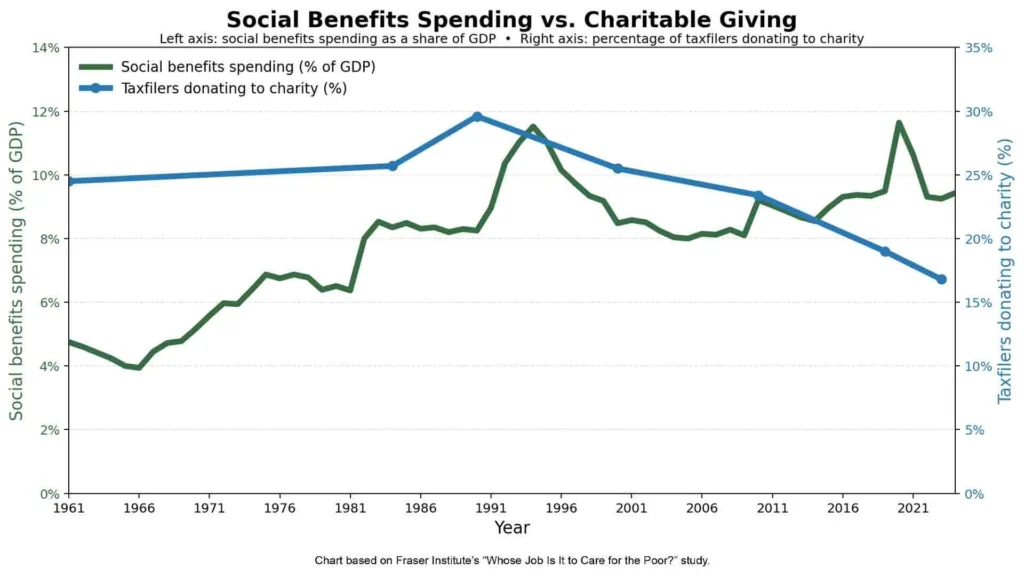
Is having kids socially irresponsible? The myth of overpopulation refuses to die...but this video can help drive the stake. This is a practical argument that doesn't get into the real reason children are valuable. Their value comes from being made in God's Image (Gen. 9:6). It's when we recognize everyone as valuable, that we'll also recognize that we are more than simply mouths to feed, but have also been given brains and hands to create with. White noise to soothe the crying baby For those blessed with a new arrival, this might be a help. If you're having trouble getting your baby to stop crying even though they are fed and dry, try this free white noise generator. Canadians aren't donating... ...and that presents an opportunity for God's people to stand out, to His glory, with our generosity. Old commentaries are better than the new A commentary on Timothy has Rev. Tim Bayly enthused... but he doesn't like many modern commentaries Prenatal tests, false positives, and abortion Prenatal testing on the unborn promises to "cure" genetic diseases, but does so via abortion – it does so by killing unborn carriers. That's horrific all on its own, but now it turns out certain prenatal tests, tests which lead to countless abortions, are “usually wrong.” Topics too hot for conservative pastors to handle Even in conservative evangelical circles, the importance of parents being married is being forgotten. Why? The article offers as explanation that pastors know many in the pews have had sin stain their relationships, and thus preaching forthrightly on the topic could cause division. That's not a problem in our Reformed churches, yet at least, but are there topics our pastors might find hard to preach on? Might the last two year's events make it hard to preach on the government's authority, or on its limits? Another: we don't share the world's hatred for male headship, but how often are we taught why we should love it? And what about the sixth commandment as it applies to contraceptives and IVF? The evangelical church has their "too hot to handle" topics that might not be so hot in our circles...... but we do have touchy topics too. May God help us seek out His truth with courage and grace. Answering Hitchens' "impossible question" When an atheist asks a question we can't answer, a quick thought to consider is, "So what?" That's the right response to the late Christopher Hitchens' question: what moral action can a believer do that an atheist can't do? Does anything leap to mind? Give to the poor? Atheists can do that. Visit the sick? Atheists can do that too. But...so what? What point does that prove? The more pertinent question would be: "What moral action should Christians do that atheists can do, but have no real reason to do?" Then we could come up with a list, starting with giving to the poor. Yes, an atheist can do that, but why should they? From their worldview, in which we are all just chemicals in motion, accidental creations of time and chance, with no future, and no purpose, why would an atheist give? Mike Winger gives his own, very good answer below. ...

Red heart icon with + sign.
News

Saturday Selections – Mar. 26, 2022

More and more can't answer: "What is a woman?" March 8 is International Women's Day, and March is celebrated by many as "Woman's History Month." But it was this same month that US Supreme Court nominee Ketanji Brown Jackson explained she couldn't define what a woman was because "I'm not a biologist." She's not the only confused soul. This is a trailer for an upcoming Matt Walsh documentary where he travels the world asking one simple question: "What is a woman?" Tune in to WhatIsAWoman.com May 2022 for the answers...and non-answers. Praying all the psalms over Russia "At times when world events, such as Russia’s invasion of Ukraine, shake us out of moral lethargy, these cries for justice and wrath make more sense. We, too, become enraged..." The high cost of free money A Canadian senator and MP are pushing for all Canadians to be guaranteed a basic income, to be provided for by the government, and without requirements for someone to work or seek work. Christian Heritage Party leader Rod Taylor explains some of the problems with that idea. headSTART: science jargon made simple for high school students A high school science student is going to get hit with a lot of scientific jargon, and sometimes the definitions they're given in their textbooks are loaded with evolutionary assumptions. So where can a Christian creationist student turn for an alternative? HeadSTART.create.ab.ca is a great place to go. This online tool is designed for high school students but useful for their parents too. It defines scientific terms from a creationist perspective, highlighting the 100+ most important terms including: convergence, Junk DNA, Horizontal Gene Transfer, and the Framework Hypothesis. Pronoun landmine An unusual American job site has created this game where you get ahead by jumping over pronoun hurdles. But mess up once, and "You're Fired!" Why did so many Christians support the Freedom Convoy? "For three chaotic weeks, the world watched..." Jonathon Van Maren offers his post mortem on the many reasons many Christians supported the Freedom Convoy. Lifting mask mandates: good or bad? Do we dare have an unpopular opinion? Christians have both a reason to risk ridicule (Ps. 27:1, Rom. 10:14) and a reason to be kind to those that think differently (Matt. 7:12). Our godless culture is increasingly showing they have no such reasons. ...

Red heart icon with + sign.
News

Saturday Selections – Feb. 19, 2022

Kinsey - the man behind perverted sex-ed The biggest bit of propaganda Kinsey passed along? That chastity was basically impossible. Thus sex-ed programs teach "safer sex" rather than actual safe sex – ie. sex only between a committed husband and wife – presuming that kids are akin to beasts in heat who couldn't possibly control their urges. God, in forbidding adultery (Ex. 20:14), presumes something very different. A case for shorter hymnals John Ahern argues for limited hymns. His main point? We can only sing songs well if we actually know them. Why Postmodernism promotes Big Government In this short yet provocative piece, J.P. Moreland offers an explanation for why the godless want government to get bigger and bigger. A how-to for combatting the lie of "deep time" Dinosaur soft tissue used to be inconceivable. Now it is incontrovertible. Our polygamous past This is quite a good practical case against polygamy: men with many wives leave other men without the ties that bind. Then, without families to concern them, these men often cause trouble. It's such a good argument that Christians might be tempted to base their arguments against polygamy on this line of reasoning. But a practical case against can be answered with practical solutions. For example: mayhaps we need to encourage women to take more than one husband so as to even things out. Now our "too many unconnected men" problem is solved...but not in any sort of fashion we were intending. Thus, when we defend God's truth – that "a man should leave his father and mother and hold fast to his wife, and the two shall become one flesh" (Eph. 5:31) – we need to defend it as God's truth. It's only once we have established that as our foundation, that we can then stack arguments like this "practical case" against polygamy on top. While practical objections can't stand on their own, they can stand when supported. Practical problems do come with disobeying God. But will the world listen to us if we talk to them about God? It doesn't seem likely. But is our goal to get pagans to act like Christians? Or do we want them to be Christians? One thing we can be quite certain of: if we are too ashamed to talk about God, we won't be used by God to bring people to Him. Do we want the Bible back in public schools? Gary DeMar explains the problem with that sort of partial victory... ...

Red heart icon with + sign.
News

Saturday Selections – Feb. 12, 2022

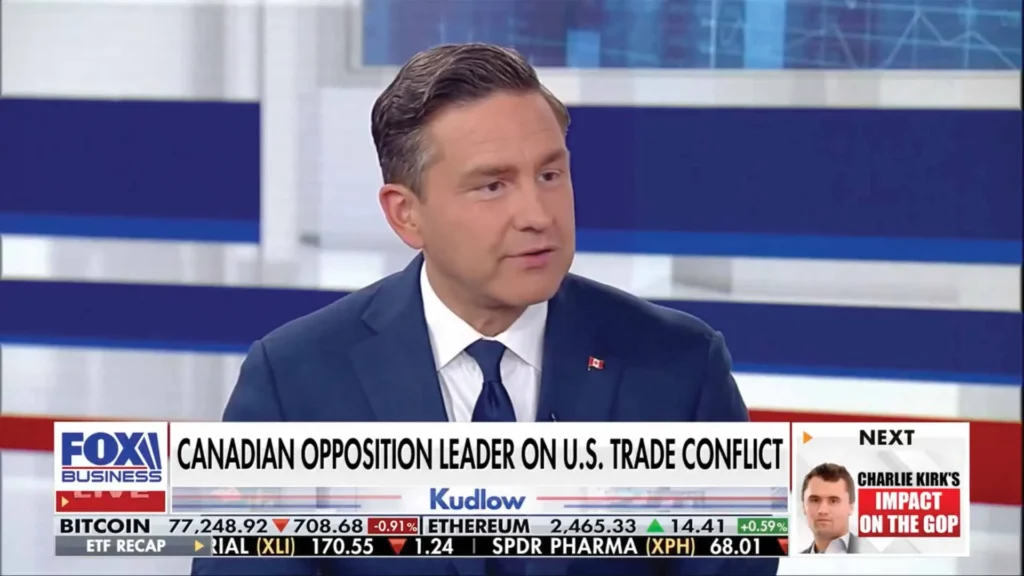
Politically correct police When this first came out 7 years ago, it didn't have quite the political edge that it has today. But that only makes it all the more brilliant! Karl Marx's favorite quote A recent poll has more Americans favoring socialism than capitalism, perhaps because they believe the former is about sharing, the latter about greed. But as Jerry Newcombe notes, the truth is something else entirely: "Most Cubans live on $44 (U.S.) per month. In contrast, when Fidel Castro died in 2016, his net worth was estimated at $900 million. In America, wealth is created by providing value in voluntary exchanges, and there is no inherent limit on it. But in a Marxist setting like Castro’s Cuba, the government controls the economy, and it’s a zero-sum game. Castro’s wealth was at the expense of the Cuban people." Where's the evidence that conversion therapy is harmful? An American sociologist came up with a surprising conclusion: such therapy helps, even by secular measures. Join the Anti-Revolutionary Party! "Throw the bums out" is a popular sentiment, but not a solution of any sort. Why? Well, consider the recent exit of the conversion therapy ban-supporting, baby-murder defending Conservative Leader Erin O'Toole. He's out due to his incompetent leadership more than his policy positions. And who is likely to replace him? We might well get a more competent, but also conversion therapy ban-supporting, baby-murder defending Pierre Poilievre. That's what a revolution can net you: one evil replaced with another. That's why Christians need to always be reformational rather than revolutionary. And it's not about word choice, but the spirit behind it. We don't want to burn it all down; we want to reform and repair. We aren't simply against the pro-choice, pro-LGBT Erin O'Toole – we are for protecting from conception to natural death all those made in the very Image of God, and we are for the freedom of Christians to speak God's truth about sexuality. We aren't simply against the devil and his minions. We are for our great and glorious God! How the Babylon Bee failed Elon Musk A couple of months ago the Christian satire site Babylon Bee landed their biggest podcast guest yet, the world's richest man, Elon Musk. While this might be the best interview he's done, it didn't end well when the Bee's staff jokingly pressured him to accept Jesus as his Lord and Saviour. As Ester O'Reilly writes, "Not everything has to be turned into a joke. Indeed, some things positively shouldn’t be. Some things should stay sacred. It’s okay—more than okay, necessary—to keep them that way." Erin O'Toole is out: it's time for Leslyn Lewis, not Pierre Poilievre Jonathon Van Maren lays out the case. What if I can't answer every question about God? (5 min) Michael Krugor, author of Surviving Religion 101, with some encouragement for college students, or just any Christian being challenged to explain why they believe what they believe about God. Click on the link above to read our review of his book. ...

Red heart icon with + sign.
News

Saturday Selections – Feb. 5, 2022

Is there a reality outside people's feeling? In this episode of the Woke Zone, we watch as a trans activist "lovingly forces everyone to agree." Old Testament case for small government J.P. Moreland gives us something to chew by looking at the first chapters of Amos. John Hopkins University meta-analysis says lockdowns had minimal impact on mortality A National Post article on a new John Hopkins study that calls into question the effectiveness of the lockdowns can be found at the link above while the study itself can be found here. A key quote from the study: "...lockdowns have had little to no effect on COVID-19 mortality. More specifically...lockdowns in Europe and the United States only reduced COVID-19 mortality by 0.2% on average. were also ineffective, only reducing COVID-19 mortality by 2.9% on average....While this meta-analysis concludes that lockdowns have had little to no public health effects, they have imposed enormous economic and social costs where they have been adopted. In consequence, lockdown policies are ill-founded and should be rejected as a pandemic policy instrument." A few cautions considering this study: While it is from John Hopkins University, this is their economics, rather than medical department. And while it covers 24 studies, it is just one analysis. Also, as it notes, others have differed (though the authors offer some explanation as to why they think their conclusions are the better ones) It argues for the ineffectiveness of government "non-pharmaceutical interventions" – government-imposed lockdowns, mask mandates, stay-at-home orders – and not, for example, the ineffectiveness of voluntary mask usage or social distancing. Reading through this meta-analysis, it becomes apparent that it is far more imprecise than numbers like 0.2% and 2.9% would first make you think – there are lots of educated guesses being made, and conclusions drawn based on minimal data. Of course, that's true not only of this, but studies in general, based as they are not simply on the facts, but on greatly varying ways of interpreting and understanding the facts. As creationists understand, science regularly speaks with a certainty that isn't warranted. Is there an authoritative source we can turn to, to find greater clarity on this issue? Well, there is a Christian consideration for why we might take this study as more credible than some others: the conclusion is in keeping with a vision of less encompassing government. That might seem like supporting a study simply because it says what we want it to say – that big government actions taking away our freedoms haven't been effective. It is like that but with one big difference: it isn't simply that we like the conclusion, but that it seems in keeping with God's Word. How so? The Bible steers us away from big government (see J.P. Moreland's article "Old Testament case for small government" just above, and 1 Sam 8:10-22) and consequently that gives us reason to be skeptical of big government actions. What we see in tyrannies of the past (USSR, Cuba, China, etc.) is that limited Man, no matter his leadership skills, doesn't have the omniscience needed to make the right decisions for everyone. These governments denied God, but when they tried to replace Him, they could never manage it. Unfortunately, this too is not a conclusive argument. There have been times (think World War II, or maybe Israel's conquering of Canaan) where most would agree "big government" actions were needed. But general principles remain principles still even when there are exceptions. It is when exceptions become the rule – when people start speaking of this as  "the new normal" – that we then have increasing reason to doubt whether the intrusions were truly warranted in the first place. How do Mormons view their complex history of polygamy? Mormons used to practice polygamy and now don't - this is a short secular take on how it happened Government spent a quarter million for each job saved To counter the lockdowns the US government imposed, they spent $42,000 per federal taxpayer to stimulate the economy and help preserve jobs. However, it cost "$170,000-$257,000 for each job it helped preserve a lot more than most of those jobs even pay." This is an American example of governmental incompetence, but the warning against big government spending programs is applicable everywhere. On the new Christian film Redeeming Love "Redeeming Love may be the first prominent faith-based film whose two main characters have on-screen sex" and Cap Stewart asks us to "consider the actors." US Report on UFOs (30 min) Last year the American government released a report on documented encounters with unexplained aerial phenomena. In this half-hour podcast, two creationists dig into the report, explaining that they likely are true – "the allegations are serious and the witnesses are credible" – and offering a biblical explanation. ...

Red heart icon with + sign.
News

Saturday Selections – Jan. 29, 2022

M&Ms introduce first Trans character who identifies as a Skittle The folks at Babylon Bee with satire to share. The only thing missing from this massive takedown of the transgender lie, is an explanation of the truth, that God made us male and female (Gen. 1:27) which is easy enough for us to add when we share this. What makes a company Christian? "Rather than asking 'Should my company be Christian?' it is more helpful to first ask, 'How can I run my business in the most biblical manner? How can I make others ask, What’s different about this business?’” The high cost of disparaging natural immunity to Covid "Vaccines were wasted on those who didn’t need them, and people who posed no risk lost jobs.... It got so bad that hospital summoned staff who were Covid-positive to return to work even if they were sick..." Why do scientists brag about things they can't know? Do aliens exist? How did our solar system's planets form? Why are there so many kinds of snakes? Scientists have scant evidence to address those questions, but that doesn't stop them from answering. Bill C-4 specifically targeted Christians There really is someone out to get us, and that's no conspiracy theory – as the apostle Peter writes, the "devil is as a roaring lion, seeking someone to devour" (1 Peter 5:8). So it shouldn't surprise us that the new Canadian law against conversion therapy doesn't ban all conversions – heterosexuals can be counseled to be homosexuals – and as this article explains, doesn't even ban all attempts to turn homosexuals to heterosexual. It specifically seeks to block God's truth on sexuality. Christians must understand what sort of battle raging – a spiritual one! – so that we understand the counter to the enemy's position isn't simply to fix the definition of conversion therapy in this law but to address this as the attempt to obscure God's truth that it is. The counter then is to speak that truth as loudly and lovingly as possible. Douglas Wilson on Jordan Peterson on Joe Rogan on the Bible (8 min) Jordan Peterson's recent comments about the Bible are strangely insightful. He doesn't comment as a Christian, and yet still calls the Bible "truer than true." ...

Red heart icon with + sign.
News

Top 10 RP articles of 2021

Free films featured prominently in this year's Top 10 with three entries, but there wasn't an identifiable theme for the rest. Or maybe that diversity was the theme: all of God's universe, from doctrinal discussions on baptism, to history, Christian fiction, the World Wide Web, and more, God created it for us to explore. These, then, are the most popular articles of 2021! You can click on the titles to check them out. #10 – 3 simple reasons we believe misinformation In an era of fake news, you'd think we'd know better than to fall for it again and again. So why do we? Chris Martin offered this much-appreciated explanation. #9 – In His Image: Delighting in God's plan for gender and sexuality Gender and sex will be hot topics for the next decade, and this free documentary was the go-to for thousands of RP readers who wanted to get a good grounding. #8 – Calvin's Institutes: Which edition should I read? There are three main translations of this pivotal work. So which should you read? #7 – On mandatory vaccines and "My body, my choice" Chris deBoer offered up this topical take on how Christians might have different thoughts on the Covid vaccines, but we should all agree to be against mandatory vaccines. #6 – Why do we suffer? Buddhism vs. Christianity There are some similarities between the way Buddhism and Christianity respond to suffering. But there's a big difference too! An article that didn't make the top ten the year it was posted comes in at #6 in 2021. #5 – A Return to Grace: Luther’s life and legacy It's another free film, and what makes this a must-see is its unique mix of drama and documentary. Other great Luther documentaries exist, but the most engaging of “talking heads” can’t really grab the attention of a broad audience. Drama might be more gripping but it can’t go into the same depth as a documentary. However, A Return to Grace is a docudrama – half documentary and half drama, making good use of the strengths of each. And it is free to see at the link. #4 – The hidden meaning of The Chronicles of Narnia This article was actually more popular in 2021 than when it was first published in 2020, when it was only #10. Cap Stewart explains how we've only recently discovered that C.S. Lewis – for his own private amusement because he seems to have never told anyone – linked each of his famous Narnia books to one of the 7 planets as medieval cosmology understood them. #3 – The Marks of a Cult: a biblical analysis This fantastic free documentary was very popular, and with good reason: it boils down a big topic into just two hours. If that's a bit long, it works equally well broken up into four separate chapters. And did we mention it's free? #2 – The impact of saying "I'm so busy!" This was an article for businessmen that we could all benefit from: sometimes it's a point of pride, being so busy. But what does being busy say about our leadership? And what opportunities does it limit? #1 – Infant baptism vs. believer's baptism: what's the main difference? The most popular article this year is a short but sweet piece by Pastor Garry Vanderveen. He asks, "The fundamental difference between the two positions is revealed in how one answers this question: Is baptism primarily God’s action or is it a human response?"...

Red heart icon with + sign.
News

Saturday Selections – Dec. 18, 2021

The #Psalm124Project The #Psalm124Project is all sorts of churches and groups singing this same Psalm, separated by time and space, but united in praise for God. You can find their other videos at the link above. When crickets stop singing, that isn't evolution Hawaiian crickets have gone silent to avoid the notice of a parasitic fly. It’s been hailed as evolution. But losing an ability isn't an example of evolution, but devolution. The pro-choice case against IVF This pro-choice author calls out pro-lifers for not demonstrating outside IVF clinics, where many more children are killed, their bodies donated to medical science. While there is a way to use IVF that doesn't produce "excess embryos," or which even saves some of these frozen children ("snowflake adoption"), the way it is commonly done is monstrously evil.... and many Christians are unaware. The importance of the family dinner table This is a secular defense of the necessity of families to set aside time in their day to just be together, and the best time might be around the dinner table. Brave New World or 1984? Two books written within a couple decades of each other proposed two very different ways we could become enslaved. The one approach was likened by George Orwell to "a boot stomping on a human face – forever" and the other more akin to Netflix binging. It's slavery forcibly imposed, or slavery by default, accepted without resistance by those too apathetic to care. Which way are we heading? Might it be both directions at once? Is Capitalism only about greed? In the video below, Milton Friedman gets it wrong: "greed is not a good idea to run with." But he's right that all economic systems involve greed. The contrast is that in State-run economies like China and the former USSR, that greed involves those in power taking what they would by force. Meanwhile, under free markets, people can only get what they want by offering something of value in exchange – something the other person values more. What makes the free market remarkable is that it allows us to provide for our family while doing good for our neighbors. Joseph Sunde has more in the linked article above. ...

Red heart icon with + sign.
News, Politics

Bill C-4: the Conservatives did this to Canada

On November 29 the Liberals introduced a bill to ban "Conversion Therapy" that they'd twice before failed to pass. But what the Liberals couldn't do, Conservative leader Erin O'Toole promised he would get done. What was the bill about?  Under the pretense of protecting homosexuals from getting forcibly "converted" from their same-sex attraction, Bill C-4 targeted Christian pastors and counselors and others willing to help those who want out of the homosexual lifestyle. As Jonathon Van Maren wrote: "there were concerns that the deliberately broad definition proposed by Prime Minister Justin Trudeau’s Liberals would ban pastoral conversations between clergy and their parishioners and leave adults with unwanted same-sex attraction unable to receive the counseling they desired. In fact, in some instances parents could be prevented from opposing sex changes for their own children." This was actually the third time the Liberals had introduced such a bill, but the previous two had been derailed by the months-long process that it takes to get a bill approved. The previous attempt, then labeled Bill C-6, was introduced on September 23, 2020, and took nine months, until June 22, 2021, to pass through the committee hearings and the three readings required in the House of Commons. It was then given to the Senate for their own three-stage assessment process, but they didn't have a chance to pass it before the Prime Minister called an election on August 15. His election call meant that Bill C-6 (along with all the other bills not yet passed) "died on the order paper." Bill C-4 might have had to go through this same process, and in the months and even years that it could have taken, who knows but that God might have derailed it yet once more. But on Dec. 1 Conservative Leader Erin O'Toole told the media that his party was going to "accelerate passage" of the government's bill. Later that same day Conservative MP Rob Moore put forward a motion to skip all the House committees and readings, and send the bill directly and immediately to the Senate. His motion required unanimous approval to pass – if a single MP had voiced a nay, the motion wouldn't have passed. How could the Conservatives have expected to get that unanimity when there had been 63 MPs willing to vote against Bill C-6 earlier this year? Of that number 62 were their own Conservative MPs. So why would they expect to have no opposition this time around? Their confidence might have been, in part, due to the timing of their motion. Conservative MP Garnett Genius was the most vocal opponent of the previous Bill C-6, launching the website “Fix the Definition” to put a face to the people this bill would harm. But on December 1, Genuis was out of the country, attending a NATO conference in Latvia. The Conservative strategy also involved pulling a fast one on their own MPs – the motion was made and passed in approximately one minute. They were able to do it so quickly because no one actually had to vote for the motion: the Speaker of the House only asked to hear from those opposed to it. When no one spoke up, it was passed.  While many of the Conservatives were clearly in on this maneuver – as evidenced by the wild clapping immediately afterward – any MPs unaware of what Rob Moore was about to do could have blinked and they would have missed it, it was over that fast. The CPAC coverage of the vote shows that some of the Conservatives were not clapping, and remained sitting and the most downcast of them might have been Arnold Viersen (blue jacket, red tie, three rows from the back on the right side) In a statement he posted to Facebook nine days later, Viersen explained that: "...it was a surprise that caught me and some of my colleagues off guard. I am opposed to C-4 as written and should have said no, but I did not react fast enough. I'm sorry." The comments below his post were filled with thanks for his apology. For almost two weeks it had been a mystery as to why a bill that criminalized the presentation of the Gospel would pass without any Christian MPs objecting. Now we had a partial explanation for the MPs' silence: this had been sprung on them. But even as surprise can be an explanation for what happened in the House, no such explanation was possible for the senators – they has the advance notice of seeing what was pulled in the House, and it made no difference. There, too, it was the Conservatives who put forward the motion to get the bill past all of the usual steps. And once again, not a single representative spoke up. Curiously, in his Facebook post, Viersen suggested that: "Had we won the election we would not be in this situation." In a message fellow Conservative MP Cathay Wagantall sent to ARPA Canada some days later, and let them share publicly, she borrowed this same phrase: "Had we won the election, we would not be in this situation." Let's consider that for a moment. Who was it, that pulled this on us? Wasn't it the Conservatives? We can be relieved that Garnett Genuis and Arnold Viersen have some sort of explanation or apology for why they didn't stand up against this bill, but the Conservative Party overall has no such excuse. Trudeau's Liberals introduced this bill, but it was O'Toole's Conservatives who accomplished what the Liberals never did: the Conservatives got it across the finish line. It bears repeating just how wicked this bill is. As Jojo Ruba noted, while an earlier version of the bill at least "could not prevent consenting adults from having conversations about sexuality with their clergy or their counselor, as long as the counseling was free" this latest version removed even that protection. That's what the Conservative Party has accomplished under O'Toole: they've made the compelling case that they are not the lesser of two evils, but rather the more effective. So where are politically-minded Christians to turn? Aren't the Conservatives still our only option? They are, after all, the only major party to tolerate pro-life Christians. That's true enough, but as the passage of this law highlights, tolerating Christians is very different from siding with them. If Christians are to be involved in the Conservative Party, it cannot be to further the party's agenda. We cannot let them use us for their ends, as happened here. If Christians are to continue in the Conservative Party then they have to do so with their eyes wide open, involving themselves in the party only to use it for our own, godly ends. If it becomes impossible to do that, then that should be the end of our involvement. Christians should have no loyalty to a party that has no loyalty to God, and, indeed, in this latest act, stands in direct opposition....

Red heart icon with + sign.
News

Saturday Selection - Dec. 11, 2021

Conservatives allow Canada’s conversion therapy ban to pass with zero opposition On November 29 the Liberals introduced a bill to ban conversion therapy. Under the pretense of protecting homosexuals from getting forcibly "converted" from their same-sex attraction, what the bill actually targeted was Christian pastors and counselors and others who are willing to help those who want out of the homosexual lifestyle. As Jonathon Van Maren writes in the article linked above: "there were concerns that the deliberately broad definition proposed by Prime Minister Justin Trudeau’s Liberals would ban pastoral conversations between clergy and their parishioners and leave adults with unwanted same-sex attraction unable to receive the counseling they desired. In fact, in some instances parents could be prevented from opposing sex changes for their own children." This was actually the third time the Liberals had introduced such a bill, but the previous two had been derailed by the months-long process that it takes to get a bill approved. The previous attempt, then labeled Bill C-6, was introduced on September 23, 2020, and took nine months, until June 22, 2021, to pass through the committee hearings and the three readings required in the House of Commons. It was then given to the Senate for their own three-stage assessment process, but they didn't have a chance to pass it before the Prime Minister called an election on August 15. His election call meant that Bill C-6 (along with all the other bills not yet passed) "died on the order paper." Bill C-4 might have had to go through this same process, and in the months and even years that it could have taken, who knows but that it could have been derailed yet once more. But on Dec. 1 Conservative Leader Erin O-Toole told the media that his party was going to accelerate the passage of the government's bill. Later that same day Conservative MP Rob Moore put forward a motion to skip all the House committees and readings, and send the bill directly and immediately to the Senate. His motion required unanimous approval to pass – if a single MP had voiced a nay, the motion wouldn't have passed. How could the Conservatives have expected to get that unanimity when there had been 63 MPs willing to vote against Bill C-6 earlier this year? Of that number 62 were Conservative MPs and the other was former Conservative Derek Sloan. So why would they expect to have no opposition this time around? Their confidence might have been, in part, due to the timing of their motion. Conservative MP Garnett Genius was the most vocal opponent of the previous Bill C-6, launching the website "Fix the Definition" to put a face to the people this bill would harm. But on December 1, Genuis was out of the country, attending a NATO conference in Latvia. The Conservative strategy also involved pulling a fast one on their other MPs. As the video below shows, the motion was made and passed in approximately one minute. They were able to do it so quickly because no one actually had to vote for the motion: the Speaker of the House only asked to hear from those opposed to it. When no one spoke up, it was passed. While many of the Conservatives were clearly in on this maneuver – those clapping wildly afterward clearly knew what was going on – any of the MPs unaware of what Rob Moore was about to do could have blinked and they would have missed it, it was over that fast. The same video shows that some of the Conservatives were not clapping, and remained sitting – the most downcast of them might have been Arnold Viersen (blue jacket, red tie, three rows from the back on the right side). In a statement he posted to Facebook ten days later, he explained that: "...it was a surprise that caught me and some of my colleagues off guard. I am opposed to C-4 as written and should have said no, but I did not react fast enough. I'm sorry." His post's comments were filled with thanks for his apology. It had been a mystery as to why a bill that criminalized the presentation of the Gospel would pass without any Christian MPs objecting. Now we had a partial explanation for the MPs' silence: this had been sprung on them. Curiously, in the same post, Viersen suggested that: "Had we won the election we would not be in this situation." Let's consider that for a moment. Wasn't it the Conservatives that just pulled this on us? We can be relieved that Garnett Genuis and Arnold Viersen have some sort of explanation or apology for why they didn't stand up against this bill, but the Conservative Party overall has no such excuse. Trudeau's Liberals introduced this bill, but it was O'Toole's Conservatives who accomplished what the Liberals never did: the Conservatives got it across the finish line. It bears repeating just how wicked this bill is. As Jojo Ruba noted, while an earlier version of the bill at least "could not prevent consenting adults from having conversations about sexuality with their clergy or their counselor, as long as the counseling was free" this latest version removed even that protection. That's what the Conservative Party has accomplished under O'Toole: they've made the compelling case that they are not the lesser of two evils. So where are politically-minded Christians to turn? Aren't the Conservatives still our only option? They are, after all, the only major party to tolerate pro-life Christians. That's true enough, but as the passage of this law highlights, tolerating pro-life Christians is very different from siding with them. If Christians are to be involved in the Conservative Party, it cannot be to further the party's agenda. We cannot let them use us for their ends. If Christians are to continue in the Conservative Party then they have to do so with their eyes wide open, involving themselves in the party only to use it for our own, godly ends. If it becomes impossible to do that, then that should be the end of our involvement. Christians should have no loyalty to a party that has no loyalty to God, and, indeed, in this latest act, stands directly in opposition. Is A Christmas Carol a capitalist story? Karl Marx was a self-professed fan of Charles Dickens, so many have labeled Dickens a socialist and have used his ever-popular seasonal classic A Christmas Carol as a condemnation of capitalism and consumerism. But Jacqueline Isaacs says it just isn't so. "Science says" can be more about ideology than facts The police, businessmen, and politicians aren't trusted like they once were, but we're still told to "just follow the Science." However, as John Stonestreet highlights in this article, Science can be driven more by ideology than the facts. For proof, we need to look no further than the gender debate. Here we have a self-evident truth – that we are created male and female – that "Science" denies and the Bible affirms (Gen. 1:27). The proper use of biblical theology in preaching "...sermons should not always (and probably should only rarely) recount the history of redemption. Rather they ought to be moments in which a preacher presents to a congregation some particular from that history in a focused and concentrated way in order to enable them by God’s grace to love God and their neighbor better." – Jay Adams How I want to die Gary North suggests looking forward to what sort of life lessons we'd want to share on our 70th birthday. Johnny the walrus (4 min) Matt Walsh is reading his new book about a boy who identified as a walrus and the mother who took him way too seriously. If you don't believe that God has a sense of humor, consider what He arranged. On Amazon, it was slotted in the LGBTQ+ category where it then topped the best-selling list. That allowed Walsh to then tweet: "I now have the number one LGBT book in the country. Any further criticism of me or my book is now homophobic. Checkmate." ...

1 2 3 4 5 6 7 8 9 10 11 12 13 14 15 16 17 18 19 20 21 22 23 24 25 26 27 28 29 30 31