









Transparent heart icon with white outline and + sign.

Life's busy, read it when you're ready!

Create a free account to save articles for later, keep track of past articles you’ve read, and receive exclusive access to all RP resources.

White magnifying glass.

Search thousands of RP articles

Helping you think, speak, and act in Christ.

Open envelope icon with @ symbol

Get Articles Delivered!

Helping you think, speak, and act in Christ. delivered direct to your Inbox!

A A
By:

Alberta introduces law to restrict euthanasia

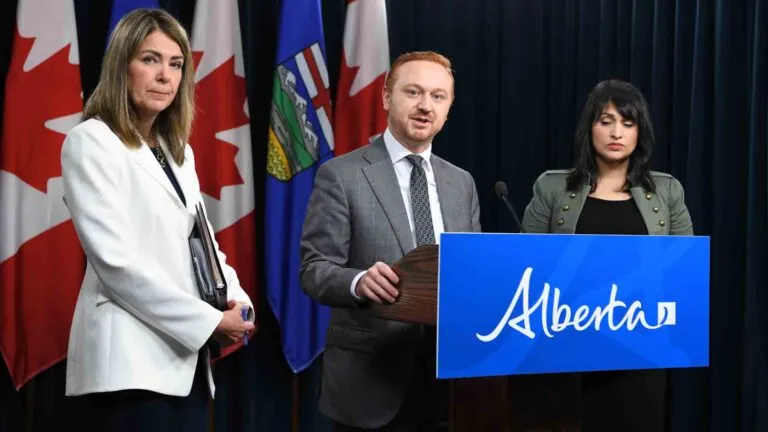
On March 18, Alberta Justice Minister Mickey Amery rose in the Alberta legislature to introduce Bill 18, the Safeguards for Last Resort Termination of Life Act.

“It is my hope that if Bill 18 is passed, it will set an example for the rest of Canada, because hope should always be easier to access than death.”

With this bill, Alberta is set to become the first Canadian jurisdiction to formally restrict euthanasia in Canada. This is big news and a massive win for pro-life advocacy in Canada. While the media, government bodies, and legislators have signaled concerns about euthanasia, there has been little appetite to reverse course. Until now.

What does Alberta’s Safeguards Bill do?

The Safeguards for Last Resort Termination of Life Act restricts euthanasia in many ways.

First, Bill 18 will prohibit doctors from murdering any of their patients who are not nearing natural death. Euthanasia was initially legalized only for those whose natural death was “reasonably foreseeable,” but it was also legalized for non-terminal conditions in 2021. Alberta’s bill turns back the clock and clarifies that Medically-Assisted Death (MAD) will only be available for people with a prognosis of natural death within 12 months.

Second, Bill 18 will prohibit euthanasia for people with mental illness as their only underlying condition. As of right now, euthanasia for mental illness is scheduled to become legal across Canada on March 17, 2027, although this expansion has been delayed a couple of times and there is a federal bill right now that proposes to scrap this expansion entirely. Alberta’s legislation means that no matter what the federal government does about euthanasia for mental illness, it will not be offered in Alberta.

Third, the Safeguards for Last Resort Termination of Life Act bans healthcare providers from initiating a conversation about euthanasia or advertising euthanasia in medical facilities. If assisted suicide is offered or advertised in hospitals, patients may feel pressured or encouraged to consider it. If passed, Bill 18 would allow health professionals to talk about euthanasia only if the patient brings it up first.

Fourth, this legislation would codify conscience rights into law. It allows medical professionals not to provide euthanasia, assess a patient’s eligibility for euthanasia, or refer a patient to a euthanasia provider against their conscience. Bill 18 would also protect healthcare facilities’ freedom to opt out of providing or participating in euthanasia. This is increasingly an issue for faith-based institutions that want to provide care without murdering their patients.

Fifth, this proposal would establish better oversight over euthanasia. Although euthanasia is still an exception to murder in Canada’s Criminal Code, governments have implemented very little oversight to ensure that existing rules are followed. Bill 18 will establish better oversight, review euthanasia deaths, and impose professional penalties for failure to follow criminal or provincial regulations.

Sixth, the bill cracks down on “doctor shopping.” Right now, if a person is refused euthanasia by one doctor, they seek out another doctor who will approve their request. For example, in 2024, a woman who was refused euthanasia by her doctors in Alberta was later approved for euthanasia by a doctor in British Columbia. Bill 18 will prohibit doctors from referring a patient to a doctor in another province.

Those are the biggest changes Alberta is proposing, though the legislation contains even more restrictions on medical assistance in dying.

How can you respond?

This legislation is the most pro-life legislation introduced by a sitting government since Brian Mulroney’s failed abortion bill over 35 years ago.

While the bill is very likely to pass in Alberta’s majority government, it is still a good idea to send a note to your MLA urging him or her to support this legislation if you live in Alberta. You can also thank the Premier and the Minister of Justice for their leadership on this issue.

Those who live outside Alberta should also reach out to their MPP/MLA, health minister, and premier to ask them to introduce similar legislation. Bill 18 only applies in Alberta. But every suffering person deserves these safeguards against euthanasia, no matter their postal code.

Proverbs 24:11 counsels us to “Rescue those who are being taken away to death; hold back those who are stumbling to the slaughter.” While Reformed Christians shouldn’t rest until euthanasia is outlawed entirely, Alberta’s Safeguards for Last Resort Termination of Life Act will certainly rescue many and try to hold back many more.

Top photo is of, from right to left, Alberta Premier Danielle Smith, Justice Minister Mickey Amery (and an Ontario doctor who also spoke) as they announce to reporters Bill 18’s euthanasia restrictions. Photo is by Chris Schwarz/Government of Alberta and used with the government’s permission.
Enjoyed this article?

Get the best of RP delivered to your inbox every Saturday for free.


Red heart icon with + sign.
Pro-life - Euthanasia

Euthanasia changed the abortion battle

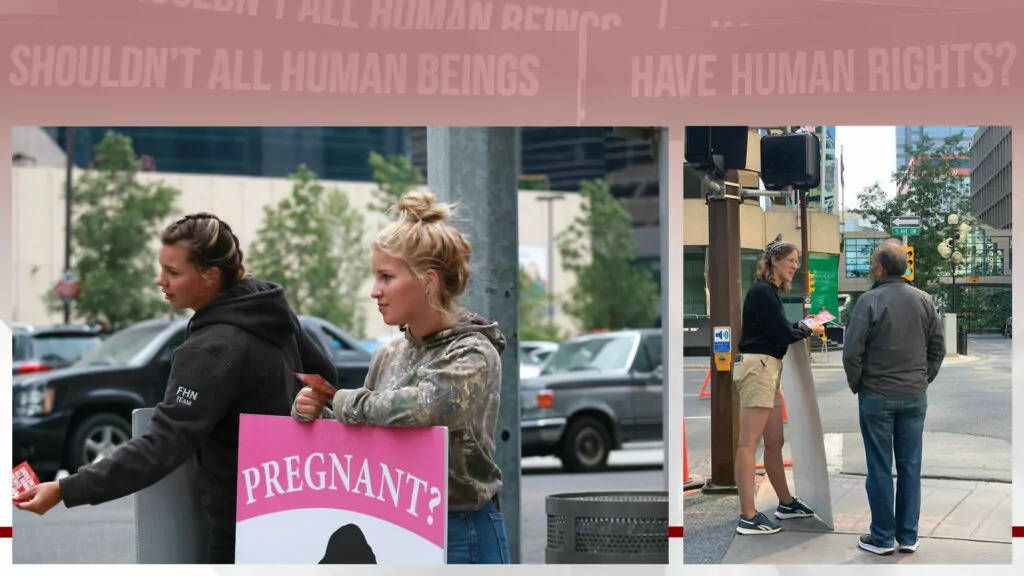
Dozens of pro-life volunteers spent the summer talking to strangers about the unborn ***** In 2016 euthanasia was legalized. That was also the summer I did my first pro-life internship with the Canadian Centre for Bioethical Reform (endthekilling.ca). After that I was involved for several years, and then, after a bit of a break, I returned – my sister and I interned for the summer. We spent our time door-knocking, having conversations, and showing abortion victim photography in the streets of Calgary. One heart at a time One young man I talked to said abortion was okay earlier on in the pregnancy, and in difficult circumstances. I agreed with him about how difficult those situations would be, and then I asked him to consider a girl who ends up in a difficult situation once the child was born. I asked if he thought we could ever kill that child, because of her situation. Then we talked about the humanity of the preborn – that if abortion ends the life of a biological human being, then it’s a human rights violation. At the end of the conversation, he agreed that abortion was never okay, and he took a pamphlet with resources to share with his friends. That was one of three conversations I had during that one hour of activism. And throughout the city about 20 other activists were having similar conversations! So many people change their minds when they see the signs and hear the arguments. And many of them end the conversation saying, "Thank you for being here." Euthanasia changed things It's still shocking to me how many times we hear "I had an abortion," "My girlfriend had an abortion," and "I drove my friend to the abortion clinic." Everyone has been affected in some way or another. I’m also stunned that we live in a society where so many people think it's better to die than to live through suffering. There's so much need for the gospel. We can show the inconsistencies in pro-abortion logic, and when we do, even the most philosophical nutcases will agree (at least in theory). But when people don't even value themselves, how can we expect them to value other human life? This summer is showing me clearly what a hurting society we live in – and how that brokenness has progressed even since I started in 2016. When I first did pro-life work, euthanasia rarely came up, which is why I clearly remember one instance where it did. A man came up to me and shared that he had helped his mom get euthanized in the Netherlands, when it wasn’t accessible in Canada. It was a good thing, he argued, because she hadn’t wanted to be a burden on the rest of the family. I was shocked. Now, eight years later and euthanasia is widespread. A few months ago, a friend shared with me that his grandma chose MAiD – and she had considered herself a Christian. They used to meet us halfway We’re no longer just talking with people who think it’s okay to kill preborn babies; we’re talking with people who want to be killed themselves if their life no longer seems worthwhile. Beliefs are a bit different person to person, but the equation goes something like this: a person’s life is worth living, if (and only if) they have awareness of what’s going on around them, they aren’t suffering, and they aren’t a burden to society. One of our strongest anti-abortion arguments concludes: “If we’d never kill a born person for (X) situation, why is it okay to kill a pre-born human for the same situation?” The underlying principle is that we don’t kill people, regardless of situations. The foundation of our pro-life arguments is built on two premises: 1) that the pre-born are human 2) and that killing humans is wrong. Now we’re having a rising number of people challenge the second premise. If life has no meaning death becomes attractive Why should we be surprised when a generation that’s okay with killing babies decides that it’s also okay to kill parents? Abortion and euthanasia are symptoms (and certainly not the only serious ones) of materialism and abstract spiritualism. You live for personal happiness, you don’t judge, and have only personal morals and religion – don’t impose those on others. It’s an echo of an earlier time when “everyone did what was right in their own eyes” (Judges 21:25). The root issue here is a loss of values of our nation; virtue itself is no longer a virtue, and suffering is seen as the ultimate evil. Victor Frankl talks about suffering in his book Man’s Search for Meaning, where he reflects on his time during the Holocaust. He observed that some people shut down while others became more determined to live, and he found that meaning (purpose) was the ultimate difference. For some, meaning was the literal difference between life and death. With Medical Assistance in Dying, the messages are clear: “Your life no longer has meaning. You are a burden to society and to your family,” and “Your value is dependent on your circumstances.” Where does our worth come from? If materialism is the secular religion of our day, then the message of the Gospel stands in sharp contrast. That contrast is highlighted in Dr. Goligher’s book, How Should We Then Die? where he brings the discussion back to whether human beings have intrinsic or extrinsic value. Do we have value based on our humanity, or do we assign value based on age, circumstances, and usefulness? As Christians we know that we're made in God’s Image. That’s why we know that we have value and purpose in every stage of our life. And we know to treat others according to that intrinsic value. Christians also understand that pain and suffering are often a means to refine and shape us. In our suffering, there’s meaning and comfort that we ultimately cannot lose. Our society lives for pleasure and comfort, but it is also craving purpose and meaning. And because it can’t find meaning, it’s not shocking that we find ourselves in a culture of death. Going all Prophet Nathan on them (2 Sam. 12) While doing activism, I met a woman named Janice. Her sister had died of a terminal illness a few years ago, and she cried as she said, “They wouldn't let her have MAiD, so I had to watch her suffer.” I had nowhere to go but the Gospel, and I was able to bring it in. Logic and truth are also essential and effective in ending abortion – I've seen the fruits over and over again. Our nation’s moral conscience can only be numbed so much; the Law is still written on our calloused hearts (Romans 2:15). We might obscure the Law and justify ourselves, but everyone still knows that it’s wrong to kill innocent humans. To show that abortion is wrong, we draw out an analogy that makes it real. I often say, “I know of a baby named Laura. Laura’s mom was on drugs while she was pregnant, but she thought she could handle it. After Laura was born, her mom realized she couldn’t handle it, and she abandoned her. Now, just a few months old, Laura is suffering from neglect and from drugs in her system. She may end up in foster care her whole life. Would it be okay to kill Laura to spare her from a difficult life?” When this picture is drawn, murder is harder to justify. In the same way, it’s much more difficult to justify abortion after looking at an abortion image, and much easier to justify it if the discussion is kept in the abstract. This is the reason everything gets covered in euphemisms – euphemisms help us to forget what we are actually talking about. With euthanasia, we can use the same type of argument. We appeal to cases where it’s clearly wrong, and use that to show our listeners that they are creating a hierarchy of value. “You’re saying that there’s one category of people to whom we should offer help, and another group that we can kill.” And if there’s one thing this culture likes, it’s equality. So, there are ways to humanize the victims and to change minds. It’s a heart issue In pro-life apologetics, we recognize some conversations as “heart conversations.” When we deal with a heart issue, we check in with the person and hear their story. We show them that we care. And then, gently but with full truth, we bring the conversation back to abortion – they can't heal until they acknowledge the wrong. The reality is that every person you and I ever talk to has a heart issue; we’ve all hurt and been hurt. And what sin is heavier than killing your own child or grandparent? That's the burden of guilt weighing down on our nation. And who else can take away this burden, than the One who died to save us? As Christians we convict and grieve, but we aren't stuck there – we can share the Gospel of redemption and forgiveness. My brief encounters on the street are one step in pointing people to a higher morality and a higher purpose. Most often it’s a first step, but sometimes it’s a later one. But especially in a world where it's so countercultural to just love your neighbor, we have a profound opportunity to show the difference of living with the Gospel. Conclusion Early Christians in Rome were set apart by the Gospel they preached and by the Gospel they lived. In that culture, it was normal and socially acceptable to abandon babies outdoors so that they would die of exposure. There was no question on the humanity of those children but in Rome a child that wasn’t wanted didn’t have value. Value was assigned, not inherent. Where were the Christians? Rescuing those they could and raising them as their own. Eventually, culture changed so much that exposure became a crime. When I walk through downtown Calgary, there’s little that makes me think of Rome. On the surface, we’re extremely civilized. But our values aren’t too different – we just hide it better. Whether we’re headed for destruction or revival, our calling as Christians is clear: Be salt and light; defend the orphan; share the Good News. To find out more about the work of the Canadian Centre for Bioethical Reform, or if you want to investigate spending a summer working for them, go to EndTheKilling.ca....