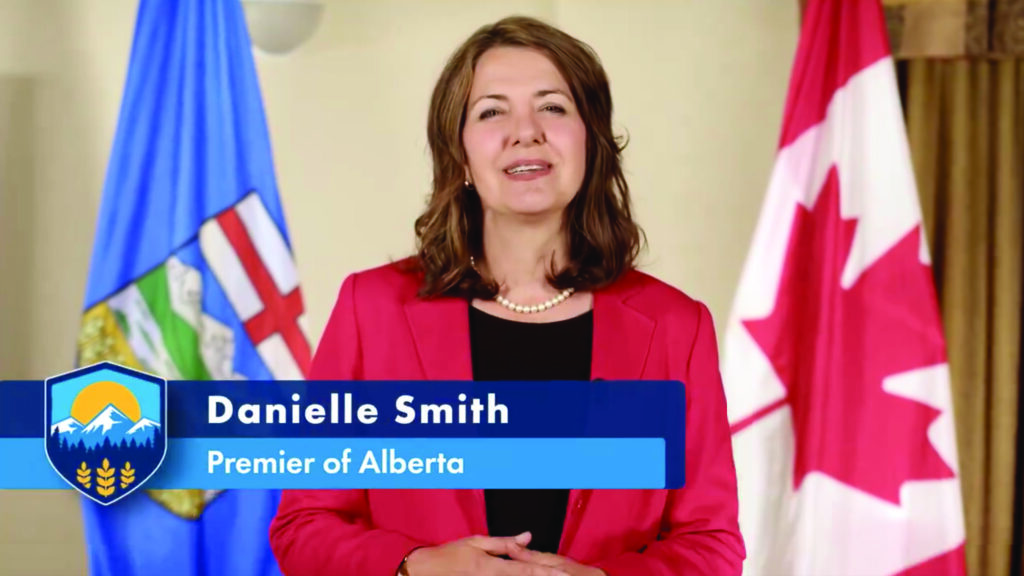
Alberta Premier Danielle Smith announced in late September that her government is planning to amend and strengthen the Alberta Bill of Rights when the Alberta legislature sits again later this fall. As she explained via a video message:
“As our society evolves, so too must our laws, to ensure our rights and freedoms are properly protected in an ever-changing world.”
Smith’s first proposed change is to ensure that:
“…every individual in our province who has the mental capacity to do so, will have the right to decide whether or not to receive a vaccination or other medical procedure.”
But the revisions aren’t limited to vaccinations. The changes will also strengthen property rights to ensure that Albertans can’t be deprived of their property without due process and just compensation. And they also include a plan to further affirm the rights of legal and responsible firearm owners. As the premier declared:
“In my view, these amendments to the Bill of Rights are not just legal changes. They are a reaffirmation of the values that make Alberta one of the freest jurisdictions on earth.”
However, some are questioning the motives and the real impact of such changes. Mount Royal University professor Lori Williams argued that “she’s clearly playing to [UCP party activists] in the hopes that they will not call her leadership into question in the leadership review at the beginning of November.”
The Alberta Bill of Rights was passed in 1972 and updated in 1980 and 2000. Unlike the Canadian Charter of Rights and Freedoms, it isn’t a constitutional document, so it is easily alterable. That means that even while other bills and policies in the province are supposed to align with the Alberta Bill of Rights, the legislature can as easily override the Bill of Rights as they can amend it.
This highlights the differences between the rights God gives vs. rights from the State. As well motivated as the premier’s efforts might be, if the New Democrats win the next election, they could quickly take these new “rights” away. In contrast, God grants irrevocable rights via the prohibitions in His 10 Commandments – for example, by banning murder and theft He gives a right to life and property. These rights may still be violated by sinful man, but they can never be erased.
Both the Alberta Bill of Rights and the Canadian Charter pay lip service to this truth by recognizing in their preambles that the rights they seek to recognize are founded on the supremacy of God.
Picture credit: Screenshot from a Sept. 24 post to x.com/ABDanielleSmith
Enjoyed this article?
Get the best of RP delivered to your inbox every Saturday for free.