















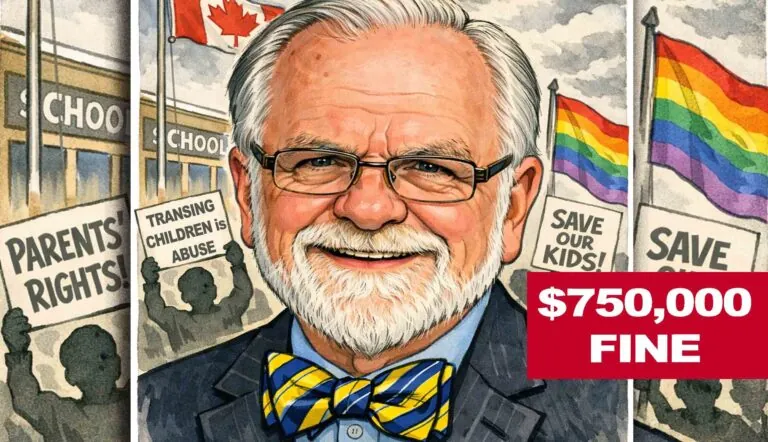
Barry Neufeld was a school trustee in Chilliwack, British Columbia. He was elected for three terms in 2011, 2014, and 2018, earning the second-most votes of the seven school trustees in each of those elections.
In 2016, British Columbia amended its Human Rights Code to recognize and protect people based on their “sexual orientation and gender identity” also known as SOGI. In 2017, the province introduced SOGI 123 in schools to prevent bullying based on sexual orientation or gender identity, to teach students progressive sexual and gender ideology, and to create more LGBTQ-friendly facilities.
But Neufeld is a Christian and refused to promote this unchristian ideology. At school board meetings, in social media posts, and through speeches, Neufeld called out SOGI as a lie that contradicts the reality of who people are.
After the British Columbia Teachers’ Federation and their president publicly disparaged Neufeld for his anti-SOGI comments, even accusing him of hate speech, Neufeld filed a defamation case to defend his name. Neufeld’s lawsuit was ultimately tossed out by the Supreme Court of Canada, in part because it would limit his opponents’ freedom to speak out on an issue of public importance.
Meanwhile, the British Columbia Teachers’ Federation and the Chilliwack Teachers’ Association filed a human rights complaint against Neufeld. They alleged that he discriminated against members of the LGBTQ community and that many of his comments amounted to hate speech under British Columbia’s Human Rights Code.
Last week, the British Columbia Human Rights Tribunal issued its decision. They found that Neufeld had published discriminatory and hate-promoting statements and ordered him to pay $750,000. These funds would be distributed to any Chilliwack school teacher who identified as LGBTQ to compensate for “injury to their dignity, feelings, and self-respect.”
So, what does this mean for us?
As it stands right now, this ruling sets a precedent that anyone who strong criticizes SOGI or those who identify as LGBTQ could receive the same treatment as Neufeld: a complaint, a hearing, and a penalty from the British Columbia Human Rights Tribunal.
Although Neufeld was condemned for his comments as a school trustee, there is no reason why anyone else could not be charged with similar violations. In other words, Christians could be severely fined for expressing their views on gender and sexuality in public. Now, Neufeld will almost assuredly appeal this decision, and so it might be overturned by a court. But unless this happens, this decision is a real cudgel that can be used against Christian expression.
So, what can we do?
If Neufeld appeals the Tribunal ruling to a court, ARPA and other groups will likely seek to intervene as friends of the court to advance legal arguments about freedom of expression and the limits of the Tribunal’s authority. We cannot make a grassroots or political appeal to courts, of course.
But we can use this opportunity to call on MLAs to rein in the Human Rights Tribunal’s power to quash speech. The Tribunal gets its powers from the Human Rights Code. That means MLAs can rein it in by amending the Code, especially by revoking the clause that prohibits hate speech. While federal law already prohibits hate speech in the Criminal Code, that offence provides four defences, and the offence must be proved beyond a reasonable doubt. In British Columbia law, conversely, there are no defences, and the standard of proof is merely a “balance of probabilities.” In other words, as long as the tribunal is at least 50% confident that a person violated the Human Rights Code, they can impose penalties.
Let’s take this opportunity to tell our provincial MLAs how this ruling – and British Columbia’s Human Rights Code – punishes or threatens to punish people for expressing Christian beliefs about sexuality and gender.